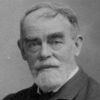
When we think what we do not feel, we lie to ourselves. We must always think with our whole being, soul and body.
[Penser ce que l’on ne sent pas, c’est mentir à soi-même. Tout ce qu’on pense, il faut le penser avec son être tout entier, âme et corps.]
Joseph Joubert (1754–1824) French moralist, philosopher, essayist, poet
Pensées [Thoughts], ch. 9 “De la Sagesse, de la Vertu, etc. [On Wisdom and Virtue],” ¶ 52, 1798 entry (1850 ed.) [tr. Collins (1928), ch. 8]
(Source)
(Source (French)). Other translations:To think what we do not feel, is to lie to ourselves. Whatever we think, we should think with our whole being, will and body.
[tr. Calvert (1866), ch. 9]To think what we do not feel is to lie to one's-self. Whatever we think should be thought by our whole being, soul and body.
[tr. Attwell (1896), ¶ 140]To think what we do not feel, is to lie to ourselves. Everything that we think we must think with our whole being, soul and body
[tr. Lyttelton (1899), ch. 8, ¶ 38]To think what we do not feel is to lie to ourselves, in the same way that we lie to others when we say what we do not think. Everything we think must be thought with our entire being, body and soul.
[tr. Auster (1983), 1798 entry]
Quotations about:
feeling
Note not all quotations have been tagged, so Search may find additional quotes on this topic.
It feels great to be 95. I mean, for those parts of me that still have feeling.
Bob Hope (1903–2003) American comedian, actor, humanitarian (b. Leslie Townes Hope)
“95 Years of Hope,” press kit, joke sheet (1998)
(Source)
It is unclear if Hope originated the joke, or one of his writers, or even if it was something he picked up from elsewhere. It was attributed to him in the profile "The C. E. O. of Comedy," by John Lahr, New Yorker, Vol. 74 (1998-12-21), and included in the posthumously published Bob Hope: My Life in Jokes, "My Nineties: 1993-2003" (2003) [with Linda Hope].
The same joke (updated) was told by Hope as he approached 100, e.g., BBC News, "Bob Hope's One-Liners" (2003-07-28).
We welcome passion, for the mind is briefly let off duty.
Mignon McLaughlin (1913–1983) American journalist and author
The Neurotic’s Notebook, ch. 1 (1963)
(Source)

Only if a child feels right can he think right.
Haim Ginott (1922–1973) Israeli-American school teacher, child psychologist, psychotherapist [b. Haim Ginzburg]
Teacher and Child, ch. 4 “Congruent Communication” (1972)
(Source)
Hope is the feeling we have that the feeling we have is not permanent.
Mignon McLaughlin (1913–1983) American journalist and author
The Neurotic’s Notebook, ch. 5 (1963)
(Source)
This phrase is often cited to Jean Kerr. That's because she paraphrases it in her play, Finishing Touches, Act 3 (1974):FELICIA: Do you know the book The Neurotic's Notebook? There's a line in it I say to myself when I get discouraged. It goes: "Hope is the feeling you have that the feeling you have isn't permanent."
The head never rules the heart, but just becomes its partner in crime.
Mignon McLaughlin (1913–1983) American journalist and author
The Second Neurotic’s Notebook, ch. 5 (1966)
(Source)
But feeling is so different from knowing. My common sense tells me all you can say, but there are times when common sense has no power over me. Common nonsense takes possession of my soul.

A man can’t help his feelings sometime. He don’t even understand his damn self half the time and there the trouble starts.

I must learn to love the fool in me, the one who feels too much, talks too much, takes too many chances, wins sometimes and loses often, lacks self-control, loves and hates, hurts and gets hurt, promises and breaks promises, laughs and cries. It alone protects me against that utterly self-controlled, masterful tyrant whom I also harbor and who would rob me of human aliveness, humility, and dignity, but for my fool.
Theodore Isaac Rubin (1923–2019) American psychiatrist and author
Love Me, Love My Fool (1976)
Sometimes quoted in the second person.
Think not the faith by which the just shall live
Is a dead creed, a map correct of heaven,
Far less a feeling fond and fugitive,
A thoughtless gift, withdrawn as soon as given.
It is an affirmation and an act
That bids eternal truth be present fact.Hartley Coleridge (1796–1849) English poet, biographer, essayist, teacher
“The Just Shall Live By Faith”
(Source)
Never let the facts alone obscure the truth of your narrative. The truth is what your life really felt like.
Maya Angelou (1928–2014) American poet, memoirist, activist [b. Marguerite Ann Johnson]
“The Art of Fiction,” Paris Review, #116, Interview with George Plimpton (1990)
(Source)

What we call ‘being in love’ is a glorious state, and, in several ways, good for us. It helps to make us generous and courageous, it opens our eyes not only to the beauty of the beloved but to all beauty, and it sub-ordinates (especially at first) our merely animal sexuality; in that sense, love is the great conqueror of lust. No one in his senses would deny that being in love is far better than either common sensuality or cold self-centredness.
But, as I said before, ‘the most dangerous thing you can do is to take any one impulse of our own nature and set it up as the thing you ought to follow at all costs’. Being in love is a good thing, but it is not the best thing. There are many things below it, but there are also things above it. You cannot make it the basis of a whole life. It is a noble feeling, but it is still a feeling. Now no feeling can be relied on to last in its full intensity, or even to last at all. Knowledge can last, principles can last, habits can last; but feelings come and go. And in fact, whatever people say, the state called ‘being in love’ usually does not last.
C. S. Lewis (1898–1963) English writer, literary scholar, lay theologian [Clive Staples Lewis]
Mere Christianity, Book 3, ch. 6 “Christian Marriage” (1952)
(Source)
Sympathy … is not an end in itself. … Not mere feeling, but action, will mitigate the world’s misery, society’s injustice, or the people’s alienation from God.
Abraham Joshua Heschel (1907–1972) Polish-American rabbi, theologian, philosopher
The Prophets, 18 (1962)

The man that blushes is not quite a brute.
Edward Young (1683–1765) English poet
Poem (1744-07), “Night the 7th: The Infidel Reclaimed,” l. 496, The Complaint: Or, Night Thoughts, Vol. 2 (1748)
(Source)

Between grief and nothing I will take grief.
William Faulkner (1897–1962) American novelist
The Wild Palms (1939)
Nothing for preserving the body like having no heart.
Every time I’ve done something that doesn’t feel right, it’s ended up not being right.
Mario Cuomo (1932–2015) American politician
(Attributed)

The holiest of holidays are those
Kept by ourselves in silence and apart;
The secret anniversaries of the heart,
When the full river of feeling overflows.
Life is like music, it must be composed by ear, feeling and instinct, not by rule. Nevertheless one had better know the rules, for they sometimes guide in doubtful cases, though not often.
Samuel Butler (1835–1902) English novelist, satirist, scholar
The Note-Books of Samuel Butler, ch. 1, “Life” (1912)
(Source)