Young men, in the conduct and manage of actions, embrace more than they can hold; stir more than they can quiet; fly to the end, without consideration of the means and degrees; pursue some few principles which they have chanced upon absurdly; care not to innovate, which draws unknown inconveniences; use extreme remedies at first; and that, which doubleth all errors, will not acknowledge or retract them, like an unruly horse, that will neither stop nor turn.
Francis Bacon (1561–1626) English philosopher, scientist, author, statesman
Essay (1612), “Of Youth and Age,” Essays, No. 42 (1625)
(Source)
Quotations about:
impulse
Note not all quotations have been tagged, so Search may find additional quotes on this topic.
Says he, “I’d better call agin”;
Says she, “Think likely, Mister”;
Thet last word pricked him like a pin,
An’ …. Wal, he up an’ kist her.James Russell Lowell (1819–1891) American diplomat, essayist, poet
“The Courtin’,” st. 20 (1874)
(Source)
If you jot down every silly thought that pops into your head, you will soon find out everything you most seriously believe.
Mignon McLaughlin (1913–1983) American journalist and author
The Second Neurotic’s Notebook, ch. 10 (1966)
(Source)

The Intellect engages us in the pursuit of Truth. The Passions impel us to Action.
[Cogitatio in vero exquirendo maxime versatur, appetitus impellit ad agendum.]
Marcus Tullius Cicero (106–43 BC) Roman orator, statesman, philosopher
De Officiis [On Duties; On Moral Duty; The Offices], Book 1, ch. 35 (1.35) / sec. 132 (44 BC) [Barnes (1814)]
(Source (Latin)). Other translation:Reflection is chiefly employed in the investigation of truth, appetite impels to action.
[tr. McCartney (1798)]Reflection chiefly applies itself in the search of truth. Appetite prompts us to action.
[tr. Edmonds (1865)]Thought is occupied chiefly in seeking the truth; impulse urges to action.
[tr. Peabody (1883)]Thought is employed in the discovery of truth, appetite impels to action.
[tr. Gardiner (1899)]Thought is occupied chiefly with the discovery of truth; impulse prompts to action.
[tr. Miller (1913)]Thought is mostly expended in seeking out the truth, passion urges men to action.
[tr. Edinger (1974)]
Don’t rush madly into Matrimony. Those who do are as mad to rush out.
Minna Antrim (1861–1950) American epigrammatist, writer
Don’ts for Bachelors and Old Maids (1908)
(Source)
A man can’t help his feelings sometime. He don’t even understand his damn self half the time and there the trouble starts.

You sit at the board and suddenly your heart leaps. Your hand trembles to pick up the piece and move it. But what chess teaches you is that you must sit there calmly and think about whether it’s really a good idea and whether there are other, better ideas.
Stanley Kubrick (1928–1999) American film director, screenwriter, producer
In Newsweek (26 May 1980)
Man has no greater enemy than himself. I have acted contrary to my sentiments and inclination; throughout our whole lives we do what we never intended, and what we proposed to do, we leave undone.
Francesco Petrarca (1304–1374) Italian scholar and poet [a.k.a. Petrarch]
(Attributed)
(Source)
Quoted in Johann Georg Ritter von Zimmermann, An Examination of the Advantages of Solitude and of Its Operations, ch. 5 (1783) [tr. F.S. (1808)].
There was a young belle of old Natchez
Whose garments were always in patchez.
When comment arose
On the state of her clothes,
She drawled, When Ah itchez, Ah scratchez.Ogden Nash (1902–1971) American poet
“Requiem” (1938)
Write while the heat is in you. When the farmer burns a hole in his yoke, he carries the hot iron quickly from the fire to the wood, for every moment is less effectual to penetrate (pierce) it. It must be used instantly or it is useless. The writer who postpones the recording of his thoughts uses an iron which has cooled to burn a hole with. He cannot inflame the minds of his audience.
Henry David Thoreau (1817–1862) American philosopher and writer
Journal (10 Feb 1852)
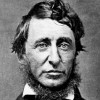
We now know that a life which goes excessively against natural impulse is one which is likely to involve effects of strain that may be quite as bad as indulgence in forbidden impulses would have been. People who live a life which is unnatural beyond a point are likely to be filled with envy, malice and all uncharitableness. They may develop strains of cruelty, or, on the other hand, they may so completely lose all joy in life that they have no longer any capacity for effort.
Bertrand Russell (1872–1970) English mathematician and philosopher
Lecture (1948-12-26), “Social Cohesion and Human Nature,” Reith Lecture, “Authority and the Individual” No. 1, BBC Radio
(Source)
Transcript.
Collected, with edits, as collected, with edits, in Authority and the Individual (1949). In the book, the first sentence begins, "We now know that a life which goes against natural impulse beyond a point is one which is likely to involve ..."
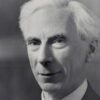
Good impulses are naught, unless they become good actions.
[Les bons mouvements ne sont rien, s’ils ne deviennent de bonnes actions.]Joseph Joubert (1754–1824) French moralist, philosopher, essayist, poet
Pensées [Thoughts], ch. 5 “Des Passions et des Affections de l’Âme [On the Soul],” ¶ 75 (1850 ed.) [tr. Calvert (1866)]
(Source)
It is easier to suppress the first Desire than to satisfy all that follow it.
Benjamin Franklin (1706–1790) American statesman, scientist, philosopher, aphorist
Poor Richard’s Almanack (1751)
(Source)
Included in his summary piece, "The Way to Wealth" (1757).
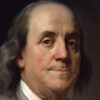
Often an idea about it would occur to me which seemed to have force and make perfect answer to some of the things that were said and written about my actions. I never let one of those ideas escape me, but wrote it on a scrap of paper and put it in that drawer. In that way I saved my best thoughts on the subject, and, you know, such things often come in a kind of intuitive way more clearly than if one were to sit down and deliberately reason them out.
To save the results of such mental action is true intellectual economy. It not only saves time and labor, but also the very best material the mind can supply for unexpected emergencies.Abraham Lincoln (1809–1865) American lawyer, politician, US President (1861–65)
Remark (1863) to James F. Wilson (Attributed)
(Source)
Recounted in an essay (1896-12), "Some Memories of Lincoln," North American Review, Vol. 163, No. 481. Wilson references the remarks as having been made in late 1863, 33 years earlier.
Wilson was at the time a US Representative from Iowa (1861–1869); he went on to be US Senator (1883-1895). He had offered praise to a letter Lincoln had written (1862-06-13) to organizers of a public meeting which had criticized his suspension of the writ of habeas corpus and subsequent arrests. Lincoln described how the letter had come from a collection of ideas he had put aside in a drawer as he considered the question.
A variant of this was given in Henry Llewellyn Williams (ed.), Lincolnics: Familiar Sayings of Abraham Lincoln (1906), noted as "Lincoln to Senator Wilson, 1862."I never let any idea escape me, but write it on a scrap of paper, and put it in a drawer. In that way I save my best thoughts on a subject, and such things often come in a kind of intuitive way more clearly than if one were to sit down and deliberately reason them out. To save the results of such mental action is true intellectual economy. It not only saves time and labor, but also the very best material the mind can supply for unexpected emergencies.
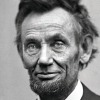
What is the matter with the world that it is so out of joint? Simply that men do not rule themselves but let circumstances rule them.
Ralph Waldo Emerson (1803–1882) American essayist, lecturer, poet
Journal (1828-06-25)
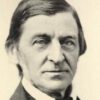
DON JUAN: I can’t, in short, deny my heart to anything that strikes me as lovable, and the sight of a beautiful face so masters me that, if I had a thousand hearts, I’d give them all. There is, besides, an inexpressible charm in the first stirrings of a new passion, and the whole pleasure of love lies in change.
[DOM JUAN: Quoi qu’il en soit, je ne puis refuser mon cœur à tout ce que je vois d’aimable; et, dès qu’un beau visage me le demande, si j’en avais dix mille, je les donnerais tous. Les inclinations naissantes, après tout, ont des charmes inexplicables, et tout le plaisir de l’amour est dans le changement.]
Molière (1622–1673) French playwright, actor [stage name for Jean-Baptiste Poquelin]
Don Juan [Dom Juan], Act 1, sc. 2 (1665) [tr. Wilbur (2001)]
(Source)
(Source (French)). Other translations:However it is, I can't refuse my Heart to any lovely Creature I see, and from the Moment a handsome Face demands it, had I thousand Hearts I'd give 'em all. The rising Inclinations, after all, have inexplicable Charmes in 'em, and all the Pleasure of Love consists in the Variety.
[tr. Clitandre (1672)]However it may be, I cannot refuse my heart to any lovely creature I behold; and as soon as a handsome face asks it of me, if I had ten thousand hearts, I would give them all. Budding inclinations, after all, have a charm which is indescribable, and all the pleasure of love is in variety.
[tr. Van Laun (1876)]Whatever may have taken place before, I cannot refuse my love to any of the lovely women I behold; and, as soon as a handsome face asks it of me, if I had ten thousand hearts I would give them all away. The first beginnings of love have, besides, indescribable charms, and the true pleasure of love consists in its variety.
[tr. Wall (1879)]However it may be, I cannot refuse my heart to any lovely creature I see; and, as soon as a pretty face asks me, had I ten thousand hearts I would give them all. First beginnings, besides, have indescribable charms, and ll the pleasure of love consists in variety.
[tr. Waller (1904)]I cannot refuse my heart to any lovely creature I behold, and as soon as a fair face asks it, had I ten thousand hearts I'd give them all. Love at its birth hath unexpressible charms, and all the pleasure of it lies in change.
[tr. Page (1908)]Whatever my situation, I cannot refuse my heart to anyone I see to be lovable; and as soon as a fair face asks me for it, if I had ten thousand hearts I'd give them all. After all, budding inclinations have unaccountable charms, and the whole pleasure of love lies in change.
[tr. Frame (1967)]I can't withhold my love from everything I find lovable. What happens later -- happens. A beautiful face has only to ask for my heart. If I had ten thousand hearts, I'd give them all. There is something indescribable and thrilling in a fresh affair. The entire pleasure of love lies in how it changes.
[tr. Bermel (1987)]