

A cat may looke on a King.
John Heywood (1497?-1580?) English playwright and epigrammist
Proverbs, Part 2, ch. 5 (1546)
(Source)
Revised spelling from the 1874 edition. Original editions had it, "A cat maie looke on a kyng." This is the earliest text found with this recorded as an English proverb.
Thomas Fuller included the phrase ("A Cat may look upon a King") in his Gnomologia, # 35 (1732).
For more information on this phrase and its history, see: meaning and origin of the phrase ‘a cat may look at a king’ – word histories.
Quotations about:
king
Note not all quotations have been tagged, so Search may find additional quotes on this topic.
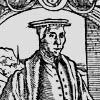
KING RICHARD: For within the hollow crown
That rounds the mortal temples of a king
Keeps Death his court, and there the antic sits,
Scoffing his state and grinning at his pomp,
Allowing him a breath, a little scene,
To monarchize, be feared, and kill with looks,
Infusing him with self and vain conceit,
As if this flesh which walls about our life
Were brass impregnable; and humored thus,
Comes at the last and with a little pin
Bores through his castle wall, and farewell, king!William Shakespeare (1564-1616) English dramatist and poet
Richard II, Act 3, sc. 2, l. 165ff (3.2.165-175) (1595)
(Source)

KING RICHARD: Why, uncle, thou hast many years to live.
GAUNT: But not a minute, king, that thou canst give.
William Shakespeare (1564-1616) English dramatist and poet
Richard II, Act 1, sc. 3, l. 231ff (1.3.231-232) (1595)
(Source)
BOLINGBROKE: How long a time lies in one little word!
Four lagging winters and four wanton springs
End in a word; such is the breath of kings.William Shakespeare (1564-1616) English dramatist and poet
Richard II, Act 1, sc. 3, l. 218ff (1.3.218-220) (1595)
(Source)
After King Richard casually reduces his banishment of Bolingbroke from ten years to six.
I’d be as good a king of my estate as any other King; and being so, I should do as I liked; and doing as I liked, I should take my pleasure; and taking my pleasure, I should be contented; and when one’s content, there’s nothing more to desire; and when there’s nothing more to desire, there’s an end of it.
[Tan Rey seria yo de mi estado, como cada uno del suyo: y siendolo, haria lo que quisiesse: y haziendo lo que quisiesse, haria mi gusto: y haziendo mi gusto, estaria contento: y en estando uno contento, no tiene mas que dessear: y no teniendo mas qu essear, acabose.]
Miguel de Cervantes (1547-1616) Spanish novelist
Don Quixote, Part 1, ch. 50 [Sancho] (1605) [tr. Cohen (1950)]
(Source)
On being a king.
(Source (Spanish)). Other translations:I should be as much king of my own dominion as any other king; and being so, I would do what I pleased; and, doing what I pleased, I should have my will; and, having my will, I should be contented; and, being content, there is no more to be desired: and when there is no more to desire, there's an end of it.
[tr. Motteux* (1700-1703); Part 1, ch. 39]The first thing I would do in my government, I would have nobody to control me, I would be absolute: and who but I: now, he that is absolute, can do what he likes; he that can do what he likes, can take his pleasure; he that can take his pleasure, can be content; and he that can be content, has no more desire; so the matter is over.
[tr. Motteux*; Part 1, ch. 39]I should be as much king of my own dominion, as any one of his: and being so, I would do what I pleased, and doing what I pleased, I should have my will, and having my will, I should be contented; and when one is contented, there is no more to be desired; and when there is no more to be desired, there is an end of it.
[tr. Jarvis (1819), Part 1, Book 4, ch. 23]I shall be as much king of my realm as any other of his; and being so I should do as I liked, and doing as I liked I should please myself, and pleasing myself I should be content, and when one is content he has nothing more to desire, and when one has nothing more to desire there is an end of it.
[tr. Ormsby (1885); Vol. 1, ch. 50]I shall be as much a king of my realm as any other of his; and being so I should do as I liked, and doing as I liked I should please myself, and pleasing myself I should be content, and when one is content he has nothing more to desire, and when one has nothing more to desire there is an end of it.
[ed. Pérezgonzález (2006); Vol. 1, ch. 50]
* I am unclear on why the two Motteux translations are so different; both sources list Pierre Antoine Motteux as the translator, and I can't find anything in the two texts

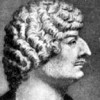
“Happy as a king,” iz a libel on happiness, and on the king to.
[“Happy as a king,” is a libel on happiness, and on the king, too.]
Josh Billings (1818-1885) American humorist, aphorist [pseud. of Henry Wheeler Shaw]
Everybody’s Friend, Or; Josh Billing’s Encyclopedia and Proverbial Philosophy of Wit and Humor, ch. 156 “Affurisms: Embers on the Harth” (1874)
(Source)

WOLSEY: The King wants a son; what are you going to do about it?
MORE: (dry murmur) I’m very sure the King needs no advice from me on what to do about it.

The greatest monarch on the proudest throne, is oblig’d to sit upon his own arse.
Benjamin Franklin (1706-1790) American statesman, scientist, philosopher, aphorist
Poor Richard (1737 ed.)
(Source)
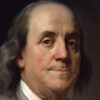
Were a historian like Tacitus to write a history of the best of our kings, giving an exact account of all the tyrannical acts and abuses of authority, the majority of which lie buried in the profoundest obscurity, there would be few reigns which would not inspire us with the same horror as that of Tiberius.
[Si un historien, tel que Tacite, eût écrit l’histoire de nos meilleurs rois, en faisant un relevé exact de tous les actes tyranniques, de tous les abus d’autorité, dont la plupart sont ensevelis dans l’obscurité la plus profonde, il y a peu de règnes qui ne nous inspirassent la même horreur que celui de Tibère.]
Nicolas Chamfort (1741-1794) French writer, epigrammist (b. Nicolas-Sébastien Roch)
Products of Perfected Civilization [Produits de la Civilisation Perfectionée], Part 1 “Maxims and Thoughts [Maximes et Pensées],” ch. 8, ¶ 482 (1795) [tr. Hutchinson (1902)]
(Source)
(Source (French)). Alternate translations:If such an historian as Tacitus had written the chronicle of our nobler kings, making an exact statement of all those tyrannical actions and abuses of authority which are now for the most part buried in deep darkness, few of their reigns would inspire less horror than that of Tiberius.
[tr. Mathers (1926)]If a historian such as Tacitus had written the histories of our best kings, with precise accounts of their tyrannical actions, and all their abuses of authority, most of which have been buried in the deepest obscurity, there are few reigns that would not arouse in us the same horror as that of Tiberius.
[tr. Merwin (1969)]If a chronicler such as Tacitus had written the history of our best kings, preparing an exact amount of all tyrannical acts, of all the abuses of authority, of which the majority are concealed by fathomless obscurity, there would be few reigns which would [not?] inspire us with the same horror as that of Tiberius.
[tr. Pearson (1973)]

Away with empire, and oppressive laws;
None but the fool can wish for regal power,
That he may proudly lord it o’er his equals.[οὔτ᾽ εἰκὸς ἄρχειν οὔτ᾽ ἐχρὴν ἄνευ νόμου
τύραννον εἶναι” μωρία δὲ καὶ ϑέλειν
ὃς τῶν ὁμοίων βούλεται χρατεῖν μόνος.]Euripides (485?-406? BC) Greek tragic dramatist
Antigone [Ἀντιγόνη], frag. 172 (TGF, Kannicht) (c. 420-406 BC) [tr. Wodhall (1809)]
(Source)
Barnes frag. 11, Musgrave frag. 5. (Source (Greek)). Alternate translation:It is neither reasonable to rule, nor ought there to be a king [law].
It is folly for a man even to want [...]
who wishes to hold sole power over his peers.
[Source]
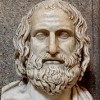
Ruling is hard. This was maybe my answer to Tolkien, whom, as much as I admire him, I do quibble with. Lord of the Rings had a very medieval philosophy: that if the king was a good man, the land would prosper. We look at real history and it’s not that simple. Tolkien can say that Aragorn became king and reigned for a hundred years, and he was wise and good. But Tolkien doesn’t ask the question: What was Aragorn’s tax policy? Did he maintain a standing army? What did he do in times of flood and famine? And what about all these orcs? By the end of the war, Sauron is gone but all of the orcs aren’t gone — they’re in the mountains. Did Aragorn pursue a policy of systematic genocide and kill them? Even the little baby orcs, in their little orc cradles?
George R. R. Martin (b. 1948) American author and screenwriter [George Raymond Richard Martin]
Interview (2014-04-23) by Mikal Gilmore, “The Rolling Stone Interview,” Rolling Stone
(Source)

Yet some men say in many parts of England that King Arthur is not dead, but had by the will of our Lord Jesu into another place; and men say that he shall come again, and he shall win the holy cross. I will not say it shall be so, but rather I will say, here in this world he changed his life. But many men say that there is written upon his tomb this verse: Hic jacet Arthurus Rex, quondam Rex que futurus.
[Here lies Arthur, the once and future king.]

And when matins and the first mass was done, there was seen in the churchyard, against the high altar, a great stone four square, like unto a marble stone; and in midst thereof was like an anvil of steel a foot on high, and therein stuck a fair sword naked by the point, and letters there were written in gold about the sword that said thus:—Whoso pulleth out this sword of this stone and anvil, is rightwise king born of all England.
Their guards also are such as are used in a kingly government, not a despotic one; for the guards of their kings are his citizens, but a tyrant’s are foreigners. The one commands, in the manner the law directs, those who willingly obey; the other, arbitrarily, those who consent not. The one, therefore, is guarded by the citizens, the other against them.
[οἱ γὰρ πολῖται φυλάττουσιν ὅπλοις τοὺς βασιλεῖς, τοὺς δὲ τυράννους ξενικόν: οἱ μὲν γὰρ κατὰ νόμον καὶ ἑκόντων οἱ δ᾽ ἀκόντων ἄρχουσιν, ὥσθ᾽ οἱ μὲν παρὰ τῶν πολιτῶν οἱ δ᾽ ἐπὶ τοὺς πολίτας ἔχουσι τὴν φυλακήν.]
Aristotle (384-322 BC) Greek philosopher
Politics [Πολιτικά], Book 3, ch. 14 / 1285a25 [tr. Ellis (1776)]
(Source)
Original Greek. Alternate translations:
- "The guard of the king is, for the same cause, one that belongs to a monarch and not to a tyrant, for the citizens protect their kings with their arms; but it is aliens who guard despots. For the former rule legally over willing subjects, the latter over unwilling; so that the former are guarded by their subjects, the latter against them." [tr. Bolland (1877)]
- "Wherefore also their guards are such as a king and not such as a tyrant would employ, that is to say, they are composed of citizens, whereas the guards of tyrants are mercenaries. For kings rule according to the law over voluntary subjects, but tyrants over involuntary; and the one are guarded by their fellow-citizens, the others are guarded against them." [tr. Jowett (1921)]
- "Also their bodyguard is of a royal and not a tyrannical type for the same reason; for kings are guarded by the citizens in arms, whereas tyrants have foreign guards, for kings rule in accordance with law and over willing subjects, but tyrants rule over unwilling subjects, owing to which kings take their guards from among the citizens but tyrants have them to guard against the citizens." [tr. Rackham (1944)]
- "For the same reason, their bodyguard is of a kingly rather than a tyrannical sort. For the citizens guard kings with their own arms, while a foreign element guards the tyrant, since the former rule willing persons in accordance wit the law, while the latter rule unwilling persons. So the ones have a bodyguard provided by the citizens, the other one that is directed against them." [tr. Lord (1984)]
- "And their bodyguards are kingly and not tyrannical due to the same cause. For citizens guard kings with their weapons, whereas a foreign contingent guards tyrants. For kings rule in accord with the law and rule voluntary subjects, whereas the latter rule involuntary ones, so that the former have bodyguards drawn from the citizens, whereas the latter have bodyguards to protect them against the citizens." [tr. Reeve (2007)]
- "Citizens guard their kings with arms; foreigners protect tyrants. This is because kings rule according to the law and with willing citizens while tyrants rule the unwilling. As a result, kings have guards from their subjects and tyrants keep guards against them." [tr. @sentantiq]
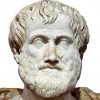
There is no fellowship inviolate,
no faith is kept, when kingship is concerned.[Nulla sancta societas
Nec fides regni est.]Ennius (239-169 BC) Roman poet, writer [Quintus Ennius]
Fragment 402-3 [tr. Miller]
(Source)
Quoted in Cicero, De Officiis, Book 1, ch. 8, sec. 26 (scaen. 404 Vahlen), speaking of Julius Caesar.
Alt. trans.:
- "To kingship belongs neither sacred fellowship nor faith."
- "No society is sacred, nor faith of empire." [tr. Johnson (1828)]
- "There is no holy bond, and no fidelity / 'Twixt those who share a throne." [Source]
- "Where the throne's shared, there cannot be good faith." [Source]
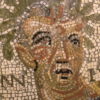
Never strike a king unless you are sure you shall kill him.
Ralph Waldo Emerson (1803-1882) American essayist, lecturer, poet
Journal (1843-09)
(Source)
In addition to the noted source, see also here. However, according to the reliable Ralph Keyes, the quotation is spurious. Keyes also suggests an inspiration from the 17th Century English proverb, "Whosoever draws his sword against the prince must throw the scabbard away."
A variant, "When you strike at a king you must kill him," is attributed to Emerson by Oliver Wendell Holmes, Jr., in Max Lerner, The Mind and Faith of Justice Holmes (1943).
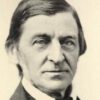
Punctuality is the politeness of kings.
[L’exactitude est la politesse des rois.]
Louis XVIII (1755-1824) French monarch (1814-1824) ["Louis the Desired"]
(Attributed)
Attributed in Souvenirs de J. Lafitte (1844)
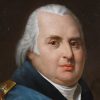
King David and King Solomon
Led merry merry lives,
With many, many lady friends,
And many many wives;
But when old age crept over them —
With many, many qualms! —
King Solomon wrote the Proverbs
And King David wrote the Psalms.James Ball Naylor (1860-1945) American physician, writer, poet, politician
“King David and King Solomon” (1935)

SIR BEDEVERE: How do know so much about swallows?
KING ARTHUR: Well, you have to know these things when you’re a king, you know.Monty Python (b. 1969) British comedy troupe [Graham Chapman, John Cleese, Terry Gilliam, Eric Idle, Terry Jones, Michael Palin]
Monty Python and the Holy Grail (1975)

When I was a fighting man, the kettle-drum they beat,
The people scattered gold-dust before my horse’s feet;
But now I am a great king, the people hound my track
With poison in my wine-cup, and daggers at my back.Robert E. Howard (1906-1936) American author
“The Phoenix on the Sword” (1932)
Power is always gradually stealing away from the many to the few because the few are more vigilant and consistent; it still contracts to a smaller number, till in time it centres in a single person.
Thus all the forms of governments instituted among mankind, perpetually tend towards monarchy; and power, however diffused through the whole community is, by negligence or corruption, commotion or distress, reposed at last in the chief magistrate.Samuel Johnson (1709-1784) English writer, lexicographer, critic
Essay (1753-04-10), The Adventurer, No. 45
(Source)
CREON: Am I to rule for others, or myself?
HAEMON: A State for one man is no State at all.
CREON: The State is his who rules it, so ’tis held.
HAEMON: As monarch of a desert thou wouldst shine.Κρέων: ἄλλῳ γὰρ ἢ ‘μοὶ χρή με τῆσδ᾽ ἄρχειν χθονός;
Αἵμων: πόλις γὰρ οὐκ ἔσθ᾽ ἥτις ἀνδρός ἐσθ᾽ ἑνός.
Κρέων: οὐ τοῦ κρατοῦντος ἡ πόλις νομίζεται;
Αἵμων: καλῶς γ᾽ ἐρήμης ἂν σὺ γῆς ἄρχοις μόνος.Sophocles (496-406 BC) Greek tragic playwright
Antigone, l. 736 ff (441 BC) [tr. Storr (1859)]
(Source)
Original Greek. Alt. trans.:CREON: Shall other men prescribe my government?
HAEMON: One only makes not up a city, father.
CREON: Is not the city in the sovereign's hand?
HAEMON: Nobly you'd govern as the desert's king.
[tr. Campbell (1873)]CREON: Am I to rule this land by the will of another than myself?
HAEMON: That is no city, which belongs to one man.
CREON: Does not the city by tradition belong to the man in power?
HAEMON: You would make a fine monarch in a desert.
[tr. Jebb (1891)]CREON: My voice is the one voice giving orders in this City!
HAIMON: It is no City if it takes orders from one voice.
CREON: The State is the King!
HAIMON: Yes, if the State is a desert.
[tr. Fitts/Fitzgerald (1939)]CREON: No, I am king, and responsible only to myself.
HAEMON: A one-man state? What sort of state is that?
CREON: Why, does not every state belong to its ruler?
HAEMON: You’d be an excellent king -- on a desert island.
[tr. Watling (1947), ll. 632 ff]CREON: Am I to rule by other mind than mine?
HAEMON: No city is property of a single man.
CREON: But custom gives possession to the ruler.
HAEMON: You'd rule a desert beautifully alone.
[tr. Wyckoff (1954)]CREON: Am I to rule for them, not for myself?
HAEMON: That is not government, but tyranny.
CREON: The king is lord and master of his city.
HAEMON: Then you had better rule a desert island!
[tr. Kitto (1962)]CREON: Am I to rule this land for others -- or myself?
HAEMON: It's no city at all, owned by one man alone.
CREON: What? The city is the king's -- that's the law!
HAEMON: What a splendid king you'd make of a desert island --
you and you alone.
[tr. Fagles (1982)]CREON: So I should rule this country for someone other than myself?
HAEMON: A place for one man alone is not a city.
CREON: A city belongs to its master. Isn't that the rule?
HAEMON: Then go be ruler of a desert, all alone. You'd do it well.
[tr. Woodruff (2001)]CREON: Should I govern the city for others and not for me?
HAEMON: There is no city that belongs to one man.
CREON: So a city does not belong to the man who governs it?
HAEMON: One man alone can only govern an empty city.
[tr. Theodoridis (2004)]CREON: Am I to rule this land at someone else’s whim or by myself?
HAEMON: A city which belongs to just one man is no true city.
CREON: According to our laws, does not the ruler own the city?
HAEMON: By yourself you’d make an excellent king but in a desert.
[tr. Johnston (2005)]CREON: Should I rule the land for anyone other than myself?
HAEMON: There is no city that is one man’s.
CREON: Is not the city considered to belong to the ruling man?
HAEMON: Nobly you could rule an empty land, alone.
[tr. Tyrell/Bennett (2002)]
Also:
- "The state which belongs to one man is no state at all." [tr. @sentantiq (2020)]
- "A state is not a state if it belongs to one man."
Give me a king whose chief interest in life is stamps, railways, or race-horses ….
J.R.R. Tolkien (1892-1973) English writer, fabulist, philologist, academic [John Ronald Reuel Tolkien]
Letter to Christopher Tolkien (1943-11-29)
(Source)
Letter 52 in Humphrey Carpenter, ed., The Letters of J.R.R. Tolkien (1981).
MORE: I must in fairness add that my taste in music is reputedly deplorable.
HENRY: Your taste in music is excellent. It exactly coincides with my own.
Robert Bolt (1924-1995) English dramatist
A Man for All Seasons, play, Act 1 (1960)
(Source)
Bolt's 1966 film adaptation uses the same language.
ARTHUR: I am your king.
WOMAN: Well, I didn’t vote for you.
ARTHUR: You don’t vote for kings.
WOMAN: Well how’d you become king then?
ARTHUR: (angelic music plays) The Lady of the Lake, her arm clad in the purest shimmering samite, held aloft Excalibur from the bosom of the water, signifying by divine providence that I, Arthur, was to carry Excalibur. (angelic music stops) That is why I am your king.
DENNIS: (interrupting) Listen, strange women lying in ponds distributing swords is no basis for a system of government. Supreme executive power derives from a mandate from the masses, not from some farcical aquatic ceremony.
ARTHUR: Be quiet!
DENNIS: You can’t expect to wield supreme executive power just ’cause some watery tart threw a sword at you!
ARTHUR: Shut up!
DENNIS: I mean, if I went around saying I was an emperor just because some moistened bint had lobbed a scimitar at me, they’d put me away!
ARTHUR: (grabbing him by the collar) Shut up! Will you shut up!
Monty Python (b. 1969) British comedy troupe [Graham Chapman, John Cleese, Terry Gilliam, Eric Idle, Terry Jones, Michael Palin]
Monty Python and the Holy Grail, sc. 3 (1975)
(Source)
(Source (Video); dialog verified)