

I know, my dear Watson, that you share my love of all that is bizarre and outside the conventions and humdrum routine of everyday life. You have shown your relish for it by the enthusiasm which has prompted you to chronicle, and, if you will excuse my saying so, somewhat to embellish so many of my own little adventures.
Arthur Conan Doyle (1859–1930) British writer and physician
Story (1891-08), “The Red-Headed League,” [Holmes], The Strand Magazine, Vol. 2, No. 2
(Source)
Quotations about:
convention
Note not all quotations have been tagged, so Search may find additional quotes on this topic.
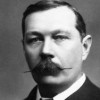
Inherited ideas are a curious thing, and interesting to observe and examine. I had mine, the king and his people had theirs. In both cases they flowed in ruts worn deep by time and habit, and the man who should have proposed to divert them by reason and argument would have had a long contract on his hands.
Mark Twain (1835–1910) American writer [pseud. of Samuel Clemens]
Novel (1889), A Connecticut Yankee in King Arthur’s Court, Part 3 “The Tale of the Lost Land,” ch. 8 “The Boss”
(Source)

The great quadrennial national circus is upon us: three rings, cast of thousands, red, white, and blue balloons by the ton, red, white, and blue bullshit by the hour, confusion, exhaustion, alcohol, and the fate of the nation.
Molly Ivins (1944–2007) American writer, political columnist [Mary Tyler Ivins]
Essay (1988-08), “Unconventional Wisdom,” Ms magazine
(Source)
Collected in Molly Ivins Can't Say That, Can She? (1991).

Men’s ideas are like card-playing or any other game. Ideas which in the past I’ve seen considered reckless have since become commonplace, almost trivial, and adopted by men unworthy of sharing them. Ideas which now seem extraordinary will be regarded feeble and perfectly ordinary by our descendants.
[Les idées des hommes sont comme les cartes et autres jeux. Des idées que j’ai vu autrefois regarder comme dangereuses et trop hardies, sont depuis devenues communes, et presque triviales, et ont descendu jusqu’à des hommes peu dignes d’elles. Quelques-unes de celles à qui nous donnons le nom d’audacieuses seront vues comme faibles et communes par nos descendans.]Nicolas Chamfort (1741–1794) French writer, epigrammist (b. Nicolas-Sébastien Roch)
Products of Perfected Civilization [Produits de la Civilisation Perfectionée], Part 1 “Maxims and Thoughts [Maximes et Pensées],” ch. 2, ¶ 145 (1795) [tr. Parmée (2003), ¶ 115]
(Source)
(Source (French)). Alternate translations:Men’s ideas are like cards and other games. Ideas which I remember to have seen regarded as dangerous and over-bold have since become commonplace and almost trite, and have descended to men little worthy of them. So it is that some of the ideas which to-day we call audacious will be considered feeble and conventional by our descendants.
[tr. Hutchinson (1902), "The Cynic's Breviary"]Man's ideas are like card & other games. Ideas which I once heard stigmatised as dangerous and over-daring have since become common and even trivial, and have sunk to be the tenets of quite unworthy persons. Some ideas which we call audacious nowadays will seem feeble and ordinary to our descendants.
[tr. Mathers (1926)]The ideas of men are like cards and other games. ideas that at one time, to my own knowledge, were considered dangerous and rash, have since become general, almost commonplace, and have descended to men who are little worthy of them. Some of those that we call daring will seem feeble and ordinary to our descendants.
[tr. Merwin (1969)]The ideas of men are like cards and other games. Some ideas, which formerly I observed to be considered dangerous and intemperate, have since become universal, even trivial, and have been adopted by men scarcely worthy of them. Some notions which we call bold will be regarded as feeble and commonplace by our descendants.
[tr. Pearson (1973)]

A wise man once said, “Convention is like the shell to the chick, a protection till he is strong enough to break it through.”
Learned Hand (1872–1961) American jurist
“The Preservation of Personality,” commencement address, Bryn Mawr College (1927-06-02)
(Source)
Source of the quotation Hand references is unknown. It is often attributed directly to Hand himself.

Clichés, stock phrases, adherence to conventional, standardized codes of expression and conduct have the socially recognized function of protecting us against reality, that is, against the claim on our thinking attention that all events and facts make by virtue of their existence.
Hannah Arendt (1906–1975) German-American philosopher, political theorist
Lecture (1971), “Thinking and Moral Considerations,” Social Research (1971 Fall)
(Source)
Referring to Adolf Eichmann's use of "cliché-ridden language" as a sign of his "thoughtlessness."
Collected in The Life of the Mind, Part 1 "Thinking," Introduction (1974).

By convention sweet is sweet, by convention bitter is bitter, by convention hot is hot, by convention cold is cold, by convention color is color. But in reality there are atoms and the void. That is, the objects of sense are supposed to be real and it is customary to regard them as such, but in truth they are not. Only the atoms and the void are real.
[νόμωι (γάρ φησι) γλυκὺ καὶ νόμωι πικρόν, νόμωι θερμόν, νόμωι ψυχρόν, νόμωι χροιή, ἐτεῆι δὲ ἄτομα καὶ κενόν]
Democritus (c. 460 BC - c. 370 BC) Greek philosopher
Frag. 0 (Diels) [tr. Bakewell (1907)]
(Source)
Cited to Tetralogies of Thrasyllus, 9; Sext. Emp. Math VII 135. Other translations:
- "Sweet exists by convention, bitter by convention, colour by convention; atoms and Void (alone) exist in reality ... We know nothing accurately in reality, but (only) as it changes according to the bodily condition, and the constitution of those things that flow upon (the body) and impinge upon it." [tr. Freeman (1948), frag. 9]
- "By convention sweet is sweet, bitter is bitter, hot is hot, cold is cold, color is color; but in truth there are only atoms and the void." [tr. Durant, from Bakewell]

A political convention is just not a place where you come away with any trace of faith in human nature.
Murray Kempton (1917–1997) American journalist.
Column on the 1960 Republican National Convention, Chicago (28 Jul 1960)
(Source)

It is safe to wager that every public idea and every accepted convention is sheer foolishness, because it has suited the majority.
[Il y a à parier que toute idée publique, toute convention reçue, est une sottise, car elle a convenu au plus grand nombre.]
Nicolas Chamfort (1741–1794) French writer, epigrammist (b. Nicolas-Sébastien Roch)
Products of Perfected Civilization [Produits de la Civilisation Perfectionée], Part 1 “Maxims and Thoughts [Maximes et Pensées],” ch. 2, ¶ 130 (1795) [tr. Mathers (1926)]
(Source)
(Source (French)). Other translations:It may be argued that every public idea, every accepted convention, is a piece of stupidity, for has it not commended itself to the greatest number?
[tr. Hutchinson (1902), "The Cynic's Breviary"]One can be certain that every generally held idea, every received notion, will be an idiocy, because it has been able to appeal to a majority.
[In Botton, Status Anxiety (2004)]It is likely that every public idea, every received convention, is folly, because the majority of men consented to it.
[Siniscalchi (1994)]
The most absurd customs and the most ridiculous ceremonies are everywhere excused by an appeal to the phrase, but that’s the tradition. This is exactly what the Hottentots say when Europeans ask them why they eat grasshoppers and devour their body lice. That’s the tradition, they explain.
[Les coutumes les plus absurdes, les étiquettes les plus ridicules, sont en France et ailleurs sous la protection de ce mot: c’est l’usage. C’est précisément ce même mot que répondent les Hottentots, quand les Européens leur demandent pourquoi ils mangent des sauterelles, pourquoi ils dévorent la vermine dont ils sont couverts. Ils disent aussi: c’est l’usage.]
Nicolas Chamfort (1741–1794) French writer, epigrammist (b. Nicolas-Sébastien Roch)
Products of Perfected Civilization [Produits de la Civilisation Perfectionée], Part 1 “Maxims and Thoughts [Maximes et Pensées],” ch. 3, ¶ 249 (1795) [tr. Mathers (1926)]
(Source)
(Source (French)). Other translations:The most absurd conventions, the most ridiculous formalities enjoy in France and elsewhere the protection of the phrase, "It's the custom.” It is the very phrase with which the Hottentots answer when the Europeans ask them why they eat grasshoppers, why they devour the vermin that crawl on them. They too say, “It’s the custom.”
[tr. Merwin (1969)]The most absurd habits, the most ridiculous matters of etiquette enjoy in France and elsewhere the protection afforded by this phrase: "It is the custom." It is precisely this phrase which Hottentots produce when Europeans ask them why they eat grasshoppers, and why they devour the vermin with which they are infested. They also say: "It is the custom."
[tr. Pearson (1973)]The most absurd customs, the most ridiculous etiquettes, are in France and elsewhere under the protection of this phrase: That's how things are. That is precisely the phrase that Hottentots say when Europeans ask them why they eat locusts; why they consume the vermin that they are covered in. They saÿ: "That's how things are."
[tr. Siniscalchi (1994)]In France and elsewhere, the most absurd customs and protocol are justified by the statement "It's always been done like that." That's exactly what Hottentots tell Europeans when asked why they feed on locusts or the vermin on their bodies: "It's what we've always done."
[tr. Parmée (2003), ¶161]
The world today does not understand, in either man or woman, the need to be alone. How inexplicable it seems. Anything else will be accepted as a better excuse. If one sets aside time for a business appointment, a trip to the hairdresser, a social engagement or a shopping expedition, that time is accepted as inviolable. But if one says: I cannot come because that is my hour to be alone, one is considered rude, egotistical or strange. What a commentary on our civilization, when being alone is considered suspect; when one has to apologize for it, make excuses, hide the fact that one practices it — like a secret vice!

Conventional people are roused to fury by departure from convention, largely because they consider such departures as a criticism of themselves. They will pardon much unconventionality in a man who has enough jollity and friendliness to make it clear, even to the stupidest, that he is not engaged in criticizing them.
Bertrand Russell (1872–1970) English mathematician and philosopher
Conquest of Happiness, Part 1, ch. 9 “Fear of Public Opinion” (1930)
(Source)

Without deviation from the norm, progress is not possible.
Frank Zappa (1940–1993) American singer-songwriter
A Day with Frank Zappa, Part 5, documentary, dir. Roelof Kiers, VPRO-TV (1971-02-11)
Widely attributed to Zappa in various forms, but with very few actual citations.
The Kiers documentary gave the quotation twice. First (Source, Video):Well I think that progress is not possible without deviation. And I think that it's important that people be aware of some of the creative ways in which some of their fellow men are deviating from the norm, because in some instances they might find these deviations inspiring and might suggest further deviations which might cause progress, you never know.
Second (Source, Video):KIERS: What kind of influence did the Mothers [of Invention] have, you think?
ZAPPA: Well, we had some, but not very much, because of the size of our audience was so small.
KIERS: But, what kind of influence?
ZAPPA: Well, I think we perhaps inspired some of the people who liked what we do to get a little bit looser and a little bit more devious, and as I said before about progress not being possible without some sort of deviation. We need a few deviants.
A variant of this quote shows up in a photo essay titled "A Quarter Century of Gay Life in New York," New York Magazine (1994-06-20). It is attributed to Zappa (who had died the previous December), and is dated (without citation) to 1966:My attitude toward anybody's sexual persuasion is this: without deviation from the norm, progress is not possible.
The quotation also shows up in Leigh Rutledge, The Gay Book of Lists (1987) and his Unnatural Quotations (1988).
Rosemary Silva's Lesbian Quotations (1993) mentions this latter Rudtledge book as a citation, but gives a date on the quote as 1980.
I have not been able to find an earlier source of this variant.
Another use by Zappa can be found in his autobiography, The Real Frank Zappa Book, ch. 8 "All About Music" [with Peter Occhiogrosso] (1989):One of the things I've said before in interviews is: "Without deviation (from the norm), 'progress' is not possible."
In order for one to deviate successfully, one has to have at least a passing acquaintance with whatever norm one expects to deviate from.
The section this text begins is titled "Deviation from the Norm" -- Zappa is speaking here about music, "radio music norms," and enjoying "nuking those norms" when prepping touring arrangements. (He also gives a lengthy critique of the classical / symphonic music realm and their rigid adherence to their norms).
See also Shaw (1903).


Conventionality is not morality. Self-righteousness is not religion. To attack the first is not to assail the last. To pluck the mask from the face of the Pharisee, is not to lift an impious hand to the Crown of Thorns.
Charlotte Brontë (1816–1855) British novelist [pseud. Currer Bell]
Jane Eyre, Preface, 2nd edition (21 Dec 1847)

One should respect public opinion insofar as is necessary to avoid starvation and keep out of prison, but anything that goes beyond this is voluntary submission to an unnecessary tyranny.
Bertrand Russell (1872–1970) English mathematician and philosopher
Conquest of Happiness, Part 1, ch. 9 “Fear of Public Opinion” (1930)
(Source)