

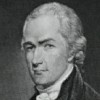
The sacred rights of mankind are not to be rummaged for among old parchments or musty records. They are written, as with a sunbeam, in the whole volume of human nature, by the hand of the Divinity itself, and can never be erased or obscured by mortal power.
Alexander Hamilton (1757-1804) American statesman, author
Essay (1775-02-23), “The Farmer Refuted”
(Source)
Quotations about:
human rights
Note not all quotations have been tagged, so Search may find additional quotes on this topic.
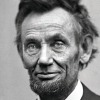
Familiarize yourselves with the chains of bondage, and you are preparing your own limbs to wear them. Accustomed to trample on the rights of those around you, you have lost the genius of your own independence, and become the fit subjects of the first cunning tyrant who rises.
Abraham Lincoln (1809-1865) American lawyer, politician, US President (1861-65)
Speech (1858-09-11), Edwardsville, Illinois
(Source)
As reported in the Alton Weekly Courier (1858-09-16).
It is the eternal struggle between these two principles — right and wrong — throughout the world. They are the two principles that have stood face to face from the beginning of time, and will ever continue to struggle. The one is the common right of humanity, and the other the divine right of kings. It is the same principle in whatever shape it develops itself. It is the same spirit that says, “You work and toil and earn bread, and I’ll eat it.” No matter in what shape it comes, whether from the mouth of a king who seeks to bestride the people of his own nation and live by the fruit of their labor, or from one race of men as an apology for enslaving another race, it is the same tyrannical principle.
Abraham Lincoln (1809-1865) American lawyer, politician, US President (1861-65)
Speech (1858-10-15), Lincoln-Douglas Debate No. 7, Alton, Illinois
(Source)
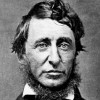
The law will never make men free; it is men who have got to make the law free. They are the lovers of law and order, who observe the law when the government breaks it.
Henry David Thoreau (1817-1862) American philosopher and writer
Speech (1854-07-04), “Slavery in Massachusetts,” Anti-Slavery Celebration, Framingham, Massachusetts
(Source)
After the conviction in Boston of Anthony Burns, under the Fugitive Slave Act of 1850. This led to large protests and an abolitionist riot at the Boston Courthouse, requiring Federal troops and state militia to ensure Burns' transport to a ship sailing to Virginia.
In context, Thoreau is arguing the quality of a higher law, higher than the Fugitive Slave Law or Constitutional legalism from the courts -- the "law of humanity," which condemns the injustice of slavery.
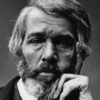
“A fair day’s-wages for a fair day’s-work:” it is as just a demand as Governed men ever made of Governing. It is the everlasting right of man. Indisputable as Gospels, as arithmetical multiplication-tables: it must and will have itself fulfilled.
Thomas Carlyle (1795-1881) Scottish essayist and historian
Past and Present, Book 1, ch. 3 “Manchester Insurrection” (1843)
(Source)
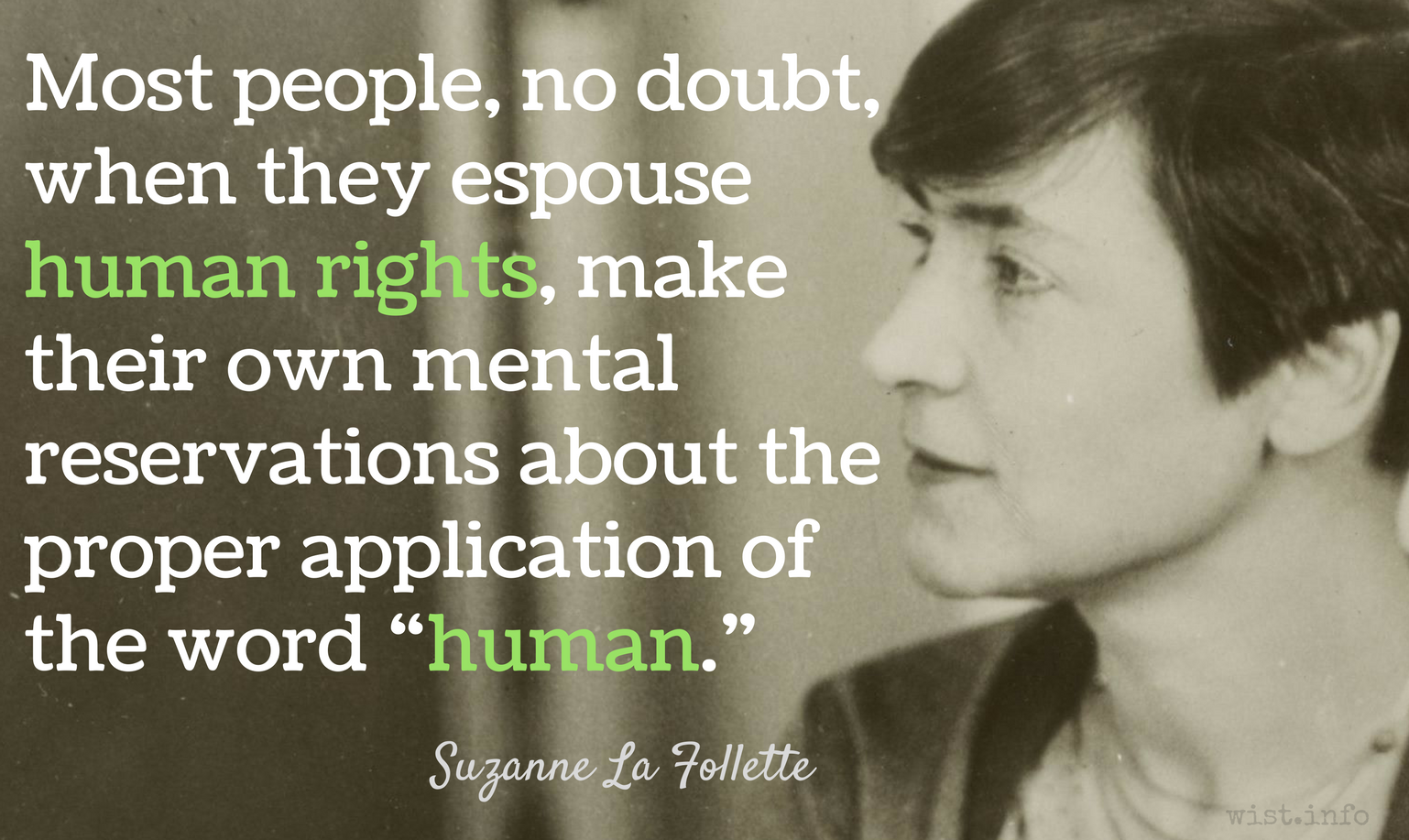
Most people, no doubt, when they espouse human rights, make their own mental reservations about the proper application of the word “human.”
Suzanne La Follette (1893-1983) American journalist, author, feminist
Concerning Women, “The Beginnings of Emancipation” (1926)
(Source)

An optimist isn’t necessarily a blithe, slightly sappy whistler in the dark of our time. To be hopeful in bad times is not just foolishly romantic. It is based on the fact that human history is a history not only of cruelty, but also of compassion, sacrifice, courage, kindness. What we choose to emphasize in this complex history will determine our lives. If we see only the worst, it destroys our capacity to do something. If we remember those times and places — and there are so many — where people have behaved magnificently, this gives us the energy to act, and at least the possibility of sending this spinning top of a world in a different direction.
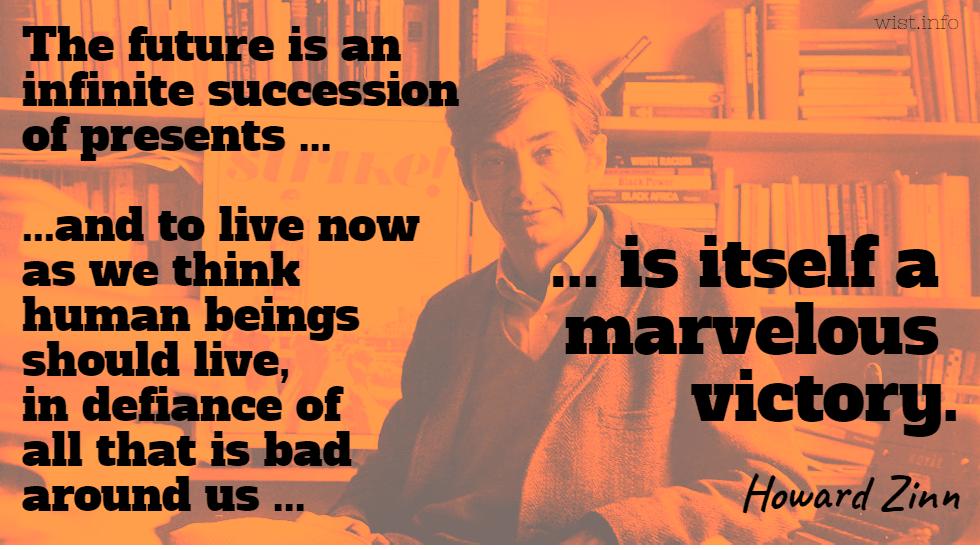
And if we do act, in however small a way, we don’t have to wait for some grand utopian future. The future is an infinite succession of presents, and to live now as we think human beings should live, in defiance of all that is bad around us, is itself a marvelous victory.
Howard Zinn (1922-2010) American historian, academic, author, social activist
Essay (2004-09-02), “The Optimism of Uncertainty,” The Nation
(Source)
Adopted from Zinn's essay of the same name in Paul Loeb (ed.), The Impossible Will Take a Little While (2004). See also Zinn, "A Marvelous Victory" (2004-02-23).

Where after all do universal human rights begin? In small places, closes to home — so close and so small that they cannot be seen on any map of the world. Yet they are the world of the individual person: The neighborhood he lives in; the school or college he attends; the factory, farm or office where he works. Such are the places where every man, woman, and child seeks equal justice, equal opportunity, equal dignity without discrimination. Unless these rights have meaning there, they have little meaning anywhere. Without concerted citizen action to uphold them close to home, we shall look in vain for progress in the larger world.
Eleanor Roosevelt (1884-1962) First Lady of the US (1933-45), politician, diplomat, activist
Speech, United Nations (27 Mar 1958)
The Declaration of Independence announces the sublime truth, that all power comes from the people. This was a denial, and the first denial of a nation, of the infamous dogma that God confers the right upon one man to govern others. It was the first grand assertion of the dignity of the human race. It declared the governed to be the source of power, and in fact denied the authority of any and all gods. Through the ages of slavery — through the weary centuries of the lash and chain, God was the acknowledged ruler of the world. To enthrone man, was to dethrone God.
To Paine, Jefferson, and Franklin, are we indebted, more than to all others, for a human government, and for a Constitution in which no God is recognized superior to the legally expressed will of the people.Robert Green Ingersoll (1833-1899) American lawyer, agnostic, orator
Lecture (1873-12) “Individuality,” Chicago Free Religious Society
(Source)
Full title "Arraignment of the Church and a Plea for Individuality." Collected in The Gods and Other Lectures (1876)
In its main features the Declaration of Independence is a great spiritual document. It is a declaration not of material but of spiritual conceptions. Equality, liberty, popular sovereignty, the rights of man — these are not elements which we can see and touch. They are ideals. They have their source and their roots in the religious convictions. They belong to the unseen world. Unless the faith of the American people in these religious convictions is to endure, the principles of our Declaration will perish. We can not continue to enjoy the result if we neglect and abandon the cause.
Calvin Coolidge (1872-1933) American lawyer, politician, US President (1925-29)
“Speech on the Occasion of the 150th Anniversary of the Declaration of Independence” (5 Jul 1926)
(Source)
We must never cease to proclaim in fearless tones the great principles of freedom and the rights of man which are the joint inheritance of the English-speaking world and which through Magna Carta, the Bill of Rights, the Habeas Corpus, trial by jury, and the English common law find their most famous expression in the American Declaration of Independence.
Winston Churchill (1874-1965) British statesman and author
“The Sinews of Peace,” speech, Westminster College, Fulton, Missouri (5 Mar 1946)
Human rights are not only violated by terrorism, repression or assassination, but also by unfair economic structures that creates huge inequalities.
Francis I (1936-2025) Argentinian Catholic Pope (2013–2025) [b. Jorge Mario Bergoglio]
(Attribute)
(Source)
Criticizing in 2009 the Argentinian government of Néstor Kirchner. Quoted in Mark Rice-Oxley, "Pope Francis: the humble pontiff with practical approach to poverty," The Guardian (13 Mar 2013).
It was not the mere matter of the separation of the colonies from the motherland; but something in the Declaration giving liberty, not alone to the people of this country, but hope to the world for all future time. It was that which gave promise that in due time the weights should be lifted from the shoulders of all men, and that all should have an equal chance. This is the sentiment embodied in that Declaration of Independence.
Abraham Lincoln (1809-1865) American lawyer, politician, US President (1861-65)
Speech (1861-02-22), Independence Hall, Philadelphia, Pennsylvania
(Source)
Text as reported in the Philadelphia Inquirer (1861-02-23).
The New York Tribune account gave for the second clause, "but that sentiment in the Declaration of Independence which gave liberty."
The constitutional freedom of religion [is] the most inalienable and sacred of all human rights.
Thomas Jefferson (1743-1826) American political philosopher, polymath, statesman, US President (1801-09)
Document (1822-10-07), Report by the Board of Visitors to the President and Directors of the Literary fund, University of Virginia
(Source)
Communism reduces men to a cog in the wheel of the state. The communist may object, saying that in Marxian theory the state is an “interim reality” that will “wither away” when the classless society emerges. True — in theory; but it is also true that, while the state lasts, it is an end in itself. Man is a means to that end. He has no inalienable rights. His only rights are derived from, and conferred by, the state. Under such a system the fountain of freedom runs dry.
Martin Luther King, Jr. (1929-1968) American clergyman, civil rights leader, social activist, preacher
Where Do We Go from Here: Chaos or Community? (1967)
(Source)
May it be to the world what I believe it will be, (to some parts sooner, to others later, but finally to all.) the Signal of arousing men to burst the chains, under which Monkish ignorance and superstition had persuaded them to bind themselves, and to assume the blessings & security of self government. The form which we have substituted restores the free right to the unbounded exercise of reason and freedom of opinion. All eyes are opened, or opening to the rights of man. The general spread of the light of science has already laid open to every view the palpable truth that the mass of mankind has not been born, with saddles on their backs, nor a favored few booted and spurred, ready to ride them legitimately, by the grace of god. These are grounds of hope for others.
Thomas Jefferson (1743-1826) American political philosopher, polymath, statesman, US President (1801-09)
Letter (1826-06-24) to Roger Chew Weightman
(Source)
The last letter he wrote.
A state that denies its citizens their basic rights becomes a danger to its neighbors as well: internal arbitrary rule will be reflected in arbitrary external relations. The suppression of public opinion, the abolition of public competition for power and its public exercise opens the way for the state power to arm itself in any way it sees fit. A manipulated population can be misused in serving any military adventure whatever. Unreliability in some areas arouses justifiable fear of unreliability in everything. A state that does not hesitate to lie to its own people will not hesitate to lie to other states.
Václav Havel (1936-2011) Czech playwright, essayist, dissident, politician
“An Anatomy of Reticence [Anatomie jedné zdrženlivosti],” sec. 9, no. 5 (1985-04) [tr. Kohák (1986)]
(Source)
First reprinted in Cross Currents: A Yearbook of Central European Culture #5 (1986). Reprinted here in Living in Truth: twenty-two essays published on the occasion of the award of the Erasmus Prize to Václav Havel, Part 1, ch. 6 (1986).
What constitutes the bulwark of our own liberty and independence? It is not our frowning battlements, our bristling sea coasts, the guns of our war steamers, or the strength of our gallant and disciplined army. These are not our reliance against a resumption of tyranny in our fair land. All of them may be turned against our liberties, without making us stronger or weaker for the struggle. Our reliance is in the love of liberty which God has planted in our bosoms. Our defense is in the preservation of the spirit which prizes liberty as the heritage of all men, in all lands, every where. Destroy this spirit, and you have planted the seeds of despotism around your own doors.
Abraham Lincoln (1809-1865) American lawyer, politician, US President (1861-65)
Speech (1858-09-11), Edwardsville, Illinois
(Source)
As reported in the Alton Weekly Courier (1858-09-16).
My position as regards the monied interests can be put in a few words. In every civilized society property rights must be carefully safeguarded; ordinarily and in the great majority of cases, human rights and property rights are fundamentally and in the long run, identical; but when it clearly appears that there is a real conflict between them, human rights must have the upper hand; for property belongs to man and not man to property.
Theodore Roosevelt (1858-1919) American politician, statesman, conservationist, writer, US President (1901-1909)
Speech (1910-04-23), “Citizenship in a Republic [The Man in the Arena],” Sorbonne, Paris, France
(Source)
Sacrifice, patience, understanding, and implacable purpose may be our lot of years to come. Let’s face it. Let’s talk sense to the American people. Let’s tell them the truth, that there are no gains without pains, that there — that we are now on the eve of great decisions, not easy decisions, like resistance when you’re attacked, but a long, patient, costly struggle which alone can assure triumph over the great enemies of man — war, poverty, and tyranny — and the assaults upon human dignity which are the most grievous consequences of each.
Adlai Stevenson (1900-1965) American diplomat, statesman
Speech (1952-07-26), Democratic National Convention, Chicago
(Source)
There is only one basic human right, the right to do as you damn well please. And with it comes the only basic human duty, the duty to take the consequences.
P. J. O'Rourke (b. 1947) American humorist, editor
“The Liberty Manifesto,” speech, Cato Institute, Washington, DC (1993-05-06)
(Source)
Reprinted in Age and Guile Beat Youth, Innocence, and a Bad Haircut (1995).

We are face to face with new conceptions of the relations of property to human welfare, chiefly because certain advocates of the rights of property as against the rights of men have been pushing their claims too far. The man who wrongly holds that every human right is secondary to his profit must now give way to the advocate of human welfare, who rightly maintains that every man holds his property subject to the general right of the community to regulate its use to whatever degree the public welfare may require it.
Theodore Roosevelt (1858-1919) American politician, statesman, conservationist, writer, US President (1901-1909)
Speech (1910-08-31), “The New Nationalism,” Osawatomie, Kansas
(Source)