He who tries to make his happiness depend too much on his reason, who holds it up for examination, who quibbles, as it were, with his delights, and admits no indelicate pleasures, ends by having none at all. He is a man who cards the wool of his mattress until nothing is left, and he ends by sleeping on the boards.
[Celui qui veut trop faire dépendre son bonheur de sa raison, qui le soumet à l’examen, qui chicane, pour ainsi dire, ses jouissances, et n’admet que des plaisirs délicats, finit par n’en plus avoir. C’est un homme qui, à force de faire carder son matelas, le voit diminuer, et finit par coucher sur la dure.]
Nicolas Chamfort (1741-1794) French writer, epigrammist (b. Nicolas-Sébastien Roch)
Products of Perfected Civilization [Produits de la Civilisation Perfectionée], Part 1 “Maxims and Thoughts [Maximes et Pensées],” ch. 2, ¶ 179 (1795) [tr. Merwin (1969)]
(Source)
(Source (French)). Alternate translations:He who allows his happiness to depend too much on reason, who submits his pleasures to examination, and desires enjoyments only of the most refined nature, too often ends by not having any at all.
[tr. De Finod (1884)]The man who makes his happiness too subject to his reason, who submits it to examination, who, as it were, quibbles with his enjoyment and recognizes only fastidious pleasures, will finish by having none at all. He is as one who makes his mattress smaller and smaller with assiduous carding until he ends by sleeping on the wood.
[tr. Mathers (1926)]One who wishes to make his happiness too much dependent on his reason, who examines his happiness closely, and who so to say quibbles with his enjoyments, ends by no longer having any. He is one who, by dint of having his mattress carded, sees it dwindle, and finishes by sleeping on the bare boards.
[tr. Pearson (1973)]Someone who wants his happiness to be too supported by reason, who examines it, who so to say quibbles over what he enjoys, and only allows himself pleasures that have delicacy, ends by not having any. He is a man who, because he wants his mattress to fit perfectly on his bed, continuously has to make it smaller, and ends up sleeping on the floor.
[tr. Siniscalchi (1994)]Anyone who relies too heavily on reason to achieve happiness, who analyses it, who so to speak quibbles over his enjoyment and can accept only refined pleasures, ends up not having any at all. He's like a man who wants to get rid of all the lumps in his mattress and eventually ends up sleeping on bare boards because he's made it too small.
[tr. Parmée (2003), ¶ 135]
Quotations about:
self-examination
Note not all quotations have been tagged, so Search may find additional quotes on this topic.
But the mere fact that you hear this or that judgement as the voice of conscience, and that consequently you feel a thing to be right, may be due to the fact that you have never given the matter much thought, and have blindly accepted from your childhood whatever you were told was right.
[Dass du aber diess und jenes Urtheil als Sprache des Gewissens hörst, also, dass du Etwas als recht empfindest, kann seine Ursache darin haben, dass du nie über dich nachgedacht hast und blindlings annahmst, was dir als recht von Kindheit an bezeichnet worden ist.]Friedrich Nietzsche (1844-1900) German philosopher and poet
The Gay Science [Die fröhliche Wissenschaft], Book 4, § 335 (1882) [tr. Hill (2018)]
(Source)
Also known as La Gaya Scienza, The Joyful Wisdom, or The Joyous Science.
(Source (German)). Alternate translations:But that you hear this or that judgment as the voice of conscience, consequently, that you feel a thing to be right -- may have its cause in the fact that you have never reflected about yourself, and have blindly accepted from your childhood what has been designated to you as right.
[tr. Common (1911)]But that you take this or that judgment for the voice of conscience -- in other words, that you feel something to be right -- may be due to the fact that you have never thought much about yourself and simply have accepted blindly that what you had been told ever since your childhood was right.
[tr. Kaufmann (1974)]But that you hear this or that judgement as the words of conscience, i.e., that you feel something to be right may have its cause in your never having thought much about yourself and in blindly having accepted what has been labeled right since your childhood.
[tr. Nauckhoff (2001)]
Incline us oh God! to think humbly of ourselves, to be severe only in the examination of our own conduct, to consider our fellow-creatures with kindness, and to judge of all they say and do with that charity which we would desire from them ourselves.
Jane Austen (1775-1817) English author
Prayer 3 “Another Day Now Gone”
(Source)
On e of three surviving prayers Austen wrote. More discussion: Exploring Jane Austen’s Prayers | Jane Austen's World.
When men are brought face to face with their opponents, forced to listen and learn and mend their ideas, they cease to be children and savages and begin to live like civilized men. Then only is freedom a reality, when men may voice their opinions because they must examine their opinions.
Walter Lippmann (1889-1974) American journalist and author
“The Indispensable Opposition,” The Atlantic Monthly (Aug 1939)
(Source)
No simplicity of mind, no obscurity of station, can escape the universal duty of questioning all that we believe.
William Kingdon Clifford (1845-1879) English mathematician and philosopher
“The Ethics of Belief,” Part 1 “The Duty of Inquiry,” Contemporary Review (Jan 1877)
(Source)
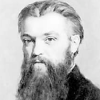
I must intreat your patience — your gentle hearing. I am not going to question your opinions. I am not going to meddle with your belief. I am not going to dictate to you mine. All that I say is, examine; enquire. Look into the nature of things. Search out the ground of your opinions, the for and the against. Know why you believe, understand what you believe, and possess a reason for the faith that is in you.
Frances "Fanny" Wright (1795-1852) Scottish-American writer, lecturer, social reformer
A Course of Popular Lectures, Lecture 3 “Of the more Important Divisions and Essential Parts of Knowledge” (1829)
(Source)
In self-examination, take no account of yourself by your thoughts and resolutions in the days of religion and solemnity; examine how it is with you in the days of ordinary conversation and in the circumstances of secular employment.
Jeremy Taylor (1613-1667) English cleric and author
(Attributed)
(Source)
Quoted in The Friends' Intelligencer (24 Jun 1882).
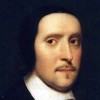
It is a sad fate for a man to die
Too well known to everybody else,
And still unknown to himself.[Illi mors gravis incubate
Qui notus nimis omnibus
Ignotus moritur sibi.]
Seneca the Younger (c. 4 BC-AD 65) Roman statesman, philosopher, playwright [Lucius Annaeus Seneca]
Thyestes, ll. 401-403 [tr. Bacon]
Lines from the Chorus translated by Francis Bacon, in "Of Great Place," Essays, Part 11. Sometimes incorrectly attributed to Bacon.

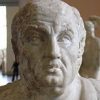
If evil Men speak good, or good Men evil of thee; examine thy Actions, and suspect thy self: But if evil Men speak evil of thee; hold it as an Honor, and by way of Thankfulness love them; but upon condition, that they continue to hate thee.
Thomas Fuller (1654-1734) English physician, preacher, aphorist, writer
Introductio ad Prudentiam, Vol. 1, # 1252 (1725)
(Source)
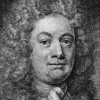
‘Tis the hardest thing in the world to be a good Thinker, without being a strong Self-Examiner.
Anthony Cooper, 3rd Earl of Shaftesbury (1671-1713) English politician and philosopher
Characteristicks of Men, Manners, Opinions, Times, Vol. 1, “Soliloquy: or Advice to an Author” (1711)

I talk half the time to find out my own thoughts, as a school-boy turns his pockets inside out to see what is in them. One brings to light all sorts of personal property he had forgotten in his inventory.
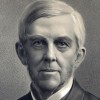
Everyone should be prepared at times to re-examine the foundations of their beliefs, to view the world from others’ perspectives, and to seriously consider the possibility that what they accept as the Absolute Truth may, in fact, not be true at all — except me, of course, because I know I’m right.
John Russell (contemp.) ("jr")
Belief-L

When you see someone who is worthy, concentrate upon becoming their equal; when you see someone who is unworthy, use this as an opportunity to look within yourself.
[見賢思齊焉、見不賢而內自省也。]
Confucius (c. 551- c. 479 BC) Chinese philosopher, sage, politician [孔夫子 (Kǒng Fūzǐ, K'ung Fu-tzu, K'ung Fu Tse), 孔子 (Kǒngzǐ, Chungni), 孔丘 (Kǒng Qiū, K'ung Ch'iu)]
The Analects [論語, 论语, Lúnyǔ], Book 4, verse 17 (4.17) (6th C. BC – AD 3rd C.) [tr. Slingerland (2003)]
(Source)
(Source (Chinese)). Alternate translations:When we see men of worth, we should think of equaling them; when we see men of a contrary character, we should turn inwards and examine ourselves.
[tr. Legge (1861)]When you meet with men of worth, think how you may attain to their level; when you see others of an opposite character, examine yourself.
[tr. Jennings (1895)]When we meet with men of worth, we should think how we may equal them. When we meet with worthless men, we should turn into ourselves and find out if we do not resemble them.
[tr. Ku Hung-Ming (1898)]When you see a man of worth, think how to rise to his level. When you see an unworthy man, then look within and examine yourself.
[tr. Soothill (1910)]See solid talent and think of measuring up to it; see the un-solid and examine your own insides.
[tr. Pound (1933)]In the presence of a good man, think all the time how you may learn to equal him. In the presence of a bad man, turn your gaze within!
[tr. Waley (1938)]When you see a man of the highest caliber, give thought to attaining his stature. When you see one who is not, go home and conduct a self-examination.
[tr. Ware (1950)]When you meet someone better than yourself, turn your thoughts to becoming his equal. When you meet someone not as good as you are, look within and examine your own self.
[tr. Lau (1979)]When you come across a superior person, think of being equal to him. When you come across an inferior person, turn inwards and examine yourself.
[tr. Dawson (1993)]When you see a worthy man, seek to emulate him. When you see an unworthy man, examine yourself.
[tr. Leys (1997)]On seeing a worthy man, think of equalling him; on seeing an unworthy man, examine yourself inwardly.
[tr. Huang (1997)]One should think to follow the sagaciousness when one sees it; One should examine onceself when one sees the no sagaciousness.
[tr. Cai/Yu (1998), #83]When you meet persons of exceptional character think to stand shoulder to shoulder with them; meeting persons of little character, look inward and examine yourself.
[tr. Ames/Rosemont (1998)]When he sees a worthy man, let him think how he might come up to him; when he sees an unworthy man, let him examine within himself.
[tr. Brooks/Brooks (1998)]In the presence of sages, you can see how to perfect your thoughts. In the presence of folls, you must awaken yourself.
[tr. Hinton (1998)]When you see a worthy person, think about how you can equal him. When you see an unworthy person, reflect on your own conduct.
[tr. Watson (2007)]When you meet a worthy person, think how you could become his equal. When you meet an unworthy person, turn inward and examine your own conduct.
[tr. Chin (2014)]When you meet a virtuous person, you should strive to emulate his virtues. When you meet a person void of virtue, you should consider whether you have the same flaws.
[tr. Li (2020)]