

All work and no play, makes Jack a dull boy.
James Howell (c. 1594–1666) Welsh historian, writer, aphorist
Paroimiographia [Παροιμιογραφία], or, Old Sayed Sawes & Adages, “English Proverbs” (1659) [compiler]
(Source)
First recorded instance of this adage, though in context it predates Howell's collection.
The phrase was popularized for modern audiences by its use in Stanley Kubrick's film The Shining (1980) (the phrase is not in Stephen King's book; Kubrick used different adages in the different languages the movie was released in). That use, in turn, derived from the phrase being a common one for repetitive work in typing classes.
An additional line is given in Maria Edgeworth, Harry and Lucy (1801), where she refers to this as an "ancient British adage":All work and no play makes Jack a dull boy,
All play and no work makes Jack a mere toy.
Quotations by:
Howell, James
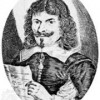
Burn not thy fingers to snuff another man’s candle.
James Howell (c. 1594–1666) Welsh historian, writer, aphorist
Paroimiographia [Παροιμιογραφία], or, Old Sayed Sawes & Adages, “New Sayings” (1659)
(Source)
A hungry man [is] an angry man.
James Howell (c. 1594–1666) Welsh historian, writer, aphorist
Paroimiographia [Παροιμιογραφία]: Proverbs, or, Old Sayed Sawes & Adages, “English Proverbs” (1659) [compiler]
(Source)
He that wrestleth with a turd shall be beshitt fall he over or under.
James Howell (c. 1594–1666) Welsh historian, writer, aphorist
Paroimiographia [Παροιμιογραφία]: Proverbs, or, Old Sayed Sawes & Adages, “English Proverbs” (1659) [compiler]
(Source)
He that gropes in the dark, finds that which he would not.
James Howell (c. 1594–1666) Welsh historian, writer, aphorist
Paroimiographia [Παροιμιογραφία]: Proverbs, or, Old Sayed Sawes & Adages, “English Proverbs” (1659) [compiler]
(Source)
Look high and fall into a Cow-turd.
James Howell (c. 1594–1666) Welsh historian, writer, aphorist
Paroimiographia [Παροιμιογραφία]: Proverbs, or, Old Sayed Sawes & Adages, “English Proverbs” (1659) [compiler]
(Source)
Too much money makes one madd.
James Howell (c. 1594–1666) Welsh historian, writer, aphorist
Paroimiographia [Παροιμιογραφία]: Proverbs, or, Old Sayed Sawes & Adages, “English Proverbs” (1659) [compiler]
(Source)
When thou dost hear a toul or knell,
Then think upon thy passing-bel.James Howell (c. 1594–1666) Welsh historian, writer, aphorist
Paroimiographia [Παροιμιογραφία]: Proverbs, or, Old Sayed Sawes & Adages, “English Proverbs” (1659) [compiler]
(Source)
One may live and learn, and be hang’d and forget all.
James Howell (c. 1594–1666) Welsh historian, writer, aphorist
Paroimiographia [Παροιμιογραφία]: Proverbs, or, Old Sayed Sawes & Adages, “English Proverbs” (1659) [compiler]
(Source)
Words cutt more than swords.
James Howell (c. 1594–1666) Welsh historian, writer, aphorist
Paroimiographia [Παροιμιογραφία]: Proverbs, or, Old Sayed Sawes & Adages, “English Proverbs” (1659) [compiler]
(Source)
A common proverbial concept before and after. See also the Bible, Shakespeare (1590), Shakespeare (1598), Herbert (1640), Franklin (1744), Irving (1820), Lowell (1914), Sarton (1973), Fry (1997), Ginott (2003).
When Adam delv’d and Eve span,
Who was then a Gentleman?James Howell (c. 1594–1666) Welsh historian, writer, aphorist
Paroimiographia [Παροιμιογραφία]: Proverbs, or, Old Sayed Sawes & Adages, “English Proverbs” (1659) [compiler]
(Source)
If the Sky fall we shall have Larks.
Little difference twixt a feast and a belly-ful.
James Howell (c. 1594–1666) Welsh historian, writer, aphorist
Paroimiographia [Παροιμιογραφία]: Proverbs, or, Old Sayed Sawes & Adages, “English Proverbs” (1659) [compiler]
(Source)
Better half a loaf then no bread.
James Howell (c. 1594–1666) Welsh historian, writer, aphorist
Paroimiographia [Παροιμιογραφία]: Proverbs, or, Old Sayed Sawes & Adages, “English Proverbs” (1659) [compiler]
(Source)
Howell also lists this proverb on an earlier page. A similar proverb, "Better half a loaf than none at all," appears on two pages as well, the second showing how to render the phrase in French, Italian, and Spanish.
He who will thrive, must rise at five;
He who hath thriven, may sleep till seven;
Who will not thrive at all, may sleep till eleven.James Howell (c. 1594–1666) Welsh historian, writer, aphorist
Paroimiographia [Παροιμιογραφία]: Proverbs, or, Old Sayed Sawes & Adages, “English Proverbs” (1659) [compiler]
(Source)
In every Countrey the Sun riseth in the morning.
James Howell (c. 1594–1666) Welsh historian, writer, aphorist
Paroimiographia [Παροιμιογραφία]: Proverbs, or, Old Sayed Sawes & Adages, “English Proverbs” (1659) [compiler]
(Source)
In a later section ("English Proverbs Rendered into French, Italian & Spanish"), this is rendered "In every Countrey the Sun riseth still in the morning."
Time and Tyde stayes for no man.
James Howell (c. 1594–1666) Welsh historian, writer, aphorist
Paroimiographia [Παροιμιογραφία]: Proverbs, or, Old Sayed Sawes & Adages, “English Proverbs” (1659) [compiler]
(Source)
Modern: "Time and tide wait for no man."
This phrase actually dates back at least as far as St. Marher (1225): "And te tide and te time þat tu iboren were, schal beon iblescet [The tide nor time abides for, tarrieth for no man]." A version appears in Chaucer's Canterbury Tales (late 14th C): Though we sleep, or wake, or roam, or ride / Aye fleeth time, it will no man abide." Variations become common in the 16th Century, e.g., "Time nor tide tarrieth no man."
Though tide works here as most interpret it (the tide comes in, the tide goes out), the original usage of the word in this phrase meant more broadly "season" or "period" or any recurring interval (including oceanic tides). It could be found in terms like "Christmastide" and "eventide," and remains in modern English in words like "tidings" and "tidy."
For more info, see:
As I brew, so must I drink.
James Howell (c. 1594–1666) Welsh historian, writer, aphorist
Paroimiographia [Παροιμιογραφία]: Proverbs, or, Old Sayed Sawes & Adages, “English Proverbs” (1659) [compiler]
(Source)
Better tooth out then alwayes ake.
[Better tooth out than always ache.]
James Howell (c. 1594–1666) Welsh historian, writer, aphorist
Paroimiographia [Παροιμιογραφία]: Proverbs, or, Old Sayed Sawes & Adages, “English Proverbs” (1659) [compiler]
(Source)
The more haste, the worse speed.
James Howell (c. 1594–1666) Welsh historian, writer, aphorist
Paroimiographia [Παροιμιογραφία]: Proverbs, or, Old Sayed Sawes & Adages, “English Proverbs”” (1659) [compiler]
(Source)
A few pages later, Howell quotes John Heywood (1546) the analogous "The more haste, the less speed."
See also See Augustus and Publilius Syrus.
Do thou thy best, and leave to God the rest.
James Howell (c. 1594–1666) Welsh historian, writer, aphorist
Paroimiographia [Παροιμιογραφία]: Proverbs, or, Old Sayed Sawes & Adages, “New Sayings,” 2nd Century (1659)
(Source)
The Gluttons dig their own graves with their teeth.
[Le gourmans, sont leurs fosses avec leurs dents.]
James Howell (c. 1594–1666) Welsh historian, writer, aphorist
Paroimiographia [Παροιμιογραφία]: Proverbs, or, Old Sayed Sawes & Adages, “Proverbs in French” (1659) [compiler]
(Source)
Old wine, and old friend, and old gold are beloved in all places.
[Vin vieux, amy vieux, Y or vieux sont amez en touts lieux.]
James Howell (c. 1594–1666) Welsh historian, writer, aphorist
Paroimiographia [Παροιμιογραφία]: Proverbs, or, Old Sayed Sawes & Adages, “Proverbs in French” (1659) [compiler]
(Source)
Howell also gives a Spanish version (in the same source, "Proverbs in Spanish"):Old wine, and an old friend.
[Vino anejo, y amigo viejo.]
See Alfonso X, Bacon (1624), Herbert (1640).
To have gold brings fear, to have none brings grief.
[L’haver oro è un timore, il non haver un dolore.]
James Howell (c. 1594–1666) Welsh historian, writer, aphorist
Paroimiographia [Παροιμιογραφία]: Proverbs, or, Old Sayed Sawes & Adages, “Proverbs in Italian” (1659) [compiler]
(Source)
Too much spoiles, too little doth not satisfie.
[Il troppo guasta, il poco non basta.]
James Howell (c. 1594–1666) Welsh historian, writer, aphorist
Paroimiographia [Παροιμιογραφία]: Proverbs, or, Old Sayed Sawes & Adages, “Proverbs in Italian” (1659) [compiler]
(Source)
Wealth is not his who hath it, but his who enjoyes it.
[La robba no n’e di chi la fa, m’a di chi la gode.]
James Howell (c. 1594–1666) Welsh historian, writer, aphorist
Paroimiographia [Παροιμιογραφία]: Proverbs, or, Old Sayed Sawes & Adages, “Proverbs in Italian” (1659) [compiler]
(Source)
Never make thy Physician thy heir.
[Non far ma medico tuo herede.]
James Howell (c. 1594–1666) Welsh historian, writer, aphorist
Paroimiographia [Παροιμιογραφία]: Proverbs, or, Old Sayed Sawes & Adages, “Proverbs in Italian” (1659) [compiler]
(Source)
By seeing one thou knowest him half, by hearing him speak thou knowst all.
[Vedendo uno conosci mezzo, udendolo parlar il conosci tutto.]
Easter so wished for long, passeth away in one day.
[Pasqua tanto defiata, in un giorno è passata.]
James Howell (c. 1594–1666) Welsh historian, writer, aphorist
Paroimiographia [Παροιμιογραφία]: Proverbs, or, Old Sayed Sawes & Adages, “Proverbs in Italian” (1659) [compiler]
(Source)
The Gluttons dig their own graves with their teeth.
James Howell (c. 1594–1666) Welsh historian, writer, aphorist
Paroimiographia, “French” (1659)