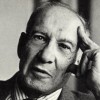
Keep close behind me. Let them say their say.
Stand straight, a mighty tower unwavering,
its height unshaken by such breaths of wind.[Vien dietro a me, e lascia dir le genti:
sta come torre ferma, che non crolla
già mai la cima per soffiar di venti.]Dante Alighieri (1265–1321) Italian poet
The Divine Comedy [Divina Commedia], Book 2 “Purgatorio,” Canto 5, l. 13ff (5.13-15) [Virgil] (1314) [tr. Kirkpatrick (2007)]
(Source)
Virgil scolding Dante for slowing down when other spirits are pointing and murmuring about him having a shadow, unlike them.
(Source (Italian)). Other translations:Can murmurs move you? Let them whisper on,
And bid your Reason firmly keep its throne,
and o'er the fortress of the mind preside.
[tr. Boyd (1802), st. 2]Come after me, and to their babblings leave
The crowd. Be as a tower, that, firmly set,
Shakes not its top for any blast that blows!
[tr. Cary (1814)]Come thou behind me, let the people talk;
Stand like a steadfast tower, whose lofty crest
Ne'er quaked obedient to the rocking blast.
[tr. Bannerman (1850)]Come after me, and let the people talk;
Stand like a steadfast tower, that never wags
Its top for all the blowing of the winds;
[tr. Longfellow (1867)]Come behind me, and let the folk talk; stand like a firm tower which never shakes its top for blast of winds.
[tr. Butler (1885)]Follow thou me, and let the people talk:
Stand like a solid tower, that doth not bow
Its crest at any time, though wild winds stalk.
[tr. Minchin (1885)]Come after me, and let the people talk. Stand as a tower firm, that never wags its top for blowing of the winds.
[tr. Norton (1892)]Follow me and let the people talk; stand thou as a firm tower which never shakes its summit for blast of winds.
[tr. Okey (1901)]Come after me and let the people talk. Stand like a firm tower that never shakes its top for blast of wind.
[tr. Sinclair (1939)]Follow behind me and let them talk their fill:
Stand like a tower whose summit never shakes
For the wind's blowing, and stays immovable.
[tr. Binyon (1943)]Follow thou me, and let the people chatter;
Stand as a tower stands firm in time of trouble,
Nor bends its head, though winds may bawl and batter.
[tr. Sayers (1955)]Follow my steps, though all such whisper of you:
be as a tower of stone, its lofty crown
unswayed by anything the winds may do.
[tr. Ciardi (1961)]Follow me and let the people talk.
Stand as a firm tower which never
shakes its summit for blast of winds.
[tr. Singleton (1973)]Keep up with me and let the people talk!
Be like a solid tower whose brave height
remains unmoved by all the winds that blow.
[tr. Musa (1981)]Come on behind me, let those people talk:
Stand like a solid tower which does not shake
Its top whatever winds are blowing on it.
[tr. Sisson (1981)]Come, follow me, and let these people talk:
stand like a sturdy tower that does not shake
its summit though the winds may blast.
[tr. Mandelbaum (1982)]Come after me, and let the people talk:
be like a strong tower whose top never falls,
however hard the winds may blow.
[tr. Durling (2003)]Follow me close behind, and let the people talk: stand like a steady tower, that never shakes at the top, in the blasts of wind.
[tr. Kline (2002)]Just follow me and let the people talk.
Why can't you be like a sturdy tower
that does not tremble in the fiercest wind.
[tr. Hollander/Hollander (2007)]Just follow me and let the people talk:
Stand steady as a tower, which doesn't shake
Its top whenever the winds decide to blow.
[tr. Raffel (2010)]
Karl Marx paraphrased the first line of this tercet in the conclusion of his Author's Preface to the First Edition of Das Kapital (1867), crediting Dante:Every opinion based on scientific criticism I welcome. As to the prejudices of so-called public opinion, to which I have never made concessions, now as aforetime the maxim of the great Florentine is mine: "Segui il tuo corso, e lascia dir le genti."
Which reads something like "Follow your own course, and let the people talk." The phrase is given in Italian even in the original German edition.
Quotations about:
courage
Note not all quotations have been tagged, so Search may find additional quotes on this topic.
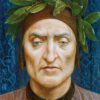
Tell a man he is brave, and you help him to become so.
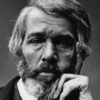
Always bear in mind that your own resolution to succeed is more important than any one thing.
Abraham Lincoln (1809–1865) American lawyer, politician, US President (1861–65)
Letter (1855-11-05) to Isham Reavis
(Source)
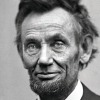
A hero is no braver than an ordinary man, but he is braver five minutes longer.
Ralph Waldo Emerson (1803–1882) American essayist, lecturer, poet
(Spurious)
Frequently ascribed to him, especially in recent decades, but not found in his works.
More discussion about this quotation:
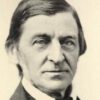
And should I fail, my courage brings its commendation:
greatness aimed at is enough.[Quod si deficiant vires, audacia certe
Laus erit: in magnis et voluisse sat est.]Propertius (50–16 BC) Roman elegiac poet [Sextus Propertius]
Elegies, Book 2, Elegy 10, l. 5ff (2.10.5-6) [tr. Holcombe (2009)]
(Source)
Talking specifically about writing epics about mighty themes and accomplishments.
Because of the corruption of manuscripts of Propertius and speculating from internal references, some 19th Century scholars (e.g., Lachmann) argued for a different division of the elegies into books, thus the translations here wich instead label this as Book 3, Elegy 1.
(Source (Latin)). Other translations:And if my powers of song should fail -- to dare were surely fame:
Enough that I have had the will; no higher praise I claim.
[tr. Cranstoun (1875), 3.1]Courage in weighty works must power supply,
And praise be mine that I've the will to try.
[tr. Moore (1870), 3.1]But if my powers fail me, at all events my courage will be meritorious: in great attempts even to have had the will is enough.
[tr. Gantillon (1884), 3.1]And if my strength fail, at least my boldness will be a title of honour; in great enterprises, the very "I would" is enough.
[tr. Phillimore (1906)]But should strength fail me, yet my daring shall win me fame: in mighty enterprises enough even to have willed success.
[tr. Butler (Loeb) (1912)]If I have not the faculty, "The bare attempt would be praiseworthy."
"In things of similar magnitude
the mere will to act is sufficient."
[tr. Pound (1919), 5.1]What though I fail? That I have dared aspire
should be enough. I shall have tried. What more?
[tr. Carrier (1963)]But if my strength should fail, why then my temerity
Is sure of praise, for in matters of moment
The intention suffices.
[tr. Musker (1972)]And should strength fail me, my daring at least will win me praise: in mighty projects even to have wished is enough.
[tr. Goold (Loeb) (1990)]If strength be lacking, surely ambition will be praised;
The intention in great matters is enough.
[tr. Lee (1992)]But if I lack the power, then surely my courage will be praised: it’s enough simply to have willed great things.
[tr. Kline (2001)]What though strength fails? Boldness is certain to win praise. In mighty enterprises, it is enough to have had the determination.
[Bartlett]
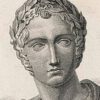
AUSTRIA: For courage mounteth with occasion.
William Shakespeare (1564–1616) English dramatist and poet
King John, Act 2, sc. 1, l. 82 (2.1.82) (1596)
(Source)
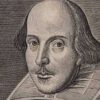
PETER: To die will be an awfully big adventure.
J. M. Barrie (1860–1937) Scottish novelist and dramatist [James Matthew Barrie]
Peter Pan, Act 3 (1904, pub. 1928)
(Source)
This was added to the play in 1905, at the end of Act 3:(The waters are lapping over the rock now, and PETER knows that it will soon be submerged. Pale rays of light mingle with the moving clouds, and from the coral grottoes is to be heard a sound, at once the most musical and the most melancholy in the Never Land, the mermaids calling to the moon to rise. PETER is afraid at last, and a tremor runs through him, like a shudder passing over the lagoon; but on the lagoon one shudder follows another till there are hundreds of them, and he feels just the one.)
PETER (with a drum beating in his breast as if he were a real boy at last): To die will be an awfully big adventure.In Barrie's novelization, Peter and Wendy, ch. 8 "The Mermaids' Lagoon" (1911), this is rendered:
The rock was very small now; soon it would be submerged. Pale rays of light tiptoed across the waters; and by and by there was to be heard a sound at once the most musical and the most melancholy in the world: the mermaids calling to the moon.
Peter was not quite like other boys; but he was afraid at last. A tremor ran through him, like a shudder passing over the sea; but on the sea one shudder follows another till there are hundreds of them, and Peter felt just the one. Next moment he was standing erect on the rock again, with that smile on his face and a drum beating within him. It was saying, “To die will be an awfully big adventure.”
Sometimes given as "To die would be an awfully great adventure," "To die will be a great adventure," or "To die would be a great adventure."
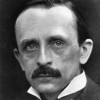
It is from the numberless diverse acts of courage and belief that human history is shaped. Each time a man (or a woman) stands up for an ideal, or acts to improve the lot of others, or strikes out against injustice, he (or she) sends a tiny ripple of hope, and crossing each other from a million different centers of energy and daring, those ripples build a current which can sweep down the mightiest walls of oppression and resistance.
Robert Francis Kennedy (1925–1968) American politician
“Day of Affirmation,” address, University of Capetown, South Africa (6 Jun 1966)
(Source)
Inscribed on the RFK gravesite at Arlington National Cemetery as "It is from numberless diverse acts of courage and belief that human history is shaped. Each time a man stands up for an ideal, or acts to improve the lot of others, or strikes out against injustice, he sends forth a tiny ripple of hope, and crossing each other from a million different centers of energy and daring those ripples build a current which can sweep down the mightiest walls of oppression and injustice."
History does not long entrust the care of freedom to the weak or the timid.
Dwight David Eisenhower (1890–1969) American general, US President (1953–61)
Inaugural Address (20 Jan 1953)
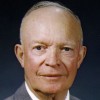
The greatest test of courage is to bear defeat without losing heart.
Robert Green Ingersoll (1833–1899) American lawyer, freethinker, orator
Speech (1876-07-04), “Centennial Oration [The Declaration of Independence],” Peoria, Illinois
(Source)
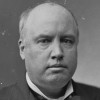
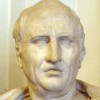
For it is the part of a wise man to resolve beforehand that whatever can happen to a man should be borne calmly if it should befall him. It needs altogether great judgment to provide against such evil happening and no less courage to bear it with fortitude if it should befall.
[Est enim sapientis, quidquid homini accidere possit, id praemeditari ferendum modice esse, si evenerit. Majoris omnino est consilii providere ne quid tale accidat, animi non minoris fortiter ferre si evenerit.]
Marcus Tullius Cicero (106–43 BC) Roman orator, statesman, philosopher
Philippics [Philippicae; Antonian Orations], No. 11, ch. 3 / sec. 7 (11.3/11.7) (43-02 BC) [tr. Ker (1926)]
(Source)
(Source (Latin)). Other translations:It is the mark of a wise man ever to consider, reflect, that whatever may happen to him should be borne with patience. It is, however, a mark of greater wisdom to take every precaution against the occurrence of any thing unpleasant, of a reverse of fortune; but it is an indication of a mind in no wise inferior bravely and manfully to submit to any change of fortune, however unpleasant, untoward, unfavorable, unpropitious.
[Source (1869)]For it is the part of a wise man to resolve beforehand that whatever can happen to a brave man is to be endured with patience if it should happen. It is indeed a proof of altogether greater wisdom to act with such foresight as to prevent any such thing from happening; but it is a token of no less courage to bear it bravely if it should befall one.
[tr. Yonge (1903)]
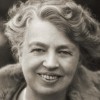
The encouraging thing is that every time you meet a situation, though you may think at the time it is an impossibility and you go through the tortures of the damned, once you have met it and lived through it you find that forever after you are freer than you ever were before. If you can live through that you can live through anything. You gain strength, courage, and confidence by every experience in which you really stop to look fear in the face. You are able to say to yourself, “I lived through this horror. I can take the next thing that comes along.” The danger lies in refusing to face the fear, in not daring to come to grips with it. If you fail anywhere along the line it will take away your confidence. You must make yourself succeed every time. You must do the thing you think you cannot do.
Eleanor Roosevelt (1884–1962) American politician, diplomat, activist; First Lady of the US (1933–45)
You Learn by Living, ch. 2 “Fear — the Great Enemy” (1960)
(Source)
This is the likely source for the misattribution of this Mary Schmich quotation to Roosevelt.
A ship in harbor is safe, but that is not what ships are built for.
John Augustus Shedd (1859–1928) American writer, educator
Salt from My Attic (1928)Variants:
More information on this quotation here. Sometimes (mis)attributed to William Greenough Thayer Shedd.- "Ships in harbor are safe, but that is not what ships are built for."
- "A ship in port is safe. But that’s not what ships were built for." (used by Grace Hopper)
- "A ship is always safe at shore, but that is not what it is built for." (frequently misattributed to Albert Einstein)
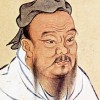
To see the right and not do it is cowardice.
[見義不爲、無勇也。]
Confucius (c. 551- c. 479 BC) Chinese philosopher, sage, politician [孔夫子 (Kǒng Fūzǐ, K'ung Fu-tzu, K'ung Fu Tse), 孔子 (Kǒngzǐ, Chungni), 孔丘 (Kǒng Qiū, K'ung Ch'iu)]
The Analects [論語, 论语, Lúnyǔ], Book 2, verse 24 (2.24.2) (6th C. BC – AD 3rd C.) [tr. Soothill (1910)]
(Source)
(Source (Chinese)). Other translations:To see what is right and not to do it is want of courage.
[tr. Legge (1861)]It is (moral) cowardice to leave undone what one perceives to be right to do.
[tr. Jennings (1895)]To see what is right and to act against one's judgment shows a want of courage.
[tr. Ku Hung-Ming (1898)]To see justice and not act upon it is cowardice.
[tr. Pound (1933)]To see what is right and not do it is cowardice.
[tr. Waley (1938)]It is cowardice to fail to do what is right.
[tr. Ware (1950)]Faced with what is right, to leave it undone shows a lack of courage.
[tr. Lau (1979)]To see what is right and not to do it is cowardice.
[tr. Dawson (1993)]To not act when justice commands, that is cowardice.
[tr. Leys (1997)]To see something you ought to do and not to do it is want of courage.
[tr. Huang (1997)]To see something you ought to do and not to do it is want of courage.
[tr. Huang (1997)]One does not do the righteous things when one sees them, it is not brave.
[tr. Cai/Yu (1998), #40]Failing to act on what is seen as appropriate [yi] is a want of courage.
[tr. Ames/Rosemont (1998)]If he sees what is right but does not do it, he lacks courage.
[tr. Brooks/Brooks (1998)]And to recognize a Duty without carrying it out is mere cowardice.
[tr. Hinton (1998)]To see what is right, but to fail to do it, is to be lacking in courage.
[tr. Slingerland (2003)]To see what is right and not do it is cowardly.
[tr. Watson (2007)]Faced with what is right yet doing nothing about it shows a lack of courage.
[tr. Chin (2014)]Being aloof from a righteous obligation is cowardice.
[tr. Li (2020)]
Valor is a gift. Those having it never know for sure whether they have it till the test comes. And those having it in one test never know for sure if they will have it when the next test comes.
Carl Sandburg (1878–1967) American poet, biographer
(Attributed)
Sometimes attributed to news accounts from 14 December 1954, but not confirmed. Also attributed to Napoleon Bonaparte.
Our greatest glory is, not in never falling, but in rising every time we fall.
Oliver Goldsmith (1730–1774) Irish poet, playwright, novelist
The Citizen of the World: or, Letters from a Chinese Philosopher, Residing in London, to His Friends in the East, Letter 7 (1762)
(Source)
Ostensibly from a Chinese visitor to London, Lien Chi Altangi, the letters were written by Goldsmith and published in The Public Ledger in 1760-61. Letter 22 has the similar "True magnanimity consists not in NEVER falling, but in RISING every time we fall."
The saying is often attributed to Confucius (Letter 7's introduction implied that they were), but is not found in Confucius' work. The saying is also sometimes attributed to Ralph Waldo Emerson. See here for more discussion.
Be convinced that to be happy means to be free and that to be free means to be brave.
Thucydides (c. 460–400 BC) Greek historian
The Speeches of Pericles, “The Funeral Speech” [tr. Edinger (1979)Alt trans.:
- "The secret of happiness is freedom, and the secret of freedom is courage."
- "Happiness depends on being free, and freedom depends on being courageous."
God, give us the grace to accept with serenity the things which cannot be changed, courage to change the things which should be changed, and the wisdom to distinguish the one from the other.
Reinhold Niebuhr (1892–1971) American theologian and clergyman
“The Serenity Prayer” (1934)
Niebuhr at one point claimed authorship (and took copyright fees from Hallmark Cards), but later on denied he had written it. It was later adopted by Alcoholics Anonymous. Discussion of the actual authorship here.
I have found that the greatest help in meeting any problem with decency and self-respect and whatever courage is demanded, is to know where you yourself stand. That is, to have in words what you believe and are acting from.
William Faulkner (1897–1962) American novelist
Letter to David Kirk, Oxford, Miss. (8 Mar 1956)
(Source)
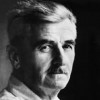
Whereas, Sir, you know courage is reckoned the greatest of all virtues; because, unless a man has that virtue, he has no security for preserving any other.
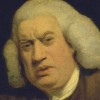
Courage is not simply one of the virtues, but the form of every virtue at the testing point, which means, at the point of highest reality. A chastity or honesty, or mercy, which yields to danger will be chaste or honest or merciful only on conditions. Pilate was merciful till it became risky.
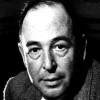
Security is mostly a superstition. It does not exist in nature, nor do the children of men as a whole experience it. God Himself is not secure, having given man dominion over His works! Avoiding danger is no safer in the long run than outright exposure. The fearful are caught as often as the bold. Faith alone defends. Life is either a daring adventure or nothing. To keep our faces toward change and behave like free spirits in the presence of fate is strength undefeatable.
Helen Keller (1880–1968) American author and lecturer
Let Us Have Faith, “Faith Fears Not” (1940)
(Source)
Reprinted in her compilation book, The Open Door (1957). This quotation is often given in excerpted form, leaving out certain sentences, or even rearranging some of the sentences and sometimes making it seem that the two sources are actually different.
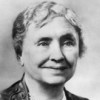
Do not be too timid and squeamish about your actions. All life is an experiment. The more experiments you make the better. What if they are a little coarse, and you may get your coat soiled or torn? What if you do fail, and get fairly rolled in the dirt once or twice. Up again, you shall never be so afraid of a tumble.
One time I figured out this: if you aren’t brave, it doesn’t matter what other virtues you have, because you aren’t going to act them out. What good does it do to be able to see truth if you’re too chickenshit to act on the basis of what you see? I finally reduced all human virtues to one: bravery.
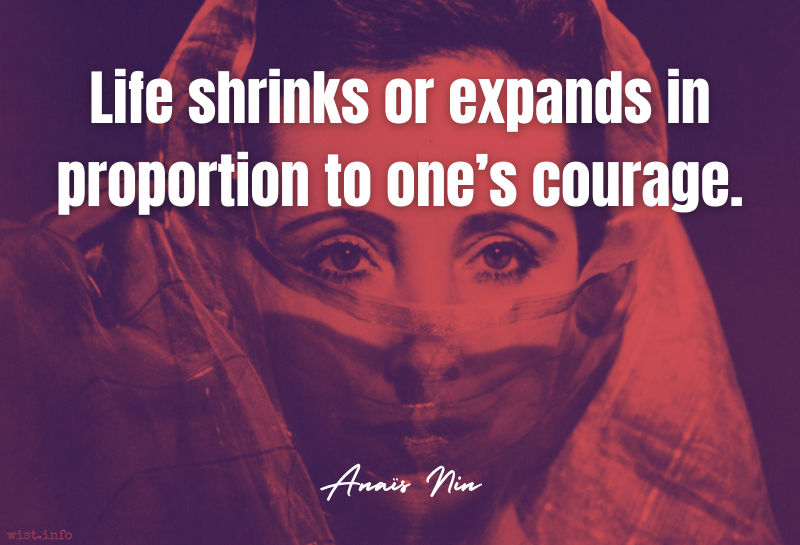
Life shrinks or expands in proportion to one’s courage.
Anaïs Nin (1903–1977) Catalan-Cuban-French author, diarist
Diary (1941-06)
(Source)
In her Diaries [ed. Stuhlmann (1969)].

Do something every day that you don’t want to do; this is the golden rule for acquiring the habit of doing your duty without pain.
Mark Twain (1835–1910) American writer [pseud. of Samuel Clemens]
Following the Equator, ch. 58, epigraph (1897)
See here for more discussion about this (and related) quotations.
Without courage, wisdom bears no fruit.
[Sin valor es estéril la sabiduría.]
Baltasar Gracián y Morales (1601–1658) Spanish Jesuit priest, writer, philosopher
The Art of Worldly Wisdom [Oráculo Manual y Arte de Prudencia], § 4 (1647) [tr. Maurer (1992)]
(Source)
(Source (Spanish)). Other translations:Knowledge is barren, if Valour do'nt accompany it.
[Flesher ed. (1685)]Knowledge without courage is sterile.
[tr. Jacobs (1892)]Without courage, the mind is dead.
[tr. Fischer (1937)]
Many would be Cowards if they had Courage enough.
Thomas Fuller (1654–1734) English physician, preacher, aphorist, writer
Gnomologia: Adages and Proverbs (compiler), # 3366 (1732)
(Source)
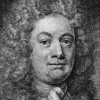
A timid person is frightened before a danger, a coward during the time, and a courageous person afterward.
Jean Paul Richter (1763–1825) German writer, art historian, philosopher, littérateur [Johann Paul Friedrich Richter; pseud. Jean Paul]
(Attributed)
(Source)
Quoted in Edward Parsons Day, Day's Collacon: an Encyclopaedia of Prose Quotations, "Danger" (1884), without citation.
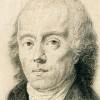
If there is one thing upon this earth that mankind love and admire better than another, it is a brave man — it is the man who dares to look the devil in the face and tell him he is a devil.
James A. Garfield (1831–1881) US President (1881), lawyer, lay preacher, educator
(Attributed)
(Source)
Quoted in The Phrenological Journal (Dec 1881).
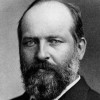
I’d rather give my life than be afraid to give it.
Lyndon B. Johnson (1908–1973) American politician, educator, US President (1963–69)
(Attributed (1963))
(Source)
Recounted about Johnson, when he (among other dignitaries) rejected advice from the Secret Service not to march publicly in John F. Kennedy's funeral procession (1963-11-25), in the face of various warnings of further violence or assassination attempts.
According to William Manchester in his extensive The Death of a President, Book 2, ch. 10 (1967), Johnson was actually speaking to his military aide, Col. William Jackson, and said,You damned bastards are trying to take over. If I listen to you, I'll be led to stupid, indecent decisions. I'm going to walk.
This reaction may have been in part due to a previous episode in the book; after the leaving Parkland Hospital in Dallas to head for a flight to the White House, Johnson had been unceremoniously stuffed into one car by his lead Secret Service agent, forced to crouch below the level of the window, and his wife put in the following car as a decoy for other potential assassins.
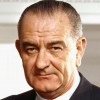
Wherever you see a successful business, someone once made a courageous decision.
Peter F. Drucker (1909–2005) Austrian-American business consultant
(Attributed)
Broadly attributed to Drucker, but no actual writing or citeable speech can be found.