It is well said, in every sense, that a man’s religion is the chief fact with regard to him. A man’s, or a nation of men’s. By religion I do not mean here the church-creed which he professes, the articles of faith which he will sign and, in words or otherwise, assert; not this wholly, in many cases not this at all. We see men of all kinds of professed creeds attain to almost all degrees of worth or worthlessness under each or any of them. This is not what I call religion, this profession and assertion; which is often only a profession and assertion from the outworks of the man, from the mere argumentative region of him, if even so deep as that.
But the thing a man does practically believe (and this is often enough without asserting it even to himself, much less to others); the thing a man does practically lay to heart, and know for certain, concerning his vital relations to this mysterious Universe, and his duty and destiny there, that is in all cases the primary thing for him, and creatively determines all the rest. That is his religion; or, it may be, his mere scepticism and no-religion: the manner it is in which he feels himself to be spiritually related to the Unseen World or No-World; and I say, if you tell me what that is, you tell me to a very great extent what the man is, what the kind of things he will do is.Thomas Carlyle (1795-1881) Scottish essayist and historian
Lecture (1840-05-05), “The Hero as Divinity,” Home House, Portman Square, London
(Source)
The lecture notes were collected by Carlyle into On Heroes, Hero-Worship, & the Heroic in History, Lecture 1, (1841).
Quotations about:
inner self
Note not all quotations have been tagged, so Search may find additional quotes on this topic.
KING RICHARD: You may my glories and my state depose
But not my griefs; still am I king of those.William Shakespeare (1564-1616) English dramatist and poet
Richard II, Act 4, sc. 1, l. 201ff (4.1.201-202) (1595)
(Source)
When Bolingbroke questions Richard's willingness to abdicate while grieving over the loss.

Dig within. There lies the well-spring of good: ever dig, and it will ever flow.
[Ἔνδον σκάπτε, ἔνδον ἡ πηγὴ τοῦ ἀγαθοῦ καὶ ἀεὶ ἀναβλύειν δυναμένη, ἐὰν ἀεὶ σκάπτῃς.]
Marcus Aurelius (AD 121-180) Roman emperor (161-180), Stoic philosopher
Meditations [To Himself; Τὰ εἰς ἑαυτόν], Book 7, ch. 59 (7.59) (AD 161-180) [tr. Staniforth (1964)]
(Source)
On how to turn accidents and misfortune into learning experiences and behavior he will approve of in himself.
(Source (Greek)). Alternate translations:Look within; within is the fountain of all good. Such a fountain, where springing waters can never fail, so thou dig still deeper and deeper.
[tr. Casaubon (1634), 7.31]Look Inwards, and turn over your self; For you have a lasting Mine of Happiness at home, if you will but Dig for't.
[tr. Collier (1701), 7.60]Look inwards; within is the fountain of good; which is ever springing up, if you be always digging in it.
[tr. Hutcheson/Moor (1742)]Look into your own bosom; for you have there a fountain of happiness, if you will searcyh for it, and suffer it to flow without interruption.
[tr. Graves (1792), 7.52]Look within. Within is the fountain of good, and it will ever bubble up, if thou wilt ever dig.
[tr. Long (1862)]Look inwards, for you have a lasting fountain of happiness at home that will always bubble up if you will but dig for it.
[tr. Collier/Zimmern (1887)]Dig within. Within is the fountain of good; ever dig, and it will ever well forth water.
[tr. Rendall (1898)]Look inward. Within is the fountain of Good. Dig constantly and it will ever well forth.
[tr. Hutcheson/Chrystal (1902)]Look within. Within is the fountain of Good, ready always to well forth if thou wilt always delve.
[tr. Haines (Loeb) (1916)]Delve within; within is the fountain of good, and it is always ready to bubble up, if you always delve.
[tr. Farquharson (1944)]Dig within; for within you lies the fountain of good, and it can always be gushing forth if only you always dig.
[tr. Hard (1997 ed.)]Dig deep; the water -- goodness -- is down there. And as long as you keep digging, it will keep bubbling up.
[tr. Hays (2003)]Dig inside yourself. Inside there is a spring of goodness ready to gush at any moment, if you keep digging.
[tr. Hammond (2006)]Turn your attention within, for the fountain of all that is good lies within, and it is always ready to pour forth, if you continually delve in.
[tr. Needleman/Piazza (2008)]Dig within; for within you lies the fountain of good, and it can always be gushing forth if only you always dig.
[tr. Hard (2011 ed.)]Search inside yourself; inside you is the fountain of goodness, and it continues to surge as long as you search.
[ed. Taplin (2016)]

You see, there’s a fundamental connection between seeming and being. Every Fae child knows this, but you mortals never seem to see. We understand how dangerous a mask can be. We all become what we pretend to be.
Patrick Rothfuss (b. 1973) American author
The Name of the Wind, ch. 92 “The Music That Plays” [Bast] (2007)
(Source)

You can discover more about a person in an hour of play than in a year of conversation.
Plato (c.428-347 BC) Greek philosopher
(Spurious)
Frequently attributed to Plato, starting in the 1950s, but not found in his works. Earliest citation is as a Portuguese proverb, in A Polyglot of Foreign Proverbs, tr. Henry G. Bohn (1857): "Mais descobre huma hora de jogo, que hum anno de conversação." For more see here.
For the whole thing about matrimony is this: We fall in love with a personality, but we must live with a character. Behind the pretty wallpaper and the brightly painted plaster lurk the yards of tangled wire and twisted pipes, ready to run a short or spring a leak on us without a word of warning.
Peter De Vries (1910-1993) American editor, novelist, satirist
Mrs. Wallop (1970)
(Source)
Often misquoted as "The difficulty with marriage is that ..."

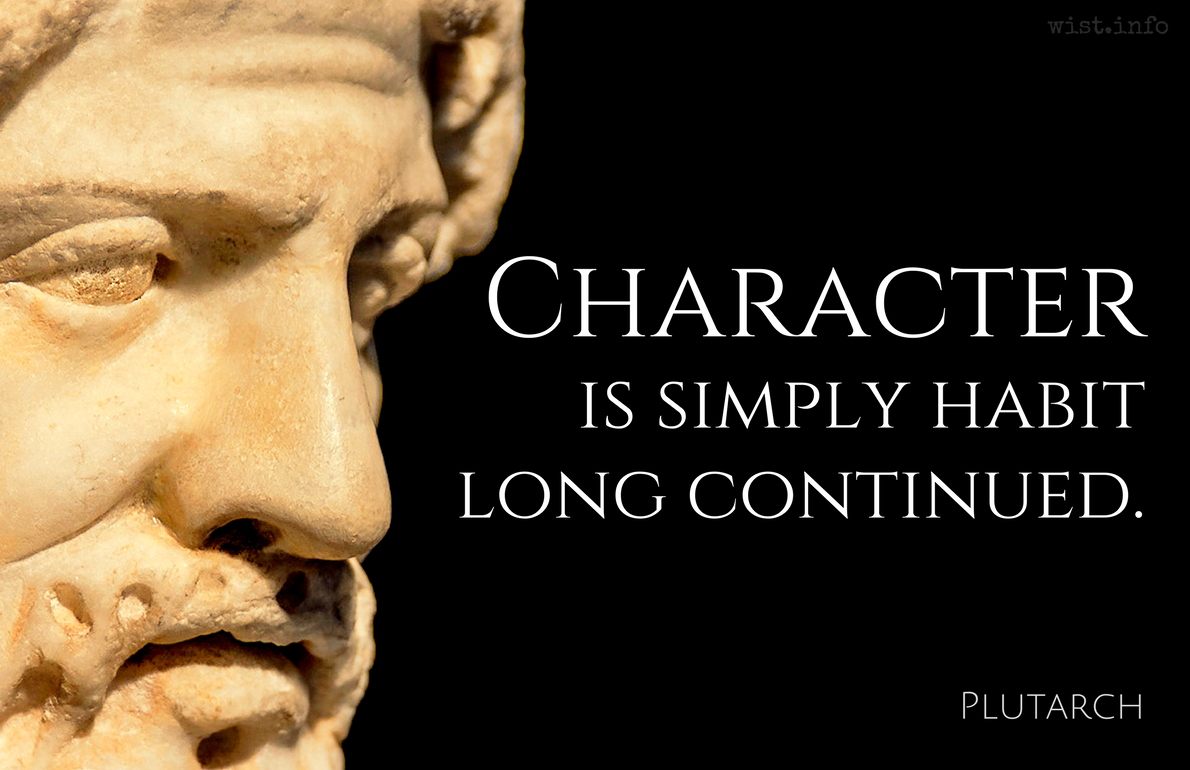
Character is simply habit long continued.
Plutarch (AD 46-127) Greek historian, biographer, essayist [Mestrius Plutarchos]
Moral Writings [Moralia], “On the Education of Children,” 4.3 [tr. Babbitt and Goodwin]
(Source)
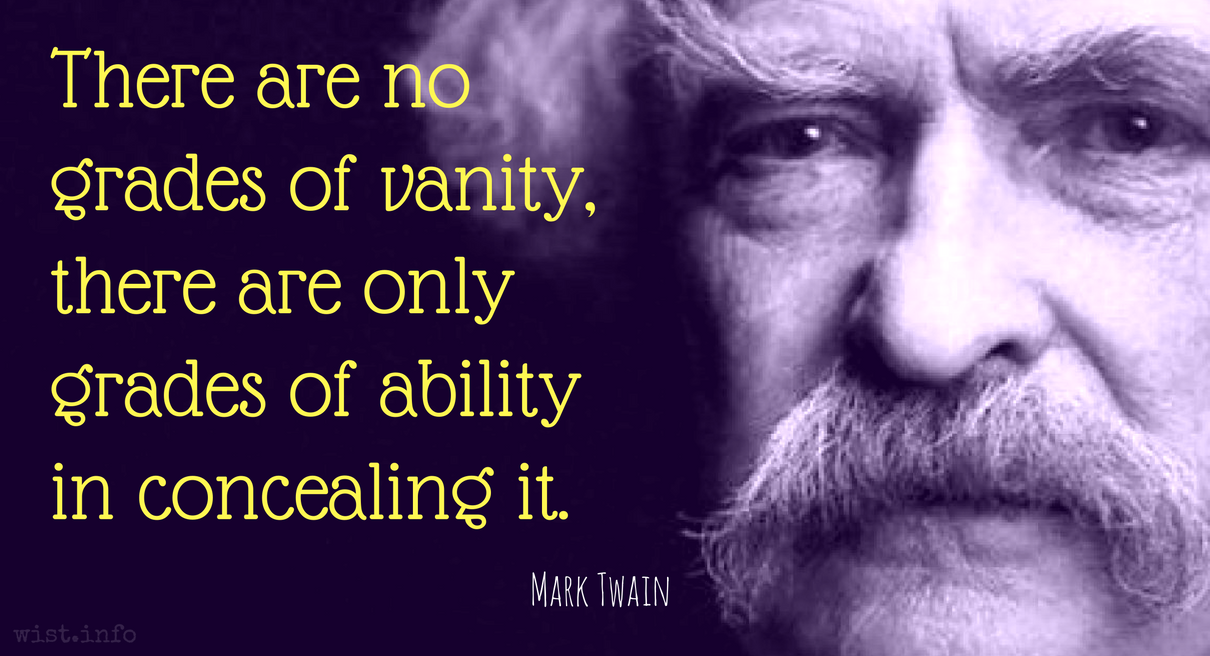
There are no grades of vanity, there are only grades of ability in concealing it.
Mark Twain (1835-1910) American writer [pseud. of Samuel Clemens]
Note (1898-07-04)), Mark Twain’s Notebook, ch. 21 “In Vienna” (1935) [ed. Albert Bigelow Paine]
(Source)
While summering in Kaltenleutgeben, Austria.
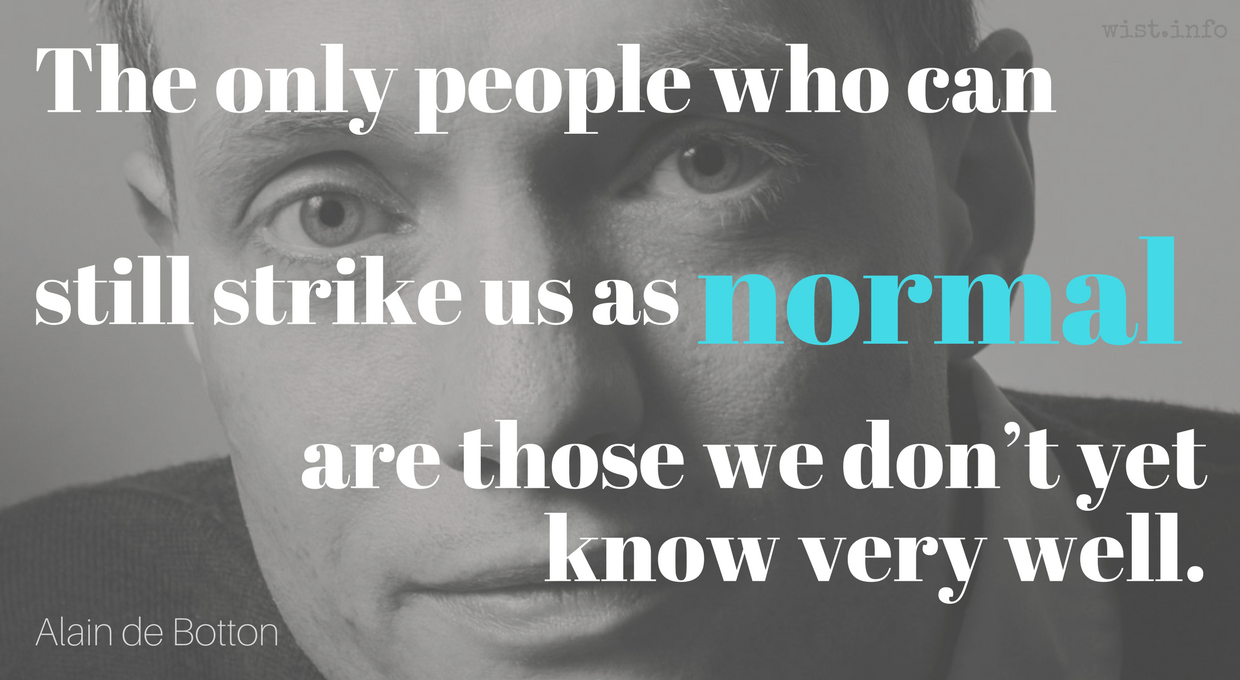
The only people who can still strike us as normal are those we don’t yet know very well.
Alain de Botton (b. 1969) Swiss-British author
The Course of Love, “Irreconcilable Desires” (2016)
(Source)

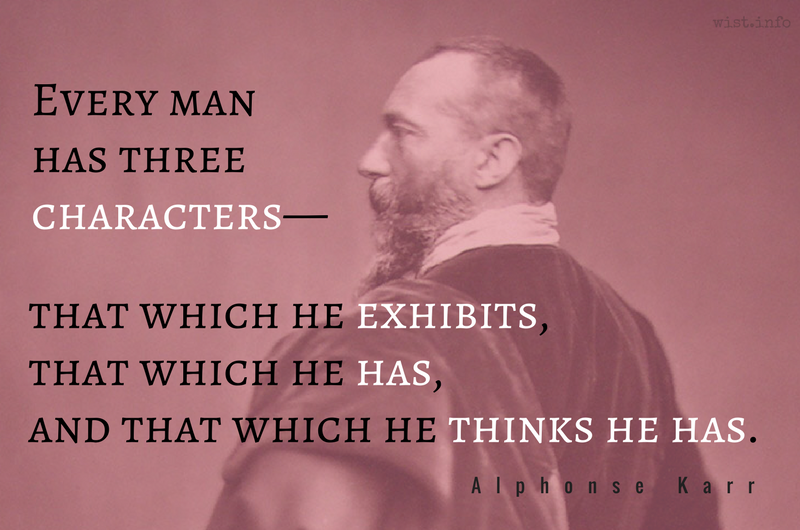
Every man has three characters — that which he exhibits, that which he has, and that which he thinks he has.
Alphonse Karr (1808-1890) French journalist and novelist
A Tour Round My Garden [Voyage autour de mon jardin] (1851)
(Source)

People seem not to see that their opinion of the world is also a confession of character. We can only see what we are, and if we misbehave we suspect others.
Ralph Waldo Emerson (1803-1882) American essayist, lecturer, poet
Essay (1860), “Worship,” The Conduct of Life, ch. 6
(Source)
Based on a course of lectures, "The Conduct of Life," delivered in Pittsburg (1851-03).

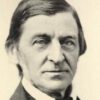
We know so little about each other. We lie mostly submerged, like ice floes, with our visible social selves projecting only cool and white.
Ian McEwan (b. 1948) English novelist and screenwriter
Amsterdam (1998)
What a wee little part of a person’s life are his acts and his words! His real life is led in his head, and is known to none but himself. All day long, and every day, the mill of his brain is grinding, and his thoughts (which are but the mute articulation of his feelings,) not those other things, are his history. His acts and his words are merely the visible thin crust of his world, with its scarred snow summits and its vacant wastes of water — and they are so trifling a part of his bulk! a mere skin enveloping it. The mass of him is hidden — it and its volcanic fires that toss and boil, and never rest, night nor day. These are his life, and they are not written, and cannot be written. Every day would make a whole book of eighty thousand words — three hundred and sixty-five books a year. Biographies are but the clothes and buttons of the man — the biography of the man himself cannot be written.
Mark Twain (1835-1910) American writer [pseud. of Samuel Clemens]
The Autobiography of Mark Twain, Vol. 1 (2010)
(Source)
Good nature will always supply the absence of beauty; but beauty cannot supply the absence of good nature.
Joseph Addison (1672-1719) English essayist, poet, statesman
Essay (1712-02-06), The Spectator, No. 306
(Source)

A man always is to be himself the judge of how much of his mind he will show to other men; even to those he would have work along with him. There are impertinent inquiries made: your rule is to leave the inquirer uninformed on that matter; not, if you can help it, misinformed; but precisely as dark as he was!
Thomas Carlyle (1795-1881) Scottish essayist and historian
Lecture (1840-05-22), “The Hero as King,” Home House, Portman Square, London
(Source)
The lecture notes were collected by Carlyle into On Heroes, Hero-Worship, & the Heroic in History, Lecture 6 (1841).
It is a great piece of folly to sacrifice the inner for the outer man, to give the whole or the greater part of one’s quiet, leisure, and independence for splendor, rank, pomp, titles and honor.
[Es ist eine große Thorheit, um nach Außen zu gewinnen, nach Innen zu verlieren, d. h. für Glanz, Rang, Prunk, Titel und Ehre, seine Ruhe, Muße und Unabhängingkeit ganz oder großen Theils hinzurgeben.]
Arthur Schopenhauer (1788-1860) German philosopher
Parerga and Paralipomena, Vol. 1, “Aphorisms on the Wisdom of Life [Aphorismen zur Lebensweisheit],” ch. 2 “Personality, or What Man Is [Von dem, was einer ist]” (1851) [tr. Saunders (1890)]
(Source)
(Source (German)). Alternate translation:It is a great folly to lose the inner man in order to gain the outer, that is, to give up the whole or the greater part of one's quiet, leisure, and independence for splendor, rank, pomp, titles and honors.
[tr. Payne (1974)]

Whatever games are played with us, we must play no games with ourselves, but deal in our privacy with the last honesty and truth.
Ralph Waldo Emerson (1803-1882) American essayist, lecturer, poet
Essay (1860), “Illusions,” The Conduct of Life, ch. 9
(Source)
Based on a course of lectures by that name first delivered in Pittsburg (1851-03).
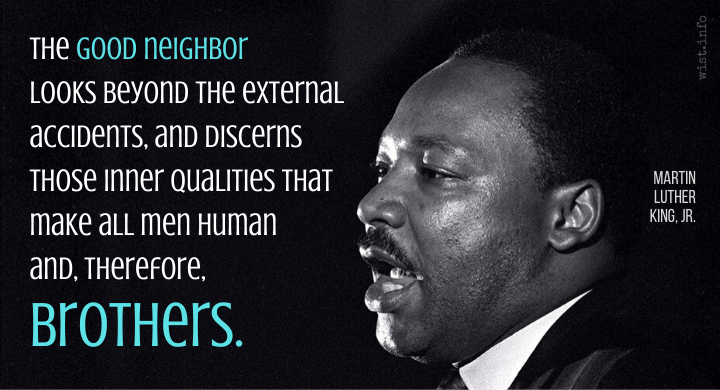
The good neighbor looks beyond the external accidents, and discerns those inner qualities that make all men human and, therefore, brothers.
Martin Luther King, Jr. (1929-1968) American clergyman, civil rights leader, social activist, preacher
“On Being a Good Neighbor,” sec. 1, sermon, A Gift of Love (1963)
(Source)
Character is what you are in the dark.
Dwight Lyman "D. L." Moody (1837-1899) American evangelist and publisher
Sermon
Attributed by his son in William R. Moody, D. L. Moody, ch. 66 (1930), but quoted without citation before that (e.g., in Saint Andrew's Cross (Nov 1907), and The Outlook (6 Jun 1917)).

O wad some Pow’r the giftie gie us
To see oursels as others see us!
It wad frae mony a blunder free us,
An’ foolish notion ….Robert Burns (1759-1796) Scottish national poet
“To a Louse,” l.43-46 (1786)
The poem is reprinted in various forms and anglicizations of Burns' Scottish, e.g.,O wad some Power the giftie gie us
To see oursels as ithers see us!
It wad frae monie a blunder free us
An foolish notionO would some Power the gift to give us
To see ourselves as others see us!
It would from many a blunder free us,
And foolish notion: