

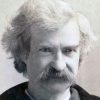
I was afraid of a united Church; it makes a mighty power, the mightiest conceivable, and then when it by and by gets into selfish hands, as it is always bound to do, it means death to human liberty and paralysis to human thought.
Mark Twain (1835–1910) American writer [pseud. of Samuel Clemens]
Novel (1889), A Connecticut Yankee in King Arthur’s Court, Part 3 “The Tale of the Lost Land,” ch. 10 “Beginnings of Civilization”
(Source)
On the secular advantages of encouraging religious diversity in Arthur's kingdom.
Quotations about:
religious intolerance
Note not all quotations have been tagged, so Search may find additional quotes on this topic.
They were engaged in religion. You could tell by the knives (it’s not murder if you do it for a god).

Heaven alone can produce devout people; Princes produce hypocrites.
[Le Ciel seul peut faire les dévots; les Princes font les hypocrites.]
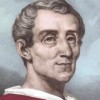
Charles-Lewis de Secondat, Baron de Montesquieu (1689–1755) French political philosopher
Pensées Diverses [Assorted Thoughts], # 630 / 1007 “General Maxims of Politics,” No. 10 (1720-1755) [tr. Clark (2012)]
(Source)
In the French, "seul [alone, solely]" is an amendment above the line in manuscript.(Source (French)).
There is no argument in the World carries the hatred that a Religious belief one does.
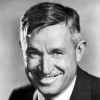
Will Rogers (1879–1935) American humorist
Column (1924-01-20), “Weekly Article: Send Mexico Our Wooden Ships, Too” [No. 58]
(Source)
Commenting on some sort of theological conflict in the American Episcopal Church going on at the time.
To Paine, Jefferson, and Franklin, are we indebted, more than to all others, for a human government, and for a Constitution in which no God is recognized superior to the legally expressed will of the people.
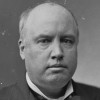
They knew that to put God in the Constitution was to put man out. They knew that the recognition of a Deity would be seized upon by fanatics and zealots as a pretext for destroying the liberty of thought. They knew the terrible history of the church too well to place in her keeping, or in the keeping of her God, the sacred rights of man. They intended that all should have the right to worship, or not to worship; that our laws should make no distinction on account of creed. They intended to found and frame a government for man, and for man alone. They wished to preserve the individuality and liberty of all; to prevent the few from governing the many, and the many from persecuting and destroying the few.Robert Green Ingersoll (1833–1899) American lawyer, freethinker, orator
Lecture (1873-12) “Individuality,” Chicago Free Religious Society
(Source)
Full title "Arraignment of the Church and a Plea for Individuality." Collected in The Gods and Other Lectures (1876).
RACK, n. An argumentative implement formerly much used in persuading devotees of a false faith to embrace the living truth. As a call to the unconverted the rack never had any particular efficacy, and is now held in light popular esteem.
Ambrose Bierce (1842–1914?) American writer and journalist
“Rack,” The Devil’s Dictionary (1911)
(Source)
Originally published in the "Cynic's Word Book" column in the New York American (1906-06-29).

On every hand are the enemies of individuality and mental freedom. Custom meets us at the cradle and leaves us only at the tomb. Our first questions are answered by ignorance, and our last by superstition. We are pushed and dragged by countless hands along the beaten track, and our entire training can be summed up in the word –suppression. Our desire to have a thing or to do a thing is considered as conclusive evidence that we ought not to have it, and ought not to do it. At every turn we run against cherubim and a flaming sword guarding some entrance to the Eden of our desire. We are allowed to investigate all subjects in which we feel no particular interest, and to express the opinions of the majority with the utmost freedom. We are taught that liberty of speech should never be carried to the extent of contradicting the dead witnesses of a popular superstition. Society offers continual rewards for self-betrayal, and they are nearly all earned and claimed, and some are paid.
Robert Green Ingersoll (1833–1899) American lawyer, freethinker, orator
Lecture (1873-12) “Individuality,” Chicago Free Religious Society
(Source)
Full title "Arraignment of the Church and a Plea for Individuality." Collected in The Gods and Other Lectures (1876).
A trial for heresy means that the spirit of persecution still lingers in the church; that it still denies the right of private judgment; that it still thinks more of creed than truth, and that it is still determined to prevent the intellectual growth of man. It means that churches are shambles in which are bought and sold the souls of men. It means that the church is still guilty of the barbarity of opposing thought with force. It means that if it had the power, the mental horizon would be bounded by a creed; that it would bring again the whips and chains and dungeon keys, the rack and fagot of the past.
Robert Green Ingersoll (1833–1899) American lawyer, freethinker, orator
Lecture (1874-05-03), “Heretics and Heresies,” Free Religious Society, Kingsbury Hall, Chicago
(Source)
Collected in The Gods and Other Lectures (1876).
Millions upon millions were sacrificed upon the altars of bigotry. The Catholic burned the Lutheran, the Lutheran burned the Catholic, the Episcopalian tortured the Presbyterian, the Presbyterian tortured the Episcopalian. Every denomination killed all it could of every other; and each Christian felt in duty bound to exterminate every other Christian who denied the smallest fraction of his creed.
Robert Green Ingersoll (1833–1899) American lawyer, freethinker, orator
Lecture (1874-05-03), “Heretics and Heresies,” Free Religious Society, Kingsbury Hall, Chicago
(Source)
Collected in The Gods and Other Lectures (1876).
In fact, even were it not inhuman to trouble another man’s conscience, even were there none of the bad effects that spring up by the thousands, one would have to be deranged to engage in such a purpose. He who tries to make me change my religion only does so, presumably, because he would never change his own, even were someone to try to force him to do so; so how can he find it strange that I should refuse to do something that he himself would not do, even perhaps were he offered the world as his empire?
[Car, enfin, quand il n’y auroit pas de l’inhumanité à affliger la conscience des autres, quand il n’en résulteroit aucun des mauvais effets qui en germent à milliers, il faudroit être fou pour s’en aviser. Celui qui veut me faire changer de religion ne le fait sans doute que parce qu’il ne changeroit pas la sienne, quand on voudroit l’y forcer : il trouve donc étrange que je ne fasse pas une chose qu’il ne feroit pas lui-même, peut-être pour l’empire du monde.]
Charles-Lewis de Secondat, Baron de Montesquieu (1689–1755) French political philosopher
Persian Letters [Lettres Persanes], Letter 86, Usbek to Mirza (1721) [tr. Mauldon (2008), # 83]
(Source)
(Source (French)). Other translations:For, in short, though there was nothing of inhumanity in forcing the consciences of others; though it occasioned none of those ill effects which spring up from it by thousands; a man must be a fool to offer at it. He that would have me change my religion, does it, no doubt, because he would not change his own if he were to be forced to it: so that he wonders I will not do a thing, which perhaps he would not do himself for the empire of the universe.
[tr. Ozell (1760 ed.)]For indeed, if there was nothing of inhumanity in forcing the conscience of another, though there did not arise from it any of those bad effects which spring from it by thousands, it would be folly to advise it. He who would have me change my religion, no doubt, desires me to do so, because he would not change his own if he were forced to do it: he yet thinks it strange, that I will not do a thing which he himself would not do, perhaps, for the empire of the world.
[tr. Floyd (1762), # 85]In conclusion, even if there were no inhumanity in distressing the consciences of others, even if there did not result from such a course any of the evil effects which do spring from it in thousands, it would still be foolish to advise it. He who would have me change my religion is led to that, without doubt, because he would not change his own although force were employed; and yet he finds it strange that I will not do a thing which he himself would not do, perhaps for the empire of the world.
[tr. Davidson (1891)]For, in fine, even if the attempt to trouble the conscience of our neighbor was not in itself inhuman, if the manifold evil effects which spring from it had no existence, the mere contemplation of such a course would be an evidence of mental unsoundness.
The man who would have me change my religion does so doubtless because he would never change his own, no matter what force was brought to bear upon him: yet he thinks it strange that I should refuse to do a thing he would not himself do for the empire of the whole world!
[tr. Betts (1897)]Finally, even if it were not inhumane to afflict another’s conscience, and even if there did not result from such an act those bad effects which spring up by the thousands, it would still be foolish to advise it. Whoever would have me change my religion doubtlessly acts as he does because he would not change his, however he was forced; yet he finds it strange that I will not do something which he would not do himself, perhaps for the entire world.
[tr. Healy (1964), # 85]Finally, even if it were inhumane to make such an assault on the consciences of others, with its thousands of self-replicating evil consequences, one would have to be mad to advise it. The man who wants me to change my religion does so only because he would never change his, no matter how much he was forced. And thus he thinks it strange that I will not do a thing he would not do for all the kingdoms of the world.
[tr. MacKenzie (2014), # 85]
I admit that history is filled with religious wars, but let us be careful here, for it is not the multiplicity of religions which has produced these wars, but the spirit of intolerance stirring those who believed themselves to be in a dominant position.
[J’avoue que les histoires sont remplies des guerres de religion : mais, qu’on y prenne bien garde, ce n’est point la multiplicité des religions qui a produit ces guerres, c’est l’esprit d’intolérance, qui animoit celle qui se croyoit la dominante.]
Charles-Lewis de Secondat, Baron de Montesquieu (1689–1755) French political philosopher
Persian Letters [Lettres Persanes], Letter 86, Usbek to Mirza (1721) [tr. Healy (1964), Letter 85]
(Source)
(Source (French)). Other translations:I confess histories are full of religious wars: but do not let us take the thing wrong; it was not the diversity of religious that occasioned these wars; it was the untolerating spirit of that which thought she had the power in her hands.
[tr. Ozell (1760 ed.)]I acknowledge, that history is full of religious wars: but we must take care to observe, it was not the multiplicity of religions that produced these wars, it was the intolerating spirit which animated that which thought she had the power of governing.
[tr. Floyd (1762), Letter 85]I acknowledge that history is full of religious wars: but we must distinguish; it is not the multiplicity of religions which has produced wars; it is the intolerant spirit animating that which believed itself in the ascendant.
[tr. Davidson (1891)]I acknowledge that history is full of religious wars ; but it is an indisputable fact that these wars have not been produced by the multiplicity of religions, but rather by the intolerance of the dominant creed.
[tr. Betts (1897)]I admit that history is full of wars of religion; but on this point we must be very careful; it is not the multiplicity of religions that produced these wars, but the spirit of intolerance animating the religion that believed itself to be dominant.
[tr. Mauldon (2008), Letter 83]I admit that history is full of wars of religion. But one must be careful here: these wars were not caused by a multiplicity of religions, but rather by the spirit of intolerance shown by the dominant religion's believers.
[tr. MacKenzie (2014), Letter 85]
Can’t you understand that if you take a law like evolution and make it a crime to teach it in public schools, tomorrow you could make it a crime to teach it in private schools, and tomorrow you may make it a crime to read about it? And soon you may ban books and newspapers. And then you may turn Catholic against Protestant, and Protestant against Protestant, and try to foist your own religion upon the mind of man. If you can do one you can do the other, because fanaticism and ignorance is forever busy and needs feeding.
Nedrick Young (1914–1968) American screenwriter and actor [pseud. Nathan E. Douglas]
Inherit the Wind, film (1960) [with Harold Jacob Smith]
(Source)
The original 1951 play was written by Jerome Lawrence and Robert E. Lee, but does not include this line, delivered in the film by Spencer Tracy. Young and Smith share the screenwriting credits.

Hunt out and talk about the good that is in the other fellow’s church, not the bad, and you will do away with all this religious hatred you hear so much of nowadays.
I love to see a Man zealous in a good Matter, and especially when his Zeal shews it self for advancing Morality, and promoting the Happiness of Mankind: But when I find the Instruments he works with are Racks and Gibbets, Gallies and Dungeons; when he imprisons Mens Persons, confiscates their Estates, ruins their Families, and burns the Body to save the Soul, I cannot stick to pronounce of such a one, that (whatever he may think of his Faith and Religion) his Faith is vain, and his Religion unprofitable.
Joseph Addison (1672–1719) English essayist, poet, statesman
Essay (1711-10-02), The Spectator, No. 185
(Source)

We are told by some of the Jewish Rabbins, that the first Murder was occasioned by a religious Controversy; and if we had the whole History of Zeal from the Days of Cain to our own Times, we should see it filled with so many Scenes of Slaughter and Bloodshed, as would make a wise Man very careful how he suffers himself to be actuated by such a Principle, when it only regards Matters of Opinion and Speculation.
Joseph Addison (1672–1719) English essayist, poet, statesman
Essay (1711-10-02), The Spectator, No. 185
(Source)
There is nothing in which Men more deceive themselves than in what the World calls Zeal. There are so many Passions which hide themselves under it, and so many Mischiefs arising from it, that some have gone so far as to say it would have been for the Benefit of Mankind if it had never been reckoned in the Catalogue of Virtues. It is certain, where it is once Laudable and Prudential, it is an hundred times Criminal and Erroneous; nor can it be otherwise, if we consider that it operates with equal Violence in all Religions, however opposite they may be to one another, and in all the Subdivisions of each Religion in particular.
Joseph Addison (1672–1719) English essayist, poet, statesman
Essay (1711-10-02), The Spectator, No. 185
(Source)
It is not difficult to show, by abundant instances, that to extend the bounds of what may be called moral police, until it encroaches on the most unquestionably legitimate liberty of the individual, is one of the most universal of all human propensities.
John Stuart Mill (1806–1873) English philosopher and economist
On Liberty, ch. 4 “Of the Limits to the Authority of Society Over the Individual” (1859)
(Source)
According to the theologians, God, the Father of us all, wrote a letter to his children. The children have always differed somewhat as to the meaning of this letter. In consequence of these honest differences, these brothers began to cut out each other’s hearts.
In every land, where this letter from God has been read, the children to whom and for whom it was written have been filled with hatred and malice. They have imprisoned and murdered each other, and the wives and children of each other. In the name of God every possible crime has been committed, every conceivable outrage has been perpetrated. Brave men, tender and loving women, beautiful girls, and prattling babes have been exterminated in the name of Jesus Christ.Robert Green Ingersoll (1833–1899) American lawyer, freethinker, orator
Lecture (1874-05-03), “Heretics and Heresies,” Free Religious Society, Kingsbury Hall, Chicago
(Source)
Collected in Ingersoll, The Gods and Other Lectures (1876).
Religion — it’s given people hope in a world torn apart by religion.
Jon Stewart (b. 1962) American satirist, comedian, and television host. [b. Jonathan Stuart Leibowitz]
The Daily Show

No iron chain, or outward force of any kind, could ever compel the soul of a man to believe or to disbelieve: it is his own indefeasible light, that judgment of his; he will reign, and believe there, by the grace of God alone!
Thomas Carlyle (1795–1881) Scottish essayist and historian
Lecture (1840-05-15), “The Hero as Priest,” Home House, Portman Square, London
(Source)
The lecture notes were collected by Carlyle into On Heroes, Hero-Worship, & the Heroic in History, Lecture 4 (1841).
I do not say, and I do not believe, that Christians are as bad as their creeds. In spite of church and dogma, there have been millions and millions of men and women true to the loftiest and most generous promptings of the human heart. They have been true to their convictions, and, with a self-denial and fortitude excelled by none, have labored and suffered for the salvation of men. Imbued with the spirit of self-sacrifice, believing that by personal effort they could rescue at least a few souls from the infinite shadow of hell, they have cheerfully endured every hardship and scorned every danger.
And yet, notwithstanding all this, they believed that honest error was a crime. They knew that the Bible so declared, and they believed that all unbelievers would be eternally lost. They believed that religion was of God, and all heresy of the devil. They killed heretics in defense of their own souls and the souls of their children. They killed them because, according to their idea, they were the enemies of God, and because the Bible teaches that the blood of the unbeliever is a most acceptable sacrifice to heaven.Robert Green Ingersoll (1833–1899) American lawyer, freethinker, orator
Lecture (1874-05-03), “Heretics and Heresies,” Free Religious Society, Kingsbury Hall, Chicago
(Source)
Collected in The Gods and Other Lectures (1876).
Our ancestors, in the ages that are gone, really believed that by force you could convince a man. You cannot change the conclusion of the brain by torture; nor by social ostracism. But I will tell you what you can do by these, and what you have done. You can make hypocrites by the million. You can make a man say that he has changed his mind; but he remains of the same opinion still. Put fetters all over him; crush his feet in iron boots; stretch him to the last gasp upon the holy rack; burn him, if you please, but his ashes will be of the same opinion still.
Robert Green Ingersoll (1833–1899) American lawyer, freethinker, orator
Lecture (1877-01-31) “The Liberty of Man, Woman, and Child,” Case Hall, Boston
(Source)
If the fires of freedom and civil liberties burn low in other lands, they must be made brighter in our own.
If in other lands the press and books and literature of all kinds are censored, we must redouble our efforts here to keep them free.
If in other lands the eternal truths of the past are threatened by intolerance we must provide a safe place for their perpetuation.Franklin Delano Roosevelt (1882–1945) American lawyer, politician, statesman; US President (1933–45)
Speech (1938-06-30), National Education Association, World’s Fair, New York City
(Source)
Men will wrangle for religion; write for it; fight for it; die for it; anything but — live for it.
Charles Caleb "C. C." Colton (1780–1832) English cleric, writer, aphorist
Lacon: Or, Many Things in Few Words, Vol. 1, § 25 (1820)
(Source)
SCRIPTURES, n. The sacred books of our holy religion, as distinguished from the false and profane writings on which all other faiths are based.
Ambrose Bierce (1842–1914?) American writer and journalist
“Scriptures,” The Devil’s Dictionary (1911)
(Source)
Originally published in The Devil's Dictionary [A-Z] as Vol. 7 of his Collected Works.
Tolerance implies no lack of commitment to one’s beliefs. Rather it condemns the oppression or persecution of others.
John F. Kennedy (1917–1963) American politician, author, journalist, US President (1961–63)
Letter (1960-10-26) to the National Conference of Christians and Jews Conference)
(Source)
There is no good cause for religious persecution. No convert is true who comes to the faith through pain and fear. All persecution does is plant seeds of doubt amongst the hearts of the faithful as to the truth of their cause.
Graham Ericsson (b. 1961) American technologist, writer, aphorist
Journal (undated)
