

Reading is to the mind, what exercise is to the body: as by the one, health is preserved, strengthened and invigorated; by the other, virtue, which is the health of the mind, is kept alive, cherished and confirmed. But as exercise becomes tedious and painful when we make use of it only as the means of health, so reading is apt to grow uneasy and burdensome, when we apply ourselves to it only for our improvement in virtue. For this reason, the virtue which we gather from a sable, or an allegory, is like the health we get by hunting; as we are engaged in an agreeable pursuit that draws us on with pleasure, and makes us insensible of the fatigues that accompany it.
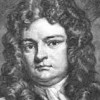
Richard Steele (1672–1729) Anglo-Irish writer, journalist, playwright, politician
Essay (1709-03-17), The Tatler, No. 147
(Source)
Quotations by:
Steele, Richard
But however low and poor the taking of Snuff argues a Man to be in his own Stock of Thought, or Means to employ his Brains and his Fingers, yet there is a poorer Creature in the World than He, and this is a Borrower of Snuff; a Fellow that keeps no Box of his own, but is always asking others for a Pinch.
Richard Steele (1672–1729) Anglo-Irish writer, journalist, playwright, politician
Essay (1709-06-28), The Tatler, No. 35
(Source)
It’s a particular Observation I have always made, That of all Mortals, a Critick is the silliest; for by inuring himself to examine all Things, whether they are of Consequence or not, he never looks upon any Thing but with a Design of passing Sentence upon it; by which Means, he is never a Companion, but always a Censor. This makes him earnest upon Trifles; and dispute on the most indifferent Occasions with vehemence.
Richard Steele (1672–1729) Anglo-Irish writer, journalist, playwright, politician
Essay (1709-07-14), The Tatler, No. 29
(Source)
There is no Pleasure like that of receiving Praise from the Praiseworthy.
Richard Steele (1672–1729) Anglo-Irish writer, journalist, playwright, politician
Essay (1709-11-02), The Tatler, No. 89
(Source)
I know of no manner of speaking so offensive as that of giving praise, and closing it with an exception.
Richard Steele (1672–1729) Anglo-Irish writer, journalist, playwright, politician
Essay (1709-11-10), The Tatler, No. 92
(Source)
Methinks a Man cannot, without a secret Satisfaction, consider the Glory of the present Age, which will shine as bright as any other in the History of Mankind. It is still big with great Events, and has already produced Changes and Revolutions which will be as much admired by Posterity, as any that have happened in the Days of our Fathers, or in the old Times before them.
Richard Steele (1672–1729) Anglo-Irish writer, journalist, playwright, politician
Essay (1710-02-06), The Tatler, No. 130
(Source)
It has often been a solid Grief to me, when I have reflected on this glorious Nation, which is the Scene of publick Happiness and Liberty, that there are still Crowds of private Tyrants, against whom there neither is any Law now in Being, nor can there be invented any by the Wit of Man. These cruel Men are ill-natured husbands.
Richard Steele (1672–1729) Anglo-Irish writer, journalist, playwright, politician
Essay (1710-03-22), The Tatler, No. 149
(Source)
Though it is by the benefit of nature that length of time thus blots out the violence of afflictions; yet with tempers too much given to pleasure, it is almost necessary to revive the old places of grief in our memory, and ponder step by step on past life, to lead the mind into that sobriety of thought which poises the heart, and makes it beat with due time, without being quickened with desire, or retarded with despair, from its proper and equal motion.
Richard Steele (1672–1729) Anglo-Irish writer, journalist, playwright, politician
Essay (1710-06-06), “On the Death of Friends,” The Tatler, No. 181
(Source)
Steele did not provide a title when this essay was published in The Tatler. It is also sometimes called "On Recollections of Childhood." It was published under Steele's pseudonym, Isaac Bickerstaff.
We that are very old, are better able to remember things which befell us in our distant youth, than the passages of later days.
Richard Steele (1672–1729) Anglo-Irish writer, journalist, playwright, politician
Essay (1710-06-06), “On the Death of Friends,” The Tatler, No. 181
(Source)
Steele did not provide a title when this essay was published in The Tatler. It is also sometimes called "On Recollections of Childhood." It was published under Steele's pseudonym, Isaac Bickerstaff.
Who can have lived in an army, and in a serious hour reflect upon the many gay and agreeable men that might long have flourished in the arts of peace, and not join with the imprecations of the fatherless and widow on the tyrant to whose ambition they fell sacrifices? But gallant men, who are cut off by the sword, move rather our veneration than our pity, and we gather relief enough from their own contempt of death, to make it no evil, which was approached with so much cheerfulness, and attended with so much honour. But when we turn our thoughts from the great parts of life on such occasions, and instead of lamenting those who stood ready to give death to those from whom they had the fortune to receive it; I say, when we let our thoughts wander from such noble objects, and consider the havoc which is made among the tender and the innocent, pity enters with an unmixed softness, and possesses all our souls at once.
Richard Steele (1672–1729) Anglo-Irish writer, journalist, playwright, politician
Essay (1710-06-06), “On the Death of Friends,” The Tatler, No. 181
(Source)
It was very prettily said, that we may learn the little value of fortune by the persons on whom Heaven is pleased to bestow it.
Richard Steele (1672–1729) Anglo-Irish writer, journalist, playwright, politician
Essay (1710-07-27), The Tatler, No. 203
(Source)
Praise from an enemy is the most pleasing of all commendations.
Richard Steele (1672–1729) Anglo-Irish writer, journalist, playwright, politician
Essay (1710-08-07), The Tatler, No. 208
(Source)
It is a civil Cowardice to be backward in asserting what you ought to expect, as it is a military Fear to be slow in attacking when it is your Duty.
Richard Steele (1672–1729) Anglo-Irish writer, journalist, playwright, politician
Essay (1711-03-01), The Spectator, No. 2
(Source)
A comment by "Captain Sentry."
An author, when he first appears in the world, is very apt to believe it has nothing to think of but his Performances.
Richard Steele (1672–1729) Anglo-Irish writer, journalist, playwright, politician
Essay (1711-03-05), The Spectator, No. 4
(Source)
It is a Secret known but to a few, yet of no small use in the Conduct of Life, that when you fall into a Man’s Conversation, the first thing you should consider is, whether he has a greater Inclination to hear you, or that you should hear him.
Richard Steele (1672–1729) Anglo-Irish writer, journalist, playwright, politician
Essay (1711-04-26), The Spectator, No. 49
(Source)
I have often lamented that we cannot close our Ears with as much ease as we can our Eyes.
Richard Steele (1672–1729) Anglo-Irish writer, journalist, playwright, politician
Essay (1711-08-20), The Spectator, No. 148
(Source)
It is not only paying wages, and giving commands, that constitutes a master of a family; but prudence, equal behavior, with a readiness to protect and cherish them, is what entitles man to that character in their very hearts and sentiments.
Richard Steele (1672–1729) Anglo-Irish writer, journalist, playwright, politician
Essay (1711-10-22), The Spectator, No. 202
(Source)
Among all the diseases of the mind there is not one more epidemical or more pernicious than the love of flattery.
Richard Steele (1672–1729) Anglo-Irish writer, journalist, playwright, politician
Essay (1711-12-03), The Spectator, No. 238
(Source)
A good name is fitly compared to a precious ointment, and when we are praised with skill and decency, it is indeed the most agreeable perfume: but if too strongly admitted into a brain of a less vigorous and happy texture, it will, like too strong and odour, overcome the senses, and prove pernicious to those nerves it was intended to refresh.
Richard Steele (1672–1729) Anglo-Irish writer, journalist, playwright, politician
Essay (1711-12-03), The Spectator, No. 238
(Source)
The comparison is in the Bible, Ecclesiastes 7:1.
The married state, with and without the affection suitable to it, is the completest image of heaven and hell we are capable of receiving in this life.
Richard Steele (1672–1729) Anglo-Irish writer, journalist, playwright, politician
Essay (1712-09-09), The Spectator, No. 479
(Source)
Whenever you commend, add your reasons for doing so; it is this which distinguishes the approbation of a man of sense from the flattery of sycophants and admiration of fools.
Richard Steele (1672–1729) Anglo-Irish writer, journalist, playwright, politician
Essay (1713-04-08), The Guardian, No. 24
(Source)
The prevailing humour of crying up authors that have writ in the days of our forefathers, and of passing slightly over the merit of our contemporaries, is a grievance that men of a free and unprejudiced thought have complained of through all ages in their writings.
Richard Steele (1672–1729) Anglo-Irish writer, journalist, playwright, politician
Essay (1713-04-09), The Guardian, No. 25
(Source)
I am, dear Prue a little in Drink but at all times
Yr Faithfull HusbandRichard Steele (1672–1729) Anglo-Irish writer, journalist, playwright, politician
Letter (1708-09-27) to Mary “Prue” Scurlock Steele
(Source)
Over the course of his courting of and marriage (1707) to his second wife, whom he nicknamed "Prue," Steele wrote her more than 400 letters.
Zeal for the public good is the characteristic of a man of honour, and a gentleman, and must take place of pleasures, profits, and all other private gratifications. Whoever wants this motive is an open enemy, or an inglorious neuter to mankind, in proportion to the misapplied advantages with which nature and fortune have blessed him.
Richard Steele (1672–1729) Anglo-Irish writer, journalist, playwright, politician
Letter (1713) to William Pulteney, Dedication of Volume 2 of The Guardian
(Source)
Because the dedication was signed as "The Guardian," Bohn attributed this to Joseph Addison, one of the major contributors to the paper.