

There was a stag, once, who could always defeat a stallion
And drive him out of their pasture — until, tired of losing,
The horse begged help of man, and got a bridle in return.
He beat the stag, all right, and he laughed — but then the rider
Stayed on his back, and the bit stayed in his mouth.
Give up your freedom, more worried about poverty than something
Greater than any sum of gold, and become a slave and stay
A slave forever, unable to live on only enough.[Cervus equum pugna melior communibus herbis
pellebat, donec minor in certamine longo
imploravit opes hominis frenumque recepit;
sed postquam victor violins discessit ab hoste,
non equitem dorso, non frenum depulit ore.
Sic qui pauperiem veritus potiore metallis
libertate caret, dominum vehet improbus atque
serviet aeternum, quia parvo nesciet uti.]Horace (65-8 BC) Roman poet, satirist, soldier, politician [Quintus Horatius Flaccus]
Epistles [Epistularum, Letters], Book 1, ep. 10 “To Aristius Fuscus,” l. 34ff (1.10.34-41) (20 BC) [tr. Raffel (1983)]
(Source)
(Source (Latin)). Other translations:An hart the better chevalier as it came then to passe
Did chase an horse that fed with him from eating of the grasse.
The tryumpher after that he was parted from his foe
The man from backe, the bitt from mouthe he could not rid them fro.
So, he that feareth povertie his fredom cannot houlde.
Fredome, better then mettells all better then choysest goulde.
That foole shall beare in dede a Lorde, and lyve a dayly thrall,
For that he will not knowe to use and lyve upon a small.
[tr. Drant (1567)]The Stagg superior both in Arms and Force,
Out of the Common-Pasture drove the Horse:
Untill the vanquish'd after a long fight
Pray'd Man's assistance, and receiv'd the Bit:
But, having beat the Victor, could not now
Bit from his Mouth, nor Man from his Back throw.
So He that fearing Poverty, hath sold
Away his Liberty; better then Gold,
Shall carry a proud Lord upon his back,
And serve for ever, 'cause he could not lack.
[tr. Fanshawe; ed. Brome (1666)]Both fed together, till with injur'ous force,
The stoutest Deer expell'd the weaker Horse:
He beaten, flyes to Man to right his Cause,
Begs help, and takes the Bridle in his Jaws.
Yet tho He Conquer'd, tho He rul'd the Plain,
He bore the Rider still, and felt the Rein.
Thus the mean Wretch, that fearing to be poor,
Doth sell his Liberty for meaner Ore:
Must bear a Lord, He must be still a Slave,
That cannot use the little Nature gave.
[tr. Creech (1684)]A lordly stag, arm'd with superior force,
Drove from their common field a vanquisht horse,
Who for revenge to man his strength enslav'd,
Took up his rider, and the bitt received:
But, though he conquer'd in the martial strife,
He felt his rider's weight, and champt the bitt for life.
So he, who poverty with horror views,
Nor frugal nature's bounty knows to use;
Who sells his freedom in exchange for gold
(Freedom for mines of wealth too cheaply sold),
Shall make eternal servitude his fate,
And feel a haughty master's galling weight.
[tr. Francis (1747)]It chanced that after many a well-fought bout
The Stag contrived to put the Horse to rout;
'Till, from his pasture driven, the foe thought fit
To ask the aid of man and took the bit.
He conquer'd; but, his triumph o'er, began
To find he could shake off nor bit nor man.
such is the fate of him who, if he please,
Might rest in humble competence and ease,
Yet through the dread of penury has sold
That independence which surpasses gold.
Henceforth he'll serve a tyrant for his pains,
And stand or budge as avarice pulls the reins.
[tr. Howes (1845)]The stag, superior in fight, drove the horse from the common pasture, till the latter, worsted in the long contest, implored the aid of man and received the bridle; but after he had parted an exulting conqueror from his enemy, he could not shake the rider from his back, nor the bit from his mouth. So he who, afraid of poverty, forfeits his liberty, more valuable than mines, avaricious wretch, shall carry a master, and shall eternally be a slave, for not knowing how to use a little.
[tr. Smart/Buckley (1853)]The stag was wont to quarrel with the steed,
Nor let him graze in common on the mead:
The steed, who got the worst in each attack,
Asked help from man, and took him on his back:
But when his foe was quelled, he ne'er got rid
Of his new friend, still bridled and bestrid.
So he who, fearing penury, loses hold
Of independence, better far than gold,
Will toil, a hopeless drudge, till life is spent,
Because he'll never, never learn content.
[tr. Conington (1874)]Once on a time a stag, at antlers' point,
Expelled a horse he'd worsted, from the joint
Enjoyment of the pasture both had cropped:
Still, when he ventured near it, rudely stopped.
The steed called in man's aid, and took the bit:
Thus backed, he charged the stag, and conquered it.
But woe the while! nor rider, bit, nor rein
Could he shake off, and be himself again.
So he who, fearing poverty, hath sold
His freedom, better than uncounted gold.
Will bear a master and a master's laws.
And be a slave unto the end, because
He will not learn, what fits him most to know.
How far, discreetly used, small means will go.
[tr. Martin (1881)]The stag, being the more powerful animal in fight, was accustomed to drive off the horse from the open pasture until the latter, feeling his inferiority, after a protracted contest, implored the help of man, and received the rein. But after that, a revengeful victor, he had left his foe he threw not off the rider from his back nor the bit from his mouth. In a like manner the man who, through a dread of a small income, possesses not freedom -- preferable to metallic treasure -- will, basely, carry a master and yield him perpetual servitude, because he knows not how to enjoy a little.
[tr. Elgood (1893)]The stag could best the horse in fighting and used to drive him from their common pasture, until the loser in the long contest begged the help of man and took the bit. But after that, in overweening triumph, he parted from his foe, he did not dislodge the rider from his back or the bit from his mouth. So he who through fear of poverty forfeits liberty, which is better than mines of wealth, will in his avarice carry a master, and be a slave for ever, not knowing how to live on little.
[tr. Fairclough (Loeb) (1926)]The stag, victorious in fight, in course
Drove from the common pasturage the horse,
Until the horse, at last forced to submit,
Called in the help of man and took the bit;
But, when he had subdued his foe by force,
The rider from his back he couldn't divorce,
Nor from his mouth the bit. So, if in dread
Of Want, wone has one's freedom forfeited --
Freedom more precious than a mine outspread --
A master he will carry for his greed,
And always be a slave, because in deed
He knows not how to make a little do.
[tr. A. F. Murison (1931); ed. Kraemer, Jr (1936)]The stag, in time past, could drive
The horse from the feeding ground, and beat him in fighting,
Until the perpetual loser came crying to man
To ask for his help, and accepted the bit. Then the horse
Fought the stag once again to a bitter conclusion, and won.
He walked off and left his foe, but now couldn’t shake
The bit from his mouth or the rider down from his back.
So one who, fearing poverty, loses the liberty
That is worth even more than a gold mine will carry a master,
And cravenly slave for another, simply because
He can't subsist on a little.
[tr. Palmer Bovie (1959)]A stag battled a horse for the best grass in a field
And kept on winning until the loser in that long war
approached a man to beg his help, and took the bit.
But when it had won the bloody clash and routed its foe,
it could neither shake out the bit nor shake off the rider.
Anyone so scared of poverty he'd rather lose his freedom
than his mines is such a fool he bears a rider, a master
he'll obey forever, since he never learned to live on little.
[tr. Fuchs (1977)]The stag was a better fighter than the horse
And often drove him out of their common pasture,
Until the horse, the loser, asked man's help
And acquiesced in taking the bit in his mouth.
But after his famous victory in this battle
He couldn't get the rider off his back
And he couldn't get the bit out of his mouth.
The man who'se afraid to be poor and therefore gives
His liberty away, worth more than gold,
Will carry a master on his back and be
A slave forever, not knowing how to live
On just a little.
[tr. Ferry (2001)]The stag, being stronger than the horse, drove him away from the pasture
they shared, until, having had the worse of the age-old struggle,
the horse turned for help to man, and accept the bit.
But after routing his enemy and leaving the field in triumph
he never dislodged the rider from his back or the bit from his mouth.
So the man who, in fear of poverty, forgoes his independence
(a thing more precious than metals) has the shame of carrying a master;
he's a slave for life, as he will not make the best of a little.
[tr. Rudd (2005 ed.)]The stag could always better the horse in conflict,
And drive him from open ground, until the loser
In that long contest, begging man’s help, took the bit:
Yet, disengaged from his enemy, as clear victor,
He couldn’t shed man from his back, the bit from his mouth.
So the perverse man who forgoes his freedom, worth more
Than gold, through fear of poverty, suffers a master
And is a slave forever, by failing to make much
Of little.
[tr. Kline (2015)]
Quotations about:
master
Note not all quotations have been tagged, so Search may find additional quotes on this topic.
What juster reason is there for the waging of war than to repel slavery? a condition in which, though your master may not be oppressive, yet it is a wretched thing he should have the power to be so if he will.
[Quae causa iustior est belli gerendi quam servitutis depulsio? in qua etiamsi not sit molestus dominus, tamen est miserrimum posse, se velit.]
Marcus Tullius Cicero (106-43 BC) Roman orator, statesman, philosopher
Philippics [Philippicae; Antonian Orations], No. 8, ch. 4 / sec. 12 (8.4/8.12) (43-02-03 BC) [tr. Ker (Loeb) (1926)]
(Source)
(Source (Latin)). Other translations:What juster cause is there for waging war than the wish to repel slavery? in which, even if one's master be not tyrannical, yet it is a most miserable thing that he should be able to be so if he chooses.
[tr. Yonge (1903)]Is there any better reason for waging war than to ward off slavery? In slavery, even if the master is not oppressive, the sorry thing still is that he can be if he wishes.
[tr. Manuwald (2007)]What cause for war is more just than the repulsion of slavery? even under a benign master, it is miserable that he has the power, if he wants to use it.
[tr. Wiseman]
You cannot be a slave of two masters; you will hate one and love the other; you will be loyal to one and despise the other. You cannot serve both God and money.
[Οὐδεὶς οἰκέτης δύναται δυσὶ κυρίοις δουλεύειν ἢ γὰρ τὸν ἕνα μισήσει καὶ τὸν ἕτερον ἀγαπήσει ἢ ἑνὸς ἀνθέξεται καὶ τοῦ ἑτέρου καταφρονήσει οὐ δύνασθε Θεῷ δουλεύειν καὶ μαμωνᾷ.]
The Bible (The New Testament) (AD 1st - 2nd C) Christian sacred scripture
Luke 16:13 (Jesus) [GNT (1976)]
(Source)
This passage is paralleled in Matthew 6:24.
(Source (Greek)). Alternate translations:No man can serve two masters: for either he will hate the one, and love the other; or else he will hold to the one, and despise the other. Ye cannot serve God and mammon.
[KJV (1611)]No one can be the slave of two masters: he will either hate the first and love the second, or treat the first with respect and the second with scorn. You cannot be the slave both of God and of money.
[JB (1966)]No one can be the slave of two masters: he will either hate the first and love the second, or be attached to the first and despise the second. You cannot be the slave both of God and of money.
[NJB (1985)]No one can serve two masters. Either you will hate the one and love the other, or you will be loyal to the one and have contempt for the other. You cannot serve God and wealth.
[CEB (2011)]No one can serve two masters, for a slave will either hate the one and love the other or be devoted to the one and despise the other. You cannot serve God and wealth.
[NRSV (2021 ed.)]

And so when I hear so much impatient and irritable complaint, so much readiness to replace what we have by guardians for us all, those supermen, evoked somewhere from the clouds, whom none have seen and none are ready to name, I lapse into a dream, as it were. I see children playing on the grass; their voices are shrill and discordant as children’s are; they are restive and quarrelsome; they cannot agree to any common plan; their play annoys them; it goes poorly. And one says, let us make Jack the master; Jack knows all about it; Jack will tell us what each is to do and we shall all agree. But Jack is like all the rest; Helen is discontented with her part and Henry with his, and soon they fall again into their old state. No, the children must learn to play by themselves; there is no Jack the master. And in the end slowly and with infinite disappointment they do learn a little; they learn to forbear, to reckon with anther, accept a little where they wanted much, to live and let live, to yield when they must yield; perhaps, we may hope, not to take all they can. But the condition is that they shall be willing at least to listen to one another, to get the habit of pooling their wishes. Somehow or other they must do this, if the play is to go on; maybe it will not, but there is no Jack, in or out of the box, who can come to straighten the game.
Learned Hand (1872-1961) American jurist
“Democracy: Its Presumptions and Realities,” speech, Federal Bar Association, Washington, DC (1932-03-08)
(Source)
Collected in The Spirit of Liberty (1953).
Shall I tell you the secret of the true scholar? It is this: Every man I meet is my master in some point, and in that I learn of him.
Ralph Waldo Emerson (1803-1882) American essayist, lecturer, poet
“Greatness,” Letters and Social Aims (1876)
(Source)
This appears to be the origin of the much more common paraphrase (not found in Emerson's works, but popularized by Dale Carnegie in How to Win Friends and Influence People (1936)): "In my walks, every man I meet is my superior in some way, and in that, I learn from him."
More ease than masters, servants lives afford:
Think on that, Tom; nor wish to be your lord.
On a coarse rug you most securely snore:
Deep sunk in down he counts each sleepless hour.
Anxious betimes to every statesman low
He bows; much lower than to him you bow.
Behold him with a dun at either ear,
“Pray, pay,” the word; a word you never hear.
Fear you a cudgel? view his gouty state;
Which he would change for many a broken pate.
You know no morning qualm; no costly whore:
Think then, though not a lord, that you are more.[Quae mala sint domini, quae servi commoda, nescis,
Condyle, qui servum te gemis esse diu.
Dat tibi securos vilis tegeticula somnos,
Pervigil in pluma Gaius, ecce, iacet.
Gaius a prima tremebundus luce salutat
Tot dominos, at tu, Condyle, nec dominum.
‘Quod debes, Gai, redde’ inquit Phoebus et illinc
Cinnamus: hoc dicit, Condyle, nemo tibi.
Tortorem metuis? podagra cheragraque secatur
Gaius et mallet verbera mille pati.
Quod nec mane vomis nec cunnum, Condyle, lingis,
Non mavis, quam ter Gaius esse tuus?]Martial (AD c.39-c.103) Spanish Roman poet, satirist, epigrammatist [Marcus Valerius Martialis]
Epigrams [Epigrammata], Book 9, epigram 92 (9.92) (AD 94) [tr. Hay (1755)]
(Source)
Masters often think themselves more put-upon than their lazy, "carefree" servants/slaves, as do the rich versus the poor. "To Condylus" (Source (Latin)). Alternate translations:The weal of a servant, and woe of his lord,
Thou know'st not, who so long hast service abhorr'd.
Securest of slumbers thy coverlet crown:
Thy master, my Condyl, lies watching in down.
Lords many hails he, the chill morn just begun:
Thou own'st no such duty, saluting scarce one.
To him this and that wight: Pray, pay what you ow.
To thee not a mortal pretends to say so.
Thou feat'st but a flogging: he's rackt with the gout.
A thousand sound lashes he'd rather stand out.
Nor sick thou at morning, nor pale with disease:
Who's moire, prithee, thou or thy master at ease?
[tr. Elphinston (1782), Book 4, Part 2, ep. 35]Of the troubles of a master, and the pleasures of a slave, Condylus, you are ignorant, when you lament that you have been a slave so long. A common rug gives you sleep free from all anxiety; Caius lies awake all night on his bed of down. Caius, from the first dawn of day, salutes with trembling a number of patrons; you, Condylus, salute not even your master. "Caius, pay what you owe me," cries Phoebus on the one side, and Cinnamus on the other; no one makes such a demand on you, Condylus. Do you fear the torturer? Caius is a martyr to the gout in his hands and feet, and would rather suffer a thousand floggings than endure its pains. You indulge neither gluttonous nor licentious propensities. Is not this preferable to being three times a Caius?
[tr. Bohn's Classical (1859)]The lowliest cot will give thee powerful sleep,
While Caius tosses on his bed of down.
[ed. Harbottle (1897), 9.93.3]What are a master's ills, what a slave's blessings you do not know, Condylus, who groan that you are so long a slave. Your common rush-mat affords you sleep untoubled; wakeful all night on down, see, Gaius lies! Gaius from early morn salutes trembling many masters; but you, Condylus, not even your master. "What you owe, Gaius, pay," says Phoebus, and after him Cinnamus: this no one Condylus says to you. Do you dread the torturer? By gout in food and hand Gaius is stabbed, and would choose instead to endure a thousand blows. You do not vomit in the morning, nor are you given to filthy vice, Condylus: do you not prefer this to being your Gaius three times over?
[tr. Ker (1919)]"How easy live the free," you say, and brood
Upon your long but easy servitude.
See Gaius tossing on his downy bed;
Your sleep’s unbroken tho’ the couch be rude;
He pays his call ere chilly dawn be red,
You need not call on him, you sleep instead;
He’s deep in debt, hears many a summons grim
From creditors that you need never dread,
You might be tortured at your master’s whim;
Far worse the gout that racks his every limb;
Think of the morning qualms, his vicious moods.
Would you for thrice his freedom change with him?
[tr. Pott & Wright (1921), "True Servitude"]Condylus, you lament that you have been so long a slave; you don't know a master's afflictions and a slave's advantages. A cheap little mat gives you carefree slumbers: there's Gaius lying awake all night on feathers. From daybreak on Gaius in fear and trembling salutes so many masters: but you, Condylus, do not salute even your own. "Gaius, pay me back what you owe," says Phoebus, and from yonder so says Cinnamus: nobody says that to you, Condylus. You fear the torturer? Gaius is cut by gout in foot and hand and would rather take a thousand lashes. You don't vomit of a morning or lick a cunt, Condylus; isn't that better than being your Gaius three times over?
[tr. Shackleton Bailey (1993)]Never the pros & cons of "slave," or "master,"
can you, mourning long servitude, discern.
The cheapest matting yields you dreamless sleep;
Gaius's feather-bed keeps him awake.
From crack of down Gaius respectfully
greets many masters; yours goes ungreeted.
"Pay day, Gaius, pay!" says Phoebus. "Pay! Pay!"
chimes Cinnamus. What man speaks thus to you?
Screw & rack, you dread? Gaius' gout stabs so
he'ld far prefer the thumbscrew or the rack.
You've no hangover habit, oral sex:
is not one life of yours worth three of his?
[tr. Whigham (2001)]
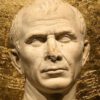
Plato said that virtue has no master. If a person does not honor this principle and rejoice in it, but is purchasable for money, he creates many masters for himself.
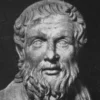
Apollonius of Tyana (c. AD 15-100) Greek philosopher and religious leader [Ἀπολλώνιος]
Letters from Apollonius of Tyana, ep. 15, Letter to Euphrates [tr. Jones (2006)]
(Source)
The reference to Plato's Republic, X 617 E.
A man who owns a dog is, in every sense of the word, its master; the term expresses accurately their mutual relations. But it is ridiculous when applied to the limited possession of a cat. I am certainly not Agrippina’s mistress, and the assumption of authority on my part would be a mere empty dignity, like those swelling titles which afford such innocent delight to the Freemasons of our severe republic. If I call Agrippina, she does not come; if I tell her to go away, she remains where she is; if I try to persuade her to show off her one or two little accomplishments, she refuses, with courteous but unswerving decision.

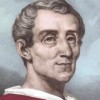
Slavery is not good in itself: it is neither useful to the master nor to the slave, because the slave can do nothing from virtuous motives; nor to the master, because he contracts amongst his slaves all sorts of bad habits — he becomes haughty, passionate, obdurate, vindictive, voluptuous, and cruel.
[Il n’est pas bon par sa nature; il n’est utile ni au maître ni à l’esclave: à celui-ci, parce qu’il ne peut rien faire par vertu; à celui-là, parce qu’il contracte avec ses esclaves toutes sortes de mauvaises habitudes, qu’il s’accoutume insensiblement à manquer à toutes les vertus morales, qu’il devient fier, prompt, dur, colère, voluptueux, cruel.]
Charles-Lewis de Secondat, Baron de Montesquieu (1689-1755) French political philosopher
Spirit of Laws [The Spirit of the Laws; De l’esprit des lois], Book 15, ch. 1 (1748)
Common translation used by English and American abolitionists (e.g., 1812).(Source (French)). Other translations:The state of slavery is in its own nature bad. It is neither useful to the master nor to the slave; not to the slave, because he can do nothing through a motive of virtue; not to the master, because by having an unlimited authority over his slaves, he insensibly accustoms himself to the want of all moral virtues, and from thence grows fierce, hasty, severe, choleric, voluptuous, and cruel.
[tr. Nugent (1758 ed.)][Slavery] is not good by its nature; it is useful neither to the master nor to the slave: not to the slave, because he can do nothing from virtue; not to the master, because he contracts all sorts of bad habits from his slaves, because he imperceptibly grows accustomed to failing in all the moral virtues, because he grows proud, curt, harsh, angry, voluptuous, and cruel.
[tr. Cohler/Miller/Stone (1989)][Slavery] is not good by its nature; it is useful neither to the master nor to the slave: to the slave, because he can do nothing out of virtue; to the master, because he contracts all sorts of bad habits with his slaves, because he accustoms himself little by little to failing in all the moral virtues, and because he becomes proud, impetuous, mean, contentious, sensuous, and cruel.
[tr. Stewart (2018)]
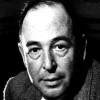
I am a democrat because I believe in the Fall of Man. I think most people are democrats for the opposite reason. A great deal of democratic enthusiasm descends from the ideas of people like Rousseau, who believed in democracy because they thought mankind so wise and good that everyone deserved a share in government. The danger of defending democracy on those grounds is that they’re not true. And whenever their weakness is exposed, the people who prefer tyranny make capital out of the exposure. I find that they’re not true without looking further than myself. I don’t deserve a share in governing a hen-roost, much less a nation. Nor do most people — all the people who believe advertisements, and think in catchwords and spread rumours. The real reason for democracy is just the reverse. Mankind is so fallen that no man can be trusted with unchecked power over his fellows. Aristotle said that some people were only fit to be slaves. I do not contradict him. But I reject slavery because I see no men fit to be masters.
Sit at the feet of the masters long enough, and they’ll start to smell.
(Other Authors and Sources)
Sauget’s Law of Education
(Source)
Attributed to John Sauget of Urbana, Ill., in Paul Dickson, The Official Rules, "Revised Proverbs" (1978).

“My lord,” said Lar, falling back upon the single statement that a servant may always rely upon when any other response is fraught with peril.
Steven Brust (b. 1955) American writer, systems programmer
The Lord of Castle Black (2003)

I believe any man who takes the liberty of another into his keeping is bound to become a tyrant, and that any man who yields up his liberty, in however slight the measure, is bound to become a slave.
H. L. Mencken (1880-1956) American writer and journalist [Henry Lewis Mencken]
“Why Liberty?” Chicago Tribune (30 Jan 1927)
The shepherd always tries to persuade the sheep that their interests and his own are the same.
Stendhal (1783-1842) French writer [pen name of Marie-Henri Beyle]
Letter (c. 1818)
Variants:
- "The shepherd always tries to persuade the sheep that their interests and his are the same."
- "The shepherd ... can never convince his flock of sheep that his interests and theirs are identical."
Voyage upon life’s sea,
To yourself be true,
And, whatever your lot may be,
Paddle your own Canoe.Sarah T. Bolton (1814-1893) American poet, women's activist (née Sarah Tittle Barrett)
“Paddle Your Own Canoe,” Harper’s New Monthly Magazine (May 1854)

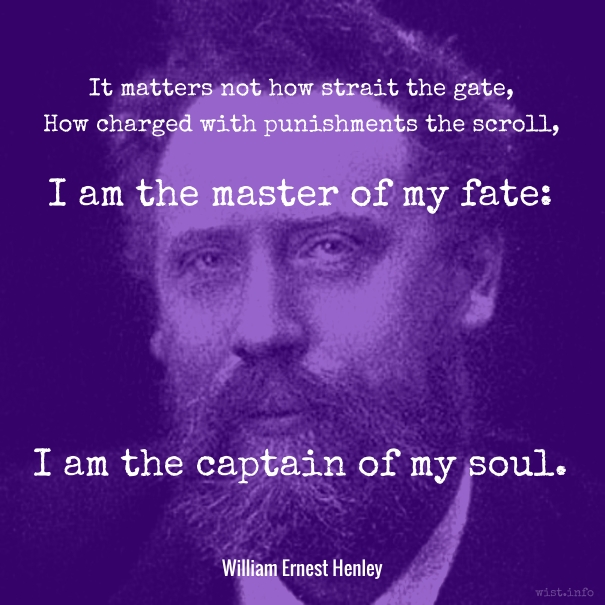
It matters not how strait the gate,
How charged with punishments the scroll,
I am the master of my fate:
I am the captain of my soul.
William Ernest Henley (1849-1903) English poet, critic, editor
“Invictus” (1875)

A slave has but one master; an ambitious man has as many masters as there are people who may be useful in bettering his position.
[L’esclave n’a qu’un maître; l’ambitieux en a autant qu’il y a de gens utiles à sa fortune.]
Jean de La Bruyère (1645-1696) French essayist, moralist
The Characters [Les Caractères], ch. 8 “Of the Court [De la Cour],” § 70 (8.70) (1688) [tr. Van Laun (1885)]
(Source)
(Source (French)). Alternate translations:A Slave has but one Master, an ambitious Man a great many, all those who are useful to him in making his fortune.
[Bullord ed. (1696)]A Slave has but one Master; an ambitious Man has as many as there are People useful to him in making his Fortune.
[Curll ed. (1713)]A purchased Slave has but one Master: An ambitious Man must be a Slave to all who may conduce to his Aggrandizement.
[Browne ed. (1752)]A slave has only one master; an ambitious man is enslaved to all those who may help to further his advancement.
[tr. Stewart (1970)]
Government is not reason, it is not eloquence, it is force; like fire, a troublesome servant and a fearful master. Never for a moment should it be left to irresponsible action.
George Washington (1732-1799) American military leader, Founding Father, US President (1789-1797)
(Attributed)
Unsourced. First attributed to "The First President of the United States" in "Liberty and Government" by W. M., in The Christian Science Journal (Nov 1902) [ed. Mary Baker Eddy].
Variant: "Government is not reason, it is not eloquence — it is force! Like fire, it is a dangerous servant and a fearful master. Never for a moment should it be left to irresponsible action."
More information on this quotation's origins and inspiration: Quote Origin: Government Is Like Fire, a Dangerous Servant and a Fearful Master – Quote Investigator®.

What I do say is that no man is good enough to govern another man without that other’s consent. I say this is the leading principle, the sheet-anchor of American republicanism. […] According to our ancient faith, the just powers of governments are derived from the consent of the governed. Now the relation of master and slave is pro tanto a total violation of this principle. The master not only governs the slave without his consent, but he governs him by a set of rules altogether different from those which he prescribes for himself. Allow all the governed an equal voice in the government, and that, and that only, is self-government.
Abraham Lincoln (1809-1865) American lawyer, politician, US President (1861-65)
Speech (1854-10-16), “In Reply to Senator Douglas,” Peoria, Illinois
(Source)
Speaking on the 1854 Kansas-Nebraska Act, which repealed the Missouri Compromise and allowed as "self-government" for residents of those two territories to decide locally whether to allow slavery there.
In the ellipses, Lincoln quotes the beginning of the Declaration of Independence, through "deriving their just powers from the consent of the governed."

As I would not be a slave, so I would not be a master. This expresses my idea of democracy. Whatever differs from this, to the extent of the difference, is no democracy.
Abraham Lincoln (1809-1865) American lawyer, politician, US President (1861-65)
Fragment (1858-08-01?), “Definition of Democracy”
(Source)
The title of this writing fragment, in Lincoln's hand, is notional. It is sometimes referred to as "On Slavery and Democracy." The date is also conjectural, and the manuscript is not connected with any known speech or occasion. The scrap of paper this solitary paragraph is on was given to Mary Todd Lincoln by her friend, Myra Bradwell on Mary's release from the asylum. It was unsigned, but a signature clipped from another document was pasted below the text.
All great masters are chiefly distinguished by the power of adding a second, a third, and perhaps a fourth step in a continuous line. Many a man had taken the first step. With every additional step you enhance immensely the value of your first.
Ralph Waldo Emerson (1803-1882) American essayist, lecturer, poet
“Powers and Laws of Thought,” Natural History of Intellect, Lecture 1, Harvard (1870, Spring)
(Source)