Truly it is a sad thing for a people, as for a man, to fall into Scepticism, into dilettantism, insincerity; not to know Sincerity when they see it. For this world, and for all worlds, what curse is so fatal? The heart lying dead, the eye cannot see.
Thomas Carlyle (1795-1881) Scottish essayist and historian
Lecture (1840-05-22), “The Hero as King,” Home House, Portman Square, London
(Source)
The lecture notes were collected by Carlyle into On Heroes, Hero-Worship, & the Heroic in History, Lecture 6 (1841).
Quotations about:
sincerity
Note not all quotations have been tagged, so Search may find additional quotes on this topic.
You may choose your word like a connoisseur,
And polish it up with art,
But the word that sways, and stirs, and stays,
Is the word that comes from the heart.Ella Wheeler Wilcox (1850-1919) American author, poet, temperance advocate, spiritualist
Poem (1906), “The Word,” st. 2, New Thought Pastels
(Source)

ESMERALDA: Everyone says he’s sincere, but everyone isn’t sincere. If everyone was sincere who says he’s sincere there wouldn’t be half so many insincere ones in the world and there would be lots, lots, lots more really sincere ones!
Sincerity must be used in moderation, even with our most intimate friends. To be too frank is to put into an opinion what may be simply ill temper; it is to risk losing a friend because of a poorly digested roast, a headache, a thunderstorm.
André Maurois (1885-1967) French author [b. Émile Salomon Wilhelm Herzog]
Conversation, “Sincerity” (1930)
(Source)
But the power
of a man’s will is often powerless:
laughter and tears follow so close upon
the passions that provoke them that the more
sincere the man, the less they obey his will.
[Ma non può tutto la virtù che vuole;
ché riso e pianto son tanto seguaci
a la passion di che ciascun si spicca,
che men seguon voler ne’ più veraci.]Dante Alighieri (1265-1321) Italian poet
The Divine Comedy [Divina Commedia], Book 2 “Purgatorio,” Canto 21, l. 105ff (21.105-108) (1314) [tr. Musa (1981)]
(Source)
(Source (Italian)). Alternate translations:As each alternate Passion leaves a trace
On the still-varying muscles of the face,
Fictitious oft; but, by the candid mind,
Conceal'd with pain, the dawn of dubious joy
My features wore.
[tr. Boyd (1802), st. 20]But the power which wills,
Bears not supreme control: laughter and tears
Follow so closely on the passion prompts them,
They wait not for the motions of the will
In natures most sincere.
[tr. Cary (1814)]But will is not with power entire endued.
Laughter and tears pursue so much the trace
The passion dictates that imprints them there,
Nor follow will in natures most sincere.
[tr. Bannerman (1850)]But yet the power that wills cannot do all things;
For tears and laughter are such pursuivants
Unto the passion from which each springs forth,
In the most truthful least the will they follow.
[tr. Longfellow (1867)]But virtue cannot all it would; for laughter and tears follow so much the passion from which each springs, that they least obey will in the most truthful men.
[tr. Butler (1885)]But all it wishes, will cannot forbear:
For smiles and tears to diverse passion wed,
Upon that passion follow so instinct.
In open natures, will is quite outsped.
[tr. Minchin (1885)]But the power that wills cannot do everything; for smiles and tears are such followers on the emotion from which each springs, that in the most truthful they least follow the will.
[tr. Norton (1892)]But the virtue which wills is not all powerful;
for laughter and tears follow so closely the passion from which each springs, that they least obey the will in the most truthful.
[tr. Okey (1901)]But the power to will cannot do all, for laughter and tears are so close followers on the passions from which they spring that they least follow the will in the most truthful.
[tr. Sinclair (1939)]But all is not done by the will's decree;
For on the passion wherefrom each is bred
Laughter and tears follow so close that least
In the most truthful is the will obeyed.
[tr. Binyon (1943)]But will with us is not made one with power;
Tears, laughter, tread so hard upon the heel
Of their evoking passions, that in those
Who're most sincere they least obey the will.
[tr. Sayers (1955)]But man's will
is not supreme in every circumstance:
for tears and laughter come so close behind
the passions they arise from, that they least
obey the will of the most honest mind.
[tr. Ciardi (1961)]But the power that wills cannot do everything; for smiles and tears are such close followers on the emotion from which each springs, that in the most truthful they least follow the will.
[tr. Singleton (1973)]But virtue cannot do everything that it will;
For laughter and tears follow so closely on
The passions from which they respectively proceed,
That they follow the will least in the most truthful.
[tr. Sisson (1981)]And yet the power of the will cannot do all,
for tears and smiles are both so faithful to
the feelings that have prompted them that true
feeling escapes the will that would subdue.
[tr. Mandelbaum (1982)]But the power of the will cannot do everything,
for laughter and weeping follow so closely on the passion from which each springs that they follow the will least in those who are most truthful.
[tr. Durling (2003)]But the virtue that wills is not all-powerful, since laughter and tears follow the passion, from which they spring, so closely, that, in the most truthful, they obey the will least.
[tr. Kline (2002)]But will power can't do everything it wills.
For tears and laughter follow on so close
to those emotions from which each act springs
that these least follow will in those most true.
[tr. Kirkpatrick (2007)]But the power that wills cannot do all it wills,
for laughter and tears so closely follow feelings
from which they spring, they least can be controlled
in those who are most truthful.
[tr. Hollander/Hollander (2007)]But will alone won't stop a human being,
Since laughter and tears are deeply interwoven,
Following hard on emotions which spring them forth,
And when they're truthful have little to do with the will.
[tr. Raffel (2010)]

Among the lessons taught by the French Revolution, there is none sadder or more striking than this — that you may make everything else out of the passions of men except a political system that will work, and that there is nothing so pitilessly and unconsciously cruel as sincerity formulated into dogma.
James Russell Lowell (1819-1891) American diplomat, essayist, poet
“Abraham Lincoln” (1864), My Study Windows (1871)
(Source)
Anything you do from the heart enriches you, but sometimes not till years later.
Mignon McLaughlin (1913-1983) American journalist and author
The Neurotic’s Notebook, ch. 9 (1963)
(Source)

I think the gist of the matter is that a saint can live without politeness, and indeed that politeness is incompatible with a saintly character. But the man who is always to be sincere must be free from spite and envy and malice and pettiness. Most of us have a dose of these vices in our composition and therefore have to excerise tact to avoid giving offence. We cannot all be saints, and if saintliness is impossible, we may at least try not to be too disagreeable.
Bertrand Russell (1872-1970) English mathematician and philosopher
Essay (1933-02-01) “On Tact,” New York American
(Source)
“All stories are true,” Skarpi said. “But this one really happened, if that’s what you mean.” He took another slow drink, then smiled again, his bright eyes dancing. “More or less. You have to be a bit of a liar to tell a story the right way. Too much truth confuses the facts. Too much honesty makes you sound insincere.”
Patrick Rothfuss (b. 1973) American author
The Name of the Wind, ch. 26 “Lanre Turned” (2007)
(Source)

Politeness comes from within, from the heart: but if the forms of politeness are dispensed with, the spirit and the thing itself soon die away.
John Hall (1829-1898) Irish-American clergyman, academician (b. John Hall Magowan)
(Attributed)
(Source)
The superior man in everything considers righteousness to be essential. He performs it according to the rules of propriety. He brings it forth in humility. He completes it with sincerity. This is indeed a superior man.
[君子義以為質,禮以行之,孫以出之,信以成之,君子哉]
Confucius (c. 551- c. 479 BC) Chinese philosopher, sage, politician [孔夫子 (Kǒng Fūzǐ, K'ung Fu-tzu, K'ung Fu Tse), 孔子 (Kǒngzǐ, Chungni), 孔丘 (Kǒng Qiū, K'ung Ch'iu)]
The Analects [論語, 论语, Lúnyǔ], Book 15, verse 18 (15.18) (6th C. BC – 3rd C. AD) [tr. Legge (1861), 15.17]
(Source)
(Source (Chinese)). Alternate translations, noting where Legge's numbering is used:When the "superior man" regards righteousness as the thing material, gives operation to it according to the rules of propriety, lets it issue in humility, and become complete in sincerity, -- there indeed is your superior man!
[tr. Jennings (1895), 15.17]A wise and good man makes Right the substance of his being; he cries it out with judgment and good sense; he speaks it with modesty; and he attains it with sincerity: -- such a man is a really good and wise man!
[tr. Ku Hung-Ming (1898), 15.17]The noble man takes the Right as his foundation principle, reduces it to practice with all courtesy, carries it out with modesty, and renders it perfect with sincerity, -- such is the noble man.
[tr. Soothill (1910), 15.17]When a princely man makes the Right his fundamental principle, makes Courtesy his rule in evolving it, Modesty his rule for exhibiting it, and Sincerity his rule for effectuating it perfectly, -- what a princely man he is!
[tr. Soothill (1910), 15.17, alternate]The proper man gives substance to his acts by equity. He proceeds according to the rites, puts them forth modestly, and makes them perfect by sticking to his word. That's the proper man (in whom's the voice of his forebears).
[tr. Pound (1933), 15.17]The gentleman who takes the right as his material to work upon and ritual as the guide in putting what is right into practice, who is modest in setting out his projects and faithful in carrying them to their conclusions, he indeed is a true gentleman.
[tr. Waley (1938), 15.17]He whose very substance is justice; whose actions are governed by the rites; whose participation in affairs is compliant; and whose crowning perfection is truthfulness -- that man is a perfect gentleman.
[tr. Ware (1950)]The gentleman has morality as his basic stuff and by observing the rites puts it into practice, by being modest gives it expression, and by being trustworthy in word brings it to completion. Such is a gentleman indeed!
[tr. Lau (1979)]Righteousness the gentleman regards as the essential stuff and the rites are his means of putting it into effect. If modesty is the quality with which he reveals it and good faith is his method of bringing it to completion, he is indeed a gentleman.
[tr. Dawson (1993)]A gentleman takes justice as his basis, enacts it in conformity with the ritual, expounds it with modesty, and through good faith, brings it to fruition. That is how a gentleman proceeds.
[tr. Leys (1997)]A gentleman considers righteousness his major principle; he practices it in accordance with the rituals, utters it in modest terms, and fulfils it with truthfulness. A gentleman indeed!
[tr. Huang (1997)]A gentleman takes the righteousness as his essence, practices with the rituals, words with modesty, and gets achievement with honesty. It is the gentleman.
[tr. Cai/Yu (1998), v. 402]Having a sense of appropriate conduct [yi] as one's basic disposition [zhi], developing it in observing ritual propriety [li], expressing it with modesty, and consummating it in making good on one's word [xin]; this then is an exemplary person [junzi].
[tr. Ames/Rosemont (1998)]If a gentleman has right as his substance, and puts it in practice with propriety, promulgates it with lineality, and brings it to a conclusion with fidelity, he is a gentleman indeed!
[tr. Brooks/Brooks (1998), LY17 c0270 addition]The noble-minded make Duty their very nature. They put it into practice through Ritual; they make it shine through humility; and standing by their words, they perfect it. Then they are noble-minded indeed!
[tr. Hinton (1998)]The gentleman takes rightness as his substance, puts it into practice by means of ritual, gives it expression through modesty, and perfects it by being trustworthy. Now that is a gentleman!
[tr. Slingerland (2003)]The gentleman makes rightness the substance, practices it through ritual, displays it with humility, brings it to completion with trustworthiness. That’s the gentleman.
[tr. Watson (2007)]The gentleman makes rightness the substance. He works at it through ritual propriety; he expresses it with modesty; he brings it to completion by being trustworthy. Now that is a gentleman!
[tr. Annping Chin (2014)]A Jun Zi regards righteousness and honor as fundamental bases, acts in line with Li, shows humility, delivers promises, and completes contracts with sincerity and trust. If so, he is indeed a Jun Zi.
[tr. Li (2020)]A leader takes rightness as their essence, puts it into practice through ritual, manifests it through humility, and brings it to fruition through trustworthiness. This is how a leader behaves.
[tr. Brown (2021)]

Above all, the search after truth and its eager pursuit are peculiar to man. And so, when we have leisure from the demands of business cares, we are eager to see, to hear, to learn something new, and we esteem a desire to know the secrets or wonders of creation as indispensable to a happy life. Thus we come to understand that what is true, simple, and genuine appeals most strongly to a man’s nature.
[In primisque hominis est propria veri inquisitio atque investigatio. Itaque cum sumus necessariis negotiis curisque vacui, tum avemus aliquid videre, audire, addiscere cognitionemque rerum aut occultarum aut admirabilium ad beate vivendum necessarian! ducimus. Ex quo intellegitur, quod verum, simplex sincerumque sit, id esse naturae hominis aptissimum.]
Marcus Tullius Cicero (106-43 BC) Roman orator, statesman, philosopher
De Officiis [On Duties; On Moral Duty; The Offices], Book 1, ch. 4 (1.4) / sec. 13 (44 BC) [tr. Miller (1913)]
(Source)
Original Latin. Alt. trans.:But of all the properties and inclinations of men, there is none more natural and peculiar to them than an earnest desire and search after truth. Hence it is that our minds are no sooner free from the thoughts and engagements of necessary business, but we presently long to be either seeing, or hearing, or learning of something; and esteem the knowledge of things secret and wonderful as a necessary ingredient of a happy life. Whence it appears that nothing is more agreeable and suited to the nature and minds of men than undisguised openness, truth, and sincerity.
[tr. Cockman (1699)]The desire and investigation of truth is proper to man. When disengaged from necessary business and cares, we are eager to add to our knowledge by examining for ourselves or listening to others. The discovery of what is secret or wonderful, we are disposed to conceive essential to happiness. Hence, what is true, simple, and undisguised, is best adapted to human nature.
[tr. McCartney (1798)]Before all other things, man is distinguished by his pursuit and investigation of TRUTH. And hence, when free from needful business and cares, we delight to see, to hear, and to communicate, and consider a knowledge of many admirable and abstruse things necessary to the good conduct and happiness of our lives: whence it is clear that whatsoever is TRUE, simple, and direct, the same is most congenial to our nature as men.
[In John Frederick William Herschel, A Preliminary Discourse on the Study of Natural Philosophy, Epigraph (1830)]The distinguishing property of man is to search for and to follow after truth. Therefore, when relaxed from our necessary cares and concerns, we then covet to see, to hear, and to learn somewhat; and we esteem knowledge of things either obscure or wonderful to be the indispensable means of living happily. From this we understand that truth, simplicity, and candour, are most agreeable to the nature of mankind.
[tr. Edmonds (1865)]The research and investigation of truth, also, are a special property of man. Thus, when we are free from necessary occupations, we want to see, or hear, or learn something, and regard the knowledge of things either secret or wonderful as essential to our living happily and well.
[tr. Peabody (1883)]The distinctive faculty of man is his eager desire to investigate the truth. Thus, when free from pressing duties and cares, we are eager to see or hear, or learn something new, and we think our happiness is incomplete unless we study the mysteries and the marvels of the universe.
[tr. Gardiner (1899)]The first duty of man is the seeking after and the investigation of truth.
[ed. Harbottle (1906)Inquiry into and searching for truth are primary characteristics of mankind. So when we are free from business obligations and other preoccupations, we become eager to see something new, to hear and learn something; we begin to think that knowledge about the mysteries and wonders of the world is necessary to a happy life.
[tr. Edinger (1974)]
Politics demands a great capacity for self-deception, which rescues the politician from hypocrisy. He can normally manage to believe what he is saying for the time it takes him to say it. This gives him a certain sincerity even when he is saying opposite things to opposite people.
Garry Wills (b. 1934) American author, journalist, historian
Confessions of a Conservative, ch. 15 (1979)
(Source)

Better a false “Good morning” than a sincere “Go to Hell.”
Proverbs, Sayings, and Adages
Yiddish proverb

The only guide to a man is his conscience, the only shield to his memory is the rectitude and the sincerity of his actions. It is very imprudent to walk through life without this shield, because we are so often mocked by the failure of our hopes and the upsetting of our calculations; but with this shield, however the fates may play, we march always in the ranks of honour.
Winston Churchill (1874-1965) British statesman and author
Eulogy for Neville Chamberlain (1940)
In The Second World War, Vol. 2: Their Finest Hour (1949)
There are few mortals so insensible that their affections cannot be gained by mildness; their confidence by sincerity; their hatred by scorn or neglect.
Johann Georg Zimmermann (1728-1795) Swiss philosophical writer, naturalist, physician
Aphorisms and Reflections on Men, Morals and Things (1800)
(Source)
He who is mistaken in an action which he sincerely believes to be right may be an enemy, but retains our esteem.
[Celui qui se trompe dans une intention qu’il croit bonne, on peut le combattre, on ne cesse pas de l’estimer.]
Jules Verne (1828-1905) French novelist, poet, playwright
The Mysterious Island, Part 3, ch. 16 (1874)
(Source)
It is when the sentimentalist turns preacher of morals that we investigate his character, and are justified in so doing. He may express as many and as delicate shades of feeling as he likes, — for this the sensibility of his organization perfectly fits him, no other person could do it so well, — but the moment he undertakes to establish his feeling as a rule of conduct, we ask at once how far are his own life and deed in accordance with what he preaches? For every man feels instinctively that all the beautiful sentiments in the world weigh less than a single lovely action; and that while tenderness of feeling and susceptibility to generous emotions are accidents of temperament, goodness is an achievement of the will and a quality of the life. Fine words, says our homely old proverb, butter no parsnips; and if the question be how to render those vegetables palatable, an ounce of butter would be worth more than all the orations of Cicero. The only conclusive evidence of a man’s sincerity is that he give himself for a principle. Words, money, all things else, are comparatively easy to give away; but when a man makes a gift of his daily life and practice, it is plain that the truth, whatever it may be, has taken possession of him.
James Russell Lowell (1819-1891) American diplomat, essayist, poet
“Rousseau And The Sentimentalists,” North American Review (Jul 1867)
(Source)
There is no better way to convince others than first to convince oneself.
Marcus Tullius Cicero (106-43 BC) Roman orator, statesman, philosopher
(Attributed)
(Source)
In Martin Luther, Table Talk (1566) [tr. Smith & Gallinger (1915)].
More important than any belief a man holds is the way he holds it. Any fool or fanatic can embrace a doctrine. Even if true, it remains a dogma unless it is evaluated in the light of its alternatives, and the relevant evidence for them.
Sidney Hook (1902-1989) American philosopher
Political Power and Personal Freedom, ch. 28 “Socialism Without Utopia: A Rejoinder to Max Eastman”(1959)
Ah! how many Judases have we in these days, that kiss Christ, and yet betray Christ; that in their words profess him, but in their works deny him; that bow their knee to him, and yet in their hearts despise him; that call him Jesus, and yet will not obey him for their Lord.
Thomas Brooks (1608-1680) English Puritan divine, writer
Precious Remedies Against Satan’s Devices, “A Word to the Reader” (1652)
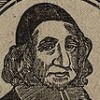
It is dangerous to be sincere unless you are also stupid.
George Bernard Shaw (1856-1950) Irish playwright and critic
Man and Superman, “Maxims for Revolutionists: Stray Sayings” (1903)
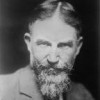
Sincerity is the foundation of the spiritual life.
Albert Schweitzer (1875-1965) Alsatian philosopher, physician, philanthropist, polymath
Out of My Life and Thought, ch. 21 [tr. Campion (1933)]
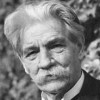
Bolsheviks are sincere. Fascists are sincere. Lunatics are sincere. People who believe the Earth is flat are sincere. They can’t all be right. Better make certain first you’ve got something to be sincere about, and with.
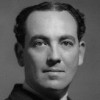
Let us speak, though we show all our faults and weaknesses — for it is a sign of strength to be weak, to know it, and out with it — not in a set way and ostentatiously, but incidentally and without premeditation.
Herman Melville (1819-1891) American writer
Letter to Nathaniel Hawthorne (29 Jun 1851)

Use no hurtful deceit; think innocently and justly and, if you speak, speak accordingly.
Benjamin Franklin (1706-1790) American statesman, scientist, philosopher, aphorist
Autobiography, Virtue #7 “Sincerity,” 1784 (1798)
You can be as sincere as hell and still be wrong.
Jim Butcher (b. 1971) American author
Small Favor (2008)

Nothing in all the world is more dangerous than sincere ignorance and conscientious stupidity.
Martin Luther King, Jr. (1929-1968) American clergyman, civil rights leader, social activist, preacher
Strength to Love, ch. 4 “Love in Action,” sec 3 (1963)
(Source)
Intellectual honesty and obvious sincerity carry more conviction than was ever accomplished by mere utterance. The advocate can make no greater mistake than to ignore or attempt to conceal the weak points in his case. The most effective strategy is at an early stage of the argument to invite attention to your weakest point before the court has discovered it, then to meet it with the best answers at your disposal, to deal with all the remaining points with equal candor, and to end with as powerful a presentation of your strongest point as you are capable of making.
George W. Pepper (1867-1961) American lawyer, law professor, politician
Letter to Eugene Gerhart (1951-12-10)
(Source)
Quoted in Gerhart, America's Advocate: Robert H. Jackson, ch. 24 (1958).
No tears in the writer, no tears in the reader. No surprise for the writer, no surprise for the reader.
Robert Frost (1874-1963) American poet
“The Figure a Poem Makes,” Collected Poems, Preface, “The Figure a Poem Makes” (1939)
(Source)
A friend is a person with whom I may be sincere. Before him, I may think aloud.
Ralph Waldo Emerson (1803-1882) American essayist, lecturer, poet
Essay (1841), “Friendship,” Essays: First Series, No. 6
(Source)
The first rule is, to keep an untroubled spirit; for all things must bow to Nature’s law, and soon enough you must vanish into nothingness, like Hadrian and Augustus. The second is to look things in the face and know them for what they are, remembering that it is your duty to be a good man. Do without flinching what man’s nature demands; say what seems to you most just — though with courtesy, modesty, and sincerity.
[Τὸ πρῶτον μὴ ταράσσου: πάντα γὰρ κατὰ τὴν τοῦ ὅλου φύσιν καὶ ὀλίγου χρόνου οὐδεὶς οὐδαμοῦ ἔσῃ, ὥσπερ οὐδὲ Ἁδριανὸς οὐδὲ Αὔγουστος. ἔπειτα ἀτενίσας εἰς τὸ πρᾶγμα ἴδε αὐτὸ καὶ συμμνημονεύσας ὅτι ἀγαθόν σε ἄνθρωπον εἶναι δεῖ καὶ τί τοῦ ἀνθρώπου ἡ φύσις ἀπαιτεῖ, πρᾶξον τοῦτο ἀμεταστρεπτὶ καὶ εἰπέ, ὡς δικαιότατον φαίνεταί σοι: μόνον εὐμενῶς καὶ αἰδημόνως καὶ ἀνυποκρίτως.]
Marcus Aurelius (AD 121-180) Roman emperor (161-180), Stoic philosopher
Meditations [To Himself; Τὰ εἰς ἑαυτόν], Book 8, ch. 5 (8.5) (AD 161-180) [tr. Staniforth (1964)]
(Source)
This translation was adapted (and significantly shortened) by Norman Vincent Peale in You Can If You Think You Can (1974): "The first rule is to keep an untroubled spirit. The second is to look things in the face and know them for what they are."
Peale's paraphrase significantly changes the meaning (by removing the fatalism and the sense of duty in the face of the actions of great men from the past, and turning it into a general call for calm and clarity). Nonetheless, Peale's version of this translation shows up all over the place, and generally without reference to him.
Original Greek. Alternate translations:First; let it not trouble thee. For all things both good and evil come to pass according to the nature and general condition of the universe, and within a very little while, all things will be at an end; no man will be remembered: as now of Africanus (for example) and Augustus it is already come to pass. Then secondly; fix thy mind upon the thing itself; look into it, and remembering thyself, that thou art bound nevertheless to be a good man, and what it is that thy nature requireth of thee as thou art a man, be not diverted from what thou art about, and speak that which seemeth unto thee most just: only speak it kindly, modestly, and without hypocrisy.
[tr. Casaubon (1634), 8.4]In the first place , keep your self easie, for all things are govern'd by the Laws, and Order of Providence: Besides, you'l quickly go the way of all Flesh, as Augustus, Adrian, and the rest of the Emperours have done before you. Farther, Examine the matter to the bottom , and remember, that the top of your business is to be a Good Man : Therefore whatever the Dignity of Humane Nature requires of you, set about it presently , without Ifs, or Ands : And speak always according to your Conscience , but let it be done in the Terms of Good Nature and Civility.
[tr. Collier (1701)]In the first place, be not disturbed or put into confusion. All things happen according to the nature of the whole. In a little time you shall be gone, as Hadrian, and Augustus. And, then, attentively consider the nature of what occurs to you: Remember you must persist in the purpose of being a good man. Act, then, inflexibly what suits the nature of a man, and speak always what appears to you just, and yet with calm good-nature and modesty; and without Hypocrisy.
[tr. Hutcheson/Moor (1742)]Let it be a principal part of your philosophy to preserve your tranquility: for all things come to pass by the direction of Providence. And, in a few years, you yourself must leave this world, as Hadrian and Augustus have done before you.
In the next place, consider the affair in its proper light, and you will find, that your whole business here is to be a good man. Whatever teh nature of man therefore requires of you, perform it strenuously and with assiduity; and whatever justice dictates on every occasion, speak it boldly, but with good-nature, modesty, and sincerity.
[tr. Graves (1792)]This is the chief thing: Be not perturbed, for all things are according to the nature of the universal; and in a little time thou wilt be nobody and nowhere, like Hadrianus and Augustus. In the next place, having fixed thy eyes steadily on thy business, look at it, and at the same time remembering that it is thy duty to be a good man, and what man's nature demands, do that without turning aside; and speak as it seems to thee most just, only let it be with a good disposition and with modesty and without hypocrisy.
[tr. Long (1862)]In the first place, keep yourself easy, for all things are governed by the universal nature. Besides, you'll quickly go the way of all flesh, as Augustus and Hadrian have done before you. Farther, examine the matter from top to bottom, and remember that your business is to be a good man. Therefore, whatever the dignity of human nature requires of you, set about it at once, without "ifs" or "ands"; and speak always according to your conscience, but let it be done in the terms of good nature and modesty and sincerity.
[tr. Collier/Zimmern (1887)]First and foremost, keep unperturbed. For all things follow the law of Nature: and in a little while you will vanish and be nought, even as are Hadrian and Augustus. Secondly, face facts open-eyed, bearing in mind that it is your duty to be a man and to do good; what man's nature demands, that you do without swerving; so speak, as seems to you most just; only be it considerately, modestly, and with sincerity.
[tr. Rendall (1898)]Before all things, be not perturbed. Everything comes to pass as directed by universal Nature, and in a little time you will be departed and gone, like Hadrianus and Augustus. Then, scan closely the nature of what has befallen, remembering that it is your duty to be a good man. Do unflinchingly whatever man’s nature requires, and speak as seems most just, yet in kindliness, modesty, and sincerity.
[tr. Hutcheson/Chrystal (1902)]Firstly, fret not thyself, for all things are as the Nature of the Universe would have them, and within a little thou shalt be non-existent, and nowhere, like Hadrianus and Augustus. Secondly, look steadfastly at the thing, and see it as it is and, remembering withal that thou must be a good man, and what the Nature of man calls for, do this without swerving, and speak as seemeth to thee most just, only be it graciously, modestly, and without feigning.
[tr. Haines (Loeb) (1916)]In the first place, be not troubled; for all things are according to Universal Nature, and in a little while you will be no one and nowhere, even as Hadrian and Augustus are no more. Next, looking earnestly at the question, perceive its essence, and reminding yourself that your duty is to be a good man, and what it is that man's nature demands, do that without swerving, and speak the thing that appears to you to be most just, provided only that it is with kindness and modesty, and without hypocrisy
. [tr. Farquharson (1944)]First of all, be untroubled in your mind; for all things come about as universal nature would have them, and in a short while you will be no one and nowhere, as are Hadrian and Augustus. And next, keep your eyes fixed on the matter in hand and observe it well, remembering that it is your duty to be a good person, and that whatever human nature demands, you must fulfil without the slightest deviation and in the manner that seems most just to you; only do so with kindness and modesty, and without false pretences.
[tr. Hard (1997 ed.), Hard (2011 ed.)]The first step: Don't be anxious. Nature controls it all. And before long you'll be no one, nowhere -- like Hadrian, like Augustus. The second step: Concentrate on what you have to do. Fix your eyes on it. Remind yourself that your task is to be a good human being; remind yourself what nature demands of people. Then do it, without hesitation, and speak the truth as you see it. But with kindness. With humility. Without hypocrisy.
[tr. Hays (2003)]First, do not be upset: all things follow the nature of the Whole, and in a little while you will be no one and nowhere, as is true now even of Hadrian and Augustus. Next, concentrate on the matter in hand and see it for what it is. Remind yourself of your duty to be a good man and rehearse what man’s nature demands: then do it straight and unswerving, or say what you best think right. Always, though, in kindness, integrity, and sincerity.
[tr. Hammond (2006)]