Certainly the influence of the past is very strong at the present time; it is reviving, and this rejuvenation of a corpse is surprising. It is on the march, and it seems to be winning — a dead thing yet a conqueror! It comes with its army of superstitions, its sword, which is despotism, its banner, which is ignorance, and in recent years it has won ten battles. It advances, laughs, and threatens; it is at our door.
[Le passé, il est vrai, est très fort à l’heure où nous sommes. Il reprend. Ce rajeunissement d’un cadavre est surprenant. Le voici qui marche et qui vient. Il semble vainqueur ; ce mort est un conquérant. Il arrive avec sa légion, les superstitions, avec son épée, le despotisme, avec son drapeau, l’ignorance ; depuis quelque temps il a gagné dix batailles. Il avance, il menace, il rit, il est à nos portes.]
Victor Hugo (1802-1885) French writer
Les Misérables, Part 4 “St. Denis,” Book 7 “Argot,” ch. 4 (4.7.4) (1862) [tr. Denny (1976)]
(Source)
(Source (French)). Alternate translations:The past, it is true, is very strong at the present hour. It is reviving. This revivification of a corpse is surprising. Here it is walking and advancing. It seems victorious; this dead man is a conqueror. He comes with his legion, the superstitions, with his sword, despotism, with his banner, ignorance; within a little time he has won ten battles. He advances, he threatens, he laughs, he is at our doors.
[tr. Wilbour (1862)]The past, we grant, is very powerful at the present hour, and is beginning again. This rejuvenescence of a corpse is surprising, yet here it is, marching straight toward us. The dead man appears a victor, and is a conqueror; he arrives with his legion, superstitions; with his sword, despotism; with his banner, ignorance; and during sometime past he has gained ten battles. He advances, he threatens, he laughs, he is at our gates.
[tr. Wraxall (1862)]The past is very strong, it is true, at the present moment. It censures. This rejuvenation of a corpse is surprising. Behold, it is walking and advancing. It seems a victor; this dead body is a conqueror. He arrives with his legions, superstitions, with his sword, despotism, with his banner, ignorance; a while ago, he won ten battles. He advances, he threatens, he laughs, he is at our doors.
[tr. Hapgood (1887)]The past, it is true, is very strong right now. It is reviving. This revivification of a corpse is surprising. Here it is walking and advancing. It seems victorious; this dead man is a conqueror. He comes with his legion, superstitions, with his sword, despotism, with his banner, ignorance; within a little time he has won ten battles. He advances, he threatens, he laughs, he is at our door.
[tr. Wilbour/Fahnestock/MacAfee (1987)]At the moment, it is true, the past is very strong. It is reviving. This rejuvenation of a corpse is astounding. Back on its feet again, here it comes. It looks victorious. This defunct is a conqueror, it arrives with its legion -- superstitions -- with its sword -- despotism -- with its banner -- ignorance. Recently, it has won a dozen battles. It is advancing, threatening, laughing, it is at our gates.
[tr. Donougher (2013)]
Quotations about:
superstition
Note not all quotations have been tagged, so Search may find additional quotes on this topic.

The Church hates a thinker precisely for the same reason a robber dislikes a sheriff, or a thief despises the prosecuting witness. Tyranny likes courtiers, flatterers, followers, fawners, and superstition wants believers, disciples, zealots, hypocrites, and subscribers.
Robert Green Ingersoll (1833-1899) American lawyer, freethinker, orator
Lecture (1873-12) “Individuality,” Chicago Free Religious Society
(Source)
Full title "Arraignment of the Church and a Plea for Individuality." Collected in The Gods and Other Lectures (1876).
Now give attention and your gowns refold,
Who thirst for fame, grow yellow after gold,
Victims to luxury, superstition blind,
Or other ailment natural to the mind:
Come close to me and listen, while I teach
That you’re a pack of madmen, all and each.[Audire atque togam iubeo conponere, quisquis
Ambitione mala aut argenti pallet amore,
Quisquis luxuria tristive superstitione
Aut alio mentis morbo calet ; hue propius me,
Dum doceo insanire omnes, vos ordine adite.]Horace (65–8 BC) Roman poet, satirist, soldier, politician [Quintus Horatius Flaccus]
Satires [Saturae, Sermones], Book 2, # 3 “Si raro scribes,” l. 77ff (2.3.77-81) (30 BC) [tr. Conington (1874)]
(Source)
Damasippus quoting to Horace the words of Stertinius, the Stoic, whose lecture is the remainder of the Satire.
(Source (Latin)). Alternate translations:Ye lecherouse, luxuriouse, ye supersticiouse:
Ye shottishe, dotishe, doultish dawes, that nothing can discusse,
Draw on my Clyents one by one, be not agreist ne sad,
Stand stil in stound, kepe whishte (I say) whilst I do prove you mad.
I charge you, you Ambitious, and you that mucker good,
To gerde your gownes, to sit and harcke whilst I do prove you wood.
[tr. Drant (1567)]Come, sayes Stertinius, hearken; nay, come near,
And mind what I shall tell you, whosoe're
Is by a vain and lewd ambition swai'd,
And he whom sordid avarice has made
Look like a Skeleton, all those that be
Given up to a destructive luxury,
To doating superstition are inclin'd,
Or any such distemper of the mind.
Are all stark mad.
[tr. "A. B."; ed. Brome (1666)]Sit still and hear, those whom proud thoughts do swell,
Those that look pale by loving Coin too well;
Whom Luxury Corrupts, or fancy'd fears
Oppress, and empty superstitious Cares;
Or any other Vice disturbs, draw near,
I'le prove that all are mad, sit still, and hear.
[tr. Creech (1684)]Come all, whose breasts with bad ambition rise,
Or the pale passion, that for money dies,
With luxury, or superstition's gloom,
Whate'er disease your health of mine consume,
Compose your robes; in decent ranks draw near,
And, that ye all are mad, with reverence hear.
[tr. Francis (1747)]Haste and adjust the mantle's decent fold,
All ye that madden with the thirst of gold, --
Whose bosoms kindle with ambition's fires, --
Whose blood ferments with lechery's wild desires, --
Who superstition's slavish fear molests, --
In short, whatever frensy rack your breasts,
Approach in ranks, be patient if you can,
And hear me prove you maniacs to a man!
[tr. Howes (1845)]Whoever grows pale with evil ambition, or the love of money: whoever is heated with luxury, or gloomy superstition, or any other disease of the mind, I command him to adjust his garment and attend: hither, all of ye, come near me in order, while I convince you that you are mad.
[tr. Smart/Buckley (1853)]I bid you list to me, and now prepare to carefully attend, all you whose cheeks are pale through that pernicious quest of rank or greed of gain; all you whose passions are inflamed by luxury, or hearts distressed by gloomy superstition, or by any possible disease of mind; approach in order nearer me, while I explain that all are mad.
[tr. Millington (1870)]Now I bid my class arrange their gowns neatly and listen. Every one of you who is pale from a bad attack of ambition, or avarice, or in a fever with extravagance or gloomy superstition, or some other mental malady, come nearer to me and hear the oracle each in his turn, as I explain to you that all are mad.
[tr. Wickham (1903)]Now give heed, I bid you, arrange your robes, and whoever of you is pale with sordid ambition or avarice, whoever is feverish with extravagance or gloomy superstition, or some other mental disorder. Hither, come nearer to me, while I prove that you are mad, all of you from first to last.
[tr. Fairclough (Loeb) (1926)]Now I bid you arrange your togas and listen to me,
(1) Whoever is pale with passionate love for money,
(2) Whoever is chill int he gruesome grip of ambition,
(3) Whoever is running a fever for luxury living,
(4) Whoever is all inflamed with religious fears
Or some other mental disease. Draw near to me,
And I'll prove that you all are mad, from the first to the last.
[tr. Palmer Bovie (1959)]"Settle yourself and listen well." So I order everyone
turned sickly pale by a warped ambition or by lust for cash,
all who run a fever from high living, or superstition,
or any other illness that may affect the mind. Come closer,
and I'll explain why you;re all mad. Come on, get in line.
[tr. Fuchs (1977)]“Ahem: students: arrange your robes, open your ears:
Anyone whom ambition turns pale, anyone enamored of money,
Anyone feverish for luxuries, sad with superstition, or suffering
From any disease of the mind: come closer, pay attention, I’ll prove
You mad, each and every one of you: come closer!"
[tr. Raffel (1983)]"Now, listen
quietly to me, smooth out the folds
of your toga.
"Whoever grows unhappy
over sordid ambitions, or
out of greed for money; whoever
burns with the fever for luxury,
or miserable superstitions
or other mental ailments,
come here: draw closer to me,
in file, all in a row; and
I will demonstrate to you that
you're all mad: every single one of you.
[tr. Alexander (1999)]Settle down then please and pay attention, I'm talking to all
who are plagued by the curse of ambition or a morbid craving for money,
all who are obsessed with self-indulgence or gloomy superstition,
or any other fever of the soul; come here to me
and I'll convince you, one by one, that you're all mad.
[tr. Rudd (2005 ed.)]Settle down then, please, and pay attention, all you
Who are pale with fierce ambition or love of gold,
Fevered by excess, sad superstition, or another
Disorder of mind: sit nearer to me while I show
That every one of you from first to last is mad.
[tr. Kline (2015)]
I am just az certain that thare iz sitch a thing az “Spiritual manafestashuns” az i am that there iz plenty ov superstishun and trickery.
[I am just as certain that there is such a thing as “spiritual manifestations” as I am that there is plenty of superstition and trickery.]
Josh Billings (1818-1885) American humorist, aphorist [pseud. of Henry Wheeler Shaw]
Everybody’s Friend, Or; Josh Billing’s Encyclopedia and Proverbial Philosophy of Wit and Humor, ch. 156 “Affurisms: Embers on the Harth” (1874)
(Source)

It is customary to suppose that, if a belief is widespread, there must be something reasonable about it. I do not think this view can be held by anyone who has studied history. Practically all the beliefs of savages are absurd. In early civilizations there may be as much as one percent for which there is something to be said. In our own day …. But at this point I must be careful. We all know that there are absurd beliefs in Soviet Russia. If we are Protestants, we know that there are absurd beliefs among Catholics. If we are Catholics, we know that there are absurd beliefs among Protestants. If we are Conservatives, we are amazed by the superstitions to be found in the Labour Party. If we are Socialists, we are aghast at the credulity of Conservatives. I do not know, dear reader, what your beliefs may be, but whatever they may be, you must concede that nine-tenths of the beliefs of nine-tenths of mankind are totally irrational. The beliefs in question are, of course, those which you do not hold.
Bertrand Russell (1872-1970) English mathematician and philosopher
“Is There a God?” (1952)
(Source)
Essay commissioned by Illustrated magazine in 1952, but never published there. First publication in Russell, Last Philosophical Testament, 1943-68 (1997) [ed. Slater/Köllner].
The same holds true of almost every superstition — as astrology, dreams, omens, judgments, and the like — wherein men, pleased with such vanities, attend to those events which are fulfilments; but neglect and pass over the instances where they fail (though this is much more frequently the case).
[Eadem ratio est fere omnis superstitionis, ut in astrologicis, in somniis, ominibus, nemesibus, et hujusmodi; in quibus homines delectati hujusmodi vanitatibus advertunt eventus, ubi emplentur; ast ubi fallunt, licet multo frequentius, tamen negligunt et praetereunt.]
Francis Bacon (1561-1626) English philosopher, scientist, author, statesman
Instauratio Magna [The Great Instauration], Part 2 “Novum Organum [The New Organon],” Book 1, Aphorism # 46 (1620) [tr. Johnson (1859)]
(Source)
See also Bacon.
(Source (Latin)). Alternate translations:All superstition is much the same, whether it be that of astrology, dreams, omens, retributive judgment, or the like; in all of which the deluded believers observe events which are fulfilled, but neglect and pass over their failure, though it be much more common.
[tr. Wood (1831)]And such is the way of all superstition, whether in astrology, dreams, omens, divine judgments, or the like; wherein men, having a delight in such vanities, mark the events where they are fulfilled, but where they fail, though this happen much oftener, neglect and pass them by.
[tr. Spedding (1858)]The same method is found, perhaps, in every superstition, like astrology, dreams, omens, divine judgements, and so on: people who take pleasure in such vanities notice the results when they are fulfilled, but ignore and overlook them when they fail, though they do fail more often than not.
[tr. Silverthorne (2000)]That’s how it is with all superstition -- involving astrology, dreams, omens, divine judgments, and the like, Men get so much pleasure out of such vanities that they notice the confirming events and inattentively pass by the more numerous disconfirming ones.
[tr. Bennett (2017)]

The worst of superstitions is, to think
Your own to be the most endurable.
[…] Yours, the only one,
to which dim-sighted mankind may be trusted,
Till they can bear the brighter light of truth.[Der Aberglauben schlimmster ist, den seinen
Für den erträglichern zu halten […] dem allein
Die blöde Menschheit zu vertrauen, bis
Sie hellern Wahrheitstag gewöhne.]Gotthold Lessing (1729-1781) German playwright, philosopher, dramaturg, writer
Nathan the Wise [Nathan der Weise], Act 4, sc. 4 [Templar] (1779) [tr. Reich (1860)]
(Source)
Some of the translations leave out the second part.
(Source (German)). Alternate translations:The worst of superstitions is to think
One's own most bearable.
[tr. Taylor (1790)]That superstition is the worst of all
Which thinks itself the easiest to be borne --
[...] And to trust
To it alone a blind humanity
Till it is used to truth's more brilliant light.
[tr. Boylan (1878)]The very worst
Of superstitions is, to hold one's own
The most endurable [...]
That only to entrust
Purblind humanity, till it learn to bear
The light of truth's clear day.
[tr. Corbett (1883)]The worst of superstitions is, to think
One's own the most supportable. [...]
To it alone trust simple human-kind
Until to truth's bright rays it grows accustomed.
[tr. Jacks (1894)]The worst of superstitions is to deem
Our special chains the most endurable --
[...] And to these alone
To trust purblind humanity until
Its eye can bear the brilliant noon of truth.
[tr. Maxwell (1917)]The worst superstition is to consider one's own superstition the more tolerable one [...] to which alone to entrust weak-minded mankind until it will grow used to the brighter light of truth.
[tr. Reinhardt (1950)]That superstition
Is worst which takes itself to be of all
The most endurable [...] and to which alone one may
Entrust dull-witted humankind, till it's
Accustomed to the brighter light of truth.
[tr. Morgan (1955)]The most bigoted of superstitions is to hold one's own faith to be the only right one [...] which poor, blind men must trust until they see the light.
[tr. Ade (1972)]
The superstition into which we’re born,
Even when we recognize it, loses not
Its power on us! Not all those are free
Who ridicule their chains.[Der Aberglaub’, in dem wir aufgewachsen,
Verliert, auch wenn wir ihn erkennen, darum
Doch seine Macht nicht über uns. — Es sind
Nicht alle frei, die ihrer Ketten spotten.]Gotthold Lessing (1729-1781) German playwright, philosopher, dramaturg, writer
Nathan the Wise [Nathan der Weise], Act 4, sc. 4 [Templar] (1779) [tr. Corbett (1883)]
(Source)
(Source (German)). Alternate translations:Yet the superstition
in which we have grown up, not therefore loses
when we detect it, all its influence on us.
Not all are free that can bemock their fetters.
[tr. Taylor (1790)]The superstition in which we grew up,
Does not cease influencing us, e'en after
We have discover'd its absurdity.
Not all are free who do bemock their fetters.
[tr. Reich (1860)]The superstition in which we were brought up never loses its power over us, even after we understand it.
[Source (1866)]And yet the superstitions we have learned
From education, do not lose their power
When we have found them out; nor are all free
Whose judgment mocks the galling chains they wear.
[tr. Boylan (1878)]The superstition in which we have grown up
Does not lose (even if we see through it)
Its power on us, on that account;
All are not free who mock their chains.
[tr. Jacks (1894)]The superstitions of our early years,
E'en when we know them to be nothing more,
Lose not for that their hold upon our hearts;
Not all are free who ridicule their chains.
[tr. Maxwell (1917)]The superstition in which we have grown up does not lose its power over us even for the reason that we recognize it as such. Not all are free who mock their chains.
[tr. Reinhardt (1950)]The superstition in which we grew up,
Though we may recognize it, does not lose
Its power over us -- Not all are free
Who make mock of their chains.
[tr. Morgan (1955)]Merely because we see the defects of the superstition we grew up in, it doesn't lose its hold upon our souls! Those men who mock their chains are not all free!
[tr. Ade (1972)]
It is no defense of superstition and pseudoscience to say that it brings solace and comfort to people, and that therefore we “elitists” should not claim to know better and to take it away from the less sophisticated. If solace and comfort are how we judge the worth of something, then consider that tobacco brings solace and comfort to smokers; alcohol brings it to drinkers; drugs of all kinds bring it to addicts; the fall of cards and the run of horses bring it to gamblers; cruelty and violence bring it to sociopaths. Judge by solace and comfort only and there is no behavior we ought to interfere with.
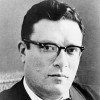
Isaac Asimov (1920-1992) Russian-American author, polymath, biochemist
“The Never-ending Fight,” The Humanist (Mar/Apr 1989)
(Source)
To make sure that my blasphemy is thoroughly expressed, I hereby state my opinion that the notion of a god is a basic superstition, that there is no evidence for the existence of any god(s), that devils, demons, angels and saints are myths, that there is no life after death, heaven nor hell, that the Pope is a dangerous, bigoted, medieval dinosaur, and that the Holy Ghost is a comic-book character worthy of laughter and derision. I accuse the Christian god of murder by allowing the Holocaust to take place — not to mention the “ethnic cleansing” presently being performed by Christians in our world — and I condemn and vilify this mythical deity for encouraging racial prejudice and commanding the degradation of women. (This comprehensive statement was arrived at by examining the statutes of those seven states that have remained in the Dark Ages, so that I might satisfy their definitions of blasphemy.)
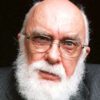
James Randi (1928-2020) Canadian-American stage magician ("The Amazing Randi") and scientific skeptic. [b. Randall James Hamilton Zwinge]
Skeptic Magazine (1995)
Written in an unsuccessful attempt to garner an official charge of blasphemy from any of those seven states that still had such laws on the books.
If we are to have another contest in the near future of our national existence, I predict that the dividing line will not be Mason’s and Dixon’s, but between patriotism and intelligence on the one side, and superstition, ambition, and ignorance on the other.
Ulysses S. Grant (1822-1885) American military leader, US President (1869-77)
Speech, Army of the Tennessee, Des Moines (29 Sep 1876)
(Source)
Advocating free, non-sectarian, public education.

To become a popular religion, it is only necessary for a superstition to enslave a philosophy.
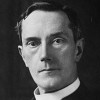
William Ralph Inge (1860-1954) English prelate [Dean Inge]
“The Idea of Progress”, Romanes Lecture, Oxford (27 May 1920)
(Source)
We may be through with the past, but the past is not through with us. Ideas of the Stone Age exist side by side with the latest scientific thought. Only a fraction of mankind has emerged from the Dark Ages, and in the most lucid brains, as Logan Pearsall Smith has said, we come upon “nests of woolly caterpillars.”
Bergen Evans (1904-1978) American educator, writer, lexicographer
The Natural History of Nonsense, ch. 1 “Adam’s Navel” (1946)
Forasmuch as the feast of the nativity of Christ, Easter, Whitsuntide, and other festivals, commonly called holy-days, have been heretofore superstitiously used and observed; be it ordained, that the said feasts, and all other festivals, commonly called holy-days, be no longer observed as festivals; any law, statute, custom, constitution, or canon, to the contrary in anywise not withstanding.
(Other Authors and Sources)
Puritan law passed in the British Parliament (8 Jun 1647)
(Source)
Quoted in Daniel Neal, The History of the Puritans, Vol. 2 (1837).

We boast our emancipation from many superstitions; but if we have broken any idols, it is through a transfer of idolatry. What have I gained, that I no longer immolate a bull to Jove or to Neptune, or a mouse to Hecate; that I do not tremble before the Eumenides, or the Catholic Purgatory, or the Calvinistic Judgment-day, — if I quake at opinion, the public opinion as we call it; or at the threat of assault, or contumely, or bad neighbors, or poverty, or mutilation, or at the rumor of revolution, or of murder? If I quake, what matters it what I quake at?
Ralph Waldo Emerson (1803-1882) American essayist, lecturer, poet
“Character,” Essays: Second Series (1844)
(Source)
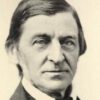
The superstitious man is to the knave, what the slave is to the tyrant; nay more — the superstitious man is governed by the fanatic, and becomes a fanatic himself.
Voltaire (1694-1778) French writer [pseud. of Francois-Marie Arouet]
“Superstition,” Philosophical Dictionary (1764) [tr. Fleming (1901)]
(Source)
Alt. trans.: "The superstitious man is to the rascal what the slave is to the tyrant." [tr. Besterman (1971)]
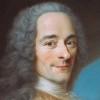
Be it observed, that the most superstitious times have always been those of the most horrible crimes.
Voltaire (1694-1778) French writer [pseud. of Francois-Marie Arouet]
“Superstition,” sec. 4, Philosophical Dictionary (1764) [tr. Besterman (1971)]
(Source)

Men run out of one superstition into an opposite superstition.
Ralph Waldo Emerson (1803-1882) American essayist, lecturer, poet
“The Scholar,” lecture, University of Virginia (1876-06-28)
(Source)
Sickness and sorrows come and go, but a superstitious soul hath no rest.

Nothing is useless. A superstition is a hamper or a basket to carry useful lessons in.
Ralph Waldo Emerson (1803-1882) American essayist, lecturer, poet
Journal (1836)
And therefore it was a good answer that was made by one who when they showed him hanging in a temple a picture of those who had paid their vows as having escaped shipwreck, and would have him say whether he did not now acknowledge the power of the gods, — “Aye,” asked he again, “but where are they painted that were drowned after their vows?”
[Taque recte respondit ille, qui, cum suspensa tabula in templo ei monstraretur eorum qui vota solverant, quod naufragii periculo elapsi sint, atque interrogando premeretur, anne tum quidem Deorum numen agnosceret, quaesivit denuo, At ubi sunt illi depicti qui post vota nuncupata perierint?]
Francis Bacon (1561-1626) English philosopher, scientist, author, statesman
Instauratio Magna [The Great Instauration], Part 2 “Novum Organum [The New Organon],” Book 1, Aphorism # 46 (1620) [tr. Spedding (1858)]
(Source)
The reference is to Diagoras, in Cicero, De Natura Deorum, 3.37, or to Diogenes the Cynic, in Diogenes Laertius, Lives of Eminent Philosophers, 6.59.
(Source (Latin)). Alternate translations:It was well answered by him who was shown in a temple the votive tablets suspended by such as had escaped the peril of shipwreck, and was pressed as to whether he would then recognise the power of the gods, by an inquiry; "But where are the portraits of those who have perished in spite of their vows?"
[tr. Wood (1831)]And so he made a good answer, who, when he was shown, hung up in the temple, the votive tablets of those who had fulfilled their vows after escaping from shipwreck, and was pressed with the question, "Did he not then recognize the will of the gods?" asked, in his turn, "But where are the pictures of those who have perished, notwithstanding their vows?"
[tr. Johnson (1859)]So when someone was shown a votive tablet in a temple dedicated, in fulfilment of a vow, by some men who had escaped the danger of shipwreck, and was pressed to say whether he would now recognise the divinity of the gods, he made a good reply, when he retorted: "Where are the offerings of those who made vows and perished?"
[tr. Silverthorne (2000)]A man was shown a picture, hanging in a temple, of people who had made their vows and escaped shipwreck, and was asked ‘Now do you admit the power of the gods?’ He answered with a question: ‘Where are the pictures of those who made their vows and then drowned?’ It was a good answer!
[tr. Bennett (2017)]
At any given moment, public opinion is a chaos of superstition, misinformation, and prejudice.
Gore Vidal (1925-2012) American novelist, dramatist, critic
“Sex and the Law,” Partisan Review (Summer 1965)

At least when the Emperor Justinian, a sky-god man, decided to outlaw sodomy, he had to come up with a good practical reason, which he did. It is well known, Justinian declared, that buggery is a principal cause of earthquakes, and so must be prohibited. But our sky-godders, always eager to hate, still quote Leviticus, as if that looney text had anything useful to say about anything except, perhaps, the inadvisability of eating shellfish in the Jerusalem area.
Gore Vidal (1925-2012) American novelist, dramatist, critic
“America First? America Last? America at Last?” Lowell Lecture, Harvard University (20 Apr 1992)
(Source)
The judgments which Johnson passed on books were, in his own time, regarded with superstitious veneration, and, in our time, are generally treated with indiscriminate contempt. They are the judgments of a strong but enslaved understanding. The mind of the critic was hedged round by an uninterrupted fence of prejudices and superstitions. Within his narrow limits, he displayed a vigour and an activity which ought to have enabled him to clear the barrier that confined him. How it chanced that a man who reasoned on his premises so ably, should assume his premises so foolishly, is one of the great mysteries of human nature.
Thomas Babington Macaulay (1800-1859) English writer and politician
“Samuel Johnson,” The Edinburgh Review (Sep 1831)
(Source)
Review of John Croker's 1831 edition of James Boswell, The Life of Samuel Johnson.
… [P]riests of the different religious sects, who dread the advance of science as witches do the approach of day-light; and scowl on the fatal harbinger announcing the subversion of the duperies on which they live.
Thomas Jefferson (1743-1826) American political philosopher, polymath, statesman, US President (1801-09)
Letter (1820-04-11) to José Corrêa da Serra
(Source)
On resistance, particularly from Presbyterians, to the founding of the University of Virginia.
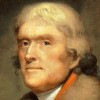
It is man’s intelligence that makes him so often behave more stupidly than the beasts. … Man is impelled to invent theories to account for what happens in the world. Unfortunately, he is not quite intelligent enough, in most cases, to find correct explanations. So that when he acts on his theories, he behaves very often like a lunatic. Thus, no animal is clever enough, when there is a drought, to imagine that the rain is being withheld by evil spirits, or as punishment for its transgressions. Therefore you never see animals going through the absurd and often horrible fooleries of magic and religion. No horse, for example would kill one of its foals to make the wind change direction. Dogs do not ritually urinate in the hope of persuading heaven to do the same and send down rain. Asses do not bray a liturgy to cloudless skies. Nor do cats attempt, by abstinence from cat’s meat, to wheedle the feline spirits into benevolence. Only man behaves with such gratuitous folly. It is the price he has to pay for being intelligent but not, as yet, intelligent enough.

We are all tattooed in our cradles with the beliefs of our tribe; the record may seem superficial, but it is indelible. You cannot educate a man wholly out of the superstitious fears which were early implanted in his imagination; no matter how utterly his reason may reject them, he will still feel as the famous woman did about ghosts, Je ne crois pas, mais je les crains, — “I don’t believe in them, but I am afraid of them, nevertheless.”
Let the human Mind loose. It must be loose; it will be loose. Superstition and Despotism cannot confine it.
John Adams (1735–1826) American lawyer, Founding Father, statesman, US President (1797–1801)
Letter (1816-11-13) to John Quincy Adams
(Source)

The root of all superstition is that men observe when a thing hits, but not when it misses.
Francis Bacon (1561-1626) English philosopher, scientist, author, statesman
Sylva Sylvarum, Century 10 (1627)
Alt trans.: "It is true that that may hold in these things, which is the general root of superstition; namely, that men observe when things hit, and not when they miss; and commit to memory the one, and forget and pass over the other."
History warns us, however, that it is the customary fate of new truths to begin as heresies and to end as superstitions; and, as matters now stand, it is hardly rash to anticipate that, in another twenty years, the new generation, educated under the influences of the present day, will be in danger of accepting the main doctrines of the ‘Origin of Species’ with as little reflection, and it may be with as little justification, as so many of our contemporaries, twenty years ago, rejected them. Against any such a consummation let us all devoutly pray; for the scientific spirit is of more value than its products, and irrationally held truths may be more harmful than reasoned errors.
T. H. Huxley (1825-1895) English biologist [Thomas Henry Huxley]
“The Coming of Age of The Origin of Species,” lecture, Royal Institution (19 Mar 1880)
(Source)
First printed in Nature: A Weekly Illustrated Journal of Science (6 May 1880).
CALVIN: Do you believe our destinies are determined by the stars?
HOBBES: Nah.
CALVIN: Oh, I do.
HOBBES: Really? How come?
CALVIN: Life’s a lot more fun when you’re not responsible for your actions.