

Dare not to be guilty of ill Things, tho’ thou wert sure to be secret and unpunished. Conscience will sit upon it, and that is Witness, Jury, Judge, and Executioner.
Thomas Fuller (1654-1734) English physician, preacher, aphorist, writer
Introductio ad Prudentiam, Vol. 2, # 2216 (1727)
(Source)
Quotations about:
wrongdoing
Note not all quotations have been tagged, so Search may find additional quotes on this topic.

If thou commitest a Sin, because thou art wilfully Ignorant; the Wilfulness of thy Ignorance makes thy sin to be wilful.
Thomas Fuller (1654-1734) English physician, preacher, aphorist, writer
Introductio ad Prudentiam, Vol. 2, # 2146 (1727)
(Source)
PROSPERO: Though with their high wrongs I am struck to th’ quick,
Yet with my nobler reason ’gainst my fury
Do I take part. The rarer action is
In virtue than in vengeance.William Shakespeare (1564-1616) English dramatist and poet
Tempest, Act 5, sc. 1, l. 32ff (5.1.32-36) (1611)
(Source)


TARTUFFE: Your scruple, then, is easy to allay:
Our secret will be safe with us alone,
And there’s no evil if the thing’s not known.
The one offense lies in the public shame,
And secret sin is sin only in name.[Enfin votre scrupule est facile à détruire.
Vous êtes assurée ici d’un plein secret,
Et le mal n’est jamais que dans l’éclat qu’on fait.
Le scandale du monde est ce qui fait l’offense,
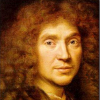
Et ce n’est pas pécher que pécher en silence]Molière (1622-1673) French playwright, actor [stage name for Jean-Baptiste Poquelin]
Tartuffe, or the Hypocrite [Le Tartuffe, ou L’Imposteur], Act 4, sc. 5 (1669) [tr. Frame (1967)]
(Source)
The ostensibly pious Tartuffe trying to seduce Elmire.
(Source (French)). Other translations:In short your Scruple, Madam, is easily overcome. You are sure of its being an inviolable Secret here, and the Harm never consists in any thing but the Noise one makes; the Scandal of the World is what makes the Offence; and Sinning in private is no Sinning at all.
[tr. Clitandre (1672)]In short, your scruples, Madam, are easily overcome. You may be sure of the secret being kept, and there is no harm done unless the thing is bruited about. The scandal which it causes constitutes the offence, and sinning in secret is no sinning at all.
[tr. Van Laun (1876)]In short, your scruples, madam, are easy to remove. You are sure of an inviolable secrecy with me, and it is only publicity which makes the wrong. The scandal is what constitutes the offence, and to sin in secret is not to sin at all.
[tr. Wall (1879)]In short, madame, your scruple is easily overcome. You are sure of absolute secrecy here, and the evil only consists in the noise that is made about it ; the world’s scandal makes the offence, and to sin in private is no sin at all.
[tr. Mathew (1890), 4.4]In short your scruple is easily overcome. You may be sure the secret will be well kept here, and no harm is done unless the thing is noised abroad. The scandal of the world is what makes the offence, and to sin in secret is not to sin at all.
[tr. Waller (1903)]In any case, your scruple's easily
Removed. With me you're sure of secrecy,
And there's no harm unless a thing is known.
The public scandal is what brings offence,
And secret sinning is not sin at all.
[tr. Page (1909)]Well, anyway, I can dispel your scruples.
You are assured that I will keep the secret.
Evil does not exist until it's published;
It's worldly scandal that creates the offense;
And sin in silence is not sin at all.
[tr. Bishop (1957)]If you're still troubled, think of things this way:
No one shall know our joys, save us alone,
And there's no evil till the act is known;
It's scandal, Madam, which makes it an offense,
And it's no sin to sin in confidence.
[tr. Wilbur (1963)]Well, Moses couldn't matter less,
The ten commandments don't apply,
There's no one here -- just you and I,
It's scandal that creates the sin,
This won't get out, so let's begin.
[tr. Bolt (2002)]In the end, I assure you, it's easy to dismiss your scruples. I promise complete secrecy; only when others make a fuss can there be any harm. Something is scandalous only when it is known; sin that no one knows is no sin.
[tr. Steiner (2008)]Look, your scruples are easily dealt with:
You can be quite certain that it will remain secret,
And the sin is only ever in the exposure;
A silent sin is not a sin at all.
[tr. Campbell (2013)]
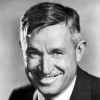
When you put down the good things you ought to have done, and leave out the bad ones you did do — well, that’s Memoirs.
Will Rogers (1879-1935) American humorist
Essay (1932-03-12), “Letters of a Self-Made Diplomat to Senator Borah,” Saturday Evening Post
(Source)
William Borah (1885-1940) was a US Senator from Idaho (1907-1940). He was progressive politically, but an isolationist, a key figure in blocking US approval of the Versailles Treaty or joining the League of Nations.
Collected in Donald Day (ed.), The Autobiography of Will Rogers (1949), and Steven K Gragert (ed.), More Letters of a Self-Made Diplomat (1982).
Neither hate the Man for his Vice: nor love the Vice for the Man’s sake.
Thomas Fuller (1654-1734) English physician, preacher, aphorist, writer
Introductio ad Prudentiam, Vol. 2, # 1841 (1727)
(Source)
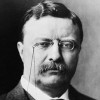
If a public man tries to get your vote by saying that he will do something wrong in your interest, you can be absolutely certain that if ever it becomes worth his while he will do something wrong against your interest.
Theodore Roosevelt (1858-1919) American politician, statesman, conservationist, writer, US President (1901-1909)
Speech (1910-04-23), “Citizenship in a Republic [The Man in the Arena],” Sorbonne, Paris
(Source)
I said to God, “What are they doing?”
God said, “Making pitfalls into which their fellows may sink.”
I said to God, “Why do they do it?”
God said, “Because each thinks that when his brother falls he will rise.”Olive Schreiner (1855-1920) South African author, political activist, intellectual, freethinker
“The Sunlight Lay Across My Bed,” Dreams (1890)
(Source)
Describing Hell.

What pleasures habitual wrongdoing provides for men without principle or sense of shame, when they have escaped punishment and found themselves given a free hand!
[O consuetudo peccandi, quantam habes iucunditatem improbis et audacibus, cum poena afuit et licentia consecuta est!]
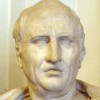
Marcus Tullius Cicero (106-43 BC) Roman orator, statesman, philosopher
In Verrem [Against Verres; Verrine Orations], Action 2, Book 3, ch. 76 / sec. 176 (2.3.76.176) (70 BC) [tr. Greenwood (1928)]
(Source)
(Source (Latin)). Alternate translations:O you habit of sinning, what delight you afford to the wicked and the audacious, when chastisement is afar off, and when impunity attends you!
[tr. Yonge (1903)]Alas, the habit of evil-doing! what pleasure it affords to the depraved and the shameless, when punishment is in abeyance, and has been replaced by license.
[Source (1906)]
No form of liberty is worth a darn which doesn’t give us the right to do wrong now and then.
H. L. Mencken (1880-1956) American writer and journalist [Henry Lewis Mencken]
A Little Book in C Major, ch. 3, § 16 (1916)
(Source)
“One must do as others do”: a suspect maxim, which nearly always means: “one must do wrong” as soon as it is applied to anything beyond those purely external matters which are of no consequence, but depend on custom, fashion or convention.
[«Il faut faire comme les autres»: maxime suspecte, qui signifie presque toujours: «il faut mal faire» dès qu’on l’étend au delà de ces choses purement extérieures, qui n’ont point de suite, qui dépendent de l’usage, de la mode ou des bienséances.]
Jean de La Bruyère (1645-1696) French essayist, moralist
The Characters [Les Caractères], ch. 12 “Of Opinions [Des Jugements],” § 10 (12.10) (1688) [tr. Stewart (1970)]
(Source)
(Source (French)). Alternate translations:We must do like other men; a dangerous Maxim, and for the most part signifies we must do ill; if you speak not of things purely exteriour, and of no consequence, but what depends on Custome, Fashion, or Decency.
[Bullord ed. (1696)]We must do as others do; a dangerous Maxim, which for the most part signifies we must do ill, if extended beyond things purely exterior, and of no consequence, things depending on Custom, Fashion, or Decency.
[Curll ed. (1713)]We must do like other Men: a dangerous Maxim, for the most Part signifying we must do ill, if you carry it beyond things external, and of no consequence, but depending on Custom, Fashion, or Ceremony.
[Browne ed. (1752)]“We must do as others do” is a dangerous maxim, which nearly always means “we must do wrong” if it is applied to any but external things of no consequence, and depending on custom, fashion, or decency.
[tr. Van Laun (1885)]

We may then lay down this rule of friendship — neither ask nor consent to do what is wrong. For the plea “for friendship’s sake” is a discreditable one, and not to be admitted for a moment. This rule holds good for all wrong-doing, but more especially in such as involves disloyalty to the republic.
[Haec igitur lex in amicitia sanciatur, ut neque rogemus res turpes nec faciamus rogati. Turpis enim excusatio est et minime accipienda cum in ceteris peccatis, tum si quis contra rem publicam se amici causa fecisse fateatur.]
Marcus Tullius Cicero (106-43 BC) Roman orator, statesman, philosopher
Laelius De Amicitia [Laelius on Friendship], ch. 12 / sec. 40 (44 BC) [tr. Shuckburgh (1909)]
(Source)
Original Latin. Alternate translations:Let this law therefore be established in friendship, viz., that we should neither ask things that are improper, nor grant them when asked; for it is a disgraceful apology, and by no means to be admitted, as well in the case of other offenses, as when any one avows he has acted against the state for the sake of a friend.
[tr. Edmonds (1871)]As to friendship, then, let this law be enacted, that we neither ask of a friend what is wrong, nor do what is wrong at a friend’s request. The plea that it was for a friend’s sake is a base apology, -- one that should never be admitted with regard to other forms of guilt, and certainly not as to crimes against the State.
[tr. Peabody (1887)]Therefore let this law be established in friendship: neither ask dishonourable things, nor do them, if asked. And dishonourable it certainly is, and not to be allowed, for anyone to plead in defence of sins in general and especially of those against the State, that he committed them for the sake of a friend.
[tr. Falconer (1923)]Therefore, let this law be established for friendship: that we should neither ask for foul things nor fulfill requests for them. For this is a foul excuse and ought not be accepted for any crime, but especially not if someone is shown to have placed themselves against the Republic for the sake of a friend.
[Source]
As citizens, we must prevent wrongdoing because the world in which we all live, wrong-doer, wrong sufferer and spectator, is at stake.
Hannah Arendt (1906-1975) German-American philosopher, political theorist
The Life of the Mind (1977)

RESPECTABILITY, n. The social status of people whose sins haven’t quite caught up with them.
Edmund H. Volkart (1919-1992) American sociologist, researcher, editor
The Angel’s Dictionary: A Modern Tribute to Ambrose Bierce (1986)
The authentic human being is one of us who instinctively knows what he should not do and, in addition, will balk at doing it. He will refuse to do it, even if this brings down dread consequences to him and those whom he loves. This, to me, is the ultimately heroic trait of ordinary people. They say “no” to the tyrant and they calmly take the consequences of this resistance. Their deeds may be small, and almost always unnoticed, unmarked by history. Their names are not remembered, nor did these authentic humans expect their names to be remembered. I see their authenticity in an odd way: not in their willingness to perform great heroic deeds, but in their quiet refusals to commit villainies. In essence, they cannot be compelled to be what they are not.
Philip K. Dick (1928-1982) American writer
Speech (1978) “How To Build A Universe That Doesn’t Fall Apart Two Days Later”
(Source)
First collected in Dick's I Hope I Shall Arrive Soon (1985) [ed. Mark Hurst and Paul Williams], where it serves as the introduction.
Lawrence Sutin, editor of The Shifting Realities of Philip K. Dick (1995) (where this is reprinted) suggests this speech was "likely never delivered."

Wherever a Knave is not punished, an honest Man is laugh’d at.
George Savile, Marquis of Halifax (1633-1695) English politician and essayist
“Of Punishment,” Political, Moral, and Miscellaneous Thoughts and Reflections (1750)
(Source)

I know that we will be the sufferers if we let great wrongs occur without exerting ourselves to correct them.
Eleanor Roosevelt (1884-1962) First Lady of the US (1933-45), politician, diplomat, activist
Column (1943-08-13), “My Day”
(Source)
On the persecution of Jews in Europe.

Success in war, like charity in religion, covers a multitude of sins.
William Napier (1785-1860) Irish soldier and military historian
History of the War in the Peninsula, Vol. 5, Book 25, ch. 2 (1837)
(Source)

I believe that the officers, and, especially, the directors, of corporations should be held personally responsible when any corporation breaks the law.
Theodore Roosevelt (1858-1919) American politician, statesman, conservationist, writer, US President (1901-1909)
Speech (1910-08-31), “The New Nationalism,” John Brown Memorial Park dedication, Osawatomie, Kansas
(Source)