Will we ever learn to use reason instead of force in the world, and will people ever be wise enough to refuse to follow bad leaders or to take away the freedom of other people?
Eleanor Roosevelt (1884–1962) American politician, diplomat, activist; First Lady of the US (1933–45)
Column (1939-10-16), “My Day”
(Source)
Quotations about:
future
Note not all quotations have been tagged, so Search may find additional quotes on this topic.

To complain of the age we live in, to murmur at the present possessors of power, to lament for the past, to conceive extravagant hopes of the future, are the common dispositions of the greatest part of mankind.
Edmund Burke (1729–1797) Anglo-Irish statesman, orator, philosopher
“Thoughts on the Cause of the Present Discontents” (23 Apr 1770)
The greatest of human problems, and the greatest of our common tasks, is to keep the peace and to save the future. All that we have built in the wealth of nations, and all that we plan to do toward a better life for all, will be in vain if our feet should slip, or our vision falter, and our hopes ended in another worldwide war. If there is one commitment more than any other that I would like to leave with you today, it is my unswerving commitment to the keeping and to the strengthening of the peace. Peace is a journey of a thousand miles and it must be taken one step at a time.
Lyndon B. Johnson (1908–1973) American politician, educator, US President (1963–69)
Speech (1963-12-17), United Nations General Assembly
(Source)
John Kennedy had used the same "journey" phrase from Lao-tzu early that year, before his assassination.
It is said an Eastern monarch once charged his wise men to invent him a sentence, to be ever in view, and which should be true and appropriate in all times and situations. They presented him the words: “And this, too, shall pass away.” How much it expresses! How chastening in the hour of pride! — how consoling in the depth of affliction!
Abraham Lincoln (1809–1865) American lawyer, politician, US President (1861–65)
Speech (1859-09-30), Wisconsin State Agricultural Society, Milwaukee
(Source)
The anecdote Lincoln tells comes from a 12th Century Persian tale, which became popular in English in the early 19th Century, particularly through English poet Edward FitzGerald in 1852.
The mind is never satisfied with the objects immediately before it, but is always breaking away from the present moment, and losing itself in schemes of future felicity …. The natural flights of the human mind are not from pleasure to pleasure, but from hope to hope.
Samuel Johnson (1709–1784) English writer, lexicographer, critic
The Rambler, #2 (24 Mar 1750)
(Source)
Sufficient to today are the duties of today. Don’t waste life in doubts and fears; spend yourself on the work before you, well assured that the right performance of this hour’s duties will be the best preparation for the hours and ages that will follow it.
Ralph Waldo Emerson (1803–1882) American essayist, lecturer, poet
“Immortality,” Letters and Social Aims (1876)
(Source)
ARCHBISHOP:O thoughts of men accursed!
Past and to come seems best; things present, worst.William Shakespeare (1564–1616) English dramatist and poet
Henry IV, Part 2, Act 1, sc. 3, l. 112ff (1.3.112-113) (c. 1598)
(Source)

BRUTUS: O, that a man might know
The end of this day’s business ere it come!
But it sufficeth that the day will end,
And then the end is known.William Shakespeare (1564–1616) English dramatist and poet
Julius Caesar, Act 5, sc. 1, l. 133ff (5.1.133-136) (1599)
(Source)
In the moment of our talking, envious time has ebb’d away.
Seize the present; trust tomorrow e’en as little as you may.
[Dum loquimur, fugerit invida
aetas: carpe diem, quam minimum credula postero.]Horace (65–8 BC) Roman poet, satirist, soldier, politician [Quintus Horatius Flaccus]
Odes [Carmina], Book 1, # 11, l. 8ff (1.11.8-9) (23 BC) [tr. Conington (1872)]
Often titled "To Leuconoë." This is the source of the famous phrase, "carpe diem," commonly translated "seize the day." Many scholars give it a more horticultural spin, to harvest the day now, while it is ripe. More discussion here. More quotations along this theme here.
(Source (Latin)). Other translations:Whilest we are talking, envious Time doth slide:
This day's thine own, the next may be deny'd.
[tr. Sir T. H.; ed. Brome (1666)]Time, while we speak on't flyes; now banish sorrow,
Live well to day, and never trust to morrow.
[tr. S. W., Esq.; ed. Brome (1666)]E'en whil'st we speak the Envious time
Doth make swift hast away,
Then seize the present, use thy prime,
Nor trust another Day.
[tr. Creech (1684)]While we are conversing, envious age has been flying; seize the present day, not giving the least credit to the succeeding one.
[tr. Smart/Buckley (1853)]Use all life's powers,
The envious hours
Fly as we talk ; then live to-day,
Nor fondly to to-morrow trust more than you must and may.
[tr. Martin (1864)]While we talk, grudging Time will be gone, and a part of ourselves be no more.
Seize to-day -- for the morrow it is in which thy belief should be least.
[tr. Bulwer-Lytton (1870)]Our span is brief. The niggard hour,
in chatting, ebbs away;
Trust nothing for to-morrow's sun:
make harvest of to-day.
[tr. Gladstone (1894)]E'en while we speak, envious life will fly; --
So make use of to-day, trusting the next, little as possible.
[tr. Phelps (1897)]While we are talking envious time steals on:
Catch to-day's joy and give the morrow but a minimum of trust.
[tr. Garnsey (1907)]Ev'n as we speak, grim Time
speeds swift away;
Seize now and here the hour that is. nor trust
some later day!
[tr. Marshall (1908)]Even while we speak, envious Time has sped. Reap the harvest of to-day, putting as little trust as may be in the morrow!
[tr. Bennett (Loeb) (1912)]E'en while we speak time, grudging time, has fled; snatch eagerly
Each day, and trust the morrow's grace as little as may be.
[tr. Mills (1924)]Even while
We talk Time, hateful, runs a mile.
Don't trust tomorrow's bough
For fruit. Pluck this, here, now.
[tr. Michie (1963)]Time goes running, even
As we talk. Take the present, the future's no one's affair.
[tr. Raffel (1983)]Now as I say these words,
Time has already fled
Backwards away --
Leuconoe --
Hold on to the day.
[tr. Ferry (1997)]While we converse, envious time will have vanished: harvest
Today, placing the least credence on what’s to come.
[tr. Willett (1998)]Even as we speak, envious Time is fleeing.
Seize the day: entrusting as little as possible to tomorrow.
[tr. Alexander (1999)]The envious moment is flying now, now, while we’re speaking:
Seize the day, place in the hours that come as little faith as you can.
[tr. Kline (2015)]While we are speaking, envious life
will have fled: seize the day, trusting the future as little as possible.
[tr. Wikisource (2021)]
Our grand business undoubtedly is, not to see what lies dimly at a distance, but to do what lies clearly at hand.
Thomas Carlyle (1795–1881) Scottish essayist and historian
Essay (1829-06), “Signs of the Times,” Edinburgh Review, Vol. 49, No. 98, Art. 7
(Source)
Review of three 1829 books: Anticipation; or, an Hundred Years Hence; The Rise, Progress, and Present State of Public Opinion in Great Britain; Edward Irvine, The Last Days; or, Discourses on These Our Times.
If the Party could thrust its hand into the past and say of this or that event, it never happened — that, surely, was more terrifying than mere torture and death? The Party said that Oceania had never been in alliance with Eurasia. He, Winston Smith, knew that Oceania had been in alliance with Eurasia as short a time as four years ago. But where did that knowledge exist? Only in his own consciousness, which in any case must soon be annihilated. And if all others accepted the lie which the Party imposed — if all records told the same tale — then the lie passed into history and became truth. “Who controls the past,” ran the Party slogan, “controls the future: who controls the present controls the past.”
George Orwell (1903–1950) English journalist, essayist, writer [pseud. of Eric Arthur Blair]
Nineteen Eighty-Four (1949)
(Source)
Sometimes paraphrased, "He who controls the past controls the future. He who controls the present controls the past."
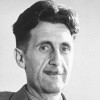
There is no saint without a past, no sinner without a future.
Mirza Aḥmad Sohráb (1890–1958) Persian-American author, Baháʼí dissident
A Persian Rosary of Nineteen Pearls (1929)
I am unable to find an extant copy of Sohrab's book; despite his involvement with some of the early principals of the Baháʼí faith, he was eventually expelled from the group, and his writings, already marginally published, are now difficult to find. Even the publication dates of various editions of this work are unclear. But there are references to this quote being sourced there (1, 2, 3, 4).
This book should not be confused with the Persian Rosary (1257), a compendium of ethics by Persian poet Eddin Sadi.
Often misattributed to St. Augustine of Hippo, or referred to as being from an "ancient Persian Mass." There is no indication, though, that Sohrab borrowed the phrase from Oscar Wilde's similar statement.
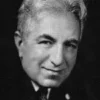
RADICALISM, n. The conservatism of to-morrow injected into the affairs of to-day.
Ambrose Bierce (1842–1914?) American writer and journalist
“Radicalism,” The Devil’s Dictionary (1911)
(Source)
Originally published in the "Cynic's Word Book" column in the New York American (1906-06-29).

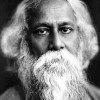
When we are planning for posterity, we ought to remember that virtue is not hereditary.
Thomas Paine (1737–1809) American political philosopher and writer
Common Sense (14 Feb 1776)
Source essay
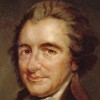
Deserves it! I daresay he does. Many that live deserve death. And some that die deserve life. Can you give it to them? then do not be too eager to deal out death in judgment. For even the very wise cannot see all ends.
J.R.R. Tolkien (1892–1973) English writer, fabulist, philologist, academic [John Ronald Reuel Tolkien]
The Lord of the Rings, Vol. 1: The Fellowship of the Ring, Book 1, ch. 2 “The Shadow of the Past” [Gandalf] (1954)
(Source)
Frodo later recounts these words (approximately) to Sam in The Two Towers.
Whether the succeeding generation is to be more virtuous than their predecessors, I cannot say; but I am sure they will have more worldly wisdom, and enough, I hope, to know that honesty is the 1st chapter in the book of wisdom.
Thomas Jefferson (1743–1826) American political philosopher, polymath, statesman, US President (1801–09)
Letter (1819-01-12) to Nathaniel Macon
(Source)
Usually just the last phrase is given, and transcribed as "Honesty is the first chapter in the book of wisdom."
More information about this quotation:
God has promised forgiveness to your repentance, but He has not promised tomorrow to your procrastination.
Augustine of Hippo (354–430) Christian church father, philosopher, saint [b. Aurelius Augustinus]
(Paraphrase)
This appears to be a heavy paraphrase from Sermon 40.5-6 [tr. Edmund Hill]:"I'm only asking," he says, "to be allowed a little more time." Why? "Because God has promised me pardon." But no one has promised you that you are going to be alive tomorrow. Or else, just as you have read in the prophet, the gospel, the apostle, that when you have turned back to him God will blot out all your iniquities, read out to me where a tomorrow is promised you, and then live in an evil way tomorrow.
For more discussion, see:

Evils in the journey of life are like the hills which alarm travelers on their road. Both appear great at a distance, but when we approach them we find they are far less insurmountable than we had conceived.
Charles Caleb "C. C." Colton (1780–1832) English cleric, writer, aphorist
Lacon: Or, Many Things in Few Words, Vol. 2, § 241 (1822)
(Source)
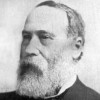
HOBBES: A new decade is coming up.
CALVIN: Yeah, big deal! Hmph. Where are the flying cars? Where are the Moon colonies? Where are the personal robots and the zero gravity boots, huh? You call this a new decade?! You call this the future?? Ha! Where are the rocket packs? Where are the disintegration rays? Where are the floating cities?
HOBBES: Frankly, I’m not sure people have the brains to manage the technology they’ve got.
CALVIN: I mean, look at this! We still have the weather?! Give me a break!

Worry — Interest paid on trouble before it falls due.
Harry "H. A." Thompson (1867–1936) American magazine editor, publisher
Article (1905-11-25), “Sense and Nonsense: Some Definitions,” Saturday Evening Post, Vol. 178
(Source)
Often given as "Worry is the interest paid on trouble before it falls due."
Collected in Thompson's The Cynic's Dictionary (1906). (This should not to be confused with the column by the same name (and similar theme) by Ambrose Bierce, who had to change the column name and the name of his collected book to The Cynic's Word Book, and, later, The Devil's Dictionary.)
Variants (mix and match the parts):This (or its variants), are often misattributed to Mark Twain; there is no record of it in his writings, and the earliest attribution found, is from 1936, a quarter century after Twain's death.
- Worry is interest paid on trouble before it falls due.
- Worry is interest paid in advance on a debt you may never owe.
- Worrying is like paying a debt you don’t owe.
- Worrying about something is like paying interest on a debt you don’t even know if you owe.
The phrase was used, but well after it was in circulation, by William Ralphe Inge.
For more discussion and history see Quote Origin: Worry Is Like Paying Interest On a Debt You Don’t Owe – Quote Investigator®.

Take no thought for the morrow: for the morrow shall take thought for the things of itself. Sufficient unto the day is the evil thereof.
[μὴ οὖν μεριμνήσητε εἰς τὴν αὔριον, ἡ γὰρ αὔριον μεριμνήσει ἑαυτῆς· ἀρκετὸν τῇ ἡμέρᾳ ἡ κακία αὐτῆς.]
The Bible (The New Testament) (AD 1st - 2nd C) Christian sacred scripture
Book 1. Gospel of Matthew 6:34 (Matt 6:34) (Jesus) [KJV (1611)]
(Source)
This overall passage (Matt. 6:25-34) is paralleled in Luke 12:22-32, but this particular verse is unique to Matthew.
(Source (Greek)). Other translations:So do not worry about tomorrow: tomorrow will take care of itself. Each day has enough trouble of its own.
[JB (1966)]So do not worry about tomorrow; it will have enough worries of its own. There is no need to add to the troubles each day brings.
[GNT (1976)]So do not worry about tomorrow: tomorrow will take care of itself. Each day has enough trouble of its own.
[NJB (1985)]Therefore, stop worrying about tomorrow, because tomorrow will worry about itself. Each day has enough trouble of its own.
[CEB (2011)]Therefore do not worry about tomorrow, for tomorrow will worry about itself. Each day has enough trouble of its own.
[NIV (2011 ed.)]So do not worry about tomorrow, for tomorrow will bring worries of its own. Today’s trouble is enough for today.
[NRSV (2021 ed.)]

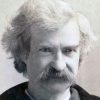
The radical of one century is the conservative of the next. The radical invents the views. When he has worn them out, the conservative adopts them.
Mark Twain (1835–1910) American writer [pseud. of Samuel Clemens]
Mark Twain’s Notebook, 1898 [ed. Paine (1935)]
Dig the well before you are thirsty.
Proverbs, Sayings, and Adages
Chinese proverb

OPHELIA: Lord, we know what we are but know not what we may be.
William Shakespeare (1564–1616) English dramatist and poet
Hamlet, Act 4, sc. 5, l. 48ff (4.5.48-49) (c. 1600)
(Source)
We judge ourselves by what we feel capable of doing, while others judge us by what we have already done.