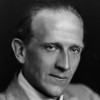
Even the acquisition of knowledge is often much facilitated by the advantages of society: he that never compares his notions with those of others, readily acquiesces in his first thoughts, and very seldom discovers the objections which may be raised against his opinions; he, therefore, often thinks himself in possession of truth, when he is only fondling an errour long since exploded. He that has neither companions nor rivals in his studies, will always applaud his own progress, and think highly of his performances, because he knows not that others have equalled or excelled him. And I am afraid it may be added, that the student who withdraws himself from the world, will soon feel that ardour extinguished which praise or emulation had enkindled, and take the advantage of secrecy to sleep, rather than to labour.
Samuel Johnson (1709-1784) English writer, lexicographer, critic
Essay (1754-01-19), The Adventurer, No. 126
(Source)
Quotations about:
isolation
Note not all quotations have been tagged, so Search may find additional quotes on this topic.
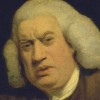
The greater part of the admirers of solitude, as of all other classes of mankind, have no higher or remoter view, than the present gratification of their passions. Of these, some, haughty and impetuous, fly from society only because they cannot bear to repay to others the regard which themselves exact; and think no state of life eligible, but that which places them out of the reach of censure or control, and affords them opportunities of living in a perpetual compliance with their own inclinations, without the necessity of regulating their actions by any other man’s convenience or opinion.
There are others, of minds more delicate and tender, easily offended by every deviation from rectitude, soon disgusted by ignorance or impertinence, and always expecting from the conversation of mankind more elegance, purity and truth, than the mingled mass of life will easily afford. Such men are in haste to retire from grossness, falsehood and brutality; and hope to find in private habitations at least a negative felicity, an exemption from the shocks and perturbations with which publick scenes are continually distressing them.
To neither of these votaries will solitude afford that content, which she has been taught so lavishly to promise. The man of arrogance will quickly discover, that by escaping from his opponents he has lost his flatterers, that greatness is nothing where it is not seen, and power nothing where it cannot be felt: and he, whose faculties are employed in too close an observation of failings and defects, will find his condition very little mended by transferring his attention from others to himself: he will probably soon come back in quest of new objects, and be glad to keep his captiousness employed on any character rather than his own.Samuel Johnson (1709-1784) English writer, lexicographer, critic
Essay (1754-01-19), The Adventurer, No. 126
(Source)
To be happy in this world, especially when youth is past, it is necessary to feel oneself not merely an isolated individual whose day will soon be over, but part of the stream of life flowing on from the first germ to the remote and unknown future.
Bertrand Russell (1872-1970) English mathematician and philosopher
Conquest of Happiness, Part 2, ch. 13 “Family” (1930)
(Source)
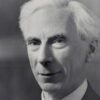
In order to subdue his subjects, the Prince labours to blind them. Conscious of the unlawfulness of his own designs, and sensible of what he has to fear from clear-sighted men, he endeavours to deprive the people of every means of acquiring knowledge.
How many crafty devices have not Princes employed to oppose the progress of learning? Some banish science out of their dominions; others prohibit their subjects from traveling into foreign countries; others again divert the people from reflecting, by continually entertaining them with feasts and shews, or keeping up among the the spirit of gaming; and all stand up against men of spirit, who dedicate either their voices or their pen to defend the cause of liberty.[Persuadés d’ailleurs combien il est commode de régner sur un peuple abruti, ils [les princes] s’efforcent de le rendre tel. Que d’obstacles n’opposent-ils pas au progrès des lumières? Les uns bannissent les lettres de leurs Etats; les autres défendent à leurs sujets de voyager; d’autres empêchent le peuple de réfléchir, en l’amusant continuellement par des parades, des spectacles, des fêtes, ou en le livrant aux fureurs du jeu. Tous s’élèvent contre les sages qui consacrent leur voix et leur plume à défendre la cause de la liberté.]
Jean-Paul Marat (1743-1793) French physician, political theorist, scientist, journalist
The Chains of Slavery (Les Chaînes de L’Esclavage, ch. 40 “Of Ignorance” (1774) [Beckett ed. (1774)]
(Source)
Source (French)). Other translations:As sovereigns are persuaded of the convenience of ruling an ignorant people, they try to make it so. What won’t they do to prevent the progress of knowledge? Some banish anyone scholarly from their nation; others ban their subjects from traveling; others don't give the people the time to think, constantly amusing them with parades, shows, festivals, or by delivering them over to the passion for games. All of them denounce the wise who give their voice and pen to defend the cause of freedom.Convinced, moreover, how convenient it is to reign over a stupefied people, they [princes] strive to make them so. How many obstacles do they not place in the way of progress of enlightenment? Some banish letters from their states; others forbid their subjects from traveling; others prevent the people from thinking, by continually amusing them with parades, spectacles, festivals, or by delivering them to the furies of gambling. All rise up against the wise men who devote their voice and their pen to defending the cause of liberty.
[Google Translate]
There are plenty of people who say, “We don’t care about etiquette, but we can’t stand the way so-and-so behaves, and we don’t want him around!” Etiquette doesn’t have the great sanctions that the law has. But the main sanction we do have is in not dealing with these people and isolating them because their behavior is unbearable.
Judith Martin (b. 1938) American author, journalist, etiquette expert [a.k.a. Miss Manners]
Interview (1995-03-06) by Virginia Shea, “Miss Mannners’ Guide to Excruciatingly Correct Internet Behavior,” Computerworld, Vol. 29, No. 10
(Source)

I know some politicians who tell us that we don’t need allies. Life would certainly be much simpler if that were so, for our friends can be highly irritating. But it is not so.
Adlai Stevenson (1900-1965) American diplomat, statesman
Speech (1955-04-11), “New China Policy” (radio address)
(Source)
Her mind lives tidily, apart
From cold and noise and pain,
And bolts the door against her heart,
Out wailing in the rain.

Many teenagers are tormented by terrors they deem private and personal. They do not know that their anxieties and doubts are universal.
Haim Ginott (1922-1973) Israeli-American school teacher, child psychologist, psychotherapist [b. Haim Ginzburg]
Between Parent and Teenager, ch. 2 “Rebellion and Response” (1969)
(Source)
A shy man means a lonely man — a man cut off from all companionship, all sociability. He moves about the world, but does not mix with it. Between him and his fellow-men there runs ever an impassable barrier — a strong, invisible wall that, trying in vain to scale, he but bruises himself against. He sees the pleasant faces and hears the pleasant voices on the other side, but he cannot stretch his hand across to grasp another hand. He stands watching the merry groups, and he longs to speak and to claim kindred with them. But they pass him by, chatting gayly to one another, and he cannot stay them. He tries to reach them, but his prison walls move with him and hem him in on every side. In the busy street, in the crowded room, in the grind of work, in the whirl of pleasure, amid the many or amid the few — wherever men congregate together, wherever the music of human speech is heard and human thought is flashed from human eyes, there, shunned and solitary, the shy man, like a leper, stands apart. His soul is full of love and longing, but the world knows it not. The iron mask of shyness is riveted before his face, and the man beneath is never seen.
Jerome K. Jerome (1859-1927) English writer, humorist [Jerome Klapka Jerome]
Idle Thoughts of an Idle Fellow, “On Being Shy” (1886)
(Source)

One of the defining features of the Anthropocene is that the world is changing in ways that compel species to move, and another is that it’s changing in ways that create barriers — roads, clear-cuts, cities — that prevent them from doing so.
Elizabeth Kolbert (b. 1961) American journalist and author
The Sixth Extinction: An Unnatural History, ch. 9 “Islands on Dry Land” (2014)
(Source)

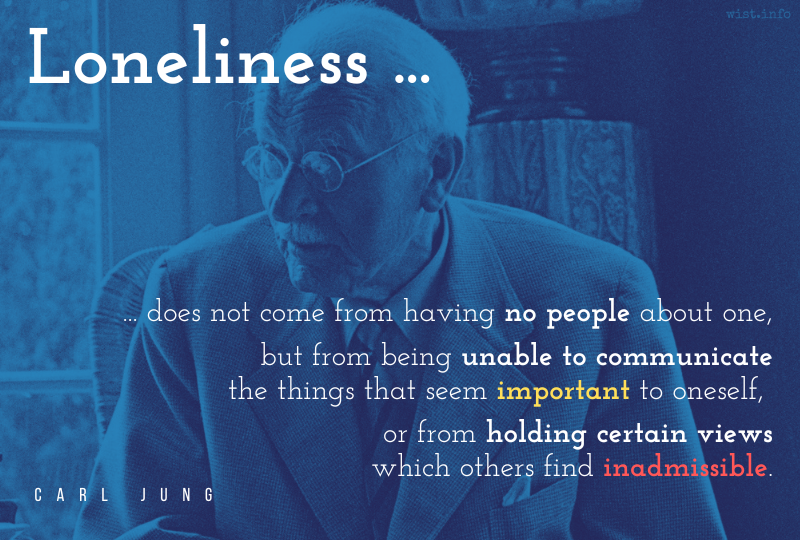
Loneliness does not come from having no people about one, but from being unable to communicate the things that seem important to oneself, or from holding certain views which others find inadmissible.
Carl Jung (1875-1961) Swiss psychologist
Memories, Dreams, Reflections [Erinnerungen, Träume, Gedanken], “Retrospect” (1962) [with Aniela Jaffé; tr. Winston (1963)]
(Source)
The parallels between Easter Island and the whole modern world are chillingly obvious. Thanks to globalization, international trade, jet planes, and the Internet, all countries on Earth today share resources and affect each other, just as did Easter’s dozen clans. Polynesian Easter Island was as isolated in the Pacific Ocean as Earth is today in space. When the Easter Islanders got into difficulties, there was nowhere to which they could flee, nor to which they could turn for help, nor shall we modern Earthlings have recourse elsewhere if our troubles increase. Those are the reasons why people see the collapse of Easter Island society as a metaphor, a worst-case scenario, for what may lie ahead of us in our own future.
Jared Diamond (b. 1937) American geographer, historian, ornithologist, author
Collapse: How Societies Choose to Fail or Succeed, Part 2, ch. 2 (2005)
(Source)
This is the actual full text from Diamond's book. It is almost universally paraphrased (including the bracketed inclusion) as:The metaphor is so obvious. Easter Island isolated in the Pacific Ocean -- once the island got into trouble, there was no way they could get free. There was no other people from whom they could get help. In the same way that we on Planet Earth, if we ruin our own [world], we won't be able to get help.
I speculate that this pared-down phrasing was used by Diamond during a speech or seminar about the subject, or an interview about the book, and was then mistakenly identified (and copied) as a quote from the book. For example, at the ASA, CSSA, and SSSA Annual Meetings, Long Beach, California (2010), for example, Diamond is quoted with this near match:The metaphor is so obvious. Easter Island is isolated in the Pacific Ocean; once the Easter Islanders got into trouble, there was nowhere that they could flee. Just as if, today, we on planet Earth mess up our island planet, there is no other galaxy that we’re going to be able to float off to.

Fear is a prison. But when you combine it with secrets, it becomes especially toxic, vicious. It puts us all into solitary, unable to hear one another clearly.

It is easy when you’ve been hurt by love to give it up as a bad job and make independence your new god, taking the love you had to give and turning it in upon yourself. And most of us have had to protect ourselves so much at times that we’ve given up the high road and taken the low. But independence carried to the furthest extreme is just loneliness and death, nothing more than another defense, and there is no growth in it, only a safe harbor for a while. The answer doesn’t lie in learning how to protect ourselves from life — it lies in learning how to become strong enough to let a bit more of it in.
Merle Shain (1935-1989) Canadian journalist and author
When Lovers Are Friends, ch. 1 (1978)
(Source)

Travelling, whatever may be said of it, is one of the saddest pleasures of life. When you feel yourself settled in some foreign city, it begins to feel, in some degree, like your own country; but to traverse unknown realms, to hear a language spoken which you hardly comprehend, to see human countenances which have no connection either with your past recollections, or future prospects, is solitude and isolation, without dignity and without repose.
[Voyager est, quoi qu’on en puisse dire, un des plus tristes plaisirs de la vie. Lorsque vous vous trouvez bien dans quelque ville étrangère, c’est que vous commencez à vous y faire une patrie; mais traverser des pays inconnus, entendre parler un langage que vous comprenez à peine, voir des visages humains sans relation avec votre passé ni avec votre avenir, c’est de la solitude et de l’isolement sans repos et sans dignité.]
Germaine de Staël (1766-1817) Swiss-French writer, woman of letters, critic, salonist [Anne Louise Germaine de Staël-Holstein, Madame de Staël, Madame Necker]
Corinne, Book 1, ch. 2 (1807) [tr. Lawler]
(Source)

Real loneliness is not necessarily limited to when you are alone.
Charles Bukowski (1920-1994) German-American author, poet
sifting through the madness for the Word, the line, the way, Part 2, epigram (2003)
(Source)
The book was reprinted as New Poems, Book Two (2011).
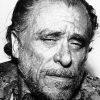
Totalitarianism appeals to the very dangerous emotional needs of people who live in complete isolation and in fear of one another.
Hannah Arendt (1906-1975) German-American philosopher, political theorist
Interview (1973-10) with Roger Errera, Office de Radiodiffusion-Télévision Française (ORTF)
This portion of the interview was published in The New York Review of Books (1978-10-26).
Other parts of the interview were turned into an episode of the French TV series "Un certain regard," directed by Jean-Claude Lubtchansky, first broadcast 1974-07-06.

Language is civilization itself. The Word, even the most contradictory word, binds us together. Wordlessness isolates.
Thomas Mann (1875-1955) German writer, critic, philanthropist, Nobel laureate [Paul Thomas Mann]
The Magic Mountain [Der Zauberberg], Part 6, “A Good Soldier” (1924) [tr. Woods]
(Source)
Alt. trans.: "Speech is civilization itself. The word, even the most contradictory word, preserves contact -- it is silence which isolates." [tr. Lowe-Porter]
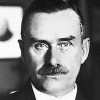
Silence is the bluntest of blunt instruments. It seems to hammer you into the ground. It drives you deeper and deeper into your own guilt. It makes the voices inside your head accuse you more viciously than any outside voices ever could.

It’s a terrible thing to be alone — yes it is — it is — but don’t lower your mask until you have another mask prepared beneath — As terrible as you like — but a mask.
Katherine Mansfield (1888-1923) New Zealander writer, poet [pen name of Kathleen Mansfield Murry (née Beauchamp)]
Letter to John Middleton Murry (Jul 1917)
(Source)

Self-pity? I see no moral objections to it, the smell drives people away, but that’s a practical objection, and occasionally an advantage.
E. M. Forster (1879-1970) English novelist, essayist, critic, librettist [Edward Morgan Forster]
Commonplace Book (1985) [ed. Gardner]
(Source)
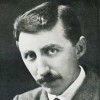
Who could deny that privacy is a jewel? I has always been the mark of privilege, the distinguishing feature of a truly urbane culture. Out of the cave, the tribal teepee, the pueblo, the community fortress, man emerged to build himself a house of his own with a shelter in it for himself and his diversions. Every age has seen it so. The poor might have to huddle together in cities for need’s sake, and the frontiersman cling to his neighbors for the sake of protection. But in each civilization, as it advanced, those who could afford it chose the luxury of a withdrawing-place.
Phyllis McGinley (1905-1978) American author, poet
“A Lost Privilege,” The Province of the Heart (1959)
(Source)

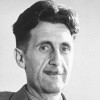
Although endlessly brooding on power, victory, defeat, revenge, the nationalist is often somewhat uninterested in what happens in the real world. What he wants is to feel that his own unit is getting the better of some other unit, and he can more easily do this by scoring off an adversary than by examining the facts to see whether they support him.
George Orwell (1903-1950) English journalist, essayist, writer [pseud. of Eric Arthur Blair]
“Notes on Nationalism” (1945)
(Source)
The cots, the palaces and valleys here,
Are nought to me, their charm, alas! is fled;
Floods, rocks, and forests, solitudes so dear
One soul is wanting, and all else seems dead[Que me font ces vallons, ces palais, ces chaumières,
Vains objets dont pour moi le charme est envolé?
Fleuves, rochers, forêts solitudes si chères,
Un seul être vous manque et tout est dépeuplé!]Alphonse de Lamartine (1790-1869) French poet and statesman
“Solitude [L’isolement],”Poetic Meditations [Méditations Poétiques] (1820) [tr. J. Churchill]
(Source)
Alt. trans. ["Isolation"]:
"What for me do these valleys, these palaces, these cottages,
Vain objects of which for me the charm has fled?
Streams, rocks, forests, solitudes so dear,
One single being from you is missing, and everything is depopulated."
Alt. trans.:
"Sometimes, when one person is missing, the whole world seems depopulated."
No one ever told me that grief felt so like fear. I am not afraid, but the sensation is like being afraid. The same fluttering in the stomach, the same restlessness, the yawning. I keep on swallowing.
At other times it feels like being mildly drunk, or concussed. There is a sort of invisible blanket between the world and me. I find it hard to take in what anyone says. Or perhaps, hard to want to take it in. It is so uninteresting. Yet I want the others to be about me. I dread the moments when the house is empty. If only they would talk to one another and not to me.C. S. Lewis (1898-1963) English writer, literary scholar, lay theologian [Clive Staples Lewis]
A Grief Observed, ch. 1 (1961)
(Source)
After the death of his wife, Joy Davidman. Opening words.
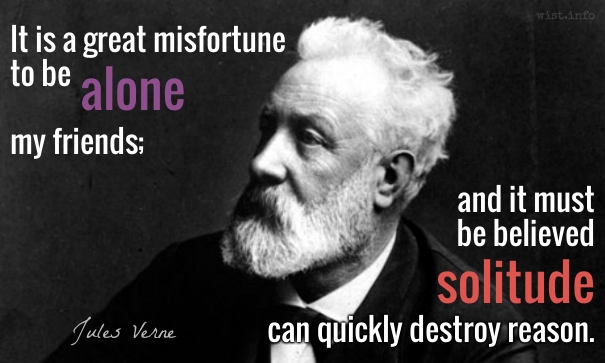
It is a great misfortune to be alone, my friends; and it must be believed that solitude can quickly destroy reason.
[Malheur à qui est seul, mes amis, et il faut croire que l’isolement a vite fait de détruire la raison.]
Jules Verne (1828-1905) French novelist, poet, playwright
The Mysterious Island, Part 2, ch. 15 (1874) [tr. White (1876)]
(Source)
External objects produce decided effects upon the brain. A man shut up between four walls soon loses the power to associate words and ideas together. How many prisoners in solitary confinement become idiots, if not mad, for want of exercise for the thinking faculty!
[Les objets extérieurs ont une action réelle sur le cerveau. Qui s’enferme entre quatre murs finit par perdre la faculté d’associer les idées et les mots. Que de prisonniers cellulaires devenus imbéciles, sinon fous, par le défaut d’exercice des facultés pensantes.]
Jules Verne (1828-1905) French novelist, poet, playwright
Journey to the Center of the Earth, ch. 26 (1864) [tr. Malleson (1877)]
(Source)
There comes a moment in everybody’s life when he must decide whether he’ll live among human beings or not — a fool among fools or a fool alone.
Thornton Wilder (1897-1975) American novelist and playwright
The Matchmaker, 4 (1954)
Never trust a country where the rich live behind high walls and tinted windows. That is a place that is not prospering as one country. That is a place where the rich not only say, “I don’t want you to see how I live,” but “I don’t want to see how you live.”
Thomas Friedman (b. 1953) American journalist, columnist, author
“Tinted Windows,” New York Times (23 Jun 1997)

The Rich knowes not who is his friend.
George Herbert (1593-1633) Welsh priest, orator, poet.
Jacula Prudentum, or Outlandish Proverbs, Sentences, &c. (compiler), # 865 (1640 ed.)
(Source)
From these things therefore it is clear that the city-state is a natural growth, and that man is by nature a political animal, and a man that is by nature and not merely by fortune citiless is either low in the scale of humanity or above it, like the “clanless, lawless, hearthless” man reviled by Homer, for one by nature unsocial is also ‘a lover of war’ inasmuch as he is solitary, like an isolated piece at draughts.
[ἐκ τούτων οὖν φανερὸν ὅτι τῶν φύσει ἡ πόλις ἐστί, καὶ ὅτι ὁ ἄνθρωπος φύσει πολιτικὸν ζῷον, καὶ ὁ ἄπολις διὰ φύσιν καὶ οὐ διὰ τύχην ἤτοι φαῦλός ἐστιν, ἢ κρείττων ἢ ἄνθρωπος: ὥσπερ καὶ ὁ ὑφ᾽ Ὁμήρου λοιδορηθεὶς “ἀφρήτωρ ἀθέμιστος ἀνέστιος:” ἅμα γὰρ φύσει τοιοῦτος καὶ πολέμου ἐπιθυμητής, ἅτε περ ἄζυξ ὢν ὥσπερ ἐν πεττοῖς.]
Aristotle (384-322 BC) Greek philosopher
Politics [Πολιτικά], Book 1, ch. 2 / 1253a.2 [tr. Rackham (1932)]
(Source)
See Homer. Original Greek. Alternate translations:From these considerations, therefore, it is clear that the State is one of Nature's productions, and that man is by nature a social animal, and that a man who is without a country through natural taste and not misfortune is certainly degraded (or else a being superior to man), like that man reviled by Homer as clanless, lawless, homeless. For he is naturally of this character and desirous of war, since he has no ties, like an exposed piece in the game of backgammon.
[tr. Bolland (1877)]Hence it is evident that the state is a creation of nature, and that man is by nature a political animal. And he who by nature and not by mere accident is without a state, is either a bad man or above humanity; he is like the "tribeless, lawless, hearthless one," whom Homer denounces -- the natural outcast is forthwith a lover of war; he may be compared to an isolated piece at draughts.
[tr. Jowett (1885)]Hence it is evident that a city is a natural production, and that man is naturally a political animal, and that whosoever is naturally and not accidentally unfit for society, must be either inferior or superior to man: thus the man in Homer, who is reviled for being "without society, without law, without family." Such a one must naturally be of a quarrelsome disposition, and as solitary as the birds.
[tr. Ellis (1912)]From these things it is evident, then, that the city belongs among the things that exist by nature, and that man is by nature a political animal. He who is without a city through nature rather than chance is either a mean sort or superior to man; he is "without clan, without law, without hearth," like the person reproved by Homer; for the one who is such by nature has by this fact a desire for war, as if he were an isolated piece in a game of backgammon.
[tr. Lord (1984)]
The worst solitude is to be destitute of sincere friendship.
Francis Bacon (1561-1626) English philosopher, scientist, author, statesman
(Attributed)

Love anything and your heart will be wrung and possibly broken. If you want to make sure of keeping it intact you must give it to no one, not even an animal. Wrap it carefully round with hobbies and little luxuries; avoid all entanglements. Lock it up save in the casket or coffin of your selfishness. But in that casket — safe, dark, motionless, airless — it will change. It will not be broken; it will become unbreakable, impenetrable, irredeemable. To love is to be vulnerable.
C. S. Lewis (1898-1963) English writer, literary scholar, lay theologian [Clive Staples Lewis]
The Four Loves
The single most dangerous thing you can do in politics is shut off information from people who don’t agree with you. Surround yourself with sycophants, listen only to the yea-sayers … then stick a fork in it, you’re done.
Molly Ivins (1944-2007) American writer, political columnist [Mary Tyler Ivins]
“Election Denial” (3 Apr. 2001)

You’ve never been to see any of us. You just stay here in this one corner of the Forest waiting for others to come to you. Why don’t you go to them sometimes?
A. A. Milne (1882-1956) English poet and playwright [Alan Alexander Milne]
House at Pooh Corner, ch. 9 “Eeyore Finds the Wolery” (1928)
(Source)
Rabbit to Eeyore.
Sometimes paraphrased: "You can't stay in your corner of the Forest waiting for others to come to you. You have to go to them sometimes."