
CALVIN: The more you know, the harder it is to take decisive action. Once you become informed, you start seeing complexities and shades of gray. You realize that nothing is as clear and simple as it first appears. Ultimately, knowledge is paralyzing. Being a man of action, I can’t afford to take that risk.
HOBBES: You’re ignorant, but at least you act on it.
Quotations about:
ignorance
Note not all quotations have been tagged, so Search may find additional quotes on this topic.


TOUCHSTONE: I do now remember a saying, “The fool doth think he is wise, but the wise man knows himself to be a fool.”
William Shakespeare (1564–1616) English dramatist and poet
As You Like It, Act 5, sc. 1, l. 30ff (5.1.30-32) (1599)
(Source)
Liberty without learning is always in peril; learning without liberty is always in vain.
John F. Kennedy (1917–1963) American politician, author, journalist, US President (1961–63)
Speech (1963-05-18), Convocation, Vanderbilt University, Nashville
(Source)
LEELA: I know, I know, there’s no such thing as magic.
THE DOCTOR: Exactly! To the rational mind, nothing is inexplicable, only unexplained.
Doctor Who (1963–1989) British science fiction television series, original run (BBC)
14×05 “The Robots of Death,” Part 1 (1977-01-29) [w. Chris Boucher]
(Source)

Ask a question and you’re a fool for three minutes; do not ask a question and you’re a fool for the rest of your life.
Proverbs, Sayings, and Adages
Chinese proverb

The saying that a little knowledge is a dangerous thing is, to my mind, a very dangerous adage. If knowledge is real and genuine, I do not believe that it is other than a very valuable possession, however infinitesimal its quantity may be. Indeed, if a little knowledge is dangerous, where is the man who has so much as to be out of danger?
An education isn’t how much you have committed to memory, or even how much you know. It’s being able to differentiate between what you do know and what you don’t. It’s knowing where to go to find out what you need to know, and it’s knowing how to use the information once you get it.
William Feather (1889–1981) American publisher, author
(Attributed)
The original source for this has not been found. It is quoted (without source) in Carman Fish, "The Safety Valve" column, National Safety News (1960-01). Prior to that, it is also quoted in Telephony Magazine, Vol. 150 (1956), p. 23 (but that article itself notes it is quoting from an issue of Copperweld Magazine).
The first two sentences are often credited to Anatole France, but this seems to be a fairly recent (1990s?) misattribution.
Another variant (attributed to France, uncited; e.g.): "True education is the ability to discern the difference between what you do know and what you don't."
There are two things which cannot be attacked in front: ignorance and narrow-mindedness. They can only be shaken by the simple development of the contrary qualities. They will not bear discussion.
John Dalberg, Lord Acton (1834–1902) British historian, politician, writer
Letter (1861-01-23) to Richard Simpson
(Source)
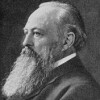
HOBBES: Why waste time learning, when ignorance is instantaneous?
Bill Watterson (b. 1958) American cartoonist
Calvin and Hobbes (1990-11-15)
What is the first business of one who studies philosophy? To part with self-conceit. For it is impossible for any one to begin to learn what he thinks that he already knows.
Epictetus (c. 55-c. 135 AD) Greek (Phrygian) Stoic philosopher [Ἐπίκτητος, Epíktētos]
The Discourses, ch. 17, “How To Apply General Principles to Particular Cases” (c. AD 101-108)
Other translations: "It is impossible for a man to begin to learn what he thinks he knows." [tr. Long (1890)]
Those who do not feel pain, seldom think that it is felt.
Samuel Johnson (1709–1784) English writer, lexicographer, critic
Essay (1750-09-01), The Rambler, No. 48
(Source)
On youth disbelieving warnings from their elders about future infirmities and weakness.
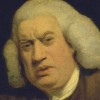
None are more hopelessly enslaved than those who falsely believe they are free.
[Niemand ist mehr Sklave als der sich für frei hält ohne es zu sein.]
Johann Wolfgang von Goethe (1749–1832) German poet, statesman, scientist
Elective Affinities [Die Wahlverwandtschaften], Part 2, ch. 5, “From Ottilie’s Journal [Aus Ottiliens Tagebuche]” (1809) [tr. Wenckstern (1853)]
(Source)
(Source (German)). Another translation:No one is more a slave than the man who thinks himself free while he is not.
[Niles ed. (1872)]No one is more a slave than he who thinks he is free without being so.
[tr. Hollingdale (1971)]
Ignorance of the law excuses no man; not that all men know the law, but because ’tis an excuse every man will plead, and no man can tell how to confute him.
John Selden (1584–1654) English jurist, legal scholar, antiquarian, polymath
Table Talk, § 76.2 “Law” (1689)
(Source)
For if a good speaker — an eloquent speaker — is not speaking the truth, is there a more horrid kind of object in creation?
Thomas Carlyle (1795–1881) Scottish essayist and historian
Speech (1866-04-02), “On the Choice of Books,” Inaugural Address as Lord Rector, University of Edinburgh
(Source)
Often rendered: "Can there be a more horrible object in existence than an eloquent man not speaking the truth?"
Regarding oration/declamation as an academic subject, and deemphasizing the importance of how something is said than what is being said.
See also Euripides (405 BC), Publilius Syrus (c. 40 BC).
Nothing is more terrible than ignorance in action.
Johann Wolfgang von Goethe (1749–1832) German poet, statesman, scientist
Sprüche in Prosa: Maximen und Reflexionen [Proverbs in Prose: Maxims and Reflections] (1833) [tr. Saunders (1893)]
(Source)
Goethe's use of this phrase comes up twice in the Maxims and Reflections. Other translations:
From Art and Antiquity, Vol. 5, #3, Individual Points (1826):Es ist nichts schrecklicher als eine tätige Unwissenheit.
(Source (German))Nothing is more terrible than ignorance in action.
[tr. Saunders (1893), "Life and Character," sec. 3, #231]There is nothing more frightful than ignorance in action.
[tr. Rönnfeldt (1900)]There is nothing more dreadful than active ignorance.
[tr. Stopp (1995), #367]
From Wilhelm Meister's Journeyman Years (1829):Auch nichts schrecklicher ist, als die Unwissenheit handeln zu sehen.
(Source(German))There is no more terrible sight than ignorance in action.
[tr. Saunders (1893), "Life and Character," sec. 1, #52]There is nothing more terrible than to see ignorance in action.
[tr. Rönnfeldt (1900)]Nothing is more frightful than to see ignorance in action.
[tr. Stopp (1995), #367]

SAYE: Ignorance is the curse of God,
Knowledge the wing wherewith we fly to heaven.William Shakespeare (1564–1616) English dramatist and poet
Henry VI, Part 2, Act 4, sc. 7, l. 73ff (4.7.73-74) (1591)
(Source)
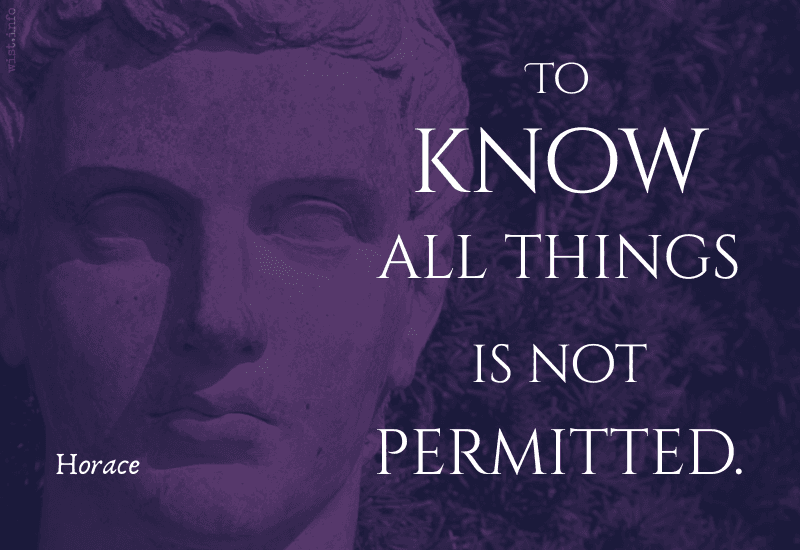
To know all things is not permitted.
[Nec scire fas est omnia.]
Horace (65–8 BC) Roman poet, satirist, soldier, politician [Quintus Horatius Flaccus]
Odes [Carmina], Book 4, # 4, l. 22 (4.4.22) (23 BC)
(Source)
Common English translation, dating back to at least the late 19th Century.
In a number of translations, this phrase is elided or blurred into the surrounding text. Only distinct expressions of the sentiment are given below.
(Source (Latin)). Other translations:Not all of truth
We seekers find.
[tr. Conington (1872)]Neither is it possible to discover everything.
[tr. Smart/Buckley (1853)]Nor everything to know, may any mortal dare.
[tr. Martin (1864)]Nor is the lore
Of all things lore allowed.
[tr. Bulwer-Lytton (1870)]Neither is it lawful to know all things.
[tr. Elgood (1893)]For us to know
All things is not heaven's will.
[tr. Garnsey (1907)]All things man may not learn.
[tr. Marshall (1908)]Nor is it vouchsafed to know all things.
[tr. Bennett (Loeb) (1912)]Not all things may one know.
[tr. Mills (1924)]Nor should men sound all knowledge.
[tr. Michie (1963)]It is not lawful to know all things.
[tr. Alexander (1999)]It’s not right to know everything.
[tr. Kline (2015)]
Unhappiness is not knowing what we want and killing ourselves to get it.
Don Herold (1889–1966) American humorist, cartoonist, author
(Attributed)
(Source)
Quoted in Lawrence Peter, Peter's People (1979) as "Herold's Law."
FOOL: There is no darkness but ignorance.
William Shakespeare (1564–1616) English dramatist and poet
Twelfth Night, Act 4, sc. 2, l. 44 (4.2.44) (1601)
(Source)
It is always safe to learn, even from our enemies, seldom safe to venture to instruct, even our friends.
Charles Caleb "C. C." Colton (1780–1832) English cleric, writer, aphorist
Lacon: Or, Many Things in Few Words, Vol. 1, § 286 (1820)
(Source)
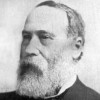
The greater the ignorance the greater the dogmatism.
Sir William Osler (1849–1919) Canadian physician
Montreal Medical Journal (1902)
A great deal of intelligence can be invested in ignorance when the need for illusion is deep.

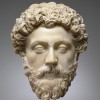
The opinion of ten thousand men is of no value if none of them know anything about the subject.
Marcus Aurelius (AD 121–180) Roman emperor (161–180), Stoic philosopher
(Attributed)
Often attributed to Marcus Aurelius, but I can find no primary source for it, or references to a more complex thought that was paraphrased down to this.
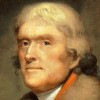
And can history produce an instance of a rebellion so honourably conducted? I say nothing of it’s motives. They were founded in ignorance, not wickedness. God forbid we should ever be 20. years without such a rebellion. The people can not be all, and always, well informed. The part which is wrong will be discontented in proportion to the importance of the facts they misconceive. If they remain quiet under such misconceptions it is a lethargy, the forerunner of death to the public liberty. We have had 13. states independant 11. years. There has been one rebellion. That comes to one rebellion in a century and a half for each state. What country before ever existed a century and half without a rebellion? And what country can preserve it’s liberties if their rulers are not warned from time to time that their people preserve the spirit of resistance?
Thomas Jefferson (1743–1826) American political philosopher, polymath, statesman, US President (1801–09)
Letter (1787-11-13) to William Stephens Smith
(Source)
Speaking of Shay's Rebellion.
The greatest of faults, I should say, is to be conscious of none.
Thomas Carlyle (1795–1881) Scottish essayist and historian
Lecture (1840-05-08), “The Hero as Prophet,” Home House, Portman Square, London
(Source)
The lecture notes were collected by Carlyle into On Heroes, Hero-Worship, & the Heroic in History, Lecture 2 (1841).
MENAS: We, ignorant of ourselves,
Beg often our own harms, which the wise powers
Deny us for our good; so find we profit
By losing of our prayers.William Shakespeare (1564–1616) English dramatist and poet
Antony and Cleopatra, Act 2, sc. 1, l. 7ff (2.1.7-10) (1607)
(Source)
EDUCATION, n. That which discloses to the wise and disguises from the foolish their lack of understanding.
Ambrose Bierce (1842–1914?) American writer and journalist
“Education,” The Cynic’s Word Book (1906)
(Source)
Included in The Devil's Dictionary (1911). Originally published in the "Devil's Dictionary" column in the San Francisco Wasp (1882-12-23).

Nothing is so firmly believed as what is least known.
[N’est rien creu si fermement, que ce qu’on sçait le moins.]
Michel de Montaigne (1533–1592) French essayist
Essays, Book 1, ch. 31 (1.31), “That a Man Is Soberly to Judge of the Divine Ordinance [Qu’il faut sobrement se mesler de juger des ordonnances divines] (1572) [tr. Frame (1943), ch. 32]
(Source)
Both the essay and the quote appeared in the 1st (1580) edition.
(Source (French)). Other translations:Nothing is so firmely beleeved, as that which a man knoweth least.
[tr. Florio (1603)]Nothing is so firmly believed as what we least know.
[tr. Cotton (1686)]What we know is the least of what we do not know.
[tr. Friswell (1868)]Nothing is so firmly believed, as what we least know.
[tr. Cotton/Hazlitt (1877)]Nothing is so firmly believed as that which we know least.
[tr. Ives (1925), ch. 32]Nothing is so firmly believed as whatever we know least about.
[tr. Screech (1987), ch. 32]

I was gratified to be able to answer promptly, and I did. I said I didn’t know.
Mark Twain (1835–1910) American writer [pseud. of Samuel Clemens]
Life on the Mississippi, ch. 6 (1883)
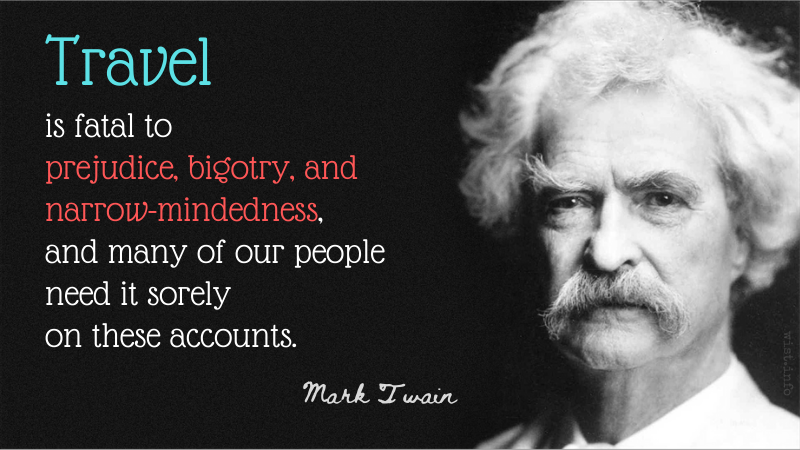
Travel is fatal to prejudice, bigotry, and narrow-mindedness, and many of our people need it sorely on these accounts. Broad, wholesome, charitable views of men and things can not be acquired by vegetating in one little corner of the earth all one’s lifetime.
Mark Twain (1835–1910) American writer [pseud. of Samuel Clemens]
The Innocents Abroad, “Conclusion” (1869)
(Source)
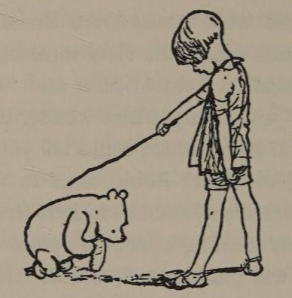
Pooh wondered if being a faithful Knight meant that you just went on being faithful without being told things.
A. A. Milne (1882–1956) English poet and playwright [Alan Alexander Milne]
House at Pooh Corner, ch. 10 “An Enchanted Place” (1928)
(Source)
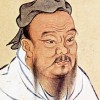
It is only the very wisest and the very stupidest who never change.
[唯上知與下愚不移]
Confucius (c. 551- c. 479 BC) Chinese philosopher, sage, politician [孔夫子 (Kǒng Fūzǐ, K'ung Fu-tzu, K'ung Fu Tse), 孔子 (Kǒngzǐ, Chungni), 孔丘 (Kǒng Qiū, K'ung Ch'iu)]
The Analects [論語, 论语, Lúnyǔ], Book 17, verse 3 (17.3) (6th C. BC – 3rd C. AD) [tr. Soothill (1910)]
(Source)
Some scholars recommend reading 17.2-3 together (I don't get it), and some actually merge them into a single verse; that is noted below. (Source (Chinese)). Other translations:There are only the wise of the highest class, and the stupid of the lowest class, who cannot be changed.
[tr. Legge (1861)]Only the supremely wise and the most deeply ignorant do not alter.
[tr. Jennings (1895)]It is only men of the highest understanding and men of the grossest dullness, who do not change.
[tr. Ku Hung-Ming (1898)]There are two classes that never change: the supremely wise and the profoundly stupid.
[Source (1906)]Only the wisest and the dullest never change.
[tr. Soothill (1910), Alternate 1]Only the uppermost wise and the lowermost stupid do not change.
[tr. Soothill (1910), Alternate 2]Only those of highest intelligence, and lowest simplicity do not shift.
[tr. Pound (1933)]It is only the very wisest and the very stupidest who cannot change.
[tr. Waley (1938)]Only the highest and the lowest characters don’t change.
[tr. Lin Yutang (1938)]The only ones who do not change are sages and idiots.
[tr. Ware (1950), 17.2]It is only the most intelligent and the most stupid who are not susceptible to change.
[tr. Lau (1979)]Only the most intelligent and the most stupid do not change.
[tr. Dawson (1993), 17.2]Only the wisest and the stupidest never change.
[tr. Leys (1997)]Only the highest of the wise and the lowest of the stupid do not change.
[tr. Huang (1997), 17.2]Only the super wisdom and the infer stupidness cannot be changed.
[tr. Cai/Yu (1998), #443]Only the most wise (zhi) and the most stupid do not move.
[tr. Ames/Rosemont (1998)]It is the highest wisdom and the lowest stupidity that do not change.
[tr. Brooks/Brooks (1998), 17.2b]Those of the loftiest wisdom and those of the basest ignorance: they alone never change.
[tr. Hinton (1998)]Only the highest among the wise and the lowest among the stupid never change.
[tr. Watson (2007)]Only the most intelligent and the most stupid are not inclined to change.
[tr. Annping Chin (2014)]Only superior wisdom and extreme stupidity cannot be changed.
[tr. Li (2020)]Only the supremely wise and the most deeply ignorant do not alter.
[Source]Only the supremely wise and the abysmally ignorant do not change.
To paraphrase Oedipus, Hamlet, Lear, and all those guys, I wish I had known this some time ago.
CALVIN: I don’t want to go to school. I don’t want to know anything new. I already know more than I want to! I liked things better when I didn’t understand them! The fact is, I’m being educated against my will! My rights are being trampled!
HOBBES: Is it a right to remain ignorant?
CALVIN: I don’t know, but I refuse to find out!

People who used magic without knowing what they were doing usually came to a sticky end.
All over the entire room, sometimes.