If we say, ‘We have no sin,’ we are deceiving ourselves, and truth has no place in us; if we acknowledge our sins, he is trustworthy and upright, so that he will forgive our sins and will cleanse us from all evil.
[Ἐὰν εἴπωμεν ὅτι ἁμαρτίαν οὐκ ἔχομεν ἑαυτοὺς πλανῶμεν καὶ ἡ ἀλήθεια οὐκ ἔστιν ἐν ἡμῖν. ἐὰν ὁμολογῶμεν τὰς ἁμαρτίας ἡμῶν πιστός ἐστιν καὶ δίκαιος ἵνα ἀφῇ ἡμῖν τὰς ἁμαρτίας καὶ καθαρίσῃ ἡμᾶς ἀπὸ πάσης ἀδικίας.]
The Bible (The New Testament) (AD 1st - 2nd C) Christian sacred scripture
Book 23. 1st Letter of John 1: 8ff (1 John 1:8-9) [NJB (1985)]
(Source)
(Source (Greek)). Other translations:If we say we have no sin, we deceive ourselves, and the truth is not in us.
If we confess our sins, he is faithful and just, and will forgive our sins and cleanse us from all unrighteousness.
[KJV (1611)]If we say we have no sin in us, we are deceiving ourselves and refusing to admit the truth; but if we acknowledge our sins, then God who is faithful and just will forgive our sins and purify us from everything that is wrong.
[JB (1966)]If we say that we have no sin, we deceive ourselves, and there is no truth in us. But if we confess our sins to God, he will keep his promise and do what is right: he will forgive us our sins and purify us from all our wrongdoing.
[GNT (1976)]If we claim, “We don’t have any sin,” we deceive ourselves and the truth is not in us. But if we confess our sins, he is faithful and just to forgive us our sins and cleanse us from everything we’ve done wrong.
[CEB (2011)]If we say that we have no sin, we deceive ourselves, and the truth is not in us. If we confess our sins, he who is faithful and just will forgive us our sins and cleanse us from all unrighteousness.
[NRSV (2021 ed.)]
Quotations about:
integrity
Note not all quotations have been tagged, so Search may find additional quotes on this topic.

A man’s first care should be to avoid the reproaches of his own heart; his next to escape the censures of the world: if the last interferes with the former, it ought to be entirely neglected; but otherwise there cannot be a greater satisfaction to an honest mind, than to see those approbations which it gives itself seconded by the applauses of the public: a man is more sure of his conduct, when the verdict which he passes upon his own behaviour is thus warranted and confirmed by the opinion of all that know him.
Joseph Addison (1672–1719) English essayist, poet, statesman
Essay (1711-07-20), The Spectator, No. 122
(Source)
Writing of his (fictional) friend, Sir Roger de Coverley.

Among the smaller duties of life I hardly know any one more important than that of not praising where praise is not due.
Sydney Smith (1771–1845) English clergyman, essayist, wit
Lecture (1804-1806), Moral Philosophy, No. 9 “On the Conduct of the Understanding,” Royal Institution, London
(Source)
Collected in Elementary Sketches of Moral Philosophy (1849).
He does not believe, that does not live according to his Belief.
Thomas Fuller (1654–1734) English physician, preacher, aphorist, writer
Gnomologia: Adages and Proverbs (compiler), # 1838 (1732)
(Source)
It will presumably be thought better, indeed one’s duty, to do away with even what is close to one’s heart in order to preserve the truth, especially when one is a philosopher. For one might love both, but it is nevertheless a sacred duty to prefer the truth to one’s friends.
[ἀληθείας καὶ τὰ οἰκεῖα ἀναιρεῖν, ἄλλως τε καὶ φιλοσόφους ὄντας: ἀμφοῖν γὰρ ὄντοιν φίλοιν ὅσιον προτιμᾶν τὴν ἀλήθειαν.]
Aristotle (384–322 BC) Greek philosopher
Nicomachean Ethics [Ἠθικὰ Νικομάχεια], Book 1, ch. 6 (1.6, 1096a.15) (c. 325 BC) [tr. Crisp (2000)]
(Source)
This is actually not given as a general guideline for living life, but specifically about offering a philosophical argument in opposition that offered by friends. (Source (Greek)). Other translations:Still perhaps it may appear better, nay to be our duty where the safety of the truth is concerned, to upset if need be even our own theories, specially as we are lovers of wisdom: for since both are dear to us, we are bound to prefer the truth.
[tr. Chase (1847), ch. 3]And yet, where the interests of truth are at actual stake, we ought, perhaps, to sacrifice even that which is our own -- if, at least, we are to lay any claim to a philosophic spirit. Both are dear to us alike, but truth must be religiously preserved.
[tr. Williams (1869)]Yet it will perhaps seem the best, and indeed the right course, at least when the truth is at stake, to go so far as to sacrifice what is near and dear to us, especially as we are philosophers. For friends and truth are both dear to us, but it is a sacred duty to prefer the truth.
[tr. Welldon (1892)]In the interests of truth we ought to sacrifice even what is nearest to us, especially as we call ourselves philosophers. Both are dear to us, but it is a sacred duty to give the preference to truth.
[tr. Peters (1893)]Yet it would perhaps be thought to be better, indeed to be our duty, for the sake of maintaining the truth even to destroy what touches us closely, especially as we are philosophers or lovers of wisdom; for, while both are dear, piety requires us to honour truth above our friends.
[tr. Ross (1908)]Still perhaps it would appear desirable, and indeed it would seem to be obligatory, especially for a philosopher, to sacrifice even one's closest personal ties in defense of the truth. Both are dear to us, yet 'tis our duty to prefer the truth.
[tr. Rackham (1934)]Yet it would seem better, perhaps, and something we should do, at any rate when the preservation of the truth is at stake, to confute even what is properly our own, most of all because we are philosophers. For while we love both our friends and the truth, it is a pious thing to accord greater honor to the truth.
[tr. Reeve (1948)]Yet it would perhaps be thought better, and also our duty, to forsake even what is close to us in order to preserve the truth, especially as we are philosophers; for while both are dear, it is sacred to honor truth above friendship.
[tr. Apostle (1975), ch. 4]Yet surely it would be thought better, or rather necessary (above all for philosophers), to refute, in defence of truth , even views to which one is attached; since both are dear, it is right to give preference to the truth.
[tr. Thomson/Tredennick (1976)]Still, it presumably seems better, indeed only right, to destroy even what is close to us if that is the way to preserve truth. And we must especially do this when we are philosophers, lovers of wisdom; for though we love both the truth and our friends, piety requires us to honor the truth first.
[tr. Irwin/Fine (1995)]But perhaps it might be held to be better, in fact to be obligatory, at least for the sake of preserving the truth, to do away with even one's own things, especially for those who are philosophers. For although both are clear, it is a pious thing to honor the truth first.
[tr. Bartlett/Collins (2011)]
They say that God says to me, “Forgive your enemies.” I say, “I do;” but he says, “I will damn mine.” God should be consistent. If he wants me to forgive my enemies he should forgive his. I am asked to forgive enemies who can hurt me. God is only asked to forgive enemies who cannot hurt him. He certainly ought to be as generous as he asks us to be. And I want no God to forgive me unless I am willing to forgive others, and unless I do forgive others. All I ask, if that be true, is that this God should act according to his own doctrine.
Robert Green Ingersoll (1833–1899) American lawyer, freethinker, orator
Lecture (1884-01-20), “Orthodoxy,” Tabor Opera House, Denver, Colorado
(Source)
Published as its own book in 1884.
An honest God is the noblest work of man.
In political life I have never felt that anything really mattered but the satisfaction of knowing that you stood for the things in which you believed, and had done the very best you could.
Eleanor Roosevelt (1884–1962) American politician, diplomat, activist; First Lady of the US (1933–45)
Column (1944-11-08), “My Day”
(Source)

What makes it so plausible to assume that hypocrisy is the vice of vices is that integrity can indeed exist under the cover of all other vices except this one. Only crime and the criminal, it is true, confront us with the perplexity of radical evil; but only the hypocrite is really rotten to the core.
Hannah Arendt (1906–1975) German-American philosopher, political theorist
On Revolution, ch. 2, sec. 5 (1963)
(Source)

Dishonor in public life has a double poison. When people are dishonorable in private business, they injure only those with whom they deal or their own chances in the next world. But when there is a lack of honor in Government, the morals of the whole people are poisoned.
Herbert Hoover (1874–1964) American engineer, bureaucrat, US President (1929–33)
Speech (1951-08-30), “Concerning Honor in Public Life,” Iowa Centennial Celebration, Des Moines, Iowa (radio broadcast)
(Source)
For of those to whom much is given, much is required. And when at some future date the high court of history sits in judgment on each of us — recording whether in our brief span of service we fulfilled our responsibilities to the state — our success or failure, in whatever office we hold, will be measured by the answers to four questions:
First, were we truly men of courage — with the courage to stand up to one’s enemies — and the courage to stand up, when necessary, to one’s associates — the courage to resist public pressure, as well as private greed?
Secondly, were we truly men of judgment — with perceptive judgment of the future as well as the past — of our mistakes as well as the mistakes of others — with enough wisdom to know what we did not know and enough candor to admit it.
Third, were we truly men of integrity — men who never ran out on either the principles in which we believed or the men who believed in us — men whom neither financial gain nor political ambition could ever divert from the fulfillment of our sacred trust?
Finally, were we truly men of dedication — with an honor mortgaged to no single individual or group, and comprised of no private obligation or aim, but devoted solely to serving the public good and the national interest?
Courage — judgment — integrity — dedication — these are the historic qualities […] which, with God’s help […] will characterize our Government’s conduct in the four stormy years that lie ahead.John F. Kennedy (1917–1963) American politician, author, journalist, US President (1961–63)
Speech (1961-01-09), Massachusetts legislature, Boston
(Source)
Given as US President-elect. The reference is to Luke 12:48.
Courage — without which all other virtues are useless.
But there is one feature I notice that is generally missing in Cargo Cult Science. That is the idea that we all hope you have learned in studying science in school — we never explicitly say what this is, but just hope that you catch on by all the examples of scientific investigation. It is interesting, therefore, to bring it out now and speak of it explicitly. It’s a kind of scientific integrity, a principle of scientific thought that corresponds to a kind of utter honesty — a kind of leaning over backwards. For example, if you’re doing an experiment, you should report everything that you think might make it invalid — not only what you think is right about it: other causes that could possibly explain your results; and things you thought of that you’ve eliminated by some other experiment, and how they worked — to make sure the other fellow can tell they have been eliminated.
Richard Feynman (1918–1988) American physicist
“Cargo Cult Science,” commencement address, California Institute of Technology (1974)
(Source)
Public confidence in the integrity of the Government is indispensable to faith in democracy; and when we lose faith in the system, we have lost faith in everything we fight and stand for.
Adlai Stevenson II (1900–1965) American politician, diplomat, statesman
Speech (1952-09-11), “On Political Morality,” Town Hall Luncheon, Biltmore Hotel, Los Angeles
(Source)
When people come to see us, we foolishly prattle, lest we be inhospitable. But things said for conversation are chalk eggs. Don’t say things. What you are stands over you the while, and thunders so that I cannot hear what you say to the contrary.
Ralph Waldo Emerson (1803–1882) American essayist, lecturer, poet
“Social Aims,” lecture, Boston (1864-12-04), Letters and Social Aims (1875)
(Source)
Likely source of the abridgments more commonly found *in:More discussion of this quotation: What You Do Speaks So Loudly that I Cannot Hear What You Say – Quote Investigator
- "What you do speaks so loudly that I cannot hear what you say."
- "What you are speaks so loudly that I cannot hear what you say."
- "Who you are speaks so loudly that I cannot hear what you say."
- "What we are speaks louder than what we say." [John F Kennedy, Q&A, Salt Lake City (23 Sep 1960), and in numerous subsequent speeches]
The man of honor thinks of his character, the inferior man of his position. The man of honor desires justice, the inferior man favor.
[君子懷德、小人懷土、君子懷刑、小人懷惠。]
Confucius (c. 551- c. 479 BC) Chinese philosopher, sage, politician [孔夫子 (Kǒng Fūzǐ, K'ung Fu-tzu, K'ung Fu Tse), 孔子 (Kǒngzǐ, Chungni), 孔丘 (Kǒng Qiū, K'ung Ch'iu)]
The Analects [論語, 论语, Lúnyǔ], Book 4, verse 11 (4.11) (6th C. BC – AD 3rd C.) [tr. Soothill (1910)]
(Source)
(Source (Chinese)). Other translations:The superior man thinks of virtue; the small man thinks of comfort. The superior man thinks of the sanctions of law; the small man thinks of favours which he may receive.
[tr. Legge (1861)]The masterly man has an eye to virtue, the common man, to earthly things; the former has an eye to penalties (for error), the latter, to favour.
[tr. Jennings (1895)]A wise man regards the moral worth of a man; a fool, only his position. A wise man expects justice; a fool expects favours.
[tr. Ku Hung-Ming (1898)]The proper man is concerned with examining his consciousness and acting on it, the small man is concerned about land; the superior man about legality, the small man about favors.
[tr. Pound (1933)]Where gentlemen set their hearts upon moral force (tê), the commoners set theirs upon the soil. Where gentlemen think only of punishments, the commoners think only of exceptions.
[tr. Waley (1938)]The perfect gentleman cherishes high moral conduct; the mean man, well-being. The perfect gentleman cherishes the penal code; the mean man, ex¬ emptions therefrom.
[tr. Ware (1950)]While the gentleman cherishes benign rule, the small man cherishes his native land. While the gentleman cherishes a respect for the law, the small man cherishes generous treatment.
[tr. Lau (1979)]The gentleman cherishes virtue, but the small man cherishes the soil; the gentleman cherishes the rigors of the law, but the small man cherishes leniency.
[tr. Dawson (1993)]A gentleman seeks virtue; a small man seeks land. A gentleman seeks justice; a small man seeks favors.
[tr. Leys (1997)]The gentleman cherishes virtue; the small man cherishes land. The gentleman cherishes institutions; the small man cherishes favors.
[tr. Huang (1997)]The gentlemen are concerned about the virtuousness; the mean persons are concerned about the land. The gentlemen are concerned about the status; the mean persons are concerned about the benefit.
[tr. Cai/Yu (1998), #77]Exemplary persons (junzi) cherish their excellence; petty persons cherish their land. Exemplary persons cherish fairness; petty persons cherish the thought of gain.
[tr. Ames/Rosemont (1998)]The gentleman likes virtue; the little man likes partiality. The gentleman likes justice; the little man likes mercy.
[tr. Brooks/Brooks (1998)]while the noble-minded cherish integrity, little people cherish territory. And while the noble-minded cherish laws, little people cherish privilege.
[tr. Hinton (1998)]The gentleman cherishes virtue, whereas the petty person cherishes physical possessions. The gentleman thinks about punishments, whereas the petty person thinks about exemptions.
[tr. Slingerland (2003)]The gentleman has his mind fixed on virtue; the petty man has his mind fixed on land. The gentleman has his mind fixed on penalties; the petty man has his mind fixed on bounty.
[tr. Watson (2007)]The gentleman [junzi] worries about the condition of his moral character, while the common man [xiaoren] worries about [whether he can hold on to] his land. The gentleman is conscious of [not breaking] the law, while the common man is conscious of what benefits he might reap [from the state].
[tr. Chin (2014)]A Jun Zi cares about virtuous and righteous principles, whereas a Xiao Ren cares about worldly matters. A Jun Zi cares about rules and discipline, whereas a Xiao Ren cares about benefits.
[tr. Li (2020)]The superior man seeks what is right; the inferior one, what is profitable.
[Source]

“They’re certainly entitled to think that, and they’re entitled to full respect for their opinions,” said Atticus, “but before I can live with other folks I’ve got to live with myself. The one thing that doesn’t abide by majority rule is a person’s conscience.”
Harper Lee (1926–2016) American writer [Nellie Harper Lee]
To Kill a Mockingbird, ch. 11 (1960)
(Source)

Trust in another’s goodness is no light testimony to one’s own.
[La fiance de la bonté d’autruy, est un non leger tesmoignage de la bonté propre]
Michel de Montaigne (1533–1592) French essayist
Essays, Book 1, ch. 14 (1.14), “The Taste of Good and Bad Things Depends Mostly on the Opinion We Have of Them [Que le goust des biens et des maux despend en bonne partie de l’opinion que nous en avons]” (1572) [tr. Screech (1987)]
(Source)
Writing admirably of an elderly prelate who had turned over management of his household and wealth to a succession of trusted servants.
This essay was in the 1st ed. (1580), but was expanded substantially for subsequent editions. This passage first appeared in the 3rd edition (1595). It is in Book 1, number 40 in most older translations; some more recent ones (as noted) number it as 14.
(Source (French)). Other translations:The confidence in others honestie, is no light testimonie of ones owne integritie [Confidence in others’ honesty is no light testimony of one’s own integrity].
[tr. Florio (1603)]The confidence of another Mans vertue, is no light evidence of a Mans own.
[tr. Cotton (1686)]The confidence in another man's virtue is no light evidence of a man's own.
[tr. Cotton/Hazlitt (1877)]Confidence in another's goodness is no slight testimony of one's own goodness.
[tr. Ives (1925), 1.14]Confidence in the goodness of others is no slight testimony to one's own goodness.
[tr. Frame (1943), 1.14]Trust in the goodness of others truly testifies to the goodness in ourselves.
[tr. HyperEssays (2025)]

With consistency a great soul has simply nothing to do. He may as well concern himself with his shadow on the wall. Speak what you think to-day in words as hard as cannon-balls and to-morrow speak what to-morrow thinks in hard words again, though it contradict every thing you said to-day.
Ralph Waldo Emerson (1803–1882) American essayist, lecturer, poet
Essay (1841), “Self-Reliance,” Essays: First Series, No. 2
(Source)
Inspired by his reading of Walter Savage Landor in 1833, with passages pulled from his lecture "Individualism," last in his course on "The Philosophy of History" (1836–1837), with other passages from the lectures "School," "Genius," and "Duty" in his course on "Human Life" (1838–1839).
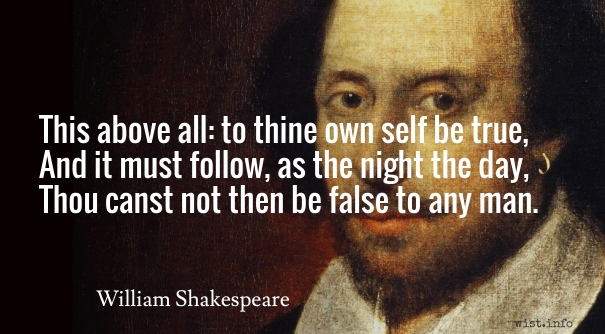
POLONIUS: This above all: to thine own self be true,
And it must follow, as the night the day,
Thou canst not then be false to any man.
William Shakespeare (1564–1616) English dramatist and poet
Hamlet, Act 1, sc. 3, l. 84ff (1.3.84-86) (c. 1600)
(Source)

Do not judge, and you will not be judged; do not condemn, and you will not be condemned; forgive, and you will be forgiven. Give, and there will be gifts for you: a full measure, pressed down, shaken together, and overflowing, will be poured into your lap; because the standard you use will be the standard used for you.
[Καὶ μὴ κρίνετε, καὶ οὐ μὴ κριθῆτε· καὶ μὴ καταδικάζετε, καὶ οὐ μὴ καταδικασθῆτε. ἀπολύετε, καὶ ἀπολυθήσεσθε· δίδοτε, καὶ δοθήσεται ὑμῖν· μέτρον καλὸν πεπιεσμένον σεσαλευμένον ὑπερεκχυννόμενον δώσουσιν εἰς τὸν κόλπον ὑμῶν· ᾧ γὰρ μέτρῳ μετρεῖτε ἀντιμετρηθήσεται ὑμῖν.]
The Bible (The New Testament) (AD 1st - 2nd C) Christian sacred scripture
Book 3. Gospel of Luke 6:37ff (Luke 6:37–38) (Jesus) [NJB (1985)]
(Source)
This passage is paralleled (reduced) in Matthew 7:1-2 and Mark 4:24.
(Source (Greek)). Other translations:Judge not, and ye shall not be judged: condemn not, and ye shall not be condemned: forgive, and ye shall be forgiven: give, and it shall be given unto you; good measure, pressed down, and shaken together, and running over, shall men give into your bosom. For with the same measure that ye mete withal it shall be measured to you again.
[KJV (1611)]Do not judge, and you will not be judged yourselves; do not condemn, and you will not be condemned yourselves; grant pardon, and you will be pardoned. Give, and there will be gifts for you: a full measure, pressed down, shaken together, and running over, will be poured into your lap; because the amount you measure out is the amount you will be given back.
[JB (1966)]Do not judge others, and God will not judge you; do not condemn others, and God will not condemn you; forgive others, and God will forgive you. Give to others, and God will give to you. Indeed, you will receive a full measure, a generous helping, poured into your hands -- all that you can hold. The measure you use for others is the one that God will use for you.
[GNT (1976)]Don’t judge, and you won’t be judged. Don’t condemn, and you won’t be condemned. Forgive, and you will be forgiven. Give, and it will be given to you. A good portion -- packed down, firmly shaken, and overflowing -- will fall into your lap. The portion you give will determine the portion you receive in return.
[CEB (2011)]Do not judge, and you will not be judged. Do not condemn, and you will not be condemned. Forgive, and you will be forgiven. Give, and it will be given to you. A good measure, pressed down, shaken together and running over, will be poured into your lap. For with the measure you use, it will be measured to you.
[NIV (2011 ed.)]Do not judge, and you will not be judged; do not condemn, and you will not be condemned. Forgive, and you will be forgiven; give, and it will be given to you. A good measure, pressed down, shaken together, running over, will be put into your lap, for the measure you give will be the measure you get back.
[NRSV (2021 ed.)]
I have found that the greatest help in meeting any problem with decency and self-respect and whatever courage is demanded, is to know where you yourself stand. That is, to have in words what you believe and are acting from.
William Faulkner (1897–1962) American novelist
Letter to David Kirk, Oxford, Miss. (8 Mar 1956)
(Source)
Rare is the person who can weigh the faults of others without putting his thumb on the scales.
(Other Authors and Sources)
Byron J. Langenfeld

The measure of a man’s real character is what he would do if he knew he would never be found out.
Thomas Babington Macaulay (1800–1859) English writer and politician
(Attributed)
Whatever games are played with us, we must play no games with ourselves, but deal in our privacy with the last honesty and truth.
Ralph Waldo Emerson (1803–1882) American essayist, lecturer, poet
Essay (1860), “Illusions,” The Conduct of Life, ch. 9
(Source)
Based on a course of lectures by that name first delivered in Pittsburg (1851-03).
Nothing can bring you peace but yourself. Nothing can bring you peace but the triumph of principles.
Ralph Waldo Emerson (1803–1882) American essayist, lecturer, poet
Essay (1841), “Self-Reliance,” Essays: First Series, No. 2
(Source)
Closing words.
This essay was inspired by his reading of Walter Savage Landor in 1833, with passages pulled from his lecture "Individualism," last in his course on "The Philosophy of History" (1836–1837), with other passages from the lectures "School," "Genius," and "Duty" in his course on "Human Life" (1838–1839).
HAYWOOD: There are those in our own country, too, who today speak of the protection of country, of survival. A decision must be made, in the life of every nation, at the very moment when the grasp of the enemy is at its throat, when it seems the only way to survive is to use the means of the enemy, to rest survival upon what is expedient. To look the other way. Only the answer to that is: Survival as what?
Abby Mann (1927–2008) American screenwriter, producer [a.k.a. Abraham Goodman, Ben Goodman]
Judgment at Nuremberg (1961)
Never regard something as doing you good if it makes you betray a trust, or lose your sense of shame, or makes you show hatred, suspicion, ill will, or hypocrisy, or a desire for things best done behind closed doors.
[Μὴ τιμήσῃς ποτὲ ὡς συμφέρον σεαυτοῦ, ὃ ἀναγκάσει σέ ποτε τὴν πίστιν παραβῆναι, τὴν αἰδῶ ἐγκαταλιπεῖν, μισῆσαί τινα, ὑποπτεῦσαι, καταράσασθαι, ὑποκρίνασθαι, ἐπιθυμῆσαί τινος τοίχων καὶ παραπετασμάτων δεομένου.]
Marcus Aurelius (AD 121–180) Roman emperor (161–180), Stoic philosopher
Meditations [To Himself; Τὰ εἰς ἑαυτόν], Book 3, ch. 7 (3.7) [tr. Hays (2003)]
(Source)
(Source (Greek)). Other translations:Never esteem of anything as profitable, which shall ever constrain thee either to break thy faith, or to lose thy modesty; to hate any man, to suspect, to curse, to dissemble, to lust after anything, that requireth the secret of walls or veils.
[tr. Casaubon (1634), ch. 8]Don't be fond of any Thing, or think that for your Interest, which makes you break your Word, quit your Modesty, be of a Dissembling, Suspicious, or Outragious Humour; which puts you upon Hating any Person, and enclines you to any Practice, which wont bear the Light, and look the World in the Face.
[tr. Collier (1701)]Never value that as advantageous, which may force you to break your faith; to quit your modesty, or sense of honour; to hate, suspect, or imprecate evil on any one; to dissemble; or to desire any of these things which need walls or curtains to conceal them.
[tr. Hutcheson/Moor (1742)]Never adopt any measure as conducing to your interest, which lays you under a necessity of violating your honour or your modesty; or may excite your hatred or your suspicion, or provoke you to execrate any one, or to practice dissimulation; or, in short, to entertain a wish which will not bear the light, but must be concealed from the world by walls and curtains.
[tr. Graves (1792)]Never value anything as profitable to thyself which shall compel thee to break thy promise, to lose thy self-respect, to hate any man, to suspect, to curse, to act the hypocrite, to desire anything which needs walls and curtains.
[tr. Long (1862)]Think nothing for your interest which makes you break your word, quit your modesty, hate, suspect, or curse any person, or inclines you to any practice which will not bear the light and look the world in the face.
[tr. Collier/Zimmern (1887)]Never esteem anything as of advantage to thee that shall make thee break thy word or lose thy self-respect.
[tr. Morgan, in Bartlett's (1894)]Never prize anything as self-advantage, which will compel you to break faith, to forfeit self-respect, to suspect or hate or execrate another, to play false, to desire anything which requires screens or veils.
[tr. Rendall (1898)]Never esteem aught of advantage which will oblige you to break your faith, or to desert your honour; to hate, to suspect, or to execrate any man; to play a part; or to set your mind on anything that needs to be hidden by wall or curtain.
[tr. Hutcheson/Chrystal (1902)]Prize not anything as being to thine interest that shall ever force thee to break thy troth, to surrender thine honour, to hate, suspect, or curse anyone, to play the hypocrite, to lust after anything that needs walls and curtains.
[tr. Haines (Loeb) (1916)]Never value as an advantage to yourself what will force you one day to break your word, to abandon self-respect, to hate, suspect, execrate another, to act a part, to covet anything that calls for walls or coverings to conceal it.
[tr. Farquharson (1944)]Never value the advantages derived from anything involving breach of faith, loss of self-respect, hatred, suspicion, or execration of others, insincerity, or the desire for something which hast to be veiled and curtained.
[tr. Staniforth (1964)]Never prize as advantageous to yourself anything that will compel you some day to break your word, to offend against propriety, to hate, suspect or curse another, to dissemble, or to desire anything that needs to be veiled behind walls and curtains.
[tr. Hard (1997 ed.)]Never regard as a benefit to yourself anything which will force you at some point to break your faith, to leave integrity behind, to hate, suspect, or curse another, to dissemble, to covet anything needing the secrecy of walls and drapes.
[tr. Hammond (2006)]Never consider anything to be beneficial to you, which could ever compel you to violate your faith in yourself, to abandon your modesty, to hate anybody, to be overly suspicious, cursing, disingenuous, or to lust after anything which must be hidden behind walls or veils.
[tr. Needleman/Piazza (2008)]Never prize as advantageous to yourself anything that will compel you some day to break your word, to offend against propriety, to hate, suspect, or curse another, to pretend, or to desire anything that needs to be veiled behind walls and curtains.
[tr. Hard (2011 ed.)]Never value as beneficial to yourself something that will force you one day to break your word, abandon your sense of shame, hate, suspect, or curse someone else, pretend, or desire something that needs the secrecy of walls or curtains.
[tr. Gill (2013)]Value nothing which compels you to break your promise, to abandon your honor, to hate, suspect or curse anyone, to be a hypocrite, or to lust after anything which needs walls or decorations.
[tr. @sentantiq (2019)]Never value anything you find profitable, to the extent that you have to break a promise, lose your self-respect, hate any person or act the hypocrite.
[tr. McNeill (2019)]Some causes will force you to betray faith, abandon shame, hate or suspect another person, call down curses, put forward explanations, or desire something that requires walls and fences. Do not regard these causes as necessary or beneficial to yourself.
[Source]
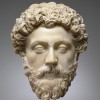
You can preach a better sermon with your life than with your lips.
Oliver Goldsmith (1730–1774) Irish poet, playwright, novelist
(Attributed)
The first rule is, to keep an untroubled spirit; for all things must bow to Nature’s law, and soon enough you must vanish into nothingness, like Hadrian and Augustus. The second is to look things in the face and know them for what they are, remembering that it is your duty to be a good man. Do without flinching what man’s nature demands; say what seems to you most just — though with courtesy, modesty, and sincerity.
[Τὸ πρῶτον μὴ ταράσσου: πάντα γὰρ κατὰ τὴν τοῦ ὅλου φύσιν καὶ ὀλίγου χρόνου οὐδεὶς οὐδαμοῦ ἔσῃ, ὥσπερ οὐδὲ Ἁδριανὸς οὐδὲ Αὔγουστος. ἔπειτα ἀτενίσας εἰς τὸ πρᾶγμα ἴδε αὐτὸ καὶ συμμνημονεύσας ὅτι ἀγαθόν σε ἄνθρωπον εἶναι δεῖ καὶ τί τοῦ ἀνθρώπου ἡ φύσις ἀπαιτεῖ, πρᾶξον τοῦτο ἀμεταστρεπτὶ καὶ εἰπέ, ὡς δικαιότατον φαίνεταί σοι: μόνον εὐμενῶς καὶ αἰδημόνως καὶ ἀνυποκρίτως.]
Marcus Aurelius (AD 121–180) Roman emperor (161–180), Stoic philosopher
Meditations [To Himself; Τὰ εἰς ἑαυτόν], Book 8, ch. 5 (8.5) (AD 161-180) [tr. Staniforth (1964)]
(Source)
This translation was adapted (and significantly shortened) by Norman Vincent Peale in You Can If You Think You Can (1974): "The first rule is to keep an untroubled spirit. The second is to look things in the face and know them for what they are."
Peale's paraphrase significantly changes the meaning (by removing the fatalism and the sense of duty in the face of the actions of great men from the past, and turning it into a general call for calm and clarity). Nonetheless, Peale's version of this translation shows up all over the place, and generally without reference to him.
Original Greek. Other translations:First; let it not trouble thee. For all things both good and evil come to pass according to the nature and general condition of the universe, and within a very little while, all things will be at an end; no man will be remembered: as now of Africanus (for example) and Augustus it is already come to pass. Then secondly; fix thy mind upon the thing itself; look into it, and remembering thyself, that thou art bound nevertheless to be a good man, and what it is that thy nature requireth of thee as thou art a man, be not diverted from what thou art about, and speak that which seemeth unto thee most just: only speak it kindly, modestly, and without hypocrisy.
[tr. Casaubon (1634), 8.4]In the first place , keep your self easie, for all things are govern'd by the Laws, and Order of Providence: Besides, you'l quickly go the way of all Flesh, as Augustus, Adrian, and the rest of the Emperours have done before you. Farther, Examine the matter to the bottom , and remember, that the top of your business is to be a Good Man : Therefore whatever the Dignity of Humane Nature requires of you, set about it presently , without Ifs, or Ands : And speak always according to your Conscience , but let it be done in the Terms of Good Nature and Civility.
[tr. Collier (1701)]In the first place, be not disturbed or put into confusion. All things happen according to the nature of the whole. In a little time you shall be gone, as Hadrian, and Augustus. And, then, attentively consider the nature of what occurs to you: Remember you must persist in the purpose of being a good man. Act, then, inflexibly what suits the nature of a man, and speak always what appears to you just, and yet with calm good-nature and modesty; and without Hypocrisy.
[tr. Hutcheson/Moor (1742)]Let it be a principal part of your philosophy to preserve your tranquility: for all things come to pass by the direction of Providence. And, in a few years, you yourself must leave this world, as Hadrian and Augustus have done before you.
In the next place, consider the affair in its proper light, and you will find, that your whole business here is to be a good man. Whatever teh nature of man therefore requires of you, perform it strenuously and with assiduity; and whatever justice dictates on every occasion, speak it boldly, but with good-nature, modesty, and sincerity.
[tr. Graves (1792)]This is the chief thing: Be not perturbed, for all things are according to the nature of the universal; and in a little time thou wilt be nobody and nowhere, like Hadrianus and Augustus. In the next place, having fixed thy eyes steadily on thy business, look at it, and at the same time remembering that it is thy duty to be a good man, and what man's nature demands, do that without turning aside; and speak as it seems to thee most just, only let it be with a good disposition and with modesty and without hypocrisy.
[tr. Long (1862)]In the first place, keep yourself easy, for all things are governed by the universal nature. Besides, you'll quickly go the way of all flesh, as Augustus and Hadrian have done before you. Farther, examine the matter from top to bottom, and remember that your business is to be a good man. Therefore, whatever the dignity of human nature requires of you, set about it at once, without "ifs" or "ands"; and speak always according to your conscience, but let it be done in the terms of good nature and modesty and sincerity.
[tr. Collier/Zimmern (1887)]First and foremost, keep unperturbed. For all things follow the law of Nature: and in a little while you will vanish and be nought, even as are Hadrian and Augustus. Secondly, face facts open-eyed, bearing in mind that it is your duty to be a man and to do good; what man's nature demands, that you do without swerving; so speak, as seems to you most just; only be it considerately, modestly, and with sincerity.
[tr. Rendall (1898)]Before all things, be not perturbed. Everything comes to pass as directed by universal Nature, and in a little time you will be departed and gone, like Hadrianus and Augustus. Then, scan closely the nature of what has befallen, remembering that it is your duty to be a good man. Do unflinchingly whatever man’s nature requires, and speak as seems most just, yet in kindliness, modesty, and sincerity.
[tr. Hutcheson/Chrystal (1902)]Firstly, fret not thyself, for all things are as the Nature of the Universe would have them, and within a little thou shalt be non-existent, and nowhere, like Hadrianus and Augustus. Secondly, look steadfastly at the thing, and see it as it is and, remembering withal that thou must be a good man, and what the Nature of man calls for, do this without swerving, and speak as seemeth to thee most just, only be it graciously, modestly, and without feigning.
[tr. Haines (Loeb) (1916)]In the first place, be not troubled; for all things are according to Universal Nature, and in a little while you will be no one and nowhere, even as Hadrian and Augustus are no more. Next, looking earnestly at the question, perceive its essence, and reminding yourself that your duty is to be a good man, and what it is that man's nature demands, do that without swerving, and speak the thing that appears to you to be most just, provided only that it is with kindness and modesty, and without hypocrisy
. [tr. Farquharson (1944)]First of all, be untroubled in your mind; for all things come about as universal nature would have them, and in a short while you will be no one and nowhere, as are Hadrian and Augustus. And next, keep your eyes fixed on the matter in hand and observe it well, remembering that it is your duty to be a good person, and that whatever human nature demands, you must fulfil without the slightest deviation and in the manner that seems most just to you; only do so with kindness and modesty, and without false pretences.
[tr. Hard (1997 ed.), Hard (2011 ed.)]The first step: Don't be anxious. Nature controls it all. And before long you'll be no one, nowhere -- like Hadrian, like Augustus. The second step: Concentrate on what you have to do. Fix your eyes on it. Remind yourself that your task is to be a good human being; remind yourself what nature demands of people. Then do it, without hesitation, and speak the truth as you see it. But with kindness. With humility. Without hypocrisy.
[tr. Hays (2003)]First, do not be upset: all things follow the nature of the Whole, and in a little while you will be no one and nowhere, as is true now even of Hadrian and Augustus. Next, concentrate on the matter in hand and see it for what it is. Remind yourself of your duty to be a good man and rehearse what man’s nature demands: then do it straight and unswerving, or say what you best think right. Always, though, in kindness, integrity, and sincerity.
[tr. Hammond (2006)]
MORE: When a man takes an oath, Meg, he’s holding his own self in his hands. Like water (cups hands) and if he opens his fingers then, he needn’t hope to find himself again.
Robert Bolt (1924–1995) English dramatist
A Man for All Seasons, play, Act 2 (1960)
(Source)
Answering to his daughter Margaret, who is trying to convince him to swear to the Act of Succession so that he can be freed from the Tower. In the 1966 screenplay, the same dialogue is used.
HAMLET: O villain, villain, smiling, damnèd villain!
My tables — meet it is I set it down
That one may smile and smile and be a villain.William Shakespeare (1564–1616) English dramatist and poet
Hamlet, Act 1, sc. 5, l. 113ff (1.5.113-115) (c. 1600)
(Source)
He has honor if he holds himself to an ideal of conduct though it is inconvenient, unprofitable, or dangerous to do so.
Walter Lippmann (1889–1974) American journalist and author
A Preface to Morals, 11.3 (1929)
SELF-RESPECT: The secure feeling that no one, as yet, is suspicious.
H. L. Mencken (1880–1956) American writer and journalist [Henry Lewis Mencken]
A Book of Burlesques, ch. 11 (1920)
Who has deceiv’d thee so oft as thy self?
Benjamin Franklin (1706–1790) American statesman, scientist, philosopher, aphorist
Poor Richard (1738 ed.)
(Source)
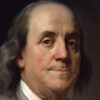
The rock-bottom foundation of a free press is the integrity of the people who run it. Our press may make a million mistakes of judgment without doing itself permanent harm so long as its proprietors are steadfast in their adherence to truth.
Adlai Stevenson II (1900–1965) American politician, diplomat, statesman
Speech (1952-09-08), “The One-Party Press,” Portland Journal Luncheon, Portland, Oregon
(Source)
If there is one thing upon this earth that mankind love and admire better than another, it is a brave man — it is the man who dares to look the devil in the face and tell him he is a devil.
James A. Garfield (1831–1881) US President (1881), lawyer, lay preacher, educator
(Attributed)
(Source)
Quoted in The Phrenological Journal (Dec 1881).
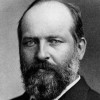
It is always easier to fight for one’s principles than to live up to them.
Alfred Adler (1870–1937) Austrian psychologist
(Attributed)
(Source)
Comment to friend (1927). In Phyllis Bottome, Alfred Adler: A Biography, ch. 5 (1939)
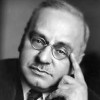
Everybody knows that the first law of history is not daring to say anything false; that the second is daring to say everything that is true; that there should be no suggestion of partiality, none of animosity when you write.
[Nam quis nescit primam esse historiae legem, ne quid falsi dicere audeat? Deinde ne quid veri non audeat? Ne quae suspicio gratiae sit in scribendo? Ne quae simultatis?]
Marcus Tullius Cicero (106–43 BC) Roman orator, statesman, philosopher
De Oratore [On the Orator, On Oratory], Book 2, ch. 15 (2.15) / sec. 62 (55 BC) [tr. May/Wisse (2001)]
(Source)
(Source (Latin)). Other translations:For, is there a Man ignorant, that the first Rule of History is, that an Historian shall not dare to advance a Falsity; the next, that there is no Truth but what he shall dare to tell? That in Writing, he shall be free of all Prepossession; of all Pique?
[tr. Guthrie (1755)]For, is there a man ignorant that the first rule of history is that an historian shall not dare to advance a falsehood; the next, that there no truth but what he shall dare to tell? That the writer should be actuated neither by favour, or by prejudice?
[Source (1808)]For who is ignorant that it is the first law in writing history, that the historian must not dare to tell any falsehood, and the next, that he must be bold enough to tell the whole truth? Also, that there must be no suspicion of partiality in his writings, or of personal animosity?
[tr. Watson (1860)]Who need be informed that the first law of history is, to have the honesty to state no falsehood, the next, the courage to suppress no truth, and to avoid all suspicion of undue bias or personal animosity?
[tr. Calvert (1870)]Who does not recognise that the first law of history is that we shall never dare to say what is false; the second that we shall never fear to say what is true; that everything we write shall be free from any suspicion of favoritism or flattery?
[ed. Harbottle (1906)]For who does not know history's first law to be that an author must not dare to tell anything but the truth ? And its second that he must make bold to tell the whole truth? That there must be no suggestion of partiality anywhere in his writings? Nor of malice?
[tr. Sutton/Rackham (1940)]The first law for the historian is that he shall never dare utter an untruth. The second is that he shall suppress nothing that is true. Moreover, there shall be no suspicion of partiality in his writing, or of malice.
[Bartlett's]
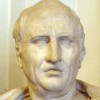
Children have more need of models than of critics.
[Les enfants ont plus besoin de modèles que de critiques.]
Joseph Joubert (1754–1824) French moralist, philosopher, essayist, poet
Pensées [Thoughts], ch. 19 “De l’Éducation [On Education],” ¶ 3 (1850 ed.) [tr. Calvert (1866), ch. 14]
(Source)
Sometimes attributed to Carolyn Coats.
(Source (French)). Other translations:Children have more need of models than of critics.
[tr. Attwell (1896), ¶ 261]Children need models rather than critics.
[tr. Lyttelton (1899), ch. 18, ¶ 1]Children. Need models more than critics.
[tr. Auster (1983), 1800 entry]