

HECUBA: Then no man on earth is truly free,
All are slaves of money or necessity.
Public opinion or fear of prosecution
forces each one, against his conscience,
to conform.ἙΚΆΒΗ:[φεῦ.
οὐκ ἔστι θνητῶν ὅστις ἔστ’ ἐλεύθερος·
ἢ χρημάτων γὰρ δοῦλός ἐστιν ἢ τύχης
ἢ πλῆθος αὐτὸν πόλεος ἢ νόμων γραφαὶ
εἴργουσι χρῆσθαι μὴ κατὰ γνώμην τρόποις.]Euripides (485?-406? BC) Greek tragic dramatist
Hecuba [Hekabe; Ἑκάβη], l. 864ff (c. 424 BC) [tr. Arrowsmith (1958)]
(Source)
When Agamemnon claims he cannot help her get revenge, as much as he'd like to if he were free to assist, because he has to pay attention to the sentiments of the Greek army.
(Source (Greek)). Other translations:Alas! there's no man free: for some are slaves
To gold, to fortune others, and the rest,
The multitude or written laws restrain
From acting as their better judgement dictates.
[tr. Wodhull (1809)]Alas! no mortal is there who is free. For either he is the slave of money or of fortune; or the populace of the city or the dictates of the law constrain him to adopt manners not accordant with his natural inclinations.
[tr. Edwards (1826)]Vain is the boast of liberty in man;
A slave to fortune, or a slave to wealth,
Or by the people or the laws restrain’d,
He dares not act the dictates of his will
[ed. Ramage (1864)]Ah, among mortals is there no man free!
To lucre or to fortune is he slave:
The city's rabble or the laws' impeachment
Constrains him into paths his soul abhors.
[tr. Way (Loeb) (1894)]Ah! there is not in the world a single man free; for he is a slave either to money or to fortune, or else the people in their thousands or the fear of public prosecution prevents him from following the dictates of his heart.
[tr. Coleridge (1938)]Show me the mortal man who's really free.
He's either a slave to money or to chance.
Or the pressure of the mob or legal code
curbs him from acting as his will dictates.
[tr. Harrison (2005)]Ah! But there’s no such thing as a free man! All men are slaves, Agamemnon! Slaves to money, to Fate, to the cries of the masses, to the written laws! They all stop him from doing what he wants.
[tr. Theodoridis (2007)]Then no one is free
in this world. He’s chained to money, or to luck, or to majority
opinion, or to law. Any way you look at it,
he’s still a slave.
[tr. Karden/Street (2011)]Alas!
there is not in the world a single man who is free;
for he is a slave either to money or to fortune,
or else the mob, or fear of law, prevents him
from following the dictates of his heart.
[ed. Yeroulanos (2016)]There is no mortal who is free. Either he is a slave to money or fortune, or the city’s mob or its laws make him live otherwise than he would wish.
[tr. @sentantiq (2016)]Ha!
No one who is mortal is free --
We are either the slave of money or chance;
Or the majority of people or the city’s laws
Keep us from living by our own judgment.
[tr. @sentantiq (2020)]
Quotations about:
wealth
Note not all quotations have been tagged, so Search may find additional quotes on this topic.
Society is composed of two great classes — those who have more dinners than appetite, and those who have more appetite than dinners.
[La Société est composée de deux grandes classes : ceux qui ont plus de dîners que d’appétit, et ceux qui ont plus d’appétit que de dîners.]
Nicolas Chamfort (1741–1794) French writer, epigrammist (b. Nicolas-Sébastien Roch)
Products of Perfected Civilization [Produits de la Civilisation Perfectionée], Part 1 “Maxims and Thoughts [Maximes et Pensées],” ch. 3, ¶ 194 (1795) [tr. Hutchinson (1902)]
(Source)
The same translation is used by Merwin (1969)(Source (French)). Other translations:Society is made up of two large divisions: those who have more dinners than appetite, and those who have more appetite than dinners.
[tr. Mathers (1926)]Society is made up of two large groups: people who have more food than appetite, and people who have more appetite than food.
[tr. Siniscalchi (1994)]Society can be divided into two main categories: people who have more appetite than dinners and those who have more dinners than appetite.
[tr. Parmée (2003), ¶ 145]
Moralists tell you of the evils of wealth and station, and the happiness of poverty. I have been very poor the greatest part of my life, and have borne it as well, I believe, as most people, but I can safely say that I have been happier every guinea I have gained.
Sydney Smith (1771–1845) English clergyman, essayist, wit
Memoir of the Reverend Sydney Smith, by His Daughter, Lady Holland, Vol. 1, ch. 9 (1855)
(Source)
Money is a needful and precious thing, — and, when well used, a noble thing, — but I never want you to think it is the first or only prize to strive for. I’d rather see you poor men’s wives, if you were happy, beloved, contented, than queens on thrones, without self-respect and peace.
Those who set out to serve both God and Mammon soon discover that there isn’t a God.
Logan Pearsall Smith (1865–1946) American-English essayist, editor, anthologist
Afterthoughts, “Other People” (1931)
To suppose, as we all suppose, that we could be rich and not behave as the rich behave, is like supposing that we could drink all day and keep absolutely sober.
Logan Pearsall Smith (1865–1946) American-English essayist, editor, anthologist
Afterthoughts, ch. 4 “In the World” (1931)
(Source)
Once again prosperous and successful crime goes by the name of virtue; good men obey the bad, might is right and fear oppresses law.
Seneca the Younger (c. 4 BC-AD 65) Roman statesman, philosopher, playwright [Lucius Annaeus Seneca]
Hercules Furens, Part 1, l.255 [Amphitryon] [tr. Miller (1917)]
(Source)
Other translations: "Successful and fortunate crime is called virtue."
These economic royalists complain that we seek to overthrow the institutions of America. What they really complain of is that we seek to take away their power. Our allegiance to American institutions requires the overthrow of this kind of power. In vain they seek to hide behind the flag and the Constitution. In their blindness they forget what the flag and the Constitution stand for. Now, as always, they stand for democracy, not tyranny; for freedom, not subjection; and against a dictatorship by mob rule and the over-privileged alike.
Franklin Delano Roosevelt (1882–1945) American lawyer, politician, statesman, US President (1933–1945)
Speech (1936-06-27), Acceptance, Renomination for President, Democratic National Convention, Philadelphia
(Source)
(Source (Audio)). The above is the official version of the speech. At the podium, the last section, starting with "Now, as always," was said by Roosevelt as:Now, as always, for over a century and a half, the flag and the Constitution stand against a dictatorship by mob rule and the over-privileged alike, and the flag and the Constitution stand for democracy, not tyranny; for freedom, not subjection.
It is not necessary to be great to be happy; it is not necessary to be rich to be just and generous and to have a heart filled with divine affection. No matter whether you are rich or poor, treat your wife as though she were a splendid flower, and she will fill your life with perfume and with joy.
Robert Green Ingersoll (1833–1899) American lawyer, freethinker, orator
“The Liberty of Man, Woman, and Child” (1877)
(Source)
You had better be the emperor of one loving and tender heart, and she the empress of yours, than to be king of the world. The man who has really won the love of one good woman in this world, I do not care if he dies in the ditch a beggar, his life has been a success.
Robert Green Ingersoll (1833–1899) American lawyer, freethinker, orator
“The Liberty of Man, Woman, and Child” (1877)
(Source)
The three most important things a man has are, briefly, his private parts, his money, and his religious opinions.
Samuel Butler (1835–1902) English novelist, satirist, scholar
Further Extracts from Note-books of Samuel Butler (1934)
What difference does it make how much you have? What you do not have amounts to much more.
Seneca the Younger (c. 4 BC-AD 65) Roman statesman, philosopher, playwright [Lucius Annaeus Seneca]
(Attributed)
Attr. by Aulus Gellius in Noctes Atticae, bk. 12, ch. 2, sct. 13 (2nd cent. A.D.).
A good reputation is more valuable than money.
[Honesta fama melior pecunia est.]
Publilius Syrus (d. 42 BC) Assyrian slave, writer, philosopher [less correctly Publius Syrus]
Sententiae [Moral Sayings], # 108
If we are to keep our democracy, there must be one commandment: Thou shalt not ration justice.
Learned Hand (1872–1961) American jurist
Speech, Legal Aid Society of New York (1951-02-16)
(Source)
On ensuring that accused persons did not lack for counsel needed for a fair trial.
I would rather be a poor man in a garret with plenty of books than a king who did not love reading.
Thomas Babington Macaulay (1800–1859) English writer and politician
Letter to his Niece (15 Sep 1842)
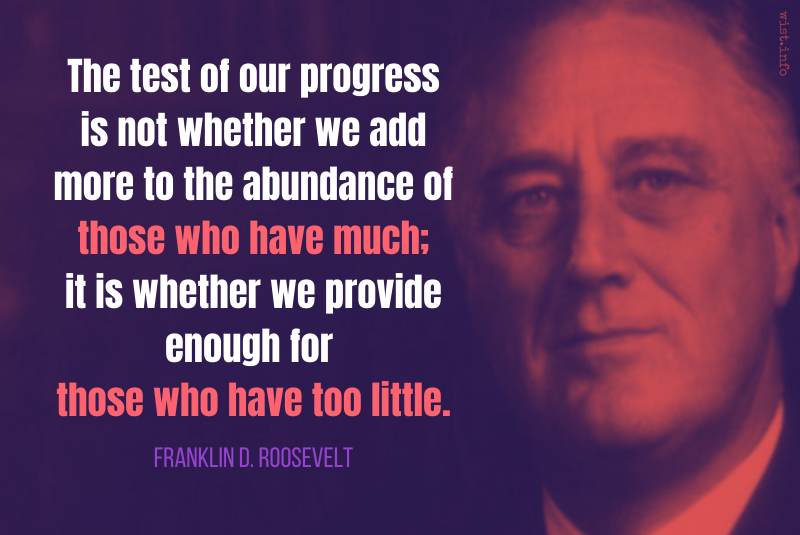
The test of our progress is not whether we add more to the abundance of those who have much; it is whether we provide enough for those who have too little.
Better fare hard with good men than feast it with bad.
Thomas Paine (1737–1809) American political philosopher and writer
(Attributed)
Prosperity is only an instrument to be used, not a deity to be worshiped.
Calvin Coolidge (1872–1933) American lawyer, politician, US President (1925–29)
Speech, Boston (11 Jun 1928)
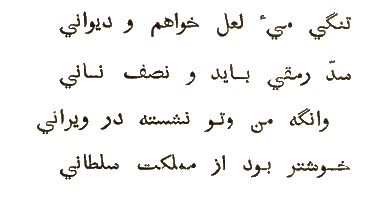
A Book of Verses underneath the Bough,
A Jug of Wine, a Loaf of Bread — and Thou
Beside me singing in the Wilderness —
Oh, Wilderness were Paradise enow.
Omar Khayyám (1048–1123) Persian poet, mathematician, philosopher, astronomer [عمر خیام]
Rubáiyát [رباعیات], Bod. # 149 [tr. FitzGerald, 3rd ed. (1872), # 12]
(Source)
Fitzgerald used the same translation for his 4th and 5th ed.
There are at least two close variants of this quatrain (Bodleian 149 and 153). Both introduce the wine, maybe the bread or meat, some verse, and a love interest.
In the first variant (149), in some cases, the setting is in the wilderness which is turned to a virtual Paradise by the accoutrements; in the second case, the other factors turn the writer's mind away from Paradise itself.
In the second variant (153), these items all brought together are valued more highly than the wealth of the Sultan.
Some translators blend these together, others break them out in two (or three!) quatrains. While concordances (especially in the 19th Century) draw connections, they sometimes contradict. I have included them all here, for the reader to discern their own differences.
Other translations:Some ruby wine and a diwan of poems,
A crust of bread to keep the breath in one's body,
And thou and I alone in a desert, --
Were a lot beyond a Sultan's throne.
[tr. Cowell (1858), # 13]Here with a Loaf of Bread beneath the Bough,
A Flask of Wine, a Book of Verse -- and Thou
Beside me singing in the Wilderness --
And Wilderness is Paradise enow.
[tr. FitzGerald, 1st ed. (1859), # 11]Here with a little Bread beneath the Bough,
A Flask of Wine, a Book of Verse -- and Thou
Beside me singing in the Wilderness --
Oh, Wilderness were Paradise enow!
[tr. FitzGerald, 2nd Ed (1868), # 12]In Spring time I love to sit in the meadow with a paramour perfect as a Houri and goodly jar of wine, and though I may be blamed for this, yet hold me lower than a dog if ever I dream of Paradise.
[tr. McCarthy (1888), # 177]When the hand possesses a loaf of wheaten bread, two measures of wine, and a piece of flesh, when seated with tulip-cheeks in some lonely spot, behold such joy as is not given to all sultans.
[tr. McCarthy (1888), # 398]Give me a flagon of red wine, a book of verses, a loaf of bread and a little idleness. If with such store I might sit by thy dear side in some lonely place, I should deem myself happier than a king in his kingdom.
[tr. McCarthy (1888), #449]In the sweet spring a grassy bank I sought
And thither wine and a fair Houri brought;
And, though the people called me graceless dog,
Gave not to Paradise another thought!
[tr. Whinfield (1883), # 84]Give me a skin of wine, a crust of bread,
A pittance bare, a book of verse to read;
With thee, love, to share my lowly roof,
I would not take the Sultan's realm instead!
[tr. Whinfield (1883), # 452]A Flask of Wine, a book, a Loaf of Bread, --
To every Care and Worldly Sorrow dead,
I covet not, when thou, oh Love, art near,
The Jeweled Crown upon the Sultan's Head.
[tr. Garner, 1.8 (1888)]Yes, Loved One, when the Laughing Spring is blowing,
With Thee beside me and the Cup o’erflowing,
I pass the day upon this Waving Meadow,
And dream the while, no thought on Heaven bestowing.
[tr. Garner, 1.20 (1888)]A flask of red wine, and a volume of song, together --
Half a loaf, -- just enough the ravage of Want to tether:
Such is my wish -- then, thou in the waste with me --
Oh! sweeter were this than a monarch's crown and feather!
[tr. M. K. (1888)]In the Springtime, biding with one who is houri-fair,
And a flask of wine, if 't is to be had -- somewhere
On the tillage's grassy skirt -- Alack ! though most
May think it a sin, I feel that my heaven is there!
[tr. M. K. (1888)]A book, a woman, and a flask of wine:
The three make heaven for me; it may be thine
Is some sour place of singing cold and bare --
But then, I never said thy heaven was mine.
[tr. Le Gallienne (1897)]A book, a flask of wine, a crust of bread,
To every care and worldly sorrow dead,
I covet not when thou, oh, Love, art near,
The jeweled turban on the sultan's head.
[tr. Garner (1898), # 8]A gugglet of wine and a book of poesy,
The haf of a loaf of bread and a penny fee,
And I in a nook of some ruin seated with thee,
Were better than king on a kingdom's throne to be.
[tr. Payne (1898), # 829]I desire a little ruby wine and a book of verses,
Just enough to keep me alive, and half a loaf is needful;
And then, that I and thou should sit in a desolate place
Is better than the kingdom of a sultan.
[tr. Heron-Allen (1898), # 149]If a loaf of wheaten-bread be forthcoming,
a gourd of wine, and a thigh-bone of mutton, and then,
if thou and I be sitting in the wilderness, --
that would be a joy to which no sultan can set bounds.
[tr. Heron-Allen (1898), # 155]A book of verses underneath the vine,
A loaf of bread, a jug of ruby wine,
And thou beside me, resting in the wild,
Would make the dreary wilderness divine!
[tr. Roe (1906), # 25]A skin of red wine, book of poesy.
Bread, a half loaf, enough for life give me.
Then sitting in some solitude with thee
Were sweeter than the Sultan's empery!
[tr. Thompson (1906), # 560]If bread you have made from the grain of wheat,
Two maunds of wine, a mutton joint for meat,
In some nook sitting with fair Tulip-cheeks,
Not every Sultan hath such joy complete!
[tr. Thompson (1906), # 586]Give me a scroll of verse, a little wine,
With half a loaf to fill thy needs and mine,
And with the desert sand our resting place,
For ne'er a Sultan's kingdom would we pine.
[tr. Talbot (1908), # 149]Let Fortune but provide me bread of wheat,
A gourd of wine, a bone of mutton sweet,
Then in the desert if we twain might sit,
Joys such as ours no Sultan could defeat.
[tr. Talbot (1908), # 155]If we get but a loaf of wheaten-bread, a gourd of wine
and a leg of mutton.
and if I and thou be sitting in the wilderness, that
were a treat beyond the powers of most sultans.
[tr. Christensen (1927), # 28]If you have a loaf made from the marrow of wheat,
Of wine two gallons and of lamb a joint,
And if you are sitting in the wilderness with one whose face is beautiful like the moon.
That would be bliss not attainable by a Sultan.
[tr. Rosen (1928), # 320]If one could find a loaf of grinded wheat,
And with a gourd of wine and chop of meat
Retires to ruined haunts with Beloved One,
What king can hope to find such joyous treat?
[tr. Tirtha (1941), # 7.131]The Word suffices and a book of songs,
A crumb will fill this what to earth belongs;
In solitude when I would pore on Tee,
I care no kingdoms, neither thrones nor throngs.
[tr. Tirtha (1941), # 8.131]Should our day's portion be one mancel loaf,
A haunch of mutton and a gourd of wine
Set for us two alone on the wide plain,
No Sultan's bounty could evoke such joy.
A gourd of red wine and a sheaf of poems --
A bare subsistence, half a loaf, not more --
Supplied us two alone in the free desert:
What Sultan could we envy on his throne?
[tr. Graves & Ali-Shah (1967), # 11-12]If one may have a loaf of the flower of wheat, a two-maund (jar) of wine, a thigh of mutton, seated with a heart's darling in a ruined place -- that is a pleasure that is not the attainment of any sultan.
[tr. Bowen (1976), # 12a]If we were seated in a desert place,
Where I alone might gaze upon your face,
These simple victuals would our needs suffice:
A thigh of mutton in a dish of rice;
A loaf of bread of finest wheaten flour;
A flagon tall from which cool wine to pour ...
There, in the day's long leisurely decline,
No Sultan's pleasures could compare with mine.
[tr. Bowen (1976), # 12b]I need a jug of wine and a book of poetry,
Half a loaf for a bite to eat,
Then you and I, seated in a deserted spot,
Will have more wealth than a Sultan's realm.
[tr. Avery/Heath-Stubbs (1979), # 98]If chance supplied a loaf of white bread,
Two casks of wine and a leg of mutton,
In the corner of a garden with a tulip-cheeked girl,
There'd be enjoyment no Sultan could outdo.
[tr. Avery/Heath-Stubbs (1979), # 234]In spring if a houri-like sweetheart
Gives me a cup of wine on the edge of a green cornfield,
Though to the vulgar this would be blasphemy,
If I mentioned any other Paradise, I'd be worse than a dog.
[tr. Ememai (1988), # 160]Ah, would there were a loaf of bread as fare,
A joint of lamb, a jug of vintage rare,
And you and I in wilderness encamped --
No Sultan's pleasure could with ours compare.
[tr. Saldi (1991), # 16]
All I ask is a chance to prove that money can’t make me happy.
Ashleigh Brilliant (b. 1933) Anglo-American epigramist, aphorist, cartoonist
Pot-Shots, #0398

It’s good to have money and the things that money can buy, but it’s good, too, to check up once in a while and make sure you haven’t lost the things money can’t buy.
George Horace Lorimer (1867–1937) American journalist, author, magazine editor
Old Gorgon Graham: More Letters from a Self-Made Merchant to His Son, ch. 12 (1903)
(Source)
Those who oppose all reform will do well to remember that ruin in its worst form is inevitable if our national life brings us nothing better than swollen fortunes for the few and the triumph in both politics and business of a sordid and selfish materialism.
Theodore Roosevelt (1858–1919) American politician, statesman, conservationist, writer, US President (1901–1909)
Speech (1910-08-31), “The New Nationalism,” John Brown Memorial Park dedication, Osawatomie, Kansas
(Source)
He who multiplies Riches multiplies Cares.
Benjamin Franklin (1706–1790) American statesman, scientist, philosopher, aphorist
Poor Richard (1744 ed.)
(Source)
The law, in its majestic equality, forbids the rich as well as the poor to sleep under bridges, to beg in the streets, and to steal bread.
Anatole France (1844–1924) French poet, journalist, novelist, Nobel Laureate [pseud. of Jaques-Anatole-François Thibault]
The Red Lily, ch. 7 (1884)
With virtue you cannot be entirely poor. Without it you cannot be really rich.
Proverbs, Sayings, and Adages
Chinese proverb

It is only when the rich are sick that they fully feel the impotence of wealth.
Charles Caleb "C. C." Colton (1780–1832) English cleric, writer, aphorist
Lacon: Or, Many Things in Few Words, Vol. 1, § 538 (1820)
(Source)
Seek not proud riches, but such as thou mayest get justly, use soberly, distribute cheerfully, and leave contentedly.
Francis Bacon (1561–1626) English philosopher, scientist, author, statesman
“Of Riches,” Essays, No. 34 (1625)
(Source)
Also attributed to Benjamin Franklin.
Adversity is sometimes hard upon a man; but for one man who can stand prosperity there are a hundred that will stand adversity.
Thomas Carlyle (1795–1881) Scottish essayist and historian
Lecture (1840-05-19), “The Hero as Man of Letters,” Home House, Portman Square, London
(Source)
The lecture notes were collected by Carlyle into On Heroes, Hero-Worship, & the Heroic in History, Lecture 5 (1841).
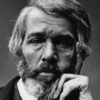
That some should be rich, shows that others may become rich, and hence is just encouragement to industry and enterprize. Let not him who is houseless pull down the house of another; but let him labor diligently and build one for himself, thus by example assuring that his own shall be safe from violence when built.
Abraham Lincoln (1809–1865) American lawyer, politician, US President (1861–65)
Speech (1864-03-21) to the New York Workingmen’s Democratic Republican Association, Washington, DC
(Source)
But the Nature of the War is now alter’d,
`tis the longest Purse
Conquers the longest Sword.Daniel Defoe (1660?-1731) English journalist and novelist
(Attributed)
PEASANT: ‘Tis in such shifts
As these, I care for riches, to make gifts
To friends, or lead a sick man back to health
With ease and plenty. Else small aid is wealth
For daily gladness; once a man be done
With hunger, rich and poor are all as one.[ΑΥΤΟΥΡΓΌΣ: ἐν τοῖς τοιούτοις δ᾽ ἡνίκ᾽ ἂν γνώμης πέσω,
σκοπῶ τὰ χρήμαθ᾽ ὡς ἔχει μέγα σθένος,
ξένοις τε δοῦναι σῶμά τ᾽ ἐς νόσους πεσὸν
δαπάναισι σῷσαι: τῆς δ᾽ ἐφ᾽ ἡμέραν βορᾶς
ἐς σμικρὸν ἥκει: πᾶς γὰρ ἐμπλησθεὶς ἀνὴρ
ὁ πλούσιός τε χὡ πένης ἴσον φέρει.]Euripides (485?-406? BC) Greek tragic dramatist
Electra [Ἠλέκτρα], l. 426ff (c. 420 BC) [tr. Murray (1905)]
(Source)
(Source (Greek)). Other translations:When on these matters I reflect, I mark
How great the power of riches, to bestow
Upon the needy stranger, or expend them
To heal our bodies wasting with disease.
But for the diet of one day, is wealth
Of small importance : for the appetites
Of all men, whether rich or poor, demand
An equal share of necessary food.
[tr. Wodhull (1809)]It is in such cases, whenever I fail in my intentions, that I see how wealth has great power, to give to strangers, and to expend in curing the body when it falls sick; but money for our daily food comes to little; for every man when full, rich or poor, gets an equal amount.
[tr. Coleridge (1891)]But when my mind falls upon this subject, I consider how great a power wealth has, botht o bestow on strangers, and by expense to preserve one's body when fallen into sickness; but for one's daily food it comes to little. For every man once filled, rich or poor, bears an equality.
[tr. Buckley (1892)]In such things, when my thoughts turn thitherward,
I mark what mighty vantage substance hath,
To give to guests, to medicine the body
In sickness: but for needs of daily food
Not far it reacheth. Each man, rich and poor,
Can be but filled, when hunger is appeased.
[tr. Way (1896)]When I think of such things then I see what mighty power money has! Not only you help your friends with the stuff but you can also heal yourself from any illness when you have the money to pay. The cost of a normal everyday meal is cheap, because everyone, rich and poor, once he had enough he feels the same joy.
[tr. Theodoridis (2006)]It’s at times like this,
when I have no idea how to manage,
I think of the great power money has
for giving things to strangers and paying
to save someone whenever he falls sick.
The meals we need each day don’t come to much,
for all men, once they have eaten their fill,
feel much the same, whether rich or poor.
[tr. Johnston (2009), l. 515ff][...] whether rich or poor
Everyone is equal when their belly is full.
[tr. @sentantiq (2020)]
The human animal, like others, is adapted to a certain amount of struggle for life, and when by means of great wealth homo sapiens can gratify all his whims without effort, the mere absence of effort from his life removes an essential ingredient of happiness. The man who acquires easily things for which he feels only a very moderate desire concludes that the attainment of desire does not bring happiness. If he is of a philosophic disposition, he concludes that human life is essentially wretched, since the man who has all he wants is still unhappy. He forgets that to be without some of the things you want is an indispensable part of happiness.
Bertrand Russell (1872–1970) English mathematician and philosopher
Conquest of Happiness, Part 1, ch. 2 “Byronic Unhappiness” (1930)
(Source)
The conviction of the rich that the poor are happier is no more foolish than the conviction of the poor that the rich are.
Mark Twain (1835–1910) American writer [pseud. of Samuel Clemens]
(Misattributed)
I cannot find any reference to this phrase prior to 1921, and no association with Twain until the mid-1970s.
The quotation apparently first appears in various newspaper "filler" columns (e.g., 1921-12-07); in no cases is there an attribution to Twain or to anyone else, except some references of it having been originally seen in the Boston Post (e.g., 1921-12-17, 1921-12-16, 1921-12-07).
One place where a name is associated with the quote is where it appears in the "Facts and Fancies" syndicated column of quips by Robert Quillen (1921-12-07). Quillen (1887-1948) was an American journalist and humorist, whose work was syndicated in hundreds of newspapers. He was know for, among other things, his one-liners. It's unclear whether he adopted material from others, or originated everything in "Facts and Fancies." If the latter, and if the column also appeared in the Boston Post, that would indicate Quillen actually is the source of this quotation.
One place for some doubt is that the one Quillen column shows a date of December 7, but so do some other papers which ran the quote. It is possible, as the actual publication dates of syndicated material can vary between papers or be delayed, that Quillen's column in the paper above ran after its original appearance (in the Boston Globe?), which other papers then stole from as filler material without crediting Quillen.
Twain, who died in 1910, does not seem associated with the quote until the mid-1970s, and it does not show up in more authoritative collections of Twain material. The association to Twain seems to come from Laurence J Peter, Peter's Quotations (1977). Peter included the phrase as a parenthetical comment to a Mark Twain quotation. The proximity may have led to Twain being associated with it (as here, which duplicates the entry from Peter, but with the attribution following the combined two quotes).
In sum, the quotation first appeared in December 1921, a decade after Twain's death, and was possibly created by Robert Quillen. It's association to Mark Twain came from its use by Lawrence Peter as an editorial comment to a different Twain quotation.
Money is what people without talent use to keep score.
(Other Authors and Sources)
Jeremy C. Epworth

It is neither wealth nor splendor, but tranquility and occupation, which give happiness.
Thomas Jefferson (1743–1826) American political philosopher, polymath, statesman, US President (1801–09)
Letter (1788-07-12) to Anna Jefferson Marks
(Source)
The salutation is "My dear Sister," and is a congratulations for her marrying Hastings Marks. Some copies, and filings of the letter, make it out to "Anna Scott Marks," her birth name was Anna Scott Jefferson.
The liberty of a democracy is not safe if the people tolerate the growth of private power to a point where it becomes stronger than their democratic state itself. That, in its essence, is Fascism — ownership of Government by an individual, by a group, or by any other controlling private power.
Franklin Delano Roosevelt (1882–1945) American lawyer, politician, statesman, US President (1933–1945)
Message (1938-04-29) to Congress, On Curbing Monopolies
(Source)
LEAR: Through tattered clothes small vices do appear.
Robes and furred gowns hide all. Plate sin with gold,
And the strong lance of justice hurtless breaks.
Arm it in rags, a pygmy’s straw does pierce it.William Shakespeare (1564–1616) English dramatist and poet
King Lear, Act 4, sc. 6, l. 180ff (4.6.180-183) (1606)
(Source)
There are few sorrows, however poignant, in which a good income is of no avail.
Logan Pearsall Smith (1865–1946) American-English essayist, editor, anthologist
Afterthoughts, “Life and Human Nature” (1931)
IAGO: Poor and content is rich, and rich enough;
But riches fineless is as poor as winter
To him that ever fears he shall be poor.William Shakespeare (1564–1616) English dramatist and poet
Othello, Act 3, sc. 3, l. 202ff (3.3.202-204) (1603)
(Source)