As many years as I have been listening to Easter sermons, I have never heard anyone talk about that part. Resurrection is always announced with Easter lilies, the sound of trumpets, bright streaming light. But it did not happen that way. If it happened in a cave, it happened in complete silence, in absolute darkness, with the smell of damp stone and dug earth in the air. Sitting deep in the heart of Organ Cave, I let this sink in: new life starts in the dark. Whether it is a seed in the ground, a baby in the womb, or Jesus in the tomb, it starts in the dark.
Barbara Brown Taylor (b. 1951) American minister, academic, author
Learning to Walk in the Dark, ch. 6 (2014)
(Source)
Quotations about:
life
Note not all quotations have been tagged, so Search may find additional quotes on this topic.

We miss so much out of life if we don’t love. The more we love the richer life is — even if it is only some little furry or feathery pet.

Where music thundered let the mind be still,
Where the will triumphed let there be no will,
What light revealed, now let the dark fulfill.May Sarton (1912–1995) Belgian-American poet, novelist, memoirist [pen name of Eleanore Marie Sarton]
“Now Voyager”
(Source)
First published in The Lion and the Rose, Part 3 (1948).
It is never quite safe to think we have done with life. When we imagine we have finished our story fate has a trick of turning the page and showing us yet another chapter.
The world is not what anyone wished for, but it’s what everyone wished for.
James Richardson (b. 1950) American poet
“Vectors: 56 Aphorisms and Ten-second Essays,” Michigan Quarterly Review, #11 (Spring 1999)
(Source)

sometimes you climb out of bed in the morning and you think,
I’m not going to make it, but you laugh inside
remembering all the times you’ve felt that wayCharles Bukowski (1920–1994) German-American author, poet
“Gamblers All” (1990)
(Source)
Originally titled "8 Count and Up".
there’s a bluebird in my heart that
wants to get out
but I’m too tough for him,
I say, stay in there, I’m not going
to let anybody see
you.
I know that the Bible is a special kind of book, but I find it as seductive as any other. If I am not careful, I can begin to mistake the words on the page for the realities they describe. I can begin to love the dried ink marks on the page more than I love the encounters that gave rise to them. If I am not careful, I can decide that I am really much happier reading my Bible than I am entering into what God is doing in my own time and place, since shutting the book to go outside will involve the very great risk of taking part in stories that are still taking shape. Neither I nor anyone else knows how these stories will turn out, since at this point they involve more blood than ink. The whole purpose of the Bible, it seems to me, is to convince people to set the written word down in order to become living words in the world for God’s sake. For me, this willing conversion of ink back to blood is the full substance of faith.
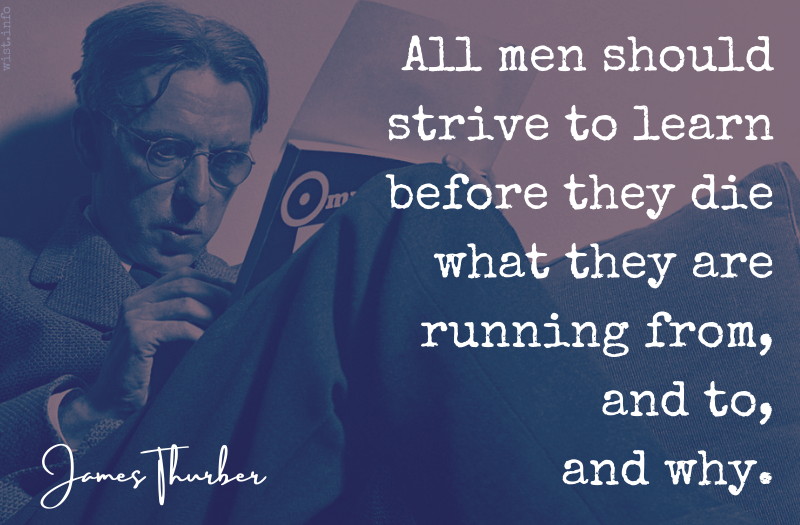
All men should strive to learn before they die what they are running from, and to, and why.
James Thurber (1894–1961) American humorist, cartoonist, writer
“The Shore and the Sea,”, Moral, Further Fables for Our Time (1956)
I never will believe that our youngest days are our happiest. What a miserable augury for the progress of the race and the destination of the individual, if the more matured and enlightened state is the less happy one! Childhood is only the beautiful and happy time in contemplation and retrospect: to the child it is full of deep sorrows, the meaning of which is unknown.
George Eliot (1819–1880) English novelist [pseud. of Mary Ann Evans]
Letter to Sara Hennell (May 1844)
(Source)
Each person is only given so many
Evenings
And each wasted evening is
A gross violation against the
Natural course of
Your only
Life ….Charles Bukowski (1920–1994) German-American author, poet
“The Telephone” (c. 1991), The Last Night of the Earth (1992)
(Source)
A garden is always a series of losses set against a few triumphs, like life itself.
May Sarton (1912–1995) Belgian-American poet, novelist, memoirist [pen name of Eleanore Marie Sarton]
At Seventy: A Journal, “Wednesday, June 23rd” (1973)
(Source)
Art’s distillation. Experience is wine, and art is the brandy we distill from it.
Robertson Davies (1913–1995) Canadian author, editor, publisher
A Mixture of Frailties, ch. 1 (1958)
(Source)

A tradition has now for long been established that cooking and cleaning are woman’s work. As these occupations are among the most tiresome which humanity has to endure, this tradition is very unfortunate for women. But there it is; and the problem is how to get what is needful done as rapidly as possible, so that one can go and do something else, more lucrative, interesting, or amusing.
The general rule is that there must be something to eat at stated intervals, and the house or the flat must be about as clean as the houses and flats of one’s acquaintances. It sounds simple, but actually to secure both these results will often be found to take the entire time. All the time that there is. And that is so tragically little. None left over for reading, writing, walking, sitting in woods, playing games, making love, merely existing without effort. And ever at your back you hear Time’s winged chariot hurrying near … and so the grave yawns, and at the end you will be able to say, not “I have warmed both hands before the fire of life,” but “I have kept house.”
The only solution of this problem which I can suggest — and I almost hesitate to do in these pages — is, Do not keep house. Let the house, or flat, go unkept. Let it go to the devil, and see what happens when it has gone there. At the worst, a house unkempt cannot be so distressing as a life unlived.Rose Macaulay (1881–1958) English writer
“Some Problems of a Woman’s Life,” Good Housekeeping (Aug 1923)
(Source)
Our lives get complicated because complexity is so much simpler than simplicity.
James Richardson (b. 1950) American poet
“Vectors: 56 Aphorisms and Ten-second Essays,” Michigan Quarterly Review, # 7 (Spring 1999)
(Source)
I think we’d like life to be a train. And you get on and pick a destination and get off. And it turns out to be a sailboat. And everyday, you have to see where the wind is and check the currents and see if there’s anybody else on the boat you can help out. But it is a sailboat ride. And the weather changes, and the currents change, and the wind changes. It’s not a train ride. That’s the hardest thing I’ve had to accept in my life. I just thought I had to pick the right train.
Barbara Brown Taylor (b. 1951) American minister, academic, author
Interview (2014-11-09), “Why Life Is Like a Sailboat Ride,” by Oprah Winfrey, Super Soul Sunday, 05×522, Oprah Winfrey Network
(Source)
Starts at 0:48 in the linked video. Usually just rendered to as "I think we'd like life to be a train ... but it turns out to be a sailboat."
Being asked how the educated differ from the uneducated, “As much,” he said, “as the living from the dead.”
[ἐρωτηθεὶς τίνι διαφέρουσιν οἱ πεπαιδευμένοι τῶν ἀπαιδεύτων, “ὅσῳ,” εἶπεν, “οἱ ζῶντες τῶν τεθνεώτων.”]
Aristotle (384–322 BC) Greek philosopher
Attributed in Diogenes Laërtius, Lives and Opinions of Eminent Philosophers [Vitae Philosophorum], Book 5, sec. 11 [tr. Hicks (1925), sec. 19]
(Source)
(Source (Greek)). Other translations:On one occasion he was asked how much educated men were superior to those uneducated; “As much,” said he, “as the living are to the dead.”
[tr. Yonge (1853)]When asked what the difference was between those who were educated and those who were not, Aristotle said "as great as between the living and the dead."
[tr. @sentantiq (2016)]When asked how the educated differ from the uneducated, he said, "as much as the living from the dead."
[tr. Mensch (2018)]
Of all the ways to avoid living, perfect discipline is the most admired.
James Richardson (b. 1950) American poet
Vectors: Aphorisms and Ten-Second Essays, # 24 (2001)
(Source)
Without darkness, nothing comes to birth,
As without light, nothing flowers.May Sarton (1912–1995) Belgian-American poet, novelist, memoirist [pen name of Eleanore Marie Sarton]
“The Invocation to Kali,” Part 5, Poetry (Feb 1971)
(Source)
Lightly, caressingly, Marie Antoinette picked up the crown as a gift. She was still too young to know that life never gives anything for nothing, and that a price is always exacted for what fate bestows. She did not think she would have to pay a price. She simply accepted the rights of her royal position and performed no duties in exchange. She wanted to combine two things which are, in actual human experience, incompatible; she wanted to reign and at the same time to enjoy.
Stefan Zweig (1881–1942) Austrian novelist, playwright, journalist, biographer
Marie Antoinette (1932)
(Source)
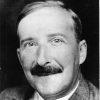
Only ambition is fired by the coincidences of success and easy accomplishment but nothing is quite as splendidly uplifting to the heart as the defeat of a human being who battles against the invincible superiority of fate. This is always the most grandiose of all tragedies, one sometimes created by a dramatist but created thousands of times by life.
Stefan Zweig (1881–1942) Austrian novelist, playwright, journalist, biographer
Stellar Moments in Human History [Sternstunden der Menschheit] (1953) [tr. Sonnenfeld]
Life is political, not because the world cares about how you feel, but because the world reacts to what you do.
Timothy Snyder (b. 1969) American historian, author
On Tyranny: Twenty Lessons from the Twentieth Century (2017)
(Source)

For the world, I count it not an Inne, but an Hospitall, and a place, not to live, but to die in.
Thomas Browne (1605–1682) English physician and author
Religio Medici, Part 2, sec. 11 (1643)
(Source)
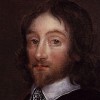
We never see the entire stretch of the road from any one point. Life is not a long, straight path — the untrodden portion clearly visible — it is a winding and undulating lane. “Come on,” Life seems to say, showing us just one little bit of the track, “you can manage this — and now this — and now this again!” And those who can be persuaded to concentrate their flagging energies on each stretch as it unfolds itself find themselves standing at last, with glowing hearts and flushed faces, on the lonely and little trodden summit.
Frank W. Boreham (1871–1959) Anglo-Australian preacher
The Drums of Dawn, Part 2, ch. 5 “The White Giants” (1933)
(Source)
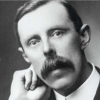
When first we fall in love, we feel that we know all there is to know about life, and perhaps we are right.
Mignon McLaughlin (1913–1983) American journalist and author
The Neurotic’s Notebook, ch. 1 (1963)
(Source)
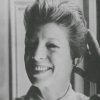
Try not to pay attention to those who will try to make life miserable for you. There will be a lot of those — in the official capacity as well as the self-appointed. Suffer them if you can’t escape them, but once you have steered clear of them, give them the shortest shrift possible.
Joseph Brodsky (1940–1996) Russian-American poet, essayist, Nobel laureate, US Poet Laureate [Iosif Aleksandrovič Brodskij]
“Speech at the Stadium,” Commencement Address, University of Michigan (18 Dec 1988)
(Source)
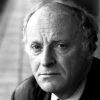
If people do not believe that mathematics is simple, it is only because they do not realize how complicated life is.
John von Neumann (1903–1957) Hungarian-American mathematician, physicist, inventor, polymath [János "Johann" Lajos Neumann]
Speech, Association for Computing Machinery inaugural conference, Columbia University, New York (15 Sep 1947)
(Source)
Von Neumann insisted that ENIAC's command language could encompass all mathematics, given how only a thousand words could handle most needs of life, and mathematics was, he insisted, simpler than life. When the audience laughed, he replied with this comment. Quoted in Franz L. Alt, "Archaeology of computers: Reminiscences, 1945-1947," Communications of the ACM, Vol 15, #7 (Jul 1972).
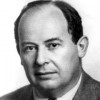
We can’t start over again, and it wouldn’t “be perfect” if we could. We can only continue.
Theodore Isaac Rubin (1923–2019) American psychiatrist and author
Compassion and Self Hate: An Alternative to Despair, Part 2 (1975)
(Source)
The problem is not that there are problems. The problem is expecting otherwise and thinking that having problems is a problem.
Theodore Isaac Rubin (1923–2019) American psychiatrist and author
One to One (1983)
His progress through life was hampered by his tremendous sense of his own ignorance, a disability which affects all too few.

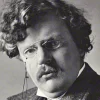
The first fact about the celebration of a birthday is that it is a way of affirming defiantly, and even flamboyantly, that it is a good thing to be alive.
Gilbert Keith Chesterton (1874–1936) English journalist and writer
“Our Birthday,” G. K.’s Weekly (1935-03-21)
(Source)
It is impossible to live without failing at something, unless you live so cautiously that you might as well not have lived at all — in which case, you fail by default.
Joanne "Jo" Rowling (b. 1965) British novelist [writes as J. K. Rowling and Robert Galbraith]
“The Fringe Benefits of Failure and the Importance of Imagination,” Commencement Address, Harvard (5 Jun 2008)
(Source)

Learning and living. But they are really the same thing, aren’t they? There is no experience from which you can’t learn something. … And the purpose of life, after all, is to live it, to taste experience to the utmost, to reach out eagerly and without fear for newer and richer experience.
Eleanor Roosevelt (1884–1962) American politician, diplomat, activist; First Lady of the US (1933–45)
You Learn By Living, Introduction (1960)
My life so far has been a long series of things I wasn’t ready for.
Ashleigh Brilliant (b. 1933) Anglo-American epigramist, aphorist, cartoonist
Pot-Shots, #3237

A censor is a man who has read about Joshua and forgotten about Canute. The censor believes that he can hold back the mighty traffic of life with a tin whistle and a raised right hand. For, after all, it is life with which he quarrels.
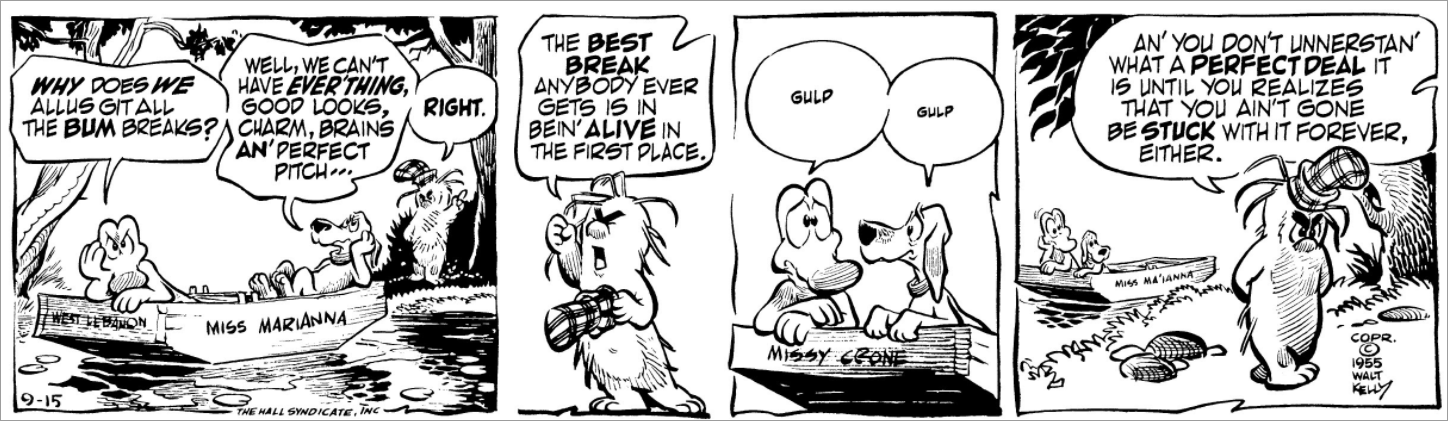
The best break anybody ever gets is in bein’ alive in the first place. An’ you don’t unnerstan’ what a perfect deal it is until you realizes that you ain’t gone be stuck with it forever, either.
Walt Kelly (1913–1973) American animator and cartoonist [Walter Crawford Kelly, Jr.]
“Pogo” [Porky Pine] (15 Sep 1955)
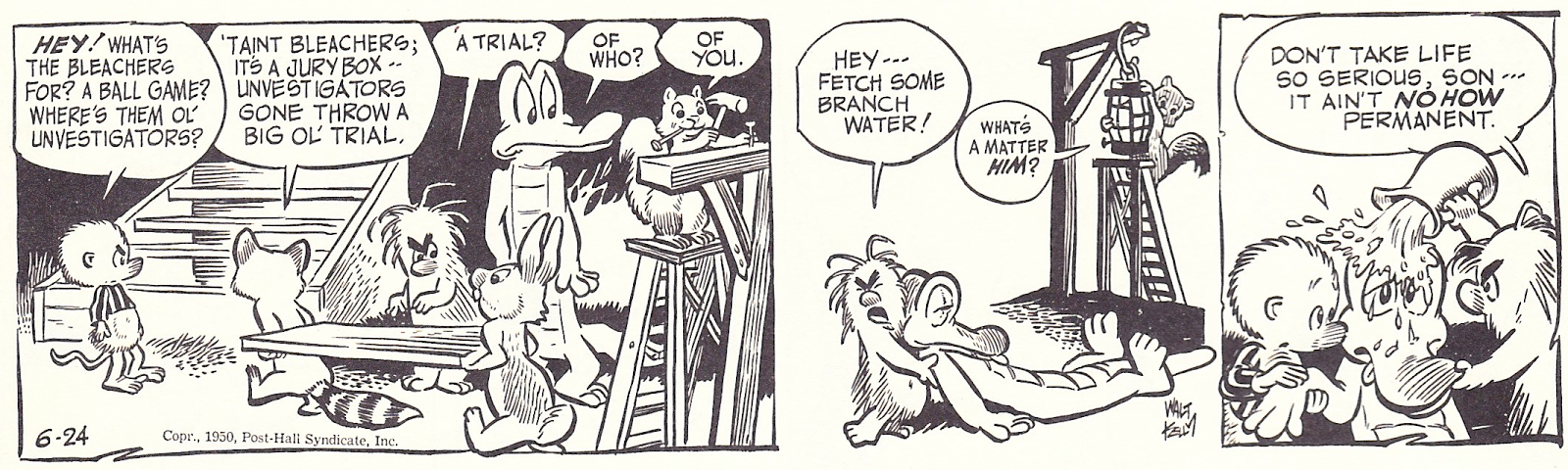
Don’t take life so serious, son … it ain’t no how permanent.
Walt Kelly (1913–1973) American animator and cartoonist [Walter Crawford Kelly, Jr.]
“Pogo” [Porky Pine] (24 Jun 1950)
More discussion about this quotation: Don’t Take Life So Serious, Son … It Ain’t Nohow Permanent – Quote Investigator.
If you try and take a cat apart to see how it works, the first thing you have on your hands is a non-working cat.
Douglas Adams (1952–2001) English author, humorist, screenwriter
Speech, Digital Biota 2 conference, Cambridge, UK (Sep 1998)
(Source)
Segments of this impromptu speech are quoted in Richard Dawkins, "Eulogy for Douglas Adams," Church of Saint Martin in the Fields, London (27 Sep 2001). A variant of the quotation ("If you try and take a cat apart to see how it works, you end up with a non-working cat. Do not try this.") is often attributed to that article, but the Dawkins eulogy contains the correct form of the quote.

Here’s a comforting thought for you, Peter. However long you may live, the world will never lose its ability to surprise you with its beauty.

In all your actions, words, and thoughts, be aware that it is possible that you may depart from life at any time. But leaving the human race is nothing to be afraid of, if the gods exist; they would not involve you in anything bad. And if they do not exist or have no concern for human affairs, why should I live in a universe empty of gods and empty of providence? But the gods do exist and have concern for human affairs and have placed it wholly in the power of human beings never to meet what is truly bad.
[Ὡς ἤδη δυνατοῦ ὄντος ἐξιέναι τοῦ βίου, οὕτως ἕκαστα ποιεῖν καὶ λέγειν καὶ διανοεῖσθαι. τὸ δὲ ἐξ ἀνθρώπων ἀπελθεῖν, εἰ μὲν θεοὶ εἰσίν, οὐδὲν δεινόν: κακῷ γάρ σε οὐκ ἂν περιβάλοιεν: εἰ δὲ ἤτοι οὐκ εἰσὶν ἢ οὐ μέλει αὐτοῖς τῶν ἀνθρωπείων, τί μοι ζῆν ἐν κόσμῳ κενῷ θεῶν ἢ προνοίας κενῷ; ἀλλὰ καὶ εἰσὶ καὶ μέλει αὐτοῖς τῶν ἀνθρωπείων καὶ τοῖς μὲν κατ̓ ἀλήθειαν κακοῖς ἵνα μὴ περιπίπτῃ ὁ ἄνθρωπος, ἐπ̓ αὐτῷ τὸ πᾶν ἔθεντο.]
Marcus Aurelius (AD 121–180) Roman emperor (161–180), Stoic philosopher
Meditations, Book 2, #11 [tr. Gill (2014)]
(Source)
Original Greek. Other translations:Whatsoever thou dost affect, whatsoever thou dost project, so do, and so project all, as one who, for aught thou knowest, may at this very present depart out of this life. And as for death, if there be any gods, it is no grievous thing to leave the society of men. The gods will do thee no hurt, thou mayest be sure. But if it be so that there be no gods, or that they take no care of the world, why should I desire to live in a world void of gods, and of all divine providence? But gods there be certainly, and they take care for the world; and as for those things which be truly evil, as vice and. wickedness, such things they have put in a man's own power, that he might avoid them if he would.
[tr. Casaubon (1634), #8]Manage all your Actions and Thoughts in such a Manner as if you were just going to step into the Grave. And what great matter is the Business of Dying; if the Gods are in Being you can suffer nothing, for they'll do you no Harm, and if they are not, or take no Care of us Mortals, why then I must tell you, that a World without either Gods, or Providence is not worth a Man's while to live in. But there's no need of this Supposition; The Being of the Gods, and their Concern in Human Affairs is beyond Dispute. And as an Instance of this, They have put it in his Power not to fall into any Calamity properly so called.
[tr. Collier (1701)]Since it is possible that thou mayest depart from life this very moment, regulate every act and thought accordingly. But to go away from among men, if there are gods, is not a thing to be afraid of, for the gods will not involve thee in evil; but if indeed they do not exist, or if they have no concern about human affairs, what is it to me to live in a universe devoid of gods or devoid of providence? But in truth they do exist, and they do care for human things, and they have put all the means in man's power to enable him not to fall into real evils.
[tr. Long (1873 ed.)]Manage all your actions, words, and thoughts accordingly , since you may at any moment quit life. And what great matter is the business of dying? If the gods are in being, you can suffer nothing, for they will do you no har. And if they are not, or take no care of us mortals -- why, then a world without either gods or Providence is not worth a man's while ot live in. But, in truth, the being of the gods, and their concern in human affairs, is beyond dispute. And they have put it entirely in a man's power not to fall into any calamity properly so-called.
[tr. Zimmern (1887)]Whatever you do or say or think, it is in your power, remember, to take leave of life. In departing from this world, if indeed there are gods, there is nothing to be afraid of; for gods will not let you fall into evil. But if there are no gods, or if they do not concern themsleves with men, why live on in a world devoid of gods, or devoid of providence? But there do exist gods, who do concern themselves with men. And they have put it wholly in the power of man not to fall into any true evil.
[tr. Rendall (1898 ed.)]Let thine every deed and word and thought be those of a man who can depart from life this moment.[16] But to go away from among men, if there are Gods, is nothing dreadful ; for they would not involve thee in evil. But if indeed there are no Gods, or if they do not concern themselves with the affairs of men, what boots it for me to live in a Universe where there are no Gods, where Providence is not? Nay, but there are Gods, and they do concern themselves with human things;[17] and they have put it wholly in man's power not to fall into evils that are truly such.
[tr. Haines (1916)]In the conviction that it is possible you may depart from life at once, act and speak and think in every case accordingly. But to leave the company of men is nothing to fear, if gods exist; for they would not involve you in ill. If, however, they do not exist or if they take no care for man's affairs, why should I go on living in a world void of gods, or void of providence? But they do exist, and they do care for men's lives, and they have put it entirely in a man's power not to fall into real ills.
[tr. Farquharson (1944)]In all you do or say or think, recollect that at any time the power of withdrawal from life is in your hands. If gods exist, you have nothing to fear in taking leave of mankind, for they will not let you come to harm. But if there are no gods, or if they have no concern with mortal affairs, what is life to me, in a world devoid of gods or devoid of Providence? Gods, however, do exist, and do concern themselves with the world of men. They have given us full power not to fall into any of the absolute evils.
[tr. Staniforth (1964)]You could leave life right now. Let that determine what you do and say and think. If the gods exist, then to abandon human beings is not frightening; the gods would never subject you to harm. And if they don't exist, or don't care what happens to us, what would be the point of living in a world without gods or Providence? But they do exist, they do care what happens to us, and everything a person needs to avoid real harm they have placed within him.
[tr. Hays (2003)]Do, say, and think each thing as if it is possible to die right now. To leave the discussion of human affairs, if there are gods, it is nothing terrible -- for they would not ensnare you in evil. If, moreover, there are no gods -- or if the realms of men are not their concern -- why would I live in a universe emptied of gods or their foresight? No, there are gods and they are concerned with the affairs of men. And they have completely arranged it that the human race many not fall into evils that are truly evil.
[tr. @sentantiq (2017)]
My life is already complicated enough, without trying to introduce organization into it.
Ashleigh Brilliant (b. 1933) Anglo-American epigramist, aphorist, cartoonist
Pot-Shots, #1960
“What have we got to lose?” I said.
Nightingale looked up and gave me a strange, sad smile. “Oh, everything, Peter,” he said. “But then, such is life.”
I don’t know whether my life has been a success or a failure But not having any anxiety about becoming one instead of the other, and just taking things as they come along, I’ve had a lot of extra time to enjoy life.
Arthur "Harpo" Marx (1888–1964) American comedian, actor, mime, musician [b. Adolph Marx]
Harpo Speaks!, ch. 1, opening words (1961) [with Rowland Barber]
(Source)

My life is a performance for which I was never given any chance to rehearse.
Ashleigh Brilliant (b. 1933) Anglo-American epigramist, aphorist, cartoonist
Pot-Shots, #1318
Those who live without enjoying life are fools.
[Ἀνοήμονες βιοῦσιν οὐ τερπόμενοι βιοτῆι.]
Democritus (c. 460 BC - c. 370 BC) Greek philosopher
Frag. 200 (Diels) [tr. @sententiq (2014)]
(Source)
Do the best you can where you are; and, when that is accomplished, God will open a door for you, and a voice will call, “Come up hither into a higher sphere.”
Henry Ward Beecher (1813–1887) American clergyman and orator
Life Thoughts [ed. E. Proctor] (1858)
(Source)
In all truth I tell you, unless a wheat grain falls into the earth and dies, it remains only a single grain; but if it dies it yields a rich harvest.
[ἀμὴν ἀμὴν λέγω ὑμῖν ἐὰν μὴ ὁ κόκκος τοῦ σίτου πεσὼν εἰς τὴν γῆν ἀποθάνῃ αὐτὸς μόνος μένει ἐὰν δὲ ἀποθάνῃ πολὺν καρπὸν φέρει.]
The Bible (The New Testament) (AD 1st - 2nd C) Christian sacred scripture
Book 4. Gospel of John 12:24 (John 12:24) (Jesus) [NJB (1985)]
(Source)
No Synoptic parallels.
(Source (Greek)). Other translations:Verily, verily, I say unto you, except a corn of wheat fall into the ground and die, it abideth alone; but if it die, it bringeth forth much fruit.
[KJV (1611)]I tell you, most solemnly, unless a wheat grain falls on the ground and dies, it remains only a single grain; but if it dies, it yields a rich harvest.
[JB (1966)]I am telling you the truth: a grain of wheat remains no more than a single grain unless it is dropped into the ground and dies. If it does die, then it produces many grains.
[GNT (1976)]I assure you that unless a grain of wheat falls into the earth and dies, it can only be a single seed. But if it dies, it bears much fruit.
[CEB (2011)]Very truly, I tell you, unless a grain of wheat falls into the earth and dies, it remains just a single grain; but if it dies, it bears much fruit.
[NRSV (2021 ed.)]

What have I always believed?
That on the whole, and by and large, if a man lived properly, not according to what any priests said, but according to what seemed decent and honest inside, then it would, at the end, more or less, turn out all right.
The intellect of man is forced to choose
Perfection of the life or of the work.
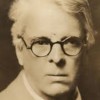
Life is a tragic mystery. We are pieced and driven by laws we only half understand. We find that the lesson we learn again and again is that of accepting heroic helplessness.
Florida Scott-Maxwell (1883–1979) American-British playwright, author, psychologist
The Measure of My Days (1968)
(Source)
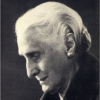
Loving can cost a lot but not loving always costs more, and those who fear to love often find that want of love is an emptiness that robs the joy from life.
Merle Shain (1935–1989) Canadian journalist and author
Some Men are More Perfect Than Others (1973)
In When Lovers Are Friends (1978), Shain wrote it as "Caring can cost a lot, but not caring always costs more."
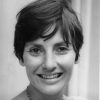
Life isn’t fair, but government must be.
Ann Richards (1933–2006) American politician [Dorothy Ann Willis Richards]
Inauguration speech, San Antonio, Texas (15 Jan 1991)
As reported in the San Antonio Express-News (16 Jan). In the Houston Chronicle, same date, it was quoted as "Life is not fair, but government absolutely must be." See here for more discussion.

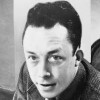
I’m filled with a desire for clarity and meaning within a world and condition that offers neither.
Albert Camus (1913–1960) Algerian-French novelist, essayist, playwright
The Myth of Sisyphus” (1942)
Enjoy the little things, for one day you may look back and realize they were the big things.
Robert Brault (b. c. 1945) American aphorist, programmer
(Attributed)

To care passionately for another human creature brings always more sorrow than joy; but all the same … one would not be without that experience. Anyone who has never really loved has never really lived.

Life never tires of testing the proposition that life must go on.
Robert Brault (b. c. 1945) American aphorist, programmer
(Attributed)
You know what the greatest tragedy is in the whole world? It’s all the people who never find out what it is they really want to do or what it is they’re really good at. It’s all the sons who become blacksmiths because their fathers were blacksmiths. It’s all the people who could be really fantastic flute players who grow old and die without ever seeing a musical instrument, so they become bad plowmen instead. It’s all the people with talents who never even find out. Maybe they are never even born in a time when it’s even possible to find out.
It’s all the people who never get to know what it is that they can really be. It’s all the wasted chances.Terry Pratchett (1948–2015) English author
Discworld No. 10, Moving Pictures [Ginger] (1990)
(Source)
You are free only when you care for nobody in the world. But if you stop caring, life isn’t worth living.
Martha Albrand (1914–1981) German-American author. [b. Heidi Huberta Freybe Loewengard; also wrote as Katrin Holland, Christine Lambert]
Nightmare in Copenhagen (1954)

I can entertain the proposition that life is a metaphor for boxing — for one of those bouts that go on and on, round following round, jabs, missed punches, clinches, nothing determined, again the bell and again and you and your opponent so evenly matched it’s impossible not to see your opponent is you.

Life has this in common with prizefighting: if you’ve received a belly blow, it’s likely to be followed by a right to the jaw.
Carolyn Gold Heilbrun (1926–2003) American academic, feminist author, novelist [as Amanda Cross]
The James Joyce Murder, ch. 1 (1967) [as Amanda Cross]
(Source)

You need to claim the events of your life to make yourself yours. When you truly possess all that you have been and done, which may take some time, you are fierce with reality. When at last age has assembled you together, will it not be easy to let it all go, lived, balanced, over?
Florida Scott-Maxwell (1883–1979) American-British playwright, author, psychologist
The Measure of My Days (1968)
(Source)
I’m not getting paid much for staying alive but it’s good experience.
Ashleigh Brilliant (b. 1933) Anglo-American epigramist, aphorist, cartoonist
Pot-Shots, #0033
Life does not accommodate you, it shatters you. It is meant to, and it couldn’t do it better. Every seed destroys its container or else there would be no fruition.
Florida Scott-Maxwell (1883–1979) American-British playwright, author, psychologist
The Measure of My Days (1968)
(Source)
Life has a tendency to obfuscate and bewilder,
Such as fating us to spend the first part of our lives being embarrassed by our parents and the last part being embarrassed by our childer.

A lot of the arguments about religion going on at the moment spring from a rather inept understanding of religious truth. Our notion changed during the early modern period when we became convinced that the only path to any kind of truth was reason. That works beautifully for science but doesn’t work so well for the humanities. Religion is really an art form and a struggle to find value and meaning amid the ghastly tragedy of human life.
Karen Armstrong (b. 1944) British author, comparative religion scholar
“The Reason of Faith,” Interview with Michael Brunton, Ode (Sep-Oct 2009)
(Source)

How wonderful to have someone to blame! How wonderful to live with one’s nemesis! You may be miserable, but you feel forever in the right. You may be fragmented, but you feel absolved of all the blame for it. Take your life in your own hands, and what happens? A terrible thing: no one to blame.
Erica Jong (b. 1942) American writer, poet
How To Save Your Own Life, “Intuition, extuition …” (1977)

Coaches and headmasters praise sport as a preparation for the great game of life, but this is absurd. Nothing could be more different from life. For one thing sports, unlike life, are played according to rules. Indeed, the rules are the sport: life may behave bizarrely and still be life, but if the runner circles the bases clockwise it’s no longer baseball.
Barbara Holland (1933–2010) American author
Endangered Pleasures (1995)

We are each the star of our own situation comedy, and, with luck, the screwball friend in someone else’s.
Robert Brault (b. c. 1945) American aphorist, programmer
(Attributed)
I give it as my firmest conviction that service to a just cause rewards the worker with more real happiness and satisfaction than any other venture of life.
Carrie Chapman Catt (1859–1947) American women's suffrage activist
“The Making of A Pioneer Suffragette,” in The American Scrap Book (1928)
(Source)

If there was anything that depressed him more than his own cynicism, it was that quite often it still wasn’t as cynical as real life.
Terry Pratchett (1948–2015) English author
Discworld No. 8, Guards! Guards! (1989)
(Source)
Vimes, reflecting.
Now and then it occurs to one to reflect upon what slender threads of accident depend the most important circumstances of his life; to look back and shudder, realizing how close to the edge of nothingness his being has come.
Upton Sinclair (1878–1968) American writer, journalist, activist, politician
100%: the Story of a Patriot, Sec. 1 (1920)
(Source)
Sing your song. Dance your dance. Tell your tale.
Frank McCourt (1930–2009) Irish-American teacher and writer
Angela’s Ashes (1996)
Also included in the dedication to Teacher Man (2006).
“I meant,” said Ipslore bitterly, “what is there in this world that truly makes living worthwhile?”
Death thought about it.
Cats, he said eventually, Cats are nice.Terry Pratchett (1948–2015) English author
Discworld No. 5, Sourcery (1988)
(Source)
This quote is more often repeated in paraphrase, e.g., "What is there in this world that truly makes living worthwhile? Cats. Cats are nice."
To find someone who will love you through success and failure is to discover how little life has to do with either.
Robert Brault (b. c. 1945) American aphorist, programmer
(Attributed)
There is said to be hope for a sick man, as long as there is life.
[Ut aegroto dum anima est, spes esse dicitur.]
Marcus Tullius Cicero (106–43 BC) Roman orator, statesman, philosopher
Epistulae ad Atticum [Letters to Atticus], Book 9, Letter 10, sec. 3 (9.10.3) (49 BC) [tr. Shackleton Bailey (1968), # 177]
(Source)
Cicero says this was his feeling of hope for how things would turn out, as long as Pompey was in Italy -- which he had just evacuated from. Cicero makes it clear this is a common phrase at the time, usually expressed more straightforwardly as "While there is life there is hope" [Dum anima est, spes est.]
(Source (Latin)). Other translations:But as we say of sick people, "while there is life there is hope."
[tr. Jeans (1880), # 63]As in the case of a sick man one says, "While there is life there is hope."
[tr. Shuckburgh (1900), # 364]As a sick man is said to have hope, so long as he has breath.
[tr. Winstedt (Loeb) (1913)]
BARNEY: I love living. I have some problems with my life, but living is the best thing they’ve come up with so far.
Neil Simon (1927–2018) American playwright and screenwriter
Last of the Red Hot Lovers (1970)
(Source)
Bright college years, with pleasure rife,
The shortest, gladdest, years of life,
How bright will seem through memory’s haze,
Those happy, golden, bygone days.(Other Authors and Sources)
Yale song (c. 1900)

A man can look upon his life and accept it as good or evil; it is far, far harder for him to confess that it has been unimportant in the sum of things.
Murray Kempton (1917–1997) American journalist.
Part of Our Time: Some Ruins & Monuments of the Thirties, ch. 5 (1955)
(Source)

It is with life just as with swimming; that man is the most expert who is the most disengaged from all encumbrances.
[Ad vivendum velut ad natandum is melior qui onere liberior.]
Apuleius (AD c. 124 - c. 170) Numidian Roman writer, philosopher, rhetorician [Lucius Apuleius Madaurensis]
Apologia; or, A Discourse on Magic [Apologia; seu, Pro Se de Magia], ch. 21 [tr. Bohn’s (1853)]
(Source)
Alt. trans.:
- "We live, just as we swim, all the better for being but lightly burdened." [tr. Butler (1909)]
- "He is better equipped for life, as for swimming, who has the less to carry."
This is your life, and it’s ending one minute at a time.
Chuck Palahniuk (b. 1962) American novelist and freelance journalist
Fight Club, ch. 3 (1996)
(Source)

Growth is the only evidence of life.
John Henry Newman (1801–1890) English prelate, Catholic Cardinal, theologian
Apologia Pro Vita Sua, ch. 1 (1879)
(Source)
A favorite phrase of his, which he felt was drawn directly from the work of Thomas Scott.
What makes earth feel like Hell is our expectation that it should feel like Heaven.
Is not short paine well borne, that brings long ease,
And layes the soule to sleepe in quiet grave?
Sleepe after toyle, port after stormie seas,
Ease after warre, death after life, does greatly please.Edmund Spenser (c. 1552–1599) English poet
The Faerie Queene, Book 1, Canto 9, st. 40 (1589-96)
(Source)

MAME: Yes! Life is a banquet, and most poor sons-of-bitches are starving to death! Live!
Jerome Lawrence (1915–2004) American playwright and author [b. Jerome Lawrence Schwartz]
Auntie Mame, Act 2, sc. 6 (1956) [with Robert E. Lee]
Based on the novel Patrick Dennis, Auntie Mame (1955), turned first into this Broadway play by Lawrence and Lee, a 1958 movie, then the musical Mame (1966), followed by a movie of the musical (1974). The line is original with Lawrence and Lee.
So it is not a matter of whether it is possible to attain Buddhahood, or if it is possible to make a tile a jewel. But just to work, just to live in this world with this understanding is the most important point, and that is our practice. That is true zazen.
Shunryū Suzuki (1905–1971) Japanese Zen Buddhist master
Lecture in Los Altos, California (1 Sep 1967)
(Source)
The concentration camps, by making death itself anonymous (making it impossible to find out whether a prisoner is dead or alive), robbed death of its meaning as the end of a fulfilled life. In a sense they took away the individual’s own death, proving that henceforth nothing belonged to him and he belonged to no one. His death merely set a seal on the fact that he had never existed.
Hannah Arendt (1906–1975) German-American philosopher, political theorist
Origins of Totalitarianism, Part 3, ch. 12 “Totalitarianism in Power,” sec. 3 (1951)
(Source)
If I had my life to live over, I would try to make more mistakes next time. I would relax. I would limber up. I would be sillier than I have been this trip. I know of very few things I would take seriously. I would be crazier. I would be less hygienic. I would take more chances. I would take more trips. I would climb more mountains and swim more rivers. I would burn up more gasoline. I would eat more ice cream and less bran. I would have more actual troubles and fewer imaginary ones.
Don Herold (1889–1966) American humorist, cartoonist, author
Essay (1931-12), “I’d Pick More Daisies,” College Humor magazine, Vol. 10, No. 96
(Source)
Also attributed to Nadine Stair, and a Brother Jerome, among others. This essay has gone through a variety of revisions and homages, both by Herold and by a variety of borrowers. The earliest reference I could find was that cited here, as quoted in The Journal of Health and Physical Education (1935-05) [linked above].
The usual citation is to a revised version of the essay by Herold in "If I Had My Life Over -- I'd Pick More Daisies," Reader's Digest (1953-10) (and reprinted in Reader's Digest's How to Live with Life (1965).
Benjamin Rossen, "Who Would Pick More Daisies; A study of Plagiarism and Foolery on the Internet" (2000) wrote extensively on the variations and misappropriations of the poem (though he did not know of the 1935 version).See also: Essay Origin: I Would Pick More Daisies – Quote Investigator®, which includes a nice thank-you to WIST regarding this quotation. The page includes further research into and examples of the various versions of this quote, but concurs on the December 1921 original date. Interestingly, it is likely the actual publication date (not the date on the magazine) was in October, as at least one newspaper article dated 3 November 1921 references it.
He may have gone quite far in our society, but no matter how far one goes, one cannot avoid bringing oneself along.
Peter David (b. 1956) American writer
Babylon 5: Legions of Fire III – Out of the Darkness (2000)

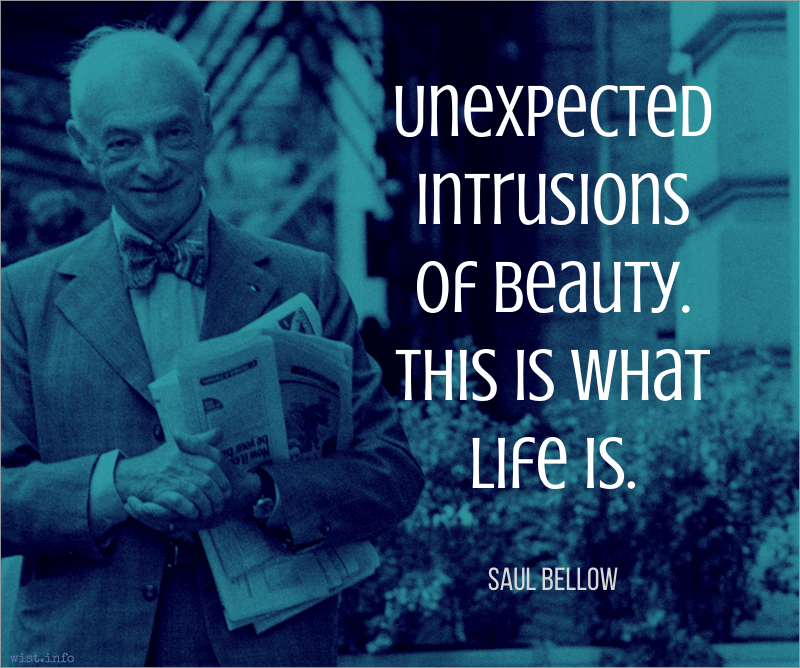
Unexpected intrusions of beauty. This is what life is.

America is rather like life. You can usually find in it what you look for.
E. M. Forster (1879–1970) English novelist, essayist, critic, librettist [Edward Morgan Forster]
“Impressions of America,” The Listener (4 Sep 1947)
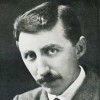
Every fellow is really two men — what he is and what he might be; and you’re never absolutely sure which you’re going to bury till he’s dead.
George Horace Lorimer (1867–1937) American journalist, author, magazine editor
Old Gorgon Graham: More Letters from a Self-Made Merchant to His Son, ch. 12 (1904)
(Source)
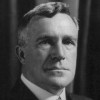
I don’t want to end up simply having visited this world.
Mary Oliver (1935–2019) American poet
“When Death Comes” New and Selected Poems, Vol. 2 (2005)

Life is so sweet! One can die but once, and it is for such a long time!
[Il est si doux de vivre: On ne meurt qu’une fois; et c’est pour si long-tems (longtemps)!]
Molière (1622–1673) French playwright, actor [stage name for Jean-Baptiste Poquelin]
The Love-Tiff [Le Dépit Amoureux], Act 5, sc. 4 (1656) [tr. Van Laun (1875)]
(Source)
Other translations: "Life is so sweet! We die only once, and for such a long time!" [Lovers' Quarrels, tr. Wall (1879)]
Original French text.

Four be the things I am wiser to know:
Idleness, sorrow, a friend, and a foe.Four be the things I’d been better without:
Love, curiosity, freckles, and doubt.Three be the things I shall never attain:
Envy, content, and sufficient champagne.Three be the things I shall have till I die:
Laughter and hope and a sock in the eye.Dorothy Parker (1893–1967) American writer, poet, wit
“Inventory,” Life (11 Nov 1926)
(Source)
Reprinted in Enough Rope (1926).
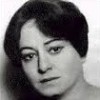
I couldn’t get myself to read the want ads. The thought of sitting in front of a man behind a desk and telling him that I wanted a job, that I was qualified for a job, was too much for me. Frankly, I was horrified by life, at what a man had to do simply in order to eat, sleep, and keep himself clothed.
Charles Bukowski (1920–1994) German-American author, poet
Factotum, ch. 31 (1975)
The mass of men live lives of quiet exasperation.

Our life is March weather, savage and serene in one hour.
Ralph Waldo Emerson (1803–1882) American essayist, lecturer, poet
“Montaigne; or, The Skeptic,” Representative Men, Lecture 4 (1850)
(Source)

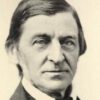
Instructions for living a life:
Pay attention.
Be astonished.
Tell about it.
After all, to the well-organized mind, death is but the next great adventure. You know, the Stone was really not such a wonderful thing. As much money and life as you could want! The two things most human beings would choose above all — the trouble is, humans do have a knack for choosing precisely those things that are worst for them.
Joanne "Jo" Rowling (b. 1965) British novelist [writes as J. K. Rowling and Robert Galbraith]
Harry Potter and the Sorcerer’s Stone, ch. 17 [Dumbledore] (1997)
Inside Every Living Person is a Dead Person Waiting to Get Out …
Terry Pratchett (1948–2015) English author
Discworld No. 11, Reaper Man (1991)
(Source)
Graffiti painted by Reg Shoe.
We must learn to suffer whatever we cannot avoid. Our life is composed, like the harmony of the world, of discords as well as of different tones, sweet and harsh, sharp and flat, soft and loud. If a musician liked only some of them, what could he sing? He has got to know how to use all of them and blend them together. So too must we with good and ill, which are of one substance with our life. Without such blending our being cannot be: one category is no less necessary than the other.
[Il faut apprendre à souffrir, ce qu’on ne peut eviter. Nostre vie est composee, comme l’harmonie du monde, de choses contraires, aussi de divers tons, doux & aspres, aigus & plats, mols & graves : Le Musicien qui n’en aymeroit que les uns, que voudroit il dire ? Il faut qu’il s’en sçache servir en commun, & les mesler. Et nous aussi, les biens & les maux, qui sont consubstantiels à nostre vie. Nostre estre ne peut sans ce meslange, & y est l’une bande non moins necessaire que l’autre. ]
Michel de Montaigne (1533–1592) French essayist
Essays, Book 3, ch. 13 (3.13), “Of Experience [De l’Experience] (1587) [tr. Screech (1987)]
(Source)
This essay and this quotation were both first present in the 2nd (1588) edition.
(Source (French)). Other translations:A man must learne to endure that patiently, which he cannot avoyde conveniently. Our life is composed, as is the harmonie of the World, of contrary things; so of divers tunes, some pleasant, some harsh, some sharpe, some flat, some low and some high: What would that Musition say, that should love but some one of them? He ought to know how to use them severally and how to entermingle them. So should we both of goods and evils, which are consubstantiall to our life. Our being cannot subsist without this commixture, whereto one side is no lesse necessarie than the other.
[tr. Florio (1603)]We must learn to suffer what we cannot evade. Our Life, like the Harmony of the World, is compos'd of contrary Things, of several Notes, sweet and harsh, sharp and flat, spritely and solemn, and the Musician who should only affect one fo these, what would he be able to do? He must know how to make use of them all, and to mix them; and we likewise the Goods and Evils which are consubstantial with Life: Our Being cannot subsist without this Mixture, and the one are no less necessary to it than the other.
[tr. Cotton (1686)]We must learn to suffer what we cannot evade; our life, like the harmony of the world, is composed of contrary things -- of diverse tones, sweet and harsh, sharp and flat, sprightly and solemn: the musician who should only affect some of these, what would he be able to do? he must know how to make use of them all, and to mix them; and so we should mingle the goods and evils which are consubstantial with our life; our being cannot subsist without this mixture, and the one part is no less necessary to it than the other.
[tr. Cotton/Hazlitt (1877)]We must learn to suffer what can not be avoided. Our life, like teh harmony of the world, is composed of contrary things, also of diverse tones, sweet and harsh, keen and dull, soft and solemn. If a musician should like only some of them, what would it mean? It is necessary for him to know how to employ them all in common, and blend them; and so must we the goods and ills which are consubstantial with our life.
[tr. Ives (1925)]We must learn to endure what we cannot avoid. Our life is composed, like the harmony of the world, of contrary things, also of different tones, sweet and harsh, sharp and flat, soft and loud. If a musician liked only one kind, what would he have to say? He must know how to use them together and blend them. And so must we do with good and evil, which are consubstantial with our life. Our existence is impossible without this mixture, and one element is no less necessary for it than the other.
[tr. Frame (1943)]One must learn to endure what one cannot avoid. Our life, like the harmony of the world, is composed of contrarieties, also of varying tones, sweet and harsh, sharp and flat, soft and loud. If a musician liked one sort only, what effect would he make? He must be able to employ them together and blend them. And we too must accept the good and evil that are consubstantial with our life. Our existence is impossible without this mixture, and one side is no less necessary to us than the other.
[tr. Cohen (1958)]

If you can’t change your fate, change your attitude.

Nevertheless even here, when a man bears patiently a number of heavy disasters, not because he does not feel them but because he has a high and generous nature, his nobility shines through. And if, as we said, the quality of a life is determined by its activities, no man who is truly happy can become miserable; because he will never do things that are hateful and mean.
[ὅμως δὲ καὶ ἐν τούτοις διαλάμπει τὸ καλόν, ἐπειδὰν φέρῃ τις εὐκόλως πολλὰς καὶ μεγάλας ἀτυχίας, μὴ δι᾽ ἀναλγησίαν, ἀλλὰ γεννάδας ὢν καὶ μεγαλόψυχος. εἰ δ᾽ εἰσὶν αἱ ἐνέργειαι κύριαι τῆς ζωῆς, καθάπερ εἴπομεν, οὐδεὶς ἂν γένοιτο τῶν μακαρίων ἄθλιος: οὐδέποτε γὰρ πράξει τὰ μισητὰ καὶ τὰ φαῦλα.]
Aristotle (384–322 BC) Greek philosopher
Nicomachean Ethics [Ἠθικὰ Νικομάχεια], Book 1, ch. 11 (1.11) / 1100b.30-35 (c. 325 BC) [tr. Thomson/Tredennick (1976)]
(Source)
(Source (Greek))
Often highly paraphrased: "Suffering becomes beautiful when anyone bears great calamities with cheerfulness, not through insensibility but through greatness of mind."
Other translations:But nevertheless, even in these, nobility of the soul is conspicuous, when a man bears and digests many and great misfortunes, not from insensibility, but because he is high spirited and magnanimous. But if the energies are the things that constitute the bliss or the misery of life, as we said, no happy man can ever become miserable, for he will never do hateful and worthless actions.
[tr. Vincent (1835)]But still, even in these, nobleness shines through when a man bears contentedly many and great mischances not from insensibility to pain but because he is noble and high-spirited. And if, as we have said, the acts of working are what determine the character of the life, no one of the blessed can ever become wretched, because he will never do those things which are hateful and mean.
[tr. Chase (1847)]But nevertheless even here true nobility sines out, when a man bears calmly man and great mishaps, not through dullness of feeling, but from true high-breeding, and greatness of spirit. And since, as we have said, it is our own acts that determine our life, no one of the really blessed can ever become wretched, for he will never do hateful and disgraceful deeds.
[tr. Williams (1869), sec. 17]Still even in these circumstances nobility shines out, when a person bears the weight of accumulated misfortunes with calmness, not from insensibility but from innate dignity and magnanimity. But if it is the activities which determine the life, as we said, nobody who is fortunate can become miserable; for he will never do what is hateful and mean.
[tr. Welldon (1892)]But nevertheless true worth shines out even here, in the calm endurance of many great misfortunes, not through insensibility, but through nobility and greatness of soul. And if it is what a man does that determines the character of his life, as we said, then no happy man will become miserable; for he will never do what is hateful and base. [tr. Peters (1893), 1.10.13]Nevertheless even under these the force of nobility shines out, when a man bears calmly many great disasters, not from insensibility, but because he is generous and of a great soul. Setting happiness then, as we do, not in the outward surroundings of man, but in his inward state, we may fairly say that no one who has attained to the bliss of virtue will ever justly become an object of pity or contempt: for he will never do things that are hateful and vile.
[tr. Stock (1897)]Yet even in these nobility shines through, when a man bears with resignation many great misfortunes, not through insensibility to pain but through nobility and greatness of soul. If activities are, as we said, what gives life its character, no happy man can become miserable; for he will never do the acts that are hateful and mean.
[tr. Ross (1908), 1.10]Yet nevertheless even in adversity nobility shines through, when a man endures repeated and severe misfortune with patience, not owing to insensibility but from generosity and greatness of soul. And if, as we said, a man's life is determined by his activities, no supremely happy man can ever become miserable. For he will never do hateful or base actions.
[tr. Rackham (1934), 1.10.12-13]All the same, even in these cases nobility shines through when someone calmly bears repeated strokes of great bad luck -- not because he is insensitive to suffering but because of being well bred and great-souled. And if it is activities that control living, as we said, no blessed person will ever become wretched, since he will never do hateful or base actions.
[tr. Reeve (1948)]The beauty of the soul shines out when a man bears with composure one heavy mischance after another, not because he does not feel them, but because he is a man of high and heroic temper. Besides, if it be true, as I affirmed, that the quality of life is determined by its activities, it is impossible for the entirely happy man to become miserable. For he will never be guilty of base or detestable actions.
[tr. Thomson (1953)]Yet nobility shines out even there, when a man bears many and great misfortunes with calm and ease, not through insensibility to pain, but through nobility of character and highmindedness. Thus if it is the activities that play a dominant role in life, as we have said, no blessed man can become wretched; for he will never do what is hateful or bad.
[tr. Apostle (1975)]And yet, even here, what is fine shines through, whenever someone bears many severe misfortunes with good temper, not because he feels no distress, but because he is noble and magnanimous. And since it is activities that control life, as we said, no blessed person could ever become miserable, since he will never do hateful and base actions.
[tr. Irwin/Fine (1995)]What is noble shines through, when a person calmly bears many great misfortunes, not through insensibility, but by being well bred and great-souled. If activities are, as we have said, what really matter in life, no one blessed could become wretched, since he will never do hateful and petty actions.
[tr. Crisp (2000)]Nevertheless, even in the midst of these, nobility shines through, whenever someone bears up calmly under many great misfortunes, not because of any insensitivity to pain but because he is wellbore and great souled. And if the activities have authoritative control over life, just as we said, then no one who is blessed would become wretched, since he will never do things that are hateful and base.
[tr. Bartlett/Collins (2011)]Still, nobility shines bright even in tough times, when someone bears even many severe misfortunes patiently, not because they cannot sense them, but because of their unselfishness and greatness of spirit. If the actions one takes rules their life -- as we just said -- then none of the happy people can ever be miserable.
[tr. @sentantiq (2020)]But all the same, even in these instances, nobility shines through whenever someone good-naturedly bears a multitude of great misfortunes, and does so not because he's numb to pain, but because he's noble and great-souled.
[tr. Benn (2021)]
It’s the possibility of having a dream come true that makes life interesting.

Do I seem to say, “Let us eat and drink, for to-morrow we die?” Far from it; on the contrary, I say, “Let us take hands and help, for this day we are alive together.”
William Kingdon Clifford (1845–1879) English mathematician and philosopher
“The First and the Last Catastrophe,” Popular Science Monthly (Jul 1875)
(Source)

I see men assassinated around me every day. I walk through rooms of the dead, streets of the dead, cities of the dead: men without eyes, men without voices; men with manufactured feelings and standard reactions; men with newspaper brains, television souls and high school ideals.
Charles Bukowski (1920–1994) German-American author, poet
Sunlight Here I Am: Interviews and Encounters, 1963-1993 (2003)
(Source)
When asked his reaction to the assassination of John Kennedy.
Some Saian mountaineer
Struts today with my shield.
I threw it down by a bush and ran
When the fighting got hot.
Life seemed somehow more precious.
It was a beautiful shield.
I know where I can buy another
Exactly like it, just as round.Archilochus (c. 680–645 BC) Greek lyric poet and mercenary [Ἀρχίλοχος, Archilochos, Arkhilokhus]
Fragment 79 [tr. Davenport (1964)]
(Source)
Fragment from Plutarch, "Laws and Customs of the Lacedaemonians". Other translations:Identified elsewhere as Fragment 6.
- "Let who will boast their courage in the field, / I find but little safety from my shield. / Nature's, not honour's, law we must obey: / This made me cast my useless shield away, / And, by a prudent flight and cunning, save / A life, which valour could not, from the grave. / A better buckler I can soon regain; / But who can get another life again?" [tr. Pulleyn (18th C)]
- "A Saian boasts about the shield which beside a bush / though good armour I unwillingly left behind. / I saved myself, so what do I care about the shield? / To hell with it! I'll get one soon just as good." ["To my shield" (D6, 5W)]
- "I don't give a damn if some Thracian ape struts / Proud of that first-rate shield the bushes got. / Leaving it was hell, but in a tricky spot / I kept my hide intact. Good shields can be bought." [tr. Silverman]
- "Some barbarian is waving my shield, since I was obliged to leave that perfectly good piece of equipment behind under a bush. But I got away, so what does it matter? Life seemed somehow more precious. Let the shield go; I can buy another one equally good." [tr. Lattimore (1955)]
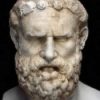
For those who believe in God, most of the big questions are answered. But for those of us who can’t readily accept the God formula, the big answers don’t remain stone-written. We adjust to new conditions and discoveries. We are pliable. Love need not be a command or faith a dictum. I am my own God. We are here to unlearn the teachings of the church, state and our educational system. We are here to drink beer. We are here to kill war. We are here to laugh at the odds and live our lives so well that Death will tremble to take us.
Charles Bukowski (1920–1994) German-American author, poet
“The Meaning of Life: The Big Picture,” Life Magazine (Dec 1988)
(Source)
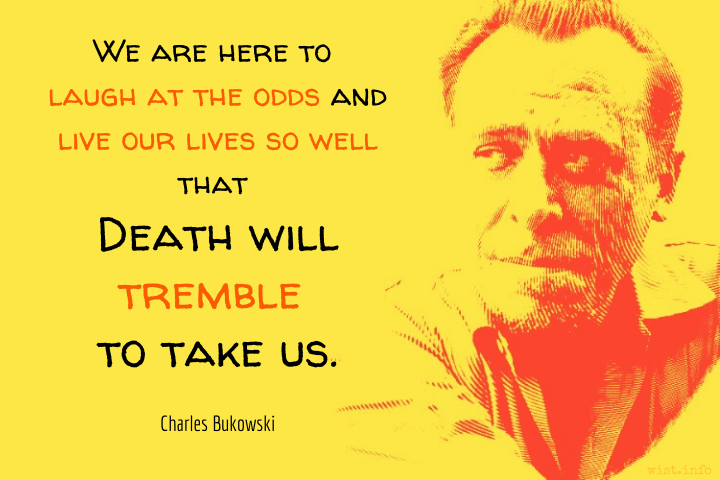
Living is like tearing through a museum. Not until later do you really start absorbing what you saw, thinking about it, looking it up in a book, and remembering — because you can’t take it in all at once.
Audrey Hepburn (1929–1993) Belgian-English actress
Quoted in David Hofstede, Audrey Hepburn: A Bio-bibliography (1994)
(Source)

There’s no such thing as life without bloodshed. I think the notion that the species can be improved in some way, that everyone could live in harmony, is a really dangerous idea. Those who are afflicted with this notion are the first ones to give up their souls, their freedom. Your desire that it be that way will enslave you and make your life vacuous.
Cormac McCarthy (1933–2023) American novelist, playwright, screenwriter
In Richard B. Woodward, “Cormac McCarthy’s Venomous Fiction,” New York Times (19 Apr 1992)
(Source)
The man who looks for security, even in the mind, is like a man who would chop off his limbs in order to have artificial ones which will give him no pain or trouble.
When it’s over I want to say: All my life
I was a bride married to amazement.
I was a bridegroom, taking the world into my arms.
I believe you are your work. Don’t trade the stuff of your life, time, for nothing more than dollars. That’s a rotten bargain.
Rita Mae Brown (b. 1944) American author, playwright
(Attributed)

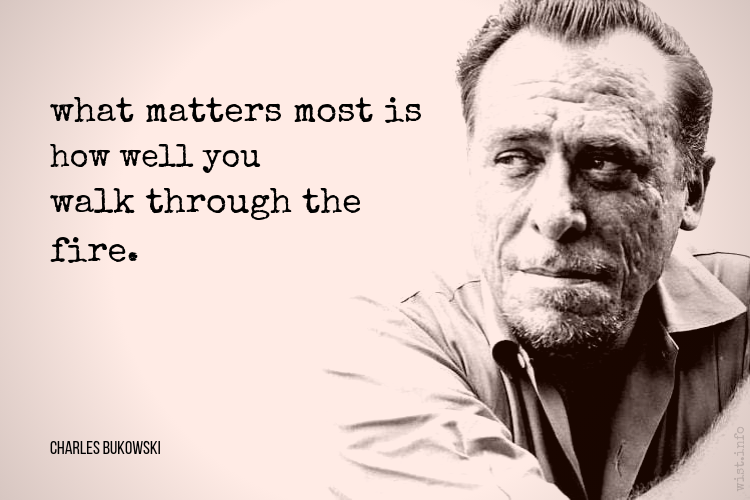
what matters most is
how well you
walk through the
fire.
… believe us, they say,
it is a serious thing
just to be alive
on this fresh morning
in this broken world.Mary Oliver (1935–2019) American poet
“Invitation,” Red Bird: Poems (2008)
(Source)
On goldfinches singing.
Life is not only full of sound and fury. It also has butterflies, flowers, art.
Claude Simon (1913–2005) French novelist, critic, Nobel Laureate (Literature)
“The Art of Fiction,” #128, Interview with A. Eyle, The Paris Review (Spring 1992)
(Source)
See Shakespeare.
To finish the moment, to find the journey’s end in every step of the road, to live the greatest number of good hours, is wisdom.
Ralph Waldo Emerson (1803–1882) American essayist, lecturer, poet
“Experience,” Essays: Second Series (1844)
(Source)
JOKER: The dead know only one thing: it is better to be alive.
Stanley Kubrick (1928–1999) American film director, screenwriter, producer
Full Metal Jacket (1987)
Most of life is so dull that there is nothing to be said about it, and the books and talks that would describe it as interesting are obliged to exaggerate, in the hope of justifying their own existence. Inside its cocoon of work or social obligation, the human spirit slumbers for the most part, registering the distinction between pleasure and pain, but not nearly as alert as we pretend. There are periods in the most thrilling day during which nothing happens, and though we continue to exclaim, “I do enjoy myself,” or, “I am horrified,” we are insincere. “As far as I feel anything, it is enjoyment, horror” — it’s no more than that, really, and a perfectly adjusted organism would be silent.
E. M. Forster (1879–1970) English novelist, essayist, critic, librettist [Edward Morgan Forster]
A Passage to India, ch. 14 (1924)
(Source)
A good man can expand his life: he lives
twice over whose past life can be enjoyed.[Ampliat ætatis spatium sibi vir bonus. Hoc est
Vivere bis, vita posse priore frui.]Martial (AD c.39-c.103) Spanish Roman poet, satirist, epigrammatist [Marcus Valerius Martialis]
Epigrams [Epigrammata], Book 10, epigram 23 (10.23.8-9) (AD 95, 98 ed.) [tr. McLean (2014)]
"To Antonius Primus." (Source (Latin)). Other translations:Thus good men to themselves long life can give,
T' enjoy our former life is twice to live.
[tr. May (1629)]Each must, in vertue, strive for to excell;
That man lives twice, that lives the first life well.
[tr. Herrick (1648)]He liveth twice, who can the Gift retain
Of Mem'ry, to enjoy past Life again.
[tr. Cotton (1685)]Thus a good man prolongs his mortal date;
Lives twice, enjoying thus his former slate.
[tr. Hay (1755)]For he lives twice who can at once employ
The present well, and e'en the past enjoy.
[tr. Pope (1713)]They stretch the limits of this narrow span;
And, by enjoying, live past life again.
[tr. Lewis (1750)]A good man amplifies the span of his existence ; for this is to live twice, to be able to find enjoyment in past life.
[tr. Amos (1858); he gives several other contemporary uses and translations.]A good man lengthens his term of existence; to be able to enjoy our past life is to live twice.
[tr. Bohn's Classical (1859)]So good men lengthen life; and to recall
The past, is to have twice enjoyed it all.
[tr. Stevenson (c. 1883)]The good man prolongs his life; to be able to enjoy one's past life is to live twice.
[Bartlett's (1891)]A good man has a double span of life,
For to enjoy past life is twice to live.
[ed. Harbottle (1897)]A good man widens for himself his age's span; he lives twice who can find delight in life bygone.
[tr. Ker (1919)]Redoubled happiness and life hath he
Whose joy doth live again in memory.
[tr. Pott & Wright (1921)]The good man lengthens out his earthly skein,
For living in the past is life again.
[tr. Francis & Tatum (1924), #525]A good man's life is doubly long,
For he lives twice who, day and night,
Can in his whole past take delight.
[tr. Marcellino (1968)]Virtue extends our days: he lives two lives who relives his past with pleasure.
[Bartlett's (1968)]A good man enlarges for himself his span of life. To be able to enjoy former life is to live twice over.
[tr. Shackleton Bailey (1993)]The good man has no ugly past he would forget,
So memory gives him doubled life without regret.
[tr. Ericsson (1995)]He does not deplore life's brevity.
For virtue is itself longevity.
[tr. Wills (2007)]When I remember,
success, failure,
friend, enemy,
wife, lover
I live twice over.
[tr. Kennelly (2008), "Living"]A good man can expand his life: he lives
twice over whose past life can be enjoyed.
[tr. McLean (2014)]The good man broadens for himself the span of his years: to be able to enjoy the life you have spent, is to live it twice.
[tr. Nisbet (2015)]
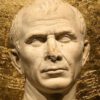
I would not enter on my list of friends,
(Though graced with polish’d manners and fine sense,
Yet wanting sensibility) the man
Who needlessly sets foot upon a worm.
William Cowper (1731–1800) English poet
“Winter Walk at Noon,” l. 560ff, The Task, Book 6 (1785)
(Source)
Life never gives us what we want at the moment that we consider appropriate. Adventures do occur, but not punctually.
E. M. Forster (1879–1970) English novelist, essayist, critic, librettist [Edward Morgan Forster]
A Passage to India, ch. 3 (1924)
(Source)
To cut out every negative root would simultaneously mean choking off positive elements that might arise from it further up the stem of the plant. We should not feel embarrassed by our difficulties, only by our failure to grow anything beautiful from them.
Alain de Botton (b. 1969) Swiss-British author
The Consolations of Philosophy, ch. 6 “Consolation for Difficulties” (2000)
(Source)
Discussing Nietzsche.

Life is easy to chronicle, but bewildering to practice.
E. M. Forster (1879–1970) English novelist, essayist, critic, librettist [Edward Morgan Forster]
A Room with a View, ch. 14 (1908)
(Source)
It is said that his time was easier than ours, but I doubt it — no time can be easy if one is living through it.
James Baldwin (1924–1987) American novelist, playwright, activist
“Why I Stopped Hating Shakespeare”
(Source)
In the Book of Life, the answers are not in the back.

A virtuous, ordinary life, striving for wisdom but never far from folly, is achievement enough.
Alain de Botton (b. 1969) Swiss-British author
The Consolations of Philosophy, ch. 4 “Consolation for Inadequacy” (2000)
(Source)
Summarizing Montaigne.

Is life a boon?
If so, it must befall
That Death, when ere he call
Must call too soon.
Though fourscore years give
Yet one would pray to live
Another moon.W. S. Gilbert (1836–1911) English playwright [William Schwenck Gilbert]
The Yeomen of the Guard, Act 1, No. 5 [Col. Fairfax] (1888) [with Arthur Sullivan, comp.]
(Source)
Life is not living, but living in health.
[Vita non est vivere, sed valere vita est.]
Martial (AD c.39-c.103) Spanish Roman poet, satirist, epigrammatist [Marcus Valerius Martialis]
Epigrams [Epigrammata], Book 6, epigram 70 (6.70.15) (AD 91) [tr. Ker (1919)]
(Source)
(Source (Latin)). Other translations:It is not life to live, but to be well.
[tr. Burton (1621)]Not all who live long, but happily, are old.
[tr. Killigrew (1695)]For sense and reason tell,
That life is only life, when we are well.
[tr. Hay (1755)]For life is not to live, but to be well.
[tr. Johnson, in The Rambler, #48, cited to Elphinston (1 Sep 1750)]To brethe can just not dying give:
But, to be well, must be to live.
[tr. Elphinston (1782), 2.115]For life is not simply living, but living in health.
[tr. Amos (1858)]Life consists not in living, but in enjoying health.
[tr. Bohn's Classical (1859)]It is not life to live, but to be well.
[ed. Harbottle (1897)]The blunderer who deems them so,
Misreckons life and much mistakes it,
He thinks 'tis drawing breath -- we know
'Tis health alone that mars or makes it.
[tr. Pott & Wright (1921)]Life is not life, but health is life indeed.
[tr. Francis & Tatum (1924), #310]To live is not just life, but health.
[tr. Shepherd (1987)]Life is not being alive, but being well.
[tr. Shackleton Bailey (1993)]
Warped with satisfactions and terrors, woofed with too many ambiguities and too few certainties, life can be lived best not when we have the answers — because we will never have those — but when we know enough to live it right out to the edges, edges sometimes marked by other people, sometimes showing only our own footprints.
Rosalie Maggio (1944–2021) American writer
The New Beacon Book of Quotations by Women, Introduction (1996)

May your coming year be filled with magic and dreams and good madness. I hope you read some fine books and kiss someone who thinks you’re wonderful, and don’t forget to make some art — write or draw or build or sing or live as only you can. And I hope, somewhere in the next year, you surprise yourself.
Neil Gaiman (b. 1960) British author, screenwriter, fabulist
Blog entry (2001-12-31), “As I Was Saying”
(Source)

But man is a Noble Animal, splendid in ashes, and pompous in the grave, solemnizing Nativities and Deaths with equall lustre, nor omitting Ceremonies of bravery, in the infamy of his nature.
Thomas Browne (1605–1682) English physician and author
Hydriotaphia, or Urne-Buriall, ch. 5 (1658)
(Source)
Our live experiences, fixed in aphorisms, stiffen into cold epigram. Our heart’s blood, as we write with it, turns to mere dull ink.
F. H. Bradley (1846–1924) British idealist philosopher [Francis Herbert Bradley]
Aphorisms (1930)
(Source)
Rage is caused by a conviction, almost comic in its optimistic origins (however tragic in its effects), that a given frustration has not been written into the contract of life.
Alain de Botton (b. 1969) Swiss-British author
The Consolations of Philosophy, ch. 3 “Consolation for Frustration” (2000)
(Source)
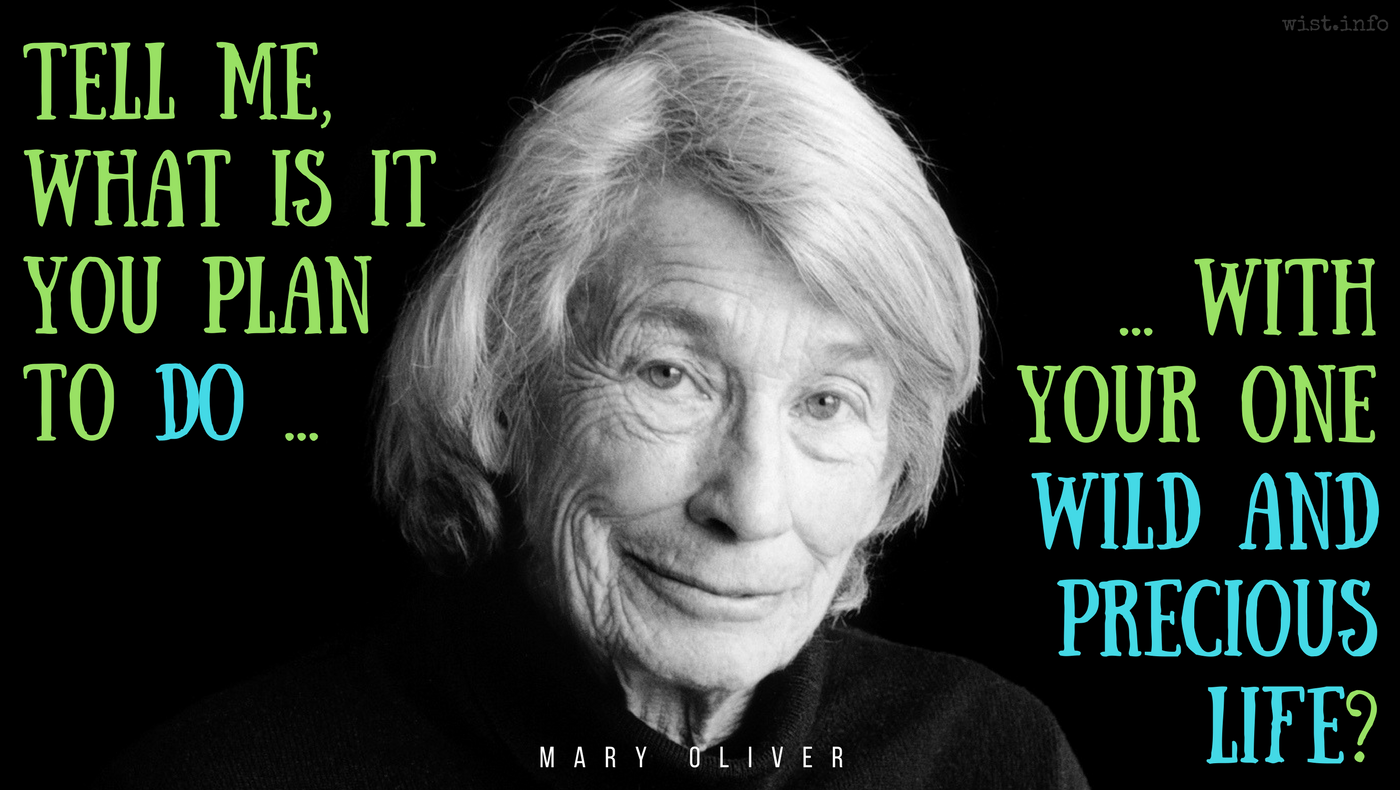
Tell me, what is it you plan to do
With your one wild and precious life?
Mary Oliver (1935–2019) American poet
“The Summer Day,” New and Selected Poems, Vol. 1 (1992)
I also think living in the country gives you faith. All you have to do is get up and look at the mountains and look at the other animals to realize that your problems are mostly made up or exacerbated by humans. But human life isn’t necessarily life. There’s so much more out there.
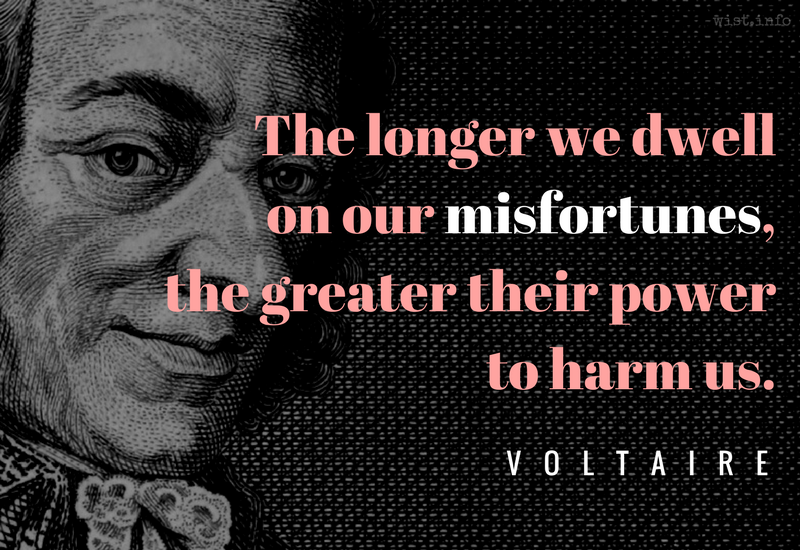
Life is thick sown with thorns, and I know no other remedy than to pass quickly through them. The longer we dwell on our misfortunes, the greater is their power to harm us.
[La vie est hérissée d’épines, & je ne sçais d’autre remède, que de passer vite à travers ces broussailles. C’est donner de la consistance aux maux, que de trop s’y arrêter.]
Voltaire (1694–1778) French writer [pseud. of Francois-Marie Arouet]
(Attributed)
(Source)
(Source (French)). Quoted in Louis Mayeul Chaudon, ed., Historical and Critical Memoirs of the Life and Writings of M. de Voltaire [Mémoires Pour Servir à L’Histoire de M. de Voltaire], Part 2, "Anecdotes Sur Voltaire (1785, tr. 1786). The English translation is also quoted in The Lady's Magazine, "Anecdotes of Voltaire" (Jul 1786).Voltaire used a similar metaphor in a 1769 letter ("La vie est hérissée de ces épines").
More discussion: Life Is Thick Sown with Thorns, and I Know No Other Remedy Than To Pass Quickly Through Them – Quote Investigator.

It is the trifles of life that are its bores, after all. Most men can meet ruin calmly, for instance, or laugh when they lie in a ditch with their own knee-joint and their hunter’s spine broken over the double post and rails: it is the mud that has choked up your horn just when you wanted to rally the pack; it’s the whip who carries you off to a division just when you’ve sat down to your turbot; it’s the ten seconds by which you miss the train; it’s the dust that gets in your eyes as you go down to Epsom; it’s the pretty little rose note that went by accident to your house instead of your club, and raised a storm from madame; it’s the dog that always will run wild into the birds; it’s the cook who always will season the white soup wrong — it is these that are the bores of life, and that try the temper of your philosophy.
Ouida (1839–1908) English novelist [pseud. of Maria Louise Ramé]
Under Two Flags, ch. 1 (1867)
(Source)
The King in a carriage may ride,
And the Beggar may crawl at his side;
But in the general race,
They are traveling all the same pace.Edward FitzGerald (1809–1883) English writer, poet, translator
“Chronomoros,” l. 57ff, Chambers’s Edinburgh Journal (5 Dec 1840)
(Source)
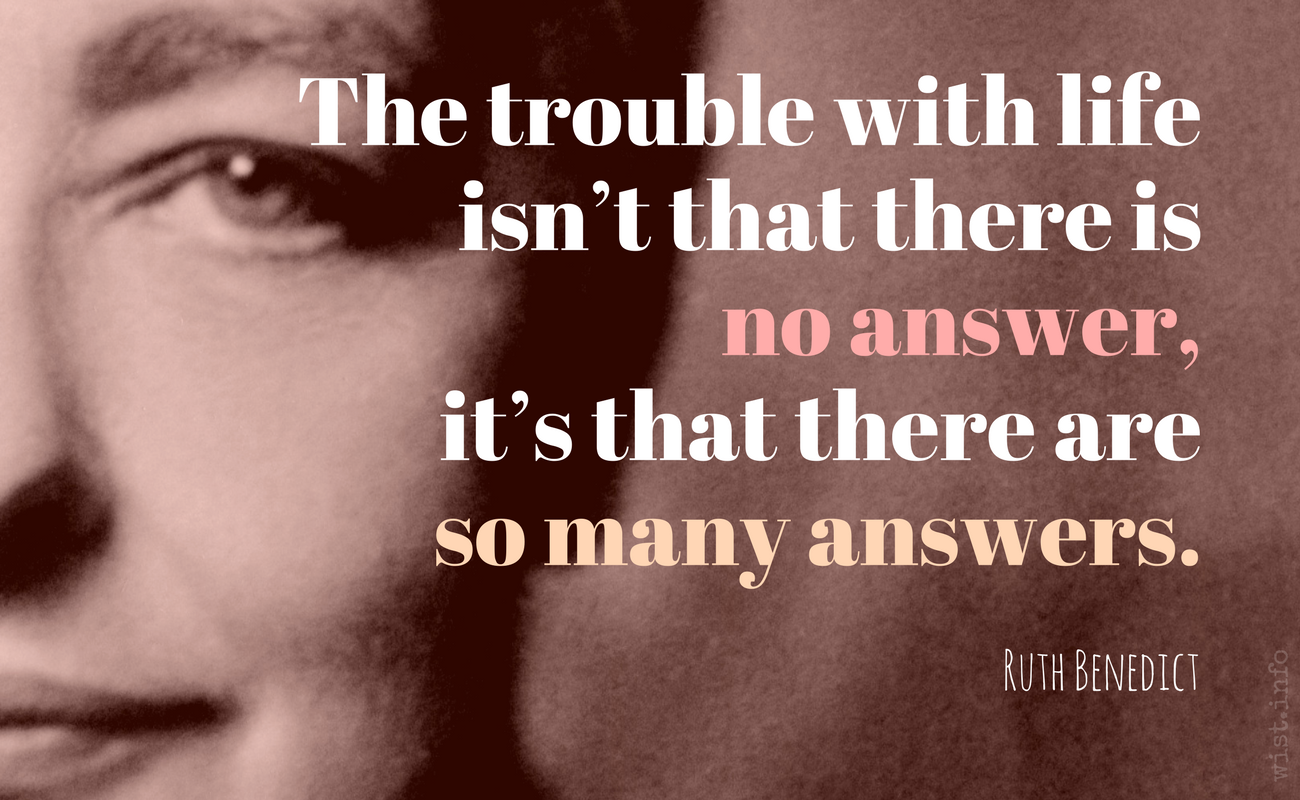
The trouble with life isn’t that there is no answer, it’s that there are so many answers.
Ruth Benedict (1887–1947) American anthropologist
An Anthropologist at Work, Journal Entry, 7 Jan 1913 (1959)

Somehow he has internalized the ur-cultural narrative: you grow up, go to university, get a job, meet Ms. Right, get married, settle down, have kids, grow old together … it’s like some sort of checklist. Or maybe a list of epic quests you’ve got to complete while level-grinding in a game you’re not allowed to quit, with no respawns and no cheat codes.

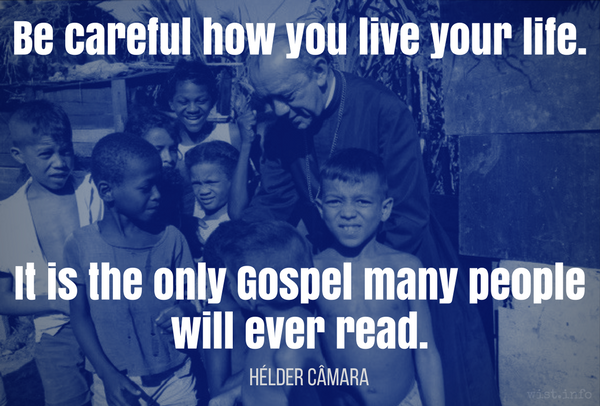
Be careful how you live your life, it is the only Gospel many people will ever read.
Hélder Câmara (1909–1999) Brazilian Catholic Archbishop, social and political activist
(Attributed)
Quoted in 1985 in Basta, the national news letter of the Chicago Religious Task Force on Central America.
Other translations: "Watch how you live. Your lives may be the only gospel your brothers and sisters will ever read."
I am all for the short and merry life.
Edward FitzGerald (1809–1883) English writer, poet, translator
Letter to Frederick Tennyson (31 Dec 1850)
(Source)
Later his epitaph.
But because we grew up surrounded by big dramatic story arcs in books and movies, we think our lives are supposed to be filled with huge ups and downs! So people pretend there is drama where there is none.
No one would have believed in the last years of the nineteenth century that this world was being watched keenly and closely by intelligences greater than man’s and yet as mortal as his own; that as men busied themselves about their various concerns they were scrutinized and studied, perhaps almost as narrowly as a man with a microscope might scrutinize the transient creatures that swarm and multiply in a drop of water. With infinite complacency men went to and fro over this globe about their little affairs, serene in their assurance of their empire over matter. It is possible that the infusoria under the microscope do the same. No one gave a thought to the older worlds of space as sources of human danger, or thought of them only to dismiss the idea of life upon them as impossible or improbable. It is curious to recall some of the mental habits of those departed days. At most terrestrial men fancied there might be other men upon Mars, perhaps inferior to themselves and ready to welcome a missionary enterprise. Yet across the gulf of space, minds that are to our minds as ours are to those of the beasts that perish, intellects vast and cool and unsympathetic, regarded this earth with envious eyes, and slowly and surely drew their plans against us. And early in the twentieth century came the great disillusionment.
H. G. Wells (1866–1946) British writer [Herbert George Wells]
The War of the Worlds, Book 1, ch. 1 (1898)
(Source)
I believe that happiness consists in having a destiny in keeping with our abilities. Our desires are things of the moment, often harmful even to ourselves; but our abilities are permanent, and their demands never cease.
Germaine de Staël (1766–1817) Swiss-French writer, woman of letters, critic, salonist [Anne Louise Germaine de Staël-Holstein, Madame de Staël, Madame Necker]
Reflections on Suicide (1813)
(Source)

The Moving Finger writes; and, having writ,
Moves on: nor all your Piety nor Wit
Shall lure it back to cancel half a Line,
Nor all your Tears wash out a Word of it.
Omar Khayyám (1048–1123) Persian poet, mathematician, philosopher, astronomer [عمر خیام]
Rubáiyát [رباعیات], Bod. # 31, etc. [tr. FitzGerald, 2nd Ed (1868), # 76]
(Source)
All Fitzgerald editions after the 2nd used the same text but numbered as # 71. The 1st Ed. was very similar, only using "thy" instead of "your," and numbered as # 51.
Fitzgerald seems to have merged at least three different fatalistic quatrains into this famous one of his: Bodleian #31, 54, and 95. Fitzgerald's use of a finger as the writing implement, rather the pen and pencils of other translators, seems taken from Daniel 5 in the Bible.
Other translations:
Bodleian # 31All things that be were long since marked upon the tablet of creation. Heaven's pencil has naught to do with good or evil. God set on fate its necessary seal; and all our efforts are but a vain striving.
[tr. McCarthy (1879), # 86] (1888)To me there is much comfort in the thought
That all our agonies can alter nought,
Our lives are written to their latest word,
We but repeat a lesson He hath taught.
[tr. Le Gallienne (1897), # 93]Whatever betides on the Tablet of Destiny writ is;
Of good and of evil thenceforward the Pen Divine quit is:
In Fate foreordained whatsoever behoveth It 'stablished:
Our stress and our strife and our thought-taking vain every whit is.
[tr. Payne (1898), # 191]From the beginning was written what shall be;
Unhaltingly the Pen writes, and is heedless of good and bad;
On the First Day He appointed everything that must be --
Our grief and our efforts are vain.
[tr. Heron-Allen (1898), # 31]Long, long ago, man's fate was graven clear,
The pen left nought unwrit of joy or woe;
Since from eternity God ruled it so
Then senseless are our grief and striving here.
[tr. Cadell (1899), # 11]Ere yet the dawn of Azal shed its light
O'er dreary chaos and the realms of night,
The Pen, unmoved by good and evil, wrote;
Nor grief can change, nor endless toil rewrite.
[tr. Roe (1906), # 21]Fate's marks upon the tablet still remain
As first, the Pen unmoved by bliss or bane;
In fate whate'er must be it did ordain,
To grieve or to resist is all in vain.
[tr. Thompson (1906), # 69]For He, to whom all future things are known,
E'en as He made thee wrote thy record down;
And what His pen hath written, good or ill,
No strife may alter, and no grief atone.
[tr. Talbot (1908), # 31]From of old the scheme of all that must be has existed.
The pen of destiny has written good and evil without ceasing.
He has appointed in predestination all that must come.
We distress and bestir ourselves, but all to no avail.
[tr. Christensen (1927), # 91]Before now there have been signs of what is to come,
The pen never rests from good or evil.
Destiny has given you all that is to be,
Our worries and our endeavours are in vain.
[tr. Rosen (1928), # 53]His tablet bears the future but concealed,
His pen is calm if good or bad we yield.
The powers gave us proper share at first,
With grief or strife no less nor more we wield.
[tr. Tirtha (1941), # 6.16]What we shall be is written, and we are so.
Heedless of God or Evil, pen, write on!
By the first day all futures were decided;
Which gives our griefs and pains irrelevancy.
[tr. Graves & Ali-Shah (1967), # 75]The characters of all creatures are on the Tablet,
The Pen always worn with writing "Good," "Bad":
Our grieving and striving are in vain,
Before time began all that was necessary was given.
[tr. Avery/Heath-Stubbs (1979), # 26]Signs of destiny have always been
Those hands inscribed both good and mean
What was written, came from the unseen
Though we tried without and worried within.
[tr. Shahriari (1998), # 24, literal]One is great
Who faces fate
Before it’s late,
Appreciate
The destined state
No matter how much we debate
Oppose, engage, or calculate
Even try to accelerate
Fate only moves at its own rate.
Futile is worry, anger and hate
Joy is the only worthy mate.
[tr. Shahriari (1998), # 24, figurative]
Bodleian # 54Yes, since whate'er the Pen of Fate has traced
For Tears of Man will never be erased,
Support thy Ills, do not bemoan thy Lot,
Let all of Fate's Decrees be bravely faced.
[tr. Garner (1887), 4.4]Whatever laws the pen of Fate has traced
For tears of man will never be erased;
Support thy ills, do not bemoan thy lot,
Let all of Fate's decrees be boldly faced.
[tr. Garner (1898), # 83]What the Pen has written never changes,
and grieving only results in deep affliction;
even though, all thy life, thou sufferest anguish,
not one drop becomes increased beyond what is.
[tr. Heron-Allen (1898), # 54]Nought can be changed of what was first decreed,
Grieve as thou wilt, no heart but thine will bleed;
If thy life long, thine eyes shed tears of blood,
'Twill not increase one drop woe's raging flood.
[tr. Cadell (1899), # 89]For what is written, be it long or brief,
Remains the same, nor tears can give relief;
No drop of destiny is less nor more,
Though naught you know but lifelong pain and grief.
[tr. Roe (1906), # 24]To change the written scroll there is no power.
And grieving only makes your heart bleed sore.
Though anguish all your life consume your blood.
You cannot add to it one drop the more.
[tr. Thompson (1906), # 73]Whate'er the Pen hath written stands for aye:
Afflictions's sword the grieving heart will slay;
Though all thy life with anguish thou art wrung,
The forward march of Fate thou canst not stay.
[tr. Talbot (1908), # 54]The Fate will not correct what once she writes,
And more than what is doled no grain alights;
Beware of bleeding heart with sordid cares,
For cares will cast thy heart in wretched plights.
tr. Tirtha (1941), # 6.12]
Bodleian # 95Oh my heart, since life's reality is illusion,
Why vex thyself with its sorrows and cares?
Commit thee to fate, contented with the hour,
For the pen, once passed, returns not back for thee!
[tr. Cowell (1858), # 15]Since life has, love! no true reality,
Why let its coil of cares a trouble be?
Yield thee to Fate, whatever of pain it bring:
The Pen will never unwrite its writ for thee!
[tr. M. K. (1888)]O heart! this world is but a fleeting show,
Why should its empty griefs distress thee so?
Bow down and bear thy fate, the eternal pen
Will not unwrite its roll for thee, I trow!
[tr. Whinfield (1883), # 257]O heart, my heart, since the very basis of all this world's gear is but a fable, why do you adventure in such an infinite abyss of sorrows? Trust thyself to fate, uphold the evil, for what the pencil has traced will not be effaced for you.
[tr. McCarthy (1879), # 159] (1888)Oh, heart! since in this world truth itself is hyperbole,
why art thou so disquieted with this trouble and abasement?
resign thy body to destiny, and adapt thyself to the times,
for, what the Pen has written, it will not rewrite for thy sake.
[tr. Heron-Allen (1898), # 95]O heart! 'tis true that all this world is vain,
Wherefore then eat the fruit of sorrow's tree?
To fate thy body yield, endure the pain;
The once split pen will never mend for thee.
[tr. Cadell (1899), # 100]O, Heart! Since earth's truth is illusion vain,
Why so distressed in lasting grief and pain?
Bear trouble ! Bow to Fate ! Once gone the Pen
For thee will never trace the scroll again!
[tr. Thompson (1906), # 300]O heart! truth absolute thou canst not see,
Then why abase theyself in misery?
Bow down to Fate, and wrestle not with Time!
The pen will not rewrite one word for thee.
[tr. Talbot (1908), # 95]Oh heart, as in truth the world is but a delusion,
Why grieve so much at this dearth of kindness?
Give thyself up to fate and befriend thy sorrow,
For this pen will not retrace its writing for thee.
[tr. Rosen (1928), # 170]O mind! the world is but a mocking sight,
You fancy some delights, and fret in fright;
Resign yourself to Him, and pine for Him,
You cannot alter what is black on white.
tr. Tirtha (1941), # 6.11]Oh heart, since the world's reality is illusion,
How long will you complain about this torment?
Resign your body to fate and put up with the pain,
Because what the Pen has written for you it will not unwrite.
[tr. Avery/Heath-Stubbs (1979), # 32]
Change is the essence of life: be willing to surrender who you are for what you could become.
Reinhold Niebuhr (1892–1971) American theologian and clergyman
(Attributed)
Sometimes elided to: "Change is the essence of life: surrender who you are for what you could become."
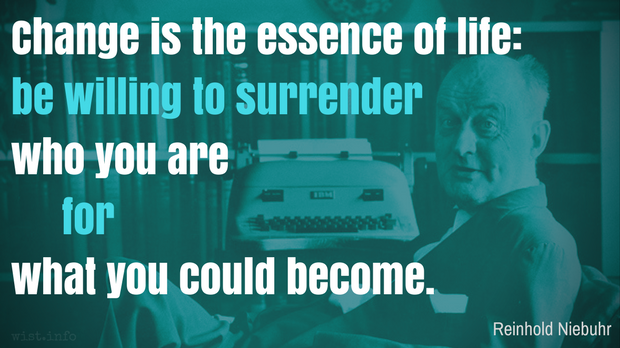
“The best moments in my life,” I said, “have come because I loved somebody.”
“Yeah,” he said.
“And the worst,” I said.
“Yeah,” he said.

The aims of life are the best defense against death, and not only in the Lager.
Primo Levi (1919–1987) Italian Jewish chemist and writer
The Drowned and the Saved, ch. 6 “The Intellectual at Auschwitz” (1986) [tr. Rosenthal (1888)]
(Source)
The tragedy of life is not that man loses, but that he almost wins.
Heywood Broun (1888–1939) American journalist, author
“Sport for Art’s Sake,” Vanity Fair (Sep 1921)
(Source)
Reprinted in Pieces of Hate, and Other Enthusiasms (1922).
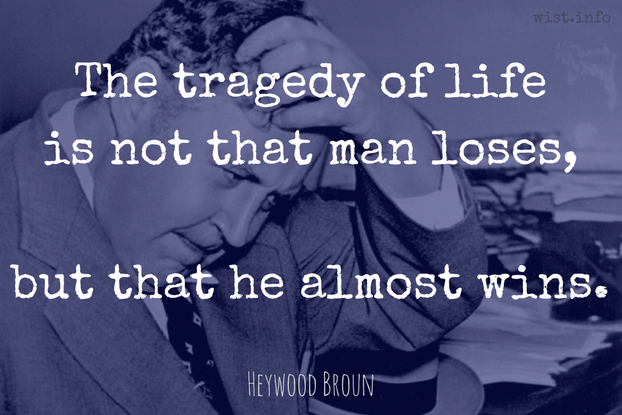
A wise man weaves a philosophy out of each acceptance life forces upon him.
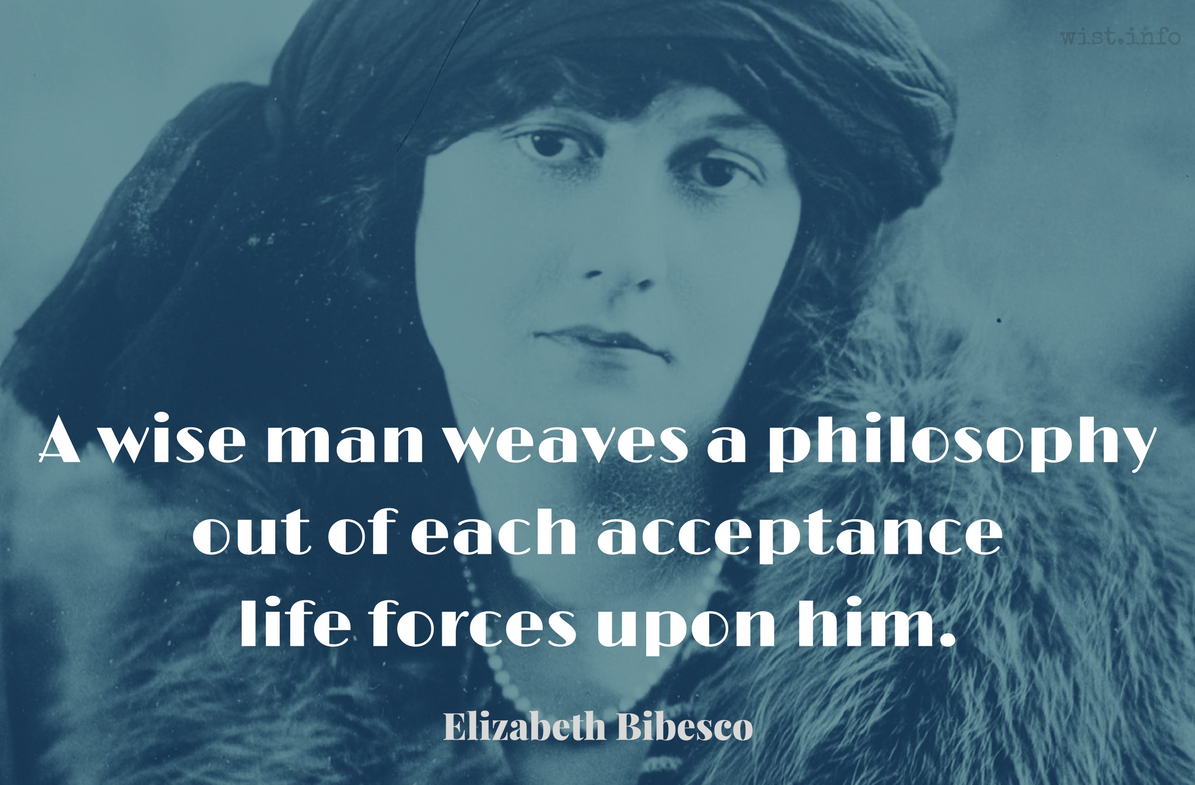

Life appears to me too short to be spent in nursing animosity, or registering wrongs.
Charlotte Brontë (1816–1855) British novelist [pseud. Currer Bell]
Jane Eyre, ch. 6 [Helen Burns] (1847)
(Source)

Into each life some rain must fall,
Some days must be dark and dreary.

Ships that pass in the night, and speak each other in passing;
Only a signal shown and a distant voice in the darkness;
So on the ocean of life we pass and speak one another,
Only a look and a voice; then darkness again and a silence.
Henry Wadsworth Longfellow (1807–1882) American poet
Tales of a Wayside Inn, Part 3 “The Theologian’s Tale: Elizabeth” part 4 (1874)
(Source)
Life is not made up of dramatic incidents — even the life of a nation. It is made up of slowly evolving events and processes, which newspapers, by a score of different forms of emphasis, can reasonably attempt to explore from day to day. But television news jerks from incident to incident. For the real world of patient and familiar arrangements, it substitutes an unreal world of constant activity, and the effect is already apparent in the way which the world behaves. It is almost impossible, these days, to consider any problem or any event except as a crisis; and, by this very way of looking at it, it in fact becomes a crisis.
Henry Fairlie (1924–1990) British journalist and social critic
“Can You Believe Your Eyes?” Horizon (Spring 1967)
“It’s not funny.”
“No, it isn’t, no more than everything else. Laughing is better than crying, though. When you can.”
Robert B. Parker (1932–2010) American writer
Promised Land (1976)
People wish to be settled; only as far as they are unsettled is there any hope for them. Life is a series of surprises.
Ralph Waldo Emerson (1803–1882) American essayist, lecturer, poet
Essay (1841), “Circles,” Essays: First Series, No. 10
(Source)
The world is not always a kind place. That’s something all children learn for themselves, whether we want them to or not, but it’s something they really need our help to understand.
Fred Rogers (1928–2003) American educator, minister, songwriter, television host ["Mister Rogers"]
You Are Special (1994)
Every man is a divinity in disguise, a god playing the fool. It seems as if heaven had sent its insane angels into our world as to an asylum, and here they will break out into their native music and utter at intervals the words they have heard in heaven; and then the mad fit returns, and they mope and wallow like dogs.
Ralph Waldo Emerson (1803–1882) American essayist, lecturer, poet
Essay (1841), “History,” Essays: First Series, No. 1
(Source)
This essay was a combination of three separate lectures on "English Literature" (1835-1836), "The Philosophy of History" (1836-1837), and "Human Life" (1837-1838).
Note this passage is missing from the University of Michigan online collection.
It is perfectly true, as the philosophers say, that life must be understood backwards. But they forget the other proposition, that it must be lived forwards.
Søren Kierkegaard (1813–1855) Danish philosopher, theologian
Journals IV.A.164 (1843)
Commonly paraphrased: "Life can only be understood backwards; but it must be lived forwards."

The world either breaks or hardens the heart.
[En vivant et en voyant les hommes, il faut que le cœur se briese ou se bronze.]
Nicolas Chamfort (1741–1794) French writer, epigrammist (b. Nicolas-Sébastien Roch)
Products of Perfected Civilization [Produits de la Civilisation Perfectionnée], Part 2 “Characters and Anecdotes [Caractères et Anecdotes],” ch. 3 (frag. 771) (1795) [tr. Finod (1880)]
(Source)
(Source (French))
Attributed by Chamfort as a statement in a philosophical debate, made by "M. D---". Finod's translation is very much a paraphrase, as is:Contact with the world either breaks or hardens the heart.
[ed. Ballou (1882)]
More literal translations:Living among men and observing them, the heart must either break or turn to bronze.
[tr. Merwin (1969)]In living and in seeing men, the heart must break or be bronzed.
[Source]
Though attributed by Chamfort to "M. D----," he also used the phrase himself, and it is usually attributed to him. Toward the end of his life, he wrote:Je m'en vais enfin, de ce monde où il faut que le cœur se briese ou se bronze.
[I am leaving at last from this world where the heart must break or become bronze.]

I have observed that in comedies the best actor plays the droll, while some scrub rogue is made the fine gentleman or hero. Thus it is in the farce of life. Wise men spend their time in mirth, ’tis only fools who are serious.
Henry St John, 1st Viscount Bolingbroke (1678–1751) English politician, government official, political philosopher [Lord Bolingbroke]
(Attributed)
Quoted in Gleason's Pictorial (Boston) (3 Dec 1853).
No one ever told me that grief felt so like fear. I am not afraid, but the sensation is like being afraid. The same fluttering in the stomach, the same restlessness, the yawning. I keep on swallowing.
At other times it feels like being mildly drunk, or concussed. There is a sort of invisible blanket between the world and me. I find it hard to take in what anyone says. Or perhaps, hard to want to take it in. It is so uninteresting. Yet I want the others to be about me. I dread the moments when the house is empty. If only they would talk to one another and not to me.C. S. Lewis (1898–1963) English writer, literary scholar, lay theologian [Clive Staples Lewis]
A Grief Observed, ch. 1 (1961)
(Source)
After the death of his wife, Joy Davidman. Opening words.
Life is not a problem to be solved, but a reality to be experienced.
Søren Kierkegaard (1813–1855) Danish philosopher, theologian
(Misattributed)
Misattributed to Kierkegaard by Cyril Connolly, Horizon, vol. 11 (1945). More properly attributed to Jacobus Johannes van der Leeuw (1893–1934), The Conquest of Illusion, ch. 1: "The mystery of life in not a problem to be solved, it is a reality to be experienced."
Every hour wounds. The last one kills.
Neil Gaiman (b. 1960) British author, screenwriter, fabulist
American Gods, epigraph (2001)
(Source)
Gaiman notes this as an "old saying." It is frequently found on sun dials or other clocks, sometimes in Latin. Variations:
- "All hours wound; the last one kills."
- "All the hours wound you, the last one kills."
- "They all wound; the last one kills."
- "Vulnerant omnes, ultima necat."
- "Omnes vulnerant. Postuma necat."
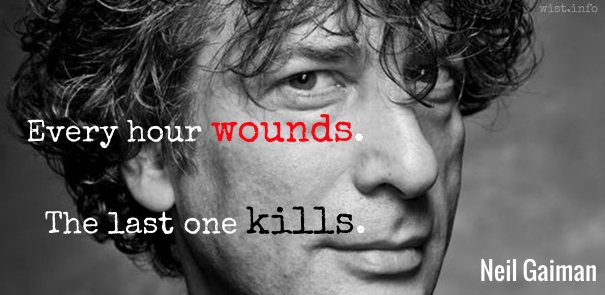
A man must consider what a rich realm he abdicates when he becomes a conformist.
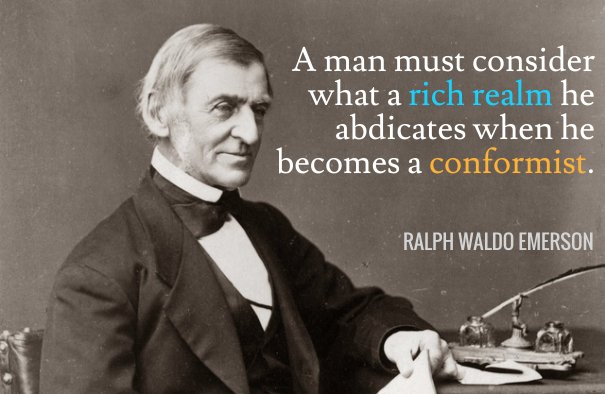
“When did life get so complicated?” she wondered to Dimity.
“Boys,” said Dimity succinctly.
Gail Carriger (b. 1976) American archaeologist, author [pen name of Tofa Borregaard]
Curtsies & Conspiracies (2013)

Chaos often breeds life, when order breeds habit.
Henry Adams (1838–1918) American journalist, historian, academic, novelist
The Education of Henry Adams, ch. 16 (1907)
We may dig in our heels and dare life never to change, but, all the same, it changes under our feet like sand under the feet of a sea gazer as the tide runs out. Life is forever undermining us. Life is forever washing away our castles, reminding us that they were, after all, only sand and sea water.
Erica Jong (b. 1942) American writer, poet
Parachutes and Kisses (1984)
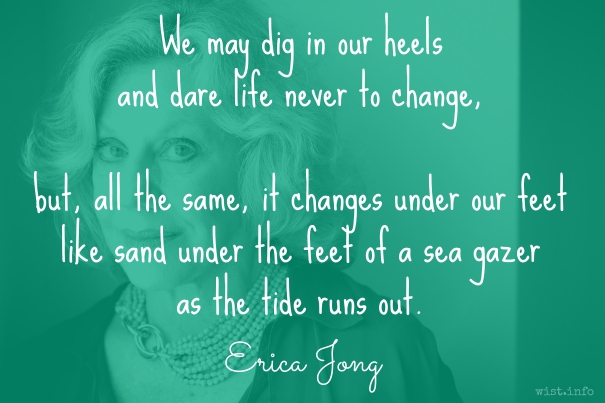
Your children are not your children.
They are the sons and daughters of Life’s longing for itself.
They come through you but not from you,
And though they are with you yet they belong not to you.
You may give them your love but not your thoughts,
For they have their own thoughts.
You may house their bodies but not their souls,
For their souls dwell in the house of tomorrow, which you cannot visit, not even in your dreams.
You may strive to be like them, but seek not to make them like you.
For life goes not backward nor tarries with yesterday.Kahlil Gibran (1883–1931) Lebanese-American poet, writer, painter [Gibran Khalil Gibran]
“On Children,” The Prophet (1923)
(Source)
Sometimes I don’t know if my life is complicated, or if it’s that I just think too much about things.
John Scalzi (b. 1969) American writer
Zoe’s Tale (2008)

The first half of our lives is ruined by our parents and the second half by our children.
Clarence Darrow (1857–1938) American lawyer
(Attributed)
Each second we live is a new and unique moment of the universe, a moment that will never be again. And what do we teach our children in school? We teach them that two and two make four and that Paris is the capital of France. When will we also teach them what they are? We should say to them: Do you know what you are? You are a marvel. You are unique. In all the years that have passed, there has never been another child like you. And look at your body — what a wonder it is! Your legs, your arms, your clever fingers, the ways you move. You may become a Shakespeare, a Michelangelo, a Beethoven. You have the capacity for anything. Yes, you are a marvel. And when you grow up, can you then harm another who is, like you, a marvel? You must work — we must all work — to make the world worthy of its children.
Pablo Casals (1876–1973) Spanish cellist, conductor, composer
In Joys and Sorrows: Reflections by Pablo Casals as told to Albert E. Kahn (1970)
Did they live happily ever after? They did not. No one ever does, in spite of what the stories may say. They had their good days, as you do, and they had their bad days, and you know about those. They had their victories, as you do, and they had their defeats, and you know about those, too. There were times when they felt ashamed of themselves, knowing they had not done their best, and there were times when they knew they had stood where their God had meant them to stand. All I’m trying to say is that they lived as well as they could.
Stephen King (b. 1947) American author
The Eyes of the Dragon (1987)

When I contemplate the common lot of mortality, I must acknowledge that I have drawn a high prize in the lottery of life … the double fortune of my birth in a free and enlightened country, in an honourable and wealthy family, is the lucky chance of an unit against millions.
Edward Gibbon (1737–1794) English historian
Memoirs of My Life and Writings (1796)
Yes, yes, we are taught to fly in the air like birds, and to swim in the water like the fishes; but how to live on the earth we don’t know.
Maxim Gorky (1868–1936) Russian writer [b. Alexei Maximovich Peshkov]
(Attributed)
Quoting a Russian peasant on progress; cited in Lothrop Soddard, Social Classes in Post-War Europe (1925).
Quoted later by Martin Luther King, Jr., in "The Man Who Was a Fool," Strength to Love (1963): "We have learned to fly the air like birds and swim the sea like fish, but we have not learned the simple art of living together as brothers"; he used the same phrase in his Nobel Peace Prize lecture (1964).
Variant: "Now that we have learned to fly the air like birds, swim under water like fish, we lack one thing—to learn to live on earth as human beings."
Sometimes misattributed to George Bernard Shaw. See here for more information.
In a book, all would have gone according to plan. … but life was so fucking untidy — what could you say for an existence where some of your most crucial conversations of your life took place when you needed to take a shit, or something? An existence where there weren’t even any chapters?
Stephen King (b. 1947) American author
Misery (1987)
Experience iz a grindstun, and it iz lucky for us if we kan git brightened by it, not ground.
[Experience is a grindstone, and it is lucky for us if we can get brightened by it, not ground.
Josh Billings (1818–1885) American humorist, aphorist [pseud. of Henry Wheeler Shaw]
Everybody’s Friend, Or; Josh Billing’s Encyclopedia and Proverbial Philosophy of Wit and Humor, ch. 130 “Affurisms: Puddin & Milk” (1874)
(" target="_blank">Source)
This aphorism was transformed / paraphrased in the early 1920s into something a bit more inspirational, first (it appears) in Forbes (1922-10-14), then in similar form in other periodicals such as The Beaver (1924-03) and Wood Construction (1924-09-15). The new form:Life is a grindstone, and whether it grinds a man down or polishes him up, depen's on the stuff he's made of.
In an earlier pass of Billings quotations, I did up a meme, unknowingly based on that later phrasing:
The cheerful live longest in life, and after it, in our regards.
Christian Nestell Bovee (1820–1904) American epigrammatist, writer, publisher
Intuitions and Summaries of Thought (1862)
Whether you believe that life evolved over billions of years or God made everything, you can’t justify torturing an animal for a shampoo.

Hope for the best.
Expect the worst.
The world’s a stage.
We’re unrehearsed.
Mel Brooks (b. 1926) American comedic actor, writer, producer [b. Melvyn Kaminsky]
The Twelve Chairs, “Hope for the Best, Expect the Worst” (1970)
(Source)
(Source (Audio)). More information on composition of the song here and here.
See Cicero (44 BC), Shakespeare (1599), Heywood (1612), Billings (1877), O'Casey (c. 1940), Watterson (1993).
Every day should be passed as if it were to be our last.
Publilius Syrus (d. 42 BC) Assyrian slave, writer, philosopher [less correctly Publius Syrus]
Sententiae [Moral Sayings], # 633
Life is not a static thing. The only people who do not change their minds are incompetents in asylums, who can’t, and those in cemeteries.
Everett Dirksen (1896–1969) American politician
(Attributed)
The best things in life aren’t things.
Art Buchwald (1925–2007) American humorist, columnist
(Attributed)
In a sense we’ve come to our nation’s capital to cash a check. When the architects of our republic wrote the magnificent words of the Constitution and the Declaration of Independence, they were signing a promissory note to which every American was to fall heir. This note was a promise that all men, yes, black men as well as white men, would be guaranteed the “unalienable Rights” of “Life, Liberty and the pursuit of Happiness.”
It is obvious today that America has defaulted on this promissory note, insofar as her citizens of color are concerned. Instead of honoring this sacred obligation, America has given the Negro people a bad check, a check which has come back marked “insufficient funds.”
But we refuse to believe that the bank of justice is bankrupt. We refuse to believe that there are insufficient funds in the great vaults of opportunity of this nation. And so, we’ve come to cash this check, a check that will give us upon demand the riches of freedom and the security of justice.
On a recent Sunday evening, Theo came up with an aphorism: the bigger you think, the crappier it looks. Asked to explain he said, “When we go on about the big things, the political situation, global warming, world poverty, it all looks really terrible, with nothing getting better, nothing to look forward to. But when I think small, closer in — you know, a girl I’ve just met, or this song we’re going to do with Chas, or snowboarding next month, then it looks great. So this is going to be my motto — think small.”
Ian McEwan (b. 1948) English novelist and screenwriter
Saturday (2005)
The wish falls often warm upon my heart that I may learn nothing here that I cannot continue in the other world; that I may do nothing here but deeds that will bear fruit in heaven.
Jean Paul Richter (1763–1825) German writer, art historian, philosopher, littérateur [Johann Paul Friedrich Richter; pseud. Jean Paul]
Letter to Rector Werner (1781)
(Source)
Remember that man lives only in the present, in this fleeting instant: all the rest of his life is either past and gone, or not yet revealed.
[καὶ ἔτι συμμνημόνευε, ὅτι μόνον ζῇ ἕκαστος τὸ παρὸν τοῦτο, τὸ ἀκαριαῖον: τὰ δὲ ἄλλα ἢ βεβίωται ἢ ἐν ἀδήλῳ.]
Marcus Aurelius (AD 121–180) Roman emperor (161–180), Stoic philosopher
Meditations [To Himself; Τὰ εἰς ἑαυτόν], Book 3, ch. 10 (3.10) (AD 161-180) [tr. Staniforth (1964)]
(Source)
Referencing what he has previously said in 2.14.
(Source (Greek)). Other translations:No man properly can be said to live more than that which is now present, which is but a moment of time. Whatsoever is besides either is already past, or uncertain.
[tr. Casaubon (1634)]Remembering withal, that every Mans Life lies all within the Present; For the Past is spent, and done with, and the Future is uncertain: Now the Present is strictly examin'd, is but a point of Time. Well then!
[tr. Collier (1701)]Remember also that each man lives only the present moment: The rest of time is either spent and gone, or is quite unknown.
[tr. Hutcheson/Moor (1742)]Recollect, moreover, what I have formerly remarked, "that every one lives that moment only which is now present." For the rest of his life is either already past, or is wrapt in uncertainty.
[tr. Graves (1792)]Bear in mind that every man lives only this present time, which is an indivisible point, and that all the rest of his life is either past or it is uncertain.
[tr. Long (1862)]Remembering withal, that every man's life lies all within the present, which is but a point of time; for the past is spent, and the future is uncertain.
[tr. Collier/Zimmern (1887)]And bear in mind withal that every man lives only in the present, this passing moment' all else is life outlived, or yet undisclosed.
[tr. Rendall (1898)]Remember also that every man lives only this present moment, which is a fleeting instant: the rest of time is either spent or quite unknown.
[tr. Hutcheson/Chrystal (1902)]Remember withal that it is only this present, a moment of time, that a man lives: all the rest either has been lived or may never be.
[tr. Haines (Loeb) (1916)]Each of us lives only in the present, this brief moment; the rest is either a life that is past, or is in an uncertain future.
[tr. Farquharson (1944)]Remember, furthermore, that each of us lives only in the present, this fleeting moment of time, and that the rest of one's days are either dead and gone or lie in an unknowable future.
[tr. Hard (1997 ed.)]Each of us lives only now, this brief instant. The rest has been lived already, or is impossible to see.
[tr. Hays (2003)]Remind yourself too that each of us lives only in the present moment, a mere fragment of time: the rest is life past or uncertain future.
[tr. Hammond (2006)]Also remember that each person lives in this very moment, and that the rest either has already happened or else is entirely uncertain.
[tr. Needleman/Piazza (2008)]Remember, furthermore, that each of us lives only in the present, this fleeting moment of time, and that the rest of one’s life has either already been lived or lies in an unknowable future.
[tr. Hard (2011 ed.)]Keep in mind that each of us only lives int he present, this brief moment of time; the rest of our life has been lived already or lies in the uncertain future.
[tr. Gill (2013)]
Science doesn’t purvey absolute truth. Science is a mechanism. It’s a way of trying to improve your knowledge of nature. It’s a system for testing your thoughts against the universe and seeing whether they match. And this works, not just for the ordinary aspects of science, but for all of life. I should think people would want to know that what they know is truly what the universe is like, or at least as close as they can get to it.
Isaac Asimov (1920–1992) Russian-American author, polymath, biochemist
Interview (1988) by Bill Moyers, A World of Ideas, PBS TV (1988-10-22)
(Source)
(Source (Video))
Part 2 of the interview (the first half aired 1988-10-17). Collected in Bill Moyers, A World of Ideas (1989).
Life, we learn too late, is in the living, in the tissue of each day and hour.
Stephen Leacock (1869–1944) Canadian economist, writer and humorist
(Attributed)
The world’s an Inn; and I her guest.
I eat; I drink; I take my rest.
My hostess, nature, does deny me
Nothing, wherewith she can supply me;
Where, having stayed a while, I pay
Her lavish bills, and go my way.
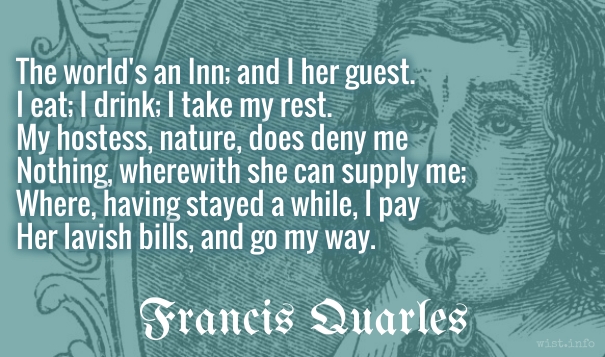

My soul, sit thou a patient looker-on;
Judge not the play before the play is done:
Her plot hath many changes; every day
Speaks a new scene; the last act crowns the play.Francis Quarles (1592–1644) English poet
Respice Finem, Epigram (1635)
All life is nucleic acid; the rest is commentary.
Isaac Asimov (1920–1992) Russian-American author, polymath, biochemist
“Science: Beginning with Bone,” Magazine of Fantasy and Science Fiction (May 1987)
I live my life in celebration and in praise of the life I’m living. What you focus on expands. The more you praise and celebrate your life, the more there is in life to celebrate. The more you complain, the more you find fault, the more misery and fault you will have to find.
Oprah Winfrey (b. 1954) American TV personality, actress
“Words of the Week,” Jet (27 Oct 1986)
(Source)

He shrugged his shoulders. “I have known many gods. He who denies them is as blind as he who trusts them too deeply. I seek not beyond death. It may be the blackness averred by the Nemedian skeptics, or Crom’s realm of ice and cloud, or the snowy plains and vaulted halls of the Nordheimer’s Valhalla. I know not, nor do I care. Let me live deep while I live; let me know the rich juices of red meat and stinging wine on my palate, the hot embrace of white arms, the mad exultation of battle when the blue blades flame and crimson, and I am content. Let teachers and priests and philosophers brood over questions of reality and illusion. I know this: if life is illusion, then I am no less an illusion, and being thus, the illusion is real to me. I live, I burn with life, I love, I slay, and am content.”
Robert E. Howard (1906–1936) American author
“Queen of the Black Coast” (1934)
Life is too short to do mediocre work and it is definitely too short to build shitty things.
Stewart Butterfield (b. 1973) Canadian tech entrepreneur and businessman
(Attributed)

Whether it’s the best of times or the worst of times, it’s the only time we’ve got.
Art Buchwald (1925–2007) American humorist, columnist
(Attributed)