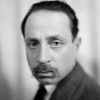
Life is the childhood of our immortality.
Johann Wolfgang von Goethe (1749-1832) German poet, statesman, scientist
(Attributed)
Quotations about:
meaning of life
Note not all quotations have been tagged, so Search may find additional quotes on this topic.
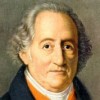
The purpose of life is not to be happy. It is to be useful, to be honorable, to be compassionate, to have it make some difference that you have lived and lived well.
Ralph Waldo Emerson (1803-1882) American essayist, lecturer, poet
(Misattributed)
Though widely credited to Emerson, this appears to be a misattributed variation of a Leo Rosten quotation. More discussion of the connection here: The Purpose of Life Is Not To Be Happy But To Matter – Quote Investigator.
After all, when the day of judgement comes we shall be examined about what we have done, not about what we have read; whether we have lived conscientiously, not whether we have turned fine phrases.
[Certe adveniente die judicii, non quæretur a nobis quid legimus, sed quid fecimus; nec quam bene diximus, sed quam religiose viximus.]
Thomas à Kempis (c. 1380-1471) German-Dutch priest, author
The Imitation of Christ [De Imitatione Christi], Book 1, ch. 3, v. 5 (1.3.5) (c. 1418-27) [tr. Knox-Oakley (1959)]
(Source)
(Source (Latin)). Alternate translations:At the day of judgment it shall not be asked of us what we have read, but what we have done: nor how well we have said, but how religiously we have lived.
[tr. Whitford/Raynal (1530/1871)]On the day of judgment we will not be asked what we have read, but what we have done; not how well we have discoursed, but how religiously we have lived.
[tr. Whitford/Gardiner (1530/1955)]Assuredly at the day of judgment we shall not be examined how many bookes we have read, but how many good workes we have done; not how rhetorically we have spoken, but how religiously we have lived.
[tr. Page (1639), 1.3.22]A Day of Judgment there will come, where in Measures will be taken very different form ours; when the Enquiry, upon which our Affairs must all turn, will be, not how much we have Heard or Read, but how much we have done; not how Eloquent our Expressions, but how Pure and Devout our Lives; how much our Manners, not our Capacity or Breeding, our Wit or Rhetorick, distinguished us from common Men.
[tr. Stanhope (1696; 1706 ed.)]Assuredly, in the approaching day of universal judgment, it will not be enquired what we have read, but what we have done; not how eloquently we have spoken, but how holily we have lived.
[tr. Payne (1803)]Truly, at the day of judgment we shall not be examined what we have read, but what we have done; not how well we have spoken, but how religiously we have lived.
[ed. Parker (1841)]Assuredly, in the approaching day of judgment, it will not be inquired of us what we have read, but what we have done; not how eloquently we have spoken, but how holily we have lived.
[tr. Dibdin (1851)]Verily, when the day of judgment comes, we shall not be asked what we have read, but what we have done; nor how well we have spoken, but how religiously we have lived.
[ed. Bagster (1860)]Of a surety, at the Day of Judgment it will be demanded of us, not what we have read, but what we have done; not how well we have spoken, but how holily we have lived.
[tr. Benham (1874)]Truly, at the day of judgment we shall not be examined as to what we have read, but as to what we have done; not as to how well we have spoken, but as to how religiously we have lived.
[tr. Anon. (1901)]On the day of judgment, surely, we shall not be asked what we have read but what we have done; not how well we have spoken but how well we have lived.
[tr. Croft/Bolton (1940)]Surely on coming to the day of judgment we shall not be asked what we have read but what we have done: not how well we talked but how religiously we lived.
[tr. Daplyn (1952)]At the Day of Judgement, we shall not be asked what we have read, but what we have done; not how eloquently we have spoken, but how holily we have lived.
[tr. Sherley-Price (1952)]When the day of judgment comes, we shall not be asked what we have read, but what we have done, not if we made fine speeches, but if we lived religious lives.
[tr. Knott (1962)]When the day of judgement comes we will be asked not what books we read, but what deeds we did, not how well we spoke, but how religiously we lived.
[tr. Rooney (1979)]Surely, when the day of judgment comes we shall not be asked what we have read but what we have done, not how well we have spoken but how devoutly we have lived.
[tr. Creasy (1989)]

There is nothing better for a man, than that he should eat and drink, and that he should make his soul enjoy good in his labour.
אֵֽין־ט֤וֹב בָּאָדָם֙ שֶׁיֹּאכַ֣ל וְשָׁתָ֔ה וְהֶרְאָ֧ה אֶת־נַפְשׁ֛וֹ ט֖וֹב בַּעֲמָל֑וֹ גַּם־זֹה֙
The Bible (The Old Testament) (14th - 2nd C BC) Judeo-Christian sacred scripture [Tanakh, Hebrew Bible], incl. the Apocrypha (Deuterocanonicals)
Book 21. Ecclesiastes 2:24 (Eccl 2:24) [tr. KJV (1611)]
(Source)
(Source (Hebrew)). Alternate translations:There is no happiness for man but to eat and drink and to be content with his work.
[JB (1966)]The best thing we can do is eat and drink and enjoy what we have earned.
[GNT (1976)]There is nothing worthwhile for a man but to eat and drink and afford himself enjoyment with his means.
[RJPS (1985)]There is nothing better for mortals than to eat and drink and find enjoyment in their toil.
[NRSV (1989 ed.)]

CALVIN: (walking through snowy field) You know, Hobbes, it seems the only time most people go outside is to walk to their cars. We have houses, electricity, plumbing, heat …. Maybe we’re so sheltered and comfortable that we’ve lost touch with the natural world and forgotten our place in it. Maybe we’ve lost our awe of nature. That’s why I want to ask you, as a tiger, a wild animal close to Nature, what you think we’re put on Earth to do. What’s our purpose in life? Why are we here?
HOBBES: (stating the obvious) We’re here to devour each other alive.
CALVIN: (back in the house, yelling) Turn on the lights! Turn up the heat!


Life may have no meaning. Or even worse, it may have a meaning of which I disapprove.
Ashleigh Brilliant (b. 1933) Anglo-American epigramist, aphorist, cartoonist
Pot-Shots, #1347

This is the true joy in life, the being used up for a purpose recognized by yourself as a mighty one; the being thoroughly worn out before you are thrown on the scrap heap; the being a force of Nature instead of a feverish selfish little clod of ailments and grievances complaining that the world will not devote itself to making you happy.
George Bernard Shaw (1856-1950) Irish playwright and critic
Man and Superman, “Epistle Dedicatory” (1903)
(Source)
If you think of this world as a place intended simply for our happiness, you find it quite intolerable: think of it as a place of training and correction and it’s not so bad.
C. S. Lewis (1898-1963) English writer, literary scholar, lay theologian [Clive Staples Lewis]
“Answers to Questions on Christianity”
Let each man think himself an act of God,
His mind a thought, his life a breath of God;
And let each try, by great thoughts and good deeds,
To shew the most of Heaven he hath in him.
If I can stop one heart from breaking
I shall not live in vain
If I can ease one life the aching
Or cool one pain
Or help one fainting robin
Unto his nest again
I shall not live in vain.

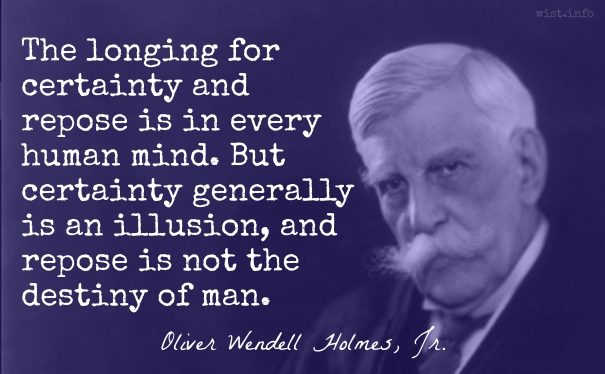
… [L]onging for certainty and for repose [is] in every human mind. But certainty generally is an illusion, and repose is not the destiny of man.
Oliver Wendell Holmes, Jr. (1841-1935) American jurist, Supreme Court Justice
“The Path of the Law,” Harvard Law Review (Feb 1897)
(Source)
Citation 10 Harvard Law Review 457 (1897).
No man is a failure who is enjoying life.
William Feather (1889-1981) American publisher, author
(Attributed)
Widely attributed to Feather (e.g. Laurence Peter, Peter's Quotations (1977)), but no citation to be found online. A particularly common quote (usually without attribution) in school yearbooks, collections of wisdom / happiness quotations, etc.The earliest use of it that I can find is as anonymous column filler in The Deaf-Mutes' Journal, Vol. 61, No. 50 (1932-12-15).
A variant adds "No man is a success who isn't."
Life is not meant to be easy, my child; but take courage — it can be delightful.
George Bernard Shaw (1856-1950) Irish playwright and critic
Back to Methuselah, Part 5 [The He-Ancient] (1921)
(Source)
CALVIN: God put me on Earth to accomplish a certain number of things. Right now I am so far behind I will never die.
Bill Watterson (b. 1958) American cartoonist
(Attributed)
Widely attributed to the Calvin and Hobbes comic strip, but searches for the actual comic have come up empty. For more information on references to this quote, see: "God put me on this earth to accomplish a certain…".
Far and away the best prize that life offers is the chance to work hard at work worth doing.
Theodore Roosevelt (1858–1919) American politician, statesman, conservationist, writer, US President (1901–1909)
Speech (1903-09-07), “The Square Deal,” Labor Day, New York State Agricultural Association, New York State Fair, Syracuse
(Source)
KEATING: We don’t read and write poetry because it’s cute. We read and write poetry because we are members of the human race. And the human race is filled with passion. And medicine, law, business, engineering, these are noble pursuits and necessary to sustain life. But poetry, beauty, romance, love, these are what we stay alive for.

It is neither wealth nor splendor, but tranquility and occupation, which give happiness.
Thomas Jefferson (1743-1826) American political philosopher, polymath, statesman, US President (1801-09)
Letter (1788-07-12) to Anna Jefferson Marks
(Source)
The salutation is "My dear Sister," and is a congratulations for her marrying Hastings Marks. Some copies, and filings of the letter, make it out to "Anna Scott Marks," her birth name was Anna Scott Jefferson.

Happiness is not the end of life, character is.
Henry Ward Beecher (1813-1887) American clergyman and orator
Life Thoughts: Gathered from the Extemporaneous Discourses of Henry Ward Beecher (1858)
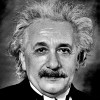
The important thing is not to stop questioning. Curiosity has its own reason for existing. One cannot help but be in awe when he contemplates the mysteries of eternity, of life, of the marvelous structure of reality. It is enough if one tries merely to comprehend a little of this mystery every day.
Albert Einstein (1879-1955) German-American physicist
Memoirs of William Miller, quoted in Life (2 May 1955)
(Source)
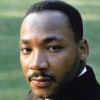
If a man hasn’t discovered something that he would die for, he isn’t fit to live.
Martin Luther King, Jr. (1929-1968) American clergyman, civil rights leader, social activist, preacher
Speech, Detroit (23 Jun 1963)
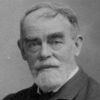
All progress is based upon a universal innate desire on the part of every organism to live beyond its income.
Samuel Butler (1835-1902) English novelist, satirist, scholar
The Note-Books of Samuel Butler, ch. 1 “Life” (1912)
(Source)
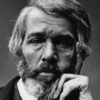
Beautiful it is to see and understand that no worth, known or unknown, can die even in this earth. The work an unknown good man has done is like a vein of water flowing hidden underground, secretly making the ground green; it flows and flows, it joins itself with other veins and veinlets; one day, it will start forth as a visible perennial well.
Thomas Carlyle (1795-1881) Scottish essayist and historian
“Varnhagen von Ense’s Memoirs,” London and Westminster Review, No. 62 (1838-12)
(Source)
A review of three books involving Lady Rahel Varnhagen von Ense.
JAQUES:All the world’s a stage,
And all the men and women merely players.
They have their exits and their entrances,
And one man in his time plays many parts ….

For one human being to love another: that is perhaps the hardest of all our tasks, the ultimate, the last test and proof, the work for which all other work is but preparation.
[Liebhaben von Mensch zu Mensch: das ist vielleicht das Schwerste, was uns aufgegeben ist, das Äußerste, die letzte Probe und Prüfung, die Arbeit, für die alle andere Arbeit nur Vorbereitung ist.]
Rainer Maria Rilke (1875-1963) German poet
Letter (1904-05-14) to Franz Xaver Kappus, Letters to a Young Poet [Briefe an einen jungen Dichter], No. 7 [tr. Norton (1934)]
(Source)
(Source (German)). Other translations:For one human being to love another human being: that is perhaps the most difficult task that has been entrusted to us, the ultimate task, the final test and proof, the work for which all other work is merely preparation.
[tr. Mitchell (1984)]For one person to love another: that is perhaps the most difficult thing we are asked to do, the ultimate task, the final test and proof, the work for which all other work is mere preparation.
[tr. Searls (2020)]For one human being to love another is perhaps the most difficult task of all, the epitome, the ultimate test. It is that striving for which all other striving is merely preparation.
[tr. Burnham]