Life is made up of constant calls to action, and we seldom have time for more than hastily contrived answers; to follow one’s hunch is usually better than lying doggo, and rough generalizations that have worked well in the past easily easily take on the authority of universals. It does violence to our inner being to be obliged to give a hearing to opinions widely at variance with those we are accustomed to, and to come to a conclusion unweighted by desire.
Learned Hand (1872–1961) American jurist
“At Fourscore,” speech, Harvard Club of New York (1952-01-18)
(Source)
First published in the Harvard Alumni Bulletin (23 Feb 1952).
Quotations about:
life
Note not all quotations have been tagged, so Search may find additional quotes on this topic.
If we could read the secret history of our enemies, we should find in each man’s life sorrow and suffering enough to disarm all hostility.
Henry Wadsworth Longfellow (1807–1882) American poet
“Table Talk,” Drift-Wood (1857)
(Source)
More discussion of this quotation here: If We Could Read the Secret History of Our Enemies, We Should Find in Each Man’s Life Sorrow and Suffering Enough To Disarm All Hostility – Quote Investigator.
No one imagines that a symphony is supposed to improve in quality as it goes along, or that the whole object of playing it is to reach the finale. The point of music is discovered in every moment of playing and listening to it. It is the same, I feel, with the greater part of our lives, and if we are unduly absorbed in improving them we may forget altogether to live them.
Evils in the journey of life are like the hills which alarm travelers on their road. Both appear great at a distance, but when we approach them we find they are far less insurmountable than we had conceived.
Charles Caleb "C. C." Colton (1780–1832) English cleric, writer, aphorist
Lacon: Or, Many Things in Few Words, Vol. 2, § 241 (1822)
(Source)
A baby is God’s opinion that life should go on.
Carl Sandburg (1878–1967) American poet, biographer
Remembrance Rock, ch. 2 (1948)
(Source)
Orville Brand "Bowbong" Windom speaking to his grandson, Raymond. Sometimes misquoted as "A baby is God’s opinion that the world should go on."
While popular in its own right, the broader context of the quotation is also worth noting. Windom is recounting a story of a man criticized for sleeping through a play he was supposed to be reviewing, who said, "Sleep is an opinion." Windom continues:And a baby is God's opinion that life should go on. A book that does nothing to you is dead. A baby, whether it does anything to you, represents life. If a bad fire should break out in this house and I had my choice of saving the library or the babies, I would save what is alive. Never will a time come when the most marvelous recent invention is as marvelous as a newborn baby. The finest of our precision watches, the most super-colossal of our supercargo planes, don’t compare with a newborn baby in the number and ingenuity of coils and springs, in the flow and change of chemical solutions, in timing devices and interrelated parts that are irreplaceable. A baby is very modern. Yet it is also the oldest of the ancients. A baby doesn’t know he is a hoary and venerable antique -- but he is. Before man learned how to make an alphabet, how to make a wheel, how to make a fire, he knew how to make a baby -- with the great help of woman, and his God and Maker.
This life we have is short, so let us leave a mark for people to remember.
Kip Keino (b. 1940) Kenyan athlete [Kipchoge Keino]
(Attributed)
On why he adopted and educated 69 orphan children.
There is nothing more tragic than to find an individual bogged down in the length of life, devoid of breadth.
Martin Luther King, Jr. (1929–1968) American clergyman, civil rights leader, social activist, preacher
“The Three Dimensions of a Complete Life,” sermon, Dexter Avenue Baptist Church, Montgomery, Alabama (24 Jan 1954)
(Source)
To condemn spontaneous and delightful occupations because they are useless for self-preservation shows an uncritical prizing of life regardless of its contents.
George Santayana (1863–1952) Spanish-American poet and philosopher [Jorge Agustín Nicolás Ruíz de Santayana y Borrás]
The Sense of Beauty, Part 1 “The Nature of Beauty,” sec. 4 “Work and Play” (1896)
(Source)
You should not confuse your career with your life.
Dave Barry (b. 1947) American humorist, author, columnist
“25 Things I Have Learned In 50 Years,” #20 (1997)

Do not be too timid and squeamish about your actions. All life is an experiment. The more experiments you make the better. What if they are a little coarse, and you may get your coat soiled or torn? What if you do fail, and get fairly rolled in the dirt once or twice. Up again, you shall never be so afraid of a tumble.
Life is like music, it must be composed by ear, feeling and instinct, not by rule. Nevertheless one had better know the rules, for they sometimes guide in doubtful cases, though not often.
Samuel Butler (1835–1902) English novelist, satirist, scholar
The Note-Books of Samuel Butler, ch. 1, “Life” (1912)
(Source)
There is no cure for birth and death save to enjoy the interval.
George Santayana (1863–1952) Spanish-American poet and philosopher [Jorge Agustín Nicolás Ruíz de Santayana y Borrás]
Essay (1916 ca.), “War Shrines,” Soliloquies in England, ch. 24 (1922)
(Source)

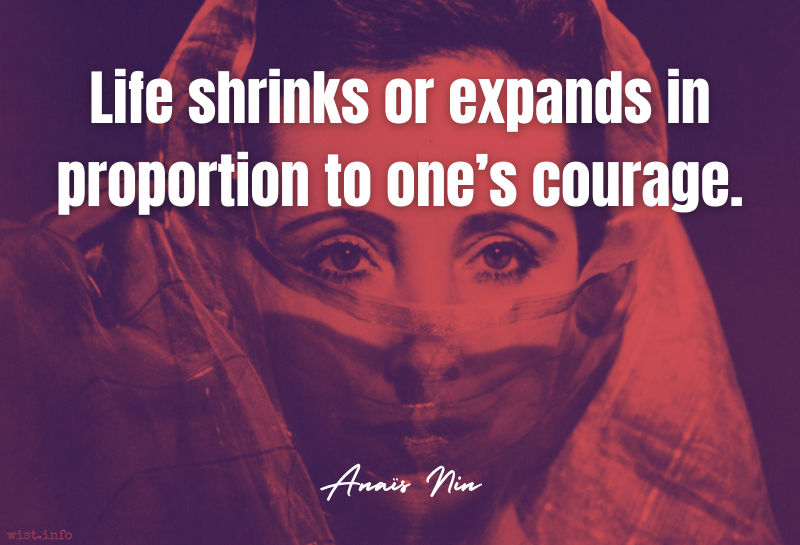
Life shrinks or expands in proportion to one’s courage.
Anaïs Nin (1903–1977) Catalan-Cuban-French author, diarist
Diary (1941-06)
(Source)
In her Diaries [ed. Stuhlmann (1969)].

Life cannot be captured in a few axioms. And that is just what I keep trying to do. But it won’t work, for life is full of endless nuances and cannot be captured in just a few formulae.
Esther "Etty" Hillesum (1914–1943) Dutch Jewish law graduate, writer, diarist
Diary (1941-10-22)
(Source)
Collected in An Interrupted Life [Het Verstoorde Leven] (1981) [tr. Pomerans (1983)].

Death, like life, is an affair of being more frightened than hurt.
Samuel Butler (1835–1902) English novelist, satirist, scholar
Erewhon (1872)
That life is worth living is the most necessary of assumptions, and were it not assumed, the most impossible of conclusions.
George Santayana (1863–1952) Spanish-American poet and philosopher [Jorge Agustín Nicolás Ruíz de Santayana y Borrás]
The Life of Reason or The Phases of Human Progress, Vol. 1 “Reason in Common Sense,” ch. 10 (1905-06)
(Source)
KEATING: We don’t read and write poetry because it’s cute. We read and write poetry because we are members of the human race. And the human race is filled with passion. And medicine, law, business, engineering, these are noble pursuits and necessary to sustain life. But poetry, beauty, romance, love, these are what we stay alive for.

Don’t forget until too late that the business of life is not business, but living.
There are two great rules in life, the one general and the other particular. The first is that every one can in the end get what he wants if he only tries. This is the general rule. The particular rule is that every individual is more or less of an exception to the general rule.
Samuel Butler (1835–1902) English novelist, satirist, scholar
The Note-Books of Samuel Butler (1912)
(Source)
The longest-lived and those who will die soonest lose the same thing. The present is all that they give up, since that is all you have, and what you do not have, you cannot lose.
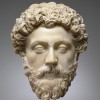
[ἑτέρου δέ, ὅτι καὶ ὁ πολυχρονιώτατος καὶ ὁ τάχιστα τεθνηξόμενος τὸ ἴσον ἀποβάλλει. τὸ γὰρ παρόν ἐστι μόνον, οὗ στερίσκεσθαι μέλλει, εἴπερ γε ἔχει καὶ τοῦτο μόνον καὶ ὃ μὴ ἔχει τις οὐκ ἀποβάλλει.]Marcus Aurelius (AD 121–180) Roman emperor (161–180), Stoic philosopher
Meditations [To Himself; Τὰ εἰς ἑαυτόν], Book 2, ch. 14 (2.14) [tr. Hays (2003)]
(Source)
(Source (Greek)). Other translations:That life which any the longest liver, or the shortest liver parts with, is for length and duration the very same, for that only which is present, is that, which either of them can lose, as being that only which they have; for that which he hath not, no man can truly be said to lose.
[tr. Casaubon (1634), 2.12]When the longest, and shortest Lived Persons come to die, their Loss is equal: For as I observe the Present is their All, and they can Suffer no Farther.
[tr. Collier (1701)]Again that the longest and the shortest lives have an equal loss at Death. The present moment is all which either is deprived of, since that is all he has. A man cannot part with what he has not.
[tr. Hutcheson/Moor (1742)]He who lives the longest, and he who dies the earliest, when they do die, their loss is equal. For they are only deprived of the present moment, which is all they have to lose.
[tr. Graves (1792)]The longest liver and he who will die soonest lose just the same. For the present is the only thing of which a man can be deprived, if it is true that this is the only thing which he has, and that a man cannot lose a thing if he has it not.
[tr. Long (1862)]When the longest and shortest-lived persons come to die, their loss is equal; they can but lose the present as being the only thing they have; for that which he has not, no man can be truly said to lose.
[tr. Collier/Zimmern (1887)]The longest-lived and the shortest-lived man, when they come to die, lose one and the same thing.
[tr. Morgan (1894)]The loss of the longest-lived and the shortest is one and the same. It is the present only of which a man can be deprived, that and that only being his, and what is not his he cannot lose.
[tr. Rendall (1898)]He who lives longest and he who dies soonest have an equal loss in death. The present moment is all of which either is deprived, since that is all he has. No man can be robbed of that which he has not.
[tr. Hutcheson/Chrystal (1902)]The longest liver and he whose time to die comes soonest part with no more the one than the other. For it is but the present that a man can be deprived of, if, as is the fact, it is this alone that he has, and what he has not a man cannot part with.
[tr. Haines (Loeb) (1916)]The longest-lived and the soonest to die have an equal loss; for it is the present alone of which either will be deprived, since (as we saw) this is all he has and a man does not lose what he has not got.
[tr. Farquharson (1944)]When the longest- and shortest-lived of us come to die, their loss is precisely equal. For the sole thing of which any man can be deprived is the present; since this is all he owns, and nobody can lose what is not his.
[tr. Staniforth (1964)]The longest-lived and the earliest to die suffer an equal loss; for it is solely of the present moment that each will be deprived, if it is indeed the case that this is all that he has and a person cannot lose what he does not have.
[tr. Hard (1997 ed.)]Both the longest-lived and the earliest to die suffer the same loss. It is only the present moment of which either stands to be deprived: and if indeed this is all he has, he cannot lose what he does not have.
[tr. Hammond (2006)]The longest to live and the soonest to die lose exactly the same thing, for it is only the present moment which one can be deprived of, if it is true that we possess this alone, and that you cannot lose what you do not have.
[tr. Needleman/Piazza (2008), 2.16]The longest-lived and the earliest to die suffer an equal loss; for it is solely of the present moment that each will be deprived, if it is really the case that this is all he has and a person cannot lose what he does not have.
[tr. Hard (2011 ed.)]Both the one who lives longest and the one who is earliest to die lose an equal amount. The present moment is the only thing of which anyone can be deprived, at least if this is the only thing he has and he cannot lose what he has not got.
[tr. Gill (2013)]The longest and shortest life is therefore the same. We all live in the same present, which is but a moment of time. This moment can be lost in a moment, but that is all that can be lost. The past and future cannot be lost: no one can take from a man what he never had. Time is an infinite eternity and so everything will come around again eventually, it makes no difference how long this might take to happen. The present moment is the only thing any man has.
[tr. McNeill (2019)]
I am always turning, I am perpetually turning, like a demd old horse in a demnition mill. My life is one demd horrid grind!
Charles Dickens (1812–1870) English writer and social critic
The Life And Adventures of Nicholas Nickleby, ch. 64 [Mr Mantalini] (1839)
(Source)
The one serious conviction that a man should have is that nothing is to be taken too seriously.
Samuel Butler (1835–1902) English novelist, satirist, scholar
The Note-Books of Samuel Butler (1912)
The empty pageant; a stage play; flocks of sheep, herds of cattle; a tussle of spearmen; a bone flung among a pack of curs; a crumb tossed into a pond of fish; ants, loaded and laboring; mice, scared and capering; puppets, jerking on their strings — that is life.
In the midst of it all you must take your stand, good-temperedly and without disdain, yet always aware that a man’s worth is no greater than the worth of his ambitions.[Πομπῆς κενοσπουδία, ἐπὶ σκηνῆς δράματα, ποίμνια, ἀγέλαι, διαδορατισμοί, κυνιδίοις ὀστάριον ἐρριμμένον, ψωμίον εἰς τὰς τῶν ἰχθύων δεξαμενάς, μυρμήκων ταλαιπωρίαι καὶ ἀχθοφορίαι, μυιδίων ἐπτοημένων διαδρομαί, σιγιλλάρια νευροσπαστούμενα.
χρὴ οὖν ἐν τούτοις εὐμενῶς μὲν καὶ μὴ καταφρυαττόμενον ἑστάναι, παρακολουθεῖν μέντοι, ὅτι τοσούτου ἄξιος ἕκαστός ἐστιν, ὅσου ἄξιά ἐστι ταῦτα περὶ ἃ ἐσπούδακεν.]Marcus Aurelius (AD 121–180) Roman emperor (161–180), Stoic philosopher
Meditations [To Himself; Τὰ εἰς ἑαυτόν], Book 7, ch. 3 (7.3) (AD 161-180) [tr. Staniforth (1964)]
(Source)
(Source (Greek)). Other translations:Public shows and solemnities with much pomp and vanity, stage plays, flocks and herds; conflicts and contentions: a bone thrown to a company of hungry curs; a bait for greedy fishes; the painfulness, and continual burden-bearing of wretched ants, the running to and fro of terrified mice: little puppets drawn up and down with wires and nerves: these be the objects of the world.
Among all these thou must stand steadfast, meekly affected, and free from all manner of indignation; with this right ratiocination and apprehension; that as the worth is of those things which a man doth affect, so is in very deed every man's worth more or less.
[tr. Casaubon (1634)]Gazing after Triumphs, and Cavalcades; the Diversions of the Stage-Farms well stock'd with Flocks and Herds; contests for Victory in the Field; These are the little Pleasures, and concerns of Mortals. Would you have a farther Illustration, and see an Image of them elsewhere? Fancy then that you saw two or three Whelps quarrelling about a Bone; Fishes scrambling for a Bait, Pismires in a peck of troubles about the Carriage of a Grain of Wheat; Mice frighted out of their Wits, and scouring cross the Room; Poppets danced upon a Wire, &c.
And after all, tho' Humane Life is but ordinary, and trifling, a Wise Man must be easie and Good-humour'd, and not grow Splenetick, or Haughty upon the Contemplation. Remembring notwithftanding, that the true Bulk and Bigness of a Man, is to be measur'd by the size of his Business, and the Quality of his Inclinations.
[tr. Collier (1701)]The vain solicitude about shows, scenical representations, flocks and herds, skirmishing, little bones cast in for contention among little dogs, baits cast into a fish-pond, the toiling of Ants, and their carrying of burdens, the fluttering of affrighted flies, the involuntary agitations of puppets by wires!
We ought to persist amidst such things with good-nature, without storming at them; and be persuaded that such is the worth of each person, as is the value of the things he pursues.
[tr. Hutcheson/Moor (1742)]A fondness for pompous processions, grand exhibitions on the stage, or skirmishes in the amphitheatre; the care of flocks and herds; these are some of the solemn amusements of mankind; and are of much the same importance as the quarrelling of dogs for a bone, of fishes catching at a bait, an hillock of ants in an uproar about carrying a grain of corn, of mince scampering across a room in a fright, or puppets danced on wires. Such is the bustle of human life!
Let us, however, amidst this ludicrous scene of things not be out of humour, but contemplate it with complacency and benevolence; remembering always to estimate the value of men by the utility of those employments on which they bestow their attention.
[tr. Graves (1792)]The idle business of show, plays on the stage, flocks of sheep, herds, exercises with spears, a bone cast to little dogs, a bit of bread into fishponds, laborings of ants and burden-carrying, runnings about of frightened little mice, puppets pulled by strings -- [all alike].
It is thy duty then in the midst of such things to show good humor and not a proud air; to understand however that every man is worth just so much as the things are worth about which he busies himself.
[tr. Long (1862)]Gazing after shows, the diversions of the stage, farms well stocked with flocks and herds, contests for victory in the field are all much the same. So, too, a bone thrown to puppies, fishes scrambling for a bait, ants laboriously carrying a grain of wheat, mice frighted out of their wits and running away, puppets danced upon a wire.
And in the midst of them a wise man must be good-humored, and not grow haughty in the contemplation. Remembering, notwithstanding, that the true worth of a man is to be measured by the objects he pursues.
[tr. Collier/Zimmern (1887)]A mimic pageant, a stage spectacle, flocking sheep and herding cows, an armed brawl, a bone flung to curs, a crumb dropped in the fish-tanks, toiling of burdened ants, the scamper of scurrying mice, puppets pulled with strings -- such is life.
In such surroundings you must take your stand, considerate and undisdainful; yet understand the while, that the measure of the man's worth is the worth of his aims.
[tr. Rendall (1898)]Your vain concern for shows, for stage plays, for flocks and herds, your little combats, are as bones cast for the contention of puppies, as baits dropped into a fishpond, as the toil of ants and the burdens that they bear, as the scampering of frightened mice, or the antics of puppets jerked by wires.
It is then your duty amid all this to stand firm, kindly and not proud, yet to understand that a man’s worth is just the worth of that which he pursues.
[tr. Hutcheson/Chrystal (1902)]Empty love of pageantry, stage-plays, flocks and herds, sham-fights, a bone thrown to lap-dogs, crumbs cast in a fish-pond, painful travail of ants and their bearing of burdens, scurryings of scared little mice, puppets moved by strings.
Amid such environment therefore thou must take thy place graciously and not "snorting defiance," nay thou must keep abreast of the fact that everyone is worth just so much as those things are worth in which he is interested.
[tr. Haines (Loeb) (1916)]A procession's vain pomp, plays on a stage, flocks, herds, sham fights, a bone thrown to puppies, a crumb into fishponds, toiling and moiling of ants carrying their loads, scurrying of startled mice, marionettes dancing to strings.
Well, then, you must stand up in all this, kindly and not carrying your head proudly; yet understand that every man is worth just so much as the worth of what he has set his heart upon.
[tr. Farquharson (1944)]The idle pageantry of a procession, plays on the stage, flocks and herds, the clahsing of spears, a bone tossed to puppies, a scrap of bread cast into a fishpond, the wretched labours of overladen ants, the scurryings of stargled mice, puppets pulled about on their strings.
You must take your place, then, in the midst of all this, with a good grace and without assuming a scornful air; and yet, at the same time, keep in mind that a person's worth is measured by the worth of what he has set his heart on.
[tr. Hard (1997 ed.)]Pointless bustling of processions, opera arias, herds of sheep and cattle, military exercises. A bone flung to pet poodles, a little food in the fish tank. The miserable servitude of ants, scampering of frightened mice, puppets jerked on strings.
Surrounded as we are by all of this, we need to practice acceptance. Without disdain. But remembering that our own worth is measured by what we devote our energy to.
[tr. Hays (2003)]The empty pomp of a procession, plays on the stage, flocks and herds, jousting shows, a bone thrown to puppies, tit-bits into the fishponds, ants toiling and carrying, the scurries of frightened mice, puppets dancing on their strings.
Well, amid all this you must keep yourself tolerant -- do not snort at them. But bear in mind that a person’s worth is measured by the worth of what he values.
[tr. Hammond (2006)]The idle pageantry of a procession, plays on a stage, flocks and herds, the clashing of spears, a bone tossed to puppies, a scrap of bread cast into a fishpond, the wretched labours of overladen ants, the scurryings of startled mice, puppets pulled about on their strings.
You must take your place, then in, the midst of all this, with a good grace and without assuming a scornful air; and yet, at the same time, keep in mind that a person's worth is measured by the worth of what he has set his heart on.
[tr. Hard (2011 ed.)]Each man is as worthy as his endeavours are worthy.
[ed. Taplin (2016)]
CALVIN: My life needs a rewind/erase button.
HOBBES: … And a volume control.