Though a man has all other perfections, and wants discretion, he will be of no great consequence in the world; but if he has this single talent in perfection, and but a common share of others, he may do what he pleases in his station of life.
Joseph Addison (1672-1719) English essayist, poet, statesman
Essay (1711-11-17), The Spectator, No. 225
(Source)
Quotations about:
discretion
Note not all quotations have been tagged, so Search may find additional quotes on this topic.

There are many more shining qualities in the mind of man, but there is none so useful as discretion; it is this, indeed, which gives a value to all the rest, which sets them at work in their proper times and places, and turns them to the advantage of the person who is possessed of them. Without it, learning is pedantry, and wit impertinence; virtue itself looks like weakness; the best parts only qualify a man to be more sprightly in errors, and active to his own prejudice.
Joseph Addison (1672-1719) English essayist, poet, statesman
Essay (1711-11-17), The Spectator, No. 225
(Source)
I have often thought if the minds of men were laid open, we should see but little difference between that of the wise man and that of the fool. There are infinite reveries, numberless extravagances, and a perpetual train of vanities which pass through both. The great difference is, that the first knows how to pick and cull his thoughts for conversation, by suppressing some, and communicating others; whereas the other lets them all indifferently fly out in words.
Joseph Addison (1672-1719) English essayist, poet, statesman
Essay (1711-11-17), The Spectator, No. 225
(Source)
If we were all given by magic the power to read each other’s thoughts I suppose the first effect would be that almost all friendships would be dissolved.
Bertrand Russell (1872-1970) English mathematician and philosopher
Conquest of Happiness, Part 1, ch. 8 “Persecution Mania” (1930)
(Source)
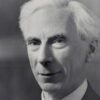
‘Twill be wiser to run away when thou hast no Remedy, than to die in the Field foolishly.
Thomas Fuller (1654-1734) English physician, preacher, aphorist, writer
Introductio ad Prudentiam, Vol. 2, # 1890 (1727)
(Source)
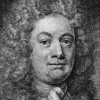
Proclaim not all thou knowest, all thou owest, all thou hast, nor all thou canst.
Benjamin Franklin (1706-1790) American statesman, scientist, philosopher, aphorist
Poor Richard (1739 ed.)
(Source)
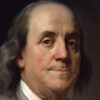
Speak fair; and think what thou wilt.
Thomas Fuller (1654-1734) English physician, preacher, aphorist, writer
Introductio ad Prudentiam, Vol. 1, # 26 (1725)
(Source)
People are much less interested in what you are trying to show them than in what you are trying to hide.
Nassim Nicholas Taleb (b. 1960) Lebanese-American essayist, statistician, risk analyst, aphorist
The Bed of Procrustes: Philosophical and Practical Aphorisms, “Preludes” (2010)
(Source)

If one’s thoughts were written on one’s face, many would need masks.
Minna Antrim (1861-1950) American epigrammatist, writer
Naked Truth and Veiled Allusions (1902)
(Source)
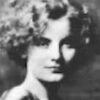
FASHION, n. A deity whom the wise ridicule, yet the discreet obey.
Ambrose Bierce (1842-1914?) American writer and journalist
“Fashion,” The Cynic’s Word Book (1906)
(Source)
In The Devil's Dictionary (1911), it is defined as: "FASHION, n. A despot whom the wise ridicule and obey."
Originally published in the "Devil's Dictionary" column in the San Francisco Wasp (1884-06-28).

He that has a secret should not only hide it, but hide that he has it to hide.
Thomas Carlyle (1795-1881) Scottish essayist and historian
The French Revolution: A History, Part 2, Book 1, ch. 7 (2.1.7) (1837)
(Source)
Carlyle puts this in quotes, but he is again apparently quoting himself. He later used the phrase in his history of Friedrich II of Prussia (Frederick the Great).
Children are unreliable, foreigners to discretion.
Anthony Gilbert (1899-1973) English writer (pseud. of Lucy Beatrice Malleson)
Is She Dead Too? (1950)

It is by the goodness of God that in our country we have those three unspeakably precious things: freedom of speech, freedom of conscience, and the prudence never to exercise either of them.
Mark Twain (1835-1910) American writer [pseud. of Samuel Clemens]
Following the Equator, ch. 20, Epigraph (1897)
(Source)
Cited as from Pudd'nhead Wilson's New Calendar. Sometimes misquoted "... never to practice either."
Politeness is the art of choosing among one’s real thoughts.
Germaine de Staël (1766-1817) Swiss-French writer, woman of letters, critic, salonist [Anne Louise Germaine de Staël-Holstein, Madame de Staël, Madame Necker]
Quoted in Abel Stevens, Madame de Staël, Vol. 1, ch. 4 “Early Character” (1880)
(Source)
Stated as a possible paraphrase: "It was a maxim with her that politeness is the art of choosing among one's real thoughts."

To me are bedroom joys revealed,
Enjoy at will, my lips are sealed.[Dulcis conscia lectuli lucerna,
Quidquid vis facias licet, tacebo.]Martial (AD c.39-c.103) Spanish Roman poet, satirist, epigrammatist [Marcus Valerius Martialis]
Epigrams [Epigrammata], Book 14, epigram 39 (14.39) (AD 84-85) [tr. Whigham (1987)]
(Source)
"A Bedside Lamp [Lucerna cubicularis]". (Source (Latin)). Alternate translations:Privy to nocturnal glee;
Nought I say, of all I see.
[tr. Elphinston (1782), "The Chamber-Lamp," Book 11, ep. 17]I am a night-lamp, privy to the pleasures of the couch; do whatever you please, I shall be silent.
[tr. Bohn's Classical (1859), "A Night-Lamp"]I am a lamp, privy to the pleasures of your couch: you may do what you will, I shall be silent.
[tr. Ker (1920), "A Bedroom Lamp"]A lamp am I, aware of your joy in bed:
Do what you will, not one word will be said.
[tr. Bovie (1970)]I am a lamp, confidante of your sweet bed. You may do whatever you will, I shall be silent.
[tr. Shackleton Bailey (1993), "Bedroom Lamp"]I show but do not countenance what you do.
Douse me. The only record is in you.
[tr. Porter (2010), "A Bedside Light"]
There is more valour needed not to take up the affair of honor than to conquer in it. When there is one fool ready for the occasion, one may excuse oneself from being the second.
[Estima por más valor el no empeñarse que el vencer. y ya que haya un necio ocasionado, escusa que con él no sean dos.]
Baltasar Gracián y Morales (1601-1658) Spanish Jesuit priest, writer, philosopher
The Art of Worldly Wisdom [Oráculo Manual y Arte de Prudencia], § 47 (1647) [tr. Jacobs (1892)]
(Source)
(Source (Spanish)). Alternate translations:He finds greater advantage in not engaging, than in overcoming: and though some rash blockhead may be ready to begin, yet he has a care not to make a second.
[Flesher ed. (1685)]He will deem it better courage not to become ensnarled, than to win, and even should the everpresent fool bob up, he will excuse himself on the ground that he does not wish to be another.
[tr. Fischer (1937)]There is more courage in avoiding danger than in conquering it. He sees that there is already one rash fool, and avoids adding another.
[tr. Maurer (1992)]

Censorship always defeats its own purpose, for it creates, in the end, the kind of society that is incapable of exercising real discretion, incapable, that is, of doing an honest or intelligent job, and thus guarantees a steady intellectual decline.
Henry Steele Commager (1902-1998) American historian, writer, activist
Essay (1953-02-21), “Is Freedom Really Necessary?” Saturday Review
(Source)
Based on a discussion by the American Round Table, New York City (1951). Collected as "Free Enterprise in Ideas," Freedom, Loyalty and Dissent (1954).
Be your character what it will, it will be known; and nobody will take it up on your own word. Never imagine that anything you can say yourself will varnish your defects or add lustre to your perfections! but, on the contrary, it may, and nine times in ten will, make the former more glaring, and the latter obscure.
Lord Chesterfield (1694-1773) English statesman, wit [Philip Dormer Stanhope]
Letter to his son, #166 (19 Oct 1748)
(Source)
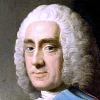
A real man of fashion and pleasures observes decency: at least, neither borrows nor affects vices; and, if he unfortunately has any, he gratifies them with choice, delicacy, and secrecy.
Lord Chesterfield (1694-1773) English statesman, wit [Philip Dormer Stanhope]
Letter to his son, #119 (27 Mar 1747)
(Source)
Secrets with girls, like loaded guns with boys,
Are never valued till they make a noise.George Crabbe (1754-1832) English poet, writer, surgeon, clergyman
Tales of the Hall, “The Maid’s Story” (1819)
(Source)
Alcohol: A liquid good for preserving almost everything except secrets.
(Other Authors and Sources)
Charles Wayland Towne, The Foolish Dictionary (1905)

Thy friend has a friend, and thy friend’s friend has a friend; be discreet.
The Talmud (AD 200-500) Collection of Jewish rabbinical writings
Babylonian Talmud, Baba Bathra 28b
(Source)
Noted as a common saying. The summary "be discreet" does not appear in the actual Talmud translations I found, but seems to be an explanation from early Christian reviews of the Talmud for when the verse is given as a stand-alone proverb.

Lesson to the Indiscreet: They who say all they think, and tell all they know, put others on their guard and prevent themselves from being told anything of consequence.
Horace Walpole (1717-1797) English novelist, letter writer
A Note Book of Horace Walpole, “1781” (1927)

A wise Man will keep his Suspicions muzzled, but he will keep them awake.
George Savile, Marquis of Halifax (1633-1695) English politician and essayist
“Of Caution and Suspicion,” Political, Moral, and Miscellaneous Thoughts and Reflections (1750)
(Source)

CATO: Content thyself to be obscurely good.
When vice prevails, and impious men bear sway,
The post of honour is a private station.Joseph Addison (1672-1719) English essayist, poet, statesman
Cato, Act 4, sc. 4, l. 139ff (1713)
(Source)
FALSTAFF: The better part of valour is discretion.
William Shakespeare (1564-1616) English dramatist and poet
Henry IV, Part 1, Act 4, sc. 4, l. 122ff (4.4.122) (1597)
(Source)
Today it is usually phrased "Discretion is the better part of valor."

Be wiser than other people, if you can; but do not tell them so.
Lord Chesterfield (1694-1773) English statesman, wit [Philip Dormer Stanhope]
Letter to his son, #104 (29 Nov 1745)
(Source)

Were there no hearers, there would be no backbiters.
George Herbert (1593-1633) Welsh priest, orator, poet.
Jacula Prudentum, or Outlandish Proverbs, Sentences, &c. (compiler), # 69 (1640 ed.)
(Source)
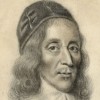
“My dear young lady,” said the Professor, suddenly looking up with a very sharp expression at both of them, “there is one plan which no one has yet suggested and which is well worth trying.”
“What’s that?” said Susan.
“We might all try minding our own business,” said he. And that was the end of that conversation.
C. S. Lewis (1898-1963) English writer, literary scholar, lay theologian [Clive Staples Lewis]
The Lion, the Witch, and the Wardrobe (1950)
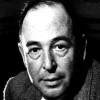
I will begin to speak, when I have that to say which had not better be unsaid.
Cato the Younger (95-46 BC) Roman politician, statesman, orator [Marcus Porcius Cato Uticensis, Cato Minor]
In Plutarch, “Cato the Younger,” Parallel Lives [tr. Dryden (1693)]
Three may keep a Secret, if two of them are dead.
Benjamin Franklin (1706-1790) American statesman, scientist, philosopher, aphorist
Poor Richard (1735 ed.)
(Source)
A man always is to be himself the judge of how much of his mind he will show to other men; even to those he would have work along with him. There are impertinent inquiries made: your rule is to leave the inquirer uninformed on that matter; not, if you can help it, misinformed; but precisely as dark as he was!
Thomas Carlyle (1795-1881) Scottish essayist and historian
Lecture (1840-05-22), “The Hero as King,” Home House, Portman Square, London
(Source)
The lecture notes were collected by Carlyle into On Heroes, Hero-Worship, & the Heroic in History, Lecture 6 (1841).
If you would keep your Secret from an enemy, tell it not to a friend.
Benjamin Franklin (1706-1790) American statesman, scientist, philosopher, aphorist
Poor Richard (1741 ed.)
(Source)
To go on with my advice (that is, supposing
You need advice from me): Be careful about
The things you say and the people to whom you say them.
Avoid the man who asks too many questions.
No question but he’ll be a teller of tales;
An ear that eager can’t keep a secret for long,
And once a word slips out it won’t come back.[Protinus ut moneam (si quid monitoris eges tu)
quid de quoque viro et cui dicas, saepe videto,
percontatorem fugito: nam garrulus idem est,
nec retinent patulae commissa fideliter aures,
et semel emissum volat irrevocabile verbum.]Horace (65–8 BC) Roman poet, satirist, soldier, politician [Quintus Horatius Flaccus]
Epistles [Epistularum, Letters], Book 1, ep. 18 “To Lollius,” l. 67ff (1.18.67-71) (20 BC) [tr. Ferry (2001)]
(Source)
(Source (Latin)). Other translations:Further for to admonishe the (If therof thou standst neede)
What, of what men, to whom thou speakest, take ever earnest heede.
A groper after novelties, in any wise do flye.
I warrante the learne this of me the same's a verye pye.
Nor wyde ope eares the thinges of trust can well conceale at all,
And word once scaped, away its gone, and none can it recall.
[tr. Drant (1567)]When thou dost talk of any man, take care
Of whom, to whom, and what thy speeches are.
Shun him that is inquisitive, for he
Will be as guilty of Garrulitie.
And his still gaping ears itch to reveal
What e're his friend intrusts him to conceal.
And 'tis impossible e're to recall
One syllable which we have once let fall.
[tr. A. B.; ed. Brome (1666)]But to advise you, if you want advice,
Take heed of whom you speak, and what it is,
Take heed to whom, avoid the busy Men,
Fly the inquisitive, they'l talk agen,
And tell what you have said, a leaky Ear
Can never hold what it shall chance to hear,
'Twill run all out, and what you once let fall
It flys, and tis impossible to recall.
[tr. Creech (1684)]If my advice regard my claim,
Be tender of another's fame,
And be the man with caution tried.
In whose discretion you confide.
The impertinent be sure to hate;
Who loves to ask, will love to prate.
Ears, that unfold to every tale,
Entrusted secrets ill conceal,
And you shall wish, but wish in vain,
To call the fleeting words again.
[tr. Francis (1747)]But with our sage monitions to proceed,
If peradventure such advice you need --
When of men's characters you speak, beware
Of whom, to whom, and what those speeches are!
Shun the inquisitive: pert fools will prate;
And words once utter'd are recall'd too late.
[tr. Howes (1845)]Moreover, that I may advise you (if in aught you stand in need of an adviser), take great circumspection what you say to any man, and to whom. Avoid an inquisitive impertinent, for such a one is also a tattler, nor do open ears faithfully retain what is intrusted to them; and a word, once sent abroad, flies irrevocably.
[tr. Smart/Buckley (1853)]Well, to proceed; beware, if there is room
For warning, what you mention, and to whom;
Avoid a ceaseless questioner; he burns
To tell the next he talks with what he learns;
Wide ears retain no secrets, and you know
You can't get back a word you once let go.
[tr. Conington (1874)]But with my words of warning to proceed.
If haply you a word of warning need!
Ere of a man you tell a thing, think well
To whom you tell it, also what you tell.
The man that pesters you with questions shun --
Tattlers are dangerous, and he is one.
Wide-gaping ears no secrets can retain.
And words once spoken you woo back in vain.
[tr. Martin (1881)]Further let me advise you, if you need advice, to be careful what you say about anybody and to whom you say it. Avoid a gossip. He is always a tattler; his widespread ears do not keep the secrets committed to them, and a word once spoken never returns.
[tr. Dana/Dana (1911)]To continue my advice, if you need advice in aught — think often of what you say, and of whom, and to whom you say it. Avoid a questioner, for he is also a tattler. Open ears will not keep secrets loyally, and the word once let slip flies beyond recall.
[tr. Fairclough (Loeb) (1926)]If my advice regard may claim,
Be tender of another's fame,
And be the man with caution tried
In whose discretion you confide.
Th' impertinent be sure to hate;
Who loves to ask, will love to prate.
Ears, that unfold to every tale,
Intrusted secrets ill conceal,
And you shall wish, but wish in vain,
To call the fleeting words again.
[tr. Murison (1931); ed. Kramer, Jr. (1936)]Let me give you some more advice -- not that you need it.
Becareful of what you say and to whom and of whom.
Steer clear of inquisitive snoopers: they're usually gossips.
Open ears will nto keep safe what's deposited in them,
And a word once launched on its way cannot be revoked.
[tr. Palmer Bovie (1959)]In case you need some more advice, I offer this:
Be careful what you say and to whom, and about whom.
Run from a curious man; he'll love telling others.
Secrets that you trust to open ears won't be well kept,
and once a word escapes, it flies; you can't recall it.
[tr. Fuchs (1977)]Another word of advice -- if in fact you need an adviser:
watch what you say, and of which man, and to whom you say it.
Have nothing to do with inquisitive people -- they're also gossips.
You cannot rely on ready ears to contain a secret,
And once a word escapes, it flies beyond recall.
[tr. Rudd (2005 ed.)]On with the advice (if you need any advice):
Always think what you say to whom, and of whom.
Avoid the inquisitive: they’re also garrulous,
Flapping ears can’t be trusted to keep a secret,
And once the word’s let slip, it flies beyond recall.
[tr. Kline (2015)]
Be a listener only, keep within yourself, and endeavor to establish with yourself the habit of silence especially in politics. In the fevered state of our country, no good can ever result from any attempt to set one of these fiery zealots to rights either in fact or principle. They are determined as to the facts they will believe and the opinions on which they will act. Get by them therefore as you would by an angry bull: it is not for a man of sense to dispute the road with such an animal.
Thomas Jefferson (1743-1826) American political philosopher, polymath, statesman, US President (1801-09)
Letter (1808-11-24) to Thomas Jefferson Randolph
(Source)
Respectfulness, without the rules of propriety, becomes laborious bustle; carefulness, without the rules of propriety, becomes timidity; boldness, without the rules of propriety, becomes insubordination; straightforwardness, without the rules of propriety, becomes rudeness.
[恭而無禮則勞、愼而無禮則葸、勇而無禮則亂、直而無禮則絞。]
Confucius (c. 551- c. 479 BC) Chinese philosopher, sage, politician [孔夫子 (Kǒng Fūzǐ, K'ung Fu-tzu, K'ung Fu Tse), 孔子 (Kǒngzǐ, Chungni), 孔丘 (Kǒng Qiū, K'ung Ch'iu)]
The Analects [論語, 论语, Lúnyǔ], Book 8, verse 2 (8.2.1) (6th C. BC – AD 3rd C.) [tr. Legge (1861)]
(Source)
(Source (Chinese)). Brooks (below) believes this text was interpolated into Book 8 at the time that Book 14 was collected. Alternate translations:Without the Proprieties, we have these results: for deferential demeanour, a worried one; for calm attentiveness, awkward bashfulness; for manly conduct, disorderliness; for straightforwardness, perversity.
[tr. Jennings (1895)]Earnestness without judgment becomes pedantry; caution without judgment becomes timidity; courage without judgment leads to crime; uprightness without judgment makes men tyrannical.
[tr. Ku Hung-Ming (1898)]Courtesy uncontrolled by the laws of good taste becomes labored effort, caution uncontrolled becomes timidity, boldness uncontrolled becomes recklessness, and frankness uncontrolled become effrontery.
[tr. Soothill (1910)]Respect without rules of procedure becomes laborious fuss: scrupulosity without rules of procedure, timidity (fear to show the thought); boldness without such rules breeds confusion; directness without rules of procedure becomes rude.
[tr. Pound (1933)]Courtesy not bounded by the prescriptions of ritual becomes tiresome. Caution not bounded by the prescriptions of ritual becomes timidity, daring becomes turbulence, inflexibility becomes harshness.
[tr. Waley (1938)]Not to follow the rites in being modest is annoyance. Not to follow them in exercising care is timidity. Not to follow them in acts of bravery is confusion. Not to follow them in our uprightness is brusqueness.
[tr. Ware (1950)]Unless a man has the spirit of the rites, in being respectful he will wear himself out, in being careful he will become timid, in having courage he will become unruly, and in being forthright he will become intolerant.
[tr. Lau (1979)]If one is courteous but does without ritual, then one dissipates one's energies; if one is cautious but does without ritual, then one becomes timid; if one is bold but does without ritual, then one becomes reckless; if one is forthright but does without ritual, then one becomes rude.
[tr. Dawson (1993)]Without ritual, courtesy is tiresome; without ritual, prudence is timid; without ritual, bravery is quarrelsome; without ritual, frankness is hurtful.
[tr. Leys (1997)]Respectfulness without the rituals becomes laboriousness; discretion without the rituals becomes apprehensiveness; courage without the rituals becomes rebelliousness; straightforwardness without the rituals becomes impetuosity.
[tr. Huang (1997)]One would be tired if one is humble but not polite; One would be week if one is cautious but not polite; One would be foolhardy if one is brave but not polite; One would be caustic if one is frank but not polite.
[tr. Cai/Yu (1998), #190]Deference unmediated by observing ritual propriety [li] is lethargy; caution unmediated by observing ritual propriety is timidity; boldness unmediated by observing ritual propriety is rowdiness; candor unmediated by observing ritual propriety is rudeness.
[tr. Ames/Rosemont (1998)]If he is respectful without propriety, he becomes wearisome. If he is careful without propriety, he becomes finicky. If he is brave without propriety, he becomes disruptive. If he is upright without propriety, he becomes censorious.
[tr. Brooks/Brooks (1998)]Reverence becomes tedium without Ritual, and caution becomes timidity. Without Ritual, courage becomes recklessness, and truth becomes intolerance.
[tr. Hinton (1998)]If you are respectful but lack ritual you will become exasperating; if you are careful but lack ritual you will become timid; if you are courageous but lack ritual you will become unruly; and if you are upright but lack ritual you will become inflexible.
[tr. Slingerland (2003)]Courtesy without ritual becomes labored; caution without ritual becomes timidity; daring without ritual becomes riotousness; directness without ritual becomes obtrusiveness.
[tr. Watson (2007)]Unless a man acts according to the spirit of the rites, in being respectful, he will tire himself out; in being cautious, he will become timid; in being brave, he will become unruly; in being forthright, he will become derisive.
[tr. Chin (2014)]

Don’t write anything you can phone. Don’t phone anything you can talk. Don’t talk anything you can whisper. Don’t whisper anything you can smile. Don’t smile anything you can nod. Don’t nod anything you can wink.
Earl Kemp Long (1895-1960) American politician, orator.
(Attributed)
Advice on political discretion. Widely attributed, but with no primary sourcing or particular context I can find. Quoted in his biography, Michael L. Kurtz, Earl K. Long: The Saga of Uncle Earl and Louisiana Politics, ch. 7 (1990).

It takes a clever man to hide his cleverness.
[C’est une grande habileté que de savoir cacher son habileté.]
François VI, duc de La Rochefoucauld (1613-1680) French epigrammatist, memoirist, noble
Réflexions ou sentences et maximes morales [Reflections; or Sentences and Moral Maxims], ¶245 (1678) [tr. Heard (1917), ¶253]
(Source)
In the 1665 edition, this read: Le plus grand art d’un habile homme est celui de savoir cacher son habileté.
(Source (French)). Alternate translations:It is a Great Act of Wisdom to be able to Conceal one's being Wise.
[tr. Stanhope (1694), ¶246]It requires no small degree of ability to know when to conceal it.
[pub. Donaldson (1783), "Ability," ¶4]It is a great ability to be able to conceal one's ability.
[ed. Gowens (1851), ¶257]There is great ability in knowing how to conceal one's ability.
[tr. Bund/Friswell (1871), ¶245]It is the height of art to conceal art.
[tr. Stevens (1939), ¶245]A very clever man will know how to hide his cleverness.
[tr. FitzGibbon (1957), ¶245]It is exceedingly clever to know how to hide your cleverness.
[tr. Kronenberger (1959), ¶245]To conceal ingenuity is ingenuity indeed.
[tr. Tancock (1959), ¶245]It is great cleverness to know how to hide our cleverness.
[tr. Whichello (2016), ¶245]

Does it really matter what these affectionate people do — so long as they don’t do it in the streets and frighten the horses!
Beatrice Campbell (1865-1940) English actress [Mrs. Patrick Campbell, née Beatrice Stella Tanner]
(Attributed)
Apocryphally a rebuke c. 1910 to a young actress who criticized an older actor as seeming too affectionate toward the handsome leading man in the production. Most famously given in this form in Alan Dent, Mrs. Patrick Campbell (1961).
Further discussion and variants:

Discretion is the salt, and fancy the sugar of life; the one preserves, the other sweetens it.
Christian Nestell Bovee (1820-1904) American epigrammatist, writer, publisher
Intuitions and Summaries of Thought, Vol. 1, “Discretion” (1862)
(Source)
Wear your learning, like your watch, in a private pocket; and do not pull it out and strike it, merely to show that you have one. If you are asked what o’clock it is, tell it; but do not proclaim it hourly and unasked, like the watchman.
Lord Chesterfield (1694-1773) English statesman, wit [Philip Dormer Stanhope]
Letter to his son, #142 (22 Feb 1748)
(Source)
If you can’t be kind, at least be vague.
Judith Martin (b. 1938) American author, journalist, etiquette expert [a.k.a. Miss Manners]
“Miss Manners,” syndicated column (1982-08-28)
(Source)
Widely cited as a Miss Manners quotation, this is actually the headline given in at least some outlets (e.g., The Washington Post) for this date's column (which may or may not have been the title suggested by the column itself). The phrased in an expanded form in the article:In any case, Miss Manners does not believe in ending a summer fling by explaining that it was a summer fling, when the other person might have considered it significant. Neither does one document the decline of one's interest; it is not nearly so charming a story as the build-up of feeling was, at the beginning of the summer.
There is no way to be kind in such an assignment, but you can at least be vague.