A cat may looke on a King.
John Heywood (1497?-1580?) English playwright and epigrammist
Proverbs, Part 2, ch. 5 (1546)
(Source)
Revised spelling from the 1874 edition. Original editions had it, "A cat maie looke on a kyng." This is the earliest text found with this recorded as an English proverb.
Thomas Fuller included the phrase ("A Cat may look upon a King") in his Gnomologia, # 35 (1732).
For more information on this phrase and its history, see: meaning and origin of the phrase ‘a cat may look at a king’ – word histories.
Quotations about:
autonomy
Note not all quotations have been tagged, so Search may find additional quotes on this topic.
KING RICHARD: You may my glories and my state depose
But not my griefs; still am I king of those.William Shakespeare (1564-1616) English dramatist and poet
Richard II, Act 4, sc. 1, l. 201ff (4.1.201-202) (1595)
(Source)
When Bolingbroke questions Richard's willingness to abdicate while grieving over the loss.

Time is the coin of your life. It is the only coin you have and only you can determine how it will be spent. Be careful lest you let other people spend it for you.
Carl Sandburg (1878-1967) American poet, biographer
(Attributed)
(Source)
Recalled by journalist Ralph McGill from a 1951 conversation with Sandburg, in a October 1959 syndicated column. In a 1966 column about Sandburg's 88th birthday, he quoted it as:Time is the coin of your life. You spend it. Do not allow others to spend it for you.
For more information on the background and origin of this quotation see Quote Origin: Time Is the Coin of Your Life. It Is the Only Coin You Have – Quote Investigator®.
He who imagines he can do without the world, deceives himself much; but he who fancies the world cannot do without him, is still more mistaken.
[Celui qui croit pouvoir trouver en soi-même de quoi se passer de tout le monde se trompe fort; mais celui qui croit qu’on ne peut se passer de lui se trompe encore davantage.]
François VI, duc de La Rochefoucauld (1613-1680) French epigrammatist, memoirist, noble
Réflexions ou sentences et maximes morales [Reflections; or Sentences and Moral Maxims], ¶201 (1665-1678) [pub. Donaldson (1783), ¶93]
(Source)
Present in the 1st (1665) edition. In manuscript, the beginning read "Celui qui croit pouvoir se passer de tout le monde ..."
(Source (French)). Other translations:He that fansies such a sufficiency in himself, that he can live without all the World, is mightily mistaken; but he that imagines himself so necessary, that other people cannot live without him, is a great deal more mistaken.
[tr. Stanhope (1694), ¶202]He who imagines he can do without the world, deceives himself much; but he who fancies the world cannot do without him, is still more mistaken.
[ed. Lepoittevin-Lacroix (1797), ¶192]He who imagines he can do without the world, deceives himself much: but he who fancies the world cannot do without him, is under a far greater deception.
[ed. Carvill (1835), ¶81]He who thinks he can find in himself the means of doing without others is much mistaken; but he who thinks that others cannot do without him is still more mistaken.
[ed. Gowens (1851), ¶210]He who thinks he has the power to content the world greatly deceives himself, but he who thinks that the world cannot be content with him deceives himself yet more.
[tr. Bund/Friswell (1871), ¶201]The man who thinks he can do without the world errs; but the man who thinks the world can do without him is in still greater error.
[tr. Heard (1917), ¶206]It is a great mistake for a man to suppose that he can dispense with the world; but it is a much greater one to suppose that the world cannot dispense with him.
[tr. Stevens (1939), ¶201]A man who believes that his inner resources are such that he can dispense with his fellow-men is committing a serious mistake: it is not, however, so serious as that of the man who believes himself indispensable to others.
[tr. FitzGibbon (1957), ¶201]The man who thinks he can do without the world is indeed mistaken: but the man who thinks the world cannot do without him is mistaken even worse.
[tr. Kronenberger (1959), ¶201]The man who thinks he can find enough in himself to be able to dispense with everybody else makes a great mistake, but the man who thinks he is indispensable to others makes an even greater.
[tr. Tancock (1959), ¶201]He who believes that he can make do without any one else in the world, is very mistaken; but he who believes that nobody in the world could make do without him, deceives himself still more greatly.
[tr. Whichello (2016) ¶201]

Where the environment is stupid or prejudiced or cruel, it is a sign of merit to be out of harmony with it.
Bertrand Russell (1872-1970) English mathematician and philosopher
Conquest of Happiness, Part 1, ch. 9 “Fear of Public Opinion” (1930)
(Source)

The people we meet are the playwrights and stage managers of our lives: they cast us in a role, and we play it whether we will or not. It is not so much the example of others we imitate as the reflection of ourselves in their eyes and the echo of ourselves in their words.
Eric Hoffer (1902-1983) American writer, philosopher, longshoreman
Passionate State of Mind, Aphorism 130 (1955)
(Source)
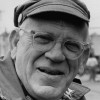
My declarations upon this subject of negro slavery may be misrepresented, but cannot be misunderstood. I have said that I do not understand the Declaration to mean that all men were created equal in all respects. They are not our equal in color; but I suppose that it does mean to declare that all men are equal in some respects; they are equal in their right to “life, liberty, and the pursuit of happiness.” Certainly the negro is not our equal in color, perhaps not in many other respects; still, in the right to put into his mouth the bread that his own hands have earned, he is the equal of every other man, white or black. In pointing out that more has been given you, you cannot be justified in taking away the little which has been given him. All I ask for the negro is that if you do not like him, let him alone. If God gave him but little, that little let him enjoy.
Abraham Lincoln (1809-1865) American lawyer, politician, US President (1861-65)
Speech (1858-07-17), Springfield, Illinois
(Source)

Since the invention of the mirror, everyone knows what he or she looks like and does not find it helpful or enjoyable to have oddities or deficiencies — according to someone else’s standards and tastes — pointed out. And every adult assumes the right of making his or her own decisions about eating, drinking, mating and reproducing, and finds being monitored and instructed — again according to someone else’s preferences — distasteful.
Judith Martin (b. 1938) American author, journalist, etiquette expert [a.k.a. Miss Manners]
“Miss Manners,” syndicated column (1986-01-19)
(Source)

‘Tis all a Chequer-board of Nights and Days
Where Destiny with Men for Pieces plays:
Hither and thither moves, and mates, and slays,
And one by one back in the Closet lays.
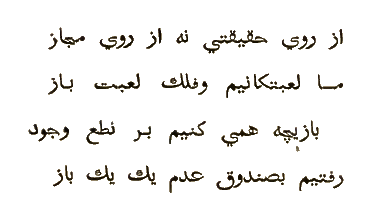
Omar Khayyám (1048-1123) Persian poet, mathematician, philosopher, astronomer [عمر خیام]
Rubáiyát [رباعیات], Bod. # 94 [tr. FitzGerald, 1st ed. (1859), # 49]
(Source)
Alternate translations:In the view of reality, not of illusion,
We mortals are chess-men and fate is the player;
We each act our game on the board of life,
And then one by one are swept into the box!
[tr. Cowell (1858), # 27]Impotent Pieces of the Game He plays
Upon this Chequer-board of Nights and Days;
Hither and thither moves, and checks, and slays;
And one by one back in the Closet lays.
[tr. FitzGerald, 2nd ed. (1868), # 74, and 3rd ed. (1872) # 69]But helpless Pieces of the Game He plays
Upon this Chequer-board of Nights and Days;
Hither and thither moves, and checks, and slays,
And one by one back in the Closet lays.
[tr. FitzGerald, 4th ed. (1879), # 49, and 5th ed. (1889), # 49]Here, below, we are naught but puppets tor the diversion of the wheel of the heavens. This is indeed a truth, and no simile. We truly are but pieces on this chessboard of humanity, which in the end we leave, only to enter, one by one, into the grave of nothingness.
[tr. McCarthy (1879), # 61]We are but chessmen, who to move are fain,
Just as the great Chessplayer doth ordain.
It moves us on life's chess-board to and fro,
And then in death's box shuts us up again.
[tr. Whinfield (1882), # 148]We are but chessmen, destined, it is plain,
That great chess player, Heaven, to entertain;
It moves us on life's chess-board to and fro,
And then in death's box shuts up again.
[tr. Whinfield (1883), # 270]We are all Puppets of the Sky, we run
As wills the Player till the Game is done,
And when The Player wearies of the Sport,
He throws us into Darkness One by One.
[tr. Garner (1887), 4.2]But puppets are we in Fate's puppet-show --
No figure of speech is this, but in truth 't is so!
On the draughtboard of Life we are shuffled to and fro,
Then one by one to the box of Nothing go!
[tr. M. K. (1888)]HERE, BELOW, WE ARE NAUGHT BUT
PUPPETS FOR THE DIVERSION OF THE
WHEEL OF THE HEAVENS. THIS IS
INDEED A TRUTH, AND NO SIMILE.
WE TRULY ARE BUT PIECES ON
THIS CHESSBOARD OF HUMANITY,
WHICH IN THE END WE LEAVE, ONLY
TO ENTER, ONE BY ONE, INTO THE
GRAVE OF NOTHINGNESS.
[tr. McCarthy (1889)]Upon this checkerboard of joys and woes
The wretched puppet hither and thither goes,
Until the mighty Player of the skies
His plaything back in the casket throws.
[tr. Garner (1898), # 82]We're the pieces Heaven moves on the chessboard of space
(No metaphor this, but the truth of the case);
Each awhile on Life's board plays his game and returns
In the box of nonentity back to his place.
[tr. Payne (1898), # 480]To speak plain language, and not in parables,
we are the pieces and heaven plays the game,
we are played together in a baby-game upon the chessboard of existence,
and one by one we return to the box of non-existence.
[tr. Heron-Allen (1898), # 94]'Tis not a fancy of disordered brains
But certain truth, that on life's checkered square
We men are puppets, whose steps God ordains;
The time is short in which we dally there,
Then in death's casket one by one we fall,
The game is played and earth must cover all.
[tr. Cadell (1899), # 108]Like helpless chessmen on the checkered blocks,
We 're hither, thither moved, till Heaven knocks
The luckless pieces from the crowded board,
And one by one returns them to the box.
[tr. Roe (1906), # 53]In truth and not by way of simile.
Heaven plays the game and its mere puppets we;
In sport moved on Life's chess-board, one by one
We reach the chess-box of Nonentity!
[tr. Thompson (1906), # 317]To speak plain language, parable to shame,
We are the pieces, Heaven plays the game:
A childish game upon the board of Life,
Then back into the Box from whence we came.
[tr. Talbot (1908), # 94]To speak the truth and not as a metaphor, we are
the pieces of the game and Heaven the player.
We play a little game on the chessboard of existence.
Then we go back to the box of non-existence, one by one.
[tr. Christensen (1927), # 6]This is not an allegory, it is reality:
We are the figures and the Sphere is the player.
We act a play on the boards of existence
And we go back into the box of non-existence one by one.
[tr. Rosen (1928), # 168]We puppets dance to tunes of Time we know,
We are puppets in fact, and not for show;
Existence is the carpet where we dance,
So one by one where aught is naught we go.
[tr. Tirtha (1941), # 2.6]Let me speak out, unallegorically:
We are mere puppets of our Master, toys.
On the Table of Existence, one by one.
Flung back in the toy box of Non-existence.
[tr. Graves & Ali-Shah (1967), # 73]We are but chessmen in God’s scheme of things:
The most are merely pawns, a few are kings;
And when our unimportant game is done
Back in the box we tumble one by one.
[tr. Bowen (1976), # 44]We are the puppets and fate the puppeteer
This is not a metaphor, but a truth sincere
On this stage, fate for sometime our moves steer
Into the chest of non-existence, one by one disappear.
[tr. Shahriari (1998), literal]The hands of fate play our game
We the players are given a name
Some are tame, others gain fame
Yet in the end, we’re all the same.
[tr. Shahriari (1998), figurative]
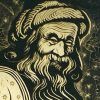
Children aren’t coloring books. You don’t get to fill them with your favorite colors.
Khaled Hosseini (b. 1965) Afghan-American novelist, physician [ خالد حسینی]
The Kite Runner, ch. 3 [Rahim Khan] (2003)
(Source)

A wise man neither lets himself be governed nor seeks to govern others: he wishes reason alone to govern, and for ever.
[Un homme sage ni ne se laisse gouverner, ni ne cherche à gouverner les autres: il veut que la raison gouverne seule et toujours.]
Jean de La Bruyère (1645-1696) French essayist, moralist
The Characters [Les Caractères], ch. 4 “Of the Heart [Du Coeur],” § 71 (4.71) (1688) [tr. Stewart (1970)]
(Source)
(Source (French)). Alternate translations:A Wise Man neither suffers himself to be govern'd, nor attempts to govern others. 'Tis his reason alone which always governs him.
[Bullord ed. (1696)]A Wise Man neither suffers himself to be govern'd, nor attempts to govern others. He wou'd have Reason alone always to govern him.
[Curll ed. (1713)]An intelligent man neither allows himself to be controlled nor attempts to control others; he wishes reason alone to rule, and that always.
[tr. Van Laun (1885)]

Nature never said to me: Do not be poor; still less did she say: Be rich; her cry to me was always: Be independent.
[La Nature ne m’a point dit: ne sois point pauvre; encore moins: sois riche; mais elle me crie: sois indépendant.]
Nicolas Chamfort (1741-1794) French writer, epigrammist (b. Nicolas-Sébastien Roch)
Products of Perfected Civilization [Produits de la Civilisation Perfectionée], Part 1 “Maxims and Thoughts [Maximes et Pensées],” ch. 4, ¶ 281 (1795) [tr. Mathers (1926)]
(Source)
(Source (French)). Alternate translations:Nature has not said to me: Be not poor; still less: Be rich. But she cries out to me: Be independent.
[tr. Hutchinson (1902)]Nature did not say to me, “Do not be poor”; still less, “Be rich”; but she cried out to me, “Be independent.”
[tr. Merwin (1969)]Nature did not tell me, "Do not be poor"; still less did it say "Be rich"; but it does cry to me: "Be independent."
[tr. Pearson (1973)]Nature never urged me, "Be not poor," much less, "Be rich." Instead, she shouts: "Be independent."
[tr. Dusinberre (1992)]Nature didn't tell me, "Don't be poor!"; and certainly didn't say: "Get rich!"; but she did shout: "Always be independent!"
[tr. Parmée (2003), ¶174]Nature didn't say to me "Never be poor."; still less "Be rich."; but it cried "Be independant."
[tr. Siniscalchi (1994)]

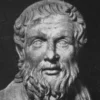
Plato said that virtue has no master. If a person does not honor this principle and rejoice in it, but is purchasable for money, he creates many masters for himself.
Apollonius of Tyana (c. AD 15-100) Greek philosopher and religious leader [Ἀπολλώνιος]
Letters from Apollonius of Tyana, ep. 15, Letter to Euphrates [tr. Jones (2006)]
(Source)
The reference to Plato's Republic, X 617 E.
I want to walk through life instead of being dragged through it.
Alanis Morissette (b. 1974) Canadian-American singer, songwriter, actress
Maverick Recording press release information, Jagged Little Pill album (Jun 1995)
(Source)

Those three things — autonomy, complexity, and a connection between effort and reward — are, most people will agree, the three qualities that work has to have if it is to be satisfying.
Malcolm Gladwell (b. 1963) Anglo-Canadian journalist, author, public speaker
Outliers: The Story of Success, ch. 5, sec. 10 (2008)
(Source)

CORIOLANUS:I’ll never
Be such a gosling to obey instinct; but stand,
As if a man were author of himself,
And knew no other kin.William Shakespeare (1564-1616) English dramatist and poet
Coriolanus, Act 5, sc. 3, l. 38ff (5.3.38-41) (c. 1608)
(Source)
I have begun in old age to understand just how oddly we are all put together. We are so proud of our autonomy that we seldom if ever realize how generous we are to ourselves, and just how stingy with others. One of the booby traps of freedom — which is bordered on all sides by isolation — is that we think so well of ourselves. I now see that I have helped myself to the best cuts at life’s banquet.

Civilization is the progress toward a society of privacy. The savage’s whole existence is public, ruled by the laws of his tribe. Civilization is the process of setting man free from men.
Ayn Rand (1905-1982) Russian-American writer, philosopher
The Fountainhead, ch. 18 [Roark] (1943)
(Source)
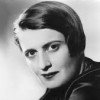
The animals of the world exist for their own reasons. They were not made for humans any more than black people were made for whites or women for men.
Alice Walker (b. 1944) American writer, activist
Foreword to Marjorie Spiegel, The Dreaded Comparison: Human and Animal Slavery (1988; rev. ed. 1997)

To be poor and independent, is very nearly an impossibility.
William Cobbett (1763-1835) English politician, agriculturist, journalist, pamphleteer
Advice to Young Men and (Incidentally) to Young Women, Letter 2, #54 (1829)
(Source)
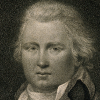
Your children are not your children.
They are the sons and daughters of Life’s longing for itself.
They come through you but not from you,
And though they are with you yet they belong not to you.
You may give them your love but not your thoughts,
For they have their own thoughts.
You may house their bodies but not their souls,
For their souls dwell in the house of tomorrow, which you cannot visit, not even in your dreams.
You may strive to be like them, but seek not to make them like you.
For life goes not backward nor tarries with yesterday.Kahlil Gibran (1883-1931) Lebanese-American poet, writer, painter [Gibran Khalil Gibran]
“On Children,” The Prophet (1923)
(Source)
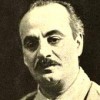
MONGO: Mongo only pawn in game of life.
Mel Brooks (b. 1926) American comedic actor, writer, producer [b. Melvyn Kaminsky]
Blazing Saddles (1974)
A man may fall many times but he won’t be a failure until he says that someone pushed him.
Elmer G. Letterman (1897-1982) American insurance broker, salesman, author
(Attributed)
General, man is very useful.
He can fly and he can kill.
But he has one defect:
He can think.Bertolt Brecht (1898-1956) German poet, playwright, director, dramaturgist
“General, Your Tank Is a Powerful Vehicle,” in “From a German War Primer,” The Svendborg Poems (1939) [tr. Baxandall]
The way chosen by the United States was plainly marked by a few clear precepts, which govern its conduct in world affairs.
First: No people on earth can be held, as a people, to be enemy, for all humanity shares the common hunger for peace and fellowship and justice.
Second: No nation’s security and well-being can be lastingly achieved in isolation but only in effective cooperation with fellow-nations.
Third: Any nation’s right to form of government and an economic system of its own choosing is inalienable.
Fourth: Any nation’s attempt to dictate to other nations their form of government is indefensible.
And fifth: A nation’s hope of lasting peace cannot be firmly based upon any race in armaments but rather upon just relations and honest understanding with all other nations.
Dwight David Eisenhower (1890-1969) American general, US President (1953-61)
“The Chance for Peace,” speech to American Society of Newspaper Editors, Washington (16 Apr 1953)
Also known as the "Cross of Iron" speech.
Further, a little self-control at the right moment may prevent much subsequent compulsion at the hands of others.
[Daß jedoch ein kleiner, an der rechten Stelle angebrachter Selbstzwang nachmals vielem Zwange von außen vorbeugt.]
Arthur Schopenhauer (1788-1860) German philosopher
Parerga and Paralipomena, Vol. 1, “Aphorisms on the Wisdom of Life [Aphorismen zur Lebensweisheit],” ch. 5 “Counsels and Maxims [Paränesen und Maximen],” § 2.15 (1851) [tr. Saunders (1890)]
(Source)
Source (German). Alternate translation:Nevertheless, a little self-restraint applied at the right place afterwards prevents much restraint from without.
[tr. Payne (1974), 2.15]

If a man has a genuine, sincere, hearty wish to get rid of his liberty, if he is really bent upon becoming a slave, nothing can stop him. And the temptation is to some natures a very great one.
The only freedom which deserves the name, is that of pursuing our own good in our own way, so long as we do not attempt to deprive others of theirs, or impede their efforts to obtain it. Each is the proper guardian of his own health, whether bodily, or mental and spiritual. Mankind are greater gainers by suffering each other to live as seems good to themselves, than by compelling each to live as seems good to the rest.
John Stuart Mill (1806-1873) English philosopher and economist
On Liberty, ch. 1 “Introductory” (1859)
(Source)
The individual is not accountable to society for his actions in so far as these concern the interests of no person but himself. Advice, instruction, persuasion, and avoidance by other people, if thought necessary by them for their own good, are the only measures by which society can justifiably express its dislike or disapprobation of his conduct.
John Stuart Mill (1806-1873) English philosopher and economist
On Liberty, ch. 5 “Applications” (1859)
(Source)
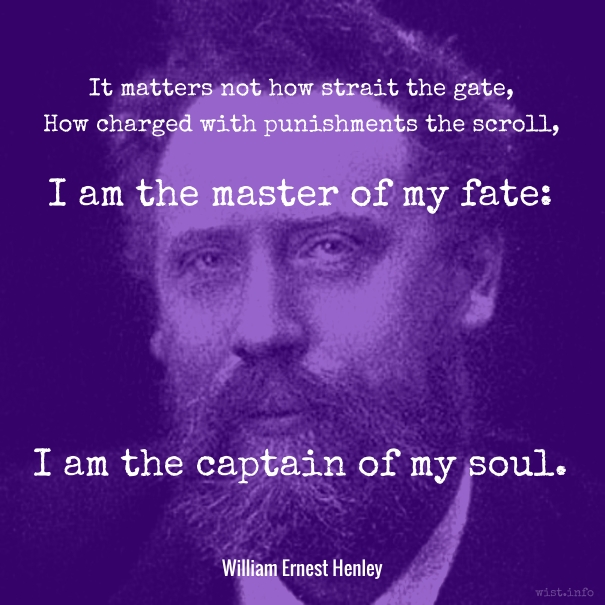
It matters not how strait the gate,
How charged with punishments the scroll,
I am the master of my fate:
I am the captain of my soul.
William Ernest Henley (1849-1903) English poet, critic, editor
“Invictus” (1875)
Never underestimate your power to change yourself.
Never overestimate your power to change others.
H. Jackson "Jack" Brown, Jr. (b. 1940) American writer
Life’s Little Instruction Book, #284, 285 (1991)
(Source)
The only part of the conduct of any one, for which he is amenable to society, is that which concerns others. In the part which merely concerns himself, his independence, is, of right, absolute. Over himself, over his own body and mind, the individual is sovereign.
John Stuart Mill (1806-1873) English philosopher and economist
On Liberty, ch. 1 “Introductory” (1859)
(Source)
We who lived in concentration camps can remember the men who walked through the huts comforting others, giving away their last piece of bread. They may have been few in number, but they offer sufficient proof that everything can be taken away from a man but one thing: the last of the human freedoms — to choose one’s attitude in any given set of circumstances, to choose one’s own way.
Viktor Frankl (1905-1997) German-American psychologist, writer
Man’s Search for Meaning, Part 1 (1959)
(Source)
The basic test of freedom is perhaps less in what we are free to do than in what we are free not to do.
Eric Hoffer (1902-1983) American writer, philosopher, longshoreman
Passionate State of Mind, Aphorism 176 (1955)
(Source)
He is aloof, as if his talk
Were priced beyond the purchasing;
But once his project is contrived,
The folk will want to say of it:
“Of course! We did it by ourselves!”Lao-tzu (604?-531? BC) Chinese philosopher, poet [also Lao-tse, Laozi]
The Way of Life, ch. 17 [tr. Blakney (1955)]
Alt. trans.:
- "A good manager is best when people barely know that he exists. Not so good when people obey and acclaim him. Worse when they despise him. But of a good leader, who talks little, when his work is done -- his aim fulfilled, they will say: 'We did it ourselves.'"
- "When the effective leader is finished with his work, the people say it happened naturally."
Ursula K. Le Guin, in her Tao Te Ching (1997) rendered it this way:True leaders
are hardly known to their followers.
Next after them are the leaders
the people know and admire;
after them, those they fear;
after them, those they despise.
[...]
When the work’s done right,
with no fuss or boasting,
ordinary people say,
Oh, we did it.
There is only one basic human right, the right to do as you damn well please. And with it comes the only basic human duty, the duty to take the consequences.
P. J. O'Rourke (b. 1947) American humorist, editor
“The Liberty Manifesto,” speech, Cato Institute, Washington, DC (1993-05-06)
(Source)
Reprinted in Age and Guile Beat Youth, Innocence, and a Bad Haircut (1995).