I am less concerned about my relationship with God in the afterlife than I am in my relationship with him in this one.
Graham Ericsson (b. 1961) American technologist, writer, aphorist
Journal (2008-06-24)
Quotations about:
God
Note not all quotations have been tagged, so Search may find additional quotes on this topic.

I have bought this wonderful machine — a computer. Now I am rather an authority on gods, so I identified the machine — it seems to me to be an Old Testament god with a lot of rules and no mercy.
Joseph Campbell (1904–1987) American writer, professor of literature
The Power of Myth, ch. 1 (1988)
(Source)
From interviews between Campbell and Bill Moyers in 1985-86. Broadcast as episode 2 of the PBS television show of the same name. Often truncated: "A computer is like an Old Testament god, with a lot of rules and no mercy."

You can take away a man’s gods, but only to give him others in return.
In great contests each party claims to act in accordance with the will of God. Both may be, and one must be, wrong. God cannot be for and against the same thing at the same time. In the present civil war it is quite possible that God’s purpose is something different from the purpose of either party.
Abraham Lincoln (1809–1865) American lawyer, politician, US President (1861–65)
Essay (1862-09-02?), “Meditation on the Divine Will” (frag.)
(Source)
This fragment was found and preserved by John Hay, one of Lincoln's personal secretaries. Hay, and John Nicolay (another of his secretaries) indicated it was a private note, never meant for publication, labeled it as possibly dated 30 September, though their account implies it was during his consideration of the Preliminary Emancipation Proclamation of 22 September. The editors of the Collected Works of Abraham Lincoln push the date as early as 2 September, following Second Bull Run. More detailed analysis of the date here.

CREATOR. A comedian whose audience is afraid to laugh.
H. L. Mencken (1880–1956) American writer and journalist [Henry Lewis Mencken]
A Book of Burlesques, “The Jazz Webster” (1924)
(Source)
The A Little Book in C Major, ch. 4, § 18 (1916), has an alternate definition. This was expanded in Burlesques to include the above, which then became the sole definition in Chrestomathy, ch. 30 "Sententiae" (1949).
Sometimes misattributed to Voltaire.

I have made up my mind that if there is a God, he will be merciful to the merciful.
Upon that rock I stand.
That he will not torture the forgiving.
Upon that rock I stand.
That every man should be true to himself, and that there is no world, no star, in which honesty is a crime.
Upon that rock I stand.
The honest man, the good woman, the happy child, have nothing to fear, either in this world or the world to come.
Upon that rock I stand.Robert Green Ingersoll (1833–1899) American lawyer, freethinker, orator
“What Must We Do to Be Saved?” Sec. 11 (1880)
(Source)
Reason, Observation and Experience — the Holy Trinity of Science — have taught us that happiness is the only good; that the time to be happy is now, and the way to be happy is to make others so. This is enough for us. In this belief we are content to live and die. If by any possibility the existence of a power superior to, and independent of, nature shall be demonstrated, there will then be time enough to kneel. Until then, let us stand erect.
But when erring reason proposes something as being commanded by God, then to scorn the dictate of reason is to scorn the commandment of God.
Thomas Aquinas (1225–1274) Italian friar, philosopher, theologian
Summa Theologica 1a-2ae, q. 19, art. 5, ad 2 (1265-1274)
(Source)
Often quoted without the first clause, which changes the meaning. Alt. trans.: "To disparage the dictate of reason is equivalent to contemning the command of God."

Is it possible that an infinite Deity is unwilling that a man should investigate the phenomena by which he is surrounded? Is it possible that a god delights in threatening and terrifying men? What glory, what honor and renown a god must win on such a field! The ocean raving at a drop; a star envious of a candle; the sun jealous of a fire-fly.
Robert Green Ingersoll (1833–1899) American lawyer, freethinker, orator
Lecture (1874-05-03), “Heretics and Heresies,” Free Religious Society, Kingsbury Hall, Chicago
(Source)
Collected in The Gods and Other Lectures (1876).
An infinite God ought to be able to protect himself, without going in partnership with State Legislatures. Certainly he ought not so to act that laws become necessary to keep him from being laughed at.
Robert Green Ingersoll (1833–1899) American lawyer, freethinker, orator
Some Mistakes of Moses, Sec. 3 “The Politicians” (1879)
Now we have come to the conclusion that every man has a right to think. Would God give a bird wings and make it a crime to fly? Would he give me brains and make it a crime to think? Any God that would damn one of his children for the expression of his honest thought wouldn’t make a decent thief. When I read a book and don’t believe it, I ought to say so. I will do so and take the consequences like a man.
Robert Green Ingersoll (1833–1899) American lawyer, freethinker, orator
Speech on Religious Intolerance, Pittsburgh Opera House (14 Oct 1879)
It doesn’t seem to me that this fantastically marvelous universe, this tremendous range of time and space and different kinds of animals, and all the different planets, and all these atoms with all their motions, and so on, all this complicated thing can merely be a stage so that God can watch human beings struggle for good and evil — which is the view that religion has. The stage is too big for the drama.
Richard Feynman (1918–1988) American physicist
Interview (1959-05-01) by Bill Stout, Viewpoint, KNXT radio
(Source)
Reprinted in Michelle Feynman (ed.), Perfectly Reasonable Deviations from the Beaten Track: The Letters of Richard P Feynman, Appendix I (2006).
A good End cannot sanctifie evil Means; nor must we ever do Evil, that Good may come of it. Some Folks think they may Scold, Rail, Hate, Rob and Kill too; so it be but for God’s sake. But nothing in us unlike him, can please him.
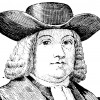
William Penn (1644–1718) English writer, philosopher, politician, statesman
Fruits of Solitude, #537-539 (1682)
(Source)
I know a number of highly sensitive and intelligent people in my own communion who consider as a heresy my faith that God’s loving concern for his creation will outlast all our willfulness and pride. No matter how many eons it takes, he will not rest until all of creation, including Satan, is reconciled to him, until there is no creature who cannot return his look of love with a joyful response of love […] Some people feel it to be heresy because it appears to deny man his freedom to refuse to love God. But this, it seems to me, denies God his freedom to go on loving us beyond all our willfulness and pride. If the Word of God is the light of the world, and this light cannot be put out, ultimately it will brighten all the dark corners of our hearts and we will be able to see, and seeing, will be given the grace to respond with love — and of our own free will.
Madeleine L'Engle (1918–2007) American writer
The Irrational Season (1977)

Everyone is as God has made him, and oftentimes a great deal worse.
Miguel de Cervantes (1547–1616) Spanish novelist
Don Quixote, 11.5

You can safely assume that you’ve created God in your own image when it turns out that God hates all the same people you do.
Anne Lamott (b. 1954) American novelist and non-fiction writer
Bird by Bird (1995)
She attributes the quote to "my priest friend Tom"

HAMLET: There’s a divinity that shapes our ends,
Rough-hew them how we will —William Shakespeare (1564–1616) English dramatist and poet
Hamlet, Act 5, sc. 2, l. 11ff (5.2.11-12) (c. 1600)
(Source)

Lord, make me an instrument of Your peace!
Where there is hatred let me sow love;
Where there is injury, pardon;
Where there is doubt, faith;
Where there is despair, hope;
Where there is darkness, light;
Where there is sadness, joy.
O divine Master,
Grant that I may not so much seek
To be consoled as to console,
To be understood as to understand,
To be loved, as to love;
For it is in giving that we receive;
It is in pardoning that we are pardoned;
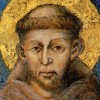
It is in dying to self that we are born to eternal life.Francis of Assisi (1182–1226) Italian Franciscan mystic, reformer, saint [b. Giovanni di Pietro di Bunardone]
“Prayer of St Francis” (Attributed)
The poem (in French) appears to date back no further than 1912, and was first misattributed to St. Francis in 1927. The first English translation (as above) is in 1936. More information on its origin here and here. The original French (La Clochette magazine, #12 (Dec 1912):
Belle prière à faire pendant la Messe
Seigneur, faites de moi un instrument de votre paix.
Là où il y a l'offense, que je mette le pardon.
Là où il y a la discorde, que je mette l'union.
Là où il y a l'erreur, que je mette la vérité.
Là où il y a le doute, que je mette la foi.
Là où il y a le désespoir, que je mette l'espérance.
Là où il y a les ténèbres, que je mette votre lumière.
Là où il y a la tristesse, que je mette la joie.
Ô Maître, que je ne cherche pas tant à être consolé qu'à consoler, à être compris qu'à comprendre, à être aimé qu'à aimer, car c'est en donnant qu'on reçoit, c'est en s'oubliant qu'on trouve, c'est en pardonnant qu'on est pardonné, c'est en mourant qu'on ressuscite à l'éternelle vie.
The religious persecution of the ages has been done under what was claimed to be the command of God. I distrust those people who know so well what God wants them to do, because I notice that it always coincides with their own desires.
Susan B. Anthony (1820–1906) American reformer, aboltionist, sufferagist
Address to National American Woman Suffrage Association, Washington (23-28 Jan 1896)
(Source)

“Perhaps this isn’t just a test of the world,” said Crowley. “It might be a test of you people, too. Hmm?”
“God does not play games with His loyal servants,” said the Metatron, but in a worried tone of voice.
“Whooo-eee,” said Crowley. “Where have you been?”Terry Pratchett (1948–2015) English author
Good Omens, 6. “Saturday” (1990) [with Neil Gaiman]
(Source)

For God judged it better to bring good out of evil than not to permit any evil to exist.
[Melius enim judicavit de malis bene facere quam mala nulla esse permittere.]Augustine of Hippo (354–430) Christian church father, philosopher, saint [b. Aurelius Augustinus]
Enchiridion on Faith, Hope and Love, ch. 8 / § 27 (AD 420) [tr. Outler (1955)]
(Source)
(Source (Latin)). Other translations:For He judged it better to bring good out of evil, than not to permit any evil to exist.
[tr. Shaw (1887)]God judged it better to bring good out of evil than to suffer no evil to exist.
[tr. Clifford (1903)]

“From what I remember,” replied Crowley, thoughtfully, “– and we were never actually on what you might call speaking terms — He wasn’t exactly one for a straight answer. In fact, in fact, He’d never answer at all. He’d just smile, as if He knew something that you didn’t.”
“And of course that’s true,” said the angel. “Otherwise, what’d be the point?”Terry Pratchett (1948–2015) English author
Good Omens, 6. “Saturday” (1990) [with Neil Gaiman]
(Source)
“I mean, maybe you just want to see how it all turns out. Maybe it’s all part of a great big ineffable plan. All of it. You, me, him, everything. Some great big test to see if what you’ve built all works properly, eh? You start thinking: it can’t be a great cosmic game of chess, it has to be just very complicated Solitaire. And don’t bother to answer. If we could understand, we wouldn’t be us. Because it’s all — all –”
INEFFABLE, said the figure feeding the ducks.Terry Pratchett (1948–2015) English author
Good Omens, 7. “Sunday” (1990) [with Neil Gaiman]
(Source)
Crowley speculating to Aziraphale about God's motivations in creating a flawed Universe.
For how can anything done by the will of God be contrary to nature, when the will of so great a creator constitutes the nature of each created thing? A portent therefore happens not contrary to nature, but contrary to what is known of nature.
[Quo modo est enim contra naturam, quod Dei fit uoluntate, cum uoluntas tanti utique conditoris conditae rei cuiusque natura sit? Portentum ergo fit non contra naturam, sed contra quam est nota natura.]
Augustine of Hippo (354–430) Christian church father, philosopher, saint [b. Aurelius Augustinus]
City of God [De Civitate Dei], Book 21, ch. 8 (21.8) (AD 412-416) [tr. Green (Loeb) (1972)]
(Source)
Commonly: "Miracles are not contrary to nature, but only contrary to what we know about nature."
(Source (Latin)). Other translations:For how is that contrary to nature which happens by the will of God, since the will of so mighty a Creator is certainly the nature of each created thing? A portent, therefore, happens not contrary to nature, but contrary to what we know as nature.
[tr. Dods (1871)]Nothing that happens by the will of God can be ‘contrary to nature.’ The ‘nature’ of any particular created thing is precisely what the supreme Creator of the thing willed it to be. Hence, a portent is merely contrary to nature as known, not to nature as it is.
[tr. Walsh/Honan (1954)]For how can an event be contrary to nature when it happens by the will of God, since the will of the great Creator assuredly is the nature of every created thing? A portent, therefore, does not occur contrary to nature, but contrary to what is known of nature.
[tr. Bettenson (1972)]
To know God better is only to realize how impossible it is that we should ever know him at all. I know not which is more childish, to deny him, or define him.
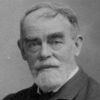
Samuel Butler (1835–1902) English novelist, satirist, scholar
The Note-Books of Samuel Butler (1912)
God moves in extremely mysterious, not to say, circuitous ways. God does not play dice with the universe; He plays an ineffable game of His own devising, which might be compared, from the perspective of any of the other players (i.e., everybody), to being involved in an obscure and complex version of poker in a pitch-dark room, with blank cards, for infinite stakes, with a Dealer who won’t tell you the rules, and who smiles all the time.
Terry Pratchett (1948–2015) English author
Good Omens, 2. “Eleven Years Ago” (1990) [with Neil Gaiman]
(Source)
Nature is too thin a screen, — the glory of the One breaks in everywhere.
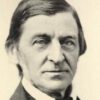
Ralph Waldo Emerson (1803–1882) American essayist, lecturer, poet
“Religion,” The Present Age Lecture 7, Boston (1840-01-29)
(Source)
Lecture series initially presented 4 Dec 1839 - 12 Feb 1840. This particular phrase can be found in Emerson's writing going back to 1837. It also was reused in his Cambridge lecture, "The Preacher" (5 May 1879), in a somewhat different context.
The phrase is also rendered "Nature is too thin a screen; the glory of the omnipresent God bursts through everywhere."
There is a variety of gifts but always the same Spirit; there are all sorts of service to be done, but always to the same Lord; working in all sorts of different ways in different people, it is the same God who is working in all of them.
[Διαιρέσεις δὲ χαρισμάτων εἰσίν τὸ δὲ αὐτὸ Πνεῦμα. καὶ διαιρέσεις διακονιῶν εἰσιν καὶ ὁ αὐτὸς Κύριος. καὶ διαιρέσεις ἐνεργημάτων εἰσίν (καὶ) ὁ δὲ αὐτὸς Θεός ὁ ἐνεργῶν τὰ πάντα ἐν πᾶσιν.]
The Bible (The New Testament) (AD 1st - 2nd C) Christian sacred scripture
Book 7. 1st Letter to the Corinthians 12: 4ff (1 Cor 12:4-6) [JB (1966)]
(Source)
(Source (Greek)). Other translations:Now there are diversities of gifts, but the same Spirit. And there are differences of administrations, but the same Lord. And there are diversities of operations, but it is the same God which worketh all in all.
[KJV (1611)]There are different kinds of spiritual gifts, but the same Spirit gives them. There are different ways of serving, but the same Lord is served. There are different abilities to perform service, but the same God gives ability to all for their particular service.
[GNT (1976)]There are many different gifts, but it is always the same Spirit; there are many different ways of serving, but it is always the same Lord. There are many different forms of activity, but in everybody it is the same God who is at work in them all.
[NJB (1985)]There are different kinds of gifts, but the same Spirit. There are different kinds of service, but the same Lord. There are different kinds of working, but the same God works all of them in all men.
[NIV (2011 ed.)]There are different spiritual gifts but the same Spirit; and there are different ministries and the same Lord; and there are different activities but the same God who produces all of them in everyone.
[CEB (2011)]Now there are varieties of gifts but the same Spirit, and there are varieties of services but the same Lord, and there are varieties of activities, but it is the same God who activates all of them in everyone.
[NRSV (2021 ed.)]
If you would know what the Lord God thinks of money, you have only to look at those to whom He gives it.
Maurice Baring (1874–1945) English man of letters, writer, essayist, translator
(Attributed)
(Source)
Quoted by Dorothy Parker in "The Art of Fiction," interview by Marion Capron, The Paris Review #13 (Summer 1956) (reprinted in The Portable Dorothy Parker (1944)). Not found in Baring's writings. The quotation is often attributed to Parker, especially in simpler forms, e.g., "If you want to know what God thinks of money, just look at the people he gave it to."
HOBBES: Do you think there’s a God?
CALVIN: Well somebody’s out to get me.


Those who believe that they believe in God, but without passion in their hearts, without anguish in mind, without uncertainty, without doubt, without an element of despair even in their consolation, believe only in the God idea, not in God Himself.
[Los que sin pasión de ánimo, sin congoja, sin incertidumbre, sin duda, sin la desesperación en el consuelo, creen creer en Dios, no creen sino en la idea de Dios, más no en Dios mismo.]
Miguel de Unamuno (1864–1936) Spanish philosopher and writer [Miguel de Unamuno y Jugo]
The Tragic Sense of Life [Del sentimiento trágico de la vida], ch. 9 “Faith, Hope, and Charity” (1912) [tr. Flitch (1921)]
(Source)
Alt. trans. [tr. Kerrigan (1972)]: "Whoever believes he believes in God, but believes without passion, without anguish, without uncertainty, without doubt, without despair-in-consolation, believes only in the God-Idea, not in God Himself."
Original Spanish.
In Unamuno's earlier, unpublished work Treatise on the Love of God [Tratado del amor de Dios], ch. 3 "What is Faith?" (1905-08) [tr. Orringer], he used this same phrase and surrounding text: "Those without passion in their soul, without anguish, without uncertainty, without doubt, without despair in consolation, think they believe in God; they believe only in the idea of God, but not in God Himself."

A fanatic is a man who does what he thinks th’ Lord wud do if He knew th’ facts iv the case.
[A fanatic is a man who does what he thinks the Lord would do if He knew the facts of the case.]
Finley Peter Dunne (1867–1936) American humorist and journalist
“Casual Observations,” Mr. Dooley’s Opinions (1901)
“But the Great Plan can only be a tiny part of the overall ineffability,” said Crowley. “You can’t be certain that what’s happening right now isn’t exactly right, from an ineffable point of view.”
“It izz written!” bellowed Beelzebub.
“But it might be written differently somewhere else,” said Crowley. “Where you can’t read it.”
“In bigger letters,” said Aziraphale.
“Underlined,” Crowley added.
“Twice,” suggested Aziraphale.Terry Pratchett (1948–2015) English author
Good Omens, 6. “Saturday” (1990) [with Neil Gaiman]
(Source)
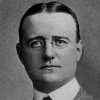
If you are going to sin, sin against God, not the bureaucracy. God will forgive you but the bureaucracy won’t.
Hyman Rickover (1900–1986) Polish-American naval engineer, admiral [b. Chaim Gdala Rykower]
(Attributed)
Variant: "If you are going to sin, sin against God, but not against the bureaucracy -- God will forgive you, the bureaucracy never will."
A phrase used a number of times by Rickover in conversation, and frequently quoted and attributed to him. I cannot, however, find a primary source.
A citation is sometimes given to a New York Times article, 1986-11-03. That article merely quotes someone quoting Rickover.
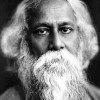
A baby is God’s opinion that life should go on.
Carl Sandburg (1878–1967) American poet, biographer
Remembrance Rock, ch. 2 (1948)
(Source)
Orville Brand "Bowbong" Windom speaking to his grandson, Raymond. Sometimes misquoted as "A baby is God’s opinion that the world should go on."
While popular in its own right, the broader context of the quotation is also worth noting. Windom is recounting a story of a man criticized for sleeping through a play he was supposed to be reviewing, who said, "Sleep is an opinion." Windom continues:And a baby is God's opinion that life should go on. A book that does nothing to you is dead. A baby, whether it does anything to you, represents life. If a bad fire should break out in this house and I had my choice of saving the library or the babies, I would save what is alive. Never will a time come when the most marvelous recent invention is as marvelous as a newborn baby. The finest of our precision watches, the most super-colossal of our supercargo planes, don’t compare with a newborn baby in the number and ingenuity of coils and springs, in the flow and change of chemical solutions, in timing devices and interrelated parts that are irreplaceable. A baby is very modern. Yet it is also the oldest of the ancients. A baby doesn’t know he is a hoary and venerable antique -- but he is. Before man learned how to make an alphabet, how to make a wheel, how to make a fire, he knew how to make a baby -- with the great help of woman, and his God and Maker.
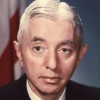
MENAS: We, ignorant of ourselves,
Beg often our own harms, which the wise powers
Deny us for our good; so find we profit
By losing of our prayers.William Shakespeare (1564–1616) English dramatist and poet
Antony and Cleopatra, Act 2, sc. 1, l. 7ff (2.1.7-10) (1607)
(Source)
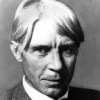
The Lord respects me when I work,
But He loves me when I sing.Rabindranath Tagore (1861–1941) Indian Bengali poet, philosopher [a.k.a. Rabi Thakur, Kabiguru]
“Fireflies” (1926)
(Source)
Alt. trans.:
"God honours me when I work,
He loves me when I sing."
I find that doing the will of God leaves me with no time for disputing about His plans — I do not say for thinking about them.
Shake off all the fears and servile prejudices under which weak minds are servilely crouched. Fix reason firmly in her seat, and call to her tribunal every fact, every opinion. Question with boldness even the existence of a god; because, if there be one, he must more approve the homage of reason, than that of blindfolded fear.
Thomas Jefferson (1743–1826) American political philosopher, polymath, statesman, US President (1801–09)
Letter (1787-08-10) to Peter Carr
(Source)
Let each man think himself an act of God,
His mind a thought, his life a breath of God;
And let each try, by great thoughts and good deeds,
To shew the most of Heaven he hath in him.

And how am I to face the odds
Of man’s bedevilment and God’s?
I, a stranger and afraid
In a world I never made.A. E. Housman (1859–1936) English scholar and poet [Alfred Edward Housman]
Last Poems, No. 12, ll. 15-18 (1922)
(Source)
What, has God put into our hands the keys and most secret springs of his power? Is he obliged not to exceed the limits of our knowledge?
[Quoy, Dieu nous a-il mis en main les clefs & les derniers ressorts de sa puissance? S’est-il obligé à n’outrepasser les bornes de nostre science?]
Michel de Montaigne (1533–1592) French essayist
Essays, Book 2, ch. 12 (2.12), “Apology for Raymond Sebond [Apologie de Raimond de Sebonde]” (1573) [tr. Cotton (1686)]
(Source)
This essay appeared in the 1st edition (1580) of the Essays, and was expanded in each subsequent edition. This text was in the original.
The same translation is given in Cotton/Hazlitt (1877).
(Source (French)). Other translations:What? Hath God delivered into our handes the keyes, and the strongest wardes of his infinite puissance? Hath hee obliged him-selfe not to exceede the boundes of our knowledge?
[tr. Florio (1603)]What! has God given us knowledge of the keys and the uttermost extent of his power? has he bound himself not to go beyond the limits of our understanding?
[tr. Ives (1925)]What! has God put into our hands the keys and most secret springs of His power? Has He bound Himself not to trespass beyond the limits of our knowledge?
[tr. Zeitlin (1934)]What! Has God placed in our hands the keys and ultimate springs of his power? Has he pledged himself not to overstep the bounds of our knowledge?
[tr. Frame (1943)]What! Has God placed in our hands the keys to the ultimate principles of his power? Did he bind himself not to venture beyond the limits of human knowledge?
[tr. Screech (1987)]

Do not judge, and you will not be judged; do not condemn, and you will not be condemned; forgive, and you will be forgiven. Give, and there will be gifts for you: a full measure, pressed down, shaken together, and overflowing, will be poured into your lap; because the standard you use will be the standard used for you.
[Καὶ μὴ κρίνετε, καὶ οὐ μὴ κριθῆτε· καὶ μὴ καταδικάζετε, καὶ οὐ μὴ καταδικασθῆτε. ἀπολύετε, καὶ ἀπολυθήσεσθε· δίδοτε, καὶ δοθήσεται ὑμῖν· μέτρον καλὸν πεπιεσμένον σεσαλευμένον ὑπερεκχυννόμενον δώσουσιν εἰς τὸν κόλπον ὑμῶν· ᾧ γὰρ μέτρῳ μετρεῖτε ἀντιμετρηθήσεται ὑμῖν.]
The Bible (The New Testament) (AD 1st - 2nd C) Christian sacred scripture
Book 3. Gospel of Luke 6:37ff (Luke 6:37–38) (Jesus) [NJB (1985)]
(Source)
This passage is paralleled (reduced) in Matthew 7:1-2 and Mark 4:24.
(Source (Greek)). Other translations:Judge not, and ye shall not be judged: condemn not, and ye shall not be condemned: forgive, and ye shall be forgiven: give, and it shall be given unto you; good measure, pressed down, and shaken together, and running over, shall men give into your bosom. For with the same measure that ye mete withal it shall be measured to you again.
[KJV (1611)]Do not judge, and you will not be judged yourselves; do not condemn, and you will not be condemned yourselves; grant pardon, and you will be pardoned. Give, and there will be gifts for you: a full measure, pressed down, shaken together, and running over, will be poured into your lap; because the amount you measure out is the amount you will be given back.
[JB (1966)]Do not judge others, and God will not judge you; do not condemn others, and God will not condemn you; forgive others, and God will forgive you. Give to others, and God will give to you. Indeed, you will receive a full measure, a generous helping, poured into your hands -- all that you can hold. The measure you use for others is the one that God will use for you.
[GNT (1976)]Don’t judge, and you won’t be judged. Don’t condemn, and you won’t be condemned. Forgive, and you will be forgiven. Give, and it will be given to you. A good portion -- packed down, firmly shaken, and overflowing -- will fall into your lap. The portion you give will determine the portion you receive in return.
[CEB (2011)]Do not judge, and you will not be judged. Do not condemn, and you will not be condemned. Forgive, and you will be forgiven. Give, and it will be given to you. A good measure, pressed down, shaken together and running over, will be poured into your lap. For with the measure you use, it will be measured to you.
[NIV (2011 ed.)]Do not judge, and you will not be judged; do not condemn, and you will not be condemned. Forgive, and you will be forgiven; give, and it will be given to you. A good measure, pressed down, shaken together, running over, will be put into your lap, for the measure you give will be the measure you get back.
[NRSV (2021 ed.)]
Prayer does not change God, but changes him who prays.
Søren Kierkegaard (1813–1855) Danish philosopher, theologian
Works of Love (1847)

Jews do not presume to judge the honest worshiper of any faith. Our prayer book tells us: “The righteous of all nations are worthy of immortality.” We Jews know that there are many mountain tops — and all of them reach for the stars.
Morris N. Kertzer (1910–1983) American rabbi, writer
“What is a Jew?” Look Magazine (1954)
(Source)
This essay was expanded into a book by the same title; this passage underwent various revisions and expansion across different editions.

You have been told, O mortal, what is good,
And what God requires of you:
Only to do justice
And to love goodness,
And to walk modestly with your God.הִגִּ֥יד לְךָ֛ אָדָ֖ם מַה־טּ֑וֹב וּמָֽה־יְהֹוָ֞ה דּוֹרֵ֣שׁ מִמְּךָ֗ כִּ֣י אִם־עֲשׂ֤וֹת מִשְׁפָּט֙ וְאַ֣הֲבַת חֶ֔סֶד וְהַצְנֵ֥עַ לֶ֖כֶת עִם־אֱלֹהֶֽיךָ׃ {ס}
The Bible (The Old Testament) (14th - 2nd C BC) Judeo-Christian sacred scripture [Tanakh, Hebrew Bible], incl. the Apocrypha (Deuterocanonicals)
Book 33. Micah 6: 8 (Mic 6:8) [tr. RJPS (2023 ed.)]
(Source)
(Source (Hebrew)). Other translations:He hath shewed thee, O man what is good; and what doth the LORD require of thee, but to do justly, and to love mercy, and to walk humbly with thy God?
[KJV (1611)]What is good has been explained to you, man; this is what Yahweh asks of you: only this, to act justly, to love tenderly and to walk humbly with your God.
[JB (1966)]No, the Lord has told us what is good. What he requires of us is this: to do what is just, to show constant love, and to live in humble fellowship with our God.
[GNT (1976)]You have already been told what is right and what Yahweh wants of you. Only this, to do what is right, to love loyalty and to walk humbly with your God.
[NJB (1985)]He has told you, human one, what is good and
what the Lord requires from you:
to do justice, embrace faithful love, and walk humbly with your God.
[CEB (2011)]He has told you, O mortal, what is good,
and what does the Lord require of you
but to do justice and to love kindness
and to walk humbly with your God?
[NRSV (2021 ed.)]He has shown you, O mortal, what is good.
And what does the Lord require of you?
To act justly and to love mercy
and to walk humbly with your God.
[NIV (2011 ed.)]
TRINITY, n. […] The Trinity is one of the most sublime mysteries of our holy religion. In rejecting it because it is incomprehensible, Unitarians betray their inadequate sense of theological fundamentals. In religion we believe only what we do not understand, except in the instance of an intelligible doctrine that contradicts an incomprehensible one. In that case we believe the former as a part of the latter.
Ambrose Bierce (1842–1914?) American writer and journalist
“Trinity,” The Devil’s Dictionary (1911)
(Source)
Originally published in The Devil's Dictionary [A-Z] as Vol. 7 of his Collected Works.

There are in nature neither rewards nor punishments — there are consequences.
Robert Green Ingersoll (1833–1899) American lawyer, freethinker, orator
Essay (1881-08) “The Christian Religion,” “Is All of the Bible Inspired?” ch. 2, North American Review, Vol. 133, No. 297
(Source)
Collected in Allen Thorndike Rice (ed.), The Christian Religion, ch. 1 (1882).
See Longfellow (1857).
We hear of the conversion of water into wine at the marriage in Cana, as of a miracle. But this conversion is, through the goodness of God, made every day before our eyes. Behold the rain which descends from heaven upon our vineyards, and which incorporates itself with the grapes to be changed into wine; a constant proof that God loves us, and loves to see us happy!
Benjamin Franklin (1706–1790) American statesman, scientist, philosopher, aphorist
Letter to Abbé Morallet (1779)
(Source)
Apparent origin of the misquote: "Beer is proof that God loves us and wants us to be happy."
Give a man a fish, and you’ll feed him for a day. Give him a religion, and he’ll starve to death while praying for a fish.
(Other Authors and Sources)
Timothy Jones

When the Egyptians were drowning in the Red Sea, the angels in heaven began to break forth in songs of jubilation, but the Holy One, blessed be He, silenced them: “My creatures are perishing — and ye are ready to sing!”
בִּקְּשׁוּ מַלְאֲכֵי הַשָּׁרֵת לוֹמַר שִׁירָה, אָמַר הַקָּדוֹשׁ בָּרוּךְ הוּא: מַעֲשֵׂה יָדַי טוֹבְעִין בַּיָּם, וְאַתֶּם אוֹמְרִים שִׁירָה
The Talmud (AD 200–500) Collection of Jewish rabbinical writings
Babylonian Talmud, Seder Moed, Megillah 10b.26 [Rosten (1972)]
(Source)
A comment from Rabbi Johanan (d. AD 179), discussing the question whether God rejoices in the downfall of the wicked, referencing the destruction of the pursuing Egyptian army at the Red Sea (Exodus 14:21-31). Some sources suggest the song to be sung was Isaiah 6:3.
In addition to Megillah 10b, this passage is echoed in Seder Nezikin, Sanhedrin 39b.5:(Source (Hebrew; Megillah)). Other translations:בְּאוֹתָהּ שָׁעָה בִּקְּשׁוּ מַלְאֲכֵי הַשָּׁרֵת לוֹמַר שִׁירָה לִפְנֵי הַקָּדוֹשׁ בָּרוּךְ הוּא. אָמַר לָהֶן הַקָּדוֹשׁ בָּרוּךְ הוּא: מַעֲשֵׂה יָדַי טוֹבְעִין בַּיָּם וְאַתֶּם אוֹמְרִים שִׁירָה לְפָנַי
The angels of heaven wanted to sing the usual song, and the Holy One, blessed be He, said to them: My creatures are drowning in the sea, and you want to sing songs!
[tr. Rodkinson / Wise (1896); Megillah 10b]At that time the angels wanted to sing their song before the Holy One, blessed be He, but He said to them: my creatures are sinking into the sea, and ye want to sing."
[tr. Rodkinson / Wise (1896); Sanhedrin 39b]When the Egyptian hosts were drowning in the Red Sea, the angels in heaven were about to break forth in songs of jubilation. But the Holy One, blessed be He, silenced them with the words: "My creatures are perishing, and ye are ready to sing!"
[tr. Hertz (1921)]When the Egyptians were drowning in the Red Sea, the angels in Heaven were about to break forth in songs of jubiliation. God silenced them with the words, My creatures are perishing, and ye are ready to sing!
[tr. Hertz (1935)]When the Egyptians were drowning, the angels wished to sing. But God said, "My children are dying, and you would sing?"
[comp. Newman (1945); Megillah 10b]The ministering angels sought to recite a song, [but] the Holy One, Blessed Be He said: The work of My hands is drowning in the sea, and you are reciting a song???
[tr. Steinsaltz (2010), Willam Davidson Talmud; Megillah 10b]At that time the ministering angels desired to recite a song before the Holy One, Blessed be He. The Holy One, Blessed be He, said to them: My handiwork, i.e., the Egyptians, are drowning in the sea, and you are reciting a song before Me?
[tr. Steinsaltz (2010), Willam Davidson Talmud; Sanhedrin 39b]The ministering angels wanted to chant their hymns, but the Holy One, blessed be He, said, The work of my hands is being drowned in the sea, and shall you chant hymns?
[Source; Megillah 10b]In that hour the ministering angels wished to utter the song [of praise] before the Holy One, blessed be He, but He rebuked them, saying: My handiwork [the Egyptians] is drowning in the sea; would ye utter song before me!
[Source; Sanhedrin 39b]The ministering angels wanted to sing their song, for the angels would sing songs to each other, as it states: “And they called out to each other and said”, but the Holy One, Blessed be He, said: The work of My hands, the Egyptians, are drowning at sea, and you wish to say songs?
[Koren Talmud Bavli; Megillah 10b]At that time the ministering angels desired to recite a song before the Holy One, Blessed be He. The Holy One, Blessed be He, said to them: My handiwork, i.e., the Egyptians, are drowning in the sea, and you are reciting a song before Me?
[Koren Talmud Bavli; Sanhedrin 39b]