

No matter how much you love your spouse, eventually the smooth unblemished surface of your relationship will be marred by a small pimple of anger, which, if ignored, can grow into a major festering zit of rage that will explode and spew forth a really disgusting metaphor that I don’t wish to pursue any further here.
Dave Barry (b. 1947) American humorist, author, columnist
Miami Herald, “To Love, Honor, and Ask for Directions” (31 Jan. 1994)

There is a very fine line between “hobby” and “mental illness.”
Dave Barry (b. 1947) American humorist, author, columnist
“25 Things I Have Learned In 50 Years,” #11 (1997)
Women often ask, “What do men really want, deep in their souls?” The best answer — based on in-depth analysis of the complex and subtle interplay of thought, instinct, and emotion that constitutes the male psyche — is that, deep in their souls, men want to watch stuff go “bang.”
Dave Barry (b. 1947) American humorist, author, columnist
Miami Herald, “It’s a Bird! It’s a Plane! It’s a . . . BONK!” (2 Oct. 1994)
Nobody cares if you can’t dance well. Just get up and dance.
Dave Barry (b. 1947) American humorist, author, columnist
“25 Things I Have Learned In 50 Years,” #25 (1997)
When trouble arises and things look bad, there is always one individual who perceives a solution and is willing to take command. Very often, that individual is crazy.
Dave Barry (b. 1947) American humorist, author, columnist
“25 Things I Have Learned In 50 Years,” #23 (1997)
No matter what happens, somebody will find a way to take it too seriously.
Dave Barry (b. 1947) American humorist, author, columnist
“25 Things I Have Learned In 50 Years,” #22 (1997)
What happens if a big asteroid hits Earth? Judging from realistic simulations involving a sledge hammer and a common laboratory frog, we can assume it will be pretty bad.
Dave Barry (b. 1947) American humorist, author, columnist
(Attributed)
A person who is nice to you, but rude to the waiter, is not a nice person.
Dave Barry (b. 1947) American humorist, author, columnist
“25 Things I Have Learned In 50 Years,” #21 (1997)
You should not confuse your career with your life.
Dave Barry (b. 1947) American humorist, author, columnist
“25 Things I Have Learned In 50 Years,” #20 (1997)
The one thing that unites all human beings, regardless of age, gender, religion, economic status or ethnic background, is that, deep down inside, we all believe that we are above-average drivers.
Dave Barry (b. 1947) American humorist, author, columnist
“25 Things I Have Learned In 50 Years,” # 9 (1997)
Another possible source of guidance for teenagers is television, but television’s message has always been that the need for truth, wisdom and world peace pales by comparison with the need for a toothpaste that offers whiter teeth and fresher breath.
Dave Barry (b. 1947) American humorist, author, columnist
“Kids Today: They Don’t Know Dum Diddly Do”
People who want to share their religious views with you almost never want you to share yours with them.
Dave Barry (b. 1947) American humorist, author, columnist
“25 Things I Have Learned In 50 Years,” #12 (1997)
Williamsburg is an authentic colonial restored place in Virginia where people in authentic uncomfortable clothing demonstrate how horrible it was to live in historical colonial times.
Dave Barry (b. 1947) American humorist, author, columnist
(Attributed)
You can say any foolish thing to a dog, and the dog will give you this look that says, “My God, you’re right! I never would’ve thought of that!”
Dave Barry (b. 1947) American humorist, author, columnist
(Attributed)
Pornography is like tooth decay, eating slowly away at the molars of our morals, and if it is not stopped we will wind up as a toothless nation, gumming at the raw meat of international competition while the drool of decadence dribbles down our collective chin and messes up the clean tablecloth of our children’s futures.
Dave Barry (b. 1947) American humorist, author, columnist
(Attributed)
An entire new continent can emerge from the ocean in the time it takes for a Web page to show up on your screen. Contrary to what you may have heard, the Internet does not operate at the speed of light; it operates at the speed of the DMV.
Dave Barry (b. 1947) American humorist, author, columnist
(Attributed)
Probably the question asked most often is: Do one-celled animals have orgasms? The answer is yes, they have orgasms almost constantly, which is why they don’t mind living in pools of warm slime.
Dave Barry (b. 1947) American humorist, author, columnist
“Sex and the Single Amoeba”
Puns are little ‘plays on words’ that a certain breed of person loves to spring on you and then look at you in a certain self-satisfied way to indicate that he thinks that you must think that he is by far the cleverest person on Earth now that Benjamin Franklin is dead, when in fact what you are thinking is that if this person ever ends up in a lifeboat, the other passengers will hurl him overboard by the end of the first day even if they have plenty of food and water.
Dave Barry (b. 1947) American humorist, author, columnist
“Why Humor is Funny”
If there really is a God who created the entire universe with all of its glories, and He decides to deliver a message to humanity, He WILL NOT use, as His messenger, a person on cable TV with a bad hairstyle.
Dave Barry (b. 1947) American humorist, author, columnist
Dave Barry Turns 50, “Sixteen Things That it Took Me 50 Years to Learn” (1998)
If it is your time, love will track you down like a cruise missile.
Lynda Barry (b. 1956) American cartoonist, author, teacher
Big Ideas (1983)

People have criticized me because my security detail is larger than the president’s. But you must ask yourself: are there more people who want to kill me than who want to kill the president? I can assure you there are.
Marion Barry (1936–2014) American politician
Attributed
What right does Congress have to go around making laws just because they deem it necessary?
Marion Barry (1936–2014) American politician
Attributed
People blame me because these water mains break, but I ask you, if the water mains didn’t break, would it be my responsibility to fix them then? WOULD IT!?!
Marion Barry (1936–2014) American politician
Attributed
First, it was not a strip bar, it was an erotic club. And second, what can I say? I’m a night owl.
Marion Barry (1936–2014) American politician
Comment to reporters after traffic accident (1988)
I’m one of those mayors whose management style is to allow free and unlimited debate up to a point.
Marion Barry (1936–2014) American politician
Attributed
Sex: the thing that takes up the least amount of time and causes the most amount of trouble.
John Barrymore (1882–1942) American actor
Attributed

A man must properly pay the fiddler. In my case it so happened that a whole symphony orchestra had to be subsidized.
John Barrymore (1882–1942) American actor
(Attributed)
Those who so glibly dismiss as “mere legal technicalities” the procedural guarantees of the Constitution limiting law-enforcement activities forget that nothing is more basic to civil liberty than freedom from arbitrary arrest and imprisonment by policemen who are masters, not servants, of the law. The most characteristic symbol of the police state is the ominous rap on the door at night. Freedom from the fear of that rap is the basic condition for the exercise of every other form of freedom.
Alan Barth (1906–1979) American journalist
The Rights of Free Men (1984)

You never realize how short a month is until you pay alimony.
John Barrymore (1882–1942) American actor
(Attributed)
Every man has a right to his opinion, but no man has a right to be wrong in his facts.
Bernard Baruch (1870–1965) American businessman and statesman
(Attributed)
In Alfred Montapert (ed.), Distilled Wisdom (1964).
We didn’t all come over on the same ship, but we’re all in the same boat.
Bernard Baruch (1870–1965) American businessman and statesman
(Attributed)
This is in fact the test and use of a man’s education, that he finds pleasure in the exercise of his mind.
Jacques Barzun (1907–2012) French-American historian, educator, polymath
Essay (1950-10-15), “The Educated Man,” Life Magazine
(Source)
More commonly given as "The test and use of a man's education is that he finds pleasure in the exercise of his mind."
Essay collected, under the same name, in Barzun, Begin Here: The Forgotten Conditions of Teaching and Learning, ch. 15 (1991).
The greatest blessing of our democracy is freedom. But in the last analysis, our only freedom is the freedom to discipline ourselves.
Bernard Baruch (1870–1965) American businessman and statesman
Baruch, The Public Years (1960)
The greatest weakness of most humans is their hesitancy to tell others how much they love them while they’re still alive.
Orlando A. Battista (1917–1995) Canadian-American chemist, aphorist
(Attributed)

One of the most lasting pleasures you can experience is the feeling that comes over you when you genuinely forgive an enemy
Orlando A. Battista (1917–1995) Canadian-American chemist, aphorist
(Attributed)
An error doesn’t become a mistake until you refuse to correct it.
Orlando A. Battista (1917–1995) Canadian-American chemist, aphorist
How to Enjoy Work and Get More Fun Out of Life (1957)
The fellow who says he’ll meet you halfway usually thinks he’s standing on the dividing line.
Orlando A. Battista (1917–1995) Canadian-American chemist, aphorist
(Attributed)
In necessary things, unity; in disputed things, liberty; in all things, charity.

I know it’s difficult for you to understand this now, Pete. But you’ve got the majority of your life ahead of you — and one day you’ll find that these high school years will be a tiny, distant memory. The scars, of course, are yours to keep forever.
Tom Batiuk (b. 1947) American cartoonist
Funky Winkerbean (2 Jun 2001)
Dangers bring fears, and fears more dangers bring.
Richard Baxter (1615–1691) English Puritan clergyman and writer
Love Breathing Thanks and Praise (1681)
Bilbo thought to kill the creature, but pity stayed his hand.
‘It’s a pity I’ve run out of bullets,’ he thought.Henry N. Beard (b. 1945) American writer and humorist
Bored of the Rings, with Douglas C. Kenney

I am convinced that the world is not a mere bog in which men and women trample themselves and die. Something magnificent is taking place here amidst the cruelties and tragedies, and the supreme challenge to intelligence is that of making the noblest and best in our curious heritage prevail.
Charles Beard (1874–1948) American historian
(Attributed)
In Will Durant, On the Meaning of Life (1932)
Whom the gods would destroy they first make mad with power;
The mills of God grind slowly, but they grind exceedingly small;
The bee fertilizes the flower it robs;
When it is dark enough, you can see the stars.Charles Beard (1874–1948) American historian
Summary of human history, in reply to George S. Counts
Half the work that is done in this world is to make things appear what they are not.
Elias Root Beadle (1812–1879) American cleric, philosopher
(Attributed)
Perennial: Any plant which, had it lived, would have bloomed year after year.
Henry N. Beard (b. 1945) American writer and humorist
Gardening: A Gardener’s Dictionary (1982)
with Roy McKie
Boggies are an unattractive but annoying people whose numbers have increased rather precipitously since the bottom fell out of the fairy-tale market. Slow and sullen, and yet dull, they prefer to lead simple lives of pastoral squalor. They don’t like machines more complicated than a garrote, a blackjack, or a Luger, and they have always been shy of the ‘big folk’ or ‘biggers’ as they call us. As a rule they avoid us, except on rare occasions when a hundred or so will get together to dry-gulch a lone farmer or hunter. They seldom exceed three feet in height, but are fully capable of overpowering creatures half their size when they get the drop on them. … Their beginnings lie far back in the Good Ole Days when the planet was populated with the kind of colorful creatures you have to drink a quart of Old Overcoat to see nowadays.
Henry N. Beard (b. 1945) American writer and humorist
Bored of the Rings (1969) [with Douglas C. Kenney]
I believe that, if ever I had to practice cannibalism, I might manage if there were enough tarragon around.
James Beard (1903–1985) American gastronome and writer
( 23 Jan. 1985)
Recalled on his death
We cannot expect you to be with us all the time, but perhaps you could be good enough to keep in touch now and again.
Sir Thomas Beecham (1879–1961) British conductor
To a musician during a rehearsal

ESTRAGON: I can’t go on like this.
VLADIMIR: That’s what you think.Samuel Beckett (1906–1989) American playwright
Waiting for Godot (1952)

You cannot avoid paradise. You can only avoid seeing it.
Charlotte Joko Beck (1917–2011) American Zen teacher
Everyday Zen (1989)
Full text.
You’ve achieved success in your field when you don’t know whether what you’re doing is work or play.
Warren Beatty (b. 1937) American actor
(Attributed)
Vigilance is not only the price of liberty, but of success of any sort.
Henry Ward Beecher (1813–1887) American clergyman and orator
(Attributed)
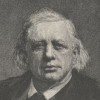
If men had wings and bore black feathers, few of them would be clever enough to be crows.
Henry Ward Beecher (1813–1887) American clergyman and orator
(Attributed)
Doctrine is nothing but the skin of truth set up and stuffed.
Henry Ward Beecher (1813–1887) American clergyman and orator
Life Thoughts (1858)
The ignorant classes are the dangerous classes. Ignorance is the womb of monsters.
Henry Ward Beecher (1813–1887) American clergyman and orator
Proverbs from Plymouth Pulpit (1859)
Young love is a flame; very pretty, often very hot and fierce, but still only light and flickering. The love of the older and disciplined heart is as coals, deep burning, unquenchable.
Henry Ward Beecher (1813–1887) American clergyman and orator
Notes from Plymouth Pulpit (1859)
Mirth is God’s medicine. Everybody ought to bathe in it. Grim care, moroseness, anxiety — all this rust of life ought to be scoured off by the oil of mirth. It is better than emery. Every man ought to rub himself with it.
Happiness is not the end of life, character is.
Henry Ward Beecher (1813–1887) American clergyman and orator
Life Thoughts: Gathered from the Extemporaneous Discourses of Henry Ward Beecher (1858)
Hold yourself responsible for a higher standard than anyone else expects of you.
Henry Ward Beecher (1813–1887) American clergyman and orator
(Attributed)
Riches are not an end of life, but an instrument of life.
Henry Ward Beecher (1813–1887) American clergyman and orator
Proverbs from Plymouth Pulpit (1887)
There is tonic in the things that men do not love to hear. Free speech is to a great people what the winds are to oceans … and where free speech is stopped miasma is bred, and death comes fast.
Henry Ward Beecher (1813–1887) American clergyman and orator
Proverbs from Plymouth Pulpit (1887)
Alas! Where is human nature so weak as in a book-store! Speak of the appetite for drink; or of a bon-vivant’s relish for dinner! What are these mere animal throes and ragings compared with those fantasies of taste, of those yearning of the imagination, of those insatiable appetites of intellect, which bewilder a student in a great bookseller’s temptation-hall?
Henry Ward Beecher (1813–1887) American clergyman and orator
Essay (1855), “Book-Stores, Books,” Star Papers, “Experiences of Nature,” ch. 21
(Source)
Originally published in his "STAR" column in the New York Independent," and is dated May 25 without a year given. This essay, separate from the original book, is usually titled "Subtleties of Book Buyers."
A man is only as good as what he loves.
Saul Bellow (1915–2005) Canadian-American writer
Seize the Day (1956)

A great deal of intelligence can be invested in ignorance when the need for illusion is deep.
SAGRAMORE: If there were aught I could say, aught I could do to save thee…
HANK: Well, ain’t there aught?
SAGRAMORE: Naught.Edmund Beloin (1910–1992) American screenwriter, producer
A Connecticut Yankee in King Arthur’s Court (1949)
(book by Mark Twain)
It took me fifteen years to discover that I had no talent for writing, but I couldn’t give it up because by that time I was too famous.
Robert Benchley (1889–1945) American humorist, columnist, actor, wit
(Attributed)
In Nathaniel Benchley, Robert Benchley, ch. 1 (1955)
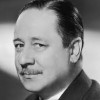
Anyone can do any amount of work, provided it isn’t the work he is supposed be doing at that moment.
Robert Benchley (1889–1945) American humorist, columnist, actor, wit
(Attributed)
In Robert E. Drennan, The Algonquin Wits (1968)
Anything I’ve ever done that ultimately was worthwhile … initially scared me to death.
(Other Authors and Sources)
Betty Bender

Timing has a lot to do with the outcome of a rain dance.
Texas Bix Bender (contemp.) American cowboy philosopher, announcer, actor, writer [stage name for Steve Arwood]
Don’t Squat with Yer Spurs On! (1992)

The trouble is not that we are never happy — it is that happiness is so episodical.
Ruth Benedict (1887–1947) American anthropologist
An Anthropologist at Work, Journal (1912-1916), [ed. Margaret Mead] (1959)
Full text.

If we justify war, it is because all peoples always justify the traits of which they find themselves possessed, not because war will bear an objective examination of its merits.
Ruth Benedict (1887–1947) American anthropologist
Patterns of Culture, I (1934)
No man ever looks at the world with pristine eyes. He sees it edited by a definite set of customs and institutions and ways of thinking.
Ruth Benedict (1887–1947) American anthropologist
Patterns of Culture, I (1934)
I have made mistakes, but have never made the mistake of claiming I never made one.
James Gordon Bennett, Jr. (1841–1918) American editor, newspaper publisher
(Attributed)
Happiness is like a cat — if you coax it or call it, it will avoid you; it won’t come. But if you pay no attention to it and go about your business, you will find it rubbing against your legs and jumping into your lap.
William J. Bennett (b. 1943) American politician, moralist
Commencement Address, George Mason University (22 May 1999)
(Source)
I don’t deserve this award, but I have arthritis and I don’t deserve that either.
Jack Benny (1894–1974) American comedian [b. Benjamin Kubelsky]
(Attributed)
The worst sorrows in life are not in its losses and misfortune, but its fears.
A. C. Benson (1862–1925) English writer [Arthur Christopher Benson]
(Attributed)
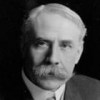
How desperately difficult it is to be honest with oneself. It is much easier to be honest with other people.
E. F. Benson (1867–1940) English novelist, biographer, memoirist and short story writer [Edward Frederic Benson]
A Reaping, “March” (1909)
Full text. (Sometimes misattributed to Edward White Benson)
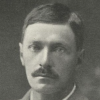
He rather hated the ruling few than loved the suffering many.
Jeremy Bentham (1748–1832) English jurist and philosopher
Comment on James Mill
(Source)
In the journal of Caroline Fox (7 Aug 1840), regarding the father of John Stuart Mill. James Mill was a proponent of Bentham's philosophy. The observation was recalled in conversation with John Bowring, Bentham's executor.
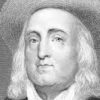
Consistency requires you to be as ignorant today as you were a year ago.
Bernard Berenson (1865–1959) Lithuanian-American art critic and historian
Notebook (1892)
There is no obstacle which cannot be broken down by wills sufficiently keyed up, if they deal with it in time. There is thus no inescapable historic law.
Henri-Louis Bergson (1859–1941) French philosopher
The Two Sources of Morality and Religion, “Final Remarks” (tr. R. Ashley Audra and Cloudesley Brereton, 1935) (1932)
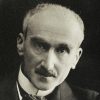
The eye sees only what the mind is prepared to comprehend.
Robertson Davies (1913–1995) Canadian author, editor, publisher
Tempest-tost (1951)
Commonly misattributed to Henri-Louis Bergson.

It may be that the whole is simple, and that we are looking at it from the wrong point of view.
Henri-Louis Bergson (1859–1941) French philosopher
The Two Sources of Morality and Religion, “Dynamic Religion” (1932)
I don’t care if you burn.
Sarah Bernhardt (1844–1923) French actress
(Attributed)
When Oscar Wilde asked, "Do you mind if I smoke?"

He who says there is no such thing as an honest man, you may be sure is himself a knave.
George Berkeley (1685–1753) Irish philosopher, Anglican bishop
Maxims Concerning Patriotism (1750)

It is impossible that a man who is false to his friends and neighbours should be true to the public.
George Berkeley (1685–1753) Irish philosopher, Anglican bishop
Maxims Concerning Patriotism (1750)
Age is no mark of merit unless you do something constructive with it.
Irving Berlin (1888–1989) American songwriter [b. Isidore Beilin]
(c. 1980)

A committee is a group that keeps the minutes and loses hours.
Milton Berle (1908–2002) American comic
(1 Jul. 1954)
Time is a great teacher, but unfortunately it kills all its pupils.
[Le temps est un grand maître, dit-on; le malheur est qu’il soit un maître inhumain qui tue ses élèves.]
Hector Berlioz (1803–1869) French composer
Letter (Nov 1856)
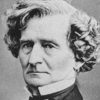
Every composer knows the anguish and despair occasioned by forgetting ideas which one has not time to write down.
Hector Berlioz (1803–1869) French composer
Mémoires, ch. 46, “The Capture of Constantine,” 1837 [tr. Newman (1966)] (1870)
PICARD: Mr. Worf, do you know Gilbert and Sullivan?
WORF: No sir. I have not had a chance to meet all the new crew members since I have been back.Rick Berman (b. 1945) American screenwriter, producer
Star Trek: Insurrection (1998)
with Michael Pillar

Errors are refuted by argument, not by fire.
Bernard of Clairvaux (1090–1153) French religious, Doctor of the Church, saint
(Attributed)

The care of the Earth is our most ancient and most worthy, and after all, our most pleasing responsibility. To cherish what remains of it, and to foster its renewal, is our only hope.
Wendell Berry (b. 1934) American farmer, educator, poet, conservationist
The Unsettling of America: Culture & Agriculture, ch. 1 (1977)
(Source)

Yeah, but we’re making good time.
Yogi Berra (1925–2015) American baseball player, coach, manager [b. Lawrence Peter Berra]
(Spurious)
When told by Joe Garagiola (or Phil Rizzuto) the car they were in was lost, according to Merle Jones in 1963. Berra says he used the phrase, but with his family in 1972. The joke (not by Berra) can be found dated back to at least the late 1940s. More here.

Refusal to believe until proof is given is a rational position; denial of all outside our own limited experience is absurd.
Annie Besant (1847–1933) English theosophist, Indian political leader [pseud. Ajax]
(Attributed)
I had an immense advantage over many others dealing with the problem inasmuch as I had no fixed ideas derived from long-established practice to control and bias my mind, and did not suffer from the general belief that whatever is, is right.
Henry Bessemer (1813–1898) English engineer and inventor
An Autobiography, ch. 6 (on the development of the cane press)
We should live as though our life would be both long and short.
Bias of Priene (fl. c. 650) Greek philosopher
(Attributed)
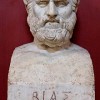
To others we are not ourselves but a performer in their lives, cast for a part we do not even know that we are playing.
Elizabeth Bibesco (1897–1945) Romanian-English writer
Haven (1951)

EGOTIST, n. A person of low taste, more interested in himself than in me.
Ambrose Bierce (1842–1914?) American writer and journalist
“Egotist,” The Cynic’s Word Book (1906)
(Source)
Included in The Devil's Dictionary (1911). Originally published in the "Devil's Dictionary" column in the San Francisco Wasp (1884-05-17).

DEBAUCHEE, n. One who has so earnestly pursued pleasure that he has had the misfortune to overtake it.
Ambrose Bierce (1842–1914?) American writer and journalist
“Debauchee,” The Cynic’s Word Book (1906)
(Source)
Included in The Devil's Dictionary (1911).
Originally published in the "Devil's Dictionary" column in the San Francisco Wasp (1881-12-02).
DIARY, n. A daily record of that part of one’s life, which he can relate to himself without blushing.
Ambrose Bierce (1842–1914?) American writer and journalist
“Diary,” The Cynic’s Word Book (1906)
(Source)
Included in The Devil's Dictionary (1911). Originally published in the "Devil's Dictionary" column in the San Francisco Wasp (1882-05-24).
CYNIC, n. A blackguard whose faulty vision sees things the way they are, and not as they ought to be.
Ambrose Bierce (1842–1914?) American writer and journalist
“Cynic,” The Cynic’s Word Book (1906)
(Source)
Included in The Devil's Dictionary (1911).
Originally appeared in his "The Cynic's Dictionary" column in the San Francisco Wasp (1881-10-28).
In his "Town Crier" column in the News Letter (1872-03-09), he wrapped up his personal philosophy so: "And, finally, most important of all, endeavor to see things as they are, not as they ought to be."
DESTINY, n. A tyrant’s authority for crime, and a fool’s excuse for failure.
Ambrose Bierce (1842–1914?) American writer and journalist
“Destiny,” The Cynic’s Word Book (1906)
(Source)
POLITICS, n. A strife of interests masquerading as a contest of principles. The conduct of public affairs for private advantage.
Ambrose Bierce (1842–1914?) American writer and journalist
“Politics,” The Devil’s Dictionary (1911)
(Source)
Originally published in the "Cynic's Word Book" column in the New York American (1906-03-16), and the "Cynic's Dictionary" column in the San Francisco Examiner (1906-03-21).
PREJUDICE, n. A vagrant opinion without visible means of support.
Ambrose Bierce (1842–1914?) American writer and journalist
“Prejudice,” The Devil’s Dictionary (1911)
(Source)
Originally published in the "Cynic's Word Book" column in the New York American (1906-05-30) and the "Cynic's Dictionary" column in the San Francisco Examiner (1906-06-20).
PEACE, n. In international affairs, a period of cheating between two periods of fighting.
Ambrose Bierce (1842–1914?) American writer and journalist
“Peace,” The Devil’s Dictionary (1911)
(Source)
Originally published in the "Cynic's Word Book" column in the New York American (1904-12-26), and the "Cynic's Dictionary" column in the San Francisco Examiner (1905-01-03).
POSITIVE, adj. Mistaken at the top of one’s voice.
Ambrose Bierce (1842–1914?) American writer and journalist
“Positive,” The Devil’s Dictionary (1911)
(Source)
Originally published in the "Cynic's Word Book" column in the New York American (1906-03-16) and the "Cynic's Dictionary" column in the San Francisco Examiner (1906-03-21).
REFERENDUM, n. A law for submission of proposed legislation to a popular vote to learn the nonsensus of public opinion.
Ambrose Bierce (1842–1914?) American writer and journalist
“Referendum,” The Devil’s Dictionary (1911)
(Source)
Originally published in The Devil's Dictionary [A-Z] as Vol. 7 of his Collected Works.
RESOLUTE, adj. Obstinate in a course that we approve.
Ambrose Bierce (1842–1914?) American writer and journalist
“Resolute,” The Devil’s Dictionary (1911)
(Source)
Originally published in The Devil's Dictionary [A-Z] as Vol. 7 of his Collected Works
See "Obstinate."
SCRIPTURES, n. The sacred books of our holy religion, as distinguished from the false and profane writings on which all other faiths are based.
Ambrose Bierce (1842–1914?) American writer and journalist
“Scriptures,” The Devil’s Dictionary (1911)
(Source)
Originally published in The Devil's Dictionary [A-Z] as Vol. 7 of his Collected Works.
RECONSIDER, v. To seek a justification for a decision already made.
Ambrose Bierce (1842–1914?) American writer and journalist
“Reconsider,” The Devil’s Dictionary (1911)
(Source)
Originally published in the The Devil's Dictionary [A-Z] as Vol. 7 of his Collected Works.
RASH, adj. Insensible to the value of our advice.
Ambrose Bierce (1842–1914?) American writer and journalist
“Rash,” The Devil’s Dictionary (1911)
(Source)
Originally published in the "Cynic's Dictionary" column in the San Francisco Examiner.
See also "FOOLHARDY."
QUOTATION, n. The act of repeating erroneously the words of another. The words erroneously repeated.
Ambrose Bierce (1842–1914?) American writer and journalist
“Quotation,” The Devil’s Dictionary (1911)
(Source)
Originally published in the "Cynic's Word Book" column in the New York American (1906-06-29).
RADICALISM, n. The conservatism of to-morrow injected into the affairs of to-day.
Ambrose Bierce (1842–1914?) American writer and journalist
“Radicalism,” The Devil’s Dictionary (1911)
(Source)
Originally published in the "Cynic's Word Book" column in the New York American (1906-06-29).
Speak when you are angry and you will make the best speech you will ever regret.
Groucho Marx (1890–1977) American comedian [b. Julius Henry Marx]
(Attributed)
Quoted by Ever Star, "Inside TV," Greensboro Record (3 Nov 1954). Also attributed to Ambrose Bierce, Henry Ward Beecher, and Lawrence J. Peter. More research and discussion here.
RUMOR, n. A favorite weapon of the assassins of character.
Ambrose Bierce (1842–1914?) American writer and journalist
“Rumor,” The Devil’s Dictionary (1911)
(Source)
Originally published in The Devil's Dictionary [A-Z] as Vol. 7 of his Collected Works.
DISCUSSION, n. A method of confirming others in their errors.
Ambrose Bierce (1842–1914?) American writer and journalist
“Discussion,” The Cynic’s Word Book (1906)
(Source)
Included in The Devil's Dictionary (1911). Originally published in the "Devil's Dictionary" column in the San Francisco Wasp (1882-04-02).
PRAY, v. To ask that the laws of the universe be annulled in behalf of a single petitioner confessedly unworthy.
Ambrose Bierce (1842–1914?) American writer and journalist
“Pray,” The Devil’s Dictionary (1911)
(Source)
Originally published in the "Cynic's Word Book" column in the New York American (1906-04-06) and the "Cynic's Dictionary" column in the San Francisco Examiner (1906-04-11).
EDUCATION, n. That which discloses to the wise and disguises from the foolish their lack of understanding.
Ambrose Bierce (1842–1914?) American writer and journalist
“Education,” The Cynic’s Word Book (1906)
(Source)
Included in The Devil's Dictionary (1911). Originally published in the "Devil's Dictionary" column in the San Francisco Wasp (1882-12-23).
IMPIETY, n. Your irreverence toward my deity.
Ambrose Bierce (1842–1914?) American writer and journalist
“Impiety,” The Cynic’s Word Book (1906)
(Source)
Included in The Devil's Dictionary (1911). Originally published in the "Devil's Dictionary" column in the San Francisco Wasp (1885-09-12).
DISTANCE, n. The only thing that the rich are willing for the poor to call theirs, and keep.
Ambrose Bierce (1842–1914?) American writer and journalist
“Distance,” The Cynic’s Word Book (1906)
(Source)
Included in The Devil's Dictionary (1911). Originally published in the "Devil's Dictionary" column in the San Francisco Wasp (1882-04-02).
MISFORTUNE, n. The kind of fortune that never misses.
Ambrose Bierce (1842–1914?) American writer and journalist
“Misfortune,” The Devil’s Dictionary (1911)
(Source)
Originally published in the "Cynic's Word Book" column in the New York American (1904-08-30).
SELF-EVIDENT, adj. Evident to one’s self and to nobody else.
Ambrose Bierce (1842–1914?) American writer and journalist
“Self-Evident,” The Devil’s Dictionary (1911)
(Source)
Originally published in The Devil's Dictionary [A-Z] as Vol. 7 of his Collected Works.
There’s nothing new under the sun, but there are lots of old things we don’t know.
Ambrose Bierce (1842–1914?) American writer and journalist
(Attributed)
SELFISH, adj. Devoid of consideration for the selfishness of others.
Ambrose Bierce (1842–1914?) American writer and journalist
“Selfish,” The Devil’s Dictionary (1911)
(Source)
Originally published in The Devil's Dictionary [A-Z] as Vol. 7 of his Collected Works.
TRINITY, n. […] The Trinity is one of the most sublime mysteries of our holy religion. In rejecting it because it is incomprehensible, Unitarians betray their inadequate sense of theological fundamentals. In religion we believe only what we do not understand, except in the instance of an intelligible doctrine that contradicts an incomprehensible one. In that case we believe the former as a part of the latter.
Ambrose Bierce (1842–1914?) American writer and journalist
“Trinity,” The Devil’s Dictionary (1911)
(Source)
Originally published in The Devil's Dictionary [A-Z] as Vol. 7 of his Collected Works.
REVERENCE, n. The spiritual attitude of a man to a god and a dog to a man.
Ambrose Bierce (1842–1914?) American writer and journalist
“Reverence,” The Devil’s Dictionary (1911)
(Source)
Originally published in The Devil's Dictionary [A-Z] as Vol. 7 of his Collected Works.
DIPLOMACY, n. The patriotic art of lying for one’s country.
Ambrose Bierce (1842–1914?) American writer and journalist
“Diplomacy,” The Cynic’s Word Book (1906)
(Source)
Included in The Devil's Dictionary (1911). Originally published in the "Devil's Dictionary" column in the San Francisco Wasp (1882-03-24).
We regard our living together not as an unfortunate mishap warranting endless competition among us, but as a deliberate act of God to make us a community of brothers and sisters jointly involved in the quest for a composite answer to the varied problems of life.
Stephen Biko (1946–1977) South African civil rights activist
Paper at conference in Natal, S. Africa (1971)

What the moral army needs just now is more rank and file and fewer brigadier generals.
Josh Billings (1818–1885) American humorist, aphorist [pseud. of Henry Wheeler Shaw]
(Attributed)

Every man has his follies — and often they are the most interesting thing he had got.
Josh Billings (1818–1885) American humorist, aphorist [pseud. of Henry Wheeler Shaw]
(Attributed)
Thare iz plenty ov happiness in this life if we only knu it: and one way tew find it iz, when we hav got the old rumatiz tew thank Heaven that it aint the old gout.
[There is plenty of happiness in this life if we only knew it: and one way to find it is, when we have got the old rheumatism to thank Heaven that it ain’t the old gout.]
Josh Billings (1818–1885) American humorist, aphorist [pseud. of Henry Wheeler Shaw]
Everybody’s Friend, Or; Josh Billing’s Encyclopedia and Proverbial Philosophy of Wit and Humor, ch. 137 “Affurisms: Tadpoles” (1874)
(Source)
In Fred Lewis Pattee, A History of American Literature Since 1870 (1915), this is paraphrased "The best cure for rheumatism is to thank the Lord it ain't the gout."
In a similar vein, in Josh Billings' Old Farmer's Allminax, 1870-1879, January 1878, "Chips" (1902):The best relief for the rumatiz, that haz been diskovered yet, iz to find sum phellow who haz got the gout bad, and then pitty him.
[The best relief for the rheumatism that has been discovered yet is to find some fellow who has got the gout bad, and then pity him.]
and in H. Montague, ed., Wit and Wisdom of Josh Billings (1913)The best remedy for RHEUMATISM that's ever yet been discovered is to find some fellow who has a bad case of the gout, pity him and forget yourself.
Consider the postage stamp: Its usefulness consists in the ability to stick to one thing till it gets there.
Josh Billings (1818–1885) American humorist, aphorist [pseud. of Henry Wheeler Shaw]
(Attributed)
As scarce as truth is, the supply has always been in excess of the demand.
Josh Billings (1818–1885) American humorist, aphorist [pseud. of Henry Wheeler Shaw]
Josh Billings: His Sayings (1865)
Nature never makes any blunders; when she makes a fool she means it.
Josh Billings (1818–1885) American humorist, aphorist [pseud. of Henry Wheeler Shaw]
Josh Billings: His Sayings (1865)
Flattery iz like colone water, tew be smelt ov, not swallered.
[Flattery is like cologne water, to be smelt of, not swallowed.]
Josh Billings (1818–1885) American humorist, aphorist [pseud. of Henry Wheeler Shaw]
Josh Billings’ Farmer’s Allminax, 1870-02 (1870 ed.)
(Source)
This passage can be originally found in column material, e.g., in the Middlesex County Journal (Massachusetts) (1969-07-10), "Sollum Thoughts":Flattery is like kolone water, tew be smelt ov, not swallowed.
Politeness haz won more viktorys than logick ever haz.
[Politeness has won more victories than logic ever has.]
Josh Billings (1818–1885) American humorist, aphorist [pseud. of Henry Wheeler Shaw]
Josh Billings: His Sayings (1865)
Human knowledge is very short, and don’t reach but a little ways, and even that little ways iz twilite; but faith lengthens out the road, and makes it light, so that we kan see tew read the letterings on the mile stuns.
[Human knowledge is very short, and doesn’t reach but a little way, and even that little way is twilight; but faith lengthens out the road, and makes it light, so that we can see to read the lettering on the milestones.]
Josh Billings (1818–1885) American humorist, aphorist [pseud. of Henry Wheeler Shaw]
Everybody’s Friend, Or; Josh Billing’s Encyclopedia and Proverbial Philosophy of Wit and Humor, ch. 9 “Essays: Faith” (1874)
(Source)
This may be the source of an attributed Billings quote I cannot find in his writings: "Faith was given to man to lengthen out his reason."
People never lie so much as after a hunt, during a war, or before an election.
Otto von Bismarck (1815–1898) Prussian statesman
(Attributed)
But they think they know it. And their idea is all the same. You can trace it to the same thing, doesn’t make any difference what it is, what their experience is, or why they’re mad with the Court. It’s all because each one of them believes that the Constitution prohibits that which they think should be prohibited, and it permits that which they think should be permitted.
Hugo Black (1886–1971) American politician and jurist; US Supreme Court Justice (1937–71)
Interview with Eric Serverid and Martin Agronsky, CBS News (1968-12-09)
On the public's misunderstanding of the Constitution. Reprinted in "Newsmakers, Objection Overruled," Newsweek (1968-12-09), and in "Justice Black and the Bill of Rights," Southwestern University Law Review (1977).
Black used the same idea on multiple occasions, e.g., at a news conference in Washington, D.C. (1971-02-25):The layman's Constitutional view is that what he likes is constitutional and that which he doesn't like is unconstitutional. That about measures up the Constitutional acumen of the average person.
When you say that you agree to a thing in principle you mean that you have not the slightest intention of carrying it out in practice.
Otto von Bismarck (1815–1898) Prussian statesman
(Attributed)Variants:
- "When a man says he approves of something in principle, it means he hasn't the slightest intention of putting it into practice."
- "When a man says he approves of something in principle, it means he hasn't the slightest intention of carrying it out in practice."
The Framers knew, better perhaps than we do today, the risks they were taking. They knew that free speech might be the friend of change and revolution. But they also knew that it is always the deadliest enemy of tyranny. With this knowledge they still believed that the ultimate happiness and security of a nation lies in its ability to explore, to change, to grow and ceaselessly to adapt itself to new knowledge born of inquiry free from any kind of governmental control over the mind and spirit of man. Loyalty comes from love of good government, not fear of a bad one.
Hugo Black (1886–1971) American politician and jurist; US Supreme Court Justice (1937–71)
James Madison Lecture, NYU School of Law (1960-02-17)
(Source)
The inaugural Madison lecture. Reprinted as "The Bill of Rights," NYU Law Review, Vol. 35 (Apr 1960).
My view is, without deviation, without exception, without any ifs, buts or whereases, that freedom of speech means that you shall not do something to people either for the views they have or the views they express or the words they speak or write.
Hugo Black (1886–1971) American politician and jurist; US Supreme Court Justice (1937–71)
Interview by Edmond Cahn, New York University Law School (1962)
Published in "Mr. Justice Black and First Amendment Absolutes: A Public Interview," New York University Law Review 37 (1962): 549, and referenced in "Minority Opinion," Time (1962-06-22).
Black reiterated his absolutist point in his third Carpentier Lecture at Columbia University (1968-03-21), collected in A Constitutional Faith (1968):My view is, without deviation, without exception, without any ifs, buts or whereases, that freedom of speech means that government shall not do anything to people, or, in the words of the Magna Carta, move against people, either for the views they have or the views they express or the words they speak or write.
Freedom to discuss public affairs and public officials is unquestionably, as the Court today holds, the kind of speech the First Amendment was primarily designed to keep within the area of free discussion. To punish the exercise of this right to discuss public affairs or to penalize it through libel judgments is to abridge or shut off discussion of the very kind most needed. This Nation, I suspect, can live in peace without libel suits based on public discussions of public affairs and public officials. But I doubt that a country can live in freedom where its people can be made to suffer physically or financially for criticizing their government, its actions, or its officials.
Hugo Black (1886–1971) American politician and jurist; US Supreme Court Justice (1937–71)
New York Times Co. v. Sullivan, 376 U.S. 254, 296–297 (1964) [concurring]
(Source)
It is easier to forgive an Enemy than to forgive a Friend!
William Blake (1757–1827) English poet, mystic, artist
Jerusalem: The Emanation of the Giant Albion (c. 1803–20)
(Source)
He’s a Blockhead who wants a proof of what he Can’t Perceive
And he’s a Fool who tries to make such a Blockhead believe.William Blake (1757–1827) English poet, mystic, artist
Notebooks (1793)
What is now proved was once only imagined.
William Blake (1757–1827) English poet, mystic, artist
The Marriage of Heaven and Hell, “Proverbs of Hell” (1790–93)
(Source)
I was angry with my friend;
I told my wrath, my wrath did end.
I was angry with my foe;
I told it not, my wrath did grow.William Blake (1757–1827) English poet, mystic, artist
Songs of Experience, “A Poison Tree”, st. 1 (1794)
A truth that’s told with bad intent
Beats all the lies you can invent.William Blake (1757–1827) English poet, mystic, artist
“Auguries of Innocence,” l.53 (1803)
(Source)
The strongest poison ever known
Came from Caesar’s laurel crown.William Blake (1757–1827) English poet, mystic, artist
“Auguries of Innocence,” l. 97 (1803)
(Source)
You never know what is enough until you know what is more than enough.
William Blake (1757–1827) English poet, mystic, artist
The Marriage of Heaven and Hell, “Proverbs of Hell”, l. 46 (1790-93)
(Source)
The pride of the peacock is the glory of God.
The lust of the goat is the bounty of God.
The wrath of the lion is the wisdom of God.
The nakedness of a woman is the work of God.William Blake (1757–1827) English poet, mystic, artist
The Marriage of Heaven and Hell (1790-93)
There is no cosmetic for beauty like happiness.
Marguerite Gardiner, Countess of Blessington (1789–1849) English socialite, writer
(Attributed)

The chief prerequisite for a escort is to have a flexible conscience and an inflexible politeness.
Marguerite Gardiner, Countess of Blessington (1789–1849) English socialite, writer
(Attributed)
When there is too much naívetë around, the universe has no choice but to crystallize out some betrayal.
Robert Bly (b. 1926) American poet, story teller, lecturer
Iron John: A Book About Men, ch. 3 “The Road of Ashes, Descent and Grief” (1990)
(Source)
Peace is not the absence of struggle, it is the absence of uncertainty.
Anthony Bloom (1914–2003) English writer, Orthodox cleric [a.k.a. Anthony of Sourozh]
(Attributed)
Genius is the gold in the mine, talent is the miner who works and brings it out.
Marguerite Gardiner, Countess of Blessington (1789–1849) English socialite, writer
(Attributed)
I think “immoral” is probably the wrong word to use. I prefer the word “unethical.”
Ivan Boesky (b. 1937) American investment banker, inside trader
(Attributed)
In John B. Stewart, Den of Thieves (1991).
Prediction is very difficult, especially about the future.
Niels Bohr (1885–1962) Danish physicist
(Attributed)
Also attrib. to Yogi Berra, various humorists, Danish poet Piet Hein ("det er svært at spå - især om fremtiden"), Robert Storm Petersen ("Storm P"), and Markus M. Ronner.
Genius is the capacity to make all possible mistakes in the least amount of time.
Niels Bohr (1885–1962) Danish physicist
(Attributed)
Of course I don’t believe in it. But I understand that it brings you luck whether you believe in it or not.
Niels Bohr (1885–1962) Danish physicist
(Attributed)
When asked why he had a horseshoe on his wall.Variants:
- "Of course I don't believe in such nonsense. However, I've been told that a horseshoe brings you good luck whether you believe in it or not."
- "I believe in no such thing, my good friend. Not at all. I am scarcely likely to believe in such foolish nonsense. However, I am told that a horseshoe will bring you good luck whether you believe in it or not."
Never express yourself more clearly than you are able to think.
Niels Bohr (1885–1962) Danish physicist
(Attributed)
If imagination is not set to the task of building a creative life, it busies itself with weaving a web of inner fears and doubts, blame and excuse.
Laurence G. Boldt (b. 1954) American writer, philospher
(Attributed)
MORE: Why not be a teacher? You’d be a fine teacher. Perhaps even a great one.
RICH: And if I was who would know it?
MORE: You, your pupils, your friends, God. Not a bad public, that.
Robert Bolt (1924–1995) English dramatist
A Man for All Seasons, play, Act 1 (1960)
(Source)
More trying to convince Rich not to seek a public or political office (because of the corrupting influences he would face).
Rendered almost identically into the 1966 film adaptation.MORE: Why not be a teacher? You’d be a fine teacher, perhaps a great one.
RICH: And if I was who would know it?
MORE: You. Your pupils. Your friends. God. Not a bad public, that.
MORE: When a man takes an oath, Meg, he’s holding his own self in his hands. Like water (cups hands) and if he opens his fingers then, he needn’t hope to find himself again.
Robert Bolt (1924–1995) English dramatist
A Man for All Seasons, play, Act 2 (1960)
(Source)
Answering to his daughter Margaret, who is trying to convince him to swear to the Act of Succession so that he can be freed from the Tower. In the 1966 screenplay, the same dialogue is used.
MORE: If we lived in a State where virtue was profitable, common sense would make us good, and greed would make us saintly. And we’d live like animals or angels in the happy land that needs no heroes. But since in fact we see that avarice, anger, envy, pride, sloth, lust and stupidity commonly profit far beyond humility, chastity, fortitude, justice and thought, and have to choose, to be human at all … why then perhaps we must stand fast a little — even at the risk of being heroes.
Robert Bolt (1924–1995) English dramatist
A Man for All Seasons, play, Act 1 (1960)
(Source)
Spoken to his family while in the Tower of London, awaiting trial. In the 1966 film adaptation, this is shortened:If we lived in a State where virtue was profitable, common sense would make us saintly. But since we see that avarice, anger, pride and stupidity commonly profit far beyond charity, modesty, justice and thought, perhaps we must stand fast a little -- even at the risk of being heroes.
ROPER: So, now you’d give the Devil the benefit of law!
MORE: Yes! What would you do? Cut a great road through the law to get after the Devil?
ROPER: Yes, I’d cut down every law in England to do that!
MORE: Oh? And when the last law was down, and the Devil turned ’round on you — where would you hide, Roper, the laws all being flat? This country is planted thick with laws, from coast to coast — Man’s laws, not God’s — and if you cut them down — and you’re just the man to do it — d’you really think you could stand upright in the winds that would blow then? Yes, I’d give the Devil benefit of law, for my own safety’s sake.
Robert Bolt (1924–1995) English dramatist
A Man for All Seasons, play, Act 1 (1960)
(Source)
Bolt's 1966 film adaptation uses the same language, with slightly variant punctuation. As well, the film ends the scene here, where the play continues with further dialog. (Source (Video); dialog verified.)
When your mother asks, “Do you want a piece of advice?” it’s a mere formality. It doesn’t matter if you answer yes or no. You’re going to get it anyway.
Erma Bombeck (1927–1996) American humorist
(Attributed)

MORE: I must in fairness add that my taste in music is reputedly deplorable.
HENRY: Your taste in music is excellent. It exactly coincides with my own.
Robert Bolt (1924–1995) English dramatist
A Man for All Seasons, play, Act 1 (1960)
(Source)
Bolt's 1966 film adaptation uses the same language.
Everyone is guilty at one time or another of throwing out questions that beg to be ignored, but mothers seem to have a market on the supply. “Do you want a spanking or do you want to go to bed?” Don’t you want to save some of the pizza for your brother?” Wasn’t there any change?”
Erma Bombeck (1927–1996) American humorist
(Attributed)
Have you any idea how many children it takes to turn off one light in the kitchen? Three. It takes one to say, “What light?” and two more to say, “I didn’t turn it on.”
Erma Bombeck (1927–1996) American humorist
(Attributed)
I remember buying a set of black plastic dishes once, after I saw an ad on television where they actually put a blowtorch to them and they emerged unscathed. Exactly one week after I bought them, one of the kids brought a dinner plate to me with a large crack in it. When I asked what happened to it, he said it hit a tree. I don’t want to talk about it.
Erma Bombeck (1927–1996) American humorist
(Attributed)
Seize the moment. Remember all those women on the Titanic who waved off the dessert cart.
Erma Bombeck (1927–1996) American humorist
(Attributed)
People shop for a bathing suit with more care than they do a husband or wife. The rules are the same. Look for something you’ll feel comfortable wearing. Allow for room to grow.
Erma Bombeck (1927–1996) American humorist
(Attributed)
The odds of going to the store for a loaf of bread and coming out with ONLY a loaf of bread are three billion to one.
Erma Bombeck (1927–1996) American humorist
(Attributed)
Marriage has no guarantees. If that’s what you’re looking for, go live with a Sears battery.
Erma Bombeck (1927–1996) American humorist
(Attributed)
When I stand before God at the end of my life, I would hope that I would not have a single bit of talent left and could say, “I used everything you gave me.”
Erma Bombeck (1927–1996) American humorist
(Attributed)
No one ever died from sleeping in an unmade bed. I have known mothers who remake the bed after their children do it because there’s a wrinkle in the spread or the blanket is on crooked. This is sick.
Erma Bombeck (1927–1996) American humorist
(Attributed)
I just clipped 2 articles from a current magazine. One is a diet guaranteed to drop 5 pounds off my body in a weekend. The other is a recipe for a 6 minute pecan pie.
Erma Bombeck (1927–1996) American humorist
(Attributed)
My theory on housework is, if the item doesn’t multiply, smell, catch on fire or block the refrigerator door, let it be. No one cares. Why should you?
Erma Bombeck (1927–1996) American humorist
(Attributed)
Any concern too small to be turned into a prayer is too small to be made into a burden.
Corrie ten Boom (1892–1983) Dutch evangelist, concentration camp survivor
Clippings From My Notebook (1982)

It is only possible to live happily ever after on a day-to-day basis.
Margaret Wander Bonanno (1950–2021) American writer
(Attributed)
When a train goes through a tunnel and it gets dark, you don’t throw away the ticket and jump off. You sit still and trust the engineer.
Corrie ten Boom (1892–1983) Dutch evangelist, concentration camp survivor
(Attributed)
Faith is like radar that sees through the fog — the reality of things at a distance that the human eye cannot see.
Corrie ten Boom (1892–1983) Dutch evangelist, concentration camp survivor
Tramp for the Lord (1974)
I have never been lost, but I will admit to being confused for several weeks.
Daniel Boone (c.1734–1820) American pioneer
(Attributed)
Variants:
- "I can't say as ever I was lost, but I was bewildered once for three days." (J. Faragher, Daniel Boone: The Life and Legend of an American Pioneer (1993))
- "I was never lost, but I was bewildered once for three days." (Missouri: A Guide to the "Show Me" State (The WPA Guide to Missouri) (1941)

Don’t fear failure so much that you refuse to try new things. The saddest summary of a life contains three descriptions: could have, might have, and should have.
Louis E. Boone (1941–2005) American business writer
(Attributed)
Who is blinder than he that will not see?
Andrew Boorde (c.1490–1549) English physician and writer
Breviary of Helthe (1547)
ARTHUR: Merlin, where are you going?
MERLIN: Where do you think? You have a kingdom to rule.
ARTHUR: But how? I don’t know how.
MERLIN: You knew how to draw the sword from the stone.
ARTHUR: That was easy.
MERLIN: Was it? I couldn’t have done it.John Boorman (b. 1933) English film director, writer
Excalibur (1981) [with Rospo Pallenburg]
MERLIN: When a man lies, he murders some part of the world.
John Boorman (b. 1933) English film director, writer
Excalibur (1981) [with Rospo Pallenburg]
Celebrity-worship and hero-worship should not be confused. Yet we confuse them every day, and by doing so we come dangerously close to depriving ourselves of all real models. We lose sight of the men and women who do not simply seem great because they are famous but are famous because they are great. We come closer and closer to degrading all fame into notoriety.
Daniel J. Boorstin (1914–2004) American historian, professor, attorney, writer
The Image: A Guide to Pseudo-Events in America, ch. 2, “From Hero to Celebrity: The Human Pseudo-event” (1961)
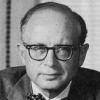
The hero is known for achievements; the celebrity for well-knownness. The hero reveals the possibilities of human nature. The celebrity reveals the possibilities of the press and media. Celebrities are people who make news, but heroes are people who make history. Time makes heroes but dissolves celebrities.
Daniel J. Boorstin (1914–2004) American historian, professor, attorney, writer
Parade Magazine, “Who Are Our Heroes?” (by Ponchitta Pierce) (6 Aug. 1995)
I write to discover what I think. After all, the bars aren’t open that early.
Daniel J. Boorstin (1914–2004) American historian, professor, attorney, writer
In Wall Street Journal (31 Dec 1985)
On why he usually wrote from 6:30 to 8:30 AM.
We easily forget that smog is the price of freedom of our streets from manure, and from the flies and diseases it brought.
Daniel J. Boorstin (1914–2004) American historian, professor, attorney, writer
(Attributed)
The celebrity is a person who is known for his well-knownness.
Daniel J. Boorstin (1914–2004) American historian, professor, attorney, writer
The Image: A Guide to Pseudo-Events in America, ch. 2 “From Hero to Celebrity: The Human Pseudo-event” (1961)
Truth is like a well-known whore. Everyone knows her, but it is embarrassing to encounter her on the street.
Wolfgang Borchert (1921–1947) German writer
(Attributed)