

The celebrity is a person who is known for his well-knownness.
Daniel J. Boorstin (1914–2004) American historian, professor, attorney, writer
The Image: A Guide to Pseudo-Events in America, ch. 2 “From Hero to Celebrity: The Human Pseudo-event” (1961)
Truth is like a well-known whore. Everyone knows her, but it is embarrassing to encounter her on the street.
Wolfgang Borchert (1921–1947) German writer
(Attributed)
The most likely way for the world to be destroyed, most experts agree, is by accident. That’s where we come in; we’re computer professionals. We cause accidents.
Nathaniel Borenstein (b. 1957) American research scientist, programmer, writer
Programming As If People Mattered (1991)
Originally a classroom comment, c. 1985, while teaching at Carnegie-Mellon University.

“Boren’s Guidelines” for bureacrats: (1) When in charge, ponder. (2) When in trouble, delegate. (3) When in doubt, mumble.
James H. Boren (1925–2010) American bureaucrat, humorist, speaker
“Bureaucrats Give Agnew the Bird (It’s an Award),” New York Times (8 Nov. 1970)
While money cannot buy happiness, the advantages of poverty have been greatly exaggerated.
Jorge Luis Borges (1899–1986) Argentine writer
(Attributed)
Any life, however long and complicated it may be, actually consists of a single moment — the moment when a man knows forever more who he is.
Jorge Luis Borges (1899–1986) Argentine writer
“A Biography of Tadeo Isidoro Cruz”, The Aleph (1949) [tr. Hurley (1998)]
Other translations: "Any life, no matter how long and complex it may be, is made up of a single moment -- the moment in which a man finds out, once and for all, who he is."
To fall in love is to create a religion that has a fallible god.
Jorge Luis Borges (1899–1986) Argentine writer
“The Meeting in a Dream”, Other Inquisitions [Otras Inquisiciones] (1952) [tr. Simms (1964)]
I have always imagined that Paradise will be a kind of library.
Jorge Luis Borges (1899–1986) Argentine writer
“Poema de los Dones”, Dreamtigers [El Hacedor] (1960)
Only the suppressed word is dangerous.
Ludwig Börne (1786–1837) German-Jewish political writer and satirist. [b. Loeb Baruch]
(Attributed)

The belief that there is only one truth and that oneself is in possession of it, seems to me the deepest root of all evil that is in the world.
Max Born (1882–1970) German physicist
Natural Philosophy of Cause and Chance (1964)
Also in My Life and Views (1968), p. 183
Temptation is the fire that brings up the scum of the heart.
Thomas Boston (1676–1732) Scottish clergyman
Human Nature in Its Fourfold State (1721)
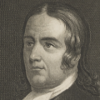
The greatest weakness of all is the great fear of appearing weak.
Jacques-Bénigne Bossuet (1627–1704) French bishop, theologian
Politics Drawn from the Very Words of Holy Scripture [Politique tirée de l’Écriture sainte] (1709)
(Source)
Other translations: "The greatest weakness of all weaknesses is to fear too much to appear weak."
Men talk of killing time, while time quietly kills them.
Dion Boucicault (1822–1890) Anglo-Irish dramatist, actor [Dionysius Lardner Boursiquot]
London Assurance, II.1 (1841)
We must live as we think, otherwise we shall end up by thinking as we live.
[Cet enseignement, c’est qu’il faut vivre comme on pense, sinon, tôt ou tard, on finit par penser comme on a vécu.]
Paul Bourget (1852–1935) French critic, poet, novelist
The Demon of Noonday [Le Démon de Midi], Epilogue (1914)
Other translations: "This teaching is to live as we think, otherwise, sooner or later, we end up thinking as we lived."

The Night has a thousand eyes,
And the Day but one;
Yet the light of the bright world dies
With the dying sun.
The mind has a thousand eyes,
And the heart but one;
Yet the light of a whole life dies
When love is done.Francis William Bourdillon (1852–1921) English poet
“Light,” The Spectator (Oct 1873)
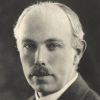
Discretion is the salt, and fancy the sugar of life; the one preserves, the other sweetens it.
Christian Nestell Bovee (1820–1904) American epigrammatist, writer, publisher
Intuitions and Summaries of Thought, Vol. 1, “Discretion” (1862)
(Source)
No man is happy without a delusion of some kind. Delusions are as necessary to our happiness as realities.
Christian Nestell Bovee (1820–1904) American epigrammatist, writer, publisher
Intuitions and Summaries of Thought, Vol. 1 (1862)
It is some compensation for great evils that they enforce great lessons.
Christian Nestell Bovee (1820–1904) American epigrammatist, writer, publisher
Intuitions and Summaries of Thought, Vol. 1, “Compensation” (1862)
(Source)
Experience isn’t interesting till it begins to repeat itself — in fact, till it does that, it hardly is experience.
Elizabeth Bowen (1899–1973) Irish author
The Death of the Heart (1938)
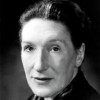
Nobody speaks the truth when there is something they must have.
Elizabeth Bowen (1899–1973) Irish author
The House in Paris (1935)
Some people are molded by their admirations, others by their hostilities.
Elizabeth Bowen (1899–1973) Irish author
The Death of the Heart (1938)
Jealousy is no more than feeling alone against smiling enemies.
Elizabeth Bowen (1899–1973) Irish author
The House in Paris (1935)
History is the torch that is meant to illuminate the past to guard us against the repetition of our mistakes of other days. We cannot join in the rewriting of history to make it to conform to our comfort and convenience.
Claude G. Bowers (1878–1958) American journalist, historian, diplomat
My Mission to Spain (1954)
Essentially, all models are wrong, but some are useful.
George E. P. Box (1919–2013) Anglo-American statistician, quality scientist [George Edward Pelham Box]
Empirical Model Building and Response Surfaces (1987) [with N. R. Draper]
As written on p. 424; earlier in the book (p. 74), it is given as: "Remember that all models are wrong; the practical question is how wrong do they have to be to not be useful."
HAN: You said you wanted to be around when I made a mistake, well, this could be it, sweetheart.
LEIA: I take it back.Leigh Brackett (1915–1978) American writer
The Empire Strikes Back (1980) [with Lawrence Kasdan]

LEIA: Why, you stuck up, half-witted, scruffy-looking nerf-herder!
HAN: Who’s scruffy-looking?Leigh Brackett (1915–1978) American writer
The Empire Strikes Back (1980) [with Lawrence Kasdan]
My stories run up and bite me in the leg — I respond by writing down everything that goes on during the bite. When I finish, the idea lets go and runs off.
Ray Bradbury (1920–2012) American writer, futurist, fabulist
The Stories of Ray Bradbury, Introduction, “Drunk and in Charge of a Bicycle” (1980)
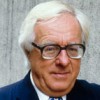
If we listened to our intellect we’d never have a love affair. We’d never have a friendship. We’d never go in business because we’d be cynical: “It’s gonna go wrong.” Or “She’s going to hurt me.” Or, “I’ve had a couple of bad love affairs, so therefore …” Well, that’s nonsense. You’re going to miss life. You’ve got to jump off the cliff all the time and build your wings on the way down.
Ray Bradbury (1920–2012) American writer, futurist, fabulist
Speech, Brown University (23 Mar 1995)
In Brown Daily Herald (24 Mar 1995)
Bravery is the capacity to perform properly even when scared half to death.
Omar Bradley (1893–1981) American general
(Attributed)
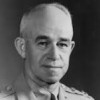
This is as true in everyday life as it is in battle: we are given one life and the decision is ours whether to wait for circumstances to make up our mind, or whether to act, and in acting, to live.
Omar Bradley (1893–1981) American general
(Attributed)
Tolerance is important. You never know when you’re the one being tolerated.
Pat Brady (b. 1947) American cartoonist
Rose is Rose (30 Aug. 2001)
Our government is the potent, the omnipresent teacher. For good or for ill, it teaches the whole people by its example. Crime is contagious. If the government becomes a lawbreaker, it breeds contempt for law; it invites every man to become a law unto himself; it invites anarchy. To declare that in the administration of criminal law the end justifies the means — to declare that the government may commit crimes in order to secure the conviction of a private criminal — would bring terrible retribution.
Louis Brandeis (1856–1941) American lawyer, jurist, activist; US Supreme Court Justice (1916–39)
Olmstead v. United States, 277 US 438 (1928) [dissent]
(Source)
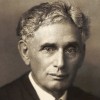
In differentiation, not in uniformity, lies the path of progress.
Louis Brandeis (1856–1941) American lawyer, jurist, activist; US Supreme Court Justice (1916–39)
Business — A Profession (1914)
Full and free expression of the right by the citizen is ordinarily also his duty; for its exercise is more important to the Nation than it is to himself. Like the course of the heavenly bodies, harmony in national life is a resultant of the struggle between contending forces. In the frank expression of conflicting opinions lies the greatest promise of wisdom in governmental action.
Louis Brandeis (1856–1941) American lawyer, jurist, activist; US Supreme Court Justice (1916–39)
Gilbert v. Minnesota, 254 US 325 (1920) [dissent]
Organization can never be a substitute for initiative and for judgment.
Louis Brandeis (1856–1941) American lawyer, jurist, activist; US Supreme Court Justice (1916–39)
Business — A Profession (1914)
Fear of serious injury alone cannot justify oppression of free speech and assembly. Men feared witches and burnt women. It is the function of speech to free men from the bondage of irrational fears.
Louis Brandeis (1856–1941) American lawyer, jurist, activist; US Supreme Court Justice (1916–39)
Whitney v. California, 274 U.S. 357 (1927) [concurring]
What I have desired to do is to make the people of Boston realize that the most important office, and the one which all of us can and should fill, is that of private citizen. The duties of the office of private citizen cannot under a republican form of government be neglected without serious injury to the public.
Louis Brandeis (1856–1941) American lawyer, jurist, activist; US Supreme Court Justice (1916–39)
Statement to a reporter, Boston Record (14 Apr 1903)
Quoted in Alpheus Thomas Mason, Brandeis: A Free Man's Life (1946).Commonly paraphrased:
- "The most important office is that of the private citizen"
- "The most important political office is that of the private citizen"
Experience should teach us to be most on our guard to protect liberty when the government’s purposes are beneficial. Men born to freedom are naturally alert to repel invasion of their liberty by evil-minded rulers. The greater dangers to liberty lurk in insidious encroachment by men of zeal, well-meaning but without understanding.
Louis Brandeis (1856–1941) American lawyer, jurist, activist; US Supreme Court Justice (1916–39)
Olmstead v. United States, 277 US 438 (1928) [dissent]
(Source)
If we desire respect for the law, we must first make the law respectable.
Louis Brandeis (1856–1941) American lawyer, jurist, activist; US Supreme Court Justice (1916–39)
In Cleveland Plain Dealer (15 Oct 1912)
Most of the things worth doing in the world had been declared impossible before they were done.
Louis Brandeis (1856–1941) American lawyer, jurist, activist; US Supreme Court Justice (1916–39)
(Attributed)
Documentation is like sex: when it is good, it is very, very good; and when it is bad, it is better than nothing.
Dick Brandon (contemp.) American computer scientist and writer
(Attributed)
Always behave like a duck — keep calm and unruffled on the surface but paddle like the devil underneath.
Jacob M. Braude (1896–1970) American humorist, writer, jurist
(Attributed)
(also attrib. James Bryant Conant and Lord Barbizon)
There are no simple answers because there are no simple questions. If you think you’re seeing a simple question, it’s not the question that’s simple.
Robert "Bobbo" Bredt (contemp.) American physician
Conversation (c. 1982)
Most people would rather defend to the death your right to say it, than listen to it.

Let the world know you as you are, not as you think you should be. Because sooner or later, if you are posing, you will forget to pose, and then who are you?
Fanny Brice (1891–1951) American singer, comedian
(Attributed)
Quoted in Norman Katkov, The Fabulous Fanny, ch. 24 (1952)
This dream is for you, so pay the price.
Make one dream come true, you only live twice.Leslie Bricusse (b. 1931) English songwriter
“You Only Live Twice” (1967)
All I ask is a chance to prove that money can’t make me happy.
Ashleigh Brilliant (b. 1933) Anglo-American epigramist, aphorist, cartoonist
Pot-Shots, #0398

Inform all the troops that communications have completely broken down.
Ashleigh Brilliant (b. 1933) Anglo-American epigramist, aphorist, cartoonist
Pot-Shots
It’s not easy taking my problems one at a time when they refuse to get in line.
Ashleigh Brilliant (b. 1933) Anglo-American epigramist, aphorist, cartoonist
Pot-Shots
Try to relax and enjoy the crisis.
Ashleigh Brilliant (b. 1933) Anglo-American epigramist, aphorist, cartoonist
Pot-Shots
What’s the good of being forgiven, if I have to promise not to do it again?
Ashleigh Brilliant (b. 1933) Anglo-American epigramist, aphorist, cartoonist
Pot-Shots, #1175
My opinions may have changed, but not the fact that I am right.
Ashleigh Brilliant (b. 1933) Anglo-American epigramist, aphorist, cartoonist
Pot-Shots
I don’t understand you. You don’t understand me. What else do we have in common?
Ashleigh Brilliant (b. 1933) Anglo-American epigramist, aphorist, cartoonist
Pot-Shots
If you can’t learn to do it well, learn to enjoy doing it badly.
Ashleigh Brilliant (b. 1933) Anglo-American epigramist, aphorist, cartoonist
Pot-Shots, #0702
By doing just a little every day, I can gradually let the task completely overwhelm me.
Ashleigh Brilliant (b. 1933) Anglo-American epigramist, aphorist, cartoonist
Pot-Shots, #1149
To be sure of hitting the target, shoot first, and call whatever you hit the target.
Ashleigh Brilliant (b. 1933) Anglo-American epigramist, aphorist, cartoonist
Pot-Shots, #0572
All I want is a warm bed and a kind word and unlimited power.
Ashleigh Brilliant (b. 1933) Anglo-American epigramist, aphorist, cartoonist
Pot-Shots, #2503
I have abandoned my search for truth, and am now looking for a good fantasy.
Ashleigh Brilliant (b. 1933) Anglo-American epigramist, aphorist, cartoonist
Pot-Shots, #0826
People who don’t believe in progress must have forgotten how bad things used to be.
Ashleigh Brilliant (b. 1933) Anglo-American epigramist, aphorist, cartoonist
Pot-Shots, #7841
Incredible as it seems, my life is based on a true story.
Ashleigh Brilliant (b. 1933) Anglo-American epigramist, aphorist, cartoonist
Pot-Shots, #0800
My sources are unreliable, but their information is fascinating.
Ashleigh Brilliant (b. 1933) Anglo-American epigramist, aphorist, cartoonist
Pot-Shots, #1085
I either want less corruption, or more chance to participate in it.
Ashleigh Brilliant (b. 1933) Anglo-American epigramist, aphorist, cartoonist
Pot-Shots
The time for action is past! Now is the time for senseless bickering!
Ashleigh Brilliant (b. 1933) Anglo-American epigramist, aphorist, cartoonist
Pot-Shots, #1019
I could do great things, if I weren’t so busy doing little things.
Ashleigh Brilliant (b. 1933) Anglo-American epigramist, aphorist, cartoonist
Pot-Shots, #0828
I try to take one day at a time, but sometimes several days attack me at once.
Ashleigh Brilliant (b. 1933) Anglo-American epigramist, aphorist, cartoonist
Pot-Shots, #1520
Please don’t lie to me, unless you’re absolutely sure I’ll never find out the truth.
Ashleigh Brilliant (b. 1933) Anglo-American epigramist, aphorist, cartoonist
Pot-Shots
Life is the only game in which the object of the game is to learn the rules.
Ashleigh Brilliant (b. 1933) Anglo-American epigramist, aphorist, cartoonist
Pot-Shots, #1409
What I like most about myself is that I is that I’m so understanding when I do something wrong.
Ashleigh Brilliant (b. 1933) Anglo-American epigramist, aphorist, cartoonist
Pot-Shots, #1189
Sometimes I make a mental note, but then forget where I put it.
Ashleigh Brilliant (b. 1933) Anglo-American epigramist, aphorist, cartoonist
Pot-Shots, #2836
It’s hopeless! Tomorrow there’ll be even more books I should have read than there are today.
Ashleigh Brilliant (b. 1933) Anglo-American epigramist, aphorist, cartoonist
Pot-Shots, #2918
I may not be totally perfect, but parts of me are excellent.
Ashleigh Brilliant (b. 1933) Anglo-American epigramist, aphorist, cartoonist
Pot-Shots, #0433
Been through Hell? Whaddya bring back for me?
Ashleigh Brilliant (b. 1933) Anglo-American epigramist, aphorist, cartoonist
Pot-Shots
Why is everybody behaving as if there were no reason to panic?
Ashleigh Brilliant (b. 1933) Anglo-American epigramist, aphorist, cartoonist
Pot-Shots, #0305
My life has a superb cast but I can’t figure out the plot.
Ashleigh Brilliant (b. 1933) Anglo-American epigramist, aphorist, cartoonist
Pot-Shots, #0144
The one function that TV news performs very well is that, when there is no news, we give it to you with the same emphasis as if there were.
David Brinkley (1920–2003) American broadcast journalist
(Attributed)

Life may have no meaning. Or even worse, it may have a meaning of which I disapprove.
Ashleigh Brilliant (b. 1933) Anglo-American epigramist, aphorist, cartoonist
Pot-Shots, #1347
I don’t have any solution, but I certainly admire the problem.
Ashleigh Brilliant (b. 1933) Anglo-American epigramist, aphorist, cartoonist
Pot-Shots, #0759
No good revolutionary leader would ever bunt.
Crane Brinton (1898–1968)
The Anatomy of Revolution, 7.4 (1952)
The least questioned assumptions are often the most questionable.
Paul Broca (1824–1880) French pathologist, neurosurgeon, anthropologist
“Quelques propositions sur les tumeurs dites cancéreuses” (16 Apr 1849)
ELWOOD: Years ago my mother used to say to me, she’d say, “In this world, Elwood, you must be” — she always called me Elwood — “In this world, Elwood, you must be oh so smart or oh so pleasant.” Well, for years I was smart. I recommend pleasant. You may quote me.
Oscar Brodney (1905–2008) American screenwriter, lawyer
Harvey (1950) [with Mary Chase]

ELWOOD: Well, I’ve wrestled with reality for 35 years, Doctor, and I’m happy to state I finally won out over it.
Oscar Brodney (1905–2008) American screenwriter, lawyer
Harvey (1950)
with Mary Chase (playwright)
No science is immune to the infection of politics and the corruption of power.
Jacob Bronowski (1908–1974) Polish-English humanist and mathematician
Encounter (Jul. 1971)
There is always a “but” in this imperfect world.
Anne Brontë (1820–1849) British novelist, poet [pseud. Acton Bell]
The Tenant of Wildfell Hall, ch. 22 [Helen] (1848)

But he that dares not grasp the thorn
Should never crave the rose.
Feeling without judgement is a washy draught indeed; but judgement untempered by feeling is too bitter and husky a morsel for human deglutition.
Charlotte Brontë (1816–1855) British novelist [pseud. Currer Bell]
Jane Eyre (1847)

Conventionality is not morality. Self-righteousness is not religion. To attack the first is not to assail the last. To pluck the mask from the face of the Pharisee, is not to lift an impious hand to the Crown of Thorns.
Charlotte Brontë (1816–1855) British novelist [pseud. Currer Bell]
Jane Eyre, Preface, 2nd edition (21 Dec 1847)
I’ve dreamt in my life dreams that have stayed with me ever after, and changed my ideas: they’ve gone through and through me, like wine through water, and altered the color of my mind.
Emily Brontë (1818–1848) British novelist, poet [pseud. Ellis Bell]
Wuthering Heights (1847)

Love is like the wild-rose briar;
Friendship is like the holly-tree.
The holly is dark when the rose briar blooms,
But which will bloom most constantly?Emily Brontë (1818–1848) British novelist, poet [pseud. Ellis Bell]
“Love and Friendship” (1839)
Adding manpower to a late software project makes it later.
Frederick P. Brooks, Jr. (b. 1931) American computer scientist, academician
The Mythical Man-Month (1975)
Look, I really don’t want to wax philosophic, but I will say that if you’re alive, you’ve got to flap your arms and legs, you’ve got to jump around a lot, you’ve got to make a lot of noise, because life is the very opposite of death.
Mel Brooks (b. 1926) American comedic actor, writer, producer [b. Melvyn Kaminsky]
(Attributed)
Humor is just another defense against the universe.
Mel Brooks (b. 1926) American comedic actor, writer, producer [b. Melvyn Kaminsky]
(Attributed)
O, do not pray for easy lives. Pray to be stronger men! Do not pray for tasks equal to your powers. Pray for powers equal to your tasks.
Phillips Brooks (1835–1893) American clergyman, hymnist
“Going Up to Jerusalem,” Selected Sermons [ed. William Scarlett (1949)]
The true way to be humble is not to stoop till thou art smaller than thyself, but to stand at thy real height against some higher nature that will show thee what the real smallness of thy greatness is.
Phillips Brooks (1835–1893) American clergyman, hymnist
(Attributed)
Character may be manifested in the great moments, but it is made in the small ones.
Phillips Brooks (1835–1893) American clergyman, hymnist
(Attributed)
Great is Truth and it shall prevail.
[Magna est veritas et prævalebit.]
Thomas Brooks (1608–1680) English Puritan divine, writer
The Crown and Glory of Christianity (1662)
Another translation: "Truth is mighty and will prevail."
Whenever people say “we mustn’t be sentimental,” you can take it they are about to do something cruel. And if they add, “we must be realistic,” they mean they are going to make money out of it.
Brigid Brophy (1929–1995) Anglo-Irish writer, novelist, playwright
Unlived Life
Americans have a lazy habit of defining themselves in terms of what they are against rather than what they believe in.
A. Whitney Brown (b. 1952) American comic actor, writer
(Attributed)
I am not a vegetarian because I love animals; I am a vegetarian because I hate plants.
A. Whitney Brown (b. 1952) American comic actor, writer
The Big Picture: An American Commentary (1991)
Appeasers believe that if you keep on throwing steaks to a tiger, the tiger will turn vegetarian.
Heywood Broun (1888–1939) American journalist, author
(Attributed)
(Source)
Quoted in Lin Yutang, The Wisdom of China and India (1942).
Don’t say you don’t have enough time. You have exactly the same number of hours per day that were given to Helen Keller, Pasteur, Michelangelo, Mother Teresa, Leonardo da Vinci, Thomas Jefferson, and Albert Einstein.
H. Jackson "Jack" Brown, Jr. (b. 1940) American writer
Life’s Little Instruction Book (1991)
Success is getting what you want. Happiness is liking what you get.
H. Jackson "Jack" Brown, Jr. (b. 1940) American writer
A Father’s Book of Wisdom (compiler) (1989)
The baby rises to its feet, takes a step, is overcome with triumph and joy — and falls flat on its face. It is a pattern for all that is to come! But learn from the bewildered baby. Lurch to your feet again. You’ll make the sofa in the end.
Pamela Brown (1924–1989) British writer, actress, television producer
The Swish of the Curtain (1938)
Think big thoughts but relish small pleasures.
H. Jackson "Jack" Brown, Jr. (b. 1940) American writer
Life’s Little Instruction Book (1991)
Morals are private. Decency is public.
Rita Mae Brown (b. 1944) American author, playwright
Starting from Scratch: A Different Kind of Writer’s Manual (1988)

I became a lesbian out of devout Christian charity. All those women out there are praying for a man and I gave them my share.
Rita Mae Brown (b. 1944) American author, playwright
Venus Envy (1993)
(Source)
Frequently paraphrased as: "My lesbianism is an act of Christian charity. All those women out there are praying for a man, and I'm giving them my share."
Never offend people with style when you can offend them with substance.
Sam W. Brown, Jr. (b. 1943) American activist, academic, diplomat
Washington Post (26 Jan. 1977)
There is surely a piece of divinity in us, something that was before the elements, and owes no homage to the sun.
Thomas Browne (1605–1682) English physician and author
Religio Medici, II.11 (1643)

I desire to exercise my faith in the most difficult point, for to credit ordinary and visible objects is not faith, but persuasion. Some believe the better for seeing Christ’s Sepulchre, and when they have seen the Red Sea, doubt not the miracle. Now contrarily I bless myself, and am thankful that I lived not in the days of miracles, that I never saw Christ nor His Disciples; I would not have been one of those Israelites that passed the Red Sea, nor one of Christ’s patients, on whom He wrought His wonders; then had my faith been thrust upon me, nor should I enjoy that greater blessing pronounced to all that believe and saw not.
Thomas Browne (1605–1682) English physician and author
Religio Medici, I.9 (1643)
But the iniquity of oblivion blindely scattereth her poppy, and deals with the memory of men without distinction to merit of perpetuity. […] Who knows whether the best of men be known? or whether there be not more remarkable persons forgot, then any that stand remembred in the known account of time?
Thomas Browne (1605–1682) English physician and author
Hydriotaphia, or Urne-Buriall, ch. 5 (1658)
(Source)
There is another man within me that’s angry with me.
Thomas Browne (1605–1682) English physician and author
Religio Medici, II.7 (1643)
No man can justly censure or condemn another, because indeed no man truly knows another.
Thomas Browne (1605–1682) English physician and author
Religio Medici, II.4 (1643)
No, when the fight begins within himself,
A man’s worth something.Robert Browning (1812–1889) English poet
“Bishop Blougram’s Apology,” l. 693 (1855)
Men get opinions as boys learn to spell: by reiteration chiefly.
Elizabeth Barrett Browning (1806–1861) English poet
Aurora Leigh, Bk. VI (1857)
I have so fixed my contemplations on Heaven, that I have almost forgot the Idea of Hell, and am afraid rather to lose the joyes of the one than endure the misery of the other; to be deprived of them is a perfect hell, & needs me thinkes no addition to compleate our afflictions; that terrible terme hath never detained me from sin, nor do I owe any good action to the name thereof: I feare God, yet am not afraid of him, his mercies make me ashamed of my sins, before his judgements afraid thereof: these are the forced and secondary method of his wisedome, which he useth but as the last remedy, and upon provocation, a course rather to deterre the wicked, than incite the vertuous to his worship. I can hardly thinke there was ever any scared into Heaven, they goe the fairest way to Heaven, that would serve God without a Hell, other Mercenaries that crouch unto him in feare of Hell, though they terme themselves the servants, are indeed but the slaves of the Almighty.
Thomas Browne (1605–1682) English physician and author
Religio Medici, Part 1, sec. 52 (1643)
(Source)
Think not thy time short in this World since the World itself is not long. The created World is but a small Parenthesis in Eternity, and a short interposition for a time between such a state of duration, as was before it and may be after it.
Thomas Browne (1605–1682) English physician and author
Christian Morals, Part 3, sec. 24 (1716)
(Source)
Ah, but a man’s reach should exceed his grasp,
Or what’s a heaven for?Robert Browning (1812–1889) English poet
Andrea del Sarto, l. 97 (1855)
A man in armor is his armor’s slave.
Robert Browning (1812–1889) English poet
Herakles
There’s a great text in Galatians,
Once you trip on it, entails
Twenty-nine distinct damnations,
One sure, if another fails.Robert Browning (1812–1889) English poet
“Soliloquy of the Spanish Cloister,” st. 7 (1842)
Take away the right to say “fuck” and you take away the right to say, “Fuck the government.”
Lenny Bruce (1925–1966) American comic
(Attributed)
Perhaps this is one of the most disarming of human traits: our sheer, dogged capacity for disbelief.
Stephanie Brush (b. 1954) American humorist, columnist
“And Into the Tunnel”
Truth does not change because it is, or is not, believed by a majority of the people.
Giordano Bruno (1548–1600) Italian philosopher
The Heroic Furies

No matter how subtle the wizard, a knife between the shoulder blades will seriously cramp his style.
Steven Brust (b. 1955) American writer, systems programmer
Jhereg (1983)

Everything is normal. It’s just that some normal things are weirder than other normal things.
Steven Brust (b. 1955) American writer, systems programmer
Teckla (1987)
I sometimes wonder if my entire adult life has been spent in an effort to avoid dirty dishes. One could, I suppose, have worse goals.
Steven Brust (b. 1955) American writer, systems programmer
Teckla (1987)
I’d rather go through trauma than discomfort, which may be my whole problem.
Steven Brust (b. 1955) American writer, systems programmer
“A Dream of Passion” (1986)
Truth, crushed to earth, shall rise again;
The eternal years of God are hers;
But Error, wounded, writhes in pain,
And dies among his worshippers.William Cullen Bryant (1794–1878) American poet and editor
“The Battle-Field,” l. 33
The error of youth is to believe that intelligence is a substitute for experience, while the error of age is to believe experience is a substitute for intelligence.
Lyman L. Bryson (1888–1959) American academic, educator
(Attributed)
Philosophers are capable of almost endless enjoyment of mutual misunderstanding.
Lyman L. Bryson (1888–1959) American academic, educator
(Attributed)
They may forget what you said, but they will never forget how you made them feel.
Carl W. Buehner (1898–1974) German-American Mormon leader and politician
(Attributed)
This quotation is widely quoted but never sourced. In addition to Carl W. Buehner, it's also attributed to Carl W. Büchner, and Carl Buechner.
I learned early to understand that there is no such condition in human affairs as absolute truth. There is only truth as people see it, and truth, even in fact, may be kaleidoscopic in its variety. The damage such perception did to me I have felt ever since … I could never belong entirely to one side of any question.
Pearl S. Buck (1892–1973) American writer
My Several Worlds (1954)

The Revolution is like Saturn — it eats its own children.
Karl Georg Büchner (1813–1837) German dramatist
Danton’s Death, Act I (1835)
Also attributed to Pierre Vergniaud, Girondin politician, speaking at the French National Assembly (16 Mar 1793): "Citizens, we now have cause to fear that the Revolution, like Saturn successively devouring his children, has finally given way to despotism and all the calamities that despotism implies."
The young do not know enough to be prudent, and therefore they attempt the impossible — and achieve it, generation after generation.
Pearl S. Buck (1892–1973) American writer
(Attributed)
I won’t insult your intelligence by suggesting that you really believe what you just said.
William F. Buckley, Jr. (1925–2008) American writer, editor
(Attributed)
I profoundly believe it takes a lot of practice to become a moral slob.
William F. Buckley, Jr. (1925–2008) American writer, editor
(Attributed)
If the Government is going to intrude upon the sacred ground of the First Amendment and tell its citizens that their exercise of protected speech could land them in jail, the law imposing such a penalty must clearly define the prohibited speech not only for the potential offender but also for the potential enforcer.
Ronald L. Buckwalter (b. 1936) US District Court Judge
ACLU, et al., v. Janet Reno, 96-963 (1996)
Believe nothing because it is written in books. Believe nothing because wise men say it is so. Believe nothing because it is religious doctrine. Believe it only because you yourself know it to be true.
Buddha (c.563–483 BC) Indian mystic, philosopher [b. Siddharta Gautama]
(Attributed)

It is wrong to think that misfortunes come from the east or from the west; they originate within one’s own mind. Therefore, it is foolish to guard against misfortunes from the external world and leave the inner mind uncontrolled.
Buddha (c.563–483 BC) Indian mystic, philosopher [b. Siddharta Gautama]
(Attributed)
To insist on a spiritual practice that served you in the past is to carry the raft on your back after you have crossed the river.
Buddha (c.563–483 BC) Indian mystic, philosopher [b. Siddharta Gautama]
(Attributed)
Holding on to anger is like grasping a hot coal with the intent of throwing it at someone else; you are the one getting burned.
Buddha (c.563–483 BC) Indian mystic, philosopher [b. Siddharta Gautama]
(Attributed)
Thousands of candles can be lighted from a single candle, and the life of the candle will not be shortened. Happiness never decreases by being shared.
Buddha (c.563–483 BC) Indian mystic, philosopher [b. Siddharta Gautama]
(Attributed)
Just as a picture is drawn by an artist, surroundings are created by the activities of the mind.
Buddha (c.563–483 BC) Indian mystic, philosopher [b. Siddharta Gautama]
(Attributed)
To utter pleasant words without practicing them, is like a fine flower without fragrance.
Buddha (c.563–483 BC) Indian mystic, philosopher [b. Siddharta Gautama]
(Attributed)
Endurance is one of the most difficult disciplines, but it is to the one who endures that the final victory comes.
Buddha (c.563–483 BC) Indian mystic, philosopher [b. Siddharta Gautama]
(Attributed)
Do not believe in anything simply because you have heard it. Do not believe in anything simply because it is spoken and rumored by many. Do not believe in anything simply because it is found written in your religious books. Do not believe in anything merely on the authority of your teachers and elders. Do not believe in traditions because they have been handed down for many generations. But after observation and analysis, when you find that anything agrees with reason and is conducive to the good and benefit of one and all, then accept it and live up to it.
Buddha (c.563–483 BC) Indian mystic, philosopher [b. Siddharta Gautama]
The Kalama Sutta
You begin saving the world by saving one person at a time; all else is grandiose romanticism or politics.
Charles Bukowski (1920–1994) German-American author, poet
Tales of Ordinary Madness, “Too Sensitive” (1967)

Fate laughs at probabilities.
Edward George Bulwer-Lytton (1803–1873) English novelist and politician
Eugene Aram, Book I, ch. 10 (1832)
The easiest person to deceive is one’s own self.
Edward George Bulwer-Lytton (1803–1873) English novelist and politician
The Disowned, ch. 42 (1828)
RICHELIEU: Beneath the rule of men entirely great
The pen is mightier than the sword. Behold
The arch-enchanter’s wand! — itself a nothing! —
But taking sorcery from the master-hand
To paralyze the Caesars — and to strike
The loud earth breathless! — Take away the sword —
States can be saved without it!Edward George Bulwer-Lytton (1803–1873) English novelist and politician
Richelieu, Act 2, sc. 2 (1839)
(Source)
Video games, not parents, are to blame for many of these teenage crimes. I’m certain it was Frogger that taught my son to jaywalk.
John Bumbry (contemp.) systems analyst
(Attributed)
It is well for people who think to change their minds occasionally in order to keep them clean. For those who do not think, it is best to at least rearrange their prejudices once in a while.
Luther Burbank (1849–1926) American horticulturist
(Attributed)
The state is never so efficient as when it wants money.
Anthony Burgess (1917–1993) English novelist
(Attributed)
If in the last few years you haven’t discarded a major opinion or acquired a new one, check your pulse. You may be dead.
Gelett Burgess (1866–1951) American humorist and illustrator
(Attributed)
Common paraphrase. In Look Eleven Years Younger (1937), Burgess gives two versions of the quotation:See for more discussion.
- "When you find you haven’t discarded a major opinion for years, or acquired a new one, you should stop and investigate to see if you’re not growing senile."
- "If in the last few years you haven’t discarded a major opinion or acquired a new one investigate and see if you’re not growing senile."
Our patience will achieve more than our force.
Edmund Burke (1729–1797) Anglo-Irish statesman, orator, philosopher
Reflections on the Revolution in France (1790)
All persons possessing any portion of power ought to be strongly and awfully impressed with an idea that they act in trust.
Edmund Burke (1729–1797) Anglo-Irish statesman, orator, philosopher
Reflections on the Revolution in France (1790)
Never despair; but if you do, work on in despair.
Edmund Burke (1729–1797) Anglo-Irish statesman, orator, philosopher
(Attributed)
All government, indeed every human benefit and enjoyment, every virtue, and every prudent act, is founded on compromise and barter.
Edmund Burke (1729–1797) Anglo-Irish statesman, orator, philosopher
Speech on Conciliation with America (22 Mar 1775)
Nobody makes a greater mistake then he who does nothing because he could only do a little.
Edmund Burke (1729–1797) Anglo-Irish statesman, orator, philosopher
(Attributed)
There is, however, a limit at which forbearance ceases to be a virtue.
Edmund Burke (1729–1797) Anglo-Irish statesman, orator, philosopher
Observations on a Late Publication, “The Present State of the Nation” (1769)
Custom reconciles us to everything.
Edmund Burke (1729–1797) Anglo-Irish statesman, orator, philosopher
On the Sublime and the Beautiful, Sect. xviii. vol. i. (1756)
A state without the means of some change is without the means of its conservation.
Edmund Burke (1729–1797) Anglo-Irish statesman, orator, philosopher
Reflections on the Revolution in France (1790)
(Source)
The use of force alone is temporary. It may subdue for a moment; but it does not remove the necessity of subduing again; and a nation is not governed which is perpetually to be conquered.
Edmund Burke (1729–1797) Anglo-Irish statesman, orator, philosopher
“On Conciliation with America” (speech) (22 Mar 1775)
No passion so effectually robs the mind of all its powers of acting and reasoning as fear.
Edmund Burke (1729–1797) Anglo-Irish statesman, orator, philosopher
On the Sublime and Beautiful, Part II, Sec. 2 (1756)
When bad men combine, the good must associate; else they will fall, one by one, an unpitied sacrifice in a contemptible struggle.
Edmund Burke (1729–1797) Anglo-Irish statesman, orator, philosopher
“Thoughts on the Cause of the Present Discontents” (23 Apr 1770)
May be the origin of the attributed (but never located in Burke's works): "The only thing necessary for the triumph of evil is for good men to do nothing."See also Mill.
Certainly, Gentlemen, it ought to be the happiness and glory of a representative to live in the strictest union, the closest correspondence, and the most unreserved communication with his constituents. Their wishes ought to have great weight with him; their opinions high respect; their business unremitted attention. It is his duty to sacrifice his repose, his pleasure, his satisfactions, to theirs, — and above all, ever, and in all cases, to prefer their interest to his own.
But his unbiased opinion, his mature judgment, his enlightened conscience, he ought not to sacrifice to you, to any man, or to any set of men living. These he does not derive from your pleasure, — no, nor from the law and the Constitution. They are a trust from Providence, for the abuse of which he is deeply answerable. Your representative owes you, not his industry only, but his judgment; and he betrays, instead of serving you, if he sacrifices it to your opinion.
Edmund Burke (1729–1797) Anglo-Irish statesman, orator, philosopher
Speech to the electors of Bristol (3 Nov 1774)

The people no longer believe in principles, but will probably periodically believe in saviors.
Jacob Christoph Burckhardt (1818–1897) Swiss historian
(Attributed)
At first people refuse to believe that a strange new thing can be done, then they begin to hope that it can be done, then they see that it can be done
Frances Burnett (1849–1924) American writer [nee Hodgson]
The Secret Garden, ch. 27 (1911)
Aim for success, not perfection. Never give up your right to be wrong, because then you will lose the ability to learn new things and move forward with your life. Remember that fear always lurks behind perfectionism.
David M. Burns (contemp.) American medical professor, researcher
(Attributed)
Actually, it only takes one drink to get me loaded. Trouble is, I can’t remember if it’s the thirteenth or fourteenth.
George Burns (1896–1996) American comedian
(Attributed)
I’d rather be a failure at something I enjoy than a success at something I hate.
George Burns (1896–1996) American comedian
(Attributed)
I think we too often make choices based on the safety of cynicism, and what we’re lead to is a life not fully lived. Cynicism is fear, and it’s worse than fear – it’s active disengagement.
Ken Burns (b. 1953) American filmmaker
The Shambala Sun, “E Pluribus Unum,” Interview (Nov. 1997)
http://www.shambhalasun.com/Archives/Features/1997/Nov97/KenBurns.htm
O wad some Pow’r the giftie gie us
To see oursels as others see us!
It wad frae mony a blunder free us,
An’ foolish notion ….Robert Burns (1759–1796) Scottish national poet
“To a Louse,” l.43-46 (1786)
The poem is reprinted in various forms and anglicizations of Burns' Scottish, e.g.,O wad some Power the giftie gie us
To see oursels as ithers see us!
It wad frae monie a blunder free us
An foolish notionO would some Power the gift to give us
To see ourselves as others see us!
It would from many a blunder free us,
And foolish notion:
I still find each day too short for all the thoughts I want to think, all the walks I want to take, all the books I want to read and all the friends I want to see.
John Burroughs (1837–1921) American naturalist
(Attributed)
Nature does not care whether the hunter slays the beast or the beast the hunter. She will make good compost of both, and her ends are prospered whichever succeeds.
John Burroughs (1837–1921) American naturalist
Birds & Poets, ch. 2 (1877)
http://ibiblio.org/gutenberg/etext04/7bpoe10.txt
All Faith is false, all Faith is true: truth is the shattered mirror strown
In myriad bits; while each believes his little bit the whole to own.Richard Francis Burton (1821–1890) British explorer and orientalist
The Kasîdah of Hâjî Abdû Al-Yazdi (1900)
(Source)
One resolution I have made, and try always to keep, is this: “To rise above the little things.”
John Burroughs (1837–1921) American naturalist
(Attributed)
Love each day as if it were your last because one of these days you’re going to be right.
Leo Buscaglia (1925–1998) American psychologist, writer
(Attributed)
No, I don’t know that atheists should be considered as citizens, nor should they be considered patriots. This is one nation under God.
George H. W. Bush (1924–2018) American politician, diplomat, US President (1989–1993)
News Conference, O’Hare Airport, Chicago (27 Aug. 1987)
Just as Poland had a rebellion against totalitarianism, I am rebelling against broccoli, and I refuse to give ground. I do not like broccoli, and I haven’t liked it since I was a little kid and my mother made me eat it. And I’m President of the United States, and I’m not going to eat any more broccoli.
George H. W. Bush (1924–2018) American politician, diplomat, US President (1989–1993)
Comment at State Dinner for Polish PM Tadeusz Mazowiecki (21 Mar 1990)
In a free society, diversity is not disorder. Debate is not strife. And dissent is not revolution.
George W. Bush (b. 1946) US President (2001–2009)
Speech in Beijing, China (Feb. 2002)
You do not reform a world by ignoring it.
George H. W. Bush (1924–2018) American politician, diplomat, US President (1989–1993)
Commencement Speech, Yale University (27 May 1991)
Absence is to love what wind is to fire;
It extinguishes the small, it enkindles the great.[L’absence est a l’amour ce qu’est au feu le vent;
Il eteint le petit, il allume le grand.]Roger de Rabutin, Comte de Bussy (1618–1693) French soldier, libertine, writer [a.k.a. Roger Bussy-Rabutin]
Histoire amoureuse des Gaules, “Maximes d’amour [Maxims of Love]” (1660)

The function of the expert is not to be more right than other people, but to be wrong for more sophisticated reasons.
David Butler (b. 1924) British social scientist, psephologist
The Observer (1969)
Such as do build their faith upon
The holy text of pike and gun …
And prove their doctrine orthodox
By apostolic blows and knocks.Samuel Butler (1612–1680) English poet, satirist, painter, philosopher [Hudibras Butler]
Hudibras, Part i. Canto i. Line 199 (1662; 1663; 1678)

He that complies against his Will
Is of his own opinion still.Samuel Butler (1612–1680) English poet, satirist, painter, philosopher [Hudibras Butler]
Hudibras, Part III, canto 3, l. 547 (1662; 1663; 1678)
There is no such source of error as the pursuit of absolute truth.
Samuel Butler (1835–1902) English novelist, satirist, scholar
The Note-Books of Samuel Butler (1912)
The first undertakers in all great attempts commonly miscarry, and leave the advantages of their losses to those that came after them.
Samuel Butler (1612–1680) English poet, satirist, painter, philosopher [Hudibras Butler]
Prose Observations (1660-80)
If we attend continually and promptly to the little that we can do, we shall ere long be surprised to find how little remains that we cannot do.
Samuel Butler (1835–1902) English novelist, satirist, scholar
The Note-Books of Samuel Butler (1912)
Life is one long process of getting tired.
Samuel Butler (1835–1902) English novelist, satirist, scholar
The Note-Books of Samuel Butler (1912)
Going away: I can generally bear the separation, but I don’t like the leave-taking.
Samuel Butler (1835–1902) English novelist, satirist, scholar
(Attributed)
The one serious conviction that a man should have is that nothing is to be taken too seriously.
Samuel Butler (1835–1902) English novelist, satirist, scholar
The Note-Books of Samuel Butler (1912)
Life is like music, it must be composed by ear, feeling and instinct, not by rule. Nevertheless one had better know the rules, for they sometimes guide in doubtful cases, though not often.
Samuel Butler (1835–1902) English novelist, satirist, scholar
The Note-Books of Samuel Butler, ch. 1, “Life” (1912)
(Source)
Life is the art of drawing sufficient conclusions from insufficient premises.
Samuel Butler (1835–1902) English novelist, satirist, scholar
The Note-Books of Samuel Butler, ch. 1 “Life,” ix (1912)
Full text.
There are two great rules in life, the one general and the other particular. The first is that every one can in the end get what he wants if he only tries. This is the general rule. The particular rule is that every individual is more or less of an exception to the general rule.
Samuel Butler (1835–1902) English novelist, satirist, scholar
The Note-Books of Samuel Butler (1912)
(Source)
The limits of vice and virtue are wretchedly ill-defined. Half the vices that the world condemns most loudly have seeds of good in them and require moderate use rather than total abstinence.
Samuel Butler (1835–1902) English novelist, satirist, scholar
The Way of All Flesh, ch. 52 [Pryer] (1903)
(Source)
To know God better is only to realize how impossible it is that we should ever know him at all. I know not which is more childish, to deny him, or define him.
Samuel Butler (1835–1902) English novelist, satirist, scholar
The Note-Books of Samuel Butler (1912)
The great pleasure of a dog is that you may make a fool of yourself with him and not only will he not scold you, but he will make a fool of himself, too.
Samuel Butler (1835–1902) English novelist, satirist, scholar
The Note-Books of Samuel Butler, “Dogs” (1912)
(Source)
Death, like life, is an affair of being more frightened than hurt.
Samuel Butler (1835–1902) English novelist, satirist, scholar
Erewhon (1872)
Christ and The Church: If he were to apply for a divorce on the grounds of cruelty, adultery and desertion, he would probably get one.
Samuel Butler (1835–1902) English novelist, satirist, scholar
The Note-Books of Samuel Butler (1912)
Laziness grows on people; it begins in cobwebs and ends in iron chains. The more one has to do, the more he is able to accomplish.
Sir Thomas Buxton (1786–1845) English philanthropist
(Attributed)
(also attrib. Sir Matthew. Hale, Sir Matthew Hale (1609-76))