

I think NASCAR would be much more exciting if, like in a skating rink, every 15 minutes someone announced it was time to reverse direction.
(Other Authors and Sources)
Jeffrey Anbinder (Attributed)

All men’s lives are fairy tales written by the fingers of God.
Hans Christian Anderson (1805-1875) Danish author
(Attributed)
In real love you want the other person’s good. In romantic love you want the other person.
Margaret C. Anderson (1886-1973) American editor, memoirist
The Fiery Fountains (1951)

After all my time here, I’ve yet to see any problem, however complicated, which, when you looked at it in the right way, didn’t become still more complicated.
Poul Anderson (1926-2001) American writer
Call Me Joe [Arne Viken] (1957)
Sometimes attributed to Arthur Koestler (who attributed the quote to Anderson). See here for more details (and a reference to WIST).
It was a joke, okay? If we thought it would actually be used, we wouldn’t have written it!
Marc Andreessen (b. 1971) American software engineer, entrepreneur
(Attributed)
On the creation of the BLINK tag in HTML.

So often we look at a calendar of days as merely a symbol of the passage of time. We forget why we are on this earth. We forget that there is a reason for all of the pain and all of the struggle. We forget that we were put on earth to learn something. If everything were perfect in this life, we would never learn anything new. We would not be able to elevate our spirits through the events that happen to us.
Lynn V. Andrews (b. 1940) American author, spiritualist, counselor
Walk in Balance (1994)
If everything seems under control, you’re just not going fast enough.
Mario Andretti (b. 1940) Italian-American auto racer
(Attributed)
The key to leadership is having people willing to follow you if only out of curiosity to see what’s going to happen.
Marc Andreessen (b. 1971) American software engineer, entrepreneur
Fast Company, “Marc Andreessen, Act II,” interview by George Anders (Feb. 2001)
You have to decide at the end of the day if you can live with yourself.
Anne (b. 1950) British Princess Royal
(Attributed)

Most people would rather be certain they’re miserable, than risk being happy.
Robert Anthony (contemp.) American psychologist, author
Think, Think On and Think Again

The opposite of bravery is not cowardice, but conformity.
Robert Anthony (contemp.) American psychologist, author
The Ultimate Secrets of Total Self-Confidence, ch. 2 “Bondage or Liberty” (2007)
Full text.
Some people drink from the fountain of knowledge, others just gargle.
Robert Anthony (contemp.) American psychologist, author
Think, Think On and Think Again
Live as though it were your last day on earth. Some day you will be right.
Robert Anthony (contemp.) American psychologist, author
Think, Think On and Think Again
Courage is simply the willingness to be afraid and act anyway.
Robert Anthony (contemp.) American psychologist, author
Think, Think On and Think Again
Sooner or later we all discover that the important moments in life are not the advertised ones, not the birthdays, the graduations, the weddings, not the great goals achieved. The real milestones are less prepossessing. They come to the door of memory unannounced, stray dogs that amble in, sniff around a bit and simply never leave. Our lives are measured by these.
Susan B. Anthony (1820-1906) American reformer, aboltionist, sufferagist
(Attributed)

I tell them I have worked 40 years to make the W.S. platform broad enough for Atheists and Agnostics to stand upon, and now if need be I will fight the next 40 to keep it Catholic enough to permit the straightest Orthodox religionist to speak or pray and count her beads upon.
Susan B. Anthony (1820-1906) American reformer, aboltionist, sufferagist
(Attributed)
What you should say to outsiders is that a Christian has neither more nor less rights in our Association than an atheist. When our platform becomes too narrow for people of all creeds and of no creeds, I myself shall not stand upon it.
Susan B. Anthony (1820-1906) American reformer, aboltionist, sufferagist
Address to National American Woman Suffrage Association, Washington (23 Jan 1896)
Quoted in Susan B. Anthony and Ida Husted Harper, History of Woman Suffrage, vol. 4, ch. 16 (1902).
The religious persecution of the ages has been done under what was claimed to be the command of God. I distrust those people who know so well what God wants them to do, because I notice that it always coincides with their own desires.
Susan B. Anthony (1820-1906) American reformer, aboltionist, sufferagist
Address to National American Woman Suffrage Association, Washington (23-28 Jan 1896)
(Source)
The media’s power is frail. Without the people’s support, it can be shut off with the ease of turning a light switch.
Corazon Aquino (1933-2009) Filipino political leader [María Corazón Sumulong Cojuangco-Aquino]
Speech, Time Magazine Distinguished Speakers Series (Sep. 1986)
All political parties die at last of swallowing their own lies.
John Arbuthnot (1667-1735) English physician
(1735)
quoted in Richard Garnett, Life of Emerson, ch. 7 (1888)
The church must never become a government factory, carrying on a nationalized industry of religion with the people as the bolts and nuts; with God reduced to the role of cramped advocate of current national policy. Surely the pages of history are replete and the examples in many a foreign country convincing that this kind of church-state union — whatever the original motives, or however noble the original purposes — winds up with a state that is less than stable and a church that is less than sanctified, and with the poor still hungry.
Glenn L. Archer, Jr. (1929-2011) American jurist
Speech, Kansas City (Aug. 1956)
The sad truth of the matter is that most evil is done by people who never made up their minds to be or do either evil or good.
Hannah Arendt (1906-1975) German-American philosopher, political theorist
Life of the Mind, Vol. 1 “Thinking,” Part 3, ch. 18 “The two-in-one” (1977)
(Source)
Sometimes shortened as: "The sad truth is that most evil is done by people who never make up their minds to be good or evil."
Originally printed as an essay (1977-11-28), "Thinking -- III," The New Yorker (1977-12-05). That version is slightly longer:The sad truth of the matter is that most evil is done by people who never made up their minds to be either good or bad or to do either good or evil.

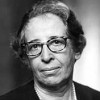
It is well known that the most radical revolutionary will become a conservative the day after the revolution.
Hannah Arendt (1906-1975) German-American philosopher, political theorist
Essay (1970-09-12), “Civil Disobedience,” The New Yorker
(Source)
Revised and collected in Crises of the Republic (1972).
EPOPS: You’re mistaken: men of sense often learn from their enemies. Prudence is the best safeguard. This principle cannot be learned from a friend, but an enemy extorts it immediately. It is from their foes, not their friends, that cities learn the lesson of building high walls and ships of war. And this lesson saves their children, their homes, and their properties.
Aristophanes (c. 450-c. 388 BC) Athenian comedic playwright
The Birds, l. 375 (414 BC) [tr. Anon. (1812)]Full text.
Alt trans. [Hickie (1853)]: "Yet, certainly, the wise learn many things from their enemies; for caution preserves all things. From a friend you could not learn this, but your foe immediately obliges you to learn it. For example, the states have learned from enemies, and not from friends, to build lofty walls, and to possess ships of war. And this lesson preserves children, house, and possessions."
Alt trans. [O'Neill (1938)] : "The wise can often profit by the lessons of a foe, for caution is the mother of safety. It is just such a thing as one will not learn from a friend and which an enemy compels you to know. To begin with, it's the foe and not the friend that taught cities to build high walls, to equip long vessels of war; and it's this knowledge that protects our children, our slaves and our wealth."
Alt trans. [Goldstein-Jackson (1983)]: "A man may learn wisdom even from a foe."
Wise people, even though all laws were abolished, would still live the same life.
Aristophanes (c. 450-c. 388 BC) Athenian comedic playwright
(Attributed)
Alt trans: "Wise men, though all laws were abolished, would lead the same lives."
There is a foolish corner in the brain of the wisest man.
Aristotle (384-322 BC) Greek philosopher
(Attributed)
Not found anywhere except modern books of inspiring aphorisms and sites of citationless quotations. It also doesn't sound very Aristotelian.
How many a debate could have been deflated into a single paragraph if the disputants had dared to define their terms?
William James (Will) Durant (1885-1981) American historian, teacher, philosopher
The Story of Philosophy, ch. 2 “Aristotle and Greek Science,” sec. 3 “The Foundation of Logic” (1926)
(Source)
This quotation is frequently misattributed (without citation) to Aristotle (sometimes using "dispute" instead of "debate"), but none of the sources pre-date this passage by Durant. Durant is speaking of Aristotle's development of logic, and his focus on definitions, but the full passage in context is clearly not a quotation:There was a hint of this new science in Socrates’ maddening insistence on definitions, and in Plato’s constant refining of every concept. Aristotle’s little treatise on Definitions shows how his logic found nourishment at this source. “If you wish to converse with me,” said Voltaire, “define your terms.” How many a debate would have been deflated into a paragraph if the disputants had dared to define their terms! This is the alpha and omega of logic, the heart and soul of it, that every important term in serious discourse shall be subjected to strictest scrutiny and definition. It is difficult, and ruthlessly tests the mind; but once done it is half of any task.
The least initial deviation from the truth is multiplied later a thousandfold.
There is no great genius without a touch of madness.
[Nullum magnum ingenium sine mixtura dementiae fuit.]
Aristotle (384-322 BC) Greek philosopher
(Attributed)
Attributed to Aristotle in Seneca the Younger, "On Tranquility of Mind [De Tranquillitate Animi]" (17.10) (c. AD 60). (Source (Latin)).
Alternate translations:This quotation as such is not found in surviving Aristotle. It may either represent something from Aristotle that has been lost since Seneca, or else Seneca fabricating a quote, quoting something spurious, or paraphrasing something Aristotle did write, e.g., his comments about madness/melancholy and poets/prominent talents (here and here). See also the Pseudo-Aristotle, Problemata, Book 30, ch. 1:
- "There is no great genius without a mixture of madness." [Example (1851)]
- "No great genius was without a mixture of insanity." [tr. Langsdorf (1900)]
- "No great genius has ever been without a touch of insanity." [tr. Stewart (1900), "On Peace of Mind"]
- "No excellent soul is exempt from a mixture of madness." [Example (1906)]
- "No great genius has ever existed without some touch of madness." [tr. Basore (1932)]
- "No great genius has ever existed without a dash of lunacy." [tr. Davie (2007)]
- "There was never any great genius without a tincture of insanity." [tr. @sentantiq (2018)]
- "There was never a genius without a tincture of madness."
- "No great mind has ever existed without a touch of madness."
Why is it that all those who have become eminent in philosophy or politics or poetry or the arts are clearly of an atrabilious temperament, and some of them to such an extent as to be affected by diseases caused by black bile, as is said to have happened to Heracles among the heroes? [tr. Forster (1927)]
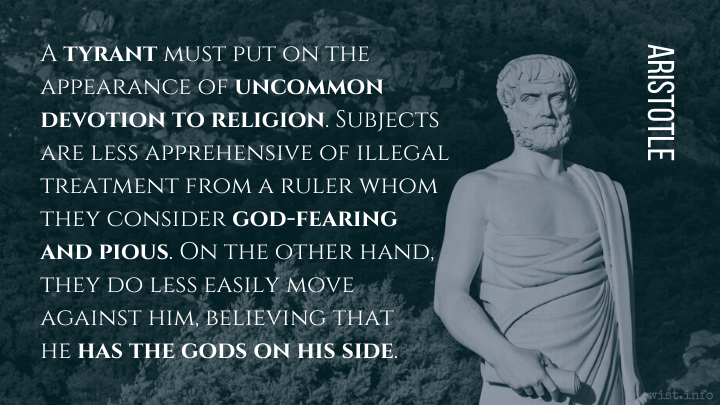
A tyrant must put on the appearance of uncommon devotion to religion. Subjects are less apprehensive of illegal treatment from a ruler whom they consider god-fearing and pious. On the other hand, they do less easily move against him, believing that he has the gods on his side.
Aristotle (384-322 BC) Greek philosopher
Politics [Πολιτικά], Book 5, ch. 11 / 1314b.39
Alt. trans.:
- "Also he should appear to be particularly earnest in the service of the Gods; for if men think that a ruler is religious and has a reverence for the Gods, they are less afraid of suffering injustice at his hands, and they are less disposed to conspire against him, because they believe him to have the very Gods fighting on his side. At the same time his religion must not be thought foolish." [tr. Jowett (1885)]
- "And, moreover, always to seem particularly attentive to the worship of the gods; for from persons of such a character men entertain less fears of suffering anything illegal while they suppose that he who governs them is religious and reverences the gods; and they will be less inclined to raise insinuations against such a one, as being peculiarly under their protection: but this must be so done as to give no occasion for any suspicion of hypocrisy." [tr. Ellis (1912)]
- "And further he must be seen always to be exceptionally zealous as regards religious observances (for people are less afraid of suffering any illegal treatment from men of this sort, if they think that their ruler has religious scruples and pays regard to the gods, and also they plot against him less, thinking that he has even the gods as allies), though he should not display a foolish religiosity." [tr. Rackham (1932)]
- "Further, he must always show himself to be seriously attentive to the things pertaining to the gods. For men are less afraid fo being treated in some respect contrary to the law by such persons, if they consider the ruler a god-fearing sort who takes thought for the gods, and they are less ready to conspire against him as one who has the gods too as allies. In showing himself of this sort, however, he must avoid silliness." [tr. Lord (1984)]
It is manifestly possible to be a good citizen without possessing the goodness that constitutes a good man.
[ὅτι μὲν οὖν ἐνδέχεται πολίτην ὄντα σπουδαῖον μὴ κεκτῆσθαι τὴν ἀρετὴν καθ᾽ ἣν σπουδαῖος ἀνήρ, φανερόν.]
Aristotle (384-322 BC) Greek philosopher
Politics [Πολιτικά], Book 3, ch. 4 / 1276b.34 [tr. Rackham (1932)]
(Source)
Note that a similar passage can be found at 1277a12.
(Source (Greek)). Alternate translations:An excellent citizen does not possess that virtue which constitutes a good man.
[tr. Ellis (1776)]It is quite possible that a citizen, though good as such, should not possess the excellence which characterizes a the good man.
[tr. Bolland (1877)]The good citizen need not of necessity possess the virtue which makes a good man.
[tr. Jowett (1885)]That it is possible for a citizen to be excellent yet not possess the virtue in accordance with which he is an excellent man, therefore, is evident.
[tr. Lord (1984)]Evidently, then, it is possible to be a good citizen without having acquired the virtue expressed by a good man.
[tr. Reeve (1998)]
So also anybody can become angry — that is easy, and so it is to give and spend money; but to be angry with or give money to the right person, and to the right amount, and at the right time, and for the right purpose, and in the right way — this is not within everybody’s power and is not easy; so that to do these things properly is rare, praiseworthy, and noble.
[οὕτω δὲ καὶ τὸ μὲν ὀργισθῆναι παντὸς καὶ ῥᾴδιον, καὶ τὸ δοῦναι ἀργύριον καὶ δαπανῆσαι: τὸ δ᾽ ᾧ καὶ ὅσον καὶ ὅτε καὶ οὗ ἕνεκα καὶ ὥς, οὐκέτι παντὸς οὐδὲ ῥᾴδιον: διόπερ τὸ εὖ καὶ σπάνιον καὶ ἐπαινετὸν καὶ καλόν.]
Aristotle (384-322 BC) Greek philosopher
Nicomachean Ethics [Ἠθικὰ Νικομάχεια], Book 2, ch. 9 (2.9, 1109a.27) (c. 325 BC) [tr. Rackham (1934)]
(Source)
(Source (Greek)). Alternate translations:Just so to be angry, to give money, and be expensive, is what any man can do, and easy: but to do these to the right person, in due proportion, at the right time, with a right object, and in the right manner, this is not as before what any man can do, nor is it easy; and for this cause goodness is rare, and praiseworthy, and noble.
[tr. Chase (1847)]And so, too, to get angry is an easy matter, and in any man's power; or to give away money or to spend it: but to decide to whom to give it, and how large a sum, and when, and for what purpose, and how, is neither in every many's power, nor an easy matter. And hence it is that excellence herein is rare and praiseworthy and noble.
[tr. Williams (1869), sec. 37]So too anybody can get angry -- that is an easy matter -- and anybody can give or spend money, but to give it to the right persons, to give the right amount of it and to give it at the right time and for the right cause and in the right way, this is not what anybody can do, nor is it easy. That is the reason why it is rare and laudable and noble to do well.
[tr. Welldon (1892)]Thus anyone can be angry -- that is quite easy; anyone can give money away or spend it: but to do these things to the right person, to the right extent, at the right time, with the right object, and in the right manner, is not what everybody can do, and is by no means easy; and that is the reason why right doing is rare and praiseworthy and noble.
[tr. Peters (1893)]So, too, anyone can get angry -- that is easy -- or give or spend money; but to do this to the right person, to the right extent, at the right time, with the right motive, and in the right way, that is not for everyone, nor is it easy; wherefore goodness is both rare and laudable and noble.
[tr. Ross (1908)]In the same way, getting angry is also something everyone can do and something easy, as is giving or spending money. Determining whom to give it to, though, and how much, when, for the sake of what, and in what way -- that is no longer something everyone can do or something easy. That is why doing it well is a rare thing and a praiseworthy and noble one.
[tr. Reeve (1948)]So, too, anyone can get angry or give money or spend it, and it is easy. But to give to the right person, the right amount, at the right time, for the right purpose, and in the right manner, this is not something anyone can do nor is it easy to do; and it is in view of this that excellence is rare and praiseworthy and noble.
[tr. Apostle (1975)]So too it is easy to get angry -- anyone can do that -- or to give and spend money; but to feel or act towards the right person to the right extent at the right time for the right reason in the right way -- that is not easy, and it is not everyone that can do it. Hence to do these things well is a rare, laudable, and fine achievement.
[tr. Thomson/Tredennick (1976)]So too anyone can get angry, or give and spend money -- these are easy, but doing them in relation to the right person, in the right amount, at the right time, with the right aim in view, and in the right way -- that is not something anyone can do, nor is it easy. This is why excellence in these things is rare, praiseworthy, and noble.
[tr. Crisp (2000)]And so too, to become angry belongs to everyone and is an easy thing, as is also giving and spending money; but to whom [one ought to do so], how much, when for the sake fo what, and how -- these no longer belong to everyone nor are easy. Thus in fact acting well is rare, praiseworthy, and noble.
[tr. Bartlett/Collins (2011)]
Note that some translations paraphrase this only to speak of anger, e.g., Edith M. Leonard, et al., The Child: At Home and School (1944):Anybody can become angry, that is easy; but to be angry with the right person, and to the right degree, and at the right time, for the right purpose, and in the right way, that is not within everybody's power and is not easy.
Well begun is half done.
Aristotle (384-322 BC) Greek philosopher
Politics [Πολιτικά], Book 5, ch. 4 / 1303b30 [tr. Jowett (1885)]
(Source)
People attribute this to Aristotle largely because Jowett used a contemporary proverb in lieu of what Aristotle wrote: "As the proverb says -- 'Well begun is half done.'" The following alternative translations capture his original meaning more closely:
Dignity does not consist in possessing honors, but in deserving them.
Aristotle (384-322 BC) Greek philosopher
(Attributed)
Variant: "Dignity consists not in possessing honors, but in the consciousness that we deserve them."
Citation not identified. Earliest reference found in 1854.
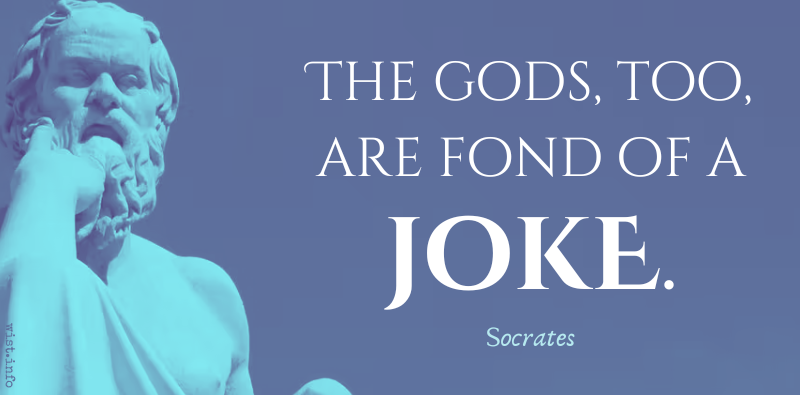
For the name of these gods there is both a serious and a humorous explanation; the serious explanation is not to be had from me, but there is no hindrance to my offering the humorous one, for the gods too are fond of a joke.
[ἀλλὰ ἔστι γὰρ καὶ σπουδαίως εἰρημένος ὁ τρόπος τῶν ὀνομάτων τούτοις τοῖς θεοῖς καὶ παιδικῶς. τὸν μὲν οὖν σπουδαῖον ἄλλους τινὰς ἐρώτα, τὸν δὲ παιδικὸν οὐδὲν κωλύει διελθεῖν: φιλοπαίσμονες γὰρ καὶ οἱ θεοί.]
Socrates (c.470-399 BC) Greek philosopher
In Plato, Cratylus [Κρατύλος], ch. 23 / 406c [tr. Hyers (1969)]
(Source)
The final phrase, "The gods, too, are fond of a joke," is broadly misattributed to Aristotle, without any citation. It is also sometimes misattributed to Edward Albee.
Cratylus is dialogue about the nature of names. Socrates, here, has been asked about the origins of the names of the gods, Dionysus and Aphrodite. Burges (below) notes that Plato had been "partly initiated into the mysteries of Demeter and Dionysus," part of which dealt seriously with the meanings of those deities' names; his avoiding the "serious explanation" is not betray his oath of secrecy to the cult.
(Source (Greek)). Alternate translations:But the mode of nomination, belonging to these divinities, is both serious and jocose. Ask therefore others about the serious mode; but nothing hinders us from relating the jocose; for these deities are lovers of jesting and sport.
[tr. Taylor (1804)]But the manner of the appellations given to these divinities, has been said to be both serious and jocose. Ask therefore others about the serious manner; but nothing hinders us from relating the jocose; for these deities are lovers of jesting and sport.
[tr. Burges (1850)]There is a serious and also a facetious explanation of both these names; the serious explanation is not to be had from me, but there is no objection to your hearing the facetious one; for the Gods too love a joke.
[tr. Jowett (1892)]You see there is both a serious and a facetious account of the form of the name of these deities. You will have to ask others for the serious one; but there is nothing to hinder my giving you the facetious account, for the gods also have a sense of humor.
[tr. Fowler (1926)]
So, whatsoever that be within us which feels, thinks, desires, and animates us, it is something celestial, divine, and, consequently, imperishable.
Aristotle (384-322 BC) Greek philosopher
(Attributed)
(Source)
The earliest reference to this text that I can find is in Louis Alphonse Cahagnet, Magnétisme: The Celestial Telegraph (1850), who attributes it to Cicero's "Explanation of the Doctrines of Aristotle." It is unclear which of Cicero's actual works this refers to, and it doesn't come across as Aristotelian (or even Ciceronian), and, given the source, may be distorted, poorly translated, or bogus.
‘Twas the saying of an ancient Sage, “That Humour was the only Test of Gravity, and Gravity of Humour. For a Subject which would not bear Raillery is suspicious; and a Jest which would not bear a serious Examination is certainly false Wit.”
Anthony Cooper, 3rd Earl of Shaftesbury (1671-1713) English politician and philosopher
Sensus Communis: An Essay on the Freedom of Wit and Humour, Part 1, Sec. 5 (1709)
(Source)
Often incorrectly attributed to Aristotle. Shaftesbury, according to his footnote, is paraphrasing from Aristotle quoting Gorgias Leontinus. The Latin translation is "Seria risu, risum seriis discutere" ("In arguing one should meet serious pleading with humor, and humor with serious pleading"). Shaftesbury's second sentence is his own commentary.
In Lord Chesterfield, in a letter to his son (6 Feb 1752), rendered it, "Ridicule is the best test of truth."

We are what we repeatedly do. Excellence, therefore, is not an act but a habit.
Aristotle (384-322 BC) Greek philosopher
Nicomachean Ethics [Ἠθικὰ Νικομάχεια] (c. 325 BC) (paraphrase)
(Source)
Variants:Not actually Aristotle, but a summary by Will Durant, The Story of Philosophy: The Lives and Opinions of the World's Greatest Philosophers (1926), ch. 2 "Aristotle and Greek Science," sec. 7 "Ethics and the Nature of Happiness" (1926):
- "We are what we repeatedly do. Excellence, then, is not an act, but a habit."
- "We are what we repeatedly do, therefore excellence is not an act, but a habit."
Excellence is an art won by training and habituation: we do not act rightly because we have virtue or excellence, but we rather have these because we have acted rightly; "these virtues are formed in man by his doing the actions"; we are what we repeatedly do. Excellence, then, is not an act but a habit: "the good of man is a working of the soul in the way of excellence in a complete life ... for as it is not one swallow or one fine day that makes a spring, so it is not one day or a short time that makes a man blessed and happy."
The quoted phrases are from the Nicomachean Ethics, Book 2, ch. 4; Book 1, ch. 7.
It is the mark of an educated mind to be able to entertain a thought without accepting it.
Aristotle (384-322 BC) Greek philosopher
(Spurious)
First attributed to Aristotle in Lowell L. Bennion, Religion and the Pursuit of Truth (1959). Unfound as such.
Sometimes thought (though I feel it's a bit of a stretch) a misinterpretation of Nicomachean Ethics 1.3.4 (1094b): "For it is the mark of an educated person to search for the same kind of clarity in each topic to the extent that the nature of the matter accepts it."
More discussion of this quotation:
Now and then a blinde man may hit a crow.
Robert Armin (c.1568-1615) English comic actor, playwright
A Nest of Ninnies (1608)
Full text.
If I were in the President’s place I would not get a chance to resign. I would be lying in a pool of my own blood hearing Mrs. Armey standing over me saying, “How do I reload this damn thing?”
Dick Armey (b. 1940) American politician, economist
Press Conference (15 Sep. 1998)
When asked during the Monica Lewinsky scandal if President Clinton should resign. More information.

You cannot get ahead while you are getting even.
Dick Armey (b. 1940) American politician, economist
(Attributed)
The world isn’t interested in the storms you encountered, but whether or not you brought in the ship.
(Other Authors and Sources)
Raul Armesto
I got a simple rule about everybody. If you don’t treat me right, shame on you.
Louis "Satchmo" Armstrong (1900-1971) American musician
(Attributed)
In a pluralistic society, no group, no matter how numerous or powerful, has a right to prescribe a set of beliefs or a code of ethics for all.
James Armstrong (1924-2018) American Methodist bishop, educator, author [Arthur James Armstrong]
Speech in Phoenix, AZ (4 Feb. 1975)
And we are here as on a darkling plain
Swept with confused alarms of struggle and flight,
Where ignorant armies clash by night.Matthew Arnold (1822-1888) English poet and critic
“Dover Beach,” l. 35-37 (1867)
I believe every human has a finite number of heartbeats. I don’t intend to waste any of mine running around doing exercises.
Neil Armstrong (1930-2012) American astronaut, aviator, educator
(Spurious)
Armstrong says that he did not originate this, but repeated it as something he had heard in order to disagree with it.

A mediocre idea that generates enthusiasm will go further than a great idea that inspires no one.
Mary Kay Ash (1918-2001) American entrepreneur
Mary Kay on People Management (1984)

There is no such whetstone, to sharpen a good wit and encourage a will to learning, as is praise.
Roger Ascham (1515-1568) English author and scholar
The Schoolmaster, Book I (1570)
True heroism is remarkably sober, very undramatic. It is not the urge to surpass all others at whatever cost, but the urge to serve others at whatever cost.
Arthur Ashe (1943-1993) American athlete
(Attributed)
Quoted in Readers Digest, "Points to Ponder" (Sep 1994)
Like other occult techniques of divination, the statistical method has a private jargon deliberately contrived to obscure its methods from non-practitioners.
Colonel G. O. Ashley (d. 1997) American military pilot, instructor, journalist
(Attributed)
I don’t subscribe to the thesis, “Let the buyer beware.” I prefer the disregarded one that goes, “Let the seller be honest.”‘
Isaac Asimov (1920-1992) Russian-American author, polymath, biochemist
Letter to Stanley Asimov (13 Apr 1969)
In Stanley Asimov, Yours, Isaac Asimov, A Lifetime of Letters, ch. 38 "Modesty, Honest, and Other Traits" (1995)
It is change, continuing change, inevitable change, that is the dominant factor in society today. No sensible decision can be made any longer without taking into account not only the world as it is, but the world as it will be.
Isaac Asimov (1920-1992) Russian-American author, polymath, biochemist
“My Own View,” The Encyclopedia of Science Fiction [ed. Robert Holdstock] (1978)
I am completely convinced that hell does not exist except in the minds of pious sadists.
Isaac Asimov (1920-1992) Russian-American author, polymath, biochemist
(Attributed)
We have only a slim chance of getting through the problems that face us now, but if too many Miniver Cheevys sit back to drink and long for a non-existent past, that slim chance will decrease to zero.
Isaac Asimov (1920-1992) Russian-American author, polymath, biochemist
Familiar Poems, Annotated, “Miniver Cheevy” (1977)
The most exciting phrase to hear in science, the one that heralds new discoveries, is not “Eureka!” but “That’s funny…”
Isaac Asimov (1920-1992) Russian-American author, polymath, biochemist
(Attributed)
Unsourced. More information here.
The true delight is in the finding out rather than in the knowing.
Isaac Asimov (1920-1992) Russian-American author, polymath, biochemist
(Attributed)
From my close observation of writers (almost all my friends are writers) they fall into two groups: 1) those who bleed copiously and visibly at any bad review, and 2) those who bleed copiously and secretly at any bad review.
Isaac Asimov (1920-1992) Russian-American author, polymath, biochemist
Gold: The Final Science Fiction Collection, Part III, ch 10 “Book Reviews” (2003)
Full text.
When, however, the lay public rallies round an idea that is denounced by distinguished but elderly scientists and supports that idea with great fervor and emotion — the distinguished but elderly scientists are then, after all, probably right.
Isaac Asimov (1920-1992) Russian-American author, polymath, biochemist
Fantasy & Science Fiction (in answer to Clarke’s First Law) (1977)
See Clarke.
Even as a youngster, though, I could not bring myself to believe that if knowledge presented danger, the solution was ignorance. To me, it always seemed that the solution had to be wisdom. You did not refuse to look at danger, rather you learned how to handle it safely.
Isaac Asimov (1920-1992) Russian-American author, polymath, biochemist
The Caves of Steel, Introduction (novel 1954, intro 1983)
The young specialist in English Lit, … lectured me severely on the fact that in every century people have thought they understood the Universe at last, and in every century they were proved to be wrong. It follows that the one thing we can say about our modern “knowledge” is that it is wrong.
… My answer to him was, “… when people thought the Earth was flat, they were wrong. When people thought the Earth was spherical they were wrong. But if you think that thinking the Earth is spherical is just as wrong as thinking the Earth is flat, then your view is wronger than both of them put together.”Isaac Asimov (1920-1992) Russian-American author, polymath, biochemist
“The Relativity of Wrong” (1996)
Any technological advance can be dangerous. Fire was dangerous from the start, and so (even more so) was speech — and both are still dangerous to this day — but human beings would not be human without them.
Isaac Asimov (1920-1992) Russian-American author, polymath, biochemist
The Caves of Steel, Introduction (novel 1954, intro 1983)
It is forbidden to descry other sects; the true believer gives honor to whatever in them is worthy of honor.
Ashoka (c. 269-232 BC) Indian Buddhist emperor [Asoka, Piyadasi]
Edict
The main dangers in this life are the people who want to change everything — or nothing.
Nancy Astor (1879-1964) American socialite and English politician [Nancy Witcher Langhorne; Viscountess Astor; Lady Astor]
(Attributed)
It is not by the sword or the spear, by soldiers or by armed force that truth is to be promoted, but by counsel and gentle persuasion.
Athanasius (293-373) Bishop of Alexandria, theologian, saint
Divinia Institutia, 54
Migne, Patrologia Latina, 6: 1061
In every age “the good old days” were a myth. No one ever thought they were good at the time. For every age has consisted of crises that seemed intolerable to the people who lived through them.
Brooks Atkinson (1894-1984) American drama critic and journalist
Once Around the Sun, “February 8” (1951)
(Source)
People everywhere enjoy believing things that they know are not true. It spares them the ordeal of thinking for themselves and taking the responsibility for what they know.
Brooks Atkinson (1894-1984) American drama critic and journalist
Once Around the Sun, “February 2” (1951)
(Source)
The most fatal illusion is the settled point of view. Since life is growth and motion, a fixed point of view kills anybody who has one.
Brooks Atkinson (1894-1984) American drama critic and journalist
Once Around the Sun (1951)
Democracy means government by discussion, but it is only effective if you can stop people talking.
Clement Attlee (1883-1967) English politician and Prime Minister (1945-51)
Speech at Oxford (14 Jun. 1957)
Procrastination and worry are the twin thieves that will try to rob you of your brilliance — but even the smallest action will drive them from your camp.
(Other Authors and Sources)
Gil Atkinson
I have no objections to churches so long as they do not interfere with God’s work.
Brooks Atkinson (1894-1984) American drama critic and journalist
(Attributed)
Silence is a text easy to misread.
A. A. Attanasio (b. 1951) American writer [Alfred Angelo Attanasio, a.k.a Adam Lee]
“The Eagle and the Sword”
We are all here on earth to help others; what on earth the others are here for I don’t know.
W. H. Auden (1907-1973) Anglo-American poet [Wystan Hugh Auden]
The Dyer’s Hand, and Other Essays (1968)
We would rather be ruined than changed,
We would rather die in our dread
Than climb the cross of the moment
And let our illusions die.W. H. Auden (1907-1973) Anglo-American poet [Wystan Hugh Auden]
The Age of Anxiety, Part 6 [Malin] (1948)
(Source)
Among those whom I like or admire, I can find no common denominator, but among those whom I love, I can: all of them make me laugh.
W. H. Auden (1907-1973) Anglo-American poet [Wystan Hugh Auden]
The Dyer’s Hand and Other Essays, Part 7 “The Shield of Perseus,” “Notes on the Comic” (1962)
(Source)
The stars are not wanted now: put out every one;
Pack up the moon and dismantle the sun;
Pour away the ocean and sweep up the wood;
For nothing now can ever come to any good.W. H. Auden (1907-1973) Anglo-American poet [Wystan Hugh Auden]
Twelve Songs, Number 9 (1936)
Evil is unspectacular and always human
And shares our bed and eats at our own table.
Music washes away from the soul the dust of everyday life.
Berthold Auerbach (1812-1882) German author
(Attributed)
Later attributed to Pablo Picasso, and (mistakenly) to Red Auerbach.
But I wretched, most wretched, in the very commencement of my early youth, had begged chastity of Thee, and said, “Give me chastity and continency, only not yet.”
[At ego adulescens miser ualde, miser in exordio ipsius adulescentiae, etiam petieram a te castitatem et dixeram, ‘Da mihi castitatem et continentiam, sed noli modo.’]
Augustine of Hippo (354-430) Christian church father, philosopher, saint [b. Aurelius Augustinus]
Confessions, Book 8, ch. 7 / ¶ 17 (8.7.17) (c. AD 398) [tr. Pusey (1838)]
(Source)
Augustine describing his youth when he wanted God to remove his sinful sexual desires -- but not before he could satisfy them.
(Source (Latin)). Alternate translations:But I, miserable young man, supremely miserable even in the very outset of my youth, had entreated chastity of Thee, and said, “Grant me chastity and continency, but not yet.”
[tr. Pilkington (1876)]But I, miserable youth, most miserable, in the very beginning of my youth had sought from Thee chastity, and said, “Give me chastity and continency, but not now.”
[tr. Hutchings (1890)]Yea, wretched, O wretched youth that I had been, on the very threshold of my youth, I had even begged of Thee the gift of chastity; but I had said “Give me chastity and self- control, but not just yet.”
[tr. Bigg (1897), 8.7.2]But I in my great worthlessness -- for it was greater thus early -- had begged You for chastity, saying: “Grant me chastity and continence, but not yet.”
[tr. Sheed (1943)]But, wretched youth that I was -- supremely wretched even in the very outset of my youth -- I had entreated chastity of thee and had prayed, “Grant me chastity and continence, but not yet.”
[tr. Outler (1955)]But I, a most wretched youth, most wretched from the very start of my youth, had even sought chastity from you, and had said, "Give me chastity and continence, but not yet!"
[tr. Ryan (1960)]As a youth I had been woefully at fault, particularly in early adolescence. I had prayed to you for chastity and said, "Give me chastity and continence, but not yet."
[tr. Pine-Coffin (1961)]But I, wretched young man that I was -- even more wretched at the beginning of my youth -- had begged you for chastity and had said, "Make me chaste and continent, but not yet."
[tr. Warner (1963)]But I, most wretched youth, and more wretched at my youth’s beginning, had even sought chastity at your hands and said: 'Give me chastity and self-control but not yet.'
[tr. Blaiklock (1983)]

For God judged it better to bring good out of evil than not to permit any evil to exist.
[Melius enim judicavit de malis bene facere quam mala nulla esse permittere.]Augustine of Hippo (354-430) Christian church father, philosopher, saint [b. Aurelius Augustinus]
Enchiridion on Faith, Hope and Love, ch. 8 / § 27 (AD 420) [tr. Outler (1955)]
(Source)
(Source (Latin)). Alternate translations:For He judged it better to bring good out of evil, than not to permit any evil to exist.
[tr. Shaw (1887)]God judged it better to bring good out of evil than to suffer no evil to exist.
[tr. Clifford (1903)]
Suppress prostitution, and capricious lusts will overthrow society.
Augustine of Hippo (354-430) Christian church father, philosopher, saint [b. Aurelius Augustinus]
De Ordine, 2.4.12Variant: "If you do away with harlots, the world will be convulsed with lust."
Faith is to believe what you do not see; the reward of this faith is to see what you believe.
[Est autem fides credere quod nondum vides; cuius fidei merces est videre quod credis.]
Augustine of Hippo (354-430) Christian church father, philosopher, saint [b. Aurelius Augustinus]
Sermons, 43.1.1
Variant: "For what is faith unless it is to believe what you do not see?"
To many, total abstinence is easier than perfect moderation.
[Multi quidem facilius se abstinent ut non utantur, quam temperent ut bene utantur.]
Augustine of Hippo (354-430) Christian church father, philosopher, saint [b. Aurelius Augustinus]
On the Good of Marriage [De Bono Conjugali], § 25 (AD 401)
(Source)
(Source (Latin)). Alternate translations:Many indeed with more ease practice abstinence, so as not to use, than practice temperance, so as to use well.
[tr. Cornish (<1885)]Many indeed find it easier to abstain from making use of them than to control their use and use them properly.
[tr. Kearney (1999)]Complete abstinence is easier than perfect moderation.
[E.g.]
God has promised forgiveness to your repentance, but He has not promised tomorrow to your procrastination.
Augustine of Hippo (354-430) Christian church father, philosopher, saint [b. Aurelius Augustinus]
(Paraphrase)
This appears to be a heavy paraphrase from Sermon 40.5-6 [tr. Edmund Hill]:"I'm only asking," he says, "to be allowed a little more time." Why? "Because God has promised me pardon." But no one has promised you that you are going to be alive tomorrow. Or else, just as you have read in the prophet, the gospel, the apostle, that when you have turned back to him God will blot out all your iniquities, read out to me where a tomorrow is promised you, and then live in an evil way tomorrow.
For more discussion, see:
What, then, is time? I know well enough what it is, provided that nobody asks me; but if I am asked what it is and try to explain, I am baffled.
[Quid est ergo tempus? Si nemo ex me quaerat, scio; si quaerenti explicare velim, nescio.]
Augustine of Hippo (354-430) Christian church father, philosopher, saint [b. Aurelius Augustinus]
Confessions, Book 11, ch. 14 / ¶ 17 (11.14.17) (c. AD 398) [tr. Pine-Coffin (1961)]
(Source)
(Source (Latin)). Alternate translations:What then is time? If no one asks me, I know: if I wish to explain it to one that asketh, I know not.
[tr. Pusey (1838)]What then is time? If no one asks me, I know; if I wish to explain it to one that asketh, I know not.
[ed. Shedd (1860)]What, then, is time? If no one ask of me, I know; if I wish to explain to him who asks, I know not.
[tr. Pilkington (1876)]What then is time? If no one asks me, I know; if I want to explain it to a questioner, I do not know.
[tr. Sheed (1943)]What, then, is time? If no one asks me, I know what it is. If I wish to explain it to him who asks me, I do not know.
[tr. Outler (1955)]What, then, is time? If no one asks me, I know; if I want to explain it to someone who does ask me, I do not know.
[tr. Ryan (1960)]What then is time? I know what it is if no one asks me what it is; but if I want to explain it to someone who has asked me, I find that I do not know.
[tr. Warner (1963)]
This clearly shows that we learn better in a free spirit of curiosity than under fear and compulsion.
[Hinc satis elucet maiorem habere vim ad discenda ista liberam curiositatem quam meticulosam necessitatem.]
Augustine of Hippo (354-430) Christian church father, philosopher, saint [b. Aurelius Augustinus]
Confessions, Book 1, ch. 14 / ¶ 23 (1.14.23) (c. AD 398) [tr. Pine-Coffin (1961)]
(Source)
(Source (Latin)). Alternate translations:No doubt, then, that a free curiosity has more force in our learning these things, than a frightful enforcement.
[tr. Pusey (1838)]Hereby it appears that free curiosity has more force in our learning of tongues than frightful enforcement.
[ed. Shedd (1860)]From this it is sufficiently clear that a free curiosity hath more influence in our learning these things than a necessity full of fear.
[tr. Pilkington (1876)]Whence it is sufficiently clear, that the free desire of knowledge has more power to make us learn these things than the urgency of fear.
[tr. Hutchings (1890)]It is plain then that the freedom of curiosity is a far better instructor in language than the compulsion of fear.
[tr. Bigg (1897)]All this goes to prove that free curiosity is of more value in learning than harsh discipline.
[tr. Sheed (1943)]From this it is sufficiently clear that a free curiosity is more effective in learning than a discipline based on fear.
[tr. Outler (1955)]Hence it is plain enough that for learning a language free interest has greater power than frightening constraint.
[tr. Ryan (1960)]It is clear enough from this that free curiosity is a more powerful aid to the learning of languages than a forced discipline.
[tr. Warner (1963)]By this it is clear that a free curiosity is a greater force in learning than a fear-ridden compulsion.
[tr. Blaiklock (1983)]
Men go forth to marvel at the heights of mountains and the huge waves of the sea, the broad flow of the rivers, the vastness of the ocean, the orbits of the stars, and yet they neglect to marvel at themselves.
[Et eunt homines mirari alta montium et ingentes fluctus maris et latissimos lapsus fluminum et oceani ambitum et gyros siderum, et relinquunt se ipsos.]
Augustine of Hippo (354-430) Christian church father, philosopher, saint [b. Aurelius Augustinus]
Confessions, Book 10, ch. 8 / ¶ 15 (10.8.15) (c. AD 398) [tr. Outler (1955)]
(Source)
(Source (Latin)). Alternate translations:And men go abroad to admire the heights of mountains, the mighty billows of the sea, the broad tides of rivers, the compass of the ocean, and the circuits of the stars, and pass themselves by.
[tr. Pusey (1838)]And men go forth to wonder at the heights of mountains, the huge waves of the sea, the broad flow of the rivers, the extent of the ocean, and the courses of the stars, and omit to wonder at themselves.
[tr. Pilkington (1876)]And men travel to admire the heights of mountains, and the vast waves of the sea, and the broad streams of rivers, and the circuit of the ocean, and the orbits of stars, and pass over themselves.
[tr. Hutchings (1890)]Here are men going afar to marvel at the heights of mountains, the mighty waves of the sea, the long courses of great rivers, the vastness of the ocean, the movements of the stars, yet leaving themselves unnoticed.
[tr. Sheed (1943)]Men go forth to marvel at the mountain heights, at huge waves in the sea, at the broad expanse of flowing rivers, at the wide reaches of the ocean, and at the circuits of the stars, but themselves they pass by.
[tr. Ryan (1960)]Yet men go out and gaze in astonishment at high mountains, the huge waves of the sea, the broad reaches of rivers, the ocean that encircles the world, or the stars in their courses. But they pay no attention to themselves.
[tr. Pine-Coffin (1961)]And men go abroad to wonder at the heights of mountains, the huge waves of the sea, the broad streams of rivers, the vastness of the ocean, the turnings of the stars -- and they do not notice themselves.
[tr. Warner (1963)]Men go to wonder at the heights of mountains, and the huge billows of the sea, the broad sweeps of the rivers, the curve of ocean and the circuits of the stars, and yet pass by themselves.
[tr. Blaiklock (1983)]
You can force a man to enter a church , to approach the altar, to receive the sacrament, but you cannot force him to believe.
Augustine of Hippo (354-430) Christian church father, philosopher, saint [b. Aurelius Augustinus]
(Attributed)
I was asking myself these questions, weeping all the while with the most bitter sorrow in my heart, when all at once I heard the sing-song voice of a child in a nearby house. Whether it was the voice of a boy or a girl I cannot say, but again and again it repeated the refrain “Take it and read, take it and read.”
[Dicebam haec et flebam amarissima contritione cordis mei. Et ecce audio vocem de vicina domo cum cantu dicentis et crebro repetentis, quasi pueri an puellae, nescio: “tolle lege, tolle lege.”]
Augustine of Hippo (354-430) Christian church father, philosopher, saint [b. Aurelius Augustinus]
Confessions, Book 8, ch. 12 / ¶ 29 (8.12.29) (c. AD 398) [tr. Pine-Coffin (1961)]
(Source)
Augustine writes of being unable to break himself away from his life of carnal sin, until, at this moment, he gets what he deems an inspiration from God to open the Bible at random and, reading Romans 13:13-14, makes his full conversion to Christianity.
(Source (Latin)). Alternate translations:So was I speaking and weeping in the most bitter contrition of my heart, when, lo! I heard from a neighbouring house a voice, as of boy or girl, I know not, chanting, and oft repeating, "Take up and read; Take up and read."
[tr. Pusey (1838) and ed. Shedd (1860)]I was saying these things and weeping in the most bitter contrition of my heart, when, lo, I heard the voice as of a boy or girl, I know not which, coming from a neighbouring house, chanting, and oft repeating, “Take up and read; take up and read.
[tr. Pilkington (1876)]I spoke thus , and wept in the bitterest sorrow of my heart. And lo, I heard a voice as of a boy or girl from a neighbouring house, I know not which, chanting, and frequently repeating, "Take, read; take, read."
[tr. Hutchings (1890)]Thus I spoke, weeping in bitter contrition of heart, when, lo, I heard a voice from the neighbouring house. It seemed as if some boy or girl, I knew not which, was repeating in a kind of chant the words, "Take and read, take and read."
[tr. Bigg (1897)]Such things I said, weeping in the most bitter sorrow of my heart. And suddenly I heard a voice from some nearby house, a boy’s voice or a girl’s voice, I do not know: but it was a sort of sing-song, repeated again and again, “Take and read, take and read.”
[tr. Sheed (1943)]I was saying these things and weeping in the most bitter contrition of my heart, when suddenly I heard the voice of a boy or a girl -- I know not which -- coming from the neighboring house, chanting over and over again, “Pick it up, read it; pick it up, read it.”
[tr. Outler (1955)]Such words I spoke, and with most bitter contrition I wept within my heart. And lo, I heard from a nearby house, a voice like that of a boy or a girl, I know not which, chanting and repeating over and over, “Take up and read. Take up and read.”
[tr. Ryan (1960)]So I spoke, weeping in the bitter contrition of my heart. Suddenly a voice reaches my ears from a nearby house. It is the voice of a boy or a girl (I don’t know which) and in a kind of singsong the words are constantly repeated: “Take it and read it. Take it and read it.”
[tr. Warner (1963)]Such were my words and I wept in the bitter contrition of my heart. And, see, I heard a voice from a neighbouring house chanting repeatedly, whether a boy’s or a girl’s voice I do not know: "Pick it up and read it, pick it up and read it."
[tr. Blaiklock (1983)]
For how can anything done by the will of God be contrary to nature, when the will of so great a creator constitutes the nature of each created thing? A portent therefore happens not contrary to nature, but contrary to what is known of nature.
[Quo modo est enim contra naturam, quod Dei fit uoluntate, cum uoluntas tanti utique conditoris conditae rei cuiusque natura sit? Portentum ergo fit non contra naturam, sed contra quam est nota natura.]
Augustine of Hippo (354-430) Christian church father, philosopher, saint [b. Aurelius Augustinus]
City of God [De Civitate Dei], Book 21, ch. 8 (21.8) (AD 412-416) [tr. Green (Loeb) (1972)]
(Source)
Commonly: "Miracles are not contrary to nature, but only contrary to what we know about nature."
(Source (Latin)). Alternate translations:For how is that contrary to nature which happens by the will of God, since the will of so mighty a Creator is certainly the nature of each created thing? A portent, therefore, happens not contrary to nature, but contrary to what we know as nature.
[tr. Dods (1871)]Nothing that happens by the will of God can be ‘contrary to nature.’ The ‘nature’ of any particular created thing is precisely what the supreme Creator of the thing willed it to be. Hence, a portent is merely contrary to nature as known, not to nature as it is.
[tr. Walsh/Honan (1954)]For how can an event be contrary to nature when it happens by the will of God, since the will of the great Creator assuredly is the nature of every created thing? A portent, therefore, does not occur contrary to nature, but contrary to what is known of nature.
[tr. Bettenson (1972)]
When it comes time to die, be not like those whose hearts are filled with the fear of death, so when their time comes they weep and pray for a little more time to live their lives over again in a different way. Sing your death song, and die like a hero going home.
Chief Aupumut (fl. 18th C.) Mohican leader (also "Aupaumut").
(Attributed) (1725)
Sometimes attributed to Tecumseh (1768-1813).
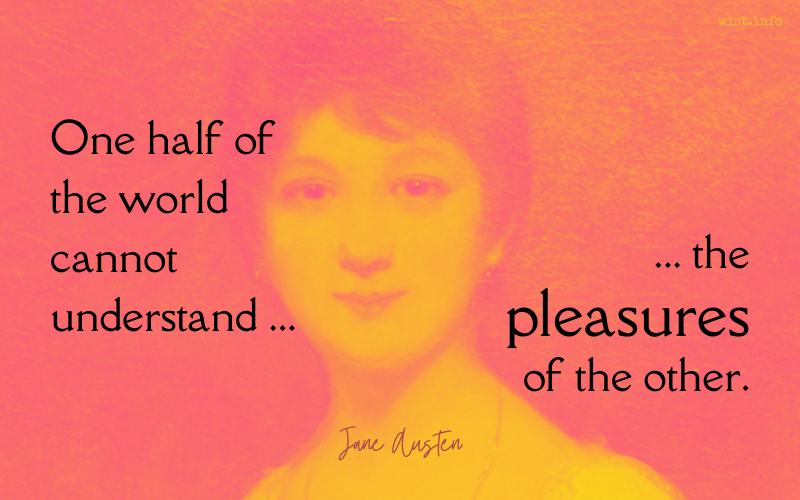
One half of the world cannot understand the pleasures of the other.

I have been a selfish being all my life, in practice, though not in principle.
Where so many hours have been spent in convincing myself that I am right, is there not some reason to fear I may be wrong?
The danger from computers is not that they will eventually get as smart as men, but we will meanwhile agree to meet them halfway.
Bernard Avishai (b. 1949) Canadian-American writer, management consultant, political economist
Article on George Orwell’s “Newspeak” (1983)
Referenced on the author's site.
On two occasions I have been asked, — “Pray, Mr. Babbage, if you put into the machine wrong figures, will the right answers come out?” In one case a member of the Upper, and in the other a member of the Lower, House put this question. I am not able rightly to apprehend the kind of confusion of ideas that could provoke such a question.
Charles Babbage (1791-1871) English mathematician, computer pioneer, philosopher
Passages from the Life of a Philosopher, ch. 5 “Difference Engine No. 1” (1864)
(Source)
Ah! How sweet coffee tastes! Lovelier than a thousand kisses, sweeter far than muscatel wine! I must have coffee .
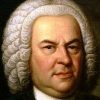
Johann Sebastian Bach (1685-1750) German composer
Kafee-Kantate (1732)
Here’s a test to find whether your mission on earth is finished: If you’re alive, it isn’t.
Richard Bach (b. 1936) American writer
Illusions: The Adventures of a Reluctant Messiah, ch. 15, epigraph (1977)
(Source)
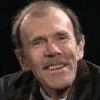
Don’t be dismayed at good-byes.
A farewell is necessary before you can meet again.
And meeting again, after moments or lifetimes,
is certain for those who are friends.Richard Bach (b. 1936) American writer
Illusions: The Adventures of a Reluctant Messiah, ch. 18, epigraph (1977)
(Source)
A synonym is a word you use when you can’t spell the word you first thought of.
Burt Bacharach (b. 1929) American songwriter
(Attributed)
Nothing doth more hurt in a state than that cunning men pass for wise.
Francis Bacon (1561-1626) English philosopher, scientist, author, statesman
“Of Cunning,” Essays, No. 22 (1625)
(Source)

Now, the empire of man over things is founded on the arts and sciences alone, for nature is only to be commanded by obeying her.
[Hominis autem imperium in res, in solis artibus et scientiis ponitur. Naturae enim non imperatur, nisi parendo.]
Francis Bacon (1561-1626) English philosopher, scientist, author, statesman
Instauratio Magna [The Great Instauration], Part 2 “Novum Organum [The New Organon],” Book 1, Aphorism # 129 (1620) [tr. Wood (1831)]
(Source (Latin)). Alternate translations:Now the empire of man over things depends wholly on the arts and sciences. For we cannot command nature except by obeying her.
[tr. Spedding (1858)]Now, the empire of man over things is founded on the Arts and Sciences alone, for Nature is only governed by obeying her.
[tr. Johnson (1859)]Now the empire of man over things likes solely in the arts and sciences. For one does not have empire over nature except by obeying her.
[tr. Silverthorne (2000)]Now -- this being the point I wanted to make·—man’s control over things depends wholly on the arts and sciences, for we can’t command nature except by obeying her.
[tr. Bennett (2017)]
Good fame is like fire. When you have kindled it, you may easily preserve it; but if once you extinguish it, you will not easily kindle it again; at least, not make it burn as bright as it did.
Francis Bacon (1561-1626) English philosopher, scientist, author, statesman
Apothegms, # 3 (1624)
Quoting Plutarch.
The root of all superstition is that men observe when a thing hits, but not when it misses.
Francis Bacon (1561-1626) English philosopher, scientist, author, statesman
Sylva Sylvarum, Century 10 (1627)
Alt trans.: "It is true that that may hold in these things, which is the general root of superstition; namely, that men observe when things hit, and not when they miss; and commit to memory the one, and forget and pass over the other."
A wise man will make more opportunities than he finds.
Francis Bacon (1561-1626) English philosopher, scientist, author, statesman
“Of Ceremonies and Respects,” Essays, No. 52 (1625)
(Source)
Reading maketh a full man; conference a ready man; and writing an exact man.
Francis Bacon (1561-1626) English philosopher, scientist, author, statesman
“Of Studies,” Essays, No. 50 (1625)
(Source)
The worst solitude is to be destitute of sincere friendship.
Francis Bacon (1561-1626) English philosopher, scientist, author, statesman
(Attributed)
Imagination was given to man to compensate him for what he is not; a sense of humor to console him for what he is.
Francis Bacon (1561-1626) English philosopher, scientist, author, statesman
(Attributed)
Man prefers to believe what he wants to be true. He rejects what is difficult because he is too impatient to make the investigation; he rejects sensible ideas, because they limit his hopes; he rejects the deeper truths of nature because of superstition; he rejects the light of experience, because he is arrogant and fastidious, believing that the mind should not be seen to be spending its time on mean, unstable things; and he rejects anything unorthodox because of common opinion. In short, emotion marks and stains the understanding in countless ways which are sometimes impossible to perceive.
[Quod enim mavult homo verum esse, id potius credit. Rejicit itaque difficilia, ob inquirendi impatientiam; sobria, quia coarctant spem; altiora naturae, propter superstitionem; lumen experientiae, propter arrogantiam et fastum, ne videatur mens versari in vilibus et fluxis; paradoxa, propter opinionem vulgi; denique innumeris modis, iisque interdum imperceptibilibus, affectus intellectum imbuit et inficit.]
Francis Bacon (1561-1626) English philosopher, scientist, author, statesman
Instauratio Magna [The Great Instauration], Part 2 “Novum Organum [The New Organon],” Book 1, Aphorism # 49 (1620) [tr. Silverthorne (2000)]
(Source)
See Demosthenes.
(Source (Latin)). Alternate translations:For man always believes more readily that which he prefers. He, therefore, rejects difficulties for want of patience in investigation; sobriety, because it limits his hope; the depths of nature, from superstition; the light of experiment, from arrogance and pride, lest his mind should appear to be occupied with common and varying objects; paradoxes, from a fear of the opinion of the vulgar; in short, his feelings imbue and corrupt his understanding in innumerable and sometimes imperceptible ways.
[tr. Wood (1831)]For what a man had rather were true he more readily believes. Therefore he rejects difficult things from impatience of research; sober things, because they narrow hope; the deeper things of nature, from superstition; the light of experience, from arrogance and pride, lest his mind should seem to be occupied with things mean and transitory; things not commonly believed, out of deference to the opinion of the vulgar. Numberless in short are the ways, and sometimes imperceptible, in which the affections colour and infect the understanding.
[tr. Spedding (1858)]For man more readily believes what he wishes to be true. And so it rejects difficult things, from impatience of inquiry; -- sober things, because they narrow hope; -- the deeper thigns of Nature, from superstition; -- the light of experience, from arrogance and disdain, lest the mind should seem to be occupied with worthless and changing matters; -- paradoxes, from a fear of the opinion of the vulgar: -- in short, the affections enter and corrupt the intellect in innumerable ways, and these sometimes imperceptible.
[tr. Johnson (1859)]For a man is more likely to believe something if he would like it to be true. Therefore he rejectsIn short, there are countless ways in which, sometimes imperceptibly, a person’s likings colour and infect his intellect.
- difficult things because he hasn’t the patience to research them,
- sober and prudent things because they narrow hope,
- the deeper things of nature, from superstition,
- the light that experiments can cast, from arrogance and pride (not wanting people to think his mind was occupied with trivial things),
- surprising truths, out of deference to the opinion of the vulgar.
[tr. Bennett (2017)]
Certainly, in taking revenge, a man is but even with his enemy; but in passing it over, he is superior; for it is a prince’s part to pardon.
Francis Bacon (1561-1626) English philosopher, scientist, author, statesman
“Of Revenge,” Essays, No. 4 (1625)
(Source)
He that will not apply new remedies must expect new evils; for time is the greatest innovator.
Francis Bacon (1561-1626) English philosopher, scientist, author, statesman
“Of Innovations,” Essays, No. 24 (1625)
(Source)
Alonso of Aragon was wont to say in commendation of age, that age appears to be best in four things — old wood best to burn, old wine to drink, old friends to trust, and old authors to read.
Francis Bacon (1561-1626) English philosopher, scientist, author, statesman
Apothegms, # 97 (1624)See Alfonso X.
A man that studieth revenge keeps his own wounds green, which otherwise would heal and do well.
Francis Bacon (1561-1626) English philosopher, scientist, author, statesman
“Of Revenge,” Essays, No. 4 (1625)
(Source)
They are ill discoverers that think there is no land, when they can see nothing but sea.
Francis Bacon (1561-1626) English philosopher, scientist, author, statesman
De Augmentis Scientiarum [Advancement of Learning], Book 3, ch. 4 (1605)
(Source)
Alt trans: "[They] are indolent discoverers who seeing nothing beyond but sea and sky, absolutely deny there can be any land beyond them."
Another source notes it as Book 2, ch. 7.
For there is no comparison between that which we may lose by not trying and by not succeeding; since by not trying we throw away the chance of an immense good; by not succeeding we only incur the loss of a little human labour. But as it is, it appears to me from what has been said, and also from what has been left unsaid, that there is hope enough and to spare, not only to make a bold man try, but also to make a sober-minded and wise man believe.
[Non enim res pari periculo non tentatur, et no succedit; cum in illo ingentis boni, in hoc exiguae humanae operae, jactura vertatur. Verum ex dictis, atque etiam ex non dictis, visum est nobis spei abunde subesse, non tantum homini strenuo ad experiendum, sed etiam prudenti et sobrio ad credendum.]
Francis Bacon (1561-1626) English philosopher, scientist, author, statesman
Instauratio Magna, Part 2 “Novum Organum” [The New Organon],” Book 1, Aphorism # 114 (1620) [tr. Spedding (1858)]
(Source)
(Source (Latin)). Alternate translations:For the risk attending want of success is not to be compared with that of neglecting the attempt; the former is attended with the loss of a little human labour, the latter with that of an immense benefit. For these and other reasons, it appears to us that there is abundant ground to hope, and to induce not only those who are sanguine to make experiment, but even those who are cautious and sober to give their assent.
[tr. Wood (1831)]For it is not a case where there is an equal risk in not trying and not succeeding; since in the former instance we risk a huge advantage; in the latter a little human labour is thrown away. But from what has been said, and also from what has not been said, it seems to us that there is abundant ground of hope, not only to justify a stout-hearted man in trying, but even a prodent and sober man in believing.
[tr. Johnson (1859)]For the danger of not trying and the danger of not succeeding are not equal, since the former risks the loss of great good, the latter of a little human effort. But from what we have said and from other things which we have not said, it has seemed to us that we have abundance of hope, whether we are men who press forward to meet new experiences, or whether we are careful and slow to believe.
[tr. Silverthorne (2000) "The Great Renewal"]The loss that may come from not trying is much greater than what may come from trying and not succeeding: by not trying we throw away the chance of an immense good; by not succeeding we only incur the loss of a little human labour. But from what I have said (and from some things that I haven’t said) it seems to me that there is more than enough hope not only to get a vigorous man to try but also to make a sober-minded and wise man believe that he will succeed.
[tr. Bennett (2017)]
If a man will begin with certainties, he shall end in doubts; but if he will be content to begin in doubts, he shall end in certainties.
Francis Bacon (1561-1626) English philosopher, scientist, author, statesman
De Augmentis Scientiarum [Advancement of Learning], Book 1, ch. 5, sec. 8 (1605)
Alt trans. (Willey Book ed., (1944)): "If we begin with certainties, we shall end in doubts; but if we begin with doubts, and are patient with them, we shall end in certainties."
Seek not proud riches, but such as thou mayest get justly, use soberly, distribute cheerfully, and leave contentedly.
Francis Bacon (1561-1626) English philosopher, scientist, author, statesman
“Of Riches,” Essays, No. 34 (1625)
(Source)
Also attributed to Benjamin Franklin.
But men must know, that in this theatre of man’s life it is reserved only for God and angels to be lookers on.
Francis Bacon (1561-1626) English philosopher, scientist, author, statesman
De Augmentis Scientiarum [Advancement of Learning], Book 2, ch. 20, sec. 8 (1605)
There are four chief obstacles in grasping truth … namely, submission to faulty and unworthy authority, influence of custom, popular prejudice, and the concealment of our own ignorance accompanied by an ostentatious display of our knowledge.
Roger Bacon (c.1220-1292) English philosopher and scientist
Opus Majus, Vol 1, “The Causes of Error” (c. 1270 (pub. 1733))
Alt trans: "There are in fact four very different stumbling blocks in the way of grasping the truth, which hinder every man however learned, and scarcely allow anyone to win a clear title to wisdom, namely, the example of weak and unworthy authority, longstanding custom, the feeling of the ignorant crowd, and the hiding of our own ignorance while making a display of our apparent knowledge."

You don’t get to choose how you’re going to die. Or when. You can only decide how you’re going to live. Now.
Joan Baez (b. 1941) American singer, political activist
“Daybreak” (1966)
Variant: "You can't decide how you're going to die. Or when. What you can decide is how you're going to live now."

Action is the antidote to despair.
Joan Baez (b. 1941) American singer, political activist
(Attributed)
Why do birds sing in the morning? It’s the triumphant shout: “We got through another night!”
Enid Bagnold (1889-1981) English writer
(Attributed)
Unsourced in this form. In her 1969 autobiography she writes:I hear that waking before dawn, that sentinel cry; and in thicket and thorn up comes the music. I hear it in the pillow; it intoxicates me. Why do they do it? I have never been taught about birds. Is it the triumph-shout -- "We have got through another night!" It may be.

Man’s power of choice enables him to think like an angel or devil, a king or a slave. Whatever he chooses, his mind will create and manifest.
Frederick Bailes (1889-1970) New Zealand-American author, religious leader, lecturer
(Attributed)
Days are scrolls: write on them only what you want remembered.
Joseph Bahya ibn Pakuda (fl. early 11th Century) Spanish Jewish jurist, rabbi, writer [also Bachya, Bach Ya, Bchya; Paquda, Bakuda]
(Attributed)
Everybody plays the fool.
No exception to the rule.
It may be factual, may be cruel,
But everybody plays the fool.James Ralph (J. R.) Bailey (1932-1980) American R&B singer and songwriter
“Everybody Plays the Fool” (1972) [with Rudy Clark, Ken Williams]
Who never doubted never half believed
Where doubt there truth is — ’tis her shadowPhilip James Bailey (1816-1902) English poet, lawyer
Festus, Sc. “A Country Town – Market-place – Noon” [Lucifer] (1839)
(Source)
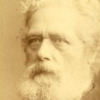
Let each man think himself an act of God,
His mind a thought, his life a breath of God;
And let each try, by great thoughts and good deeds,
To shew the most of Heaven he hath in him.
We live in deeds, not years:
In thoughts, not breaths;
In feelings, not in figures on a dial.
We should count time by heart-throbs.
He most lives
Who thinks most, feels the noblest, acts the best.Philip James Bailey (1816-1902) English poet, lawyer
Festus, Sc. “A Country Town – Market-place – Noon” [Festus] (1839)
(Source)
Often misattributed to Aristotle.
One of the many burdens of the person professing Christianity has always been the odium likely to be heaped upon him by fellow Christians quick to smell out, denounce and punish fraud, hypocrisy and general unworthiness among those who assert the faith. In ruder days, disputes about what constituted a fully qualified Christian often led to sordid quarrels in which the disputants tortured, burned and hanged each other in the conviction that torture, burning and hanging were Christian things to do .
Russell Baker (1925-2019) American journalist, author, humorist
New York Times (Dec. 1988)
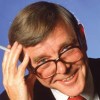
Usually, terrible things that are done with the excuse that progress requires them are not really progress at all, but just terrible things.
Russell Baker (1925-2019) American journalist, author, humorist
“The Fact About Progress,” New York Times (24 Feb 1970)
Freedom, morality, and the human dignity of the individual consists precisely in this; that he does good not because he is forced to do so, but because he freely conceives it, wants it, and loves it.
Mikhail Bakunin (1814-1876) Russian anarchist, political theorist
God and the State (1871 (pub 1916))
The liberty of man consists solely in this: that he obeys natural laws because he has himself recognized them as such, and not because they have been externally imposed upon him by any extrinsic will whatever, divine or human, collective or individual.
Mikhail Bakunin (1814-1876) Russian anarchist, political theorist
God and the State (1871 (pub 1916))
People who treat other people as less than human must not be surprised when the bread they have cast on the waters comes floating back to them, poisoned.
James Baldwin (1924-1987) American novelist, playwright, activist
The Price of the Ticket, “No Name in the Street” (1972)
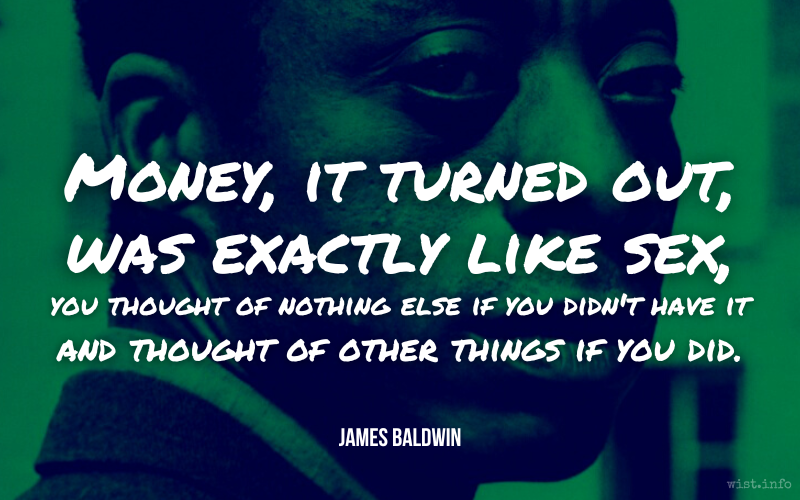
Money, it turned out, was exactly like sex, you thought of nothing else if you didn’t have it and thought of other things if you did.
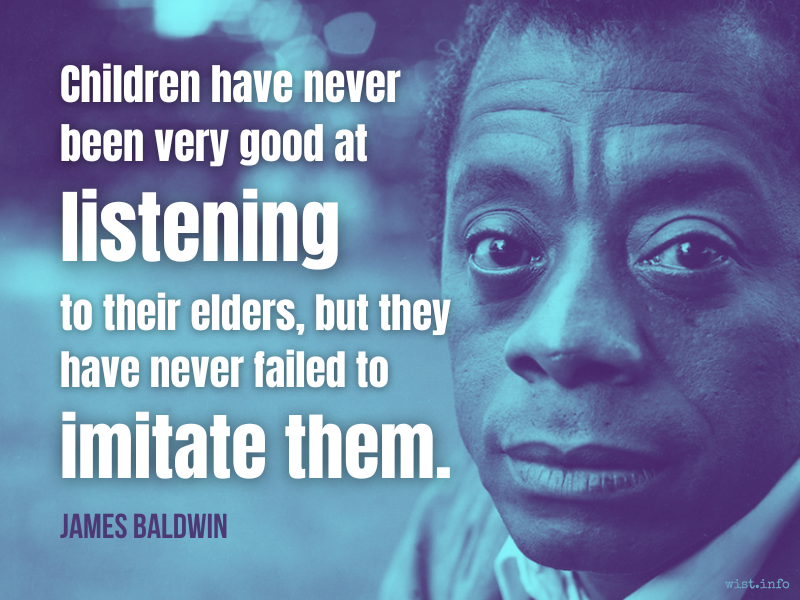
Children have never been very good at listening to their elders, but they have never failed to imitate them.
The price one pays for pursuing any profession, or calling, is an intimate knowledge of its ugly side.
James Baldwin (1924-1987) American novelist, playwright, activist
“The Black Boy Looks at the White Boy,” Esquire (May 1961)
Republished in Nobody Knows My Name (1961)
Nothing is more desirable than to be released from an affliction, but nothing is more frightening than to be divested of a crutch.
James Baldwin (1924-1987) American novelist, playwright, activist
Nobody Knows My Name, Introduction (1961)
Most of us are about as eager to be changed as we were to be born, and go through our changes in a similar state of shock.
James Baldwin (1924-1987) American novelist, playwright, activist
“Every Good-Bye Ain’t Gone,” New York Times (19 Dec 1977)
(Source)
Reprinted in The Price of the Ticket (1985).
I love America more than any other country in the world and, exactly for this reason, I insist on the right to criticize her perpetually.
James Baldwin (1924-1987) American novelist, playwright, activist
Notes of a Native Son, “Autobiographical Notes” (1955)
(Source)

Not everything that is faced can be changed, but nothing can be changed until it is faced.
James Baldwin (1924-1987) American novelist, playwright, activist
Essay (1962-01-14), “As Much Truth as One Can Bear,” New York Times Book Review
(Source)
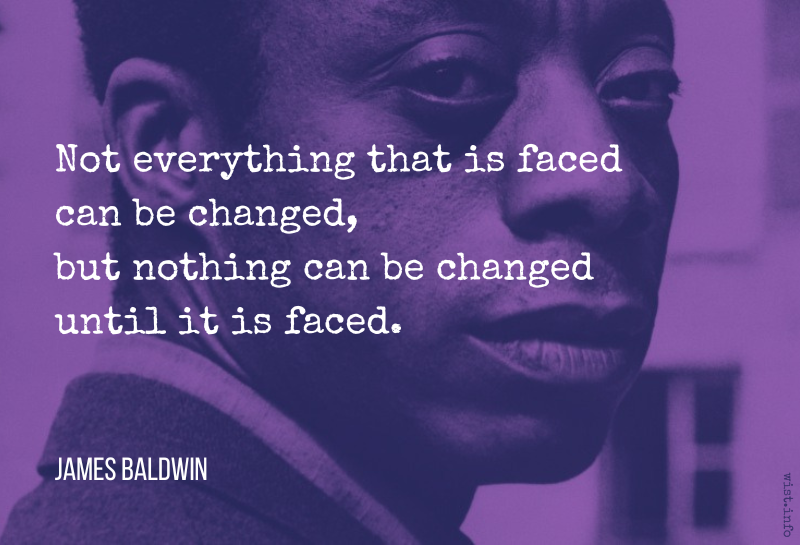
I imagine that the reason that people cling to their hate so stubbornly is because they are afraid that if they let go of the hate, they will have to deal with pain.
James Baldwin (1924-1987) American novelist, playwright, activist
“Me and My House,” Harper’s (1955)
Reprinted in Notes of a Native Son (1955)
Ever notice that people never say “It’s only a game” when they’re winning?
Ivern Ball (1926-1992) American writer, aphorist
(Attributed)
Knowing what you can not do is more important than knowing what you can do. In fact, that’s good taste.
Lucille Ball (1911-1989) American actress, comedian, producer
(Attributed)
quoted in Eleanor Harris, The Real Story of Lucille Ball, 1954

Love yourself first and everything else falls into line.
Lucille Ball (1911-1989) American actress, comedian, producer
(Attributed)
Power is not revealed by striking hard or often, but by striking true.
[La puissance ne consiste pas à frapper fort ou souvent, mais à frapper juste.]
Honoré de Balzac (1799-1850) French novelist, playwright
Physiology of Marriage, Part 1, Meditation 5 “Of the Predestined,” aphorism 43 (1829)
Alt trans.: "Power does not consist in striking with force or with frequency, but in striking true."
An unfulfilled vocation drains the color from a man’s entire existence.
Honoré de Balzac (1799-1850) French novelist, playwright
La Maison Nucingen, Vol. 3, “Scenes de la vie Parisienne” (1838)
It is as absurd to say that a man can’t love one woman all the time as it is to say that a violinist needs several violins to play the same piece of music.
Honoré de Balzac (1799-1850) French novelist, playwright
(Attributed)
Marriage must continually vanquish the monster that devours everything, the monster of habit.
Honoré de Balzac (1799-1850) French novelist, playwright
Physiology of Marriage (1829)
Alt. trans.: "Marriage must constantly fight against a monster which devours everything: routine."
To live in the presence of great truths and eternal laws, to be led by permanent ideals – that is what keeps a man patient when the world ignores him, and calm and unspoiled when the world praises him.
Honoré de Balzac (1799-1850) French novelist, playwright
(Attributed)
If you wait until you can do everything for everybody, instead of something for somebody, you’ll end up not doing anything for anybody.
Malcolm Bane (contemp.) American Baptist minister
(Attributed)
We forgive once we give up attachment to our wounds.
Russell Banks (b. 1940) American writer
(Attributed)
Television is the first truly democratic culture — the first culture available to everyone and entirely governed by what the people want. The most terrifying thing is what people do want.
Clive Barnes (1927-2008) Anglo-American journalist, critic, writer
New York Times (30-Dec-1969)
Every crowd has a silver lining.
P.T. Barnum (1810-1891) American showman [Phineas Taylor Barnum]
(Attributed)
More persons, on the whole, are humbugged by believing in nothing, than by believing too much.
P.T. Barnum (1810-1891) American showman [Phineas Taylor Barnum]
(Attributed)
God gave us our memories so that we might have roses in December.
J. M. Barrie (1860-1937) Scottish novelist and dramatist [James Matthew Barrie]
(Misattributed)
Barrie certainly popularized the quotation -- to the extent that everyone attributes it to him. But review his actually use of the phrase in his Rectoral Address, "Courage," at the University of St. Andrews, Scotland (1922-05-03):You have had many rectors here in St. Andrews who will continue in bloom long after the lowly ones such as I am are dead and rotten and forgotten. They are the roses in December; you remember someone said that God gave us memory so that we might have roses in December. But I do not envy the great ones. In my experience -- and you may find in the end it is yours also -- the people I have cared for most and who have seemed most worth caring for -- my December roses -- have been very simple folk.
Barrie himself credits the quotation to "someone said," and trusts that it is familiar enough that others will recognize the reference.
It appears that Barrie is paraphrasing another popular saying of the time, also generally attributed to "someone said" or "Anonymous":Memory was given to mortals that they might have roses in December.
[Source (1920), Source (1905), Source (1902), Source (1900)]
In short, Barrie originated the popular phrasing of the quotation, but the link between gift of "memory" and "roses in December" predates him (as he acknowledges).
Further discussion of this quotation's origins (and a call-back to me for my contributions): Quote Origin: God Gave Us Memory So That We Might Have Roses in December – Quote Investigator®.
The life of every man is a diary in which he means to write one story and writes another, and his humblest hour is when he compares the volume as it is with what he vowed to make it.
J. M. Barrie (1860-1937) Scottish novelist and dramatist [James Matthew Barrie]
The Little Minister, ch. 1 “The Love-Light” (1891)
(Source)
It is not real work unless you would rather be doing something else.
Shall we make a new rule of life from tonight: always to try to be a little kinder than is necessary?
J. M. Barrie (1860-1937) Scottish novelist and dramatist [James Matthew Barrie]
The Little White Bird, ch. 4 “A Night-Piece,” Scribner’s Magazine, Vol. 32 (1902-08)
(Source)
This portion of the serial is in ch. 4 of the fully collected novel (1902).

PETER: To die will be an awfully big adventure.
J. M. Barrie (1860-1937) Scottish novelist and dramatist [James Matthew Barrie]
Peter Pan, Act 3 (1904, pub. 1928)
(Source)
This was added to the play in 1905, at the end of Act 3:(The waters are lapping over the rock now, and PETER knows that it will soon be submerged. Pale rays of light mingle with the moving clouds, and from the coral grottoes is to be heard a sound, at once the most musical and the most melancholy in the Never Land, the mermaids calling to the moon to rise. PETER is afraid at last, and a tremor runs through him, like a shudder passing over the lagoon; but on the lagoon one shudder follows another till there are hundreds of them, and he feels just the one.)
PETER (with a drum beating in his breast as if he were a real boy at last): To die will be an awfully big adventure.In Barrie's novelization, Peter and Wendy, ch. 8 "The Mermaids' Lagoon" (1911), this is rendered:
The rock was very small now; soon it would be submerged. Pale rays of light tiptoed across the waters; and by and by there was to be heard a sound at once the most musical and the most melancholy in the world: the mermaids calling to the moon.
Peter was not quite like other boys; but he was afraid at last. A tremor ran through him, like a shudder passing over the sea; but on the sea one shudder follows another till there are hundreds of them, and Peter felt just the one. Next moment he was standing erect on the rock again, with that smile on his face and a drum beating within him. It was saying, “To die will be an awfully big adventure.”
Sometimes given as "To die would be an awfully great adventure," "To die will be a great adventure," or "To die would be a great adventure."
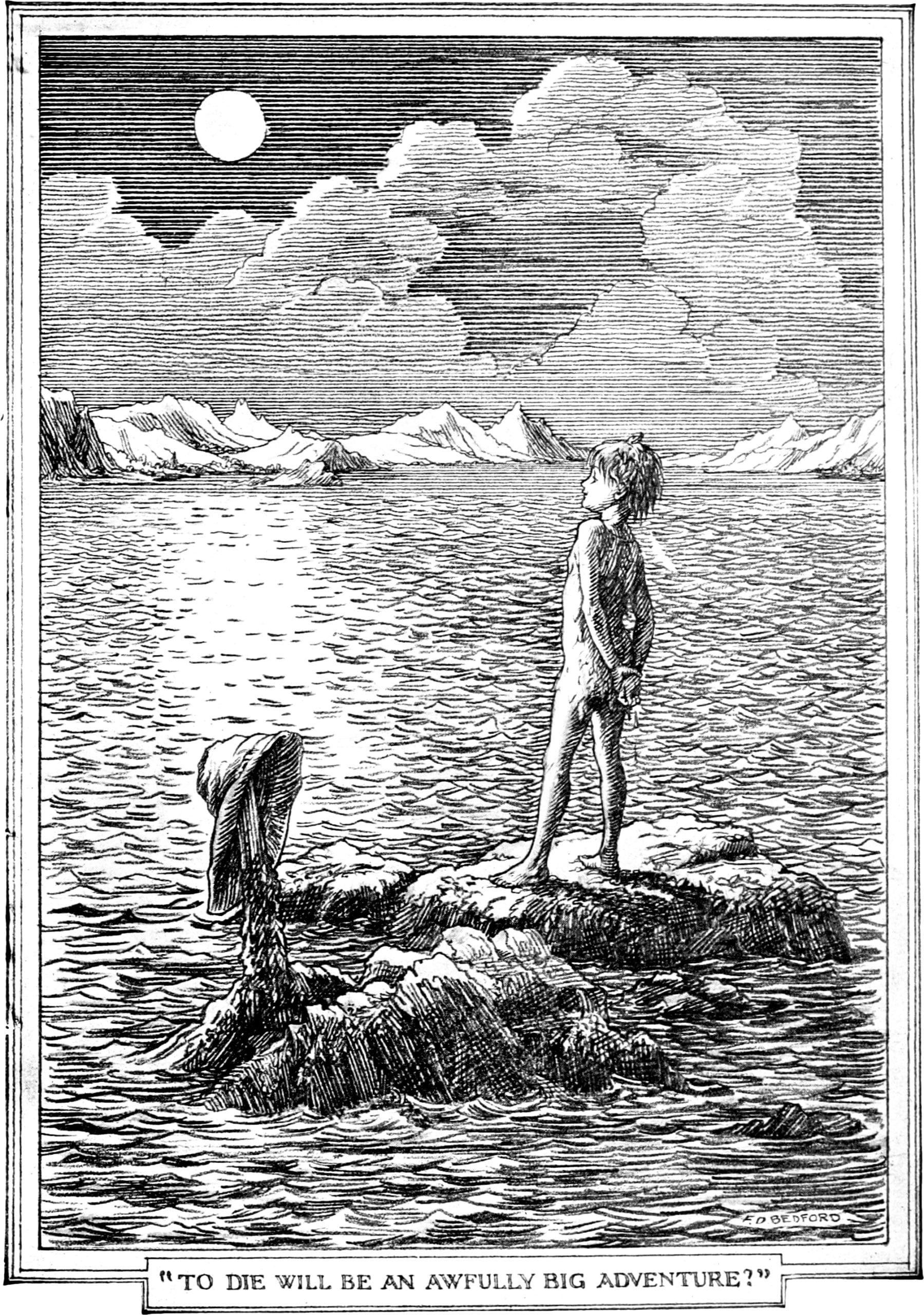
The useless men are those who never change with the years. Many views that I held to in my youth and long afterwards are a pain to me now, and I am carrying away from Thrums memories of errors into which I fell at every stage of my ministry. When you are older you will know that life is a long lesson in humility.
J. M. Barrie (1860-1937) Scottish novelist and dramatist [James Matthew Barrie]
The Little Minister, ch. 3 [Mr. Carfrae] (1891)
(Source)
The Internet [is] a giant international network of intelligent, informed computer enthusiasts, by which I mean, “people without lives.” We don’t care. We have each other
Dave Barry (b. 1947) American humorist, author, columnist
Miami Herald, “Only a Real Stud Hombre CyberMuffin Can Handle ‘Windows'” (1994)

The refusal to choose is a form of choice; disbelief is a form of belief.
Frank X. Barron (1922-2002) American psychologist, philosopher, researcher
(Attributed)
Facts aren’t the truth. They only indicate where the truth may lie.
Clarence Barron (1855-1928) American editor and publisher
(Attributed)
quoted in Mary Bancroft, Autobiography
I cannot overemphasize the importance of good grammar. What a crock. I could easily overemphasize the importance of good grammar. For example, I could say: “Bad grammar is the leading cause of slow, painful death in North America,” or “Without good grammar, the United States would have lost World War II.”
Dave Barry (b. 1947) American humorist, author, columnist
“An Utterly Absurd Look at Grammar”
Gradually, without noticing it, you turn into a Republican and judge everything on the basis of whether or not it will increase your taxes.
Dave Barry (b. 1947) American humorist, author, columnist
(Attributed)
Nothing is ever really buried in a meeting. An idea may look dead, but it will always reappear at another meeting later on. If you have ever seen the movie Night of the Living Dead, you have a rough idea how modern corporations and organizations operate, with projects and proposals that everybody thought were killed constantly rising from their graves to stagger back into meetings and eat the brains of the living.
Dave Barry (b. 1947) American humorist, author, columnist
Claw Your Way to the Top (1986)
The function of RAM is to give us guys a way of deciding whose computer has the biggest, studliest, most tumescent MEMORY. This is important, because with today’s complex software, the more memory a computer has, the faster it can produce error messages. So the bottom line is, if you’re a guy, you cannot have enough RAM.
Dave Barry (b. 1947) American humorist, author, columnist
Dave Barry in Cyberspace (1996)
What I look forward to is continued immaturity followed by death.
Dave Barry (b. 1947) American humorist, author, columnist
(Attributed)
Without question, the greatest invention in the history of mankind is beer. Oh, I grant you that the wheel was also a fine invention, but the wheel does not go nearly as well with pizza.
Dave Barry (b. 1947) American humorist, author, columnist
Dave Barry’s Bad Habits (1993)
Karate is a form of martial arts in which people who have had years and years of training can, using only their hands and feet, make some of the worst movies in the history of the world.
Dave Barry (b. 1947) American humorist, author, columnist
(Attributed)
If you were standing in the middle of a bridge spanning a wilderness gorge, at the bottom of which was a spectacular white-water river, what would you do?
FEMALE RESPONSE: Admire the view.
MALE RESPONSE: Spit.Dave Barry (b. 1947) American humorist, author, columnist
Miami Herald (12 May 1996)
A Harris survey was released showing that 70 percent of men do not view birth control as their responsibility. This resulted in the usual round of male-bashing by the usual critics, who as usual failed to note the many areas in which men take on MORE than their fair share of responsibility; such as spider-killing, channel-changing, referee-critiquing, scratching, and traffic gestures.
Dave Barry (b. 1947) American humorist, author, columnist
Miami Herald, “A Year That Felt Like a Century” (13 Jan. 1996)
In 1995, at the Citadel — the South Carolina military academy where courageous specimens of Southern manhood receive the rigorous training and character development they need to be able to fight any enemy, meet any challenge, and face any danger — many courageous manhood specimens became extremely upset when, for a little while, they had to go to school with — Yikes! — a girl! Oh no! Cooties!
Dave Barry (b. 1947) American humorist, author, columnist
Miami Herald, “A Year That Felt Like a Century” (13 Jan. 1996)
I argue very well. Ask any of my remaining friends. I can win an argument on any topic, against any opponent. People know this, and steer clear of me at parties. Often, as a sign of their great respect, they don’t even invite me.
Dave Barry (b. 1947) American humorist, author, columnist
Miami Herald
We don’t know where the digital revolution is taking us, only that when we get there we will not have enough RAM.
Dave Barry (b. 1947) American humorist, author, columnist
(Attributed)
Thus the metric system did not really catch on in the States, unless you count the increasing popularity of the nine-millimeter bullet.
Dave Barry (b. 1947) American humorist, author, columnist
(Attributed)
Meetings are an addictive, highly self-indulgent activity that corporations and other large organizations habitually engage in only because they cannot actually masturbate.
Dave Barry (b. 1947) American humorist, author, columnist
Dave Barry Turns 40, ch. 8 “Time Management” (1990)
(Source)
The main accomplishment of almost all organized protests is to annoy people who are not in them.
Dave Barry (b. 1947) American humorist, author, columnist
“25 Things I Have Learned In 50 Years,” #17 (1997)
No matter how much you love your spouse, eventually the smooth unblemished surface of your relationship will be marred by a small pimple of anger, which, if ignored, can grow into a major festering zit of rage that will explode and spew forth a really disgusting metaphor that I don’t wish to pursue any further here.
Dave Barry (b. 1947) American humorist, author, columnist
Miami Herald, “To Love, Honor, and Ask for Directions” (31 Jan. 1994)
There is a very fine line between “hobby” and “mental illness.”
Dave Barry (b. 1947) American humorist, author, columnist
“25 Things I Have Learned In 50 Years,” #11 (1997)
Women often ask, “What do men really want, deep in their souls?” The best answer — based on in-depth analysis of the complex and subtle interplay of thought, instinct, and emotion that constitutes the male psyche — is that, deep in their souls, men want to watch stuff go “bang.”
Dave Barry (b. 1947) American humorist, author, columnist
Miami Herald, “It’s a Bird! It’s a Plane! It’s a . . . BONK!” (2 Oct. 1994)
Nobody cares if you can’t dance well. Just get up and dance.
Dave Barry (b. 1947) American humorist, author, columnist
“25 Things I Have Learned In 50 Years,” #25 (1997)
When trouble arises and things look bad, there is always one individual who perceives a solution and is willing to take command. Very often, that individual is crazy.
Dave Barry (b. 1947) American humorist, author, columnist
“25 Things I Have Learned In 50 Years,” #23 (1997)
No matter what happens, somebody will find a way to take it too seriously.
Dave Barry (b. 1947) American humorist, author, columnist
“25 Things I Have Learned In 50 Years,” #22 (1997)
What happens if a big asteroid hits Earth? Judging from realistic simulations involving a sledge hammer and a common laboratory frog, we can assume it will be pretty bad.
Dave Barry (b. 1947) American humorist, author, columnist
(Attributed)
A person who is nice to you, but rude to the waiter, is not a nice person.
Dave Barry (b. 1947) American humorist, author, columnist
“25 Things I Have Learned In 50 Years,” #21 (1997)
You should not confuse your career with your life.
Dave Barry (b. 1947) American humorist, author, columnist
“25 Things I Have Learned In 50 Years,” #20 (1997)
The one thing that unites all human beings, regardless of age, gender, religion, economic status or ethnic background, is that, deep down inside, we all believe that we are above-average drivers.
Dave Barry (b. 1947) American humorist, author, columnist
“25 Things I Have Learned In 50 Years,” # 9 (1997)
Another possible source of guidance for teenagers is television, but television’s message has always been that the need for truth, wisdom and world peace pales by comparison with the need for a toothpaste that offers whiter teeth and fresher breath.
Dave Barry (b. 1947) American humorist, author, columnist
“Kids Today: They Don’t Know Dum Diddly Do”
People who want to share their religious views with you almost never want you to share yours with them.
Dave Barry (b. 1947) American humorist, author, columnist
“25 Things I Have Learned In 50 Years,” #12 (1997)
Williamsburg is an authentic colonial restored place in Virginia where people in authentic uncomfortable clothing demonstrate how horrible it was to live in historical colonial times.
Dave Barry (b. 1947) American humorist, author, columnist
(Attributed)
You can say any foolish thing to a dog, and the dog will give you this look that says, “My God, you’re right! I never would’ve thought of that!”
Dave Barry (b. 1947) American humorist, author, columnist
(Attributed)
Pornography is like tooth decay, eating slowly away at the molars of our morals, and if it is not stopped we will wind up as a toothless nation, gumming at the raw meat of international competition while the drool of decadence dribbles down our collective chin and messes up the clean tablecloth of our children’s futures.
Dave Barry (b. 1947) American humorist, author, columnist
(Attributed)
An entire new continent can emerge from the ocean in the time it takes for a Web page to show up on your screen. Contrary to what you may have heard, the Internet does not operate at the speed of light; it operates at the speed of the DMV.
Dave Barry (b. 1947) American humorist, author, columnist
(Attributed)
Probably the question asked most often is: Do one-celled animals have orgasms? The answer is yes, they have orgasms almost constantly, which is why they don’t mind living in pools of warm slime.
Dave Barry (b. 1947) American humorist, author, columnist
“Sex and the Single Amoeba”
Puns are little ‘plays on words’ that a certain breed of person loves to spring on you and then look at you in a certain self-satisfied way to indicate that he thinks that you must think that he is by far the cleverest person on Earth now that Benjamin Franklin is dead, when in fact what you are thinking is that if this person ever ends up in a lifeboat, the other passengers will hurl him overboard by the end of the first day even if they have plenty of food and water.
Dave Barry (b. 1947) American humorist, author, columnist
“Why Humor is Funny”
If there really is a God who created the entire universe with all of its glories, and He decides to deliver a message to humanity, He WILL NOT use, as His messenger, a person on cable TV with a bad hairstyle.
Dave Barry (b. 1947) American humorist, author, columnist
Dave Barry Turns 50, “Sixteen Things That it Took Me 50 Years to Learn” (1998)
If it is your time, love will track you down like a cruise missile.
Lynda Barry (b. 1956) American cartoonist, author, teacher
Big Ideas (1983)

People have criticized me because my security detail is larger than the president’s. But you must ask yourself: are there more people who want to kill me than who want to kill the president? I can assure you there are.
Marion Barry (1936-2014) American politician
Attributed
What right does Congress have to go around making laws just because they deem it necessary?
Marion Barry (1936-2014) American politician
Attributed