

It took me twenty years to become an overnight success.
Eddie Cantor (1892–1964) American comedian, dancer, singer, actor, songwriter [b. Isidore Itzkowitz]
(Attributed)
Though most often attributed to Cantor, the phrase is also associated with Danny Thomas and many others. Sometimes given as "It takes twenty years to become an overnight success" (or sometimes ten years). More here.
Quotations about:
success
Note not all quotations have been tagged, so Search may find additional quotes on this topic.
In looking at the world as it is, we shall find it folly to deny that, to worldly success, a surer path is Villainy than Virtue.
Edgar Allan Poe (1809–1849) American author, poet, editor, literary critic
Marginalia, June 1849 (1981)
Success is relative:
It is what we can make of the mess we have made of things.T. S. Eliot (1888–1965) American-British poet, critic, playwright [Thomas Stearns Eliot]
The Family Reunion, 2.3 (1939)
‘Tis a lesson you should heed,
Try, try again;
If at first you don’t succeed,
Try, try again.(Other Authors and Sources)
T. H. Palmer, “Try, Try Again,” The Teacher’s Manual (1840)
(Source)
Sometimes attributed to Charles Theodore Hart Palmer (1827-1897), but the book is clearly by Thomas H. Palmer, and was published in 1840 when Charles T. H. Palmer was 13 years old.

The penalty of success is to be bored by people who used to snub you.
Nancy Astor (1879–1964) American socialite and English politician [Nancy Witcher Langhorne; Viscountess Astor; Lady Astor]
In the Daily Express (12 Jan 1956)
Success in war, like charity in religion, covers a multitude of sins.
William Napier (1785–1860) Irish soldier and military historian
History of the War in the Peninsula, Vol. 5, Book 25, ch. 2 (1837)
(Source)

The successful people are the ones who can think up things for the rest of the world to keep busy at.
Don Marquis (1878–1937) American journalist and humorist
“Variety,” Collier’s (12 May 1933)
(Source)
Eighty percent of success is showing up.
Woody Allen (b. 1935) American comedian, writer, director [b. Allan Steward Konigsberg]
Comment
Originally attributed to Allen by collaborator Marshall Brickman in Susan Brady, "He's Woody Allen's Not-So-Silent Partner," New York Times (21 Aug 1977) as "Showing up is 80 percent of life." On inquiry, Allen confirmed that he'd said the quotation above in a letter to William Safire (1989). More information here.

There are but two ways of rising in the world: either by your own industry or by the folly of others.
[Il n’y a au monde que deux manières de s’élever, ou par sa propre industrie, ou par l’imbécillité des autres.]
Jean de La Bruyère (1645–1696) French essayist, moralist
The Characters [Les Caractères], ch. 6 “Of Gifts of Fortune [Des Biens de Fortune],” § 52 (6.52) (1688) [tr. Van Laun (1885)]
(Source)
(Source (French)). Other translations:There is but two ways of rising in the World, by your own Industry, and another's Weakness.
[Bullord ed. (1696)]There are only two ways of rising in the World, by your own Industry, or by the Weakness of others.
[Curll ed. (1713)]There are but two ways of rising in the World, by your own Industry, or the Weakness of others.
[Browne ed. (1752)]There are only two ways of getting on in the world: either by one's own cunning efforts, or by other people's foolishness.
[tr. Stewart (1970)]

Fairy tales are more than true: not because they tell us that dragons exist, but because they tell us that dragons can be beaten.
Neil Gaiman (b. 1960) British author, screenwriter, fabulist
Coraline (2002)
Paraphrase by Gaiman of G. K. Chesterton. Gaiman included it as an epigraph, attributed to Chesterton, but without looking up the exact wording.

I know, indeed, of nothing more subtly satisfying and cheering than a knowledge of the real good will and appreciation of others. Such happiness does not come with money, nor does it flow from a fine physical state. It cannot be brought. But it is the keenest joy, after all, and the toiler’s truest and best reward.
William Dean Howells (1837–1920) American author, literary critic, and playwright
Interview with Orison Swett Marden, Success Magazine
(Source)
Quoted in Marden, How They Succeeded: Life Stories of Successful Men Told by Themselves, ch. 11 (1901).
We acquire the strength we have overcome.
Ralph Waldo Emerson (1803–1882) American essayist, lecturer, poet
Essay (1860), “Considerations by the Way,” The Conduct of Life, ch. 7
(Source)
Based on a course of lectures by that name first delivered in Pittsburg (1851-03).
It is a salutary discipline to consider the vast number of books that are written, the fair hopes with which their authors see them published, and the fate which awaits them. What chance is there that any book will make its way among that multitude? And the successful books are but the successes of a season. Heaven knows what pains the author has been at, what bitter experiences he has endured and what heartache suffered, to give some chance reader a few hours’ relaxation or to while away the tedium of a journey. And if I may judge from the reviews, many of these books are well and carefully written; much thought has gone into their composition; to some even has been given the anxious labour of a lifetime. The moral I draw is that the writer should seek his reward in the pleasure of his work and in release from the burden of his thoughts; and, indifferent to aught else, care nothing for praise or censure, failure or success.
W. Somerset Maugham (1874–1965) English novelist and playwright [William Somerset Maugham]
The Moon and Sixpence (1919)

Self-made men are most alwus apt tew be a leetle too proud ov the job.
[Self-made men are almost always apt to be a little too proud of the job.]
Josh Billings (1818–1885) American humorist, aphorist [pseud. of Henry Wheeler Shaw]
Josh Billings’ Farmer’s Allminax for 1873, “05 – May,” “Kold Slau” (1873)
(Source)

I am certain that after the dust of centuries have passed over our cities, we, too, will be remembered not for victories or defeats in battle or politics, but for our contribution to the human spirit.
John F. Kennedy (1917–1963) American politician, author, journalist, US President (1961–63)
Speech (29 Nov 1962)
The successful revolutionary is a statesman, the unsuccessful one is a criminal.
Erich Fromm (1900–1980) American psychoanalyst and social philosopher
Escape from Freedom, 7.2 (1941)

Few of us can stand prosperity. Another man’s, I mean.
Mark Twain (1835–1910) American writer [pseud. of Samuel Clemens]
Following the Equator, ch. 40, epigraph (1897)
Prosperity has damn’d more Souls, than all the Devils together.
Thomas Fuller (1654–1734) English physician, preacher, aphorist, writer
Gnomologia: Adages and Proverbs (compiler), # 3963 (1732)
(Source)

One lesson you better learn if you want to be in politics is that you never go out on a golf course and beat the President.
Lyndon B. Johnson (1908–1973) American politician, educator, US President (1963–69)
Comment (1964) to Larry O’Brien III
(Source)
On the occasion of O'Brien beating Johnson by one stroke on a nine-hole golf outing. Noted by his father in his book, No Final Victories: A Life in Politics, ch. 8 "LBJ" (1974).
See Gracian.

The theater needs continual reminders that there is nothing more debasing than the work of those who do well what is not worth doing at all.
Gore Vidal (1925–2012) American novelist, dramatist, critic
“Love Love Love,” Partisan Review (Spring 1959)

Promise little, and do much; so shalt thou have Thanks.
Thomas Fuller (1654–1734) English physician, preacher, aphorist, writer
Introductio ad Prudentiam, Vol. 1, # 111 (1725)
(Source)
Now that I have grown old, I realize that for most of us it is not enough to have achieved personal success. One’s best friend must also have failed.
W. Somerset Maugham (1874–1965) English novelist and playwright [William Somerset Maugham]
Comment (1959)
A comment recorded by a journalist on his 85th birthday, quoted in Richard Cordell, Somerset Maugham: A Biographical and Critical Study (1961). Cordell mentions the influence of La Rochefoucauld on the phrase, and it is therefore often attributed to La Rochefoucauld, though it is not in his Maxims.
Also attributed to Gore Vidal, Iris Murdoch, Genghis Khan.
Pithier (and more common) paraphrases:More discussion of this quotation here: It Is Not Enough to Succeed; One’s Best Friend Must Fail – Quote Investigator®.
- "It is not enough to succeed; one’s best friend must fail."
- "It is not enough to succeed; one’s friends must fail."
- "It is not enough to succeed; others must fail."
- "It’s not enough that I should succeed, others should fail."
- "It is not sufficient that I succeed –- all others must fail."
There are many kinds of success in life worth having. It is exceedingly interesting and attractive to be a successful business man, or railroad man, or farmer, or a successful lawyer or doctor; or a writer, or a President, or a ranchman, or the colonel of a fighting regiment, or to kill grizzly bears and lions. But for unflagging interest and enjoyment, a household of children, if things go reasonably well, certainly makes all other forms of success and achievement lose their importance by comparison.
Theodore Roosevelt (1858–1919) American politician, statesman, conservationist, writer; US President (1901–09)
Autobiography, ch. 9 “Outdoors and Indoors” (1913)
(Source)
Few things are so immutable as the addiction of political groups to the ideas by which they have once won office.
John Kenneth Galbraith (1908–2006) Canadian-American economist, diplomat, author
The Affluent Society, ch. 13, sec. 4 (1958)

No pain, no palm;
No thorns, no throne;
No gall, no glory;
No cross, no crown.William Penn (1644–1718) English writer, philosopher, politician, statesman
“No Cross, No Crown” (1682)
Originally written while a prisoner in the Tower of London (1668-69). See Quarles (1621), Breton (1577).
It is a bad thing for a nation to raise and to admire a false standard of success; and there can be no falser standard than that set by the deification of material well-being in and for itself.
Theodore Roosevelt (1858–1919) American politician, statesman, conservationist, writer; US President (1901–09)
Speech (1910-04-23), “Citizenship in a Republic [The Man in the Arena],” Sorbonne, Paris
(Source)
Much protest is naive; it expects quick, visible improvement and despairs and gives up when such improvement does not come. Protesters who hold out for longer have perhaps understood that success is not the proper goal. If protest depended on success, there would be little protest of any durability or significance. History simply affords too little evidence that anyone’s individual protest is of any use. Protest that endures, I think, is moved by a hope far more modest than that of public success: namely, the hope of preserving qualities in one’s own heart and spirit that would be destroyed by acquiescence.
Wendell Berry (b. 1934) American farmer, educator, poet, conservationist
Essay (1990), “A Poem of Difficult Hope,” What Are People For? (1990)
(Source)

Why should we be in such desperate haste to succeed, and in such desperate enterprises? If a man does not keep pace with his companions, perhaps it is because he hears a different drummer. Let him step to the music which he hears, however measured or far away.
Henry David Thoreau (1817–1862) American philosopher and writer
Walden; or, Life in the Woods, ch. 18 “Conclusion” (1854)
(Source)
A man’s worst difficulties begin when he is able to do as he likes. So long as a man is struggling with obstacles he has an excuse for failure or shortcoming; but when fortune removes them all and gives him the power of doing as he thinks best, then comes the time of trial. There is but one right, and the possibilities of wrong are infinite.
T. H. Huxley (1825–1895) English biologist [Thomas Henry Huxley]
“Address on University Education,” opening ceremonies of Johns Hopkins University, Baltimore (12 Sep 1876)
(Source)
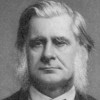
Try not to become a man of success but rather try to become a man of value.
Albert Einstein (1879–1955) German-American physicist
Memoirs of William Miller, quoted in Life (2 May 1955)
(Source)
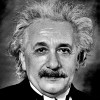
I believe four ingredients are necessary for happiness: health, warm personal relations, sufficient means to keep you from want, and successful work.
Bertrand Russell (1872–1970) English mathematician and philosopher
“Redbook Dialogue,” interview by Tommy Robbins, Redbook (1964-09)
(Source)
Reprinted in Russell Society News, #37 (1983-02), p. 25.
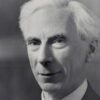
The important thing in life is not the victory but the contest; the essential thing is not to have won but to have fought well.
[L’important dans la vie ce n’est point le triomphe, mais le combat, l’essentiel ce n’est pas d’avoir vaincu mais de s’être bien battu.]
Pierre Frédy, Baron de Coubertin (1863–1937) French pedagogue, historian, founder of the International Olympic Committee
Olympic Creed, Speech, Olympic Games, London (24 Jul 1908)
Alt. trans: "The important thing in life is not the triumph but the struggle, the essential thing is not to have conquered but to have fought well."
Original phrasing by de Coubertin: "The importance of these Olympiads is not so much to win as to take part."
De Coubertin was drawing from a sermon by Bp. Ethelbert Talbot at St Paul's Cathedral, London (19 Jul 1908): "We have just been contemplating the great Olympic Games. What does it mean? It means that young men of robust physical life have come from all parts of the world. It does mean, I think, as someone has said, that this era of internationalism as seen in the Stadium has an element of danger. Of course, it is very true, as he says, that each athlete strives not only for the sake of sport, but for the sake of his country. Thus a new rivalry is invented. If England be beaten on the river, or America outdistanced on the racing path, or that American has lost the strength which she once possessed. Well, what of it? The only safety after all lies in the lesson of the real Olympia -- that the Games themselves are better than the race and the prize. St. Paul tells us how insignificant is the prize, Our prize is not corruptible, but incorruptible, and though only one may wear the laurel wreath, all may share the equal joy of the contest. All encouragement, therefore, be given to the exhilarating -- I might also say soul-saving -- interest that comes in active and fair and clean athletic sports."
Living well is the best revenge.
George Herbert (1593–1633) Welsh priest, orator, poet.
Jacula Prudentum, or Outlandish Proverbs, Sentences, &c. (compiler), # 524 (1640 ed.)
(Source)
Perhaps a variant of John Lyly (1579): "The greatest harm that you can do unto the envious, is to do well."
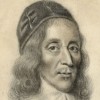
Excellence is lost sight of in the hunger for sudden performance and praise.
Ralph Waldo Emerson (1803–1882) American essayist, lecturer, poet
“Success,” Society and Solitude (1870)
For when the One Great Scorer comes to mark against your name,
He writes — not that you won or lost — but how you played the Game.
Man will do many things to get himself loved, he will do all things to get himself envied.
Mark Twain (1835–1910) American writer [pseud. of Samuel Clemens]
Following the Equator, ch. 21, epigraph (1897)
(Source)
For us there is only the trying. The rest is not our business.
T. S. Eliot (1888–1965) American-British poet, critic, playwright [Thomas Stearns Eliot]
“East Coker” (1940), Four Quartets (1943)
One of the pleasant things those of us who write or paint do is to have the daily miracle. It does come.
G. B. Stern (1890–1973) British writer [Gladys Bronwyn Stern]
Paris France, Part I (1940)

Success, recognition, and conformity are the bywords of the modern world where everyone seems to crave the anesthetizing security of being identified with the majority.
Martin Luther King, Jr. (1929–1968) American clergyman, civil rights leader, social activist, preacher
Strength to Love, ch. 2 “Transformed Non-Conformist” (1963)
(Source)
I have heard, in such a way as to believe it, of your recently saying that both the Army and the Government needed a Dictator. Of course it was not for this, but spite of it, that I have given you the command. Only those generals who gain successes, can set up dictators. What I now ask of you is military success, and I will risk the dictatorship.
Abraham Lincoln (1809–1865) American lawyer, politician, US President (1861–65)
Letter (1863-01-26) to Gen. Joseph Hooker
(Source)

Autobiography is only to be trusted when it reveals something disgraceful. A man who gives a good account of himself is probably lying, since any life when viewed from the inside is simply a series of defeats.
George Orwell (1903–1950) English journalist, essayist, writer [pseud. of Eric Arthur Blair]
Essay (1944-06-01), “Benefit of Clergy: Some Notes on Salvador Dali,” Dickens, Dali & Others (1946), opening words
(Source)
The essay was originally printed in Saturday Book magazine, but the publisher decided it had to be "suppressed on grounds of obscenity" and had the essay physically cut out of each printed copy.
The passage is referring to, among others, Dali's The Secret Life of Salvador Dali (1942).
Our business in this world is not to succeed, but to continue to fail, in good spirits.
Robert Louis Stevenson (1850–1894) Scottish essayist, novelist, poet
Essay (1880-01/02?), “Reflections and Remarks on Human Life,” § 7.4 “Discipline of Conscience”
(Source)
A collection of aphorisms and musings, first published in the Edinburgh Edition of his Works, vol. 28 (1898).
You had better be the emperor of one loving and tender heart, and she the empress of yours, than to be king of the world. The man who has really won the love of one good woman in this world, I do not care if he dies in the ditch a beggar, his life has been a success.
Robert Green Ingersoll (1833–1899) American lawyer, freethinker, orator
“The Liberty of Man, Woman, and Child” (1877)
(Source)
We don’t have to be “successful,” only valuable. We don’t have to make money, only a difference, and particularly in the lives society counts least and puts last.
William Sloane Coffin, Jr. (1924–2006) American minister, social activist
Credo, “Faith, Hope, Love” (2004)
(Source)
There is only one success … to be able to spend your life in your own way, and not to give others absurd maddening claims upon it.
Christopher Morley (1890–1957) American journalist, novelist, essayist, poet
Where the Blue Begins, ch. 8 (1922)
Let us be thankful for fools. But for them the rest of us could not succeed.
Mark Twain (1835–1910) American writer [pseud. of Samuel Clemens]
Following the Equator, ch. 28 (1897)
History has demonstrated that the most notable winners usually encountered heartbreaking obstacles before they triumphed. They won because they refused to become discouraged by their defeats.
Bertie Charles (B. C.) Forbes (1880–1954) American publisher
Forbes, Issue No. 1 (Sep 1917)
(Source)
The human animal, like others, is adapted to a certain amount of struggle for life, and when by means of great wealth homo sapiens can gratify all his whims without effort, the mere absence of effort from his life removes an essential ingredient of happiness. The man who acquires easily things for which he feels only a very moderate desire concludes that the attainment of desire does not bring happiness. If he is of a philosophic disposition, he concludes that human life is essentially wretched, since the man who has all he wants is still unhappy. He forgets that to be without some of the things you want is an indispensable part of happiness.
Bertrand Russell (1872–1970) English mathematician and philosopher
Conquest of Happiness, Part 1, ch. 2 “Byronic Unhappiness” (1930)
(Source)
Life affords no higher pleasure than that of surmounting difficulties, passing from one step of success to another, forming new wishes, and seeing them gratified. He that labours in any great or laudable undertaking, has his fatigues first supported by hope, and afterwards rewarded by joy; he is always moving to a certain end, and when he has attained it, an end more distant invites him to a new pursuit.
Samuel Johnson (1709–1784) English writer, lexicographer, critic
Essay (1753-11-27), The Adventurer, No. 111
(Source)

The world isn’t interested in the storms you encountered, but whether or not you brought in the ship.
(Other Authors and Sources)
Raul Armesto
My mother drew a distinction between achievement and success. She said that achievement is the knowledge that you have studied and worked hard and done the best that is in you. Success is being praised by others, and that’s nice too, but not as important or satisfying. Always aim for achievement and forget about the success.
Helen Hayes (1900–1993) American actress
Reader’s Digest (1958)

No man is a failure who is enjoying life.
William Feather (1889–1981) American publisher, author
(Attributed)
Widely attributed to Feather (e.g. Laurence Peter, Peter's Quotations (1977)), but no citation to be found online. A particularly common quote (usually without attribution) in school yearbooks, collections of wisdom / happiness quotations, etc.The earliest use of it that I can find is as anonymous column filler in The Deaf-Mutes' Journal, Vol. 61, No. 50 (1932-12-15).
A variant adds "No man is a success who isn't."
Adversity is sometimes hard upon a man; but for one man who can stand prosperity there are a hundred that will stand adversity.
Thomas Carlyle (1795–1881) Scottish essayist and historian
Lecture (1840-05-19), “The Hero as Man of Letters,” Home House, Portman Square, London
(Source)
The lecture notes were collected by Carlyle into On Heroes, Hero-Worship, & the Heroic in History, Lecture 5 (1841).
I cannot ask of Heaven success, even for my Country, in a Cause where she should be in the wrong — Fiat Justitia, pereat Coelum — My toast would be, may our Country be always successful, but whether successful or otherwise, always right.
John Quincy Adams (1767–1848) US President (1825–29)
Letter (1816-08-01) to John Adams
(Source)
In response to Stephen Decatur's toast (1816-04, at a dinner in Norfolk, Virginia): "Our Country! In her intercourse with foreign nations may she always be in the right, but our country, right or wrong." The last part became a common nationalistic slogan.
The Latin translates as "Let justice be done though Heaven should fall."
The baby rises to its feet, takes a step, is overcome with triumph and joy — and falls flat on its face. It is a pattern for all that is to come! But learn from the bewildered baby. Lurch to your feet again. You’ll make the sofa in the end.
Pamela Brown (1924–1989) British writer, actress, television producer
The Swish of the Curtain (1938)
We must believe in luck. For how else can we explain the success of those we don’t like?
Jean Cocteau (1889–1963) French writer, filmmaker, artist
Comment (1955)
On his election to Académie Française. Other translations: "Of course I believe in luck. How else does one explain the successes of one's enemies?"

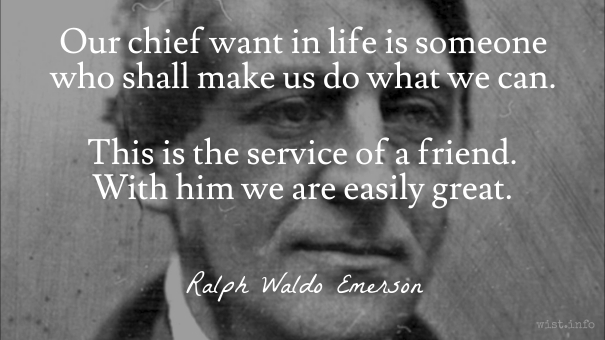
Our chief want in life is someone who shall make us do what we can. This is the service of a friend. With him we are easily great.
Ralph Waldo Emerson (1803–1882) American essayist, lecturer, poet
Essay (1860), “Considerations by the Way,” The Conduct of Life, ch. 7
(Source)
Based on a course of lectures by that name first delivered in Pittsburg, 1851-03.
In the long run men hit only what they aim at. Therefore, though they should fail immediately, they had better aim at something high.
Henry David Thoreau (1817–1862) American philosopher and writer
Walden; or, Life in the Woods, ch. 1 “Economy” (1854)
(Source)
The road to success is dotted with many tempting parking spaces.
Will Rogers (1879–1935) American humorist
(Attributed)
Primary source not found.
A Man who is a Master of Patience is Master of everything else.
George Savile, Marquis of Halifax (1633–1695) English politician and essayist
“Patience,” Political, Moral, and Miscellaneous Thoughts and Reflections (1750)
(Source)

I think and think for months and years. Ninety-nine times, the conclusion is false. The hundredth time I am right.
Albert Einstein (1879–1955) German-American physicist
(Attributed)
It is not always by plugging away at a difficulty and sticking at it that one overcomes it; but, rather, often by working on the one next to it. Certain people and certain things require to be approached on an angle.
André Gide (1869–1951) French author, Nobel laureate
Journal (26 Oct 1924) [tr. O’Brien (1951)]
If you would escape moral and physical assassination, do nothing, say nothing, be nothing — court obscurity, for only in oblivion does safety lie.
Elbert Hubbard (1856–1915) American writer, businessman, philosopher
Little Journeys to the Homes of American Statemen, “William H. Seward” (1916)
(Source)
Variants show up elsewhere in Hubbard's writings and and his quote epigrams.Often misattributed to Aristotle.
- To escape criticism -- do nothing, say nothing, be nothing.
- To avoid unkind criticism: do nothing, say nothing, be nothing.
- There is only one way to avoid criticism: do nothing, say nothing and be nothing.
Always bear in mind that your own resolution to succeed is more important than any one thing.
Abraham Lincoln (1809–1865) American lawyer, politician, US President (1861–65)
Letter (1855-11-05) to Isham Reavis
(Source)
It is not lack of love but lack of friendship that makes unhappy marriages.
Friedrich Nietzsche (1844–1900) German philosopher and poet
(Attributed)
Let everyone, then, do something, according to the measure of his capacities. To have no regular work, no set sphere of activity — what a miserable thing it is! How often long travels undertaken for pleasure make a man downright unhappy; because the absence of anything that can be called occupation forces him, as it were, out of his right element. Effort, struggles with difficulties! that is as natural to a man as grubbing in the ground is to a mole. To have all his wants satisfied is something intolerable — the feeling of stagnation which comes from pleasures that last too long. To overcome difficulties is to experience the full delight of existence.
[Inzwischen treibe jeder etwas, nach Maßgabe seiner Fähigkeiten. Denn wie nachteilig der Mangel an planmäßiger Tätigkeit, an irgend einer Arbeit, auf uns wirke, merkt man auf langen Vergnügungsreisen, als wo man, dann und wann, sich recht unglücklich fühlt; weil man, ohne eigentliche Beschäftigung, gleichsam aus seinem natürlichen Elemente gerissen ist. Sich zu mühen und mit dem Widerstande zu kämpfen ist dem Menschen Bedürfnis, wie dem Maulwurf das Graben. Der Stillstand, den die Allgenugsamkeit eines bleibenden Genusses herbeiführte, wäre ihm unerträglich. Hindernisse überwinden ist der Vollgenuß seines Daseins.]
Arthur Schopenhauer (1788–1860) German philosopher
Parerga and Paralipomena, Vol. 1, “Aphorisms on the Wisdom of Life [Aphorismen zur Lebensweisheit],” ch. 5 “Counsels and Maxims [Paränesen und Maximen],” § 2.17 (1851) [tr. Saunders (1890)]
(Source)
(Source (German)). Another translation:Nevertheless, everyone should do something according to the measure of his abilities. For on long pleasure-trips we see how pernicious is the effect on us of not having any systematic activity or work. On such trips we feel positively unhappy because we are without any proper occupation and are, so to speak, torn from our natural element. Effort, trouble, and struggle with opposition are as necessary to man as grubbing in the ground is to a mole. The stagnation that results from being wholly contented with a lasting pleasure would be for him intolerable. The full pleasure of his existence is in overcoming obstacles.
[tr. Payne (1974)]

To know a man, observe how he wins his object, rather than how he loses it; for when we fail, our pride supports us; when we succeed, it betrays us.
Charles Caleb "C. C." Colton (1780–1832) English cleric, writer, aphorist
Lacon: Or, Many Things in Few Words, Vol. 1, § 265 (1820)
(Source)
Wherever you see a successful business, someone once made a courageous decision.
Peter F. Drucker (1909–2005) Austrian-American business consultant
(Attributed)
Broadly attributed to Drucker, but no actual writing or citeable speech can be found.
MORE: If we lived in a State where virtue was profitable, common sense would make us good, and greed would make us saintly. And we’d live like animals or angels in the happy land that needs no heroes. But since in fact we see that avarice, anger, envy, pride, sloth, lust and stupidity commonly profit far beyond humility, chastity, fortitude, justice and thought, and have to choose, to be human at all … why then perhaps we must stand fast a little — even at the risk of being heroes.
Robert Bolt (1924–1995) English dramatist
A Man for All Seasons, play, Act 1 (1960)
(Source)
Spoken to his family while in the Tower of London, awaiting trial. In the 1966 film adaptation, this is shortened:If we lived in a State where virtue was profitable, common sense would make us saintly. But since we see that avarice, anger, pride and stupidity commonly profit far beyond charity, modesty, justice and thought, perhaps we must stand fast a little -- even at the risk of being heroes.

For there is no comparison between that which we may lose by not trying and by not succeeding; since by not trying we throw away the chance of an immense good; by not succeeding we only incur the loss of a little human labour. But as it is, it appears to me from what has been said, and also from what has been left unsaid, that there is hope enough and to spare, not only to make a bold man try, but also to make a sober-minded and wise man believe.
[Non enim res pari periculo non tentatur, et no succedit; cum in illo ingentis boni, in hoc exiguae humanae operae, jactura vertatur. Verum ex dictis, atque etiam ex non dictis, visum est nobis spei abunde subesse, non tantum homini strenuo ad experiendum, sed etiam prudenti et sobrio ad credendum.]
Francis Bacon (1561–1626) English philosopher, scientist, author, statesman
Instauratio Magna, Part 2 “Novum Organum” [The New Organon],” Book 1, Aphorism # 114 (1620) [tr. Spedding (1858)]
(Source)
(Source (Latin)). Other translations:For the risk attending want of success is not to be compared with that of neglecting the attempt; the former is attended with the loss of a little human labour, the latter with that of an immense benefit. For these and other reasons, it appears to us that there is abundant ground to hope, and to induce not only those who are sanguine to make experiment, but even those who are cautious and sober to give their assent.
[tr. Wood (1831)]For it is not a case where there is an equal risk in not trying and not succeeding; since in the former instance we risk a huge advantage; in the latter a little human labour is thrown away. But from what has been said, and also from what has not been said, it seems to us that there is abundant ground of hope, not only to justify a stout-hearted man in trying, but even a prodent and sober man in believing.
[tr. Johnson (1859)]For the danger of not trying and the danger of not succeeding are not equal, since the former risks the loss of great good, the latter of a little human effort. But from what we have said and from other things which we have not said, it has seemed to us that we have abundance of hope, whether we are men who press forward to meet new experiences, or whether we are careful and slow to believe.
[tr. Silverthorne (2000) "The Great Renewal"]The loss that may come from not trying is much greater than what may come from trying and not succeeding: by not trying we throw away the chance of an immense good; by not succeeding we only incur the loss of a little human labour. But from what I have said (and from some things that I haven’t said) it seems to me that there is more than enough hope not only to get a vigorous man to try but also to make a sober-minded and wise man believe that he will succeed.
[tr. Bennett (2017)]

I have learned that success is to be measured not so much by the position that one has reached in life as by the obstacles which he has overcome while trying to succeed.
The secret of getting ahead is getting started. The secret of getting started is breaking your complex overwhelming tasks into small manageable tasks, and then starting on the first one.
Mark Twain (1835–1910) American writer [pseud. of Samuel Clemens]
(Spurious)
It is only a step from victory to disaster. My experience is that, in a crisis, some detail always decides the issue.
Napoleon Bonaparte (1769–1821) French emperor, military leader
Letter to Tallyrand (7 Oct 1797)
(Source)
Napoleon's Letters [tr. J. M. Thompson (1934)]

Those blush to lose a conquering game,
And fain would peril life for fame:
These bring success their zeal to fan;
They can because they think they can.[Hi proprium decus et partum indignantur honorem
ni teneant, vitamque volunt pro laude pacisci;
hos successus alit: possunt, quia posse videntur.]Virgil (70–19 BC) Roman poet [b. Publius Vergilius Maro; also Vergil]
The Aeneid [Ænē̆is], Book 5, l. 229ff (5.229-231) (29-19 BC) [tr. Conington (1866)]
(Source)
Of the crews of the two remaining ships racing at the funeral games of Anchises: Cloanthus' Scylla which is closing on the finish line; Mnestheus' Pristis which has come up from last place and may yet take the lead. (Cloanthus wins the race by offering a sacrifice to the sea gods.)
(Source (Latin)). Other translations:These their new glory, honours got despise,
Unless they keep it, and to gaine the prize
Would sell their lives; success feeds them; they may
Because they think they can obtain the day.
[tr. Ogilby (1649)]Resolv'd to hold their own, they mend their pace,
All obstinate to die, or gain the race.
Rais'd with success, the Dolphin swiftly ran;
For they can conquer, who believe they can.
[tr. Dryden (1697)]These are fired with indignation, lest they should lose their possession of glory and honor they have won; and they are willing to barter life for renown. Those success cherishes; they are able because they seem to be able.
[tr. Davidson/Buckley (1854)]These scorn to lose the honour that is their own, the glory in their grasp, and would sell life for renown; to these success lends life; power comes with belief in it.
[tr. Mackail (1885)]These, thinking shame of letting fall their hardly-gotten gain
Of glory's meed, to buy the praise with very life are fain;
Those, fed on good-hap, all things may, because they deem they may
[tr. Morris (1900), l. 228ff]These scorn to lose their vantage, stung with shame,
And life is wagered willingly for fame.
Success inspires the hindmost; as they dare,
They do; the thought of winning wins the game.
[tr. Taylor (1907), st. 31, l. 274ff]The leaders now with eager souls would scorn
to lose their glory, and faint-hearted fail
to grasp a prize half-won, but fain would buy
honor with life itself; the followers too
are flushed with proud success, and feel them strong
because their strength is proven.
[tr. Williams (1910)]These think it shame not to keep the honour that is theirs, the glory they have won, and would barter life for fame: those success heartens; strong are they, for strong they deem themselves.
[tr. Fairclough (1916)]On the Scylla
They would give their lives to hold their place, they have won it,
The glory and honor are theirs already, almost;
And Mnestheus’ men take courage from their nearness;
They can because they think they can.
[tr. Humphries (1951)]One crew was compelled by the shame of losing a prize they had all but
Gained for their own, and would give their lives for its glory; the other
Was fired by success -- they could do it because they believed they could do it.
[tr. Day-Lewis (1952)]Cloanthus' crewmen
now think it a disgrace to fail to keep
the fame and honor they themselves have won,
and they would give their very lives for glory;
but Menestheus' men are strengthened by success,
they have the power because they feel they have it.
[tr. Mandelbaum (1971), l. 301ff]One crew fought off the shame of losing honor
Theirs already, glory won; they'd give
Their lives for fame; but luck empowered the others
Who felt that they could do it, and so could.
[tr. Fitzgerald (1981), l. 294ff]Cloanthus and his men on the Scylla saw the honour as theirs by right. They had already won the victory and had no intention of giving it up. They would rather have lost their lives than lose the glory. Mnestheus and his men on the Pristis were feeding on success. They could win because they thought they could.
[tr. West (1990)]The former crew are unhappy lest they fail to keep
the honour that is theirs and the glory already
in their possession, and would sell their lives for fame.
the latter feed on success: they can because they think they can.
[tr. Kline (2002)]One crew, stung by the shame of losing victory now
with glory won, would trade their lives for fame.
But Mnestheus and his crew, fired by their success,
can just about win the day because they think they can.
[tr. Fagles (2006), l. 256ff]One crew would hate to lose the glory of an honor all but one. They'd trade their lives for victory. The others were encouraged by success. Belief in victory spurred them on.
[tr. Bartsch (2021)]
PORTIUS: ‘Tis not in mortals to command success,
But we’ll do more, Sempronius; we’ll deserve it.Joseph Addison (1672–1719) English essayist, poet, statesman
Cato, Act 1, sc. 2, l. 43ff (1713)
(Source)
This passage was widely known to America's Founders; John Adams paraphrases it in a letter to his wife Abigail (1776-02-18), and George Washington in letters to Nicholas Cooke (1775-10-29) and, most famously, Benedict Arnold (1775-12-05).
