In vast stretches of the earth, men awoke today in hunger. They will spend the day in unceasing toil. And as the sun goes down they will still know hunger. They will see suffering in the eyes of their children. Many despair that their labor will ever decently shelter their families or protect them against disease. So long as this is so, peace and freedom will be in danger throughout our world. For wherever free men lose hope of progress, liberty will be weakened and the seeds of conflict will be sown.
Dwight David Eisenhower (1890-1969) American general, US President (1953-61)
Speech, Tenth Colombo Plan Meeting, Seattle (10 Nov 1958)
Quotations about:
war
Note not all quotations have been tagged, so Search may find additional quotes on this topic.
General, your tank
is a powerful vehicle
it smashes down forests
and crushes a hundred men.
but it has one defect:
it needs a driver.Bertolt Brecht (1898-1956) German poet, playwright, director, dramaturgist
“General, Your Tank Is a Powerful Vehicle,” in “From a German War Primer,” The Svendborg Poems (1939) [tr. Baxandall]
When I think about all the money we spent on bombs and munitions, and our failures in Viet Nam, Iraq, Afghanistan and other places around the world … Instead of advancing our agenda using force, we should have instead built schools and hospitals in these countries, improving the lives of their children. By now, those children would have grown into positions of influence, and they would be grateful to us instead of hating us.
George Shultz (b. 1920) American economist, statesman, and businessman
(Attributed)
(Source)
Quoted in In Daniel Levitin, The Organized Mind (2014).
Better perish than hate and fear, and twice rather perish than make oneself hated and feared — this must someday become the highest maxim for every single commonwealth.
Friedrich Nietzsche (1844-1900) German philosopher and poet
The Wanderer and His Shadow (1880)
CHAPLAIN: War is like love, it always finds a way.
Bertolt Brecht (1898-1956) German poet, playwright, director, dramaturgist
Mother Courage and Her Children, sc. 6 (1939)
Might was the measure of right.
[Mensuraque juris / Vis erat.]
Lucan (AD 39-65) Roman poet [Marcus Annaeus Lucanus]
Pharsalia, 1.175
(Source)
Referring to earlier eras of anarchy.
History gives no countenance to the theory that popular governments are either more moral or more pacific than strong monarchies.
William Ralph Inge (1860-1954) English prelate [Dean Inge]
“Our Present Discontents,” Outspoken Essays: First Series (1919)
PETRI: We cannot make peace with people we detest.
KIRK: Stop trying to kill each other. Then worry about being friendly.
John Meredyth Lucas (1919-2002) American screenwriter
Star Trek, 3×13 “Elaan of Troyius” (20 Dec 1968)
There is no honorable way to kill, no gentle way to destroy. There is nothing good in war — except its ending.
Abraham Lincoln (1809-1865) American lawyer, politician, US President (1861-65)
(Spurious)
Sometimes actually attributed to Lincoln, it is actually a line written for a simulation of Lincoln by Arthur Heinemann for the TV episode Star Trek, 3x22 "Savage Curtain" (1969).

It was involuntary. They sank my boat.
John F. Kennedy (1917-1963) American politician, author, journalist, US President (1961–63)
(Attributed)
When asked how he became a war hero. In A. Schlesinger, Jr., A Thousand Days, 4.9 (1965)
The Lord created us in His image and likeness, and we are the image of the Lord, and He does good and all of us have this commandment at heart: do good and do not do evil. All of us. “But, Father, this is not Catholic! He cannot do good.” Yes, he can. He must. Not can: must! Because he has this commandment within him. Instead, this “closing off” that imagines that those outside, everyone, cannot do good is a wall that leads to war and also to what some people throughout history have conceived of: killing in the name of God. That we can kill in the name of God. And that, simply, is blasphemy. To say that you can kill in the name of God is blasphemy.
Francis I (1936-2025) Argentinian Catholic Pope (2013–2025) [b. Jorge Mario Bergoglio]
Homily (22 May 2013)
(Source)
War is not violence and killing, pure and simple; war is controlled violence, for a purpose. The purpose of war is to support your government’s decisions by force. The purpose is never to kill the enemy just to be killing him — but to make him do what you want him to do. Not killing — but controlled and purposeful violence.
Institutions like to continue doing what they have been doing, always on a grander scale, if possible. When old enemies disappear, mellow, or turn into allies, as frequently happens in international relations, new enemies must be found and new threats must be discovered. The failure to replenish the supply of enemies is the supreme threat facing any national security bureaucracy.
Richard J. Barnet (1929-2004) American scholar, writer, activist
Roots of War, 5.1 (1971)
To ravage, to slaughter, to usurp under false titles, they call empire; and where they make a desert, they call it peace.
[Auferre, trucidare, rapere, falsis nominibus imperium; atque, ubi solitudinem faciunt, pacem appellant.]
Tacitus (c.56-c.120) Roman historian, orator, politician [Publius or Gaius Cornelius Tacitus]
Agricola, ch. 30 (AD 98) [tr. Oxford Revised]
(Source)Speech about Rome by the Caledonian chieftain Calgacus to his assembled warriors. See Byron.
- "They plunder, they slaughter, and they steal: this they falsely name Empire, and where they make a wasteland, they call it peace." [Loeb Classical Library edition]
- "To plunder, butcher, steal, these things they misname empire: they make a desolation and they call it peace." [tr. William Peterson]
- "They rob, kill and plunder all under the deceiving name of Roman Rule. They make a desert and call it peace."
Even while we kill and punish we must try to feel about the enemy as we feel about ourselves — to wish that he were not bad, to hope that he may, in this world or another, be cured: in fact, to wish his good. That is what is meant in the Bible by loving him: wishing his good, not feeling fond of him nor saying he is nice when he is not.
C. S. Lewis (1898-1963) English writer, literary scholar, lay theologian [Clive Staples Lewis]
Mere Christianity, ch. 7 “Forgiveness” (1952)
(Source)
See Matthew 5:43-45.
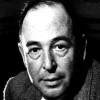
The hope of the world is that wisdom can arrest conflict between brothers. I believe that war is the deadly harvest of arrogant and unreasoning minds.
Dwight David Eisenhower (1890-1969) American general, US President (1953-61)
Speech, National Education Association, Washington, D.C. (4 Apr 1957)
Peace will not be built, however, by people with bitterness in their hearts.
Eleanor Roosevelt (1884–1962) First Lady of the US (1933–1945), politician, diplomat, activist
Column (1944-01-07), “My Day”
(Source)
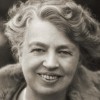
We have borne patiently a great deal of wrong, on the consideration that if nations go to war for every degree of injury, there would never be peace on earth. But when patience has begotten false estimates of it’s motives, when wrongs are pressed because it is believed they will be borne, resistance becomes morality.
Thomas Jefferson (1743-1826) American political philosopher, polymath, statesman, US President (1801-09)
Letter (1807-07-16) to Anne-Louise-Germaine Necker, Baronne de Staël-Holstein
(Source)
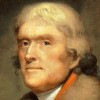
Europe […] have totally mistaken our character. Accustomed to rise at a feather themselves, and to be always fighting, they will see in our conduct, fairly stated, that acquiescence under wrong, to a certain degree, is wisdom & not pusillanimity, and that peace and happiness are preferable to that false honor which, by eternal wars, keeps their people in eternal labor, want and wretchedness.
Thomas Jefferson (1743-1826) American political philosopher, polymath, statesman, US President (1801-09)
Letter (1815-03-23) to James Madison
(Source)
HAWKEYE: War isn’t Hell. War is war, and Hell is Hell. And of the two, war is a lot worse.
FR. MULCAHEY: How do you figure, Hawkeye?
HAWKEYE: Easy, Father. Tell me, who goes to Hell?
FR. MULCAHEY: Sinners, I believe.
HAWKEYE: Exactly. There are no innocent bystanders in Hell. War is chock full of them — little kids, cripples, old ladies. In fact, except for some of the brass, almost everybody involved is an innocent bystander.
Burt Prelutsky (b. 1940) American TV screenwriter, author, columnist, critic
M*A*S*H, 05×20 “The General’s Practitioner” (1977-02-15)

The question [is] asked, “Is it common for a nation to obtain a redress of wrongs by war?” The answer to this question you will of course draw from history. In the meantime, reason will answer it on grounds of probability, that where the wrong has been done by a weaker nation, the stronger one has generally been able to enforce redress; but where by a stronger nation, redress by war has been neither obtained nor expected by the weaker. On the contrary, the loss has been increased by the expenses of the war in blood and treasure. Yet it may have obtained another object equally securing itself from future wrong. It may have retaliated on the aggressor losses of blood and treasure far beyond the value to him of the wrong he had committed, and thus have made the advantage of that too dear a purchase to leave him in a disposition to renew the wrong in future. In this way the loss by the war may have secured the weaker nation from loss by future wrong.
Thomas Jefferson (1743-1826) American political philosopher, polymath, statesman, US President (1801-09)
Letter (1816-01-29) to Noah Worcester
(Source)
I hate war as only a soldier who has lived it can, only as one who has seen its brutality, its stupidity.
Dwight David Eisenhower (1890-1969) American general, US President (1953-61)
Speech, Canadian Club, Ottawa (10 Jan 1946)
But to those who expect us to calculate whether a compliance with unjust demands will not cost us less than a war we must leave as a question of calculation for them also whether to retire from unjust demands will not cost them less than a war. We can do to each other very sensible injuries by war, but mutual advantages of peace make that the best interest of both.
Thomas Jefferson (1743-1826) American political philosopher, polymath, statesman, US President (1801-09)
Message (1804-11-08) to Congress, Annual Message (State of the Union)
(Source)
Blood that has soaked into the sands of a beach is all of one color. America stands unique in the world: the only country not founded on race but on a way, an ideal. Not in spite of but because of our polyglot background, we have had all the strength in the world. That is the American way.
Ronald Reagan (1911-2006) US President (1981-89), politician, actor
Speech (10 Aug 1988)
On signing a bill providing restitution to Japanese-Americans who had been put in internment camps during World War II. He originally spoke the words as an Army Captain in December 1945 at a "United America Day" rally for the posthumous awarding of the Distinguished Service Cross to Sgt. Kazuo Masuda.
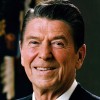
When a war breaks out, people say: “It’s too stupid; it can’t last long.” But though the war may well be “too stupid,” that doesn’t prevent its lasting. Stupidity has a knack of getting its way; as we should see if we were not always so much wrapped up in ourselves.
Albert Camus (1913-1960) Algerian-French novelist, essayist, playwright
The Plague (1947)

Success in war, like charity in religion, covers a multitude of sins.
William Napier (1785-1860) Irish soldier and military historian
History of the War in the Peninsula, Vol. 5, Book 25, ch. 2 (1837)
(Source)

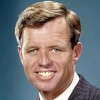
Are we like the God of the Old Testament that we can decide, in Washington, D.C., what cities, what towns, what hamlets in Vietnam are going to be destroyed? … Do we have to accept that? … I do not think we have to. I think we can do something about it.
Robert Francis Kennedy (1925-1968) American politician
Speech, US Senate (Mar 1968)
Frequently cited as his last Senate speech about the Vietnam War.
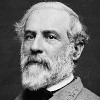
But what a cruel thing is war; to separate and destroy families and friends, and mar the purest joys and happiness God has granted us in this world; to fill our hearts with hatred instead of love for our neighbors, and to devastate the fair face of this beautiful world!
Robert E. Lee (1807-1870) American military leader
Letter to his wife (25 Dec 1862)
“There are no atheists in foxholes” isn’t an argument against atheism, it’s an argument against foxholes.
James Morrow (b. 1947) American author, humanist
Towing Jehovah, Part 2, “Famine” (1994)
(Source)
Paraphrase of this passage:"There are no atheists in foxholes, people say, and it's so true, it's so fucking true." Cassie swallowed, savoring the aftertaste of the Cheerios. "No ... no, I'm being too hard on myself. That maxim, it's not an argument against atheism -- it's an argument against foxholes."
I can picture in my mind a world without war, a world without hate. And I can picture us attacking that world because they’d never expect it.
Jack Handey (b. 1949) American humorist
Deep Thoughts (1992)

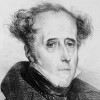
One does not learn how to die by killing others.
François-René de Chateaubriand (1768-1848) French writer, politican, diplomat
Memoirs from Beyond the Grave [Mémoires d’Outre-Tombe], Book 8, ch. 4 (1848-1850) [tr. Kline]
War would end if the dead could return.
Stanley Baldwin (1867-1947) British Conservative politician, Prime Minister
(Attributed)

Wars can be prevented just as surely as they can be provoked, and we who fail to prevent them must share the guilt for the dead.
Omar Bradley (1893-1981) American general
(Attributed)
You’re in the Army now,
You’re not behind a plow;
You’ll never get rich
A-diggin’ a ditch,
You’re in the Army now.William "Tell" Taylor (1876-1937) American vaudevillian, singer, playwright, composer, lyricist
“You’re in the Army Now” (1917) [with Ole Olsen]

I do not know how the Third World War will be fought, but I can tell you what they will use in the Fourth — rocks!
Albert Einstein (1879-1955) German-American physicist
“Einstein at 70,” interview by Alfred Werner, Liberal Judaism (April-May 1949)
For more information on this citation, and on earlier variants of this quote, see The Futuristic Weapons of WW3 Are Unknown, But WW4 Will Be Fought With Stones and Spears – Quote Investigator®.
Yes, we love peace, but we are not willing to take wounds for it, as we are for war.
John Andrew Holmes (1874-1937) American physician and writer
Wisdom in Small Doses (1927)

Always a friend to peace, & believing it to promote eminently the happiness & prosperity of mankind, I am ever unwilling that it should be disturbed, as long as the rights & interests of the nation can be preserved. but whensoever hostile aggressions on these require a resort to war, we must meet our duty, & convince the world that we are just friends & brave enemies.
Thomas Jefferson (1743-1826) American political philosopher, polymath, statesman, US President (1801-09)
Letter (1806-12-03) to Andrew Jackson
(Source)
I don’t consider myself dovish and I certainly don’t consider myself hawkish. Maybe I would describe myself as owlish — that is, wise enough to understand that you want to do everything possible to avoid war.
Norman Schwarzkopf (1934-2012) American military leader
In New York Times (28 Jan 1991)
It is essential to persuade the soldier that those he is being urged to massacre are bandits who do not deserve to live; before killing other good, decent fellows like himself, his gun would fall from his hands.
André Gide (1869-1951) French author, Nobel laureate
Journal (10 Feb 1943) [tr. O’Brien (1951)]
Boys are the cash of war. Whoever said
We’re not free-spenders doesn’t know our likes.John Ciardi (1916-1986) American poet, writer, critic
“New Year’s Eve,” This Strangest Everything (1966)
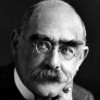
If any question why we died,
Tell them, because our fathers lied.Rudyard Kipling (1865-1936) English writer
“Common Form,” The Years Between (1919)
Here dead lie we because we did not choose
To live and shame the land from which we sprung.
Life, to be sure, is nothing much to lose;
But young men think it is, and we were young.A. E. Housman (1859-1936) English scholar and poet [Alfred Edward Housman]
More Poems, #36 (1936)
(Source)
Out of every one hundred men, ten shouldn’t even be there, eighty are just targets, nine are the real fighters, and we are lucky to have them, for they make the battle. Ah, but the one, one is a warrior, and he will bring the others back.
Heraclitus of Ephesus (c.540-c.480 BC) Greek philosopher [Ἡράκλειτος, Herákleitos, Heracleitus]
(Attributed)
War will exist until that distant day when the conscientious objector enjoys the same reputation and prestige that the warrior does today.
John F. Kennedy (1917-1963) American politician, author, journalist, US President (1961–63)
Letter to a Navy friend (1945)
(Source)
Letter to a past PT-boat crew mate, responding to a question about his experiences at the United Nations founding in San Francisco (Jun 1945). Quoted in Arthur Schlesinger, Jr., A Thousand Days: John F. Kennedy in the White House, ch. 4, sec. 4 (1965).
Remember that those of us who are both civilized and prudent commit our murders only under the complicated rules which permit us to avoid personal responsibility.
Rex Stout (1886-1975) American writer
Fer-de-Lance, Nero Wolfe, chapter 16 (1934)
The only religion that still demands human sacrifice is nationalism.
Kenneth Ewart Boulding (1910-1993) American economist, educator, poet, philosopher
Lecture, University of Michigan (28 Jan 1969)
(Source)
Quoted in Stephen Nelson, "Nature/Nurture Revisited I: A Review of the Biological Bases of Conflict," Journal of Conflict Resolution (Jun 1974).
No people in history have preserved their freedom who thought that by not being strong enough to protect themselves they might prove inoffensive to their enemies.
Dean Acheson (1893-1971) American statesman
National Security Council Report 68 (NSC-68), Sec. 7 “Present Risks” (14 Apr 1950) [with Paul Nitze]
(Source)
Usually paraphrased as "No people in history have ever survived who thought they could protect their freedom by making themselves inoffensive to their enemies."
One of the fondest expressions around is that we can’t be the world’s policeman. […] But guess who gets called when suddenly someone needs a cop?
Colin Powell (1937-2021) American military leader, politician, diplomat
Interview, New York Times (1990)
If you want to know when a war is coming, you just watch the United States and see when they start cutting down on their defense. It’s the surest barometer in the world.
Will Rogers (1879-1935) American humorist
Column (1933-05-16), “Daily Telegram”
(Source)
Written while in Beverly Hills. Reprinted in his Autobiography, Donald Day ed. (1949), in a slightly different form:If you want to know when a war is coming, just watch the U.S. and see when they start cutting down on their defense. It's the surest barometer in the world.
Another variant can be found in Bryan B. Sterling, ed., The Best of Will Rogers (1990):If you want to know when a war might be coming, you just watch the U.S. and see when it starts cutting down on its defenses. It's the surest barometer in the world.
Is it not strange that men are so keen to fight for a religion and so unkeen to live according to its precepts?
All of us realize that war requires action. What is sometimes harder for us to realize is that peace and neutrality also require action.
Lyndon B. Johnson (1908-1973) American politician, educator, US President (1963-69)
Speech (1939-11-11), Armistice Day, Brenham, Texas
Courage (in a soldier) is maintained by a certain anger; anger is a little blind and likes to strike out. And from this follows a thousand abuses, a thousand evils and misfortunes that are impossible to predict in an army during war.
Joseph Joubert (1754-1824) French moralist, philosopher, essayist, poet
Pensées [Thoughts], 1814 entry [tr. Auster (1983)]
(Source)
I could not find an analog in other translations of the Pensées.
I knew from the start that I was bound to be crucified either way I moved. If I left the woman I really loved — the Great Society — in order to get involved with that bitch of a war on the other side of the world, then I would lose everything at home. All my programs. All my hopes to feed the hungry and shelter the homeless. All my dreams to provide education and medical care to the browns and the blacks and the lame and the poor. But if I left that war and let the Communists take over South Vietnam, then I would be seen as a coward and my nation would be seen as an appeaser and we would find it impossible to accomplish anything for anybody anywhere on the entire globe.
Lyndon B. Johnson (1908-1973) American politician, educator, US President (1963-69)
Comment (1970) to Doris Kearns Goodwin
(Source)
Quoted in Doris Kearns Goodwin, Lyndon Johnson and the American Dream, ch. 9 "Vietnam" (1976). Kearns was an intern and staff member in the Johnson White House, and worked with him on his memoirs.
Every religion consists of moral precepts, & of dogmas. In the first they all agree. All forbid us to murder, steal, plunder, bear false witness Etc. and these are the articles necessary for the preservation of order, justice, & happiness in society. In their particular dogmas all differ; no two professing the same. These respect vestments, ceremonies, physical opinions, & metaphysical speculations, totally unconnected with morality, & unimportant to the legitimate objects of society. Yet these are the questions on which have hung the bitter schisms of Nazarenes, Socinians, Arians, Athanasians in former times, & now of Trinitarians, Unitarians, Catholics, Lutherans, Calvinists, Methodists, Baptists, Quakers Etc. Among the Mahometans we are told that thousands fell victims to the dispute whether the first or second toe of Mahomet was longest; & what blood, how many human lives have the words ‘this do in remembrance of me’ cost the Christian world!
We all agree in the obligation of the moral precepts of Jesus: but we schismatize & lose ourselves in subtleties about his nature, his conception maculate or immaculate, whether he was a god or not a god, whether his votaries are to be initiated by simple aspersion, by immersion, or without water; whether his priests must be robed in white, in black, or not robed at all; whether we are to use our own reason, or the reason of others, in the opinions we form, or as to the evidence we are to believe. It is on questions of this, & still less importance, that such oceans of human blood have been spilt, & whole regions of the earth have been desolated by wars & persecutions, in which human ingenuity has been exhausted in inventing new tortures for their brethren.
It is time then to become sensible how insoluble these questions are by minds like ours, how unimportant, & how mischievous; & to consign them to the sleep of death, never to be awakened from it. The varieties in the structure & action of the human mind, as in those of the body, are the work of our creator, against which it cannot be a religious duty to erect the standard of uniformity.
Thomas Jefferson (1743-1826) American political philosopher, polymath, statesman, US President (1801-09)
Letter (1809-09-27) to James Fishback [draft]
(Source)
Jefferson seriously dialed back his actual response, though he kept both in his files; the final letter read, in this passage:The interests of society require the observation of those moral precepts only in which all religions agree, (for all forbid us to murder, steal, plunder, or bear false witness.) and that we should not intermeddle with the particular dogmas in which all religions differ, and which are totally unconnected with morality. in all of them we see good men, & as many in one as another. The varieties in the structure & action of the human mind as in those of the body, are the work of our creator, against which it cannot be a religious duty to erect the standard of uniformity.
War may not be Hell itself but it definitely does weaken the barriers between us and the dark regions.

Against our traditions we are now entering upon an unjust and trivial war, a war against a helpless people, and for a base object — robbery. At first our citizens spoke out against this thing, by an impulse natural to their training. Today they have turned, and their voice is the other way. What caused the change? Merely a politician’s trick — a high-sounding phrase, a blood-stirring phrase which turned their uncritical heads: Our Country, right or wrong! An empty phrase, a silly phrase. It was shouted by every newspaper, it was thundered from the pulpit, the Superintendent of Public Instruction placarded it in every schoolhouse in the land, the War Department inscribed it upon the flag. And every man who failed to shout it or who was silent, was proclaimed a traitor — none but those others were patriots. To be a patriot, one had to say, and keep on saying, “Our Country, right or wrong,” and urge on the little war. Have you not perceived that that phrase is an insult to the nation?
Mark Twain (1835-1910) American writer [pseud. of Samuel Clemens]
Papers of the Adams Family, Part 6 “Two Fragments from a Suppressed Book Called ‘Glances at History’ or ‘Outlines of History'” (1939)
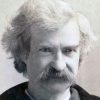
A nation that continues year after year to spend more on military defense than on programs of social uplift is approaching spiritual doom.
Martin Luther King, Jr. (1929-1968) American clergyman, civil rights leader, social activist, preacher
“Beyond Vietnam,” speech, Clergy and Laity Concerned, Riverside Church, New York City (4 Apr 1967)
(Source)
Reprinted (or the phrase repeated) in Where Do We Go from Here: Chaos or Community? (1967) and The Trumpet of Conscience (1968). See also this.
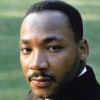
It is not enough to say ‘We must not wage war.’ It is necessary to love peace and sacrifice for it.
Martin Luther King, Jr. (1929-1968) American clergyman, civil rights leader, social activist, preacher
Where Do We Go from Here: Chaos or Community? ch. 6 (1967)
(Source)
It is useless to try to adjudicate a long-standing animosity by asking who started it or who is the most wrong. The only sufficient answer is to give up the animosity and try forgiveness, to try to love our enemies and to talk to them and (if we pray) to pray for them. If we can’t do any of that, then we must begin again by trying to imagine our enemies’ children who, like our children, are in mortal danger because of enmity that they did not cause.
Wendell Berry (b. 1934) American farmer, educator, poet, conservationist
Essay (2003-02-09), “A Citizen’s Response,” sec. 4, Citizenship Papers (2003)
(Source)
The essay, including this passage, was also published in a longer form in Orion Magazine (2003-03/04), and collected in his Citizenship Papers (2003).
What could be more absurd, to begin with, than our attitude of high moral outrage against other nations for manufacturing the selfsame weapons that we manufacture? The difference, as our leaders say, is that we will use these weapons virtuously, whereas our enemies will use them maliciously — a proposition that too readily conforms to a proposition of much less dignity: we will use them in our interest, whereas our enemies will use them in theirs.
Wendell Berry (b. 1934) American farmer, educator, poet, conservationist
Essay (1999), “The Failure of War,” Citizenship Papers (2003)
(Source)
Darkness cannot drive out darkness; only light can do that. Hate cannot drive out hate; only love can do that. Hate multiplies hate, violence multiplies violence, and toughness multiplies toughness in a descending spiral of destruction […] The chain reaction of evil — hate begetting hate, wars producing more wars — must be broken, or we shall be plunged into the dark abyss of annihilation.
Authentic peace is no more passive than war. Like war, it calls for discipline and intelligence and strength of character, though it calls also for higher principles and aims. If we are serious about peace, then we must work for it as ardently, seriously, continuously, carefully, and bravely as we have ever prepared for war.
Wendell Berry (b. 1934) American farmer, educator, poet, conservationist
Essay (2003-02-09), “A Citizen’s Response,” sec. 4, paid advertisement, New York Times
(Source)
The essay, including this passage (its closing words), was also published in a longer form in Orion Magazine (2003-03/04), and collected in Berry's Citizenship Papers (2003).
O poor mortals, how ye make this Earth bitter for each other; this fearful and wonderful Life fearful and horrible; and Satan has his place in all hearts! Such agonies and ragings and wailings ye have, and have had, in all times: — to be buried all, in so deep silence; and the salt sea is not swoln with your tears.
Thomas Carlyle (1795-1881) Scottish essayist and historian
The French Revolution: A History, Part 1, Book 5, ch. 5 (1.5.5) (1837)
(Source)
As the prospect of violence mounts within Paris on the night of 13 July 1789. The next day was the storming of the Bastille.
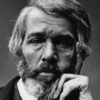
We have become blind to the alternatives to violence. This involves us in a sort of official madness, in which, while following what seems to be a perfect logic of self-defense and deterrence, we commit one absurdity after another: We seek to preserve peace by fighting a war, or to advance freedom by subsidizing dictatorships, or to “win the hearts and minds of the people” by poisoning their crops and burning their villages and confining them in concentration camps; we seek to uphold the “truth” of our cause with lies, or to answer conscientious dissent with threats and slurs and intimidations. […] All this is made frighteningly clear, in Vietnam, in our inability to control the swiftly widening discrepancy between what we are doing and what we say we are doing.
Wendell Berry (b. 1934) American farmer, educator, poet, conservationist
Speech (1968-02-10), “A Statement Against the War in Vietnam,” Kentucky Conference on the War and the Draft, University of Kentucky
(Source)
Collected in The Long-Legged House, Part 2 (1969).
Arise, arise, Riders of Théoden!
Fell deeds awake, fire and slaughter!
Spear shall be shaken, shield be splintered,
A sword-day, a red day, ere the sun rises!
Ride now, ride now! Ride to Gondor!J.R.R. Tolkien (1892-1973) English writer, fabulist, philologist, academic [John Ronald Reuel Tolkien]
The Lord of the Rings, Vol. 3: The Return of the King, Book 5, ch. 5 “The Ride of the Rohirrim” [Theoden] (1955)
(Source)
In the Peter Jackson film, the last line is merged with another Theoden line from ch. 6, as he lies dying: "Death! Ride, ride to ruin, and the world's ending!"
In other words, those very characteristics which are demanded by war — the ability to tolerate uncertainty, spontaneity of thought and action, having a mind open to the receipt of novel, and perhaps threatening, information — are the antitheses of those possessed by people attracted to the controls, and orderliness, of militarism. Here is the germ of a terrible paradox. Those very people who, because they have adopted attack rather than submission or flight as their preferred psychological defence against threat, are in theory the best suited to warring behaviour, may be the very ones least well equipped for other components of successful fighting.
Norman F. Dixon (1922-2013) British cognitive psychologist, author, military engineer
On the Psychology of Military Incompetence, Part 2, ch. 17 “Socialization and the Anal Character” (1976)
(Source)

I have seen war. I have seen war on land and sea. I have seen blood running from the wounded. I have seen men coughing out their gassed lungs. I have seen the dead in the mud. I have seen cities destroyed. I have seen two hundred limping, exhausted men come out of line — the survivors of a regiment of one thousand that went forward forty-eight hours before. I have seen children starving. I have seen the agony of mothers and wives. I hate war.
Franklin Delano Roosevelt (1882–1945) American lawyer, politician, statesman, US President (1933–1945)
Speech (1936-08-14), Chautauqua, New York
(Source)
(Source (Video); dialog confirmed).
FDR, as Assistant Secretary of the Navy, visited the front lines of WWI in France after American troops were in service.
War is the unfolding of miscalculations.
Barbara W. Tuchman (1912-1989) American historian and author
The Guns of August (1962)
In Stilwell and the American Experience in China (1970), she gave this as "History is the unfolding of miscalculations."

Maybe we should always show pictures. Bin Laden, pictures of our wounded service people, pictures of maimed innocent civilians. We can only make decisions about war if we see what war actually is — and not as a video game where bodies quickly disappear, leaving behind a shiny gold coin.
Jon Stewart (b. 1962) American satirist, comedian, and television host. [b. Jonathan Stuart Leibowitz]
The Daily Show (2011-05-04)

What this country needs is a short, victorious war to stem the tide of revolution.
Vyacheslav von Pléhve (1846-1904) Russian Tsarist security director, Interior Minister [Vyacheslav Konstantinovich von Plehve, or Pleve; Вячесла́в Константи́нович фон Пле́ве]
Comment (1903) [tr. Walder (1974)]
(Source)
Regarding the impending Russo-Japanese War (1904-05). Possibly apocryphal; the comment is quoted in the memoirs of Count Sergei Witte, an opponent of Plehve, several years later (and well after Plehve's 1904 assassination). Witte recounted it as a retort by Plehve to General Alexey Nikolayevich Kuropatkin, who accused Plehve of supporting the conflict for adventurist/expansionist reasons.
Russia, though considered much stronger than Japan militarily, ended up losing the war, destabilizing the government and ironically leading to revolutions in 1905 and 1917.
See Churchill (1930).
Alternate translations:
- "We need a little victorious war to stem the tide of revolution." [tr. Yarmolinsky (1921)]
- "We need a little, victorious war to stem the revolution." [tr. Harcave (1990)]
- "To contain the revolution, we need a short victorious war." [tr Hodson (2017)]
The belief in the possibility of a short decisive war appears to be one of the most ancient and dangerous of human illusions.
Robert Wilson Lynd (1879–1949) Irish writer, literary essayist, journalist, nationalist (Robiard Ó Flionn; pseud. "Y. Y.")
Searchlights and Nightingales (1939)
(Source)

To jaw-jaw is always better than to war-war.
Winston Churchill (1874-1965) British statesman and author
Speech (1954-06-25), luncheon, White House, Washington, DC
(Source)
On dealing with the Soviets.
War is mainly a catalogue of blunders.
Winston Churchill (1874-1965) British statesman and author
The Second World War, Vol. 3: The Grand Alliance, ch. 20 “The Soviet Nemesis” (1950)
(Source)
Specifically, on the USSR failing to form an allied front in the Balkans against Hitler prior to his attack on them.
To this war of every man against every man, this also is consequent; that nothing can be unjust. The notions of right and wrong, justice and injustice, have there no place. Where there is no common power, there is no law; where no law, no injustice. Force and fraud are in war the two cardinal virtues.
Croesus said to Cambyses: That peace was better than war; because in peace the sons did bury their fathers, but in wars the fathers did bury their sons.
Francis Bacon (1561-1626) English philosopher, scientist, author, statesman
Apophthegms, #149 (1625)
See Herodotus.

I would say to the House, as I said to those who have joined this Government: “I have nothing to offer but blood, toil, tears and sweat.” We have before us an ordeal of the most grievous kind. We have before us many, many long months of struggle and of suffering. You ask, what is our policy? I can say: It is to wage war, by sea, land and air, with all our might and with all the strength that God can give us; to wage war against a monstrous tyranny, never surpassed in the dark, lamentable catalogue of human crime. That is our policy. You ask, what is our aim? I can answer in one word: It is victory, victory at all costs, victory in spite of all terror, victory, however long and hard the road may be; for without victory, there is no survival.
Winston Churchill (1874-1965) British statesman and author
Speech, House of Commons (13 May 1940)
(Source)
Churchill's first speech in the House after becoming prime minister. Often paraphrased, "I have nothing to offer but blood, sweat and tears..." Audio records of the speech omit the "It is" in the beginning of the "Victory" section.
Let us learn our lessons. Never, never, never believe any war will be smooth and easy, or that anyone who embarks on the strange voyage can measure the tides and hurricanes he will encounter. The statesman who yields to war fever must realise that once the signal is given, he is no longer the master of policy but the slave of unforeseeable and uncontrollable events. Antiquated War Offices, weak, incompetent, or arrogant Commanders, untrustworthy allies, hostile neutrals, malignant Fortune, ugly surprises, awful miscalculations — all take their seats at the Council Board on the morrow of a declaration of war. Always remember, however sure you are that you could easily win, that there would not be a war if the other man did not think he also had a chance.
So, as you go into battle, remember your ancestors and remember your descendants.
[Et majores vestros et posteros cogitate]
Tacitus (c.56-c.120) Roman historian, orator, politician [Publius or Gaius Cornelius Tacitus]
Agricola, ch. 32 [tr. Acheson, ch. 4, para. 22 (1938)]
(Source)
Alt. trans: "Think of your ancestors and your posterity" or "Think of your forefathers and posterity."
Poor Nations are hungry, and rich Nations are proud, and Pride and Hunger will ever be at Variance.
Jonathan Swift (1667-1745) English writer and churchman
Gulliver’s Travels, Part 4 “Voyage to the Land of the Houyhnhnms,” ch. 5 (1726)
(Source)

Once killing starts, it is difficult to draw the line.
Tacitus (c.56-c.120) Roman historian, orator, politician [Publius or Gaius Cornelius Tacitus]
Histories, Book I, ch. 39 (AD 100-110)
There is no instance of a nation benefiting from prolonged warfare.
Sun-Tzu (fl. 6th C. AD) Chinese general and philosopher [a.k.a. Sun Wu]
The Art of War, ch. 2
Though progress may be slow, it may be steady and sure. A wise man does not try to hurry history. Many wars have been avoided by patience and many have been precipitated by reckless haste.
Adlai Stevenson (1900–1965) American diplomat, statesman
Speech (1952-09-09), “World Policy,” Veterans Memorial Auditorium, San Francisco, California
(Source)
An empire founded by arms needs to be sustained by arms.
[Un empire fondé par les armes a besoin de se soutenir par les armes.]
Charles-Lewis de Secondat, Baron de Montesquieu (1689-1755) French political philosopher
Considerations on the Causes of the Greatness of the Romans and Their Decline [Considérations sur les causes de la grandeur des Romains et de leur décadence], ch. 18 (1734, 1748 ed.) [tr. Baker (1882)]
(Source)
(Source (French)). Other translations:An empire, founded by arms, must likewise have arms for its support.
[tr. B--- (1734)]An Empire founded by Arms, must likewise have Arms for its Support.
[ed. Guterman (1963)]An empire founded by war has to maintain itself by war.
[E.g. (1960)]An empire founded by arms needs to be sustained by arms.
[tr. Lowenthal (1965)]
No catalogue of horrors ever kept men from war. Before the war you always think that it’s not you that dies. But you will die, brother, if you go to it long enough.
Ernest Hemingway (1899-1961) American writer
“Notes on the Next War: A Serious Topical Letter,” Esquire (Sep 1935)


Nothing is cheaper and more common than physical bravery. […] Common experience shows how much rarer is moral courage than physical bravery. A thousand men will march to the mouth of the cannon where one man will dare espouse an unpopular cause […] True courage and manhood come from the consciousness of the right attitude toward the world, the faith in one’s own purpose, and the sufficiency of one’s own approval as a justification for one’s own acts.
Clarence Darrow (1857-1938) American lawyer
Resist Not Evil, ch. 16 (1903)
Hereby it is manifest that during the time men live without a common power to keep them all in awe, they are in that condition which is called war; and such a war as is of every man against every man.
I can imagine no greater disservice to the country than to establish a system of censorship that would deny to the people of a free republic like our own their indisputable right to criticize their own public officials. While exercising the great powers of the office I hold, I would regret in a crisis like the one through which we are now passing to lose the benefit of patriotic and intelligent criticism.
Woodrow Wilson (1856-1924) US President (1913-20), educator, political scientist
Letter to Arthur Brisbane (25 Apr 1917)Three weeks after the US entered WW I.
Even cowards gain courage from companionship.
Homer (fl. 7th-8th C. BC) Greek author
The Iliad [Ἰλιάς], Book 13, l. 235 (13.235) (c. 750 BC) [tr. Butler (1898)]
(Source)
Poseidon, appearing as Thoas, talking with Idomeneus. Alt. trans.:
- "We find, / That virtue co-augmented thrives in men of little mind." [tr. Chapman (1611), ll. 218-19]
- "Not vain the weakest, if their force unite." [tr. Pope (1715-20)]
- "Union much / Emboldens even the weakest." [tr. Cowper (1791), ll. 292-93]
- "For useful is the valour of men, even the very pusillanimous, if combined." [tr. Buckley (1860)]
- "E’en meaner men, united, courage gain." [tr. Derby (1864)]
- "Ay, and very cowards get courage from company." [tr. Leaf/Lang/Myers (1891)]
- "Prowess comes from fellowship even of right sorry folk." [tr. Murray (1924)]
- "Even the poorest fighters turn into brave men when they stand side by side." [tr. Rieu (1950)]
- "The worst cowards, banded together, have their power." [tr. Fagles (1990), l. 281]

Money is always to be found when men are to be sent to the frontiers to be destroyed: when the object is to preserve them, it is no longer so.
[On en trouve [l’argent] toujours quand il s’agit d’aller faire tuer des hommes sur la frontière: il n’y en a plus quand il faut les sauver.]
Voltaire (1694-1778) French writer [pseud. of Francois-Marie Arouet]
Questions on the Encyclopedia [Questions sur l’Encyclopédie], “Charity [Charité]” (1770) [tr. Fleming]
(Source)
Referring to the scandalous conditions at the Hôtel Dieu charity hospital in Paris.
(Source (French)). Subsequently folded into later editions of the Philosophical Dictionary [Dictionnaire Philosophique].
Allow the President to invade a neighboring nation whenever he shall deem it necessary to repel an invasion, and you shall allow him to do so whenever he may choose to say he deems it necessary for such purpose, and you allow him to make war at pleasure. Study to see if you can fix any limit to his power in this respect. If to-day he should choose to say he thinks it necessary to invade Canada to prevent the British from invading us, how could you stop him? You may say to him, “I see no probability of the British invading us”; but he will say to you, “Be silent: I see it if you don’t.”
Abraham Lincoln (1809-1865) American lawyer, politician, US President (1861-65)
Letter (1848-02-15) to William H. Herndon
(Source)
But if survival calls for the bearing of arms, bear them, you must. As we all have. Keep in mind only this, that province of combat is not the end, it is simply the means. And the most essential part of the challenge is for you to find another means that does not come with the killing of your fellow-man.
Rod Serling (1924-1975) American screenwriter, playwright, television producer, narrator
Commencement Speech, Binghamton Central High School, Binghamton, New York (28 Jan 1968)
(Source)
Sometimes paraphrased:If survival calls for the bearing of arms, bear them you must. But the most important part of the challenge is for you to find another means that does not come with the killing of your fellow man.
I abhor unjust war. I abhor injustice and bullying by the strong at the expense of the weak, whether among nations or individuals. I abhor violence and bloodshed. I believe that war should never be resorted to when, or so long as, it is honorably possible to avoid it. I respect all men and women who from high motives and with sanity and self-respect do all they can to avert war. I advocate preparation for war in order to avert war; and I should never advocate war unless it were the only alternative to dishonor.
Theodore Roosevelt (1858–1919) American politician, statesman, conservationist, writer, US President (1901–1909)
Autobiography, ch. 7 “The War of America the Unready” (1913)
(Source)
It is not only in war, however, that we fight for freedom. One fights for freedom in personal contacts and in many phases of civilian life. When the war is over, the four freedoms will not have been won, we shall simply have dominated their more aggressive enemies. At all times, day by day, we have to continue fighting for freedom of religion, freedom of speech, freedom from fear, and freedom from want — for these are things that must be gained in peace as well as in war. At all times, day by day, we have to continue fighting for freedom of religion, freedom of speech, and freedom from want — for these are things that must be gained in peace as well as in war.
Eleanor Roosevelt (1884–1962) First Lady of the US (1933–1945), politician, diplomat, activist
Column (1943-04-15), “My Day”
(Source)
The greatest of human problems, and the greatest of our common tasks, is to keep the peace and to save the future. All that we have built in the wealth of nations, and all that we plan to do toward a better life for all, will be in vain if our feet should slip, or our vision falter, and our hopes ended in another worldwide war. If there is one commitment more than any other that I would like to leave with you today, it is my unswerving commitment to the keeping and to the strengthening of the peace. Peace is a journey of a thousand miles and it must be taken one step at a time.
Lyndon B. Johnson (1908-1973) American politician, educator, US President (1963-69)
Speech (1963-12-17), United Nations General Assembly
(Source)
John Kennedy had used the same "journey" phrase from Lao-tzu early that year, before his assassination.
War is not merely a political act but a real political instrument, a continuation of political intercourse, a carrying out of the same by other means.
[Der Krieg nicht bloss ein politischer Akt, sondern ein wahres politisches Instrument ist, eine Fortsetzung des politischen Verkhers, ein Durchführen desselben mit andern Mitteln.]
Karl von Clausewitz (1780-1831) Prussian soldier, historian, military theorist
On War [Vom Kriege], Book 1, ch. 1 “What is War? [Was ist der Krieg?],” § 24 (1.1.24) (1832) [tr. Jolles (1943)]
(Source)
(Source (German)). Alternate translations:War is not merely a political act, but also a real political instrument, a continuation of political commerce, a carrying out of the same by other means.
[tr. Graham (1874)]War is not merely an act of policy but a true political instrument, a continuation of political intercourse, carried on with other means.
[tr. Howard & Paret (1976)]
There is often confusion between this full sentence and the shorter section heading, which is also quoted:War is a mere continuation of policy by other means.
[tr. Graham (1874) and Jolles (1943)]War is merely the continuation of policy by other means.
[tr. Howard & Paret (1976)]Der Krieg ist eine blosse Fortsetzung der Politik mit andern Mitteln.
[German source]
Every gun that is made, every warship launched, every rocket fired signifies, in the final sense, a theft from those who hunger and are not fed, those who are cold and are not clothed. This world in arms is not spending money alone. It is spending the sweat of its laborers, the genius of its scientists, the hopes of its children.
The cost of one modern heavy bomber is this: a modern brick school in more than 30 cities. It is two electric power plants, each serving a town of 60,000 population. It is two fine, fully equipped hospitals. It is some 50 miles of concrete highway. We pay for a single fighter with a half million bushels of wheat. We pay for a single destroyer with new homes that could have housed more than 8,000 people.
This, I repeat, is the best way of life to be found on the road the world has been taking. This is not a way of life at all, in any true sense. Under the cloud of threatening war, it is humanity hanging from a cross of iron.
Dwight David Eisenhower (1890-1969) American general, US President (1953-61)
“The Chance for Peace,” address to American Society of Newspaper Editors, Washington (16 April 1953)
Also known as the "Cross of Iron" speech.
“You heard these words: ‘Grant us the victory, O Lord our God!’ That is sufficient. The whole of the uttered prayer is compact into those pregnant words. Elaborations were not necessary. When you have prayed for victory you have prayed for many unmentioned results which follow victory — must follow it, cannot help but follow it. Upon the listening spirit of God fell also the unspoken part of the prayer. He commandeth me to put it into words. Listen!
“O Lord our Father, our young patriots, idols of our hearts, go forth to battle — be Thou near them! With them — in spirit — we also go forth from the sweet peace of our beloved firesides to smite the foe. O Lord our God, help us to tear their soldiers to bloody shreds with our shells; help us to cover their smiling fields with the pale forms of their patriot dead; help us to drown the thunder of the guns with the shrieks of their wounded, writhing in pain; help us to lay waste their humble homes with a hurricane of fire; help us to wring the hearts of their unoffending widows with unavailing grief; help us to turn them out roofless with their little children to wander unfriended the wastes of their desolated land in rags and hunger and thirst, sports of the sun flames of summer and the icy winds of winter, broken in spirit, worn with travail, imploring Thee for the refuge of the grave and denied it — for our sakes who adore Thee, Lord, blast their hopes, blight their lives, protract their bitter pilgrimage, make heavy their steps, water their way with their tears, stain the white snow with the blood of their wounded feet! We ask it, in the spirit of love, of Him Who is the Source of Love, and Who is the ever-faithful refuge and friend of all that are sore beset and seek His aid with humble and contrite hearts. Amen.
(After a pause.) “Ye have prayed it; if ye still desire it, speak! The messenger of the Most High waits!”Mark Twain (1835-1910) American writer [pseud. of Samuel Clemens]
Story (1905), “The War Prayer”
(Source)
A mysterious man speaking to a church congregation gathered to pray for the victory of their local men going off to war.
The story was originally written after the Spanish-American War and during the Philippine-American War. It was rejected at the time by Harper's Bazaar on 1905-03-22 as "too radical" and "not quite suited to a woman's magazine." He was further discouraged by his family, friends, and publishers from publishing something so "sacrilegious."
It's frequently claimed that the story was eventually published in Harper's Magazine, Vol 80, No. 798 (1916-11), during World War I. In reality, that issue only contains Part 7 (the last installment) of his The Mysterious Stranger (a different story).
It was not published until collected in Europe and Elsewhere (1923) [ed. Paine].
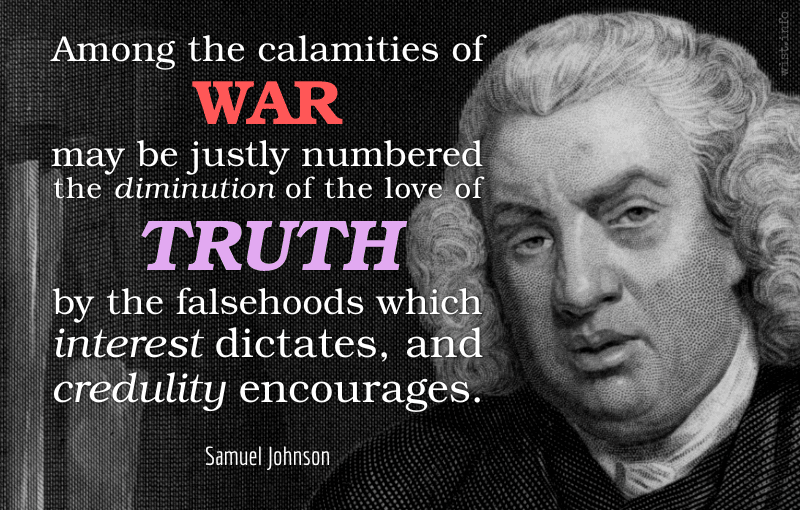
Among the calamities of war, may be justly numbered the diminution of the love of truth, by the falsehoods which interest dictates, and credulity encourages.
Samuel Johnson (1709-1784) English writer, lexicographer, critic
Essay (1758-11-11), The Idler, No. 30
(Source)
But is an enemy so execrable that tho in captivity his wishes and comforts are to be disregarded and even crossed? I think not. It is for the benefit of mankind to mitigate the horrors of war as much as possible.
Thomas Jefferson (1743-1826) American political philosopher, polymath, statesman, US President (1801-09)
Letter (1779-03-27) to Patrick Henry
(Source)
Whatsoever therefore is consequent to a time of Warre, where every man is Enemy to every man; the same is consequent to the time, wherein men live without other security, than what their own strength, and their own invention shall furnish them withall. In such condition, there is no place for Industry; because the fruit thereof is uncertain; and consequently no Culture of the Earth; no Navigation, nor use of the commodities that may be imported by Sea; no commodious Building; no Instruments of moving, and removing such things as require much force; no Knowledge of the face of the Earth; no account of Time; no Arts; no Letters; no Society; and which is worst of all, continuall feare, and danger of violent death; And the life of man, solitary, poore, nasty, brutish, and short.
A man who says that no patriot should attack the Boer War until it is over is not worth answering intelligently; he is saying that no good son should warn his mother off a cliff until she has fallen over it.
Gilbert Keith Chesterton (1874-1936) English journalist and writer
Orthodoxy, ch. 5 (1908)

Sacrifice, patience, understanding, and implacable purpose may be our lot of years to come. Let’s face it. Let’s talk sense to the American people. Let’s tell them the truth, that there are no gains without pains, that there — that we are now on the eve of great decisions, not easy decisions, like resistance when you’re attacked, but a long, patient, costly struggle which alone can assure triumph over the great enemies of man — war, poverty, and tyranny — and the assaults upon human dignity which are the most grievous consequences of each.
Adlai Stevenson (1900–1965) American diplomat, statesman
Speech (1952-07-26), Democratic National Convention, Chicago
(Source)
Since Auschwitz we know what man is capable of. And since Hiroshima we know what is at stake.
Viktor Frankl (1905-1997) German-American psychologist, writer
Man’s Search for Meaning (1959)
If you must play, decide on three things at the start: the rules of the game, the stakes, and the quitting time.
Proverbs, Sayings, and Adages
Chinese proverb

A new type of thinking is essential if mankind is to survive and move toward higher levels.
Albert Einstein (1879-1955) German-American physicist
Letter (1946-05-25), quoted in “Atomic Education Urged by Einstein,” New York Times
(Source)
This may be the source of some otherwise unsourced Einstein quotes:The missive was sent by telegram to "several hundred prominent Americans."
- "The significant problems we face cannot be solved at the same level of thinking we were at when we created them"
- "The world we have created today as a result of our thinking thus far has problems which cannot be solved by thinking the way we thought when we created them."
- "The world we have created is a product of our thinking; it cannot be changed without changing our thinking."
- "This problem will not be solved by the same minds that created it."
- "We cannot solve our problems with the same thinking we used when we created them."
- "We can't solve problems by using the same kind of thinking that created them."
Einstein revisited (alt. source) this theme in "The Real Problem Is in the Hearts of Men," New York Times Magazine (1946-06-23): "Many persons have inquired concerning a recent message of mine that 'a new type of thinking is essential if mankind is to survive and move toward higher levels.' [...] Past thinking and methods did not prevent world wars. Future thinking must prevent wars."
A leader who does not hesitate before he sends his nation to battle is not fit to be a leader.
Golda Meir (1898-1978) Russian-American-Israeli politician, teacher; Prime Minister of Israel (1969-1974)
Comment (1967-05)
(Source)
Defending Israeli Prime Minister Levi Eshkol for sounding hesitant in a national radio broadcast (1967-05-28) leading up to the Six-Day War (1967-06-05/10).

To delight in war is a merit in the soldier, a dangerous quality in the captain, and a positive crime in the statesman.
George Santayana (1863-1952) Spanish-American poet and philosopher [Jorge Agustín Nicolás Ruíz de Santayana y Borrás]
The Life of Reason or The Phases of Human Progress, vol. 2 “Reason in Society,” ch. 3 “Industry, Government, and War” (1905-06)
This subject brings me to that vilest offspring of the herd mind — the odious militia. The man who enjoys marching in line and file to the strains of music falls below my contempt; he received his great brain by mistake — the spinal cord would have been amply sufficient. This heroism at command, this senseless violence, this accursed bombast of patriotism — how intensely I despise them! War is low and despicable, and I had rather be smitten to shreds than participate in such doings.
Albert Einstein (1879-1955) German-American physicist
“What I Believe,” Forum and Century (Oct 1930)
(Source)
Einstein crafted and recrafted his credo multiple times in this period, and specifics are often muddled by differing translations and by his reuse of certain phrases in later writing. The Forum and Century entry appears to be the earliest. Some important variants:This topic brings me to that worst outcrop of herd life, the military system, which I abhor. That a man cant take pleasure in marching in fours to the strains of a band is enough to make me despise him. He has only been given his big brain by mistake; unprotected spinal marrow was all he needed. This plague-spot of civilization ought to be abolished with all possible speed. Heroism on command, senseless violence, and all the loathsome nonsense that goes by the name of patriotism -- how passionately I hate them! How vile and despicable seems war to me! I would rather be hacked in pieces than take part in such an abominable business.
— "The World As I See It [Mein Weltbild] [tr. Bargmann (1954)]This topic brings me to that worst outcrop of the herd nature, the military system, which I abjor. That a man can take pleasure in marching in formation to the strains of a band is enough to make me despise him. He has only been given his big brain by mistake; a backbone was all he needed. This plague-spot of civilization ought to be abolished with all possible speed. Heroism by order, senseless violence, and all the pestilent nonsense that does by the name of patriotism -- how I hate them! War seems to me a mean, contemptible thing: I would rather be hacked in pieces than take part in such an abominable business.
— "The World As I See It [Mein Weltbild] [tr. Harris (1934)]
For myself, I would see the White Tree in flower again in the courts of the kings, and the Silver Crown return, and Minas Tirith in peace: Minas Anor again as of old, full of light, high and fair, beautiful as a queen among other queens; not as a mistress of many slaves, nay, not even a kind mistress of willing slaves. War must be, while we defend our lives against a destroyer who would devour all; but I do not love the bright sword for its sharpness, nor the arrow for its swiftness, nor the warrior for his glory. I love only that which they defend: the city of the Men of Númenor, and I would have her loved for her memory, her ancientry, her beauty, and her present wisdom. Not feared, save as men may fear the dignity of a man, old and wise.
J.R.R. Tolkien (1892-1973) English writer, fabulist, philologist, academic [John Ronald Reuel Tolkien]
The Lord of the Rings, Vol. 2: The Two Towers, Book 4, ch. 5 “The Window on the West” [Faramir] (1954)
(Source)
EDGAR: Know thou this: that men
Are as the time is; to be tender-minded
Does not become a sword.William Shakespeare (1564-1616) English dramatist and poet
King Lear, Act 5, sc. 3, l. 35ff (5.3.35-37) (1606)
(Source)

It is human nature to hate the man whom you have to hurt.
[Proprium humani ingenii est odisse quem laeseris.]
Tacitus (c.56-c.120) Roman historian, orator, politician [Publius or Gaius Cornelius Tacitus]
Agricola, ch. 42 (AD 98)
(Source)
Alt trans: "It belongs to human nature to hate those you have injured."
Peace indeed is both sweet in name and wholesome in reality; but there is all the difference in the world between peace and slavery. Peace is the calmness of freedom, slavery the worst of all evils, to be kept off at the cost not only of war, but even of life itself.
[Et nomen pacis dulce est et ipsa res salutaris; sed inter pacem et servitutem plurimum interest. Pax est tranquilla libertas, servitus postremum malorum omnium, non modo bello sed morte etiam repellendum.]
Marcus Tullius Cicero (106-43 BC) Roman orator, statesman, philosopher
Philippics [Philippicae; Antonian Orations], No. 2, ch. 44 / sec. 113 (2,44/2.113) (44-10-24 BC) [tr. King (1877)]
(Source)
(Source (Latin)). Alternate translations:And the name of peace is sweet, and the thing itself wholesome, but between peace and servitude the difference is great. Peace is tranquil liberty, servitude the last of all evils, one to be repelled, not only by war but even by death.
[tr. Ker (1926)]The name of peace is sweet, the thing itself is most salutary. But between peace and slavery there is a wide difference. Peace is liberty in tranquility; slavery is the worst of all evils, -- to be repelled, if need be, not only by war, but even by death.
[tr. Yonge (1903)]Peace indeed is both sweet in name and wholesome in reality; but there is all the difference between peace and slavery. Peace is the calmness of freedom, slavery the worst of all evils, to be kept off at the cost not only of war, but even of life itself.
[ed. Harbottle (1906)]Even the name of peace is sweet, and peace itself a blessing; but there is all the difference in the world between peace and servitude. Peace is the quiet enjoyment of freedom, whereas servitude is the greatest of all evils, something to be resisted not just with war, but even with death.
[tr. Berry (2006)]There is sweetness in the name of peace, and living in peace is beneficial, but there is a great difference between peace and slavery. Slavery is the worst of all evils and must be driven off by war -- or even by death.
[tr. McElduff (2011)]
“It needs but one foe to breed a war, not two, Master Warden,” answered Éowyn. “And those who have not swords can still die upon them.”
J.R.R. Tolkien (1892-1973) English writer, fabulist, philologist, academic [John Ronald Reuel Tolkien]
The Lord of the Rings, Vol. 3: The Return of the King, Book 6, ch. 5 “The Steward and the King” (1955)
(Source)
When will our consciences grow so tender that we will act to prevent human misery rather than avenge it?
Eleanor Roosevelt (1884–1962) First Lady of the US (1933–1945), politician, diplomat, activist
Column (1946-02-16), “My Day”
(Source)
Regarding the Holocaust, on visiting a Jewish refugee camp in Frankfurt, Germany.
Appeasement does not always lead to war; sometimes it leads to surrender.
William Safire (1929-2009) American author, columnist, journalist, speechwriter
“Giving War a Chance,” New York Times (2 Nov 1989)
PEACE, n. In international affairs, a period of cheating between two periods of fighting.
Ambrose Bierce (1842-1914?) American writer and journalist
“Peace,” The Devil’s Dictionary (1911)
(Source)
Originally published in the "Cynic's Word Book" column in the New York American (1904-12-26), and the "Cynic's Dictionary" column in the San Francisco Examiner (1905-01-03).

LONDO: I suppose there’ll be a war now, hmm? All that running around and shooting at one another. You would have thought sooner or later it’d go out of fashion.
J. Michael (Joe) Straczynski (b. 1954) American screenwriter, producer, author [a/k/a "JMS"]
Babylon 5: The Gathering (1993)

You can’t say civilization don’t advance, however, for in every war they kill you in a new way.
Will Rogers (1879-1935) American humorist
Column (1929-12-23), “Daily Telegram: Will Rogers Has An Idea About Disarmament Plans”
(Source)
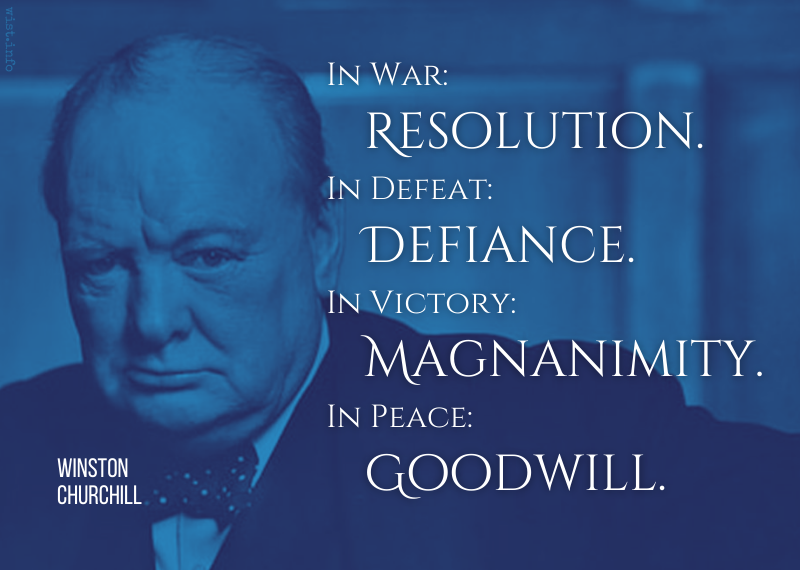
In War: Resolution.
In Defeat: Defiance.
In Victory: Magnanimity.
In Peace: Goodwill.
Winston Churchill (1874-1965) British statesman and author
The Second World War, Vol. 1: The Gathering Storm, Epigram, “Moral of the Work,” (1948)
(Source)
The most famous use of the quote, though it can be found as far back as 21 Jan 1921 in Churchill's own hand, and Edward Marsh, his private secretary, suggested it dated back to just after WW I, as a possible war memorial.More information here: CHURCHILL, Sir Winston Spencer (1874-1965). Autograph sentiment signed and dated, 21 January 1921, 'In War - Resolution , In Defeat - Defiance , In Victory - Magnanimity , In Peace - Goodwill', one page, 4°, in a commonplace book further inscribed and signed 'To Nell from Winston S. Churchill 21.1.21', and with one other inscription, contemporary marbled calf, front cover panelled in gilt and blind. Provenance: Roy A. Dalton; and by descent..

When peace has been broken anywhere, the peace of countries everywhere is in danger.
Franklin Delano Roosevelt (1882–1945) American lawyer, politician, statesman, US President (1933–1945)
Speech (1939-09-03), “Fireside Chat” (radio broadcast)
(Source)

No loss of flood and lightning, no destruction of cities and temples by hostile forces of nature, has deprived man of so many noble lives and impulses as those which his intolerance has destroyed.
Cowardice, as distinguished from panic, is almost always simply a lack of ability to suspend the functioning of the imagination. Learning to suspend your imagination and live completely in the very second of the present minute with no before and no after is the greatest gift a soldier can acquire.
We have become too civilised to grasp the obvious. For the truth is very simple. To survive you often have to fight, and to fight you have to dirty yourself. War is evil, and it is often the lesser evil. Those who take the sword perish by the sword, and those who don’t take the sword perish by smelly diseases.
George Orwell (1903-1950) English journalist, essayist, writer [pseud. of Eric Arthur Blair]
Essay (1942-08), “Looking Back on the Spanish War, ch. 1, New Road (1943-06)
(Source)
But it must be remembered that, in spite of the proverb, it takes in reality only one to make a quarrel. It is useless for the sheep to pass resolutions in favour of vegetarianism, while the wolf remains of a different opinion.
William Ralph Inge (1860-1954) English prelate [Dean Inge]
“Patriotism,” Outspoken Essays: First Series (1915)
Sometimes quoted as "while wolves remain of a different opinion."
A single death is a tragedy. A million deaths is a statistic.
Josef Stalin (1879-1953) Georgian revolutionary and Soviet dictator
(Attributed)
Alternate versions:The actual quote (such as is supported) appears to be "When one man dies it is a tragedy, when thousands die it's statistics." It is found in David McCullough, Truman (1992), said by Stalin to Churchill in Tehran when the latter was concerned over the potential casualties of opening a second front in France prematurely. McCullough cites it to Anton Antonov-Ovseyenko, The Time of Stalin: Portrait of Tyranny (1981).
- "Death of one man is a tragedy. Death of a million is a statistic."
- "One death is a tragedy. A million deaths is just a statistic."
- "When one dies, it is a tragedy. When a million die, it is a statistic."
- "The death of one man is a tragedy, the death of millions is a statistic."
On the other hand, Mary Soames (Churchill's daughter) said in a BBC interview with Andrew Marr (11 Nov 2011) that she overhead Stalin say this to her father at Potsdam, when Churchill was upset over the death of a family friend and then apologized to Stalin given the high number of Russian war casualties.
The earliest mention of the quote and Stalin is a 28 Sep 1958 book review.
Compare to Erich Maria Remarque, Der schwarze Obelisk (1956): "Sonderbar, denke ich, wir alle haben doch so viele Tote im Kriege gesehen, und wir wissen, daß über zwei Millionen von uns nutzlos gefallen sind — warum sind wir da so erregt wegen eines einzelnen, und die zwei Millionen haben wir schon fast vergessen? Aber das ist wohl so, weil ein einzelner immer der Tod ist — und zwei Millionen immer nur eine Statistik." [Strangely, I think we all have seen so many dead in the war, and we know that more than two million of us are unvalued -- why we are so excited because of an individual, and we have two million almost forgotten already? But that is probably so because a single death is always a death -- and two million only a statistic.]
Also compare to a 1925 essay on French humor, "Französischer Witz," by Kurt Tucholsky, German journalist, pacifist, and satirist. He wrote of a diplomat in the French Ministry of Foreign affairs, who said: "The war? I cannot find it to be so bad! The death of one man: this is a catastrophe. Hundreds of thousands of deaths: that is a statistic!" ["Darauf sagt ein Diplomat vom Quai d'Orsay: «Der Krieg? Ich kann das nicht so schrecklich finden! Der Tod eines Menschen: das ist eine Katastrophe. Hunderttausend Tote: das ist eine Statistik!"]
But what do We mean by the American Revolution? Do We mean the American War? The Revolution was effected before the War commenced. The Revolution was in the Minds and Hearts of the People. […] This radical Change in the Principles, Opinions Sentiments and Affection of the People, was the real American Revolution.
John Adams (1735–1826) American lawyer, Founding Father, statesman, US President (1797–1801)
Letter (1818-02-13) to Hezekiah Niles
(Source)
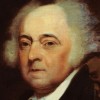
But the Nature of the War is now alter’d,
`tis the longest Purse
Conquers the longest Sword.Daniel Defoe (1660?-1731) English journalist and novelist
(Attributed)
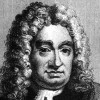
With malice toward none, with charity for all, with firmness in the right as God gives us to see the right, let us strive on to finish the work we are in, to bind up the nation’s wounds, to care for him who shall have borne the battle, and for his widow, and his orphan — to do all which may achieve and cherish a just and lasting peace, among ourselves and with all nations.
Abraham Lincoln (1809-1865) American lawyer, politician, US President (1861-65)
Speech (1865-03-04), Inaugural Address, Washington, D. C.
(Source)
Concluding words.
Both a final handwritten copy and a galley proof of the speech (cut up by Lincoln for delivery at the podium) include one of the few recorded changes in the speech: the last words "with the world" altered to "with all nations."
There is a rank due to the United States, among nations, which will be withheld, if not absolutely lost, by the reputation of weakness. If we desire to avoid insult, we must be able to repel it; if we desire to secure peace, one of the most powerful instruments of our rising prosperity, it must be known that we are at all times ready for war.
George Washington (1732–1799) American military leader, Founding Father, US President (1789–1797)
Fifth Annual Message, Philadelphia (3 Dec 1793)
(Source)
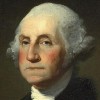
Hampden, on the other hand, was for vigorous and decisive measures. When he drew the sword, as Clarendon has well aid, he threw away the scabbard. He had shown that he knew better than any public man of his time how to value and how to practice moderation. He knew that the essence of war is violence, and that moderation in war is imbecility.
Thomas Babington Macaulay (1800-1859) English writer and politician
“John Hampden,” Essays Contributed to the Edinburgh Review, Vol. 1 (1843)
(Source)
Review of Lord Nugent, Some Memorials of John Hampden, His Party, and His Times (1831).
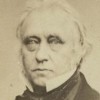
When the Egyptians were drowning in the Red Sea, the angels in heaven began to break forth in songs of jubilation, but the Holy One, blessed be He, silenced them: “My creatures are perishing — and ye are ready to sing!”
The Talmud (AD 200-500) Collection of Jewish rabbinical writings
Babylonian Talmud, Sanhedrin, Perek 4, 39B
Steinsaltz trans.:At that time the ministering angels desired to recite a song before the Holy One, Blessed be He. The Holy One, Blessed be He, said to them: My handiwork, i.e., the Egyptians, are drowning in the sea, and you are reciting a song before Me?
Louis I. Newman, comp. The Talmudic Anthology, 103 (1945):When the Egyptians were drowning, the angels wished to sing. But God said, "My children are dying, and you would sing?"