There is no outward mark of politeness that does not have a profound moral reason. The right education would be that which taught the outward mark and the moral reason together.
Johann Wolfgang von Goethe (1749–1832) German poet, statesman, scientist Elective Affinities, Part 2, ch. 5 (1809) [tr. Hollingdale (1971)]
(Source)
Other translation:
There is no outward sign of courtesy that does not rest on a deep moral foundation. . The proper education would be that which communicated the sign and the foundation of it at the same time.
[Niles ed. (1872)]
Whenever you take a step forward you are bound to disturb something. You disturb the air as you go forward, you disturb the dust, the ground. You trample upon things. When a whole society moves forward this trampling is on a much bigger scale and each thing that you disturb, each vested interest which you want to remove, stands as an obstacle.
Indira Gandhi (1917–1984) Indian politician
“Poverty: India’s Vital Problem,” speech, Madras University (Jan 1967)
(Source)
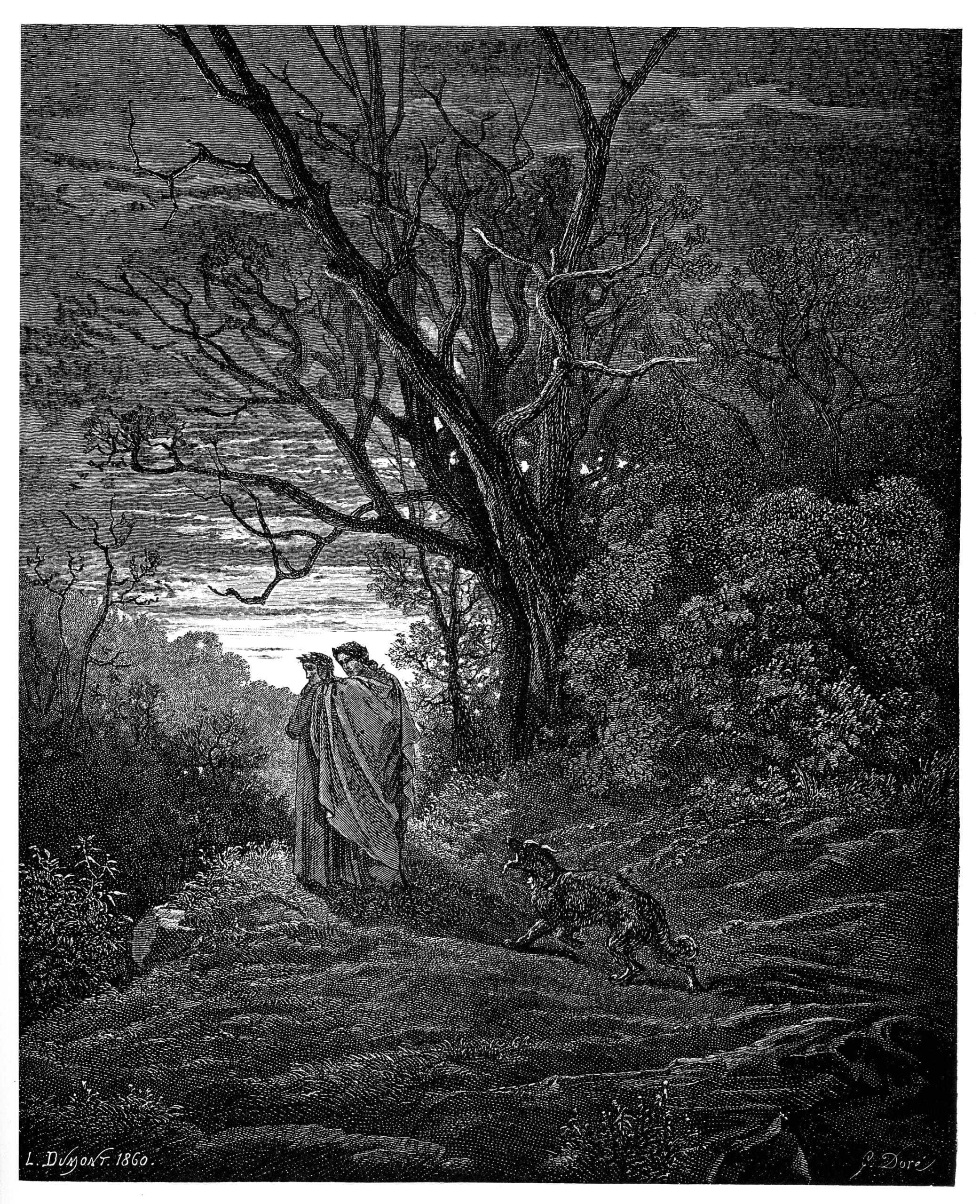
Here lamentation, groans, and wailings deep Reverberated through the starless air, So that it made me at the beginning weep.
Uncouth tongues, horrible chatterings of despair, Shrill and faint cries, words of grief, tones of rage, And with it all, smiting of hands, were there,
Making a tumult nothing could assuage, To swirl in the air that knows not day or night, Like sand within the whirlwind’s eddying cage.
[Quivi sospiri, pianti e alti guai risonavan per l’aere sanza stelle, per ch’io al cominciar ne lagrimai.
Diverse lingue, orribili favelle, parole di dolore, accenti d’ira, voci alte e fioche, e suon di man con elle
facevano un tumolto, il qual s’aggira sempre in quell’aura sanza tempo tinta, come la rena quando turbo spira.]
Dante Alighieri (1265–1321) Italian poet The Divine Comedy [Divina Commedia], Book 1 “Inferno,” Canto 3, l. 22ff (3.22-30) (1309) [tr. Binyon (1943)]
(Source)
Not even in Hell itself, but its antechamber, these are the sounds of those eternally rejected by both Heaven and Hell for standing neutral and not committing to either side. (Source (Italian)). Other translations:
There Sighs, and Cries, and horrid Howlings mix'd
With Shrieks, re-echo'd through the starless air,
Which frequent tears of pity from me drew.
Variety of tongues, reproaching Taunts,
Words grief expressing, Accents full of ire,
Voices both loud and hoarse, and clapping Hands
Rais'd in that dusky air a tumult wild,
Like to the sand when by a whirlwind toss'd.
[tr. Rogers (1782), l. 20ff]
Thence, Oh! what wailings from the abject throng
Around the starless sky incessant rung; The short, shrill shriek, and long resounding groan,
The thick sob, panting thro' the cheerless air,
The lamentagle strain of sad despair, And blasphemy, with fierce relentless tone.
Volleying around, the full, infernal choir,
Barbarian tongues, and plaints, and words of ire, (With oft' between the harsh inflicted blow)
In loud discordance from the tribes forlorn
Tumultuous rose, as in a whirlwind borne, With execrations mix'd, and murmurs low.
[tr. Boyd (1802), st. 6-7]
Here sighs with lamentations and loud moans
Resounded through the air pierc'd by no star,
That e'en I wept at entering. Various tongues,
Horrible languages, outcries of woe,
Accents of anger, voices deep and hoarse,
With hands together smote that swell'd the sounds,
Made up a tumult, that for ever whirls
Round through that air with solid darkness stain'd,
Like to the sand that in the whirlwind flies.
[tr. Cary (1814)]
Sighs there, and moaning sobs, and shriller cries Rebounded echoing through the starless air. And early forced the tear-gush from mine eyes:
Tongues of all strain, dread language of despair. Words born of anguish, accents choked with ire, And voices loud and hoarse were mingling there
With sound of hands, to swell one uproar dire That aye went eddying round that timeless gloom. As the sand eddieth in the whirlwind's gyre.
[tr. Dayman (1843)]
Here sighs, plaints, and deep wailings sounded through the starless air: it made me weep at first. Strange tongues, horrible outcries, words of pain, tones of anger, voices deep and hoarse, and the sounds of hands amongst them, made a tumult, which turns itself unceasing in that air for ever dyed, as sand when [it eddies in a whirlwind].
[tr. Carlyle (1849)]
And then the sighs, complaints, and loud, loud groans Resounding through the air without a star, Began to wring my heart with many a tear.
Diverse the tongues and language horrible, The words of sorrow and accents of ire -- High and weak voices -- sound of smiting there
A tumult made, that seemed t' encompass all Within that air, which colourless expands For aye, as when the whirlwinds raise the sands.
[tr. Bannerman (1850)]
Here sighs and moans and wailings terrible Resounded through the dim and starless air; Ev'n at the first my tears might not be stay'd.
Tongues divedrse, foul and horrible discourse, Utterings of grief and accents of deep rage, Words loud and hoarse, the sound of raging hands
Fierce tumult made, which sweeps with ceaseless roll In the deep darkness of that timeless air, As the sand rushes where the whirlwind blow.
[tr. Johnston (1867)]
There sighs, complaints, and ululations loud Resounded through the air without a star, Whence I, at the beginning, wept thereat.
Languages diverse, horrible dialects, Accents of anger, words of agony, And voices high and hoarse, with sound of hands,
Made up a tumult that goes whirling on Forever in that air forever black, Even as the sand doth, when the whirlwind breathes.
[tr. Longfellow (1867)]
There sighs, lamentations, and loud wailings were resounding through the starless air; wherefore I at the beginning wept for them. Divers languages, horrible speech, words of woe, accents of rage, voices loud and faint, and sounds of hands with them, made a tumult, which ever in that air eternally tinted circles as the sand when it is blowing up for a whirlwind.
[tr. Butler (1885)]
There sighings, and complaints, and wailings deep, Resounded ever in the starless air, so that at first I could not help but weep.
Different tongues, speech horrible to hear, Accents of anger and the words of pain, Voices both high and low, hand-clappings there,
Made up a tumult which aye whirls amain Through the thick air, eternally obscure, Like sand storm-driven o'er the desert plane.
[tr. Minchin (1885)]
Here sighs, laments, and deep wailings were resounding though the starless air; wherefore at first I wept thereat. Strange tongues, horrible cries, words of woe, accents of anger, voices high and hoarse, and sounds of hands with them, were making a tumult which whirls forever in that air dark without change, like the sand when the whirlwind breathes.
[tr. Norton (1892)]
Here sighs and lamentations and loud cries resounded through the starless air, wherefore at the first I wept to hear them. Tongues of many nations, utterings of horror, words of tribulation, tones of anger, voices loud and hoarse, and amongst them the sounds of hands, made an uproar that circleth unceasingly in that ever darksome air, even as the sand when the hurricane bloweth.
[tr. Sullivan (1893)]
Here sighs and lamentations and shrill wailings Resounded through the air by stars unlighted; Wherefore I wept thereat, e'en at the outset.
Horrible jargons, tongues of divers peoples, Accents of anger, words of bitter sorrow, Shrill and faint voices, sounds of hands among them,
Made a tumultuous uproar, that for ever Eddies athwart that air's eternal blackness, As sand when there is blast of coming whirlwind.
[tr. Griffith (1908)]
There sighs, lamentations and loud wailings resounded through the starless air, so that at first it made me weep; strange tongues, horrible language, words of pain, tones of anger, voices loud and hoarse, and with these the sound of hands, madea tumult which is whirling always through that air forever dark, as sand eddies in a whirlwind.
[tr. Sinclair (1939)]
Here sighing, and here crying, and loud railing Smote on the starles air, with lamentation, So that at first I wept to hear such wailing.
Tongues mixed and mingled, horrible execration, Shrill shrieks, hoarse groans, fierce yells and hideous blether And clapping of hands thereto, without cessation
Made tumult through the timeless night, that hither And thither drives in dizzying circles sped, As whirlwind whips the spinning sands together.
[tr. Sayers (1949)]
Here sighs and cries and wails coiled and recoiled on the starless air, spilling my soul to tears. A confusion of tongues and monstrous accents toiled
in pain and anger. Voices hoarse and shrill and sounds of blows, all intermingled, raised tumult and pandemonium that still
whirls on the air forever dirty with it as if a whirlwind sucked at sand.
[tr. Ciardi (1954), ll. 22-29]
Here sighs, laments, and loud wailings were resounding through the starless air, so that at first they made me weep. Strange tongues, horrible outcries, utterances of woe, accents of anger, voices shrill and faint, and the beating of hands among them, were making a tumult that swirls unceasingly in that dark and timeless air, like sand when a whirlwind blows.
[tr. Singleton (1970)]
Here sighs and cries and shrieks of lamentation echoed through the starless air of Hell; at first these sounds resounding made me weep:
tongues confused, a language strained in anguish with cadences of anger, shrill outcries and raucous groans in time to slapping hands,
raising a whirling storm that turns itself forever through that air of endless black, like grains of sand swirling when a whirlwind blows.
[tr. Musa (1971)]
Here sighs and lamentations and loud cries were echoing across the starless air, so that, as soon as I set out, I wept.
Strange utterances, horrible pronouncements, accents of anger, words of suffering, and voices shrill and faint, and beating hands --
all went to make a tumult that will whirl forever through that turbid, timeless air, like sand that eddies when a whirlwind swirls.
[tr. Mandelbaum (1980)]
Here there were sighings and complaints and howlings, Resounding in the air under no stars; So that at first I found myself in tears.
A jumble of languages, deformities of speech, Words which were pain, with intonations of anger, Voices which were deep and hoarse, hands clapped together,
Made altogether a tumult, round and round, Unceasingly in that air in which all was colorless, Just as it might be in a perpetual sandstorm.
[tr. Sisson (1981)]
The sighs, groans, and laments at first were so loud, Resounding through starless air, I began to weep; Strange languages, horrible screams, words imbued
With rage or despair, cries as of troubled sleep Or of a tortured shrillness -- they rose in a coil Of tumult, along with noises like the slap
Of beating hands, all fused in a ceaseless flail That churms and frenzies that dark and timeless air Like sand in a whirlwind.
[tr. Pinsky (1994)]
There sighs, weeping, loud wailing resounded through the starless air, for which at the outset I shed tears. Strange languages, horrible tongues, words of pain, accents of anger, voices loud and hoarse, and sounds of blows with them, made a tumult that turns forever in that air darkened without time, like the sand when a whirlwind blows.
[tr. Durling (1996)]
Here sighs, complaints, and deep groans, sounded through the starless air, so that it made me weep at first. Many tongues, a terrible crying, words of sadness, accents of anger, voices deep and hoarse, with sounds of hands amongst them, making a turbulence that turns forever, in that air, stained, eternally, like sand spiraling in a whirlwind.
[tr. Kline (2002)]
Resounding through the starless firmament, such a commotion of groans and wails of woe, I wept myself from sheer bewilderment;
outlandish tongues, and accents doloroso, howls, shrieks, grunts, gasps, bawls, a never-ending, terrible crescendo,
rising to vast compulsory applause, revolving like sand or locusts in a storm, turning the air black as funereal gauze.
[tr. Carson (2002)]
Sighing, sobbing, moans and plaintive wailing all echoed here through air where no star shone, and I, as this began, began to weep.
Discordant tongues, harsh accents of horror, tormented words, the twang of rage, strident voices, the sound, as well, of smacking hands,
together these all stirred a storm that swirled for ever in the darkened air where no time was as sand swept up in breathing spires of wind.
[tr. Kirkpatrick (2006)]
Now sighs, loud wailing, lamentation resounded through the starless air, so that I too began to weep.
Unfamiliar tongues, horrendous accents, words of suffering, cries of rage, voices loud and faint, the sound of slapping hands --
all these made a tumult, always whirling in that black and timeless air, as sand is swirled in a whirlwind.
[tr. Hollander/Hollander (2007)]
To that unknown place, where shrieks and desperate sighs, Weeping, and fervent moaning filled the starless Air; I couild not keep myself from crying.
All sorts of tongues, a flood of horrible words, Much aching speech, with bursts of furious rage, Some loud, some weak, and hands that flapped like birds,
Blew in a swirling roar, forever created Anew, whirling around in that timeless air, Dark as pellets of sand in a hurricane.
[tr. Raffel (2010)]
Where sighs and moans and screams of ruined men,
Filling the air beneath the starless sky,
Resounding everywhere, ane everywhere
Was there inside me. I began to cry,
Stunned by the sound of an unseen nightmare.
Inhuman outcries in all human tongues,
Bad language, bursts of anger, yelps of pain,
Shrill scrambled messages from aching lungs,
And clapped hands, self-applause of the insane:
All this was whipped by its own energy
Into a timeless tumult without form --
Dark as a whirlpool in a dead black sea
Or a whirlwind sucking sand into a storm.
[tr. James (2013), l. 28ff]
“You’ve got to admit it’s a bit of a pantomime, though,” said Crawly. “I mean, pointing out the Tree and saying ‘Don’t Touch’ in big letters. Not very subtle, is it? I mean, why not put it on top of a high mountain or a long way off? Makes you wonder what He’s really planning.”
Terry Pratchett (1948–2015) English author Good Omens, 1. “In the Beginning” (1990) [with Neil Gaiman]
(Source)
Referring to the Tree of the Knowledge of Good and Evil (Gen. 2:16-17).
In the throat
Of Hell, before the very vestibule
Of opening Orcus, sit Remorse and Grief,
And pale Disease, and sad Old Age, and Fear,
And Hunger that persuades to crime, and Want,
Forms terrible to see. Suffering and Death
Inhabit here, and Death’s own brother, Sleep;
And the mind’s evil Lusts, and deadly War
Lie at the threshold, and the iron beds
Of the Eumenides; and Discord wild,
Her viper-locks with bloody fillets bound.
[Vestibulum ante ipsum, primisque in faucibus Orci
Luctus et ultrices posuere cubilia Curae;
pallentesque habitant Morbi, tristisque Senectus,
et Metus, et malesuada Fames, ac turpis Egestas,
terribiles visu formae: Letumque, Labosque;
tum consanguineus Leti Sopor, et mala mentis
Gaudia, mortiferumque adverso in limine Bellum,
ferreique Eumenidum thalami, et Discordia demens,
vipereum crinem vittis innexa cruentis.]
Virgil (70–19 BC) Roman poet [b. Publius Vergilius Maro; also Vergil] The Aeneid [Ænē̆is], Book 6, l. 274ff (6.274-282) (29-19 BC) [tr. Cranch (1872), l. 336ff]
(Source)
Just at the door, before the gates of hell,
Sorrow repos'd, with her revenging Rage,
Pale sicknesses and discontented age,
Fear, with dire Famine, and base Povertie,
Labour and death, shapes terrible to see.
Then sleep allied to Death, and fond joys are
Plac'd on the other side, with deadly War,
On iron beds, Furies and Discord sit,
Their viperous hair with bloody fillets knit.
[tr. Ogilby (1649)]
Just in the gate and in the jaws of hell,
Revengeful Cares and sullen Sorrows dwell,
And pale Diseases, and repining Age,
Want, Fear, and Famine's unresisted rage;
Here Toils, and Death, and Death's half-brother, Sleep,
Forms terrible to view, their sentry keep;
With anxious Pleasures of a guilty mind,
Deep Frauds before, and open Force behind;
The Furies' iron beds; and Strife, that shakes
Her hissing tresses and unfolds her snakes.
[tr. Dryden (1697)]
Before the vestibule itself, and in the first jaws of hell, Grief and vengeful Cares have placed their couches, and pale Diseases dwell, and disconsolate Old Age, and Fear, and the evil counsellor Famine, and vile deformed Indigence, forms ghastly to the sight! and Death, and Toil; then Sleep, akin to Death, and criminal Joys of the mind; and in the opposite threshold murderous War, and the iron bed-chambers of the Furies, and frantic Discord, having her viperous locks bound with bloody fillets.
[tr. Davidson/Buckley (1854)]
At Orcus' portals hold their lair
Wild Sorrow and avenging Care;
And pale Diseases cluster there, And pleasureless Decay,
Foul Penury, and Fears that kill,
And Hunger, counsellor of ill, A ghastly presence they:
Suffering and Death the threshold keep,
And with them Death's blood-brother, Sleep:
Ill Joys with their seducing spells And deadly War are at the door;
The Furies couch in iron cells,
And Discord maddens and rebels; Her snake-locks hiss, her wreaths drip gore.
[tr. Conington (1866)]
Right in front of the doorway and in the entry of the jaws of hell Grief and avenging Cares have made their bed; there dwell wan Sicknesses and gloomy Eld, and Fear, and ill-counselling Hunger, and loathly Want, shapes terrible to see; and Death and Travail, and thereby Sleep, Death's kinsman, and the Soul's guilty Joys, and death-dealing War full in the gateway, and the Furies in their iron cells, and mad Discord with bloodstained fillets enwreathing her serpent locks.
[tr. Mackail (1885)]
Lo, in the first of Orcus' jaws, close to the doorway side,
The Sorrows and Avenging Griefs have set their beds to bide;
There the pale kin of Sickness dwells, and Eld, the woeful thing,
And Fear, and squalid-fashioned Lack, and witless Hungering,
Shapes terrible to see with eye; and Toil of Men, and Death,
And Sleep, Death's brother, and the Lust of Soul that sickeneth:
And War, the death-bearer, was set full in the threshold's way,
And those Well-willers' iron beds: there heartless Discord lay,
Whose viper-breeding hair about was bloody-filleted.
[tr. Morris (1900), l. 272ff]
Before the threshold, in the jaws of Hell,
Grief spreads her pillow, with remorseful Care.
There sad Old Age and pale Diseases dwell,
And misconceiving Famine, Want and Fear,
Terrific shapes, and Death and Toil appear.
Death's kinsman, Sleep, and Joys of sinful kind,
And deadly War crouch opposite, and here
The Furies' iron chamber, Discord blind
And Strife, her viperous locks with gory fillets twined.
[tr. Taylor (1907), st. 38, l. 334]
In the first courts and entrances of Hell
Sorrows and vengeful Cares on couches lie:
There sad Old Age abides, Diseases pale,
And Fear, and Hunger, temptress to all crime;
Want, base and vile, and, two dread shapes to see,
Bondage and Death : then Sleep, Death's next of kin;
And dreams of guilty joy. Death-dealing War
Is ever at the doors, and hard thereby
The Furies' beds of steel, where wild-eyed Strife
Her snaky hair with blood-stained fillet binds.
[tr. Williams (1910)]
Just before the entrance, even within the very jaws of Hell, Grief and avenging Cares have made their bed; there pale Diseases dwell, and sad Age, and Fear, and ill-counselling Famine, and loathly Want, shapes terrible to view; and Death and Distress; next, Death's own brother Sleep, and the soul's Guilty Joys, and, on the threshold opposite, the death-bearer War, and the Furies' iron cells, and savage Strife, her snaky locks entwined with bloody fillets.
[tr. Fairclough (1916)]
At the first threshold, on the jaws of Orcus,
Grief and avenging Cares have set their couches,
And pale Diseases dwell, and sad Old Age,
Fear, evil-counselling Hunger, wretched Need,
Forms terrible to see, and Death, and Toil,
And Death’s own brother, Sleep, and evil Joys,
Fantasies of the mind, and deadly War,
The Furies’ iron chambers, Discord, raving,
Her snaky hair entwined in bloody bands.
[tr. Humphries (1951)]
See! At the very porch and entrance way to Orcus
Grief and ever-haunting Anxiety make their bed:
Here dwell pallid Diseases, here morose Old Age,
With Fear, ill-prompting Hunger, and squalid Indigence,
Shapes horrible to look at, Death and Agony;
Sleep, too, which is the cousin of Death; and Guilty Joys,
And there, against the threshold, War, the bringer of Death:
Here are the iron cells of the Furies, and lunatic Strife
Whose viperine hair is caught up with a headband soaked in blood.
[tr. Day-Lewis (1952)]
Before the entrance, at the jaws of Orcus,
both Grief and goading Cares have set their couches;
there pale Diseases dwell, and sad Old Age,
and Fear and Hunger, that worst counselor,
and ugly Poverty -- shapes terrible
to see -- and Death and Trials; Death's brother, Sleep,
and all the evil Pleasures of the mind;
and War, whose fruits are death; and facing these,
the Furies' iron chambers; and mad Strife,
her serpent hair bound up with bloody garlands.
[tr. Mandelbaum (1971), l. 363ff]
Before the entrance, in the jaws of Orcus,
Grief and avenging Cares have made their beds,
And pale Diseases and sad Age are there,
And Dread, and Hunger that sways men to crime,
And sordid Want -- in shapes to affright the eyes --
And Death and Toil and Deaths;s own brother, Sleep,
And the mind's evil joys; on the door sill
Death-bringing War, and iron cubicles
Of the Eumenidës, and raving Discord,
Viperish hair bound up in gory bands.
[tr. Fitzgerald (1981)]
Before the entrance hall of Orcus, in the very throat of hell, Grief and Revenge have made their beds and Old age lives there in despair, with white faced Diseases and Fear and Hunger, corrupter of men, and squalid Poverty, things dreadful to look upon, and Death and Drudgery besides. Then there were Sleep, Death's sister, perverted Pleasures, murderous War astride the threshold, the iron chambers of the Furies and raving Discord with blood-soaked ribbons binding her viperous hair.
[tr. West (1990)]
Right before the entrance, in the very jaws of Orcus,
Grief and vengeful Care have made their beds,
and pallid Sickness lives there, and sad Old Age,
and Fear, and persuasive Hunger, and vile Need,
forms terrible to look on, and Death and Pain:
then Death’s brother Sleep, and Evil Pleasure of the mind,
and, on the threshold opposite, death-dealing War,
and the steel chambers of the Furies, and mad Discord,
her snaky hair entwined with blood-wet ribbons.
[tr. Kline (2002)]
Just before the entrance, in the very jaws
Of Orcus, Grief and avenging Cares
Have set their beds. Pale Diseases
Dwell there, sad Old Age, Fear, Hunger --
The tempter -- and foul Poverty,
All fearful shapes, and Death and Toil,
And Death's brother Sleep, Guilty Joys,
And on the threshold opposite, lethal War,
The Furies in iron cells, and mad Strife,
Her snaky hair entwined with bloody bands.
[tr. Lombardo (2005)]
There in the entryway, the gorge of hell itself,
Grief and the pangs of Conscience make their beds,
and fatal pale Disease lives there, and bleak Old Age,
Dread and Hunger, seductress to crime, and grinding Poverty,
all, terrible shapes to see -- and Death and deadly Struggle
and Sleep, twin brother of Death, and twisted, wicked Joys
and facing them at the threshold, War, rife with death,
and the Furies’ iron chambers, and mad, raging Strife
whose blood-stained headbands knot her snaky locks.
[tr. Fagles (2006), l. 312ff]
At the entrance, in Orcus' very jaws, Grief and vengeful Sorrow made their beds, and Pale Diseases, sad Old Age, and Fear and ill-advising Hunger and shameful Poverty, forms horrible to see, and Death and Suffering, then Death's brother Slumber, and the Joys of evil men. Facing them were murderous War and the Furies' iron chambers and mad Discord, her serpent hair bound up with bloody ribbons.
[tr. Bartsch (2021)]
LADY MACBETH: Out, damned spot, out, I say! One. Two. Why then, ’tis time to do ’t. Hell is murky. Fie, my lord, fie, a soldier and afeard? What need we fear who knows it, when none can call our power to account? Yet who would have thought the old man to have had so much blood in him?
William Shakespeare (1564–1616) English dramatist and poet Macbeth, Act 5, sc. 1, l. 37ff (5.1.37-42) (1606)
(Source)
There is no document of civilization which is not at the same time a document of barbarism.
[Es ist niemals ein Dokument der Kultur, ohne zugleich ein solches der Barbarei zu sein.]
Walter Benjamin (1892–1940) German Jewish philosopher, cultural critic, essayist.
“Theses on the Philosophy of History [On the Concept of History; Über den Begriff der Geschichte]”, Thesis 7 (1940) [tr. Zohn (1973)]
(Source)
Your clothes should be according to the custom of those like you in age and condition. We do not have the power to change customs as we see fit, for it is time that creates them and likewise it is time that destroys them.
[I tuoi panni convien che siano secondo il costume degli altri di tuo tempo o di tua conditione, per le cagioni che io ho dette di sopra; ché noi non abbiamo potere di mutar le usanze a nostro senno, ma il tempo le crea, e consumale altresì il tempo.]
Giovanni della Casa (1503–1556) Florentine poet, author, diplomat, bishop Galateo: Or, A Treatise on Politeness and Delicacy of Manners [Il Galateo overo de’ costumi], ch. 28 (1558) [tr. Eisnbichler/Bartlett (1986)]
(Source)
Your apparel must be shaped according to the fashion of the time, and your calling [...] For we must not take upon us to alter customs at our will. For time doth beget them and time doth also wear them out.
[tr. Peterson (1576)]
Let your dress [...] be conformable to the customs of the age you live in, and suitable to your condition; for it is not in our power to alter the general fashions at our pleasure; which, as they are produced, so they are swallowed up by time.
[tr. Graves (1774)]
This noble spirit saved alive
Has foiled the Devil’s will!
“He who strives on and lives to strive
Can earn redemption still.”
[Gerettet ist das edle Glied
Der Geisterwelt vom Bösen,
„Wer immer strebend sich bemüht,
Den können wir erlösen.“]
Johann Wolfgang von Goethe (1749–1832) German poet, statesman, scientist Faust: a Tragedy [eine Tragödie], Part 2, Act 5, sc. 7 “Mountain Gorges,” l. 11934ff [Angels] (1808-1829) [tr. Luke (1994)]
(Source)
(Source (German)). The portion in quotation marks is not actually a quote from anything, but Goethe's thesis being highlighted. Other translations:
Freed is the noble scion of
The Spirit-world from evil.
Him can we save that tireless strove
Ever to higher level.
[tr. Latham (1790)]
Rescued is the noble limb
Of the spirit-world from the bad one:
For he who toils and ever strives
Him can we aye deliver.
[tr. Bernays (1839)]
Saved is the spirit kingdom's flower
From evil and the grave.
"Who strives with all his power,
We are allowed to save."
[tr. Kaufmann (1961)]
Pure spirits' peer, from evil coil
He was vouchsafed exemption;
Whoever strives in ceaseless toil,
Him we may grant redemption.
[tr. Arndt (1976)]
He's saved from evil, the great soul,
Confounding clever Satan:
"Who strives, and keeps on striving still,
For him there is redemption!"
[tr. Greenberg (1998); in his 2004 revision, the last line reads "For him there is salvation."]
He’s escaped, this noble member
Of the spirit world, from evil,
Whoever strives, in his endeavour,
We can rescue from the devil.
[tr. Klein (2003)]
I happen to think the singular evil of our time is prejudice. It is from this evil that all other evils grow and multiply. In almost everything I’ve written there is a thread of this: man’s seemingly palpable need to dislike someone other than himself.
Rod Serling (1924–1975) American screenwriter, playwright, television producer, narrator
“Serling in Creative Mainstream,” interview by Ellen Cameron May, Los Angeles Times (1967-06-25)
(Source)
Quoted in Anne Serling, As I Knew Him: My Dad, Rod Serling, ch. 8 (2013).
Whoever, in a prosperous station plac’d,
Is slothful and regardless of his household,
Intent on nought except bewitching song,
Will by his family, his friends, his country,
Be held in no esteem: for the best gifts
Of nature ineffectual prove, when pleasure,
Degrading pleasure, occupies the soul.
(Source (Greek)). Barnes frag. 16, Musgrave frag. 29. See also frag. 200. Other translation:
For any man who well acquires a livelihood
and permits its decline with his indifference,
and who delights himself with song and dance
and is always chasing it, will be idle at home and in the polis,
and a nobody for his friends; for a man’s nature is lost
when he is conquered by the sweetness of pleasure.
[tr. Will (2015)]
Don’t worry about not being recognized by others; worry about not having any reason for them to recognize you.
[不患人之不己知、患其不能也]
Confucius (c. 551- c. 479 BC) Chinese philosopher, sage, politician [孔夫子 (Kǒng Fūzǐ, K'ung Fu-tzu, K'ung Fu Tse), 孔子 (Kǒngzǐ, Chungni), 孔丘 (Kǒng Qiū, K'ung Ch'iu)] The Analects [論語, 论语, Lúnyǔ], Book 14, verse 30 (14.30) (6th C. BC – AD 3rd C.) [tr. Ames/Rosemont (1998)]
(Source)
(Source (Chinese)). Originally numbered by Legge as 14.32, but identified in modern translations as 14.30; the distinction is noted below. See also 1.16, 4.14, 15.19. Other translations:
I will not be concerned at men's not knowing me; I will be concerned at my own want of ability.
[tr. Legge (1861), 14.32]
My great concern is, not that men do not know me, but that they cannot.
[tr. Jennings (1895), 14.32; Jennings notes the unclear phrase could also mean "but that here is want of ability (in me to know them)."]
Be not concerned that men do not know you =; be concerned that you have no ability.
[tr. Ku Hung-Ming (1898), 14.32]
(A wise man) is not distressed that people do not know him, he is distressed at his own lack of ability.
[tr. Soothill (1910), 14.32]
Not worried that others don't know me, worried by my incapacities.
[tr. Pound (1933), 14.32]
(A gentleman) does not grieve that people do not recognize his merits; he grieves at his own incapacities.
[tr. Waley (1938), 14.32]
Be not concerned over men’s not knowing of you; be concerned rather over your inabilities.
[tr. Ware (1950)]
It is not the failure of others to appreciate your abilities that should trouble you, but rather your own lack of them.
[tr. Lau (1979), 14.30]
One does not worry about the fact that other people do not appreciate one. One worries about the fact that one is incapable.
[tr. Dawson (1993), 14.30]
It is not your obscurity that should distress you, but your incompetence.
[tr. Leys (1997), 14.30]
Do not worry about men not knowing you; rather, worry about your incapability.
[tr. Huang (1997), 14.30]
I do not worry about that others do not understand me, just worry about that i have no talent.
[tr. Cai/Yu (1998), 14.30, #370]
He does not worry about others not knowing him; he worries about whether he is capable.
[tr. Brooks/Brooks (1998), 14:30; they consider this a later interpolation, with 4:14 being the actual Confucian saying.]
Don't grieve when people fail to recognize your ability. Grieve for your lack of ability instead.
[tr. Hinton (1998), 14.30]
Do not worry that you are not recognized by others; worry rather that you yourself lack ability.
[tr. Slingerland (2003), 14.30]
Don’t worry about others’ not understanding you. Worry about your own lack of ability.
[tr. Watson (2007), 14.30]
Do not worry that other people do not know you. Be concerned about your own lack of ability.
[tr. Chin (2014), 14.30]
I am not concerned with not being known by others. I am concerned with my lack of ability.
[tr. Li (2020), 14.30]
I have often wondered, that persons who make a boast of professing the Christian religion, namely, love, joy, peace, temperance, and charity to all men, should quarrel with such rancorous animosity, and display daily towards one another such bitter hatred, that this, rather than the virtues they claim, is the readiest criterion of their faith.
Baruch Spinoza (1632–1677) Dutch philosopher Theological-Political Treatise [Tractatus Theologico-Politicus], Part 1, Preface, sec. 23 (1670)
(Source)
She was of course only too good for him; but as nobody minds having what is too good for them, he was very steadily earnest in the pursuit of the blessing.
Jane Austen (1775–1817) English author Mansfield Park, ch. 48 (1814)
(Source)
It’s like this: if you have one piece of cake, and you eat it, that’s fine. If you have two pieces of cake, you should probably share some with a friend. But maybe not. Occasionally we could all use two pieces of cake. But if you have a whole cake, and you eat all of it, that’s not very cool. It’s not just selfish, it’s kinda sick and unhealthy.
Patrick Rothfuss (b. 1973) American author
“Concerning Cake, Bilbo Baggins and Charity,” Blog Entry (19 Jan 2014)
(Source)
Convictions no doubt have to be modified or expanded to meet changing conditions […] but to be a reliable political leader sooner or later your anchors must hold fast where other men’s drag.
Margot Asquith (1864–1945) British socialite, author, wit [Emma Margaret Asquith, Countess Oxford and Asquith; Margot Oxford; née Tennant] More or Less about Myself, ch. 3 (1934)
(Source)
Death is an endless night so awful to contemplate that it can make us love life and value it with such passion that it may be the ultimate cause of all joy and all art.
Paul Theroux (b. 1941) American novelist and travel writer
“D is for Death,” Hockney’s Alphabet (1991) [ed. Stephen Spender]
(Source)
Science is not a monolithic body of doctrine. Science is a culture, constantly growing and changing. The science of today has broken out of the molds of classical nineteenth-century science, just as the paintings of Pablo Picasso and Jackson Pollock broke out of the molds of nineteenth century art. Science has as many competing styles as painting or poetry.
Freeman Dyson (1923–2020) English-American theoretical physicist, mathematician, futurist Infinite in All Directions, Part 1, ch. 1 “In Praise of Diversity” (1988)
(Source)
Based on a lecture on "Science and Religion," National Conference of Catholic Bishops, Detroit (Sep 1986)
To oblige persons often costs little and helps much.
[Cuesta a veces muy poco el obligar, y vale mucho.]
Baltasar Gracián y Morales (1601–1658) Spanish Jesuit priest, writer, philosopher The Art of Worldly Wisdom [Oráculo Manual y Arte de Prudencia], § 226 (1647) [tr. Jacobs (1892)]
(Source)
My theory has always been that if we are to dream, the flatteries of hope are as cheap, and pleasanter than the gloom of despair.
Thomas Jefferson (1743–1826) American political philosopher, polymath, statesman, US President (1801–09)
Letter (1817-06-14) to François de Marbois
(Source)
Good manners without sincerity are like a beautiful dead lady.
Sri Yukteswar Giri (1855–1936) Indian monk, yogi, guru [श्रीयुक्तेश्वर गिरि, b. Priya Nath Karar]
In Paramahansa Yogananda, Autobiography of a Yogi, ch. 12 (1946)
(Source)
THROUGH ME THE WAY TO THE CITY OF WOE, THROUGH ME THE WAY TO EVERLASTING PAIN. THROUGH ME THE WAY AMONG THE LOST.
JUSTICE MOVED MY MAKER ON HIGH. DIVINE POWER MADE ME, WISDOM SUPREME, AND PRIMAL LOVE.
BEFORE ME NOTHING BUT THINGS ETERNAL, AND ETERNAL I ENDURE. ABANDON ALL HOPE, YOU WHO ENTER HERE.
[Per me si va ne la città dolente, per me si va ne l’etterno dolore, per me si va tra la perduta gente.
Giustizia mosse il mio alto fattore; fecemi la divina podestate, la somma sapïenza e ’l primo amore.
Dinanzi a me non fuor cose create se non etterne, e io etterno duro. Lasciate ogne speranza, voi ch’intrate.]
Dante Alighieri (1265–1321) Italian poet The Divine Comedy [Divina Commedia], Book 1 “Inferno,” Canto 3, l. 1ff (3.1-9) (1309) [tr. Hollander/Hollander (2007)]
(Source)
Inscription on the outer gate to Hell. Sometimes quoted/translated to use "all" to modify "you who enter" rather than "hope," but in the Italian, "ogni speranza" means "all hope."
Note that Hell is the creation of all aspects of the Trinity: Power (the Father), Wisdom (the Son), and Love (the Holy Spirit). Regarding the last, Boyd notes: "That Love to the general welfare that must induce a moral Governor to enforce his laws by the sanction of punishment; as here a mistaken humanity is cruelty."
Through me you to the doleful City go; Through me you go where there is eternal Grief; Through me you go among the Sinners damn'ed.
With strictest justice is this portal made, By Power, Wisdom, and by Love divine.
Nothing before me e'er created was; Unless eternal, as I also am. Ye who here enter to return despair.
[tr. Rogers (1782)]
Thro' me, the newly-damn'd for ever fleet, In ceaseless shoals, to Pain's eternal seat; Thro' me they march, and join the tortur'd crew.
The mighty gulph offended Justice made; Unbounded pow'r the strong foundation laid, And Love, by Wisdom led, the limits drew.
Long ere the infant world arose to light, I found a being in the womb of night. Eldest of all -- but things that ever last! --
And I for ever last! -- Ye hear is of Hell, Here bid at once your ling'ring hope farewell, And mourn the moment of repentance past!
[tr. Boyd (1802), st. 1-2]
Through me you pass into the city of woe: Through me you pass into eternal pain: Through me among the people lost for aye.
Justice the founder of my fabric mov'd: To rear me was the task of power divine, Supremest wisdom, and primeval love.
Before me things create were none, save things Eternal, and eternal I endure. "All hope abandon ye who enter here."
[tr. Cary (1814)]
Through me the path to city named of Wail; Through me the path to woe without remove; Through me the path to damned souls in bale!
Justice inclined my Maker from above; I am by virtue of the Might Divine, The Supreme Wisdom, and the Primal Love.
Created birth none antedates to mine, Save endless things, and endless I endure: Ye that are entering -- all hope resign.
[tr. Dayman (1843)]
Through me is the way into the doleful city; through me the way into the eternal pain; through me the way among the people lost. Justice moved my High Maker; Divine Power made me, Wisdom Supreme, and Primal Love. Before me were no things created, but eternal; and eternal I endure: leave all hope, ye that enter.
[tr. Carlyle (1849)]
Through me the way into the sad city -- Through me the way into eternal grief -- Through me to nations lost without relief.
Justice it was that moved my Maker high, The power divine of Architect above, The highest wisdom and the earliest love.
The things of time were not before me, and 'Mid eternal eternally I stand. All you that enter must leave hope behind.
[tr. Bannerman (1850)]
I am the way unto the dolorous city; I am the way unto th' eternal dole; I am the way unto the spirits lost.
By Justice was my mighty Maker mov'd; Omnipotence Divine created me, Infinite Wisdom and Primeval Love.
Prior to me no thing created was But things eternal -- I eternal am; Leave hope behind all ye who enter here.
[tr. Johnston (1867)]
Through me the way is to the city dolent; Through me the way is to eternal dole; Through me the way among the people lost.
Justice incited my sublime Creator; Created me divine Omnipotence, The highest Wisdom and the primal Love.
Before me there were no created things, Only eterne, and I eternal last. All hope abandon, ye who enter in!
[tr. Longfellow (1867)]
THROUGH ME IS THE WAY INTO THE WOEFUL CITY; THROUGH ME IS THE WAY TO THE ENTERNAL WOE; THROUGH ME IS THE WAY AMONG THE LOST FOLK. JUSTICE MOVED MY HIGH MAKER; MY MAKER WAS THE POWER OF GOD, THE SUPREME WISDOM, AND PRIMAL LOVE. BEFORE ME WERE NO THINGS CREATED SAVE THINGS ETERNAL, AND ETERNAL I ABIDE; LEAVE EVERY HOPE, O YE THAT ENTER.
[tr. Butler (1885)]
Through me ye pass into the city of woe, Through me into eternal pain ye rove; Through me amidst the people lost ye go.
My high Creator justice first did move; Me Power Divine created, and designed, The highest wisdom and the primal love.
Previous to me was no created kind, Save the Eternal; I eternal last. Ye who here enter, leave all hope behind.
[tr. Minchin (1885)]
Through me is the way into the woeful city; through me is the way into eternal woe; through me is the way among the lost people. Justice moved my lofty maker: the divine Power, the supreme Wisdom and the primal Love made me. Before me were no things created, unless eternal, and I eternal last. Leave every hope, ye who enter!
[tr. Norton (1892)]
Through me lieth the way to the city of tribulation; through me lieth the way to the pain that hath no end; through me lieth the way amongst the lost. Justice it was that moved my august maker; God's puissance reared me, wisdom from on high, and first-born love. Before me created things were not, save those that are eternal; and I abide eternally. Leave every hope behind, ye that come within.
[tr. Sullivan (1893)]
Through me the road is to the city doleful: Through me the road is to eternal dolour: Through me the road is through the lost folk's dwelling:
Justice it was that moved my lofty Maker: Divine Omnipotence it was that made me, Wisdom supreme, and Love from everlasting:
Before me were not any things created. Save things eternal: I endure eternal: Leave every hope behind you, ye who enter.
[tr. Griffith (1908)]
THROUGH ME THE WAY INTO THE WOEFUL CITY, THROUGH ME THE WAY TO THE ETERNAL PAIN, THROUGH ME THE WAY AMONG THE LOST PEOPLE.
JUSTICE MOVED MY MAKER ON HIGH, DIVINE POWER MADE ME AND SUPREME WISDOM AND PRIMAL LOVE;
BEFORE ME NOTHING WAS CREATED BUT ETERNAL THINGS AND I ENDURE ETERNALLY. ABANDON EVERY HOPE, YE THAT ENTER.
[tr. Sinclair (1939)]
v
THROUGH ME THE WAY IS TO THE CITY OF WOE: THROUGH ME THE WAY INTO THE ETERNAL PAIN; THROUGH ME THE WAY AMONG THE LOST BELOW.
RIGHTEOUSNESS DID MY MAKER ON HIGH CONSTRAIN. ME DID DIVINE AUTHORITY UPREAR; ME SUPREME WISDOM AND PRIMAL LOVE SUSTAIN.
BEFORE I WAS, NO THINGS CREATED WERE SAVE THE ETERNAL, AND I ETERNAL ABIDE. RELINQUISH ALL HOPE, YE WHO ENTER HERE.
[tr. Binyon (1943)]
THROUGH ME THE ROAD TO THE CITY OF DESOLATION, THROUGH ME THE ROAD TO SORROWS DIUTURNAL, THROUGH ME THE ROAD AMONG THE LOST CREATION.
JUSTICE MOVED MY GREAT MAKER; GOD ETERNAL WROUGHT ME: THE POWER, AND THE UNSEARCHINBLY HIGH WISDOM, AND THE PRIMAL LOVE SUPERNAL.
NOTHING ERE I 2WAS MADE WAS MADE TO BE SAVE THINGS ENTERNE, AND I ETERNE ABIDE; LAY DOWN ALL HOPE, YOU THAT GO IN BY ME.
[tr. Sayers (1949)]
I AM THE WAY INTO THE CITY OF WOE. I AM THE WAY TO A FORSAKEN PEOPLE. I AM THE WAY INTO ETERNAL SORROW.
SACRED JUSTICE MOVED MY ARCHITECT. I WAS RAISED HERE BY DIVINE OMNIPOTENCE, PRIMORDIAL LOVE, AND ULTIMATE INTELLECT.
ONLY THOSE ELEMENTS TIME CANNOT WEAR WERE MADE BEFORE ME, AND BEHOND TIME I STAND. ABANDON ALL HOPE YE WHO ENTER HERE.
[tr. Ciardi (1954)]
THROUGH ME YOU ENTER THE WOEFUL CITY, THROUGH ME YOU ENTER ETERNAL GRIEF, THROUGH ME YOU ENTER AMONG THE LOST.
JUSTICE MOVED MY HIGH MAKER: THE DIVINE POWER MADE ME, THE SUPREME WISDOM, AND THE PRIMAL LOVE.
BEFORE ME NOTHING WAS CREATED IF NOT ETERNAL, AND ETERNAL I ENDURE. ABANDON EVERY HOPE, YOU WHO ENTER.
[tr. Singleton (1970)]
THROUGH ME THE WAY INTO THE DOLEFUL CITY, THROUGH ME THE WAY INTO ETERNAL GRIEF, THROUGH ME THE WAY AMONG A RACE FORSAKEN.
JUSTICE MOVED MY HEAVENLY CONSTRUCTOR; DIVINE OMNIPOTENCE CREATED ME, AND HIGHEST WISDOM JOINED WITH PRIMAL LOVE.
BEFORE ME NOTHING BUT ETERNAL THINGS WERE MADE, AND I SHALL LAST ETERNALLY. ABANDON HOPE, FOREVER, YOU WHO ENTER.
[tr. Musa (1971)]
THROUGH ME THE WAY INTO THE SUFFERING CITY, THROUGH ME THE WAY TO THE ETERNAL PAIN, THROUGH ME THE WAY THAT RUNS AMONG THE LOST.
JUSTICE URGED ON MY HIGH ARTIFICER; MY MAKER WAS DIVINE AUTHORITY, THE HIGHEST WISDOM, AND THE PRIMAL LOVE.
BEFORE ME NOTHING BUT ETERNAL THINGS WERE MADE, AND I ENDURE ETERNALLY. ABANDON EVERY HOPE WHO ENTER HERE.
[tr. Mandelbaum (1980)]
Through me you go into the city of weeping; Through me you go into eternal pain; Through me you go among the lost people.
Justice is what moved my exalted Maker; I was the invention of the power of God, Of his wisdom, and of his primal love.
Before me there was nothing that was created Except eternal things; I am eternal: No room for hope, when you enter this place.
[tr. Sisson (1981)]
THROUGH ME YOU ENTER INTO THE CITY OF WOES, THROUGH ME YOU ENTER INTO ETERNAL PAIN, THROUGH ME YOU ENTER THE POPULATION OF LOSS.
JUSTICE MOVED MY HIGH MAKER, IN POWER DIVINE, WISDOM SUPREME, LOVE PRIMAL. NO THINGS WERE BEFORE ME NOT ENTERNAL; ETERNAL I REMAIN.
ABANDON ALL HOPE, YOU WHO ENTER HERE.
[tr. Pinsky (1994)]
THROUGH ME THE WAY INTO THE GRIEVING CITY, 2THROUGH ME THE WAY INTO ETERNAL SORROW, THROUGH ME THE WAY AMONG THE LOST PEOPLE.
JUSTICE MOVED MY HIGH MAKER; DIVINE POWER MADE ME, HIGHEST WISDOM, AND PRIMAL LOVE.
BEFORE ME WERE NO THINGS CREATED EXCEPT ETERNAL ONES, AND I ENDURE ETERNAL. ABANDON EVERY HOPE, YOU WHO ENTER.
[tr. Durling (1996)]
THROUGH ME THE WAY TO THE INFERNAL CITY: THROUGH ME THE WAY TO ETERNAL SADNESS: THROUGH ME THE WAY TO THE LOST PEOPLE.
JUSTICE MOVED MY SUPREME MAKER: I WAS SHAPED BY DIVINE POWER, BY HIGHEST WISDOM, AND BY PRIMAL LOVE.
BEFORE ME, NOTHING WAS CREATED, THAT IS NOT ETERNAL: AND ETERNAL I ENDURE. FORSAKE ALL HOPE, ALL YOU THAT ENTER HERE.
[tr. Kline (2002)]
Through me, into the city full of woe; through me, the message of eternal pain; through me, the passage where the lost souls go.
Justice moved my Maker in his high domain; Power Divine and Primal Love built me, and Supreme Wisdom; I will aye remain.
Before me there was nothing made to be, except eternity; eternal I endure; all hope abandon, ye who go through me.
[tr. Carson (2002)]
Through me you go to the grief-wracked city. Through me to everlasting pain you go. Through me you go and pass among lost souls.
Justice inspired my exalted Creator. I am a creature of the Holiest Power, of Wisdom in the HIghest and of Primal Love.
Nothing till I was made was made, only eternal beings. And I endure eternally. Surrender as you enter every hope you have.
[tr. Kirkpatrick (2006)]
It is through me you come to the city of sorrow, It is through me you reach eternal sadness, It is through me you join the forever-lost.
Justice moved my makers' wondrous hands; I was made by Heaven's powers, holy, divine, Endless wisdom, primal love of man.
Eternal existence preceded mine, And nothing more. I will exist for ever. Give up all hope, until the end of time.
[tr. Raffel (2010)]
TO ENTER THE LOST CITY, GO THROUGH ME.
THROUGH ME YOU GO TO MEET A SUFFERING
UNCEASING AND ETERNAL. YOU WILL BE
WITH PEOPLE WHO, THROUGH ME, LOST EVERYTHING.
MY MAKER, MOVED BY JUSTICE, LIVES ABOVE.
THROUGH HIM, THE HOLY POWER, I WAS MADE --
MADE BY THE HEIGHT OF WISDOM AND FIRST LOVE,
WHOSE LAWS ALL THOSE IN HERE ONCE DISOBEYED.
FROM NOW ON, EVERY DAY FEELS LIKE YOUR LAST
FOREVER. LET THAT BE YOUR GREATEST FEAR.
YOUR FUTURE NOW IS TO REGRET THE PAST.
FORGET YOUR HOPES. THEY WERE WHAT BROUGHT YOU HERE.
[tr. James (2013)]
Etiquette tip: It’s okay, more or less, to ask an author to sign your arm, but not good manners to then nip around to the tattoo parlor next door and return half an hour later to show them the inflamed result.
Terry Pratchett (1948–2015) English author Good Omens, Foreword (2006 ed.) [with Neil Gaiman]
(Source)
A new Power is rising. Against it the old allies and policies will not avail us at all. There is no hope left in Elves or dying Númenor. This then is one choice before you, before us. We may join with that Power. It would be wise, Gandalf. There is hope that way. Its victory is at hand; and there will be rich reward for those that aided it. As the Power grows, its proved friends will also grow; and the Wise, such as you and I, may with patience come at last to direct its course, to control it. We can bide our time, we can keep our thoughts in our hearts, deploring maybe evils done by the way, but approving the high and ultimate purpose: Knowledge, Rule, Order; all the things that we have so far striven in vain to accomplish, hindered rather than helped by our weak or idle friends. There need not be, there would not be, any real change in our designs, only our means.
J.R.R. Tolkien (1892–1973) English writer, fabulist, philologist, academic [John Ronald Reuel Tolkien] The Lord of the Rings, Vol. 1: The Fellowship of the Ring, Book 2, ch. 1 “The Council of Elrond” [Saruman to Gandalf] (1954)
(Source)
It is inhumane, in my opinion, to force people who have a genuine medical need for coffee to wait in line behind people who apparently view it as some kind of recreational activity.
Dave Barry (b. 1947) American humorist, author, columnist
“Decaf Poopacino,” Dave Barry Is Not Taking This Sitting Down! (2000)
(Source)
Impatience and cutting corners: it’s the primate way. It got us down out of the trees and up to the top of the evolutionary heap as a species, which is a lot more like a slippery, mud-slick game of King of the Hill with stabbing encouraged than any kind of tidy Victorian great chain of being or ladder of creation.
Elizabeth Bear (b. 1971) American author [pseud. for Sarah Bear Elizabeth Wishnevsky] Ancestral Night (2019)
(Source)
“Ah, I expect you’ll be wanting to pay for that paper, then, won’t you, Mr. Dirk, sir?” said the newsagent, trotting gently after him. “Ah, Bates,” said Dirk loftily, “you and your expectations. Always expecting this and expecting that. May I recommend serenity to you? A life that is burdened with expectations is a heavy life. Its fruit is sorrow and disappointment. Learn to be one with the joy of the moment.”
Douglas Adams (1952–2001) English author, humorist, screenwriter
Dirk Gently No. 2, The Long Dark Tea-Time of the Soul, ch. 4 (1988)
(Source)
I cannot guess why it is so, but those who know the least speak the most.
[E non so io indovinare donde ciò proceda, che chi meno sa più ragioni.]
Giovanni della Casa (1503–1556) Florentine poet, author, diplomat, bishop Galateo: Or, A Treatise on Politeness and Delicacy of Manners [Il Galateo overo de’ costumi], ch. 24 (1558) [tr. Einsenbichler/Bartlett (1986)]
(Source)
You gods who hold dominion over spirits,
you voiceless Shades; you, Phlegethon and Chaos,
immense and soundless regions of the night:
allow me to retell what I was told;
allow me by your power to disclose
things buried in the dark and deep of earth!
[Di, quibus imperium est animarum, umbraeque silentes,
Et Chaos, et Phlegethon, loca nocte tacentia late,
Sit mihi fas audita loqui: sit numine vestro
Pandere res alta terra et caligine mersas.]
Virgil (70–19 BC) Roman poet [b. Publius Vergilius Maro; also Vergil] The Aeneid [Ænē̆is], Book 6, l. 264ff (6.264-267) (29-19 BC) [tr. Mandelbaum (1971), l. 350ff]
(Source)
Virgil, the author, breaking the fourth wall and asking the spirits of the Underworld permission to tell of what happened to Aeneas down there.
You Gods who souls command, and silent ghosts,
Phlegeton, Chaos, nights vast dismall coasts.
Grant I declare things heard, by your aid shew
What earth and darknesse long hath hid below.
[tr. Ogilby (1649)]
Ye realms, yet unrevealed to human sight,
Ye gods who rule the regions of the night,
Ye gliding ghosts, permit me to relate
The mystic wonders of your silent state!
[tr. Dryden (1697)]
Ye gods, to whom the empire of ghosts belong, and ye silent shades, and Chaos, and Phlegethon, places where silence reigns around in night! permit me to utter the secrets heard; may I by your divine will disclose things buried in deep earth and darkness.
[tr. Davidson/Buckley (1854)]
Eternal Powers, whose sway controls
The empire of departed souls,
Ye too, throughout whose wide domain
Blank Night and grisly Silence reign,
Hoar Chaos, awful Phlegethon,
What ear has heard let tongue make known:
Vouchsafe your sanction, nor forbid
To utter things in darkness hid.
[tr. Conington (1866)]
Ye deities, whose empire is of souls!
Ye silent Shades, -- Chaos and Phlegethon!
Ye wide dumb spaces stretching through the night!
Be it lawful that I speak what I have heard,
And by your will divine unfold the things
Buried in gloomy depths of deepest earth!
[tr. Cranch (1872), l. 325ff]
Gods who are sovereign over souls! silent ghosts, and Chaos and Phlegethon, the wide dumb realm of night! as I have heard, so let me tell, and according to your will unfold things sunken deep under earth in gloom.
[tr. Mackail (1885)]
O Gods, who rule the ghosts of men, O silent shades of death,
Chaos and Phlegethon, hushed lands that lie beneath the night!
Let me speak now, for I have heard: O aid me with your might
To open things deep sunk in earth, and mid the darkness blent.
[tr. Morris (1900)]
O silent Shades, and ye, the powers of Hell,
Chaos and Phlegethon, wide realms of night,
What ear hath heard, permit the tongue to tell,
High matter, veiled in darkness, to indite.
[tr. Taylor (1907), st. 37, l. 325ff]
Ye gods! who rule the spirits of the dead!
Ye voiceless shades and silent lands of night!
O Phlegethon! O Chaos! let my song,
If it be lawful, in fit words declare
What I have heard; and by your help divine
Unfold what hidden things enshrouded lie
In that dark underworld of sightless gloom.
[tr. Williams (1910)]
Ye gods, who hold the domain of spirits! You voiceless shades! Thou, Chaos, and thou, Phlegethon, ye broad, silent tracts of night! Suffer me to tell what I have heard; suffer me of your grace to unfold secrets buried in the depths and darkness of the earth!
[tr. Fairclough (1916)]
Gods of the world of spirit, silent shadows,
Chaos and Phlegethon, areas of silence,
Wide realms of dark, may it be right and proper
To tell what I have heard, this revelation
Of matters buried deep in earth and darkness!
[tr. Humphries (1951)]
Chaos, and Phlegethon! O mute wide leagues of Nightland! --
Grant me to tell what I have heard! With your assent
May I reveal what lies deep in the gloomof the Underworld!
[tr. Day-Lewis (1952)]
Gods who rule the ghosts; all silent shades;
And Chaos and infernal Fiery Stream,
And regions of wide night without a sound,
May it be right to tell what I have heard,
May it be right, and fitting, by your will,
That I describe the deep world sunk in darkness
Under the earth.
[tr. Fitzgerald (1981), l. 363ff]
You gods who rule the world of the spirits, you silent shades, and Chaos, and Phlegethon, you dark and silent wastes, let it be right for me to tell what I have been told, let it be with your divine blessing that I reveal what is hidden deep in the mists beneath the earth.
[tr. West (1990)]
You gods, whose is the realm of spirits, and you, dumb shadows,
and Chaos, Phlegethon, wide silent places of the night,
let me tell what I have heard: by your power, let me
reveal things buried in the deep earth, and the darkness.
[tr. Kline (2002)]
Gods of the world below, silent shades,
Chaos and Phlegethon, soundless tracts of Night --
Grant me the grace to tell what I have heard,
And lay bare the mysteries in the earth's abyss.
[tr. Lombardo (2005)]
You gods
who govern the realm of ghosts, you voiceless shades and Chaos --
you, the River of Fire, you far-flung regions hushed in night --
lend me the right to tell what I have heard, lend your power
to reveal the world immersed in the misty depths of earth.
[tr. Fagles (2006), l. 302ff]
O gods who govern souls, O silent shades, Chaos, Phlegethon, and mute expanses of the night, let it be right to tell what I have heard, let me show what's buried deep in earth and darkness.
[tr. Bartsch (2021)]
You’re going to have to explain the logic of man to me, Mr. Grudge. For example, tell me how you come about your selective morality. This ease with which you strip off your conscience like an overcoat — and let your satisfied belch drown out the hunger cries that fill the air around you. How do you create the exact science whereby you disinvolve yourself from all the anguish of the world that doesn’t happen to be in your direct line of vision? That doesn’t take a special breed of man at all, Mr. Grudge. That is man in his normal condition.
Rod Serling (1924–1975) American screenwriter, playwright, television producer, narrator A Carol for Another Christmas [Ghost of Christmas Present] (1964)
(Source)
To give a little girl a doll that is not to be used any more than the old-fashioned parlor was used is to violate every principle of fair dealing in childhood.
Marcelene Cox (1900–1998) American writer, columnist, aphorist
“Ask Any Woman” column, Ladies’ Home Journal (1948-01)
(Source)
Precision of communication is important, more important than ever, in our era of hair-trigger balances, when a false, or misunderstood word may create as much disaster as a sudden thoughtless act.
James Thurber (1894–1961) American humorist, cartoonist, writer
“Friends, Romans, Countrymen, Lend Me Your Ear Muffs,” New Yorker (20 Jun 1959)
(Source)
It’s dated, called a fable; men are clever,
But they are just as badly off as ever:
The Evil One is gone, the evil ones remain.
[Er ist schon lang in Fabelbuch geschrieben;
Allein die Menschen sind nichts besser dran,
Den Bösen sind sie los, die Bösen sind geblieben.]
Johann Wolfgang von Goethe (1749–1832) German poet, statesman, scientist Faust: a Tragedy [eine Tragödie], Part 1, sc. 9 “Witches’ Kitchen,” l. 2557ff [Mephistopheles] (1808-1829) [tr. Kaufmann (1961)]
(Source)
On humanity no longer believing in "Satan."
Some translations (and this site) include the Declaration, Prelude on the Stage, and Prologue in Heaven as individual scenes; others do not, leading to their Part 1 scenes being numbered three lower.
This many a day 'tis written down a fable;
Yet men are nowise winners in the game.
They're rid of the Evil One, the Evil still are able.
[tr. Latham (1790)]
That's been known as a fable many a season;
But men have things no better for that reason.
Free are they from the Evil One; the evil are still here.
[tr. Priest (1808)]
It has been long written in story books; but men are not the better for that; they are rid of the wicked one, the wicked have remained.
[tr. Hayward (1831)]
To fable-books it now doth appertain;
But people from the change have nothing won.
Rid of the evil one, the evil ones remain.
[tr. Swanwick (1850)]
It has long since to fable-books been banished;
But men are none the better for it; true,
The wicked one, but not the wicked ones, has vanished.
[tr. Brooks (1868)]
It's long been written in the Book of Fable;
Yet, therefore, no whit better men we see:
The Evil One has left, the evil ones are stable.
[tr. Taylor (1870)]
That name has had its station long assigned
With Mother Bunch; and yet I cannot see
Men are much better for the want of me.
The wicked one is gone, the wicked stay behind.
[tr. Blackie (1880)]
It's now a name for fairy tales and fables;
the people are as miserable as ever --
the Evil One is gone, the evil ones remain.
[tr. Salm (1962)]
It's been consigned to storybooks for youngsters;
Mind you, men are no better off for that.
The Fiend is gone, the fiends are still amongst us.
[tr. Arndt (1976)]
The name has been a myth too long.
Not that man's any better off -- the Evil One
They're rid of, evil is still going strong.
[tr. Luke (1987)]
Since God knows when it belongs to mythology,
But that's hardly improved the temper of humanity.
The Evil One's no more, evil ones more than ever.
[tr. Greenberg (1992)]
It only comes in fairy stories nowadays.
But even so, humanity's no better off --
The Evil One has gone, they've kept their evil ways.
[tr. Williams (1999)]
It’s written in story books, always:
Men are no better for it, though:
The Evil One’s gone: the evil stays.
[tr. Kline (2003)]
If we have a decent sort of cat to begin with, and have always treated it courteously, and aren’t cursed with meddling, bullying natures, it’s a pleasure to let it do as it pleases. With children, this would be wicked and irresponsible, so raising children involves a lot of effort and friction. They need to be taught how to tie their shoes and multiply fractions, they need to be punished for pocketing candy in the grocery store, they need to be washed and combed and forced to clean up their rooms and say please and thank you.
A cat is our relief and our reward.
Barbara Holland (1933–2010) American author The Name of the Cat, ch. 3 (1988)
(Source)
Know your major defect. Every talent is balanced by a fault, and if you give in to it, it will govern you like a tyrant.
[Conocer su defecto rey. Ninguno vive sin él, contrapeso de la prenda relevante; y si le favorece la inclinación, apodérase a lo tirano.]
Baltasar Gracián y Morales (1601–1658) Spanish Jesuit priest, writer, philosopher The Art of Worldly Wisdom [Oráculo Manual y Arte de Prudencia], § 225 (1647) [tr. Maurer (1992)]
(Source)
To know ones prevailing fault. Every one hath one, that makes a counterpoise to his predominant perfection. And if it be backt by inclination, it rules like a Tyrant.
[Flesher ed. (1685)]
Know your chief fault. There lives none that has not in himself a counterbalance to his most conspicuous merit: if this be nourished by desire, it may grow to be a tyrant.
[tr. Jacobs (1892)]
Know your chief weakness. No one lives without some counterweight to even his greatest gift, which when petted, assumes tyranny.
[tr. Fischer (1937)]
Our legislators are not sufficiently apprised of the rightful limits of their powers: that their true office is to declare and enforce only our natural rights and duties, & to take none of them from us. No man has a natural right to commit aggression on the equal rights of another; and this is all from which the laws ought to restrain him: every man is under the natural duty of contributing to the necessities of the society; and this is all the laws should enforce on him.
Thomas Jefferson (1743–1826) American political philosopher, polymath, statesman, US President (1801–09)
Letter (1816-06-07) to Francis W. Gilmer
(Source)
“If rightly I read the trouble in thy breast,” The shade of the Magnanimous replied, “With cowardice thy spirit is oppressed,
Which oftentimes a man hath mortified, So that it turns him back from noble deed, As with false seeing a beast will start aside.”
[“S’i’ ho ben la parola tua intesa”, rispuose del magnanimo quell’ombra, “l’anima tua è da viltade offesa;
la qual molte fïate l’omo ingombra sì che d’onrata impresa lo rivolve, come falso veder bestia quand’ombra.”]
Dante Alighieri (1265–1321) Italian poet The Divine Comedy [Divina Commedia], Book 1 “Inferno,” Canto 2, l. 43ff (2.43-48) [Virgil] (1309) [tr. Binyon (1943)]
(Source)
If I your words have rightly understood,
Replied the Shade magnanimous, your Mind
Is stagger'd with distrust, which oft perverts
A good design with honour first begun:
As frequently the shadow of a beast
Appears more horrid than the form itself.
[tr. Rogers (1782), ll. 39-44]
"Speak'st thou thy thought!" the dauntless shade replies;
"Dishonour'd ever be that soul unwise, That takes to counsel cold suggesting fear!
Unmanly fear, that chains the lib'ral mind,
And fills with dreadful chapes the puffing wind; -- But thou resolve, and scorn to linger here!
[tr. Boyd (1802), st. 9]
"If right thy words
I scan," replied that shade magnanimous,
"Thy soul is by vile fear assail'd, which oft
So overcasts a man, that he recoils
From noblest resolution, like a beast
At some false semblance in the twilight gloom."
[tr. Cary (1814)]
"If of thy words I rightly read the scope, Thy stumbling soul," replied that hero-ghost, "With its own cowardice is loth to cope.
Man oftentime she, cumbering to his cost, Turns recreant from each generous aim away. Like startled beast by mocking shadow crost."
[tr. Dayman (1843)]
"If I have rightly understood thy words," replied that shade of the Magnanimous, "thy soul is smit with coward fear, which oftentimes encumbers men, so that it turns them back from honoured enterprise; as false seeing does a startled beast."
[tr. Carlyle (1849)]
"If well I understand your speech," replied
The shade of the Magnanimous, "your soul,
Hurt with vile cowardice, is in the toil
The which our nature often will embroil --
From honoured enterprise the mind recall,
Like a false bugbear, when the shadows fall."
[tr. Bannerman (1850)]
"If I thy words have rightly understood," Then answer'd me that shade magnanimous, -- "Thy spirit is by cowardice unstrung,
By which man oft is hinder'd and beset, So that he turns away from honour's call, As a beast starts, by vision false deceiv'd.
[tr. Johnston (1867)]
"If I have well thy language understood," Replied that shade of the Magnanimous, "Thy soul attainted is with cowardice,
Which many times a man encumbers so, It turns him back from honored enterprise, As false sight doth a beast, when he is shy.
[tr. Longfellow (1867)]
‘If I have well understood thy word,’ replied that shade of the high-souled one, ‘thy soul is hindered by cowardice, which oftentimes so encumbers the man that it turns him back from honourable enterprise, as wrong-seeing does a beast when it shies.’
[tr. Butler (1885)]
"If thy words' meaning clearly I devise," Answered the shadow of that noble bard, "Thy spirit of its vileness feels the poise,
Which many a time and oft will man retard, So that the honoured enterprise they leave, As beasts in darkness falsely things regard.
[tr. Minchin (1885)]
“If I have rightly understood thy speech,” replied that shade of the magnanimous one, “thy soul is hurt by cowardice, which oftentimes encumbereth a man so that it turns him back from honorable enterprise, as false seeing does a beast when it is startled."
[tr. Norton (1892)]
"If I have rightly understood thy speech," answered the shade of him of mighty mind, "thy spirit is assailed by cowardice, which oftentimes perplexeth man, so that it turneth him away from honoured enterprise, even as uncertain sight turneth a beast when it is growing dark."
[tr. Sullivan (1893)]
"If of thy words I have right understanding," That shade of the magnanimous made answer, "Thy soul by cowardice is overpowered,
Which oftentimes doth so a man encumber That back from honest enterprise it turns him, As false sight doth a beast, when shades are falling. "
[tr. Griffith (1908)]
"If I have rightly understood thy words," replied the shade of that great soul, "thy spirt is smitten with cowardice, which many a time encumbers a man so that it turns him back from honourable enterprise, as a mistaken sight a shying beast."
[tr. Sinclair (1939)]
"If I have grasped what thou dost seem to say," The shade of greatness answered, "these doubts breed From sheer black cowardice, which day by day
Lays ambushes for men, checking the speed Of honourable purpose in mid-flight, As shapes half-seen startle a shying steed."
[tr. Sayers (1949)]
"I understand your words, and the look in your eyes," that shadow of magnificence answered me, "your soul is shrunk in that cowardice
that bears down many men, turning their course and resolution by imagined perils, as his own shadow turns the frightened horse."
[tr. Ciardi (1954)]
"If I have well understood what you say," the shade of that magnanimous one replied, "your spirit is beset by cowardice, which oftentimes encumbers a man, turning him from honorable endeavor, as false seeing turns a beast that shies."
[tr. Singleton (1970)]
"If I have truly understood your words," that shade of magnanimity replied, "your soul is burdened with that cowardice
which often weighs so heavily on man it turns him from a noble enterprise like a frightened beast that shies at its own shadow."
[tr. Musa (1971)]
"If I have understood what you have said,"
replied the shade of that great-hearted one,
"your soul has been assailed by cowardice, which often weighs so heavily on a man --
distracting him from honorable trials --
as phantoms frighten beasts when shadows fall."
[tr. Mandelbaum (1980)]
"If I have understood what you have said,"
The reply came from that shadow of generosity,
"Your spirit is touched by cowardice, which sometimes
Lies like a load on men, and makes them flag
So that they turn back from the fittest task,
Like an animal which mistakes what it looks at."
[tr. Sisson (1981)]
"If I understand," the generous shade retorted,
"Cowardice grips your spirit -- which can twist A man away from the noblest enterprise As a trick of vision startles a shying beast."
[tr. Pinsky (1994), ll. 36-39]
"If I have well understood your word," replied the shade of that great-souled one, "your soul is wounded by cowardice, which many times so encumbers a man that he turns back from honorable endeavor, as a false sight turns a beast when it shies."
[tr. Durling (1996)]
The ghost of the generous poet replied: "If I have understood your words correctly, your spirit is attacked by cowardly fear, that often weighs men down, so that it deflects them from honourable action, like a creature seeing phantoms in the dusk."
[tr. Kline (2002)]
"If I have rightly grasped your idiom," replied my guide with kindly acumen, "your coward soul has gone completely numb
with fear, which often does encumber men, who, like a beast that's frightened by its shadow, shy away from what they first maintained.
[tr. Carson (2002)]
"Supposing I have heard your words aright,"
the shadow of that noble mind replied,
"your heart is struck with ignominious dread. This, very often, is the stumbling block
that turns a noble enterprise off-course --
as beast will balk at shadows falsely seen.
[tr. Kirkpatrick (2006)]
"If I have rightly understood your words," replied the shade of that great soul, "your spirit is assailed by cowardice,
which many a time so weighs upon a man it turns him back from noble enterprise, the way a beast shies from a shadow."
[tr. Hollander/Hollander (2007)]
"If I have understood what you've just told me," The ghost of that gracious, mighty poet replied, "Cowardice is overwhelming your soul,
A common weakness, swinging from side to side A man's clear vision of honor's noble way, As shapes and shadows deceive an animal's eyes."
[tr. Raffel (2010)]
"If I have understood your words aright,"
Magnanimously the great shade replied,
"Your soul is crumbing from the needless blight
Of misplaced modesty, which is false pride
Reversed, and many men by this are swayed
From honourable enterprise. One thinks
Of a dreaming beast that wakes with temper frayed
And finds the prowler into whom it sinks
Its teeth does not exist."
[tr. James (2013), l. 56ff]
If it makes you more comfortable, you could simply think of it as a metaphor. Religions are, by definition, metaphors, after all: God is a dream, a hope, a woman, an ironist, a father, a city, a house of many rooms, a watchmaker who left his prize chronometer in the desert, someone who loves you — even, perhaps, against all evidence, a celestial being whose only interest is to make sure your football team, army, business, or marriage thrives, prospers and triumphs over all opposition. Religions are places to stand and look and act, vantage points from which to view the world.
Neil Gaiman (b. 1960) British author, screenwriter, fabulist American Gods, Part 3, ch. 18 (2001)
(Source)
Wherefore, we must not think it sufficient that we do any thing merely well; but we ought to make it our study to do every thing gracefully also.
[Non si dèe adunque l’uomo contentare di fare le cose buone, ma dèe studiare di farle anco leggiadre.]
Giovanni della Casa (1503–1556) Florentine poet, author, diplomat, bishop Galateo: Or, A Treatise on Politeness and Delicacy of Manners [Il Galateo overo de’ costumi], ch. 28 (1558) [tr. Graves (1774)]
(Source)
Civilization is hideously fragile, you know that; there’s not much between us and the horrors underneath. Just about a coat of varnish, wouldn’t you say?
C. P. Snow (1905–1980) English novelist, physical chemist, bureaucrat [Charles Percy Snow] A Coat of Varnish, ch. 4 [Luria] (1979)
(Source)
I will not be afflicted at men's not knowing me; I will be afflicted that I do not know men.
[tr. Legge (1861)]
It does not greatly concern me that men do not know me; my great concern is, my not knowing them.
[tr. Jennings (1895)]
One should not be concerned not to be understood of men; one should be concerned not to understand men.
[tr. Ku Hung-Ming (1898)]
I will not grieve that men do not know me; I will grieve that I do not know men.
[tr. Soothill (1910)]
Not worried that men do not know me, but that I do not understand men.
[tr. Pound (1933)]
[The good man] does not grieve that other people do not recognize his merits. His only anxiety is lest he should fail to recognize theirs.
[tr. Waley (1938)]
I am not concerned that people do not know of me; I am concerned that I do not know of them.
[tr. Ware (1950)]
It is not the failure of others to appreciate your abilities that should trouble you, but rather your failure to appreciate theirs.
[tr. Lau (1979)]
One does not worry about the fact that other people do not appreciate one. One worries about not appreciating other people.
[tr. Dawson (1993)]
Don't worry if people don't recognize your merits; worry that you may not recognize theirs.
[tr. Leys (1997)]
Do not worry about men not knowing you; rather, worry about incapability and ignorance.
[tr. Huang (1997)]
Do not worry about that others do not understand me, just worry about that I do not understand others.
[tr. Cai/Yu (1998)]
Don't worry about not being acknowledged by others; worry about failing to acknowledge them.
[tr. Ames/Rosemont (1998)]
He does not worry that others do not know him; he worries that he does not know others.
[tr. Brooks/Brooks (1998)]
Don't grieve when people fail to recognize your ability. Grieve when you fail to recognize theirs.
[tr. Hinton (1998)]
Do not be concerned about whether or not others know you; be concerned about whether or not you know others.
[tr. Slingerland (2003)]
Don’t worry about whether other people understand you. Worry about whether you understand other people.
[tr. Watson (2007)]
Do not worry that other people do not know you. But be concerned that you do not know them.
[tr. Annping Chin (2014)]
To foreign climes a man must sometimes roam,
In quest of things he cannot find at home;
For Frenchmen Germans have no strong affection,
But to their wines we seldom make objection.
[Man kann nicht stets das Fremde meiden
Das Gute liegt uns oft so fern.
Ein echter deutscher Mann mag keinen Franzen leiden,
Doch ihre Weine trinkt er gern.]
Johann Wolfgang von Goethe (1749–1832) German poet, statesman, scientist Faust: a Tragedy [eine Tragödie], Part 1, sc. 8 “Auerbach’s Cellar,” l. 2270ff [Brander] (1808-1829) [tr. Blackie (1880)]
(Source)
Some translations (and this site) include the Declaration, Prelude on the Stage, and Prologue in Heaven as individual scenes; others do not, leading to their Part 1 scenes being numbered three lower.
We can't quite shun the Foreign, howe'er we may determine;
The Good is oft so far away.
Your Frenchman's poison to your true-born German,
But your French wines he'd drink all day.
[tr. Latham (1790)]
What's foreign we can't always shun,
So far from us must good things often be.
A genuine German can't abide the French, not one,
But of their wines he drinks most cheerfully.
[tr. Priest (1808)]
One cannot always avoid what is foreign; what is good often lies so far off. A true German cannot abide Frenchmen, but willingly drinks their wines.
[tr. Hayward (1831)]
What foreign is one always can't decline,
What's good is often scatter'd far apart.
The French your genuine German hates with all his heart,
Yet has a relish for their wine.
[tr. Swanwick (1850)]
Hankerings for foreign things will sometimes haunt you,
The good so far one often finds;
Your real German man can't bear the French, I grant you,
And yet will gladly drink their wines.
[tr. Brooks (1868)]
What's foreign one can't always keep quite clear of,
For good things, oft, are not so near;
A German can't endure the French to see or hear of,
Yet drinks their wines with hearty cheer.
[tr. Taylor (1870)]
Sometimes one can't abstain from foreign stuff,
what is good lies often far away.
A German of fine blood dislikes the French,
but he enjoys their wines the better.
[tr. Salm (1962)]
One can't become one country's henchman,
Much good hails from a distant spot;
Your proper German can't abide a Frenchman,
But likes French vintages a lot.
[tr. Arndt (1976)]
You can't always avoid what's foreign,
About pleasure I'm not partisan.
A man who's a true German can't stand Frenchmen,
But he can stand their wine, oh yes he can!
[tr. Greenberg (1992)]
You must admit sometimes, I know it's sad,
But foreign stuff is really not that bad.
Us Germans just can't stand the Frogs, but then
We like to drink their wine now and again.
[tr. Williams (1999)]
We can’t always shun what’s foreign,
Things from far away are often fine.
Real Germans can’t abide a Frenchman,
And yet they gladly drink his wine.
[tr. Kline (2003)]
BREVILLE: And what do you want them to say about the writer Rod Serling a hundred years from now?
SERLING: I don’t care. I just want them to remember me a hundred years from now. I don’t care that they’re not able to quote any single line that I’ve written. But just that they can say, “Oh, he was a writer.” That’s sufficiently an honored position for me.
BREVILLE: Then that’s what it all boils down to really?
SERLING: I guess we all have a little vaunting itch for immortality, I guess that must be it.
Rod Serling (1924–1975) American screenwriter, playwright, television producer, narrator
“Rod Serling: The Facts of Life,” interview by Linda Brevelle (4 Mar 1975)
(Source)
Serling's last interview. He died less than four months later.
I believe in friendly compromise. I said over in the Senate hearings that truth is the glue that holds government together. Compromise is the oil that makes governments go.
Gerald R. Ford (1913–2006) American politician, US President (1974–77) [b. Leslie Lynch King, Jr.]
Remarks, House Judiciary Committee (15 Nov 1973)
(Source)
During the hearings on his nomination to be Vice President.
Fantasy is my favorite genre for reading and writing. We have more options than anyone else, and the best props and special effects. That means if you want to write a fantasy story with Norse gods, sentient robots, and telepathic dinosaurs, you can do just that. Want to throw in a vampire and a lesbian unicorn while you’re at it? Go ahead. Nothing’s off limits. But the endless possibility of the genre is a trap. It’s easy to get distracted by the glittering props available to you and forget what you’re supposed to be doing: telling a good story. Don’t get me wrong, magic is cool. But a nervous mother singing to her child at night while something moves quietly through the dark outside her house? That’s a story. Handled properly, it’s more dramatic than any apocalypse or goblin army could ever be.
Patrick Rothfuss (b. 1973) American author
“Exploring the Edge of the Fantasy Map,” interview by Paul Goat Allen, Publisher’s Weekly (31 Jan 2011)
(Source)
All of us are infected today with an extraordinary egoism. And that is not freedom; freedom means learning to demand only of oneself, not of life and others, and knowing how to give: sacrifice in the name of love.
Andrei Tarkovsky (1932–1986) Russian film director, screenwriter, film theorist [Андрей Арсеньевич Тарковский] Sculpting in Time (1986) [tr. Hunter-Blair]
(Source)
It is not often that you can say a political conviction coincides with a religious belief; but I think to look upon foreigners as enemies and try and draw a tight string round ourselves and our possessions to keep them out, is not only profoundly anti-Christ but contrary to all wisdom.
Margot Asquith (1864–1945) British socialite, author, wit [Emma Margaret Asquith, Countess Oxford and Asquith; Margot Oxford; née Tennant] More or Less about Myself, ch. 11 (1934)
(Source)
But remember, that manners must adorn knowledge, and smooth its way through the world. Like a great rough diamond, it may do very well in a closet by way of curiosity, and also for its intrinsic value; but it will never be worn, nor shine, if it is not polished.
Lord Chesterfield (1694–1773) English statesman, wit [Philip Dormer Stanhope]
Letter to his son, #155 (1 Jul 1748)
(Source)
Science and religion are two human enterprises sharing many features. They share these features also with other enterprises such as art, literature and music. The most salient features of all these enterprises are discipline and diversity. Discipline to submerge the individual fantasy in a greater whole. Diversity to give scope to the infinite variety of human souls and temperaments. Without discipline there can be no greatness. Without diversity there can be no freedom. Greatness for the enterprise, freedom for the individual — these are the two themes, contrasting but not incompatible, that make up the history of science and the history of religion.
Freeman Dyson (1923–2020) English-American theoretical physicist, mathematician, futurist Infinite in All Directions, Part 1, ch. 1 “In Praise of Diversity” (1988)
(Source)
Based on a lecture on "Science and Religion," National Conference of Catholic Bishops, Detroit (Sep 1986).
Things look different when seen in a different light. So look at them in the light of happiness. Don’t confuse good and bad.
[Hace muy diferentes visos una misma cosa si se mira a diferentes luces: mírese por la de la felicidad. No se han de trocar los frenos al bien y al mal.]
Baltasar Gracián y Morales (1601–1658) Spanish Jesuit priest, writer, philosopher The Art of Worldly Wisdom [Oráculo Manual y Arte de Prudencia], § 224 (1647) [tr. Maurer (1992)]
(Source)
One and the same thing, hath its good day, and its bad. Examine it on the fairest side. We must not give the contrary reines to good and evil.
[Flesher ed. (1685)]
The same thing looks quite different in another light; look at it therefore on its best side and do not exchange good for evil.
[tr. Jacobs (1892)]
For one and the same thing has very different faces, as seen in different lights; look upon it in its happiest light, and do not get the controls mixed, as to what is good and what is bad.
[tr. Fischer (1937)]
It is the speculations of crazy theologists which have made a Babel of a religion the most moral and sublime ever preached to man, and calculated to heal, and not to create differences. These religious animosities I impute to those who call themselves his ministers, and who engraft their casuistries on the stock of his simple precepts. I am sometimes more angry with them than is authorised by the blessed charities which he preached.
Thomas Jefferson (1743–1826) American political philosopher, polymath, statesman, US President (1801–09)
Letter (1819-06-25) to Ezra Styles Ely
(Source)
I have begun in old age to understand just how oddly we are all put together. We are so proud of our autonomy that we seldom if ever realize how generous we are to ourselves, and just how stingy with others. One of the booby traps of freedom — which is bordered on all sides by isolation — is that we think so well of ourselves. I now see that I have helped myself to the best cuts at life’s banquet.
Civilization is the progress toward a society of privacy. The savage’s whole existence is public, ruled by the laws of his tribe. Civilization is the process of setting man free from men.
Yield not to evils, but the bolder thou
Persist, defiant of misfortune’s frown,
And take the path thy Destinies allow.
[Tu ne cede malis, sed contra audentior ito
Quam tua te fortuna sinet.]
Virgil (70–19 BC) Roman poet [b. Publius Vergilius Maro; also Vergil] The Aeneid [Ænē̆is], Book 6, l. 95ff (6.95-96) [The Sybil] (29-19 BC) [tr. Taylor (1907), st. 15, ll. 12]
(Source)
Stoic maxim. Thereisargument as to whether it should be quam or qua, leading to some variations in translating the second half of the quotation.
I don’t enjoy any of the process of writing. I enjoy it when it goes on if it zings and it has great warmth and import and it’s successful. Yeah, that’s when I enjoy it. But during the desperate, tough time of creating it, there’s not much I enjoy about it. It tires me and lays me out, which is sort of the way I feel now. Tired.
Rod Serling (1924–1975) American screenwriter, playwright, television producer, narrator
“Rod Serling: The Facts of Life,” interview by Linda Brevelle (4 Mar 1975)
(Source)
The interview was held less than four months before his death from cancer.
But they who only live to pamper up
Their flesh, when their possessions they have wasted,
Become bad citizens; for still unchang’d
Doth their voracious appetite remain.
Barnes frag. 54, Musgrave frag. 7. (Source (Greek)). Other translation:
Indeed all who live life for big muscles, if their
wealth should fail, are bad citizens; for when a man becomes
accustomed to habits of gluttony, he remains in those habits.
[tr. Will (2015)]
FAUST
So you still have laws in Hell, in fact?
That’s good, since it allows a pact,
And one with you gentlemen truly binds?
MEPHISTOPHELES
What’s promised you’ll enjoy, and find,
There’s nothing mean that we enact.
[FAUST
Die Hölle selbst hat ihre Rechte?
Das find ich gut, da ließe sich ein Pakt,
Und sicher wohl, mit euch, ihr Herren, schließen?
MEPHISTOPHELES.
Was man verspricht, das sollst du rein genießen,
Dir wird davon nichts abgezwackt.]
Johann Wolfgang von Goethe (1749–1832) German poet, statesman, scientist Faust: a Tragedy [eine Tragödie], Part 1, sc. 6 “The Study,” l. 1466ff (1808-1829) [tr. Kline (2003)]
(Source)
Some translations (and this site) include the Declaration, Prelude on the Stage, and Prologue in Heaven as individual scenes; others do not, leading to their Part 1 scenes being numbered three lower.
Never try to convey your idea to the audience — it is a thankless and senseless task. Show them life, and they’ll find within themselves the means to assess and appreciate it.
Andrei Tarkovsky (1932–1986) Russian film director, screenwriter, film theorist [Андрей Арсеньевич Тарковский] Sculpting in Time (1986) [tr. Hunter-Blair]
That is why I think we are unfinished, and in our quest for Truth discover sooner or later that the greatest Truth can never be revealed to us through our intellect. We cannot pierce the silence that screens us from a mysterious conception, and are not content to believe that “now we see through a glass darkly: but then face to face.” There is nothing more perplexing in life than to know at what point you should surrender your intellect to your faith.
Margot Asquith (1864–1945) British socialite, author, wit [Emma Margaret Asquith, Countess Oxford and Asquith; Margot Oxford; née Tennant] More or Less about Myself, ch. 11 (1934)
(Source)
If you forget the victims
of yesterday’s sorrow
you could become
a victim of tomorrow.
Yevgeny Yevtushenko (1933–2017) Russian poet, writer, film director, academic [Евге́ний Евтуше́нко, Evgenij Evtušenko]
“Fuku,” Almost at the End (1987) [tr. Bouis]
(Source)
First printed, in Russian, in Novyi mir, No. 9 (1985). In "Yevtushenko: A Soviet Poet Turns to Movie Making," New York Times (2 Feb 1986), Yevtushenko translates it himself as:
He who forgets the victims of yesterday, may become the victim of tomorrow.
A good scientist is a person with original ideas. A good engineer is a person who makes a design that works with as few original ideas as possible. There are no prima donnas in engineering.
The tongue is a wild beast; once let loose it is difficult to chain.
[Es fiera la lengua, que si una vez se suelta, es muy dificultosa de poderse volver a encadenar.]
Baltasar Gracián y Morales (1601–1658) Spanish Jesuit priest, writer, philosopher The Art of Worldly Wisdom [Oráculo Manual y Arte de Prudencia], § 222 (1647) [tr. Jacobs (1892)]
(Source)
The benevolent and sublime reformer [Jesus] of that religion [Judaism] has told us only that god is good and perfect, but has not defined him. I am therefore of his theology, believing that we have neither words nor ideas adequate to that definition. and if we could all, after his example, leave the subject as undefinable, we should all be of one sect, doers of good & eschewers of evil. No doctrines of his lead to schism.
Thomas Jefferson (1743–1826) American political philosopher, polymath, statesman, US President (1801–09)
Letter (1819-06-25) to Ezra Styles Ely
(Source)
Whoa, little book! Slow up! Easy there! Steady! We’ve reached the finishing post, yet you’re still ready
To gallop uncontrollably on, to run Past the last page, as if your job weren’t done. (I’d have called it a day after page one!)
My reader’s fed up now, about to drop, And my copyist, who longs to shut up shop, Agrees: “Whoa, little book! Enough! Full stop!”
[Ohe, iam satis est, ohe, libelle,
Iam pervenimus usque ad umbilicos.
Tu procedere adhuc et ire quaeris,
Nec summa potes in schida teneri,
5Sic tamquam tibi res peracta non sit,
Quae prima quoque pagina peracta est.
Iam lector queriturque deficitque,
Iam librarius hoc et ipse dicit
“Ohe, iam satis est, ohe, libelle.”]
Martial (AD c.39-c.103) Spanish Roman poet, satirist, epigrammatist [Marcus Valerius Martialis] Epigrams [Epigrammata], Book 4, epigram 89 (4.89) (AD 89) [tr. Michie (1972)]
(Source)
Oh, 't is enough, it is enough, my book; Upon the utmost page thou now dost look.
Would'st thou swell further yet? yet larger be? Not leave thy paragraphs and margins free?
As if to some known period thou didst tend, When ev'ry epigram may be thy end.
Reader and printer tired, no more can brook; 'T is time thyself pronounce the last line strook. Oh, 't is enough, oh, 't is enough, my book.
[tr. Killigrew (1695)]
Enough, enough! little book! we have already reached the end of the parchment. You would still go on, and add to your bulk, and cannot confine yourself within due limits; just as if you had not done enough, when you had completed the first page. The reader is now quite querulous, and out of patience; the librarius himself now cries out, "Enough, enough, little book."
[tr. Bohn's Classical (1897)]
Ho, there! Ho, there! 'tis now enough, my little book. We have now come to the very end: you still want to go on further and continue, and cannot be held in even in your last strip, just as if your task was not finished -- which was finished, too, on the first page! Already my reader is grumbling and giving in; already even my scribe says: "Ho, there! Ho, there! 'tis enough now, little book."
[tr. Ker (1919)]
Hold, little book, enough, enough! Here is the end of the scroll and thee;
Stay thy course ere the path grow rough, Keep thy bounds for thou art not free, Many thy sheets, though one should be
Ample space for thy sorry stuff.
Hold, little book, enough, enough! Here is the end of the scroll and thee.
Wearied readers are harsh and gruff, Now are they tired of thee and me;
Soon thou shalt meet a rude rebuff, List to the worn-out scrivener’s plea;
‘Hold, little book, enough, enough!’
[tr. Pott & Wright (1921), "Finis"]
We've filled the scroll; "Hold, hold, enough!" I say, But still you want to plod your inky way.
Heighho! 'tis finis, and the gap to fill One page was plenty, yet you're restless still.
The reader flags and grumbles at the stuff, And now the very penman cries "Enough."
[tr. Francis & Tatum (1924), No. 214]
Hold it, book, that's enough!
We've come to the knob at the end of the roll.
You object? And want to keep going right on
And can't sit still cooped up in the last column
on the last leaf? As though for you the work wasn't done
that was done when the first page was over and gone.
Your reader is tired, he's getting gruff, the bookseller is losing interest in your stuff: Hold it, book, that's enough!
[tr. Bovie (1970)]
Whoa, little book! Slow up! Easy there! Steady! We've reached the finishing post, yet you're still ready
To gallop uncontrollably on, to run Past the last page, as if your job weren't done. (I'd have called it a day after page one!)
My reader's fed up now, about to drop, And my copyist, who longs to shut up shop, Agrees: "Whoa, little book! Enough! Full stop!"
[tr. Michie (1972)]
Whoa, there's enough, whoa now, little book! We have got to the bosses. But you want to go on further and keep going, there's no holding you at the final sheet, as though you had not finished the business which was finished even on page one. Already the reader grows querulous and weary, already the very copyist says "Whoa, there's enough, whoa now, little book!"
[tr. Shackleton Bailey (1993)]
Hey, you're stuffed, little book, give it a rest. You've reached the end-papers and still have zest!
What on earth makes you yet want to let go, When "misfire" our verse reeked from the get-go?
Zip it, my pages, let's call a "time out"; We've hit the back cover -- and still you'd spout?
Look, the reader's pissed and quite unimpressed; Even our publisher calls you a pest: "Hey, you're stuffed, little book, give it a rest!"
[tr. Schmidgall (2001)]
Slow down, my book, don't race beyond the goal Or keep on trotting like a frisky foal.
You've used up all the paper in this roll. Continuing, you'd make me lose control.
The reader says you might have gone too far, My scribe says, "Hold your horses where they are."
[tr. Wills (2007)]
A belated discovery, one that causes considerable anguish, is that no one can persuade another to change. Each of us guards a gate of change that can only be unlocked from the inside. We cannot open the gate of another, either by argument or emotional appeal.
Marilyn Ferguson (1938–2008) American author, editor, public speaker The Aquarian Conspiracy, ch. 4 (1980)
(Source)
As one who wills, and then unwills his will, Changing his mind with every changing whim, Till all his best intentions come to nil,
So I stood havering in that moorland dim, While through fond rifts of fancy oozed away The first quick zest that filled me to the brim.
[E qual è quei che disvuol ciò che volle e per novi pensier cangia proposta, sì che dal cominciar tutto si tolle,
tal mi fec’ïo ’n quella oscura costa, perché, pensando, consumai la ’mpresa che fu nel cominciar cotanto tosta.]
Dante Alighieri (1265–1321) Italian poet The Divine Comedy [Divina Commedia], Book 1 “Inferno,” Canto 2, l. 37ff (2.37-42) (1309) [tr. Sayers (1949)]
(Source)
As he who what he first resolv'd rejects,
And by some fresher reasons is induc'd
Wholly to lay aside his first intent;
So I, now in the mountain's shade arriv'd,
Refus'd th' attempt which I at first desir'd.
[tr. Rogers (1782), ll. 34-38]
Like one, who, some imagin'd peril near,
Feels his warm wishes chill'd by wint'ry fear, And resolution sicken at the view,
Thus I perceiv'd my sinking spirits fail,
Thus trembling, I survey'd the gloomy vale, As near the moment of decision drew.
[tr. Boyd (1802), st. 8]
As one, who unresolves
What he hath late resolv'd, and with new thoughts
Changes his purpose, from his first intent
Remov'd; e'en such was I on that dun coast,
Wasting in thought my enterprise, at first
So eagerly embrac'd.
[tr. Cary (1814)]
As one that what he wished unwisheth now, And, changing purpose in a newer drift. Doth his first motion wholly disallow;
So wrought I then beneath that gloomy cliff, Who, meditating, quenched the venturous hope That in her first beginning rose so swift.
[tr. Dayman (1843)]
And as one who unwills what he willed, and with new thoughts changes his purpose, so that he wholly quits the thing he commenced, such I made myself on that dim coast: for with thinking I wasted the enterprise, that had been so quick in its commencement.
[tr. Carlyle (1849)]
Like one unwilling for the thing he wills,
Whose second thoughts have made his purpose pale,
And everything upon the threshold fail;
So did I with myself obscure that coast
With thinking much -- the enterprise gave o'er
With vehemence I had embraced before.
[tr. Bannerman (1850)]
And as with him unwishing what he wish'd, Who changes purpose as new thoughts arise, So that his first intentions pass away;
It was with me when on that coast obscure; For as thought grew, the enterprise was lost, Which at the first so quickly I desir'd.
[tr. Johnston (1867)]
And as he is, who unwills what he willed, And by new thoughts doth his intention change, So that from his design he quite withdraws,
Such I became, upon that dark hillside, Because, in thinking, I consumed the emprise, Which was so very prompt in the beginning.
[tr. Longfellow (1867)]
And as is he who ceases to will that he willed, and by reason of new thoughts changes purpose, so that he withdraws himself wholly from his beginning, so became I on that dark hillside; so that in my thought I made an end of the enterprise which in its commencement had been so hasty.
[tr. Butler (1885)]
Like unto one who wills not that he would, And shifts his purpose with thought's changing tide, So that he dare not make commencement good,
Thus acted I on that hill's darkened side; In idle thought I wasted the emprise. To which so swiftly I first had hied.
[tr. Minchin (1885)]
And as is he who unwills what he willed, and because of new thoughts changes his design, so that he quite withdraws from beginning, such I became on that dark hillside: wherefore in my thought I abandoned the enterprise which had been so hasty in the beginning.
[tr. Norton (1892)]
And as one who wisheth not that which he wished, and for new fancies changeth his resolve, so that he turns him wholly from his undertaking; even in such state was I on that dark slope; for, while I pondered, I brought to naught the enterprise, that was at first so readily embraced.
[tr. Sullivan (1893)]
And as one is who what he wished unwishes, And for new thoughts exchanges his set purpose, So that he quite departs from his beginnings,
Such I became upon that gloomy hillside; Because in thought the enterprise I wasted Which had at the beginning been so eager.
[tr. Griffith (1908)]
And as one who unwills what he willed and with new thoughts changes his purpose so that he quite withdraws from what he has begun, such I became on that dark slope; for by thinking of it I brought to naught the enterprise that was so hasty in its beginning.
[tr. Sinclair (1939)]
And like one who unwills what he willed first And new thoughts change the intention that he had, So that his resolution is reversed,
So on that dim slope did my purpose fade For I with thinking had dulled down the zest That at the outset sprang so prompt and glad.
[tr. Binyon (1943)]
As one who unwills what he wills, will stay strong purposes with feeble second thoughts until he spells all his first zeal away --
so I hung back and balked on that dim coast till thinking had worn out my enterprise, so stout at starting and so early lost.
[tr. Ciardi (1954)]
And like one who unwills what he has willed and with new thoughts changes his resolve, so that he quite gives up the thing he had begun, such did I become on that dark slope, for by thinking on it I rendered null the undertaking that had been so suddenly embarked upon.
[tr. Singleton (1970)]
As one who unwills what he willed, will change his purposes with some new second thought, completely quitting what he first had started,
so I did, standing there on that dark slope, thinking, ending the beginning of that venture I was so quick to take up at the start.
[tr. Musa (1971)]
And just as he who unwills what he wills
and shifts what he intends to seek new ends
so that he's drawn from what he had begun, so was I in the midst of that dark land,
because, with all my thinking, I annulled
the task I had so quickly undertaken.
[tr. Mandelbaum (1980)]
And just like somebody who shilly-shallies,
And thinks again about what he has decided,
So that he gives up everything he has started,
I found I was on that obscure hillside:
By thinking about it I spoiled the undertaking
I had been so quick to enter in the first place.
[tr. Sisson (1981)]
And then, like one who unchooses his own choice And thinking again undoes what he has started, So I became: a nullifying unease
Overcame my soul on that dark slope and voided The undertaking I had so quickly embraced.
[tr. Pinsky (1994), ll. 31-35]
And like one who unwills what he just now willed and with new thoughts changes his intent, so that he draws back entirely from beginning: so did I become on that dark slope, for, thinking, I gave up the undertaking that I had been so quick to begin.
[tr. Durling (1996)]
And I rendered myself, on that dark shore, like one who un-wishes what he wished, and changes his purpose, in new thinking, so that he leaves off what he began, completely, since in thought I consumed action, that had been so ready to begin.
[tr. Kline (2002)]
As one who unwills what he willed, and eyes another half-baked project, so I bore away from my initial enterprise
and shilly-shallied on that twilit shore, while dim thoughts flitted through my cranium obscuring what I'd once been eager for.
[tr. Carson (2002)]
And so -- as though unwanting every want,
so altering all at every altering thought
now drawing back from everything begun -- I stood there on the darkened slope, fretting
away from thought to thought the bold intent
that seemed so very urgent at the outset.
[tr. Kirkpatrick (2006)]
And as one who unwills what he has willed,
changing his intent on second thought
so that he quite gives over what he has begun, such a man was I on that dark slope.
With too much thinking I had undone
the enterprise so quick in its inception.
[tr. Hollander/Hollander (2007)]
Like someone half regretting what once seemed knowledge, intention shifted around by fresh ideas, Starting to throw all old ones overboard,
I stood on that dark slope, pulled by feelings So murky they dissipated whatever I'd thought I knew, surrendering what once seemed real.
[tr. Raffel (2010)]
Just so, obeying the unwritten rule
That one who would unsieh that which he wished,
Having thought twice about what he first sought,
Must put fish back into the pool he fished,
So they, set free, may once again be caught,
Just so did I in that now shadowy fold --
Because, by thinking, I'd consumed the thought
I started with, that I had thought so bold.
[tr. James (2013)]
In 2013, I adopted for this WordPress blog a highly modified version of the “Twenty-Ten” theme. And that’s served me well for the past nine years.
This week, I introduced a new theme, also highly modified, for the modern(ish) Internet of 2022.
The primary difference is that the new theme, based on the Astra framework, programmed by Philip Lakra, via Guru.com, to accommodate my very unconventional use of WordPress for this quotation database, is now reactive. Which means that if you view this site with a phone, rather than a desktop, it will accommodate the size and form factor and give you something that’s actually a hell of a lot more readable and usable.
(Ish. I still have a lot of tweaks I want to do. Aesthetic design between mobiles and desktops is a complex affair. But, fundamentally, the new setup works.)
So things may look a little different here, for those live human beings that come to my site. And they will likely continue to change and improve over the next several weeks. If you run across something that seems downright broken, please do let me know at mailto:dave@wist.info … I want to make this a usable research and information (.info!) site for anyone who runs across it.
Thanks for your patience. Let’s find something interesting that someone said!
Added on 30-Sep-22; last updated 29-Mar-26 Link to this post | No comments More ~~Admin posts
Today, as in ages past, we are not without tragic proof that the exalted power of some governments to punish manufactured crime dictatorially is the handmaid of tyranny. Under our constitutional system, courts stand against any winds that blow as havens of refuge for those who might otherwise suffer because they are helpless, weak, outnumbered, or because they are non-conforming victims of prejudice and public excitement. Due process of law, preserved for all by our Constitution, commands that no such practice as that disclosed by this record shall send any accused to his death. No higher duty, no more solemn responsibility, rests upon this Court, than that of translating into living law and maintaining this constitutional shield deliberately planned and inscribed for the benefit of every human being subject to our Constitution — of whatever race, creed or persuasion.
Hugo Black (1886–1971) American politician and jurist; US Supreme Court Justice (1937–71) Chambers v. Florida, 309 U.S. 227, 241 (1940) [majority opinion]
(Source)
Finding coerced confessions that led to the death penalty conviction of four Black men in Florida were a violation of the Due Process clause of the 14th Amendment.
Blessed is he who expects nothing for he shall never be disappointed.
Alexander Pope (1688–1744) English poet
Letter (1727-10-16) to John Gay
(Source)
Pope referred to this, in the letter, as "The Ninth Beatitude." He may have used the phrase the previous year in a letter to William Fortescue (the letter is not given a date, but is grouped with a letter from John Gay to Fortescue of 23 Sep 1725). In both letters, Pope indicates he devised the saying many years previously.
The art of war deals with living and with moral forces. Consequently, it cannot attain the absolute, or certainty; it must always leave a margin for uncertainty, in the greatest things as well as in the smallest. With uncertainty in one scale, courage and self-confidence should be thrown into the other to correct the balance. The greater they are, the greater the margin that can be left for accidents.
[Die Kriegskunst hat es mit lebendigen und mit moralischen Kräften zu thun; daraus folgt, dass sie nirgends das Absolute und Gewisse erreichen kann; es bleibt also überall dem Ungefähr ein Spielraum, und zwar eben so gross bei dem Grössten, wie bei dem Keinsten. Wie dieses Ungefähr auf dereinen Seite steht, muss Muth und Selbstvertrauen auf die andere treten und die Lücke ausfüllen. So gross, wie diese sind, so gross darf der Spielraum für jenes werden.]
Karl von Clausewitz (1780–1831) Prussian soldier, historian, military theorist On War [Vom Kriege], Book 1, ch. 1 “What Is War? [Was ist der Krieg?],” § 22 (1.1.22) (1832) [tr. Howard & Paret (1976)]
(Source)
The art of war has to deal with living and with moral forces; the consequence of which is that it can never attain the absolute and positive. There is therefore everywhere a margin for the accidental; and just as much inthe greatest things as in the smallest. As there is room for this accidental on the one hand, so on the other there must be courage and self-reliance in proportion to the room left. If these qualities are forthcoming in a high degree, the margin left may likewise be great.
[tr. Graham (1873)]
The art of war has to do with living and with moral forces; from this it follows that it can nowhere attain the absolute and certain; there remains always a margin for the accidental just as much with the greatest things as with the smallest. As on the one side stands this accidental element, so on the other courage and self-confidence must step forward and fill up the gap. The greater the courage and self-confidence, the larger the margin that may be left for the accidental.
[tr. Jolles (1943)]
It is true that the poet does not directly address his neighbors; but he does address a great congress of persons who dwell at the back of his mind, a congress of all those who have taught him and whom he has admired; that constitute his ideal audience and his better self. To this congress the poet speaks not of peculiar and personal things, but of what in himself is most common, most anonymous, most fundamental, most true of all men. And he speaks not in private grunts and mutterings but in the public language of the dictionary, of literary tradition, and of the street. Writing poetry is talking to oneself; yet it is a mode of talking to oneself in which the self disappears; and the product’s something that, though it may not be for everybody, is about everybody.
Richard Wilbur (1921–2017) American poet, literary translator
Acceptance Speech, National Book Award (1957)
Da Vinci Folio A. 10 r. Red bracket to the right side of the quoted text (which is written in mirrored form). (Source)
The art of procreation and the members employed therein are so repulsive, that if it were not for the beauty of the faces and the adornments of the actors and the pent-up impulse, nature would lose the human species.
[L’atto del coito e li membri a quello adoperati son di tanta bruttura che se non fussi le bellezze de’ volti e li ornamenti delli operanti e la frenata disposizione, la natura perderebbe la spezie umana.]
Leonardo da Vinci (1452–1519) Italian artist, engineer, scientist, polymath Notebooks, De Anatomia, folio A. 10 r. [tr. McCurdy (1939)]
(Source)
The act of procreation and everything that has any relation to it is so disgusting that human beings would soon die out if it were not a traditional custom and if there were no pretty faces and sensuous dispositions.
[tr. Brill (1916), after Freud (1910)]
The act of procreation and anything that has any relation to it is so disgusting that human beings would soon die out if there were no pretty faces and sensuous dispositions.
[Variant tr. Brill (1916), after Freud (1910)]
The act of procreation and everything connected with it is so disgusting that mankind would soon die out if it were not an old-established custom and if there were not pretty faces and sensuous natures.
[tr. Tyson (1961), after Freud (1910)]
The act of coition and the members employed are so ugly that but for the beauty of the faces, the adornments of their partners and the frantic urge, Nature would lose the human race.
[tr. Dalwood (1962) after Bataille (1957)]
The act of copulation and the members employed are so repulsive, that if it were not for the beauty of faces and the adornments of the actors and unbridled passion, nature would lose the human race.
[tr. Armstrong (2013), after Nancy (2009)]
Civilization, let me tell you what it is. First the soldier, then the merchant, then the priest, then the lawyer. The merchant hires the soldier and priest to conquer the country for him. First the soldier, he is a murderer; then the priest, he is a liar; then the merchant, he is a thief; and they all bring in the lawyer to make their laws and defend their deeds, and there you have your civilization!
Katherine Anne Porter (1890–1980) American journalist, essayist, author, political activist [b. Callie Russell Porter] Ship of Fools, Part 2 [Hansen] (1962)
(Source)
Wars, horrendous wars,
and the Tiber foaming with tides of blood, I see it all!
[Bella, horrida bella,
Et Thybrim multo spumantem sanguine cerno.]
Virgil (70–19 BC) Roman poet [b. Publius Vergilius Maro; also Vergil] The Aeneid [Ænē̆is], Book 6, l. 86ff (6.86-87) [The Sybil] (29-19 BC) [tr. Fagles (2006)]
(Source)
The young should have our respect. How do we know that the coming generation may not prove to be the equal of the present one?
[後生可畏、焉知來者之不如今也]
Confucius (c. 551- c. 479 BC) Chinese philosopher, sage, politician [孔夫子 (Kǒng Fūzǐ, K'ung Fu-tzu, K'ung Fu Tse), 孔子 (Kǒngzǐ, Chungni), 孔丘 (Kǒng Qiū, K'ung Ch'iu)] The Analects [論語, 论语, Lúnyǔ], Book 9, verse 23 (9.23) (6th C. BC – AD 3rd C.) [tr. Annping Chin (2014)]
(Source)
Originally numbered by Legge as v. 22. The numbering by translator is shown below. (Source (Chinese)). Other translations:
A youth is to be regarded with respect. How do we know that his future will not be equal to our present?
[tr. Legge (1861), 9.22]
Reverent regard is due to youth. How know we what difference there may be in them in the future from what they are now?
[tr. Jennings (1895), 9.22]
Youths should be respected. How do we know that their future will not be as good as we are now?
[tr. Ku Hung-Ming (1898), 9.22]
The young should inspire one with respect. How do we know that their future will not equal our present?
[tr. Soothill (1910), 9.22]
You can respect ’em soon after birth, how can one know what will come up to present record?
[tr. Pound (1933), 9.22]
Respect the young. How do you know that they will not one day be all that you are now?
[tr. Waley (1938), 9.22]
Juniors are to be respected. How do we know that in future they will not be our equals?
[tr. Ware (1950), 9.23]
It is fitting that we should hold the young in awe. How do we know that the generations to come will not be the equal of the present?
[tr. Lau (1979), 9.23]
The young should be revered, for how does one know that what is to come will not be as good as the present?
[tr. Dawson (1993), 9.23]
One should regard the young with awe: how do you know that the next generation will not equal the present one?
[tr. Leys (1997), 9.23]
Young people are awe-inspiring. How do we know that in the future, they will not be so awe-inspiring as they are today?
[tr. Huang (1997), 9.23]
The next generation could be feared, how do you know the future is not better than the now.
[tr. Cai/Yu (1998), 9.23, No. 232]
The young should be held in high esteem. After all, how do we know that those yet to come will not surpass our contemporaries?
[tr. Ames/Rosemont (1998), 9.23]
The young are to be held in awe. How do we know that what is to come will not surpass the present?
[tr. Brooks/Brooks (1998), 9.23]
Hold the young in awe. How can we know their generation will not equal our own?
[tr. Hinton (1998), 9.23]
We should look upon the younger generation with awe because how are we to know that those who come after us will not prove our equals?
[tr. Slingerton (2003), 9.23]
Respect those younger than yourself. How do you know that the coming generation may not prove as good as our present one?
[tr. Watson (2007), 9.23]
We should feel threatened by young people because they might supersede us.
[tr. Li (2020), 9.23]
I’ve a theory that one can always get anything one wants if one will pay the price. And do you know what the price is, nine times out of ten? Compromise.
Agatha Christie (1890–1976) English writer The Secret of Chimneys, ch. 22 [Anthony Cade] (1925)
(Source)
I’m implementing a new theme here at WIST over the next day or so, which I’ll be fiddling with for a while. I appreciate your patience while that’s ongoing. If you observe something here that seems actually broken, please shoot me an email.
More info about the new theme and what it provides … once I have the kinks worked out. Thanks!
Added on 26-Sep-22; last updated 29-Mar-26 Link to this post | No comments More ~~Admin posts
The man who has stolen in order never to thieve again remains a thief. Nobody who has ever betrayed his principles can have a pure relationship with life. Therefore when a film-maker says he will produce a pot-boiler in order to give himself the strength and the means to make the film of his dreams — that is so much deception, or worse, self-deception. He will never now make his film.
Andrei Tarkovsky (1932–1986) Russian film director, screenwriter, film theorist [Андрей Арсеньевич Тарковский] Sculpting in Time (1986) [tr. Hunter-Blair]
(Source)
If any young Miss reads this autobiography and wants a little advice from a very old hand, I will say to her, when a man threatens to commit suicide after you have refused him, you may be quite sure he is a vain, petty fellow or a great goose; if you felt any doubts about your decision before, you need have none after this and under no circumstances must you give way. To marry a man out of pity is folly; and if you think you are going to influence the kind of fellow who has “never had a chance, poor devil,” you are profoundly mistaken. One can only influence the strong characters in life, not the weak; and it is the height of vanity to suppose that you can make an honest man of anyone.
Margot Asquith (1864–1945) British socialite, author, wit [Emma Margaret Asquith, Countess Oxford and Asquith; Margot Oxford; née Tennant] Autobiography, Vol. 1, ch. 7 (1920)
(Source)
In a similar vein, in More or Less about Myself, ch. 5 (1934) she wrote: "It is easier to influence strong than weak characters in life."
I want you to know that a man is considered pleasant if his manners conform to the common practices between friends, whereas someone who is eccentric will, in all situations, appear to be a stranger, that is, alien. On the contrary, men who are affable and polite will appear to have friends and acquaintances wherever they may be.
[E sappi che colui è piacevole i cui modi sono tali nell’usanza comune, quali costumano di tenere gli amici infra di loro, là dove chi è strano pare in ciascun luogo «straniero», che tanto viene a dire come «forestiero»; sì come i domestici uomini, per lo contrario, pare che siano ovunque vadano conoscenti et amici di ciascuno.]
Giovanni della Casa (1503–1556) Florentine poet, author, diplomat, bishop Galateo: Or, A Treatise on Politeness and Delicacy of Manners [Il Galateo overo de’ costumi], ch. 9 (1558) [tr. Einsenbichler/Bartlett (1986)]
(Source)
And you must understand, that he is pleasaunt and courteous: whose manners bee suche in his common behaviour, as practise to keepe, and maintaine him friendeship amongst them: where hee that is solleyne and way warde, makes him selfe a straunger whersoever hee comes: a straunger, I meane, as much as a forreigne or alienborne.
[tr. Peterson (1576)]
We ought to esteem him alone an agreeable and good-natured man, who, in his daily intercourse with others, behaves in such a manner as friends usually behave to each other. For as a person of that rustic character appears, wherever he comes, like a mere stranger: so, on the contrary, a polite man, wherever he goes, seems as easy as if he were amongst his intimate friends and acquaintance.
[tr. Graves (1774)]
A good cause can become bad if we fight for it with means that are indiscriminately murderous. A bad cause can become good if enough people fight for it in a spirit of comradeship and self-sacrifice. In the end it is how you fight, as much as why you fight, that makes your cause good or bad.
There are some who turn everything into warfare, who behave like social bandits and would like to conquer others in everything they do. They have no idea how to live peaceably.
[Hay algunos que todo lo reducen a guerrilla; bandoleros del trato, cuanto ejecutan querrían que fuese vencimiento, no saben proceder pacíficamente.]
Baltasar Gracián y Morales (1601–1658) Spanish Jesuit priest, writer, philosopher The Art of Worldly Wisdom [Oráculo Manual y Arte de Prudencia], § 218 (1647) [tr. Maurer (1992)]
(Source)
There are some who turn every thing into a kind of skirmishing. They are Ruffians in Conversation; and would make a triumph of every thing they doe. They know not what it is to be peacefull.
[Flesher ed. (1685)]
There are persons who make a war out of everything, real banditti of intercourse. All that they undertake must end in victory; they do not know how to get on in peace.
[tr. Jacobs (1892)]
There are those who reduce everything to war, veritable highwaymen of friendly intercourse; they seek that all they push through be made a victory; and they know not peaceful pursuit.
[tr. Fischer (1937)]
Nay, we have heard it said that there is not a quaker or a baptist, a presbyterian or an episcopalian, a catholic or a protestant in heaven: that, on entering that gate, we leave those badges of schism behind, and find ourselves united in those principles only in which god has united us all. Let us not be uneasy then about the different roads we may pursue, as believing them the shortest, to that our last abode: but, following the guidance of a good conscience, let us be happy in the hope that, by these different paths, we shall all meet in the end. and that you and I may there meet and embrace is my earnest prayer: and with this assurance I salute you with brotherly esteem and respect.
Thomas Jefferson (1743–1826) American political philosopher, polymath, statesman, US President (1801–09)
Letter (1814-09-26) to Miles King
(Source)
You there, reader, the over-solemn one, Take a hike wherever — my verse is spun
Only for blithe, witty cognoscenti “Up” for priapic jeux de spree aplenty
Or aroused by bells on harlot’s fingers. He who in these randy pages lingers —
Though more stern than Curius or Fabricius Soon gets tingly, and anon lubricious;
Then, lo, beneath a toga something pokes. My little book’s salacious whims and jokes
Will lead even the chastest dames astray; Taken with wine, my lines can make ’em bray!
Lucretia, more proper than whom none such, Peeked between my covers, blushed very much,
And threw me down (but Brutus stood glowering). Brutus, “Ciao!” — and back she’ll be devouring.
[Qui gravis es nimium, potes hinc iam, lector, abire
Quo libet: urbanae scripsimus ista togae;
Iam mea Lampsacio lascivit pagina versu
Et Tartesiaca concrepat aera manu.
O quotiens rigida pulsabis pallia vena,
Sis gravior Curio Fabricioque licet!
Tu quoque nequitias nostri lususque libelli
Uda, puella, leges, sis Patavina licet.
Erubuit posuitque meum Lucretia librum,
Sed coram Bruto; Brute, recede: leget.]
Martial (AD c.39-c.103) Spanish Roman poet, satirist, epigrammatist [Marcus Valerius Martialis] Epigrams [Epigrammata], Book 11, epigram 16 (11.16) (AD 96) [tr. Schmidgall (2001)]
(Source)
To read my Booke the Virgin shie May blush, (while Brutus standeth by:)
But when He's gone, read through what's write, And never staine a cheeke for it.
[tr. Herrick (1658), "On his Booke"]
Haste hence, morose remarker, haste: Urbanity alone has taste.
No strains Lampsacian foul my page, Nor feels my brass Tartessian rage.
yet here the mirth that cannot cloy, Shall often shake thy sides with joy:
Suppose thy mind of graver mold, Than Curius' self possest of old;
Or had thy features greater force, Than his, that brav'd the solar course.
Nay thou my nonsense keen shalt read, Meek made of Patavinian breed.
Lucretia blusht, and dropt the book; Nor, Brutus there, would dain a look.
Brutus, begone: thy dame, at ease Will show how my perusals please.
[tr. Elphinston (1782), Book 3, ep. 64, "To the Morose"]
Reader, if you are exceedingly staid, you may shut up my book whenever you please; I write now for the idlers of the city; my verses are devoted to the god of Lampsacus, and my hand shakes the castanet, as briskly as a dancing-girl of Cadiz. Oh! how often will you feel your desires aroused, even though you were more frigid than Curius and Fabricius. You too, young damsel, will read the gay and sportive sallies of my book not without emotion, even though you should be a native of Patavium. Lucretia blushes, and lays my book aside; but Brutus is present. Let Brutus retire, and she will read.
[tr. Bohn's Classical (1859). "To His Readers"]
You, reader, who are too strait-laced, can now go away from here whither you will: I wrote these verses for the citizen of wit; now my page wantons in verse of Lampascus, and beats the timbrel with the hand of a figurante of Tartessus. Oh, how often will you with your ardour disarrange your garb, though you may be more strait-laced than Curius and Fabricus! You also, O girl, may, when in your cups, read the naughtiness and sportive sallis of my little book, though you may be from Patavium. Lucretia blushed and laid down my volume; but Brutus was present. Brutus, go away: she will read it.
[tr. Ker (1919)]
Grave reader, go -- wherever you may please -- I'm writing now for Roman cits at ease.
This scroll is full of Priapean rhymes And sound of castanets from Spanish climes.
Though you more stern than ancient Curius be You will be fired, methinks, if you read me.
Yet modest maidens at this sportive book May in their cups perchance with favour look,
And matrons hide it from their lords away -- Meaning to finish it some other day.
[tr. Pott & Wright (1921), "A Warning to Prudes"]
Too serious reader, you may leave at this point and go where you please. I wrote these pieces for the city gown; now my page frolics with verse of Lampsacus and clashes the cymbals with Tartesian hand. Oh, how often you will strike your garment with rigid member, though you be graver than Curius and Fabricius. You also, my girl, will not be dry as you read the naughty jests of my little book, though you come from Patavium. Lucretia blushed and put my book aside, but that was in front of Brutus. Brutus, withdraw: she will read.
[tr. Shackleton Bailey (1993)]
You can leave now, Reader, over-severe,
go, where you please: I write for the city;
my page, now, runs wild with Priapic verse,
strikes the cymbals, with a dancing-girl’s hand.
O, how you’ll beat your cloak in rigid vein,
though you’re weightier than Curius, Fabricius!
You too, that read naughty jokes in my little book,
you’ll be wet, girl, though you’re from moral Padua.
Lucretia would have blushed, and shut my volume,
while Brutus was there; but when he left: she’d have read.
[tr. Kline (2006)]
Persnickety readers, time to leave! I now write stuff to make you grieve.
My toga off, my lines will jiggle And with the bellydancer wriggle.
Now what we wear will ask no pardon For standing out with sculptured hard-on.
To make the Founding Fathers horny, And Boston matrons less than thorny --
They'll lather up between their thighs And wonder at their fellows' size.
Of course Lucretia will not look Till Brutus goes -- then: Seize the book!
[tr. Wills (2007)]
Let every prudish reader use his feet And bugger off -- I write for the elite.
My verses gambol with Priapic verve As dancing harlots' patter starts a nerve.
Though stern as Curius or like Fabricius, Your prick will stiffen and grow vicious.
Girls while they drink -- even the chastest folk -- Will read each naughty word and dirty joke.
Lucretia blushes, throws away my book. Her husband goes. She takes another look.
[tr. Reid]
It is only in romances that people undergo a sudden metamorphosis. In real life, even after the most terrible experiences, the main character remains exactly the same.
Isadora Duncan (1877–1927) American dancer, choreographer My Life, Introduction (1927)
(Source)
But, as for thee, I think and deem it well Thou take me for thy guide, and pass with me Through an eternal place and terrible
Where thou shalt hear despairing cries, and see Long-departed souls that in their torments dire Howl for the second death perpetually.
[Ond’ io per lo tuo me’ penso e discerno che tu mi segui, e io sarò tua guida, e trarrotti di qui per loco etterno;
ove udirai le disperate strida, vedrai li antichi spiriti dolenti, ch’a la seconda morte ciascun grida.]
Dante Alighieri (1265–1321) Italian poet The Divine Comedy [Divina Commedia], Book 1 “Inferno,” Canto 1, l. 112ff (1.112-117) (1309) [tr. Sayers (1949)]
(Source)
Virgil, offering Dante a tour of Hell. There is some debate, reflected in the various translations, as to whether the "second death" is the death of the soul upon damnation, the endless punishments of the damned, a prayed-for total annihilation to end their torment, or the destruction of Hell after the Last Judgment. See Rev. 2:11, 20:14, 21:8.
Wherefore I think, and judge it best that you
Should follow me, and I will be your Guide
From hence to places of eternal woe,
Where you shall hear the wailings of despair,
And see the Ghosts of former times lament,
Who eagerly request a second death.
[tr. Rogers (1782)]
But Heav'n in love to thee hath sent me here
A kind and faithful guide -- dismiss thy fear, Thro' other worlds to lead thy steps along. Thine ears must meet the yell of stern despair,
Where Heav'n's avending hand forgets to spare, And tribes forlorn a second death implore.
[tr. Boyd (1802), st. 20-21]
I for thy profit pond'ring now devise, That thou mayst follow me, and I thy guide Will lead thee hence through an eternal space,
Where thou shalt hear despairing shrieks, and see Spirits of old tormented, who invoke A second death.
[tr. Cary (1814)]
Now for thy weal I counsel and perpend Thou follow hence where I shall lead thee on Through realm eternal, whither if thou wend.
Thine ear shall hear the shrieks of hope foregone, Thine eye shall see the souls of eld in woe, That ever call the second death upon.
[tr. Dayman (1843)]
Wherefore I think and discern this for thy best, that thou follow me; and I will be thy guide, and lead thee hence through an eternal place, where thou shalt hear the hopeless shrieks, shalt see the ancient spirits in pain, so that each calls for a second death.
[tr. Carlyle (1849)]
Thou wilt follow me and I will be thy guide -- 'Tis for thy sake, I think I can discern. From hence I'll lead thee through the place alone,
Where thou shalt hear the desperate shrieks, and see The Antique Spirits in their misery -- Upon the second death they all will cry.
[tr. Bannerman (1850)]
To thee then better counsel I commend, Follow thou me and I will be thy guide, And lead thee hence through the Eternal Realms'
Where thou shalt hear the wail of wild despair, And of old times the sorrowful spirits see Calling in anguish for the second death.
[tr. Johnston (1867)]
Therefore I think and judge it for thy best Thou follow me, and I will be thy guide, And lead thee hence through the eternal place,
Where thou shalt hear the desperate lamentations, Shalt see the ancient spirits disconsolate, Who cry out each one for the second death.
[tr. Longfellow (1867)]
Wherefore I for thy bettering think and decide that thou follow me; and I will be thy guide, and will draw thee from here through an eternal place, where thou shalt hear the shrieks of despair, shalt see the ancient spirits in woe, who each cry upon the second death.
[tr. Butler (1885)]
Now for thy profit in my thoughts I trace How thou mayst follow, I will guide thee fair, From here I'll lead thee through eternal space,
Where thou shalt hear the shriekings of despair, Shalt see the ancient spirits grief-possest, Who each the second death invokes with prayer.
[tr. Minchin (1885)]
Wherefore I think and deem it for thy best that thou follow me, and I will be thy guide, and will lead thee hence through the eternal place where thou shalt hear the despairing shrieks, shalt see the ancient spirits woeful who each proclaim the second death.
[tr. Norton (1892)]
Wherefore in thy behoof I think and deem it well, that thou shouldst follow me ; and I will be thy guide, and lead thee out from this place through the eternal realms, where thou shalt hear shriekings of despair, shalt see the ancient spirits in their sorrowing, so that each crieth aloud for second death.
[tr. Sullivan (1893)]
And therefore, for thy good, I thus determine. That thou do follow me, and I will guide thee, And hence will take thee through a place eternal,
Where thou shalt hear the desperate lamentations, Shalt see the ancient spirits in their dolour. Where for the second death each one makes outcry.
[tr. Griffith (1908)]
Therefore, considering what is best for thee, I judge that thou shouldst follow me, and I shall be thy guide and lead thee hence through an eternal place where thou shalt hear the despairing shrieks of the ancient spirits in pain who each bewail the second death.
[tr. Sinclair (1939)]
Wherefore I judge this fittest for thy case That I should lead thee, and thou follow in faith, To journey hence through an eternal place,
Where thou shalt hear cries of despairing breath, Shalt look on the ancient spirits in their pain, Such that each calls out for a second death.
[tr. Binyon (1943)]
Therefore, for your own good, I think it well
you follow me and I will be your guide and lead you forth through an eternal place. There you shall see the ancient spirits tried
in endless pain, and hear their lamentation as each bemoans the second death of souls.
[tr. Ciardi (1954), l. 105ff]
Therefore I think and deem it best that you should follow me, and I will be your guide and lead you hence through an eternal place, where you shall hear the despairing shrieks and see the ancient tormented spirits who all bewail the second death.
[tr. Singleton (1970)]
And so, I think it best you follow me for your own good, and I shall be your guide and lead you out through an eternal place
where you will hear desperate cries, and see tormented shades, some old as Hell itself, and know what second death is, from their screams.
[tr. Musa (1971)]
Therefore, I think and judge it best for you to follow me, and I shall guide you, taking you from this place through an eternal place,
where you shall hear the howls of desperation and see the ancient spirits in their pain, as each of them laments his second death
[tr. Mandelbaum (1980)]
The course I think would be the best for you, Is to follow me, and I will act as your guide And show a way out of here, by a place in eternity.
Where you will hear the shrieks of men without hope, And will see the ancient spirits in such pain That every one of them calls out for a second death.
[tr. Sisson (1981)]
Therefore I judge it best that you should choose To follow me, and I will be your guide Away from here and through an eternal space:
To hear the cries of despair, and to behold Ancient tormented spirts as they lament In chorus the second death they must abide.
[tr. Pinsky (1994)]
Thus for your good I think and judge that you shall follow me, and I shall be your guide, and I will lead you from here through an eternal place, where you will hear the desperate shrieks, you will see the ancient suffering spirits, who all cry out at the second death.
[tr. Durling (1996)]
It is best, as I think and understand, for you to follow me, and I will be your guide, and lead you from here through an eternal space where you will hear the desperate shouts, will see the ancient spirits in pain, so that each one cries out for a second death.
[tr. Kline (2002)]
But as for you, I think I will advise you well to follow me, and I will be your guide, to lead you hence into a place eternal,
where you'll hear the shrieks, unqualified by hope, of those who suffer so much pain, each wishes that he died a second time.
[tr. Carson (2002)]
Therefore, considering what's best for you, I judge that you should follow, I should guide, and hence through an eternal space lead on.
There you shall hear shrill cries of desperation, And see those spirits, mourning ancient pain, who all cry out for death to come once more.
[tr. Kirkpatrick (2006)]
Therefore, for your sake, I think it wise you follow me: I will be your guide, leading you, from here, through an eternal place
where you shall hear despairing cries and see those ancient souls in pain as they bewail their second death.
[tr. Hollander/Hollander (2007)]
And this is why I think you must allow Yourself to follow me, and I must guide And lead you across an eternal land, where crowds
Of desperate souls will constantly shriek and cry, And you will see the souls of the ancient dead In pain, wanting another chance to die.
[tr. Raffel (2010)]
But by now I've pondered well
The path adapted best to serve your cause,
So let me be your guide. I'll take you through
The timeless breaker's yard where you will hear
The death cries of the damned who die anew
Every day, though dead already in the year --
No dated stones remain to give a clue --
The earliest sinners died, when time began.
[tr. James (2013), l. 146ff]
As we go forward from here, stay at all times behind me, And I'll play the part of your guide. It's my plan To lead you through a place never-ending, i.e., eternal
Hell, where you'll hear the worst kind of wailing, See the ageless shades writhing in pain, Sense their vain request for a second death.
[tr. Bang (2013)]
Civilization, a much abused word, stands for a high matter quite apart from telephones and electric lights. It is a matter of imponderables, of delight in the things of the mind, of love of beauty, of honor, grace, courtesy, delicate feeling.
Edith Hamilton (1867–1963) American educator, author, classicist The Greek Way, ch. 6 (1930)
(Source)
Goddess-born, wherever
Fate pulls or hauls us, there we have to follow;
Whatever happens, fortune can be beaten
By nothing but endurance.
[Nate dea, quo fata trahunt retrahuntque, sequamur;
Quidquid erit, superanda omnis fortuna ferendo est.]
Virgil (70–19 BC) Roman poet [b. Publius Vergilius Maro; also Vergil] The Aeneid [Ænē̆is], Book 5, l. 709ff (5.709-710) [Nautes] (29-19 BC) [tr. Humphries (1951)]
(Source)
Nautes encouraging Achilles after fire destroys some of the ships. Sometimes paraphrased in two separate phrases:
Quocunque trahunt fata sequamur. -- Wherever the Fates direct us, let us follow.
Superanda omnis fortuna ferendo est. -- Every misfortune is to be subdued by patience.
What ere the mighty ire
Of gods portend, or what the fates require,
We must endure. Comforting, he begun
Thus to Aeneas: O thou Goddesse son,
Let us obey the fates; whatever chance,
All fortunes vanquish'd are by sufferance.
[tr. Ogilby (1649)]
O goddess-born, resign'd in ev'ry state,
With patience bear, with prudence push your fate.
By suff'ring well, our Fortune we subdue;
Fly when she frowns, and, when she calls, pursue.
[tr. Dryden (1697)]
Goddess-born, let us follow the Fates, whether they invite us backward or forward: come what will, every fortune is to be surmounted by patience.
[tr. Davidson/Buckley (1854)]
My chief, let Fate cry on or back,
'Tis ours to follow, nothing slack:
Whate'er betide, he only cures
The stroke of fortune who endures.
[tr. Conington (1866)]
Wherever Fate may lead us, whether on
Or backward, let us follow. Whatsoe'er
Betides, all fortune must be overcome
By endurance.
[tr. Cranch (1872), l. 840ff]
Goddess-born, follow we fate's ebb and flow, whatsoever it shall be; fortune must be borne to be overcome.
[tr. Mackail (1885)]
O Goddess-born, Fate's ebb and flow still let us follow on,
Whate'er shall be, by bearing all must Fortune's fight be won.
[tr. Morris (1900)]
O Goddess-born, where Fate directs the way,
'Tis ours to follow. Who the best can bear,
Best conquers Fortune, be the doom what may.
[tr. Taylor (1907), st. 97, l. 865ff]
O goddess-born, we follow here or there,
as Fate compels or stays. But come what may,
he triumphs over Fortune, who can bear
whate'er she brings.
[tr. Williams (1910)]
Goddess-born, whither the Fates, in their ebb and flow, draw us, let us follow ; whatever befall, all fortune is to be o'ercome by bearing.
[tr. Fairclough (1916)]
Goddess-born, let us follow our destiny, ebb or flow.
Whatever may happen, we master fortune by fully accepting it.
[tr. Day-Lewis (1952)]
O goddess-born, there where the fates would have us
go forward or withdraw, there let us follow;
whatever comes, all fortune must be won
by our endurance.
[tr. Mandelbaum (1971), l. 934ff]
Sir, born of an immortal, let us follow
Where our fates may lead, or lead us back.
Whatever comes,
All Fortune can be mastered by endurance.
[tr. Fitzgerald (1981)]
Son of the goddess, let us follow the Fates, whether they lead us on or lead us back. Whatever fortune may be ours, we must at all times rise above it by enduring it.
[tr. West (1990)]
Son of the Goddess, let us follow wherever fate ebbs or flows,
whatever comes, every fortune may be conquered by endurance.
[tr. Kline (2002)]
Son of Venus, whether the Fates will draw us on
or draw us back, let’s follow where they lead.
Whatever Fortune sends, we master it all
by bearing it all, we must!
[tr. Fagles (2006)]
Goddess-born, let's follow where fate draws us, even if we backtrack. Come what may, we'll win out by endurance.
[tr. Bartsch (2021)]
Marshall McLuhan (1911–1980) Canadian philosopher, communication theorist, educator The Medium is the Massage: An Inventory of Effects (1967) [with Quentin Fiore]
(Source)
September ye 15th, 1682
To Ye Aged and Beloved, Mr. John Higginson:
There bee now at sea a shippe (for our friend Mr. Esaias Holcroft of London did advise me by the last packet that it wolde sail some time in August) — called ye Welcome, R. Greenaway, master, which has on board an hundred or more of ye heretics and malignants called Quakers with W. Penne who is ye chief scampe at ye hedde of them. Ye General Court has accordingly given secret orders to Master Malachi Huscott of ye brig Porpoise to waylaye ye said Welcome slylie as near ye coast of Code as may be and make captive ye said Penn and his ungodlie crewe so that ye Lord may be glorified and not mocked on ye soil of this new countrie with ye heathen worship of these people. Much spoyle can be made of selling ye whole lotte to Barbadoes, where slaves fetch goode prices in rumme and sugar and we shall not only do ye Lord great good by punishing ye wicked but we shall make great gayne for his ministers and people. Master Huxett feels hopefull and I will set down the newes he brings when his shippe comes back.
Yours in ye bowels of Christ, Cotton Mather
Cotton Mather (1663–1728) American Puritan clergyman, writer
(Spurious)
First printed in an article of the Easton, Pennsylvania Argus (28 Apr 1870), written by James F. Shunk, who claimed that the letter had been found in a "chest of papers" donated to the Massachusetts Historical Society. Though denounced as a forgery almost immediately, the letter continuestocirculatenowandagain (as a particular juicy bit of invective against Puritan hypocrisy). The evidence for considering it a hoax by Shunk is given in Hathaway, "'Ye Scheme to Bagge Penne': A Forged Letter Smears Cotton Mather,"The William and Mary Quarterly (Jul 1953).
Men who want to be feared must necessarily fear the very people who fear them.
[Etenim qui se metui volent, a quibus metuentur, eosdem metuant ipsi necesse est.]
Marcus Tullius Cicero (106–43 BC) Roman orator, statesman, philosopher De Officiis [On Duties; On Moral Duty; The Offices], Book 2, ch. 7 (2.7) / sec. 24 (44 BC) [tr. Edinger (1974)]
(Source)
A Conservative is a man with two perfectly good legs who, however, has never learned to walk forward.
Franklin Delano Roosevelt (1882–1945) American lawyer, politician, statesman; US President (1933–45)
Speech (1939-10-26), New York Herald Tribune Forum (radio broadcast)
(Source)
History should teach us then, that in times of high emotional excitement minority parties and groups which advocate extremely unpopular social or governmental innovations will always be typed as criminal gangs and attempts will always be made to drive them out. It was knowledge of this fact, and of its great dangers, that caused the Founders of our land to enact the First Amendment as a guarantee that neither Congress nor the people would do anything to hinder or destroy the capacity of individuals and groups to seek converts and votes for any cause, however radical or unpalatable their principles might seem under the accepted notions of the time.
Hugo Black (1886–1971) American politician and jurist; US Supreme Court Justice (1937–71) Barenblatt v. United States, 360 U.S. 109, 151 (1959) [dissent]
(Source)
I am the spirit, ever, that denies!
And rightly so: since everything created,
In turn deserves to be annihilated:
Better if nothing came to be.
So all that you call Sin, you see,
Destruction, in short, what you’ve meant
By Evil is my true element.
[Ich bin der Geist, der stets verneint!
Und das mit Recht; denn alles, was entsteht,
Ist wert, daß es zugrunde geht;
Drum besser wär’s, daß nichts entstünde.
So ist denn alles, was ihr Sünde,
Zerstörung, kurz, das Böse nennt,
Mein eigentliches Element.]
Johann Wolfgang von Goethe (1749–1832) German poet, statesman, scientist Faust: a Tragedy [eine Tragödie], Part 1, sc. 6 “The Study,” l. 1337ff [Mephistopheles] (1808-1829) [tr. Kline (2003)]
(Source)
Some translations (and this site) include the Declaration, Prelude on the Stage, and Prologue in Heaven as individual scenes; others do not, leading to their Part 1 scenes being numbered three lower.
I am the Spirit that Denies!
And rightly so, for all that from the Void
Wins into life, deserves to be destroyed;
Thus it were better nothing life should win.
And so is all that you as Sin,
Destruction, in a word, as Evil represent,
My own peculiar element.
[tr. Latham (1790)]
I am the Spirit that denies!
And rightly too; for all that doth begin
Should rightly to destruction run;
'Twere better then that nothing were begun.
Thus everything that you call Sin,
Destruction -- in a word, as Evil represent --
That is my own, real element.
[tr. Priest (1808)]
I am the spirit who says "nay" to all,
And rightly so; for all that have existence
Deserve that they should perish; so 'twere better
That nothing earthly should enjoy existence.
All, therefore, that you mortals mean by Sin,
Destruction, in a word, what you call Evil,
Is my peculiar element.
[tr. Coleridge (1821)]
I am the spirit which constantly denies, and that rightly; for everything that has originated, deserves to be annihilated. Therefore better were it that nothing should originate. Thus, all that you call sin, destruction, in a word. Evil, is my proper element.
[tr. Hayward (1831)]
The spirit I, which evermore denies!
And justly; for whate'er to light is brought
Deserves again to be reduced to naught;
Then better 'twere that naught should be.
Thus all the elements which ye
Destruction, Sin, or briefly, Evil, name,
As my peculiar element I claim.
[tr. Swanwick (1850)]
I am the spirit that denies!
And justly so; for all that time creates,
He does well who annihilates!
Better, it ne'er had had beginning;
And so, then, all that you call sinning,
Destruction, -- all you pronounce ill-meant, --
Is my original element.
[tr. Brooks (1868)]
I am the Spirit that Denies!
And justly so: for all things, from the Void
Called forth, deserve to be destroyed:
'Twere better, then, were naught created.
Thus, all which you as Sin have rated, --
Destruction, -- aught with Evil blent, --
That is my proper element.
[tr. Taylor (1870)]
I am the Spirit of Negation:
And justly so; for all that is created
Deserves to be annihilated.
’Twere better, thus, that there were no creation.
Thus everything that you call evil,
Destruction, ruin, death, the devil,
Is my pure element and sphere.
[tr. Blackie (1880)]
I am the spirit that negates.
And rightly so, for all that comes to be
Deserves to perish wretchedly;
'Twere better nothing would begin.
Thus everything that your terms, sin,
Destruction, evil represent --
That is my proper element.
[tr. Kaufmann (1961)]
I am the spirit that denies forever!
And rightly so! What has arisen from the void
deserves to be annihilated. It would be best if
nothing ever would arise. And thus what you call
havoc, deadly sin, or briefly stated: Evil,
that is my proper element.
[tr. Salm (1962)]
The spirit which eternally denies!
And justly so; for all that which is wrought
Deserves that it should come to naught;
Hence it were best if nothing were engendered.
Which is why all things you have rendered
By terms like sin, destruction -- evil, in brief --
Are my true element-in-chief.
[tr. Arndt (1976)]
I am the spirit of perpetual negation;
And rightly so, for all things that exist
Deserve to perish, and would not be missed.
Much better it would be if nothing were
Brought into being, Thus, what you men call
Destruction, sin, evil in short, is all
My sphere, the element I most prefer.
[tr. Luke (1987)]
I am the spirit that says no, no,
Always! And how right I am! For surely
It's right that everything that comes to be
Should cease to be. And so they do. Still better
Would be nothing ever was. Hence sin
And havoc and ruin -- all you call evil, in sum --
For me's the element in which I swim.
[tr. Greenberg (1992)]
I am the spirit of perpetual negation.
And that is only right; for all
That's made is fit to be destroyed.
Far better if it were an empty void!
So -- everything that you would call
Destruction, sin, and all that's meant
By evil, is my proper element.
[tr. Williams (1999)]
Never try to reason the prejudice out of a man. It was not reasoned into him and cannot be reasoned out.
Sydney Smith (1771–1845) English clergyman, essayist, wit
(Attributed)
Variant: "Never try to reason the prejudice out of a man. It was never reasoned into him and it never can be reasoned out of him."
Widely attributed to Smith, but not found in his works. On occasion cited to his Elementary Sketches of Moral Philosophy, but not found there. Most likely a variation or misattribution of this Jonathan Swift quotation. See also Beecher (1823).
No society, certainly not a large and heterogeneous one, can fail in time to explode if it is deprived of the arts of compromise, if it knows no way of muddling through. No good society can be unprincipled; and no viable society can be principle-ridden.
Alexander M. Bickel (1924–1974) Romanian-American law professor, constitutional scholar The Least Dangerous Branch, ch. 2 (1962)
(Source)
I’d like to write something that my peers, my colleagues, my fellow writers would find a source of respect. I think I’d rather win, for example, a Writers Guild award than almost anything on earth. And the few nominations I’ve had with the guild, and the few awards I’ve had, represented to me a far more legitimate concrete achievement than anything. Emmys, for example, most of that’s bullshit. Oscars are even worse. We have a strange, terrible affliction in this town. Everybody walks around bent-backed from slapping each other on the backs so much. It looks like arthritis but it isn’t. It’s hunger for recognition. And it’s sort of like, well, I’ll scratch you this time if you’ll scratch me next time. That kind of thing.
Rod Serling (1924–1975) American screenwriter, playwright, television producer, narrator
“Rod Serling: The Facts of Life,” interview by Linda Brevelle (4 Mar 1975)
(Source)
I understand what I endure, and this
Is no small evil; for to the diseas'd
There is a kind of pleasure in not knowing
Their malady; such ignorance is gain
To those who labor under grievous woes.
[tr. Wodhall (1809); Barnes 23, Musgrave 24]
I understand what I suffer, and this is not a small evil:
for not to know that one is ailing has some pleasure,
in misery ignorance is an advantage.
[tr. Will (2015)]
Probably no parent is truly born in the moment of birth; the miracle more likely happens in the moment the baby first curls its tiny hand around the parent’s large finger.
Marcelene Cox (1900–1998) American writer, columnist, aphorist
“Ask Any Woman” column, Ladies’ Home Journal (1963-01/02)
(Source)
Stuff yourself with food all day, never give your mind anything to do, and you’re a problem! There’s chess, isn’t there? There’s weiqi, isn’t there? — wiser at least to busy yourself with these.
Confucius (c. 551- c. 479 BC) Chinese philosopher, sage, politician [孔夫子 (Kǒng Fūzǐ, K'ung Fu-tzu, K'ung Fu Tse), 孔子 (Kǒngzǐ, Chungni), 孔丘 (Kǒng Qiū, K'ung Ch'iu)] The Analects [論語, 论语, Lúnyǔ], Book 17, verse 22 (17.22) (6th C. BC – AD 3rd C.) [tr. Watson (2007)]
(Source)
There is varied discussion in footnotes as to the specific identity and nature of the game(s) Confucius references. The phrase bo yi or po yi (博弈) can be translated either as "to play chess" or "the game of bo and the game of yi." The game of bo was similar to weiqi (wei-ch'i) (or, in Japan, go; the game of yi was a game like chess, or a board game played with dice (shuanglu), the rules of which have been forgotten. There are also translators who assert it's the other way around, that bo or liubo is the game of chance, and yi was weiqi (go).
Hard is it to deal with him, who will stuff himself with food the whole day, without applying his mind to anything good! Are there not gamesters and chess players? To be one of these would still be better than doing nothing at all.
[tr. Legge (1861)]
Ah, it is difficult to know what to make of those who are all day long cramming themselves with food and are without anything to apply their minds to! Are there no dice and chess players? Better, perhaps, join in that pursuit than do nothing at all!
[tr. Jennings (1895)]
It is a really bad case when a man simply eats his full meals without applying his mind to anything at all during the whole day. Are there not such things as gambling and games of skill? To do one of those things even is better than to do nothing at all.
[tr. Ku Hung-Ming (1898)]
How hard is the case of the man who stuffs himself with food the livelong day, never applying his mind to anything! Are there no checker or chess players? Even to do that is surely better than nothing at all.
[tr. Soothill (1910)]
Stuffing in food all day, nothing that he puts his mind on, a hard case! Don't chess players at least do something and have solid merit by comparison?
[tr. Pound (1933)]
Those who do nothing all day but cram themselves with food and never use their minds are difficult. Are there not games such as draughts? To play them would surely be better than doing nothing at all.
[tr. Waley (1938)]
I really admire a fellow who goes about the whole day with a well-fed stomach and a vacuous mind. How can one ever do it? I would rather that he play chess, which would seem to me to be better.
[tr. Lin Yutang (1938)]
To eat one’s full all day long without directing the mind to anything is, indeed, to be in difficulties! Even those who spend all their time at intricate games are to be reckoned of higher caliber.
[tr. Ware (1950), 17.20]
It is no easy matter for a man who always has a full stomach to put his mind to some use. Are there not such things as po and yi? Even playing these games is better than being idle.
[tr. Lau (1979)]
It is surely difficult to spend the whole day stuffing oneself with food and having nothing to use one's mind on. Are there not people who play bo and yi? Even such activity is definitely superior, is it not?
[tr. Dawson (1993), 17.20]
I cannot abide these people who fill their bellies all day long, without ever using their minds! Why can't they play chess? At least it would be better than nothing.
[tr. Leys (1997)]
Those who are stated with food all day without applying their minds to anything at all are difficult indeed! Are there no people who play double six and siege? Even doing those would be beter than to stop thinking altogether.
[tr. Huang (1997), 17.21]
Eating all day without thinking about anything, such persons are hard to be trained. Are not there some games? Even if playing some games, it is also better than having nothing to do.
[tr. Cai/Yu (1998), No. 462]
There are troubles ahead for those who spend their whole day filling their stomachs without ever exercising their heart-and-mind (xin). Are there not diversions such as the board games of bo and weiqi? Even playing those games would be better than nothing.
[tr. Ames/Rosemont (1998)]
One who eats his fill all day long, and never uses his mind on anything, is a difficult case. Are there not such things as gammon and chess? Would it not be better to play them?
[tr. Brooks/Brooks (1998), 17.20]
All day eating and never thinking: such people are serious trouble. Aren't there games to play, like go and chess? Even that is better than nothing.
[tr. Hinton (1998), 17.21]
Spending the entire day filling himself with food, never once exercising his mind -- someone like this is a hard case indeed! Do we not have the games Bo and Yi? Even playing these games would be better than doing nothing.
[tr. Slingerland (2003)]
To spend the whole day stuffing yourself and not to put your mind to use at all -- this is hopeless behavior. Are there not such games as bo and yi? It would be better to play these games [than to do nothing at all].
[tr. Annping Chin (2014)]
If a person is well fed the whole day and does not use his brain on anything, it will be difficult for him to be of value in life. Are there poker games and chess? Playing these games is still more beneficial than doing nothing.
[tr. Li (2020)]
Art is born and takes hold wherever there is a timeless and insatiable longing for the spiritual, for the ideal: that longing which draws people to art. Modern art has taken the wrong turn in abandoning the search for the meaning of existence in order to affirm the value of the individual for his own sake.
Andrei Tarkovsky (1932–1986) Russian film director, screenwriter, film theorist [Андрей Арсеньевич Тарковский] Sculpting in Time (1986) [tr. Hunter-Blair]
(Source)
Most persons have died before they expire — died to all earthly longings, so that the last breath is only, as it were, the locking of the doors of the already deserted mansion.
Oliver Wendell Holmes, Sr. (1809–1894) American poet, essayist, scholar
Article (1859-11), “The Professor at the Breakfast-Table,” Atlantic Monthly (Source)
Sometimes misquoted as "Many persons ...."
Collected in The Professor at the Breakfast-Table, ch. 11 (1859).
Why is it that right-wing bastards always stand shoulder to shoulder in solidarity, while liberals fall out among themselves?
Yevgeny Yevtushenko (1933–2017) Russian poet, writer, film director, academic [Евге́ний Евтуше́нко, Evgenij Evtušenko]
In The Observer (15 Dec 1991)
(Source)
And when thou hast blowne thy nose, use not to open thy handkercheif, to glare uppon thy snot, as if yu hadst pearles and rubies fallen from thy braynes.
[Non si vuole anco, soffiato che tu ti sarai il naso, aprire il moccichino e guatarvi entro, come se perle o rubini ti dovessero esser discesi dal cielabro.]
Giovanni della Casa (1503–1556) Florentine poet, author, diplomat, bishop Galateo: Or, A Treatise on Politeness and Delicacy of Manners [Il Galateo overo de’ costumi], ch. 3 (1558) [tr. Peterson (1576)]
It is moreover extremely indecent [...], when you have blown your nose, to draw aside and examine the contents of your handkerchief; as if you expected pearls or rubies to distil from your brain.
[tr. Graves (1774)]
And when you have blown your nose you should not open your handkerchief and look inside, as if pearls or rubies might have descended from your brain.
[tr. Einsenbichler/Bartlett (1986)]
The greatest of sages can commit one mistake, but not two; he may fall into error, but he doesn’t lie down and make his home there.
[En un descuido puede caer el mayor sabio, pero en dos no; y de paso, que no de asiento.]
Baltasar Gracián y Morales (1601–1658) Spanish Jesuit priest, writer, philosopher The Art of Worldly Wisdom [Oráculo Manual y Arte de Prudencia], § 214 (1647) [tr. Maurer (1992)]
(Source)
Hitherto I have been under the guidance of that portion of reason which He has thought proper to deal out to me. I have followed it faithfully in all important cases, to such a degree at least as leaves me without uneasiness; and if on minor occasions I have erred from its dictates, I have trust in Him who made us what we are, and knows it was not His plan to make us always unerring.
Thomas Jefferson (1743–1826) American political philosopher, polymath, statesman, US President (1801–09)
Letter (1814-09-26) to Miles King
(Source)
If an epigram takes up a page, you skip it: Art counts for nothing, you prefer the snippet.
The markets have been ransacked for you, reader, Rich fare — and you want canapes instead!
I’m not concerned with the fastidious feeder: Give me the man who likes his basic bread.
[Consumpta est uno si lemmate pagina, transis,
Et breviora tibi, non meliora placent.
Dives et ex omni posita est instructa macello
Cena tibi, sed te mattea sola iuvat.
Non opus est nobis nimium lectore guloso;
Hunc volo, non fiat qui sine pane satur.]
Martial (AD c.39-c.103) Spanish Roman poet, satirist, epigrammatist [Marcus Valerius Martialis] Epigrams [Epigrammata], Book 10, epigram 59 (10.59) (AD 95, 98 ed.) [tr. Michie (1972)]
(Source)
If one sole epigram takes up a page, You turn it o'er, and will not there engage:
Consulting not its worth, but your dear ease; And not what's good, but what is short, does please.
I serve a feast with all the richest fare The market yields; for tarts you only care.
My books not fram'd such liq'rish guests to treat, But such as relish bread, and solid meat.
[tr. Killigrew (1695)]
If one small theme exhaust a page, 'Though fli'st upon the wings of rage,
To fewer words, tho' not more fine; And met'st my matter, by the line.
A rich repast, from ev'ry stall, We see upon thy palate pall.
We fear a sickly appetite, Where tid-bits onely can delight.
Out oh! may I receive no guest Who picks the tiny for the best.
His taste wills tand him more to sted, Who makes no meal up without bread.
[tr. Elphinston (1782), Book 3, ep. 11]
If one subject occupies a whole page, you pass over it; short epigrams, rather than good ones, seem to please you. A rich repast, consisting of every species of dish, is set before you, out only dainty bits gratify your taste. I do not covet a reader with such an over-nice palate; I want one that is not content to make a meal without bread.
[tr. Bohn's Classical (1859)]
You have no patience for the page-long skit, Your taste is ruled by brevity, not wit.
Ransack the mart, make you a banquet rare, You'll pick the titbit from the bill of fare;
I have no use for suchy a dainty guest; Who ekes his dinner out with bread is best.
[tr. Street (1907)]
If a column is taken up by a single subject, you skip it, and the shorter epigrams please you, not the better. A meal, rich and furnished from every market, has been placed before you, but only a dainty attracts you. I have no need of a reader too nice: I want him who is not satisfied without bread.
[tr. Ker (1919)]
You like the shortest poems, not the best, Tis those you always read -- and skip the rest;
I spread a varied banquet for your taste, You take made dishes and the rest you waste.
And wrong your appetite, for truth to tell A satisfying meal needs bread as well.
[tr. Pott & Wright (1921)]
You've read one epigram; the rest you skip; Shortness, not sweetness suits your censorship.
A whole rich mart's outspread before your feet; And yet a small tit-bit's your only treat.
I want no gluttonous reader, no, indeed! Still I prefer one who on bread can feed.
[tr. Francis & Tatum (1924) ep. 554]
If a poem of mine fills up a page, You pass it by. You'd rather read
The shorter, not the better ones. A fear to answer every need,
Rich and varied, and supplied With many viands widely drawn
From every shop is offered you, And yet you glance at it with scorn,
The dainties only pleasing you. Fussy reader, away! Instead
Give me a guest who with his meal Must have some homely peasant bread.
[tr. Marcellino (1968)]
If a page is used up with a single title, you pass it by; you like the shorter items, not the better ones. A sumptuous dinner furnished from every market is served you, but you care only for a tidbit. I don't want a reader with too fine a palate; give me the man who doesn't feel full without bread.
[tr. Shackleton Bailey (1993)]
A whole damned page crammed with verse -- so you yawn! If a poem's too long you move swiftly on;
"Shorter the better!" is your golden rule. But markets are scoured to make the tongue drool;
A groaning board's set -- rich sauces for days -- And yet, dear reader, you want canapés?
But I don't hunger for diners so prude: Hail meat and potatoes -- screw finger food!
[tr. Schmidgall (2001)]
If just one poem fills a page, you skip it. The short ones please you, not the best. I serve
a lavish dinner culled from every market, but you are only pleased with the hors d'oeuvre.
A finicky reader's not for me; instead, I want one who's not full without some bread.
[tr. McLean (2014)]
There’s a reason narcissists don’t learn from mistakes and that’s because they never get past the first step, which is admitting that they made one. It’s always an assistant’s fault, an adviser’s fault, a lawyer’s fault. Ask them to account for a mistake any other way and they’ll say, “What mistake?”
Robert Hogan (b. 1937) American psychologist
Quoted in Jeffrey Kluger, The Narcissist Next Door, ch. 6 (2014)
(Source)
The savage brute that makes thee cry for dread Lets no man pass this road of hers, but still Trammels him, till at last she lays him dead.
Vicious her nature is, and framed for ill; When crammed she craves more fiercely than before; Her raging greed can never gorge its fill.
[Chè questa bestia, per la qual tu gride, Non lascia altrui passar per la sua via, Ma tanto lo impedisce, che l’ uccide:
E ha natura sì malvagia e ria, Che mai non empie la bramosa voglia, E dopo il pasto ha più fame che pria.]
Dante Alighieri (1265–1321) Italian poet The Divine Comedy [Divina Commedia], Book 1 “Inferno,” Canto 1, l. 94ff (1.94-99) [Virgil] (1309) [tr. Sayers (1949)]
(Source)
The she-wolf (lupa) of incontinence/wantonness, though some associate her with wrath, or with avarice. (Source (Italian)). Other translations:
This raging Beast, which here you so much dread Permits not any to pass on their way, And never leaves them 'till their death she gains:
Her nature so perversely is dispos'd That she never satisfies her greedy will; But with each meal her hunger is increas'd.
[tr. Rogers (1782), l. 84ff]
Monster so fell, Numidia never bore, As she, who riots there in human gore, By inextinguishable famine stung.
The Fiend her hunger tries to sate in vain. Still grows her appetite with growing pain. And ceaseless rapine feeds the rising blaze.
[tr. Boyd (1802), st. 17-18]
This beast,
At whom thou criest, her way will suffer none
To pass, and no less hindrance makes than death:
So bad and so accursed in her kind,
That never sated is her ravenous will,
Still after food more craving than before.
[tr. Cary (1814)]
For the fell beast who late, thy steps waylaying, Caused thee to shriek, lets none a passage find Across her walk, but hindereth e'en to slaying.
Baleful she is, and of so curst a kind. Her ravenous maw no glut can satisfy. But eats and leaves a hungrier greed behind.
[tr. Dayman (1843)]
Because this beast, for which thou criest, lets not men pass her way; but so entangles that she slays them; and has a nature so perverse and vicious, that she never satiates her craving appetite; and after feeding, she is hungrier than before.
[tr. Carlyle (1849)]
The beast for which you utter such a cry Suffers none else to pass her way, and will Obstruct so far their passage as to kill:
Of nature so malignant to the core, Insatiate hungers, ever longs for more; And after eating hungrier than before.
[tr. Bannerman (1850)]
For lo! this creature, cause of thy great cry, Lets none pass her, but so bars the way, And with such deadly malice, that she slays.
So evil is her nature and so foul, Her lustful appetite is never quench'd And after eating she still craves the more.
[tr. Johnston (1867)]
Because this beast, at which thou criest out, Suffers not any one to pass her way, But so doth harass him, that she destroys him;
And has a nature so malign and ruthless, That never doth she glut her greedy will, And after food is hungrier than before.
[tr. Longfellow (1867)]
Because this beast, for the which thou criest out, lets not any pass by her way, but hinders him in such wise that she slays him. And she has a nature so evil and guilty that she never fulfils her greedy will, and after her repast has more hunger than before.
[tr. Butler (1885)]
That beast, at which thou criest, by this way Permits not one to pass, for evermore, But bars the passage so, that she will slay.
Of wickedness her nature has such store That her keen craving ne'er is satisfied, But after food she's hungrier than before.
[tr. Minchin (1885)]
For this beast, because of which thou criest out, lets not any one pass along her way, but so hinders him that she kills him! and she has a nature so malign and evil that she never sates her greedy will, and after food is hungrier than before.
[tr. Norton (1892)]
Because this beast, by reason of which thou criest aloud, suffereth none to come her way, but hindereth so rudely, that she slayeth them. So baneful and accursed is her nature, that she can never glut her ravening greed ; and after feeding she is hungrier than before.
[tr. Sullivan (1893)]
For this same beast, for cause whereof thou criest. To pass along her way allows no stranger, But hindereth him so far that she doth slay him.
Nature hath she so wicked and malicious That never doth she sate her ravenous craving, And after food is hungrier than before it.
[tr. Griffith (1908)]
For this beast on account of which thou criest lets no man pass her way, but hinders them till she takes their life, and she has a nature so vicious and malignant that her greedy appetite is never satisfied and after good she is hungrier than before.
[tr. Sinclair (1939)]
Because this beast, at which thou criest still, Suffereth none to go upon her path, But hindereth and entangleth till she kill,
And hath a nature so perverse in wrath, Her craving maw never is satiated But after food the fiercer hunger hath.
[tr. Binyon (1943)]
For that mad beast that leers
before you there, suffers no man to pass. She tracks down all, kills all, and knows no glut, but, feeding, she grows hungrier than she was.
[tr. Ciardi (1954), l. 90ff]
For this beast, the cause of your complaint, lets no man pass her way, but so besets him that she slays him; and she has a nature so vicious and malign that she never sates her greedy appetite and after feeding is hungrier than before.
[tr. Singleton (1970)]
This beast, the one you cry about in fear, allows no soul to succeed along her path, she blocks his way and puts an end to him.
She is by nature so perverse and vicious, her craving belly is never satisfied, still hungering for food the more she eats.
[tr. Musa (1971)]
The beast that is the cause of your outcry allows no man to pass along her track, but blocks him even to the point of death;
her nature is so squalid, so malicious that she can never sate her greedy will; when she has fed, she's hungrier than ever.
[tr. Mandelbaum (1980)]
For that beast, which has made you so call out, Does not allow others to pass her way, But holds them up, and in the end destroys them;
And is by nature so wayward and perverted That she never satisfies her willful desires, But, after a meal, is hungrier than before.
[tr. Sisson (1981)]
This beast,
The cause of your complaint, lets no one pass
Her way -- but harries all to death. Her nature
Is so malign and vicious she cannot appease
Her voracity, for feeding makes her hungrier.
[tr. Pinsky (1994), l. 72ff]
For this beast at which you cry out lets no one pass by her way, but so much impedes him that she kills him; and she has a nature so evil and cruel that her greedy desire is never satisfied, and after feeding she is hungrier than before.
[tr. Durling (1996)]
This creature, that distresses you, allows no man to cross her path, but obstructs him, to destroy him, and she has so vicious and perverse a nature, that she never sates her greedy appetite, and after food is hungrier than before.
[tr. Kline (2002)]
That beast -- you cry out at the very sight -- lets no one through who passes on her way. She blocks their progress; and there they all die.
She is by her nature cruel, so vicious she can never sate her voracious will, but, feasting well, is hungrier than before.
[tr. Kirkpatrick (2006)]
For the beast that moves you to cry out lets no man pass her way, but so besets him that she slays him.
Her nature is so vicious and malign her greedy appetite is never sated -- after she feeds she is hungrier than ever.
[tr. Hollander/Hollander (2007)]
Because this beast you complain of never lets Anyone pass her along this road, harassing And hindering them until she sees them dead,
Her nature being so malign and savage That she is never able to finish her feasting, Hungrier after she eats than before.
[tr. Raffel (2010)]
You're bound to lose:
Bound by the spell of this beast pledged to keep
you crying, you or anyone else who tries
To get by. In a bad mood it can kill,
And it's never in a good mood. See those eyes?
So great a hunger nothing can fulfil.
It eats, it wants more, like the many men
Infected by its bite.
[tr. James (2013)]
The cat that drove you back and made you cry Ends the life to any who try To pass her on their way through.
She's insane and insatiable. She eats more And that just makes her more malignant with craving. She kills all she comes in contact with. All with whom she comes.
[tr. Bang (2013)]
The longer I live, the more I am inclined to the belief that this earth is used by other planets as a lunatic asylum.
George Bernard Shaw (1856–1950) Irish playwright and critic
(Attributed)
Attributed to Shaw by Judge Henry Neil in a letter (6 Sep 1919) to the Dublin Weekly Freeman. Neil said Shaw had made the statement in correspondence over pension laws for widows. While Voltaire (and others earlier) employed similar metaphors for Earth as a madhouse, this particular phrasing appears to be Shaw's.
Let the rigour of a master over his slaves be applied by those who hold men under the empire of oppression; but they who rule by the principle of fear in a free state, practice a system of unparalleled madness. […] Let us therefore embrace that mode of conduct which has the most extensive influence, which contributes most, not only to the safety, but to the increase of wealth and power, and which rests, not upon fear, but upon the continuation of kind affections. — This is the method by which not only in private, but in public, we shall most easily obtain what we desire.
[Sed iis, qui vi oppresses imperio coercent, sit sane adhibenda saevitia, ut eris in famulos, si aliter teneri non possunt; qui vero in libera civitate ita se instruunt, ut metuantur, iis nihil potest esse dementius. […] Quod igitur latissime patet neque ad incolumitatem solum, sed etiam ad opes et potentiam valet plurimum, id amplectamur, ut metus absit, caritas retineatur. Ita facillime, quae volemus, et privatis in rebus et in re publica consequemur.]
Marcus Tullius Cicero (106–43 BC) Roman orator, statesman, philosopher De Officiis [On Duties; On Moral Duty; The Offices], Book 2, ch. 7 (2.7) / sec. 24 (44 BC) [tr. McCartney (1798)]
(Source)
It is well enough in those who by open force have reduced any nation, and accordingly rule it with a high hand, if they do sometimes use rigour and severity, like masters towards their slaves when there is no other way of holding them in subjection: but for those who are magistrates in a free city, to endeavour to make themselves feared by the people, is one of the maddest and most desperate attempts on the face of the earth. [...] Let us therefore embrace and adhere to that method which is of the most universal influence, and serves not only to secure us what we have, but moreover to enlarge our power and authority; that is, in short, let us rather endeavour to be loved than feared, which is certainly the best way to make us successful, as well in our private as our public business.
[tr. Cockman (1699)]
But the truth is, cruelty must be employed by those who keep others in subjection by force; as by a master to his slaves, if they cannot otherwise be managed. But of all madmen, they are the maddest who, in a free state so conduct themselves as to be feared. [...] We ought therefore to follow this most obvious principle, that dread should be removed and affection reconciled, which has the greatest influence not only on our security but also on our interest and power; and thus we shall most easily attain to the object of our wishes, both in private and political affairs.
[tr. Edmonds (1865)]
Those who hold under their command subjects forcibly kept down must indeed resort to severity, as masters toward their slaves when they cannot otherwise be restrained. But nothing can be more mad than the policy of those who in a free state conduct themselves in such a way as to be feared. [...] Let us then embrace the policy which has the widest scope, and is most conducive, not to safety alone, but to affluence and power, namely, that by which fear may be suppressed, love retained. Thus shall we most easily obtain what we desire both in private and in public life.
[tr. Peabody (1883)]
Let tyrants exercise cruelty, as a master does towards his slaves when he cannot control them by other means: but for a Citizen of a free State to equip himself with the weapons of intimidation is the height of madness. [...] Let us then put away fear and cleave to love; love appeals to every heart, it is the surest means of
gaining safety, influence and power; in a word, it is the key to success both in private and in public life.
[tr. Gardiner (1899)]
But those who keep subjects in check by force would of course have to employ severity -- masters, for example, toward their servants, when these cannot be held in control in any other way. But those who in a free state deliberately put themselves in a position to be feared are the maddest of the mad. [...] Let us, then, embrace this policy, which appeals to every heart and is the strongest support not only of security but also of influence and power -- namely, to banish fear and cleave to love. And thus we shall most easily secure success both in private and in public life.
[tr. Miller (1913)]
Men who dominate and command other men, whom they have subjugated by force, have to apply some harshness, just as the owner uses harshness toward his slaves if he cannot control them any other way. But it is completely senseless for men in a free city act in such a way that it causes others to live in fear: no one could be more insane. [...] So let us embrace a rule that applies widely and that is extremely effective not only maintaining safety but also in acquiring wealth and power, namely, that there should be no fear, that one should hold affection dear. This is the easiest way for ust to attain what we want both in private affairs and in the government.
[tr. Edinger (1974)]
A conservative is a man who has plenty of money and doesn’t see any reason why he shouldn’t always have plenty of money.
Will Rogers (1879–1935) American humorist
Column (1933-03-26), “Weekly Article: We’re Off to a Flying Start”
(Source)
Collected in Steven Grager, ed., Will Rogers' Weekly Articles, Vol. 6 "The Roosevelt Years, 1933-1935" (2011 ed.). Also reprinted in abbreviated format, in Donald Day, ed., The Autobiography of Will Rogers (1949).
Our Constitution assumes that the common sense of the people and their attachment to our country will enable them, after free discussion, to withstand ideas that are wrong. To say that our patriotism must be protected against false ideas by means other than these is, I think, to make a baseless charge. Unless we can rely on these qualities—if, in short, we begin to punish speech — we cannot honestly proclaim ourselves to be a free Nation and we have lost what the Founders of this land risked their lives and their sacred honor to defend.
Hugo Black (1886–1971) American politician and jurist; US Supreme Court Justice (1937–71) Barenblatt v. United States, 360 U.S. 109, 146 (1959) [dissent]
(Source)
Oft to the town he turns his eyes,
Whence Dido’s fires already rise.
What cause has lit so fierce a flame
They know not: but the pangs of shame
From great love wronged, and what despair
Can make a baffled woman dare —
All this they know, and knowing tread
The paths of presage, vague and dread.
[… moenia respiciens, quae iam infelicis Elissae
conlucent flammis. Quae tantum accenderit ignem,
causa latet; duri magno sed amore dolores
polluto, notumque, furens quid femina possit,
triste per augurium Teucrorum pectora ducunt.]
Virgil (70–19 BC) Roman poet [b. Publius Vergilius Maro; also Vergil] The Aeneid [Ænē̆is], Book 5, l. 4ff (5.4-8) (29-19 BC) [tr. Conington (1866)]
(Source)
Viewing unhappy Dido's wals, which shone
With flames, the cause such fire had rais'd, unknown;
But what a woman might in sorrow drown'd,
Struck deep with grief and burning love was found;
And by sad auguries Trojans understand.
[tr. Ogilby (1649)]
Then, casting back his eyes, with dire amaze,
Sees on the Punic shore the mounting blaze.
The cause unknown; yet his presaging mind
The fate of Dido from the fire divin'd;
He knew the stormy souls of womankind,
What secret springs their eager passions move,
How capable of death for injur'd love.
Dire auguries from hence the Trojans draw;
Till neither fires nor shining shores they saw.
[tr. Dryden (1697)]
... looking back at the walls which now glare with the flames of unfortunate Elisa. What cause may have kindled such a blaze is unknown; but the thought of those cruel agonies that arise from violent love when injured, and the knowledge of what frantic woman can do, led the minds of the Trojans through dismal forebodings.
[tr. Davidson/Buckley (1854)]
He saw the city glaring with the flames
Of the unhappy Dido. What had lit
This fire, they knew not; but the cruel pangs
From outraged love, and what a woman's rage
Could do, they know; and through the Trojans' thoughts
Pass sad forebodings of the truth.
[tr. Cranch (1872)]
... looking back on the city that even now gleams with hapless Elissa's funeral flame. Why the broad blaze is lit lies unknown; but the bitter pain of a great love trampled, and the knowledge of what woman can do in madness, draw the Teucrians' hearts to gloomy guesses.
[tr. Mackail (1885)]
... Still looking back upon the walls now litten by the flame
Of hapless Dido: though indeed whence so great burning came
They knew not; but the thought of grief that comes of love defiled
How great it is, what deed may come of woman waxen wild,
Through woeful boding of the sooth the Teucrians' bosoms bore.
[tr. Morris (1900)]
... And backward on the city bent his gaze,
Bright with the flames of Dido. Whence the blaze
Arose, they knew not; but the pangs they knew
When love is passionate, and man betrays,
And what a frantic woman scorned can do,
And many a sad surmise their boding thoughts pursue
[tr. Taylor (1907)]
... but when his eyes
looked back on Carthage, they beheld the glare
of hapless Dido's fire. Not yet was known
what kindled the wild flames; but that the pang
of outraged love is cruel, and what the heart
of desperate woman dares, they knew too well,
and sad foreboding shook each Trojan soul.
[tr. Williams (1910)]
... looking back on the city walls which now gleam with unhappy Elissa's funeral flames. What cause kindled so great a flame is unknown; but the cruel pangs when deep love is profaned, and knowledge of what a woman can do in frenzy, lead the hearts of the Trojans amid sad forebodings.
[tr. Fairclough (1916)]
His gaze went back
To the walls of Carthage, glowing in the flame
Of Dido’s funeral pyre. What cause had kindled
So high a blaze, they did not know, but anguish
When love is wounded deep, and the way of a woman
With frenzy in her heart, they knew too well,
And dwelt on with foreboding.
[tr. Humphries (1951)]
He looked back at Carthage's walls; they were lit up now by the death-fires
Of tragic Dido. Why so big a fire should be burning
Was a mystery: but knowing what a woman is capable of
When insane with the grief of having her love cruelly dishonoured
Started a train of uneasy conjecture in the Trojans' minds.
[tr. Day-Lewis (1952)]
... gazing
back -- watching where the walls of Carthage glowed
with sad Elissa's flames. They cannot know
what caused so vast a blaze, and yet the Trojans
know well the pain when passion is profaned
and how a woman driven wild can act;
their hearts are drawn through dark presentiments.
[tr. Mandelbaum (1971)]
But he kept his eyes
Upon the city far astern, now bright
With poor Elissa's pyre. What caused that blaze
Remained unknown to watchers out at sea,
But what they knew of a great love profaned
In anguish, and a desperate woman's nerve,
Led every Trojan heart into foreboding.
[tr. Fitzgerald (1981)]
... looking back at the walls of Carthage, glowing now in the flames of poor Dido's pyre. No one understood what had lit such a blaze, but since they all knew what bitter suffering is caused when a great love is desecrated and what a woman is capable when driven to madness, the minds of the Trojans were filled with dark foreboding.
[tr. West (1990)]
... looking back at the city walls that were glowing now with
unhappy Dido’s funeral flames. The reason that such a fire had
been lit was unknown: but the cruel pain when a great love is
profaned, and the knowledge of what a frenzied woman might do,
drove the minds of the Trojans to sombre forebodings.
[tr. Kline (2002)]
... he glanced back at the walls of Carthage
set aglow by the fires of tragic Dido’s pyre.
What could light such a conflagration? A mystery --
but the Trojans know the pains of a great love
defiled, and the lengths a woman driven mad can go,
and it leads their hearts down ways of grim foreboding.
[tr. Fagles (2006)]
... gazing back at city walls lit up by the flames -- poor Dido's pyre. No one knew what caused the blaze, but they knew the great grief of a love betrayed and what a woman's passion could unleash. Their hearts were somber with foreboding.
[tr. Bartsch (2021)]
The gentleman admires rightness above all. A gentleman who possessed courage but lacked a sense of rightness would create political disorder, while a common person who possessed courage but lacked a sense of rightness would become a bandit.
Confucius (c. 551- c. 479 BC) Chinese philosopher, sage, politician [孔夫子 (Kǒng Fūzǐ, K'ung Fu-tzu, K'ung Fu Tse), 孔子 (Kǒngzǐ, Chungni), 孔丘 (Kǒng Qiū, K'ung Ch'iu)] The Analects [論語, 论语, Lúnyǔ], Book 17, verse 23 (17.23) (6th C. BC – AD 3rd C.) [tr. Slingerland (2003)]
(Source)
When asked if a gentleman (junzi) values valor. Annping Chin's notes suggest that the two uses of junzi are different: the first, speaking in general of a moral person, the second of a person of high status (vs the person of low status, xiaoren) following).
The superior man holds righteousness to be of highest importance. A man in a superior situation, having valour without righteousness, will be guilty of insubordination; one of the lower people having valour without righteousness, will commit robbery.
[tr. Legge (1861)]
Righteousness he counts higher. A gentleman who is brave without being just may become turbulent; while a common person who is brave and not just may end in becoming a highwayman.
[tr. Jennings (1895)]
A gentleman esteems what is right as of the highest importance. A gentleman who has valour, but is without a knowledge and love of what is right, is likely to commit a crime. A man of the people who has courage, but is without the knowledge and love of what is right, is likely to become a robber.
[tr. Ku Hung-Ming (1898)]
Men of the superior class deem rectitude the highest thing. It is men of the superior class, with courage but without rectitude, who rebel. It is men of the lower class, with courage but without rectitude, who become robbers.
[tr. Soothill (1910)]
The proper man puts equity at the top, if a gentleman have courage without equity it will make a mess; if a mean man have courage without equity he will steal.
[tr. Pound (1933)]
A gentleman gives the first place to Right. If a gentleman has courage but neglects Right, he becomes turbulent. If a small man has courage but neglects Right, he becomes a thief.
[tr. Waley (1938)]
The perfect gentleman is given to justice and assigns to it first place. If the perfect gentleman possesses courage but not justice, there will be disorders. In the case of the mean man, there will be burglaries.
[tr. Ware (1950), 17.21]
For the gentleman it is morality that is supreme. Possessed of courage but devoid of morality, a gentleman will make trouble while a small man will be a brigand.
[tr. Lau (1979)]
Rightness the gentleman regards as paramount; for if a gentleman has courage but lacks a sense of right and wrong, he will cause political chaos; and if a small man has courage but lacks a sense of right and wrong, he will commit burglary.
[tr. Dawson (1993), 17.21]
A gentleman puts justice above everything. A gentleman who is brave but not just may become a rebel; a vulgar man who is brave but not just may become a bandit.
[tr. Leys (1997)]
The gentleman regards righteousness as supreme. A gentleman who possesses courage but wants righteousness will become rebel; a small man who possesses courage but wants righteousness will become a bandit.
[tr. Huang (1997), 17.22]
A gentleman stresses the righteousness as a top rule. If a gentleman has the braveness but no righteousness, will be disordered. If a mean person has the braveness but no righteousness, will be a robber.
[tr. Cai/Yu (1998), No. 463]
In fact, the exemplary person gives first priority to appropriate conduct (yi). An exemplary person who is bold yet is lacking a sense of appropriateness will be unruly, while a petty person of the same cut will be a thief.
[tr. Ames/Rosemont (1998)]
With the gentleman, right comes before all else. If a gentleman has courage but lacks a sense of right, he will make a rebellion. If a little man has courage but lacks a sense of right, he will become a thief.
[tr. Brooks/Brooks (1998), 17:21]
The noble-minded honor Duty above all. In the noble-minded, courage without Duty leads to turmoil. In little people, courage without Duty leads to theft and robbery.
[tr. Hinton (1998), 17.22]
The gentleman holds rightness in highest esteem. A gentleman who possesses courage but lacks rightness will become rebellious. A petty man who possesses courage but lacks rightness will turn to thievery.
[tr. Watson (2007)]
The gentleman (junzi) puts rightness at the top. If a man of high status (junzi) has courage but not a sense of rightness, he will create political upheaval. If a lowly man has courage but not a sense of rightness, he will turn to banditry.
[tr. Annping Chin (2014)]
A Jun Zi's top objective is righteousness. If a Jun Zi has valor but acts against righteousness, he is prone to make trouble. If a Xiao Ren has valor but acts against righteousness, he is prone to commit crimes.
[tr. Li (2020)]
Undoubtedly, the right of suffrage is a fundamental in a free and democratic society. Especially since the right to exercise the franchise in a free and unimpaired manner is preservative of other basic civil and political rights, any alleged infringement of the right of citizens to vote must be carefully and meticulously scrutinized.
Earl Warren (1891–1974) American jurist and politician; Chief Justice of the Supreme Court (1953–69) Reynolds v. Sims, 377 U.S. 533, 561-562 (1964) [majority opinion]
(Source)
And the worst commercial of any, bar none, is the dramatized doctor-pitchman in a white medical coat who juggles test tubes and ponderously exhorts you to do what his “patients” do. Perhaps this is the natural evolution of the old traveling snake-oil shows, but then, at least, the hucksters did sleight of hand and a few buck-and-wings before launching into the pitch.
Rod Serling (1924–1975) American screenwriter, playwright, television producer, narrator Patterns, Introduction (1957)
(Source)
Such is the life of man, nor wholly blest,
Nor wholly wretched; on her votaries Fortune
now smiles, then frowns. Since our prosperity
Is thus unstable, is not an exemption
From grief the greatest pleasure life can yield?
Such is the life of wretched mortals;
a man is neither wholly fortunate nor unfortunate;
why then, on entering prosperity which may be insecure,
do we not live as pleasantly as possible, without distress?
[Source]
Such it is, the life of miserable mortals:
neither wholly fortunate nor unfortunate.
He is prosperous and then he is not prosperous.
Why then, when we stand in uncertain happiness,
do we not live as pleasurably as possible, without distress.
[tr. Will (2015)]
The allotted function of art is not, as is often assumed, to put across ideas, to propagate thoughts, to serve as an example. The aim of art is to prepare a person for death, to plough and harrow his soul, rendering it capable of turning to good.
Andrei Tarkovsky (1932–1986) Russian film director, screenwriter, film theorist [Андрей Арсеньевич Тарковский] Sculpting in Time (1986) [tr. Hunter-Blair]
(Source)
From the happy expression on their faces you might have supposed that they welcomed the war. I have met with men who loved stamps, and stones, and snakes, but I could not imagine any man loving war.
Margot Asquith (1864–1945) British socialite, author, wit [Emma Margaret Asquith, Countess Oxford and Asquith; Margot Oxford; née Tennant] Autobiography, Vol. 2, 3 Aug 1914 (1922)
(Source)
Of the cheering crowds outside 10 Downing Street on 3 Aug 1914, the night before the British Government (with her husband as Prime Minister) declared war against Germany.
It will happen to all of us that at some point you’ll get tapped on the shoulder and told, not just that the party is over, but slightly worse: the party’s going on but you have to leave. And it’s going on without you.
Christopher Hitchens (1949–2011) English intellectual, polemicist, socio-political critic
“Is There an Afterlife?” Roundtable Discussion, Whizin Center for Continuing Education (15 Feb 2011)
(Source)
The quotation comes at 12:57 into the discussion.
Transcribed by Catherine O'Brian in Transcription: The Afterlife Debate with Christopher Hitchens, Sam Harris, David Wolpe, Bradley Shavit Artson (2014)
I write poetry, prose, and everything I do, I do on the principle of Russian borscht. You can throw everything into it — beets, carrots, cabbage, onions, everything you want. What’s important is the result, the taste of the borscht.
Yevgeny Yevtushenko (1933–2017) Russian poet, writer, film director, academic [Евге́ний Евтуше́нко, Evgenij Evtušenko]
Interview (1986-02-02), “Yevtushenko: A Soviet Poet Turns to Movie Making,” by Serge Schmemann, New York Times (Source)
Now, as in the Latin and other languages, a yawning fellow is synonymous or equivalent to a negligent and sluggish fellow; this idle custom ought certainly to be avoided; being (as was observed) disagreeable to the sight, offensive to the ear, and contrary also to that natural claim, which every one has, to respect. For when we indulge ourselves in this listless behaviour, we not only intimate that the company we are in does not greatly please us; but also make a discovery, not very advantageous to ourselves; I mean, that we are of a drowsy, lethargic disposition: which must render us by no means amiable or pleasing to those with whom we converse.
[Et ho io sentito molte volte dire a’ savi litterati che tanto viene a dire in latino «sbadigliante» quanto ’neghittoso’ e ’trascurato’. Vuolsi adunque fuggire questo costume, spiacevole -come io ho detto- agli occhi et all’udire et allo appetito; perciò che, usandolo, non solo facciamo segno che la compagnia con la qual dimoriamo ci sia poco a grado, ma diamo ancora alcun indicio cattivo di noi medesimi, cioè di avere addormentato animo e sonnacchioso; la qual cosa ci rende poco amabili a coloro co’ quali usiamo.]
Giovanni della Casa (1503–1556) Florentine poet, author, diplomat, bishop Galateo: Or, A Treatise on Politeness and Delicacy of Manners [Il Galateo overo de’ costumi], ch. 3 (1558) [tr. Graves (1774)]
(Source)
A yawner meaneth as much in Latin as a careles and Idle bodie. Let us then flye these condicions, that loathe (as I said) the eyes, the Eares, & the Stomacke. For in using these fashions, we doe not only shewe that we take litle pleasure in the company, but we geve them occasion withall, to judge amis of us : I meane yt we have a drowsye & hevie nowle, which makes us ill wellcom, to all companies we come unto.
[tr. Peterson (1576)]
Many times have I heard learned men say that in Latin the word for yawning is the same as that for lazy and careless. It is therefore advisable to avoid this habit which, as I have said, is unpleasant to the ear, the eyes, and the appetite, because by indulging in it we show that we are not pleased with our companions, and we also give a bad impression of ourselves, that is to say, that we have a drowsy and sleepy spirit which makes us little liked by those with whom we are dealing.
[tr. Einsenbichler/Bartlett (1986)]
If we had a reliable way to label our toys good and bad, it would be easy to regulate technology wisely. But we can rarely see far enough ahead to know which road leads to damnation. Whoever concerns himself with big technology, either to push it forward or to stop it, is gambling in human lives.
Folly is either related to, or identical with, the family of Lies, for in both cases it needs many to support one.
[Excusar una impertinencia con otra mayor es de casta de mentira, o esta lo es de necedad, que para sustentarse una necesita de muchas.]
Baltasar Gracián y Morales (1601–1658) Spanish Jesuit priest, writer, philosopher The Art of Worldly Wisdom [Oráculo Manual y Arte de Prudencia], § 214 (1647) [tr. Jacobs (1892)]
(Source)
Whether the particular revelation which you suppose to have been made to yourself were real or imaginary, your reason alone is the competent judge. For, dispute as long as we will on religious tenets, our reason at last must ultimately decide, as it is the only oracle which God has given us to determine between what really comes from him, & the phantasms of a disordered or deluded imagination.
Thomas Jefferson (1743–1826) American political philosopher, polymath, statesman, US President (1801–09)
Letter (1814-09-26) to Miles King
(Source)
Time for another “State of the WIST” post. I last ran this report in December 2021, so this is more of a 3-quarter update than annual.
I’ve been pretty consistent about getting new quotes loaded in over the past year — my goal is 5-6 quotes posted per weekday. A gradually increasing number of quotes in my backlog turn out to be ones that I already have in the system, in which case, if I end up making substantive improvements (finding the sourcing, adding notes, expanding alternate translations), I count that upgrade as a “new” quote in my head for purposes doing my quotational duty (even if it doesn’t actually add to the “count,” doesn’t show up on the front page, and doesn’t go into my RSS feed).
What’s happened over here since last time?
Some changes that took place on the WordPress site the past year:
Did a sweep through of some authors whose citations were all sorts of whacky-inconsistent. This often uncovered duplicates, which I cleaned out (more on that below).
The tool I used to automatically mirror posts on this site (both new and upgraded) to my Diaspora* site has stopped working, so for the time being I am doing that manually (it adds a couple of minutes to each post).
Feedburner finally shut down.
Took concrete steps toward getting the theme updated to be responsive to different sized screens (more below).
Doing the Numbers
Let’s look at the numbers:
So continued progress, despite some housecleaning.
Broken out into a graph (and normalizing the time frame):
Limited Return to Office time does help keep those numbers up.
Note that, as always, all of these quotations are personally curated to some degree or another — digging out citations and online links when possible, finding author photos, etc. No mass uploads for me.
I currently stand at 685 quotes flagged as meme/visual quotations. That number’s gone up a bit since last year, though slowly; I generate one of these every few weeks.
Top Authors
Of the authors I have, who are the most quoted in WIST?
As the numbers get higher, it’s harder folk to do more than shuffle around, esp. barring I find any massive new source of quotations. Nobody was added this year to the list, or dropped, just adjusted in rank — Jefferson and Lewis swapped position, as they had in the 12/2021 list.
The actual quote count for Emerson, Shakespeare, and Shaw actually went down, as I did a clean-up of duplicates I had of them.
This table is more for curiosity’s sake than any real meaning, showing not just how prolific these folk are, but how interested I am in recording things these individuals said.
The Top Ten Author list is shown “live” in the sidebar (“Prolific Authors“).
Top Quotations
Here are the Top 10 Most Visited Quotations Ever (with how they’ve changed since last December 2021). I find these interesting, since it’s not driven anything I do, but page hits by visitors:
Some actual movement here, with the Lebowitz and Rilke quotes that entered the Top 10 last time rising in the standings, at the expense of pushing Hazlitt down and sadly losing a long-standing and fine James Baldwin quote.
Over 2022 to date, the Top 10 viewed quotes were, according to Google Analytics:
Dropping from the list were a Voltaire, and one of the few “Other” quotes to previously rank this high (it came out at #11 for the period).
Several, but by no means all, of the above have a graphic image / meme associated with them on their page, and many are the overall Top 10 list. But a few are new to the list this year; the Homer (which was added this year) and the second Aristotle (which I did updates on).
Who Are You People?
As Google Analytics gets more complex, figuring out old simplistic stats becomes a bit more difficult. As far as I can tell, though compared to the end of 2021, I am getting 128 visitors / day (vs 127) and 168 pages visited / day (vs 151). So traffic is fairly stable, despite mobile data downchecks from Google (see below).
Over in social media, I’m posting to Twitter (143 followers, up from 134). I have 69 contacts on my Diaspora* mirror (up from 50), and I actually get some good engagement over there with likes and discussion.
Those numbers aren’t huge, by any means — but this is a labor of love, and it’s nice to see that some folk are finding it of use and/or interest.
Gender (identified in 32% of visitors), splits 51-49 female-male. For age (identified in 30% of visitors), the 18-24 visitors are 28% (college papers, I assume), 25-34 cohort is 20%, 35-44 is 17%, 45-54 is 14%, 55-64 and 65+ cohorts are about 10%.
Not surprisingly, for language the vast majority (82%) of visitors to WIST.info are flagged as one flavor or another of English-speaker, with the US (65%) and UK (13%) topping the list (about where they were last December). From a national representation (where users were so identified), 53% were from the US, 7% from the UK, 5% from India, another 5% from Canada, and 2% from Australia.
Browser-wise, Chrome retains the lead at 55%, with Safari at 27%, Edge and Firefox just about 5% each. That’s interesting to cross-reference with OS, where Windows is 33% of the users, iOS and Mac each another 20%, and Android at 19%. The iOS and Android numbers are interesting, given my site’s “unfriendliness” to mobile users (see below). None of those numbers have changed substantially since 2021.
The Year Ahead
The biggest plan I have for WIST in the next few months is that I’ve hired someone to put in a responsive theme. Google is consistently (and not without justification) dinging my rankings because my site is “unfriendly” to mobile users (text too small, links too close together, etc.). A responsive theme will adjust the display automatically for different sized screens (PC vs mobile, for example).
The complexity here is that I have highly customized my post display (post titles as citation titles, e.g.), which means it can’t just be done out of the box, and, honestly, it exceeds my own limited programming ability. So I’m going to be hiring someone from outside to make it happen. I have a project requirements document prepared, I’ve had one failed attempt on UpWork … let’s see if I can get it done.
Other goals?
Continue backfilling tags as I come across quotes that have captured my eye again. Maybe do some tag cleanup (there are some that are redundant — plural vs singular) and others where I’ve inadvertently concatenated terms).
Continue making some author sweeps to normalize how some works are organized.
Continue work on parallel translations of foreign works.
And that’s the end of the Q3 report for 2022. See you next time I get an urge to do this!
Added on 10-Sep-22; last updated 29-Mar-26 Link to this post | No comments More ~~Admin posts
Look, I tried the cat experiment. On the third trial, the cat was dead. On each of the subsequent 413 trials, it remained dead. Am I doing something wrong?
James Nicoll (b. 1961) Canadian reviewer, editor
Post (1992-03-11), “SCHRODINGER’S CAT??”, Usenet, sci.physics (Source)
Upon the journey of my life midway, I found myself within a darkling wood, Where from the straight path I had gone astray.
[Nel mezzo del cammin di nostra vita, mi ritrovai per una selva oscura, ché la diritta via era smarrita.]
Dante Alighieri (1265–1321) Italian poet The Divine Comedy [Divina Commedia], Book 1 “Inferno,” Canto 1, l. 1ff (1.1-3) (1309) [tr. Minchin (1885)]
(Source)
Opening words of the work. (Source (Italian)). Other translations:
When in my middle State of Life I found
Myself entangl'd in a wood obscure,
Having the right path miss'd ...
[tr. Rogers (1782)]
When life had labour'd up her midmost stage,
And, weary with her mortal pilgrimage,
Stood in suspense upon the point of Prime;
Far in a pathless grove I chanc'd to stray ...
[tr. Boyd (1802), st. 1]
In the midway of this our mortal life, I found me in a gloomy wood, astray Gone from the path direct.
[tr. Cary (1814)]
Midway the journey of our life along, I found me in a gloomy woodland dell, The right road all confounded with the wrong.
[tr. Dayman (1843)]
In the middle of the journey of our life I [came to] myself in a dark wood [where] the straight way was lost.
[tr. Carlyle (1849)]
Halfway through our mortal life I found In a dark forest's wild and rugged ground,
Where the right way was lost in shaggy wood, A rude and savage woodland solitude.
[tr. Bannerman (1850)]
In our life's journey at its midway stage I found myself within a wood obscure, Where the right path which guided me was lost.
[tr. Johnston (1867)]
Midway upon the journey of our life I found myself within a forest dark, For the straight-forward pathway had been lost.
[tr. Longfellow (1867)]
Halfway upon the road of our life, I came to myself amid a dark wood where the straight path was confused.
[tr. Butler (1885)]
Midway upon the road of our life I found myself within a dark wood, for the right way had been missed.
[tr. Norton (1892)]
Midway on the journey of our life I found myself within a darksome wood, for the right way was lost.
[tr. Sullivan (1893)]
Midway upon the road of our life's journey I found myself within a dark wood faring; For the straight way was lost by misadventure.
[tr. Griffith (1908)]
In the middle of the journey of our life I came to myself within a dark wood where the straight way was lost.
[tr. Sinclair (1939)]
Midway life's journey I was made aware That I had strayed into a dark forest, And the right path appeared not anywhere.
[tr. Binyon (1943)]
Midway this way of life we're bound upon, I woke to find myself in a dark wood, Where the right road was wholly lost and gone.
[tr. Sayers (1949)]
Midway in our life's journey, I went astray from the straight road and woke to find myself alone in a dark wood.
[tr. Ciardi (1954)]
Midway in the journey of our life I found myself in a dark wood, for the straight way was lost.
[tr. Singleton (1970)]
Midway along the journey of our life I woke to find myself in some dark woods, for I had wandered off from the straight path.
[tr. Musa (1971)]
When I had journeyed half of our life's way, I found myself within a shadowed forest, for I had lost the path that does not stray.
[tr. Mandelbaum (1980)]
Half way along the road we have to go, I found myself obscured in a great forest, Bewildered, and I knew I had lost the way.
[tr. Sisson (1981)]
Midway on our life's journey, I found myself
In dark woods, the right road lost.
[tr. Pinsky (1994)]
In the middle of the journey of our life, I came to myself in a dark wood, for the straight way was lost.
[tr. Durling (1996)]
In the middle of the journey of our life, I came to myself, in a dark wood, where the direct way was lost.
[tr. Kline (2002)]
Halfway through the story of my life I came to in a gloomy wood, because I'd wandered off the path, away from the light.
[tr. Carson (2002)]
At one point midway on our path in life, I came around and found myself now searching through a dark wood, the right way blurred and lost.
[tr. Kirkpatrick (2006)]
Midway in the journey of our life I came to myself in a dark wood, for the straight way was lost.
[tr. Hollander/Hollander (2007)]
Halfway along the road of this our life I woke to find myself in a wood so dark That straight and honest ways were gone, and light
Was lost.
[tr. Raffel (2010)]
At the mid-point of the path through life, I found Myself lost in a wood so dark, the way Ahead was blotted out.
[tr. James (2013)]
Stopped mid-motion in the middle Of what we call a life, I looked up and saw no sky -- Only a dense cage of leaf, tree, and twig. I was lost.
[tr. Bang (2013)]
Narcissists seem brave, they radiate charismatic energy, and they self-promote like mad. The big thing for narcissists is that they interview very well. Search committees can’t get enough of these guys.
Robert Hogan (b. 1937) American psychologist
In Jeffrey Kluger, The Narcissist Next Door, ch. 6 (2014)
(Source)
Dear America: You are waking up as Germany once did, to the awareness that 1/3 of your people would kill another 1/3, while 1/3 watches.
Werner Herzog (b. 1942) German film director, screenwriter, author, actor
(Spurious)
Though frequently showing up in social media attributed to Herzog, this was first published by the @wernertwertzog Twitter parody account (23 Aug 2017). The account is operated by William Pannapacker, American literature professor at Hope College, Holland, Michigan.
Under the Mountain dark and tall
The King has come unto his hall!
His foe is dead, the Worm of Dread,
And ever so his foes shall fall.
The sword is sharp, the spear is long,
The arrow swift, the Gate is strong;
The heart is bold that looks on gold;
The dwarves no more shall suffer wrong.
The dwarves of yore made mighty spells,
While hammers fell like ringing bells
In places deep, where dark things sleep,
In hollow halls beneath the fells.
On silver necklaces they strung
The light of stars, on crowns they hung
The dragon-fire, from twisted wire
The melody of harps they wrung.
The mountain throne once more is freed!
O! wandering folk, the summons heed!
Come haste! Come haste! across the waste!
The king of friend and kin has need.
Now call we over the mountains cold,
‘Come back unto the caverns old’!
Here at the Gates the king awaits,
His hands are rich with gems and gold.
The king is come unto his hall
Under the Mountain dark and tall.
The Worm of Dread is slain and dead,
And ever so our foes shall fall!
J.R.R. Tolkien (1892–1973) English writer, fabulist, philologist, academic [John Ronald Reuel Tolkien] The Hobbit, ch. 15 “The Gathering of the Clouds” [Thorin, et al.] (1937)
(Source)
Conservatives are always with us, they have been opposing change ever since the days of the cave-man. But, fortunately for mankind, they agitate in vain.
Amy Lowell (1874–1925) American poet Tendencies in Modern American Poetry, Preface (1917)
(Source)
These rights may be abused by using speech or press or assembly in order to incite to violence and crime. The people, through their legislatures may protect themselves against that abuse. But the legislative intervention, can find constitutional justification only by dealing with the abuse. The rights themselves must not be curtailed.The greater the importance of safeguarding the community from incitements to the overthrow of our institutions by force and violence, the more imperative is the need to preserve inviolate the constitutional rights of free speech, free press and free assembly in order to maintain the opportunity for free political discussion, to the end that government may be responsive to the will of the people and that changes, if desired, may be obtained by peaceful means. Therein lies the security of the Republic, the very foundation of constitutional government.
Charles Evans Hughes, Sr. (1862–1948) American statesman, politician, Supreme Court Justice (1910–1916, 1930–1941) De Jonge v. Oregon, 299 U.S. 353, 364-365 (1937) [majority]
(Source)
If I set the sun beside the moon,
And if I set the land beside the sea,
And if I set the flower beside the fruit,
And if I set the town beside the country,
And if I set the man beside the woman,
I suppose some fool would talk
About one being better.
Gilbert Keith Chesterton (1874–1936) English journalist and writer
“Comparisons”
(Source)
In "The Notebook" (1894-98). BL MS Add. 73334, fo. 5.
The poem, which has no formal title, has been printed in multiple forms. In many cases, the third line (flower/fruit) is omitted. In some cases "tower" is substituted for "town."
The existence of inequality exposes everyone to the risk of being inferior, which in turn stimulates aggressive competition to inflict the inferior status on others (such as by enslaving, impoverishing, or degrading them). In other words, inequality stimulates shame and shame stimulates inequality; shame stimulates violence and violence stimulates shame; inequality leads to violence and violence leads to inequality.
James Gilligan (b. c. 1936) American psychiatrist and author Preventing Violence, ch. 2 (2001)
(Source)
Never let yourself be persuaded that any one Great Man, any one leader, is necessary to the salvation of America. When America consists of one leader and 143,000,000 followers, it will no longer be America. Truly American leadership is not of any one man. It is of multitudes of men — and women.
Dwight David Eisenhower (1890–1969) American general, US President (1953–61)
Essay (1948-10), “An Open Letter to America’s Students,” Reader’s Digest (Source)
The quote can be found (without citation) in different locations with various numbers for the US population.
The letter was written while Eisenhower was President of Columbia University.
I told him to preach the Gospel. That’s our calling. I want to preserve the purity of the Gospel and the freedom of religion in America. I don’t want to see religious bigotry in any form. Liberals organized in the ’60s, and conservatives certainly have a right to organize in the ’80s, but it would disturb me if there was a wedding between the religious fundamentalists and the political right. The hard right has no interest in religion except to manipulate it.
Billy Graham (1918–2018) American evangelist, revivalist, author [William Franklin Graham Jr.]
“Billy Graham: America Is Not God’s Only Kingdom,” Parade Magazine (1 Feb 1981)
(Source)
A comment Graham said he gave to Jerry Falwell, head of the Moral Majority. Usually quoted in an abbreviated version:
I don't want to see religious bigotry in any form. It would disturb me if there was a wedding between religious fundamentalists and the political right. The hard right has no interest in religion except to manipulate it.
When a man at forty is the object of dislike, he will always continue what he is.
[tr. Legge (1861)]
When a man meets with odium at forty, he will do so to the end.
[tr. Jennings (1895)]
If a man after forty is an object of dislike to men, he will continue to be so to the end of his days.
[tr. Ku Hung-Ming (1898)]
If a man reach forty and yet be disliked by his fellows, he will be so to the end.
[tr. Soothill (1910)]
Forty and disliked. He is at the end already; too late to alter.
[tr. Soothill (1910) - alternate 1]
At 40 a man's character is settled, and if he still be detested by his fellows, then here his end is reached.
[tr. Soothill (1910) - alternate 2]
If a man is hateful at forty he'll be so to the end.
[tr. Pound (1933)]
One who has reached the age of forty and is still disliked will be so till the end.
[tr. Waley (1938)]
It is all over for the man of forty who is held in aversion.
[tr. Ware (1950), 17.24]
If hateful things are seen in one at the age of forty, that is indeed how one will end up.
[tr. Dawson (1993)]
Whoever, by the age of forty, is still disliked, will remain so till the end.
[tr. Leys (1997)]
If, at forty, a man is still loathed, he is done for.
[tr. Huang (1997), 17.25]
If one is still disliked at his forty years of age, one is going to the end.
[tr. Cai/Yu (1998), No. 466]
The person who at age forty still evokes the dislike of others is a hopeless case.
[tr. Ames/Rosemont (1998)]
If he is forty and is still hated, he will probably be so until the end.
[tr. Brooks/Brooks (1998), 17.24]
If you reach forty and find it all hateful, you'll be that way to the death.
[tr. Hinton (1998), 17.25]
If, having reached the age of forty, you still find yourself despised by others, you will remain despised until the end of your days.
[tr. Slingerland (2003)]
Forty and hated by others -- and he’ll be so the rest of his life.
[tr. Watson (2007)]
If a person has reached forty but is still an outcast, he will not have much hope for the rest of his life.
[tr. Li (2020)]
Composition is a discipline; it forces us to think. If you want to “get in touch with your feelings,” fine — talk to yourself, we all do. But if you want to communicate with another thinking human being, get in touch with your thoughts. Put them in order; give them a purpose; use them to persuade, to instruct, to discover, to seduce.
William Safire (1929–2009) American author, columnist, journalist, speechwriter
Commencement Address, Syracuse University (13 May 1978)
(Source)
Salamander, gleam candescent!
Thou, Undine, shalt wreathe and coil!
Sylph, disperse thee evanescent!
Goblin, thou shalt toil and moil!
[Salamander, soll glühen,
Undene sich winden,
Sylphe verschwinden,
Kobold sich mühen.]
Johann Wolfgang von Goethe (1749–1832) German poet, statesman, scientist Faust: a Tragedy [eine Tragödie], Part 1, sc. 6 “The Study,” l. 1304ff [Faust] (1808-1829) [tr. Latham (1908)]
(Source)
Some translations (and this site) include the Declaration, Prelude on the Stage, and Prologue in Heaven as individual scenes; others do not, leading to their Part 1 scenes being numbered three lower.
"The Spell of Four Elements" or "Fourfold Spell" [Spruch der Viere]. (Source (German)). Other translations:
Salamander must be glowing,
Undine self-coiling,
Sylph vanish in going,
Kobold keep toiling.
[tr. Priest (1808)]
My friends and I were all deathly afraid of our fathers, which was right and proper and even biblically ordained. Fathers were angry; it was their job.
Barbara Holland (1933–2010) American author When All the World Was Young, ch. 1 (2005)
(Source)
I felt I’d really grasped the concept when I saw him as Everyman, or rather as the dreamself of Everyman. That “S” is the radiant emblem of divinity we reveal when we rip off our stuffy shirts, our social masks, our neuroses, our constructed selves, and become who we truly are.
Grant Morrison (b. 1960) Scottish comic book writer and playwright
“All Star Memories: Grant Morrison on All Star Superman, Part 1,” Interview with Zack Smith, Newsarama.com (21 Oct 2008)
(Source)
Aufidia’s spouse before, you’re now her lover; your former rival is the one she wed.
Why want her not as your wife, but another’s? Does it take fear to make you rise in bed?
[Moechus es Aufidiae, qui vir, Scaevine, fuisti;
Rivalis fuerat qui tuus, ille vir est.
Cur aliena placet tibi, quae tua non placet, uxor?
Numquid securus non potes arrigere?]
Martial (AD c.39-c.103) Spanish Roman poet, satirist, epigrammatist [Marcus Valerius Martialis] Epigrams [Epigrammata], Book 3, epigram 70 (3.70) (AD 87-88) [tr. McLean (2014)]
(Source)
Aufidia's now gallant, who was her lord! Her lord thy rival, once again abhorr'd!
Why like another's, nor thine own endure? Canst feel no fervour, where thou are secure?
[tr. Elphinston (1782); Book 6, part 2, ep. 44]
For years neglected and turn'd off at last, Dodwell's fair wife upon the town was cast. --
Now Dodwell's coach is ever at her door: He likes the danger of a common whore.
[tr. Halhead (1793)]
You, Scaevinus, who were recently the husband of Aufidia, are now her gallant; while he who was your rival is now her husband. Why should you take pleasure in her, as the wife of your neighbour, who, as your own wife, gave you no pleasure? Is it that obstacles alone inspire you with ardour?
[tr. Bohn's Classical (1859)]
You are the paramour of Aufidia, and you were, Scaevinus, her husband; he who was your rival is her husband. Why does another man’s wife please you when she as your own does not please you? Is it that when secure you can’t get an erection?
[tr. Ker (1919)]
The wife you divorced, who has married her love,
You're trying again on the sly to recover.
From the fact she's another's fresh charm she derives,
And the danger a zest to adultery gives.
[tr. Pott & Wright (1921)]
First you were the husband
then you became the adulterous seducer
of your former wife Aufidia. And the man
who used to be her seducer is now her husband.
If another man's wife
arouses you
though you cannot respond to your own
can it be the security that keeps you down?
[tr. Bovie (1970)]
You're fucking Aufidia, your ex who's married to the guy who gave you grounds.
Adultery's the one way you get sex. you only get a hard-on out of bounds.
[tr. Harrison (1981)]
You are Aufidia's lover, Scaevinus, who used to be her husband. Your rival that was, he is her husband now. Why does a woman attract you as somebody else's wife who doesn't attract you as your own? Can't you rise if there's nothing to be afraid of?
[tr. Shackleton Bailey (1993)]
Your present mistress once you held as wife, With whom you could not live a wedded life.
Unless provoked by sexual transgression, You obviously can't achieve erection.
[tr. Wills (2007)]
The First Amendment means to me, however, that the only constitutional way our Government can preserve itself is to leave its people the fullest possible freedom to praise, criticize or discuss, as they see fit, all governmental policies and to suggest, if they desire, that even its most fundamental postulates are bad and should be changed.
Hugo Black (1886–1971) American politician and jurist; US Supreme Court Justice (1937–71) Barenblatt v. United States, 360 U.S. 109, 145–46 (1959) [dissent]
(Source)
The principle of Toryism is mistrust of the people, qualified by fear; the principle of Liberalism is trust in the people, qualified by prudence.
William Gladstone (1809–1898) English Liberal politician, Prime Minister (1868–74, 1880–85, 1886, 1892–94)
Inscription on bust, National Liberal Club, London
(Source)
This quotation, or versions of it, are certainly associated to Gladstone, but with enough variants to make concrete attribution difficult. Sometimes given with "Conservatism" substituted for "Toryism." Sometimes quoted in the opposite order. Some renditions use "tempered" rather than "qualified" for one or the other clause, e.g.,:
Liberalism is trust of the people, tempered by prudence; Conservatism, distrust of the people, tempered by fear.
The principle of Liberalism is trust in the people, qualified by prudence. The principle of Conservatism is mistrust of the people qualified by fear.
One party is influenced by trust of the people tempered by prudence, the other by distrust of the people tempered by fear.
The phrase has been attributed to speeches given in Oxford and Chester and in disparate dates from 1866, to 1872, to 1877. It is altogether likely he used different variations at multiple times. Two uses where I could find decent citations:
I think that the principle of the Conservative Party is jealousy of liberty and of the people, only qualified by fear; but I think the principle of the Liberal Party is trust in the people, only qualified by prudence.
[Speech, Opening of the Palmerston Club, Oxford (Dec 1878)]
[His policy of] trust in the people, tempered by prudence, and averse to violent and hasty change.
[Manifesto to the Electors of South-West Lancashire (1866)]
The purpose of violence is to force respect from other people. The less self-respect people feel, the more they are dependent on respect from others; for without a certain minimal amount of respect, from others or the self, the self begins to feel dead inside, numb and empty. That is how the most violent criminals told me they felt, and it is clear that it is the most intolerable of all feelings (though it is actually an absence of feeling, lack of the feeling of pride, or self-love). When people lack self-respect, and feel they are incapable of eliciting respect from others in the form of admiration for their achievements or their personalities, they may see no way to get respect except in the form of fear, which I think of as a kind of ersatz substitute for admiration; and violence does elicit fear, as it is intended to. For example, I have spoken to many violent criminals who spoke of how gratifying it was to see fear in the eyes of their victims.
James Gilligan (b. c. 1936) American psychiatrist and author Preventing Violence, ch. 1 (2001)
(Source)
This is supposed to be a participatory democracy and if we’re not in there participating then the people that will manipulate and exploit the system will step in there. So I’ve been a political activist all my life and I think in a large measure it’s because of the internment that we experienced fifty years ago.
George Takei (b. 1937) American actor, author, activist [ジョージ・タケイ, b. Hosato Takei]
Interview by Peter Anthony Holder, CJAD, Montreal (21 Nov 1994)
(Source)
No matter what a man or a woman does for a living, it is part of the human mechanism to expect and need recognition of some sort. Beyond the security and the paycheck is the palpable hunger of a person to have an identity of his own.
Rod Serling (1924–1975) American screenwriter, playwright, television producer, narrator Patterns, Introduction (1957)
(Source)
Virtue is not left to stand alone. He who practises it will have neighbors.
[德不孤、必有鄰。]
Confucius (c. 551- c. 479 BC) Chinese philosopher, sage, politician [孔夫子 (Kǒng Fūzǐ, K'ung Fu-tzu, K'ung Fu Tse), 孔子 (Kǒngzǐ, Chungni), 孔丘 (Kǒng Qiū, K'ung Ch'iu)] The Analects [論語, 论语, Lúnyǔ], Book 4, verse 25 (4.25) (6th C. BC – AD 3rd C.) [tr. Legge (1861)]
(Source)
Differing commentary on the text can be found; it may mean that virtue attracts others to its side, or it may be a comment on virtue needing to be practiced in a social setting.
Well, that’s Philosophy I’ve read,
And Law and Medicine, and I fear
Theology, too, from A to Zed;
Hard studies all, that have cost me dear.
And so I sit, poor silly man
No wiser now than when I began.
[Habe nun, ach! Philosophie,
Juristerei und Medizin,
Und leider auch Theologie
Durchaus studiert, mit heißem Bemühn.
Da steh ich nun, ich armer Tor!
Und bin so klug als wie zuvor.]
Johann Wolfgang von Goethe (1749–1832) German poet, statesman, scientist Faust: a Tragedy [eine Tragödie], Part 1, sc. 4 “Night,” ll. 354ff (1808-1829) [tr. Luke (1987)]
(Source)
Some translations (and this site) include the Declaration, Prelude on the Stage, and Prologue in Heaven as individual scenes; others do not, leading to their Part 1 scenes being numbered three lower.
I've studied now Philosophy
And Jurisprudence, Medicine,
And even, alas! Theology
All through and through with ardour keen!
Here now I stand, poor fool, and see
I'm just as wise as formerly.
[tr. Priest (1808)]
Now I have toil'd thro' all; philosophy,
Law, physic, and theology: alas!
All, all I have explor'd; and here I am
A weak blind fool at last: in wisdom risen
No higher than before.
[tr. Coleridge (1821)]
I have now, alas, by zealous exertion, thoroughly mastered philosophy, the jurist's craft, and medicine -- and to my sorrow, theology too. Here I stand, poor fool that I am, just as wise as before.
[tr. Hayward (1831)]
I have, alas! Philosophy,
Medicine, Jurisprudence too,
And to my cost Theology,
With ardent labour, studied through.
And here I stand, with all my lore,
Poor fool, no wiser than before.
[tr. Swanwick (1850)]
Have now, alas! quite studied through
Philosophy and Medicine,
And Law, and ah! Theology, too,
With hot desire the truth to win!
And here, at last, I stand, poor fool!
As wise as when I entered school
[tr. Brooks (1868)]
I've studied now Philosophy
And Jurisprudence, Medicine, --
And even, alas! Theology, --
From end to end, with labor keen;
And here, poor fool! with all my lore
I stand, no wiser than before:
[tr. Taylor (1870)]
There now, I’ve toiled my way quite through
Law, Medicine, and Philosophy,
And, to my sorrow, also thee,
Theology, with much ado;
And here I stand, poor human fool,
As wise as when I went to school.
[tr. Blackie (1880)]
I have studied, alas! Philosophy,
And Jurisprudence, and Medicine, too,
And saddest of all, Theology,
With arden labor, through and through!
And here I stick, as wise, poor fool,
As when my steps first turned to school.
[tr. Latham (1908)]
I have, alas, studied philosophy,
Jurisprudence and medicine, too,
And, worst of all, theology
With keen endeavor, through and through --
And here I am, for all my lore,
The wretched fool I was before.
[tr. Kaufmann (1961)]
Alas, I have studied philosophy,
the law as well as medicine,
and to my sorrow, theology;
studied them well with ardent zeal,
yet here I am, a wretched fool
no wiser than I was before.
[tr. Salm (1962)]
I have pursued, alas, philosophy,
Jurisprudence, and medicine,
And, help me God, theology,
With fervent zeal through thick and thin.
And here, poor fool, I stand once more,
No wiser than I was before.
[tr. Arndt (1976)]
I've studied, alas, philosophy,
Law and medicine, recto and verso,
And how I regret it, theology also,
Oh God, how hard I've slaved away,
With what result? Poor foolish old man,
I'm not whit wiser than when I began!
[tr. Greenberg (1992)]
Medicine, and Law, and Philosophy --
You've worked your way through every school,
Even, God help you, Theology,
And sweated at it like a fool.
Why labour at it any more?
You're no wiser now than you were before.
[tr. Williams (1999)]
Ah! Now I’ve done Philosophy,
I’ve finished Law and Medicine,
And sadly even Theology:
Taken fierce pains, from end to end.
Now here I am, a fool for sure!
No wiser than I was before.
[tr. Kline (2003)]
Almost any dog thinks almost any human is the Great Spirit, the Primal Creator, and the Universal Force Behind the Sun and Tides. What human can resist?
Barbara Holland (1933–2010) American author Endangered Pleasures, “Dogs” (1995)
(Source)
Claudia Peregrina weds my Pudens. Bless your torches, Hymen! Let them shine!
So aptly nard is mixed with cinnamon, and Theseus’ honeycombs with Massic wine.
So well weak vines are joined to elms; the lotus loves water thus, while myrtle loves the shore.
Fair Harmony, dwell always in their bed, and Venus bless the couple evermore.
Let her still love him when he’s old someday; may she seem young to him, even when she’s gray.
[Claudia, Rufe, meo nubit Peregrina Pudenti:
Macte esto taedis, o Hymenaee, tuis.
Tam bene rara suo miscentur cinnama nardo,
Massica Theseis tam bene vina favis;
Nec melius teneris iunguntur vitibus ulmi,
Nec plus lotos aquas, litora myrtus amat.
Candida perpetuo reside, Concordia, lecto,
Tamque pari semper sit Venus aequa iugo:
Diligat illa senem quondam, sed et ipsa marito
Tum quoque, cum fuerit, non videatur anus.]
Martial (AD c.39-c.103) Spanish Roman poet, satirist, epigrammatist [Marcus Valerius Martialis] Epigrams [Epigrammata], Book 4, epigram 13 (4.13) (AD 89) [tr. McLean (2014)]
(Source)
Webb (below) notes that Claudia (based on ep. 4.53) may have been from Britain, hence the allusion to combining native (Massic) wine with foreign (Theseus' / Athenian) honey. Webb also notes the suggestion this Claudia and Pudens may be the ones mentioned in the New Testament's 2 Tim 4:21, though there is no connection other than the names.
Strange, Claudia's married to a friend of mine. O Hymen, be thou ready with thy pine!
Thus the rare cinnamons with the spicknard joyne, And the Thesean sweets with Massick wine.
Nor better does the elm and vine embrace, Nor the lote-tree affect the fenny place.
Nor yet the myrtles more
Love and desire the shore.
Let a perpetual peace surround their bed, And may their loves with equal fire be fed!
May she so love him old, that to him shee, Though old indeed, may not seem so to bee.
[tr. Fletcher (1656)]
Perpetual harmony their bed attend, And, Venus! still the well-match'd pair befriend!
May she, when Time has sunk him into years, Love her old man, and cherish his white hairs;
Nor he perceive her charms through age decay, But think each happy sun his bridal day.
[The Spectator, #506 (10 Oct 1712)]
Their nuptial bed may smiling Concord dress, And Venus still the happy union bless!
Wrinkled with age, may mutual love and truth To their dim eyes recall the bloom of youth.
[F. Lewis, The Rambler, #167 (22 Oct 1751)]
To Pudens see the beauteous Claudia vail: Hail, charming torches! thrice, blest Hymen, hail!
So the rare cinnamon with spikenard blends: So Massic blood Thesean combs distends.
Not more the elmlings on the vinelets dote; On shores the myrtle, or on streams the lote.
Fair Concord, o'er their constant couch preside; The dovelike yoke delighted Venus guide.
Him, spite of years, may she still lovely deem: May she to him in youth perennial seem.
[tr. Elphinston (1782); Book 8, Part 2, ep. 16]
My friend Pudens marries Claudia Peregrina. O Hymen! be ready with your torches. As fitly is the rare cinnamon blended with nard, as fitly is the Massic wine mixed with Attic honey; nor more fitly are elms united with the tender vines; nor do rills love more the lotus, nor their banks the myrtle. Concord! garbed in white attire, reside always with that nuptial couch ! and may Venus be ever propitious to so suitable a marriage! After a lapse of years may Claudia love, as now, her then aged husband; and may she, even when she is old, not appear old in his eyes!
[tr. Amos (1858), "Connubial Felicity"]
Claudia Peregrina, Rufus, is about to be married to my friend Pudens. Be propitious, Hymen, with your torches. As fitly is precious cinnamon united with nard, and Massic wine with Attic honey. Nor are elms more fitly wedded to tender vines, the lotus more love the waters, or the myrtle the river's bank. May you always hover over their couch, fair Concord, and may Venus ever be auspicious to a couple so well matched. In after years may the wife cherish her husband in his old age; and may she, when grown old, not seem so to her husband.
[tr. Bohn's Classical (1859)]
Here, Hymen, here thy blessings shed, Bright burns thy torches' golden flame:
For Pudens doth with Claudia wed. The Roman lord and British dame.
How seldom nard its odours sweet And cinnamon combine so well;
Or Massic wines so fitly meet With juice of Attic honey-cell!
Not with more grace do soft with brave -- Do tender vines with elms unite;
Nor better lotus loves the wave, Or myrtles in their banks delight.
Fair on this marriage-couch the while, A goddess bright, let Concord rest;
And kindly still may Venus smile On mutual love of pair so blest.
Him may her warm affection cheer, When youth on time's swift pinions flies;
And so may she, when age is near, Seem never old to loving eyes.
[tr. Webb (1879)]
My Pudens shall his Claudia wed this day. Shed, torch of Hymen, shed they brightest ray!
So costly nard and cinnamon combine, So blends sweet honey with the luscious wine.
So clasps the tender vine her elm, so love The lotus leaves the stream, myrtles the cove.
Fair Concord, dwell for ever by that bed; Let Venus bless the pair so meetly wed;
May the wife love with love that grows not cold, And never to her husband's eye seem old.
[tr. Smith (1893), "On a Friend's Wedding"]
Claudia Peregrina weds, Rufus, with my own Pudens; a blessing, O Hymenaeus, be upon thy torches! So well does rare cinnamon blend with its own nard; so well Massic wine with Attic combs. Not closer are elms linked to tender vines, nor greater love hath the lotos for the waters, the myrtle for the shore. Fair Concord, rest thou unbroken on that bed, and may kind Venus be ever kindly to a bond so equal knit! May the wife love her husband when anon he is grey, and she herself, even when she is old, seem not so to her spouse!
[tr. Ker (1919)]
Pudens to-day his Claudia doth claim In love united,
A blessing, Hymen, on the twofold flame Thy torch hath lighted.
These are as honey poured in rarest wine; Could aught be meeter?
Not cinnamon with spikenard could combine In fragrance sweeter.
Beside this tender vine her elm doth tower His might to give her.
She is the myrtle sweet, the lotus flower, And he her river.
Fair Concord ever o’er their lives preside Unviolated;
Dear Venus bless the bridegroom and the bride So fitly mated;
And may the coming years so far and dim No change discover,
But she be loving still and fair to him, Her grey-haired lover.
[tr. Pott & Wright (1921), "An Epithalamium"]
Claudia's to marry Pudens, so they say. God's blessing, Rufus, on their wedding day.
So cinnamon and spikenard will combine, And Attic honey blend with Massic wine.
So with the vine the elm is mantled o'er, So Lotus loves the wave, Myrtle the shore.
Unbroken union be their portion here And Venus smile on wedded peer and peer.
May she still love him when her hair is grey, To him as youthful as she is today.
[tr. Francis & Tatum (1924), #164]
Hail to the wedding of Claudia Peregrina and my good friend Pudens!
Oh, Spirit of Marriage, bless the rite with your blazing torch!
We don't often find the best cinnamon allied with its companion nard,
or fine Massic wine with Athenian honey. Nor can the vines
be better wedded to the elms, the lotus more companionable
to the water, the myrtle to the stream it loves.
And so may clear understanding
and gracious agreement
ever dwell at their nuptial couch.
May she love him when he grows old
and seem in her husband's eyes as she does today
a young bride who never grows old.
[tr. Bovie (1970)]
Rufus, Claudia Peregrina marries my Pudens. A blessing, Hymen, on your torches! Even so happily is cinnamon mingled with its nard, even so happily Massic wines with Theseus' honeycombs. No more apt is the joining of elms with tender vines, nor does the lotus more love the waters or the myrtle the shore. Fair Harmony, dwell always in their bed and let Venus ever favor so well-matched a pair. Let her love him when one day he is old; but for her part, let her not seem old to her husband, even when old she is.
[tr. Shackleton Bailey (1993)]
My dear friend takes a wife, and we must light The marriage torches that will bless this night
As sweet is joined with spicy, or as wine Is soothed with honey, or as curling vine
Does climb and hang as close as close can be Around the of its protective tree,
As waterlily floats in liquid rest, Or rooted myrtle shines on shore its best --
So be they harmonized in wedded life. Let Venus bless them both and ease all strife.
When they grow old, let her his ills assuage; Let him not even recognize her age.
[tr. Wills (2007)]
Now Claudia to my Pudens comes a bride: blessings on their Hymen torches!
Cinnamon blends well with cinnamon oil, Massic with Attic honey blends.
Vine is not more closely twined to elm; no myrtle more loves coast; lotus pool.
May constant Harmony attend their bed, likewise Venus their like pledge.
Let her still love him old, and him not see her old age come, though old she be.
[tr. Whigham (1987)]
When translating prose dialogue one ought to make the characters say things that people talking English could conceivably say. One ought to hear them talking, just as a novelist hears his characters talk.
Arthur Waley (1889–1966) English orientalist, sinologist, literary translator
“Notes on Translation,” Atlantic Monthly (Nov 1948)
(Source)
The conservatives nearly always tolerate the demagogue while he is destroying liberals. The conservatives may even know that their turn will come next, but they usually take this calculated risk. “Let him knock their heads together,” they say, “we’ll take care of him in good time.” […] But it never works out the way the conservatives would like to have it, especially if the demagogue knows how to consolidate his position before he finally goes after his early “allies.”
Harry Golden (1902–1981) Austrian-American writer and newspaper publisher [b. Herschel Goldhirsch]
“The Death of Senator McCarthy,” Carolina Israelite (5 May 1957)
(Source)
It is this right, the right to err politically, which keeps us strong as a Nation. For no number of laws against communism can have as much effect as the personal conviction which comes from having heard its arguments and rejected them, or from having once accepted its tenets and later recognized their worthlessness.
Hugo Black (1886–1971) American politician and jurist; US Supreme Court Justice (1937–71) Barenblatt v. United States, 360 U.S. 109, 144 (1959) [dissent]
(Source)
Death ends a life … but it does not end a relationship, which struggles on in the survivor’s mind … toward some resolution, which it never finds.
Robert Anderson (1917–2009) American playwright, screenwriter, theater producer I Never Sang for My Father, Act 2, Closing Monologue [Gene] (1968)
(Source)
(Ellipses in original.) The line is also given at the beginning of Act 1, where it reads:
Death ends a life, but it does not end a relationship, which struggles on in the survivor's mind towards some final resolution, some clear meaning, which it perhaps never finds.
In the 1970 adaptation Anderson made for film, the line is given as "which it may never find."
It is lack of confidence, more than anything else, that kills a civilization. We can destroy ourselves by cynicism and disillusion, just as effectively as by bombs.
Kenneth Clark (1903–1983) British art historian, museum director, broadcaster Civilization: A Personal View, ch. 13 “Heroic Materialism” (1969)
(Source)



















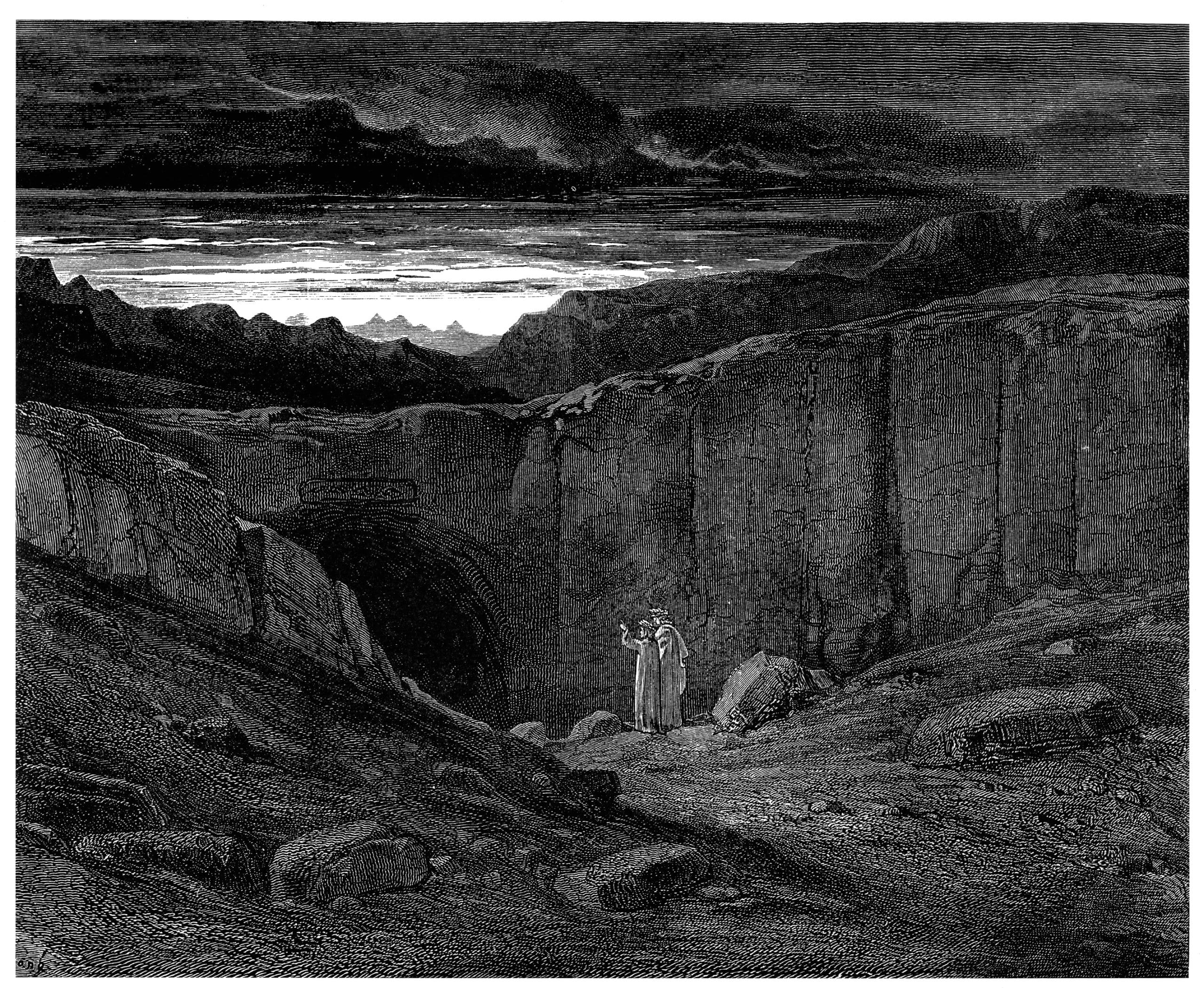






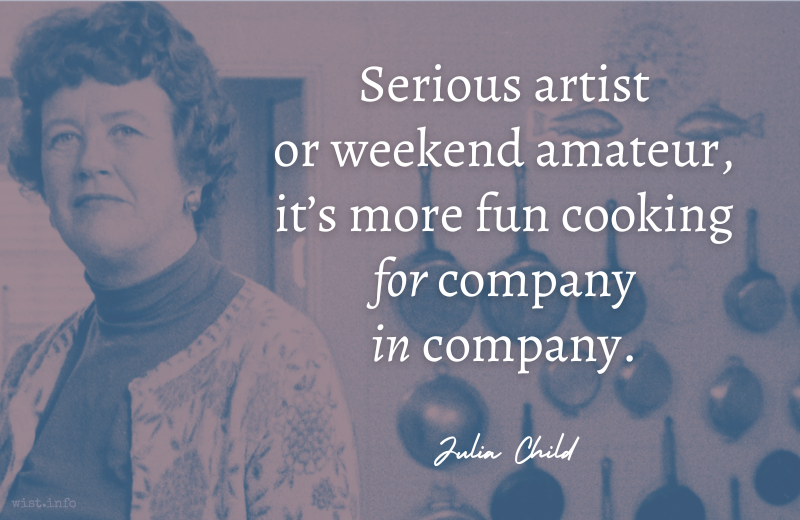





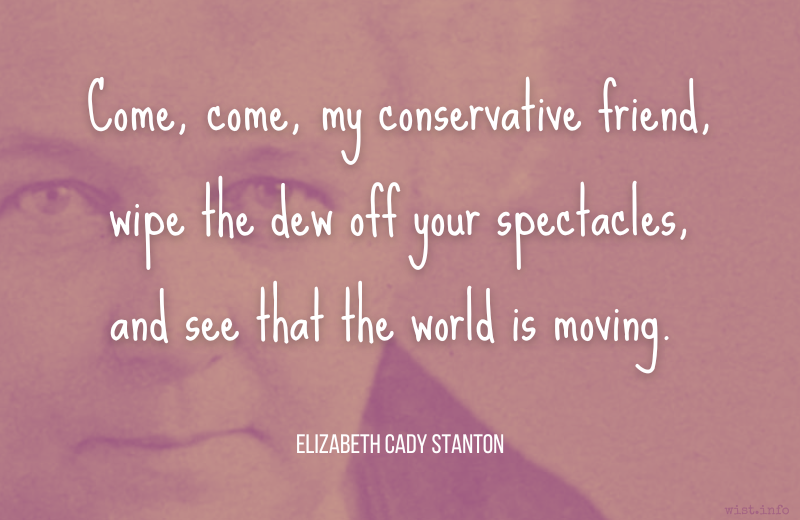






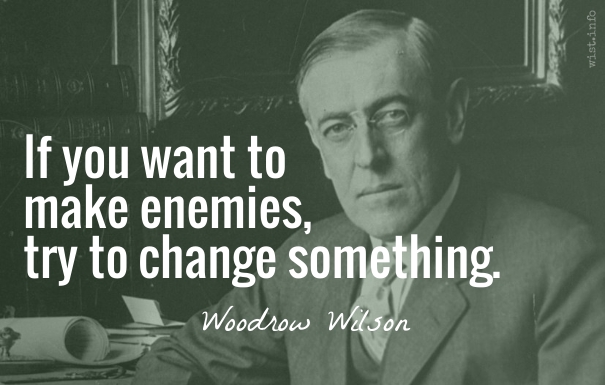 In 2013, I adopted for this WordPress blog a highly modified version of the “Twenty-Ten” theme. And that’s served me well for the past nine years.



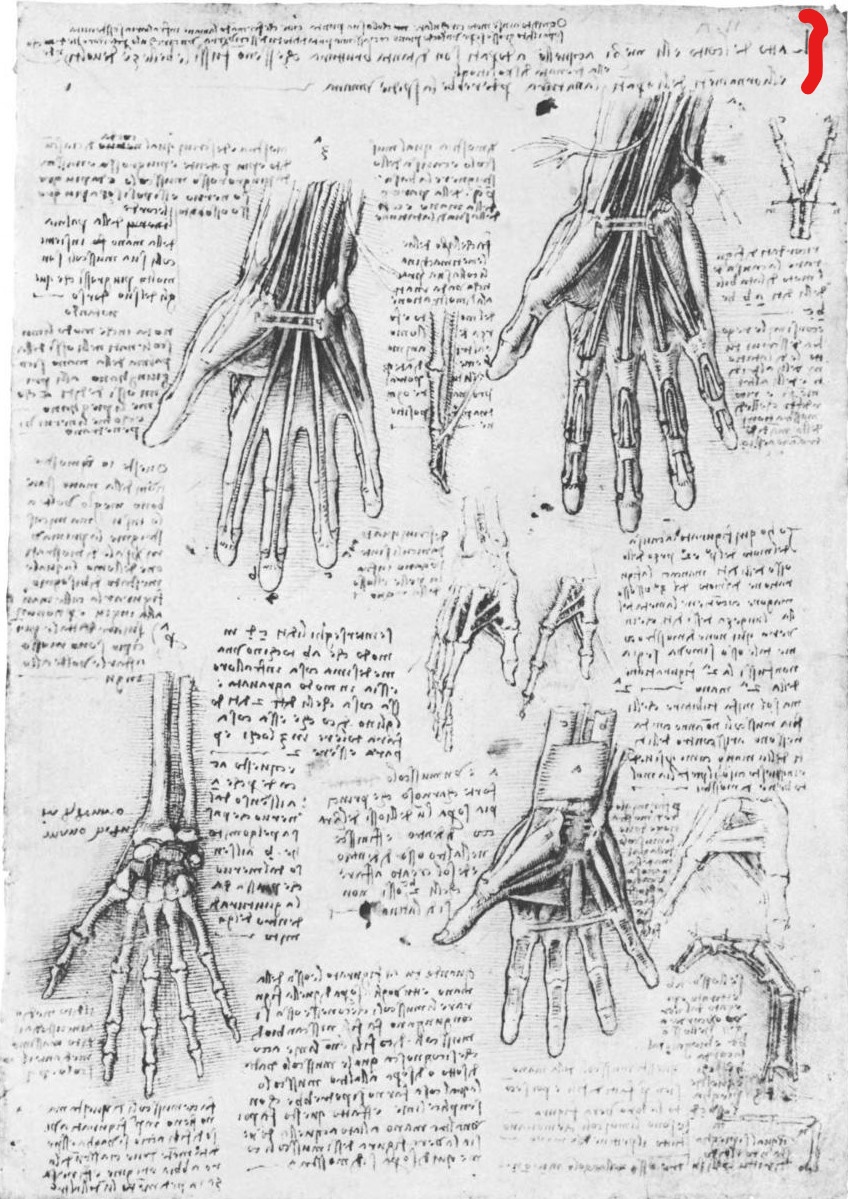



 I’m implementing a new theme here at WIST over the next day or so, which I’ll be fiddling with for a while. I appreciate your patience while that’s ongoing. If you observe something here that seems actually broken, please shoot me an email.