

I have lived a life. I’ve journeyed through
the course that Fortune charted for me. And now
I pass to the world below, my ghost in all its glory.[Vixi, et, quem dederat cursum Fortuna, peregi;
Et nunc magna mei sub terras ibit Imago.]Virgil (70–19 BC) Roman poet [b. Publius Vergilius Maro; also Vergil]
The Aeneid [Ænē̆is], Book 4, l. 653ff (4.653-654) [Dido] (29-19 BC) [tr. Fagles (2006)]
(Source)
Dido's deathbed statement.
(Source (Latin)). Other translations:I have
Liv'd, and perform'd that course my fortune gave,
And now the earth must my great shade seclude.
[tr. Ogilby (1649)]My fatal course is finish'd; and I go,
A glorious name, among the ghosts below.
[tr. Dryden (1697)]I have lived, and finished the race which fortune gave me. And now my ghost shall descent illustrious to the shades below.
[tr. Davidson/Buckley (1854)]My life is lived, and I have played
The part that Fortune gave,
And now I pass, a queenly shade,
Majestic to the grave.
[tr. Conington (1866)]I have lived,
And have achieved the course that fortune gave.
And now of me the queenly shade shall pass
Beneath the earth.
[tr. Cranch (1872), l. 855ff]I have lived and fulfilled Fortune's allotted course; and now shall I go a queenly phantom under the earth.
[tr. Mackail (1885)]I, I have lived, and down the way fate showed to me have passed;
And now a mighty shade of me shall go beneath the earth!
[tr. Morris (1900)]My life is lived; behold, the course assigned
By Fortune now is finished, and I go,
A shade majestic, to the world below.
[tr. Taylor (1907), st. 86, l 768ff]My life is done.
I have accomplished what my lot allowed;
and now my spirit to the world of death
in royal honor goes.
[tr. Williams (1910)]My life is done and I have finished the course that Fortune gave; and now in majesty my shade shall pass beneath the earth.
[tr. Fairclough (1916)]I have lived, I have run the course that fortune gave me,
And now my shade, a great one, will be going
Below the earth.
[tr. Humphries (1951)]I have lived, I have run to finish the course which fortune gave me:
And now, a queenly shade, I shall pass to the world below.
[tr. Day-Lewis (1952)]I have lived
and journeyed through the course assigned by fortune.
And now my Shade will pass, illustrious,
beneath the earth.
[tr. Mandelbaum (1971), l. 900ff]I have lived my life out to the very end
And passed the stages Fortune had appointed.
Now my tall shade goes to the under world.
[tr. Fitzgerald (1981), l. 907ff]I have lived my life and completed the course that Fortune has set before me, and now my great spirit will go beneath the earth.
[tr. West (1990)]I have lived, and I have completed the course that Fortune granted,
and now my noble spirit will pass beneath the earth.
[tr. Kline (2002)]I have lived, and I have completed the course
Assigned by Fortune. Now my mighty ghost
Goes beneath the earth.
[tr. Lombardo (2005)]I'm done with life; I've run the course Fate gave me.br> Now my noble ghost goes to the Underworld.
[tr. Bartsch (2021)]
KING OF FRANCE: For we are old, and on our quick’st decrees
Th’ inaudible and noiseless foot of time
Steals ere we can effect them.William Shakespeare (1564–1616) English dramatist and poet
All’s Well That Ends Well, Act 5, sc. 3, l. 48ff (5.3.48-50) (1602?)
(Source)

I like to see the Old Man now and then
And try not to be too uncivil.
It’s charming in a noble squire when
He speaks humanely with the very Devil.[Von Zeit zu Zeit seh ich den Alten gern,
Und hüte mich, mit ihm zu brechen.
Es ist gar hübsch von einem großen Herrn,
So menschlich mit dem Teufel selbst zu sprechen.]Johann Wolfgang von Goethe (1749–1832) German poet, statesman, scientist
Faust: a Tragedy [eine Tragödie], Part 1, sc. 3 “Prologue in Heaven,” l. 350ff [Mephistopheles] (1808-1829) [tr. Kaufmann (1961)]
(Source)
Some translations (and this site) include the Declaration, Prelude on the Stage, and Prologue in Heaven as individual scenes; others do not, leading to their Part 1 scenes being numbered three lower.
On his discussions with the Lord. (Source (German)). Other translations:I like to see the Old Man not infrequently,
And I forbear to break with Him or be uncivil;
It's very pretty in so great a Lord as He
To talk so like a man even with the Devil.
[tr. Priest (1808)]From time to time I visit the Old Fellow,
And I take care to keep on good terms with him.
Civil enough is this same God Almighty,
To talk so freely with the Devil himself.
[tr. Shelley (1815)]I like to see the Ancient One occasionally, and take care not to break with him. It is really civil in so great a Lord, to speak so kindly with the Devil himself.
[tr. Hayward (1831)]The ancient one I like sometimes to see,
And not to break with him am always civil;
'Tis courteous in so great a lord as he,
To speak so kindly even to the devil.
[tr. Swanwick (1850)]I like at times to exchange with him a word,
And take care not to break with him. 'Tis civil
In the old fellow and so great a Lord
To talk so kindly with the very devil.
[tr. Brooks (1868)]I like, at times, to hear The Ancient's word,
And have a care to be most civil:
It's really kind of such a noble Lord
So humanly to gossip with the Devil!
[tr. Taylor (1870)]From time to time the ancient gentleman
I see, and keep on the best terms I can.
In a great Lord ’tis surely wondrous civil
So face to face to hold talk with the devil.
[tr. Blackie (1880)]I like to see the Ancient now and then,
And shun a breach, for truly 'tis most civil
In such a mighty personage to deign
To chat so affably, e'en with the very Devil.
[tr. Latham (1908)]From time to time it's good to see the Old Man;
I must be careful not to break with him.
How decent of so great a personage
to be so human with the devil.
[tr. Salm (1962)]At times I don't mind seeing the old gent,
And try to keep relations smooth and level.
Say what you like, it's quite a compliment:
A swell like him so man-to-man with the Devil!
[tr. Arndt (1976)]I like to see him sometimes, and take care
Not to fall out with him. It's civil
Of the old fellow, such a grand seigneur,
To have these man-to-man talks with the Devil!
[tr. Luke (1987)]I like to see the Old Man now and then,
And take good care I don't fall out with him.
How very decent of a Lord Celestial
To talk man to man with the Devil of all people.
[tr. Greenberg (1992)]I like to drop in on him if I can,
Just to keep things between us on the level.
It's really decent of the Grand Old Man
To be so civil to the very Devil.
[tr. Williams (1999)]I like to hear the Old Man’s words, from time to time,
And take care, when I’m with him, not to spew.
It’s very nice when such a great Gentleman,
Chats with the devil, in ways so human, too!
[tr. Kline (2003)]
Unequal societies are not only the most violent; they are also the least productive.
James Gilligan (b. c. 1936) American psychiatrist and author
Preventing Violence, ch. 5 (2001)
(Source)

Democracies have no business running secret prisons. That’s what our enemies do. If we are in a battle for the hearts and minds of people around the world, as the administration says we are, I won’t feel very secure if the people around the world believe we are no different than our enemies. […] As Americans, we do believe our system offers a better way. But the only way to convince others of that is if we live by our values. Real security begins with remembering who we are. We gain nothing by adopting the methods of our enemies.
Bob Schieffer (b. 1937) American broadcast journalist
“Free Speech,” CBS Evening News (14 Sep 2006)
(Source)
The problem of censorship in television is not only a writer’s problem. What narrows his frame of reference must of necessity narrow the area of television entertainment available to the audience. When the television drama is forced to go around Robin Hood’s barn tying itself into verbal knots to evolve as stainlessly nonpartisan, whatever nonsense comes out as the replacement is the nonsense that an audience must live with on its television sets. Perhaps if some thoughtful people would write to sponsors, pleading for an adult airing of issues on a dramatic program, to counteract those cranks who hoist up the Stars and Bars whenever a play suggests a racial controversy, the sponsor or agency would realize that not to attack a controversial theme might be just as destructive as attacking it.
Rod Serling (1924–1975) American screenwriter, playwright, television producer, narrator
Patterns, Introduction (1957)
(Source)
I ne’er insulted the calamities
Of those who were unfortunate, because
I fear’d that I myself might also suffer.[τάς όυμφοράξ γαρ των κακώς πεπραγότων
οὐπώποϑ ϋβρίδ’, αυτὀξ ὀρρωδῶν παϑεῖν.]Euripides (485?-406? BC) Greek tragic dramatist
Andromeda [Ἀνδρομέδα], frag. 130 (TGF) (412 BC) [tr. Wodhull (1809)]
(Source)
Nauck frag. 130, Barnes frag. 53, Musgrave frag. 21. (Source (Greek)). Another translation:I never treated the troubles of the unfortunate insultingly,
through fear of suffering them myself.
[tr. Gibert (2004)]
Rich men’s houses are seldom beautiful, rarely comfortable, and never original. It is a constant source of surprise to people of moderate means to observe how little a big fortune contributes to Beauty.
Margot Asquith (1864–1945) British socialite, author, wit [Emma Margaret Asquith, Countess Oxford and Asquith; Margot Oxford; née Tennant]
Autobiography, Vol. 2, 5 May 1908 (1922)
(Source)

Tears are sometimes an inappropriate response to death. When a life has been lived completely honestly, completely successfully, or just completely, the correct response to death’s perfect punctuation mark is a smile.
Julie Burchill (b. 1959) English novelist, columnist, broadcaster
Quoted in The Independent (5 Dec 1989)

I, for example, do not like poems that resemble hay compressed into a geometrically perfect cube. I like it when the hay, unkempt, uncombed, with dry berries mixed in it, thrown together gaily and freely, bounces along atop some truck—and more, if there are some lovely and healthy lasses atop the hay—and better yet if the branches catch at the hay, and some of it tumbles to the road.
Yevgeny Yevtushenko (1933–2017) Russian poet, writer, film director, academic [Евге́ний Евтуше́нко, Evgenij Evtušenko]
“Yevtushenko: A Soviet Poet Turns to Movie Making,” New York Times (2 Feb 1986)
(Source)

For tho’ it is certainly more laudable, and a thing of greater moment, to be generous, constant, and magnanimous, than merely to be polite and well bred; yet we find, from daily experience, that sweetness of manners, a genteel carriage, and, polite address are frequently of more advantage to those who are so happy as to be possessed of them, than any greatness of soul or brightness of parts are to those who are adorned with those more shining talents.
[E come che l’esser liberale o constante o magnanimo sia per sé sanza alcun fallo più laudabil cosa e maggiore che non è l’essere avenente e costumato, non di meno forse che la dolcezza de’ costumi e la convenevolezza de’ modi e delle maniere e delle parole giovano non meno a’ possessori di esse che la grandezza dell’animo e la sicurezza altresì a’ loro possessori non fanno.]
Giovanni della Casa (1503–1556) Florentine poet, author, diplomat, bishop
Galateo: Or, A Treatise on Politeness and Delicacy of Manners [Il Galateo overo de’ costumi], ch. 1 (1558) [tr. Graves (1774)]
(Source)
(Source (Italian)). Other translations:And albeit Liberalitie, or magnanimitie, of themselves beare a greater praise, then, to be a well taught or manored man: yet perchaunce, the courteous behaviour and entertainement with good maners and words, helpe no lesse, him that hath them: then the high minde and courage, advaunceth him in whome they be.
[tr. Peterson (1576)]Although liberality, courage, or generosity are without doubt far greater and more praiseworthy things than charm and manners, none the less, pleasant habits and decorous manners and words are perhaps no less useful to those who have them than a noble spirit and self-assurance are to others.
[tr. Einsenbichler/Bartlett (1986)]

The things which we understand least are the quasars, but I don’t want to get into a technical discussion. But these are the most violent and most energetic objects in the universe, and they’re totally, still totally, mysterious, really. I mean, we know that they’re there, that’s all, and they’re not only there, they’re rather frequent; and nobody ever dreamed that they existed, until they were found. And even after they were found it took a long time before people took them seriously. Nature’s imagination is always richer than ours.
Freeman Dyson (1923–2020) English-American theoretical physicist, mathematician, futurist
“Freeman Dyson: In Praise of Diversity,” Interview on A Glorious Accident, VPRO (Netherlands) (30 Aug 2016)
(Source)
Even when it comes to learning, the good student contradicts his teacher and makes him more eager to explain and defend the truth. Challenge someone discreetly and his teaching will be more perfect.
[Y aun para el aprender es treta del discípulo contradecir al maestro, que se empeña con más conato en la declaración y fundamento de la verdad; de suerte que la impugnación moderada da ocasión a la enseñanza cumplida.]
Baltasar Gracián y Morales (1601–1658) Spanish Jesuit priest, writer, philosopher
The Art of Worldly Wisdom [Oráculo Manual y Arte de Prudencia], § 213 (1647) [tr. Maurer (1992)]
(Source)
(Source (Spanish)). Other translations:In matter of learning it is a cunning fetch in the Schollar to contradict his Master, inasmuch as it lays an obligation upon him, to labour to explain the truth with greater perspicuity and solidity.) So that moderate contradiction gives him that teaches occasion to teach thoroughly.
[Flesher ed. (1685)]Also in learning it is a subtle plan of the pupil to contradict the master, who thereupon takes pains to explain the truth more thoroughly and with more force, so that a moderate contradiction produces complete instruction.
[tr. Jacobs (1892)]A good trick on the party of the pupil is to bait his teacher, who thereby excites himself to greater effort in the declaration, and the foundations of this beliefs, whence it comes that well-moderated debate makes for most effective teaching.
[tr. Fischer (1937)]

It is a melancholy truth that a suppression of the press could not more compleatly deprive the nation of its benefits, than is done by its abandoned prostitution to falsehood. Nothing can now be believed which is seen in a newspaper. Truth itself becomes suspicious by being put into that polluted vehicle. […] I will add that the man who never looks into a newspaper is better informed than he who reads them; inasmuch as he who knows nothing is nearer to truth than he whose mind is filled with falsehoods & errors. He who reads nothing will still learn the great facts, and the details are all false.
Thomas Jefferson (1743–1826) American political philosopher, polymath, statesman, US President (1801–09)
Letter (1807-06-11) to John Norvell
(Source)
In the end, I saw Superman not as a superhero or even a science fiction character, but as a story of Everyman. We’re all Superman in our own adventures. We have our own Fortresses of Solitude we retreat to, with our own special collections of valued stuff, our own super-pets, our own Bottle Cities that we feel guilty for neglecting. We have our own peers and rivals and bizarre emotional or moral tangles to deal with.
Grant Morrison (b. 1960) Scottish comic book writer and playwright
“All Star Memories: Grant Morrison on All Star Superman, Part 1,” Interview with Zack Smith, Newsarama.com (21 Oct 2008)
(Source)

But a man can be physically courageous and morally craven.
Melvin B. Tolson (1898–1966) American poet, educator, columnist, politician
“Paul Robeson Rebels against Hollywood’s Dollars,” Caviar and Cabbage column, Washington Tribune (25 Mar 1939)
(Source)
Aper’s teetotal. So what? I commend
Sobriety in a butler, not a friend.[Siccus, sobrius est Aper; quid ad me?
Servum sic ego laudo, non amicum]Martial (AD c.39-c.103) Spanish Roman poet, satirist, epigrammatist [Marcus Valerius Martialis]
Epigrams [Epigrammata], Book 12, epigram 30 (12.30) (AD 101) [tr. Michie (1972)]
(Source)
"On Aper." (Source (Latin)). Other translations:Tom never drinks: that I should much commend
In Tom my coachman, but not Tom my friend.
[tr. Hay (1755)]Frugal and sober, I commend
In both, my servant; not my friend.
[tr. Elphinston (1782), 12.114]Ned is a sober fellow, they pretend --
Such would I have my coachman, not my friend.
[tr. Hoadley (fl. 18th C), §245]Aper is abstemious and sober. What is that to me? For such a quality I praise my slave, not my friend.
[tr. Bohn's Classical (1859)]"Now Aper is a sober man;
He never had a jag on."
Well, what of that? I wish my slaves,
Not friends, to hate a flagon.
[tr. Nixon (1911), "No Recommendation"]Aper is abstemious, sober: what is that to me? A slave I praise so, not a friend.
[tr. Ker (1919)]He's sober and abstemious? One commends
These qualities in slave, but not in friends.
[tr. Pott & Wright (1921)]You're always sober, never drunk.
Such temperance is fine
In servants and domestics, but
Not in a friend of mine.
[tr. Marcellino (1968)]Aper is dry and sober. What is that to me? I commend a slave so, not a friend.
[tr. Shackleton Bailey (1993)]He's a clean and sober fellow?
Well, what's that mean to me?
He doesn't seem potential friend,
More like an employee.
[tr. Ericsson (1995)]Aper is dry and sober. What good is that to me? It’s what I praise a slave for, not a friend!
[tr. @aleatorclassicus (2013)]So what if Aper's sober! I commend
abstinence in a slave, not in a friend.
[tr. McLean (2014)]
New lives, what do they mean in the end? A fresh set of little troubles, more solid perhaps than the old. People who talk of new lives believe there will be no new troubles.
Phyllis Bottome (1884–1963) British novelist and short story writer [mar. Phyllis Forbes Dennis]
Old Wine, ch. 18 (1925)

Between justice and respect there is this difference, that it is the part of justice not to injure; of respect, not to offend. In this the force of propriety is extremely clear.
[Est autem, quod differat in hominum ratione habenda inter iustitiam et verecundiam. Iustitiae partes sunt non violare homines, verecundiae non offendere; in quo maxime vis perspicitur decori.]
Marcus Tullius Cicero (106–43 BC) Roman orator, statesman, philosopher
De Officiis [On Duties; On Moral Duty; The Offices], Book 1, ch. 28 (1.28) / sec. 99 (44 BC) [tr. McCartney (1798)]
(Source)
Verecundia is usually translated as "modesty," but Cicero is using a more complex sense here, leading to a variety of translations. Peabody translates it as "courtesy" that is "part of or a consequence of modesty." Edmonds (at length) considers the term untranslatable here, "an inward abhorrence of moral turpitude, through which the conscience is awed, and may be said to blush."
(Source (Latin)). Other translations:But here we must observe, that there is a great deal of difference between that which justice, and that which this modesty, respect, or reverence demands, in relation to other people. It is the duty of justice, not to injure or wrong any man; of respect, or reverence, not to do anything that may offend or displease him; wherein more especially the nature of that decorum we are speaking of consists.
[tr. Cockman (1699)]But, in our estimate of human life, we are to make a difference between justice and moral susceptibility. The dictate of justice is to do no wrong; that of moral susceptibility is to give no offense to mankind, and in this the force of the graceful is most perceptible.
[tr. Edmonds (1865)]But in the treatment of men there is a difference between justice and courtesy. It is the part of justice not to injure men; of courtesy, not to give them offence, and it is in this last that the influence of becomingness is most clearly seen.
[tr. Peabody (1883)]In our social relations there is a difference between justice and sympathy. Not to wrong our fellow-men is the function of justice: that of sympathy is not to wound their feelings; herein the power of decorum is most conspicuous.
[tr. Gardiner (1899)]There is, too, a difference between justice and considerateness in one's relations to one's fellow-men. It is the function of justice not to do wrong to one's fellow-men; of considerateness, not to wound their feelings; and in this the essence of propriety is best seen.
[tr. Miller (1913)]Moreover, in maintaining distinctions among men there is a degree of difference between justice and decent respect. The duty of justice is not to do violence to men. The duty of decent respect is not to insult them; this latter especially reveals the essence of decorum.
[tr. Edinger (1974)]
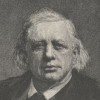
A conservative young man has wound up his life before it was unreeled. We expect old men to be conservative, but when a nation’s young men are conservatives, its funeral bell is already rung.
Henry Ward Beecher (1813–1887) American clergyman and orator
Life Thoughts (1858) [ed. Proctor]
(Source)
This was more succinctly summarized in Proverbs from Plymouth Pulpit, "Political" (1887) [ed. William Drysdale]:When a nation’s young men are conservatives, its funeral bell is already rung.
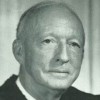
The interest of the people as a whole [lies] in being able to join organizations, advocate causes, and make political “mistakes” without later being subjected to governmental penalties for having dared to think for themselves.
Hugo Black (1886–1971) American politician and jurist; US Supreme Court Justice (1937–71)
Barenblatt v. United States, 360 U.S. 109, 144 (1959) [dissent]
(Source)
And you, my Tyrians,
harry with hatred all his line, his race to come:
make that offering to my ashes, send it down below.
No love between our peoples, ever, no pacts of peace!
Come rising up from my bones, you avenger still unknown,
to stalk those Trojan settlers, hunt with fire and iron,
now or in time to come, whenever the power is yours.
Shore clash with shore, sea against sea, and sword
against sword — this is my curse — war between all
our peoples, all their children, endless war![Tum vos, o Tyrii, stirpem et genus omne futurum
exercete odiis, cinerique haec mittite nostro
munera. Nullus amor populis, nec foedera sunto.
Exoriare aliquis nostris ex ossibus ultor,
qui face Dardanios ferroque sequare colonos,
nunc, olim, quocumque dabunt se tempore vires.
Litora litoribus contraria, fluctibus undas
imprecor, arma armis; pugnent ipsique nepotesque.]Virgil (70–19 BC) Roman poet [b. Publius Vergilius Maro; also Vergil]
The Aeneid [Ænē̆is], Book 4, l. 622ff (4.622-629) [Dido] (29-19 BC) [tr. Fagles (2006), l. 775ff]
(Source)
Dido's deathbed curse, "foretelling" the Punic Wars between her Carthage and Aeneas' descendants in Rome.
(Source (Latin)). Other translations:O Tyrians, strive this Nation to supplant
With restless wars this to my ashes grant:
Never joyn leagues, contract no amities,
And from our bones let some revenger rise,
Who Trojans may pursue with fire, and sword,
Ah, may when ever time shall strength afford,
Shores shores oppose, seas seas, our stocks debate
With arms gainst arms maintaine, I imprecate.
[tr. Ogilby (1649)]And you, my Tyrians, ev'ry curse fulfil.
Perpetual hate and mortal wars proclaim,
Against the prince, the people, and the name.
These grateful off'rings on my grave bestow;
Nor league, nor love, the hostile nations know!
Now, and from hence, in ev'ry future age,
When rage excites your arms, and strength supplies the rage
Rise some avenger of our Libyan blood,
With fire and sword pursue the perjur'd brood;
Our arms, our seas, our shores, oppos'd to theirs;
And the same hate descend on all our heirs!
[tr. Dryden (1697)]And, Tyrians, you through time to come
His seed with deathless hatred chase:
Be that your gift to Dido's tomb:
No love, no league 'twixt race and race.
Rise from my ashes, scourge of crime,
Born to pursue the Dardan horde
To-day, to-morrow, through all time,
Oft as our hands can wield the sword:
Fight shore with shore, fight sea with sea,
Fight all that are or e'er shall be!
[tr. Conington (1866)]And ye, O Tyrians, follow with your hate
His seed, and all his future race! Be this
Your offering on my tomb! No love, no league
Between you ! Oh, may some avenger rise
From out my ashes, who with fire and sword
Shall chase these Dardan settlers, now, and in
The coming time, wherever strength is given;
Shores with shores fighting, waves with waves, and
arms With arms, -- they and their last posterity
[tr. Cranch (1872)]And you, O Tyrians, hunt his seed with your hatred for all ages to come; send this guerdon to our ashes. Let no kindness nor truce be between the nations. Arise out of our dust, O unnamed avenger, to pursue the Dardanian settlement with firebrand and steel. Now, then, whensoever strength shall be given, I invoke the enmity of shore to shore, wave to water, sword to sword; let their battles go down to their children's children.
[tr. Mackail (1885)]And ye, O Tyrians, 'gainst his race that is, and is to be,
Feed full your hate! When I am dead send down this gift to me:
No love betwixt the peoples twain, no troth for anything!
And thou, Avenger of my wrongs, from my dead bones outspring,
To bear the fire and the sword o'er Dardan-peopled earth
Now or hereafter; whensoe'er the day brings might to birth.
I pray the shore against the shore, the sea against the sea,
The sword 'gainst sword -- fight ye that are, and ye that are to be!
[tr. Morris (1900)]Them and their children's children evermore
Ye Tyrians, with immortal hate outwear.
This gift -- 'twill please me best -- for Dido's shade prepare.
This heritage be yours; no truce nor trust
'Twixt theirs and ours, no union or accord
Arise, unknown Avenger from our dust;
With fire and steel upon the Dardan horde
Mete out the measure of their crimes' reward.
To-day, to-morrow, for eternity
Fight, oft as ye are able -- sword with sword,
Shore with opposing shore, and sea with sea;
Fight, Tyrians, all that are, and all that e'er shall be!
[tr. Taylor (1907)], st. 81-82, l. 720ff]And -- O ye Tyrians! I
sting with your hatred all his seed and tribe
forevermore. This is the offering
my ashes ask. Betwixt our nations twain,
No love! No truce or amity! Arise,
Out of my dust, unknown Avenger, rise!
To harry and lay waste with sword and flame
those Dardan settlers, and to vex them sore,
to-day, to-morrow, and as long as power
is thine to use! My dying curse arrays
shore against shore and the opposing seas
in shock of arms with arms. May living foes
pass down from sire to son insatiate war
[tr. Williams (1910)]Then do ye, O Tyrians, pursue with hate his whole stock and the race to come, and to my dust offer this tribute! Let no love nor league be between the nations. Arise from my ashes, unknown avenger! to chase with fire and sword the Dardan settlers, to-day, hereafter, whenever strength be given! May shore with shore clash, I pray, waters with waters, arms with arms; may they have war, they and their children's children!
[tr. Fairclough (1916)]And you, O Tyrians, hate, and hate forever
The Trojan stock. Offer my dust this homage.
No love, no peace, between these nations, ever!
Rise from my bones, O great unknown avenger,
Hunt them with fire and sword, the Dardan settlers,
Now, then, here, there, wherever strength is given.
Shore against shore, wave against wave, and war,
War after war, for all the generations.
[tr. Humphries (1951)]Let you, my Tyrians, sharpen your hatred upon his children
And all their seed for ever: send this as a present to
My ghost. Between my people and his, no love, no alliance!
Rise up from my dead bones, avenger! Rise up, one
To hound the Trojan settlers with fire and steel remorselessly,
Now, some day, whenever the strength for it shall be granted!
Shore to shore, sea to sea, weapon to weapon opposed --
I call down a feud between them and us to the last generation!
[tr. Day-Lewis (1952)]Then, Tyrians, hunt down
with hatred all his sons and race to come;
send this as offering unto my ashes.
Do not let love or treaty tie our peoples.
May an avenger rise up from my bones,
one who will track with firebrand and sword
the Dardan settlers, now and in the future,
at any time that ways present themselves.
I call your shores to war against their shores,
your waves against their waves, arms with their arms.
Let them and their sons' sons learn what is war.
[tr. Mandelbaum (1971)]Then, O my Tyrians, besiege with hate
His progeny and all his race to come:
Make this your offering to my dust. No love,
No pact must be between our peoples; No,
But rise up from my bones, avenging spirit!
Harry with fire and sword the Dardan countrymen
Now, or hereafter, at whatever time
The strength will be afforded. Coast with coast
In conflict, I implore, and sea with sea,
And arms with arms: may they contend in war,
Themselves and all the children of their children!
[tr. Fitzgerald (1981), l. 865ff]As for you, my Tyrians, you must pursue with hatred the whole line of his descendants in time to come. Make that your offering to my shade. Let there be no love between our peoples and no treaties. Arise from my dead bones, O my unknown avenger, and harry the race of Dardanus with fire and sword wherever they may settle, now and in the future, whenever our strength allows it. I pray that we may stand opposed, shore against shore, sea against sea, and sword against sword. Let there be war between the nations and between their sons forever.
[tr. West (1990)]Then, O Tyrians, pursue my hatred against his whole line
and the race to come, and offer it as a tribute to my ashes.
Let there be no love or treaties between our peoples.
Rise, some unknown avenger, from my dust, who will pursue
the Trojan colonists with fire and sword, now, or in time
to come, whenever the strength is granted him.
I pray that shore be opposed to shore, water to wave,
weapon to weapon: let them fight, them and their descendants.
[tr. Kline (2002)]And you, my Tyrians, must persecute his line
Throughout the generations -- this your tribute
To Dido's ashes. May treaties never unite
These nations, may no love ever be lost between them
And from my bones may some avenger rise up
To harry the Trojans with fire and sword,
Now and whenever we have the power.
May coast oppose coast, waves batter waves,
Arms clash with arms, may they be ever at war,
They themselves and their children forever.
[tr. Lombardo (2005)]Tyrians, you must torment his sons
and all his future race. Make this offering to my ashes.
Let there be no love or treaties between us.
Rise from my bones, unknown avenger,
hunt the Dardan colonists with flames and swords,
now or any times there's strength to strike!
My curse is this: our lands, our seas, our swords will clash.
The Trojans will fight wars for generations.
[tr. Bartsch (2021)]
HELENA: All’s well that ends well. Still the fine’s the crown.
Whate’er the course, the end is the renown.William Shakespeare (1564–1616) English dramatist and poet
All’s Well That Ends Well, Act 4, sc. 4, l. 39ff (4.4.39-40) (1602?)
(Source)
Self-control seldom leads astray.
[以約、失之者鮮矣。]
Confucius (c. 551- c. 479 BC) Chinese philosopher, sage, politician [孔夫子 (Kǒng Fūzǐ, K'ung Fu-tzu, K'ung Fu Tse), 孔子 (Kǒngzǐ, Chungni), 孔丘 (Kǒng Qiū, K'ung Ch'iu)]
The Analects [論語, 论语, Lúnyǔ], Book 4, verse 23 (4.23) (6th C. BC – AD 3rd C.) [tr. Leys (1997)]
(Source)
(Source (Chinese)). Other translations:The cautious seldom err.
[tr. Legge (1861)]Those who keep within restraints are seldom losers.
[tr. Jennings (1895)]He who wants little seldom goes wrong.
[tr. Ku Hung-Ming (1898); alternate: "He who confines his sphere ..."]The self-restrained seldom err.
[tr. Soothill (1910)]Self-restraint avoids error.
[tr. Soothill (1910), alternate]Those who have gone astray through self-restraint are few.
[tr. Soothill (1910), alternate]Those who consume their own smoke seldom get lost. The concise seldom err.
[tr. Pound (1933)]Those who err on the side of strictness are few indeed!
[tr. Waley (1938)]When strict with oneself one rarely fails.
[tr. Ware (1950)]It is rare for a man to miss the mark through holding on to essentials.
[tr. Lau (1979)]There are few indeed who fail in something through exercising restraint.
[tr. Dawson (1993)]Those who err through self-restraint are rare indeed.
[tr. Huang (1997)]The persons who lose because of restraining themselves, are few.
[tr. Cai/Yu (1998), #89]It is rare indeed for someone to go wrong due to personal restraint. [tr. Ames/Rosemont (1998)]Those who err on the side of strictness are few.
[tr. Brooks/Brooks (1998)]To lose by caution is rare indeed.
[tr. Hinton (1998)]Very few go astray who comport themselves with restraint.
[tr. Slingerland (2003)]Those who go wrong by holding back are few.
[tr. Watson (2007)]Few are those who make mistakes by knowing to hold back.
[tr. Annping Chin (2014)]If you practice self-control according to the rules of Li, you will make fewer mistakes.
[tr. Li (2020)]

If I may be his guide, you’ll lose him yet;
I’ll subtly lead him my way, if you’ll let
Me do so; shall we have a bet?[Was wettet Ihr? den sollt Ihr noch verlieren!
Wenn Ihr mir die Erlaubnis gebt,
Ihn meine Straße sacht zu führen.]Johann Wolfgang von Goethe (1749–1832) German poet, statesman, scientist
Faust: a Tragedy [eine Tragödie], Part 1, sc. 3 “Prologue in Heaven,” l. 320ff [Mephistopheles] (1808-1829) [tr. Luke (1987)]
(Source)
Mephisto to the Lord, on tempting His servant, Faust.
Some translations (and this site) include the Declaration, Prelude on the Stage, and Prologue in Heaven as individual scenes; others do not, leading to their Part 1 scenes being numbered three lower.
(Source (German)). Other translations:What will you wager? Him you yet shall lose,
If you will give me your permission
To lead him gently on the path I choose.
[tr. Priest (1808)]What will you bet? -- now I am sure of winning --
Only, observe you give me full permission
To lead him softly on my path.
[tr. Shelley (1815)]What will you wager? you shall lose him yet, if you give me leave to guide him quietly my own way.
[tr. Hayward (1831)]What wilt thou wager? Him thou yet shall lose,
If leave to me thou wilt but give,
Gently to lead him as I choose!
[tr. Swanwick (1850)]What will you bet? You'll surely lose your wager!
If you will give me leave henceforth,
To lead him softly on, like an old stager.
[tr. Brooks (1868)]What will you bet? There's still a chance to gain him,
If unto me full leave you give,
Gently upon my road to train him!
[tr. Taylor (1870)]What wager you? you yet shall lose that soul!
Only give me full license, and you’ll see
How I shall lead him softly to my goal.
[tr. Blackie (1880)]What will you wager? Give me but permission
To lead him gently on my way,
I'll win him from you to perdition.
[tr. Latham (1908)]What will you bet? You'll lose him yet to me,
If you will graciously connive
That I may lead him carefully.
[tr. Kaufmann (1961)]What will you bet? You'll lose him in the end, if you'll just give me your permission to lead him gently down my street.
[tr. Salm (1962)]You'll lose him yet! I offer bet and tally,
Provided that your Honor gives
Me leave to lead him gently up my alley!
[tr. Arndt (1976)]Would you care to bet on that? You'll lose, I tell you,
If you'll give me leave to lead the fellow
Gently down my broad, my primrose path.
[tr. Greenberg (1992)]What would you wager? Will you challenge me
To win him from you? Give me your permission
To lead him down my path to his perdition?
[tr. Williams (1999)]What do you wager? I might win him yet!
If you give me your permission first,
I’ll lead him gently on the road I set.
[tr. Kline (2003)]
In short, the contradiction in the old defense of class stratification is that it defends leisure for the leisure class, but not for the underclass. With reference to the underclass, leisure is said to destroy the incentive to work, leads to slothfulness and self-indulgence, and retards cognitive and moral development. When applied to the leisure class, the concept evokes an image of Plato and Aristotle, whose leisure was based on slave labor, creating the intellectual foundations of Western civilization; or patrician slave-owners like Washington and Jefferson laying the foundations of American civilization; or creative aristocrats like Count Leo Tolstoy or Bertrand, Earl Russell; or, even closer to home, of our own sons and daughters (or of ourselves, when we were young adults) being freed from the stultifying tasks of earning a living until well into our adult years so that we could study in expensive universities to gain specialized knowledge and skills.
James Gilligan (b. c. 1936) American psychiatrist and author
Preventing Violence, ch. 5 (2001)
(Source)
Democracy has no place for the kind of justice implied in an eye for an eye and a tooth for a tooth. Democracy is a system for the resolution of conflict, not for vengeance. Simple black-white notions of right and wrong do not fit into democratic politics. Political controversies result from the fact that the issues are complex, and men may properly have differences of opinion about them. The most terrible of all over-simplifications is the notion that politics is a contest between good people and bad people.
E. E. Schattschneider (1892–1971) American political scientist [Elmer Eric Schattschneider]
Two Hundred Million Americans in Search of a Government (1969)
(Source)
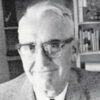
The gifts and the lessons my father left me will last forever: Never take yourself too seriously, never miss a chance to laugh long and hard, speak out about political and social issues you believe in, use the written word as often as you can to make yourself and the world a better place, and love your children with all you’ve got.
Rod Serling (1924–1975) American screenwriter, playwright, television producer, narrator
Paraphrase of Rod Serling in Anne Serling, As I Knew Him: My Dad, Rod Serling, Epilogue (2013)
(Source)
Cry with me;
for sharing tears with others is relief in hardship.[συνάλγησον, ὡς ὁ κάμνων
δακρύων μεταδοὺς ἔχει
χουφότητα μόχϑων.]Euripides (485?-406? BC) Greek tragic dramatist
Andromeda [Ανδρομέδα], frag. 119 (TGF) (412 BC)
(Source)
Nauck frag. 119, Barnes frag. 51, Musgrave frag. 22. (Source (Greek)). Other translation.Come, let us weep together; for the unhappy
Find social tears their poignant griefs assuage.
[tr. Wodhull (1809)]
If the mind is to emerge unscathed from this relentless struggle with the unforeseen, two qualities are indispensable: first, an intellect that, even in the darkest hour, retains some glimmerings of the inner light which leads to truth; and second, the courage to follow this faint light wherever it may lead.
[So sind ihm zwei Eigenschaften unentbehrlich: einmal ein Verstand, der auch in dieser gesteigerten Dunkelheit nicht ohne einige Spuren des inneren Lichts ist, die ihn zur Wahrheit führen, und dann Mut, diesem schwachen Lichte zu folgen.]
Karl von Clausewitz (1780–1831) Prussian soldier, historian, military theorist
On War [Vom Kriege], Book 1, ch. 3 “On Military Genius [Der Kriegerische Genius]” (1.3) (1832) [tr. Howard & Paret (1976)]
(Source)
(Source (German)). Other translations:Now, if it is to get safely through this perpetual conflict with the unexpected, two qualities are indispensable: in the first place an understanding which, even in the midst of this intense obscurity, is not without some traces of inner light, which lead to the truth, and then the courage to follow this faint light.
[tr. Graham (1873)]Now if it is to get safely through this continual conflict with the unexpected, two qualities are indispensable: in the first place, an intellect which even in the midst of this intensified obscurity is not without some traces of inner light which lead to the truth, and next, courage to follow this faint light.
[tr. Jolles (1943)]

When a poet is being a poet — that is, when he is writing or thinking about writing — he cannot be concerned with anything but the making of a poem. If the poem is to turn out well, the poet cannot have thought of whether it will be saleable, or of what its effect on the world should be; he cannot think of whether it will bring him honor, or advance a cause, or comfort someone in sorrow. All such considerations, whether silly or generous, would be merely intrusive; for, psychologically speaking, the end of writing is the poem itself.
Richard Wilbur (1921–2017) American poet, literary translator
Acceptance Speech, National Book Award (1957)
But heard are the voices,
Heard are the sages,
The Worlds and the Ages:
“Choose well: your choice is
Brief, and yet endless.”[Doch rufen von drüben
Die Stimmen der Geister
Die Stimmen der Meister:
Bersäumt nich zu üben
Die Kräfte des Guten.]Johann Wolfgang von Goethe (1749–1832) German poet, statesman, scientist
“Symbolum” (1815) [tr. Carlyle (1843)]
(Source)
(Source (German)).
Carlyle's loose translation first appears in Past and Present, Book 2, ch. 17 "The Beginnings" (1843), then is expanded in a speech at the University of Edinburgh (2 Apr 1866), reprinted (with Goethe's original) in On the Choice of Books (1877).
"Choose well: your choice is brief and yet endless," is sometimes attributed to Ella Winter. She references it in an anecdote in And Not to Yield: An Autobiography (1963).
Into a dancer you have grown,
From a seed somebody else has thrown.
Go on ahead and throw some seeds of your own,
And somewhere between the time you arrive and the time you go,
May lie a reason you were alive but you’ll never know.Jackson Browne (b. 1948) American musician, songwriter, political activist
“For a Dancer” (1974)
(Source)
Speaking for myself, I could never pray to be delivered from sudden death. It is how you live, and not how you die that counts, and sudden deaths are only sad for those who are left. It is not dying, but living, that is a preparation for Death.
Margot Asquith (1864–1945) British socialite, author, wit [Emma Margaret Asquith, Countess Oxford and Asquith; Margot Oxford; née Tennant]
More Memories, ch. 11 (1933)
(Source)
In any man who dies there dies with him,
his first snow and kiss and fight.[И если умирает человек,
с ним умирает первый его снег,
и первый поцелуй, и первый бой…]Yevgeny Yevtushenko (1933–2017) Russian poet, writer, film director, academic [Евге́ний Евтуше́нко, Evgenij Evtušenko]
“People” (1961), l. 12ff, Selected Poems (1962)
(Source)
There is an enormous variety of things we’ve discovered that we never dreamed of, like, for example, black holes, pulsars, quasars, all these unbelievably active goings-on in the universe. Which in Aristotle’s time the universe, the sky, was supposed to be quiescent, it was supposed to be perfect and peaceful, and nothing ever happened in the celestial sphere; and that remained true, actually, throughout all of the revolutions. It remained the general view of astronomers right through Copernicus, and Galileo, and Newton, and everybody else, still, the universe looked very quiescent — until just the last thirty years, and now we know it’s not like that at all. In fact the universe is full of violent events, and fantastic, strong gravitational fields, and collapsed objects, and huge outpourings of energy. All these things were discovered in the last thirty years.
Freeman Dyson (1923–2020) English-American theoretical physicist, mathematician, futurist
“Freeman Dyson: In Praise of Diversity,” Interview on A Glorious Accident, VPRO (Netherlands) (30 Aug 2016)
(Source)
You ought to regulate your manner of behaviour towards others, not according to your own humour, but agreeably to the pleasure and inclination of those with whom you converse.
[Il che acciò che tu più agevolmente apprenda di fare, dèi sapere che a te convien temperare et ordinare i tuoi modi non secondo il tuo arbitrio, ma secondo il piacer di coloro co’ quali tu usi, et a quello indirizzargli.]
Giovanni della Casa (1503–1556) Florentine poet, author, diplomat, bishop
Galateo: Or, A Treatise on Politeness and Delicacy of Manners [Il Galateo overo de’ costumi], ch. 2 (1558) [tr. Graves (1774)]
(Source)
(Source (Italian)). Other translations:It behooves thee, to frame and order thy maners and doings, not according to thine owne minde and fashion: but to please those, with whome thou livest, and after that sort direct thy doings.
[tr. Peterson (1576)]You must know that it will be to your advantage to temper and adapt your manners not according to your own choices but according to the pleasure of those with whom you are dealing and act accordingly.
[tr. Einsenbichler/Bartlett (1986)]
Our life gets as complicated as a comedy as it goes on, but the complications get gradually resolved: see that the curtain comes down on a good denouement.
[Vase empeñando nuestra vida como en comedia, al fin viene a desenredarse. Atención, pues, al acabar bien.]
Baltasar Gracián y Morales (1601–1658) Spanish Jesuit priest, writer, philosopher
The Art of Worldly Wisdom [Oráculo Manual y Arte de Prudencia], § 211 (1647) [tr. Jacobs (1892)]
(Source)
(Source (Spanish)). Other translations:Our life is acted like a Play. The Catastrophy is in the last Act. The chief part then is, to end it well.
[Flesher ed. (1685)]Our life becomes more complicated as we go along, like a comedy, but toward the end it becomes simpler; keep in mind, therefore, the happy ending.
[tr. Fischer (1937)]Our lives fold and unfold like theater, so be careful to end well.
[tr. Maurer (1992)]
But our machines have now been running for 70. or 80. years, and we must expect that, worn as they are, here a pivot, there a wheel, now a pinion, next a spring, will be giving way: and however we may tinker them up for awhile, all will at length surcease motion. Our watches, with works of brass and steel, wear out within that period.
Thomas Jefferson (1743–1826) American political philosopher, polymath, statesman, US President (1801–09)
Letter (1814-07-05) to John Adams
(Source)
Jefferson (and Adams) lived another 12 years, both dying on 4 July 1826.
This is a purely a personal bias but the desire to compel fantasy worlds to conform to the allegedly superior rules of grim reality can feel to me like a form of memetic colonialism I’ve generally found distasteful ….
Grant Morrison (b. 1960) Scottish comic book writer and playwright
“SUPERMAN and THE AUTHORITY annotations Pt 2,” blog entry (16 Feb 2022)
(Source)
He wishes that he, too, had a wound, a red badge of courage.
Themison has no wife — and never missed her.
Fabullus, you ask why? He has a sister.[Quare non habeat, Fabulle, quaeris
Uxorem Themison? Habet sororem.]Martial (AD c.39-c.103) Spanish Roman poet, satirist, epigrammatist [Marcus Valerius Martialis]
Epigrams [Epigrammata], Book 12, epigram 20 (12.20) (AD 101) [tr. McLean (2014)]
(Source)
"To Fabullus." Both Ker and Shackleton Bailey explicitly note that habet does, in fact, have a secondary meaning of "has sex with." (Source (Latin)). Other translations:You lately were inquiring, why Silvester
Has not yet got a wife? -- He has a sister.
[tr. Hay (1755)]Why Themison has not a wife, nor e'er missed her,
Fabullus, you ask? Honest Them has a sister.
[tr. Elphinston (1782)]Do you ask, Fabullus, why Themison has not a wife? He has a sister.
[tr. Bohn's Classical (1859)]Do you ask, Fabullus, why Themison has not got a wife? He has a sister.
[tr. Ker (1919)]You wonder how he lives unmarried? Cease
To marvel, for his Reverence has a niece.
[tr. Pott & Wright (1921), "The Alternative"]Do you ask, dear reader, why Themison
Has no wife? Why, hell!
The reason's rather obvious:
His sister does as well!
[tr. Marcellino (1968)]Brother never
had a wife
he had sister
all his life.
[tr. Goertz (1971)]Fabullus, you ask why Themison doesn't have a wife. He has a sister.
[tr. Shackleton Bailey (1993)]Why no wife? He quickly concedes
His sister takes care of all his needs.
[tr. Ericsson (1995)]Of course we know he'll never wed.
What? Put his sister out of bed?
[tr. Wills (2007)]He doesn't need a wife
His sister is enough
[tr. Kennelly (2008), "Enough"]You want to know, Fabullus, why Themison doesn’t have a wife. He has a sister.
[tr. @aleatorclassicus (2010)]Fabullus, do you want to know why Mr.
Themison has no wife? He has a sister.
[tr. Powell]
Man feels the need to rake leaves, clean up the summer’s remnants, proclaim his tenancy by making things neat and tidy. Nature doesn’t bother. The tree thrives on its own trash and the see sprouts in the parent plant’s midden heap. Each new season grows from the leftovers from the past. That is the essence of change, and change is the basic law. Nature hasn’t time to be neat and tidy.
But of all injustice, theirs is certainly of the deepest die, who make it their business to appear honest men, even whilst they are practising the greatest of villainies.
[Totius autem iniustitiae nulla capitalior quam eorum, qui tum, cum maxime fallunt, id agunt, ut viri boni esse videantur.]
Marcus Tullius Cicero (106–43 BC) Roman orator, statesman, philosopher
De Officiis [On Duties; On Moral Duty; The Offices], Book 1, ch. 13 (1.13) / sec. 41 (44 BC) [tr. Cockman (1699)]
(Source)
(Source (Latin)). Other translations:No act of injustice is more pernicious than theirs, who while they are attempting the greatest deceit, labor to appear good men.
[tr. McCartney (1798)]But in the whole system of villainy, none is more capital than that of the men, who, when they most deceive, so manage as that they may seem to be virtuous men.
[tr. Edmonds (1865)]But of all forms of injustice, none is more heinous than that of the men who, while they practise fraud to the utmost of their ability, do it in such a way that they appear to be good men.
[tr. Peabody (1883)]The most criminal injustice is that of the hypocrite who hides an act of treachery under the cloak of virtue.
[tr. Gardiner (1899)]No iniquity is more deadly than that of those who, when they are most at fault, so behave as to seem men of integrity.
[ed. Harbottle (1906)]But of all forms of injustice, none is more flagrant than that of the hypocrite who, at the very moment when he is most false, makes it his business to appear virtuous.
[tr. Miller (1913)]Taking all forms of injustice into account, none is more deadly than that practiced by people who act as if they are good men when they are being most treacherous.
[tr. Edinger (1974)]
And the host laughed and wept, and in the midst of their merriment and tears the clear voice of the minstrel rose like silver and gold, and all men were hushed. And he sang to them, now in the Elven-tongue, now in the speech of the West, until their hearts, wounded with sweet words, overflowed, and their joy was like swords, and they passed in thought out to regions where pain and delight flow together and tears are the very wine of blessedness.
J.R.R. Tolkien (1892–1973) English writer, fabulist, philologist, academic [John Ronald Reuel Tolkien]
The Lord of the Rings, Vol. 3: The Return of the King, Book 6, ch. 4 “The Field of Cormallen” (1955)
(Source)
There is a strong conservative instinct in the average man or woman, born of the hereditary fear of life, that prompts them to cling to old standards, or, if too intelligent to look inhospitably upon progress, to move very slowly. Both types are the brakes and wheelhorses necessary to a stable civilization, but history, even current history in the newspapers, would be dull reading if there were no adventurous spirits willing to do battle for new ideas.
Gertrude Atherton (1857–1948) American author, essayist
The Living Present, Book 2, ch. 1, sec. 1 (1917)
(Source)

Civilization is a fiction which becomes a fact only as long as everyone can believe in it. It is the cynic, rather than the rebel, who pulls down the whole flimsy structure periodically throughout history.

Love, you tyrant!
To what extremes won’t you compel our hearts?[Improbe Amor, quid non mortalia pectora cogis!]
Virgil (70–19 BC) Roman poet [b. Publius Vergilius Maro; also Vergil]
The Aeneid [Ænē̆is], Book 4, l. 412 (4.412) (29-19 BC) [tr. Fagles (2006), ll. 518-19]
(Source)
(Source (Latin)). Other translations:Impious love,
What canst not thou compell in mortall brests?
[tr. Ogilby (1649)]All-pow'rful Love! what changes canst thou cause
In human hearts, subjected to thy laws!
[tr. Dryden (1697)]Unrelenting love, how irresistible is they sway over the minds of mortals!
[tr. Davidson/Buckley (1854)]Curst love! what lengths of tyrant scorn
Wreak'st not on those of woman born?
[tr. Conington (1866)]Accursèd power of love, what mortal hearts
Dost thou not force to obey thee!
[tr. Cranch (1872), ll. 544-45]Injurious Love, to what dost thou not compel mortal hearts!
[tr. Mackail (1885)]O evil Love, where wilt thou not drive on a mortal breast?
[tr. Morris (1900)]O tyrant love, so potent to subdue!
[tr. Taylor (1907), st. 53, l. 473]Relentless Love,
to what mad courses may not mortal hearts
by thee be driven?
[tr. Williams (1910), l. 409ff]O tyrant Love, to what dost thou not drive the hearts of men!
[tr. Fairclough (1916)]There is nothing to which the hearts of men and women
Cannot be driven by love.
[tr. Humphries (1951)]Excess of love, to what lengths you drive our human hearts!
[tr. Day Lewis (1952)]Voracious Love, to what do you not drive
the hearts of men?
[tr. Mandelbaum (1971), ll. 566-67]Unconscionable Love,
To what extremes will you not drive our hearts!
[tr. Fitzgerald (1981), ll. 571-72]Love is a cruel master. There are no lengths to which it does not force the human heart.
[tr. West (1990)]Cruel Love, to what do you not drive the human heart? [tr. Kline (2002)]Cruel Love, what do you not force human hearts to bear?
[tr. Lombardo (2005)]Cursed love, you make us stoop to anything.
[tr. Bartsch (2021)]
KING: From lowest place when virtuous things proceed,
The place is dignified by the doer’s deed.William Shakespeare (1564–1616) English dramatist and poet
All’s Well That Ends Well, Act 2, sc. 3, l. 136ff (2.3.136-137) (1602?)
(Source)
When you see something that is not right, not just, not fair, you have a moral obligation to say something, to do something. Our children and their children will ask us, “What did you do? What did you say?” For some, this vote may be hard. But we have a mission and a mandate to be on the right side of history.
John Lewis (1940–2020) American politician and civil rights leader
Speech, House of Representatives (18 Dec 2019)
(Source)
During the House vote to impeach Donald Trump.
We cannot learn what causes violence and how we could prevent it as long as we are thinking in the traditional moral and legal terms. The only questions that this way of thinking can ask take the form: “How evil (or heroic) was this particular act of violence, and how much punishment (or reward) does the person who did it deserve?” But even if it were possible to gain the knowledge that would be necessary to answer those questions (which it is not), answers would still not help us in the least to understand what causes violence or how we could prevent it — these are empirical not moral questions.
James Gilligan (b. c. 1936) American psychiatrist and author
Preventing Violence, Introduction (2001)
(Source)
Democracy is based on a profound insight into human nature, the realization that all men are sinful, all are imperfect, all are prejudiced, and none knows the whole truth. That is why we need liberty and why we have an obligation to hear all men. Liberty gives us a chance to learn from other people, to become aware of our own limitations, and to correct our bias. Even when we disagree with other people we like to think that they speak from good motives, and while we realize that all men are limited, we do not let ourselves imagine that any man is bad. Democracy is a political system for people who are not sure that they are right.
E. E. Schattschneider (1892–1971) American political scientist [Elmer Eric Schattschneider]
Two Hundred Million Americans in Search of a Government (1969)
(Source)
I don’t really believe there exists a “good” form of commercial. There are some that are less distasteful than others, but at best they’re intrusive. And even in the most absolutely palatable form, they thrust a cleaver into the overall effect of a television drama — and they do it three times during its all too brief playing, and even more during the 90-minute shows.
Rod Serling (1924–1975) American screenwriter, playwright, television producer, narrator
Patterns, Introduction (1957)
(Source)
Sweet is the remembrance of troubles when you are in safety.
[άλλ’ ήδύ τοί σωθέντα μεμνήσθαί πόνων.]
Euripides (485?-406? BC) Greek tragic dramatist
Andromeda [Ανδρομέδα], frag. 133 (TGF) (412 BC)
(Source)
Nauck frag. 133, Barnes frag. 21, Musgrave frag. 10. (Source (Greek)). Other translations:'Tis sweet to recollect past toils in safety.
[tr. Wodhull (1809)]Sweet is the memory of toils that are past.
[tr. Reid (1883), in Cicero, De Finibus, 2.105]Sweet is the memory of sorrows past.
[tr. Rackham (1914), in Cicero, De Finibus, 2.105]
After commenting that "The Greek line is known to you all," Cicero renders it in Latin as "Suavis laborum est praeteritorum memoria."
No pleasure has any taste for me when not shared with another: no happy thought occurs to me without my being irritated at bringing it forth alone with no one to offer it to.
[Nul plaisir n’a saveur pour moy sans communication. Il ne me vient pas seulement une gaillarde pensée en l’ame, qu’il ne me fasche de l’avoir produite seul, et n’ayant à qui l’offrir.]
Michel de Montaigne (1533–1592) French essayist
Essays, Book 3, ch. 9 (3.9), “Of Vanity [De la vanité]” (1587) [tr. Screech (1987)]
(Source)
First appeared in the 1588 edition.
(Source (French)). Other translations:With me no pleasure is fully delightsome without communication and no delight absolute except imparted. I doe not so much as apprehend one rare conceipt, or conceive one excellent good thought in my minde, but me thinks I am much grieved and grievously perplexed to have produced the same alone and that I have no sympathizing companion to impart it unto.
[tr. Florio (1603)]There can be no Pleasure to me without Communication. There is not so much as a spritely Thought comes into my Mind, that it does not grieve me to have produc'd alone, and that I have no one to communicate it unto.
[tr. Cotton (1686)]There can be no pleasure to me without communication: there is not so much as a sprightly thought comes into my mind, that it does not grieve me to have produced alone, and that I have no one to communicate it to.
[tr. Cotton/Hazlitt (1877)]No pleasure has any savour for me without imparting it; not even a lively thought comes into my mind that I am not vexed at expressing it when alone and at having no one to offer it to.
[tr. Ives (1925)]No pleasure has any savor for me without communication. Not even a merry thought comes to my mind without my being vexed at having produced it alone without anyone to offer it to.
[tr. Frame (1943)]

THE LORD
And do you have no other news?
Do you come always only to accuse?
Does nothing please you ever on the earth?MEPHISTOPHELES
No, Lord! I find it still of precious little worth.
I feel for mankind in their wretchedness,
It almost makes me want to plague them less.DER HERR
Hast du mir weiter nichts zu sagen?
Kommst du nur immer anzuklagen?
Ist auf der Erde ewig dir nichts recht?MEPHISTOPHELES
Nein Herr! ich find es dort, wie immer, herzlich schlecht.
Die Menschen dauern mich in ihren Jammertagen,
Ich mag sogar die armen selbst nicht plagen.Johann Wolfgang von Goethe (1749–1832) German poet, statesman, scientist
Faust: a Tragedy [eine Tragödie], Part 1, sc. 3 “Prologue in Heaven,” l. 301ff (1808-1829) [tr. Arndt (1976)]
(Source)
(Source (German)). Other translations:THE LORD
You've nothing more to say to me?
You come but to complain unendingly?
Is never aught right to your mind?
MEPHISTOPHELES
No, Lord! All is still downright bad, I find.
Man in his wretched days makes me lament him;
I am myself reluctant to torment him.
[tr. Priest (1808)]THE LORD
Have you no more to say. Do you come here
Always to scold, and cavil, and complain?
Seems nothing ever right to you on earth?
MEPHISTOPHELES
No, Lord! I find all there, as ever, bad at best.
Even I am sorry for man's days of sorrow;
I could myself almost give up the pleasure
Of plaguing the poor things.
[tr. Shelley (1815)]THE LORD: Have you nothing else to say to me? Are you always coming for no other purpose than to complain? Is nothing ever to your liking upon earth?
MEPHISTOPHELES: No, Lord! I find things there, as ever, miserably bad. Men, in their days of wretchedness, move my pity; even I myself have not the heart to torment the poor things.
[tr. Hayward (1831)]THE LORD
Hast thou naught else to say? Is blame
In coming here, as ever, thy sole aim?
Does nothing on the earth to thee seem right?
MEPHISTOPHELES
No, Lord! I find things there, as ever, in sad plight.
Men, in their evil days, move my compassion;
Such sorry things to plague is nothing worth.
[tr. Swanwick (1850)]THE LORD
Hast nothing for our edification?
Still thy old work of accusation?
Will things on earth be never right for thee?
MEPHISTOPHELES
No, Lord! I find them still as bad as bad can be.
Poor souls! their miseries seem so much to please 'em,
I scarce can find it in my heart to tease 'em.
[tr. Brooks (1868)]THE LORD
Hast thou, then, nothing more to mention?
Com'st ever, thus, with ill intention?
Find'st nothing right on earth, eternally?
MEPHISTOPHELES
No, Lord! I find things, there, still bad as they can be.
Man's misery even to pity moves my nature;
I've scarce the heart to plague the wretched creature.
[tr. Taylor (1870)]THE LORD
Hast thou then nothing more to say?
And art thou here again to-day
To vent thy grudge in peevish spite
Against the earth, still finding nothing right?
MEPHISTOPHELES
True, Lord; I find things there no better than before;
I must confess I do deplore
Man’s hopeless case, and scarce have heart myself
To torture the poor miserable elf.
[tr. Blackie (1880)]THE LORD
Is that the sum of thy narration?
Hast never aught but accusation?
Still upon Earth is nothing to thy mind?
MEPHISTOPHELES
No, Lord! all things on Earth still downright bad I find.
Mortals their piteous fate upon the rack so stretches,
Myself have scarce the heart to plague the wretches.
[tr. Latham (1908)]THE LORD
Can you not speak but to abuse?
Do you come only to accuse?
Does nothing on the earth seem to you right?
MEPHISTO:
No, Lord. I find it still a rather sorry sight.
Man moves me to compassion, so wretched is his plight.
I have no wish to cause him further woe.
[tr. Kaufmann (1961)]THE LORD
Is this all you can report?
Must you come forever to accuse?
Is nothing ever right for you on earth?
MEPHISTOPHELES
No, my Lord. I find it there, as always, thoroughly revolting.
I pity men in all their misery
and actually hate to plague the wretches.
[tr. Salm (1962)]THE LORD
And that is all you have to say?
Must you complain each time you come my way?
Is nothing right in your terrestrial scene?
MEPHISTOPHELES
No, sir! The earth's as bad as it has always been.
I really feel quite sorry for mankind;
Tormenting them myself's no fun, I find.
[tr. Luke (1987)]THE LORD
Is that all you have got to say to me?
Is that all you can do, accuse eternally?
Is nothing ever right for you down there, sir?
MEPHISTOPHELES
No, nothing, Lord -- all's just as bad as ever.
I really pity humanity's myriad miseries,
I swear I hate tormenting the poor ninnies.
[tr. Greenberg (1992)]THE LORD
Why are you telling me all this again?
Do you always come here to complain?
Could there be something good on earth that you've forgotten?
MEPHISTOPHELES
No, Lord! I'm pleased to say it's still completely rotten.
I feel quite sorry for their miserable plight;
When it's as bad as that, tormenting them's not right.
[tr. Williams (1999), l. 293ff]GOD
Have you nothing else to name?
Do you always come here to complain?
Does nothing ever go right on the Earth?
MEPHISTOPHELES
No, Lord! I find, as always, it couldn’t be worse.
I’m so involved with Man’s wretched ways,
I’ve even stopped plaguing them, myself, these days.
[tr. Kline (2003)]
He is as great a fool that laughs at all as he that weeps at all
[Tan necio es el que se ríe de todo como el que se pudre de todo.]
Baltasar Gracián y Morales (1601–1658) Spanish Jesuit priest, writer, philosopher
The Art of Worldly Wisdom [Oráculo Manual y Arte de Prudencia], § 209 (1647) [tr. Jacobs (1892)]
(Source)
(Source (Spanish)). Other translations:He is as great a Fool that laughs at all things, as he that vexes at every thing.
[Flesher ed. (1685)]As great a fool he who laughs at everything, as he who weeps over everything.
[tr. Fischer (1937)]The person who laughs at everything is just as foolish as the one made wretched by everything.
[tr. Maurer (1992)]
Were I to be the founder of a new sect, I would call them Apriarians, and after the example of the bee, advise them to extract the honey of every sect. My fundamental principle would be the reverse of Calvin’s, that we are to be saved by our good works which are within our power, and not by our faith which is not within our power.
Thomas Jefferson (1743–1826) American political philosopher, polymath, statesman, US President (1801–09)
Letter (1819-05-15) to Thomas B. Parker
(Source)
Though so lengthy a book should your taste satisfy,
You have asked me for more: but my household will cry
For some food, and the usurer’s drained me quite dry;
So reader … you see what I mean to imply?
You are silent and don’t understand me? Good bye![Quamvis tam longo possis satur esse libello,
Lector, adhuc a me disticha pauca petis.
Sed Lupus usuram puerique diaria poscunt.
Lector, solve. Taces dissimulasque? Vale.]Martial (AD c.39-c.103) Spanish Roman poet, satirist, epigrammatist [Marcus Valerius Martialis]
Epigrams [Epigrammata], Book 11, epigram 108 (11.108) (AD 96) [tr. Pott & Wright (1921), “A Hint”]
(Source)
"To the Reader." (Source (Latin)). Other translations:With my long book thou well may'st glutted be,
Yet thou more epigrams exact'st of me:
But Lupus calls for use, servants for pay,
Discharge them, reader. Now thou'st nought to say,
Dissemblest, as my words thou could'st not spell.
No riddle thou'rt to me, reader, farewell.
[tr. Killigrew (1695)]Although, reader, you may well be tired of so long a book, you still want a few more distichs from me. But Lupus demands his interest; and my copyists their wages. Pay, reader. You are silent; do you pretend not to hear? Then, goodbye.
[tr. Bohn's Classical (1859)]Although with so long a book you may well be sated, reader, yiou still ask for a few distichs from me. But Lupus requires his interest, and my slaves their rations. Reader, pay me. Do you say nothing, and pretend yuo don't understand? Good bye!
[tr. Ker (1919)]Contented reader -- I had thought to say,
But something's wanting? Then perhaps you'll pay.
My bailiff's broke, my lads for victuals cry;
What? Silent? Can't afford it? Then good-bye.
[tr. Francis & Tatum (1924), ep. 639, "A Postscript"]I should have thought you'd had your fill
By now -- this book's too long -- yet still
You clamour for couplets. You forget,
My slaves need rations, I'm in debt,
The interest's due ... Dear reader, pay
My creditors for me. Silent, eh?
The puzzled innocent? Good-day!
[tr. Michie (1972)]Reader, although you might well be satisfied with so long a little book, you ask me for a few couplets more. But Lupus demands his interest and the boys their rations. Pay up, reader. You say nothing and pretend not to hear? Good-bye.
[tr. Shackleton Bailey (1993)]Reader, so long a book should satisfy you,
yet still "a few more couplets," you reply.
But boys want food and Lupus wants his interest.
Pay up! You're silent, playing deaf? Goodbye.
[tr. McLean (2014)]A little book this long could satisfy your appetite, reader, but still you ask me for a few couplets more; but Lupus wants his interest, and my boys, their rations. Reader, clear my slate. Nothing to say? Pretending you're deaf? Get lost!
[tr. Nisbet (2015)]
When you are through changing, you are through.
Bruce Barton (1886–1967) American author, advertising executive, politician
Article Title, The American Magazine (1929?)
(Source)
Barton was a regular contributor to The American Magazine. Both the cited source (from 1929) and this suggest this was an article he contributed no later than 1929.
The saying has been misattributed to a number of more recent consultants, motivational speakers, etc.
Hope is itself a species of happiness, and, perhaps, the chief happiness which this world affords: but, like all other pleasures immoderately enjoyed, the excesses of hope must be expiated by pain; and expectations improperly indulged must end in disappointment.
There are cases in which the greatest daring is the greatest wisdom.
[Es giebt Fälle, wo das höchste Wagen die höchste Weisheit ist.]
Karl von Clausewitz (1780–1831) Prussian soldier, historian, military theorist
On War [Vom Kriege], Book 2, ch. 5 “Critical Analysis [Kritik]” (2.5) (1832) [tr. Graham (1873)]
(Source)
Jolles (1943) translates this passage the same as Graham. (Source (German)). Another translation:There are times when the utmost daring is the height of wisdom.
[tr. Howard & Paret (1976)]
The relation between the artist and reality is an oblique one, and indeed there is no good art which is not consciously oblique. If you respect the reality of the world, you know that you can approach that reality only by indirect means.
Richard Wilbur (1921–2017) American poet, literary translator
“The Bottles Become New, Too” (1953), Responses: Prose Pieces, 1953-1976 (1976)
(Source)
Originally published in Quarterly Review of Literature, Vol. 7, No. 3 (1953).
You make what seems a simple choice: choose a man or a job or a neighborhood — and what you have chosen is not a man or a job or a neighborhood, but a life.

Indeed, Miss Manners has come to believe that the basic political division in the society is not between liberals and conservatives but between those who believe that they should have a say in the love lives of strangers and those who do not.
Judith Martin (b. 1938) American author, journalist, etiquette expert [a.k.a. Miss Manners]
Miss Manners Rescues Civilization, ch. 5 “The Law Takes Over from Etiquette” (1996)
(Source)

People keep telling me they are frustrated and ask, “What can I do?” I say organize, get registered, and vote like you’ve never voted before.
John Lewis (1940–2020) American politician and civil rights leader
Twitter (15 Mar 2016)
(Source)
Lewis used the phrase multiple times in his career.
Civilization is a perishable commodity.
Helen MacInnes (1907–1985) Scottish-American writer
The Venetian Affair, ch. 11 [Fenner] (1963)
(Source)

No trust is safe.
[Nusquam tuta fides.]
Virgil (70–19 BC) Roman poet [b. Publius Vergilius Maro; also Vergil]
The Aeneid [Ænē̆is], Book 4, l. 373 (4.373) [Dido] (29-19 BC) [tr. Bartsch (2021)]
(Source)
Dido chiding Aeneas (and the gods) for Aeneas' desertion.
(Source (Latin)). Other translations:True faith is lost.
[tr. Ogilby (1649)]Faithless is earth, and faithless are the skies!
Justice is fled, and Truth is now no more!
[tr. Dryden (1697)]Firm faith no where subsists.
[tr. Davidson/Buckley (1854)]No faith on earth, in heaven no trust.
[tr. Conington (1866)]Faith lives no more.
[tr. Cranch (1872)]Nowhere is trust safe.
[tr. Mackail (1885)]All faith is gone!
[tr. Morris (1900)]Faithless is earth, and false is Heaven above.
[tr. Taylor (1907), st. 48, l. 426]No trusting heart is safe
in all this world.
[tr. Williams (1910)]Nowhere is faith secure.
[tr. Fairclough (1916)]Faith has no haven anywhere in the world.
[tr. Humphries (1951)]Nowhere is it safe to be trustful.
[tr. Day Lewis (1952)]Nowhere is certain trust.
[tr. Mandelbaum (1971), l. 509]Faith can never be secure.
[tr. Fitzgerald (1981), l. 514]Is there nothing we can trust in this life?
[tr. West (1990)]Nowhere is truth safe.
[tr. Kline (2002)]Good faith is found nowhere.
[tr. Lombardo (2005)]There’s no faith left on earth!
[tr. Fagles (2006)]
COUNTESS: It is the show and seal of nature’s truth,
Where love’s strong passion is impress’d in youth:
By our remembrances of days foregone,
Such were our faults; — or then we thought them none.William Shakespeare (1564–1616) English dramatist and poet
All’s Well That Ends Well, Act 2, sc. 3, l. 134ff (2.3.134-137) (1602?)
(Source)
To have and not give is in some cases worse than stealing.
[Haben und nichts geben, ist in manchen Fällen schlechter als stehlen.]
Marie von Ebner-Eschenbach (1830–1916) Austrian writer
Aphorisms [Aphorismen], No. 41 (1880-1893) [tr. Wister (1882)]
(Source)
(Source (German)). Another translation:To have and not give is in some instances worse than stealing.
[tr. Scrase/Mieder (1994)]

Like enough, you won’t be glad,
When they come to hang you, lad:
But bacon’s not the only thing
That’s cured by hanging from a string.Hugh Kingsmill (1889–1949) English biographer, literary critic, man of letters [pen name of Hugh Kingsmill Lunn]
“Two Poems, After A. E. Housman”, No. 1, st. 2 (1925)
(Source)
Houseman, writing to his brother, said of the parody: "It's the best I have seen, and indeed, the only good one."
What is at issue here is relative poverty, not absolute poverty. Inferiority is a relative concept. When everyone is poor together, there is no shame in being poor. As Marx said, it is not living in a hovel that causes people to feel ashamed, it is living in a hovel next to a palace. And as he also said, shame is the emotion of revolution, i.e. of violence. But one does not have to be a Marxist, or subscribe to everything he said (and I do not), in order to see how correct his insight was.
James Gilligan (b. c. 1936) American psychiatrist and author
Preventing Violence, ch. 5 (2001)
(Source)
The right of voting for representatives is the primary right by which other rights are protected. To take away this right is to reduce a man to slavery, for slavery consists in being subject to the will of another, and he that has not a vote in the election of representatives is in this case.
Thomas Paine (1737–1809) American political philosopher and writer
“Dissertation on First-Principles of Government” (1795)
(Source)

A time-honored concept of Anglo-Saxon justice declares that a man is innocent until proven guilty. I believe that in a democratic society a man is similarly loyal until proven disloyal. No testaments of faith, no protestations of affection for his native land, and no amount of signatures will prove a bloody thing — one way or the other — as to a man’s patriotism or lack thereof.
Rod Serling (1924–1975) American screenwriter, playwright, television producer, narrator
Speech, Moorpark College, Moorpark, California (3 Dec 1968)
(Source)
Serling had refused to sign a loyalty oath before speaking, giving up the fee for his appearance.
In pursuit of virtue, do not be afraid to overtake your teacher.
[當仁、不讓於師。]
[当仁不让于师]Confucius (c. 551- c. 479 BC) Chinese philosopher, sage, politician [孔夫子 (Kǒng Fūzǐ, K'ung Fu-tzu, K'ung Fu Tse), 孔子 (Kǒngzǐ, Chungni), 孔丘 (Kǒng Qiū, K'ung Ch'iu)]
The Analects [論語, 论语, Lúnyǔ], Book 15, verse 36 (15.36) (6th C. BC – 3rd C. AD) [tr. Leys (1997)]
(Source)
(Source (Chinese) 1, 2). Modern numbering is 15.36; exceptions (mostly after Legge) noted below. Other translations:Let every man consider virtue as what devolves on himself. He may not yield the performance of it even to his teacher.
[tr. Legge (1861), 15.35]Rely upon good-nature. 'Twill not allow precedence (even) to a teacher.
[tr. Jennings (1895), 15.35]When the question is one of morality, a man need not defer to his teacher.
[tr. Ku Hung-Ming (1898), 15.35]He upon whom a Moral duty devolves should not give way even to his Master.
[tr. Soothill (1910), 15.35]He who has undertaken the way of Virtue does not yield place to his Teacher.
[tr. Soothill (1910), 15.35, alternate]Manhood’s one's own, not leavable to teacher.
[tr. Pound (1933), 15.35]When it comes to Goodness one need not avoid competing with one's teacher.
[tr. Waley (1938), 15.35]He who is manhood at its best does not make way for the teacher.
[tr. Ware (1950)]When faced with the opportunity to practice benevolence do not give precedence even to your teacher.
[tr. Lau (1979)]When one is confronted by humaneness, one does not yield precedence to one's teacher.
[tr. Dawson (1993)]Confronting an act of humanity, do not yield the precedence even to your teacher.
[tr. Huang (1997)]One should not decline modestly to one's teacher when one faces the benevolent thing.
[tr. Cai/Yu (1998), # 420]In striving to be authoritative in your conduct (ren), do not yield even to your teacher.
[tr. Ames/Rosemont (1998)]With (ren), one need not defer to one's teacher.
[tr. Brooks/Brooks (1998)]Abide in Humanity, and you need not defer to any teacher.
[tr. Hinton (1998)]When it comes to being Good, defer to no one, not even your teacher.
[tr. Slingerland (2003)]In matters of humaneness, do not defer even to your teacher.
[tr. Watson (2007)]When encountering matters that involve the question of humaneness, do not yield even to your teacher.
[tr. Annping Chin (2014)]When confronted with a challenge of upholding Ren virtue or not, one should not yield -- not even to his own teacher.
[tr. Li (2020), 15.37]
Each one of us is alone in the world. He is shut in a tower of brass, and can communicate with his fellows only by signs, and the signs have no common value, so that their sense is vague and uncertain. We seek pitifully to convey to others the treasures of our heart, but they have not the power to accept them, and so we go lonely, side by side but not together, unable to know our fellows and unknown by them. We are like people living in a country whose language they know so little that, with all manner of beautiful and profound things to say, they are condemned to the banalities of the conversation manual. Their brain is seething with ideas, and they can only tell you that the umbrella of the gardener’s aunt is in the house.
W. Somerset Maugham (1874–1965) English novelist and playwright [William Somerset Maugham]
The Moon and Sixpence, ch. 42 (1919)
(Source)
But evil is wrought by want of Thought,
As well as want of Heart!Thomas Hood (1799–1845) British humorist and poet
“The Lady’s Dream,” st. 16 (1844)
(Source)
First printed in Hood’s Magazine.

Age is no second childhood — age makes plain,
Children we were, true children we remain.[Das Alter macht nicht kindisch, wie man spricht,
Es findet uns nur noch als wahre Kinder.]Johann Wolfgang von Goethe (1749–1832) German poet, statesman, scientist
Faust: a Tragedy [eine Tragödie], Part 1, sc. 2 “Prelude on the Stage” / “Prelude at the Theatre,” l. 212ff [Merryman] (1808-1829) [tr. Luke (1987)]
(Source)
The character is identified as Lustige Person in the original, translated in various English sources as Merryman, Merryfellow, Merry Andrew, Jester, Comedian, and Clown.
Some translations (and this site) include the Declaration, Prelude on the Stage, and Prologue in Heaven as individual scenes; others do not , leading to their Part 1 scenes being numbered three lower.
(Source (German)). Other translations:Age makes not childish, as one oft avers;
It finds us still true children merely.
[tr. Priest (1808)]Old age does not make childish, as men say; it only finds us still as true children.
[tr. Hayward (1831)]Age does not make us childish, as folk say,
It finds us genuine children e'en in eld.
[tr. Swanwick (1850)]Age does not make us childish, as they say,
But we are still true children when it finds us.
[tr. Brooks (1868)]Age childish makes, they say, but ’tis not true;
We’re only genuine children still, in Age’s season!
[tr. Taylor (1870)]Old age, not childish, makes the old; but they
Are genuine children of a mellower day.
[tr. Blackie (1880)]Old age not childish makes, whate'er one says;
It only finds us still as very children.
[tr. Latham (1908)]Age does not make us childish, as we're told,
It merely finds we are still young at heart.
[tr. Kaufmann (1961)]They say that age makes people childish;
I say it merely finds us still true children.
[tr. Salm (1962)]Old age does not make childish, as they claim,
It merely finds us genuine children yet.
[tr. Arndt (1976)]Age doesn't make us childish, God knows,
Just finds us the same old children still.
[tr. Greenberg (1992)]They say age makes us childish - but it can
Make truer children of us than before.
[tr. Williams (1999)]Age doesn’t make us childish, as they say,
It finds that we’re still children.
[tr. Kline (2003)]
One’s own flowers and some of one’s own vegetables make acceptable, free, self-congratulatory gifts when visiting friends, though giving zucchini — or leaving it on the doorstep, ringing the bell, and running — is a social faux pas.

Using Superman’s greatest vulnerability against him — that he is powerless to resist how he is written — to deliberately misrepresent the intentions of his creators or portray him in a way that would best suit some other character strikes me as an oddly blinkered refusal on the part of otherwise imaginative people to even try to conceive what might go on in the mind and motivations of a fictional paragon created to do the right thing with no thought for his own safety.
Grant Morrison (b. 1960) Scottish comic book writer and playwright
“SUPERMAN and THE AUTHORITY annotations Pt 2,” blog entry (16 Feb 2022)
(Source)
All changes are more or less tinged with melancholy, for what we are leaving behind is part of ourselves.
Amelia E. Barr (1831–1919) British novelist and teacher.
All the Days of My Life, ch. 6 (1913)
(Source)
See Anatole France.

Some people think they are worth a lot of money just because they have it.
Fannie Hurst (1889–1968) American novelist
(Attributed)
This is sometimes cited to an unknown issue of the Jewish Telegraphic Agency in 1952, but a search of the site does not turn it up.
If you want Peace, work for Justice.
Paul VI (1897–1978) Italian Catholic Pope (1963–1978) [born Giovanni Battista Enrico Antonio Maria Montini]
Message for the Day of Peace (8 Dec 1971)
(Source)
Message for the 5th World Day of Peace (1 Jan 1972), written on the above date.
In all such oaths we are not to attend to the mere form of words, but the true design and intention of them.
[Semper autem in fide quid senseris, non quid dixeris, cogitandum.]
Marcus Tullius Cicero (106–43 BC) Roman orator, statesman, philosopher
De Officiis [On Duties; On Moral Duty; The Offices], Book 1, ch. 13 (1.13) / sec. 40 (44 BC) [tr. Cockman (1699)]
(Source)
(Source (Latin)). Other translations:In obligations of faith, it is the meaning always, not the words that are to be considered.
[tr. McCartney (1798)]In a promise, what you thought, and not what you said, is always to be considered.
[tr. Edmonds (1865)]In a promise, what you mean, not what you say, is always to be taken into account.
[tr. Peabody (1883)]A promise must be kept not merely in the letter, but in the spirit.
[ed. Harbottle (1906)]In the matter of a promise one must always consider the meaning and not the mere words.
[tr. Miller (1913)]You should always, in a matter of trust, think of what you mean, not of what you say.
[tr. Edinger (1974)]
The love of our neighbor in all its fullness simply means being able to say to him: “What are you going through?” It is a recognition that the sufferer exists, not only as a unit in a collection, or a specimen from the social category labelled “unfortunate,” but as a man, exactly as we are, who was one day stamped with a special mark by affliction.
Simone Weil (1909–1943) French philosopher
“Studies with a View to the Love of God” (Apr 1942), Waiting for God [Awaiting God; Attente De Dieu] (1950)
(Source)

The very reason for the First Amendment is to make the people of this country free to think, speak, write and worship as they wish, not as the Government commands.
Hugo Black (1886–1971) American politician and jurist; US Supreme Court Justice (1937–71)
Machinists v. Street, 367 U.S. 740, 788 (1961) [dissenting]
(Source)
The case is frequently called "IAM v. Street" (International Association of Machinists).
Satan’s greatest sin, his greatest mistake, wasn’t pride or rebelling against God. His greatest mistake was believing that God would not forgive him if he asked for forgiveness. His sin wasn’t just pride — it was self-pity. I think in some ways every single person, human, vampire, whatever, has a choice to make: to be full of rage about what happens to you or to reconcile with it, to strive for the most honorable existence you can despite the odds. Do you believe in a God who understands and forgives or one who doesn’t? What it comes down to is, this is between you and God, and you’ll have to work that out for yourself.

I have the simplest tastes. I am always satisfied with the best.
Oscar Wilde (1854–1900) Irish poet, wit, dramatist
(Attributed)
(Source)
Quoted in Edgar Saltus, Oscar Wilde: An Idler's Impression (1917), as a comment made to him by Wilde.
Also attributed to Winston Churchill, with less foundation.
For more discussion about this quotation: I Have the Simplest Tastes; I Am Always Satisfied with the Best – Quote Investigator.
Do not get lost in a sea of despair. You must not become bitter or hostile; be hopeful and optimistic. Our struggle is not the struggle of a day, a week, a month, or a year. It is the struggle of a lifetime. Never, ever be afraid to make some noise and get in good trouble, necessary trouble. We will find a way to make a way out of no way.
John Lewis (1940–2020) American politician and civil rights leader
Stump speech
Lewis used variations of these phrases regularly through his career. Several abridged combinations showed up in social media:Ours is not the struggle of a day, a week, a month, or a year--it is the struggle of lifetime. We must build a world at peace with itself.
[Twitter (14 Jul 2016)]Do not get lost in a sea of despair. Be hopeful, be optimistic. Our struggle is not the struggle of a day, a week, a month, or a year, it is the struggle of a lifetime. Never, ever be afraid to make some noise and get in good trouble, necessary trouble.
[Twitter (27 Jun 2018)]Do not get lost in a sea of despair. Do not become bitter or hostile. Be hopeful, be optimistic. Never, ever be afraid to make some noise and get in good trouble, necessary trouble. We will find a way to make a way out of no way.
[Twitter (16 Jul 2019)]
We must realize that man’s nature will remain the same so long as he remains man; that civilization is but a slight coverlet beneath which the dominant beast sleeps lightly and ever ready to awake.
H. P. Lovecraft (1890–1937) American fabulist [Howard Phillips Lovecraft]
“At the Root,” The United Amateur (Jul 1918)
You’re running away — from me? Oh, I pray you
by these tears, by the faith in your right hand —
what else have I left myself in all my pain? —
by our wedding vows, the marriage we began,
if I deserve some decency from you now,
if anything mine has ever won your heart,
pity a great house about to fall, I pray you,
if prayers have any place — reject this scheme of yours![Mene fugis? Per ego has lacrimas dextramque tuam te
(Quando aliud mihi jam miserae nihil ipsa reliqui)
Per connubia nostra, per inceptos Hymenaeos;
Si bene quid de te merui, fuit aut tibi quidquam
Dulce meum, miserere domus labentis, et istam,
Oro, si quis adhuc precibus locus, exue mentem.]Virgil (70–19 BC) Roman poet [b. Publius Vergilius Maro; also Vergil]
The Aeneid [Ænē̆is], Book 4, l. 314ff (3.314-319) [Dido] (29-19 BC) [tr. Fagles (2006), l. 390ff]
(Source)
Dido begging Aeneas not to desert her.
(Source (Latin)). Other translations:Or fly'st thou me? by these tears, this right hand,
(Since nothing else remains to woefull me)
Our marriage, our prepar'd solemnity.
If I have well deserv'd, or ought was mine,
Pity a falling house, change this designe
If prayers have power.
[tr. Ogilby (1649)]See whom you fly! am I the foe you shun?
Now, by those holy vows, so late begun,
By this right hand, (since I have nothing more
To challenge, but the faith you gave before;)
I beg you by these tears too truly shed,
By the new pleasures of our nuptial bed;
If ever Dido, when you most were kind,
Were pleasing in your eyes, or touch'd your mind;
By these my pray'rs, if pray'rs may yet have place,
Pity the fortunes of a falling race.
[tr. Dryden (1697)]Wilt thou fly from me? By these tears, by that right hand, (since I have left nothing else to myself now, a wretch forlorn,) by our nuptial rights, by our conjugal loves begun; if I have deserved any thanks at they hand, or if ever you saw any charms in me, take pity, I implore thee, on a falling race, and, if yet there is any room for prayers, lay aside your resolution.
[tr. Davidson/Buckley (1854)]From me you fly! Ah! let me crave,
By these poor tears, that hand you gave --
Since, parting with my woman's pride,
My madness leaves me nought beside --
By that our wedlock, by the rite
Which, but begun, could yet unite,
If e'er my kindness held you bound,
If e'er in me your joy you found,
Look on this falling house, and still,
If prayer can touch you, change your will.
[tr. Conington (1866)]Fly'st thou from me?
Ah, by these tears, and by this hand of thine
(Since to me, wretched, nothing else is left).
By our marriage tie, our nuptial rites begun.
If any favor I deserved of thee,
Or if in anything I have been sweet
And dear to thee, pity this falling house!
I do beseech thee, if there yet be room
For entreaty, change, ah, change that fixed intent!
[tr. Cranch (1872), l. 406ff]Fliest thou from me? me who by these tears and thine own hand beseech thee, since naught else, alas! have I kept mine own—by our union and the marriage rites preparing; if I have done thee any grace, or aught of mine hath once been sweet in thy sight,—pity our sinking house, and if there yet be room for prayers, put off this purpose of thine.
[tr. Mackail (1885)]Yea, me thou fleest. O by these tears, by that right hand of thine,
Since I myself have left myself unhappy nought but this,
And by our bridal of that day and early wedding bliss,
If ever I were worthy thanks, if sweet in aught I were,
Pity a falling house! If yet be left a space for prayer,
O then I pray thee put away this mind of evil things!
[tr. Morris (1900)]"Me dost thou fly? O, by these tears, thy hand
Late pledged, since madness leaves me naught beside,
By lovers' vows and wedlock's sacred band,
Scarce knit and now too soon to be untied;
If aught were pleasing in a new-won bride,
If sweet the memory of our marriage day,
O by these prayers -- if place for prayer abide --
In mercy put that cruel mind away.
Pity a falling house, now hastening to decay.
[tr. Taylor (1907), st. 40, l. 352ff]Is it from me
thou takest flight? O, by these flowing tears,
by thine own plighted word (for nothing more
my weakness left to miserable me),
by our poor marriage of imperfect vow,
if aught to me thou owest, if aught in me
ever have pleased thee -- O, be merciful
to my low-fallen fortunes! I implore,
if place be left for prayer, thy purpose change!
[tr. Williams (1910)]From me dost thou flee? By these tears and thy right hand, I pray thee -- since naught else, alas! have I left myself -- by our marriage, by the wedlock begun, if ever I deserved well of thee, or if aught of mine has been sweet in thy sight, pity a falling house, and if yet there be any room for prayers, put away this purpose of thine.
[tr. Fairclough (1916)]I am the one you flee from: true? I beg you
By my own tears, and your right hand -- (I have nothing
Else left my wretchedness) -- by the beginnings
Of marriage, wedlock, what we had, if ever
I served you well, if anything of mine
Was ever sweet to you, I beg you, pity
A falling house; if there is room for pleading
As late as this, I plead, put off that purpose.
[tr. Humphries (1951)]Am I your reason for going? By these tears, by the hand you gave me --
They are all I have left, today, in my misery -- I implore you,
And by our union of hearts, by our marriage hardly begun,
If I have ever helped you at all, if anything
About me pleased you, be sad for our broken home, forgo
Your purpose, I beg you, unless it's too late for prayers of mine!
[tr. Day Lewis (1952)]Do you flee me? By tears, by your right hand --
This sorry self is left with nothing else --
by wedding, by the marriage we began,
if I did anything deserving of you
or anything of mine was sweet to you,
take pity on a fallen house, put off
your plan, I pray -- if there is still place for prayers.
[tr. Mandelbaum (1971), l. 422ff]Do you go to get away from me? I beg you,
By these tears, by your own right hand, since I
Have left my wretched self nothing but that --
Yes, by the marriage that we entered on,
If ever I did well and you were grateful
Or found some sweetness in a gift from me,
Have pity now on a declining house!
Put this plan by, I beg you, if a prayer
Is not yet out of place.
[tr. Fitzgerald (1981), l. 429ff]Is it me you are running away from? I beg you, by these tears, by the pledge you gave me with your own right hand -- I hav enothing else left me now in my misery -- I beg you by our union, by the marriage we have begun -- if I have deserved any kindness from you, if you have ever loved anything about me, pity my house that is falling around me, and I implore you, if it is not too late for prayers, give up this plan of yours.
[tr. West (1990)]Is it me you run from? I beg you, by these tears, by your own
right hand (since I’ve left myself no other recourse in my misery),
by our union, by the marriage we have begun,
if ever I deserved well of you, or anything of me
was sweet to you, pity this ruined house, and if
there is any room left for prayer, change your mind.
[tr. Kline (2002)]Is it me you are fleeing?
By these tears, I beg you, by your right hand,
Which is all I have left, by your wedding vows,
Still so fresh -- if I have ever done anything
To deserve your thanks, if there is anything in me
That you found sweet, pity a house destined to fall,
And if there is still room for prayers, I beg you,
Please change your mind.
[tr. Lombardo (2005)]Is it me you run from?
By my tears and your promise
(nothing else is left me in my grief),
by our wedding, by the marriage we've begun,
if I deserve anything from you, if you found me
at all pleasing, pity my poor home, I beg,
if there's still time to beg.
[tr. Bartsch (2021)]
COUNTESS: Tell me thy reason why thou wilt marry.
FOOL: My poor body, madam, requires it. I am driven on by the flesh, and he must needs go that the devil drives.
William Shakespeare (1564–1616) English dramatist and poet
All’s Well That Ends Well, Act 1, sc. 3, l. 28ff (1.3.28-31) (1602?)
(Source)
A soiled baby, with a neglected nose, cannot be conscientiously regarded as a thing of beauty; and inasmuch as babyhood spans but three short years, no baby is competent to be a joy “forever.”
Mark Twain (1835–1910) American writer [pseud. of Samuel Clemens]
“Answers to Correspondents,” Sketches New and Old (1875)
(Source)
Ostensibly in response to a "Young Mother" who had written that her new baby was a thing of beauty and a joy forever.
Although I never found a church where I felt completely at home again, I made a new home in the world. I renewed my membership in the priesthood of all believers, who may not have as much power as we would like, but whose consolation prize is the freedom to meet God after work, well away from all centers of religious command, wherever God shows up.
Barbara Brown Taylor (b. 1951) American minister, academic, author
Leaving Church: A Memoir of Faith, Part 2 (2006)
(Source)

I have yet to see a serious act of violence that was not provoked by the experience of feeling shamed or humiliated, disrespected and ridiculed.
James Gilligan (b. c. 1936) American psychiatrist and author
Interview in Jon Ronson, So You’ve Been Publicly Shamed, ch. 13 (2015)
(Source)
When citizens are relatively equal, politics has tended to be fairly democratic. When a few individuals hold enormous amounts of wealth, democracy suffers. The reason for this pattern is simple. Through campaign contributions, lobbying, influence over public discourse, and other means, wealth can be translated into political power. When wealth is highly concentrated — that is, when a few individuals have enormous amounts of money — political power tends to be highly concentrated, too. The wealthy few tend to rule. Average citizens lose political power. Democracy declines.
Benjamin I. Page (b. 1940) American political scientist, academic, researcher
Democracy in America?: What Has Gone Wrong and What We Can Do About It, Part 1, ch. 2 (2017) [with Martin Gilens]
(Source)
The company of just and righteous men is better
than wealth and a rich estate.[κρεῖσσον δὲ πλούτου καὶ βαϑυσπόρου χϑονὸς
ἀνδρῶν δικαίων χἀγαϑῶν ὁμιλίαι]
I discovered that I don’t nearly have the fear of death that I once had. What I do have is the terrible awareness of how little time there is to accomplish so many of the things that you want to accomplish. The other thing that seems accentuated, almost to a point of distortion, is the need, the desperate need you have of family, of loved ones. When it appeared possible I might not make it, I didn’t feel so much the awful awareness of, Jesus Christ, it’s going to be me ending the earth. What seemed to me the most predominant in my fears was that it would be the relationships that would end.
Rod Serling (1924–1975) American screenwriter, playwright, television producer, narrator
Audio diary (1975-05)
(Source)
Recorded comments in the hospital after his first heart attack. In Anne Serling, As I Knew Him: My Dad, Rod Serling (2013).
I’d be more willing to accept religion, even though I don’t believe in it, if I thought it made people nicer to each other, but I don’t think it does.
Andy Rooney (1919–2011) American journalist, commentator, author
Sincerely, Andy Rooney, Part 15 “Faith in Reason” (1999)
(Source)
From a 1989 letter he wrote to his children about religion.
My opinion is that there would never have been an infidel, if there had never been a priest. The artificial structures they have built on the purest of all moral systems, for the purpose of deriving from it pence and power, revolts those who think for themselves, and who read in that system only what is really there.
Thomas Jefferson (1743–1826) American political philosopher, polymath, statesman, US President (1801–09)
Letter (1816-08-06) to Margaret Bayard Smith
(Source)
What we’ve got here is a failure to communicate.
Donn Pearce (1928–2017) American novelist, screenwriter
Cool Hand Luke (1967) [with Frank Pierson]
(Source)
The line actually occurs twice in the movie. It's initially voiced by the Captain, the warden of the prison where Luke is sent to. While the line shows up in the final revision of the script (sc. 313) as above, Strother Martin actually speaks it in the movie without the indefinite article "a" before "failure":
What we’ve got here is failure to communicate.
The second time the line shows up -- spoken by Luke, at the end of the movie, mocking the Captain -- it is both scripted (sc. 432) and filmed with the article intact.

I have wrought great use out of evil tools.
Edward George Bulwer-Lytton (1803–1873) English novelist and politician
Richelieu, Act 3, sc. 1, ll. 49-50 [Richelieu] (1839)
(Source)

Visiting is a pleasure; being visited is usually a mixed or ambivalent joy. The visitee, unless he or she is unusually self-confident, probably felt it necessary to clean up the house or at least unhook the dirty socks from the lampshades and swab the sticky patch on the kitchen floor. Food had to be bought and cooked, possibly expensive or quirky food to accommodate the visitor’s latest dietary fad. The sheets on the guest bed had to be changed and clean towels ferreted out. And once ensconced, the visitor may come to seem like occupying troops and possibly permanent. The visitee is helpless: nice people don’t throw guests out into the street because their airspace feels crowded and they’re tired of thinking up entertainments. The visitor can always go home; the visitee is already home, trapped like a rat in a drainpipe.
Your lady friends are ill to see,
All old or ugly as can be,
And in their company you go
To banquet, play, and portico;
This hideous background you prepare
To seem, by contrast, young and fair.[Omnes aut vetulas habes amicas
Aut turpes vetulisque foediores.
Has ducis comites trahisque tecum
Per convivia, porticus, theatra.
Sic formosa, Fabulla, sic puella es.]Martial (AD c.39-c.103) Spanish Roman poet, satirist, epigrammatist [Marcus Valerius Martialis]
Epigrams [Epigrammata], Book 8, epigram 79 (8.79) (AD 94) [tr. Pott & Wright (1921), “The Contrast”]
(Source)
"To Fabulla." (Source (Latin)). Other translations:All thy companions aged beldames are,
Or more deform'd than age makes any, far:
These cattle at thy heels thou trail'st always
To public walks, to suppers, and to plays.
'Cause when with such alone we thee compare,
Thou canst be said, Fabulla, young or fair.
[tr. Killigrew (1695)]All the companions of her grace, I'm told,
Are either very plan, or very old.
With these she visits: these she drags about,
To play, to ball, assembly, auctions, rout:
With these she sups: with these she takes the air.
Without such foils is lady dutchess fair?
[tr. Hay (1755)]Old women are thine only friends;
Or rivals, safe as they.
No other face thy face attends,
To table, porch or play.
Fabulla, thus thou beauteous art,
And thus thou still art young.
Oh! solace to my eyes impart;
Or silence to my tongue.
[tr. Elphinston (1782), Book 6, Part 3, ep. 94]All your female friends are either old or ugly; nay, more ugly than old women usually are. These you lead about in your train, and drag with you to feasts, porticoes, and theatres. Thus, Fabulla, you seem handsome, thus you seem young.
[tr. Bohn's Classical (1859)]All the female friends you have are either old crones or ugly, and fouler than old crones. These, as your companions, you conduct and drag about with you through parties, colonnades, theaters. In this way, Fabulla, you are lovely, in this way young.
[tr. Ker (1919)]The friends that old Fabulla owns
Are harridans and ancient crones,
Ill-favored witches, what you will;
These are her constant comrades still
To banquets, theatres, and shows;
So ever fair and young she goes.
[tr. Francis & Tatum (1924), ep. 442]The only female friends she has
Are old or ugly crows.
These she drags along with her
To parties, visits, shows.
So it's no cause for wonder that
Amidst such company
She's young, attractive, beautiful --
Almost a joy to see!
[tr. Marcellino (1968)]Her women friends are all old hags
Or, worse, hideous girls. She drags
Them with her everywhere she goes --
To parties, theaters, porticoes.
Clever Fabulla! Set among
Those foils you shine, even look young.
[tr. Michie (1972)]All your women friends are either old hags or frights uglier than old hags. These are your companions whom you bring with you and trail through dinner parties, colonnades, theaters. In this way, Fabullla, you are a beauty, you are a girl.
[tr. Shackleton Bailey (1993)]With women you keep company
Who are ugly as can be.
These ancient frights you take along
To show off in your social throng.
You hope that we will make compare,
So even you look young and fair.
[tr. Wills (2007)]All your friends are ancient hags
or eyesores uglier than those.
These are the company you drag
to banquets, plays, and porticoes.
Fabulla, when you're seen among
such friends, you're beautiful and young.
[tr. McLean (2014)]
Then Dido and the Trojan lord meet in the self-same cave;
Then Earth, first-born of everything, and wedding Juno gave
The token; then the wildfires flashed, and air beheld them wed,
And o’er their bridal wailed the nymphs in hill-tops overhead.That day began the tide of death; that day the evil came;
No more she heedeth eyes of men; no more she heedeth fame;
No more hath Dido any thought a stolen love to win,
But calls it wedlock: yea, e’en so she weaveth up the sin.[Speluncam Dido dux et Troianus eandem
deveniunt: prima et Tellus et pronuba Iuno
dant signum; fulsere ignes et conscius aether
conubiis, summoque ulularunt vertice nymphae.
Ille dies primus leti primusque malorum
causa fuit; neque enim specie famave movetur,
nec iam furtivum Dido meditatur amorem:
coniugium vocat; hoc praetexit nomine culpam.]Virgil (70–19 BC) Roman poet [b. Publius Vergilius Maro; also Vergil]
The Aeneid [Ænē̆is], Book 4, l. 165ff (4.165-172) (29-19 BC) [tr. Morris (1900), l. 164ff]
(Source)
(Source (Latin)). Other translations:The Trojan Prince and Dido take one cave.
First earth and marrying Juno gave the signe:
Fire, ayre, both conscious of the Contract shine,
And Nymphs sit howling on the high-browd hills.
This the first day of death, and first of ills
The cause; for neither forme, nor fame did move,
Nor Dido judgeth this unlawfull love;
She stiles it wedlock, gives her crime that name.
[tr. Ogilby (1649)]The queen and prince, as love or fortune guides,
One common cavern in her bosom hides.
Then first the trembling earth the signal gave,
And flashing fires enlighten all the cave;
Hell from below, and Juno from above,
And howling nymphs, were conscious of their love.
From this ill-omen'd hour in time arose
Debate and death, and all succeeding woes.
The queen, whom sense of honor could not move,
No longer made a secret of her love,
But call'd it marriage, by that specious name
To veil the crime and sanctify the shame.
[tr. Dryden (1697)]Dido and the Trojan prince repair to the same cave. Then first the Earth, and Juno who presides over marriage, gave the signal: lightnings flashed, the sky was a witness to the alliance, and the nymphs were heard to shriek on the mountain tops. That day first proved the source fo death, the source of woes: for now Dido is neither influenced by appearance nor character, nor is she now studious to carry on clandestine live: she calls it marriage: she veils her guilt under that name.
[tr. Davidson/Buckley (1854)]Driven haply to the same retreat
The Dardan chief and Dido meet.
Then Earth, the venerable dame,
And Juno give the sign:
Heaven lightens with attesting flame,
And bids its torches shine,
And from the summit of the peak
The nymphs shrill out the nuptial shriek.
That day she first began to die:
That day first taught her to defy
The public tongue, the public eye.
No secret love is Dido's aim:
She calls it marriage now; such name
She chooses to conceal her shame.
[tr. Conington (1866)]Dido and the Trojan prince
In the same cave find refuge. Tellus then,
And Juno, goddess of the nuptial ties.
Give signal. Lightnings flash around. The sky
Is witness of the hymeneal rites;
And from the mountain summits shriek the nymphs.
That day first proved the source of death; that first
The origin of woes. For neither now
By seeming or good fame is Dido moved;
Nor does she meditate clandestine love.
She calls it marriage ; and beneath this name
Conceals her fault.
[tr. Cranch (1872), l. 213ff]Dido and the Trojan captain take refuge in the same cavern. Primeval Earth and Juno the bridesmaid give the sign; fires flash out high in air, witnessing the union, and Nymphs cry aloud on the mountain-top. That day opened the gate of death and the springs of ill. For now Dido recks not of eye or tongue, nor sets her heart on love in secret: she calls it marriage, and with this name veils her fall.
[tr. Mackail (1885)]One cave protects the pair. Earth gives the sign,
With Juno, mistress of the nuptial chain.
And heaven bears witness, and the lightnings shine,
And from the crags above shriek out the Nymphs divine.
Dark day of fate, and dismal hour of sin!
Then first disaster did the gods ordain,
And death and woe were destined to begin.
Nor shame nor scandal now the Queen restrain,
No more she meditates to hide the stain,
No longer chooses to conceal her flame.
Marriage she calls it, but the fraud is plain,
And pretexts weaves, and with a specious name
Attempts to veil her guilt, and sanctify her shame.
[tr. Taylor (1907), st. 21-2, l. 179ff]In that same hour
Queen Dido and her hero out of Troy
to the same cavern fly. Old Mother-Earth
and wedlock-keeping Juno gave the sign;
the flash of lightnings on the conscious air
were torches to the bridal; from the hills
the wailing wood-nymphs sobbed a wedding song.
Such was that day of death, the source and spring
of many a woe. For Dido took no heed
of honor and good-name; nor did she mean
her loves to hide; but called the lawlessness
a marriage, and with phrases veiled her shame.
[tr. Williams (1910)]To the same cave come Dido and the Trojan chief. Primal Earth and nuptial Juno give the sign; fires flashed in Heaven, the witness to their bridal, and on the mountain-top screamed the Nymphs. That day was the first day of death, that first the cause of woe. For no more is Dido swayed by fair show or fair fame, no more does she dream of a secret love: she calls it marriage and with that name veils her sin!
[tr. Fairclough (1916)]To the same cave go Dido and Aeneas,
Where Juno, as a bridesmaid, gives the signal,
And mountain nymphs wail high their incantations,
First day of death, first cause of evil. Dido
Is unconcerned with fame, with reputation,
With how it seems to others. This is marriage
For her, not hole-and-corner guilt; she covers
Her folly with this name.
[tr. Humphries (1951)]Now Dido and the prince Aeneas found themselves
In the same cave. Primordial Earth and presiding Juno
Gave the signal. The firmament flickered with fire, a witness
Of wedding. Somewhere above, the Nymphs cried out in pleasure.
That day was doom's first birthday and that first day was the cause of
Evils. Dido recked nothing for appearance or reputation:
The love she brooded on now was a secret love no longer;
Marriage, she called it, drawing the word to veil her sin.
[tr. Day Lewis (1952)]Dido and the trojan
chieftain have reached the same cave. Primal Earth
and Juno, queen of marriages, together
now give the signal: lightning fires flash,
the upper air is witness to their mating,
and from the highest hilltops shout the nymphs.
That day was her first day of death and ruin.
For neither how things seem nor how they are deemed
moves Dido now, and she no longer thinks
of furtive love. For Dido calls it marriage
and with this name she covers up her fault.
[tr. Mandelbaum (1971), l. 218ff]Now to the self-same cave
Came Dido and the captain of the trojans.
Primal Earth herself and Nuptial Juno
Opened the ritual, torches of lighting blazed,
High Heaven became witness to the marriage,
And nymphs cried out wild hymns from a mountain top.
That day was the first cause of death, and first
Of sorrow. Dido had no further qualms
As to impressions given and set abroad;
She thought no longer of a secret love
But called it marriage. Thus under that name,
She hid her fault.
[tr. Fitzgerald (1981), l. 227ff]Dido and the leader of the Trojans took refuge together in the same cave. The sign was first given by Earth and by Juno as matron of honour. Fires flashed and the heavens were witness to the marriage while nymphs wailed on the mountain tops. This day was the beginning of her death, the first cause of all her sufferings From now on dido gave no thought to appearance or her own good name and no longer kept her love as a secret in her own heart, but called it marriage, using the word to cover her guilt.
[tr. West (1990)]Dido and the Trojan leader reach the very same cave.
Primeval Earth and Juno of the Nuptials give their signal:
lightning flashes, the heavens are party to their union,
and the Nymphs howl on the mountain heights.
That first day is the source of misfortune and death.
Dido’s no longer troubled by appearances or reputation,
she no longer thinks of a secret affair: she calls it marriage:
and with that name disguises her sin.
[tr. Kline (2002)]And Dido and the Trojan leader make their way
To the same cave. Earth herself and bridal Juno
Give the signal. Fires flash in the Sky,
Witness to their nuptials, and the Nymphs
Wail high on the mountaintop. That day
Was the first cause 0of calamity and of death
To come. For no longer is Dido swayed
By appearances or her good name. No more
Does she contemplate a secret love. She calls it
Marriage, and with that word she cloaks her sin.
[tr. Lombardo (2005)]Dido and Troy’s commander
make their way to the same cave for shelter now.
Primordial Earth and Juno, Queen of Marriage,
give the signal and lightning torches flare
and the high sky bears witness to the wedding,
nymphs on the mountaintops wail out the wedding hymn.
This was the first day of her death, the first of grief,
the cause of it all. From now on, Dido cares no more
for appearances, nor for her reputation, either.
She no longer thinks to keep the affair a secret,
no, she calls it a marriage,
using the word to cloak her sense of guilt.
[tr. Fagles (2006), l. 207ff]Dido and the Trojan leader come to the same cave.
Ancient Earth and Juno, marriage goddess, give the signal.
Lightning flashes, nymphs howl from the hills,
the sky is witness to the wedding.
This was the first day of death, the first cause of ruin.
She's unmoved by rumor or appearance
and no longer plans to hide her love: she says they're wed.
With this word she masks her fault.
[tr. Bartsch (2021)]
Surprise becomes effective when we suddenly face the enemy at one point with far more troops than he expected. This type of numerical superiority is quite distinct from numerical superiority in general: it is the most powerful medium in the art of war.
[Die Überraschung zeigt sich dadurch wirksam, dass man dem Feinde auf einem Punkt viel mehr Truppen entgegen stellt, als er erwartete. Diese Überlegenheit der Zahl ist von der allgemeinen sehr verschieden, sie ist das wichtigste Agens der Kriegskunst.]
Karl von Clausewitz (1780–1831) Prussian soldier, historian, military theorist
On War [Vom Kriege], Book 6, ch. 2 “The Relations of the Offensive and Defensive to Each Other in Tactics [Wie verhalten sich Angriff und Verteidigung in der Taktik zueinander]” (6.2) (1832) [tr. Howard & Paret (1976)]
(Source)
(Source(German)). Other translations:The surprise produces an effect by opposing to the enemy a great many more troops than he expected at some particular point. The superiority in numbers in this case is very different to a general superiority of numbers; it is the most powerful agent in the art of war.
[tr. Graham (1873)]The suprise produces an effect by opposing to the enemy at some particular point a great many more troops than he expected. The superiority in numbres in this case is very different from the general superiority of numbers; it is the most powerful agent in the art of war.
[tr. Jolles (1943)]
What is the opposite of two?
A lonely me, a lonely you.Richard Wilbur (1921–2017) American poet, literary translator
“Some Opposites,” Opposites (1973)
(Source)
But choice in any sphere is a peril, and the basic division of peoples is of those who believe in choice and those who mistrust it.

We have laws, jails, courts, armies, guns and armories enough to make saints of us all, if they were the true preventives of crime; but we know they do not prevent crime; that wickedness and depravity exist in spite of them, nay, increase as the struggle between classes grows fiercer, wealth greater and more powerful and poverty more gaunt and desperate.
Lucy Parsons (1851–1942) American labor organizer, anarchist, orator [a.k.a. Lucy Gonzalez]
“The Principles of Anarchism,” lecture (1905)
(Source)

A good laugh overcomes more difficulties and dissipates more dark clouds than any other one thing.
Laura Ingalls Wilder (1867–1957) American writer
“‘Thoughts are Things,'” Missouri Ruralist (5 Nov 1917)
(Source)
Reprinted in Stephen Hines, ed., Laura Ingalls Wilder - Farm Journalist (2007).

Fascist politics includes many distinct strategies: the mythic past, propaganda, anti-intellectualism, unreality, hierarchy, victimhood, law and order, sexual anxiety, appeals to the heartland, and a dismantling of public welfare and unity.
Jason Stanley (b. 1969) American philosopher, epistemologist, academic
How Fascism Works: The Politics of Us and Them, Introduction (2018)
(Source)

HELENA: Our remedies oft in ourselves do lie,
Which we ascribe to Heaven.William Shakespeare (1564–1616) English dramatist and poet
All’s Well That Ends Well, Act 1, sc. 1, l. 222ff (1.1.222-223) (1602?)
(Source)
The superior man in everything considers righteousness to be essential. He performs it according to the rules of propriety. He brings it forth in humility. He completes it with sincerity. This is indeed a superior man.
[君子義以為質,禮以行之,孫以出之,信以成之,君子哉]
Confucius (c. 551- c. 479 BC) Chinese philosopher, sage, politician [孔夫子 (Kǒng Fūzǐ, K'ung Fu-tzu, K'ung Fu Tse), 孔子 (Kǒngzǐ, Chungni), 孔丘 (Kǒng Qiū, K'ung Ch'iu)]
The Analects [論語, 论语, Lúnyǔ], Book 15, verse 18 (15.18) (6th C. BC – 3rd C. AD) [tr. Legge (1861), 15.17]
(Source)
(Source (Chinese)). Other translations, noting where Legge's numbering is used:When the "superior man" regards righteousness as the thing material, gives operation to it according to the rules of propriety, lets it issue in humility, and become complete in sincerity, -- there indeed is your superior man!
[tr. Jennings (1895), 15.17]A wise and good man makes Right the substance of his being; he cries it out with judgment and good sense; he speaks it with modesty; and he attains it with sincerity: -- such a man is a really good and wise man!
[tr. Ku Hung-Ming (1898), 15.17]The noble man takes the Right as his foundation principle, reduces it to practice with all courtesy, carries it out with modesty, and renders it perfect with sincerity, -- such is the noble man.
[tr. Soothill (1910), 15.17]When a princely man makes the Right his fundamental principle, makes Courtesy his rule in evolving it, Modesty his rule for exhibiting it, and Sincerity his rule for effectuating it perfectly, -- what a princely man he is!
[tr. Soothill (1910), 15.17, alternate]The proper man gives substance to his acts by equity. He proceeds according to the rites, puts them forth modestly, and makes them perfect by sticking to his word. That's the proper man (in whom's the voice of his forebears).
[tr. Pound (1933), 15.17]The gentleman who takes the right as his material to work upon and ritual as the guide in putting what is right into practice, who is modest in setting out his projects and faithful in carrying them to their conclusions, he indeed is a true gentleman.
[tr. Waley (1938), 15.17]He whose very substance is justice; whose actions are governed by the rites; whose participation in affairs is compliant; and whose crowning perfection is truthfulness -- that man is a perfect gentleman.
[tr. Ware (1950)]The gentleman has morality as his basic stuff and by observing the rites puts it into practice, by being modest gives it expression, and by being trustworthy in word brings it to completion. Such is a gentleman indeed!
[tr. Lau (1979)]Righteousness the gentleman regards as the essential stuff and the rites are his means of putting it into effect. If modesty is the quality with which he reveals it and good faith is his method of bringing it to completion, he is indeed a gentleman.
[tr. Dawson (1993)]A gentleman takes justice as his basis, enacts it in conformity with the ritual, expounds it with modesty, and through good faith, brings it to fruition. That is how a gentleman proceeds.
[tr. Leys (1997)]A gentleman considers righteousness his major principle; he practices it in accordance with the rituals, utters it in modest terms, and fulfils it with truthfulness. A gentleman indeed!
[tr. Huang (1997)]A gentleman takes the righteousness as his essence, practices with the rituals, words with modesty, and gets achievement with honesty. It is the gentleman.
[tr. Cai/Yu (1998), v. 402]Having a sense of appropriate conduct [yi] as one's basic disposition [zhi], developing it in observing ritual propriety [li], expressing it with modesty, and consummating it in making good on one's word [xin]; this then is an exemplary person [junzi].
[tr. Ames/Rosemont (1998)]If a gentleman has right as his substance, and puts it in practice with propriety, promulgates it with lineality, and brings it to a conclusion with fidelity, he is a gentleman indeed!
[tr. Brooks/Brooks (1998), LY17 c0270 addition]The noble-minded make Duty their very nature. They put it into practice through Ritual; they make it shine through humility; and standing by their words, they perfect it. Then they are noble-minded indeed!
[tr. Hinton (1998)]The gentleman takes rightness as his substance, puts it into practice by means of ritual, gives it expression through modesty, and perfects it by being trustworthy. Now that is a gentleman!
[tr. Slingerland (2003)]The gentleman makes rightness the substance, practices it through ritual, displays it with humility, brings it to completion with trustworthiness. That’s the gentleman.
[tr. Watson (2007)]The gentleman makes rightness the substance. He works at it through ritual propriety; he expresses it with modesty; he brings it to completion by being trustworthy. Now that is a gentleman!
[tr. Annping Chin (2014)]A Jun Zi regards righteousness and honor as fundamental bases, acts in line with Li, shows humility, delivers promises, and completes contracts with sincerity and trust. If so, he is indeed a Jun Zi.
[tr. Li (2020)]A leader takes rightness as their essence, puts it into practice through ritual, manifests it through humility, and brings it to fruition through trustworthiness. This is how a leader behaves.
[tr. Brown (2021)]
All violence is an attempt to replace shame with self-esteem.
James Gilligan (b. c. 1936) American psychiatrist and author
(Attributed)
(Source)
Quoted by Jon Ronson in "Jon Ronson: By the Book," New York Times (9 Apr 2015). When asked what one book he would require a US President to read, he named Gilligan's Violence: Reflections on a National Epidemic, and then, having said he's talked with Gilligan, Ronson gives the quotation above, and this is the form it's usually given, often then cited to the book.
In the actual book, Violence: Reflections on a National Epidemic, ch. 5 (1997), Gilligan has:The different forms of violence, whether toward individuals or entire populations, are motivated (caused) by the feeling of shame. The purpose of violence is to diminish the intensity of shame and replace it as far as possible with its opposite, pride, thus preventing the individual from being overwhelmed by the feeling of shame. Violence toward others, such as homicide, is an attempt to replace shame with pride.
Authority has always attracted the lowest elements in the human race. All through history mankind has been bullied by scum. Those who lord it over their fellows and toss commands in every direction and would boss the grass in the meadows about which way to bend in the wind are the most depraved kind of prostitutes. They will submit to any indignity, perform any vile act, do anything to achieve power. The worst off-sloughings of the planet are the ingredients of sovereignty. Every government is a parliament of whores.
The trouble is, in a democracy, the whores are us.P. J. O'Rourke (b. 1947) American humorist, editor
Parliament of Whores, “At Home in the Parliament of Whores” (1991)
(Source)
Concluding words of the book.

Apparently, on the screen, I look tall, dark, and close to omniscient, issuing jeopardy-laden warnings through gritted teeth. And then they look at me [in person] and say, “Why, God, this kid is five-foot-five, he’s got a broken nose, and looks about as foreboding as a bank teller on a lunch break.”
Rod Serling (1924–1975) American screenwriter, playwright, television producer, narrator
Quoted in Anne Serling, As I Knew Him: My Dad, Rod Serling (2013)
(Source)
Without music there can be no perfect knowledge, for there is nothing without it. For even the universe itself is said to have been put together with a certain harmony of sounds, and the very heavens revolve under the guidance of harmony.
[Itaque sine Musica nulla disciplina potest esse perfecta, nihil enim sine illa. Nam et ipse mundus quadam harmonia sonorum fertur esse conpositus, et coelum ipsud sub harmoniae modulatione revolvi.]
Isidore of Seville (c. 560 - 636) Spanish scholar and cleric [Isidore the Younger, Isidorus Hispalensis]
Etymologiae, Book 3, ch. 17 “On the Power of Music,” § 1 [tr. Brehaut (1912)]
(Source)

Everybody has to die, but I always believed an exception would be made in my case. Now what?
William Saroyan (1908–1981) American writer
Interview with the Associated Press (16 Apr 1981)
(Source)
Saroyan called the AP five days before his collapse and subsequent death from cancer. The statement was intended to be released after his demise. The last two words are usually omitted.

No people are uninteresting.
Their fate is like the chronicle of planets.Nothing in them is not particular,
and planet is dissimilar from planet.Yevgeny Yevtushenko (1933–2017) Russian poet, writer, film director, academic [Евге́ний Евтуше́нко, Evgenij Evtušenko]
“People [Lyudi]” (1961), l. 1ff [tr. Milner-Gulland/Levi (1967)]
(Source)
Much of the joy of science is the joy of solid work done by skilled workmen. Many of us are happy to spend our lives in collaborative efforts where to be reliable is more important than to be original. There is a great satisfaction in building good tools for other people to use.
Freeman Dyson (1923–2020) English-American theoretical physicist, mathematician, futurist
Disturbing the Universe, ch. 1 (1979)
(Source)
Genocide is natural! Rape is natural! No, what’s natural is not necessarily good — often it’s repulsive. One of the most important functions of human society, and the driving force behind most political institutions, is to prevent humans from doing what comes naturally.
Jared Diamond (b. 1937) American geographer, historian, ornithologist, author
“Choosing Success,” interview by Catherine Seip, National Review (30 Jun 2006)
(Source)

IMOGEN:O,
Dissembling courtesy! How fine this tyrant
Can tickle where she wounds!William Shakespeare (1564–1616) English dramatist and poet
Cymbeline, Act 1, sc. 1, l. 97ff (1.1.97-99) (1611)
(Source)
The vulgar are never really happy with their luck, even when it is best, or unhappy with their intellect, even when it is worst.
[Vulgaridad es no estar contento ninguno con su suerte, aun la mayor, ni descontento de su ingenio, aunque el peor.]
Baltasar Gracián y Morales (1601–1658) Spanish Jesuit priest, writer, philosopher
The Art of Worldly Wisdom [Oráculo Manual y Arte de Prudencia], § 209 (1647) [tr. Maurer (1992)]
(Source)
Gracian frames this as an old saying. (Source (Spanish)). Other translations:No man is content with his own condition, though it be the best: nor dissatisfied with his wit, though it be the worst.
[Flesher ed. (1685)]... the common prejudice that any one is satisfied with his fortune, however great, or unsatisfied with his intellect, however poor it is.
[tr. Jacobs (1892)]None is content with his fortune even though the best, and none is discontented with his mind, even though the worst.
[tr. Fischer (1937)]
I questioned the desire to attribute the worst aspects of human behaviour to characters whose only useful function, as I see it, aside from simply entertaining young people and anyone else who fancies an uplifting holiday in a storybook world far from the grinding monotony of pessimism and disillusion, is to provide a primary-coloured cartoon taste of how we all might be if we had the wit and the will and the self-sacrifice it takes to privilege our best selves and loftiest aspirations over our base instincts. While that great day is unlikely to happen any time soon in any halfway-familiar real world, why not let comic book universes be playgrounds for the kind of utopian impulses that have in the past brought out the best in us?
Grant Morrison (b. 1960) Scottish comic book writer and playwright
“SUPERMAN and THE AUTHORITY annotations Pt 2,” blog entry (16 Feb 2022)
(Source)
Do you ask me why this girl prefers
Eunuchs, that race defiled?
She’d rather get her fill of sex
Then fill her belly with child.[Cur tantum eunuchos habeat tua Caelia, quaeris,
Pannyche? Volt futui Caelia nec parere.]Martial (AD c.39-c.103) Spanish Roman poet, satirist, epigrammatist [Marcus Valerius Martialis]
Epigrams [Epigrammata], Book 6, epigram 67 (6.67) (AD 91) [tr. Marcellino (1968)]
(Source)
(Source (Latin)). Other translations:Pannicus, dost wish to know
Why thy Gellia favours so
The priests of Cybele? To sport
She loves, and pay no suffering for't.
[tr. Anon.]Do you ask, Pannicus, why your wife Caelia has about her only priests of Cybele? Caelia loves the flowers of marriage, but fears the fruits.
[tr. Bohn's Classical (1859)]Do you ask, Pannychus, why your Caelia consorts with eunuchs only? Caelia looks for the license of marriage, not the results.
[tr. Ker (1919)]Do you ask whyt your Caelia has only eunuchs, Panychus? Caelia wants to be fucked, but not to have children.
[tr. Shackleton Bailey (1993)]Why, with eunuchs, is Caelia beguiled?
Because she wants sex, with no chance of a child.
[tr. Ericsson (1995)]Your Celia keeps company with eunuchs:
Pannychus, do you find this odd?
It’s the child she hopes to be spared,
Pannychus, not the rod.
[tr. Matthews (1996)]
If you wind up with a boring, miserable life because you listened to your mother, your Dad, your priest, to some guy on television, to any of the people telling you how to do your shit, then you deserve it.
Frank Zappa (1940–1993) American singer-songwriter
The Real Frank Zappa Book, ch. 13 “All About Schmucks” (1989) [with Peter Occhiogrosso]
(Source)
Frequently quoted with variations (perhaps from other occasions when Zappa said it), e.g.,:If you end up with a boring, miserable life because you listened to your mom, your dad, your teacher, your priest, or some guy on television telling you how to do your shit, then you deserve it.
For a truth, once established by proof, does neither gain force nor certainty by the consent of all scholars, nor lose by the general dissent.
Maimonides (1135–1204) Spanish Jewish philosopher, scholar, astronomer, physician [Moses ben Maimon, Rambam, רמב״ם]
Guide for the Perplexed, Part 2, ch. 15 (c. 1190) [tr. Friedlander (1885)]
(Source)
Another translation:For when something has been demonstrated, the correctness of the matter is not increased and certainty regarding it is not strengthened by the consensus of all men of knowledge with regard to it. Nor could its correctness be diminished and certainty regarding it be weakened even if all the people on earth disagreed with it.
[tr. Pines (1963)]

War should be made with no other view than the attainment of peace.
[Bellum autem ita suscipiatur, ut nihil aliud nisi pax quaesita videatur.]
Marcus Tullius Cicero (106–43 BC) Roman orator, statesman, philosopher
De Officiis [On Duties; On Moral Duty; The Offices], Book 1, ch. 23 (1.23) / sec. 80 (44 BC) [tr. McCartney (1798)]
(Source)
(Source (Latin)). Other translations:And as for war, it should never be undertaken with any other aim, but only that of obtaining an honourable peace.
[tr. Cockman (1699)]Now in engaging in war we ought to make it appear that we have no other view but peace.
[tr. Edmonds (1865)]But war should be undertaken in such a way that it may seem nothing else than a quest of peace.
[tr. Peabody (1883)]We should only take up arms when it is evident that peace is the one object we pursue.
[tr. Gardiner (1899)]We should so enter upon war as to show that our only desire is peace.
[ed. Harbottle (1906)]War, however, should be undertaken in such a way as to make it evident that it has no other object than to secure peace.
[tr. Miller (1913)]You should start a war, moreover, in such a way that you clearly have no other object than peace.
[tr. Edinger (1974)]
The idea of compassion has become unfashionable. It’s gotten confused with sentimentality, though you English majors know the difference: sentimentality is emotion without responsibility; compassion is the recognition of shared humanity. Chalk and cheese. Sentimentality is superficial, easy listening that does nothing to expand our understanding. Compassion is quite different. Risky and exigent, it puts you inside someone else. This is one of literature’s greatest strengths
Roxana Robinson (b. 1946) American novelist and biographer
“The Writer’s Life,” Authors Guild Bulletin (Winter 2015)
(Source)

The United States has a system of taxation by confession. That a people so numerous, scattered and individualistic annually assesses itself with a tax liability, often in highly burdensome amounts, is a reassuring sign of the stability and vitality of our system of self-government. What surprised me in once trying to help administer these laws was not to discover examples of recalcitrance, fraud or self-serving mistakes in reporting, but to discover that such derelictions were so few.
Robert H. Jackson (1892–1954) US Supreme Court Justice (1941–54), lawyer, jurist, politician
United States v. Kahriger, 345 U.S. 36 (1953) [concurring]
(Source)
This is often misattributed to Hugo Black, who wrote a dissent in the case.
Remember that there is nothing noble in being superior to some other man. The true nobility is in being superior to your previous self.
W. L. Sheldon (1858–1907) American lecturer, ethicist [Walter Lorenzo Sheldon]
“What to Believe: An Ethical Creed,” Ethical Addresses (Apr 1897)
(Source)
Often incorrectly attributed to Hemingway. More discussion: There Is Nothing Noble in Being Superior to Some Other Man. The True Nobility Is in Being Superior to Your Previous Self – Quote Investigator.

After all, the true civilization is where every man gives to every other, every right that he claims for himself.
Robert Green Ingersoll (1833–1899) American lawyer, freethinker, orator
Interview, Washington Post (14 Nov 1880)
(Source)
Reprinted in The Works of Robert G. Ingersoll, Vol. 8 "Interviews" (1900).
“Both Dido and the Trojan chief will reach
their shelter in the same cave. I shall be there.
And if I can rely on your goodwill,
I shall unite the two in certain marriage
And seal her as Aeneas’ very own;
and this shall be their wedding.” Cytherea
said nothing to oppose the plan; she granted
what Juno wanted, smiling at its cunning.[“Speluncam Dido dux et Troianus eandem
devenient; adero, et, tua si mihi certa voluntas,
conubio iungam stabili propriamque dicabo,
hic hymenaeus erit.” — Non adversata petenti
adnuit, atque dolis risit Cytherea repertis.]Virgil (70–19 BC) Roman poet [b. Publius Vergilius Maro; also Vergil]
The Aeneid [Ænē̆is], Book 4, l. 124ff (4.124-128) [Juno] (29-19 BC) [tr. Mandelbaum (1971), l. 164ff]
(Source)
Juno, planning stratagems to isolate then marry Aeneas and Dido, and Venus (who's actually working for Jove) consenting to the shenanigans.
(Source (Latin)). Other translations:The Trojan, and the Queen shall take one cave,
I will be present, if thy aid I have.
In wedlock firme I'le dedicate her thine.
There, Hymen them in private shall combine.
These faire proposalls Venus not denide,
Smiling when she her cunning drift espide.
[tr. Ogilby (1649)]"One cave a grateful shelter shall afford
To the fair princess and the Trojan lord.
I will myself the bridal bed prepare,
If you, to bless the nuptials, will be there:
So shall their loves be crown'd with due delights,
And Hymen shall be present at the rites."
The Queen of Love consents, and closely smiles
At her vain project, and discover'd wiles.
[tr. Dryden (1697)]Dido and the Trojan prince shall repair to the same cave: there will I be present, and, if I hav eyour firm consent, I will join them in the lasting bonds of wedlock, and consecrate her to be his for ever. The god of marriage will be there. Venus, without any opposition, agreed to her proposal, and smiled at the fraud she discovered.
[tr. Davidson/Buckley (1854)]While Dido and the Trojan king
Chance to the self-same cave shall bring:
And there myself, your will once known,
Will make her his, and his alone.
Thus shall they wed.' Love's queen assents:
Smiles at the fraud, but not prevents.
[tr. Conington (1866)]"Dido and the Trojan prince
To the same cave for shelter will repair.
I will be there, and, if thy will be mine,
Will join them in firm wedlock, and declare
Their union. There the nuptial rites shall be."
Not adverse, Cytherea nods assent
To her request, and smiles at the open fraud.
[tr. Cranch (1872), l. 163ff]"Dido and the Trojan captain shall take refuge in the same cavern. I will be there, and if thy goodwill is assured me, I will unite them in wedlock, and make her wholly his; here shall Hymen be present." The Cytherean gave ready assent to her request, and laughed at the wily invention.
[tr. Mackail (1885)]"Then Dido and the Trojan lord on one same cave shall hap;
I will be there, and if to me thy heart be stable grown,
In wedlock will I join the two and deem her all his own:
And there shall be their bridal God." Then Venus nought gainsaid,
But, nodding yea, she smiled upon the snare before her laid.
[tr. Morris (1900)]"One cave shall screen both lovers in that hour.
There will I be, if thou approve, meanwhile
And make her his in wedlock. Hymen's power
Shall seal the rite." -- Not adverse, with a smile
Sweet Venus nods assent, and gladdens at the guile.
[tr. Taylor (1907), st. 16, l. 140ff]"... While Dido and her hero out of Troy
to the same cavern fly. My auspices
I will declare -- if thou alike wilt bless;
and yield her in true wedlock for his bride.
Such shall their spousal be!" To Juno's will
Cythera's Queen inclined assenting brow,
and laughed such guile to see.
[tr. Williams (1910)]"To the same cave shall come Dido and the Trojan chief. I will be there and, if certain of thy goodwill, will link them in sure wedlock, sealing her for his own ; this shall be their bridal!" Yielding to her suit, the Cytherean gave assent and smiled at the guile discovered.
[tr. Fairclough (1916)]"And Dido and the Trojan come for shelter
To the same cave. I will be there and join them
In lasting wedlock; she will be his own,
His bride, forever; this will be their marriage."
Venus assented, smiling, not ungracious --
The trick was in the open.
[tr. Humphries (1951)]But Dido and lord Aeneas, finding their way to the same cave,
Shall meet. I'll be there: and if I may rely on your goodwill,
There I shall join them in lasting marriage, and seal her his,
With Hymen present in person. Venus made no opposition
To Juno's request, though she smiled at the ingenuity of it.
[tr. Day Lewis (1952)]"As Dido and the Trojan captain come
To one same cavern, I shall be on hand,
and if I can be certain you are willing,
There I shall marry them and call her his.
A wedding, this will be." Then Cytherea,
Not disinclined, nodded to Juno's plea,
And smiled at the stratagem now given away.
[tr. Fitzgerald (1981), l. 173ff]"Dido and the leader of the Trojans will both take refuge in the same cave. I shall be there, and if your settled will is with me in this, I shall join them in lasting marriage and make her his. This will be their wedding." This was what Juno asked, and Venus of Cythera did not refuse her but nodded in assent. She saw through the deception and laughed.
[tr. West (1990)]Dido and the Trojan leader will reach the same cave.
I’ll be there, and if I’m assured of your good will,
I’ll join them firmly in marriage, and speak for her as his own:
this will be their wedding-night.” Not opposed to what she wanted,
Venus agreed, and smiled to herself at the deceit she’d found.
[tr. Kline (2002)]"And Dido and Troy’s commander will make their way
to the same cave for shelter. And I’ll be there,
if I can count on your own good will in this --
I’ll bind them in lasting marriage, make them one.
Their wedding it will be!” So Juno appealed
and Venus did not oppose her, nodding in assent
and smiling at all the guile she saw through ...
[tr. Fagles (2006)]"But Dido and the Trojan prince will come to the same cave.
I'll be there, and if you're sure you want this,
I'll join them in a stable marriage; she'll be his.
This will be their wedding."
Venus, smiling at the trick's transparency, agreed to this request.
[tr. Bartsch (2021)]
HELENA: There is no living, none,
If Bertram be away. ’Twere all one
That I should love a bright particular star
And think to wed it, he is so above me.
In his bright radiance and collateral light
Must I be comforted, not in his sphere.
Th’ ambition in my love thus plagues itself:
The hind that would be mated by the lion
Must die for love.William Shakespeare (1564–1616) English dramatist and poet
All’s Well That Ends Well, Act 1, sc. 1, l. 89ff (1.1.89-97) (1602?)
(Source)
A State which dwarfs its men, in order that they may be more docile instruments in its hands even for beneficial purposes — will find that with small men no great thing can really be accomplished; and that the perfection of machinery to which it has sacrificed everything, will in the end avail it nothing, for want of the vital power which, in order that the machine might work more smoothly, it has preferred to banish.
John Stuart Mill (1806–1873) English philosopher and economist
On Liberty, ch. 5 “Applications” (1859)
(Source)
Closing words of the book.
Translation is like a woman. If it is beautiful, it is not faithful. If it is faithful, it is most certainly not beautiful.
Yevgeny Yevtushenko (1933–2017) Russian poet, writer, film director, academic [Евге́ний Евтуше́нко, Evgenij Evtušenko]
(Attributed)
Also attributed to Edmond Jaloux and Tahar Ben Jelloun.
If a man takes no thought about what is distant, he will find sorrow near at hand.
[人無遠慮、必有近憂。]
Confucius (c. 551- c. 479 BC) Chinese philosopher, sage, politician [孔夫子 (Kǒng Fūzǐ, K'ung Fu-tzu, K'ung Fu Tse), 孔子 (Kǒngzǐ, Chungni), 孔丘 (Kǒng Qiū, K'ung Ch'iu)]
The Analects [論語, 论语, Lúnyǔ], Book 15, verse 12 (15.12) (6th C. BC – 3rd C. AD) [tr. Legge (1861), 15.11]
(Source)
In modern arrangements, this is 15.12; older ones use Legge's verse numberings (15.11). (Source (Chinese)). Other translations:They who care not for the morrow will the sooner have their sorrow.
[tr. Jennings (1895), 15.11]If a man takes no thought for the morrow, he will be sorry before today is out.
[tr. Ku Hung-Ming (1898), 15.11]Who heeds not the future will find sorrow at hand.
[tr. Soothill (1910), 15.11]Men who don't think of the far, will have trouble near.
[tr. Pound (1933), 15.11]He who will not worry about what is far off will soon find something worse than worry close at hand.
[tr. Waley (1938), 15.11]If a man does not give thought to problems which are still distant, he will be worried by them when they get nearer
[tr. Ware (1950), 15.12]He who gives no thought to difficulties in the future is sure to be best by worries much closer at hand.
[tr. Lau (1979), 15.12]If a man avoids thinking about distant matters he will certainly have worries close at hand.
[tr. Dawson (1993), 15.12]A man with no concern for the future is bound to worry about the present.
[tr. Leys (1997), 15.12]If a man does not have long-range considerations, he will surely incur imminent afflictions.
[tr. Huang (1997), 15.12]If one has no any consideration for the future, might have some anxiety in near.
[tr. Cai/Yu (1998), 15.12]The person who does not consider what is still far off will not escape being alarmed at what is near at hand.
[tr. Ames/Rosemont (1998), 15.12]If a man has no worries about what is far off, he will assuredly have troubles that are near at hand.
[tr. Brooks/Brooks (1998), 15.12]If things far away don't concern you, you'll soon mourn things close at hand.
[tr. Hinton (1998), 15.12]The person who fails to take far-reaching precautions is sure to encounter near-at-hand woes.
[tr. Watson (2007) 15.12]The person who does not think ahead about the distant future is sure to be troubled by worries close at hand.
[tr. Annping Chin (2014)]If a person does not plan and prepare for the future, he must be beset by worries and troubles very soon.
[tr. Li (2020), 15.12]
The most dangerous men on earth are those who are afraid that they are wimps.
James Gilligan (b. c. 1936) American psychiatrist and author
Violence: Reflections on a National Epidemic, ch. 3 (1997)
(Source)
The biggest threat to our democracy is indifference. The biggest threat to our democracy is cynicism — a cynicism that’s led too many people to turn away from politics and stay home on election day. […] So if you don’t like what’s going on right now — and you shouldn’t — do not complain. Don’t hashtag. Don’t get anxious. Don’t retreat. Don’t binge on whatever it is you’re bingeing on. Don’t lose yourself in ironic detachment. Don’t put your head in the sand. Don’t boo. Vote. You’ve got to vote.
Barack Obama (b. 1961) American politician, US President (2009–2017)
Speech, University of Illinois (7 Sep 2018)
(Source)
Tolerance and apathy are the last virtues of a dying society.
Aristotle (384–322 BC) Greek philosopher
(Spurious)
Not found in the writings of Aristotle, or, with variation, anywhere early than the 19th Century.More discussion of this quotation's origins and misuses:
It’s simply a national acknowledgement that in any kind of priority, the needs of human beings must come first. Poverty is here and now. Hunger is here and now. Racial tension is here and now. Pollution is here and now. These are the things that scream for a response. And if we don’t listen to that scream — and if we don’t respond to it — we may well wind up sitting amidst our own rubble, looking for the truck that hit us — or the bomb that pulverized us. Get the license number of whatever it was that destroyed the dream. And I think we will find that the vehicle was registered in our own name.
Rod Serling (1924–1975) American screenwriter, playwright, television producer, narrator
Commencement Address, University of Southern California (17 Mar 1970)
(Source)
In Anne Serling, As I Knew Him: My Dad, Rod Serling, ch. 28 (2013).
There must be a beginning of any great matter, but the continuing unto the end until it be thoroughly finished yields the true glory.
Francis Drake (c. 1540–1596) English explorer, sea captain, politician
Letter to Francis Walsingham, from Sagres, Portugal (17 May 1587)
(Source)

Simplicity is the final achievement. After one has conquered all the difficulties, after one has played a vast quantity of notes and more notes, it is simplicity that emerges in all its charm as the crowning reward of art. Whoever wants to obtain this immediately will never achieve it: you can’t begin with the end. One has to have studied a lot, tremendously, to reach this goal; it’s no easy matter.
[La dernière chose c’est la simplicité. Après avoir épuisé toutes les difficultés, après avoir joué une immense quantité de notes, et de notes, c’est la simplicité qui sort avec tout son charme, comme le dernier sceau de l’art. Quiconque veut arriver de suite à cela n’y parviendra jamais, on ne peut commencer par la fin. II faut avoir étudié beaucoup, mème immensement pour atteindre ce but, ce n’est pas une chose facile.]
Frédéric Chopin (1810–1849) Polish composer and pianist
In the diary of Friederike Streicher (née Müller) (1840-04-21)
(Source)
When told by Müller that what impressed her most about Franz Liszt's playing was his "calmness in overcoming the greatest technical difficulties." Müller was a premiere student of Chopin, 1839-41. Excerpts from her diary are printed in Frederick Niecks, Frederick Chopin: As A Man and Musician, Vol. 2, Appendix 3 (1888).
The biggest breakthrough in the next 50 years will be the discovery of extraterrestrial life. We have been searching for it for 50 years and found nothing. That proves life is rarer than we hoped, but does not prove that the universe is lifeless.
Freeman Dyson (1923–2020) English-American theoretical physicist, mathematician, futurist
“Freeman Dyson forecasts the future,” New Scientist (15 Nov 2006)
(Source)
Have you ever noticed that there are no Maytag user groups? Nobody needs a mutual support group to run a washing machine. You just put the clothes in, punch the button, and they get clean. To do information processing, I don’t want hardware and software; what I really want is an appliance to do my tasks.
Jef Raskin (1943–2005) American computer scientist, writer
Interview in Susan Lammers, Programmers At Work (1986)
(Source)

Besides justifying the transfer of wealth to kleptocrats, institutionalized religion brings two other important benefits to centralized societies. First, shared ideology or religion helps solve the problem of how unrelated individuals are able to live together without killing each other — by providing them with a bond not based on kinship. Second, it gives people a motive, other than genetic self-interest, for sacrificing their lives on behalf of others.
Jared Diamond (b. 1937) American geographer, historian, ornithologist, author
Guns, Germs, and Steel, ch. 14 (1997)
(Source)
ORLANDO:The thorny point
Of bare distress hath ta’en from me the show
Of smooth civility.William Shakespeare (1564–1616) English dramatist and poet
As You Like It, Act 2, sc. 7, l. 99ff (2.7.99-101) (1599)
(Source)
Persons of today praise the things of yesterday, and those here the things there. Everything past seems best and everything distant is more valued.
[También alaban los de hoy las cosas de ayer, y los de acá las de allende. Todo lo pasado parece mejor, y todo lo distante es más estimado.]
Baltasar Gracián y Morales (1601–1658) Spanish Jesuit priest, writer, philosopher
The Art of Worldly Wisdom [Oráculo Manual y Arte de Prudencia], § 209 (1647) [tr. Jacobs (1892)]
(Source)
(Source (Spanish)). Other translations:Modern men praise ancient things, and those that are here, things that are there. All that's past seems best, and all that's remote is most esteemed.
[Flesher ed. (1685)]People of today praise things of yesterday, and those who are here, the things that are there. The past seems better, and everything distant is held more dear.
[tr. Maurer (1992)]They of today glorify only things of yesterday, and those from here only the things from afar. Or that all that is past is better, and everything that is distant, more valuable.
[tr. Fischer (1937)]
They tell me thou art rich, my country: gold
In glittering flood has poured into thy chest;
Thy flocks and herds increase, thy barns are pressed
With harvest, and thy stores can hardly hold
Their merchandise; unending trains are rolled
Along thy network rails of East and West;
Thy factories and forges never rest;
Thou art enriched in all things bought and sold!But dost thou prosper? Better news I crave.
O dearest country, is it well with thee
Indeed, and is thy soul in health?
A nobler people, hearts more wisely brave,
And thoughts that lift men up and make them free, —
These are prosperity and vital wealth!Henry Van Dyke (1852–1933) American clergyman and writer
“America’s Prosperity” (1 Oct 1916), The Red Flower: Poems Written in War Time (1917)
(Source)
‘A time may come soon,’ said he, ‘when none will return. Then there will be need of valour without renown, for none shall remember the deeds that are done in the last defence of your homes. Yet the deeds will not be less valiant because they are unpraised.’
J.R.R. Tolkien (1892–1973) English writer, fabulist, philologist, academic [John Ronald Reuel Tolkien]
The Lord of the Rings, Vol. 3: The Return of the King, Book 5, ch. 2 “The Passing of the Grey Company” [Aragorn to Éowyn] (1955)
(Source)
To undermine the fundamental appeal of superheroes like Superman and Supergirl by re-casting them as anti-heroes at best or outright monsters — dragging imaginary childhood paragons off their pedestals to reinforce a fairly facile point about the tendency of real world heroes to exhibit feet of clay — struck me and strikes me still as imaginatively lazy.
Grant Morrison (b. 1960) Scottish comic book writer and playwright
“SUPERMAN and THE AUTHORITY annotations Pt 2,” blog entry (16 Feb 2022)
(Source)
Fighting is like champagne. It goes to the heads of cowards as quickly as of heroes. Any fool can be brave on a battlefield when it’s be brave or else be killed.
Margaret Mitchell (1900–1949) American author and journalist.
Gone with the Wind, ch. 31 [Ashley] (1936)
(Source)

I had hardly thought by asking
For five hundred I’d be tasking
The kindness of a rich old friend like you.
“Practice law,” you said, “it’s healthy,
And it soon will make you wealthy.”
Now, Gaius, tell me “Yes,” not what to do.[Mutua viginti sestertia forte rogabam,
Quae vel donanti non grave munus erat.
Quippe rogabatur felixque vetusque sodalis
Et cuius laxas arca flagellat opes.
Is mihi ‘Dives eris, si causas egeris’ inquit.
Quod peto da, Gai: non peto consilium.]Martial (AD c.39-c.103) Spanish Roman poet, satirist, epigrammatist [Marcus Valerius Martialis]
Epigrams [Epigrammata], Book 2, epigram 30 (2.30) (AD 86) [tr. Nixon (1911), “Neither a Borrower”]
(Source)
"To Caius/Gaius." (Source (Latin)). Other translations:When twenty pounds I'd borrow of a friend,
One, who might give me more, as well as lend;
Blest in his fortune; my companion old;
Whose coffers, and whose purse-strings, crack with gold.
"Turn lawyer, and you'll soon grow rich," he cries:
Give me what I ask, my friend: -- 'tis not advice.
[tr. Hay (1755)]Of sesterces a score I crave in loan,
Which scarce a boon would honest bounty own.
A fortune-blest old intimate I urge,
Whose gen'rous wealth tyrannic coffers scourge.
"Go, ply the bar: be affluent in a trice."
I ask your aid, my Cay, not your advice.
[tr. Elphinston (1782), Book 5, ep. 31]I asked Caius to lend me twenty sestertia, a sum which could not weigh heavy on him, even if he had been asked to give and not to lend; for he was my old companion, and hd been fortunate in life; and his chest can scarcely press down his overflowing riches. He replied to me, "You will become wealthy if you will take to pleading causes." Caius! give me what I ask for, I do not ask for advice.
[tr. Amos (1858), "Unseasonable Advice"; ch. 3, ep. 89]I asked, by chance, a loan of twenty thousand sesterces, which would have been no serious matter even as a present. He whom I asked was an old acquaintance in good circumstances, whose money-chest finds difficulty in imprisoning his overflowing hoards. "You will enrich yourself, was his reply, "if you will go to the bar." Give me, Caius, what I ask: I do not ask advice.
[tr. Bohn's Classical (1859)]I asked, as it chanced, the loan of twenty thousand sesterces, which, even to a give, would have been no burden. The fact was I asked them of a well-to-do and old friend, and one whose money-chest keeps in control o'erflowing wealth. His answer was, "You will be rich if you plead causes." Give me what I ask, Gaius: I don't ask for advice.
[tr. Ker (1919)]I chanced to ask a loan -- a hundred, merely;
E'en as a gift that should not task severely
A wealthy friend, and so I asked him, knowing
His pockets bulge with cash over-flowing.
"Go to the Bar," says he, "get rich by pleading" --
'Tis cash, not counsel, Gaius, that I'm needing.
[tr. Pott & Wright (1921)]I asked you twenty thousand as a loan,
A trifle, had I craved it for my own,
Such claim might ancient friendship well afford
On one whose coffers chid their bursting hoard.
"Plead and you'll make a fortune in a trice."
I want your money, Gaius, not advice.
[tr. Francis & Tatum (1924), ep. 79]I asked a rich old friend of mine
for a loan of twenty thousand:
No trouble at all for him to give it to me,
he was so loaded. But in answer to my request
he said, "You know what? You want to make money?
Become a lawyer." Look, Gaius:
I asked you for money, not for advice.
[tr. Bovie (1970)]I happened to ask a Ioan of twenty thousand sesterces, no burdensome present even as a gift. He of whom I asked it was a faithful old friend, he whose coffer whips up his ample wealth. Says he to me: "You'll be a rich man if you plead cases." Give me what I ask, Gaius; I'm not asking advice.
[tr. Shackleton Bailey (1993)]I need a loan of twenty grand.
Can you lend a helping hand?
We're friends, it's not a huge amount
Against your massive bank account.
But your reply? "Go practice law,
it's easy to get rich, ha-ha!"
So here's a thought on which to chew:
No job advice I asked from you.
[tr. Ericsson (1995)]I chanced to seek a loan of twenty thousand --
which one could give away and not think twice.
The man I asked, a trusted longtime friend,
whose strongbox whips up riches in a trice,
said, "Be a lawyer. You'll make piles of cash."
I asked for money, Gaius, not advice.
[tr. McLean (2014)]
KEATING: “Seize the day.” “Gather ye rosebuds while ye may.” Why does the writer use these lines?
CHARLIE: Because he’s in a hurry.
KEATING: No. Ding! Thanks for playing anyway. Because we are food for worms, lads. Because, believe it or not, each and every one of us in this room is one day going to stop breathing, turn cold, and die.

I think of all the choices I never knew. And those I let be made for me — to please, from fear, for love. Where did they disappear to, those choices that I never made? They are all part of who I am. They are the legacy I leave behind, they are the finished portrait of myself I cannot change.

Most anarchists believe the coming change can only come through a revolution, because the possessing class will not allow a peaceful change to take place; still we are willing to work for peace at any price, except at the price of liberty.
Lucy Parsons (1851–1942) American labor organizer, anarchist, orator [a.k.a. Lucy Gonzalez]
“The Principles of Anarchism,” lecture (1905)
(Source)
A good laugh is sunshine in a house.
William Makepeace Thackeray (1811–1863) English novelist
“On Love, Marriage, Men, and Women,” Sketches and Travels in London (1856)
(Source)
This particular line is widely attributed to Thackeray, but rarely cited. Part of the problem is that it is almost always given as "A good laugh is sunshine in the house," rather than "a house."
It is also sometimes cited to his famous novel Vanity Fair (1848), though the quotation cannot be found there.
The commitment problem has caused many women to mistakenly conclude that men, as a group, have the emotional maturity of hamsters. This is not the case. A hamster is much more capable of making a lasting commitment to a woman, especially if she gives it those little food pellets. Whereas a guy, in a relationship, will consume the pellets of companionship, and he will run on the exercise wheel of lust, but as soon as he senses the door of commitment is about to close and trap him in the wire cage of true intimacy, he’ll squirm out, scamper across the kitchen floor of uncertainty, and hide under the refrigerator of nonreadiness.
Dave Barry (b. 1947) American humorist, author, columnist
The Greatest Invention in the History of Mankind is Beer (2001)
(Source)

What happens when conspiracy theories become the coin of politics, and mainstream media and educational institutions are discredited, is that citizens no longer have a common reality that can serve as background for democratic deliberation. In such a situation, citizens have no choice but to look for markers to follow other than truth or reliability. What happens in such cases, as we see across the world, is that citizens look to politics for tribal identifications, for addressing personal grievances, and for entertainment. When news becomes sports, the strongman achieves a certain measure of popularity. Fascist politics transforms the news from a conduit of information and reasoned debate into a spectacle with the strongman as the star.
Jason Stanley (b. 1969) American philosopher, epistemologist, academic
How Fascism Works: The Politics of Us and Them, ch. 4 (2018)
(Source)
I think that the successful genres of a particular period are reflections of the needs and thoughts and social struggles of that time. When you see a bunch of similar projects meeting with success, you’ve found a place in the social landscape where a particular story (or moral or scenario) speaks to readers. You’ve found a place where the things that stories offer are most needed. And since the thing that stories most often offer is comfort, you’ve found someplace rich with anxiety and uncertainty. (That’s what I meant when I said to Melinda Snodgrass that genre is where fears pool.)
Daniel Abraham (b. 1969) American writer [pseud. James S. A. Corey (with Ty Franck), M. L. N. Hanover]
“100 Aspects of Genre: Learning from the Dead and the Dying,” blog entry (19 Oct 2010)
(Source)

Never put off till tomorrow what you can do day after tomorrow just as well.
Mark Twain (1835–1910) American writer [pseud. of Samuel Clemens]
“Memoranda: The Late Benjamin Franklin,” epigraph, The Galaxy Magazine (Jul 1870)
(Source)
Offered as a faux Franklin maxim, in an essay where Twain mocked veneration of Franklin's biography and supposedly original aphorisms.
More background on this quotation: Never Put Off Till Tomorrow What You Can Do The Day After Tomorrow Just As Well – Quote Investigator.
Patriotism without principle is the prejudice of birth — the animal attachment to place.
Robert Green Ingersoll (1833–1899) American lawyer, freethinker, orator
Decoration Day Speech, Academy of Music, New York City (29 May 1882)
(Source)
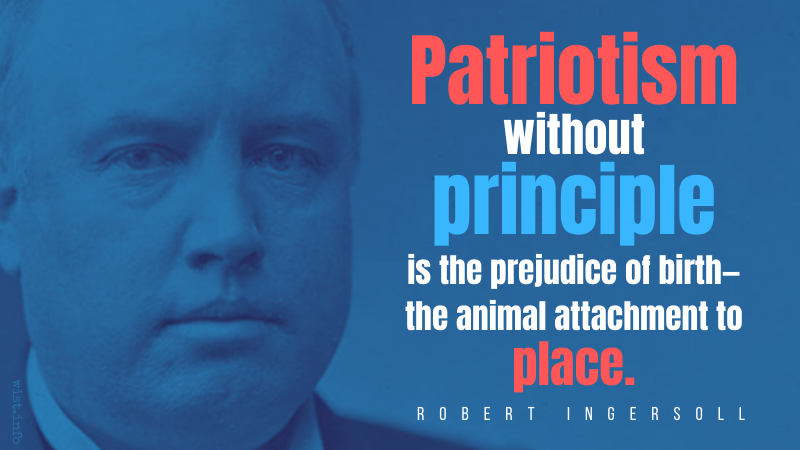
But, oh, how little they know, the omniscient seers.
What good are prayers and shrines to a person mad with love?
The flame keeps gnawing into her tender marrow hour by hour
and deep in her heart the silent wound lives on.
Dido burns with love — the tragic queen.[Heu vatum ignarae mentes! quid vota furentem,
quid delubra iuvant? Est mollis flamma medullas
interea, et tacitum vivit sub pectore volnus.
Uritur infelix Dido ….]Virgil (70–19 BC) Roman poet [b. Publius Vergilius Maro; also Vergil]
The Aeneid [Ænē̆is], Book 4, l. 65ff (4.65-68) (29-19 BC) [tr. Fagles (2006), l. 82ff]
(Source)
Of lovesick Dido.
(Source (Latin)). Other translations:Ah ignorant Priests, what availes temples, pray'r,
To ease th'inrag'd! whilst soft fire wastes her veins,
And in her breast, a silent wound remaines.
Unhappy Dido burnes ....
[tr. Ogilby (1649)]What priestly rites, alas! what pious art,
What vows avail to cure a bleeding heart!
A gentle fire she feeds within her veins,
Where the soft god secure in silence reigns.
[tr. Dryden (1697)]Alas, how ignorant the minds of seers! what can prayers, what can temples, avail a raging lover? The gentle flame preys all the while upon her vitals and the secret wound rankles in her breast. Unhappy dido burns ....
[tr. Davidson/Buckley (1854)]Alas! but seers are blind to day:
Can vows, can sacrifice allay
A frantic lover's smart?
The very marrow of her frame
Is turning all the while to flame,
The wound is at her heart.
Unhappy Dido! all ablaze ....
[tr. Conington (1866)]Alas, the ignorance
Of all prophetic lore! What vows, what shrines
Can help her raging love? The soft flame burns,
Meanwhile, the marrow of her life; the wound
Lives silently, and rankles 'neath her breast.
The unhappy Dido [...] with burning bosom ....
[tr. Cranch (1872), l. 85ff]Ah, witless souls of soothsayers! how may vows or shrines help her madness? all the while the subtle flame consumes her inly, and deep in her breast the wound is silent and alive.
[tr. Mackail (1885)]Woe's me! the idle mind of priests! what prayer, what shrine avails
The wild with love!—and all the while the smooth flame never fails
To eat her heart: the silent wound lives on within her breast:
Unhappy Dido burneth up ....
[tr. Morris (1900), l. 65ff]Blind seers, alas! what art
To calm her frenzy, now hath vow or shrine?
Deep in her marrow feeds the tender smart,
Unseen, the silent wound is festering in her heart.
Poor Dido burns ....
[tr. Taylor (1907), st. 9-10; l. 71ff]How blind the hearts of prophets be! Alas!
Of what avail be temples and fond prayers
to change a frenzied mind? Devouring ever,
love's fire burns inward to her bones; she feels
quick in her breast the viewless, voiceless wound.
[tr. Williams (1910)]Ah, blind souls of seers! Of what avail are vows or shrines to one wild with love? All the while the flame devours her tender heart-strings, and deep in her breast lives the silent wound. Unhappy Dido burns ....
[tr. Fairclough (1916)]Alas, poor blind interpreters! What woman
In love is helped by offerings or altars?
Soft fire consumes the marrow-bones, the silent
Wound grows, deep in the heart.
Unhappy Dido burns ....
[tr. Humphries (1951)]Ah, little the soothsayers know! What value have vows or shrines
For a woman wild with passion, the while love's flame eats into
Her gentle flesh and love's wound works silently in her breast?
So burns the ill-starred Dido ....
[tr. Day Lewis (1952)]But oh the ignorance of the augurs! How
can vows and altars help one wild with love?
Meanwhile the supple flame devours her marrow;
within her breast the silent wound lives on.
Unhappy Dido burns ....
[tr. Mandelbaum (1971), l. 86ff]Alas, what darkened minds have soothsayers!
What good are shrines and vows to maddened lovers?
The inward fire eats the soft marrow away,
And the internal wound bleeds on in silence.
Unlucky Dido, burning ...
[tr. Fitzgerald (1981), l. 91ff]But priests, as we know, are ignorant. What use are prayers and shrines to a passionate woman? The flame was eating the soft marrow of her bones and the wound lived quietly under her breast. Dido was on fire with love ....
[tr. West (1990)]Ah, the unknowing minds of seers! What use are prayers
or shrines to the impassioned? Meanwhile her tender marrow
is aflame, and a silent wound is alive in her breast.
Wretched Dido burns ....
[tr. Kline (2002)]But what do prophets know? How much can vows,
Or shrines, help a raging heart? Meanwhile the flame
Eats her soft marrow, and the wound lives,
Silent beneath her breast. Dido is burning.
[tr. Lombardo (2005)]But what can prophets know? What use are vows
and shrines to the obsessed? The flame devoured her soft marrow;
the silent wound throbbed in her heart.
Unhappy Dido burned.
[tr. Bartsch (2021)]
PROTEUS: Oh, how this spring of love resembleth
The uncertain glory of an April day;
Which now shows all the beauty of the sun,
And by and by a cloud takes all away!William Shakespeare (1564–1616) English dramatist and poet
Two Gentlemen of Verona, Act 1, sc. 3, l. 85ff (1.3.85-88) (c. 1590)
(Source)
Hundreds of times I have sat for hours in front of texts the meaning of which I understood perfectly, and yet been unable to see how they ought to be put into English in such a way as to re-embody not merely a series of correct dictionary meanings, but also the emphasis, the tone, the eloquence of the original.
Arthur Waley (1889–1966) English orientalist, sinologist, literary translator
“Notes on Translation,” Atlantic Monthly (Nov 1948)
(Source)
Reprinted in The Secret History of the Mongols (1963).
A variation of this quote is frequently found which appears to have been synthesized by Simon Leys (attributed to Waley) in his 2008 essay, "The Experience of Literary Translation":Hundreds of times I have sat, for hours on end, before passages whose meaning I understood perfectly, without seeing how to render them into English.
The chief difference between the despotic and the totalitarian secret police lies in the difference between the “suspect” and the “objective enemy.” The latter is defined by the policy of the government and not by his own desire to overthrow it. He is never an individual whose dangerous thoughts must be provoked or whose past justifies suspicion, but a “carrier of tendences” like the carrier of a disease. Practically speaking, the totalitarian ruler proceeds like a man who persistently insults another man until everybody knows that the latter is his enemy, so that he can, with some plausibility, go and kill him in self-defense.
Hannah Arendt (1906–1975) German-American philosopher, political theorist
Origins of Totalitarianism, Part 3, ch. 12 “Totalitarianism in Power,” sec. 1 (1951)
(Source)

Not to talk with people although they can be talked with is to waste people. To talk with people although they can’t be talked with is to waste words. A man of understanding does not waste people, but he also does not waste words.
[子曰、可與言、而不與之言、失人、不可與言、而與之言、失言、知者不失人、亦不失言。]
Confucius (c. 551- c. 479 BC) Chinese philosopher, sage, politician [孔夫子 (Kǒng Fūzǐ, K'ung Fu-tzu, K'ung Fu Tse), 孔子 (Kǒngzǐ, Chungni), 孔丘 (Kǒng Qiū, K'ung Ch'iu)]
The Analects [論語, 论语, Lúnyǔ], Book 15, verse 8 (15.8) (6th C. BC – 3rd C. AD) [tr. Dawson (1993)]
(Source)
(Source (Chinese)). Older translations use Legge's original verse divisions and numbering (15.7).
The passage contains a native pun, combining both noun and verb senses of yén [言] (talk), which is difficult to translate into English (leading to blends of "speak" and "talk" and "words"). Other translations:When a man may be spoken with, not to speak to him is to err in reference to the man. When a man may not be spoken with, to speak to him is to err in reference to our words. The wise err neither in regard to their man nor to their words.
[tr. Legge (1861), 15.7]Not to speak to a man to whom you ought to speak, is to lose your man; to speak to one to whom you ought not to speak is to lose your words. those who are wise will not lose their man, nor yet their words.
[tr. Jennings (1895), 15.7]When you meet the proper person to speak to and do not speak out, you lose your opportunity; but when you meet one who is not a proper person to speak to and you speak to him, you waste your words. A man of intelligence never loses his opportunity, neither does he waste his words.
[tr. Ku Hung-Ming (1898), 15.7]Not to enlighten one who can be enlightened is to waste a man; to enlighten one who cannot be enlightened is to waste words. The intelligent man neither wastes his man nor his words.
[tr. Soothill (1910), 15.7]When you should talk to a man, and don’t, you lose the man; when it’s no use talking to a man, and you talk to him, you waste words. An intelligent man wastes (loses) neither men nor words.
[tr. Pound (1933), 15.7]Not to talk to one who could be talked to, is to waste a man. To talk to those who cannot be talked to, is to waste one's words. He who is truly wise never wastes a man; but on the other hand, he never wastes his words.
[tr. Waley (1938), 15.7]If we fail to speak with a man who can be spoken with, we lose a man. If we do speak with a man who cannot be spoken with, our words go for nought. The wise lose neither man nor words.
[tr. Ware (1950), 15.8]When you find a person worthy to talk to and fail to talk to him, you have lost your man. When you find a man unworthy to talk to and you talk to him, you have lost (i.e., wasted) your words. A wise man neither loses his man, nor loses his words.
[tr. Lin Yutang (1938)]To fail to speak to a man who is capable of benefiting is to let a man go to waste. To speak to a man who is incapable of benefiting is to let one's words go to waste. A wise man lets neither men nor words go to waste.
[tr. Lau (1979), 15.8]When dealing with a man who is capable of understanding your teaching, if you do not teach him, you waste the man. When dealing with a man who is incapable of understanding your teaching, if you do teach him, you waste your teaching. A wise teacher wastes no man and wastes no teaching.
[tr. Leys (1997), 15.8]If a man is worth talking to and you do not talk to him, you lose a man; if a man is not worth talking to and you talk to him, you lose your words. The man of wisdom neither loses a man nor loses his words.
[tr. Huang (1997), 15.8]When you should talk with one, you do not talk with one, it means to lose the people. When you should not talk with one, you talk with one, it means to lose the word. A wise person does not lose the people, and does not lose the word too.
[tr. Cai/Yu (1998), 15.8 / #392]To fail to speak to someone who can be engaged is to let that person go to waste; to speak to someone who cannot be engaged is to waste your words. The wise [zhi] do not let people go to waste, but they do not waste their words, either.
[tr. Ames/Rosemont (1998), 15.8]If he can be talked to and you do not talk to him, you waste the man. If he cannot be talked to and you talk to him, you waste your talk. The knowledgeable will not waste a man, but will also not waste his talk.
[tr. Brooks/Brooks (1998), 15.8]When a person is capable of understanding your words, and you refuse to speak, you're wasting a person. When a person isn't capable of understanding your words, and you speak anyway, you're wasting words. The wise waste neither words nor people.
[tr. Hinton (1998), 15.8]If it's someone you ought to speak to and you fail to speak, you waste a person. If it's someone you ought not to speak to and you speak, you waste words. The wise man doesn't waste people and doesn't waste words, either.
[tr. Watson (2007), 15.8]Not to speak to a man who is capable of absorbing what you say is to let the man go to waste. To speak to a man who is incapable of absorbing what you say is to let your words go to waste. A person of wisdom does not let either men or words go to waste.
[tr. Annping Chin (2014), 15.8]When it is appropriate and feasible to speak [and give advice] to a person, but you refrain from doing so, you will lose a friend. When it is inappropriate or infeasible to speak to a person, but you speak anyhow, you misspeak.
[tr. Li (2020), 15.8]
Our memories are card-indexes consulted and then put back in disorder by authorities whom we do not control.
Cyril Connolly (1903–1974) English intellectual, literary critic and writer.
The Unquiet Grave, Part 3 “La Clé des Chants” (1944)
(Source)
Our democracy is not the buildings, not the monuments. It’s you being willing to work to make things better and being willing to listen to each other and argue with each other and come together and knock on doors and make phone calls and treat people with respect.
Barack Obama (b. 1961) American politician, US President (2009–2017)
Staff Farewell, Joint Base Andrews, Maryland (20 Jan 2017)
(Source)
So when, in future times, men ask you to prove patriotism and loyalty and affection for your native land — remember that these things are not always equated with a willingness to die or to kill.
Rod Serling (1924–1975) American screenwriter, playwright, television producer, narrator
Commencement Address, Ithaca College, New York (13 May 1972)
(Source)
The thousands of possible lives that used to spread out in front of me have snapped shut into one, and all I get is what I’ve got. It’s time to pass on the possibilities, all those deliciously half-open doors, to my children, and drive them to the airports, and wish them bon voyage.
Folks, I hate to spoil your fun, but — there’s no such thing as rights. Okay? They’re imaginary. We made ’em up. […] Now, if you think you do have rights, one last assignment for you. Next time you’re at the computer, get on the Internet, go to Wikipedia. When you get to Wikipedia, in the search field for Wikipedia I want you to type in “Japanese-American 1942,” and you’ll find all about your precious fucking rights, okay? […] Just when these American citizens needed their rights the most, their government took ’em away. And rights aren’t “rights” if someone can take ’em away — they’re privileges. That’s all we’ve ever had in this country is a Bill of Temporary Privileges. And if you read the news, even badly, you know that every year the list gets shorter and shorter and shorter.
George Carlin (1937–2008) American comedian
Show (2008-03-01), It’s Bad for Ya, Wells Fargo Center for the Arts, Santa Rosa, California (HBO)
(Source)
Courage without conscience is a wild beast.
Robert Green Ingersoll (1833–1899) American lawyer, freethinker, orator
Decoration Day Speech, Academy of Music, New York City (29 May 1882)
(Source)
Lest all overlook so tiny a book
And brevity lead to its loss,
I will not refuse such padding to use
As “Τὸν δ̕ ἀπαμειθόμενος.”[Edita ne brevibus pereat mihi cura libellis,
Dicatur potius Τὸν δ᾽ ἀπαμειβόμενος.]Martial (AD c.39-c.103) Spanish Roman poet, satirist, epigrammatist [Marcus Valerius Martialis]
Epigrams [Epigrammata], Book 1, epigram 45 (1.45) (AD 85-86) [tr. Pott & Wright (1921), “Poet’s Padding”]
(Source)
Using a phrase ("to him in answer" or "answering him") that is repeated many, many times in Homer's epics, The Odyssey and The Iliad. (Source (Latin)). Other translations:Lest, in air, the mere lightness my distics should toss;
I'd rather sing δ̕ ἀπαμειθόμενος.
[tr. Elphinston (1782), 12.216]That the care which I have bestowed upon what I have published may not come to nothing through the smallness of my volumes, let me rather fill up my verses with Τὸν δ̕ ἀπαμειθόμενος.
[tr. Bohn's Classical (1859)]Lest his pains should be lost by publishing too short a book, he will fill it up with repetitions, like Homer's well-known verse.
[tr. Paley/Stone (1890)]That my labor be not lost because published in tiny volumes, rather let there be added Τὸν δ̕ ἀπαμειθόμενος.
[tr. Ker (1919)]For fear my fount of poetry run dry
"Him answering" is still my cuckoo-cry.
[tr. Francis & Tatum (1924), ep. 24]To keep my little books from dropping dead
of brevity, I could pad with "... then he said."
[tr. Bovie (1970)]Rather than have my work published in small volumes and so go to waste, let me say "to him in answer."
[tr. Shackleton Bailey (1993)]
KEATING: Boys, you must strive to find your own voice. Because the longer you wait to begin, the less likely you are to find it at all. Thoreau said, “Most men lead lives of quiet desperation.” Don’t be resigned to that. Break out! Break out!
Living things tend to change unrecognizably as they grow. Who would deduce the dragonfly from the larva, the iris from the bud, the lawyer from the infant? Flora or fauna, we are all shape-shifters and magic reinventors. Life is really a plural noun, a caravan of selves.
Diane Ackerman (b. 1948) American poet, author, naturalist
Cultivating Delight; A Natural History of My Garden, ch. 6 (2001)
(Source)

The reason I can’t take myself seriously as a “creative artist,” Guy dear, is because I’m not one. It’s not somehow not in me to bear very patiently with my own mediocrity. If I can’t — and I can’t — be Shakespeare or Goethe, I’d rather raise good cabbages. And that is why I would not write at all, except that there is more money in writing than in cabbages, not only more money, but more freedom. […] This is why I’m not “filled with my art.” I ain’t got no art. I’ve got only a kind of craftsman’s skill, and make stories as I make biscuits or embroider underwear or wrap up packages.
Rose Wilder Lane (1886–1968) American journalist, travel writer, novelist, political theorist
Letter to Guy Moyston (25 Jun 1925)
(Source)
Quoted in William Holtz, The Ghost in the Little House: A Life of Rose Wilder Lane, ch. 9, sec. 5 (1995).

Liberty, after she has been chained up awhile, is always more fierce, and sets her teeth in deeper, than she would otherwise have done if she had never been restrained.
[Acriores autem morsus sunt intermissae libertatis quam retentae.]
Marcus Tullius Cicero (106–43 BC) Roman orator, statesman, philosopher
De Officiis [On Duties; On Moral Duty; The Offices], Book 2, ch. 7 (2.7) / sec. 14 (44 BC) [tr. Cockman (1699)]
(Source)
(Source (Latin)). Other translations:And the inflictions of freedom interrupted, are more rigorous than if it had been retained.
[tr. McCartney (1798)]For the inflictions of liberty, when it has been suspended, are more severe than if it had been retained.
[tr. Edmonds (1865)]Men indeed feel more keenly the suppression of liberty than any evils incident to its preservation.
[tr. Peabody (1883)]Freedom, if suppressed, only bites with keener fang.
[tr. Gardiner (1899)]Freedom suppressed and again regained bites with keener fangs than freedom never endangered.
[tr. Miller (1913)]But the wounds caused by the suspension of freedom hurt worse than those caused by maintaining it.
[tr. Edinger (1974)]
“And if I turn back, refusing the road in its bitter end, where then shall I go among Elves or Men? Would you have me come to Gondor with this Thing, the Thing that drove your brother mad with desire? What spell would it work in Minas Tirith? Shall there be two cities of Minas Morgul, grinning at each other across a dead land filled with rottenness?”
“I would not have it so,” said Faramir.J.R.R. Tolkien (1892–1973) English writer, fabulist, philologist, academic [John Ronald Reuel Tolkien]
The Lord of the Rings, Vol. 2: The Two Towers, Book 4, ch. 6 “The Forbidden Pool” [Frodo and Faramir] (1954)
(Source)
It is compassion rather than the principle of justice which can guard us against being unjust to our fellow men.
Eric Hoffer (1902–1983) American writer, philosopher, longshoreman
Passionate State of Mind, Aphorism 140 (1955)
(Source)
You think that a wall as solid as the earth separates civilization from barbarism. I tell you the division is a thread, a sheet of glass. A touch here, a push there, and you bring back the reign of Saturn.
John Buchan (1875–1940) Scottish novelist, poet, and politician; Governor-General of Canada (1935 -1940)
The Power-House, ch. 3 (1916)
(Source)
JULIA: Didst thou but know the inly touch of love;
Thou wouldst as soon go kindle fire with snow,
As seek to quench the fire of love with words.William Shakespeare (1564–1616) English dramatist and poet
Two Gentlemen of Verona, Act 2, sc. 7, l. 18ff (2.7.18-20) (c. 1590)
(Source)
What threatens our security is not change but the inability to change; what threatens progress is not revolution but stagnation; what threatens our survival is not novel or dangerous ideas but the absence of ideas.
Henry Steele Commager (1902–1998) American historian, writer, activist
Speech (1971-04-10), “The University and the Community of Learning,” Kent State University, Ohio
(Source)
Rumor, quicksilver afoot
and swift on the wing, a monster, horrific, huge
and under every feather on her body — what a marvel —
an eye that never sleeps and as many tongues as eyes
and as many raucous mouths and ears pricked up for news.
By night she flies aloft, between the earth and sky,
whirring across the dark, never closing her lids
in soothing sleep. By day she keeps her watch,
crouched on a peaked roof or palace turret,
terrorizing the great cities, clinging as fast
to her twisted lies as she clings to words of truth.[… [P]edibus celerem et pernicibus alis,
monstrum horrendum, ingens, cui, quot sunt corpore plumae
tot vigiles oculi subter, mirabile dictu,
tot linguae, totidem ora sonant, tot subrigit aures.
Nocte volat caeli medio terraeque per umbram,
stridens, nec dulci declinat lumina somno;
luce sedet custos aut summi culmine tecti,
turribus aut altis, et magnas territat urbes;
tam ficti pravique tenax, quam nuntia veri.]Virgil (70–19 BC) Roman poet [b. Publius Vergilius Maro; also Vergil]
The Aeneid [Ænē̆is], Book 4, l. 180ff (4.180-188) (29-19 BC) [tr. Fagles (2006), l. 226ff]
(Source)
The personification of "Rumor" (Fame, or Fama).
(Source (Latin)). Other translations:Swift footed, quick she flyes,
A huge fowle Monster, in each feather lies
A watching eye conceal'd, (and strange) she bears
As many tongues, loud mouths, and list'ning ears.
A watch by day, on battlements she lights,
Or lofty towers, and mighty towns affrights.
Falshoods, and lyes, of as the truth she tells,
And Nations then with various rumours swells.
Things feign'd and reall, glad alike she sung.
[tr. Ogilby (1649)]Swift is her walk, more swift her winged haste:
A monstrous phantom, horrible and vast.
As many plumes as raise her lofty flight,
So many piercing eyes enlarge her sight;
Millions of opening mouths to Fame belong,
And ev'ry mouth is furnish'd with a tongue,
And round with list'ning ears the flying plague is hung.
She fills the peaceful universe with cries;
No slumbers ever close her wakeful eyes;
By day, from lofty tow'rs her head she shews,
And spreads thro' trembling crowds disastrous news;
With court informers haunts, and royal spies;
Things done relates, not done she feigns, and mingles truth with lies.
Talk is her business, and her chief delight
To tell of prodigies and cause affright.
[tr. Dryden (1697)]Swift to move with feet and persevering wings: a monster hideous, immense; who (wondrous to relate!) for as many plumes as are in her body, numbers so many wakeful eyes beneath, so many tongues, so many babblingmouths, pricks up so many listening ears. By night, through the mid regions of the sky, and through the shades of earth, she flies buzzing, nor inclines her eyes to balmy rest. Watchful by day, she perches either on some high house-top, or on lofty turrets, and fills mighty cities with dismay; as obstinately bent on falsehood and iniquity as on reporting truth.
[tr. Davidson/Buckley (1854)]... With feet and rapid wings for flight.
Huge, terrible, gigantic Fame!
For every plume that clothes her frame
An eye beneath the feather peeps,
A tongue rings loud, an ear upleaps.
Hurtling 'twixt earth and heaven she flies
By night, nor bows to sleep her eyes:
Perched on a roof or tower by day
She fills great cities with dismay;
How oft soe'er the truth she tell,
She loves a falsehood all too well.
[tr. Conington (1866)]With nimble feet, and swift persistent wings,
A monster huge and terrible is she.
As many feathers as her body bears,
So many watchful eyes beneath them lurk,
So many tongues and mouths, and ears erect.
By night 'twixt heaven and earth she flies, through shades,
With rushing wings, nor shuts her eyes in sleep.
By day she watches from the roofs or towers;
And the great cities fills with haunting fears;
As prone to crime and falsehood as to truth ...
[tr. Cranch (1872), l. 236ff]Fleet-footed and swift of wing, ominous, awful, vast; for every feather on her body is a waking eye beneath, wonderful to tell, and a tongue, and as many loud lips and straining ears. By night she flits between sky and land, shrilling through the dusk, and droops not her lids in sweet slumber; in daylight she sits on guard upon tall towers or the ridge of the house-roof, and makes great cities afraid; obstinate in perverseness and forgery no less than messenger of truth.
[tr. Mackail (1885)]Swift are her wings to cleave the air, swift-foot she treads the earth:
A monster dread and huge, on whom so many as there lie
The feathers, under each there lurks, O strange! a watchful eye;
And there wag tongues, and babble mouths, and hearkening ears upstand
As many: all a-dusk by night she flies 'twixt sky and land
Loud clattering, never shutting eye in rest of slumber sweet.
By day she keepeth watch high-set on houses of the street,
Or on the towers aloft she sits for mighty cities' fear!
And lies and ill she loves no less than sooth which she must bear.
[tr. Morris (1900)]Swift-winged, swift-footed, of enormous girth,
Huge, horrible, deformed, a giantess from birth.
As many feathers as her form surround,
Strange sight! peep forth so many watchful eyes,
So many mouths and tattling tongues resound,
So many ears among the plumes uprise.
By night with shrieks 'twixt heaven and earth she flies,
Nor suffers sleep her eyelids to subdue;
By day, the terror of great towns, she spies
From towers and housetops, perched aloft in view,
Fond of the false and foul, yet herald of the true.
[tr. Taylor (1907), st. 23-24, l. 206ff]Feet swift to run and pinions like the wind
the dreadful monster wears; her carcase huge
is feathered, and at root of every plume
a peering eye abides; and, strange to tell,
an equal number of vociferous tongues,
foul, whispering lips, and ears, that catch at all.
At night she spreads midway 'twixt earth and heaven
her pinions in the darkness, hissing loud,
nor e'er to happy slumber gives her eyes:
but with the morn she takes her watchful throne
high on the housetops or on lofty towers,
to terrify the nations. She can cling
to vile invention and malignant wrong,
or mingle with her word some tidings true.
[tr. Williams (1910)]Swift of foot and fleet of wing, a monster awful and huge, who for the many feathers in her body has as many watchful eyes below -- wondrous to tell -- as many tongues, as many sounding mouths, as many pricked-up ears. By night, midway between heaven and earth, she flies through the gloom, screeching, nor droops her eyes in sweet sleep; by day she sits on guard on high roof-top or lofty turrets, and affrights great cities, clinging to the false and wrong, yet heralding truth.
[tr. Fairclough (1916)]Swift of foot,
Deadly of wing, a huge and terrible monster,
With an eye below each feather in her body,
A tongue, a mouth, for every eye, and ears
Double that number; in the night she flies
Above the earth, below the sky, in shadow
Noisy and shrill; her eyes are never closed
In slumber; and by day she perches, watching
From tower or battlement, frightening great cities.
She heralds truth, and clings to lies and falsehood,
[tr. Humphries (1951)]A swift-footed creature, a winged angel of ruin,
A terrible, grotesque monster, each feather upon whose body --
Incredible though it sounds -- has a sleepless eye beneath it,
And for every eye she has also a tongue, a voice and a pricked ear.
At night she flits midway between earth and sky, through the gloom
Screeching, and never closes her eyelids in sweet slumber:
By day she is perched like a look-out either upon a roof-top
Or some high turret; so she terrorises whole cities,
Loud-speaker of truth, hoarder of mischievous falsehood, equally.
[tr. Day Lewis (1952)]Fast-footed
and lithe of wing, she is a terrifying
enormous monster with as many feathers
as she has sleepless eyes beneath each feather
(amazingly), as many sounding tongues
and mouths, and raises up as many ears.
Between the earth and skies she flies by night,
screeching across the darkness, and she never
closes her eyes in gentle sleep. By day
She sits as sentinel on some steep roof
or on high towers, frightening vast cities;
for she holds fast to falsehood and distortion
as often as to messages of truth.
[tr. Mandelbaum (1971), l. 237ff]... [G]iving her speed on foot and on the wing:
Monstrous, deformed, titanic. Pinioned, with
An eye beneath for every body feather,
And, strange to say, as many tongues and buzzing
Mouths as eyes, as many pricked-up ears,
By night she flies between the earth and heaven
Shrieking through darkness, and she never turns
Her eye-lids down to sleep. by day she broods,
On the alert, on rooftops or on towers,
Bringing great cities fear, harping on lies
And slander evenhandedly with truth.
[tr. Fitzgerald (1981), l. 248ff]Rumour is quick of foot and swift on the wing, a huge and terrible monster, and under every feather of her body, strange to tell, there lies an eye that never sleeps, a mouth and a tongue that are never silent, and an ear always pricked. by night she flies between earth and sky, squawking through the darkness, and never lowers her eyelids in sweet sleep. By day she keeps watch perched on the tops of gables or on high towers and causes fear in great cities, holding fast to her lies and distortions as often as she tells the truth.
[tr. West (1990)]A monster, vast and terrible, fleet-winged
and swift-footed, sister to Coeus and Enceladus,
who for every feather on her body has as many
watchful eyes below (marvelous to tell), as many
tongues speaking, as many listening ears.
She flies, screeching, by night through the shadows
between earth and sky, never closing her eyelids
in sweet sleep: by day she sits on guard on tall roof-tops
or high towers, and scares great cities, as tenacious
of lies and evil, as she is messenger of truth.
[tr. Kline (2002)]Fast on her feet, her beating wings a blur,
She is a dread, looming monster. Under every feather
On her body she has -- strange to say -- a watchful eye,
A tongue, a shouting mouth, and pricked-up ears.
By night she wheels through the dark skies, screeching,
And never closes her shining eyes in sleep.
By day she perches on rooftops or towers,
Watching, and she throws whole cities into panic,
As much a hardened liar as a herald of truth.
[tr. Lombardo (2005), l. 205ff]Her feet are swift and her wings are hateful,
A dread creation whose huge body bristles with feathers.
And beneath them all are watchful eyes, chilling to describe
And as many tongues within whispering mouths and between attentive ears.
At night she flights mid-sky and over the shadowed earth,
Hissing, refusing to rest her eyes in sweet sleep.
At day she stands guard at the highest roof-peak
Or on looming towers as she brings the cities terror.
She sticks at times to base lies and other times to truth.
[tr. @sentantiq (2015)]She's fast of foot and fleet of wing, a huge horrific monster.
Under all her feathers lurk (amazingly)
as many watching eyes and tongues,
as many talking mouths and pricked-up ears.
She flies by night, between the sky and earth, screeching through the dark.
Her eyes don't close in welcome sleep.
By day she perches as a lookout on high roofs
or towers and alarms great cities.
She's as fond of fiction and perversity as truth.
[tr. Bartsch (2021)]
There is always something pleasurable in the struggle and the victory. And if a man has no opportunity to excite himself, he will do what he can to create one, and according to his individual bent, he will hunt or play Cup and Ball: or led on by this unsuspected element in his nature, he will pick a quarrel with someone, or hatch a plot or intrigue, or take to swindling and rascally courses generally — all to put an end to a state of repose which is intolerable.
[Der Kampf mit ihnen und der Sieg beglückt. Fehlt ihm die Gelegenheit dazu, so macht er sie sich, wie er kann: je nachdem seine Individualität es mit sich bringt, wird er jagen, oder Bilboquet spielen, oder, vom unbewußten Zuge seiner Natur geleitet, Händel suchen, oder Intriguen anspinnen, oder sich auf Betrügereien und allerlei Schlechtigkeiten einlassen, um nur dem ihm unerträglichen Zustande der Ruhe ein Ende zu machen.]
Arthur Schopenhauer (1788–1860) German philosopher
Parerga and Paralipomena, Vol. 1, “Aphorisms on the Wisdom of Life [Aphorismen zur Lebensweisheit],” ch. 5 “Counsels and Maxims [Paränesen und Maximen],” § 2.17 (1851) [tr. Saunders (1890)]
(Source)
(Source (German)). Another translation:The struggle with [obstacles] and the triumph make him happy. If he lacks the opportunity for this, he creates it as best he can; according to the nature of his individuality, he will hunt or play cup and ball; or, guided by the unconscious urge of his nature, he will pick a quarrel, hatch a plot, or be involved in fraud and all kinds of wickedness, merely in order to put an end to an intolerable state of repose.
[tr. Payne (1974)]

It is our choices, Harry, that show what we truly are, far more than our abilities.
Joanne "Jo" Rowling (b. 1965) British novelist [writes as J. K. Rowling and Robert Galbraith]
Harry Potter and the Chamber of Secrets [Dumbledore] (1998)
(Source)

Governments never lead; they follow progress. When the prison, stake or scaffold can no longer silence the voice of the protesting minority, progress moves on a step, but not until then.
Lucy Parsons (1851–1942) American labor organizer, anarchist, orator [a.k.a. Lucy Gonzalez]
“The Principles of Anarchism,” lecture (1905)
(Source)
We cannot really love anybody with whom we never laugh.
Agnes Repplier (1855–1950) American writer
“Goodness and Gayety,” Americans and Others (1912)
(Source)
Note: Though this is usually attributed to Repplier, she precedes the phrase with "It has been wisely said that ..."

The pain of grief is just as much a part of life as the joy of love; it is, perhaps, the price we pay for love, the cost of commitment.
Colin Murray Parkes (b. 1928) British psychiatrist and author
Bereavement: Studies of Grief in Adult Life (1972)
(Source)
Sometimes paraphrased, “Grief is the price we pay for love.”
The pull of fascist politics is powerful. It simplifies human existence, gives us an object, a “them” whose supposed laziness highlights our own virtue and discipline, encourages us to identify with a forceful leader who helps us make sense of the world, whose bluntness regarding the “undeserving” people in the world is refreshing. […] Fascist politics preys on the human frailty that makes our own suffering seem bearable if we know that those we look down upon are being made to suffer more.
Jason Stanley (b. 1969) American philosopher, epistemologist, academic
How Fascism Works: The Politics of Us and Them, ch. 10 (2018)
(Source)
If I had omitted setting down something of that which has appeared to me as clear, so that the knowledge would perish when I perish, as is inevitable, I should have considered that conduct as extremely cowardly with regard to you and everyone who is perplexed. It would have been, as it were, robbing one who deserves the truth of the truth, or grudging an heir his inheritance. And both those traits are blameworthy.
Maimonides (1135–1204) Spanish Jewish philosopher, scholar, astronomer, physician [Moses ben Maimon, Rambam, רמב״ם]
Guide for the Perplexed, Part 3, Introduction (c. 1190) [tr. Pines (1963)]
(Source)
Another translation:But if, on the other hand, I were to abstain from writing on this subject, according to my knowledge of it, when I die, as I shall inevitably do, that knowledge would die with me, and I would thus inflict great injury on you and all those who are perplexed. I would then be guilty of withholding the truth from those to whom it ought to be communicated, and of jealously depriving the heir of his inheritance. I should in either case be guilty of gross misconduct.
[tr. Friedlander (1885)]
There is no hate without fear. Hate is crystallized fear, fear’s dividend, fear objectivized. We hate what we fear and so where hate is, fear will be lurking. Thus we hate what threatens our person, our liberty, our privacy, our income, our popularity, our vanity and our dreams and plans for ourselves.
Cyril Connolly (1903–1974) English intellectual, literary critic and writer.
The Unquiet Grave, Part 3 “La Clé des Chants” (1944)
(Source)
When words stop meaning anything, when truth doesn’t matter, when people can just lie with abandon, democracy can’t work.
Barack Obama (b. 1961) American politician, US President (2009–2017)
Speech, Miami (2 Nov 2018)
(Source)
Remember that you can’t necessarily sanctify a cause by virtue of the fact that men die for it. A death in a worthless or even questionable cause is a pointless, meaningless, tragically premature death.
Rod Serling (1924–1975) American screenwriter, playwright, television producer, narrator
Commencement Address, Ithaca College, New York (13 May 1972)
(Source)
JAQUES: [O]ne man in his time plays many parts,
His acts being seven ages. At first the infant,
Mewling and puking in the nurse’s arms.
Then the whining schoolboy with his satchel
And shining morning face, creeping like snail
Unwillingly to school. And then the lover,
Sighing like furnace, with a woeful ballad
Made to his mistress’ eyebrow. Then a soldier,
Full of strange oaths and bearded like the pard,
Jealous in honor, sudden and quick in quarrel,
Seeking the bubble reputation
Even in the cannon’s mouth. And then the justice,
In fair round belly with good capon lined,
With eyes severe and beard of formal cut,
Full of wise saws and modern instances;
And so he plays his part. The sixth age shifts
Into the lean and slippered pantaloon
With spectacles on nose and pouch on side,
His youthful hose, well saved, a world too wide
For his shrunk shank, and his big manly voice,
Turning again toward childish treble, pipes
And whistles in his sound. Last scene of all,
That ends this strange eventful history,
Is second childishness and mere oblivion,
Sans teeth, sans eyes, sans taste, sans everything.William Shakespeare (1564–1616) English dramatist and poet
As You Like It, Act 2, sc. 7, l. 149ff (2.7.149-173) (1599)
(Source)
There are many people who want (or think they want) silence, solitude, and unspoiled nature just enough to push into and destroy all three. They will push as far as, but no farther than, good roads will take them.
Joseph Wood Krutch (1893–1970) American educator, writer, critic, naturalist
Baja California and the Geography of Hope, “Introduction” (1967)
(Source)

But the thing I must point out is that my despair is of the group itself, the group as it’s assembled. And I’ve never identified with the “local group,” no matter what it identifies itself as. But I do cherish, and love, and am thrilled by individuals. People, one by one as I meet them, I find are wondrous. When you have time to listen and watch them, when you look them in the eyes, you see all the potential of the whole thing, this whole species that has such a wonderful gift that was given by nature. The mind, the ability to objectify and to think abstractly. And we’ve wasted it by everyone wanting a fanny pack and to go to the mall and to be paying 18 percent interest on things that we don’t need, don’t want, don’t work, and can’t give back.
George Carlin (1937–2008) American comedian
Interview (2001-07) by Marc Cooper, The Progressive
(Source)
There were four things the Master abstained from entirely: he did not speculate, he did not claim or demand certainty, he was not inflexible, and he was not self-absorbed.
[子絕四、毋意、毋必、毋固、毋我]
Confucius (c. 551- c. 479 BC) Chinese philosopher, sage, politician [孔夫子 (Kǒng Fūzǐ, K'ung Fu-tzu, K'ung Fu Tse), 孔子 (Kǒngzǐ, Chungni), 孔丘 (Kǒng Qiū, K'ung Ch'iu)]
The Analects [論語, 论语, Lúnyǔ], Book 9, verse 4 (9.4) (6th C. BC – 3rd C. AD) [tr. Ames/Rosemont (1998)]
(Source)
Different versions of the Analects take these four items in slightly differing order, reflected in the translations below. (Source (Chinese)). Alternate translations:There were four things from which the Master was entirely free. He had no foregone conclusions, no arbitrary predeterminations, no obstinacy, and no egoism.
[tr. Legge (1861)]The Master barred four (words); - he would have no "shall"s, no "must"s, no "certainly"s, no "I"s.
[tr. Jennings (1895)]There were four things from which Confucius was entirely free : He was free from self-interest, from prepossessions, from bigotry and from egoism.
[tr. Ku Hung-Ming (1898)]The Master was entirely free from four things: he had no preconceptions, no pre-determinations, no obduracy, and no egoism.
[tr. Soothill (1910)]He was cut off from four things; he had no prejudices, no categoric imperatives, no obstinacy or no obstinate residues, no time-lags, no egotism.
[tr. Pound (1933); yes, that looks to be five things]There are four things that the Master wholly eschewed: he took nothing for granted, he was never over-positive, never obstinate, never egotistic.
[tr. Waley (1938)]The Master recognized four prohibitions; Do not be swayed by personal opinion; recognize no inescapable necessity; do not be stubborn; do not be egotistic.
[tr. Ware (1950)]He denounced (or tried to avoid completely) four things: arbitrariness of opinions, dogmatism, narrow-mindedness and egotism.
[tr. Lin Yutang (1938)]There were four things the Master refused to have anything to do with: he refused to entertain conjectures or insist on certainty; he refused to be inflexible or to be egotistical.
[tr. Lau (1979)]The Master cut out four things. He never took anything for granted, he never insisted on certainty, he was never inflexible and never egotistical.
[tr. Dawson (1993)]The Master absolutely eschewed four things: capriciousness, dogmatism, willfulness, self-importance.
[tr. Leys (1997)]The Master was absolutely free from four things: free from conjecture, free from arbitrariness, free from obstinacy, free from egoism.
[tr. Huang (1997)]Confucius prohibited the four points: no wantonness, no dictatorship, no stubbornness, and no arrogance.
[tr. Cai/Yu (1998)]The Master avoided four things: no wish, no will, no set, no self.
[tr. Brooks/Brooks (1998); they further interpret, "no fixed opinions, no foregone conclusions, no stubbornness, no self-absorption"]The Master had freed himself of four things: idle speculation, certainty, inflexibility, and conceit.
[tr. Hinton (1998)]The Master observed four prohibitions: no willfulness, no obstinacy, no narrow-mindedness, no egotism.
[tr. Watson (2007)]The Master stayed away from four things: he did not put forth theories or conjectures; he did not think he must be right; he was not obdurate; he was not self-centered.
[tr. Annping Chin (2014)]Confucius has four ultimate mindsets for perfect: no prejudice, no absolute must, no fixation, no self.
[tr. Li (2020)]