Traditionally, a luncheon is a lunch that takes an eon.
Judith Martin (b. 1938) American author, journalist, etiquette expert [a.k.a. Miss Manners]
“Miss Manners,” syndicated column (1982-04-18)
(Source)
Reprinted in Miss Manners' Guide for the Turn-of-the-Millennium, Part 6 "Genuine Social Life," "Social Occasions" (1989). Often incorrectly attributed to Miss Manners' Guide to Excruciatingly Correct Behavior (1983).
History unravels gently, like an old sweater. It has been patched and darned many times, reknitted to suit different people, shoved in a box under the sink of censorship to be cut up for the dusters of propaganda, yet it always — eventually — manages to spring back into its old familiar shape. History has a habit of changing the people who think they are changing it. History always has a few tricks up its frayed sleeve.
Terry Pratchett (1948–2015) English author
Discworld No. 4, Mort (1987)
(Source)
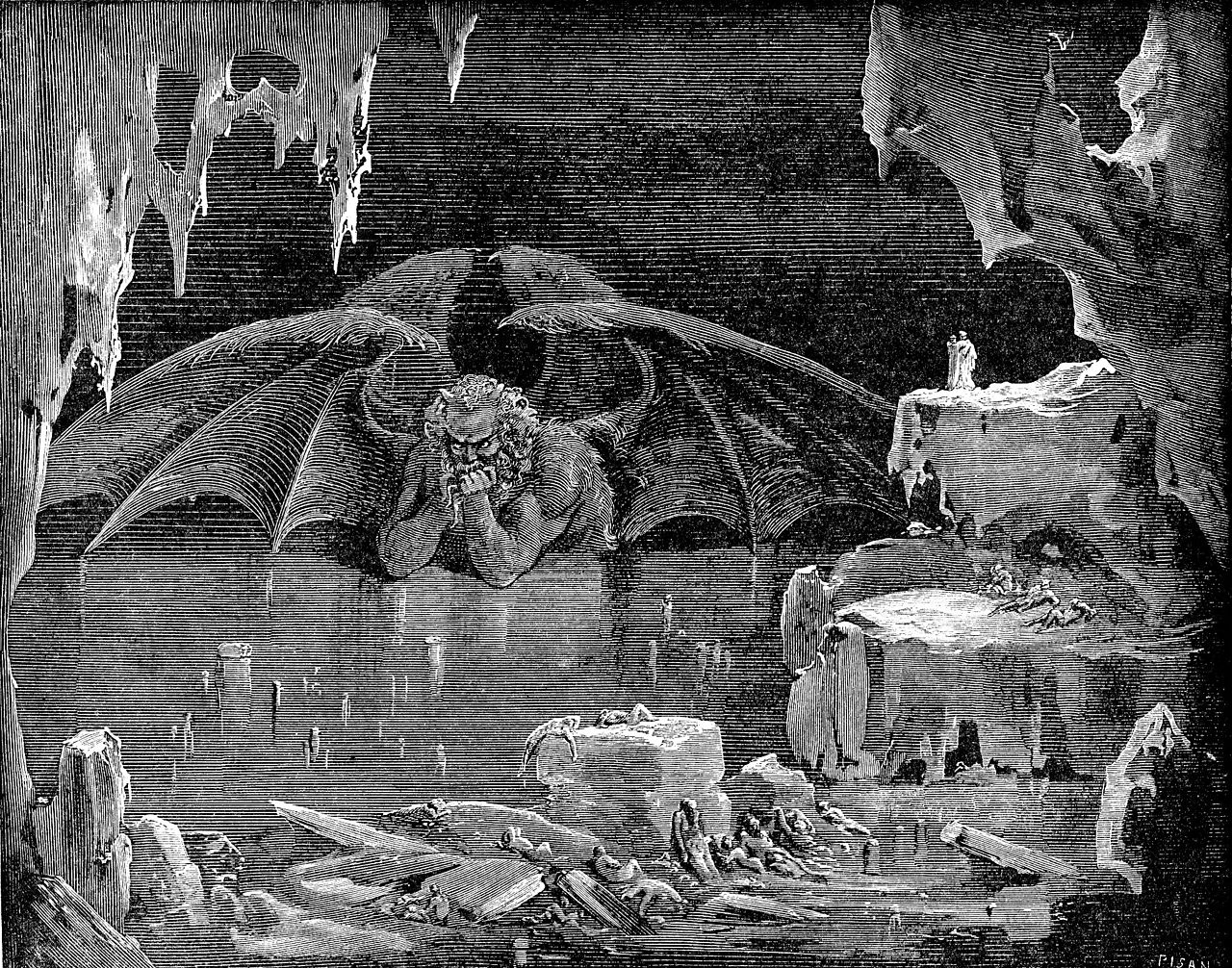
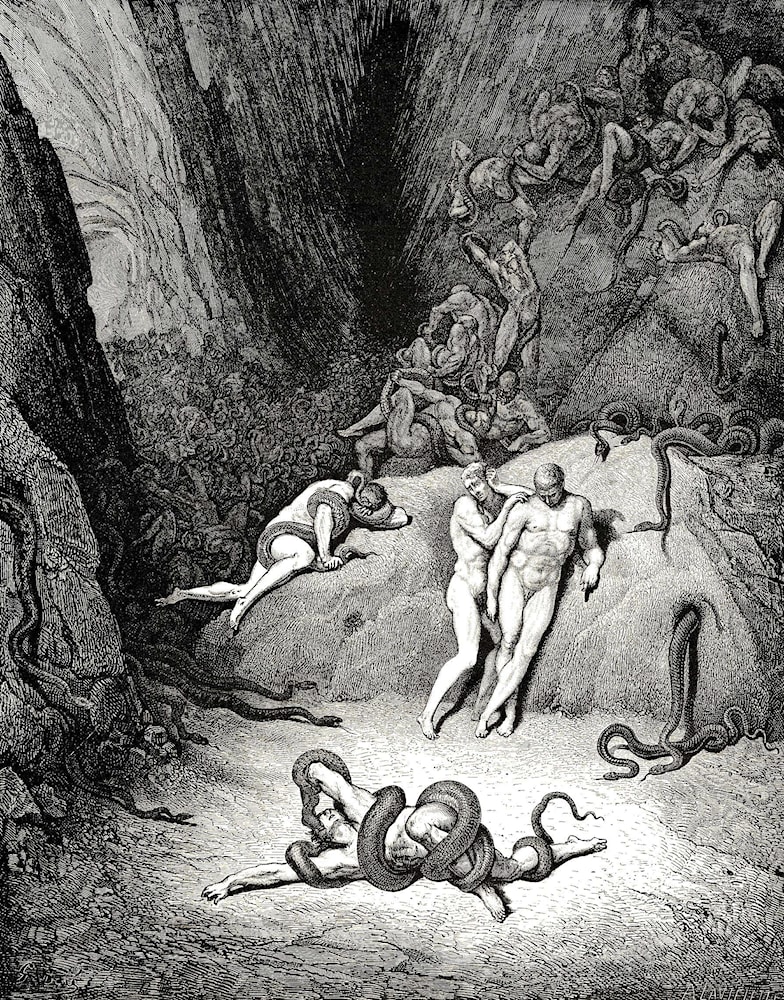
If he was fair as he is hideous now, and raised his brow in scorn of his creator, he is fit to be the source of every sorrow.
[S’el fu sì bel com’elli è ora brutto, e contra ’l suo fattore alzò le ciglia, ben dee da lui procedere ogne lutto.]
Dante Alighieri (1265–1321) Italian poet The Divine Comedy [Divina Commedia], Book 1 “Inferno,” Canto 34, l. 34ff (34.34) (1309) [tr. Hollander/Hollander (2007)]
(Source)
Describing Satan. As Lucifer he was the most beautiful and powerful of the angels; Dante suggests his rebellious ingratitude against God is a fit cause for all the sin and sorrow of the world.
As ugly now, if he as handsome was, And 'gainst his Maker rais'd his haughty brow; 'Tis right all wailings should from him proceed.
[tr. Rogers (1782)]
If his meridian glories, ere he fell,
Equal'd his horrible eclipse in Hell, No brighter Seraph led the heav'nly host:
And now, a tenant of the frozen tide,
The Rebel justly merits to preside O'er all the horrors of the Stygian coast.
[tr. Boyd (1802), st. 8]
If he were beautiful As he is hideous now, and yet did dare To scowl upon his Maker, well from him
May all our mis’ry flow.
[tr. Cary (1814)]
If he, once fair as he is foul of mien, Against his Maker arrogantly raised The brow, from him might well proceed, I ween,
All things disastrous.
[tr. Dayman (1843)]
If he was once as beautiful as he is ugly now, and lifted up his brows against his Maker, well may all affliction come from him.
[tr. Carlyle (1849)]
If he were beauteous once as ugly now, And 'gainst his Maker dared to lift his brow, From him well might we have proceeding woe.
[tr. Bannerman (1850)]
If first in beauty once as hideous now, And to his Maker lifting his proud eye, Well might he be the source of ev'ry grief.
[tr. Johnston (1867)]
Were he as fair once, as he now is foul, And lifted up his brow against his Maker, Well may proceed from him all tribulation.
[tr. Longfellow (1867)]
If he was as fair as he is now foul, and raised his brows against his Maker, rightly should all sorrow come forth from him.
[tr. Butler (1885)]
If he was once as fair as hideous now, And 'gainst his Maker raised his impious eyes, Full well from him would all contention flow.
[tr. Minchin (1885)]
If he was as fair as he now is foul, and against his Maker lifted up his brow, surely may all tribulation proceed from him.
[tr. Norton (1892)]
If once he was as fair as he is loathly, And raised his brows even against his Maker, Well may it be from him proceeds all mourning.
[tr. Griffith (1908)]
If he was as fair as he is now foul and lifted up his brows against his Maker, well may all sorrow come from him.
[tr. Sinclair (1939)]
If he was once fair as he is now foul, And 'gainst his Maker dared his brows to raise, Fitly from him all streams of sorrow roll.
[tr. Binyon (1943)]
If he was once as fair as now he's foul, And dared outface his Maker in rebellion, Well may he be the fount of all our dole.
[tr. Sayers (1949)]
If he was once as beautiful as now he is hideous, and still turned on his Maker, well may he be the source of every woe!
[tr. Ciardi (1954)]
If he was once as beautiful as he is ugly now, and lifted up his brows against his Maker, well may all sorrow proceed from him.
[tr. Singleton (1970)]
If once he was as fair as now he's foul and dared to raise his brows against his Maker, it is fitting that all grief should spring from him.
[tr. Musa (1971)]
If he was once as handsome as he now
is ugly and, despite that, raised his brows
against his Maker, one can understand how every sorrow has its source in him!
[tr. Mandelbaum (1980)]
If he was as beautiful as he now is ugly, And yet dared to rebel against his maker, Well may he be the source of all mourning.
[tr. Sisson (1981)]
If he was truly once as beautiful As he is ugly now, and raised his brows Against his Maker -- then all sorrow may well
Come out of him.
[tr. Pinsky (1994)]
If he was as beautiful then as now he is ugly, when he lifted his brow against his Maker, well must all grieving proceed from him.
[tr. Durling (1996)]
If he was once as fair, as he is now ugly, and lifted up his forehead against his Maker, well may all evil flow from him.
[tr. Kline (2002)]
If, once, he was as lovely as now vile, when first he raised his brow against his maker, then truly grief must all proceed from him.
[tr. Kirkpatrick (2006)]
If ever his beauty could match the ugliness I saw, and he lifted arrogant brows at his Maker, I understand how sorrow was born that day.
[tr. Raffel (2010)]
If his beauty was
a match for all the foulness he has now,
We see that all our sorrow came because
He set his face against his Maker.
[tr. James (2013), l. 40ff]
You can have any combination of features the Air Ministry desires, so long as you do not also require that the resulting airplane fly.
[Natürlich können Sie dem Luftfahrtministerium ein Flugzeug mit allen gewünschten Eigenschaften bauen — solange Sie nicht zwingend voraussetzen, dass es dann auch fliegt.]
Wilhelm Emil "Willy" Messerschmitt (1898–1978) German aircraft designer and manufacturer
(Attributed (1934))
Another translation:
Of course, you can build the Air Ministry an airplane with whatever characteristics you want -- as long as you don't necessarily expect it to fly.
They gave themselves up wholly to their sorrow, seeking increase of wretchedness in every reflection that could afford it, and resolved against ever admitting consolation in future.
Jane Austen (1775–1817) English author Sense and Sensibility, ch. 1 (1811)
(Source)
Every failure teaches a man something. For example, that he will probably fail again next time.
H. L. Mencken (1880–1956) American writer and journalist [Henry Lewis Mencken] A Little Book in C Major, ch. 2, § 24 (1916)
(Source)
Variants:
EXPERIENCE. A series of failures. Every failure teaches a man something, to wit, that he will probably fail again next time. A Book of Burlesques, "The Jazz Webster" (1924)
Every failure teaches a man something, to wit, that he will probably fail again next time. Chrestomathy, ch. 30 "Sententiae" (1949)
Those were great old days, (but darn it any old days are great old days. Even the tough ones, after they are over, you can look back with great memories.)
Will Rogers (1879–1935) American humorist
Column (1935-06-02), “Weekly Article”
(Source)
Pride either finds a desert, or makes one; submission cannot tame its ferocity, nor satiety fill its voracity, and it requires very costly food — Its keeper’s happiness.
Charles Caleb "C. C." Colton (1780–1832) English cleric, writer, aphorist Lacon: Or, Many Things in Few Words, Vol. 2, § 237 (1822)
(Source)
And why carry out one’s projects, since the project is sufficient pleasure in itself?
[Et à quoi bon exécuter des projets, puisque le projet est en lui-même une jouissance suffisante?]
Charles Baudelaire (1821–1867) French poet, essayist, art critic Le Spleen de Paris (Petits Poèmes en Prose), No. 24 “Projects [Les Projets],” final words (1869) [tr. Varèse (1970)]
(Source)
Maybe the purpose of this sorry and tragic error committed in my native Mississippi by two white adults on an afflicted Negro child is to prove to us whether or not we deserve to survive. Because if we in America have reached that point in our desperate culture when we must murder children, no matter for what reason or what color, we don’t deserve to survive, and probably won’t.
William Faulkner (1897–1962) American novelist
“The Art of Fiction,” Interview by Jean Stein, Paris Review #12 (Spring 1956)
(Source)
Marijane Meaker (1927–2022) American writer (pen names: Vin Packer, Ann Aldrich, M. E. Kerr) Gentlehands, ch. 13 [Grandpa Trenker] (1978) [as M. E. Kerr]
Do not ask, Reader, how my blood ran cold and my voice choked up with fear. I cannot write it: this is a terror that cannot be told.
I did not die, and yet I lost life’s breath: imagine for yourself what I became, deprived at once of both my life and death.
[Com’io divenni allor gelato e fioco, nol dimandar, lettor, ch’i’ non lo scrivo, però ch’ogne parlar sarebbe poco.
Io non mori’ e non rimasi vivo; pensa oggimai per te, s’ hai fior d’ingegno, qual io divenni, d’uno e d’altro privo.]
Dante Alighieri (1265–1321) Italian poet The Divine Comedy [Divina Commedia], Book 1 “Inferno,” Canto 34, l. 22ff (34.22-27) (1309) [tr. Ciardi (1954)]
(Source)
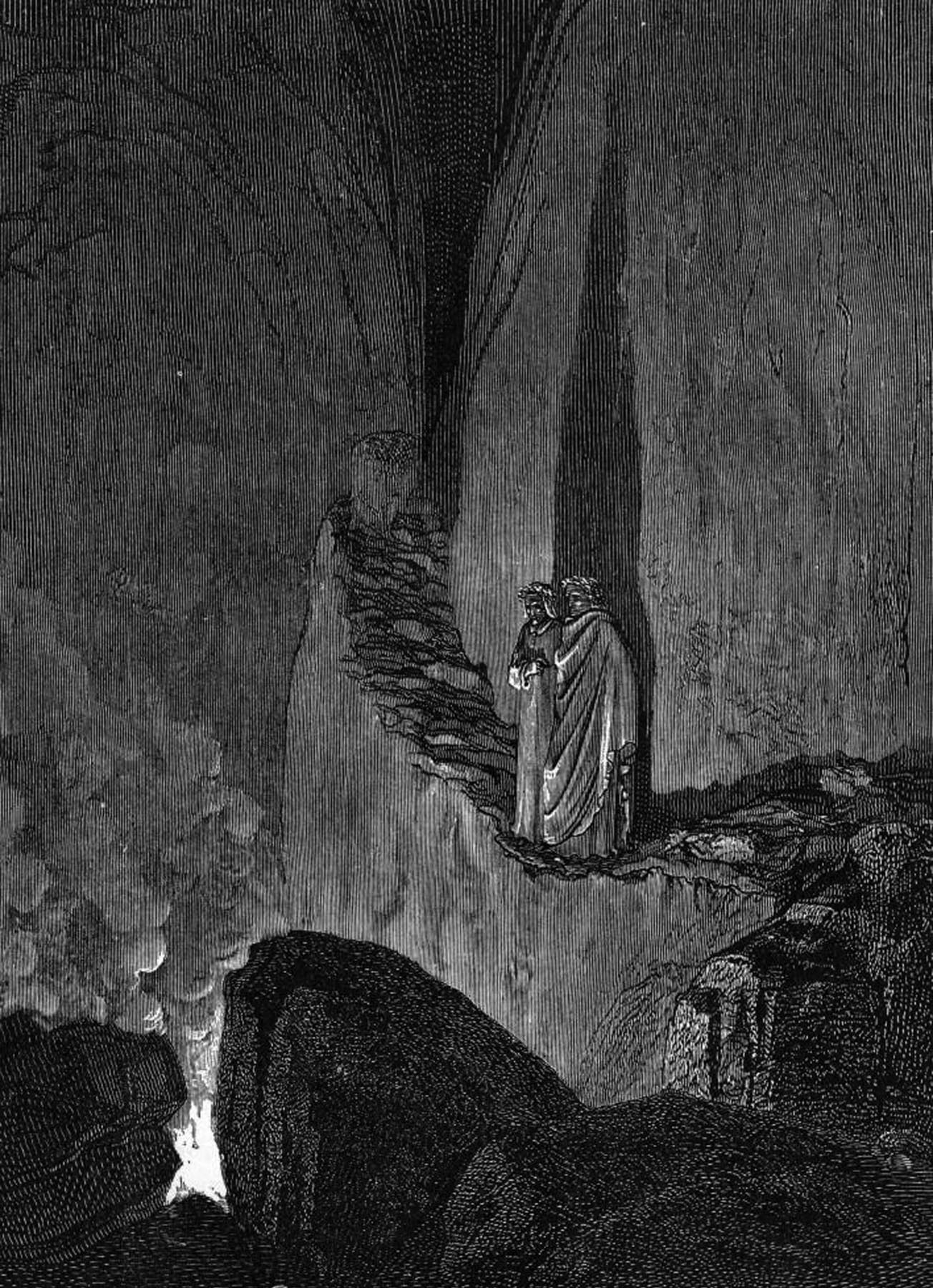
Dante the Pilgrim finally sees Satan at the bottom and center of Hell. That would seem to be terrifying enough for this aside to the reader, but various translators and commentators try to cast it as some great theological metaphor.
How frozen I was then, and hoarse with cold,
Reader, ask not; for I nought of it write,
As 'twill too little prove, whate'er I say
I did not die, nor yet alive remain'd.
Think for yourself, if you have any sense,
What I then was, depriv'd of Life and Death.
[tr. Rogers (1782)]
While nature thro' my nerves convulsive shook:
New palsies seiz'd my agonizing frame,
And glowing now I felt the fever's flame. While life and death by turns my limbs forsook.
[tr. Boyd (1802), st. 6]
How frozen and how faint I then became, Ask me not, reader! for I write it not, Since words would fail to tell thee of my state.
I was not dead nor living. Think thyself If quick conception work in thee at all, How I did feel.
[tr. Cary (1814)]
Ask me not, reader, how both hoarse and cold I then became; I write it not, nor strive To tell what never might by speech be told.
There I nor died, nor yet remained alive: Now think, if thou hast power of thought, and see What state was mine, that could of both deprive.
[tr. Dayman (1843)]
How icy chill and hoarse I then became, ask not, O Reader! for I write it not, because all speech would fail to tell. I did not die, and did not remain alive: now think for thyself, if thou hast an grain of ingenuity, what I became, deprived of both death and life.
[tr. Carlyle (1849)]
How freezing then, how feeble I became, Ask not, thou reader! for I cannot write; For every language must fall short in flight.
I neither died, nor yet remained alive! Think within thyself, if ingenious deft, How I became of strength and heat bereft.
[tr. Bannerman (1850)]
How terror-frozen I became and faint, Ask not, oh reader, what I cannot write, For all that I could say would feeble seem.
I did not die, I scarcely was alive; Hast thou one spark of fancy, think thou then How I became who knew nor death nor life.
[tr. Johnston (1867)]
How frozen I became and powerless then,
Ask it not, Reader, for I write it not, Because all language would be insufficient.
I did not die, and I alive remained not; Think for thyself now, hast thou aught of wit, What I became, being of both deprived.
[tr. Longfellow (1867)]
How I then became frozen and weak, do not ask, reader, for I do not write it, seeing that every speech would be too little. I did not die and did not remain alive; think now for thyself, if thou hast a grain of wit, what I became, being deprived of one and the other.
[tr. Butler (1885)]
How frozen I became, and weak of grace, From writing, reader, let me now be shrived, For every speech were weak such state to trace.
I did not die, and yet no longer lived; Think for thyself, if thou hast Fancy's bloom, What I became, of death and life deprived.
[tr. Minchin (1885)]
How I became then chilled and hoarse, ask it not, Reader, for I write it not, because all speech would be little. I did not die, and I did not remain alive. Think now for thyself, if thou hast grain of wit, what I became, deprived of one and the other.
[tr. Norton (1892)]
How frozen I became thereat, how fainting, Ask it not, reader, for I do not write it. For all that I could say would be but little.
I did not die, nor yet remained I living. Bethink thee now, if aught of wit thou claimest, What I became, bereft of both together.
[tr. Griffith (1908)]
How chilled and faint I turned then, do not ask, reader, for I do not write it, since all words would fail. I did not die and I did not remain alive; think now for thyself, if thou hast any wit, what I became, denied both death and life.
[tr. Sinclair (1939)]
How faint I then became, how frozen cold, Ask me not, Reader; for I write it not, Because all speech would fail, whate'er it told.
I died not, yet of life remained no jot. Think thou then, if of wit thou hast any share, What I became, deprived of either lot.
[tr. Binyon (1943)]
How cold I grew, how faint with fearfulness, Ask me not. Reader; I shall nor waste breath Telling what words are powerless to express;
This was not life, and yet it was not death; If thou hast wit to think how I might fare Bereft of both, let fancy aid thy faith.
[tr. Sayers (1949)]
How frozen and faint I then became, ask it not, reader, for I do not write it, because all words would fail. I did not die and I did not remain alive: now think for yourself, if you have any wit, what I became, deprived alike of death and life!
[tr. Singleton (1970)]
How chilled and nerveless. Reader, I felt then; do not ask me -- I cannot write about it -- there are no words to tell you how I felt.
I did not die -- I was not living either! Try to imagine, if you can imagine, me there, deprived of life and death at once.
[tr. Musa (1971)]
O reader, do not ask of me how I grew faint and frozen then -- I cannot write it: all words would fall far short of what it was.
I did not die, and I was not alive; v
think for yourself, if you have any wit, what I became, deprived of life and death.
[tr. Mandelbaum (1980)]
How frozen and how faint I then became, Do not enquire, reader, description is useless, For any speech would be inadequate.
I did not die, nor yet remain alive: Think for yourself, if you have a trace Of intellect, how I was, in that condition.
[tr. Sisson (1981)]
How chilled and faint I was On hearing that, you must not ask me, reader -- I do not write it, words would not suffice:
I neither died, nor kept alive -- consider With your own wits what I, alike denuded Of death and life, became as I heard my leader.
[tr. Pinsky (1994)]
How then I became frozen and feeble, do not ask, reader, for I do not write it, and all speech would be insufficient. I did not die and I did not remain alive: think now for yourself, if you have wit at all, what I became, deprived of both.
[tr. Durling (1996)]
Reader, do not ask how chilled and hoarse I became, then, since I do not write it, since all words would fail to tell it. I did not die, yet I was not alive. Think, yourself, now, if you have any grain of imagination, what I became, deprived of either state.
[tr. Kline (2002)]
How weak I now became, how faded, dry -- reader, don’t ask, I shall not write it down -- for anything I said would fall far short.
I neither died nor wholly stayed alive. Just think yourselves, if your minds are in flower, what I became, bereft of life and death.
[tr. Kirkpatrick (2006)]
Then how faint and frozen I became, reader, do not ask, for I do not write it, since any words would fail to be enough.
It was not death, nor could one call it life. Imagine, if you have the wit, what I became, deprived of either state.
[tr. Hollander/Hollander (2007)]
Don't ask me, reader, how frozen and faint I felt: I cannot write it, because no matter what words I used, or how many, none would be sufficient.
I did not die, I did not remain in that world. Just ask yourself, if you have a mind to work with, In what condition I was, not dead, not alive?
[tr. Raffel (2010)]
Reader, don’t ask how chill and faint I turned: I couldn't write it. All the words would fail. I didn't die, but couldn't live. I learned
What living death and death-in-life entail. But you must ponder, if you have the wit, What I, denied both life and death, became.
[tr. James (2013), l. 28ff]
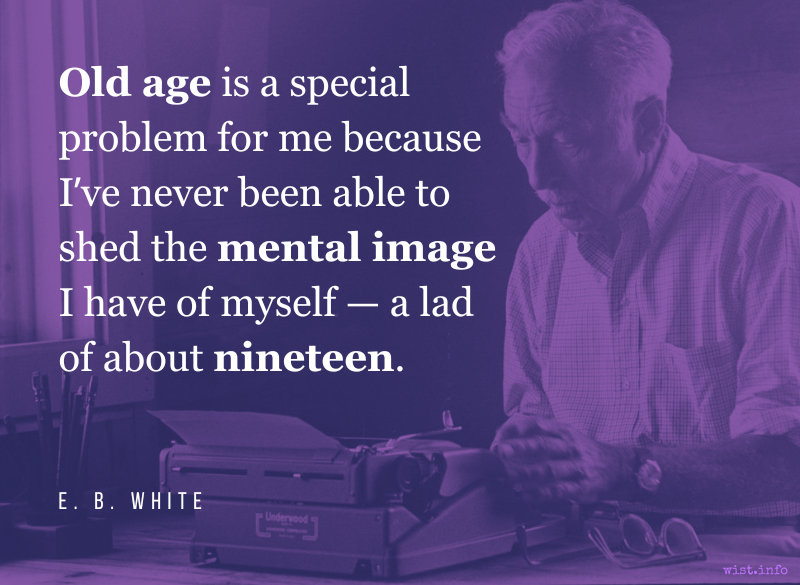
Old age is a special problem for me because I’ve never been able to shed the mental image I have of myself — a lad of about nineteen.
E. B. White (1899–1985) American author, critic, humorist [Elwyn Brooks White]
“E. B. White: Notes and Comment by Author,” interview by Israel Shenker, New York Times (1969-07-11)
(Source)
But, sooth, ’tis Spring
Lends leafing orchard and the woodside green
Her help and succor; in the Spring the earth
Swells warm and bids the seeds of life begin.
Then will th’ almighty Sire from heights of air
Descend in life-engendering showers to fill
Earth’s bosom, his glad spouse, and mightily
With her vast body mingling, brings to power
All unborn things she bears. With song-birds then
The tangled brakes are loud, and lowing herds —
Their season due — live o’er their mating days.
The whole earth’s womb is travailing; the land
Spreads bare its bosom to the warm west wind.
And gentle dews feed all. The bladed grass
Climbs boldly upward to the sun’s young beams;
The tendrilled vine shrinks not from gathering storm
Nor rout of wind-swept northern rains, but thrusts
Her soft buds forth and every leaf unfolds.
[Ver adeo frondi nemorum, ver utile silvis;
vere tument terrae et genitalia semina poscunt.
Tum pater omnipotens fecundis imbribus Aether
coniugis in gremium laetae descendit et omnis
magnus alit magno commixtus corpore fetus.
Avia tum resonant avibus virgulta canoris
et Venerem certis repetunt armenta diebus;
parturit almus ager Zephyrique tepentibus auris
laxant arva sinus; superat tener omnibus humor;
inque novos soles audent se germina tuto
credere, nec metuit surgentis pampinus austros
aut actum caelo magnis aquilonibus imbrem,
sed trudit gemmas et frondes explicat omnis.]
Virgil (70–19 BC) Roman poet [b. Publius Vergilius Maro; also Vergil] Georgics [Georgica], Book 2, l. 323ff (2.323) (29 BC) [tr. Williams (1915)]
(Source)
Spring cloaths the woods with leaves, and groves attires,
Earth swels with spring, and genitall seed requires.
In fruitfull showrs th' Almighty from above
Descends ith' lap, of his delighted love:
And great, he with the mighty body joyn'd,
Both propagates, and fosters every kinde.
Harmonious birds then sing in every grove,
And cattell taste the sweet delights of love.
Earth blest, now teems: soft winds dissolve the Meads,
With cheering warmth through all sweet moysture spreads.
To the new sun, the tender herbage dare
Open their leaves, nor vines rough Auster fear:
Nor thundering Boreas ushering dreadfull showrs;
But all things bud with blossome, leaf and flowers.
[tr. Ogilby (1649)]
The Spring adorns the Woods, renews the Leaves;
The Womb of Earth the genial Seed receives.
For then Almighty Jove descends, and pours
Into his buxom Bride his fruitful Show'rs.
And mixing his large Limbs with hers, he feeds
Her Births with kindly Juice, and fosters teeming Seeds.
Then joyous Birds frequent the lonely Grove,
And Beasts, by Nature stung, renew their Love.
Then Fields the Blades of bury'd Corn disclose,
And while the balmy Western Spirit blows,
Earth to the Breath her Bosom dares expose.
With kindly Moisture then the Plants abound,
The Grass securely springs above the Ground;
The tender Twig shoots upward to the Skies,
And on the Faith of the new Sun relies.
The swerving Vines on the tall Elms prevail,
Unhurt by Southern Show'rs or Northern Hail.
They spread their Gems the genial Warmth to share:
And boldly trust their Buds in open Air.
[tr. Dryden (1709), l. 438ff]
In spring the groves, in spring the woods delight,
In spring swoll'n lands the genial seeds invite.
Then on his glad Wife's breast in fertile show'rs
Himself th' all-potent Father Ether pours;
Mixt with the Mother in a vast embrace
The mighty Sire refreshes all her race.
The lone brakes echo with the plumy quire,
And on set days herds burn with fierce desire:
Earth bounteous teems; the fields their bosom bare
To the kind warmth of Zephyr's balmy air:
A subtile moisture wide prevails: the land
Dares to new suns her verdant vest expand.
Nor then the Vine dreads Auster's threat'ning pow'r,
Or, by rough Boreas driv'n, the weighty show'r;
But all her gems, and all her leaves displays.
[tr. Nevile (1767), l. 361ff]
Spring comes, new bud the field, the flower, the grove,
Earth swells, and claims the genial seeds of love:
Aether, great lord of life, his wings extends,
And on the bosom of his bride descends,
With show'rs prolific feeds the vast embrace
That fills all nature, and renews her race.
Birds on their branches hymeneals sing,
The pastur'd meads with bridal echoes ring;
Bath'd in soft dew, and fann'd by western winds,
Each field its bosom to the gale unbinds:
The blade dares boldly rise new suns beneath,
The tender vine puts forth her flexile wreath,
And, freed from southern blast and northern shower,
Spreads without fear, each blossom, leaf, and flower.
[tr. Sotheby (1800)]
The spring, too, is beneficial to the foliage of the groves, the spring is beneficial to the woods: in spring the lands swell, and demand the genial seeds. Then almighty father Aether descends in fertilizing showers into the bosom of his joyous spouse, and great himself, mingling with her great body, nourishes all her offspring. Then the retired brakes resound with tuneful birds,; and the herds renew their loves on the stated days. the bounteous earth is teeming to the birth, and the and the fields open their bosoms to the warm breezes of the Zephyr: in all a gentle moisture abounds; and the herbs dare safely trust themselves to the infant suns; nor do the vine's tender shoots fear the rising south winds, or the shower precipitated from the sky by the violent north winds; but put forth their buds, and unfold all their leaves.
[tr. Davidson (1854)]
So Spring befriends the forest and the mead,
In Spring the plump earth craves the vital seed:
Then Air, almighty father, raining life,
Sinks on the bosom of his laughing wife;
All growth he feeds, commingling with the same,
The mighty Spirit in the mighty frame.
Then birds make music to the pathless groves,
And herds and flocks prove faithful to their loves:
The kind earth gives her increase, and the West
With fluttering warmth unzones the meadow's breast.
Soft dew is shed on all, and flowers are won
To trust their beauty to the stranger sun.
No more the vine-growth dreads the southern blast,
Or showers from heaven by mighty north winds cast;
But pushes forth the gems herself conceives,
And opes the crinkled modesty of the leaves.
[tr. Blackmore (1871), l. 383ff]
Spring ministers to the foliage of the groves, spring to the woods: in springtime earth swells with fruitfulness, and asks the seed that giveth life. 'Tis then that the almighty father air descends in fertilising showers into the leap of his joyous spouse, and in his might, mingling with her mighty frame, nourishes all the embryos within. Then pathless brakes with tuneful birds resound, and herds on certain days renews their loves; bounteous earth teems with life, and the fields open their bosoms to the Zephyr's balmy breezes; a delicate moisture abounds everywhere; the herbage safely dares to trust itself to meet the newborn suns; nor does the vine-leaf dread the rising of the southern gales, or the shower driven from the sky by the north's impetuous blast, but puts forth its buds and all its leaves unfolds.
[tr. Wilkins (1873)]
Spring it is
Blesses the fruit-plantation, Spring the groves;
In Spring earth swells and claims the fruitful seed.
Then Aether, sire omnipotent, leaps down
With quickening showers to his glad wife's embrace,
And, might with might commingling, rears to life
All germs that teem within her; then resound
With songs of birds the greenwood-wildernesses,
And in due time the herds their loves renew;
Then the boon earth yields increase, and the fields
Unlock their bosoms to the warm west winds;
Soft moisture spreads o'er all things, and the blades
Face the new suns, and safely trust them now;
The vine-shoot, fearless of the rising south,
Or mighty north winds driving rain from heaven,
Bursts into bud, and every leaf unfolds.
[tr. Rhoades (1881)]
Green leaves unfold, the woods in spring rejoice;
Swells the warm glebe, and with impatient voice
The seed demands; the god who fills all space,
All earth compresses in one vast embrace;
All earth, now conscious of almighty power,
Waits the glad advent of the genial shower.
The tuneful birds in lonely thickets sing
Their amorous descant, and proclaim the spring;
The lowing herd the soft infection feels;
Earth teems prolific as the warm breath steals
Of zephyr o’er her; dews refreshing rise;
The tender grasses dare the sunny skies.
Secure the vine puts forth each polished gem,
Hope of the vintage, from the bursting stem.
[tr. King (1882), l. 334ff]
Spring especially is beneficial to the foliage of the groves; spring is beneficial to the woods: in spring earth swells and demands generative seeds. Then almighty father ther descends in fertilizing showers into the lap of his happy spouse, and mighty himself, mingling with her mighty body, nourishes all her offspring. Then the retired brakes resound with the songs of birds, and the herds renew their loves at their appointed times. Then bounteous earth is teeming to the birth, and the fields open their bosoms to the balmy breezes of the Zephyr: in all a kindly moisture abounds; and the herbs safely venture to trust themselves to the early suns; nor do the vine’s tender shoots fear the rising south winds, or the shower precipitated from the sky by the violent north winds; but put forth their buds, and unfold all their leaves.
[tr. Bryce (1897)]
Spring aids woodland leaf and forest tree; in spring earth yearns and cries for the life-giving seed. Then the lord omnipotent of Sky descends in fruitful showers into the lap of his laughing consort, and mingling with her mighty body nourishes all her fruits in might. Then pathless copses ring with warbling birds, and at the appointed days the herds renew their loves; the bountiful land breaks into birth, and the fields unbosom to warm breezes of the West: everywhere delicate moisture overflows, and the grasses dare in safety to trust themselves to spring suns, nor does the vine-tendril fear gathering gales or sleet driven down the sky by the blustering North, but thrusts forth her buds and uncurls all her leaves.
[tr. Mackail (1899)]
Spring it is
Blesses the fruit-plantation, Spring the groves;
In Spring earth swells and claims the fruitful seed.
Then Aether, sire omnipotent, leaps down
With quickening showers to his glad wife's embrace,
And, might with might commingling, rears to life
All germs that teem within her; then resound
With songs of birds the greenwood-wildernesses,
And in due time the herds their loves renew;
Then the boon earth yields increase, and the fields
Unlock their bosoms to the warm west winds;
Soft moisture spreads o'er all things, and the blades
Face the new suns, and safely trust them now;
The vine-shoot, fearless of the rising south,
Or mighty north winds driving rain from heaven,
Bursts into bud, and every leaf unfolds.
[tr. Greenough (1900), l. 323ff]
With blessing to woodland-frondage and forest Spring returns.
In spring earth heaves with desire, for the seed life-laden she yearns:
Then Heaven, the Father almighty, in quickening showers descends
Into the lap of his gladsome bride: in his might he blends
with her mighty frame, and to all her offspring life doth he bring;
Then pathless copses with music of birds re-echoing ring;
And the beasts are rekindled with love in the days ordained of the Spring.
The land with her boons is in travail, to west-winds warmly blowing
Fields open their arms; all things are with delicate sap overflowing.
In the suns new-born all seedlings safely and fearlessly trust.
No vine-shoot dreadeth the south-wind's suddenly rising gust,
Or the rain-storm that over the sky the mighty north-wind hurls;
But each pushes gem-buds forth, and her green leaf-banners unfurls.
[tr. Way (1912)]
Spring it is that clothes the glades and forests with leaves, in spring the soil swells and carves the vital seed. Then does Heaven, sovereign father, descend in fruitful showers into the womb of his joyful consort and, mightily mingling with her mighty frame, gives life to every embryo within. Then secluded thickets echo with melodious birdsong and at the trysting hour the herds renew their loves; the bounteous earth prepares to give birth, and the meadows ungirdle to the Zephyr’s balmy breeze; the tender moisture avails for all. The grass safely dares to face the nascent suns, nor does the vine tendril fear the South Wind’s rising or showers launched from the skies by the blustering North, but puts forth buds and unfurls its every leaf.
[tr. Fairclough (Loeb) (1916)]
Oh, spring is good for leaves in the spinney, good to forests,
In spring the swelling earth aches for the seed of new life.
Then the omnipotent Father of air in fruitful showers
Comes down to his happy consort
And greatly breeds upon her great body manifold fruit.
Then are the trackless copses alive with the trilling of birds,
And the beasts look for love, their hour come round again:
Lovely the earth in labour, under a tremulous west wind
The fields unbosom, a mild moisture is everywhere.
Confident grows the grass, for the young sun will not harm it;
The shoots of the vine are not scared of a southerly gale arising
Or the sleety rain that slants from heaven beneath a north wind, --
No, bravely now they bud and all their leaves display.
[tr. Day-Lewis (1940)]
Spring fills the groves with leaves,
Is good to forests; earth expands in the Spring,
And sends out calls for life-inspiring seed.
Then Heaven, the father almighty, comes down to earth
In pregnant rains to embrace his joyous bride,
Infusing her massive frame with vital strength.
Then pathless thickets ring with songs of birds,
And herds comply with Venus’ set demands;
The kindly field gives birth, and furrowed lands
Release their folds to the West Wind’s ruffling breeze;
Soft moisture floods all things, the green blades dare
To face the newborn suns, the budding vines
Have no fear of the South Wind’s springing up,
Nor of rain the North Wind lashes through the sky.
But put forth buds, unfolding all their leaves.
[tr. Bovie (1956)]
... Father omnipotent, the sky, with fruitful showers comes down into the womb of his joyful wife, in his greatness joins with her great body and nourishes all young. ... the tepid breezes of the west wind ... gentle moisture ... grasses date entrust themselves safely to mild suns ... the vine shoot does not fear either rising south winds or rain driven from the sky by great north winds, but it thrusts out its buds and unfolds its leaves, all of them.
[tr. Miles 1, 2 (1980)]
Spring is the friend of woods, spring is the friend
Of forest leaves, in spring the country swells
Clamouring for the fertilizing seeds.
Then the almighty father Heaven descends
Into the lap of his rejoicing bride
With fecund showers, and with her mighty body
Mingling in might begets all manner of fruits.
Then are wild thickets loud with singing birds
And in their season herds renew their loves.
The nurturing earth is pregnant; warmed by breezes
Of Zephyrus the fields unloose their bosoms
Mild moisture is all-pervading, and unharmed
The grasses brave the unaccustomed suns;
Nor do the vine-shoots fear a southern gale.
Or northern rainstorms driving down the sky.
But put forth buds and all their leaves unfold.
[tr. Wilkinson (1982)]
Spring benefits the leaves of the groves and woods,
in Spring soil swells and demands life-bringing seed.
Then Heaven, the omnipotent father, descends as fertile rain,
into the lap of his joyful consort, and joining his power
to her vast body nourishes all growth.
Then the wild thickets echo to the songs of birds,
and in the settled days the cattle renew their loves:
the kindly earth gives birth, and the fields open their hearts,
in the warm West winds: gentle moisture flows everywhere,
and the grasses safely dare to trust to the new sun.
the vine-shoots don’t fear a rising Southerly,
or rain driven through the sky, by great Northerly gales,
but put out their buds, and unfold all their leaves.
[tr. Kline (2001)]
It is spring that decks the groves in leaves, spring that serves the woods;
in spring, Earth swells moistly and begs for bursting seed.
Then Sky, all-powerful father, descends to the womb
of his fertile spouse with inseminating rain and, uniting
his strength with her strong body, nourishes all they conceive.
The remotest thickets resound then with birdsong, and the herds
seek once again to mate in this appointed season.
The fair land longs to give birth; fields plowed but not yet sown open
themselves to the West Wind's ardor. Sweet moisture abounds for all.
Plants dare in safety to trust the sun's new light and warmth,
nor do the tendrils of the vines fear the South Wind's rising
or showers driven down from heaven by the forceful North Wind.
No, they spout plump buds, and unfurl all their leaves.
[tr. Lembke (2004)]
O spring the leafy groves, spring the forest speeds,
in spring the acres swell and beg for pregnant seed.
Then Heaven, almighty Father, in vital showers comes down
into the lap of his ecstatic wife, where his potence
with her potent loins commingling engenders all florescence.
Then trackless thickets trill with birdsong
and in their hour appointed the herds renew the rut.
Bountiful broods the earth and under warm westerlies
the fields unloose their bosom -- soft moisture soaks into everything
and the cotyledons dare resign themselves to the new suns,
the shoots fear not the south wind's surge
nor showers drive through the sky by the gusting North,
but push out buds and all their leaves unfold.
[tr. Johnson (2009)]
It's spring that adorns the woods and groves with leaves;
In spring, the soil, desiring seed, is tumid,
And then the omnipotent father god descends
In showers from the sky and enters into
The joyful bridal body of the earth,
His greatness in their union
Bringing to life the life waiting to live.
Birdsong is heard in every secluded thicket,
And all the beasts of the field have become aware
That love's appointed days have come again.
The generous earth is ready to give birth
And the meadows ungirdle for Zephyr's warming breezes;
The tender dew is there on everything;
The new grass dares entrust itself to the new
Suns of the new days and the little tendrils
Of the young vines have no fear of a South Wind coming
Nor of a North Wind from a stormy sky;
The vine brings forth its buds; its leaves unfold.
[tr. Ferry (2015)]
No man rules safely unless he is willing to be ruled. No man commands safely unless he has learned well how to obey.
[Nemo secure apparet nisi qui libenter latet. Nemo secure præcipit nisi qui obedire didicit.]
Thomas à Kempis (c. 1380–1471) German-Dutch priest, author The Imitation of Christ [De Imitatione Christi], Book 1, ch. 20, v. 2 (1.20.2) (c. 1418-27) [tr. Croft/Bolton (1940)]
(Source)
No man is sure in prelacy, but that he would gladly be a subject: no, none may surely command, but he that hath learned gladly to obey
[tr. Whitford/Raynal (1530/1871)]
No man is secure in high position save he who would gladly be a subject. No man can firmly command save he who has learned gladly to obey.
[tr. Whitford/Gardiner (1530/1955)]
No man ruleth safely but he that is ruled willingly, no man securely doth command, but he that hath learned readily to obey.
[tr. Page (1639), 1.20.9]
No Man is fit to govern who hath not learned how to obey.
[tr. Stanhope (1696; 1706 ed.)]
No man can safely govern, that would not cheerfully become subject; no man can safely command, that has not truly learned to obey.
[tr. Payne (1803), 1.20.4]
No man ruleth safely, but he that is willingly ruled. No man securely doth command, but he that hath learned readily to obey.
[ed. Parker (1841)]
No man can safely govern, that would not willingly be governed; no man can safely command, that has not well learned to obey.
[tr. Dibdin (1851), 1.20.3]
No man is safe to govern, but he who would rather live in subjection. No man is safe to command, but he who has learned well how to obey.
[ed. Bagster (1860)]
No man safely ruleth but he who loveth to be subject. No man safely commandeth but he who loveth to obey.
[tr. Benham (1874)]
No man doth safely rule, but he that is glad to be ruled. No man doth safely rule, but he that hath learned gladly to obey.
[tr. Anon. (1901)]
No one is safely set above who would not cheerfully be subject. No one safely gives orders but he who has thoroughly learned to obey.
[tr. Daplyn (1952)]
No man can safely command, unless he who has learned to obey well.
[tr. Sherley-Price (1952)]
Never trust yourself [...] to come to the front, unless you would sooner be at the back; to give orders, unless you know how to obey them.
[tr. Knox-Oakley (1959), 1.20(b)]
No one can safely be in command, but the man who has learned complete obedience.
[tr. Knott (1962)]
No one governs with safety who is unwilling to be governed. No one gives commands with safety who has not learned well how to obey.
[tr. Rooney (1979)]
No one leads securely except the person who freely serves.
[tr. Creasy (1989)]
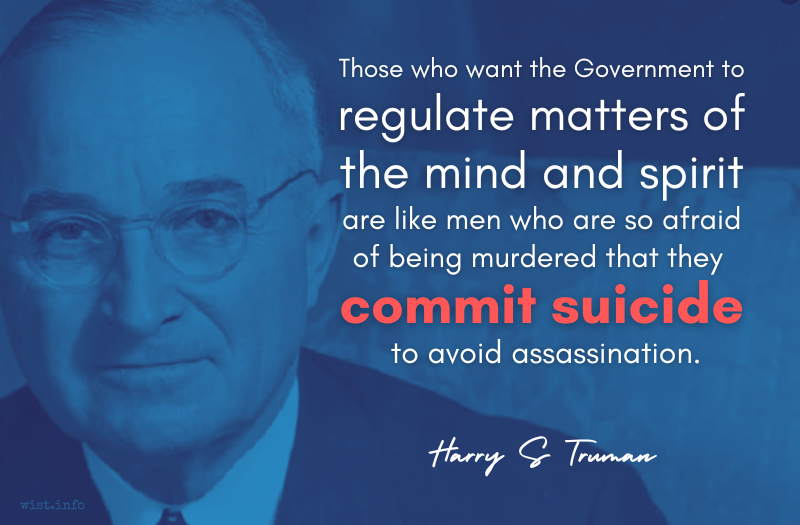
Those who want the Government to regulate matters of the mind and spirit are like men who are so afraid of being murdered that they commit suicide to avoid assassination.
Harry S Truman (1884–1972) US President (1945–1953)
Speech, National Archives (1952-12-15)
(Source)
“One must do as others do”: a suspect maxim, which nearly always means: “one must do wrong” as soon as it is applied to anything beyond those purely external matters which are of no consequence, but depend on custom, fashion or convention.
[«Il faut faire comme les autres»: maxime suspecte, qui signifie presque toujours: «il faut mal faire» dès qu’on l’étend au delà de ces choses purement extérieures, qui n’ont point de suite, qui dépendent de l’usage, de la mode ou des bienséances.]
Jean de La Bruyère (1645–1696) French essayist, moralist The Characters [Les Caractères], ch. 12 “Of Opinions [Des Jugements],” § 10 (12.10) (1688) [tr. Stewart (1970)]
(Source)
We must do like other men; a dangerous Maxim, and for the most part signifies we must do ill; if you speak not of things purely exteriour, and of no consequence, but what depends on Custome, Fashion, or Decency.
[Bullord ed. (1696)]
We must do as others do; a dangerous Maxim, which for the most part signifies we must do ill, if extended beyond things purely exterior, and of no consequence, things depending on Custom, Fashion, or Decency.
[Curll ed. (1713)]
We must do like other Men: a dangerous Maxim, for the most Part signifying we must do ill, if you carry it beyond things external, and of no consequence, but depending on Custom, Fashion, or Ceremony.
[Browne ed. (1752)]
“We must do as others do” is a dangerous maxim, which nearly always means “we must do wrong” if it is applied to any but external things of no consequence, and depending on custom, fashion, or decency.
[tr. Van Laun (1885)]
In fact, “atheism” is a term that should not even exist. No one ever needs to identify himself as a “non-astrologer” or a “non-alchemist.” We do not have words for people who doubt that Elvis is still alive or that aliens have traversed the galaxy only to molest ranchers and their cattle. Atheism is nothing more than the noises reasonable people make in the presence of unjustified religious beliefs.
Sam Harris (b. 1967) American author, philosopher, neuroscientist Letter to a Christian Nation (2006)
(Source)
An ironic statement from Dionysus, of how he will keep his calm and temper in the face of Pentheus' disrespectful fury. In very short order, Dionysus is (calmly) setting up Pentheus' self-destruction through the Bacchantes' frenzy.
The aim of every artist is to arrest motion, which is life, by artificial means and hold it fixed so that a hundred years later, when a stranger looks at it, it moves again since it is life. Since man is mortal, the only immortality possible for him is to leave something behind him that is immortal since it will always move. This is the artist’s way of scribbling “Kilroy was here” on the wall of the final and irrevocable oblivion through which he must someday pass.
William Faulkner (1897–1962) American novelist
“The Art of Fiction,” Interview by Jean Stein, Paris Review #12 (Spring 1956)
(Source)
The malevolent at times commit good actions, as though they wanted to see whether in fact they afford as much pleasure as good people pretend.
[Les méchans font quelquefois de bonnes actions. On dirait qu’ils veulent voir s’il est vrai que cela fasse autant de plaisir que le prétendent les honnêtes gens.]
Nicolas Chamfort (1741–1794) French writer, epigrammist (b. Nicolas-Sébastien Roch) Products of Perfected Civilization [Produits de la Civilisation Perfectionée], Part 1 “Maxims and Thoughts [Maximes et Pensées],” ch. 2, ¶ 122 (1795) [tr. Merwin (1969)]
(Source)
Wicked people sometimes perform good actions. I suppose they wish to see if this gives as great a feeling of pleasure as the virtuous claim for it.
[tr. Mathers (1926)]
The wicked sometimes perform good actions. One might say they wish to see whether it is true that they engender as much pleasure as respectable folk maintain they do.
[tr. Pearson (1973)]
If one burdens the future with one’s worries, it cannot grow organically. I am filled with confidence, not that I shall succeed in worldly things, but that even when things go badly for me I shall still find life good and worth living.
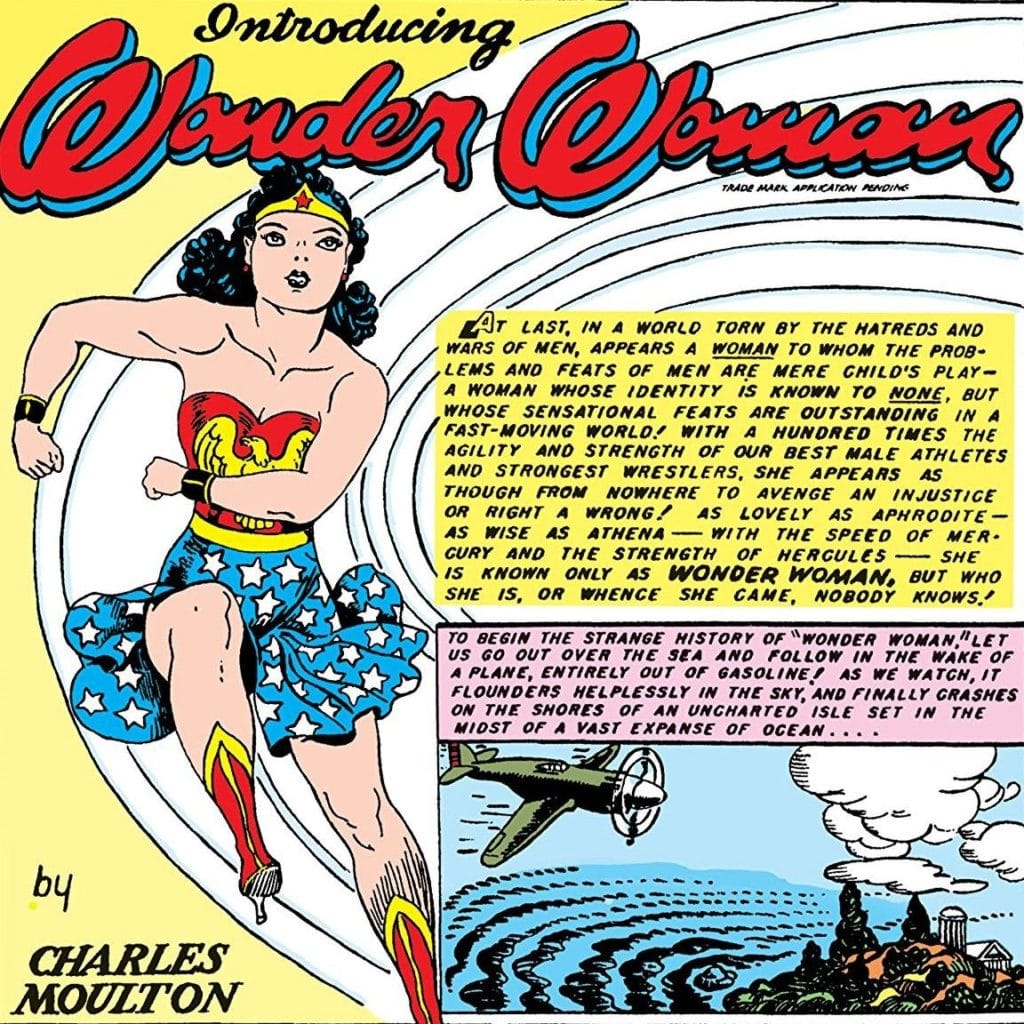
Splash page of All Star Comics #8 (Dec/Jan 1941/42)At last, in a world torn by the hatred and wars of men, appears a woman to whom the problems and feats of men are mere child’s play — a woman whose identity is known to none, but whose sensational feats are outstanding in a fast-moving world! With a hundred times the agility and strength of our best male athletes and strongest wrestlers, she appears as though from nowhere to avenge an injustice or right a wrong! As lovely as Aphrodite — as wise as Athena — with the speed of Mercury and the strength of Hercules — she is known only as Wonder Woman, but who she is, or whence she came, nobody knows!
William Moulton Marston (1893–1947) American psychologist, writer [pen name Charles Moulton]
“Introducing Wonder Woman,” All Star Comics #8 (25 Oct 1941) [with artist Harry G. Peter]
First appearance of the comic book character Wonder Woman.
If you put together all the ingredients that naturally attract children — sex, violence, revenge, spectacle and vigorous noise — what you have is grand opera.
Judith Martin (b. 1938) American author, journalist, etiquette expert [a.k.a. Miss Manners] Miss Manners’ Guide to Excruciatingly Correct Behavior, Part 9 “Advanced Civilization,” “Play” (1983)
(Source)
For when the faculty of intellect is joined with brute force and with evil will, no man can win against such an alliance.
[Ché dove l’argomento de la mente s’aggiugne al mal volere e a la possa, nessun riparo vi può far la gente.]
Dante Alighieri (1265–1321) Italian poet The Divine Comedy [Divina Commedia], Book 1 “Inferno,” Canto 31, l. 55ff (31.55) (1309) [tr. Musa (1971)]
(Source)
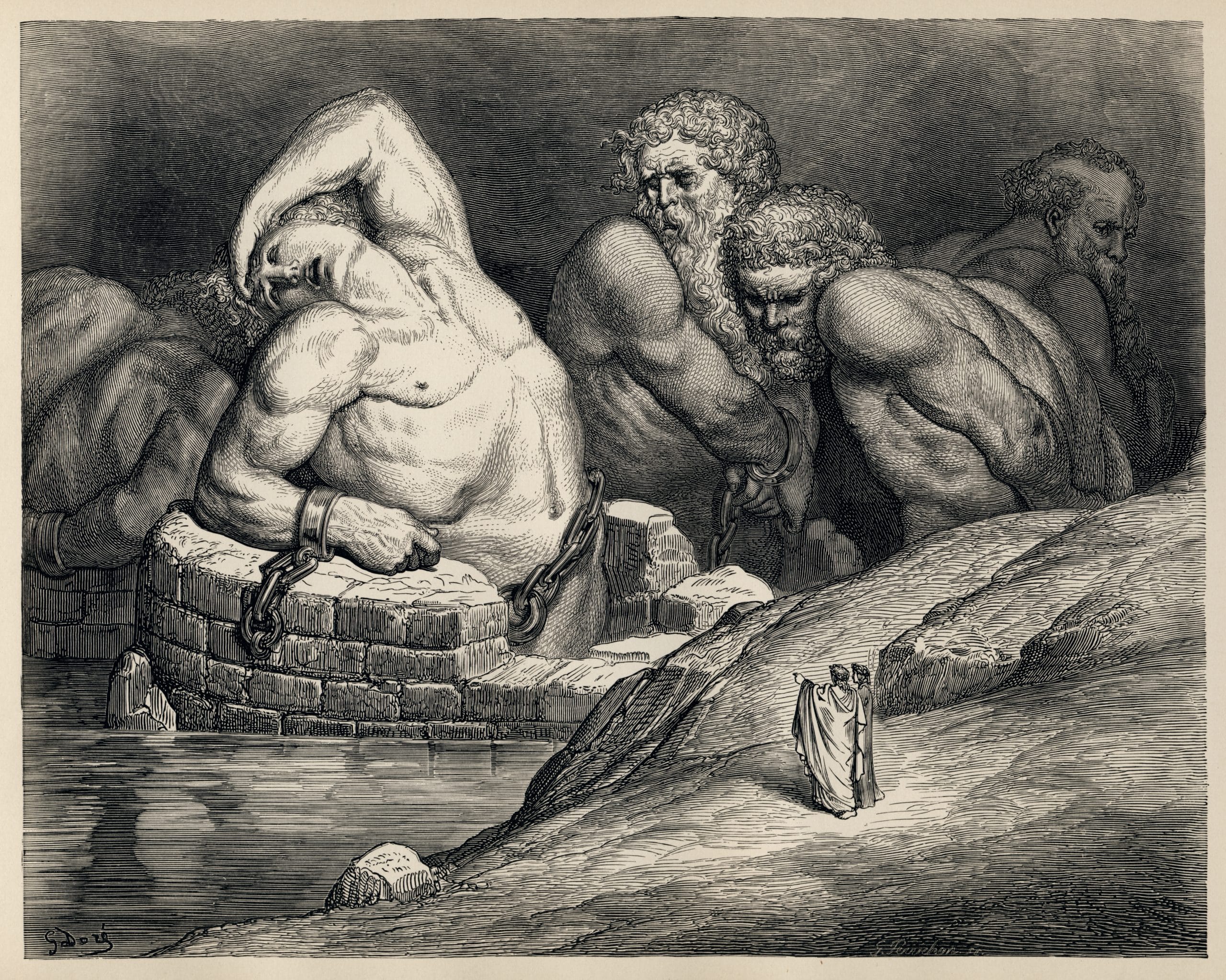
Why Nature no longer allows human-like giants, while still producing whales and elephants.
For where the mind to bad Intention's join'd,
And with a Pow'r what's ill design'd to act,
None can himself from such a force defend.
[tr. Rogers (1782), l. 49ff]
But not the forest tribes, nor finny race,
With equal rage their native walks deface, As he whose deadly arm by Reason's light
Directed falls, and mocks the warding hand;
Conspiring realms in vain his pow'r withstand, In vain embattled hosts defend their right.
[tr. Boyd (1802), st. 9]
For when brute force
And evil will are back’d with subtlety,
Resistance none avails.
[tr. Cary (1814)]
For discourse of mind,
Wedded with power and inbred lust of wrong,
Had left nor help nor rescue for mankind.
[tr. Dayman (1843)]
For where [the instrument] of [the] mind is joined to evil will and potency, men can make no defence against it.
[tr. Carlyle (1849)]
For when a reasoning and a subtle mind Is joined, besides, to evil will and power, Who can resist? -- for all defence must cower.
[tr. Bannerman (1850)]
For when the reasoning faculty combines With evil will and with destructive pow'r, Then there remains no more defence for man.
[tr. Johnston (1867)]
For where the argument of intellect Is added unto evil will and power, No rampart can the people make against it.
[tr. Longfellow (1867)]
For where the equipment of the mind is joined to illwill and to power, folk can make no rampart against it.
[tr. Butler (1885)]
For where the assistance of the intellect Is added unto evil will and power, 'Gainst it no refuge could mankind erect.
[tr. Minchin (1885)]
For where the faculty of the mind is added to evil will and to power, the human race can make no defense against it.
[tr. Norton (1892)]
For where the force of intellect is joined to evil will, and power to do such will, mankind is helpless to find resource against it.
[tr. Sullivan (1893)]
For, where the equipment and the use of reason Are joined to ill intent and power of action, No sort of refuge can folk make against it.
[tr. Griffith (1908)]
For where the equipment of the mind is joined to evil will and to power men can make no defence against it.
[tr. Sinclair (1939)]
For if with the mind's instrument unite Power and an evil purpose both at once, Men have no means against such force to fight.
[tr. Binyon (1943)]
For where the instrument of thinking mind Is joined to strength and malice, man’s defence Cannot avail to meet those powers combined.
[tr. Sayers (1949)]
For where the instrument of intelligence is added to brute power and evil will, mankind is powerless in its own defense.
[tr. Ciardi (1954)]
For where the instrument of the mind is added to an evil will and to great power, men can make no defense against it.
[tr. Singleton (1970)]
For where the mind’s acutest reasoning is joined to evil will and evil power, there human beings can’t defend themselves.
[tr. Mandelbaum (1980)]
For, where the argument of reason is
Joined with an evil will and potency,
There is no possible defence for man.
[tr. Sisson (1981)]
The power of the mind, along with that Of immense strength, upon an evil will Then people will have no defense from it.
[tr. Pinsky (1994), l. 52ff]
For where sharpness of mind is joined to evil will and power, there is no defence people can make against them.
[tr. Durling (1996)]
Where the instrument of mind is joined to ill will and power, men have no defence against it.
[tr. Kline (2002)]
For when the powers of working intellect are wed to strength and absolute illwill, then humans cannot find a place to hide.
[tr. Kirkpatrick (2006)]
For when the power of thought is coupled with ill will and naked force there is no refuge from it for mankind.
[tr. Hollander/Hollander (2007)]
For when the thinking powers of human brains Are tools of malicious will and enormous strength, Smaller creatures like men have no defense.
[tr. Raffel (2010)]
For only when ill will and massive strength
Are joined with mental power does it arise
That the invincible is born.
[tr. James (2013), l. 58ff]
Writing is more than anything a compulsion, like some people wash their hands thirty times a day for fear of awful consequences if they do not. It pays a whole lot better than this type of compulsion, but it is no more heroic.
Julie Burchill (b. 1959) English novelist, columnist, broadcaster Sex & Sensibility, Introduction (1992)
(Source)
After a hard night of it two old friends fell into a sleepy conversation in the steam-room of a Turkish bath. “My wife loves me so much,” said one, “that she’ll believe me when I tell her I was kept downtown all night by business.” “My wife loves me so much,” said the other, “that I won’t be afraid to tell her the truth.”
H. L. Mencken (1880–1956) American writer and journalist [Henry Lewis Mencken] A Little Book in C Major, ch. 1, § 10 (1916)
(Source)
I am only an ignorant cowpuncher, but there ain’t nobody on earth, I don’t care how smart they are, ever going to make me believe they will ever stop wars.
Will Rogers (1879–1935) American humorist
Column (1923-07-22), “Weekly Article: Rogers Praises Spirit of Tulsa” [No. 32]
(Source)
A real education takes place, not in the lecture hall or library, but in the rooms of friends, with earnest frolic and happy disputation. Wine can be a wiser teacher than ink, and banter is often better than books. That was my theory at least, and I was living by it.
Stephen Fry (b. 1957) British actor, writer, comedian The Fry Chronicles: An Autobiography, Part 1 “College to Colleague” (2010)
(Source)
Virgil (70–19 BC) Roman poet [b. Publius Vergilius Maro; also Vergil] Georgics [Georgica], Book 2, l. 272ff (2.272) (29 BC) [tr. Greenough (1900)]
(Source)
Discussing how, when transplanting vines, wise farmers try to match the soil and orientation of the plant toward the sun to the conditions where they first sprouted. The same phrase is often extended (when extracted like this) to the lasting effects of early training on children. See also Pope.
Plato said that virtue has no master. If a person does not honor this principle and rejoice in it, but is purchasable for money, he creates many masters for himself.
Apollonius of Tyana (c. AD 15–100) Greek philosopher and religious leader [Ἀπολλώνιος] Letters from Apollonius of Tyana, ep. 15, Letter to Euphrates [tr. Jones (2006)]
(Source)
Every time you get a censor, you get a fool, and worse yet a knave, pretending to be a guardian of morality, while acting as a guardian of class greed.
Upton Sinclair (1878–1968) American writer, journalist, activist, politician Money Writes!, ch. 22 “The Bookleggers” (1927)
(Source)
Self-quoted in "Poor Me and Pure Boston," The Nation (1927-06-29)
One of the defining features of the Anthropocene is that the world is changing in ways that compel species to move, and another is that it’s changing in ways that create barriers — roads, clear-cuts, cities — that prevent them from doing so.
Elizabeth Kolbert (b. 1961) American journalist and author The Sixth Extinction: An Unnatural History, ch. 9 “Islands on Dry Land” (2014)
(Source)
If I had lived in that wild early world
When each day saw new monstrosities,
I would have fawned upon a giantess, curled
Voluptuous as a cat around her knees.
[Du temps que la Nature en sa verve puissante
Concevait chaque jour des enfants monstrueux,
J’eusse aimé vivre auprès d’une jeune géante,
Comme aux pieds d’une reine un chat voluptueux.]
Charles Baudelaire (1821–1867) French poet, essayist, art critic Les Fleurs du Mal [The Flowers of Evil], # 19 “La Géante [The Giantess],” st. 1 (1857) [tr. Lerner (1999)]
(Source)
Also in in the 1861 ed. (# 19) and 1868 (# 20). (Source (French)). Other translations:
When Nature in her lavish lustiness
Bred day by day new, strange monstrosities,
Would I had lived with a young giantess
Like a warm cat who at a queen's feet lies.
[tr. Squire (1909)]
I should have loved -- erewhile when Heaven conceived
Each day, some child abnormal and obscene,
Beside a maiden giantess to have lived,
Like a luxurious cat at the feet of a queen
[tr. Scott (1909)]
From the time when Nature in her furious fancy
Conceived each day monstrosities obscene,
I had loved to live near a young Giantess of Necromancy,
Like a voluptuous cat before the knees of a Queen.
[tr. Symons (1913)]
In times of old when Nature in her glad excess
Brought forth such living marvels as no more are seen,
I should have loved to dwell with a young giantess,
Like a voluptuous cat about the feet of a queen.
[tr. Dillon (1936)]
When Nature once in lustful hot undress
Conceived gargantuan offspring, then would I
Have loved to live near a young giantess,
Like a voluptuous cat at a queen's feet.
[tr. Shapiro (1942)]
Of old when Nature, in her verve defiant,
Conceived each day some birth of monstrous mien,
I would have lived near some young female giant
Like a voluptuous cat beside a queen,
[tr. Campbell (1952)]
At the time when Nature with a lusty spirit
Was conceiving monstrous children each day,
I should have liked to live near a young giantess,
Like a voluptuous cat at the feet of a queen.
[tr. Aggeler (1954)]
In times when Nature, lusty to excess,
Bred monstrous children, would that I had been
Living beside a youthful giantess,
Like a voluptuous cat beside a queen
[tr. LeClercq (1958)]
In those times when Nature in powerful zest
Conceived each day monstrous children,
I would have loved to live near a young giantess,
A voluptuous cat at the feet of a queen.
[tr. Wagner (1974)]
Had I been there when primal Nature teemed
with monstrous progeny, I would have tried
to live beside some mammoth girl, the way
a cat will sprawl at the feet of a queen
[tr. Howard (1982)]
In olden days when Nature in her lusty exuberance daily conceived monstrous offspring, I would gladly have lived beside some youthful giantess, like a voluptuous cat at the feet of a queen.
[tr. Scarfe (1986)]
In times when madcap Nature in her verve
conceived each day a hatch of monstrous spawn,
I might have lived near some young giantess,
Like a voluptuous cat before a queen.
[tr. McGowan (1993)]
In the days when Nature, in her playful power,
conceived every day some new, monstrous children,
I should have liked to live with a young giantess,
like a voluptuous cat at the feet of a queen.
[tr. Clark (1995)]
Back when Nature in her zestful sway daily brought forth child monsters, I would like to have lived with a young giantess, like a voluptuous cat at the queen's feet.
[tr. Waldrop (2006)]
In those days when Nature's overwhelming Lust
Engendered infant-monsters day by day
I'd love to have lived with a young giantess.
Like a lazy cat at the foot of my queen I'd lay.
[tr. Underhill]
GLOUCESTER: These late eclipses in the sun and moon portend no good to us. Though the wisdom of nature can reason it thus and thus, yet nature finds itself scourged by the sequent effects. Love cools, friendship falls off, brothers divide; in cities, mutinies; in countries, discord; in palaces, treason; and the bond cracked ’twixt son and father. This villain of mine comes under the prediction: there’s son against father. The King falls from bias of nature: there’s father against child. We have seen the best of our time. Machinations, hollowness, treachery, and all ruinous disorders follow us disquietly to our graves.
William Shakespeare (1564–1616) English dramatist and poet King Lear, Act 1, sc. 2, l. 109ff (1.2.109-121) (1606)
(Source)
One of the saddest things is that the only thing that a man can do for eight hours a day, day after day, is work. You can’t eat eight hours a day nor drink for eight hours a day nor make love for eight hours — all you can do for eight hours is work. Which is the reason why man makes himself and everybody else so miserable and unhappy.
William Faulkner (1897–1962) American novelist
Interview (1956, Spring), by Jean Stein, “The Art of Fiction,” Paris Review, No. 12
(Source)
Were a historian like Tacitus to write a history of the best of our kings, giving an exact account of all the tyrannical acts and abuses of authority, the majority of which lie buried in the profoundest obscurity, there would be few reigns which would not inspire us with the same horror as that of Tiberius.
[Si un historien, tel que Tacite, eût écrit l’histoire de nos meilleurs rois, en faisant un relevé exact de tous les actes tyranniques, de tous les abus d’autorité, dont la plupart sont ensevelis dans l’obscurité la plus profonde, il y a peu de règnes qui ne nous inspirassent la même horreur que celui de Tibère.]
Nicolas Chamfort (1741–1794) French writer, epigrammist (b. Nicolas-Sébastien Roch) Products of Perfected Civilization [Produits de la Civilisation Perfectionée], Part 1 “Maxims and Thoughts [Maximes et Pensées],” ch. 8, ¶ 482 (1795) [tr. Hutchinson (1902)]
(Source)
If such an historian as Tacitus had written the chronicle of our nobler kings, making an exact statement of all those tyrannical actions and abuses of authority which are now for the most part buried in deep darkness, few of their reigns would inspire less horror than that of Tiberius.
[tr. Mathers (1926)]
If a historian such as Tacitus had written the histories of our best kings, with precise accounts of their tyrannical actions, and all their abuses of authority, most of which have been buried in the deepest obscurity, there are few reigns that would not arouse in us the same horror as that of Tiberius.
[tr. Merwin (1969)]
If a chronicler such as Tacitus had written the history of our best kings, preparing an exact amount of all tyrannical acts, of all the abuses of authority, of which the majority are concealed by fathomless obscurity, there would be few reigns which would [not?] inspire us with the same horror as that of Tiberius.
[tr. Pearson (1973)]
You lead such matching, equal lives —
the worst of husband, worst of wives —
that it’s a mystery to me
why you aren’t suited perfectly.
[Cum sitis similes paresque vita,
Uxor pessima, pessimus maritus,
Miror, non bene convenire vobis.]
Martial (AD c.39-c.103) Spanish Roman poet, satirist, epigrammatist [Marcus Valerius Martialis] Epigrams [Epigrammata], Book 8, epigram 35 (8.35) (AD 94) [tr. McLean (2014)]
(Source)
When as you are so like in life,
A wicked husband, wicked wife,
I wonder you should live in strife.
[16th C Manuscript]
Sith that you both are like in life, (a naughty man, an wicked wife:)
I muse ye live not voyd of strife.
[tr. Kendall (1577), "To a Married Couple, that could not Agree"]
Why doe your wife and you so ill agree,
Since you in manners so well matched be?
Thou brazen-fac'd, she impudently bould,
Thou still dost brawle, she evermoure doth scould.
Thou seldome sober art, she often drunk,
Thou a whore hunting knave, she a knowne Punck.
Both of you filch, both seare, and damme, and lie,
And both take pawnes, and Iewish usurie. Not manners like make man and wife agree, Their manners must both like and vertuous bee.
[tr. Davison (1602)]
Both man and wife as bad as bad can be:
I wonder they no better should agree.
[tr. Hay (1755)]
O peerless pair, so like in life,
O vilest husband, vilest wife!
No wonder ye agree -- in strife.
[tr. Elphinston (1782), "To a Married Pair," Book 6, Part 2, ep. 46]
Alike in temper and in life,
A drunken husband, sottish wife,
She a scold, a bully he, --
The devil's in 't they don't agree.
[tr. Hoadley (fl. 18th C), §243]
Since you are so well matched, and so much alike in your lives, a very bad wife, and a very bad husband, I wonder that you do not agree.
[tr. Bohn's Classical (1859), "To a Bad Couple"]
You are so like, so equal, in your life,
A husband of the worst, a worthless wife,
I really wonder why you don't agree.
[ed. Harbottle (1897)]
Seeing that you are like one another, and a pair in your habits, vilest of wives, vilest of husbands, I wonder you don't agree!
[tr. Ker (1919)]
It is very strange, as it seems to me,
That you and your wife should not agree,
Since each is as vile as vile can be.
[tr. Pott & Wright (1921), "Depth to Depth"]
Bad wife, bad husband, like as pea to pea,
I really wonder that you can't agree.
[tr. Francis & Tatum (1924), ep. 412]
Since you're alike and lead a matching life,
Horrible husband and ill-natured wife,
Why all the discord and domestic strife?
[tr. Michie (1972)]
Since the two of you are alike and equal in your way of life, a rotten wife and a rotten husband, I am surprised you don't suit one another.
[tr. Shackleton Bailey (1993)]
You're an awful couple,
but birds of a feather --
It's weird you don't
Get along together.
[tr. Ericsson (1995)]
How can your squabbling be so curst?
Of natural pairings yours is first --
Worst husband with a wife that's worst.
[tr. Wills (2007)]
Since you two are similar and equal in your way of life, being an awful wife and an awful husband, I’m surprised you don’t get along well with each other.
[tr. aleator classicus (2012)]
Since you both share the same approach to life
(a lousy husband and a lousy wife),
I am bewildered it
is not a better fit.
[tr. Juster (2016)]
When I Still wore my mother’s gift of flesh and bone, My deeds were not the lion’s. I was sly,
A fox. All wiles and ways to slink alone Unseen. I knew, and practiced hidden arts So everywhere on Earth they were renowned.
[Mentre ch’io forma fui d’ossa e di polpe che la madre mi diè, l’opere mie non furon leonine, ma di volpe.
Li accorgimenti e le coperte vie io seppi tutte, e sì menai lor arte, ch’al fine de la terra il suono uscie.]
Dante Alighieri (1265–1321) Italian poet The Divine Comedy [Divina Commedia], Book 1 “Inferno,” Canto 27, l. 73ff (27.73-78) [Montefeltro] (1309) [tr. James (2013), l. 82ff]
(Source)
Whilst I was formed of the Bones and Flesh
Which me my Mother gave, whate'er I did
Partook not of the Lion, but of the Fox
All wariness, and covert ways so well
I knew, that my Art sounmded o'er the earth.
[tr. Rogers (1782), l. 71ff]
From earliest youth I shun'd the lion Law,
Contented, with the wily fox, to draw The heedless foe within my fatal snare:
Fraud was my fame, and circumvention deep.
[tr. Boyd (1802), st. 13]
Long as this spirit mov’d the bones and pulp My mother gave me, less my deeds bespake The nature of the lion than the fox.
All ways of winding subtlety I knew, And with such art conducted, that the sound Reach’d the world’s limit.
[tr. Cary (1814)]
While I the shape in bones and flesh arrayed Wore which my mother gave, the foxes style More than the lion's all mine acts betrayed.
The covert ways -- the subtleties of guile -- I knew them all, and soon the world around Rung with my fame, how versed in every wile.
[tr. Dayman (1843)]
While I was in the form of bones and pulp, which my mother gave me, my deeds were not those of the lion, but of the fox. All wiles and covert ways I knew; and used the art of them so well, that to the ends of the earth the sound went forth.
[tr. Carlyle (1849)]
When of the bone and pulp my mother gave I still was formed, the works I left behind Were of the fox, not of the lion kind:
Contrivances, and all the hidden schemes, I knew them well, could to their course attend Until their sound reached to the world's end.
[tr. Bannerman (1850)]
So long as I was form'd of flesh and bone My mother's gift to me, the work I did Savour'd not of the line but the fox.
Foresight to win and ev'ry hidden way I knew and practiced, and my craft so great That to earth's boundaries the fame went forth.
[tr. Johnston (1867)]
While I was still the form of bone and pulp My mother gave to me, the deeds I did Were not those of a lion, but a fox.
The machinations and the covert ways I knew them all, and practised so their craft, That to the ends of earth the sound went forth.
[tr. Longfellow (1867)]
While that I was a shape of bones and flesh which my mother gave me, my works were not lion-like, but of a fox. Cunning things and hidden ways I knew them all; and so I wielded the arts of them that the sound went forth to the end of the earth.
[tr. Butler (1885)]
Whilst made of bone and flesh that form was mine The which my mother gave me, every deed Of mine was fox-like and not leonine.
The wary wiles and hidden ways at need I studied all and practised so the art That to the earth's confines the fame did speed.
[tr. Minchin (1885)]
While I was that form of bone and flesh that my mother gave me, my works were not leonine, but of the fox. The wily practices, and the covert ways, I knew them all, and I so plied their art that to the earth’s end the sound went forth.
[tr. Norton (1892)]
Whilst I was still a form of flesh and bone, the which my mother gave me, my deeds were not those of the lion, but of the fox. Wiles and secret ways, I knew them all; and to such purpose plied their arts, that it was noised abroad even to the earth's end.
[tr. Sullivan (1893)]
While I was still the form of bone and tissue Of which my mother made me gift, my doings. Were worthy of the fox, not of the lion.
Sapping and mining and intelligencing, I knew them all, and so their craft had practised That to the ends of earth the sound had issued.
[tr. Griffith (1908)]
While I informed the bones and flesh my mother gave me my deeds were those, not of the line, but of the fox; I knew all wiles and covert ways and so practiced their that their sound went forth to the end of the world.
[tr. Sinclair (1939)]
Whilst I was bones and pulp and in the mould My mother made for me, my deeds were those Of the sly fox, not of the lion bold.
All cunning stratagems and words that gloze I knew, and mastered the uses of deceit So that to earth's end rumour of it goes.
[tr. Binyon (1943)]
While I was still that shape of bone and flesh In which my mother moulded me at birth My deeds were foxy and not lionish;
I knew each winding way, each covert earth. And used such art and cunning in deceit That to the ends of the world the sound went forth.
[tr. Sayers (1949)]
While I was still encased in the pulp and bone my mother bore, my deeds were not of the lion but of the fox: I raced
through tangled ways; all wiles were mine from birth and I won to such advantage with my arts that rumor of me reached the ends of the earth.
[tr. Ciardi (1954)]
While I was the form of the flesh and bones my mother gave me, my deeds were not those of the lion, but of the fox. I knew all wiles and covert ways, and plied the art of them so well that to the ends of the earth their sound went forth.
[tr. Singleton (1970)]
While I still had the form of the bones and flesh my mother gave me, all my actions were not those of a lion, but those of a fox;
the wiles and covert paths, I knew them all, and so employed my art that rumor of me spread to the farthest limits of the earth.
[tr. Musa (1971)]
While I still had the form of bones and flesh my mother gave to me, my deeds were not those of the lion but those of the fox.
The wiles and secret ways -- I knew them all and so employed their arts that my renown had reached the very boundaries of earth.
[tr. Mandelbaum (1980)]
When I was still formed of the flesh and bone My mother gave me, all that I achieved Was done less by the lion than the fox.
The subtle ways of acting under cover, I knew them all, and used all these devices So well, that I was famous everywhere.
[tr. Sisson (1981)]
In the flesh and bones my mother gave me, were those Of the fox, not the lion. I was expert In all the stratagems and covert ways,
And practiced them with so much cunning art The sound extended to the earth's far end.
[tr. Pinsky (1994)]
While I was the form of bone and flesh that my mother gave me, my works were not those of a lion but a fox. The tricks and the hidden ways, I knew them all, and I so plied their art that the fame of it went out to the ends of the earth.
[tr. Durling (1996)]
While I was in the form of bones and pulp, that my mother gave me, my actions were not those of the lion, but of the fox. I knew all the tricks and coverts, and employed the art of them so well, that the noise went out to the ends of the earth.
[tr. Kline (2002)]
While still I had the form of pulp and bone my mother gave me, never lion-like was I, but travelled like the fox alone.
I was a crafty and wily tyke, and knew the tricky ways of men so well my fame resounded over dale and dike.
[tr. Carson (2002)]
While I was still, in form, such pulp and bone as, first, my mother gave to me, actions of mine all favoured rather fox than lion.
Stratagems, wiles and covert operations -- I knew them all. These arts I so pursued that word of me rang out throughout the world.
[tr. Kirkpatrick (2006)]
While I still kept the form in flesh and bones my mother gave me, my deeds were not a lion's but the actions of a fox.
Cunning stratagems and covert schemes, I knew them all, and was so skilled in them my fame rang out to the far confines of the earth.
[tr. Hollander/Hollander (2007)]
When I was a form of flesh and bone, as my mother Made me, I neither lived nor acted as lions Do: the beast I most resembled was a fox.
I knew the tricks and escapes, the secret ways I knew them all, and I lived the way they led me, My reputation echoed all over the earth.
[tr. Raffel (2010)]
Conversation is like a dear little baby that is brought in to be handed around. You must rock it, nurse it, keep it on the move if you want to keep smiling.
Katherine Mansfield (1888–1923) New Zealander writer, poet [pen name of Kathleen Mansfield Murry (née Beauchamp)]
“The Dove’s Nest” (1923)
(Source)
The course of a man’s life is certain. The path that we follow goes in only one direction. Every mile is distinctly marked with its own peculiar characteristic — the vulnerability of infants, the animal high spirits of adolescents, the seriousness of adults, the maturity of old men — and at each of these stages we must accept gracefully what Nature grants us.
[Cursus est certus aetatis et una via naturae eaque simplex, suaque cuique parti aetatis tempestivitas est data, ut et infirmitas puerorum et ferocitas iuvenum et gravitas iam constantis aetatis et senectutis maturitas naturale quiddam habet, quod suo tempore percipi debeat.]
Marcus Tullius Cicero (106–43 BC) Roman orator, statesman, philosopher De Senectute [Cato Maior; On Old Age], ch. 10 / sec. 33 (10.33) (44 BC) [tr. Cobbold (2012)]
(Source)
The cours and the weye of age is certeyne and determyned by nature, whiche hathe onely awey which is symple & is nothyng different more in the one than in the othir. But each go by that symple and determyned wey aftir the degrees in their cours from the one age in to that other. And yet nature had given to every part of age his owne propre season and tyme, and hir pertynent cours of usage in kynde. That is to witt, that sekenesse and maladye is appropryd to the age of puerice in childhode, & cruelte is appropryd to the age of yongth, worshipfulnesse and sadnesse of maners be appropryd to the age of virilite whiche is the fyfthe age. Moderaunce and temperaunce be appropryd to olde age. Eueriche oweth to have sumwhat naturelly and appropryd unto that whiche may be gadird in his tyme.
[tr. Worcester/Worcester/Scrope (1481), Part 3]
The race and course of age is certain; and there is but one way of nature and the same simple; and to every part of a man's life and age are given his convenient times and proper tempestivities. For even as weakness and infirmity is incident to young children, lustiness and bravery to young men, and gravity when they come to ripe years; so, likewise the maturity or ripeness of old age have a certain special gift given and attributed to it by nature, which ought not to be neglected, but to be taken in his own time and season when it cometh.
[tr. Newton (1569)]
There is but one course of age, and one way of nature, and the same simple, and to every part of age its own timelines is given; for as infirmity belongs to child-hood, fiercenesse to youth, and gravity to age, so the true ripenesse of age hath a certaine natural gravity in it, which ought to be used in it own time.
[tr. Austin (1648)]
Simple, and certain Nature's wayes appear, As she sets forth the seasons of the year.
So in all parts of life we find her truth, Weakness to childhood, rashness to our youth:
To elder years to be discreet and grave, Then to old age maturity she gave.
[tr. Denham (1669)]
Every Age has something in it, peculiar to it self: as Weakness to our Infancy, an unguided Warmth to Youth, Seriousness to Manhood, and a certain Maturity of Judgment to Old Age, which we may expect to reap the Fruits of, when advanced to it.
[tr. Hemming (1716)]
Life has a sure Course, and Nature but one Way, that that too simple and plain. And to every Part of Man's Age a peculiar Propriety of Temper is given: Thus Weakness in Children, a Boldness in Youth, and a Gravity in Manhood appears; and a full Ripeness of Years has always something which seems natural to it, and which ought to be made use of at a proper Time.
[tr. J. D. (1744)]
The Stages of Life are fixed; Nature is the same in all, and goes on in a plain and steady Course: Every Part of Life, like the Year, has its peculiar Season: As Children are by Nature weak, Youth is rash and bold; staid Manhood more solid and grave; and so Old-Age in its Maturity, has something natural to itself, that ought particularly to recommend it.
[tr. Logan (1750)]
Nature conducts us, by a regular and insensible progression through the different seasons of human life; to each of which she has annexed its proper and distinguishing characteristic. As imbecility is the attribute of infancy, ardour of youth, and gravity of manhood; so declining age has its essential properties, which gradually disclose themselves as years increase.
[tr. Melmoth (1773)]
The course of life is fixed, and the path of nature is one, and that simple. And its own proper seasonableness has been given to each division of life; so that both the feebleness of boys and the proud spirit of young men, and the gravity of a now settle period of life, and the maturity of old age, has something natural to it, which ought to be gathered in its own season.
[Cornish Bros. ed. (1847)]
There is a definite career in life, and one way of nature, and that a simple one; and to every part ot life its own peculiar period has been assigned: so that both the feebleness of boys, and the high spirit of young men, and the steadiness of now fixed manhood, and the maturity of old age, have something natural, which ought to be enjoyed in their own time.
[tr. Edmonds (1874)]
Life has its fixed course, and nature one unvarying way; each age has assigned to it what best suits it, so that the fickleness of boyhood, the sanguine temper of youth, the soberness of riper years, and the maturity of old age, equally have something in harmony with nature, which ought to be made availing in its season.
[tr. Peabody (1884)]
The course of life is fixed, and nature admits of its being run but in one way, and only once; and to each part of our life there is something specially seasonable; so that the feebleness of children, as well as the high spirit of youth, the soberness of maturer years, and the ripe wisdom of old age -- all have a certain natural advantage which should be secured in its proper season.
[tr. Shuckburgh (1895)]
One only way
Nature pursues, and that a simple one:
To each is given what is fit for him.
The boy is weak: youth is more full of fire:
Increasing years have more of soberness:
And as in age there is a ripeness too.
Each should be garnered at its proper time,
And made the most of.
[tr. Allison (1916)]
Life's race-course is fixed; Nature has only a single path and that path is run but once, and to each stage of existence has been allotted its own appropriate quality; so that the weakness of childhood, the impetuosity of youth, the seriousness of middle life, the maturity of old age -- each bears some of Nature's fruit, which must be garnered in its own season.
[tr. Falconer (1923)]
The course of life is clear to see; nature has only one path, and it has no turnings. Each season of life has an advantage peculiarly its own; the innocence of children, the hot blood of youth, the gravity of the prime of life, and the mellowness of age all possess advantages that are theirs by nature, and that should be garnered each at its proper time.
[tr. Copley (1967)]
Life and nature have but one direction Easy to take, without correction.
Each of life’s rite of passage dates Has its own distinguishing traits:
A child’s weakness A youth’s boldness
An adult’s authority An old man’s maturity
And each with a certain natural zest To be reaped when it’s time for its harvest.
[tr. Bozzi (2015)]
The course of life cannot change. Nature has but a single path and you travel it only once. Each stage of life has its own appropriate qualities -- weakness in childhood, boldness in youth, seriousness in middle age, and maturity in old age. These are fruits that must be harvested in due season.
[tr. Freeman (2016)]
George R. R. Martin (b. 1948) American author and screenwriter [George Raymond Richard Martin] A Game of Thrones, “Catelyn” 8 [Catelyn Stark] (1996)
(Source)
I think the best insurance in the world against another war is to take care of the boys who fought in the last one. YOU MAY WANT TO USE THEM AGAIN.
Will Rogers (1879–1935) American humorist
Column (1923-12-30), “Weekly Article: Will Rogers for the Bonus: Has Scheme to Raise Funds” [No. 55]
(Source)
If you make money your god, it will plague you like the devil.
Proverbs, Sayings, and Adages
English proverb
Sometimes "'twill plague you".
An anonymous proverb, recorded in Thomas Fielding, ed., Select Proverbs of All Nations (1824). Thomas Fielding was the pseudonym of John Wade (1788-1875), a British journalist and author.
In relatively short order, this "Fielding" then became conflated with the more famous English writer Henry Fielding (1707-1754), to whom this quotation is often credited.
It is easier not to speak a word at all, than not to speak more words than we should.
[Facilius est enim tacere quam in verbo non excedere.]
Thomas à Kempis (c. 1380–1471) German-Dutch priest, author The Imitation of Christ [De Imitatione Christi], Book 1, ch. 20, v. 2 (1.20.2) (c. 1418-27) [ed. Parker (1841)]
(Source)
For it is not so hard to keep always silence, as it is not to exceed in words when we speak much.
[tr. Whitford/Raynal (1530/1871)]
For it is not so hard always to keep silence as it is not to exceed in words when we speak much.
[tr. Whitford/Gardiner (1530/1955)]
It is easier not to speak a word at all, then not to speake more words then we should.
[tr. Page (1639), 1.20.6]
'Tis certainly much easier for a Man to restrain himself from Talking at all, than to enter into Discourse, and not say more than becomes him.
[tr. Stanhope (1696; 1706 ed.)]
For it is much easier to be wholly silent, than not to exceed in word.
[tr. Payne (1803), 1.20.3]
It is much easier to be wholly silent, than not to exceed in talk.
[tr. Dibdin (1851)]
It is easier to be altogether silent, than not to go to excess in speaking.
[ed. Bagster (1860)]
For it is easier to be altogether silent than it is not to exceed in word.
[tr. Benham (1874)]
It is easier not to speak at all, than not to exceed in speech.
[tr. Anon. (1901)]
It is easier to be silent altogether than not to speak too much.
[tr. Croft/Bolton (1940)]
It is easier to be quite silent than not to say a word too much.
[tr. Daplyn (1952)]
It is easier to keep silence altogether than not to talk more than we should.
[tr. Sherley-Price (1952)]
Easier to keep your mouth shut than to talk without saying too much.
[tr. Knox-Oakley (1959)]
It is easier to keep quiet altogether than not to say a word too much.
[tr. Knott (1962)]
To remain entirely silent is easier than not to talk too much.
[tr. Rooney (1979)]
It is easier to be completely silent than not to be long-winded.
[tr. Creasy (1989)]
I was held back by mere trifles, the most paltry inanities, all my old attachments. They plucked at my garment of flesh and whispered, “Are you going to dismiss us? From this moment we shall never be with you again, for ever and ever. From this moment you will never again be allowed to do this thing or that, for evermore.” What was it, my God, that they meant when they whispered “this thing or that?” Things so sordid and so shameful that I beg you in your mercy to keep the soul of your servant free from them!
[Retinebant nugae nugarum et vanitates vanitantium, antiquae amicae meae, et succutiebant vestem meam carneam et submurmurabant, “dimittisne nos?” et “a momento isto non erimus tecum ultra in aeternum” et “a momento isto non tibi licebit hoc et illud ultra in aeternum.” et quae suggerebant in eo quod dixi “hoc et illud,” quae suggerebant, deus meus, avertat ab anima servi tui misericordia tua! Quas sordes suggerebant, quae dedecora!]
Augustine of Hippo (354–430) Christian church father, philosopher, saint [b. Aurelius Augustinus] Confessions, Book 8, ch. 11 / ¶ 26 (8.11.26) (c. AD 398) [tr. Pine-Coffin (1961)]
(Source)
The very toys of toys, and vanities of vanities, my ancient mistresses, still held me; they plucked my fleshy garment, and whispered softly, "Dost thou cast us off? and from that moment shall we no more be with thee for ever? and from that moment shall not this or that be lawful for thee for ever?" And what was it which they suggested in that I said, "this or that," what did they suggest, O my God? Let Thy mercy turn it away from the soul of Thy servant. What defilements did they suggest! what shame!
[tr. Pusey (1838)]
The very toys of toys, and vanities of vanities, my old mistresses, still enthralled me; they shook my fleshly garment, and whispered softly, “Dost thou part with us? And from that moment shall we no more be with thee for ever? And from that moment shall not this or that be lawful for thee for ever?” And what did they suggest to me in the words “this or that?” What is it that they suggested, O my God? Let Thy mercy avert it from the soul of Thy servant. What impurities did they suggest! What shame!
[tr. Pilkington (1876)]
Toys of toys and vanities of vanities, my old loves held me back, and made my fleshly garment quiver whispering softly, “Dost thou leave us? and from that moment shall we never be with thee any more? And from this moment will not this and that be allowed thee for ever?” And what did they suggest in that which I call "this or that"? what did they suggest, my God ? Let Thy Mercy turn it away from the soul of Thy servant! What defilements did they suggest! what shameful things!
[tr. Hutchings (1890)]
Trifles of trifles and vanities of vanities, my old mistresses, held me back; they caught hold of the garment of my flesh and whispered in my ear, "Can you let us go? and from that instant we shall see you no more for ever; and from that instant this and that will be forbidden you for ever.” What did they mean, O m God, what did they mean by "this and that?" O let Thy mercy guard the soul of Thy servant from the vileness, the shame that they meant!
[tr. Bigg (1897), 8.11.2]
Those trifles of all trifles, and vanities of vanities, my one-time mistresses, held me back, plucking at my garment of flesh and murmuring softly: “Are you sending us away?” And “From this moment shall we not be with you, now or forever?” And “From this moment shall this or that not be allowed you, now or forever?” What were they suggesting to me in the phrase I have written “this or that,” what were they suggesting to me, O my God? Do you in your mercy keep from the soul of Your servant the vileness and uncleanness they were suggesting.
[tr. Sheed (1943)]
It was, in fact, my old mistresses, trifles of trifles and vanities of vanities, who still enthralled me. They tugged at my fleshly garments and softly whispered: “Are you going to part with us? And from that moment will we never be with you any more? And from that moment will not this and that be forbidden you forever?” What were they suggesting to me in those words “this or that”? What is it they suggested, O my God? Let thy mercy guard the soul of thy servant from the vileness and the shame they did suggest!
[tr. Outler (1955)]
My lovers of old, trifles of trifles and vanities of vanities held me back. They plucked at my fleshly garment, and they whispered softly: “Do you cast us off?” and “From that moment we shall no more be with you forever and ever!” and again, “From that moment no longer will this thing and that be allowed to you, forever and ever!” What did they suggest by what I have called “this thing and that,” what, O my God, did they suggest? May your mercy turn away all that from your servant’s soul! What filth did they suggest! What deeds of shame!
[tr. Ryan (1960)]
Toys and trifles, utter vanities had been my mistresses, and now they were holding me back, pulling me by the garment of my flesh and softly murmuring in my ear: “Are you getting rid of us?” and “From this moment shall we never be with you again for all eternity?” and “From this moment will you never for all eternity be allowed to do this or to do that?” My God, what was it, what was it that they suggested in those words “this” or “that” which I have just written? I pray you in your mercy to keep such things from the soul of your servant. How filthy, how shameful were these things they were suggesting!
[tr. Warner (1963)]
The trifles of trifles, the worthless amid the worthless, past objects of my affections, were what was holding me, pulling at the garment of my flesh and whispering: "Are you sending us away? From this moment we shall not be with you for eternity? And from this moment you will not be permitted to do this and that for ever?" And what did they suggest by my "this and that", my God? Let your mercy turn it away from your servant’s soul. What impurities, what acts of shame they suggested.
[tr. Blaiklock (1983)]
Dance can reveal all that is mysterious in music, and it has the additional merit of being human and palpable. Dance is poetry with arms and legs; it is matter — gracious, terrible, animated — embellished by movements.
[La danse peut révéler tout ce que la musique recèle de mystérieux, et elle a de plus le mérite d’être humaine et palpable. La danse, c’est la poésie avec des bras et des jambes, c’est la matière, gracieuse et terrible, animée, embellie par le mouvement.]
Charles Baudelaire (1821–1867) French poet, essayist, art critic
“La Fanfarlo,” Bulletin de la Société des Gens de Lettres (1847-01) [tr. MacKenzie (2008)]
(Source)
The dance can reveal everything mysterious that is hidden in music, and it has the additional merit of being human and palpable. Dancing is poetry with arms and legs. It is matter, graceful and terrible, animated and embellished by movement.
[tr. Boyd (1986)]
Dance can reveal all the mystery that music hides, and it has the further merit of being human and palpable. Dance is poetry with arms and legs, it’s matter, gracious and terrible, animated and embellished by movement.
[tr. Lloyd (1991)]
Let the writer take up surgery or bricklaying if he is interested in technique. There is no mechanical way to get the writing done, no shortcut. The young writer would be a fool to follow a theory. Teach yourself by your own mistakes; people learn only by error.
William Faulkner (1897–1962) American novelist
“The Art of Fiction,” Interview by Jean Stein, Paris Review #12 (Spring 1956)
(Source)
Preoccupation with money is the great test of small natures, but only a small test of great ones; there may be a wide gulf between a man who despises money and a genuinely honest man.
[L’intérêt d’argent est la grande épreuve des petits caractères; mais ce n’est encore que la plus petite pour les caractères distingués; et il y a loin de l’homme qui méprise l’argent, à celui qui est véritablement honnête.]
Nicolas Chamfort (1741–1794) French writer, epigrammist (b. Nicolas-Sébastien Roch) Products of Perfected Civilization [Produits de la Civilisation Perfectionée], Part 1 “Maxims and Thoughts [Maximes et Pensées],” ch. 2, ¶ 164 (1795) [tr. Mathers (1926)]
(Source)
Concern for money is the great test of small natures; but is scarcely a test at all for those who rise above the ordinary; and there is a long way between the man who scorns money and the one who is genuinely honest.
[tr. Merwin (1969)]
Pecuniary gain is the great test for those of weak character, but for those wit out-of-the-ordinary characters it is of the slightest importance; and a wide gulf separates the man who despises money from one who is truly honest.
[tr. Pearson (1973)]
Weak characters think money all-important; for any well-bred person, it's a very minor concern.
[tr. Parmée (2003), ¶ 129]
The desire for money can go very far in proving that a person has a petty character, but it has little to say about a persons sincerity; and there is a great distance between a man who scorns money and someone who is truly honest.
[tr. Siniscalchi]
To lose confidence in one’s body is to lose confidence in oneself.
Simone de Beauvoir (1908–1986) French author, existentialist philosopher, feminist theorist The Second Sex [Le Deuxième Sexe], Vol. 2, Part 1, ch. 2 (1949) [tr. Borde/Malovany-Chevallier (2009)]
(Source)
You write two hundred lines a day, but don’t recite. Varus, you are wise, if none too bright.
[Cum facias versus nulla non luce ducenos,
Vare, nihil recitas. Non sapis, atque sapis.]
Martial (AD c.39-c.103) Spanish Roman poet, satirist, epigrammatist [Marcus Valerius Martialis] Epigrams [Epigrammata], Book 8, epigram 20 (8.20) (AD 94) [tr. McLean (2014)]
(Source)
Each day you make two hundred verses, sott,
But none recite: you're wise, and you are nott.
[16th C Manuscript]
You make two hundred verses in a trice;
But publish none: -- The man is mad and wise.
[tr. Hay (1755)]
You countless verses pen, each morn you rise;
Yet none recite: how witty, and how wise!
[tr. Elphinston (1782), Book 12, ep. 8]
Though you write two hundred verses every day, Varus, you recite nothing in public. You are unwise, and yet you are wise.
[tr. Bohn's Classical (1859)]
Varus writes facile verse and keeps it mum.
He's weakly garrulous, and wisely dumb.
[tr. Street (1907)]
Every day Varus writes Scores of verses, I've heard:
But he never recites. He's both wise and absurd.
[tr. Nixon (1911), "The Wisest Fool"]
Although no day passes but you compose two hundred verses, Varus, you recite none of them. You have no wit -- and yet are wise.
[tr. Ker (1919)]
You write a hundred lines a day? That means a crazy brain.
And yet you publish none, you say; That shows that you are sane.
[tr. Pott & Wright (1921), "The Wise Fool"]
Varus, two hundred lines each day that flies
You write and burn. How foolish -- and how wise!
[tr. Francis & Tatum (1924), ep. 401]
Although you write two hundred lines Of poetry each day,
You shun our constant plea to let us Hear your poetry.
Two hundred verses every day, And I, with luck, one line!
You can't be good, though very good Of you, sir, to decline!
[tr. Marcellino (1968)]
Although you make two hundred verses every day, Varus, you never recite. You are a fool, and you are no fool.
[tr. Shackleton Bailey (1993)]
He turns out verses by the ton, But never publishes a one.
He is too dumb to be a poet, But wise enough in fact to know it.
[tr. Wills (2007)]
Though Varus daily sits and writes -- Two hundred lines! -- he neither tries
To publish verses nor recites. He's not too witty, but he's wise.
[tr. Barth]
If I believed that my reply were made To one who ever in the world could dwell, This flame without all motion would have stayed.
But since there never from this deep of Hell Turned back again one soul, if truth I hear, Fearless of infamy my tale I tell.
S’i’ credesse che mia risposta fosse a persona che mai tornasse al mondo, questa fiamma staria sanza più scosse;
ma però che già mai di questo fondo non tornò vivo alcun, s’i’ odo il vero, sanza tema d’infamia ti rispondo.
Dante Alighieri (1265–1321) Italian poet The Divine Comedy [Divina Commedia], Book 1 “Inferno,” Canto 27, l. 61ff (27.61-66) [Montefeltro] (1309) [tr. Minchin (1885)]
(Source)
If I beliv'd
That my reply were to a person made
Who ever should return into the world,
My Flame should without any motion rest.
But, since none ever from this Gulph alive
Return again, if what I've heard be true;
I'll answer without fear of infamy.
[tr. Rogers (1782), l. 57ff]
Thy rig'rous language found a vent
Firm as the rod of fate secures my fame,
As hence no tell-tale goes to spread my shame, Else were thy rash untimely pray'r deny'd.
But, since the Stygian Bar prevents thy flight,
condemn'd to linker here in endless night, Listen, sad Soul!
[tr. Boyd (1802), st. 20-21]
If I did think, my answer were to one, Who ever could return unto the world, This flame should rest unshaken. But since ne’er,
If true be told me, any from this depth Has found his upward way, I answer thee, Nor fear lest infamy record the words.
[tr. Cary (1814)]
Could I believe I were mine answer making To one that ever should his path retrace Back to the world, this flame no more were shaken;
But since none living from our dismal place Hath e'er remounted, if I hear the truth, I give thee answer, fearless of disgrace.
[tr. Dayman (1843)]
If I thought my answer to one who ever could return to the world, this flame would shake no more; but since none ever did return alive from this depth, if what I hear be true, without fear of infamy I answer thee.
[tr. Carlyle (1849)]
If I thought that I was answering one Who could return unto the world again, Still without motion should this flame remain.
But since from out this dungeon never one To earth returned, if what I've heard is true, I fear no infamy in answering you.
[tr. Bannerman (1850)]
Did I believe my answer now were made To one again to tread the upper world, Then should this flame flicker and wave no more;
But since there never from this utter depth Return'd one living thing, if such the truth, Then will I answer thee and fear no shame.
[tr. Johnston (1867)]
If I believed that my reply were made To one who to the world would e'er return, This flame without more flickering would stand still;
But inasmuch as never from this depth Did any one return, if I hear true, Without the fear of infamy I answer.
[tr. Longfellow (1867)]
If I believed that my reply was to a person who should ever return to the world, this flame would stand without more shaking. But seeing that from this gulf none has returned alive, if I hear the truth, I answer thee without fear of infamy.
[tr. Butler (1885)]
If I could believe that my answer might be to a person who should ever return unto the world, this flame would stand without more quiverings; but inasmuch as, if I hear truth, never from this depth did any living man return, without fear of infamy I answer thee.
[tr. Norton (1892)]
Could I believe my answer were to one who would ever return to the world, this flame should stand for ever motionless ; but since none ever hath returned alive from out this gorge, if it be truth I hear, fearless of infamy I make my answer to thee.
[tr. Sullivan (1893)]
If I believed that my reply were given To one who might the world, someday, revisit, This flame would stay at rest without more flutter.
But, forasmuch as from this depth none ever Did make return alive, if I hear truly. Fearless of infamy I give thee answer.
[tr. Griffith (1908)]
If I thought my answer were to one who would ever return to the world, this flame should stay without another movement; but since one ever returned alive from this depth, if what I hear is true, I answer thee without fear of infamy.
[tr. Sinclair (1939)]
If I believed that my reply were made To one who could revisit earth, this flame Would be at rest, and its commotion laid.
But seeing that alive none ever came Back from this pit, if it be truth I hear, I answer without dread of injured fame.
[tr. Binyon (1943)]
If I thought that I were making Answer to one that might return to view The world, this flame should evermore cease shaking.
But since from this abyss, if I hear true, None ever came alive, I have no fear Of infamy, but give thee answer due.
[tr. Sayers (1949)]
If I believed that my reply were made to one who could ever climb to the world again, this flame would shake no more. But since no shade
ever returned -- if what I am told is true -- from this blind world into the living light, without fear of dishonor I answer you.
[tr. Ciardi (1954)]
If I thought that my answer were to one who might ever return to the world, this flame would shake no more; but since from this depth none ever returned alive, if what I hear is true, I answer you without fear of infamy.
[tr. Singleton (1970)]
If I thought that I were speaking to a soul who someday might return to see the world, most certainly this flame would cease to flicker;
but since no one, if I have heard the truth, ever returns alive from this deep pit, with no fear of dishonor I answer you.
[tr. Musa (1971)]
If I thought my reply were meant for one who ever could return into the world, this flame would stir no more; and yet, since none --
if what I hear is true -- ever returned alive from this abyss, then without fear of facing infamy, I answer you.
[tr. Mandelbaum (1980)]
If I thought that I was making my reply To anyone who would ever go back to the world, This flame would stay absolutely still;
But since no one ever came back alive From this deep place, if what I hear is true, I answer you without fear of infamy.
[tr. Sisson (1981)]
If I believed I gave My answer to one who'd ever go once more
Back to the world, this tongue fo flame would have No motion. But since, if what I hear is true, None every returned from this abyss alive,
Not fearing infamy I will answer you.
[tr. Pinsky (1994), l. 89ff]
If I believed that my reply were to a person who would ever return to the world, this flame would remain without further shaking; but since never from this depth has any one returned alive, if I hear the truth, without fear of infamy I answer you.
[tr. Durling (1996)]
If I thought my answer was given to one who could ever return to the world, this flame would flicker no more, but since, if what I hear is true, no one ever returned, alive, from this deep, I reply, without fear of defamation.
[tr. Kline (2002)]
If I supposed that any word of this were heard by one who might return to review the world, my flame would stay forever voiceless.
But since none, if what I hear is true, has from this deep returned alive, I fear no ignominy when I answer you.
[tr. Carson (2002)]
Should I suppose, in answering, I spoke to any person who should ever see the world again, this flame would shake no more.
But since, if all I hear is true, there’s none who ever yet, alive, escaped these deeps, I may reply without the fear of infamy.
[tr. Kirkpatrick (2006)]
If I but thought that my response were made to one perhaps returning to the world, this tongue of flame would cease to flicker.
But since, up from these depths, no one has yet returned alive, if what I hear is true, I answer without fear of being shamed.
[tr. Hollander/Hollander (2007)]
If I believed that I were making an answer To someone able to walk again in the living World, this upright flame would stop its quivering,
But since no person has ever returned alive From this depth of Hell, if what I hear is true, I answer you without fear of disgrace.
[tr. Raffel (2010)]
If I thought now to afford
An answer to one bound to breathe the air
Again in the fair world, this flame would stand
With no more movement, but since none return
Alive from these depths, if I understand
Correctly what I hear, how could I earn
More infamy that I have now?
[tr. James (2013)]
The art of conversation, or the qualification for a good companion, is a certain self-control, which now holds the subject, now lets it go, with a respect for the emergencies of the moment.
Ralph Waldo Emerson (1803–1882) American essayist, lecturer, poet
Journal (1854)
(Source)
Reprinted in Journals of Ralph Waldo Emerson, 1820–1872, Vol. 3 (1912).
I have just now come from a party where I was its life and soul; witticisms streamed from my lips, everyone laughed and admired me, but I went away — yes, the dash should be as long as the radius of the earth’s orbit ——————————— and wanted to shoot myself.
Papieren: 1 A 161; KJN: NB 2:53. Other translations:
I have just returned from a party of which I was the life and soul; wit poured from my lips, everyone laughed and admired me -- but I went away -- and the dash should be as long as the earth's orbit ——————————— and wanted to shoot myself.
[tr. Dru (1938)]
I have just come back from a party where I was the life and soul. Witticisms flowed from my lips. Everyone laughed and admired me -- but I left, yes, that dash should be as long as the radii of the earth's orbit ——————————— and wanted to shoot myself.
[tr. Hannay (1996)]
An economist is a man that can tell you anything about — he’ll tell you what can happen under any given conditions, and his guess is liable to be just as good as anybody else’s, too.
Will Rogers (1879–1935) American humorist
Radio broadcast (1935-05-26)
(Source)
On the subject of Biblical texts and examples to why you can’t do certain things with your body that you wish to, I find that absolutely absurd. I’ve always been extremely uncomfortable with the idea in any society that belief is based on revealed truth, that’s to say on a text like a Bible or a Qur’an, or whatever it is. It seems to me that the greatness of our culture, for all its incredible faults, is that we have grown up on the Greek ideal of discovering the truth, discovering by looking around us, by empirical experiment, by the combination of the experience of generations of ancestors who have contributed to our sum knowledge of the way the world works, and so on. And to have that snatched away and to be told what to think by a book, however great it may be in places, this is a book that says you can sell your daughter into slavery, it’s a book that bans menstruating women from within miles of temples. The fact that it also says that for one man to lie with another man is an abomination, is no more made relevant or important than the fact that you can’t eat shellfish.
Stephen Fry (b. 1957) British actor, writer, comedian An Evening with Callow & Fry, Norwich (2003-12)
(Source)
Farmers, pray for summers with lots of rain,
And winters with lots of sun.
[Humida solstitia atque hiemes orate serenas,
agricolae.]
Virgil (70–19 BC) Roman poet [b. Publius Vergilius Maro; also Vergil] Georgics [Georgica], Book 1, l. 100ff (1.100) (29 BC) [tr. Ferry (2015)]
(Source)
Robert Frost (1874–1963) American poet
“Mending Wall” (1914)
(Source)
The narrator's neighbor speaking. The phrase predates Frost (and has analogs in many languages and cultures), but achieved additional currency by his use.
George Bernard Shaw (1856–1950) Irish playwright and critic The Shewing-up of Blanco Posnet, “The Rejected Statement, Part 1,” “The Limits to Toleration” (1909)
(Source)
CHORUS: There be many shapes of mystery.
And many things God makes to be, Past hope or fear.
And the end men looked for cometh not,
And a path is there where no man thought. So hath it fallen here.
Euripides (485?-406? BC) Greek tragic dramatist Bacchæ [Βάκχαι], l. 1388ff, final lines (405 BC) [tr. Murray (1902)]
(Source)
This sort of coda, as the Chorus exits, was normal with Euripides. In fact this same text shows up in five of his plays (Bacchæ, Alcestis, Andromache, Helen, and slightly modified, Medea), all of which have to do with reversals of fortune. The identical text has some scholars debating whether one or more might later additions. See Kirk, Esposito, Gibbons / Segal for more discussion.
A thousand shapes our varying Fates assume,
The Gods perform what least we could expect,
And oft the things for which we fondly hop'd
Come not to pass: Heaven finds a clue to guide
Our steps thro' the perplexing maze of life,
And thus doth this important business end.
[tr. Wodhull (1809)]
Many are the forms of divine things, and the gods bring to pass many things unexpectedly; what is expected has not been accomplished, but the god has found out a means for doing things unthought of. So too has this event turned out.
[tr. Buckley (1850)]
Many the forms in which God is made manifest,
Often He orders what seemed unexpected,
Much men resolve on remains uneffected,
Such men can not do God finds a way for;
Such is the meaning of what ye see.
[tr. Rogers (1872), l. 1358ff]
Many are the forms the heavenly will assumes, and many a thing the gods fulfil contrary to all hope; that which was expected is not brought to pass, while for the unlooked-for Heaven finds out a way. E’en such hath been the issue here.
[tr. Coleridge (1891)]
O the works of the Gods -- in manifold wise they reveal them: Manifold things unhoped-for the Gods to accomplishment bring.
And the things that we looked for, the Gods deign not to fulfil them;
And the paths undiscerned of our eyes, the Gods unseal them. So fell this marvelous thing.
[tr. Way (1898)]
The gods have many shapes.
The gods bring many things
to their accomplishment.
And what was most expected
has not been accomplished.
But god has found his way
for what no man expected. So ends the play.
[tr. Arrowsmith (1960)]
Many are the shapes of things divine;
much the gods achieve beyond expectation;
and what seems probable is not accomplished,
whereas for the improbable, god finds a way. Such was the result of this affair.
[tr. Kirk (1970)]
Gods manifest themselves in many forms,
Bring many matters to surprising ends;
The things we thought would happen do not happen;
The unexpected God makes possible:
And that is what has happened here to-day.
[tr. Vellacott (1973)]
Many the guises of the divine ones,
many surprises gods may accomplish'
and the expected finds no fruition,
all unexpected god finds a pathway. Such was the outcome in this, our play.
[tr. Neuburg (1988)]
The Gods take many forms.
They manifest themselves in unpredictable ways.
What we most expect
does not happen.
And for the least expected
God finds a way.
This is what happened here today.
[tr. Cacoyannis (1982)]
Divinity takes many forms.
The gods accomplish many things beyond all hope.
What is expected is not brought to pass.
But god discovers means
To bring about the unexpected.
Such was the outcome here.
[tr. Blessington (1993)]
Many are the shapes of divinity,
many the things the gods accomplish against our expectation.
What seems proper is not brought to pass,
whereas for the improbable god finds a way.
Such was the outcome of this story.
[tr. Esposito (1998)]
Many are the shapes the gods will take,
many the surprises they perform.
What was thought likely did not transpire,
and what was unlikely the god made easy.
That is how this matter ended.
[tr. Woodruff (1999)]
Many are the shapes of what's divine. Many unforeseen events the gods design.
What seemed most likely was not fulfilled; What was unlikely, the god has willed.
Such were the things that end in this decline.
[tr. Gibbons/Segal (2000), l. 1609ff]
What heaven sends has many shapes, and many things the gods accomplish against our expectations. What men look for is not brought to pass, but a god finds a way to achieve the unexpected. Such was the outcome of this story.
[tr. Kovacs (2002)]
The gods take many forms,
The gods move in strange ways,
That which seemed, does not transpire
And that which did not, does.
That is what transpired here.
Turn out the lights.
[tr. Teevan (2002)]
That which was expected in this story did not come to pass, and for that which was expected, the god found a way. Perhaps mortals can never really grasp the workings of gods, for they do not follow a human design. They are a power of life we do not know, nor can fully understand.
[tr. Rao/Wolf (2004)]
The Fates have many guises and the gods bring about many things unexpected by mortals. Those things we expect do not necessarily happen. So ends this play.
[tr. Theodoridis (2005)]
Many are the forms of the Divine
And the gods brought to pass much unexpected,
And what was expected, not brought to pass;
And they did make possible th’impossible:
Thus did the affair turn out.
[tr. Valerie (2005)]
The gods appear in many forms,
carrying with them unwelcome things.
What people thought would happen never did.
What they did not expect, the gods made happen.
That's what this story revealed.
[tr. Johnston (2008)]
The gods take many shapes,
accomplish many things beyond our expectations.
What we look for does not come to pass;
what we least expect is fashioned by the gods.
And that is what has happened here today.
[tr. Robertson (2014)]
The shapes of god shift through many forms,
and lives are changed more than we could dream.
What we thought would happen did not,
but we have seen the god reveal
the true order of the world.
[tr. Behr/Foster (2019)]
Many are the forms of divine powers
Many are the acts the gods unexpectedly make.
The very things which seemed likely did not happen
but for the unlikely, some god found a way.
This turned out to be that kind of story.
[tr. @sentantiq (2019)]
Many are the forms of things of the daimones, and the gods bring many things to pass unexpectedly. What is expected does not come to telos, and a god finds a way for the unexpected. So too has this affair turned out.
[tr. Buckley/Sens/Nagy (2020)]
In pushing other species to extinction, humanity is busy sawing off the limb on which it perches.
Paul Ehrlich (b. 1932) American conservation biologist and ecologist
(Attributed)
All citations for this I found are from a reference in Elizabeth Kolbert, The Sixth Extinction: An Unnatural History, ch. 13 (2014), to a sign in the American Museum of Natural History's Hall of Biodiversity which "offers a quote from the Stanford ecologist Paul Ehrlich," giving the above text.
I was unable to find the phrase in Ehrlich's written work, though it could be from a speech, media comment, etc.
In Ehrlich's One with Ninevah: Politics, Consumption, and the Human Future (2005), the epigraph for chapter 2 is a quotation from William R. Catton, Jr., Overshoot: The Ecological Basis of Revolutionary Change, ch. 2 (1980), regarding Earth's finite non-renewable resources:
This fact puts mankind out on a limb which the activities of modern life are busily sawing off.
This might be the source of a misattribution to Ehrlich, though the context is not quite the same, and the metaphor of sawing off the branch one is sitting on is not unique to Ehrlich or Cotton. More research is needed.
Mirth pleaseth some, to others ’tis offence, Some commend plain conceit, some profound sense;
Some wish a witty Jest, some dislike that, And most would have themselves they know not what.
Then he that would please all, and himself too, Takes more in hand than he is like to do.
Benjamin Franklin (1706–1790) American statesman, scientist, philosopher, aphorist Poor Richard (1733 ed.)
(Source)
DEAR MISS MANNERS: What is the proper way to eat potato chips?
GENTLE READER: With a knife and fork. A fruit knife and an oyster fork, to be specific. Good heavens, what is the world coming to? Miss Manners does not mind explaining the finer points of gracious living, but she feels that anyone without the sense to pick up a potato chip and stuff it in their face should probably not be running around loose on the streets.
Judith Martin (b. 1938) American author, journalist, etiquette expert [a.k.a. Miss Manners]
“Miss Manners,” syndicated column (1979-01-06)
(Source)
Reprinted in Miss Manners' Guide to Excruciatingly Correct Behavior, Part 3 "Basic Civilization," "Table Manners" (1983).
When you live with a joyful sense of purpose, when you infuse your life with a greater purpose beyond your individual self, every aspect of your karma can become a brilliant facet of your mission. You can transform sorrow and adversity of any sort into joy, stability, health, and prosperity. By changing poison into medicine and accomplishing your inner revolution, you can use every experience of karma to encourage others who suffer from the same problems that you overcame.
You can become an ambassador of hope, an essential and radiant treasure of humanity, in which you recognize that all who have ever lived are members of your extended family.
As you continue to spread light in this way, actively doing good in the world, that energy will come back to you in abundant positivity. When you refuse to perpetuate any bad that has been done to you, you can free yourself from the chains of negativity.
Tina Turner (1939–2023) American singer, songwriter, actress [b. Anna Mae Bullock] Happiness Becomes You, ch. 8 (2020)
(Source)
Those whom the Gods wish to destroy, they first make bored.
Ian Fleming (1908–1964) British writer, journalist, intelligence officer From Russia with Love, Part 2, ch. 11 (1957)
(Source)
A "curious bastard quotation" (variant of a phrase attributed to Euripides) that crosses Bond's mind when wondering if ennui is driving him to tank his own career.
And know, a person needs to make his passage on a very, very narrow bridge, and the rule and the essence is to not be afraid at all.
[Source]
Know that [when] a person needs to cross a very, very narrow bridge, the general principle and main point is not to make oneself at all terrified.
[Source]
Now know, a person needs to pass over on a very, very narrow bridge, and the rule and the essence is to not be afraid at all.
[Source]
This Nachman quote was paraphrased and set to music in the Hebrew tune, "Kol Ha'Olam Kulo [כָּל הָעוֹלָם כֻּלוֹ]":
Kol ha'olam kulo
Gesher tzar me'od,
Veha'ikar lo le'fached klal.
Other translations of the song include:
"All the world is a very narrow bridge, and the essence is not to fear at all."
"All the world is a very narrow bridge, and the essence is, don't be afraid at all."
"The whole world is a narrow bridge, but the main thing is not to be at all afraid."
"All the world is a very narrow bridge. / But the main thing to recall / Is to have no fear at all."
When on all sides you showed me that your words were true, and I was overcome by your truth, I had no answer whatsoever to make, but only those slow and drowsy words, “Right away. Yes, right away.” “Let me be for a little while.” But “Right away — right away” was never right now, and “Let me be for a little while” stretched out for a long time.
[Undique ostendenti vera te dicere, non erat omnino quid responderem veritate convictus, nisi tantum verba lenta et somnolenta: “modo,” “ecce modo,” “sine paululum.” Sed “modo et modo” non habebat modum et “sine paululum” in longum ibat.]
Augustine of Hippo (354–430) Christian church father, philosopher, saint [b. Aurelius Augustinus] Confessions, Book 8, ch. 5 / ¶ 12 (8.5.12) (c. AD 398) [tr. Ryan (1960)]
(Source)
Augustine writing of his reluctance to convert to Christianity. Sometimes paraphrased "By and by never comes."
And when Thou didst on all sides show me that what Thou saidst was true, I, convicted by the truth, had nothing at all to answer, but only those dull and drowsy words, "Anon, anon," "presently," "leave me but a little." But "presently, presently," had no present, and my "little while" went on for a long while.
[tr. Pusey (1838)]
And to Thee showing me on every side, that what Thou saidst was true, I, convicted by the truth, had nothing at all to reply, but the drawling and drowsy words: “Presently, lo, presently;” “Leave me a little while.” But “presently, presently,” had no present; and my “leave me a little while” went on for a long while.
[tr. Pilkington (1876)]
And to Thee, on all sides showing me that what Thou saidst was true, I, convicted by the truth, had nothing to say in reply, but only drawling and drowsy words, “Presently; yes, presently;” “Wait a little while." But “presently and presently" had no present; and “wait a little while” went on to a long while.
[tr. Hutchings (1890)]
On all sides Thou didst show me that Thy words are true, and the truth confounded me, so that I could make no reply but slow and drowsy words: "Presently, O presently; let me be a little while.” But my "presently, presently," had no present, and the little while proved a long while.
[tr. Bigg (1897), 8.5.3]
Whereas You showed me by every evidence that Your words were true, there was simply nothing I could answer save only laggard lazy words: “Soon,” “Quite soon,” “Give me just a little while.” But “soon” and “quite soon” did not mean any particular time; and “just a little while” went on for a long while.
[tr. Sheed (1943)]
On all sides, thou didst show me that thy words are true, and I, convicted by the truth, had nothing at all to reply but the drawling and drowsy words: “Presently; see, presently. Leave me alone a little while.” But “presently, presently,” had no present; and my “leave me alone a little while” went on for a long while.
[tr. Outler (1955)]
You used all means to prove the truth of your words, and now that I was convinced that they were true, the only answers I could give were the drowsy words of an idler -- "Soon," "Presently," "Let me wait a little longer." But "soon" was not soon and "a little longer" grew much longer.
[tr. Pine-Coffin (1961)]
And, while you showed me wherever I looked that what you said was true, I, convinced by the truth, could still find nothing at all to say except lazy words spoken half asleep: "A minute," "just a minute," "just a little time longer." But there was no limit to the minutes, and the little time longer went a long way.
[tr. Warner (1963)]
Though you showed me on every side that what you said was true, though convinced of that truth, I had nothing at all to answer other than some dull and drowsy words: "Soon," "Coming soon," "Leave me just a little." But my "little while" stretched on and on.
[tr. Blaiklock (1983)]
You plied me with evidence that you spoke truly; no, I was convinced by the truth and had no answer except the sluggish, drowsy words, "Just a minute," "One more minute," "Let me have a little longer." But these "minutes" never diminished, and my "little longer" lasted inordinately long.
[tr. Boulding (1997)]
Always dream and shoot higher than you know you can do. Don’t bother just to be better than your contemporaries or predecessors. Try to be better than yourself.
William Faulkner (1897–1962) American novelist
“The Art of Fiction No. 12,” interview by Jean Stein, The Paris Review (Spring 1956)
(Source)
Celebrity: the advantage of being known by those who do not know you.
[Célébrité: l’avantage d’être connu de ceux qui ne vous connaissent pas.]
Nicolas Chamfort (1741–1794) French writer, epigrammist (b. Nicolas-Sébastien Roch) Products of Perfected Civilization [Produits de la Civilisation Perfectionée], Part 1 “Maxims and Thoughts [Maximes et Pensées],” ch. 2, ¶ 135 (1795) [tr. Mathers (1926)]
(Source)
It seems that life is not easy for any of us. But what of that? We must have perseverance and above all confidence in ourselves. We must believe that we are gifted for something, and that this thing, at whatever cost, must be attained.
[La vie n’est facile pour aucun de nous. Mais quoi, il faut avoir de la persévérance, et surtout de la confiance en soi. Il faut croire que l’on est doué pour quelque chose, et que, cette chose, il faut l’atteindre coûte que coûte.]
Marie Curie (1867–1934) Polish-French physicist and chemist [b. Maria Salomea Skłodowska]
Letter to her brother Joseph (1894-03-18)
(Source)
Land, gold, and trifles many give or lend,
But he that stoops in fame is a rare friend.
[Aurum et opes et rura frequens donabit amicus:
Qui velit ingenio cedere, rarus erit.]
Martial (AD c.39-c.103) Spanish Roman poet, satirist, epigrammatist [Marcus Valerius Martialis] Epigrams [Epigrammata], Book 8, epigram 18 (8.18.9-10) (AD 94) [tr. Taylor (1657)]
(Source)
To a friend whom Martial considered as good or better an writer, who in turn publicly lauded Martial as the superior.
Friends oft to friends in other points submit;
Few yield the glory of the field in wit.
[tr. Hay (1755)]
A friend will oft bestow gold, goods, or ground:
But who his wit will yield, is rarely found.
[tr. Elphinston (1782); Book 2, ep. 103]
It is not uncommon for one friend to bestow on another good and land, but to make concessions of literary pre-eminence is a rare proof of friendship.
[tr. Amos (1858)]
Gold, and wealth, and estates, many a friend will bestow; one who consents to yield the palm in genius, is rare.
[tr. Bohn's Classical (1859)]
Gold and possessions and lands many a friend will bestow: he who is willing to yield in genius will be rare.
[tr. Ker (1919)]
Full many a friend will give you wealth and fields;
But rare is he who thus in genius yields.
[tr. Pott & Wright (1921)]
Gold, wealth, estates will many a man resign
To save a friend, but few the bay divine.
[tr. Francis & Tatum (1924), #400]
Many a friend will give gold and riches and land, but one prepared to yield in talent will be found but seldom.
[tr. Shackleton Bailey (1993)]
Some friends will give up goods or yield their gold.
But few will let their own worth go untold.
[tr. Wills (2007)]
A friend will often give gold, wealth, and ground:
one who will yield in talent's rarely found.
[tr. McLean (2014)]
Consider what you came from: you are Greeks! You were not born to live like mindless brutes but to follow paths of excellence and knowledge.
[Considerate la vostra semenza: fatti non foste a viver come bruti, ma per seguir virtute e canoscenza.]
Dante Alighieri (1265–1321) Italian poet The Divine Comedy [Divina Commedia], Book 1 “Inferno,” Canto 26, l. 118ff (26.118-120) [Ulysses] (1309) [tr. Musa (1971)]
(Source)
Speaking to his sailors on their final voyage, urging them to explore the unknown.
On your original reflect, nor think That you were, made, like Brutes, to only live, But knowledge and to virtuous acts pursue.
[tr. Rogers (1782)]
Recall your glorious toils, your lofty birth. Nor like the grov'ling herds, ally'd to earth. No base despondence quit your lofty claim.
[tr. Boyd (1802), st. 19]
Call to mind from whence we sprang:
Ye were not form’d to live the life of brutes
But virtue to pursue and knowledge high.
[tr. Cary (1814)]
Bethink you of your birth-rank and its dues: Ye were not thus for brutish life endued. But Virtue's path and Learning's born to chuse.
[tr. Dayman (1843)]
Consider your origin: ye were not formed to live like brutes, but to follow virtue and knowledge.
[tr. Carlyle (1849)]
Consider, then, the birth from whence you sprung: You were not made, like brutes, to live and die: The path of virtue and of knowledge try.
[tr. Bannerman (1850)]
Consider well the seed from whence you sprung; You were not made to live as live the beasts, But to seek virtue and true knowledge grasp.
[tr. Johnston (1867)]
Consider ye the seed from which ye sprang; Ye were not made to live like unto brutes, But for pursuit of virtue and of knowledge.
[tr. Longfellow (1867)]
Consider your begetting; ye were not made to live as brutes, but to follow virtue and knowledge.
[tr. Butler (1885)]
Over your noble birthright ye should muse; To live like senseless brutes ye were not made, But knowledge to pursue and virtue use.
[tr. Minchin (1885)]
Consider ye your origin; ye were not made to live as brutes, but for pursuit of virtue and of knowledge.
[tr. Norton (1892)]
Bethink you of your birth: ye were not made to live the life of brutes, but to obey the call of valour and of knowledge.
[tr. Sullivan (1893)]
Consider ye the seed that ye are sprung from: Ye were not made to live as the brute creatures, But that ye virtue might pursue and knowledge.
[tr. Griffith (1908)]
Take thought of the seed from which you spring. You were not born to live as brutes, but to follow virtue and knowledge.
[tr. Sinclair (1939)]
Think on the seed ye spring from! Ye were made Not to live life of brute beasts of the field But follow virtue and knowledge unafraid.
[tr. Binyon (1943)]
Think of your breed; for brutish ignorance Your mettle was not made; you were made men. To follow after knowledge and excellence.
[tr. Sayers (1949)]
Greeks! You were not born to live like brutes,
but to press on toward manhood and recognition!
[tr. Ciardi (1954), l. 110]
Consider your origin: you were not made to live as brutes, but to pursue virtue and knowledge.
[tr. Singleton (1970)]
Consider well the seed that gave you birth: you were not made to live your lives as brutes, but to be followers of worth and knowledge.
[tr. Mandelbaum (1980)]
Consider then the race from which you have sprung: You were not made to live like animals, But to pursue virtue and know the world.
[tr. Sisson (1981)]
Consider well your seed: You were not born to live as a mere brute does,
But for the pursuit of knowledge and the good.
[tr. Pinsky (1994)]
Consider your sowing: you were not made to live like brutes, but to follow virtue and knowledge.
[tr. Durling (1996)]
Consider your origin: you were not made to live like brutes, but to follow virtue and knowledge.
[tr. Kline (2002)]
Hold clear in thought your seed and origin. You were not made to live as mindless brutes, but go in search of virtue and true knowledge.
[tr. Kirkpatrick (2006)]
Consider how your souls were sown: you were not made to live like brutes or beasts, but to pursue virtue and knowledge.
[tr. Hollander/Hollander (2007)]
Think of your origins, the people you come from: You were not made to live like wild-toothed beasts, But for the pursuit of virtue and honest knowledge.
[tr. Raffel (2010)]
Remember now your pedigree.
You were not born to live as brutes. Virtue
And knowledge are your guiding lights.
[tr. James (2013)]
There is no arena in which vanity displays itself under such a variety of forms as in conversation.
[Il n’est point d’arène où la vanité se montre sous des formes plus variées que dans la conversation.]
Germaine de Staël (1766–1817) Swiss-French writer, woman of letters, critic, salonist [Anne Louise Germaine de Staël-Holstein, Madame de Staël, Madame Necker] Germany [L’Allemagne], Part 1, ch. 11 “Of the Spirit of Conversation” (1813)
(Source)
Sometimes misattributed to Marguerite Gardiner (Lady Blessington), due to this quote (there attributed to de Stael) being included in the Preface to R. R. Madden, The Literary Life and Correspondence of the Countess of Blessington, Vol. 1 (1855).
Time for another “State of the WIST” post. I last ran this report in September 2022; time flies when you’re having fun.
I’ve been pretty consistent about getting new quotes loaded in over the past year — my goal is 5-6 quotes posted per weekday. A gradually increasing number of quotes in my backlog turn out to be ones that I already have in the system, in which case, if I end up making substantive improvements (sourcing, adding notes, expanding alternate translations), I count that upgrade as a “new” quote in my head for purposes doing my quotational duty (even if it doesn’t actually add to the “count,” doesn’t show up on the front page, and doesn’t go into my RSS feed).
What’s happened over here since last time?
Some changes that took place on the WordPress site the past year:
Went over 20,000 quotations in the database. That was about 10½ years since I topped 10,000 — manually curating everything takes time and effort.
Had a major behind-the-scenes upgrade done to my theme, as detailed here, to make it responsive to different sized screens (mobile, tablet, laptop, desktop).
Kept things updated — WIST is currently on WordPress 6.2.2. I usually wait a month or so after each point release, as the RSS feed program files have to be serviced manually when I do an update, and 0.x and 0.0.x can be fairly frequent after a release (though Automattic seems to be doing a better job about beta testing the past few releases). I have not updated to using the Gutenberg stuff that the WP folk seem so insistent on; I run a pretty basic blog here, and they keep trying to turn WP into a site editor. Sigh.
I withdrew from Twitter, like so many others, and opened up a mirror shop in Mastodon. I also have my Diaspora* site still running, though that’s a more manual effort.
I played with a Dark Mode tool that have a few technical problems I am currently trying to get fixed.
Doing the Numbers
Let’s look at the numbers:
So continued progress, despite some housecleaning — deleting duplicates, and updating old posts with better metadata.
Broken out into a graph (and normalizing the time frame):
Working from Home much of the time does help keep those numbers up.
Note that, as always, all of these quotations are personally curated to some degree or another — digging out citations and online links when possible, finding author photos, etc. No mass uploads for me.
I currently stand at 710 quotes flagged as meme/visual quotations. That number’s gone up from 685 last September, though slowly; I generate one of these every few weeks.
Top Authors
Of the authors I have, who are the most quoted in WIST?
As the numbers get higher, it’s harder folk to do more than shuffle around, esp. barring I find any massive new source of quotations (and time to put them in). That said, Terry Pratchett did manage to push Martin Luther King, Jr., off the Top Ten list this year, in part because I have had a bunch of Pratchett’s quote in the queue to add, in part because I shifted the Good Omens quotes to under his name rather than Neil Gaiman (given Gaiman’s own estimate of how many of the words each of them did on the book) (Gaiman gets a “with” credit on the quote, but only one author can be posted in the database, as currently structured).
And, yes, there we are with a bunch of white guys. Sigh.
This table is more for curiosity’s sake than any real meaning, showing not just how prolific these folk are, but how interested I am in recording things these individuals said.
The Top Ten Author list is shown “live” in the sidebar (“Prolific Authors“).
Top Quotations
Here are the Top 10 Most Visited Quotations Ever (with how they’ve changed since September 2022). I find these interesting, since it’s not driven anything I do, but page hits by visitors:
The quote from Plato, which debuted last time in 9th, has crept up to 5th. Steinbeck’s entry here slipped a lot, and we lost a delightful Isaac Asimov quote. Sic transit gloria mundi. In its place we have a lovely quote from the Persian poet Sa’adi, which has been in my database forever, but for which I did a lot of research, created a meme image, etc., which drove a lot of traffic.
Since 9/2022, the Top 10 viewed quotes were, according to Google Analytics:
Dropping off from the list were quotes from Fran Lebowitz, Charles Lamb, and that perennial John Kenneth Galbraith quote.
A side note on Kafka — there was one quotation that remained in the Top 10, but within the Top 10 were also 2,237 views for Kafka’s overall archive, which might have also been referring to that one quote — or maybe for others.
Who Are You People?
As Google Analytics gets more complex, figuring out old simplistic stats becomes a bit more difficult. As far as I can tell, though compared to 9/2022, I am getting 196visitors / day (vs 177) and 215 pages visited / day (vs 228). So visits are up, but pages viewed are a bit down. Which sounds fairly stable, but I also had a significant upsurge in both stats at the beginning of March, with the new theme, and it’s been disappointing to see the numbers on the decline.
More research is called for.
I also have 11 follow-by-email users with Follow.it.
Over in social media, I gave up on the cess pit that is Twitter 2.whatever, and shifted over to Mastodon; I ostensibly had 143 Twitter followers (including an uncertain number of bots), while on Mastodon I currently have 68 followers — but I’m getting a lot more interaction than I was on Twitter in terms of likes and forwards, so I’m happy there. I have 86 contacts on my Diaspora* mirror (up from 69), and I actually get some good engagement over there as well with likes and discussion.
In fact, that’s one of the interesting things about the Internet — my home WIST.info blog gets a lot of hits — but it’s nearly all through search, rather than (as in the old days) people visiting through RSS or dropping in every few days. View counts on individual posts used to be in the tens, twenties, forties; these days, on the front page it’s a whole series of zeroes.
Google Analytics isn’t giving me data on gender or age any more, alas. As far as national representation, we have the US (49%), UK (7%), China (7%, a big surge), Canada (5%) and India (5%). That mirrors the language, with English (82%), Chinese (7%) as the vast majority of users.
(There is a 2%-ish German contingent, too, which is kind of cool.)
Browser-wise, Chrome increased its lead to 60%, with Safari at 31%, Edge and Firefox just about 4% each. That’s interesting to cross-reference with OS, where Windows is 33% of the users, iOS 24%, Mac another 20%, and Android at 18%, ChromeOS at 3%. The iOS and Android numbers are interesting, having gone up only slightly, given the effort to make the screen presentation responsive.
The Year Ahead
I’d like to figure out how to drive up traffic (or, framed another way, understand if I am somehow keeping traffic away).
I want to settle on a Dark Mode tool, since all the cool kids are doing it (and there are times when it is handy).
Continue backfilling tags as I come across quotes that have captured my eye again.
Maybe do some tag cleanup (there are some that are redundant — plural vs singular — and others where I’ve inadvertently concatenated terms). I poked at that a bit, and it’s a heck of a lot more difficult than it should be, so we’ll see.
Continue making some author sweeps to normalize how some works are organized.
Continue work on parallel translations of foreign works.
And that’s the end of the Q3 report for 2023. See you next time I get an urge to do this!
Added on 14-Jul-23; last updated 29-Mar-26 Link to this post | No comments More ~~Admin posts
What we commonly have in our mind when we speak of religion is a definite set of doctrines, of a more or less metaphysical character, formulated in a creed and supported by an organization distinct from the state. And the first thing we have to learn about the religion of the Greeks is that it included nothing of the kind. There was no church, there was no creed, there were no articles. Priests there were, but they were merely public officials, appointed to perform certain religious rites. The distinction between cleric and layman, as we know it, did not exist; the distinction between poetry and dogma did not exist; and whatever the religion of the Greeks may have been, one thing at any rate is clear, that it was something very different from all that we are in the habit of associating with the world.
G. Lowes Dickinson (1862–1932) British political scientist and philosopher [Goldsworthy "Goldie" Lowes Dickinson] The Greek View of Life, ch. 1 “Religion,” sec. 1 (1911)
(Source)
I conceive that there is nothing which gives a man more pause before taking as absolute what his feelings welcome, and his mind deems plausible, than even the flicker of recollection that something of the sort has been tried before, felt before, disputed before, and for some reason or other has now quite gone into Limbo.
Learned Hand (1872–1961) American jurist
“Sources of Tolerance,” speech, University of Pennsylvania Law School (1930-06)
(Source)
She has frolicsome moods, in which a thimble, a shoe-buttoner, a scrap of paper, or a piece of string will drive her wild with delight; she has moods of inflexible gravity, in which she stares solemnly at her favorite ball rolling over the carpet, without stirring one lazy limb to reach it. “Have I seen this foolish toy before?” she seems to be asking herself with musing austerity; “and can it be possible that there are cats who run after such frivolous trifles? Vanity of vanities, and all is vanity, save only to lie upon the hearth-rug, and be warm, and think grave thoughts to feed a serious soul.”
Agnes Repplier (1855–1950) American writer
“Agrippina,” Essays in Idleness (1893)
(Source)
I feel that art has something to do with the achievement of stillness in the midst of chaos. A stillness that characterizes prayer, too, and the eye of the storm. I think that art has something to do with an arrest of attention in the midst of distraction.
Saul Bellow (1915–2005) Canadian-American writer
“The Art of Fiction: Saul Bellow,” interview by Gordon Lloyd Harper, The Paris Review (Winter 1966)
(Source)
Reprinted in Gloria Cronin and Ben Siegel, ed., Conversations with Saul Bellow (1994).
Moderation. Small helpings. Sample a little bit of everything. These are the secrets of happiness and good health. You need to enjoy the good things in life, but you need not overindulge.
Julia Child (1912–2004) American chef and writer
“What I’ve Learned,” interview by MIke Sager, Esquire (2001-06)
(Source)
Machines are a great thing, but if one replaces a hundred men, it don’t buy anything, it don’t eat anything, while the hundred men spend theirs back for food, shelter, and hundreds of various commodities for them and their families.
Will Rogers (1879–1935) American humorist
Column (1931-09-06), “Weekly Article”
(Source)
Write it on your heart that every day is the best day in the year. He is rich who owns the day, and no one owns the day who allows it to be invaded with fret and anxiety. Finish every day and be done with it. You have done what you could. Some blunders and absurdities, no doubt crept in. Forget them as soon as you can, tomorrow is a new day; begin it well and serenely, with too high a spirit to be cumbered with your old nonsense. This new day is too dear, with its hopes and invitations, to waste a moment on the yesterdays.
Ralph Waldo Emerson (1803–1882) American essayist, lecturer, poet
(Spurious)
This widelyspreadinspirationalquotation is actually a piecing-together of multiple phrases from different sources, some not even Emerson. It includes bits from his essay "Works and Days" (here and here), observations on Emerson by Lillian Whiting, and fragments from a letter by him to his daughter Ellen.
The result sounds much like Emerson, but would require more ellipses than text to qualify as a quotation of him. It would be a great candidate for an AI "quotation" except that references to it can be found back in the 2010s, so it is almost certainly of human origin.
You will hear things like, “Science doesn’t know everything.” Well, of course science doesn’t know everything. But because science doesn’t know everything, that doesn’t mean science knows nothing. Science knows enough for us to be watched by a few million people now on television, for these lights to be working, for quite extraordinary miracles to have taken place in terms of the harnessing of the physical world and our dim approaches towards understanding it.
Stephen Fry (b. 1957) British actor, writer, comedian Room 101, 6×10, BBC Two (2001-03-12)
(Source)
Art followed hard on art. Toil triumphed over every obstacle, unrelenting Toil, and Want that pinches when life is hard.
[Tum variae venere artes. Labor omnia vicit
inprobus et duris urgens in rebus egestas.]
Virgil (70–19 BC) Roman poet [b. Publius Vergilius Maro; also Vergil] Georgics [Georgica], Book 1, l. 145ff (1.145) (29 BC) [tr. Fairclough (Loeb) (1916)]
(Source)
On humanity developing the arts and sciences in response to Jove making life difficult.
Compare this to Labor omnia vincit ("Work conquers all"), Oklahoma's state motto.
Then came strange arts, fierce labor all subdues.
Inforc'd by bold Necessity, and Want.
[tr. Ogilby (1649)]
And various Arts in order did succeed,
(What cannot endless Labour urg'd by need?)
[tr. Dryden (1709), ll. 217-218]
Thus by long labour arts to arts succeed,
Such is the force of all-compelling need.
[tr. Nevile (1767)]
Thus rous'd by varied wants new arts arose,
And strenuous Labour triumph'd at its close.
[tr. Sotheby (1800)]
Then various arts ensued. Incessant labour and want, in hardships pressing, surmounted every obstacle.
[tr. Davidson (1854)]
Then came the various arts: oh, grand success
Of reckless toil and resolute distress!
[tr. Blackmore (1871)]
Then came the various arts of life. So toil, relentless toil, and the pressure of want in adversity, conquered the world.
[tr. Wilkins (1873)]
Then divers arts arose; toil conquered all,
Remorseless toil, and poverty's shrewd push
In times of hardship.
[tr. Rhoades (1881)]
Thus stern Necessity inventive tried
Fresh arts, which life’s increasing wants supplied.
[tr. King (1882)]
Then various arts followed. Unwearying labor overcame every difficulty, and want spurring men on in times of hardship.
[tr. Bryce (1897)]
Then arts many in sort; nothing but yielded to unrelenting toil and the hard pressure of poverty.
[tr. Mackail (1899)]
Then divers arts arose; toil conquered all,
Remorseless toil, and poverty's shrewd push
In times of hardship.
[tr. Greenough (1900)]
Then followed manifold arts: unflinching toil ever one
Triumphs: in hardship's school stern need still drave men on.
[tr. Way (1912)]
Then later times
Brought forth of other arts the varied skill.
Work conquered all, relentless, obstinate,
While poverty and hardship urged it on.
[tr. Williams (1915)]
Then numerous arts arose. Yes, unremitting labour
And harsh necessity's hand will master anything.
[tr. Day-Lewis (1940)]
Then followed all the civilizing arts:
Hard labor conquered all, and pinching need.
[tr. Bovie (1956)]
Then all kinds of skills came into being. Toil has overcome all things, runious toil and need, pressing in harsh circumstances.
[tr. Miles (1980)]
And last the various arts.
Toil mastered everything, relentless toil
And the pressure of pinching poverty.
[tr. Wilkinson (1982)]
Then came the various arts. Hard labour conquered all,
and poverty’s oppression in harsh times.
[tr. Kline (2001)]
https://www.poetryintranslation.com/PITBR/Latin/VirgilGeorgicsI.php#anchor_Toc533589845:~:text=then%20came%20the,in%20harsh%20times.
Then came the arts in many guises. Relentless work conquered
all difficulties -- work and urgent need when times were hard.
[tr. Lembke (2004)]
All this before the knowledge and know-how which ensued. Hard work prevailed, hard work and pressing poverty.
[tr. Fallon (2006)]
And then myriad arts. Toil subdued the earth, relentless toil, and the prick of dearth in hardship.
[tr. Johnson (2009)]
Then followed other arts; and everything
Was toil, relentless toil, urged on by need.
[tr. Ferry (2015)]
You can be young without money but you can’t be old without it. You’ve got to be old with money because to be old without it is just too awful, you’ve got to be one or the other, either young or with money, you can’t be old and without it.
Tennessee Williams (1911–1983) American playwright Cat on a Hot Tin Roof, Act 1 [Margaret] (1955)
(Source)
It is often said […] that although there is no positive evidence for the existence of God, nor is there evidence against his existence. So it is best to keep an open mind and be agnostic. At first sight that seems an unassailable position, at least in the weak sense of Pascal’s wager. But on second thoughts it seems a cop-out, because the same could be said of Father Christmas and tooth fairies. There may be fairies at the bottom of the garden. There is no evidence for it, but you can’t prove that there aren’t any, so shouldn’t we be agnostic with respect to fairies?
Richard Dawkins (b. 1941) English ethologist, evolutionary biologist, author
Speech, Edinburgh International Science Festival (1992-04-15)
Quoted in "EDITORIAL: A scientist's case against God," The Independent (1992-04-20).
Death, to a good man is but passing through a dark entry, out of one little dusky room of his Father’s house, into another that is fair and large, lightsome and glorious, and divinely entertaining.
Isaac Watts (1674–1748) English theologian and hymnodist Miscellaneous Thoughts in Prose and Verse [Reliquiæ Juveniles], ch. 32 “Earth, Heaven, and Hell” (1734)
(Source)
This phrase is often misattributed to Adam Clarke (1762-1832) (e.g., 1853, 1853, 1876, 1880, 1888) or Samuel Clarke (1727-1769) (e.g., 1827). Finding the primary source confirms Watts' authorship, though it is possible that others used the passage in sermons and writings, and the attribution was misremembered.
The pack of this world was a kind of pleasant weight upon me, as happens in sleep, and the thoughts in which I meditated on you were like the efforts of someone who tries to get up but is so overcome with drowsiness that he sinks back again into sleep. Of course no one wants to sleep forever, and everyone in his senses would agree that it is better to be awake; yet all the same, when we feel a sort of lethargy in our limbs, we often put off the moment of shaking off sleep, and, even though it is time to get up, we gladly take a little longer in bed, conscious though we may be that we should not be doing so. In just the same way I was quite certain that it was better to give myself up to your charity rather than to give in to my own desires; but, though the former course was a conviction to which I gave my assent, the latter was a pleasure to which I gave my consent.
[Ita sarcina saeculi, velut somno adsolet, dulciter premebar, et cogitationes quibus meditabar in te similes erant conatibus expergisci volentium, qui tamen superati soporis altitudine remerguntur. Et sicut nemo est qui dormire semper velit omniumque sano iudicio vigilare praestat, differt tamen plerumque homo somnum excutere cum gravis torpor in membris est, eumque iam displicentem carpit libentius quamvis surgendi tempus advenerit: ita certum habebam esse melius tuae caritati me dedere quam meae cupiditati cedere, sed illud placebat et vincebat, hoc libebat et vinciebat.]
Augustine of Hippo (354–430) Christian church father, philosopher, saint [b. Aurelius Augustinus] Confessions, Book 8, ch. 5 / ¶ 12 (8.4.12) (c. AD 398) [tr. Warner (1963)]
(Source)
Thus with the baggage of this present world was I held down pleasantly, as in sleep: and the thoughts wherein I meditated on Thee were like the efforts of such as would awake, who yet overcome with a heavy drowsiness, are again drenched therein. And as no one would sleep for ever, and in all men's sober judgment waking is better, yet a man for the most part, feeling a heavy lethargy in all his limbs, defers to shake off sleep, and though half displeased, yet, even after it is time to rise, with pleasure yields to it, so was I assured that much better were it for me to give myself up to Thy charity, than to give myself over to mine own cupidity; but though the former course satisfied me and gained the mastery, the latter pleased me and held me mastered.
[tr. Pusey (1838)]
Thus with the baggage of the world was I sweetly burdened, as when in slumber; and the thoughts wherein I meditated upon Thee were like unto the efforts of those desiring to awake, who, still overpowered with a heavy drowsiness, are again steeped therein. And as no one desires to sleep always, and in the sober judgment of all waking is better, yet does a man generally defer to shake off drowsiness, when there is a heavy lethargy in all his limbs, and, though displeased, yet even after it is time to rise with pleasure yields to it, so was I assured that it were much better for me to give up myself to Thy charity, than to yield myself to my own cupidity; but the former course satisfied and vanquished me, the latter pleased me and fettered me.
[tr. Pilkington (1876)]
Thus with the baggage of this world I was sweetly pressed down, as it happens in sleep ; and the thoughts by which I meditated on Thee were like the efforts of those who would awake, but who being overpowered by deep drowsiness, are again immersed therein. And as no one wishes to be always asleep, and in the sound judgment of all men waking is better; yet often does a man, when a heavy drowsiness is upon his limbs, defer to shake off sleep, and though not approving it, yet even when the time to rise has come, more willingly encourage it; so was I convinced that it was better for me to surrender myself to Thy Charity, than to yield myself up to my own lusts; but the former course approved itself and convinced me, the latter pleased me and held me bound.
[tr. Hutchings (1890)]
So the heavy burden of the world seemed delightful, as in a dream, and my musings on Thee were like the struggles of one who would awake, but falls back overcome by depths of slumber. And as no one wishes to sleep for ever, for all men rightly count waking better, and yet a man will not break his slumber when his limbs are heavy with drowsiness, and is glad to sleep on, though his reason disapproves and the hour for rising has struck, so I knew for certain that it was better to yield to Thy love than to my lust, but the love charmed and could not prevail, the lust pleased and bound me.
[tr. Bigg (1897), 8.5.2]
I was held down as agreeably by this world’s baggage as one often is by sleep; and indeed the thoughts with which I meditated upon You were like the efforts of a man who wants to get up but is so heavy with sleep that he simply sinks back into it again. There is no one who wants to be asleep always -- for every sound judgment holds that it is best to be awake -- yet a man often postpones the effort of shaking himself awake when he feels a sluggish heaviness in the limbs, and settles pleasurably into another doze though he knows he should not, because it is time to get up. Similarly I regarded it as settled that it would be better to give myself to Your love rather than go on yielding to my own lust; but the first course delighted and convinced my mind, the second delighted my body and held it in bondage.
[tr. Sheed (1943)]
Thus with the baggage of the world I was sweetly burdened, as one in slumber, and my musings on thee were like the efforts of those who desire to awake, but who are still overpowered with drowsiness and fall back into deep slumber. And as no one wishes to sleep forever (for all men rightly count waking better) -- yet a man will usually defer shaking off his drowsiness when there is a heavy lethargy in his limbs; and he is glad to sleep on even when his reason disapproves, and the hour for rising has struck -- so was I assured that it was much better for me to give myself up to thy love than to go on yielding myself to my own lust. Thy love satisfied and vanquished me; my lust pleased and fettered me.
[tr. Outler (1955)]
Thus by the burdens of this world I was sweetly weighed down, just as a man often is in sleep. Thoughts wherein I meditated upon you were like the efforts of those who want to arouse themselves but, still overcome by deep drowsiness, sink back again. Just as no man would want to sleep forever, and it is the sane judgment of all men that it is better to be awake, yet a man often defers to shake off sleep when a heavy languor pervades all his members, and although the time to get up has come, he yields to it with pleasure even although it now irks him. In like manner, I was sure that it was better for me to give myself up to your love than to give in to my own desires. However, although the one way appealed to me and was gaining mastery, the other still afforded me pleasure and kept me victim.
[tr. Ryan (1960)]
In fact I bore the burden of the world as contentedly as one sometimes bears a heavy load of sleep. My thoughts, as I meditated upon you, were like the efforts of a man who tries to wake but cannot and sinks back into the depths of slumber. No one wants to sleep forever, for everyone rightly agrees that it is better to be awake. Yet a man often staves off the effort to rouse himself when his body is leaden with inertia. He is glad to settle down once more, although it is against his better judgement and it is already time he were up and about. In the same way I was quite sure that it was better for me to give myself up to your love than to surrender to my own lust. But while I wanted to follow the first course and was convinced that it was right, I was still a slave to the pleasures of the second.
[tr. Pine-Coffin (1961)]
So, as happens in a drowsiness, was I pleasantly loaded with the baggage of this world, and the thoughts I had in mind of you were like the struggles of those who want to wake up, but overcome by deep sleep are drowned in it again. And just as there is no one who wants to go on sleeping for ever (for in any sane man’s judgment it is better to stay awake), still a man does often postpone shaking off sleep, when he feels a heavy lethargy through all his limbs, and in spite of himself is prone to doze again, when often it is time to rise, in just such a fashion, I was certain that it was better to surrender to your love than to give in to my desire. The former course pleased and convinced me; the latter seduced me and held me prisoner.
[tr. Blaiklock (1983)]
I was thus weighed down by the pleasant burden of the world in the way one commonly is by sleep, and the thoughts with which I attempted to meditate upon you were like the efforts of people who are trying to wake up, but are overpowered and immersed once more in slumberous deeps. No one wants to be asleep all the time, and it is generally agreed among sensible people that being awake is a better state, yet it often happens that a person puts off the moment when he must shake himself out of sleep because his limbs are heavy with a lassitude that pulls him toward the more attractive alternative, even though he is already trying to resist it and the hour for rising has come; in a similar way I was quite sure that surrendering myself to your love would be better than succumbing to my lust, but while the former course commended itself and was beginning to conquer, the latter charmed and chained me.
[tr. Boulding (1997)]
One night the wine was singing in the bottles: “Mankind, dear waif, I send to you, in spite
Of prisoning glass and rosy wax that throttles, A song that’s full of brotherhood and light.”
[Un soir, l’âme du vin chantait dans les bouteilles: «Homme, vers toi je pousse, ô cher déshérité,
Sous ma prison de verre et mes cires vermeilles, Un chant plein de lumière et de fraternité!»]
Charles Baudelaire (1821–1867) French poet, essayist, art critic Les Fleurs du Mal [The Flowers of Evil], # 93 “L’Âme du vin [The Soul of Wine],” st. 1 (1857) [tr. Campbell (1952)]
(Source)
Also in the 1861 ed. (#104) and the 1868 ed. (#128). (Source (French)). Other translations:
One eve in the bottle sang the soul of wine: "Man, unto thee, dear disinherited,
I sing a song of love and light divine -- Prisoned in glass beneath my seals of red."
[tr. Sturm (1905)]
One night, the soul of wine was singing in the flask: "O man, dear disinherited! to you I sing
This song full of light and of brotherhood From my prison of glass with its scarlet wax seals."
[tr. Aggeler (1954)]
[The Soul of Wine]
sang by night in its bottles: "Dear mankind, dear and disinherited! Break the seal
of scarlet wax that darkens my glass jail, and I shall bring you light and brotherhood!"
[tr. Howard (1982)]
One evening the wine's soul sang in the bottles, "Man, dear disinherited Man, from my glass prison with its scarlet seals of wax I send you a song which is full of light and brotherhood."
[tr. Scarfe (1986)]
One night, from bottles, sang the soul of wine: "O misfit man, I send you for your good
Out of the glass and wax where I'm confined, A melody of light and brotherhood!"
[tr. McGowan (1993)]
“Is it true that your life passes before your eyes before you die?” Yes. “Ghastly thought, really.” Rincewind shuddered. “Oh, gods, I’ve just had another one. Suppose I am about to die and this is my whole life passing in front of my eyes?” I think perhaps you do not understand. People’s whole lives do pass in front of their eyes before they die. The process is called “living.”
Terry Pratchett (1948–2015) English author
Discworld No. 22, The Last Continent [Death and Rincewind] (1999)
(Source)
Variants and paraphrases:
It is often said that before you die your life passes before your eyes. It is in fact true. It's called living.
It is said that your life flashes before your eyes just before you die. That is true, it’s called Life.
Your few quatrains are not amiss,
Your couplets too are neat; for this You earn a mild regard,
But little fame, for many men
Can write good verses now and then — To make a book is hard.
[Quod non insulse scribis tetrasticha quaedam,
Disticha quod belle pauca, Sabelle, facis,
Laudo, nec admiror. Facile est epigrammata belle
Scribere, sed librum scribere difficile est.]
Martial (AD c.39-c.103) Spanish Roman poet, satirist, epigrammatist [Marcus Valerius Martialis] Epigrams [Epigrammata], Book 7, epigram 85 (7.85) (AD 92) [tr. Pott & Wright (1921)]
(Source)
Cause thou dost pen Tetrasticks clean and sweet
And some few pretty disticks with smooth feet, I praise but not admire: Tis easy to acquire
Short modest Epigrams that pretty look,
But it is hard and tough to write a book.
[tr. Fletcher (1656)]
That some tetrasticks not amiss you write, Or some few disticks prettyly indite,
I like, but not admire. With small paynes tooke An epigram is writ; but not a booke.
[tr. Killigrew (1695)]
Some not absurd tetrastichs thou may'st squeeze; And distichs, that can scarce deny to please.
I praise, yet not admire: a verse to cook Is no hard task; but canst thou write a book?
[tr. Elphinston (1782), Book 3, ep. 54]
For sometimes writing quatrains which are not devoid of humour, Sabellus, and for composing a few distichs prettily, I commend you; but I am not astonished at you. It is easy to write a few epigrams prettily; but to write a book of them is difficult.
[tr. Bohn's Classical (1859)]
Your writing, not without wit, certain quatrains, your composing nicely a few distichs, Sabellus, I applaud, yet am not surprised. 'Tis easy to write epigrams nicely, but to write a book is hard.
[tr. Ker (1919)]
The fact that you can write with taste A quatrain now and then
And even several couplets too Is something I do commend,
But I'm not amazed, for after all A few epigrams smart and neat
Are easy to write, but a bookful of them Is quite another feat!
[tr. Marcellino (1968)]
That you write some quatrains not without wit and turn a few couplets prettily, Sabellus, is something I praise but do not wonder at. It's easy to write epigrams prettily, but to write a book is hard.
[tr. Shackleton Bailey (1993)]
A quatrain here, a couplet there, Some decent rhymes, but let's be fair:
Your output no great author shook; It takes much more to fill a book.
[tr. Ericsson (1995)]
You wrote some clever couplets? "Take a look."
These epigrams are fine -- but not a book.
[tr. Wills (2007)]
Sabellus, that you write some witty quatrains and craft some couplets well earns my regard,
but no surprise. To write good epigrams is easy, but to write a book is hard.
[tr. McLean (2014)]
Not sweet son, nor revered old father, nor The long-due love which was to have made glad Penelope for all the pain she bore,
Could conquer the inward hunger that I had To master earth’s experience, and to attain Knowledge of man’s mind, both the good and bad.
[Né dolcezza di figlio, né la pieta del vecchio padre, né ‘l debito amore lo qual dovea Penelopé far lieta,
vincer potero dentro a me l’ardore ch’i’ ebbi a divenir del mondo esperto, e de li vizi umani e del valore.]
Dante Alighieri (1265–1321) Italian poet The Divine Comedy [Divina Commedia], Book 1 “Inferno,” Canto 26, l. 94ff (26.94-99) [Ulysses] (1309) [tr. Binyon (1943)]
(Source)
Ulysses, explaining why he chose to continue exploring over filial piety, leading to his eventual death.
Not the sweet fondness for a Son, nor yet
The pious duty for an ancient Sire,
Nor all the love I ow'd Penelope,
That ardor could subdue which me possest,
In distant climes experience to learn,
And human Vices as well as Virtues know.
[tr. Rogers (1782), l. 90ff]
Yet, after all my toils, nor aged sire,
Nor son, nor spouse, could check the wild desire Again to tempt the feat, with vent'rous oar.
In search of same I measur'd various climes,
Still vers'd in deeper frauds and nameless crimes, With slender band, and solitary sail.
[tr. Boyd (1802), st. 16-17]
Nor fondness for my son, nor reverence Of my old father, nor return of love, That should have crown’d Penelope with joy,
Could overcome in me the zeal I had T’ explore the world, and search the ways of life, Man’s evil and his virtue.
[tr. Cary (1814)]
That name; nor sweet remembrance of my boy, Nor old Laertes' grief, nor debt of love, Which owed Penelope the arrear of joy,
Could quench my burning zeal, that inly strove, And bade the wisdom of the world explore. And human vices, human worth to prove.
[tr. Dayman (1843)]
Neither fondness for my son, nor reverence for my aged father, nor the due love that should have cheered Penelope, could conquer in me the ardour that I had to gain experience of the world, and of human vice and worth.
[tr. Carlyle (1849)]
Nor sweetness of my son, nor piety For aged father, nor arrear of love To glad Penelope, my mind could move,
Could conquer yet the ardour in my breast In the worldly wisdom to become expert -- In every virtue, and in every art.
[tr. Bannerman (1850)]
My son's sweet ways, the sacred duty claim'd By my old father, nor that debt of love Due to Penelope, her source of joy,
Could conquer in my soul the burning thirst To see and know the deep things of the world, To study human worth and human vice.
[tr. Johnston (1867)]
Nor fondness for my son, nor reverence For my old father, nor the due affection Which joyous should have made Penelope,
Could overcome within me the desire I had to be experienced of the world, And of the vice and virtue of mankind.
[tr. Longfellow (1867)]
Neither the sweetness of my son, nor my affection for my old father, nor the due love which ought to have made Penelope happy, could conquer within me the ardour which I had to become experienced in the world, and in the vices of men and in their goodness.
[tr. Butler (1885)]
Not my son's sweetness, nor compassionate fear For my old father, nor the lawful love That should have cheered Penelope so dear.
Could from my mind the ardent wish remove Of the wide world experience to attain, And human vices and man's worth to prove.
[tr. Minchin (1885)]
Neither fondness for my son, nor piety for my old father, nor the due love that should have made Penelope glad, could overcome within me the ardor that I had to gain experience of the world, and of the vices of men, and of their valor.
[tr. Norton (1892)]
Neither affection for my boy, nor reverence for an aged sire, nor even the debt of love that should have filled Penelope with gladness, had power to quell within me the yearning I had nourished to win experience of the world, men's vices and their worth.
[tr. Sullivan (1893)]
Nor sweetness of my son, nor filial duty To my old father, nor the love I owed her That should have made Penelope still happy.
Could overcome within my breast the ardour I had to win experience world-embracing, As well of human vices as of virtue
[tr. Griffith (1908)]
Not fondness for a son, nor duty to an aged father, nor the love I owed Penelope which should have gladdened her, could conquer within me the passion I had to gain experience of the world and of the vices and the worth of men.
[tr. Sinclair (1939)]
No tenderness for my son, nor piety To my old father, nor the wedded love That should have comforted Penelope
Could conquer in me the restless itch to rove And rummage through the world exploring it, All human worth and wickedness to prove.
[tr. Sayers (1949)]
Not fondness for my son, nor reverence for my aged father, nor Penelope's claim
To the joys of love, could drive out of my mind the lust to experience the far-flung world and the failings and felicities of mankind.
[tr. Ciardi (1954), l. 89ff]
Neither fondness for my son, nor reverence for my aged father, nor the due love which would have made Penelope glad, could conquer in me the longing that I had to gain experience of the world, and of human vice and worth.
[tr. Singleton (1970)]
Not sweetness of a son, not reverence for an aging father, not the debt of love I owed Penelope to make her happy,
could quench deep in myself the burning wish to know the world and have experience of all man's vices, of all human worth.
[tr. Musa (1971)]
Neither my fondness for my son nor pity for my old father nor the love I owed Penelope, which would have gladdened her,
was able to defeat in me the longing I had to gain experience of the world and of the vices and the worth of men.
[tr. Mandelbaum (1980)]
Neither affection for my son, nor duty To my old father, nor the proper love Which should have given Penelope happiness,
Could overcome, within me, the desire I had to have experience of the world, And of the vices and virtues of mankind.
[tr. Sisson (1981)]
Not fondness for my son, nor any claim
Of reverence for my father, nor love I owed
Penelope, to please her, could overcome
My longing for experience of the world,
Of human vices and virtue.
[tr. Pinsky (1994), l. 91ff]
Neither the sweetness of a son, nor compassion for my old father, nor the love owed to Penelope, which should have made her glad, could conquer within me the ardor that I had to gain experience of the world and of human vices and worth.
[tr. Durling (1996)]
Not even my fondness for my son, Telemachus, my reverence for my aged father, Laërtes, nor the debt of love that should have made Penelope happy, could restrain in me the desire I had, to gain experience of the world, and of human vice and worth.
[tr. Kline (2002)]
No tenderness for son, no duty owed to ageing fatherhood, no love that should have brought my wife Penelope delight,
could overcome in me my long desire, burning to understand how this world works, and know of human vices, worth and valour.
[tr. Kirkpatrick (2006)]
Not tenderness for a son, nor filial duty toward my agèd father, nor the love I owed Penelope that would have made her glad,
could overcome the fervor that was mine to gain experience of the world and learn about man's vices, and his worth.
[tr. Hollander/Hollander (2007)]
For my young son's sweetness, or any concern About my aged father, or the debt of love I owed Penelope, which would have pleased her,
For nothing could conquer in me the craving to know This world wee live in, learning its nature, and how To deal with either human vice or worth.
[tr. Raffel (2010)]
No love for my son,
No duty to my father, and what's more
No love I owed Penelope -- the one
Who would have been most glad -- could overcome
In me the passion that I had, to gain
Experience of the world, and know the sum
Of virtue, pleasure, wisdom, vice, and pain.
[tr. James (2013), l. 105ff]
To laugh sturdily and often, and to wear a long belt, are not incongruous with sanctity. God’s image is in every man, high or low — a road puddle holds the moon as well as the sea.
Austin O'Malley (1858–1932) American ophthalmologist, professor of literature, aphorist Keystones of Thought (1914)
(Source)
All Doctors should make enough out of those who are well able to pay, to be able to do all work for the poor free. That is one thing that a poor person should never be even expected to pay for is medical attention, and not from an organized Charity, but from our best Doctors. But your Doctor bill should be paid like your Income tax, according to what you have. There’s nothing that keeps poor people poor as much as paying Doctor bills.
Will Rogers (1879–1935) American humorist
Column (1930-07-13), “Weekly Article”
(Source)
Money never remains just coins and pieces of paper. Money can be translated into the beauty of living, a support in misfortune, an education, or future security. It also can be translated into a source of bitterness.
Sylvia Porter (1913–1991) American economist, journalist, author Sylvia Porter’s Money Book, Part 1, ch. 1 (1975)
(Source)
Morning has broken,
Like the first morning,
Blackbird has spoken
Like the first bird.
Praise for the singing!
Praise for the morning!
Praise for them springing
Fresh from the Word!
Eleanor Farjeon (1881–1965) English author
“Morning Has Broken” (1931)
(Source)
But what was it that delighted me save to love and to be loved? Still I did not keep the moderate way of the love of mind to mind — the bright path of friendship. Instead, the mists of passion steamed up out of the puddly concupiscence of the flesh, and the hot imagination of puberty, and they so obscured and overcast my heart that I was unable to distinguish pure affection from unholy desire. Both boiled confusedly within me, and dragged my unstable youth down over the cliffs of unchaste desires and plunged me into a gulf of infamy.
[Et quid erat quod me delectabat, nisi amare et amari? Sed non tenebatur modus ab animo usque ad animum quatenus est luminosus limes amicitiae, sed exhalabantur nebulae de limosa concupiscentia carnis et scatebra pubertatis, et obnubilabant atque obfuscabant cor meum, ut non discerneretur serenitas dilectionis a caligine libidinis. Utrumque in confuso aestuabat et rapiebat inbecillam aetatem per abrupta cupiditatum atque mersabat gurgite flagitiorum.]
Augustine of Hippo (354–430) Christian church father, philosopher, saint [b. Aurelius Augustinus] Confessions, Book 2, ch. 2 / ¶ 2 (2.2.2) (c. AD 398) [tr. Outler (1955)]
(Source)
And what was it that I delighted in, but to love, and be loved? but I kept not the measure of love, of mind to mind, friendship's bright boundary: but out of the muddy concupiscence of the flesh, and the bubblings of youth, mists fumed up which beclouded and overcast my heart, that I could not discern the clear brightness of love from the fog of lustfulness. Both did confusedly boil in me, and hurried my unstayed youth over the precipice of unholy desires, and sunk me in a gulf of flagitiousnesses.
[tr. Pusey (1838)]
But what was it that I delighted in save to love and to be beloved? But I held it not in moderation, mind to mind, the bright path of friendship, but out of the dark concupiscence of the flesh, and the effervescence of youth exhalations came forth which obscured and overcast my heart, so that I was unable to discern pure affection from unholy desire. Both boiled confusedly within me, and dragged away my unstable youth into the rough places of unchaste desires, and plunged me into a gulf of infamy.
[tr. Pilkington (1876)]
And what was it that delighted me, but to love and to be loved? But the intercourse of mind with mind was not restricted within the clear bounds of honest love; but dense vapours arose from the miry lusts of the flesh, and the bubblings of youth, and clouded and darkened my heart; so that the clearness of true love could not be discerned from the thick mist of sensuality. Both boiled together confusedly within me, and carried away my weak young life over the precipices of passion, and merged me in a whirlpool of disgrace.
[tr. Hutchings (1890)]
Now what was it that gave me pleasure, save to love and to be loved? But I could not keep within the kingdom of light, where friendship binds soul to soul. From the quagmire of concupiscence, from the well of puberty, exhaled a mist which clouded and befogged my heart, so that I could not distinguish between the clear shining of affection and the darkness of lust. Both stormed confusedly within me, whirling my thoughtless youth over the precipices of desire, drowning it in the eddying pool of shame.
[tr. Bigg (1897)]
My one delight was to love and to be loved. But in this I did not keep the measure of mind to mind, which is the luminous line of friendship; but from the muddy concupiscence of the flesh and the hot imagination of puberty mists steamed up to becloud and darken my heart so that I could not distinguish the white light of love from the fog of lust. Both love and lust boiled within me, and swept my youthful immaturity over the precipice of evil desires to leave me half drowned in a whirlpool of abominable sins.
[tr. Sheed (1943)]
What was there to bring me delight except to love and be loved? But that due measure between soul and soul, wherein lie the bright boundaries of friendship, was not kept. Clouds arose from the slimy desires of the flesh and from youth’s seething spring. They clouded over and darkened my soul, so that I could not distinguish the calm light of chaste love from the fog of lust. Both kinds of affection burned confusedly within me and swept my feeble youth over the crags of desire and plunged me into a whirlpool of shameful deeds.
[tr. Ryan (1960)]
I cared for nothing but to love and be loved. But my love went beyond the affection of one mind for another, beyond the arc of the bright beam of friendship. Bodily desire, like a morass, and adolescent sex welling up within me exuded mists which clouded over and obscured my heart, so that I could not distinguish the clear light of true love from the murk of lust. Love and lust together seethed within me. In my tender youth they swept me away over the precipice of my body’s appetites and plunged me in the whirlpool of sin.
[tr. Pine-Coffin (1961)]
And what was it that delighted me? Only this -- to love and be loved. But I could not keep that true measure of love, from one mind to another mind, which marks the bright and glad area of friendship. Instead I was among the foggy exhalations which proceed from the muddy cravings of the flesh and bubblings of first manhood. These so clouded over my heart and darkened it that I was unable to distinguish between the clear calm of love and the swirling mists of lust. I was storm-tossed by a confused mixture of the two and, in my weak, unstable age, swept over the precipices of desire and thrust into the whirlpools of vice.
[tr. Warner (1963)]
And what was it that gave me joy but to love and to be loved, love that was not held by that restraint which lies between mind and mind, where runs the boundary of friendship? From the miry, bubbling fleshly lust of youth, fogs arose which overclouded and darkened my heart, so that the difference between a tranquil affection and the blackness of lust was blurred. They boiled together in confusion, and snatched my weak years down the screes of impure desires to plunge me in a whirlpool of manifold wickedness.
[tr. Blaiklock (1983)]
What was it that delighted me? Only loving and being loved. But there was no proper restraint, as in the union of mind with mind, where a bright boundary regulates friendship. From teh mud of my fleshly desires, and my erupting puberty, belched out murky clouds that obscured and darkened my heart, until I could not distinguish the clam light of love from the fog of lust. The two swirled about together and dragged me, young and weak as I was, over the cliffs of my desires, and engulfed me in a whirlpool of sins.
[tr. Boulding (1997)]
The second time I ever saw you I learned what I had read in books but I had never actually believed: that love and suffering are the same thing and that the sum of love is what you have to pay for it and any time you get it cheap you have cheated yourself.
William Faulkner (1897–1962) American novelist The Wild Palms [If I Forget Thee, Jerusalem], ch. 3 [Charlotte] (1939)
(Source)
There, all is order and loveliness,
Luxury, calm and voluptuousness.
[Là, tout n’est qu’ordre et beauté,
Luxe, calme et volupté.]
Charles Baudelaire (1821–1867) French poet, essayist, art critic Les Fleurs du Mal [The Flowers of Evil], # 49 “L’Invitation au Voyage [Invitation to the Voyage],” ll. 13-14 (1857 ed) [tr. Scott (1909)]
(Source)
Also in the 1861 ed. (#53) and the 1868 ed. (#54). (Source (French)). Other translations:
There all is beauty and symmetry,
Pleasure and calm and luxury.
[tr. Squire (1909)]
Where everything is beautiful, rich, quiet, honest; where order is the likeness and the mirror of luxury; where life is fat, and sweet to breathe.
[tr. Symons (1913), prose poem version]
There, restraint and order bless
Luxury and voluptuousness.
[tr. Millay (1936)]
There'll be nothing but beauty, wealth, pleasure,
With all things in order and measure.
[tr. Campbell (1952)]
There all is order and beauty,
Luxury, peace, and pleasure.
[tr. Aggeler (1954)]
All is order there, and elegance,
pleasure, peace, and opulence.
[tr. Howard (1982)]
Everything there is order and beauty, luxury, calm, voluptuousness.
[tr. Scarfe (1986)]
There, all is order and leisure,
Luxury, beauty, and pleasure.
[tr. McGowan (1993)]
There, there is nothing but order and beauty, luxury, calm and sensual pleasure.
[tr. Clark (1995)]
It is a land of perfect peace,
Beauty and joy that never cease.
[tr. Lerner (1999)]
Love is more pleasant than marriage for the same reason that novels are more amusing than history.
[L’amour plaît plus que le mariage, par la raison que les romans sont plus amusants que l’histoire.]
Nicolas Chamfort (1741–1794) French writer, epigrammist (b. Nicolas-Sébastien Roch) Products of Perfected Civilization [Produits de la Civilisation Perfectionée], Part 1 “Maxims and Thoughts [Maximes et Pensées],” ch. 6, ¶ 391 (1795) [tr. Merwin (1969)]
(Source)
Love gives greater pleasure than marriage for the same reason that romances are more amusing than history.
[tr. Hutchinson (1902), "The Cynic's Breviary"]
Love is a pleasanter thing than marriage, for the same reason that the Romans are more amusing than History.
[tr. Mathers (1926)]
Love is more pleasant than marriage for the same reason that novels are more pleasant than history.
[Siniscalchi (1994)]
Then Old Age said again, — Come, let us walk down the street together, — and offered me a cane, an eyeglass, a tippet, and a pair of over-shoes. — No, much obliged to you, said I. I don’t want those things, and I had a little rather talk with you here, privately, in my study. So I dressed myself up in a jaunty way and walked out alone; — got a fall, caught a cold, was laid up with a lumbago, and had time to think over this whole matter.
Oliver Wendell Holmes, Sr. (1809–1894) American poet, essayist, scholar
Article (1858-05), “The Autocrat of the Breakfast Table,” Atlantic Monthly (Source)
Collected in The Autocrat of the Breakfast Table, ch. 7 (1858).
In all seriousness, people think that it’s the ideas that are important. Well, everyone has ideas, all the time. I tend to write mine down and remember them, but at some point you have to apply the bum to the seat and knock out about sixty five thousand words — that’s how long a novel is.
Terry Pratchett (1948–2015) English author
(Attributed)
To feasts and theatres you love to go With men of rank and, when you chance to meet.
To lounge with them about a portico Or street.
They let you bathe and dine with them, but what Your dullard pride will never comprehend
Is that you are their mountebank, and not Their friend.
[Quod te diripiunt potentiores
Per convivia, porticus, theatra,
Et tecum, quotiens ita incidisti,
Gestari iuvat et iuvat lavari:
Nolito nimium tibi placere.
Delectas, Philomuse, non amaris.]
Martial (AD c.39-c.103) Spanish Roman poet, satirist, epigrammatist [Marcus Valerius Martialis] Epigrams [Epigrammata], Book 7, epigram 76 (7.76) (AD 92) [tr. Pott & Wright (1921), “The Toady”]
(Source)
That great men court thee every where, At feasts, and at the Theater,
And would, as oft as well may bee, Walk, bathe, or take the ayre with thee;
Doe not admire thy selfe for it. Tis not their love, but their delight.
[tr. May (1629), 7.75]
When dukes to town ask thee to dine, To rule their roast, and smack their wine,
Or take thee to their country-seat, To mark their dogs, and bless their meat,
Ah! dream not on preferment soon: Thou'rt not their friend, but their buffoon.
[tr. Hoadley (fl. 18th C)]
All the great men take you away To dinner, coffee-house, or play.
Nor happier are, than when you chance To hunt with them, or take a dance.
Yet do not pride yourself too soon: You're not a friend, but a buffoon.
[tr. Hay (1755)]
Thee the great may tear away To the banquet, porch, or play;
And with thee may make their pride, Or to talk, or bathe, or ride.
Yet thou may'st mistake with ease. Thou delight'st; but dost not please.
[tr. Elphinston (1782), Book 7, ep. 4]
That men of rank take you along with them almost by force to their banquets, to porticos, and theatres; and that when they meet you they have pleasure in carrying you in their vehicles, and going along with you to the same baths; -- let not this puff you up with self-satisfaction, Philomusus; all this is because you are entertaining, not because you are beloved.
[tr. Amos (1858)]
Though the great hurry you off to their banquets, and walks in the porticoes, and to the theatres; and though they are delighted, whenever you meet them, to make you share their litters, and to bathe with you, do not be too vain of such attentions. You entertain them, Philomusus; you are not an object of their regard.
[tr. Bohn's Classical (1859)]
Because men of influence vie in hurrying you off to entertainments, colonnades, theatres, and enjoy, whenever you happen to meet them, being carried in litters with you and enjoy bathing with you, by no means fancy yourself too much. You entertain them, Philomusus, you are not loved.
[tr. Ker (1919)]
If important people compete for your company at dinner tables an din the colonnades and theaters and like to ride with you and bathe with you as often as you turn up, don't get too conceited. It's your company they like, Philomusus, not you.
[tr. Shackleton Bailey (1993): literally, "you give them pleasure, you are not loved."]
The rich folk ask you out to dine, Or ride with them, or drink their wine,
Or take a bath, or just hang out -- Now Philomusus, please don't pout --
You only entertain their crew: They're really not so into you.
[tr. Ericsson (1995)]
If powerful men take you up,
at meals, theatres, and porticos,
like riding and bathing with you,
wherever you happen to go,
don’t be too proud, Philomusus:
you give pleasure, it isn’t love.
[tr. Kline (2006), "The Reality"]
If powerful men -- at banquets, porticoes, and plays -- compete to have you by their side;
if every time they meet you, they’re delighted to offer you a hot bath or a ride;
don’t get too vain about it, Philomusus. They love not you, but pleasure you provide.
[tr. McLean (2014)]
See Ben Jonson, "To Mime," which ends, "Men love thee not for this: They laugh at thee."
When I was young I was amazed at Plutarch’s statement that the elder Cato began at the age of eighty to learn Greek. I am amazed no longer. Old age is ready to undertake tasks that youth shirked because they would take too long.
W. Somerset Maugham (1874–1965) English novelist and playwright [William Somerset Maugham] The Summing Up, ch. 73 (1934)
(Source)
And seeing me so intent,
my Guide said: “There are souls within those flames;
each sinner swathes himself in his own torment.”
[E ’l duca, che mi vide tanto atteso, disse: “Dentro dai fuochi son li spirti; catun si fascia di quel ch’elli è inceso”]
Dante Alighieri (1265–1321) Italian poet The Divine Comedy [Divina Commedia], Book 1 “Inferno,” Canto 26, l. 46ff (26.46-48) (1309) [tr. Ciardi (1954)]
(Source)
Seeing the fate of "Counsellors of Fraud" in the Eighth Circle, Eighth Bolgia. They advised others to commit deceptive acts, and suffer from the "thievish fire" which conceals their identity and burns their tongues when they speak.
My Guide, who me observed thus intent,
Said, Sprits are inclosed in those fires,
And each is wrapt in that by which he's burnt.
[tr. Rogers (1782), l. 45ff]
"Behold yon countless fires," the Mantuan cry'd,
"Each spiral flame a criminal contains,
And wraps the victim round in viewless chains. See! how they shrink, and strive their woes to hide."
[tr. Boyd (1802), st. 8]
The guide, who mark’d
How I did gaze attentive, thus began: “Within these ardours are the spirits, each Swath’d in confining fire.”
[tr. Cary (1814)]
Mine earnest gaze
My leader noting told: "These fires are fraught
With each a soul, that round itself hath twined
The flame it suffers."
[tr. Dayman (1843)]
And the Guide, who saw me thus attent, said: "Within these fires are the psirits; each swathes himself with that which burns him."
[tr. Carlyle (1849)]
The guide, who saw me thus attentive look -- "In fires," he said, "the spirts are inhumed, And swathed in that with which at first illumed."
[tr. Bannerman (1850)]
My guide, who mark'd my keen desire to know, Then said -- "Within these flames are spirits held; And his own flame to each one clothing makes."
[tr. Johnston (1867)]
And the Leader, who beheld me so attent,
Exclaimed: "Within the fires the spirits are; Each swathes himself with that wherewith he burns."
[tr. Longfellow (1867)]
And the Leader who saw me thus intent said: "Within the fires are the spirits; each is swathed of that wherewith he is kindled."
[tr. Butler (1885)]
My chief, who saw me so intently stand, Told me: "Within the flames the spirits bide; Each one is swathed in his consuming band."
[tr. Minchin (1885)]
And the Leader, who saw me thus attent, said, “Within these fires are the spirits; each is swathed by that wherewith he is enkindled.”
[tr. Norton (1892)]
And my Guide, who saw me thus intent, said: "The spirits are within the fires: each one is mantled with what consumeth him."
[tr. Sullivan (1893)]
And said my guide, who so intent observed me, "Within the fires thou seest are the spirits: Each is wrapt round with that wherewith he blazes."
[tr. Griffith (1908)]
My Leader, who saw me so intent, said: "Within the flames are the spirits; each is swathed in that which burns him."
[tr. Sinclair (1939)]
The Guide, who saw me gazing thus attent, Said: "Within these fires are the spirits confined, Burned by the shroud within which they are pent."
[tr. Binyon (1943)]
Seeing me thus intently lean and hover. My guide said: “In those flames the spirits go Shrouded, with their own torment for their cover.”
[tr. Sayers (1949)]
My leader, who saw me so intent, said, “Within the fires are the spirits: each swathes himself with that which burns him.”
[tr. Singleton (1970)]
And my guide who saw me so absorbed, explained: "There are souls concealed within these moving fires, each one swathed in his burning punishment."
[tr. Musa (1971)]
My guide, who noted how intent I was, told me: “Within those fires there are souls; each one is swathed in that which scorches him.”
[tr. Mandelbaum (1980)]
My escort, when he saw me so attentive, Said: ‘In each fire there is a spirit; Each one is wrapped in what is burning him.’
[tr. Sisson (1981)]
Seeing how from the top
I gazed intently down, my master said, "Within the flames are spirits; each one here Enfolds himself in what burns him."
[tr. Pinsky (1994)]
And my leader, who saw me so intent, said: “Within the fires are the spirits; each is swathed in that which burns him inwardly.”
[tr. Durling (1996)]
And the guide, who saw me so intent, said: ‘The spirits are inside those fires: each veils himself in that which burns him.’
[tr. Kline (2002)]
My leader, who had seen how hard I gazed, informed me now: ‘In all these fires are souls. Each one is swaddled in its inward blaze.’
[tr. Kirkpatrick (2006)]
My leader, when he saw me so intent, said: 'These spirits stand within the flames. Each one is wrapped in that in which he burns.'
[tr. Hollander/Hollander (2007)]
And my Master said, seeing these sights working On me: "Here the spirits are inside their flames, Each sinner wrapped in the sin which burned him on earth."
[tr. Raffel (2010)]
And then my Leader, seeing me Look so intent, said “All these flames are what False counsellors must wear and be burned by.”
[tr. James (2013), l. 53ff]
Now, nature, as I am only too well aware, has her enthusiasts, but on the whole, I am not to be counted among them. To put it rather bluntly, I am not the type who wants to go back to the land; I am the type who wants to go back to the hotel.
Fran Lebowitz (b. 1950) American journalist, essayist
“Things,” Social Studies (1981)
(Source)
I renounce war. I renounce war because of what it does to our own men. I have watched them coming gassed from the front-line trenches. I have seen the long, long hospital trains filled with their mutilated bodies. I have heard the cries of the crazed and the prayers of those who wanted to die and could not, and I remember the maimed and ruined men for whom the war is not yet over. I renounce war because of what it compels us to do to our enemies, bombing their mothers in villages, starving their children by blockades, laughing over our coffee cups about every damnable thing we have been able to do to them. I renounce war for its consequences, for the lies it lives on and propagates, for the undying hatreds it arouses, for the dictatorships it puts in place of democracy, for the starvation that stalks after it. I renounce war, and never again, directly or indirectly, will I sanction or support another.
Harry Emerson Fosdick (1878–1969) American clergyman, author, teacher
“The Unknown Soldier,” Armistice Day sermon, Riverside Church, New York City (1933-11-12)
(Source)
Reprinted in The Secret of Victorious Living (1934).
Fosdick had been a vocal proponent of the US entering World War I, and served in France as a chaplain to the American troops. His experiences there led him to become a leading pacifist (but anti-isolationist) during the post-war years. He maintained that position into World War II and through the 1950s and 60s.
Come to think of it, I don’t know that love has a point, which is what makes it so glorious. Sex has a point, in terms of relief and, sometimes, procreation, but love, like all art, as Oscar said, is quite useless. It is the useless things that make life worth living and that make life dangerous too: wine, love, art, beauty. Without them life is safe, but not worth bothering with.
Stephen Fry (b. 1957) British actor, writer, comedian Moab Is My Washpot, “Falling In,” ch. 6 (1997)
(Source)
Referencing Oscar Wilde from the preface of The Picture of Dorian Gray (1890): "All art is quite useless".
Money is always on its way somewhere; we are only a way station. What we do with it while it’s in our keeping will say much about us — as will the direction it takes after we speed it on its way.
Rosalie Maggio (1944–2021) American writer Money Talks: Quotations on Money and Investing, Introduction (1998)
O misery! misery! Time eats our lives, And that dark Enemy who gnaws our hearts
Grows by the blood he sucks from us, and thrives.
[Ô douleur ! ô douleur ! Le Temps mange la vie,
Et l’obscur Ennemi qui nous ronge le cœur
Du sang que nous perdons croît et se fortifie!]
Charles Baudelaire (1821–1867) French poet, essayist, art critic Les Fleurs du Mal [The Flowers of Evil], # 10 “L’Ennemi [The Enemy],” st. 4 (1857) [tr. Squire (1909)]
(Source)
Also in 1861, 1868 eds. (Source (French)). Other translations:
Oh misery! -- Time devours our lives,
And the enemy black, which consumeth our hearts
On the blood of our bodies, increases and thrives!
[tr. Scott (1909)]
o grief! o grief! time eats away our lives,
and the dark Enemy gnawing at our hearts
sucks from our blood the strength whereon he thrives!
[tr. Shanks (1931)]
Oh, anguish, anguish! Time eats up all things alive;
And that unseen, dark Enemy, upon the spilled
Bright blood we could not spare, battens, and is fulfilled.
[tr. Millay (1936)]
Time swallows up our life, O ruthless rigour!
And the dark foe that nibbles our heart's root,
Grows on our blood the stronger and the bigger!
[tr. Campbell (1952)]
Alas! Alas! Time eats away our lives,
And the hidden Enemy who gnaws at our hearts
Grows by drawing strength from the blood we lose!
[tr. Aggeler (1954)]
Time and nature sluice away our lives.
A virus eats the heart out of our sides,
digs in and multiplies on our lost blood.
[tr. Lowell (1963), "The Ruined Garden"]
О grief! О grief! Time eats away life,
And the dark Enemy who gnaws the heart
Grows and thrives on the blood we lose.
[tr. Fowlie (1964)]
Time consumes existence pain by pain,
and the hidden enemy that gnaws our heart
feeds on the blood we lose, and flourishes!
[tr. Howard (1982)]
I cry! I cry! Life feeds the seasons' maw
And that dark Enemy who gnaws our hearts
Battens on blood that drips into his jaws!
[tr. McGowan (1993)]
Time eats at life: no wonder we despair.
Our enemy feeds on the blood we lose.
He gnaws our heart, and look how strong he grows.
[tr. Lerner (1999)]
O pain! pain! Time devours life and the dark Enemy that gnaws our heart grows, and grows strong, from the blood we let.
[tr. Waldrop (2006)]
But the best state for human nature is that in which, while no one is poor, no one desires to be richer, nor has any reason to fear being thrust back, by the efforts of others to push themselves forward.
John Stuart Mill (1806–1873) English philosopher and economist Principles of Political Economy, Book 4, ch. 6 (1871)
(Source)
We are neither “warmongers” nor “appeasers,” neither “hard” nor “soft.” We are Americans, determined to defend the frontiers of freedom, by an honorable peace if peace is possible, but by arms if arms are used against us. And if we are to move forward in that spirit, we shall need all the calm and thoughtful citizens that this great University can produce, all the light they can shed, all the wisdom they can bring to bear. It is customary, both here and around the world, to regard life in the United States as easy. Our advantages are many. But more than any other people on earth, we bear burdens and accept risks unprecedented in their size and their duration, not for ourselves alone but for all who wish to be free.
John F. Kennedy (1917–1963) American politician, author, journalist, US President (1961–63)
Speech, Centennial Celebration, University of Washington, Seattle (1961-11-16)
(Source)
Nothing is meaner, and more typical of the mob, than to speak in glowing terms of those whom one held in little account before their rise to eminence.
[Il n’y a rien de plus bas, et qui convienne mieux au peuple, que de parler en des termes magnifiques de ceux mêmes dont l’on pensait très modestement avant leur élévation.]
Jean de La Bruyère (1645–1696) French essayist, moralist The Characters [Les Caractères], ch. 12 “Of Opinions [Des Jugements],” § 5 (12.5) (1688) [tr. Stewart (1970)]
(Source)
There's nothing so mean, and so like the Mob, as to talk much in the praise of those very persons, of whom we thought indifferently before their promotion.
[Bullord ed. (1696)]
There is nothing so mean and so like the Vulgar, as to talk much in praise of those very Persons, of whom we thought indifferently before their promotion.
[Curll ed. (1713)]
There's nothing so mean, and so truly vulgar, as to sound the Praise of those very Persons, of whom we thought but indifferently before their Promotion.
[Browne ed. (1752)]
There is nothing so mean and so truly vulgar as extravagantly to praise those very persons of whom we had but very indifferent opinions before their promotion.
[tr. Van Laun (1885)]
As for understanding the ways of Providence, I gave up trying, long ago. I see no way of solving the mysteries of this strange existence, except by regarding it as preparatory to another; and even with that explanation, the fate of some individuals remains an inexplicable riddle.
Lydia Maria Child (1802–1880) American abolitionist, activist, journalist, suffragist
Letter to Harriet Seward (1869)
(Source)
For modest worth, and reverence for the Gods,
Are, in my judgement, the most certain marks
Of glory and of wisdom in mankind.
[tr. Wodhull (1809)]
Soundness of mind and reverence for the affairs of the gods is best; and this, I think, is the wisest possession for those mortals who adopt it.
[tr. Buckley (1850)]
Oh! to be reverent, to adore the gods,
This is the noblest, wisest course of man,
Taking dread warning from this dire event.
[tr. Milman (1865)]
For soberness and reverence for the gods
I deem the wisest and the best of things
To all such men as learn this lesson well.
[tr. Rogers (1872)]
To my mind self-restraint and reverence for the things of God point alike the best and wisest course for all mortals who pursue them.
[tr. Coleridge (1891)]
Ay, self-restraint, and reverence for the Gods
Are best, I ween; 'tis wisest far for men
To get these in possession, and cleave thereto.
[tr. Way (1898)]
Oh, to fulfil
God's laws, and have no thought beyond His will,
Is man's best treasure. Aye, and wisdom true,
Methinks, for things of dust to cleave unto!
[tr. Murray (1902)]
Humility,
a sense of reverence before the sons of heaven --
of all the prizes that a mortal man might win,
these, I say, are wisest; these are best.
[tr. Arrowsmith (1960)]
To be of sound mind and reverence the things divine
is finest -- and I think it is also the wisest
practice for mortal men to follow.
[tr. Kirk (1970)]
The noblest thing a man can have is a humble and quiet heart that reveres the gods. I think that is also the wisest thing for a man to possess, if he will be use it.
[tr. Vellacott (1973)]
Pure thought, and reverence for what is god’s --
this is the fairest and, I think, the wisest
possession mortals can employ.
[tr. Neuburg (1988)]
I am but a simple man, yet to me
reverence and humility before the Gods
is best for all men. It is also the only wisdom.
If only men would use it. So I think.
[tr. Cacoyannis (1982)]
To be moderate and honor godly things
Is best. I think it the wisest possession
For mortal men, if they use it well.
[tr. Blessington (1993)]
Moderation and reverence for things divine,
this is the best course. And it is also, I think,
the wisest possession for those mortals who use it.
[tr. Esposito (1998)]
But this is the highest glory: have a sound mind and reverence for
whatever belongs to the gods. This too is the most wise
of all pursuits a human being can follow.
[tr. Woodruff (1999)]
Wise moderation and a reverence
For what is of the gods -- this is what’s best.
And this, I think, of all possessions owned
By mortals, is the wisest one to use.
[tr. Gibbons/Segal (2000)]
The best thing of all is to practice moderation and worship the gods. That is also, I think, the wisest possession a mortal can make use of.
[tr. Kovacs (2002)]
The greatest wisdom is humility,
It is the greatest gift the gods give us;
Most wise the man who uses it.
[tr. Teevan (2002)]
Wisdom and respect for the gods is a great virtue and a possession most worthy for the mortals to have.
[tr. Theodoridis (2005)]
For having a mind that respects the affairs of divine ones
is the most beautiful thing on earth, and I think
it is the wisest thing someone could do.
[tr. Valerie (2005)]
The best thing is to keep one's mind controlled,
and worship all that comes down from the gods.
That, in my view, is the wisest custom,
for those who can conduct their lives that way.
[tr. Johnston (2008), l. 1428ff]
This is another lesson:
that moderation and reverence for the gods
are a mortal's best possession.
[tr. Robertson (2014), l. 1149ff]
For I believe
that our most beautiful possessions are sanity and a love of the gods.
The wise are those who use wisdom.
[tr. Behr/Foster (2019)]
Balance [sōphroneîn] and reverence for the affairs of the gods is best. I think this is the most sophon possession for mortals’ use.
[tr. Buckley/Sens/Nagy (2020)]
Humility, a sense of reverence before the sons of heaven --
of all the prizes that a mortal man might win
these, I say, are wisest; these are best.
[Bartlett's]
DEAR MISS MANNERS: What should I say when I am introduced to a homosexual “couple”?
GENTLE READER: “How do you do?” “How do you do?”
Judith Martin (b. 1938) American author, journalist, etiquette expert [a.k.a. Miss Manners] Miss Manners’ Guide to Excruciatingly Correct Behavior, ch. 3 “Basic Civilization” (1983)
(Source)
Dore – Inferno, Canto 25 – Agnello being transformed to a serpent
If, dear Reader, what I tell you throws you into disbelief, it’s no surprise — I scarcely credit it myself, God knows,
and I was there.
[Se tu se’ or, lettore, a creder lento ciò ch’io dirò, non sarà maraviglia, ché io che ’l vidi, a pena il mi consento.]
Dante Alighieri (1265–1321) Italian poet The Divine Comedy [Divina Commedia], Book 1 “Inferno,” Canto 25, l. 46ff (25.46-48) (1309) [tr. Carson (2002)]
(Source)
Dante is gobsmacked over a serpent/lizard biting a thief, and each of their bodies changing into the other. He spends the rest of the canto in detailed description of the transformation.
If, Reader, you are tardy to believe
What I shall say, it will no wonder raise;
For I who saw it scarcely give assent.
[tr. Rogers (1782), l. 42ff]
Nor marvel, ye that hear the wondrous tale!
If doubts, arising oft, your minds assail! Those eyes, that saw them, scarce believ'd the sight.
[tr. Boyd (1802), st. 8]
O reader! now
Thou be not apt to credit what I tell,
No marvel; for myself do scarce allow
The witness of mine eyes.
[tr. Cary (1814)]
If, reader, thou should'st tardily receive What now I tell, it might not much surprise, When I, who saw it, scarce myself believe.
[tr. Dayman (1843)]
If thou art now, O Reader, slow to credit what I have to tell, it will be no wonder: for I who saw it, scare allow it to myself.
[tr. Carlyle (1849)]
And if thou, reader, to believe art slow, What I shall tell, 'twill be by no means strange, For I who saw it must suspect the change.
[tr. Bannerman (1850)]
If, reader, thou art backward to believe What I shall say, no wonder thou shouldst doubt, For I myself who saw can scarce believe.
[tr. Johnston (1867)]
If thou art, Reader, slow now to believe What I shall say, it will no marvel be, For I who saw it hardly can admit it.
[tr. Longfellow (1867)]
If thou art now, reader, slow to believe that which I am going to say, it will be no marvel, for I who saw it hardly allow it to myself.
[tr. Butler (1885)]
If now, O reader, thou shouldst scarce be bent To trust my speech no marvel it will be, Since I who saw it scarcely can consent.
[tr. Minchin (1885)]
If thou art now, Reader, slow to credit that which I shall tell, it will not be a marvel, for I who saw it hardly admit it to myself.
[tr. Norton (1892)]
If, Reader, thou art now slow to believe what I shall tell thee, it were no thing to wonder at, for I that saw it can scarce admit its truth.
[tr. Sullivan (1893)]
If thou art slow, now, reader, at believing What I shall say, it will not be a marvel, For I, who saw it, scarcely do accept it.
[tr. Griffith (1908)]
If, reader, thou art now slow to credit what I shall tell, it will be no wonder, for I who saw it scarcely admit it to myself.
[tr. Sinclair (1939)]
If thou art slow of faith, thou who dost read What I shall tell, 'tis nothing for surprise. Since half I doubt, I who witnessed it indeed.
[tr. Binyon (1943)]
Reader, if thou discredit what is here Set down, no wonder; for I hesitate Myself, who saw it all as clear as clear.
[tr. Sayers (1949)]
Reader, should you doubt what next I tell, it will be no wonder, for though I saw it happen, I can scarce believe it possible, even in Hell.
[tr. Ciardi (1954)]
If, reader, you are now slow to credit that which I shall tell, it will be no wonder, for I who saw it do scarcely admit it to myself.
[tr. Singleton (1970)]
Now if, my reader, you should hesitate to believe what I shall say, there's little wonder, for I, the witness, scarcely can believe it.
[tr. Musa (1971)]
If, reader, you are slow now to believe what I shall tell, that is no cause for wonder, for I who saw it hardly can accept it.
[tr. Mandelbaum (1980)]
If you now, reader, are slow to believe What I shall tell you, it will be no wonder For I who saw it can scarcely credit it!
[tr. Sisson (1981)]
Reader, if you are slow To credit what I tell you next, it should
Be little wonder, for I who saw it know
That I myself can hardly acknowledge it
[tr. Pinsky (1994), l. 44ff]
If now, reader, you are slow to believe what I say, that will be no marvel, for I, who saw it, hardly allow it.
[tr. Durling (1996)]
Reader, if you are slow to credit, now, what I have to tell, it will be no wonder, since I who saw it, scarcely credit it myself.
[tr. Kline (2002)]
If you are slow, my reader, to receive, in faith, what I'll say now -- no miracle. I saw it all, and yet can scarce believe.
[tr. Kirkpatrick (2006)]
If, reader, you are slow to credit what I'm about to tell you, it's no wonder: I saw it, and I myself can scarce believe it.
[tr. Hollander/Hollander (2007)]
Now, readers all,
If you cannot quite believe my story, I find it hard, and I'm the one who saw it.
[tr. Raffel (2010)]
If you are slow
To credit, reader, what I tell you now,
No wonder. I, who saw it to be so,
Scarcely believe it still.
[tr. James (2013)]
The whole trouble with the Republicans is their fear of an increase in income tax, especially on higher incomes. They speak of it almost like a national calamity. I really believe if it come to a vote whether to go to war with England, France and Germany combined, or raise the rate on incomes of over $100,000, they would vote war.
Will Rogers (1879–1935) American humorist
Column (1931-02-27), “Daily Telegram”
(Source)
They that love Mirth, let them heartily Drink,
‘Tis the only Receipt to make Sorrow sink.
Ben Jonson (1572–1637) English playwright and poet
“Private Entertainment of the King and Queen,” Highgate, London (1604-05-01)
(Source)
Receipt and recipe (both from the Latin recipe "you take this!") were originally used in English for medical formulations and prescriptions. "Receipt" was often abbreviated "Rt," which, as a ligature, looks like "℞" or "Rx" -- which is still used as an abbreviation a medical prescription.
Didn’t Woody Allen say that all literature was a footnote to Faust? Perhaps all adolescence is a dialogue between Faust and Christ. We tremble on the brink of selling that part of ourselves that is real, unique, angry, defiant and whole for the rewards of attainment, achievement, success and the golden prizes of integration and acceptance; but we also in our great creating imagination, rehearse the sacrifice we will make: the pain and terror we will take from others’ shoulders; our penetration into the lives and souls of our fellows; our submission to willingness to be rejected and despised for the sake of truth and love and, in the wilderness, our angry rebuttals of the hypocrisy, deception and compromise of a world which we see to be so false. There is nothing so self-righteous nor so right as an adolescent imagination.
Stephen Fry (b. 1957) British actor, writer, comedian Moab Is My Washpot, “Falling In,” ch. 6 (1997)
(Source)
We want perfection in other people, and yet we do not put right our own failings. We want to see others firmly corrected, but we refuse correction ourselves. We take offence when permission is given to others, but we do not want our own requests refused. We want rules to check the activities of others, but we are indignant at restrictions on ourselves.
[Libenter videmus alios perfectos, sed tamen proprios non emendamus defectus. Volumus quod alii districte corrigantur, et nos ipsi corrigi nolumus, aut negari quod petimus. Alios restringi per statuta volumus, et ipsi nullatenus patimur amplius cohiberi.]
Thomas à Kempis (c. 1380–1471) German-Dutch priest, author The Imitation of Christ [De Imitatione Christi], Book 1, ch. 16, v. 2ff (1.16.2-3) (c. 1418-27) [tr. Knott (1962)]
(Source)
We would gladly have others perfect, but will not amend our own defaults. We would that others should be straitly corrected for their offences, but we will not be corrected. It misliketh us that others have liberty, but we will not be denied of that we ask. We would also that others should be restrained according to the statutes, but we in nowise will be restrained.
[tr. Whitford/Raynal (1530/1871)]
We would gladly have others perfect, yet we will not amend our own faults. We desire others to be strictly corrected for their offenses, yet we will not be corrected. We dislike it that others have liberty, yet we will not be denied what we ask. We desire that others should be restrained according to the laws, yet we will in no way be restrained.
[tr. Whitford/Gardiner (1530/1955)]
It is injustice to expect that in another which thou hast not in thy self, to looke for perfection in others, and yet not to amend imperfections in our selves. We will have others severely punisht, and will not amend our selves; the large liberty of others disliketh us, and yet we will not have our desires deni'd us, we will have rigorous Lawes imposed upon others, but in no sort will we our selves be restrained.
[tr. Page (1639), 1.16.8-9]
And, indeed, nothing is more common, than to express exceeding Zeal in amending our Neighbours, and mighty Indignation against Their Vices or Imperfections, while at the same time we neglect the beginning at Home, and either quite overlook, or seem highly contented with our own. We set up for Reformers, declaim at the Wickendess of the Age, and are all for suppressing and punishing it by vigorous Laws; and yet are unwilling that any Check or Restraint should be put upon our own Freedoms.
[tr. Stanhope (1696; 1706 ed.)]
But we require perfection in the rest of mankind, and take no care to rectify the disorders of our own heart; we desire that the faults of others should be severely punished, and refuse the gentlest correction ourselves; we are offended at their licentiousness, and yet cannot bear the least opposition to our own immoderate desires. We would subject all to the control of rigorous statute and penal laws, but will not suffer any restraint upon our own actions.
[tr. Payne (1803), 1.16.3]
We would willingly have others perfect, and yet we amend not our own faults. We will have others severely corrected, and will not be corrected ourselves. The large liberty of others displeaseth us; and yet we will not have our own desires denied us. We will have others kept under by strict laws; but in no sort will ourselves be restrained.
[ed. Parker (1841)]
We willingly require perfection in the rest of mankind, and yet do not rectify the disorders of our own hearts. We desire that the faults of others should be severely punished, and refuse the gentlest correction ourselves. We are offended at their licentiousness, and yet cannot bear the least denial of our own immoderate desires. We would subject all to the control of rigorous statutes, but suffer no restraint upon our own action.
[tr. Dibdin (1851)]
We would fain have others perfect, and yet we amend not our own defects. We would have others strictly corrected, but will not be corrected ourselves. The large liberty of others displeases us, and yet we would not be denied anything we ask for. We wish others to be bound down by laws, and we suffer ourselves to be in no sort restrained.
[ed. Bagster (1860)]
We are ready to see others made perfect, and yet we do not amend our own shortcomings. We will that others be straitly corrected, but we will not be corrected ourselves. The freedom of others displeaseth us, but we are dissatisfied that our own wishes shall be denied us. We desire rules to be made restraining others, but by no means will we suffer ourselves to be restrained.
[tr. Benham (1874)]
We are desirous to have others perfect, and yet we amend not our own faults. We will have others severely corrected, and will not be corrected ourselves. The large liberty of others displeaseth us; and yet we will not have our own desires denied us. We will have others kept under by strict laws; but in no sort will we ourselves be restrained.
[tr. Anon. (1901)]
We want them to be perfect, yet we do not correct our own faults. We wish them to be severely corrected, yet we will not correct ourselves. Their great liberty displeases us, yet we would not be denied what we ask. We would have them bound by laws, yet we will allow ourselves to be restrained in nothing.
[tr. Croft/Bolton (1940)]
We would readily have others perfect and yet not amend our own defects. We want others rigidly corrected and are unwilling to be corrected ourselves. The wide freedom of others displeases us, and yet we would not be denied whatever we ask. We wish others to be bound by rules, and will ourselves in no way be held in.
[tr. Daplyn (1952)]
For we require other people to be perfect, but do not correct our own faults. We wish to see others severely reprimanded; yet we are unwilling to be corrected ourselves. We wish to restrict the liberty of others, but are not willing to be denied anything ourselves. We wish others to be bound by rules, yet we will not let ourselves be bound.
[tr. Sherley-Price (1952)]
We like to have everybody around us quite perfect, but our own faults -- we never seem to correct them. Tom, Dick and Harry must be strictly called to order, but we aren't fond of being called to order ourselves. It is always the other man that has too much rope given him -- our wishes must not be thwarted; rules for everybody else, but our own liberties must not be abridged for a moment.
[tr. Knox-Oakley (1959), 1.16.3]
Though quick to expect perfection in others, we take little care to correct our own shortcomings. We wouidl have others strictly corrected, but not ourselves. The wide freedom of others displeases us, yet we wish to be denied nothing that we ourselves desire. We would have others under the restraint of the rule while unwilling ourselves to be under any sort of restraint.
[tr. Rooney (1979)]
We would willingly have others be perfect, and yet we fail to correct our own faults. We want others to be strictly corrected, and yet we are unwilling to be corrected ourselves. Other peoples' far-ranging freedom annoys us, and yet we insist on having our own way. We wish others to be tied down by rules, and yet we will not allow ourselves to be held in check in any way at all.
[tr. Creasy (1989)]
One knows not whether nature doth not impose some secrecy upon him who has been privy to certain things. At least, it is to be doubted whether it be good to blazon such. If some books are deemed most baneful and their sale forbid, how, then, with deadlier facts, not dreams of doting men? Those whom books will hurt will not be proof against events. Events, not books, should be forbid.
Herman Melville (1819–1891) American writer The Encantadas, Sketch 8 (1854)
(Source)
If you are required by society to be polite — of course it’s a voluntary system policed only by public opinion — you run into having to have equal respect for people who are not as rich and powerful as you. More than that, because of the concept of noblesse oblige, you are required to treat them even better. So etiquette is the greatest friend of the powerless; without it, might makes right.
Judith Martin (b. 1938) American author, journalist, etiquette expert [a.k.a. Miss Manners]
“Polite Company,” interview by Hara Estroff Marano, Psychology Today (1998-03)
(Source)
Only choose in marriage a woman whom you would choose as a friend if she were a man.
[Il faut ne choisir pour épouse que la femme qu’on choisirait pour ami, si elle était homme.]
Joseph Joubert (1754–1824) French moralist, philosopher, essayist, poet Pensées [Thoughts], ch. 8 “De la Famille et de la Société, etc. [On the Family and Society],” ¶ 9 (1850 ed.) [tr. Collins (1928), ch. 7]
(Source)
The surest safeguard against treason is a polity so just and equitable that no one will wish to betray it. Such an inspiration of men’s affection and men’s confidence is a more dependable guarantee of national security than the most searching catechism or the most diligent secret police. As we depart from this principle we confess our weakness, to our enemies as well as to ourselves. As we are faithful to it we realize our strength and show it to the world.
Whitney Griswold (1906–1963) American historian, educator [Alfred Whitney Griswold]
“Freedom, Security, and the University Tradition,” speech, Columbia University Bicentennial (1954-06-02)
(Source)
Reprinted in Griswold, In the University Tradition (1957).
Nicolas Chamfort (1741–1794) French writer, epigrammist (b. Nicolas-Sébastien Roch) Products of Perfected Civilization [Produits de la Civilisation Perfectionnée], Part 2 “Characters and Anecdotes [Caractères et Anecdotes],” ch. 12 (1795) [tr. Merwin (1969)]
(Source)
Some thirty poems in the book Are poor, you say. Egad!
If you’ve found thirty good ones, too, The book is great, not bad.
[‘Triginta toto mala sunt epigrammata libro.’
Si totidem bona sunt, Lause, bonus liber est.]
Martial (AD c.39-c.103) Spanish Roman poet, satirist, epigrammatist [Marcus Valerius Martialis] Epigrams [Epigrammata], Book 7, epigram 81 (7.81) (AD 92) [tr. Marcellino (1968)]
(Source)
Thou thirty epigrams dost note for bad:
Call my book good if thirty good it had.
[tr. Killigrew (1695)]
For thirty bad epigrams here you may look:
If as many good ones, it is a good book.
[tr. Elphinston (1782), Book 12, ep. 7]
In this whole book there are thirty bad epigrams; if there as many good ones, Lausus, the book is good.
[tr. Bohn's Classical (1859)]
"Take all your book, and there are thirty bad epigrams in it." If as many are good, Lausus, the book is a good one.
[tr. Ker (1919)]
You’ve read my poems and condemn Some thirty, so you say, of them:
The book’s a good one I submit, If there are thirty good in it.
[tr. Pott & Wright (1921), "Proportions"]
"There are thirty bad epigrams in your book, at least."
If there are that many good ones, Lausus, I'll be pleased.
[tr. Bovie (1970), mislabeled 7.18]
"There are thirty bad epigrams in the whole book." If there as many good ones, Lausus, it's a good book.
[tr. Shackleton Bailey (1993)]
"Your book as thirty epigrams unneeded."
I've only thirty clunkers? I've succeeded.
[tr. Wills (2007)]
"In this book, thirty poems are bad," you state.
Lausus, if thirty are good, the book is great.
[tr. McLean (2014)]
Old age was growing inside me. It kept catching my eye from the depths of the mirror. I was paralyzed sometimes as I saw it make its way for me so steadily when nothing inside me was ready for it.
Simone de Beauvoir (1908–1986) French author, existentialist philosopher, feminist theorist Force of Circumstance [La Force de Choses], Part 1 ch. 4 (1963) [tr. Howard (1965)]
(Source)
This said, the thief lifted his hands on high, Making the figs with both his thumbs, and shrieking: “The fico for Thee, God! take that, say I!”
At once I liked the snakes; for one came sneaking About his throat, and wreathed itself around As though to say: “I will not have thee speaking.”
[Al fine de le sue parole il ladro le mani alzò con amendue le fiche, gridando: “Togli, Dio, ch’a te le squadro!”.
Da indi in qua mi fuor le serpi amiche, perch’una li s’avvolse allora al collo, come dicesse ’Non vo’ che più diche’.]
Dante Alighieri (1265–1321) Italian poet The Divine Comedy [Divina Commedia], Book 1 “Inferno,” Canto 25, l. 1ff (25.1-6) (1320) [tr. Sayers (1949)]
(Source)
In Circle 8, the 7th Bolgia, where thieves are tormented by snakes. After chatting with Dante, one of the damned souls makes obscene gestures toward God.
The "fig" is generally thought to be poking the thumb between the index and middle finger, a gesture still found around the Mediterranean and Latin America, and carries the same sentiment as flipping someone off. The precise gesture is debated (with relish) by Dante scholars, all of whom agree at the very least that it is a naughty one.
When thus the Thief had spoken, he his hands
Lifted aloft with mocking signs, and cried;
"See these, O God, for pointed they're to you."
The Serpents now were to me friends become;
For one entiwn'd himself about this neck,
As if he'd say, You shall not more blaspheme.
[tr. Rogers (1782)]
Sternly he ceas'd, with execrations dire;
And, loud blaspheming Heav'n's Eternal Sire, He rais'd his ruffian hands, and dare his wrath!
But soon a spiny snake his members binds,
Another round his vocal passage winds, And stops with many a fold the felon's breath.
[tr. Boyd (1802), st. 1]
When he had spoke, the sinner rais’d his hands
Pointed in mockery, and cried: “Take them, God!
I level them at thee!” From that day forth
The serpents were my friends; for round his neck
One of then rolling twisted, as it said,
“Be silent, tongue!”
[tr. Cary (1814)]
The plunderer ceased, and twisting both his thumbs
Between the fingers, tossed his hands on high,
Crying, "Take mine homage, God, to thee it comes!"
Thenceforth befriended me the serpent fry.
For one around his neck that moment twined.
As it had said, "None other word will I
From him."
[tr. Dayman (1843)]
At the conclusion of his words, the thief raised up his hands with both the figs, shouting: "Take them, God, for at thee I aim them!" From this time forth, the serpents were my friends; for one of them then coiled itself about his neck, as if saying: "Thou shalt speak no farther!"
[tr. Carlyle (1849)]
And when his words were ended, there the thief
Upraises his hands in mockery on high --
"Take them, O God! I level them at thee."
Henceforth the serpent race and I were friends;
One, at the point, his neck entwining o'er,
As if -- "I do not wish thee to say more."
[tr. Bannerman (1850)]
He spoke, and when he ended then the thief His hands uplifted, and with sign obscene, Exclaim'd -- "Thus I defy thee, oh, thou God!"
Henceforth as friends I held that serpent brood, For one of them coil'd instant round his neck, As if he would have said -- "Speak thou no more!"
[tr. Johnston (1867)]
At the conclusion of his words, the thief Lifted his hands aloft with both the figs, Crying: "Take that, God, for at thee I aim them."
From that time forth the serpents were my friends; For one entwined itself about his neck
As if it said: "I will not thou speak more"
[tr. Longfellow (1867)]
At the end of his speech the robber raised his hands with both their figs, crying, 'Take them, God, for at thee I show them.' From that time to this have the serpents been my friends, seeing that one wound itself then about his neck, as though it said: 'I will not that thou say more.'
[tr. Butler (1885)]
When he had closed his speech the robber there Raised his clenched fingers with the thumb thrust through, Shouting: "God take him, him to thee I bare."
Then did the serpents prove my guardians true, For one entwined himself around his neck. As though it said. Thou shalt not speak anew.
[tr. Minchin (1885)]
At the end of his words the thief raised his hands with both the figs, crying, “Take that, God! for at thee I square them.” Thenceforth the serpents were my friends, for then one coiled around his neck, as if it said, “I will not that thou say more.”
[tr. Norton (1892)]
His words came to an end, the thief held both his hands aloft with scornful gesture, the while he cried aloud: " Take it, God, for it is at Thee I aim it." From thenceforth were the snakes my friends, for at that moment one of them entwined himself about his neck, as if to say," 'Tis not my will that thou shouldst utter more."
[tr. Sullivan (1893)]
When he had made an end of words, the robber Upraised his hands with both the figs of insult, Crying out: "Take it, God, at thee I square them."
Serpents have been endeared to me thenceforward; For on his neck one coiled itself that moment, As who should say: "I let thee not speak further."
[tr. Griffith (1908)]
At the end of his words the thief lifted up his hands with both the figs, crying, "Take that, God, for at Thee I square them!" From that time forth the serpents were my friends, for one coiled itself then about his neck, as if to say: I will not have thee say more."
[tr. Sinclair (1939)]
When he had made an end, the thief exclaimed, Raising his hands with both the figs on high: "Take thou them, God; at thee, at thee they are aimed."
Thenceforth the serpents were no enemy To me; for round his neck, as if it hissed Thou speak'st no more! one coiled and clung thereby.
[tr. Binyon (1943)]
When he had finished, the thief -- to his disgrace -- raised his hands with both fists making figs, and cried: "Here, God! I throw them in your face!"
Thereat the snakes became my friends, for one coiled itself about the wretch's neck as if it were saying: "You shall not go on!"
[tr. Ciardi (1954)]
At the end of his words the thief raised up his hands with both the figs, crying, “Take them, God, for I aim them at you!” From this time forth the serpents were my friends, for one then coiled itself about his neck, as if it said, “You shall say no more.”
[tr. Singleton (1970)]
When he had finished saying this, the thief shaped his fists into figs and raised them high and cried: "Here, God, I've shaped them just for you!"
From then on all those snakes became my friends, for one of them at once coiled round his neck as if to say, "That's all you're going to say."
[tr. Musa (1971)]
When he had finished with his words, the thief raised high his fists with both figs cocked and cried: “Take that, o God; I square them off for you!”
From that time on, those serpents were my friends, for one of them coiled then around his neck, as if to say, “I'll have you speak no more."
[tr. Mandelbaum (1980)]
When he had finished speaking the thief Raised both his hands, making obscene gestures, And called out: ‘There you are God, so much for you!’
From that moment the serpents were my friends, Because one of them wound about his neck As if to say: ‘I want you to say no more.'
[tr. Sisson (1981)]
The thief held up his hands when he was through, And "God," he cried, making the fig with both -- "Take these: I aim them squarely up at you!"
The serpents were my friends from that time forth. For then one coiled itself about his neck As if to say, "That's all then, from your mouth."
[tr. Pinsky (1994)]
At the end of his words the thief raised his hands with both the figs, crying: “Take them, God, I’m aiming at you!” From then on snakes have been my friends, because one of them wrapped itself around his neck, as if to say “I won’t let him say more.”
[tr. Durling (1996)]
At the end of his speech, the thief raised his hands, both making the fig, the obscene gesture, with thumb between fingers, shouting: ‘Take this, God, I aim it at you.’ From that moment the snakes were my friends, since one of them coiled itself round his neck, as if hissing: ‘You will not be able to speak again.’
[tr. Kline (2002)]
His words now reached their end. And then the robber hoisted hands on high -- a fig-fuck formed in each -- and screamed: "Take that! I'm aiming, God, at you!"
From that point on, the serpents were my friends. For one entwined its length around his neck as if to say: "I'd have him speak no more."
[tr. Kirkpatrick (2006)]
Then, making the figs with both his thumbs,
the thief raised up his fists and cried:
'Take that, God! It's aimed at you!'
From that time on the serpents were my friends,
for one of them coiled itself around his neck
as if to say, 'Now you shall speak no more.'
[tr. Hollander/Hollander (2007)]
His words thrown down, the thief held up his hands, Making an obscene gesture with both his thumbs And crying: "For you, O God, I aim this at you!"
And then I began to like the snakes, for one Of them was quickly coiling around his neck, As if saying" "You've talked as much as you're allowed to."
[tr. Raffel (2010)]
The thief raised both his hands when he said this,
Two fingers up from each, the figs: and cried
“You get it, God? You know what you can kiss?”
From then on, all the snakes were on my side,
For one looped round his neck, as if to say
“You've said enough.”
[tr. James (2013)]
The pleasures of the table — that lovely old-fashioned phrase — depict food as an art form, as a delightful part of civilized life. In spite of food fads, fitness programs, and health concerns, we must never lose sight of a beautifully conceived meal.
Julia Child (1912–2004) American chef and writer The Way to Cook, Introduction (1989)
(Source)
It is always incomprehensible to a man that a woman should ever refuse an offer of marriage. A man always imagines a woman to be ready for any body who asks her.
Jane Austen (1775–1817) English author Emma, Vol. 1, ch. 8 [Emma] (1816)
(Source)