Truth that has been merely learned is like an artificial limb, a false tooth, a waxen nose; at best, like a nose made out of another’s flesh; it adheres to us only because it is put on. But truth acquired by thinking of our own is like a natural limb; it alone really belongs to us. This is the fundamental difference between the thinker and the mere man of learning.
[Hingegen klebt die bloß erlernte Wahrheit uns nur an, wie ein angeseßtes Glied, ein falscher Zahn, eine wächserne Nase, oder höchstens wie eine rhinoplastische aus fremdem Fleische. Die durch eigenes Denken erworbene Wahrheit aber gleicht dem natürlichen Gliede: fie allein gehört uns wirklich an. Darauf beruht der Unterschied zwischen dem Denker und dem bloßen Gelehrten.]
Arthur Schopenhauer (1788–1860) German philosopher Parerga and Paralipomena, Vol. 2, ch. 22 “On Thinking for Oneself [Selbstdenken],” § 260 (1851) [tr. Saunders (1890)]
(Source)
Truth that has been merely learned adheres to us like an artificial limb, a false tooth, a waxen nose, or at best like one made out of another's flesh; truth which is acquired by thinking for oneself is like a natural member: it alone really belongs to us. Here we touch upon the difference between the thinking man and the mere man of learning.
[tr. Dircks (1897)]
Truth that has merely been learnt adheres to us only as an artificial limb, a false tooth, a was nose does, or at most like transplanted skin; but a truth won by thinking for ourself is like a natural limb: it alone really belongs to us. This is what determines the difference between a thinker and a mere scholar.
[tr. Hollingdale (1970)]
... other hand, the truth acquired through our own thinking is like the natural limb; it alone really belongs to us. On this rests the distinction between the thinker and the mere scholar.
[tr. Payne (1974)]
No normal man who has smelled and associated with death ever wants to see any more of it. In fact, the only men who are even going to want to bloody noses in a fist fight after this war will be those who want people to think they were tough combat men, when they weren’t. The surest way to become a pacifist is to join the infantry.
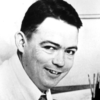
Bill Mauldin (1921–2003) American editorial cartoonist, writer Up Front (1945)
(Source)
A man is not necessarily intelligent because he has plenty of ideas, any more than he is a good general because he has plenty of soldiers.
[On n’est point un homme d’esprit pour avoir beaucoup d’idées, comme on n’est pas un bon général pour avoir beaucoup de soldats.]
Nicolas Chamfort (1741–1794) French writer, epigrammist (b. Nicolas-Sébastien Roch) Products of Perfected Civilization [Produits de la Civilisation Perfectionée], Part 1 “Maxims and Thoughts [Maximes et Pensées],” ch. 7, ¶ 446 (1795) [tr. Mathers (1926)]
(Source)
A man is not clever simply because he has many ideas, just as he is not necessarily a good general because he has many soldiers.
[tr. Hutchinson (1902)]
One is not a man of wit simply because one has a great many ideas, any more than one is a good general simply because one has a great many soldiers.
[tr. Merwin (1969)]
Having a great many ideas doesn't betoken a fine mind, just as having a great many soldiers doesn't betoken a fine general.
[tr. Dusinberre (1992), ¶ 445]
Having a lot of ideas does not give a person esprit, in the same way that having a lot of soldiers doesn't make a person a good general.
[tr. Siniscalchi (1994), ¶ 445]
“God is love,” as Scripture says, and that means the revelation is in the relationship. “God is love” means God is known devotionally, not dogmatically. “God is love” does not clear up old mysteries; it discloses new mystery. “God is love” is not a truth we can master; it is only one to which we can surrender. Faith is being grasped by the power of love.
William Sloane Coffin, Jr. (1924–2006) American minister, social activist
“Emmanuel,” sermon (1979-12-09)
(Source)
God is known devotionally, not dogmatically. If as Scripture says, "God is love," then the revelation is the relationship. Christianity is not cleaning up old mysteries; it's the disclovsure of a new mystery. It is not a truth that you can master; it's only one to which you can surrender. Faith is being grasped by the power of love.
Miss Manners corrects only upon request. Then she does it from a distance, with no names attached, and no personal relationship, however distant, between the corrector and the correctee. She does not search out errors like a policeman leaping out of a speed trap. When Miss Manners observes people behaving rudely, she behaves politely to them, and then goes home and snickers about them afterward.
Judith Martin (b. 1938) American author, journalist, etiquette expert [a.k.a. Miss Manners] Miss Manners’ Guide to Excruciatingly Correct Behavior, Introduction (1983)
(Source)
My ethical state, Were I wealthy and great,
Is a subject you wish I’d reply on. Now who can foresee What his morals might be?
What would yours be if you were a lion?
[Saepe rogare soles, qualis sim, Prisce, futurus,
Si fiam locuples simque repente potens.
Quemquam posse putas mores narrare futuros?
Dic mihi, si fias tu leo, qualis eris?]
Martial (AD c.39-c.103) Spanish Roman poet, satirist, epigrammatist [Marcus Valerius Martialis] Epigrams [Epigrammata], Book 12, epigram 92 (12.92) (AD 101) [tr. Nixon (1911)]
(Source)
Priscus! you've often ask'd me how I'd live, Should Fate at once both wealth and honour give?
What soul his future conduct can foresee? Tell me what sort of lion you would be?
[tr. Lewis (<1752)]
What would I do, the question you repeat, if on a sudden I were rich and great?
Who can himself with future conduct charge? What would you do, a lion, and at large?
[tr. Hay (1755), ep. 93]
You've often been used, my good friend, for to ask What sort of man I might prove
Was I rich or soon great? but 'tis no easy talk, For 'faith I can't tell you, by Jove!
For who do You think, of the men that are here Can his manners divine, that You see?
And was you as Jonathan's bull or a bear, Pray what sort of beast would you be?
[tr. Scott (1773)]
Thou asketh oft, how I should brook the hour, Of wealth o'erwhelming, and resistless pow'r.
His future self what seer can prophesy? What lion, Priscus, should'st thou make? Reply.
[tr. Elphinston (1782), 2.143]
Priscus! you often ask me what wouild be my future conduct, if I were made suddenly rich or powerful? Who can be competent to judge of his future character under such contingencies? Tell me, if you were metamorphosed into a lion, what kind of lion would you be?
[tr. Amos (1858), ep. 94]
You often ask me, Priscus, what sort of person I should be, if I were to become suddenly rich and powerful. Who can determine what would be his future conduct? Tell me, if you were to become a lion, what sort of a lion would you be?
[tr. Bohn's Classical (1859)]
You are often wont to ask me what sort of person I should be, Priscus, if I became rich and were suddenly powerful. Do you think any man can declare his character in the future? Tell me, if you became a lion, what sort of lion will you be?
[tr. Ker (1919)]
What should I be if great and rich?
That is the sort of question which One cannot prophesy on;
Apply it to yourself: e.g.,
What sort of lion will you be If you become a lion?
[tr. Pott & Wright (1921), "Riddles"]
You often ask me, Priscus, how I'ld use My fortune if I stood in rich men's shoes.
'Tis hard forecasting the effect of pelf; What sort of lion would you make, yourself?
[tr. Francis & Tatum (1924), ep. 687]
Your question: would my character, And how, change if I suddenly were
Powerful and rich? Who can foresee The sort of person he might be?
Supposing, Priscus, you became A lion, would you be fierce or tame?
[tr. Michie (1972)]
You are wont to ask me, Priscus, what sort of person I should be if I were suddenly to become rich and powerful. Do you suppose that anybody can foretell his character? Tell me, if you were to become a lion, what would you be like?
[tr. Shackleton Bailey (1993)]
Priscus, your perennial party game Is "How would you handle wealth and power?"
Who knows? But back at you the same: If you were a lion, would you rage or cower?
[tr. Ericsson (1995)]
If I were what I am not, rich, Would I become a king?
If you were what you are not, brave, Would you be anything?
[tr. Wills (2007)]
Priscus, you often ask what I'd be like if I got wealth and power suddenly.
Can anyone foretell his future conduct? If you were a lion, what kind would you be?
[tr. McLean (2014)]
Tom Stoppard (1937–2025) Czech-English playwright and screenwriter Where Are They Now? [Gale] (1970)
(Source)
The line in the play -- originally broadcast on BBC Radio 3 -- was based on an answer Stoppard himself gave in an interview by Peter Evans, reprinted in David Bailey and Peter Evans, Goodbye Baby and Amen: A Saraband for the Sixties (1969):
It is a very immature thing to worry about one’s stinking youth, but I don’t care: I think age is a very high price to pay for maturity.
My favorite word is “redemption.” I like both its meaning and the sound. My least favorite word is “maybe.” “Maybe” is almost always a “no” drawn out in cruel fashion.
Martha Elizabeth "Libba" Bray (b. 1964) American writer
“Twenty-One Things You Don’t Know About Me,” No. 4
(Source)
If, as certain small-minded philosophers believe, I shall feel nothing at all after death, then at least I don’t have to worry that they will be there to mock me after they die!
[Sin mortuus, ut quidam minuti philosophi censent, nihil sentiam, non vereor ne hunc errorem meum philosophi mortui irrideant.]
Marcus Tullius Cicero (106–43 BC) Roman orator, statesman, philosopher De Senectute [Cato Maior; On Old Age], ch. 23 / sec. 85 (23.85) (44 BC) [tr. Freeman (2016)]
(Source)
Critiquing the Epicurians, who would disagree with his belief in an immortal soul.
For if aftir this presente life I be dede as wele in soule as in body as that some yong and smale philosophers of whiche men name Epycures that affermyn, Certayne it is that I shall feele nothyng. And also I am not afferde that suche philosophers so ded mockyn me nor of this myne oppinion. Aftir whiche I verily beleve that the soules be undedly.
[tr. Worcester/Worcester/Scrope (1481)]
And if it were not so, that after death I should feel nothing nor have any sense at all (as certain perrifoggers and bastard philosophers hold opinino) I fear not a whit least these lip-labourers and ideitical philosophers, when they themselves be dead, should scoff and make a mocking-stock at this mine assertion and belief, because they themselves shall also be without sense, and like to brute beasts.
[tr. Newton (1569)]
But if when I am dead (as some small Philosophers say) I shall feel nothing, I fear not least the dead Philosophers should laugh at this my error.
[tr. Austin (1648)]
If those who this Opinion have despis'd,
And their whole life to pleasure sacrific'd;
Should feel their error, they when undeceiv'd,
Too late will wish, that me they had believ'd.
[tr. Denham (1669)]
But if after this Life I shall no longer be sensible, as some little Philosophers imagine, then am I in no Fear that dead Philosophers will laugh at my mistaken Opinion.
[tr. J. D. (1744)]
And if, when dead, I should (as some minute Philosophers imagine) be deprived of all further Sense, I am safe at least in this, that those Blades themselves will have no Opportunity beyond the Grave to laugh at me for my Opinion.
[tr. Logan (1744)]
I have the satisfaction in the meantime to be assured that if death should utterly extinguish my existence, as some minute philosophers assert, the groundless hope I entertained of an after-life in some better state cannot expose me to the derision of these wonderful sages, when they and I shall be no more.
[tr. Melmoth (1773)]
But if (as certain super-subtle philosophers conclude) I shall feel nothing, I am not afraid lest these philosophers, when dead, should ridicule this error of mine.
[Cornish Bros. ed. (1847)]
But if I, when dead, shall have no consciousness, as some narrow-minded philosophers imagine, I do not fear lest dead philosophers should ridicule this my delusion.
[tr. Edmonds (1874)]
While if in death, as some paltry philosophers think, I shall have no consciousness, the dead philosophers cannot ridicule this delusion of mine.
[tr. Peabody (1884)]
But if when dead, as some insignificant philosophers think, I am to be without sensation, I am not afraid of dead philosophers deriding my errors.
[tr. Shuckburgh (1895)]
But if when dead;
As some philosophers of little note
Believe, I feel no more, there is no fear
These dead philosophers should mock me there.
[tr. Allison (1916)]
But if when dead I am going to be without sensation (as some petty philosophers think), then I have no fear that these seers, when they are dead, will have the laugh on me!
[tr. Falconer (1923)]
True, certain insignificant philosophers hold that I shall feel nothing after death. If so, then at least I need not fear that after their own deaths they will be able to mock my conviction!
[tr. Grant (1960, 1971 ed.)]
If on the other hand, as certain petty philosophers have held, I shall have no sensation when I am dead, then I need have no fear that deceased philosophers will make fun of this delusion of mine.
[tr. Copley (1967)]
Some second-rate philosophers suggest that when I am dead I will be conscious of nothing. But all that means is that, if I’m wrong, they won't be able to make fun of me after their death.
[tr. Cobbold (2012)]
But anyway, if when I die my spirit also dies, I certainly won't give a flip about the opinions of dead philosophers.
[tr. Gerberding (2014)]
If when I am dead I’ll have no sensation,
As some small philosophers think, I won’t fear
Accents of derision from their graves to hear.
[tr. Bozzi (2015)]
Fascism, Nazism and Stalinism have in common that they offered the atomized individual a new refuge and security. These systems are the culmination of alienation. The individual is made to feel powerless and insignificant, but taught to project all of his human powers into the figure of the leader, the state, the “fatherland,” to whom he has to submit and whom he has to worship. He escapes from freedom and into a new idolatry. All the achievements of individuality and reason, from the late Middle Ages to the nineteenth century are sacrificed on the altars of the new idols.
Erich Fromm (1900–1980) American psychoanalyst and social philosopher The Sane Society, ch. 7 (1956)
(Source)
Virgil (70–19 BC) Roman poet [b. Publius Vergilius Maro; also Vergil] Georgics [Georgica], Book 3, l. 284ff (3.284-285) (29 BC) [tr. Fairclough (Loeb) (1916)]
(Source)
After a lengthy description of the springtime mating habits of wild animals and horses, Virgil basically saying, "But I digress ..." (and, a bit more directly, "And there's fifteen minutes you're never getting back").
But time irreparable hastes away.
Whil'st we with love transported waste the day.
[tr. Ogilby (1649)]
But time is lost, which never will renew,
While we too far the pleasing Path pursue;
Surveying Nature, with too nice a view.
[tr. Dryden (1709), l. 448ff]
But, while love's copious themes our course delay,
Time flits, irrevocably flits away.
[tr. Nevile (1767), l. 337]
But time irreparable flies away,
While in the maze of love we fondly stray.
[tr. Sotheby (1800)]
But time flies meanwhile, flies irretrievable, while we, enamoured [of the theme], minutely trace particulars.
[tr. Davidson (1854)]
But time is flying, flying, and for aye,
And we, love's prisoners, on his circuit stray.
[tr. Blackmore (1871)]
But time meanwhile is flying, flying past recall, while, enamoured of our voyage, we are coasting every point.
[tr. Wilkins (1873)]
Fast flies meanwhile the irreparable hour,
As point to point our charmed round we trace.
[tr. Rhoades (1881)]
v
But lo! while we of love seductive sing,
Time onward flies, nor stays his restless wing.
[tr. King (1882), l. 293ff]
But meanwhile Time, Time that cannot be recalled, is fleeting, while enamored of my theme I enter into all details.
[tr. Bryce (1897)]
But time fleets meanwhile, fleets beyond recovery, while in loving enthrallment we pass on and on.
[tr. Mackail (1899)]
But the time meanwhile is fleeting, is fleeting past recall,
While we hover around each flower of the field that holds us in thrall.
[tr. Way (1912)]
But time runs by, irreparable time.
As mastered by my subject's charm, I course
Slowly from point to point.
[tr. Williams (1915)]
But time is on the move still, time that will not return,
While we go cruising around this subject whose lore delights us.
[tr. Day-Lewis (1940)]
But time slides past, slides past beyond recall,
While, spellbound, we drift off among details.
[tr. Bovie (1956)]
But meantime it escapes us, time, never to be recaptured, escapes us while we linger over details, captivated by love.
[tr. Miles (1980)]
But time is flying, flying beyond recall.
While captivated I linger lovingly,
Touring from this to that.
[tr. Wilkinson (1982)]
But meanwhile time flies, flies irretrievably,
while, captivated by passion, I describe each detail.
[tr. Kline (2001)]
But meanwhile time flies, it flies beyond recovery
while, captive to each fact, we are carried away by love.
[tr. Lembke (2004)]
Meanwhile, it flies, time flies irretrievably,
while captivated with love we ramble through minutiae.
[tr. Johnson (2009)]
But meanwhile uncoverable time
Is flying, flying past us while we linger,
Enraptured by our theme.
[tr. Ferry (2015)]
I think that if there go on being great wars and great oppressions and many people leading very unhappy lives, probably religion will go on, because I’ve observed that the belief in the goodness of God is inversely proportional to the evidence. When there’s no evidence for it at all, people believe it, and, when things are going well and you might believe it, they don’t.
Bertrand Russell (1872–1970) English mathematician and philosopher
Interview by Woodrow Wyatt, BBC TV (1959)
(Source)
Money is only a tool in business. It is just a part of the machinery. You might as well borrow 100,000 lathes as $100,000 if the trouble is inside your business. More lathes will not cure it; neither will more money. Only heavier doses of brains and thought and wise courage can cure. A business that misuses what it has will continue to misuse what it can get.
Henry Ford (1863–1947) American industrialist My Life and Work, ch. 11 “Money and Goods” (1922) [with Samuel Crowther]
(Source)
Poor fool, what makes you promise yourself a long life, when there is not a day of it that goes by in security? Again and again, people who looked forward to a long life have been caught out over it, called away quite unexpectedly from this bodily existence. Nothing commoner than to be told, in the course of conversation, how such a man was stabbed, such a man was drowned; how one fell from a height and broke his neck, another never rose from table, another never finished his game of dice. Fire and sword, plague and murderous attack, it is always the same thing — death is the common end that awaits us all, and life can pass suddenly, like a shadow when the sun goes in.
[Ha stulte, quid cogitas te diu victurum, cum nullum diem habeas securum? Quam multi decepti sunt et insperati de corpore extracti! Quoties audisti a dicentibus, quia ille gladio cecidit, ille submersus est, ille ab alto ruens cervicem fregit, ille manducando obriguit, ille ludendo finem fecit, alius igne, alius ferro, alius peste, alius latrocinio interiit: et sic omnium finis mors est, et vita hominum tanquam umbra cito pertransit.]
Thomas à Kempis (c. 1380–1471) German-Dutch priest, author The Imitation of Christ [De Imitatione Christi], Book 1, ch. 23, v. 7 (1.23.7) (c. 1418-27) [tr. Knox-Oakley (1959)]
(Source)
Thou art a fool, if thou think to live long, sith thou art not sure to live one day to the end. How many have been deceived through trust of long life, and suddenly have been taken out of this world or they had thought. How oft hast thou heard say that such a man was slain, and such a man was drowned, and such a man fell and broke his neck ? This man as he ate his meat was strangled, and this man as he played took his death ; one with fire, another with iron, another with sickness, and some by theft have suddenly perished ! And so the end of all men is death, for the life of man as a shadow suddenly fleeth and passeth away.
[tr. Whitford/Raynal (1530/1871)]
You are foolish if you think to live long, since you are not certain to live one day through to the end. How many have been deceived through trusting in a long life who have suddenly been taken out of the world much sooner than they had thought. How often have you heard that such a man was slain, and such a man was drowned, and such a man fell and broke his neck; this man choked on his food, and this man died in his recreation; one by fire, another by the sword, another by sickness, and some by theft have suddenly perished. And so the end of all men is death, and the life of man is as a shadow which suddenly glides and passes away.
[tr. Whitford/Gardiner (1530/1955)]
Ah foole, why dost thou think to live long, when thou canst not promise to thy selfe one day, how many have been deceived and suddenly snatcht away? How often dost thou hear these reports, such a man is slain, another is drowned, a third breaks his neck with a fall, this man died eating, and that man playing? One perished by fire, another by the sword, another of the plague, and another was slain by theeves, thus death is the end of all, and mans life passeth away like a shadow.
[tr. Page (1639), 1.23.29-31]
Does any Confidence of long Life encourage you to defer putting this good Advice in Execution speedily ? Nay, but reflect, fond Man, how little you can promise your self one poor single Day. How many Instances have you before your Eyes, or fresh in your Remembrance, of Persons miserably deluded and disappointed in this Hope, and hurried out of the Body without any warning at all? How often have you been surprized with the News of this Friend being run thro', another drowning crossing the Water, a Third breaking his Neck by a Fall, a Fourth fallen down dead at Table, or choaked with his Meat, a Fifth seized with an Apoplex at Play, a Sixth burnt in his Bed, a Seventh murthered, an Eighth killed by Thieves, a Ninth struck with Lightning, or Blasting, or Pestilence, a Tenth swallow'd up in an Earthquake. Such vast variety of Deaths surround us, and so fleeting a Shadow is the Life of a Man.
[tr. Stanhope (1696; 1706 ed.)]
Ah foolish man! why dost thou still flatter thyself with the expectation of a long life, when thou canst not be sure of a single day? How many unhappy fools, deluded by this hope, are in some unexpected moment separated from the body! How often dost thou hear, that one is slain, another is drowned, another by falling from a precipice has broken his neck, another is choaked in eating, another has dropt down dead in the exercise of some favorite diversion; and that thousands, indeed, are daily perishing by fire, by sword, by the plague, or by the violence of robbers! Thus is death common to every age; and man suddenly passeth away as a vision of the night.
[tr. Payne (1803), 1.23.8]
Ah! fool, why dost thou think to live long, when thou canst not promise to thyself one day. How many have been deceived and suddenly snatched away! How often dost thou hear these reports, Such a man is slain, another man is drowned, a third breaks his neck with a fall from some high place, this man died eating, and that man playing! One perished by fire, another by the sword, another of the plague, another was slain by thieves. Thus death is the end of all, and man's life suddenly passeth away like a shadow.
[ed. Parker (1841)]
Ah, foolish man! why dost thou think thou wilt live long, when thou canst not count upon a single day? How many souls, deluded by this hope, are, in some unexpected moment, separated from the body! How often dost thou hear, that "one is slain, another is drowned, another, by falling form a precipice, has broken his neck -- another is choaked in eating; another has dropt down dead in the exercise of some favourite diversion; and that thousands, indeed, are daily perishing by fire, by sword, by the plague, or by the violence of robbers! Thus, death is the end of all; and the life of man passeth away suddenly like a shadow.
[tr. Dibdin (1851)]
Ah, fool! why dost thou think to live long, when thou art not sure of one day? How many thinking to live long have been deceived, and snatched unexpectedly away? How often hast thou heard related, that such a one was slain by the sword; another drowned; another, from a height, broke his neck; one died eating, another playing? Some have perished by fire; some by the sword; some by pestilence; and some by robbers. And so death is the end of all; and man's life suddenly passeth away like a shadow.
[ed. Bagster (1860)]
Ah, foolish one! why thinkest thou that thou shalt live long, when thou art not sure of a single day? How many have been deceived, and suddenly have been snatched away from the body! How many times hast thou heard how one was slain by the sword, another was drowned, another falling from on high broke his neck, another died at the table, another whilst at play! One died by fire, another by the sword, another by the pestilence, another by the robber. Thus cometh death to all, and the life of men swiftly passeth away like a shadow.
[tr. Benham (1874)]
Ah! fool, why dost thou think to live long, when thou canst not promise to thyself one day. How many have been deceived and suddenly snatched away! How often dost thou hear these reports, Such a man is slain, another is drowned, a third has broken his neck with a fall, this man died eating, and that man playing! One perished by fire, another by the sword, another by the plague, another was slain by thieves. Thus death is the end of all, and man's life suddenly passeth away like a shadow.
[tr. Anon. (1901)]
Ah, foolish man, why do you plan to live long when you are not sure of living even a day? How many have been deceived and suddenly snatched away! How often have you heard of persons being killed by drownings, by fatal falls from high places, of persons dying at meals, at play, in fires, by the sword, in pestilence, or at the hands of robbers! Death is the end of everyone and the life of man quickly passes away like a shadow.
[tr. Croft/Bolton (1940)]
Ah fool, why think of living long when you have no certainty of a day? How many are mistaken and unexpectedly snatched away from the body. How often you have heard men say, he is killed by the sword, he is drowned, he broke his neck falling from a height, he choked while eating, he met his end while at play; one perished by fire, another from plague, another by a robber; and so death is the end of all; and man’s life passes suddenly like a shadow.
[tr. Daplyn (1952)]
Foolish man, how can you promise yourself a long life, when you are not certain of a single day? How many have deceived themselves in this way, and been snatched unexpectedly from life! You have often heard how this man was slain by the sword; another drowned; how another fell from a high place and broke his neck; how another died at table; how another met his end in play. One perishes by fire, another by the sword, another from disease, another at the hands of robbers. Death is the end of all men; and the life of man passes away suddenly as a shadow.
[tr. Sherley-Price (1952)]
You fool, why do you imagine you will live a long life. when you cannot be sure of a single day? Many have made this mistake and have been snatched away from life when they least expected it. So often you hear people saying that so and so has been killed in battle, and so and so drowned; another man has fallen from a height and broken his neck; one choked over a meal, another met his end in some sport. Others have died by -- fire, by violence, by sickness, by robbery -- death is the end of all, and the life of man passes by and vanishes like a shadow.
[tr. Knott (1962)]
Foolish one, why do you hope for long life when not even one day is certain? How many there are who think they will live long, but are mistaken and snatched from the body unexpectedly. How often have you heard it said: This man fell by the sword; that man was drowned; another fell and broke his neck; yet another was taken while at table and the other was at sport when the end came. One by fire, another by steel, yet another by pestilence and again another by thieves met his death. Death is the end of all men and man’s life is a shadow that quickly passes by.
[tr. Rooney (1979)]
Ah, my foolish friend! why do you think of living a long life when you are not sure of even one day? How many people are tricked and unexpectedly snatched away? How often have you heard it said that someone was murdered, someone else drowned, another broke his neck falling from a high place, yet another choked while eating, and someone else met his end while playing; one person died by fire, another from disease, and another was killed by a robber, and thus death is the end of all, and our life passes suddenly like a shadow.
[tr. Creasy (1989)]
Dissents speak to a future age. It’s not simply to say, “My colleagues are wrong and I would do it this way.” But the greatest dissents do become court opinions and gradually over time their views become the dominant view. So that’s the dissenter’s hope: that they are writing not for today but for tomorrow.
Ruth Bader Ginsburg (1933–2020) American lawyer and jurist, Supreme Court Justice (1993–2020)
“Ruth Bader Ginsburg and Malvina Harlan,” interview by Nina Totenberg, NPR (2002-05-02)
(Source)
Speaking of Justice John Marshall Harlan and his lone dissent in Civil Rights Cases, 109 U.S. 3 (1883), where the Supreme Court struck down the Civil Rights Act of 1875. Ginsburg was being interviewed for her role in getting a long-lost memoir by Malvina Harlan, the Justice's wife, published as a book.
‘Tis the Glory and Merit of some men to write well, and of others not to write at all.
[La gloire ou le mérite de certains hommes est de bien écrire; et de quelques autres, c’est de n’écrire point.]
Jean de La Bruyère (1645–1696) French essayist, moralist The Characters [Les Caractères], ch. 1 “Of Works of the Mind [Des Ouvrages de l’Esprit],” § 59 (1.59) (1688) [Bullord ed. (1696)]
(Source)
The prosperous fortunes, and the haughty wealth
Of an unrighteous man, we never ought
To deem establish’d on a solid base,
Or that the children of th’ unjust can prosper:
For Time, who from no Father springs, applies
His levell’d line, and shews man’s foul misdeeds.
Think not that the prosperity and riches of the wicked can endure, nor yet the generation of the bad; for Time, sprung from eternity, having a just rule in his hand, shows the wickedness of men.
[Source (1878)]
One ought never to imagine the success of a bad man, and his proud wealth, as secure, nor the lineage of unjust men; for time, which was born from nothing, adduces standards which are just and shows the wickedness of men in spite of all.
[tr. Collard, Hargreaves, Cropp (1995)]
It must not be believed
that the wicked thrive securely
though puffed-up-proud in their prosperity
nor the long line of injustices go on and on
uninterrupted -- Self-generating Time
(slowly -- slowly) lays
the yardstick of justice --
into the open (at least) brings
all iniquities of men.
For all that. For all that.
[tr. Stevens (2012)]
Real education precisely consists in the fact that we see beyond the symbols and the mere machinery of the age in which we find ourselves: education precisely consists in the realization of a permanent simplicity that abides behind all civilizations, the life that is more than meat, the body that is more than raiment. The only object of education is to make us ignore mere schemes of education. Without education, we are in a horrible and deadly danger of taking educated people seriously.
Gilbert Keith Chesterton (1874–1936) English journalist and writer
“Our Note Book,” The Illustrated London News (1905-12-02)
(Source)
What reason, what prudence, is there in wishing to glory in the greatness and extent of the empire, when you cannot point out the happiness of men who are always rolling, with dark fear and cruel lust, in warlike slaughters and in blood, which, whether shed in civil or foreign war, is still human blood; so that their joy may be compared to glass in its fragile splendor, of which one is horribly afraid lest it should be suddenly broken in pieces.
[Quae sit ratio, quae prudentia, cum hominum felicitatem non possis ostendere, semper in bellicis cladibus et in sanguine ciuili uel hostili, tamen humano cum tenebroso timore et cruenta cupiditate uersantium, ut uitrea laetitia comparetur fragiliter splendida, cui timeatur horribilius ne repente frangatur.]
Augustine of Hippo (354–430) Christian church father, philosopher, saint [b. Aurelius Augustinus] City of God [De Civitate Dei], Book 4, ch. 3 (4.3) (AD 412-416) [tr. Dods (1871)]
(Source)
You cannot show such estates to be anyway happy, as are in continual wars, and constantly in terror, trouble, and guilt of shedding human blood, though it be their foes’; with what reason or wisdom any man doth wish to glory in the largeness of empire, since all their joy is but as a glass, bright and brittle, and evermore in fear and danger of breaking.
[tr. Healey (1610)]
Is it reasonable and wise to glory in the extent and greatness of the Empire when you can in no way prove that there is any real happiness in men perpetually living amid the horrors of war, perpetually wading in blood? Does it matter whether it is the blood of their fellow citizens or the blood of their enemies? It is still human blood, in men perpetually haunted by the gloomy spectre of fear and driven by murderous passions. The happiness arising from such conditions is a thing of glass, of mere glittering brittleness. One can never shake off the horrible dread that it may suddenly shiver into fragments.
[tr. Zema/Walsh (1950)]
You cannot show that men are happy who live always amid the disasters of war. It matters not whether the blood shed is that of fellow-citizens or of enemies; in any case it is the blood of men. The dark shadow of fear and the lust for blood are always with them. Any joy that they know is like the glitter of brittle glass, which inspires the frightful thought that it may suddenly be shattered.
[tr. Green (Loeb) (1963)]
Is it reasonable, is it sensible, to boast of the extent and grandeur of empire, when you cannot show that men lived in happiness, as they passed their lives amid the horrors of war, amid the shedding of men's blood -- whether the blood of enemies or fellow-citizens -- under the shadow of fear and amid the terror of ruthless ambition? The only joy to be attained had the fragile brilliance of glass, a joy outweighed by the fear that it may be shattered in a moment.
[tr. Bettenson (1972)]
Is it wise or prudent to wish to glory in the breadth and magnitude of an empire when you cannot show that the men whose empire it is are happy? For the Romans always lived in dark fear and cruel lust, surrounded by the disasters of war and the shedding of blood which, whether that of fellow citizens or enemies, was human nonetheless. The joy of such men may be compared to the fragile splendour of glass: they are horribly afraid lest it be suddenly shattered.
[tr. Dyson (1998)]
What reason or sense is there in wanting to boast of the size and expanse of an empire when you cannot show that its people are happy? Or why boast of an empire if its people always dwell in the midst of the disasters of war and the spilling of blood -- the blood of fellow-citizens or the blood of foreign enemies, but, in either case, human blood -- and always live under the dark shadow of fear and in the lust for blood? Any joy they have may be compared to the fragile brilliance of glass: there is always the terrible fear that it will suddenly be shattered.
[tr. Babcock (2012)]
But genius is nothing more nor less than childhood recovered at will — a childhood now equipped for self-expression with manhood’s capacities and a power of analysis which enables it to order the mass of raw material which it has involuntarily accumulated.
[Le génie n’est que l’enfance retrouvée à volonté, l’enfance douée maintenant, pour s’exprimer, d’organes virils et de l’esprit analytique qui lui permet d’ordonner la somme de matériaux involontairement amassée.]
Charles Baudelaire (1821–1867) French poet, essayist, art critic “Le Peintre de la Vie Moderne [The Painter of Modern Life],” sec. 3 (1863) [tr. Mayne (1964)]
(Source)
But genius is simply childhood recovered at will, a childhood now equipped for self-expression, with mature faculties and an analytic spirit which permit him to set in order the mass of raw material he has involuntarily accumulated.
[tr. Kline (2020)]
Genius is only childhood recovered at will, childhood now gifted to express itself with the faculties of manhood and with the analytic mind that allows him to give order to the heap of unwittingly hoarded material.
[Source]
But genius is no more than childhood recaptured at will, childhood equipped now with man’s physical means to express itself, and with the analytical mind that enables it to bring order into the sum of experience, involuntarily amassed.
[Source]
I have heard people say we should be strong so that if there is another war we can win it, then show the world the right way to live afterward. This is old stuff, and it is poppycock. Our behavior hardly qualifies us as world leaders. Ours is one of the most conservative governments in the world today, and one of the most bumbling. We have more provincialism and bigotry and superstition and prejudice per square mile than almost any other nation. We like to think of ourselves as a young, progressive country, but, while we do have energy, we have become smug and self-satisfied.
Bill Mauldin (1921–2003) American editorial cartoonist, writer Back Home, ch. 14 (1947)
(Source)
The art of the parenthesis is one of the great secrets of eloquence in society.
[L’art de la parenthèse est un des grands secrets de l’éloquence dans la Société.]
Nicolas Chamfort (1741–1794) French writer, epigrammist (b. Nicolas-Sébastien Roch) Products of Perfected Civilization [Produits de la Civilisation Perfectionée], Part 1 “Maxims and Thoughts [Maximes et Pensées],” ch. 3, ¶ 243 (1795) [tr. Siniscalchi (1994)]
(Source)
A book is a garden; a book is an orchard; a book is a storehouse; a book is a party. It is company by the way; it is a counselor; it is a multitude of counselors.
Henry Ward Beecher (1813–1887) American clergyman and orator Proverbs From Plymouth Pulpit, “The Press” (1887) [ed. Drysdale]
(Source)
Here rests Erotion’s all-too-hurried shade, dispatched in her sixth winter by Fate’s crime.
Make yearly offerings to her tiny ghost, whoever rules this plot after my time.
So may your home and household last for years with nothing but this stone to call for tears.
[Hic festinata requiescit Erotion umbra,
Crimine quam fati sexta peremit hiems.
Quisquis eris nostri post me regnator agelli,
Manibus exiguis annus iusta dato:
Sic lare perpetuo, sic turba sospite solus
Flebilis in terra sit lapis iste tua.]
Martial (AD c.39-c.103) Spanish Roman poet, satirist, epigrammatist [Marcus Valerius Martialis] Epigrams [Epigrammata], Book 10, epigram 61 (10.61) (AD 95, 98 ed.) [tr. McLean (2014)]
(Source)
In her sixth spring, behold Erotion laid: If heaven we might arrain, an early shade.
Bland successor, whoe'er shall rule this field, To my blest shadeling annual honors yield.
So may thy verdant vine perennial stand: So may her teeming shoots o'erspred the land.
So may'st thou never feel a tendrel tor'n: And may this single stone in thy dominion mourn.
[tr. Elphinston (1782), Book 4, ep. 20]
Underneath this greedy stone, Lies little sweet Erotion;
Whom the fates, with hearts as cold, Nipt away at six years old.
Thou, whoever thou mast be, That hast this small field after me,
Let the yearly rites be paid To her little slender shade;
So shall no disease or jar Hurt thy house, or chill thy Lar;
But this tomb here be alone, The only melancholy stone.
[tr. Hunt (1819)]
Here reposes Erotion in the shade of the tomb that too early closed around her, snatched away by relentless Fate in her sixth winter. Whoever you are that, after me, shall rule over these lands, render annual presents to her gentle shade. So, with undisturbed possession, so, with your family ever in health, may this stone be the only one of a mournful description on your domain.
[tr. Bohn's Classical (1859)]
Here lies Erotion in the shade Of foliage planted newly.
In her sixth winter did she fade, Cut off by fate unduly.
Thou, whosoe'er thou be, to whom Ere long these fields I render,
The annual offerings at her tomb Discharge; they are but slender.
So, son succeeding sire, from thee No victims death shall borrow:
But on thy land this stone shall be The only mark of sorrow.
[tr. Webb (1879)]
Here lies Erotion, whom at six years old Fate pilfered. Stranger (when I too am cold
Who shall succeed me in my rural field), To this small spirit annual honours yield.
Bright be thy hearth, hale be thy babes, I crave, And this, in thy green farm, the only grave.
[tr. Stevenson (1883)]
Here in too early gloom rests Erotion whom, by crime of Fate, her sixth winter laid low. Whoe'er thou shalt be, the lord after me of my little field, to her tiny ghost pay thou year by year thy rites. So may they roof-tree continue, so thy household live unscathed, and in thy fields this gravestone alone call forth a tear!
[tr. Ker (1919)]
Here sleeps the body of the little maid, Erotion,
Ere her sixth winter fate had called her shade To hasten on;
Whoe’er thou art who after me shall own This tiny plot,
Lay year by year the dues upon her stone; Forget her not.
So shall thy house endure nor suffering know, And this remain
The only sign and monument of woe On thy domain.
[tr. Pott & Wright (1921)]
Here lies Erotion at untimely date, In his sixth year cut down by cruel fate.
You, my successor in this little field, To his poor ashes annual tribute yield.
So prosper house and home, and on this land No other monument of mourning stand.
[tr. Francis & Tatum (1924), ep. 556]
Here lies our Erotion in the untimely shadow of a gravestone.
Her sixth winter hurried her on to an end that was destined.
I address the future owner of this land, and ask his yearly reverence, made
to this slender shade: May your household gods
forever flourish and your whole household enjoy a happy life -- and may this single stone be the one place for grief on your land alone.
[tr. Bovie (1970)]
Here, six years old, by Destiny's crime Made a ghost before her time,
Erotion lies. Whoever you be Next lord of my small property,
See that the due of death are paid Annually to her slender shade:
So may your hearth burn bright and strong, Your household thrive, yourself live long,
And this small stone, throughout the years, Remain your only cause for tears.
[tr. Michie (1972)]
Here lies Erotion's hastened shade, whom by crime of Fate her sixth winter slew. Make annual offering to her tiny ghost, whoever after me shall be ruler of my plot of land. So may your home continue and your household live on and this stone be the only thing on your property to call for tears.
[tr. Shackleton Bailey (1993)]
Here in premature gloom Erotion rests
whose sixth winter now will last forever. Whoever tends this small field after me,
pay each year homage to her slender ghost:
then you will prosper here and never weep, except this stone bring her to memory.
[tr. Matthews (1995)]
To suffer torments both of heat and chill, the Utmost Power gives bodies, fit for that, not wishing how it does to be revealed.
It’s madness if we hope that rational minds should ever follow to its end the road that one true being in three persons takes.
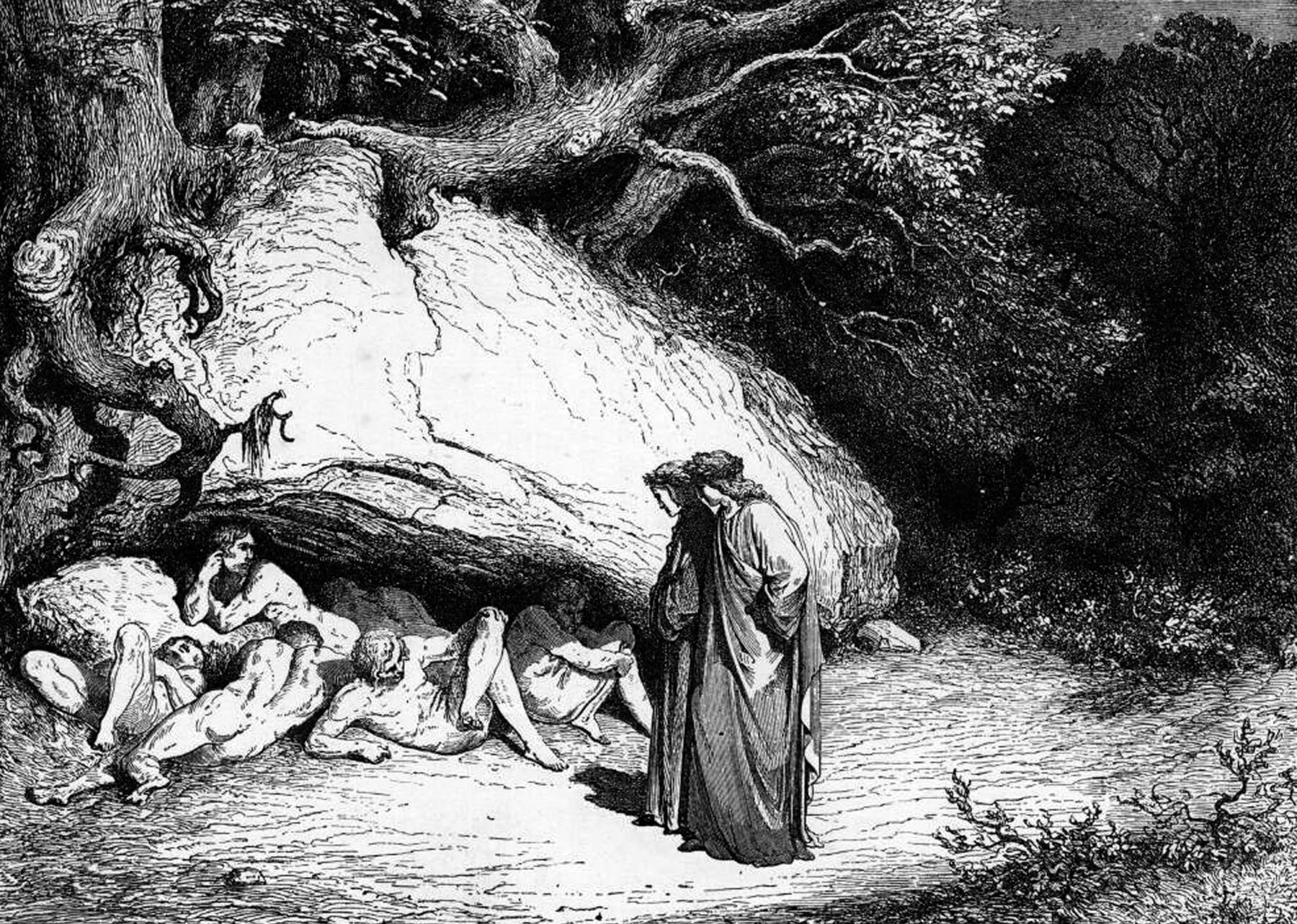
Content yourselves with quia, human kind. Had you been able to see everything, Mary need not have laboured to give birth.
[A sofferir tormenti, caldi e geli simili corpi la Virtù dispone che, come fa, non vuol ch’a noi si sveli.
Matto è chi spera che nostra ragione possa trascorrer la infinita via che tiene una sustanza in tre persone.
State contenti, umana gente, al quia; ché, se potuto aveste veder tutto, mestier non era parturir Maria.]
Dante Alighieri (1265–1321) Italian poet The Divine Comedy [Divina Commedia], Book 2 “Purgatorio,” Canto 3, l. 31ff (3.31-39) (1314) [tr. Kirkpatrick (2007)]
(Source)
Virgil chides Dante to stop trying to figure out the biology, let alone divine purpose, of the Afterlife, and just accept the what(quia), the existence of it, rather than the how or why, which are as incomprehensible as the Trinity; if human reason could suffice to understand God, there would have been no reason for Jesus to have been born to save humanity.
Why these sky-woven forms, that seem to fly
All mortal sense, can suffer and enjoy Heav'n's bliss, and all th' extremes of fire and frost,
That Power that so decrees, can best explain:
Created plummet sounds that depth in vain. In that, as in the Trinal Union, lost.
Too anxious mortals! learn to be resign'd;
Could the deep secrets of th' Almighty Mind Be seen, nor Sin nor Savior had been known.
[tr. Boyd (1802), st. 7-8]
To endure
Torments of heat and cold extreme, like frames
That virtue hath dispos’d, which how it works
Wills not to us should be reveal’d. Insane
Who hopes, our reason may that space explore,
Which holds three persons in one substance knit.
Seek not the wherefore, race of human kind;
Could ye have seen the whole, no need had been
For Mary to bring forth.
[tr. Cary (1814)]
To suffer torments, both the cold and hot, Bodies alike in form has he annealed -- The how he wishes not to use revealed.
Foolish! who think our reason can unveil, Or hope to pass the infinital way To find three persons one Substantiality:
Remain content without the manner how. Could you have seen at once the whole of worth, Why was it meet Maria should bring forth?
[tr. Bannerman (1850)]
To suffer torments, both of cold and heat, Bodies like this that Power provides, which wills That how it works be not unveiled to us.
Insane is he who hopeth that our reason Can traverse the illimitable way, Which the one Substance in three Persons follows!
Mortals, remain contented at the Quia; For if ye had been able to see all, No need there were for Mary to give birth.
[tr. Longfellow (1867)]
To suffer torments both of heat and cold that Power ordains such bodies, which will not that the manner of its working be revealed to us. Mad is he who hopes that our reason can travel over the boundless way, which one Substance in three Persons holds. Remain content, race of mankind, at the quia, for if you could have seen all no need was there that Mary should bring forth.
[tr. Butler (1885)]
To suffer torments, heat, and cold, is given To bodies like to this, by high decree, The how 'tis done by man cannot be riven.
He's mad who thinks our human reason free Along the infinite career to run, Of God, the substance one in Persons three.
Be ye content, O man, the Why unknown: Had ye been able to behold the whole, No need had Mary to bring forth her son.
[tr. Minchin (1885)]
To suffer torments, both hot and cold, bodies like this the Power ordains, which wills not that how it acts be revealed to us. Mad is he who hopes that our reason can traverse the infinite way which One Substance in Three Persons holds. Be content, human race, with the quia; for if ye had been able to see everything, need had not been for Mary to bear child.
[tr. Norton (1892)]
To suffer torments, heat and frost, bodies such as these that power disposes, which will not that its workings be revealed to us. Mad is he who hopes that our reason may compass that infinitude which one substance in three persons fills. Be ye content, O human race, with the quia! For if ye had been able to see the whole, no need was there for Mary to give birth.
[tr. Okey (1901)]
The Power fits such bodies as these to suffer torments of heat and frost which wills not that the way of its working should be revealed to us. Foolish is he who hopes that our reason can trace the infinite ways taken by one Substance in three Persons. Rest content, race of men, with the quia; for if you had been able to see all there was no need for Mary to give birth.
[tr. Sinclair (1939)]
That power disposes bodies like to mine In torments both of heat and frost to weep Which wills not that its working we divine.
He is mad who hopes that reason in its sweep The infinite way can traverse back and forth Which the Three Persons in one substance keep.
With the quia stay content, children of earth! For if the whole before your eyes had lain, No need was there for Mary to give birth.
[tr. Binyon (1943)]
Bodies like mine, to bear pain, cold and heat, That power ordains, whose will forever spreads A veil between its working and our wit.
Madness! that reason lodged in human heads should hope to traverse backward and unweave The infinite path Three-personed Substance treads.
Content you with the quia, sons of Eve, For had you power to see the whole truth plain No need had been for Mary to conceive.
[tr. Sayers (1955)]
We react
within these bodies to pain and heat and cold according to the workings of That Will which does not will that all Its ways be told.
He is insane who dreams that he may learn by mortal reasoning the boundless orbit Three Persons in One Substance fill and turn.
Be satisfied with the quia of cause unknown, O humankind! for could you have seen All, Mary need not have suffered to bear a son.
[tr. Ciardi (1961)]
To suffer torments, heat, and frost, bodies such as these that Power ordains, which wills not that the way of its working be revealed to us. Foolish is he who hopes that our reason may compass the infinite course taken by One Substance in Three Persons. Be content, human race, with the quia; for if you had been able to see everything, no need was there for Mary to give birth.
[tr. Singleton (1973)]
Yet bodies such as ours are sensitive to pain and cold and heat -- willed by that Power which wills its secret not to be revealed;
madness it is to hope that human minds can ever understand the Infinite that comprehends Three Persons in One Being.
Be staisfied with quia unexplained, O human race! If you knew everything, no need for Mary to have borne a son.
[tr. Musa (1981)]
v
Omnipotence disposes bodies like mine To suffer torments both from heat and cold, And how it does so, does not see fit to reveal.
Only a madman would expect our reason To follow all that infinite approach And understand one substance in three persons.
The human race should be content with the quia: For if it had been able to see everything, No need for Mary to have had a child.
[tr. Sisson (1981)]
The Power has disposed such bodiless bodies to suffer torments, heat and cold: how this is done, He would not have us know.
Foolish is he who hopes our intellect can reach the end of that unending road only one Substance in three Persons follows.
Confine yourselves, o humans, to the quia; had you been able to see all, there would have been no need for Mary to give birth.
[tr. Mandelbaum (1982)]
Such bodies are disposed to suffer torments, heat, and freezings by the Power that does not wish its ways to be unveiled to us. He is mad who hopes that our reason can traverse the infinite way taken by one Substance in three Persons. Be content, human people, with the quia; for if you had been able to see everything, there was no need for Mary to give birth.
[tr. Durling (2003)]
That power, that does not will that its workings should be revealed to us, disposes bodies such as these to suffer torments, fire and ice. He is foolish who hopes that our reason may journey on the infinite road, that one substance in three persons owns. Stay, content, human race, with the ‘what’: since if you had been able to understand it all, there would have been no need for Mary to give birth.
[tr. Kline (2002)]
The Power that fits bodies like ours to suffer torments, heat, and cold does not reveal the secret of its working.
Foolish is he who hopes that with our reason we can trace the infinite path taken by one Substance in three Persons.
Be content, then, all you mortals, with the quia, for could you, on your own, have understood, there was no need for Mary to give birth.
[tr. Hollander/Hollander (2007)]
These bodies were made by God, they endure troubles, And heat, and frost -- but we are not informed How this is accomplished; He does not want us to know.
You have to be mad, hoping that human reason Can ever unravel the infinite things He does, Three Persons simultaneously only One.
Be satisfied, O humans, with Reality, For had you ever been able to see and know It all, why bother with God in Mary's womb?
[tr. Raffel (2010)]
But if I err in this Opinion, that the Soul of Man is immortal, sure it is a pleasing Error, so pleasing that I can never shake it off while I live.
[Quod si in hoc erro, qui animos hominum immortalis esse credam, libenter erro nec mihi hunc errorem, quo delector, dum vivo, extorqueri volo.]
Marcus Tullius Cicero (106–43 BC) Roman orator, statesman, philosopher De Senectute [Cato Maior; On Old Age], ch. 23 / sec. 85 (23.85) (44 BC) [tr. J. D. (1744)]
(Source)
But if it be in erroure and oute of trouthe aftir the doctryne and scole of Epycures by cause that I beleve that the soules be undedly and Immortelle perdurable and evirlastyng I answere you that this errour pleasith me and I consente me in it right gladly and as long tyme as I lyve I wille not that any philosopher nor any othir of what condicyon that evir he be take awey fro me this erroure wherin I delyte me.
[tr. Worcester/Worcester/Scrope (1481)]
And if I do err because I think that the souls of men be immortal, verily I am well contented in the same error still to continue, and as long as I live I will never renounce nor recant the same, wherein I take such singular pleasure and comfort.
[tr. Newton (1569)]
But if I do erre that the soules of men bee immortall, I do err willingly, neither will I while I live be wrested from mine opinion wherein I am delighted.
[tr. Austin (1648), ch. 24]
My hope's, if this assurance hath deceiv'd,
(That I Man's Soul Immortal have believ'd)
And if I erre, no Pow'r shall dispossess
My thoughts of that expected happiness.
[tr. Denham (1669), Part 4]
But if I should be mistaken in this Belief, that our Souls are immortal, I am however pleased and happy in my Mistake; nor while I live, shall it ever be in the Power of Man, to beat me out of an Opinion, that yields me so solid a Comfort, and so durable a Satisfaction.
[tr. Logan (1744)]
And after all should this my firm persuasion of the soul's immortality prove to be a mere delusion, it is at least a pleasing delusion, and I will cherish it to my latest breath.
[tr. Melmoth (1773)]
But if I err in this, that I believe the soules of men to be immortal, I err willingly, nor do I wish this error to be wrested from me while I live.
[Cornish Bros. ed. (1847)]
And if I am wrong in this, that I believe the souls of men to be immortal, I willingly delude myself : nor do I desire that this mistake, in which I take pleasure, should be wrested from me as long as I live.
[tr. Edmonds (1874)]
But if I err in believing that the souls of men are immortal, I am glad thus to err, nor am I willing that this error in which I delight shall be wrested from me so long as I live.
[tr. Peabody (1884)]
But if I am wrong in thinking the human soul immortal, I am glad to be wrong; nor will I allow the mistake which gives me so much pleasure to be wrested from me as long as I live.
[tr. Shuckburgh (1895)]
But if in thinking souls immortal thus,
I am in error, I confess to you,
It is an error that I glory in,
And being so pleasant, I would not desire
To lose it while I live.
[tr. Allison (1916)]
And if I err in my belief that the souls of men are immortal, I gladly err, nor do I wish this error which gives me pleasure to be wrested from me while I live.
[tr. Falconer (1923)]
Even if I am mistaken in my belief that the soul is immortal, I make the mistake gladly, for the belief makes me happy, and is one which as long as I live I want to retain.
[tr. Grant (1960, 1971 ed.)]
And if I am deluded in believing that the soul of man is immortal, then I am glad to be deluded, and I hope no one, as long as I live, will ever wrench this delusion from me.
[tr. Copley (1967)]
But if I am mistaken in this belief of mine that the souls of men are immortal, then I am happy to be mistaken; but as long as I am still alive, I have no wish to be disabused of my mistake.
[tr. Cobbold (2012)]
I may be wrong in my belief in the immorality of the spirit: there are philosophers who think I am. I like my faith and I don't want to lose it.
[tr. Gerberding (2014)]
And if it is an error of mine to imply
That man is endowed with immortal soul,
I err with pleasure and promptly console
Myself as long as I am alive and spry.
[tr. Bozzi (2015)]
And if I’m wrong in my belief that souls are immortal, then gladly do I err, for this belief, which I hope to maintain as long as I live, makes me happy.
[tr. Freeman (2016)]
This process of the good life is not, I am convinced, a life for the faint-hearted. It involves the stretching and growing of becoming more and more of one’s potentialities. It involves the courage to be. It means launching oneself fully into the stream of life.
Carl Rogers (1902–1987) American psychologist On Becoming a Person, Part 4, ch. 9 (1961)
(Source)
Dissatisfaction with the world in which we live and determination to realize one that shall be better, are the prevailing characteristics of the modern spirit.
G. Lowes Dickinson (1862–1932) British political scientist and philosopher [Goldsworthy "Goldie" Lowes Dickinson] The Greek View of Life, ch. 5 “Conclusion” (1911)
(Source)
Historians may be dogmatists, I know, though not so often now as when history was dogma. At least you will perhaps agree that even a smattering of history and especially of letters will go far to dull the edges of uncompromising conviction. No doubt one may quote history to support any cause, as the devil quotes scripture; but modern history is not a very satisfactory side-arm in political polemics; it grows less and less so.
Learned Hand (1872–1961) American jurist
“Sources of Tolerance,” speech, University of Pennsylvania Law School (1930-06)
(Source)
Now a cat will not take an excursion merely because a man wants a walking companion. Walking is a human habit into which dogs readily fall but it is a distasteful form of exercise to a cat unless he has a purpose in view.
Carl Van Vechten (1880–1964) American writer and photographer The Tiger in the House: A Cultural History of the Cat, ch. 2 (1920)
(Source)
I think of Art, at its most significant, as a DEW line, a Distant Early Warning system, that can always be relied on to tell the old culture what is beginning to happen to it.
Marshall McLuhan (1911–1980) Canadian philosopher, communication theorist, educator
Quoted in Richard Schickel, “Marshall McLuhan: Canada’s Intellectual Comet,” Harper’s Magazine (1965-11)
(Source)
Based on "conversations" Schickel had with McLuhan.
Often cited to McLuhan's breakout work Understanding Media (1964) (e.g., here and here), but not found there.
Even within the university world, where the highest calling should be to spark the fires of intellectual exploration and to prepare young minds for engaged and productive participation in our democracy, the mandates of the market have attained prominence. The narrow quest for success crowds out the noble effort to be great — greatness understood as using one’s success to make the world a better place for all.
Cornel West (b. 1953) American philosopher, political activist, social critic Democracy Matters, ch. 6 (2004)
(Source)
It is a truth universally acknowledged, that a single man in possession of a good fortune, must be in want of a wife. However little known the feelings or views of such a man may be on his first entering a neighbourhood, this truth is so well fixed in the minds of the surrounding families, that he is considered the rightful property of some one or other of their daughters.
Jane Austen (1775–1817) English author Pride and Prejudice, ch. 1, Opening Lines (1813)
(Source)
When you have helped raise the standard of cooking, you have helped raise the only thing in the world that really matters anyhow. We only have one or two Wars in a lifetime but we have three meals a day. There is nothing in the world that we do as much of as we do eating.
Will Rogers (1879–1935) American humorist Fashions in Foods in Beverly Hills, Foreword (1929)
(Source)
Titan! to whom immortal eyes The sufferings of mortality Seen in their sad reality,
Were not as things that gods despise;
What was thy pity’s recompense?
A silent suffering, and intense;
The rock, the vulture, and the chain,
All that the proud can feel of pain,
The agony they do not show,
The suffocating sense of woe, Which speaks but in its loneliness,
And then is jealous lest the sky
Should have a listener, nor will sigh Until its voice is echoless.
George Gordon, Lord Byron (1788–1824) English poet
“Prometheus,” st. 1 (1816)
(Source)
Great minds had rather deserve contemporaneous applause, without obtaining it, than obtain, without deserving it; if it follow them, it is well, but they will not deviate to follow it. With inferior minds the reverse is observable; so that they can command the flattery of knaves while living, they care not for the execrations of honest men, when dead.
Charles Caleb "C. C." Colton (1780–1832) English cleric, writer, aphorist Lacon: Or, Many Things in Few Words, Vol. 1, § 6 (1820)
(Source)
The illusions of childhood are necessary experience: a child should not be denied a balloon just because an adult knows that sooner or later it will burst.
Marcelene Cox (1900–1998) American writer, columnist, aphorist
“Ask Any Woman” column, Ladies’ Home Journal (1948-09)
(Source)
We are going to die, and that makes us the lucky ones. Most people are never going to die because they are never going to be born. The potential people who could have been here in my place but who will in fact never see the light of day outnumber the sand grains of Sahara. Certainly those unborn ghosts include greater poets than Keats, scientists greater than Newton. We know this because the set of possible people allowed by our DNA so massively outnumbers the set of actual people. In the teeth of these stupefying odds it is you and I, in our ordinariness, that are here.
Richard Dawkins (b. 1941) English ethologist, evolutionary biologist, author Unweaving The Rainbow, ch. 1 “The Anaesthetic of Familiarity” (1998)
(Source)
Dawkins has said this passage will be read at his funeral.
And even when I reproach myself for it, the love of praise tempts me. There is temptation in the very process of self-reproach, for often, by priding himself on his contempt for vainglory, a man is guilty of even emptier pride; and for this reason his contempt of vainglory is an empty boast, because he cannot really hold it in contempt as long as he prides himself on doing so.
[[Amor laudis] temptat et cum a me in me arguitur, eo ipso quo arguitur, et saepe de ipso vanae gloriae contemptu vanius gloriatur, ideoque non iam de ipso contemptu gloriae gloriatur: non enim eam contemnit cum gloriatur.]
Augustine of Hippo (354–430) Christian church father, philosopher, saint [b. Aurelius Augustinus] Confessions, Book 10, ch. 38 / ¶ 63 (10.38.63) (c. AD 398) [tr. Pine-Coffin (1961)]
(Source)
[Love of praise] tempts, even when it is reproved by myself in myself, on the very ground that it is reproved; and often glories more vainly of the very contempt of vain-glory; and so it is no longer contempt of vain-glory, whereof it glories; for it doth not contemn when it glorieth.
[tr. Pusey (1838)]
[Love of praise] tempts, even when within I reprove myself for it, on the very ground that it is reproved; and often man glories more vainly of the very scorn of vain-glory; wherefore it is not any longer scorn of vain-glory whereof it glories, for he does not truly contemn it when he inwardly glories.
[tr. Pilkington (1876)]
[Love of praise] tempts, even when I condemn it in myself, and from the very fact that it is condemned; and often glories more vainly in the very contempt of vain-glory; and therefore it ceases to be contempt of vain-glory, whereof it glories; for it does not really contemn it when it so glories.
[tr. Hutchings (1890)]
Love of praise tempts me even when I reprove it in myself, indeed in the very fact that I do reprove it: a man often glories the more vainly for his very contempt of vainglory: for which reason he does not really glory in his contempt of glory; in that he glories in it, he does not contemn it.
[tr. Sheed (1943), 10.39]
[Love of praise] tempts me, even when I inwardly reprove myself for it, and this precisely because it is reproved. For a man may often glory vainly in the very scorn of vainglory--and in this case it is not any longer the scorn of vainglory in which he glories, for he does not truly despise it when he inwardly glories in it.
[tr. Outler (1955)]
Even when [love of praise] is rebuked within myself by myself, it affords temptation by the very fact that it is rebuked. Often, out of very contempt of glory a man derives an emptier glory. No longer, therefore, does he glory in contempt of vainglory: he does not despise it, in as much as he glories over it.
[tr. Ryan (1960)]
Indeed [the love of praise] tempts me even in the very act of condemning it; often in our contempt of vainglory we are merely being all the more vainglorious, and so one cannot really say that one glories in the contempt of glory; for one does not feel contempt for something in which one glories.
[tr. Warner (1963)]
[Love of praise] is a temptation, even when shown up by myself and in myself. "Shown up" is the right word. It often boasts emptily over its very scorn for empty boasting, which thus ceases to be the scorn of which it boasts. The boaster does not in truth despise it, when he boasts about it.
[tr. Blaiklock (1983)]
[Hankering for praise] is a real temptation to me, and even when I am accusing myself of it, the very fact that I am accusing myself tempts me to further self-esteem. We can make our very contempt for vainglory a ground for preening ourselves more vainly still, which proves that what we are congratulating ourselves on is certainly not contempt for vainglory; for no one who indulges in it can be despising it.
[tr. Boulding (1997)]
This life is a hospital in which every patient is haunted by the desire to change beds. This one wants to suffer in front of the stove, and that one believes he will recover next to the window.
[Cette vie est un hôpital où chaque malade est possédé du désir de changer de lit. Celui-ci voudrait souffrir en face du poêle, et celui-là croit qu’il guérirait à côté de la fenêtre.]
Charles Baudelaire (1821–1867) French poet, essayist, art critic Le Spleen de Paris (Petits Poèmes en Prose), No. 48 “Any Where Out of the world” (1869) [tr. Kaplan (1989)]
(Source)
The title of the original is in English, a line from Thomas Hood, "The Bridge of Sighs." It is often subtitled with the French translation, "N’importe où hors du monde," which are the final lines.
Life is a hospital, in which every patient is possessed by the desire of changing his bed. One would prefer to suffer near the fire, and another is certain that he would get well if he were by the window.
[tr. Symons (<1919)]
This life is a hospital where every patient is possessed with the desire to change beds; one man would like to suffer in front of the stove, and another believes that he would recover his health beside the window.
[tr. Hamburger (1946)]
Life is a hospital where every patient is obsessed by the desire of changing beds. One would like to suffer opposite the stove, another is sure he would get well beside the window.
[tr. Varèse (1970)]
This life is a hospital where each patient is possessed with the desire of changing his bed. One would like to suffer in front of the stove, and another believes he would get well beside the windows.
[tr. Fowlie (1992)]
This life is a hospital, where each patient is possessed by the desire to change beds. That one prefers to suffer nearer the stove and this one believes he would get well next to the window.
[tr. Waldrop (2009)]
FOOL: He that has and a little tiny wit, With hey, ho, the wind and the rain,
Must make content with his fortunes fit, Though the rain it raineth every day.
William Shakespeare (1564–1616) English dramatist and poet King Lear, Act 3, sc. 2, l. 81ff (3.2.81-84) (1606)
(Source)
People with new ideas, or those who step out of the popular line of thought, have always been lambasted as crackpots and radicals. Sometimes they have been exactly that, but quite often they have accomplished great things, and certainly none of the advances made in civilization has been due to counterrevolutionaries and advocates of the status quo.
Bill Mauldin (1921–2003) American editorial cartoonist, writer Back Home, ch. 12 (1947)
(Source)
In France they ignore those who set fires and punish those who give the alarm.
[En France, on laisse en repos ceux qui mettent le feu, et on persécute ceux qui sonnent le tocsin.]
Nicolas Chamfort (1741–1794) French writer, epigrammist (b. Nicolas-Sébastien Roch) Products of Perfected Civilization [Produits de la Civilisation Perfectionée], Part 1 “Maxims and Thoughts [Maximes et Pensées],” ch. 8, ¶ 500 (1795) [tr. Merwin (1969)]
(Source)
Likely true for more than just France, especially as Chamfort was referring to political leadership.
The source for this fragment seems to be from a political incident. After the exile of Calonne in April 1787, after proposing a number of social reforms, Chamfort noted, "They ignored him when he started the fire, but punished him when he sounded the alarm." [tr. Dusinberre (1992), ¶ 499]. When collected as his "Thoughts," it was made more general.
In a fit of exasperation, Miss Manners once demanded of a six-year-old person how it could be so childish and was forced to admit the justice of its reply, “I’m a child.”
Judith Martin (b. 1938) American author, journalist, etiquette expert [a.k.a. Miss Manners]
“Miss Manners,” syndicated column (1978-04-23)
(Source)
Reprinted in Miss Manners’ Guide to Excruciatingly Correct Behavior, Part 3 “Basic Civilization," "Concerning Children" (1983)
Tell us, where slopes the cliff, to make a way That man may climb? For they who know its worth Fret most when time is wasted in delay.
[Ditene dove la montagna giace, sì che possibil sia l’andare in suso; ché perder tempo a chi più sa più spiace.]
Dante Alighieri (1265–1321) Italian poet The Divine Comedy [Divina Commedia], Book 2 “Purgatorio,” Canto 3, l. 76ff (3.76-78) (1314) [tr. Sayers (1955)]
(Source)
Virgil inquiring of the "Contumacious" (the rebellious and excommunicates who only sought the forgiveness of God at the end of their lives) the best route to climb the Mountain of Purgatory. He actually gets in a dig at them, as they are themselves delayed ascending the Mountain because of their delayed turn to Salvation.
Shew, where with easier slope these mountains bend,
The MENTAL PROGRESS ill can bear a stand.
[tr. Boyd (1802), st. 15]
Instruct us where the mountain low declines, So that attempt to mount it be not vain. For who knows most, him loss of time most grieves.
[tr. Cary (1814)]
Tell us in what direction mountain lies -- If it be possible to climb its side? Lost time the wisest find it worst to bide.
[tr. Bannerman (1850)]
Tell us upon what side the mountain slopes, So that the going up be possible, For to lose time irks him most who most knows.
[tr. Longfellow (1867)]
Tell us where the mountain falls, so that it is possible to go upward; for loss of time displeases most who most knows.
[tr. Butler (1885)]
Tell us where easiest slopes the precipice. So that we there our upward path may hold: Him who knows most time lost doth most displease.
[tr. Minchin (1885)]
Tell us, where the mountain lies so that the going up is possible; for to lose time is most displeasing to him who knows most.
[tr. Norton (1892)]
Tell us where the mountain slopes, so that it may be possible to go upward; for time lost irks him who knowest most.
[tr. Okey (1901)]
Tell us where the mountain slopes so that it is possible to go up; for loss of time most grieves him that knows best.
[tr. Sinclair (1939)]
Tell us where slopes the mountain by degrees Such, that it may be possible to ascend; For him who knows most lost hours most displease.
[tr. Binyon (1943)]
Tell us which way
leads to some slope by which we two may climb.
Who best knows time is most grieved by delay.
[tr. Ciardi (1961)]
Tell us where the mountain slopes so that it is possible to go up, for time lost irks him most who knows most.
[tr. Singleton (1973)]
Tell us where the mountain slopes enough for us to start our climb: the more one learns, the more one comes to hate the waste of time.
[tr. Musa (1981)]
Tell us where the mountain-side slopes so That it is possible to go up higher; For those who know most, dislike most to dawdle.
[tr. Sisson (1981)]
Please tell
us where the slope inclines and can be climbed; for he who best discerns the worth of time is most distressed whenever time is lost.
[tr. Mandelbaum (1982)]
Tell us where the mountain slopes so that it is possible to climb it; for losing time displeases most those who know most.
[tr. Durling (2003)]
Tell us where the mountain slopes allow us to go upwards, since lost time troubles those most, who know most.
[tr. Kline (2002)]
Please tell us where the mountain angles down to make it possible for us to climb. For those who know the most, most hate time lost.
[tr. Kirkpatrick (2007)]
Tell us where the mountain rises gently so that we may begin the long ascent. The more we know, the more we hate time's waste.
[tr. Hollander/Hollander (2007)]
Tell us where they bend, these mountain slopes, So feet may find their way. A man of knowledge Regrets the loss of time far more than most.
[tr. Raffel (2010)]
Conversation, as I know it, is like juggling; up go the balls and the balloons and the plates, up and over, in and out, spinning and leaping, good solid objects that glitter in the footlights and fall with a bang if you miss them.
Evelyn Waugh (1903–1966) English novelist Brideshead Revisited, Book 1, ch. 2 [Anthony Blanche] (1945)
(Source)
Originality is a thing we constantly clamour for, and constantly quarrel with; as if, observes our author himself, any originality but our own could be expected to content us! In fact all strange thing are apt, without fault of theirs, to estrange us at first view, and unhappily scarcely anything is perfectly plain, but what is also perfectly common.
Thomas Carlyle (1795–1881) Scottish essayist and historian
“Jean Paul Friedrich Richter,” Edinburgh Review No. 91, Art. 7 (1827-06)
(Source)
A review of Heinrich Döring, Jean Paul Friedrich Richter's Life, with a Sketch of His Works (1826).
In short, I consider this world as a place which nature never designed for my permanent abode, and I look upon my departure out of it, not as being driven away from my habitation, but as leaving my inn.
[Et ex vita ita discedo tamquam ex hospitio, non tamquam e domo; commorandi enim natura devorsorium nobis, non habitandi dedit.]
Marcus Tullius Cicero (106–43 BC) Roman orator, statesman, philosopher De Senectute [Cato Maior; On Old Age], ch. 23 / sec. 84 (23.84) (44 BC) [tr. Melmoth (1773)]
(Source)
I departe me from this presente life as a walkyng weyfaryng man or as a voyagieng pilgryme departith from some lodgyng place or an hostellrye for to come to his owne dwellyng house. But I departe me not from this life as the lorde departeth from his owne house for this passable life is nowght ellys but as a lodgyng place or an hostellrye.
[tr. Worcester/Worcester/Scrope (1481)]
And I depart out of this life as out of an inn, and not out of a dwellinghouse. For nature hath given to us a lodging to remain and sojourn in for a time, and not to dwell in continually.
[tr. Newton (1569)]
And I depart out of this life, as from an Inne, not as from a continuall habitation; for nature hath given us a place to rest in, not to dwell in.
[tr. Austin (1648)]
Hence from an Inne, not from my home, I pass,
Since Nature meant us here no dwelling place.
[tr. Denham (1669)]
I have not frustrated the End of Nature, and am disposed to leave this life, with as much Indifference, as an Inn upon the Road; for Nature here intends us a Lodging only, not a Fixed Home or Settled Place of Habitation.
[tr. Hemming (1716)]
And now I go from this Life as from an Inn; for Nature hath given it us as a Place to rest in, but not for a continual Habitation.
[tr. J. D. (1744)]
And when the Close comes, I shall quit Life as I would an Inn, and not as a real Home. For Nature appears to me to have ordain'd this Station here for us, as a Place of Sojournment, a transitory Abode only, and not as a fixt Settlement or permanent Habitation.
[tr. Logan (1744)]
I depart out of life just as out of an inn, and not as out of my home. For Nature has given us an hotel to sojourn in, not a place to dwell in.
[Cornish Bros. ed. (1847)]
And from this life I depart as from a temporary lodging, not as from a home. For nature has assigned it to us as an inn to sojourn in, not a place of habitation.
[tr. Edmonds (1874)]
Yet I depart from life, as from an inn, not as from a home; for nature has given us here a lodging for a sojourn, not a place of habitation.
[tr. Peabody (1884)]
But I quit life as I would an inn, not as I would a home. For nature has given us a place of entertainment, not of residence.
[tr. Shuckburgh (1895)]
I now depart
As from a lodging; house, and not a home.
Nature has made this world a place in which
One stays a little, does not dwell for aye.
[tr. Allison (1916)]
And I quit life as if it were an inn, not a home. For Nature has given us an hostelry in which to sojourn, not to abide.
[tr. Falconer (1923)]
But what nature gives us is a place to dwell in temporarily, not one to make our own. When I leave life, therefore, I shall feel as if I am leaving a hostel rather than a home.
[tr. Grant (1960, 1971 ed.)]
And I am departing from life as from a temporary lodging, not as from a home. Yes, nature has given a spot where we may turn aside for a time, not a place of permanent residence.
[tr. Copley (1967)]
But I do feel as though I am leaving an inn, not my home. Nature has given us a place to stay for a while, but not for ever.
[tr. Cobbold (2012)]
I leave this life as I would leave
An inn and not a home. Nature
Gave us in fact a temporary hotel,
Not a permanent place in which to dwell.
[tr. Bozzi (2015)]
I depart from life as if from an inn, not a house. Nature gives us our bodies to abide in only for a time as guests, not to make our home.
[tr. Freeman (2016)]
And I am leaving life as if from an inn, not a home. For nature has given us a way-station for a brief delay, not to permanently reside.
[tr. @sentantiq (2018)]
Perhaps I know best why man alone laughs: he alone suffers so deeply that he had to invent laughter.
[Vielleicht weiss ich am besten, warum der Mensch allein lacht: er allein leidet so tief, dass er das Lachen erfinden musste.]
Friedrich Nietzsche (1844–1900) German philosopher and poet The Will to Power [Der Wille zur Macht], Book 1, Part 2, ch. 2/b, § 91 (1901) [ed. Elisabeth Förster-Nietzsche] [tr. Kaufmann/Hollingdale (1967)]
(Source)
Perhaps I know best why man is the only animal that laughs : he alone suffers so excruciatingly that he was compelled to invent laughter.
[tr. Ludovici (1910)]
Perhaps I know best why it is man alone who laughs; he alone suffers so deeply that he had to invent laughter.
[Common, e.g.]
Perhaps I know best why man alone laughs: only he suffers so profoundly that he was bound to invent laughter.
[tr. Hill/Scarpitti (2017)]
When I was a student, we used to sit around discussing whether a particular end justified a particular means. On the assumption of everyone from Marx or Machiavelli, I thought that was the question. It took me twenty years to figure out that the means are the ends — and vice versa. Whatever means you use become an organic part of the ends you achieve.
Gloria Steinem (1934–2026) American feminist, journalist, activist
Commencement address, Tufts University (1987-05-17)
(Source)
The Constitution and the Declaration of Independence can live only as long as they are enshrined in our hearts and minds. If they are not so enshrined, they would be no better than mummies in their glass cases, and they could in time become idols whose worship would be a grim mockery of the true faith. Only as these documents are reflected in the thoughts and acts of Americans can they remain symbols of a power that can move the world.
Harry S Truman (1884–1972) US President (1945–1953)
Speech (1952-12-15), National Archives
(Source)
Thus every Creature, and of every Kind, The secret Joys of sweet Coition find:
Not only Man’s Imperial Race; but they That wing the liquid Air; or swim the Sea,
Or haunt the Desert, rush into the flame: For Love is Lord of all; and is in all the same.
[Omne adeo genus in terris hominumque ferarumque,
Et genus aequoreum, pecudes, pictaeque volucres,
In furias ignemque ruunt. Amor omnibus idem.]
Virgil (70–19 BC) Roman poet [b. Publius Vergilius Maro; also Vergil] Georgics [Georgica], Book 3, l. 242ff (3.242-244) (29 BC) [tr. Dryden (1709), l. 375ff]
(Source)
All men on earth, and beasts, both wilde and tame, Sea-monsters, gaudy fowle, rush to this flame:
The same love works in all; with love ingag'd.
[tr. Ogilby (1649)]
Nor they alone: but beasts that haunt the woods, The painted birds, the people of the floods,
Cattle, and men, to frenzy and to flame Start wild: Love's empire is in all the same.
[tr. Nevile (1767), l. 289ff]
Thus all that wings the air and cleaves the flood, Herds that or graze the plain or haunt the wood,
Rush to like flames, when kindred passions move, And man and brute obey the power of love.
[tr. Sotheby (1800)]
Indeed every kind on earth, both of men and wild beasts, the fish, the cattle, and painted birds, rush into maddening fires; love is in all the same.
[tr. Davidson (1854)]
So then all kinds on earth of men and herds, The ocean tribes, the beasts, the painted birds,
Rush all alike to frenzy and to flame; Love rules them all, and love is still the same.
[tr. Blackmore (1871), l. 293ff]
Nay, every race on earth, whether of men or beasts, the watery tribes, the herds, the painted birds, rush headlong into this fiery phrenzy; love sways all alike.
[tr. Wilkins (1873)]
Nay, every race on earth of men, and beasts,
And ocean-folk, and flocks, and painted birds,
Rush to the raging fire: love sways them all.
[tr. Rhoades (1881)]
Thus all alike the slaves of love remain, That haunt the woodland, or that graze the plain.
[tr. King (1882)]
In truth, every kind on the earth, both of men and wild beasts, the fish, the cattle, and plumaged birds, rush to the frenzy and the fire of love: in all there is the same love.
[tr. Bryce (1897)]
Yes all on earth, the race of man and beast, the tribes of the sea, cattle and coloured birds break into fury and fire; in all love is the same.
[tr. Mackail (1899)]
Yea, all -- all tribes of earth, all men, all cattle-herds, Wild beasts of the forest, the brood of the sea, plume-painted birds,
Into flames of passion rush' all hearts are in one net taken.
[tr. Way (1912)]
For all terrestrial kinds, or beast or man,
All Ocean's brood and flocks of bright-hued birds
Haste to the same fierce fire. One power of love
Possesses all.
[tr. Williams (1915)]
Every single race on earth, man and beast, the tribes of the sea, cattle and birds brilliant of hue, rush into fires of passion: all feel the same Love.
[tr. Fairclough (Loeb) (1916)]
All manner of life on earth -- men, fauna of land and sea,
Cattle and coloured birds --
Run to this fiery madness: love is alike for all.
[tr. Day-Lewis (1940)]
Thus, every living creature, man and beast,
The ocean’s tribes, the herds, the colorful birds,
Rush toward the furious flames: love levels all.
[tr. Bovie (1956)]
Or, better, make it fire, the tongues of flame
burning like waves in a sunset, while all of life,
birds, fish, beasts of the fields, and men,
maddened, leap like lemmings into the sea,
that searing sea, that terrible tide of lust
to be like -- to become -- each, the fabulolus phoenix,
and rise renewed.
[tr. Slavitt (1971)]
Indeed all species in the world, of men,
Wild beasts and fish, cattle and coloured birds
Rush madly into the furnace: love is common
To all.
[tr. Wilkinson (1982)]
Every species on earth, man and creature, and the species
of the sea, and cattle and bright-feathered birds,
rush about in fire and frenzy: love’s the same for all.
[tr. Kline (2001)]
Every last species on earth, man and beast alike,
the vast schools of the sea, the cattle and bright-colored birds
fall helpless into passion’s fire: love is the same for all.
[tr. Lembke (2004)]
Indeed, all species on the earth, both man and beast,
the kingdom undersea, cattle and painted birds
into this hot lunacy rush: love strikes all the same.
[tr. Johnson (2009)]
All living creatures on earth, no matter whether
It's human beings or other kinds -- fish, cattle,
Beautiful birds -- they all rush into the fire:
Love is the same for all.
[tr. Ferry (2015)]
In the main, I think religion has done a great deal of harm. Largely by sanctifying conservatism and adhesion to ancient habits, and still more by sanctifying intolerance and hatred. The amount of intolerance that has gone into religion, especially in Europe, is quite terrible.
Bertrand Russell (1872–1970) English mathematician and philosopher
Interview by Woodrow Wyatt, BBC TV (1959)
Money was made, not to command our Will,
But all our lawful pleasures to fulfil.
Shame and Woe to us, if we our Wealth obey;
The Horse doth with the Horseman run away.
Abraham Cowley (1618–1667) English poet and essayist
“Paraphrase upon the 10th Epistle of the First Book of Horace,” l. 75ff.
(Source)
For love of God, cheerfully endure everything — labour, sorrow, temptation, provocation, anxiety, necessity, weakness, injury and insult; censure, humiliation, disgrace, contradiction and contempt. All these things foster your growth in virtue, for they test the unproved servant of Christ, and form the jewels of his heavenly crown.
[Pro amore Dei debes omnia libenter subire , labores scilicet et dolores, tentationes et vexationes, anxietates et necessitates , infirmitates , injurias, oblocutiones , reprehensiones, humiliationes, confusiones, correctiones et despectiones. Haec juvant ad virtutem , haec probant Christi tironem, haec fabricant coelestem coronam.]
Thomas à Kempis (c. 1380–1471) German-Dutch priest, author The Imitation of Christ [De Imitatione Christi], Book 3, ch. 5, v. 2 (3.5.2) (c. 1418-27) [tr. Sherley-Price (1952)]
(Source)
For the love of God thou oughtest to suffer gladly all things, that is to say, all labours, sorrows, temptations, vexations, anguishes, neediness, sickness, injuries, evil sayings, reprovings, oppressions, confusions, corrections, and despisings. These help a man greatly to virtue, these prove the true knight of Christ, and make ready for him the heavenly crown.
[tr. Whitford/Raynal (1530/1871)]
You ought gladly to suffer all things for the love of God: all labors, sorrows, temptations, vexations; all anguish, need, sickness, injuries, evil sayings, reproaches; all oppressions, confusions, corrections, and despisings. These greatly help a man to virtue; these prove the true knight of Christ and prepare for him a heavenly crown.
[tr. Whitford/Gardiner (1530/1955)]
Thou oughtest for the love of God willingly to undergoe whatsoever labours, to endure whatsoever griefes, temptations, vexations, anxieties, necessities, infirmities, onjuries, detractions, reprehensions, humiliations, confusions, corrections, and contempts. These helpe to the attaining of vertue: these try a Novice of Christ, these make up an heavenly Crowne.
[tr. Page (1639), 3.35.8-9]
In obedience to his Will, you should contentedly undergo Labour and Toil, Tryals and Troubles, Distress and Anguish of Heart, Poverty and Want, Infirmities and Diseases, Injuries and Affronts, Scandal and Reproach, Disparagement and Disgrace, Punishment and Torture. These whet and brighten a Christian's Virtue, exercise and distinguish him. These Thorns are woven into Wreaths of Glory.
[tr. Stanhope (1696; 1706 ed.), 3.40]
For the love of God, therefore, thou must cheerfully and patiently endure labor and sorrow, persecution, temptation, and anxiety, poverty, and want, pain and sickness, detraction, reproof, humiliation, confusion, correction and contempt. By these the virtues of the new man Christ Jesus are exercised and strengthened; these form the ornaments of his celestial crown.
[tr. Payne (1803), 3.27.8]
For the love of God thou oughtest cheerfully to undergo all things, that is to say, all labour and pain, temptation, vexation, anxiety, necessity, infirmity, injury, obloquy, reproof, humiliation, confusion, correction, and scorn [of every kind and degree.] These help to virtue; these are the trial of a novice in Christ; these frame the heavenly Crown.
[ed. Parker (1841)]
For the love of GOD, therefore, thou must cheerfully and patiently endure all things: labour and sorrow, temptation, vexation and anxiety, poverty and want, pain and sickness, detraction, reproof, humiliation, confusion, correction, and contempt. These help to virtue; these prove "the new man in Christ Jesus; these obtain for him the celestial crown.
[tr. Dibdin (1851), 3.31.2]
Thou must be willing, for the love of God, to suffer all things, viz., labours and sorrows, temptations and vexations, anxieties, necessities, sicknesses, injuries, obloquy, reproof, humiliation, shame, correction, and contempt. These things help to obtain virtue; these prove the young soldier of Christ; these weave a heavenly crown.
[ed. Bagster (1860)]
For the love of God thou must willingly undergo all things, whether labours or sorrows, temptations, vexations, anxieties, necessities, infirmities, injuries, gainsayings, rebukes, humiliations, confusions, corrections, despisings; these things help unto virtue, these things prove the scholar of Christ; these things fashion the heavenly crown.
[tr. Benham (1874)]
For the love of God thou oughtest cheerfully to undergo all labour, grief, temptation, vexation, anxiety, necessity, infirmity, injury, detraction, reproof, humiliation, shame, correction, and scorn. These help to virtue; these are the trial of a babe in Christ; of these consist the heavenly crown.
[tr. Anon. (1901)]
For love of God you should undergo all things cheerfully, all labors and sorrows, temptations and trials, anxieties, weaknesses, necessities, injuries, slanders, rebukes, humiliations, confusions, corrections, and contempt. For these are helps to virtue. These are the trials of Christ's recruit. These form the heavenly crown.
[tr. Croft/Bolton (1940)]
For love of God you should undergo everything cheerfully: for example, toils and pains, trials, vexations, anxieties, wants, sickness, wrongs, contradictions, reproofs, humiliations, distresses, corrections, and contempt. These are aids to character: these test the soldier of Christ: these shape the heavenly crown.
[tr. Daplyn (1952)]
For the love of God you ought to endure with gladness all that befalls you: toil and sorrow, temptations, afflictions, anxiety, want, weakness, injury and slander, rebuke, humiliation, shame, correction and scorn. All these things are aids to holiness; they test the man who has newly entered the service of Christ, and go to the making of his heavenly crown.
[tr. Knox-Oakley (1959)]
For love of God you should be prepared to endure anything -- toil, pain, temptation, vexation, anxiety, need, weakness, injustice, slander, blame, humiliation, shame, censure and contempt. Such things strengthen virtue; they test the soldier of Christ and make up his heavenly crown.
[tr. Knott (1962)]
The love of God should make you put up with everything: toil and sorrow, trials, annoyance, anxiety, restriction, weakness, injury, detraction, criticism, humiliation, shame, correction and contempt. These are aids to virtue. They are tests for one newly committed to Christ. They are the things that make up the heavenly crown.
[tr. Rooney (1979)]
Certainly you should willingly endure labor and sorrows, temptations, vexations, anxieties, necessities, illnesses, injuries, contradictions, rebukes, humiliations, doubts, chastisements and contempt. These things are all aids to virtue; these test one who has begun to follow Christ; these mold a heavenly crown.
[tr. Creasy (1989)]
What is the reason that we laugh so freely in a theatre but are ashamed to weep? Is it less natural to be melted by what excites pity than to burst into laughter at what is comical? […] It is not thought odd to hear a whole theatre ring with laughter at some passage of a comedy, but, on the contrary, it implies that it was funny, and very naturally performed; therefore the extreme restraint every one puts on himself not to shed tears and the affected laughter with which one tries to disguise them, clearly prove that the natural result of lofty tragedy should be to make us all weep without concealment and publicly, and without any other hindrance than wiping our eyes.
[D’où vient que l’on rit si librement au théâtre, et que l’on a honte d’y pleurer? Est-il moins dans la nature de s’attendrir sur le pitoyable que d’éclater sur le ridicule? […] Comme donc ce n’est point une chose bizarre d’entendre s’élever de tout un amphithéâtre un ris universel sur quelque endroit d’une comédie, et que cela suppose au contraire qu’il est plaisant et très naïvement exécuté, aussi l’extrême violence que chacun se fait à contraindre ses larmes, et le mauvais ris dont on veut les couvrir prouvent clairement que l’effet naturel du grand tragique serait de pleurer tous franchement et de concert à la vue l’un de l’autre, et sans autre embarras que d’essuyer ses larmes, outre qu’après être convenu de s’y abandonner.]
Jean de La Bruyère (1645–1696) French essayist, moralist The Characters [Les Caractères], ch. 1 “Of Works of the Mind [Des Ouvrages de l’Esprit],” § 50 (1.50) (1688) [tr. Van Laun (1885)]
(Source)
What's the reason that we laugh so freely, and are asham'd to weep at the Theatre? Is Nature less subjects to be soften'd by pity, than to burst forth at what is Comical? [...] We must suppose 'tis the natural effect of a good Tragedy, to make us Weep freely in sight of the whole Audience, without any other trouble than drying our Eyes, and wiping our Faces. It being no more ridiculous to be seen Weeping, than to be heard to Laugh by the whole Theatre: On the contrary, we then conclude there was something acted very pleasantly, and to the life; and the restraint a man puts on him∣self to hide his tears, by an affected Grimace, plainly demonstrates that he ought not to resist the main design of a Tragedy, but give way to his Passions, and discover em as openly, and with as much confidence, as at a Comedy.
[Bullord ed. (1696)]
What is the reason we laugh so freely, but are asham'd to weep at the Theatre? Is Nature less subject to be soften'd by Pity, than to burst out into Laughter at what is Comical? [...] As therefore 'tis thought no odd thing to hear the whole Amphitheatre ring with an Universal Laughter, at some passage of a Comedy; butr on the contrary, implies something was pleasantly said, and naturally perform';d; so the extreme violence which every one offers to himself in constraining his Tears, and disguising ;em with affected Grimaces, clealry prove that the Natural Effect of good Tragedy is to make us weep with all freedom, and in concert, in another's sight, and wihtout any other disturbance than wiping our Eyes.
[Curll ed. (1713)]
Why is it that we laugh so freely at the theatre and yet are ashamed to weep there? Is it less natural to be moved by what is pitiful than to be amused by what is ridiculous? [...] Since then it is no unusual thing to hear a whole theatre break into unanimous laughter at some passage in a comedy, since this implies, on the contrary, that it is amusing and extremely life-like, so the extreme violence we do to our feelings by restraining our tears, and the false laughter with which we try to conceal them, clearly proves that the natural effect of great tragedy should be to make us all weep quite openly, with one accord, in one another’s presence, with no further concern than to wipe our eyes.
[tr. Stewart (1970), "Of Books"]
Nothing enlarges more the Gulf of Atheism, than that Μέγα Χάσμα, wide passage, which lies between the Faith and Lives of Men pretending to be Christians.
Edward Stillingfleet (1635–1699) British Christian theologian, polemicist, preacher, prelate Origines Sacræ, “The Epistle Dedicatory” (1663)
(Source)
Originally published in the "Cynic's Word Book" column, New York American (1904-07-09) and the "Cynic's Dictionary" column, San Francisco Examiner (1904-07-17).
I know too of small cities doing honour to the gods which are subject to larger, more impious ones, because they are overcome by a more numerous army.
[tr. Collard, Hargreaves, Cropp (1995)]
I see minor states that honor gods subject to greater ones that revere none, for ‘might is right’.
[tr. Stevens (2012)]
I know small cities honouring the gods that obey larger and more impious ones since they are outnumbered in spearmen.
[tr. Dixon (2014)]
I know that small cities honor the gods,
Cities that obey stronger more impious men
Because they are overpowered by the strength of their arms.
[tr. @sentantiq (2015)]
I know of small cities where the gods are honored: yet these same cities are forced to comply with the demands of impious men in larger cities, overpowered by the sheer magnitude of their armament.
[tr. Emerson]
The man who consciously owns a tree and knows how to use it and gives you thanks for it may not know its exact height or how widely the branches spread; but he is better off than the man who, while he has measured the tree and counted all its branches, neither owns it nor knows and loves its creator.
[Sicut enim melior est qui novit possidere arborem et de usu eius tibi gratias agit, quamvis nesciat vel quot cubitis alta sit vel quanta latitudine diffusa, quam ille qui eam metitur et omnes ramos eius numerat et neque possidet eam neque creatorem eius novit aut diligit.]
Augustine of Hippo (354–430) Christian church father, philosopher, saint [b. Aurelius Augustinus] Confessions, Book 5, ch. 4 / ¶ 7 (5.4.7) (c. AD 398) [tr. Warner (1963)]
(Source)
For as he is better off who knows how to possess a tree, and return thanks to Thee for the use thereof, although he know not how many cubits high it is, or how wide it spreads, than he that can measure it, and count all its boughs, and neither owns it, nor knows or loves its Creator.
[tr. Pusey (1838)]
But as he is happier who knows how to possess a tree, and for the use thereof renders thanks to Thee, although he may not know how many cubits high it is, or how wide it spreads, than he that measures it and counts all its branches, and neither owns it nor knows or loves its Creator.
[tr. Pilkington (1876)]
For as he is better off who knows how to possess a tree, and gives thanks for its use, though he knows not its height or breadth, than he who has accurate knowledge of its dimensions , and the number of its boughs, and yet does not own it, and neither knows nor loves its Creator.
[tr. Hutchings (1890)]
For as he who knows that he owns a tree, and gives thanks to thee for its use, although he knows not how many feet high it is, or how wide it spreads, is better than he who measures it and counts all its branches, yet neither owns it nor knows nor loves its Creator.
[tr. Bigg (1897), 5.4.2]
For just as he is better who knows he possesses a tree and gives thanks to You for the use it is to him, although he does not know how many cubits high it is or the width of its spread, than another man who can measure it and number its branches but neither possesses it nor knows and loves Him who created it.
[tr. Sheed (1943)]
For just as that man who knows how to possess a tree, and give thanks to thee for the use of it -- although he may not know how many feet high it is or how wide it spreads -- is better than the man who can measure it and count all its branches, but neither owns it nor knows or loves its Creator.
[tr. Outler (1955)]
A man who knows that he owns a tree, and gives thanks to you for its fruit, even though he may not know how many cubits high it is or how wide it spreads, is better than one who measures it and counts all its branches, but does not own it and does not know or love its creator.
[tr. Ryan (1960)]
A man who knows that he owns a tree and thanks you for the use he has of it, even though he does not know its exact height or the width of its spread, is better than another who measures it and counts all its branches, but neither owns it nor knows and loves its Creator.
[tr. Pine-Coffin (1961)]
For example, he is the better man who knows how to own a tree and thanks you for its usefulness, though he does not know how many cubits high it is, or how broad its spread, than the man who measures it, counts its branches, but never calls it his own or esteems the one who made it.
[tr. Blaiklock (1983)]
Someone who knows enough to become the owner of a tree, and gives thanks to you for the benefits it brings him, is in a better state, even if ignorant of its height in feet and the extent of its spread, than another who measures and counts all its branches but neither owns it nor knows its creator nor loves him.
[tr. Boulding (1997)]
My dear brothers, when you hear the progress of enlightenment extolled, never forget that the devil’s cleverest trick is to persuade you that he does not exist!
[Mes chers frères, n’oubliez jamais, quand vous entendrez vanter le progrès des lumières, que la plus belle des ruses du diable est de vous persuader qu’il n’existe pas!]
Charles Baudelaire (1821–1867) French poet, essayist, art critic Le Spleen de Paris (Petits Poèmes en Prose), No. 29 “The Generous Gambler [Le Joueur généreux]” (1869) [tr. Kaplan (1989)]
(Source)
A warning by a Parisian preacher, as reported by the Devil himself. Used in movie The Usual Suspects (1995) as "The greatest trick the Devil ever pulled was convincing the world he didn't exist."
My dear brethren, never forget, when you hear the progress of wisdom vaunted, that the cleverest ruse of the Devil is to persuade you he does not exist!
[tr. Shipley (<1919) "The Generous Player"]
My dear brethren, never forget, when you hear boasts about the progress of enlightenment, that the finest ruse of the devil is to persuade you that he does not exist!
[tr. Hamburger (1946) "The Generous Gamester"]
My dear brothers, never forget when you hear people boast of our progress in enlightenment, that one of the devil's best ruses is to persuade you that he does not exist!
[tr. Varèse (1970)]
The Devil's subtlest ruse is to convince us that he doesn't exist.
[tr. McGowan (1993)]
Dear brethren, never forget that the finest of all the devil's tricks is to persuade you that he doesn't exist.
[tr. Lerner (2003)]
My dear brethren, do not ever forget, when you hear the progress of lights praised, that the loveliest trick of the Devil is to persuade you that he does not exist!
[Source]
“In society,” M… would say, “you have three sorts of friends: those who love you, those who couldn’t care less about you, and those who hate you.”
«Dans le monde, disait M…, vous avez trois sortes d’amis: vos amis qui vous aiment, vos amis qui ne se soucient pas de vous, et vos amis qui vous haïssent.»
Nicolas Chamfort (1741–1794) French writer, epigrammist (b. Nicolas-Sébastien Roch) Products of Perfected Civilization [Produits de la Civilisation Perfectionnée], Part 2 “Characters and Anecdotes [Caractères et Anecdotes],” ch. 8 (1795) [tr. Parmée (2003), ¶343]
(Source)
“In the world,” remarked some one to me, “you have three kinds of friends: the friends who love you, the friends who do not trouble their heads about you, and the friends who hate you.”
[tr. Hutchinson (1902)]
M— said, "In society you have three kinds of friends: your friends who are fond of you, your friends who don’t care either way, and your friends who detest you."
[tr. Merwin (1969)]
"In the world," said M..., you have three sorts of friends: the friends who love you; the friends who don't care about you, and the friends who hate you."
[tr. Pearson (1973)]
You have three sorts of friend in polite society, M— used to say. Friends who are fond of you; friends who are unconcerned about you; friends who detest you.
[tr. Dusinberre (1992)]
"There are three sorts of friends in high society," M— used to say. "Friends who are fond of you, friends who don't care about you, and friends who detest you."
[tr. Dusinberre (1992), "Sampler"]
Harry S Truman (1884–1972) US President (1945–1953)
(Misattributed)
Not a quote from Truman, but popularized by him through a sign he kept on his White House desk, displaying the message It had been sent to him from the Federal Reformatory at El Reno, Oklahoma in late 1945. On the reverse side it reads, "I'm from Missouri." Truman occasionally referenced the sign and phrase in speeches.
The phrase -- which itself refers to "passing the buck," or handing responsibility off to another -- predates Truman's administration, and may have been coined by Brigadier General A. B. Warfield in 1939 or earlier.
More discussion about this quotation and its origin:
There are few people whom I really love, and still fewer of whom I think well. The more I see of the world, the more am I dissatisfied with it; and every day confirms my belief of the inconsistency of all human characters, and of the little dependence that can be placed on the appearance of merit or sense.
Jane Austen (1775–1817) English author Pride and Prejudice, ch. 24 [Elizabeth] (1813)
(Source)
Great artists say that the most beautiful thing in the world is a little baby. Well, the next most beautiful thing is an old lady, for every wrinkle is a picture.
Will Rogers (1879–1935) American humorist
Radio broadcast (1930-05-11)
(Source)
It is almost as difficult to make a man unlearn his errors as his knowledge. Mal-information is more hopeless than non-information; for error is always more busy than ignorance. Ignorance is a blank sheet, on which we may write; but error is a scribbled one, on which we must first erase. Ignorance is contented to stand still with her back to the truth; but error is more presumptuous, and proceeds in the same direction. Ignorance has no light, but error follows a false one. The consequence is, that error, when she retraces her footsteps, has further to go, before she can arrive at the truth, than ignorance.
Charles Caleb "C. C." Colton (1780–1832) English cleric, writer, aphorist Lacon: Or, Many Things in Few Words, Vol. 1, § 1 (1820)
(Source)
Others lash the unknown seas with oars,
Rush at the sword, pay court in royal halls.
One destroys a city and its homes
To drink from jewelled cups and sleep on scarlet;
One hoards his wealth and lies on buried gold.
One gapes dumbfounded at the speaker’s stand;
At the theater, still another, open-mouthed,
Reels before crescendos of applause
From the tiers where mob and dignitaries sit.
Others are keen to drench themselves in blood,
Their brothers’ blood, and, exiled, change their homes
And winsome hearths, to range abroad for room
To live in, underneath a foreign sun.
[Sollicitant alii remis freta caeca ruuntque
in ferrum, penetrant aulas et limina regum;
hic petit excidiis urbem miserosque Penatis,
ut gemma bibat et Sarrano dormiat ostro;
condit opes alius defossoque incubat auro;
hic stupet attonitus rostris; hunc plausus hiantem
per cuneos — geminatus enim plebisque patrumque —
corripuit; gaudent perfusi sanguine fratrum,
exsilioque domos et dulcia limina mutant
atque alio patriam quaerunt sub sole iacentem.]
Virgil (70–19 BC) Roman poet [b. Publius Vergilius Maro; also Vergil] Georgics [Georgica], Book 2, l. 504ff (2.504-513) (29 BC) [tr. Bovie (1956)]
(Source)
Virgil contrasting violent, ambitious, vain, and rootless life of city folk (evoking the Roman civil wars), in contrast to the bucolic peace and sense of home enjoyed by farmers.
Some vex the Sea, and some to war resorts, Attend on Kings, and waite in Princes Courts.
This would his Countrey, and his God betray To drink in Jems, and on proud scarlet lye.
This hides his wealth, and broods on hidden gold, This loves to plead, and that to be extold
Through all the seats of Commons, and the sires. To bathe in's brothers blood this man desires.
Some banish'd, must their native seats exchange, And Countries, under other Climates range.
[tr. Ogilby (1649)]
Some to the Seas, and some to Camps resort, And some with Impudence invade the Court.
In foreign Countries others seek Renown, With Wars and Taxes others waste their own.
And Houses burn, and household Gods deface, To drink in Bowls which glitt'ring Gems enchase:
To loll on Couches, rich with Cytron Steds, And lay their guilty Limbs in Tyrian Beds.
This Wretch in Earth intombs his Golden Ore, Hov'ring and brooding on his bury'd Store.
Some Patriot Fools to pop'lar Praise aspire, By Publick Speeches, which worse Fools admire.
While from both Benches, with redoubl'd Sounds, Th' Applause of Lords and Commoners abounds.
Some through Ambition, or thro' Thirst of Gold; Have slain their Brothers, or their Country sold:
And leaving their sweet Homes, in Exile run To Lands that lye beneath another Sun.
[tr. Dryden (1709), l. 720ff]
Some rush to battle, vex with oars the deep, Or in the courts of Kings insidious creep;
For cups of gem, and quilts of Tyrian, die, Others remorseless loose each public tie:
On hoarded treasures these ecstatic gaze, Those eye the Rostra, stupid with amaze:
This for the theatre's applauding roar Sighs: with the blood of brothers sprinkled o'er
From their dear homes to exile others run, And seek new seats beneath a distant sun.
[tr. Nevile (1767), l. 565ff]
Some vex with restless oar wild seas unknown. Some rush on death, or cringe around the throne;
Stern warriors here beneath their footsteps tread The realm that rear'd them, and the hearth that fed,
To quaff from gems, and lull to transient rest The wound that bleeds beneath the Tyrian vest.
These brood with sleepless gaze o'er buried gold, The rostrum these with raptur'd trance behold,
Or wonder when repeated plaudits raise 'Mid peopled theatres the shout of praise;
These with grim joy, by civil discord led, And stain'd in battles where a brother bled.
From their sweet household hearth in exile roam, And seek beneath new suns a foreign home.
[tr. Sotheby (1800)]
Some vex the dangerous seas with oars, some rush into arms, some work their way into courts, and the palaces of kings. One destines a city and wretched families to destruction, that he may drink in gems and sleep on Tyrian purple. Another hoards up wealth, and broods over buried gold. One, astonished at the rostrum, grows giddy; another peals of applause along the rows, (for it is redoubled both by the people and the fathers,) have captivated, and set agape; some rejoice when stained with their brother's blood; and exchange their homes and sweet thresholds for exile, and seek a country lying under another sun.
[tr. Davidson (1854)]
While others vex dark Hellespont with oars, Leap on the sword, or dash through royal stores,
Storm towns and homesteads, in their vile desire To quaff from pearl, and sleep on tints of Tyre;
While others hoard and brood on buried dross, And some are moonstruck at the pleader's gloss;
While this man gapes along the pit, to hear The mob and senators renew their cheer;
And others, reeking in fraternal gore, With songs of triumph quit their native shore,
Abjure sweet home for banishment, and run In quest of country 'neath another sun --
[tr. Blackmore (1871), l. 602ff]
Others are startling the darkness of the deep with oars, rushing on the sword's pint, winning their way into the courts and ante-chambers of kings; another is dooming a city to ruin and its homes to misery, that he may drink from jewelled cups and sleep on Tyrian purple; another hoards his wealth, and broods o'er buried gold; this man is dazzled and amazed by the eloquence of the rostra; that man the applause of commoners and senators, as it rolls redoubled through the benches, transports agape with wonder; they steep their hands in brothers' blood and joy, they change their homes and the thresholds of affection for the land of exile, and seek a fatherland that lies beneath another sun.
[tr. Wilkins (1873)]
Others vex
The darksome gulfs of Ocean with their oars,
Or rush on steel: they press within the courts
And doors of princes; one with havoc falls
Upon a city and its hapless hearths,
From gems to drink, on Tyrian rugs to lie;
This hoards his wealth and broods o'er buried gold;
One at the rostra stares in blank amaze;
One gaping sits transported by the cheers,
The answering cheers of plebs and senate rolled
Along the benches: bathed in brothers' blood
Men revel, and, all delights of hearth and home
For exile changing, a new country seek
Beneath an alien sun.
[tr. Rhoades (1881)]
These dare the ocean, and invite the storm, This rage, and this the courtier’s wiles deform;
All faith, all right the traitor’s acts defy, From gems to drink, on Tyrian purple lie;
One broods in misery o’er his hoarded gold. And one in chains the people’s plaudits hold.
There stains of blood pollute a brother’s hand, And he in terror flies his father’s land.
[tr. King (1882), l. 514ff]
Some vex the dangerous seas with oars, or rush into arms, or work their way into courts and the palaces of kings: one marks out a city and its wretched homes for destruction, that he may drink from jewelled cups and sleep on Tyrian purple. Another hoards up wealth, and lies sleepless on his buried gold. One, in bewildered amazement, gazes at the Rostra; another, in open-mouthed delight, the plaudits of the commons and the nobles, redoubled along benches, have arrested: some take pleasure in being drenched with a brother’s blood; and exchange their homes and dear thresholds for exile, and seek a country lying under another sun.
[tr. Bryce (1897)]
Others vex blind sea-ways with their oars, or rush upon the sword, pierce the courts and chambers of kings; one aims destruction at the city and her wretched homes, that he may drink from gems and sleep on Tyrian scarlet; another heaps up wealth and broods over buried gold; one hangs rapt in amaze before the Rostra; one the applause of populace and senate re-echoing again over the theatre carries open-mouthed away: joyfully they steep themselves in blood of their brethren, and exchange for exile the dear thresholds of their homes, and seek a country spread under an alien sun.
[tr. Mackail (1899)]
Others may tempt with oars the printless sea, may fling Their lives to the sword, may press through portals and halls of a king.
This traitor hath ruined his country, hath blasted her homes, thereby To drink from a jewelled chalice, on Orient purple to lie;
That fool hoards up his wealth, and broods o'er his buried gold; That simple-one gazes rapt on the rostra: the loud cheers rolled
Down the theatre-seats, as Fathers and people acclaiming stood, Have entranced yon man; men drench them with joy in their brethren's blood;
Into exile from home and its sweet, sweet threshold some have gone Seeking a country that lieth beneath an alien sun.
[tr. Way (1912), l. 503ff]
Let strangers to such peace
Trouble with oars the boundless seas or fly
To wars, and plunder palaces of kings;
Make desolate whole cities, casting down
Their harmless gods and altars, that one's wine
May from carved rubies gush, and slumbering head
On Tyrian pillow lie. A man here hoards
His riches, dreaming of his buried gold;
Another on the rostrum's flattered pride
Stares awe-struck. Him th' applause of multitudes.
People and senators, when echoed shouts
Ring through the house approving, quite enslaves.
With civil slaughter and fraternal blood
One day such reek exultant, on the next
Lose evermore the long-loved hearth and home.
[tr. Williams (1915)]
Others brave with oars seas unknown, dash upon the sword, or press their way into courts and the chambers of kings. One wreaks ruin on a city and its wretched homes, and all to drink from a jewelled cup and sleep on Tyrian purple; another hoards wealth and gloats over buried gold; one stares in admiration at the rostra; another, open-mouthed, is carried away by the applause of high and low which rolls again and again along the benches. They steep themselves in their brothers’ blood and glory in it; they barter their sweet homes and hearths for exile and seek a country that lies beneath an alien sun.
[tr. Fairclough (Loeb) (1916)]
Other men dare the sea with their oars blindly, or dash
On the sword, or insinuate themselves into royal courts:
One ruins a whole town and the tenements of the poor
In his lust for jewelled cups, for scarlet linen to sleep on,
One piles up great wealth, gloats over his cache of gold;
One gawps at the public speakers; one is worked up to hysteria
By the plaudits of senate and people resounding across the benches:
These shed their brothers’ blood
Merrily, they barter for exile their homes beloved
And leave for countries lying under an alien sun.
[tr. Day-Lewis (1940)]
Others churn blind straits with their oars, and rush to the sword, force their way across the thresholds and into the courts of kings; [...] They rejoice, soaked in their brothers’ blood, exchange their own sweet thresholds for exile and seek a fatherland under another sun.
[tr. Miles (1980)]
Some vex with oars uncharted waters, some
Rush on cold steel, some seek to worm their way
Into the courts of kings. One is prepared
To plunge a city's homes in misery
All for a jewelled cup and a crimson bedspread;
Another broods on a buried hoard of gold.
This one is awestruck by the platform's thunder;
That one, enraptured, gapes ad the waves of applause
from high and low rolling across the theater.
Men revel steeped in brothers' blood, exchange
The hearth they love for banishment, and seek
A home in lands benath an alien sun.
[tr. Wilkinson (1982)]
Others trouble unknown seas with oars, rush on
their swords, enter the gates and courts of kings.
This man destroys a city and its wretched houses,
to drink from a jewelled cup, and sleep on Tyrian purple:
that one heaps up wealth, and broods about buried gold:
one’s stupefied, astonished by the Rostra: another, gapes,
entranced by repeated applause, from people and princes,
along the benches: men delight in steeping themselves
in their brothers’ blood, changing sweet home and hearth for exile,
and seeking a country that lies under an alien sun.
[tr. Kline (2001)]
Others slap their oars on dark, unknown seas, fall on their swords,
or thrust themselves into royal courts and palaces.
One man aims to destroy a city and its humble homes -- just
to drink from a jeweled goblet and sleep on Tyrian purple;
another stores up treasures and broods on his buried gold.
Wide-eyed, one gawks at the forum's speakers; another,
mouth agape, is swept away when lower class and upper both
applaud a statesman. Dripping with their brothers' gore,
they exult, exchanging familiar homes and hearths for exile,
they seek a fatherland that lies beneath a foreign sun.
[tr. Lembke (2004)]
Others fret with oars uncharted seas, or rush
upon the sword, or infiltrate the courts and vestibules of kings.
One visits devastation on a city and its wretched hearths
that he may slurp from a jewelled cup and snore on Tyrian purple.
Another hoards treasure and broods over buried gold.
One wonders thunderstruck at the podium, one gapes
transported by the applause of senators and commonfolk
resounding through the galleries. Drenched in their brothers' blood
they exult, and trade exile for their homes and sweet porches,
and seek a homeland under an alien sun.
[tr. Johnson (2009)]
There are those who with their oars disturb the waters
Of dangerous unknown seas, and those who rush
Against the sword, and those who insinuate
Their way into the chamber of a king:
There's one who brings down ruin on a city
And all its wretched households, in his desire
To drink from an ornate cup and go to sleep
On Tyrian purple coverlets at night;
There's the man who heaps up gold, and hides it away,
There's he who stares up stupefied at the Rostrum;
There's the open-mouthed, undone astonishment
Of the one who hears the waves and waves of the wild
Applause of the close packed crowd in the theater;
There are those who bathe in their brothers' blood, rejoicing;
And those who give up house and home for exile,
Seeking a land an alien sun shines on.
[tr. Ferry (2015)]
It is astonishing how articulate one can become when alone and raving at a radio. Arguments and counter arguments, rhetoric and bombast flow from one’s lips like scurf from the hair of a bank manager.
Stephen Fry (b. 1957) British actor, writer, comedian
“Trefusis on Any Questions,” Loose Ends, BBC Radio 4 (c. 1987)
(Source)
I think [the effects of religion] have been bad because it was held important that people should believe something for which there did not exist good evidence and that falsified everybody’s thinking, falsified systems of education, and set up also, what I think a complete moral heresy: namely, that it is right to believe certain things, and wrong to believe certain others, apart from the question of whether the things in question are true or false.
Bertrand Russell (1872–1970) English mathematician and philosopher
Interview by Woodrow Wyatt, BBC TV (1959)
(Source)
If you look for rest in this life, how will you attain to everlasting rest? Dispose yourself, then, not for much rest but for great patience.
[Si quæris in hac vita requiem: quomodo tunc pervenies ad æternam requiem? Non ponas te ad multam requiem, sed a magnam patientiam.]
Thomas à Kempis (c. 1380–1471) German-Dutch priest, author The Imitation of Christ [De Imitatione Christi], Book 3, ch. 35, v. 3 (3.35.2) (c. 1418-27) [tr. Croft/Bolton (1940)]
(Source)
If thou seek rest in this life, how then shalt thou come to the rest everlasting? Set not thyself to have rest here, but to have patience.
[tr. Whitford/Raynal (1530/1871)]
If you seek rest in this life, how will you, then, come to everlasting rest? Do not determine to have rest here, but to have patience.
[tr. Whitford/Gardiner (1530/1955)]
If thou seekest rest in this world, how wilt thou then attain to everlasting rest? Give not thy selfe to much ease, but to much patience.
[tr. Page (1639), 3.35.6]
If then these are the Conditions of thy Obedience and Reward, think how absurd it, for them who indulge their Ease here, to expect Peace and Happiness hereafter. In one of the two States Enduring must be thy Lot; and therefore tough Patience, and not soft Repose, is what thou should'st labour for at present.
[tr. Stanhope (1696; 1706 ed.), 3.40]
If thou seekest rest in this life, how wilt thou attain to the everlasting rest of the life to come? Thou must prepare thy heart for the exercise of many and great troubles, not for the enjoyment of continual rest.
[tr. Payne (1803), 3.27.8]
If thou seek rest in this life, how wilt thou then attain to the everlasting Rest? Dispose not thyself for much rest, but for great patience.
[ed. Parker (1841)]
It thou seekest rest in this life, how wilt thou attain to the everlasting rest of the life to come? Thou must not merely rest, but prepare thy heart for far greater patience and resignation.
[tr. Dibdin (1851), 3.31.2]
If thou seekest rest in this life, how then wilt thou come to the rest everlasting? Dispose not thyself for much rest, but for much patience.
[ed. Bagster (1860)]
If thou seek rest in this life, how then wilt thou attain unto the rest which is eternal? Set not thyself to attain much rest, but much patience.
[tr. Benham (1874)]
If thou seek rest in this life, how wilt thou then attain to the everlasting rest? Dispose not thyself for much rest, but for great patience.
[tr. Anon. (1901)]
If you search after rest in this life, how then will you come through to an everlasting rest? Do not set out for much in the way of rest, but for suffering that costs.
[tr. Daplyn (1952)]
If you look for rest in this life, how can you attain eternal rest? Dispose yourself not to rest, but to patient endurance.
[tr. Sherley-Price (1952)]
If you try to find rest in this world, how will you ever reach that rest which is life everlasting? It is not long hours of rest you must be prepared for here, but for long hours of patient endurance.
[tr. Knox-Oakley (1959)]
If you are looking for rest in this life, how will you ever reach the everlasting rest at the end? It is not rest you must expect, but suffering.
[tr. Knott (1962)]
You may seek rest in this life. How then will you gain rest in everlasting life? Do not expect great rest. Expect much suffering instead.
[tr. Rooney (1979)]
If you seek rest in this life, how do you expect to come to eternal rest? Do not make frequent rest your goal but great patience.
[tr. Creasy (1989)]
Your petitioners are Atheists and they define their beliefs as follows. An Atheist loves his fellow man instead of god. An Atheist believes that heaven is something for which we should work now — here on earth for all men together to enjoy. An Atheist believes that he can get no help through prayer but that he must find in himself the inner conviction, and strength to meet life, to grapple with it, to subdue it, and enjoy it. An Atheist believes that only in a knowledge of himself and a knowledge of his fellow man can he find the understanding that will help to a life of fulfillment. He seeks to know himself and his fellow man rather than to know a god. An Atheist believes that a hospital should be built instead of a church. An Atheist believes that deed must be done instead of a prayer said. An Atheist strives for involvement in life and not escape into death. He wants disease conquered, poverty vanished, war eliminated. He wants man to understand and love man. He wants an ethical way of life. He believes that we cannot rely on god nor channel action into prayer nor hope for an end of troubles in a hereafter. He believes that we are the keepers of our own lives and that we are our brother’s keeper; that we are responsible persons and that the job is here and the time is now.
Madalyn Murray O'Hair (1919–1995) American atheist, civil rights activist
Petition for Relief (1959), Murray v. Curlett 371 U.S. 809 (1962)
(Source)
Originally written as a Letter to the Editor of the Baltimore Post. Murray v Curlett was later folded into Abington School District v. Schempp 374 U.S. 203 (1963), in which the US Supreme Court ruled that public school-sponsored ceremonial reading from the Bible and recitation of the Lord's Prayer was unconstitutional.
Originally published in his "Cynic's Word Book" column in the New York American (1904-07-09) and "Cynic's Dictionary" column in the San Francisco Examiner (1904-07-17) as "the mother of remorse and great first cause of penitence."
I don’t think there is anything I have done that I wish I hadn’t done. Because I learn from everything I do. I’m in school every day. My diploma will be my tombstone.
Eartha Kitt (1927–2008) American singer and actress
In Lon Tuck, “It’s Been a Long Time But … Eartha’s Back!” Washington Post (1978-01-19)
(Source)
When a citation is given to this quotation, it's usually "Playbill 1978." It does indeed show up in an (unknown month) of Playbill Magazine in 1978, also in association with her starring role in the stage show Timbuktu, which opened on Broadway March 1st of that year, but this article appears to be the source. (see comments for the helpful tip).
We pursued an empty fame and popularity even down to the applause of the playhouse, poetical competitions, and contests for garlands of grass, foolish plays on the stage, and unbridled lusts.
[Hac popularis gloriae sectantes inanitatem, usque ad theatricos plausus et contentiosa carmina et agonem coronarum faenearum et spectaculorum nugas et intemperantiam libidinum]
Augustine of Hippo (354–430) Christian church father, philosopher, saint [b. Aurelius Augustinus] Confessions, Book 4, ch. 1 / ¶ 1 (4.1.1) (c. AD 398) [tr. Ryan (1960)]
(Source)
Hunting after the emptiness of popular praise, down even to theatrical applauses, and poetic prizes, and strifes for grassy garlands, and the follies of shows, and the intemperance of desires.
[tr. Pusey (1838)]
Striving after the emptiness of popular fame, even to theatrical applauses, and poetic contests, and strifes for grassy garlands, and the follies of shows and the intemperance of desire.
[tr. Pilkington (1876)]
Vain seeking the emptiness of popular praise, even the applause of the theatres , and the prizes for verses, and the struggle for withering garlands, and the follies of shows, and the gratification of ungoverned desires.
[tr. Hutchings (1890)]
Education drew me to follow the toys that men call fame, applause in the theatre, prize poems, contests for crowns of hay, the follies of the stage, all the riot of passion.
[tr. Bigg (1897)]
I pursued the emptiness of popular glory and the applause of spectators, with competition for prize poems and strife for garlands of straw and the vanity of stage shows and untempered lusts.
[tr. Sheed (1943)]
In my public life I was striving after the emptiness of popular fame, going so far as to seek theatrical applause, entering poetic contests, striving for the straw garlands and the vanity of theatricals and intemperate desires.
[tr. Outler (1955)]
We would hunt for worthless popular distinctions, the applause of an audience, prizes for poetry, or quickly fading wreaths won in competition. We loved the idle pastimes of the stage and in self-indulgence we were unrestrained.
[tr. Pine-Coffin (1961)]
I and my friends would be hunting after the empty show of popularity -- theatrical applause from the audience, verse competitions, contests for crowns of straw, the vanity of the stage, immoderate lusts.
[tr. Warner (1963)]
I would be seeking empty popularity, cheers in the theatre, poetic competitions, strife for straw crowns, trifles of stage shows, and undisciplined desires.
[tr. Blaiklock (1983)]
We pursued trumpery, popular acclaim, theatrical plaudits, song-competitions and the contest for ephemeral wreaths, we watched trashy shows and indulged our interperate lusts.
[tr. Boulding (1997)]
There is no sweeter pleasure than to surprise a man by giving him more than he expected.
[Il n’est pas de plaisir plus doux que de surprendre un homme en lui donnant plus qu’il n’espère.]
Charles Baudelaire (1821–1867) French poet, essayist, art critic Le Spleen de Paris (Petits Poèmes en Prose), No. 28 “The Counterfeit Money [La Fausse Monnaie]” (1869) [tr. Shipley (1919)]
(Source)
LEAR: Blow winds, and crack your cheeks! Rage, blow!
You cataracts and hurricanoes, spout
Till you have drenched our steeples, drowned the cocks.
You sulph’rous and thought-executing fires,
Vaunt-couriers of oak-cleaving thunderbolts,
Singe my white head. And thou, all-shaking thunder,
Strike flat the thick rotundity o’ th’ world.
Crack nature’s molds, all germens spill at once
That makes ingrateful man.
William Shakespeare (1564–1616) English dramatist and poet King Lear, Act 3, sc. 2, l. 1ff (3.2.1-11) (1606)
(Source)
Books are the legacies that a great genius leaves to mankind, which are delivered down from generation to generation, as presents to the posterity of those who are yet unborn.
Joseph Addison (1672–1719) English essayist, poet, statesman
Essay (1711-09-10), The Spectator, No. 166
(Source)
All passions exaggerate; it is only because they exaggerate that they are passions.
[Toutes les passions sont exagératrices, et elles ne sont des passions que parce qu’elles exagèrent.]
Nicolas Chamfort (1741–1794) French writer, epigrammist (b. Nicolas-Sébastien Roch) Products of Perfected Civilization [Produits de la Civilisation Perfectionée], Part 1 “Maxims and Thoughts [Maximes et Pensées],” ch. 1, ¶ 72 (1795) [tr. Mathers (1926)]
(Source)
For of old Rome said to me — “Your readers are your gold.
By them the stream of Lethe you’ll survive, By them the better part of you will live.”
The wild fig splits Messalla’s marbles through, And Crispus’ steeds are shattered quite in two :
But books are helped by time nor hurt by thieves, Memorials that death uninjured leaves.
[Quem cum mihi Roma dedisset.
“Nil tibi quod demus maius habemus” ait.
“Pigra per hunc fugies ingratae flumina Lethes
Et meliore tui parte superstes eris.
Marmora Messallae findit caprificus, et audax
Dimidios Crispi mulio ridet equos:
At chartis nec furta nocent et saecula prosunt,
Solaque non norunt haec monumenta mori.”]
Martial (AD c.39-c.103) Spanish Roman poet, satirist, epigrammatist [Marcus Valerius Martialis] Epigrams [Epigrammata], Book 10, epigram 2 (10.2) (AD 95, 98 ed.)[tr. Pott & Wright (1921)]
(Source)
Reader, my wealth; whom when to me Rome gave, Nought greater to bestow (quoth she) I have.
By him ingratefull Lethe thou shalt flye, And in thy better part shalt never dye.
Wilde Fig-trees rend Messalla's Marbles off; Crispus halfe-horses the bold Carters scoffe.
Writings no age can wrong, no thieving hand. Deathlesse alone those Monuments will stand.
[tr. May (1629)]
When Fate to me a constant reader gave; Receive, she said, the greatest boon I have.
By this beyond oblivion's stream arrive; And in your better party by this survive.
Statues may moulder; and the clown unbred Scoff at young Ammon's horse without his head.
But finish'd writings theft and time defy; The only monument, which cannot die.
[tr. Hay (1755)]
Reader, our riches! Well, said, Rome, I know, A blester boon I have not to bestow.
By this though thro' Lethean streams shalt strive, And in thy better part shalt still survive.
The wilding may Messala's marble cleave, The speaker silence, and the sculptor reave.
The mule's pert driver may reproachless laugh, At Crispus' coursers dwindled down to half.
Wit's labors onely rape or age defy: His monuments alone can never die.
[tr. Elphinston (1782)]
When Rome gave you [readers] to me, she said, "I have nothing greater to give you. By his means you will escape the sluggish waves of ungrateful Lethe, and will survive in the better part of yourself. The marble tomb of Messale is split by the wild fig, and the audacious muleteer laughs at the mutilated horses of the statue of Crispus.1 But as for writings, they are indestructible either by thieves or the ravages of time; such monuments alone are proof against death."
[tr. Bohn's Classical (1859)]
For when Rome had given you to me, she said: We have nothing greater to give you. By him will you escape unthankful Lethe's sluggish stream, and will in your better part survive. Messalla's marble the wild-fig sunders, and boldly the mule-driver laughs at Crispus' steeds broken in two. But writings thefts do not injure, and time befriends them, and alone these monuments know not death."
[tr. Ker (1919)]
Rome can tell how dear, Who gave thee, saying, "Take my best; 'tis here;
By him ungrateful Lethe thou shallt flee And thy best parts have immortality."
The fig-tree splits Messala's marble blocks, And the rough drover draggled Crispus mocks.
Verses grow great with Time and Fate defy; Such monuments alone can never die.
[tr. Francis & Tatum (1924), ep. 508]
When Rome gave you to me, she said: "I have nothing greater to give you. through him you will escape ungrateful Lethe's idle waters and survive in the better part of yourself. The fig tree splits Messalla's marble, the bold muleteer laughs at Crispus' halved horses. But thefts do not harm paper and the centuries do it good. These are the only memorials that cannot die."
[tr. Shackleton Bailey (1993)]
Reader, Patron, willed to me by Rome saying: "No greater gift! Through him
You'll flee neglectful Lethe's stagnant flood -- the better part of you survive.
Wild-fig rives the marble, heedless muleteers deride the busted steeds of bronze.
But verse no decrease knows, time adds to verse, deathless alone of monuments."
[tr. Whigham (1985), "Rome's Gift"]
Innumerable are the illusions and legerdemain-tricks of Custom: but of all these, perhaps the cleverest is her knack of persuading us that the Miraculous, by simple repetition, ceases to be Miraculous.
Thomas Carlyle (1795–1881) Scottish essayist and historian Sartor Resartus, Book 3, ch. 8 (1834)
(Source)
Quoting Herr Teufelsdröckh.
This chapter first appeared in Fraser's Magazine for Town and Country, Vol. 10, No. 55 (1834-07).
Without the Way, there is no going;
Without the Truth, there is no knowing;
Without the Life, there is no living.
[Sine via non itur;
sine veritate non cognoscitur;
sine vita non vivitur.]
Thomas à Kempis (c. 1380–1471) German-Dutch priest, author The Imitation of Christ [De Imitatione Christi], Book 3, ch. 56, v. 1 (3.56.1) (c. 1418-27) [ed. Parker (1841)]
(Source)
The voice of Christ commenting on His own words in John 14:6, "I am the way, the truth, and the life."
These precise words are most common translation over the years, also rendered (with varying punctuation and capitalization) by Bagster (1860), Anon. (1901), Croft/Bolton (1940), Daplyn (1952), and Creasy (1989).
Without a way no man may go, and without the truth no man may know, and without life no man may live.
[tr. Whitford/Raynal (1530/1871)]
Without a way, no man can go; without the truth, no man can know; and without life no man can live
[tr. Whitford/Gardiner (1530/1955)]
Without the way there is no going aright, without truth there is no knowing aright, without life there is no living at all.
[tr. Page (1639), 3.56.3]
Without the Way can be no Walking; without the Truth no knowledge; without the Life no Living.
[tr. Stanhope (1696; 1706 ed.), ch. 61]
Without the way which I have opened, thou canst not return to paradise ; without the truth which I communicate, thou canst not know the way; and without the life which I quicken, thou canst not obey the truth.
[tr. Payne (1803), ch. 44]
Without the way, there is no journeying; without truth, there is no knowledge; without life, there is no living.
[tr. Dibdin (1851), 3.51.1]
Without the way thou canst not go, without the truth thou canst not know, without the life thou canst not live.
[tr. Benham (1874)]
Without the Way, there is no progress; without the Truth, there is no knowledge; without the Life, there is no living.
[tr. Sherley-Price (1952)]
Without a way, a road, there can be no going along it; without truth, no object of knowledge; without life, no living.
[tr. Knox-Oakley (1959)]
Without the way, there is no travelling, without the truth, no knowing, without the life, no living.
[tr. Knott (1962)]
Without the Way there is no journey. Without the Truth there is no knowledge. Without Life there is no living.
[tr. Rooney (1979)]
I think nobody should be certain of anything. If you’re certain, you’re certainly wrong, because nothing deserves certainty, and so one ought always to hold all one’s beliefs with a certain element of doubt and one ought to be able to act vigorously in spite of the doubt.
Bertrand Russell (1872–1970) English mathematician and philosopher
Interview by Woodrow Wyatt, BBC TV (1959)
(Source)
An atheist doesn’t have to be someone who thinks he has a proof that there can’t be a god. He only has to be someone who believes that the evidence on the God question is at a similar level to the evidence on the werewolf question.
John McCarthy (1927–2011) American computer scientist, cognitive scientist, artificial intelligence pioneer
Usenet, rec.arts.books (1992-07-23)
(Source)
Doth any man assert that there are Gods
In Heaven? I answer there are none: let him
Who contradicts me like a fool, no longer
Quote ancient fables; but observe the fact,
Nor to my words give credence. Kings, I say.
Kill many, but rob more of their possessions.
And violating every sacred oath,
Lay waste whole cities; yet, tho’ they act thus,
Are more successful far than they who lead
In constant piety a tranquil life.
Doth some one say that there be gods above?
There are not; no, there are not. Let no fool,
Led by the old false fable, thus deceive you.
Look at the facts themselves, yielding my words
No undue credence: for I say that kings
Kill, rob, break oaths, lay cities waste by fraud,
And doing thus are happier than those
Who live calm pious lives day after day. All divinity
Is built-up from our good and evil luck.
[tr. Symonds (1876)]
Does someone say there are indeed gods in heaven? There are not, there are not, if a man is willing not to rely foolishly on the antiquated reasoning. Consider for yourselves, do not base your opinion on words of mine. I say myself that tyranny kills very many men and dprives them of their possessions; and that tyrants break their oaths to ransack cities, and in doing this they are more prosperous under heaven than men who live quietly in reverence.
[tr. Collard, Hargreaves, Cropp (1995)]
Does anyone assert that there are gods in heaven? There are not, no, there are not, if a man is ready not to swallow whole the old tales. Think it through yourselves, do not make my words the foundation of your opinion. I declare that tyranny kills many, robs them, that tyrants break their oaths to plunder cities, yet in this they prosper more than those whose unassuming habit is true piety.
[tr. Stevens (2012)]
Does anyone say there are gods in heaven? There are not, there are not, unless one wishes to follow ancient wisdom like a fool. [...] I say that tyranny kills many people, deprives possessions, circumvents oaths, and plunders cities. And even though they do these things, they are more fortunate than those living piously day to day in peace.
[tr. Dixon (2014)]
Is there anyone who thinks there are gods in heaven?
There are not. There are not, for any man who wishes
Not to be a fool and trust some ancient story.
Look at it yourselves, don’t make up your mind
Because of my words. I think that tyranny
Kills so many men and steals their possessions
And that men break their oaths by sacking cities.
But the men who do such things are more fortunate
Than those who live each day piously, at peace.
[tr. @sentantiq (2015)]
People ask: Do gods really exist in heaven? No, they do not exist, they really don’t; if any of mankind wishes to avoid being the sort of fool who follows the ancient story. Consider it for yourselves, don’t take my word for it. I say that tyranny destroys multitudes and confiscates their possessions; oath-breakers sack cities; and yet, those who do such things are far more prosperous than those who, day by day, live devoutly and in peace.
[tr. Emerson]
Nature never said to me: Do not be poor; still less did she say: Be rich; her cry to me was always: Be independent.
[La Nature ne m’a point dit: ne sois point pauvre; encore moins: sois riche; mais elle me crie: sois indépendant.]
Nicolas Chamfort (1741–1794) French writer, epigrammist (b. Nicolas-Sébastien Roch) Products of Perfected Civilization [Produits de la Civilisation Perfectionée], Part 1 “Maxims and Thoughts [Maximes et Pensées],” ch. 4, ¶ 281 (1795) [tr. Mathers (1926)]
(Source)
All you need in this life is ignorance and confidence; then success is sure.
Mark Twain (1835–1910) American writer [pseud. of Samuel Clemens]
Letter to Mrs. Foote (1887-12-02)
(Source)
First reprinted, upon the letter's rediscovery, in The Los Angeles Times (1930-03-16). A facsimile of the discovered letter (with the above punctuation) can be found in B. DeCasseres, When Huck Finn Went Highbrow (1934).
So now we entered on that hidden path, my lord and I, to move once more towards a shining world. We did not care to rest.
We climbed, he going first and I behind, until through some small aperture I saw the lovely things the skies above us bear.
Now we came out, and once more saw the stars.
[Lo duca e io per quel cammino ascoso intrammo a ritornar nel chiaro mondo; sanza cura aver d’alcun riposo,
salimmo sù, el primo e io secondo, tanto ch’i’ vidi de le cose belle che porta ’l ciel, per un pertugio tondo.
E quindi uscimmo a riveder le stelle.]
Dante Alighieri (1265–1321) Italian poet The Divine Comedy [Divina Commedia], Book 1 “Inferno,” Canto 34, l. 133ff (34.133-139) (1309) [tr. Kirkpatrick (2006)]
(Source)
The end of Book 1, as Virgil and Dante exit the Inferno to the other side of the world, where rises Mount Purgatory.
The word "stars" (stelle) ends each of the three books of the Divine Comedy.
My Guide and I, to the bright World attain,
Enter'd this secret path; not took repose.
We leaped up, he first, I foll'wing him;
'Till through a space round formed I beheld
Those beauteous sights which are in Heav'n display'd:
And thence we rose to view again the Stars.
[tr. Rogers (1782), l. 130ff]
Still up the wave-worn cliff the Mantuan press'd,
I follow'd faint, deny'd a moment's rest; 'Till dim and dubious thro' the rocks on high,
A ray of welcome light disclos'd our path;
Joyful we left the shadowy realms of death, And hail'd the op'ning glories of the sky.
[tr. Boyd (1802), st. 27]
By that hidden way My guide and I did enter, to return To the fair world: and heedless of repose
We climbed, he first, I following his steps, Till on our view the beautiful lights of heav’n Dawn’d through a circular opening in the cave:
Thus issuing we again beheld the stars.
[tr. Cary (1814)]
To seek return to daylight world sublime My guide and I that darksome path explored, And while he first, I second, 'gan to climb,
No care to rest us might our haste afford, Till through a rounded opening I saw plain The glorious things in part which heaven doth hoard,
And thence we rose to view the stars again.
[tr. Dayman (1843)]
The Guide and I entered by that hidden road, to return to the bright world; and without caring for any rest, we mounted up, he first and I second, so far that I distinguished through a round opening the beauteous things which Heaven bears; and thence we issued out, again to see the Stars.
[tr. Carlyle (1849)]
The leader and myself through pathway hid Entered, returning to the world that's clear. Of no reposing had we any care:
We mounted up; he first, the second I. Through round and hollowed opening, saw afar The heave, and all the beauteous things it bore;
And then we issued to review the stars.
[tr. Bannerman (1850)]
My chief and I, following this hidden path, Set forth on our return to the bright world; Having no thought nor care for any rest,
Upwards we clomb, he first and second I, Till I at length through a round opening saw Those beauteous things which with the heavens revolve;
Thence we went forth once more to see the stars.
[tr. Johnston (1867)]
The Guide and I into that hidden road Now entered, to return to the bright world; And without care of having any rest
We mounted up, he first and I the second, Till I beheld through a round aperture Some of those beauteous things which Heaven doth bear;
Thence we came forth to rebehold the stars.
[tr. Longfellow (1867)]
Through that hidden road my Leader and I entered to return into the bright world; and without having a care of any rest we mounted up, he first and I second, so far that I had sight of the fair objects which the Heaven bears, through a round opening; and thence we issued to see again the stars.
[tr. Butler (1885)]
My chief and I by that mysterious way Entered, the world of light again to find: Nor with the thought of rest did we delay,
But clambered up, he first, and I behind. Until I witnessed through that rounded bore The things so fair athwart the heavens that shined,
And issued thence to see the stars once more.
[tr. Minchin (1885)]
My Leader and I entered through that hidden way, to return to the bright world. And without care, to have any repose, we mounted up, he first and I second, till through a round opening I saw of those beauteous things which heaven bears, and thence we came forth to see again the stars.
[tr. Norton (1892)]
My Guide and I went in by that darksome way that we might reach the world of light again; and unconcerned for any thought of rest, we went aloft, he first and I behind, so high that, through a rounded chink, I could behold the beauteous gems which Heaven weareth; and thence came we forth to look once more upon the stars.
[tr. Sullivan (1893)]
My guide and I upon that hidden pathway Entered to make return to the world of brightness ; And, without taking thought of any resting,
We mounted up, he first and I the second. So far that I had sight of things of beauty Borne on the firmament, through a round loophole:
Thence came we forth to see the starry heavens.
[tr. Griffith (1908)]
The Leader and I entered on that hidden road to return into the bright world, and without caring to have any rest we climbed up, he first and I second, so far that I saw through a round opening some of the fair things that Heaven bears; and thence we can forth to see again the stars.
[tr. Sinclair (1939)]
The Guide and I, entering that secret road, Toiled to return into the world of light. Nor thought on any resting-place bestowed.
We climbed, he first, I following, till to sight Appeared those things of beauty that heaven wears Glimpsed through a rounded opening, faintly bright;
Thence issuing, we beheld again the stars.
[tr. Binyon (1943)]
By that hid way my guide and I withal, Back to the lit world from the darkened dens Toiled upward, caring for no rest at all,
He first, I following; till my straining sense Glimpsed the bright burden of the heavenly cars Through a round hole; by this we climbed, and thence
Came forth, to look once more upon the stars.
[tr. Sayers (1949)]
My Guide and I crossed over and began to mount that little known and lightless road to ascend into the shining world again.
He first, I second, without thought of rest we climbed the dark until we reached the point where a round opening brought in sight the blest
and beauteous shining of the Heavenly cars.
And we walked out once more beneath the stars.
[tr. Ciardi (1954)]
My leader and I entered on that hidden road to return into the bright world; and caring not for any rest, we climbed up, hie first and I second, so far that through a round opening I saw some of the beautiful things that Heaven bears; and thence we issued forth to see again the stars.
[tr. Singleton (1970)]
My guide and I entered that hidden road to make our way back up to the bright world. We never thought of resting while we climbed.
We climbed, he first and I behind, until, through a small round opening ahead of us I saw the lovely things the heavens hold,
and we came out to see once more the stars.
[tr. Musa (1971)]
My guide and I came on that hidden road to make our way back into the bright world; and with no care for any rest, we climbed
he first, I following -- until I saw, through a round opening, some of those things of beauty Heaven bears. It was from there
that we emerged, to see -- once more -- the stars.
[tr. Mandelbaum (1980)]
My guide and I started out on that road, Through its obscurity to return to the bright world; And not worrying about taking any rest,
We mounted up, he first and I second, So that I saw some of the lovely things That are in the heavens, through a round opening;
And then we emerged to see the stars again.
[tr. Sisson (1981)]
To get back up to the shining world from there My guide and I went into that hidden tunnel;
And following its path, we took no care To rest, but climbed: he first, then I -- so far, Through a round aperture I saw appear
Some of the beautiful things that Heaven bears,
Where we came forth, and once more saw the stars.
[tr. Pinsky (1994)]
My leader and I entered on that hidden path to return to the bright world; and, without taking care for rest at all, up we climbed, he first and I second, until I saw the beautiful things the heavens carry, through a round opening. And thence we came forth to look again at the stars.
[tr. Durling (1996)]
The guide and I entered by that hidden path, to return to the clear world: and, not caring to rest, we climbed up, he first, and I second, until, through a round opening, I saw the beautiful things that the sky holds: and we issued out, from there, to see, again, the stars.
[tr. Kline (2002)]
My guide and I began that hidden route to journey back into the world of light; and caring not for rest, but resolute,
we climbed and climbed until we caught a sight, beyond a rounded opening, of store on store of things of Heavenly delight;
and we emerged to see the stars once more.
[tr. Carson (2002)]
Into that hidden passage my guide and I entered, to find again the world of light, and, without thinking of a moment's rest,
we climbed up, he first and I behind him, far enough to see, through a round opening, a few of those fair things the heavens bear.
Then we came forth, to see again the stars.
[tr. Hollander/Hollander (2007)]
My leader and I followed that unknown road, Which showed us how to return to the shining world, Nor did we stop for a moment, needing no rest,
Climbing steadily, he in the lead, I next, Ascending so far that through a circular hole I could see a few of the beautiful things in Heaven. And then we came out, and saw the stars again.
[tr. Raffel (2010)]
My Guide and I were on the hidden road That leads back out to where the world is bright.
No need for rest. We bore an easy load: The task of getting back to the sweet light.
And up we went, he first, I second, to The point where I could see an opening.
And it was there I saw, when I looked through, A sight more wonderful than anything --
some of the loveliness revealed to men By Heaven. We could see the star again.
[tr. James (2013), l. 153ff]
Alas for those that never sing,
But die with all their music in them!
Oliver Wendell Holmes, Sr. (1809–1894) American poet, essayist, scholar
Poem (1858-01-18), “The Voiceless,” ll. 7-8.
(Source)
First read by Holmes (according to Longfellow) at a dinner that date of the Harvard Musical Association. Included in the 1858-10 installment of "Autocrat of the Breakfast-Table" (Atlantic Monthly, Vol. 2, No. 5), and the collectedAutocrat of the Breakfast-Table, ch. 12 (1858). First published as poetry in Songs in Many Keys (1862).
More ease than masters, servants lives afford: Think on that, Tom; nor wish to be your lord.
On a coarse rug you most securely snore: Deep sunk in down he counts each sleepless hour.
Anxious betimes to every statesman low He bows; much lower than to him you bow.
Behold him with a dun at either ear, “Pray, pay,” the word; a word you never hear.
Fear you a cudgel? view his gouty state; Which he would change for many a broken pate.
You know no morning qualm; no costly whore: Think then, though not a lord, that you are more.
[Quae mala sint domini, quae servi commoda, nescis, Condyle, qui servum te gemis esse diu.
Dat tibi securos vilis tegeticula somnos, Pervigil in pluma Gaius, ecce, iacet.
Gaius a prima tremebundus luce salutat Tot dominos, at tu, Condyle, nec dominum.
‘Quod debes, Gai, redde’ inquit Phoebus et illinc Cinnamus: hoc dicit, Condyle, nemo tibi.
Tortorem metuis? podagra cheragraque secatur Gaius et mallet verbera mille pati.
Quod nec mane vomis nec cunnum, Condyle, lingis, Non mavis, quam ter Gaius esse tuus?]
Martial (AD c.39-c.103) Spanish Roman poet, satirist, epigrammatist [Marcus Valerius Martialis] Epigrams [Epigrammata], Book 9, epigram 92 (9.92) (AD 94) [tr. Hay (1755)]
(Source)
Masters often think themselves more put-upon than their lazy, "carefree" servants/slaves, as do the rich versus the poor. "To Condylus" (Source (Latin)). Other translations:
The weal of a servant, and woe of his lord, Thou know'st not, who so long hast service abhorr'd.
Securest of slumbers thy coverlet crown: Thy master, my Condyl, lies watching in down.
Lords many hails he, the chill morn just begun: Thou own'st no such duty, saluting scarce one.
To him this and that wight: Pray, pay what you ow. To thee not a mortal pretends to say so.
Thou feat'st but a flogging: he's rackt with the gout. A thousand sound lashes he'd rather stand out.
Nor sick thou at morning, nor pale with disease: Who's moire, prithee, thou or thy master at ease?
[tr. Elphinston (1782), Book 4, Part 2, ep. 35]
Of the troubles of a master, and the pleasures of a slave, Condylus, you are ignorant, when you lament that you have been a slave so long. A common rug gives you sleep free from all anxiety; Caius lies awake all night on his bed of down. Caius, from the first dawn of day, salutes with trembling a number of patrons; you, Condylus, salute not even your master. "Caius, pay what you owe me," cries Phoebus on the one side, and Cinnamus on the other; no one makes such a demand on you, Condylus. Do you fear the torturer? Caius is a martyr to the gout in his hands and feet, and would rather suffer a thousand floggings than endure its pains. You indulge neither gluttonous nor licentious propensities. Is not this preferable to being three times a Caius?
[tr. Bohn's Classical (1859)]
The lowliest cot will give thee powerful sleep, While Caius tosses on his bed of down.
[ed. Harbottle (1897), 9.93.3]
What are a master's ills, what a slave's blessings you do not know, Condylus, who groan that you are so long a slave. Your common rush-mat affords you sleep untoubled; wakeful all night on down, see, Gaius lies! Gaius from early morn salutes trembling many masters; but you, Condylus, not even your master. "What you owe, Gaius, pay," says Phoebus, and after him Cinnamus: this no one Condylus says to you. Do you dread the torturer? By gout in food and hand Gaius is stabbed, and would choose instead to endure a thousand blows. You do not vomit in the morning, nor are you given to filthy vice, Condylus: do you not prefer this to being your Gaius three times over?
[tr. Ker (1919)]
"How easy live the free," you say, and brood Upon your long but easy servitude.
See Gaius tossing on his downy bed; Your sleep’s unbroken tho’ the couch be rude;
He pays his call ere chilly dawn be red, You need not call on him, you sleep instead;
He’s deep in debt, hears many a summons grim From creditors that you need never dread,
You might be tortured at your master’s whim; Far worse the gout that racks his every limb;
Think of the morning qualms, his vicious moods. Would you for thrice his freedom change with him?
[tr. Pott & Wright (1921), "True Servitude"]
Condylus, you lament that you have been so long a slave; you don't know a master's afflictions and a slave's advantages. A cheap little mat gives you carefree slumbers: there's Gaius lying awake all night on feathers. From daybreak on Gaius in fear and trembling salutes so many masters: but you, Condylus, do not salute even your own. "Gaius, pay me back what you owe," says Phoebus, and from yonder so says Cinnamus: nobody says that to you, Condylus. You fear the torturer? Gaius is cut by gout in foot and hand and would rather take a thousand lashes. You don't vomit of a morning or lick a cunt, Condylus; isn't that better than being your Gaius three times over?
[tr. Shackleton Bailey (1993)]
Never the pros & cons of "slave," or "master," can you, mourning long servitude, discern.
The cheapest matting yields you dreamless sleep; Gaius's feather-bed keeps him awake.
From crack of down Gaius respectfully greets many masters; yours goes ungreeted.
"Pay day, Gaius, pay!" says Phoebus. "Pay! Pay!" chimes Cinnamus. What man speaks thus to you?
Screw & rack, you dread? Gaius' gout stabs so he'ld far prefer the thumbscrew or the rack.
You've no hangover habit, oral sex: is not one life of yours worth three of his?
[tr. Whigham (2001)]
A professor can never better distinguish himself in his work than by encouraging a clever pupil, for the true discoverers are among them, as comets amongst the stars.
Carl Linnaeus (1707–1778) Swedish botanist, zoologist, taxonomist, physician [Carl von Linné, Carolus Linnæus]
Quoted in Theodor Magnus Fries, Linnaeus, ch. 10 “Pupils” (1903) [ed./tr. B. J. Jackson (1923)]
(Source)
Philosophy complains that Custom has hoodwinked us, from the first; that we do everything by Custom, even Believe by it; that our very Axioms, let us boast of Free-thinking as we may, are oftenest simply such Beliefs as we have never heard questioned. Nay, what is Philosophy throughout but a continual battle against Custom; an ever-renewed effort to transcend the sphere of blind Custom, and so become Transcendental?
Thomas Carlyle (1795–1881) Scottish essayist and historian Sartor Resartus, Book 3, ch. 8 (1834)
(Source)
Quoting Herr Teufelsdröckh.
This chapter first appeared in Fraser's Magazine for Town and Country, Vol. 10, No. 55 (1834-07).
Some new path must be tried if ever I,
With wing uplifted from the level ground.
May on the public voice triumphant rise.
[Tentanda via est, qua me quoque possim
Tollere humo victorque virum volitare per ora.]
Virgil (70–19 BC) Roman poet [b. Publius Vergilius Maro; also Vergil] Georgics [Georgica], Book 3, l. 8ff (3.8-9) (29 BC) [tr. Williams (1915)]
(Source)
The poet's ambition. Often quoted as Alia tentanda via est ("Another way must be tried").(Source (Latin)). Other translations:
To raise my self a way must now be found,
That through all Nations I may be renown'd.
[tr. Ogilby (1649)]
New ways I must attempt, my groveling Name
To raise aloft, and wing my flight to Fame.
[tr. Dryden (1709), ll. 13-14]
I too from earth to lift myself will try,
And on the wings of Fame adventurous fly
[tr. Nevile (1767), ll. 11-12]
I too will boldly strive my flight to raise,
And, wing'd by victory, catch the gale of praise.
[tr. Sotheby (1800)]
I, too, must attempt a way, whereby I may raise myself from the gorund, and victorious hover through the lips of men.
[tr. Davidson (1854)]
Some way I must outstrive,
To lift me also from the ground, and then
A flight of triumph on the lips of men!
[tr. Blackmore (1871), l. 10ff]
I must essay a course by which I may raise myself, like other poets, from the lowly ground, and ride triumphant on the lips of men.
[tr. Wilkins (1873)]
Needs must a path be tried,
By which I too may lift me from the dust,
And float triumphant through the mouths of men.
[tr. Rhoades (1881), ll. 11-13]
Be mine the glory to ascend to fame
By paths untrodden.
[tr. King (1882)]
I must try a course whereby I also may soar aloft and hover victorious before the eyes of men.
[tr. Bryce (1897)]
A path must be adventured where I too may rise from earth and fly triumphing on the lips of men.
[tr. Mackail (1899)]
A path will I try that shall lift me above
This earth, and from lip to lip of men my triumphant flight
Will I wing.
[tr. Way (1912)]
I must essay a path whereby I, too, may rise from earth and fly victorious on the lips of men.
[tr. Fairclough (Loeb) (1916)]
No, I must venture a theme will exalt me
From earth and give me wings and a triumph on every tongue.
[tr. Day-Lewis (1940)]
I must find a way to soar aloft
And raise my verse above this common soil,
To fly victorious on the lips of men.
[tr. Bovie (1956)]
I must find a way to raise myself from the earth and fly victorious, my name on the lips of men.
[tr. Miles (1980)]
I must find a way
Of my own to soar above the common ground
And "fly victorious on the lips of men."
[tr. Wilkinson (1982)]
I must try a path, by which I too
can rise from the earth and fly, victorious, from men’s lips.
[tr. Kline (2001)]
I must try for a new path on which I may rise from the earth and soar triumphant from the lips of men.
[tr. Lembke (2004)]
I must essay a path by which I too
may rise from earth a triumph fluttering on the lips of men.
[tr. Johnson (2009)]
I too must find
The way to rise in flight above the earth,
Triumphant on the speech of men.
[tr. Ferry (2015)]
There are a number of things that science can’t deal with. All questions of values. for example. Science won’t tell you what is good and what is bad — what is good or bad as an end, not just as a means.
Bertrand Russell (1872–1970) English mathematician and philosopher
Interview by Woodrow Wyatt, BBC TV (1959)
(Source)
I have always thought that all the theories of what a good play is, or how a good play should be written, are futile. A good play is a play which, when acted upon the boards, makes an audience interested and pleased. A play that fails in this is a bad play.
Maurice Baring (1874–1945) English man of letters, writer, essayist, translator Have You Anything to Declare? (1936)
(Source)
Love is swift, pure, dutiful, pleasant and agreeable; it is strong, patient, faithful, prudent, long-suffering, manly, never seeking its own advantage. For when anyone seeks that, he falls away from love.
[Est amor velox, sincerus, pius, prudens, longanimis, virilis, et seipsum nunquam quærens. Ubi enim seipsum aliquis quærit, ibi ab amore cadit.]
Thomas à Kempis (c. 1380–1471) German-Dutch priest, author The Imitation of Christ [De Imitatione Christi], Book 3, ch. 5, v. 7 (3.5.7) [Christ] (c. 1418-27) [tr. Knox-Oakley (1959)]
(Source)
Comparing love from God, what love toward God should be like, and an ideal of human love.
Love is swift, pure, meek, joyous and glad, strong, patient, faithful, wise, forbearing, manly, and never seeking him self or his own will ; forwhensoever a man seeketh himself, he falleth from love.
[tr. Whitford/Raynal (1530/1871)]
The Love of God is nimble in its Motions, sincere in its Intentions, ardent and zealous in Devotion, sweet to the Soul, brave in Attempting, patient in Enduring, faithful in Executing, prudent in Action, slow in Resentment, generous and manly, and seeks not to please the Person's self, but the Person beloved. For, where a Man seeks his own Advantage only, there Interest, not Love, is the Principle upon which he moves.
[tr. Stanhope (1696; 1706 ed.), 3.6]
Love is swift, sincere, pious, sweet and delightfull: strong, patient, faithfull, prudent, suffering, full of courage, and never seeking it selfe. For where one seeketh him∣selfe, there he falleth from love.
[tr. Page (1639), 3.5.25-26]
Love is active, sincere, affectionate, pleasant and amiable ; courageous, patient, faithful, prudent, long-suffering, manly, and never seeking itself. For in whatever instance a person seeketh himself, there he falleth from Love.
[tr. Payne (1803), 3.4.11]
Love is active, sincere, affectionate, pleasant and amiable; courageous, patient, faithful, prudent, long-suffering, manly, and never seeking itself. For in whatever instance a person seeketh himself, there he falleth from Love.
[ed. Parker (1841), 3.4.7]
Love is swift, sincere, pious, pleasant, and agreeable; brave, patient, faithful, prudent, long-suffering, and generous; and never seeketh itself; for that which seeketh itself, falls immediately from Love.
[tr. Dibdin (1851), 3.4.11]
Love is swift, sincere, pious, pleasant, and delightful; strong, patient, faithful, prudent, long-suffering, courageous, and never seeking itself; for where a man seeks himself, there he falls from love.
[ed. Bagster (1860)]
Love is swift, sincere, pious, pleasant, gentle, strong, patient, faithful, prudent, long-suffering, manly, and never seeking her own; for wheresoever a man seeketh his own, there he falleth from love.
[tr. Benham (1874)]
Love is active, sincere, affectionate, pleasant, and amiable; courageous, patient, faithful, prudent, long-suffering, manly, and never seeking itself. For in whatever instance a person seeketh himself, there he falleth from love.
[tr. Anon. (1901)]
Love is swift, sincere, kind, pleasant, and delightful. Love is strong, patient and faithful, prudent, long-suffering, and manly. Love is never self-seeking, for in whatever a person seeks himself there he falls from love.
[tr. Croft/Bolton (1940)]
Love is alert, frank, duteous, cheerful and pleasing: brave, patient, faithful, prudent, long-suffering, manly, and never seeking self. For wherever anyone seeks self, there he falls away from love.
[tr. Daplyn (1952)]
Love is swift, pure, tender, joyful, and pleasant. Love is strong, patient, faithful, prudent, long-suffering, vigorous, and never self-seeking. For when a man is self-seeking he abandons love.
[tr. Sherley-Price (1952)]
Love is eager, sincere and kind; it is glad and lovely; it is strong, patient and faithful; wise, long-suffering and resolute; and it never seeks its own ends, for where a man seeks his own ends, he at once falls out of love.
[tr. Knott (1962)]
Love is swift, sincere, pious, pleasant and delightful. It is strong, silent, patient, trustful and wise. It is tolerant. It has a manly disregard for personal profit. The self-seeker fails in love.
[tr. Rooney (1979)]
I arise today
Through the strength of heaven:
Light of sun,
Brilliance of moon,
Splendor of fire,
Speed of lightning,
Swiftness of wind,
Depth of sea,
Stability of earth,
Firmness of rock.
Patrick (fl. AD 5th C) Romano-British Christian missionary, saint, bishop of Ireland
“The Lorica of Patrick” (attributed)
(Source)
FOOL: That sir which serves and seeks for gain, And follows but for form,
Will pack when it begins to rain And leave thee in the storm.
But I will tarry; the Fool will stay, And let the wise man fly.
The knave turns fool that runs away; The Fool, no knave, perdy.
William Shakespeare (1564–1616) English dramatist and poet King Lear, Act 2, sc. 4, l. 84ff (2.4.84-91) (1606)
(Source)
Perdie, perdy: "by God" (from the French par Dieu].
The greatest single cause of atheism in the world today is Christians who acknowledge Jesus with their lips and walk out the door and deny Him by their lifestyle. That is what an unbelieving world simply finds unbelievable.
Brennan Manning (1934–2013) American author, laicized priest, theologian, speaker [Richard Francis Xavier Manning]
(Attributed)
Widely attributed to Manning (1, 2, 3), though I cannot find an original citation.
But what is there in man’s precarious life
To be relied on? o’er the foamy deep
Rides the swift vessel by the wind impell’d:
But as to human fortunes, Time reduces
The great to nothing, and augments the small.
Barnes frag. 117, Musgrave frag. 20. Other translations:
Where indeed is there sureness in man's life? For swift ships the winds drive a straight path on the ocean deep, but men's fortunes are changed by the largeness of time, their greatness to nothing, while with increase for the lesser ....
[tr. Collard, Hargreaves, Cropp (1995)]
Where -- where --
for those that die
life’s sure foundation? If we were ships
over the depths of ocean
winds would drive us
straight.
But those that die
their fortune shifts, it veers
in twists of fate -- as Time
(slowly --– slowly) generates itself
at its own leisure
reducing what was great
to nothing – raising up
another ....
[tr. Stevens (2012)]
Michelangelo (1475–1564) Italian artist, architect, poet [Michelangelo di Lodovico Buonarroti Simoni]
(Attributed)
Also rendered Anchora imparo. This is often described as a daily mantra of Michelangelo's. This association can be traced to Richard Duppa, The Lives and Works of Michael Angelo and Raphael (1806) [tr. Hazlitt]. Duppa misattributed to Michelangelo a drawing by Domenico Giuntalodi, which included the saying. The phrase itself was popular during the 16th Century.
While there's no indication that Michelangelo did not say this, or agree with the sentiment, it does not seem to have been solidly cited to him, or shown to be a personal motto, let alone being original to him.
Blind greed! Brainless rage!
In our brief lives they drive us beyond sense And leave us misery for a heritage Throughout eternity!
[Oh cieca cupidigia e ira folle, che sì ci sproni ne la vita corta, e ne l’etterna poi sì mal c’immolle!]
Dante Alighieri (1265–1321) Italian poet The Divine Comedy [Divina Commedia], Book 1 “Inferno,” Canto 12, l. 49ff (12.49-51) (1309) [tr. James (2013)]
(Source)
On seeing Phlegethon, the river of boiling blood, in which those who violently injured others (through greed or wrath) are forced to stand for all eternity.
Some versions have this as something Virgil says; most make it an exclamation of Dante's.
O foolish Rage, O blind desire,
That spurs you on, in the short life above,
To such dire Acts as to eternity
Will keep you in this wretched bath below!
[tr. Rogers (1782), l. 45ff]
O blind lust!
O foolish wrath! who so dost goad us on In the brief life, and in the eternal then Thus miserably o’erwhelm us.
[tr. Cary (1814)]
Oh blinded lust! oh anger void of sense! To spur us o'er the shorter life so bold, So fell to steep us in the life immense!
[tr. Dayman (1843)]
Oh blind cupidity [both wicked and foolish], which so incites us in the short life, and then, in the eternal, steeps us so bitterly!
[tr. Carlyle (1849)]
O blind cupidity! O foolish wrath! Thorough this short life, that spurs them to the sleep, Eternally in tide like this to steep.
[tr. Bannerman (1850), from Virgil]
Oh, blinded greediness! oh, foolish rage! Which spur us so in the short world of life, And then in death so drown us in despair!
[tr. Johnston (1867)]
O blind cupidity, O wrath insane, That spurs us onward so in our short life,
And in the eternal then so badly steeps us!
[tr. Longfellow (1867)]
O blind covetousness! O foolish wrath! that dost so spur us in our short life, and afterward in the life eternal dost in such evil wise steep us!
[tr. Butler (1885)]
O blind cupidity, O foolish ire, Which spurs us on so in our life's short day, And soaks us till Eternity expire!
[tr. Minchin (1885)]
Oh blind cupidity, both guilty and mad, that so spurs us in the brief life, and then, in the eternal, steeps us so ill!
[tr. Norton (1892)]
O sightless greed! O foolish wrath! that dost in our short life, so goad us; and after, in the life that hath no end, dost sink us in such evil plight.
[tr. Sullivan (1893), from Virgil]
Oh, blind cupidity! Oh, senseless anger, Which in the brief life spurs us on so hotly. And in the eternal then so sadly dips us !
[tr. Griffith (1908)]
O blind covetousness and foolish anger, which in the brief life so goad us on and then, in the eternal, steep us in such misery!
[tr. Sinclair (1939)]
O blind greed and mad anger, all astray That in the short life goad us onward so, And in the eternal with such plungings pay!
[tr. Binyon (1943)]
O blind, O rash and wicked lust of spoil, That drives our short life with so keen a goad And steeps our life eternal in such broil!
[tr. Sayers (1949)]
Oh blind!
Oh ignorant, self-seeking cupidity which spurs us so in the short mortal life and steeps us so through all eternity!
[tr. Ciardi (1954)]
O blind cupidity and mad rage, which in the brief life so goad us on, and then, in the eternal, steep us so bitterly!
[tr. Singleton (1970)]
O blind cupidity and insane wrath, spurring us on through our short life on earth to steep us then forever in such misery!
[tr. Musa (1971)]
O blind cupidity and insane anger, which goad us on so much in our short life, then steep us in such grief eternally!
[tr. Mandelbaum (1980)]
O blind cupidity and senseless anger, Which so goads us in our short life here And, in the eternal life, drenches us miserably!
[tr. Sisson (1981)]
O blind desire
Of covetousness, O anger gone insane -- That goad us on through life, which is so brief, to steep in eternal woe when life is done.
[tr. Pinsky (1994)]
Oh blind cupidity and mad rage, that so spur us in this short life, and then in the eternal one cook us so evilly!
[tr. Durling (1996)]
O blind desires, evil and foolish, which so goad us in our brief life, and then, in the eternal one, ruin us so bitterly!
[tr. Kline (2002)]
O blind cupidity, that brew of bile and foolishness, which bubbles our brief lives, before it steeps us in eternal gall!
[tr. Carson (2002)]
What blind cupidity, what crazy rage impels us onwards in our little lives -- then dunks us in this stew to all eternity!
[tr. Kirkpatrick (2006)]
O blind covetousness, insensate wrath, which in this brief life goad us on and then, in the eternal, steep us in such misery!
[tr. Hollander/Hollander (2007)]
O greedy blindness and rage, insane and senseless, Spurring us on in this, our so short life, Then immolating us forever and ever!
[tr. Raffel (2010)]
Just as you drifted through an entire day without a plan and accomplished nothing, some people drift through their entire lives. They do it one day at a time, one week at a time, and one month at a time. The months run into years and span a life. It happens so gradually that they are unaware of how their lives are slipping by them until it’s too late.
Mary Kay Ash (1918–2001) American entrepreneur Mary Kay, You Can Have it All, ch. 4 (1995)
(Source)
Martial (AD c.39-c.103) Spanish Roman poet, satirist, epigrammatist [Marcus Valerius Martialis] Epigrams [Epigrammata], Book 8, epigram 38 (8.38.7) (AD 94) [tr. Francis & Tatum (1924), ep. 415]
(Source)
But it was much earlier even than that when most people forgot that the very oldest stories are, sooner or later, about blood. Later on they took the blood out to make the stories more acceptable to children, or at least to the people who had to read them to children rather than the children themselves (who, on the whole, are quite keen on blood provided it’s being shed by the deserving), and then wondered where the stories went.
Terry Pratchett (1948–2015) English author
Discworld No. 20, Hogfather (1996)
(Source)
To show lack of consideration for those who in any capacity serve us — whether in restaurants, hotels, or stores, or in public places anywhere — is always an evidence of ill-breeding as well as inexcusable selfishness. It is only those who are afraid that someone may encroach upon their exceedingly insecure dignity who show neither courtesy nor consideration except to those whom they think it would be to their advantage to please.
Emily Post (1872–1960) American author, columnist [née Price] Etiquette: The Blue Book of Social Usage, ch. 8 “Entertaining at a Restaurant” (1922; 1955 10th ed.)
(Source)
Haste thee, Nymph, and bring with thee
Jest, and youthful Jollity,
Quips, and Cranks, and wanton Wiles,
Nods, and Becks, and wreathed Smiles,
Such as hang on Hebe’s cheek,
And love to live in dimple sleek;
Sport that wrinkled Care derides,
And Laughter holding both his sides.
John Milton (1608–1674) English poet
“L’Allegro,” l. 25ff (1645)
(Source)
Education is the sum of what students teach each other in between lectures and seminars. You sit in each other’s rooms and drink coffee — I suppose it would be vodka and Red Bull now — you share enthusiasms, you talk a lot of wank about politics, religion, art and the cosmos and then you go to bed, alone or together according to taste. I mean, how else do you learn anything, how else do you take your mind for a walk?
Stephen Fry (b. 1957) British actor, writer, comedian The Fry Chronicles: An Autobiography, Part 1 “College to Colleague” (2010)
(Source)
Blessed is he who has succeeded in learning the laws of nature’s working, has cast beneath his feet all fear and fate’s implacable decree, and the howl of insatiable Death.
[Felix, qui potuit rerum cognoscere causas,
atque metus omnis et inexorabile fatum
subiecit pedibus strepitumque Acherontis avari.]
Virgil (70–19 BC) Roman poet [b. Publius Vergilius Maro; also Vergil] Georgics [Georgica], Book 2, l. 490ff (2.490-492) (29 BC) [tr. Fairclough (Loeb) (1916)]
(Source)
Happie is he that hidden causes knowes,
And bold all shapes of danger dares oppose:
Trampling beneath his feet the cruell Fates,
Whom Death, nor swallowing Acheron amates.
[tr. Ogilby (1649)]
Happy the Man, who, studying Nature's Laws,
Thro' known Effects can trace the secret Cause.
His Mind possessing, in a quiet state,
Fearless of Fortune, and resign'd to Fate.
[tr. Dryden (1709), l. 698-701]
Happy the Man, whose penetrating mind
Of things the latent causes first could find,
He, who all terrors, ruthless Fate could quell,
And the dire din of all-devouring Hell!
[tr. Nevile (1767), l. 549-552]
How blest the sage! whose soul can pierce each cause
Of changeful Nature, and her wondrous laws:
Who tramples fear beneath his foot, and braves
Fate, and stern death, and hell's resounding waves.
[tr. Sotheby (1800)]
Happy is he who has been able to trace out the causes of things, and who has cast beneath his feet all fears, and inexorable Destiny, and the noise of devouring Acheron!
[tr. Davidson (1854)]
Thrice blest the man whom mighty genius brings
To know the cause and origin of things:
Beneath his feet lie destiny and dread;
He walks the roaring waters of the dead.
[tr. Blackmore (1871)]
Happy the man who has won the knowledge of the moving springs of nature, and so trmapled under food all fears, and the remorseless doom of death, and the road of Acheron, yawning for prey!
[tr. Wilkins (1873)]
Happy, who had the skill to understand
Nature's hid causes, and beneath his feet
All terrors cast, and death's relentless doom,
And the loud roar of greedy Acheron.
[tr. Rhoades (1881)]
Happy the man who knows the secret cause,
How nature works, and reads creation’s laws,
Whose soul to fortune can superior rise,
And death, dark minister of fate, despise.
[tr. King (1882), ll. 498-501]
Happy is he who has been able to trace out the causes of things, and who has trodden under foot all idle fears, and inexorable Destiny, and the roar of devouring Acheron!
[tr. Bryce (1897)]
Happy he who hath availed to know the causes of things, and hath laid all fears and immitigable Fate and the roar of hungry Acheron under his feet.
[tr. Mackail (1899)]
Oh happy, whose heart hath attained Creation's secret to know,
Who hath trampled all haunting fears underfoot, nor dreadeth the blow
Of Fate the relentless, the roar of insatiate Acheron's flow!
[tr. Way (1912)]
Blest was that man whose vision could explore
The world's prime causes, conquering for man
His horde of fears, his certain doom of death
Inexorable, and the menace loud
Of hungry Acheron!
[tr. Williams (1915)]
Lucky is he who can learn the roots of the universe,
Has mastered all his fears and fate's intransigence
And the hungry clamour of hell.
[tr. Day-Lewis (1940)]
Blessed is he who masters nature’s laws,
Tramples on fear and unrelenting fate,
On greedy, roaring Acheron.
[tr. Bovie (1956)]
Happy the man who has been able to learn the causes of things and has trampled beneath his feet all fears, inexorable fate, and the howl of greedy Acheron.
[tr. Miles (1980)]
Blessed is he whose mind had power to probe
The causes of things and trample underfoot
All terrors and inexorable fate
And the clamour of devouring Acheron.
[tr. Wilkinson (1982)]
He who’s been able to learn the causes of things is happy,
and has set all fear, and unrelenting fate, and the noise
of greedy Acheron, under his feet.
[tr. Kline (2001)]
Blessed, he who understands the workings of nature
and tramples all fear and relentless fate and the bone-
shaking clatter of greedy Death beneath his feet.
[tr. Lembke (2004)]
O happy he who can fathom the causes of thing,
who's thrown all fear and dogged Fate
beneath his feet, and the roaring of ravenous Acheron.
[tr. Johnson (2009)]
That man is blessed who has learned the causes of things,
And therefore under his feet subjugates fear
And the decrees of unrelenting fate
And the noise of Acheron's insatiable waters.
[tr. Ferry (2015)]
On the one hand, philosophy is to keep us thinking about things that we may come to know, and on the other hand to keep us modestly aware of how much what seems like knowledge isn’t knowledge.
Bertrand Russell (1872–1970) English mathematician and philosopher
Interview by Woodrow Wyatt, BBC TV (1959)
(Source)
A man wants to earn money in order to be happy, and his whole effort and the best of a life are devoted to the earning of that money. Happiness is forgotten; the means are taken for the end.
Albert Camus (1913–1960) Algerian-French novelist, essayist, playwright The Myth of Sisyphus, “Absurd Creation” (1942) [tr. O’Brien (1991)]
(Source)
Be at peace yourself. Then you will be able to bring peace to others.
[Pone te primus in pace, et tunc alios poteris pacificare.]
Thomas à Kempis (c. 1380–1471) German-Dutch priest, author The Imitation of Christ [De Imitatione Christi], Book 2, ch. 3, v. 1 (2.3.1) (c. 1418-27) [tr. Rooney (1979)]
(Source)
First put thyself in peace, and then mayest thou the better pacify others.
[tr. Whitford/Raynal (1530/1871)]
First put yourself at peace, and then you may the better make others be at peace.
[tr. Whitford/Gardiner (1530/1955)]
Be first of all at peace with thy selfe, then maist thou be better able to pacifie others.
[tr. Page (1639)]
Secure Peace at Home in the first place; and, when thy own Breast is thus composed, it will then be proper to Reconcile and make Peace among thy Neighbors.
[tr. Stanhope (1696; 1706 ed.)]
Thou must first secure the peace of thy own breast; before thou wilt be qualified to restore peace to others.
[tr. Payne (1803)]
First, keep thyself in peace, and then shalt thou be able to pacify others.
[ed. Parker (1841)]
Thou must first secure the peace of thy own breast ere thou be qualified to restore peace to others.
[tr. Dibdin (1851)]
First keep thyself in peace, and then thou wilt be able to bring others to peace.
[ed. Bagster (1860)]
First keep thyself in peace, and then shalt thou be able to be a peacemaker towards others.
[tr. Benham (1874)]
First keep thyself in peace, and then thou shalt be able to keep peace among others.
[tr. Anon. (1901)]
First keep peace with yourself; then you will be able to bring peace to others.
[tr. Croft/Bolton (1940)]
Keep yourself at peace first, and then you will be able to make others peaceful.
[tr. Daplyn (1952)]
Firstly, be peaceful yourself, and you will be able to bring peace to others.
[tr. Sherley-Price (1952)]
Peace in your own soul first of all, then you can think about making peace between other people.
[tr. Knox-Oakley (1959)]
Live in peace yourself and then you can bring peace to others.
[tr. Knott (1962)]
Keep yourself at peace first, and then you will be able to bring peace to others.
[tr. Creasy (1989)]
I am beginning to feel a little more like an author now that I have had a book banned. The literary life, in this country, begins in jail.
E. B. White (1899–1985) American author, critic, humorist [Elwyn Brooks White]
Letter to Stanley Hart White (1944-06)
(Source)
On reading that the US Army and Navy had refused to publish an "Armed Services Edition" of his Harper's magazine essay collection, One Man's Meat (1942), for "political implications." The decision was later rescinded.
Life is a disease temporarily relieved every sixteen hours, by sleep. The complete cure: death.
[Vivre est une maladie dont le sommeil nous soulage toutes les seize heures. C’est un palliatif. La Mort est le remède.]
Nicolas Chamfort (1741–1794) French writer, epigrammist (b. Nicolas-Sébastien Roch) Products of Perfected Civilization [Produits de la Civilisation Perfectionée], Part 1 “Maxims and Thoughts [Maximes et Pensées],” ch. 2, ¶ 113 (1795) [tr. Parmée (2003), ¶ 91]
(Source)
Life is a malady in which sleep soothes us every sixteen hours; it is a palliation; death is the remedy.
[Ballou, comp. (1872)]
Living is a disease from the pains of which sleep eases us every sixteen hours; sleep is but a palliative, death alone is the cure.
[tr. Hutchinson (1902)]
Life is a disease from which sleep gives us alleviation every sixteen hours. Sleep is a palliative, Death is the remedy.
[tr. Mathers (1926)]
Living is an ailment which is relieved every sixteen hours by sleep. A palliative Death is the cure.
[tr. Merwin (1969)]
To live is a malady from which sleep vouchsafes us relief every sixteen hours. That is a palliative. The remedy is death.
[tr. Pearson (1973)]
To live is a sickness that sleep comforts every sixteen hours. It's a palliative. Death is the cure.
[tr. Siniscalchi (1994)]
Life is a sickness to which sleep provides relief every sixteen hours. It's a palliative. The remedy is death.
[Source]
So whatever you want to do, just do it. Don’t worry about making a damn fool of yourself. Making a damn fool of yourself is absolutely essential. And you will have a great time.
Gloria Steinem (1934–2026) American feminist, journalist, activist
Commencement address, Tufts University (1987-05-17)
(Source)
As the Swiss inscription says: Sprechen ist silbern, Schweigen ist golden — “Speech is silvern, Silence is golden”; or, as I might rather express it: speech is of time, silence is of eternity.
Thomas Carlyle (1795–1881) Scottish essayist and historian Sartor Resartus, Book 3, ch. 3 (1834)
(Source)
Quoting Herr Teufelsdröckh.
This chapter first appeared in Fraser's Magazine for Town and Country, Vol. 9, No. 54 (1834-06) - Book 3, ch. 1-5.
Whoseover interrupts the conversation of others to make a display of his own wisdom, certainly betrays his ignorance.
Sa'adi (1184–1283/1291?) Persian poet [a.k.a. Sa'di, Moslih Eddin Sa'adi, Mushrif-ud-Din Abdullah, Muslih-ud-Din Mushrif ibn Abdullah, Mosleh al-Din Saadi Shirazi, Shaikh Mosslehedin Saadi Shirazi] Gulistān [Rose Garden, گُلِستان], ch. 8 “Rules for Conduct in Life,” Maxim 82 (1258) [tr. Gladwin (1806)]
(Source)
Other translations:
Whoever interrupts the conversation of others to display the extent of his wisdom, will assuredly discover the depth of his folly.
[tr. Eastwick (1852), #82]
Who interrupts the conversation of others that they may know his excellence, they will become acquainted only with the degree of his folly.
[tr. Burton (1888), #58]
Whoever interrupts the conversation of others to make a display of his own fund of knowledge, makes notorious his own stock of ignorance.
[tr. Ross (1900), #96]
If any one interrupts the speech of others in order that people may know his stock of learning, they will discover the extent of his ignorance.
[tr. Platts (1904), #86]
Those whose conversation has been interrupted by a man trying to show off his intelligence will know him instead by the depth of his ignorance.
[tr. Rehatsek/Newman (2004), #84]
We come now to the third ground for abusing old age, and that is, that it is devoid of sensual pleasures. O glorious boon of age, if it does indeed free us from youth’s most vicious fault! Now listen, most noble young men, to what that remarkably great and distinguished man, Archytas of Tarentum, said in an ancient speech repeated to me when I was a young man serving with Quintus Maximus at Tarentum: “No more deadly curse,” said he, “has been given by nature to man than carnal pleasure, through eagerness for which the passions are driven recklessly and uncontrollably to its gratification. From it come treason and the overthrow of states; and from it spring secret and corrupt conferences with public foes. In short, there is no criminal purpose and no evil deed which the lust for pleasure will not drive men to undertake. Indeed, rape, adultery, and every like offence are set in motion by the enticements of pleasure and by nothing else; and since nature — or some god, perhaps — has given to man nothing more excellent than his intellect, therefore this divine gift has no deadlier foe than pleasure; for where lust holds despotic sway self-control has no place, and in pleasure’s realm there is not a single spot where virtue can put her foot.”
[Sequitur tertia vituperatio senectutis, quod eam carere dicunt voluptatibus. O praeclarum munus aetatis, si quidem id aufert a nobis, quod est in adulescentia vitiosissimum! Accipite enim, optimi adulescentes, veterem orationem Archytae Tarentini, magni in primis et praeclari viri, quae mihi tradita est cum essem adulescens Tarenti cum Q. Maximo. Nullam capitaliorem pestem quam voluptatem corporis hominibus dicebat a natura datam, cuius voluptatis avidae libidines temere et effrenate ad potiendum incitarentur. Hinc patriae proditiones, hinc rerum publicarum eversiones, hinc cum hostibus clandestina colloquia nasci; nullum denique scelus, nullum malum facinus esse, ad quod suscipiendum non libido voluptatis impelleret; stupra vero et adulteria et omne tale flagitium nullis excitari aliis illecebris nisi voluptatis; cumque homini sive natura sive quis deus nihil mente praestabilius dedisset, huic divino muneri ac dono nihil tam esse inimicum quam voluptatem. Nec enim lubidine dominante temperantiae locum esse, neque omnino in voluptatis regno virtutem posse consistere.]
Marcus Tullius Cicero (106–43 BC) Roman orator, statesman, philosopher De Senectute [Cato Maior; On Old Age], ch. 12 / sec. 39ff (12.39-41) (44 BC) [tr. Falconer (1923)]
(Source)
Nowe folowith the iij vituperacion & defaute by the which yong men seyne that olde age is noiouse myschaunte & wretchid by cause it hath almost no flesshely delectacyons or sensualitees as for to gete with childeren and yssue to encrece and multiplie the world. To whom I answere forwith that it is right a noble gyfte rewarde & the right grete worship of olde age that it be sequestred depryved and dischargid of the delectacyons of sensualitee of the body or flesshely lustis for ys it be so that olde age be pryved and sequestred of such delectacyons It had takin awey from us olde men that thyng whiche is right vicious & right foule in the age of adolescence & yongthe. And neverthelesshe my right good and lovyng yong men Scipion and Lelius an auncyent senatour purposid an oracion that a philosopher callid Archites made whiche was takyn of Haniballe duc of Cartage when he werrid in Ytaile. He was recoverde by Quintus Fabius the noble senatour when he recoverd Tarente, takyn by the said Haniballe. Archites was pryncypally a grete man connyngly lernyd in sciences and in vertues and was right famous and noble. This oracion purposid which Archites made was yeven to me when I adolescent and yong of age was at Tarente with the seid Fabius, and by this oracyon seid Archites that nature which ordeyned to men complexions gave nevir no pestelence peyne nor turment more damageable to yong men than is flesshely delectacyon. The coveitous playsirs of delectacyon moven tyce and steeren men over boldely and withoute bridell of reason or shame or any restraynt to execute and make an ende of their foule lustys. For thought delectacy∣ons ben made and conspired treasons divisions and dissencyons of countrees & the destruccions of their comon profite, and the secretes of parlementys disclosed to our ennemyes and adversarye partye there is noon untrou∣the there is noon evyll werke but pleasyre of delectacyon which shall constrayne men to encline therto, by cause that they enioyen owt of mesure of spousehode brekyng & that so fervently the cause of defoulyng of maydens virgins the anontry of weddyd women & all such corrupte untrew werkys, whiche ben nevir mevid nor undirtakyn but by the insolence & wantownes & wenlacys of flesshely delectacyon. Archites also saide that as nature by power of which god hath yeven to men noth̄yng bettir than is the soule by the which they have undirstondyng & mynde, also to that soule which is an office & a gift dyvine nothyng is so grete ennemye nor so contrary as ben flesshely delectacyons, for sith delectacyon & flesshely pleasir have dominacyon in the regyon of man. That is to witt in the courage of his body, the vertue of attemperance may not be lodgid therin & wthin the regyon of man which is yeven to delectacyon may not abyde any wisedome nor vertue.
[tr. Worcester/Worcester/Scrope (1481)]
Now followeth the third dispraise and fault which is laid in old age, because (say they) it is without pleasure, and must forego voluptuous appetites. O noble and excellent gift, wherewith old age is so blessed, if it take from us that thing, which is in youth most vicious and detestable. But you (noble and virtuous gentlemen, Scipio and Laelius) hear what Archytas, the famous philosopher of Tarentum, was wont to say, whose oration touching on the same matter was lent and delivered to me, when I was a young man and served under Quintus Maximus at the siege of Tarentum. He said that no plague was given by nature so great and pernicious unto men, as the bestial pleasures and voluptuousness of the body: which which pleasures the dissolute and libidinous lusts of men do so much affect and desire, that with all licentious profanation and outrage, their minds be incited and stirred to pursue the same, thinking all things lawful for their unbridled appetites, so that they may enjoy their beastly desires and still wallow in the filthy puddle of their hellish sensuality. Hence (said he_ as from a fountain do spring out all kinds of mischief, as treason, betraying of countries, the ruin and subversion of commonwealths, secret conventicles, and privy conferences with the enemies; finally (he said), there was none so great a villainy, nor any so flagitious and horrible an enormity, which the inordinate desire of pleasure would not egg and prick forward men's froward wills to enterprise: furthermore, that whoredom, adultery, and all such like heinous facts of carnal concupiscency were by none other lures or enticements provoked but by pleasure. And whereas either nature or God hath given unto man nothing of so noble excellency as the mind or reasonable soul, there is nothing so great an enemy until this inestimable and divine gift as pleasure. For where pleasure beareth away and ruleth the roast, there is no mansion or dwelling-place left for temperance and sobriety, and, to be short, virtue cannot remain where pleasure reigneth.
[tr. Newton (1569)]
There followeth the third Objection to age; they say that it wanteth pleasures. Oh excellent gift of age, if it take away that which makes our youth vitious; therefore hear now, O yee excellent young men, the old oration of Architas the Tarentine, a singular and worthy man, which was delivered me when I was a young man with Q. Maximus at Tarentum. He said that there was no deadlier plague given by nature to men, then the pleasure of the body, the greedy lusts whereof are rash and unbrideledly, stirred up to get and gain. From hence are derived treasons, from hence arise the overthrowes of Commonwealths, and the privy conspiracies and whisperings with the enemies. That to conclude, there was no wickednesse, nor no evill deed, to the undertaking of which, the lust of pleasure did not incite a man; and that whoredome, adultery, and all such evill was stirred up by no other bait then pleasure. And forasmuch as nature, or some God, hath given nothing more excellent to a man, then his minde; to this divine gift, there is no greater enemy then pleasure. For lust bearing rule, there is no place for temperance, neither in the Kingdome of pleasure can virtue consist.
[tr. Austin (1648)]
Now must I draw my forces 'gainst that Host
Of Pleasures, which i'th' Sea of age are lost.
Oh, thou most high transcendent gift of age!
Youth from its folly thus to disengage.
And now receive from me that most divine
Oration of that noble Tarentine,
Which at Tarentum I long since did hear;
When I attended the great Fabius there.
Yee Gods, was it man's Nature? or his Fate?
Betray'd him with sweet pleasures poyson'd bait?
Which he, with all designs of art, or power,
Doth with unbridled appetite devour;
And as all poysons seek the noblest part,
Pleasure possesses first the head and heart;
Intoxicating both, by them, she finds,
And burns the Sacred Temples of our Minds.
Furies, which Reasons divine chains had bound,
(That being broken) all the World confound.
Lust, Murder, Treason, Avarice, and Hell
It self broke loose; in Reason's Pallace dwell,
Truth, Honour, Justice, Temperance, are fled,
All her attendants into darkness led.
But why all this discourse? when pleasure's rage
Hath conquer'd reason, we must treat with age.
Age undermines, and will in time surprize
Her strongest Forts, and cut off all supplies.
And joyn'd in league with strong necessity,
Pleasure must flie, or else by famine die.v
[tr. Denham (1669)]
The third Accusation against Old Age is, that it deprives us of the Enjoyments of Pleasure.O glorious Priviledge of Age, if through thy means we can get rid of the most pernicious Bane, to which our You is liable! Give me leave to repeat to you, what a great Orator has said upon this Subject. "Nature has not implanted in Man any more execrable Curse, than that of bodily Pleasures; to the gratification of which we are hurried on, wich such unbounded and licentious Appetites. For to what else is oweing the Subversion of so many States and Kingdoms? What Villainy too daring, what Undertaking too hazardous, which the Desire of satisfying our unbounded Lusts will not instigate us to attempt? To what are Rapes, Adulteries, or such like abominable Enormities owing, but to the gratification of our Appetites? And since the Faculties of Reason, and Judgment, are the most excellent Qualities, which Nature, or Providence, has conferred upon us; it is certain that nothing can be more destructive, more pernicious to this divine Gift, than the Indulging bodily Pleasures? For it is impossible to observe an Degrees of Temperance, while we are under the Dominion of our unruly Passions, nor can Virtue consiste with the pursuit of such Enjoyments."
[tr. Hemming (1716)]
We come now to the Third Objection, which is, That Old Age is deprived of Pleasure. O excellent State! if it deprives us of what is most vitious in You! For, hear ye well-disposed young Men, the old Remark of Architas the Tarentine, a most ingenious Man, which was given to me when I was a young Fellow at Tarentum, with Q. Maximus. He said, "That Nature had not given Mankind a greater Plague than the Pleasure of the body, whose eager Desires for the Enjoyment of it, are altogether loose and unbridled: That from hence arise Conspiracies against our Country, Subversions of the Commonwealth, and treasonable Conferences with the Enemy. In short, that there was no Wickedness nor Capital Crime, but this Lust after Pleasure would put a man upon undertaking; that Whoredom, Adultery, and all such Vices, were excited by no other Allurements than those of Pleasure. That as Nature, or some God, had given to Man nothing more valuable than his Mind, so to that Gift was joined nothing so much its Enemy as Pleasure; for when Lust is predominant, there is no Room for Temperance; nor can Virtue possibly consist in Pleasure's Throne."
[tr. J. D. (1744)]
The third Charge against Old-Age was, That it is (they say) insensible to Pleasure, and the Enjoyments arising from the Gratifications of the Senses. And a most blessed and heavenly Effect it truly is, if it eases of what in Youth was the sorest and cruellest Plague of Life. Pray listen, my good Friends, to an old Discourse of Archytas the Tarentine, a great and excellent Man in his Time, which I learned when I was but young myself, at Tarentum, under Fabius Maximus, at the Time he recovered that Place. The greatest Curse, the heaviest Plague, said he, derived on Man from Nature, is bodily Pleasure, when the Passions are indulged, and strong inordinate Desires are raised and set in Motion for obtaining it. For this have Men betray'd their Country; for this have States and Governments been plunged in Ruin; for this have treacherous Correspondences been held with publick Enemies: In short, there is no Mischief so horrid, no Villany so execrable, that this will not prompt to perpetrate. And as Adultery, and all the Crimes of that Tribe, are the natural Effects of it; so of course are all the fatal Consequences that ensue on them. 'Tis owned, that the most noble and excellent Gift of Heaven to Man, is his Reason: And 'tis as sure, that of all the Enemies Reason has to engage with, Pleasure is the most capital, and the most pernicious: For where its great Incentive, Lust, prevails, Temperance can have no Place; nor under the Dominion of Pleasure, can Virtue possibly subsist.
[tr. Logan (1750)]
Let us now proceed to examine the third article of complaint against old age, as "bereaving us," it seems, "of the sensual gratifications." Happy effect indeed, if it deliver us from those snares which allure youth into some of the worst vices to which that age is addicted. Suffer me upon this occasion, my excellent young friends, to acquaint vou with the substance of a discourse which was held many years since by that illustrious philosopher Archytas, of Tarentum, as it was related to me when I was a young man in the army of Quintus Maximus, at the siege of that city. "Nature," said this illustrious sage, "has not conferred on mankind a more dangerous present than those pleasures which attend the sensual indulgences; as the passions they excite are too apt to run away with reason, in a lawless and unbridled pursuit of their respective enjoyments. It is in order to gratify inclinations of this ensnaring kind that men are tempted to hold clandestine correspondence with the enemies of the state, to subvert governments, and turn traitors to their country. In short, there is no sort of crimes that afiect the public welfare to which an inordinate love of the sensual pleasures may not directly lead. And as to vices of a more private tendency -- rapes, adulteries and every other flagitious violation of the moral duties -- are they not perpetrated solely from this single motive? Reason, on the other hand," continued Archytas," is the noblest gift which God, or nature, has bestowed on the sons of men. Now nothing is so great an enemy to that divine endowment, as the pleasures of sense. For neither temperance, nor any other of the more exalted virtues, can find a place in that breast which is under the dominion of the voluptuous passions."
[tr. Melmoth (1773)]
The third charge against old age comes next, namely, that they say that it is without pleasures. O glorious privilege of old age, if indeed it takes away from us that which in youth is most faulty! For listen, excellent young men, to an ancient discourse of Archytas of Tarentum, a singularly great and renowned man, which was delivered to me when I was a young man with Quintus Maximus: He said, that no deadlier plague than the pleasure of the body was given to men by Nature; of which pleasure the passions being excessively fond, impelled men to enjoy them rashly and precipitously. That hence rose betrayals of country, hence subversions of states, hence clandestine correspondence with enemies. In a word, that there is no atrocity, no wicked deed, to the undertaking of which the lust of pleasure did not incite; and that seductions and adulteries, and every such crime, are called into existence by no other allurements but pleasure; and whereas, whether Nature or some deity had given nothing to man more excellent than the understanding, nothing was more hostile to this divine gift and endowment than pleasure. For neither, when lust bore sway, was there room for temperance, nor could virtue hold any place at all in the reign of pleasure.
[Cornish Bros. ed. (1847)]
Then follows the third topic of blame against old age, that they say it has no pleasures. Oh, noble privilege of age! if indeed it takes from us that which is in youth the greatest defect. For listen, most excellent young men, to the ancient speech of Archytas of Tarentum, a man eminently great and illustrious, which was reported to me when I, a young man, was at Tarentum with Quintus Maximus. He said that no more deadly plague than the pleasure of the body was inflicted on men by nature; for the passions, greedy of that pleasure, were in a rash and unbridled manner incited to possess it; that hence arose treasons against one's country, hence the ruining of states, hence clandestine conferences with enemies: in short, that there was no crime, no wicked act, to the undertaking of which the lust of pleasure did not impel; but that fornications and adulteries and every such crime, were provoked by no other allurements than those of pleasure. And whereas either nature or some god had given to man nothing more excellent than his mind; that to this divine function and gift, nothing was so hostile as pleasure: since where lust bore sway, there was no room for self-restraint; and in the realm of pleasure, virtue could by no possibility exist.
[tr. Edmonds (1874)]
I come now to the third charge against old age, that, as it is alleged, it lacks the pleasures of sense. O admirable service of old age, if indeed it takes from us what in youth is more harmful than all things else! For I would have you hear, young men, an ancient discourse of Archytas of Tarentum, a man of great distinction and celebrity, as it was repeated to me when in my youth I was at Tarentum with Quintus Maximus. "Man has received from nature," said he, "no more fatal scourge than bodily pleasure, by which the passions in their eagerness for gratification are made reckless and are released from all restraint. Hence spring treasons against one's country; hence, overthrows of states; hence, clandestine plottings with enemies. In fine, there is no form of guilt, no atrocity of evil, to the accomplishment of which men are not driven by lust for pleasure. Debaucheries, adulteries, and all enormities of that kind have no other inducing cause than the allurements of pleasure. Still more, while neither Nature nor any god has bestowed upon man aught more noble than mind, nothing is so hostile as pleasure to this divine endowment and gift. Nor while lust bears sway can self-restraint find place, nor under the reign of pleasure can virtue have any foothold whatever."
[tr. Peabody (1884)]
The third charge against old age is that it LACKS SENSUAL PLEASURES. What a splendid service does old age render, if it takes from us the greatest blot of youth! Listen, my dear young friends, to a speech of Archytas of Tarentum, among the greatest and most illustrious of men, which was put into my hands when as a young man I was at Tarentum with Q. Maximus. "No more deadly curse than sensual pleasure has been inflicted on mankind by nature, to gratify which our wanton appetites are roused beyond all prudence or restraint. Fornications and adulteries, and every abomination of that kind, are brought about by the enticements of pleasure and by them alone. Intellect is the best gift of nature or God: to this divine gift and endowment there is nothing so inimical as pleasure. For when appetite is our master, there is no place for self-control; nor where pleasure reigns supreme can virtue hold its ground."
[tr. Shuckburgh (1895)]
Thirdly, it is alleged against old age,
It has no sensual pleasures to enjoy.
Divinest gift of age, to take away sensual pleasures.
What is the greatest blot on youthful years!
Hear, my dear friends, a speech Archytas made
(Who was a very old and famous man),
And told me at Tarentum, where I was
With Quintus Maximus, when quite a youth:
'No greater curse than sensuality
Has Nature given to man: its foul desires
To feed, lust grows unbridled and unwise;
Hence countries are betrayed, states overthrown,
Secret arrangements with our foes are made.
There is no crime, no ill deed to which lust
Cannot entice : abominable vice
Of every kind is due to this alone.
Nature herself, or some kind deity
Has given to man no greater gift than mind:
But to this gift, this faculty divine,
No greater enemy can be than lust.
When that bears sway, all moderation's gone,
And 'neath its rule virtue cannot survive.
[tr. Allison (1916)]
Next we come to the third allegation against old age. This was its deficiency in sensual pleasures. But if age really frees us from youth's most dangerous failing, then we are receiving a most blessed gift. Let me tell you, my dear friends, what was said years ago by that outstandingly distinguished thinker, Archytas of Tarentum, the city at which I heard of his words when I was a young soldier serving under Fabius. "The most fatal curse given by nature to mankind," said Archytas, "is sensual greed: this incites men to gratify their lusts heedlessly and uncontrollably, thus bringing about national betrayals, revolutions, and secret negotiations with the enemy. Lust will drive men to every sin and crime under the sun. Mere lust, without any additiona impulse, is the cause of rape, adultery, and every other sexual outrage. Nature, or a god, has given human beings a mind as their outstanding possession, and this divine gift and endowment has no worse foe than sensuality. For in the realm of the physical passions there can be no room for self-control; where self-indulgence reigns, decent behavior is excluded.
[tr. Grant (1960, 1971 ed.)]
I turn now to the third charge against old age -- one commonly leveled with vehemence: men say that it is cut off from pleasures. What a glorious blessing the years confer if they take away from us the greatest weakness that afflicts our younger days! Let me repeat to you, my dear young friends, what Archytas of Tarentum said many, many years ago. (He was one of the truly great -- a distinguished man -- and his discourse was reported to me when as a young man I visited Tarentum in the company of Quintus Maximus.) Archytas declared that nature had afflicted man with no plague more deadly than physical pleasure, since the hope of pleasure roused men’s desires to fever-pitch and spurred them on, like wild, unbridled beasts, to attainment. Pleasure, he said, was the ultimate source of treason, of riot and rebellion, of clandestine negotiations with an enemy; to sum it up, there was no crime, no foul perversion, which men were not led to commit by the desire for pleasure. As for crimes of passion, adultery, and the like, he declared that pleasure and its blandishments were the sole cause of them "Here is man," said he. "Nature, or if you will, God, has given him nothing more precious and distinctive than his mind, yet nothing is so hostile to this blessing -- this godlike power -- as pleasure." Further, he asserted that when the appetites had the upper hand there was no room left for self-discipline -- in fact, to put it generally, virtue could find no foothold anywhere in the kingdom of pleasure.
[tr. Copley (1967)]
Now I come to the third reason why old age is so strenuously condemned: that when we are old we can’t enjoy sensual pleasures. On the contrary, what a gift it is that age takes away from us the most objectionable vices of the young! When I was a young man in the army, someone quoted to me from a speech -- and it is well worth listening to it today -- that was delivered long ago by a distinguished philosopher, Archytas of Tarentum. “Nature,” he said, “has never visited on man a more virulent pestilence than sex. There is nothing we will not do, however rash and ill-considered, in order to satisfy our desires. Sex has impelled men to treason, to revolution, to collusion with the enemy. Under the influence of sex, there is no criminal enterprise they will not undertake, no sin they will not commit. Infidelity, of course, and then any kind of depraved perversion you can think of -- all are driven by the search for sexual pleasure. Nature -- or perhaps some god -- has given us nothing more valuable than the power to reason; but there is nothing more inimical to reason than sex. Lust will always overcome self-control; there is no moral value that can stand up to the attacks of unbridled desire.”
[tr. Cobbold (2012)]
THEY SAY OLD AGE DEPRIVES US OF ALMOST ALL OF THE PLEASURES. Oh, this is a wonderful gift of old age, if it does indeed relieve us of most of the reasons youth gets itself into trouble. Remember, you young folks, the famous warning from Dr. Johnson, the especially great and famous eighteenth century savant. I came to admire him when I was a young man at Oxford. He said that the body is all vice. The body's avid desire for the pleasures makes it seek them rashly and without control until it finds gratification. Oh the trouble! These things often create traitors of their countries: they ruin governments and cause secret dealings with enemies. The desire for bodily pleasure drives people to commit debauchery, adultery, and crimes of all sorts. Since nature's (or God's) greatest gift to mankind is our reason, nothing is so harmful to God's gift than the desire for pleasure because it makes us act so irrationally. By golly, when we are in hot pursuit of pleasure, there is no place for modration or good sense. If the pleasure is too great and lasts too long, it will blot out any trace of rational thinking.
[tr. Gerberding (2014)]
Again old age is given a third censure.
It is devoid, they say, of sensual pleasure,
But that’s also a wonderful gift without price
Taking from us youth’s most wicked vice!
Listen, my good lads, to the time-honoured advice
Of Archytas from Tarentum, great and blessed,
Who in my young days his thoughts expressed,
While I was in Tarentum with Q. Maximus:
No evildoing can be worse than the voluptuous
Pleasure of the senses was his complaint
Which makes men blind and act with no restraint.
From it descend treason, revolution and
Pacts with the enemies of the Fatherland.
All evil actions and crimes combined
Have an urge for lust not far behind,
And then adultery and lewdness
Are set on fire by voluptuousness.
There must have been some god who gave mankind,
Or maybe it wasn’t a god but nature,
The divine privilege of the mind
Which is the enemy of pleasure.
Indeed under the rule of passion
Temperance has no place at all,
And virtue can be kept in thrall
By sensuality’s enticing coils.
[tr. Bozzi (2015)]
We come now to the third objection to growing older -- that the pleasures of the flesh fade away. But if this is true, I say it is indeed a glorious gift that age frees us from youth's most destructive failing. Now listen, my most noble young friends, to the ancient words of that excellent and most distinguished young man, Archytas of Tarentum, repeated to me when I was serving as a young soldier in that very city with Quintus Maximus. He said the most fatal curse given to men by nature is sexual desire. From it spring passions of uncontrollable and reckless lust seeking gratification. From it come secret plotting with enemies, betrayals of one's country, and teh voer throw of governments. Indeed, there is no evil act, no unscrupulous deed that a man driven by lust will not perform. Uncontrolled sensuality will drive men to rape, adultery, and every other sexual outrage. And since nature -- or perhaps some god -- has given men no finer gift than human intelligence, this divine endowment has no greater foe than naked sensuality. Where lust rules, there is no place for self-control. And in the kingdom of self-indulgence, there is no room for decent behavior.
[tr. Freeman (2016)]
The third typical criticism of old age follows this, and that is that people complain that it lacks [sexual] pleasures. Oh! Glorious wealth of age, if it takes that from us, the most criminal part of youth! Take this from me, most noble young men, this is the ancient speech of Archytas of Tarentum, which was repeated to me when I was a young man working for Quintus Maximus there: “Nature has given man no deadlier a curse than sexual desire.”
[tr. @sentantiq (2019)]
If we can advance any propositions that are both true and new, these are indisputably our own, by right of discovery; and if we can repeat what is old more briefly and brightly than others, this also becomes our own, by right of conquest.
Charles Caleb "C. C." Colton (1780–1832) English cleric, writer, aphorist Lacon: Or, Many Things in Few Words, Vol. 1, Preface (1820)
(Source)
The truth is I’ve never fooled anyone. I’ve let men sometimes fool themselves. Men sometimes didn’t bother to find out who and what I was. Instead they would invent a character for me. I wouldn’t argue with them. They were obviously loving somebody I wasn’t. When they found this out, they would blame me for disillusioning them — and fooling them.
Marilyn Monroe (1926–1962) American actress, sex symbol My Story, ch. 24 “Another Love Affair Ends” (1974) [with Ben Hecht]
(Source)
There is a legend about a bird that sings just once in its life, more sweetly than any other creature on the face of the earth. From the moment it leaves the nest it searches for a thorn tree and does not rest until it has found one. Then, singing among the savage branches, it impales itself upon the longest, sharpest spine. Dying, it rises above its own agony to out-carol the lark and the nightingale. One superlative song, existence the price. But the whole world stills to listen, and God in His heaven smiles. For the best is only bought at the cost of the great pain. … Or so says the legend.
Colleen McCullough (1937–2015) Australian author The Thorn Birds, Epigraph (1977)
(Source)
By those, that deepest feel, are ill exprest
The indistinctness of the suffering breast;
Where thousand thoughts begin to end in one,
Which seeks from all the refuge found in none;
No words suffice the secret soul to show.
And Truth denies all eloquence to Woe.
George Gordon, Lord Byron (1788–1824) English poet The Corsair, Canto 3, st. 22, l. 1807ff (1814)
(Source)
What had men thought? What had men believed? How did they come by those thoughts and beliefs? How had men learned to govern themselves? Were the processes the same everywhere?
Did man build cities because of an inner drive, like that of a beaver to build dams? How much of what we do is free will, and how much is programmed in our genes? Why is each people so narrow that it believes that it, and it alone, has all the answers? In religion, is there but one road to salvation? Or are there many, all equally good, all going in the same general direction?
I have read my books by many lights, hoarding their beauty, their wit or wisdom against the dark days when I would have no book, nor a place to read.
I have known hunger of the belly kind many times over, but I have known a worse hunger: the need to know and to learn.
Louis L'Amour (1908–1988) American writer Education of a Wandering Man: A Memoir, ch. 11 (1989)
(Source)
Prejudice in favour of one’s own country, combined with national pride, makes us forget that reason is found in every land, and sound thoughts wherever there are men. We should not like to be thus treated by those whom we call barbarians; and if we ourselves display a certain barbarism, this consists in being panic-stricken at seeing men of another nation reason as we do ourselves.
[La prévention du pays, jointe à l’orgueil de la nation, nous fait oublier que la raison est de tous les climats, et que l’on pense juste partout où il y a des hommes. Nous n’aimerions pas à être traités ainsi de ceux que nous appelons barbares; et s’il y a en nous quelque barbarie, elle consiste à être épouvantés de voir d’autres peuples raisonner comme nous.]
Jean de La Bruyère (1645–1696) French essayist, moralist The Characters [Les Caractères], ch. 12 “Of Opinions [Des Jugements],” § 22 (12.22) (1688) [tr. Stewart (1970)]
(Source)
Our prepossession in favour of our Country, join'd to the pride of our Nation, makes us forget that Reason belongs to all Climates, and just Thoughts to all places where there are Men. We should not like to be so treated by those we call Barbarians; if amongst us there is any barbarity, it is in being amaz'd at the hearing other People reason like our selves.
[Curll ed. (1713)]
Our Prepossession in the Favour of our Country, joined to a national Pride, makes us forget that Reason is the Growth of all Climates, and that a Justness of Sentiment is not limited to a Part of Europe: It would enrage us to be so treated by those whom we are pleased to call Barbarians; if amongst us there is any Barbarism, 'tis in being amazed at hearing other People reason like ourselves.
[Browne ed. (1752)]
Our prepossession in favour of our native country and our national pride makes us forget that common sense is found in all climates, and correctness of thought wherever there are men. We should not like to be so treated by those we call barbarians; and if some barbarity still exists amongst us, it is in being amazed on hearing natives of other countries reason like ourselves.
[tr. Van Laun (1885)]
DRUMMOND: As long as the prerequisite for that shining paradise is ignorance, bigotry and hate, I say to hell with it.
Nedrick Young (1914–1968) American screenwriter and actor [pseud. Nathan E. Douglas] Inherit the Wind, film (1960) [with Harold Jacob Smith]
(Source)
The original 1951 play was written by Jerome Lawrence and Robert E. Lee, but does not include this line, delivered in the film by Spencer Tracy. Young and Smith share the screenwriting credits.
Parents are often so busy with the physical rearing of children that they miss the glory of parenthood, just as the grandeur of trees is lost when raking leaves.
Marcelene Cox (1900–1998) American writer, columnist, aphorist
“Ask Any Woman” column, Ladies’ Home Journal (1945-05)
(Source)
Miss Manners doubts that there is anything in the world like an elegantly dressed Bostonian lurching across the room and diving face first into a bowl of guacamole dip while simultaneously disengaging her bodice from her bosom. Therefore, Miss Manners has a wee bit of trouble preparing a general rule for dealing with this eventuality.
Judith Martin (b. 1938) American author, journalist, etiquette expert [a.k.a. Miss Manners] Miss Manners’ Guide to Excruciatingly Correct Behavior, Part 2 “Intermediate Civilization,” “Procedure” (1983)
(Source)
Gustave Dore – Inferno 4.42 – The virtuous pagans (1890)
Down there, to judge only by what I heard, there were no wails but just the sounds of sighs rising and trembling through the timeless air,
The sounds of sighs of untormented grief burdening these groups, diverse and teeming, made of men and women and of infants.
Then the good master said, “You do not ask what sort of souls are these you see around you. Now you should know before we go on farther,
they have not sinned. But their great worth alone was not enough, for they did not know Baptism which is the gateway to the faith you follow,
and if they came before the birth of Christ They did not worship God the way one should; I myself am a member of this group.
For this defect, and for no other guilt, we here are lost. In this alone we suffer: cut off from hope, we live on in desire.”
[Quivi, secondo che per ascoltare, non avea pianto mai che di sospiri che l’aura etterna facevan tremare;
ciò avvenia di duol sanza martìri, ch’avean le turbe, ch’eran molte e grandi, d’infanti e di femmine e di viri.
Lo buon maestro a me: “Tu non dimandi che spiriti son questi che tu vedi? Or vo’ che sappi, innanzi che più andi,
ch’ei non peccaro; e s’elli hanno mercedi, non basta, perché non ebber battesmo, ch’è porta de la fede che tu credi;
e s’e’ furon dinanzi al cristianesmo, non adorar debitamente a Dio: e di questi cotai son io medesmo.
Per tai difetti, non per altro rio, semo perduti, e sol di tanto offesi che sanza speme vivemo in disio”.]
Dante Alighieri (1265–1321) Italian poet The Divine Comedy [Divina Commedia], Book 1 “Inferno,” Canto 4, l. 25ff (4.25-42) (1309) [tr. Musa (1971)]
(Source)
In the First Circle of Hell, Dante encounters the "virtuous pagans," without sin but who cannot go to heaven because they were not baptized (such as children), or because they were born before Christ and therefore could not be saved by faith. They are not physically punished, but languish in an otherwise-pleasant Limbo, longing to be united with God. (Dante did not invent Limbo, but popularized it.)
(Source (Italian)). Other translations:
Loud Lamentations were not heard from thence,
But heavy Sighs which trembled through the air:
From th' anguish these of Mind, not Body, came
Of many Infants, Women, and of Men.
You do not ask me, my kind Master said,
What are these Spirits in this place you see;
This you should know before we farther pass.
These have not sinn'd; and 'though they had reward
Deserved for their meritorious acts,
'Twould not avail, since they were ne'er baptiz'd;
For this in your Belief's the Gate of Faith.
They who have lived before Christ appear'd
Have not with proper Prayers ador'd their God.
And I myself, alas! am one of those.
For these defects, and not for any crime,
We're lost; and, without other punishment,
We live desiring, yet depriv'd of hope.
[tr. Rogers (1782), l. 35ff]
Now thro' the void and viewless shadows drear,
Short sighs, thick-coming, led the list'ning ear, Trembling in murmurs low along the gale:
No pang is here, no tort'ring hour is known,
Their irrecoverable loss alone Matrons, and fires, and tender babes bewail.
"And can the mournful train that here abide
Unnotic'd pass thee by?" the Poet cry'd, "These were of the race renown'd of ancient time:
Unknown a Saviour, unador'd a God,
Their blind presumptuous course in reason's road They still pursu'd, unconscious of a crime.
No bleeding ransom of their sins they knew
Nor from the fount regeneration drew The sacred symbol of eternal joy!
In ceaseless languors now forlorn they dwell,
Not heirs of Heav'n, nor denizens of Hell, And of their sad society am I!"
[tr. Boyd (1802), st. 5-7]
Here, as mine ear could note, no plaint was heard Except of sighs, that made th’ eternal air Tremble, not caus’d by tortures, but from grief
Felt by those multitudes, many and vast, Of men, women, and infants. Then to me The gentle guide: “Inquir’st thou not what spirits
Are these, which thou beholdest? Ere thou pass Farther, I would thou know, that these of sin Were blameless; and if aught they merited,
It profits not, since baptism was not theirs, The portal to thy faith. If they before The Gospel liv’d, they serv’d not God aright;
And among such am I. For these defects, And for no other evil, we are lost; Only so far afflicted, that we live
Desiring without hope.
[tr. Cary (1814)]
Here never aught of louder plaint or moan Disturbed the listener's hearing; but the air Trembled eternally with sighs alone.
The cause, a grief where torment hath no share, Endured of crowded hostings not a few, Men, women, infants, all assembled there.
And thus the good preceptor -- "Canst thou view So vast a throng, nor ask of whom the spirits? I will thou learn, ere we our path pursue.
These were not sinners; yet, whatever their merits. Suffice not them, wanting baptismal rite. That each partaker of thy faith inherits.
And if they rose before the Christian light. Duly they honoured not their Maker's name; But what these are, am I: our fates unite.
For such default, and not for deeper blame, Heaven have we lost; yet this our only smart. Our hope is not, our longing still the same."
[tr. Dayman (1843)]
Here was no plaint, that could be heard, except of sighs, which caused the eternal air to tremble; And this arose from the sadness, without torment, of the crowds that were many and great, both of children, and women and men. The good Master said to me: "Thou askest not what spirits are these thou seest? I wish thee to know, before thou goest further, that they sinned not; and though they have merit, it suffices not: for they had not Baptism, which is the portal of the faith that thou believest; and seeing they were before Christianity, they worshipped not God aright; and of these am I myself. For such defects, and for no other fault, are we lost; and only in so far afflicted, that without hope we live in desire."
[tr. Carlyle (1849)]
Here was no sound, to any listener's ear, Of loud complaint, but frequent sighs of care, Which made to tremble the eternal air.
It happened thus, from grief of torments void, Possessing crowds beyond our sight and ken Of infants, and of women, and of men.
The good master said, "You do not ask me What are these spirits which you now descry -- Wouldst thou discover, ere we yet draw nigh?
These have not sinn'd, though merit they should have -- 'Tis not enough, for baptism they have none, A portion of the faith you also own:
They lived ere Christianity began; The God of heaven adored not as they ought. And of these here, I'm also in the fault
For these defects; for other evil none Are lost, -- afflicted only thus so far: Live in desire, but want hope's brightening star."
[tr. Bannerman (1850)]
There as I listen'd I could hear no sound Of plaint or moan, but rather that of sighs Which tremulous did stir th' eternal air;
This came not from the martyrdom of pain But from the dole of those, many and great, Of children, and of women, and of men.
My kindly master said -- "Thou askest not Who be these spirits which thou seest now? Yet here we further go, be to thee known
They sinned not; yet no merit claim'd by them Availeth aught, because they never knew The Grace Baptismal, portal of they creed:
And if they liv'd before the day of Grace They could not in right spirit worship God: And of that number I myself am one.
For this default and for no other guilt We are lost souls; afflicted only thus, That ever hopeless we must still desire."
[tr. Johnston (1867)]
There, in so far as I had power to hear, Were lamentations none, but only sighs, That tremulous made the everlasting air.
And this arose from sorrow without torment, Which the crowds had, that many were and great, Of infants and of women and of men.
To me the Master good: "Thou dost not ask What spirits these, which thou beholdest, are? Now will I have thee know, ere thou go farther,
That they sinned not; and if they merit had, 'T is not enough, because they had not baptism,
Which is the portal of the Faith thou holdest;
And if they were before Christianity, In the right manner they adored not God; And among such as these am I myself.
For such defects, and not for other guilt, Lost are we, and are only so far punished, That without hope we live on in desire."
[tr. Longfellow (1867)]
Here, so far as listening went, lamentation was not, save of sighs which made the everlasting mist tremble. And this befel of woe without torments which the crowds had, that were many and great, both of infants and of women and of men. The good Master to me: 'Thou demandest not what spirits these are whom thou seest ? Now will I that thou know ere thou go further, that they did not sin; and if they have deserts, it suffices not; because they had not baptism, which is a part of the faith which thou believest. And if they were before Christianity, they adored not God duly; and of this sort am I myself. For such defects, not for other crime, we are lost; and we are harmed only in so far as we live without hope in longing.'
[tr. Butler (1885)]
Here, in as far as hearing is aware, Was no loud weeping, but a sound of sighs. Which ever trembled in the eternal air,
And these from sorrow without torments rise, Sorrow that holds the crowds both many and great, Men, women, children, of all age and size.
Turned my good master to me: "Dost thou wait To ask what souls are these thou seest here? I will that thou shouldst know at once their state.
These have not sinned, and if their acts were fair, 'Twas not sufficient, since they baptism lacked, The gateway of the Faith which thou dost share.
And if they lived ere Christ's law was a fact. They did not in fit fashion God adore; And I myself amongst these last am wreckt.
For such deficiencies, and nothing more, Our penalty is fixed, the lost among, To yearn for ever on this hopeless shore.
[tr. Minchin (1885)]
Here, so far as could be heard, there was no plaint but that of sighs which made the eternal air to tremble: this came of the woe without torments felt by the crowds, which were many and great, of infants and of women and of men. The good Master to me, “Thou dost not ask what spirits are these that thou seest. Now I would have thee know, before thou goest farther, that they sinned not; and if they have merits it sufficeth not, because they had not baptism, which is part of the faith that thou believest; and if they were before Christianity, they did not duly worship God: and of such as these am I myself. Through such defects, and not through other guilt, are we lost, and only so far harmed that without hope we live in desire.
[tr. Norton (1892)]
Here, so far as I could tell by listening, there was no wailing, but sighs only, making the air to tremble without ceasing; and this arose from the misery, albeit uncaused by torture, which the crowds felt, and they were many and great; babes and women and men. My gentle Master said to me: "Thou dost not ask what shades are these thou seest. I now would have thee know, or ever thou goest farther, that they have not sinned; and though they have good works to their account, it sufficeth not, for they knew not baptism, which is the gateway of the faith the which thou dost believe. And as they were before Christ's coming, they failed to worship God aright ; and of their number am I myself. For shortcomings such as these, and for no other fault, are we lost: and this our only punishment, that without hope we live in yearning.
[tr. Sullivan (1893)]
Therein, so far as listening was of service, There was no lamentation, save of sighing, That made the eternal weight of air to quiver.
This came to pass from sorrow without torments. That the crowds had, which were both great and many. Of little children, and of men, and women.
To me the master kind: "Dost thou not ask me What spirits these are here, whom thou beholdest? Now I would have thee know, ere thou go further,
That they sinned not: and yet that they have merits Sufficeth not, because they had not baptism. Which is a portion of the faith thou holdest:
And, if they were before the Christian advent, They did not render unto God due worship. And I of such as these myself am also.
For such defects, and not for other forfeit, Are we among the lost, and only troubled At this, that without hope we live in longing.
[tr. Griffith (1908)]
Here, so far as I could tell by listening, was no lamentation more than sighs which kept the air forever trembling; these came from grief without torments that was borne by the crowds, which were vast, of men and women and little children. The good Master said to me: "Does thou not ask what spirits are these thou seest? I would have the know, then, before thou goest farther, that they did not sin; but though they have merits it is not enough, for they had not baptism, which is the gateway of the faith thou holdest; and if they were here before Christianity they did not worship God aright, and of these I am one. For such defects, and not for any guilt, we are lost, and only so far afflicted that without hope we live in desire."
[tr. Sinclair (1939)]
Here was no sound that the ear could catch of rue, Save only of sighs, that still as they complain Make the eternal air tremble anew.
And this rose form the sorrow, unracked by pain, That was in the great multitude below Of children and of women and of men.
The good Master to me: "Wouldst thou not know 'What spirits are these thou seest and hearest grieve? I'd have thee learn before thou farther go,
These sinned not: but the merit that they achieve Helps not, since baptism was not theirs, the gate Of that faith, which was given thee to believe.
And if ere Christ they came, untimely in date, They worshipped not with right experience; And I myself am numbered in their state.
For such defect, and for no other offence, We are lost, and only in so far amerced That without hope we languish in suspense."
[tr. Binyon (1943)]
We heard no loud complaint, no crying there, No sound of grief except the sound of sighing Quivering for ever through the eternal air;
Grief, not for torment, but for loss undying, By women, men, and children sighed for so, Sorrowers thick-thronged, their sorrows multiplying.
Then my good guide: "Thou dost not ask me who These spirits are,” said he, “whom thou perceivest? Ere going further, I would have thee know
They sinned not; yet their merit lacked its chiefest Fulfilment, lacking baptism, which is The gateway to the faith which thou believest;
Or, living before Christendom, their knees Paid not aright those tributes that belong To God; and I myself am one of these.
For such defects alone -- no other wrong -- We are lost; yet only by this grief offended: That, without hope, we ever live, and long.
[tr. Sayers (1949)]
No tortured wailing rose to greet us here but sounds of sighing rose from every side, sending a tremor through the timeless air,
a grief breathed out of untormented sadness, the passive state of those who dwelled apart, men, women, children -- a dim and endless congress.
And the Master said to me: "You do not question what souls these are that suffer here before you? I wish you to know before you travel on
that these were sinless. And still their merits fail, for they lacked Baptism's grace, which is the door of the true faith you were born to. Their birth fell
before the age of the Christian mysteries, and so they did not worship God's Trinity in fullest duty. I am one of these.
For such defects are we lost, though spared the fire and suffering Hell in one affliction only: that without hope we live on in desire."
[tr. Ciardi (1954)]
Here there was no plaint, that could be heard, except of sighs, which caused the eternal air to tremble; and this arose from the sadness, without torments, of the crowds that were many and great, both of children and of women and men. The good master said to me, “Do you not ask what spirits are these that you see ? Now, before you go farther, I will have you know that they did not sin; but if they have merit, that does not suffice, for they did not have baptism, which is the portal of the faith you hold; and if they were before Christianity, they did not worship God aright, and I myself am one of these. Because of these shortcomings, and for no other fault, we are lost, and only so far afflicted that without hope we live in longing.”
[tr. Singleton (1970)]
Here, for as much as hearing could discover, there was no outcry louder than the sighs that caused the everlasting air to tremble.
The sighs arose from sorrow without torments, out of the crowds -- the many multitudes -- of infants and of women and of men.
The kindly master said: “Do you not ask who are these spirits whom you see before you? I'd have you know, before you go ahead,
they did not sin; and yet, though they have merits, that’s not enough, because they lacked baptism, the portal of the faith that you embrace.
And if they lived before Christianity, they did not worship God in fitting ways; and of such spirits I myself am one.
For these defects, and for no other evil, we now are lost and punished just with this: we have no hope and yet we live in longing.”
[tr. Mandelbaum (1980)]
There, in so far as listening could tell me, The only lamentations were the sighs, Yet they made the eternal air tremble.
They came from the sadness, without any torment, Felt by the crowds -- there were many of them, and huge -- Of infants and of men and of men.
The master said: "Are you not going to ask What sprits these are which you see in this place? I think you should know before you go on;
They have committed no sin, and if they have merits, That is not enough, because they are not baptized, Which all must be, to enter the faith which is yours.
And if they lived before the Christian era, They did not adore God as he should be adored: And I am one of those in that position.
For these deficiencies, and no other fault, We are lost; there is no other penalty Than to live here without hope, but with desire."
[tr. Sisson (1981)]
Here we encountered
No laments that we could hear -- except for sighs
That trembled the timeless air: they emanated
From the shadowy sadnesses, not agonies,
Of multitudes of children and women and men.
He said, "And don't you ask, what spirits are these?
Before you go on, I tell you: they did not sin:
If they have merit, it can't suffice without
Baptism, portal to the faith you maintain.
Some lived before the Christian faith, so that
They did not worship God aright -- and I
Am one of these. Through this, no other fault,
We are lost, afflicted only this one way:
That having no hope, we live in longing."
[tr. Pinsky (1994), l. 19ff]
Here, as far as could be heard, there was no weeping except of sighs which caused the eternal air to tremble; these resulted from grief without torture, felt by the crowds, which were many and large, of infants and of women and of men. My good master to me: “You do not ask what spirits are these you see? Now I wish you to know, before you walk further, that they did not sin; and if they have merits, it is not enough, because they did not receive baptism, which is the gateway to the faith that you believe. And if they lived before Christianity, they did not adore God as was needful: and of this kind am I myself. Because of such defects, not for any other wickedness, we are lost, and only so far harmed that without hope we live in desire.”
[tr. Durling (1996)]
Here there was no sound to be heard, except the sighing, that made the eternal air tremble, and it came from the sorrow of the vast and varied crowds of children, of women, and of men, free of torment. The good Master said to me: ‘You do not demand to know who these spirits are that you see. I want you to learn, before you go further, that they had no sin, yet, though they have worth, it is not sufficient, because they were not baptised, and baptism is the gateway to the faith that you believe in. Since they lived before Christianity, they did not worship God correctly, and I myself am one of them. For this defect, and for no other fault, we are lost, and we are only tormented, in that without hope we live in desire.’
[tr. Kline (2002)]
Here, there was no pandemonium of tortured groans; only interminable sighs, which trembled the air with a murderous hum; and this arose
from all the sadnesses, albeit painless, of the multitude of men and women, and children of every size.
Then he to me: "Why don't you ask me who these spirits are? Before you go much further on, I'd like it to be understood that they are
innocent of sin; however, lacking Baptism, they could not claim its saving grace, and thus are doomed forever;
living, as they did, before Christ came they did not pay the Lord his due respect; and I myself am classed as one of them.
For these faults, not for any other defect, are we lost; our only pain is hopeless, unfulfilled desire. These are the facts.
[tr. Carson (2002)]
Here, there was no pandemonium of tortured groans; only interminable sighs, which trembled the air with a murmurous hum; and this arose from all the sadnesses, albeit painless, of the multitude of men and women, and children of every size. Then he to me: "Why don't you ask me who these spirits are? Before you go much further on, I'd like it to be understood that they are innocent of sin; however, lacking Baptism, they could not claim its saving grace, and thus are doomed forever; living, as they did, before Christ came, they did not pay the Lord his due respect; and I myself am classed as one of them. For these faults, not for any other defect, are we lost; our only pain is hopeless, unfulfilled desire. These are the facts.
[tr. Carson (2002)]
Here in the dark (where only hearing told) there were no tears, no weeping, only sighs that caused a trembling in the eternal air --
sighs drawn from sorrowing, although no pain. This weighs on all of them, those multitudes of speechless children, women and full-grown men.
'You do not ask,' my teacher in his goodness said, 'who all these spirits are that you see here? Do not, I mean, go further till you know:
these never sinned. And some attained to merit. But merit falls far short. None was baptized. None passed the gate, in your belief, to faith.
They lived before the Christian age began. They paid no reverence, as was due to God. And in this number I myself am one.
For such deficiencies, no other crime, we all are lost yet only suffer harm through living in desire, but hopelessly.'
[tr. Kirkpatrick (2006)]
Here, as far as I could tell by listening, was no lamentation other than the sighs that kept the air forever trembling.
These came from grief without torment borne by vast crowds of men, and women, and little children.
My master began: 'You do not ask about the souls you see? I want you to know, before you venture farther,
they did not sin. Though they have merit, that is not enough, for they were unbaptized, denied the gateway to the faith that you profess.
And if they lived before the Christians lived, they did not worship God aright. And among these I am one.
For such defects, and for no other fault, we are lost, and afflicted but in this, that without hope we live in longing.'
[tr. Hollander/Hollander (2007)]
And here there was no weeping; the only signs Of sorrow I heard were sighs that caused a gentle Trembling, stirring eternal air, yet rising
Not from tortured pain or punishment But only because there were so many, men And women and children. My Master asked this question
Of me: "Don't you mean to inquire, again, Who and what are the spirits you see in here? I want you to know, before you take another step,
These are not sinners; no matter what they deserve
It can't be enough, for none have been baptized --
The gateway to Heaven in your faith's clearest terms.
All those born before the coming of Christ Cannot be Christians, worshipping god as He Requires, and one of many such men am I.
These imperfections, and nothing more, no crimes, Bar us from Paradise, not punished, not hurt. We have no hope, we live for our great desire.
[tr. Raffel (2010)]
To the extent
That I could hear at all, all cries were sighs.
The air without end shook to the lament
Not just of men and women: with surprise
I saw young children too. Why were they sent?
I thought, and once again my Master saw
Into my mind, and said: “You do not ask
Who these ones are, why here, and by what law?
I'll tell you, before we resume our task,
Of pain without a sin. But though they be
Ever so virtuous, no unbaptized
Souls are exempted from this penalty,
And if they lived before His Son, they prized
God insufficiently. And I was one
Of those. For such defects, and for no crime
More grave, we're lost: for something left undone
We're doomed to live without hope for all time.”
[tr. James (2013), l. 31ff]
Ideal conversation must be an exchange of thought, and not, as many of those who worry most about their shortcomings believe, an eloquent exhibition of wit or oratory.
Emily Post (1872–1960) American author, columnist [née Price] Etiquette: The Blue Book of Social Usage, ch. 6 “The Art of Conversation” (1922; 1955 10th ed.)
(Source)
I’ve always felt sorry for people afraid of feeling, of sentimentality, of emotion, who conceal what they feel and are unable to weep with their whole heart. Because those who do not know how to weep with their whole heart don’t know how to laugh either.
Golda Meir (1898–1978) Russian-American-Israeli politician, teacher; Prime Minister of Israel (1969–1974)
Interview (1972-11) by Oriana Fallaci, Ms. (1973-04)
(Source)
Answering to the charge that she is hard and inflexible, countering that she is very sensitive and feeling in most matters.
The full interview was reprinted in Fallaci, Interview with History, ch. 4 "Golda Meir" (1974) [tr. Shepley (1976)], but slightly rephrased:
I’ve always felt sorry for people who are afraid of their feelings, of their emotions, and who hide what they feel and can’t cry wholeheartedly. Because anyone who can’t cry wholeheartedly can’t laugh wholeheartedly either.
Was this re-edited (and in which instance?), or is it a matter of different translation? It's unclear in what language the interview was conducted, but the original edition of the book (Intervista con la Storia) was in Italian, Fallaci's native language, which gave the passage as follow:
A me ha sempre fatto pena la gente che ha paura dei sentimenti, delle emozioni, e nasconde quello che prova e non sa piangere con tutto il cuore. Perché chi non sa piangere con tutto il cuore non sa nemmeno ridere a gola spiegata.
This is the tax a man must pay to his virtues, — they hold up a torch to his vices, and render those frailties notorious in him which would have passed without observation in another.
Charles Caleb "C. C." Colton (1780–1832) English cleric, writer, aphorist Lacon: Or, Many Things in Few Words, Vol. 1, § 237 (1820)
(Source)
Make me true lover of fair field and farm,
Of streams in dewy vales, of rivers broad
And lonely forests, far from pomp and fame.
[Rura mihi et rigui placeant in vallibus amnes,
Flumina amem sylvasque inglorius.]
Virgil (70–19 BC) Roman poet [b. Publius Vergilius Maro; also Vergil] Georgics [Georgica], Book 2, l. 485ff (2.485) (29 BC) [tr. Williams (1915)]
(Source)
Praying to his Muse to find joy in a bucolic setting, if fear turns him back from more exotic realms of nature.
Then I'le delight in vales, nere pleasant floods,
And unrenown'd, haunt rivers, hils, and woods.
[tr. Ogilby (1649)]
My next Desire is, void of Care and Strife,
To lead a soft, secure, inglorious Life.
A Country Cottage near a Crystal Flood,
A winding Vally, and a lofty Wood.
[tr. Dryden (1709), l. 687ff]
May rural scenes, thro' meads rills sparkling please,
And woods, and rivers, in inglorious ease.
[tr. Nevile (1767), l. 543ff]
Oh may I yet, by fame forgotten, dwell
By gushing fount, wild wood, and shadowy dell!
[tr. Sotheby (1800)]
Let fields and streams gliding in the valleys be my delight; inglorious may I court the rivers and woods.
[tr. Davidson (1854)]
At least permit me to indulge my dream
Of meads, and valleys, and the mazy stream:
Be woods and waves my unambitious love.
[tr. Blackmore (1871), l. 578ff]
May the country and the rills that water the vales be my delight; careless of fame, may I love the streams and the woodlands!
[tr. Wilkins (1873)]
Then be fields
And stream-washed vales my solace, let me love
Rivers and woods, inglorious.
[tr. Rhoades (1881)]
Then let the fields and running streams delight
My unambitious verse, and charm my sight.
[tr. King (1882), l. 492ff]
Let fields and streams that run among the hills be my delight; though unknown to fame, may I be content with the rivers and the woods.
[tr. Bryce (1897)]
May the country and the streams that water the valleys content me, and lost to fame let me love stream and woodland.
[tr. Mackail (1899)]
Dear to me then be the fields, be the streams through the valleys that flow,
My fameless love upon rivers be set, and on forests.
[tr. Way (1912)]
Let my delight be the country, and the running streams amid the dells -- may I love the waters and the woods, though I be unknown to fame.
[tr. Fairclough (Loeb) (1916)]
Then let the country charm me, the rivers that channel its valleys,
Then may I love its forest and stream, and and let fame go hang.
[tr. Day-Lewis (1940)]
Still, let me relish the country, humbly revere Streams that glide through glades, the woods, the rivers.
[tr. Bovie (1956)]
May the countryside and cool streams in valleys please me; may I love rivers and forests -- inglorious though I may be.
[tr. Miles (1980)]
Then will I pray that I may find fulfilment
In the country and the streams that water valleys,
Love rivers and woods, unglamorous.
[tr. Wilkinson (1982)]
Let the country
and the flowing streams in the valleys please me,
let me love the rivers and the woods, unknown.
[tr. Kline (2001)]
May rural land and streams rushing in its valleys please me.
May I, unrecognized, love its woods and waters!
[tr. Lembke (2004)]
Then let me be satisfied with rural beauty, streams bustling through the glens; let me love woods and running water -- though I'll have failed.
[tr. Fallon (2006)]
Let the land be my delight, the streams that irrigate the vales,
the rills and forests let me love unsung.
[tr. Johnson (2009)]
Then may I find delight in the rural fields
And the little brooks that make their way through valleys,
And in obscurity love the woods and rivers.
[tr. Ferry (2015)]
And who can suffer injury by just taxation, impartial laws and the application of the Jeffersonian doctrine of equal rights to all and special privileges to none? Only those whose accumulations are stained with dishonesty and whose immoral methods have given them a distorted view of business, society and government. Accumulating by conscious frauds more money than they can use upon themselves, wisely distribute or safely leave to their children, these denounce as public enemies all who question their methods or throw a light upon their crimes.
William Jennings Bryan (1860–1925) American lawyer, statesman, politician, orator
Speech, Madison Square Garden, New York (1906-08-30)
(Source)
Today a man is here; tomorrow he is gone. And when he is out of sight, he is soon out of mind.
[Hodie homo est, et cras non comparet. Cum autem sublatus fuerit ab oculis, etiam cito transit a mente.]
Thomas à Kempis (c. 1380–1471) German-Dutch priest, author The Imitation of Christ [De Imitatione Christi], Book 1, ch. 23, v. 1 (1.23.1) (c. 1418-27) [tr. Sherley-Price (1952)]
(Source)
For the common proverb is true: To-day a man , to-morrow none. And when thou art taken out of sight, thou art anon out of mind, and soon shalt thou be forgotten.
[tr. Whitford/Raynal (1530/1871)]
For the common proverb is true: Today a man; tomorrow none. When you are out of sight you are soon out of mind, and soon will be forgotten.
[tr. Whitford/Gardiner (1530/1955)]
To day a man, tomorrow none, and out of sight, out of mind.
[tr. Page (1639)]
To Day the Man is vigorous, and gay, and flourishing, and to Morrow he is cut down, withered and gone. A very little time carries him out of our Sight, and a very little more out of our Remembrance.
[tr. Stanhope (1696; 1706 ed.)]
To-day man is, and to-morrow he is not seen; And when he is once removed from the fight of others, he soon passeth from their remembrance.
[tr. Payne (1803)]
To-day the man is here; to-morrow he hath disappeared. And when he is out of sight, quickly also is he out of mind.
[ed. Parker (1841)]
Man is here to-day, and gone to-morrow: and when once removed from sight, soon perishes from remembrance.
[tr. Dibdin (1851)]
A man is here to-day, and to-morrow he is no longer seen. And when he is taken away from the sight, he is also quickly out of mind.
[ed. Bagster (1860)]
To-day man is, and to-morrow he will be seen no more. And being removed out of sight, quickly also he is out of mind.
[tr. Benham (1874)]
To-day we are here, to-morrow we disappear, and when we are gone, quickly also we are out of mind.
[tr. Anon. (1901)]
Today we live; tomorrow we die and are quickly forgotten.
[tr. Croft/Bolton (1940)]
Today man is; and tomorrow he has vanished. But when he is taken out of sight he also soon passes out of mind.
[tr. Daplyn (1952)]
Here man is today; tomorrow, he is lost to view; and once a man is out of sight, it's not long before he passes out of mind.
[tr. Knox-Oakley (1959)]
A man is here today and gone tomorrow, and once he is out of our sight it is not long before he is out of our minds as well.
[tr. Knott (1962)]
Today a man is and tomorrow he is gone. When he has been removed from our sight he is soon out of mind as well.
[tr. Rooney (1979)]
Today we are, and tomorrow we are gone. And when we are taken out of sight, we soon pass out of mind.
[tr. Creasy (1989)]
But the truth is, that when a Library expels a book of mine and leaves an unexpurgated Bible lying around where unprotected youth and age can get hold of it, the deep unconscious irony of it delights me and doesn’t anger me.
Mark Twain (1835–1910) American writer [pseud. of Samuel Clemens]
Letter to Mrs. F. G. Whitmore (1907-02-07)
(Source)
Nothing reveals more clearly men’s attitude to learning and literature, and what use they think these are to the State, than the low price they put on them, and their opinion of those who have chosen to practice them.
[Rien ne découvre mieux dans quelle disposition sont les hommes à l’égard des sciences et des belles-lettres, et de quelle utilité ils les croient dans la république, que le prix qu’ils y ont mis, et l’idée qu’ils se forment de ceux qui ont pris le parti de les cultiver.]
Jean de La Bruyère (1645–1696) French essayist, moralist The Characters [Les Caractères], ch. 12 “Of Opinions [Des Jugements],” § 17 (12.17) (1688) [tr. Stewart (1970)]
(Source)
Nothing discovers better what disposition men have to Knowledge and Learning, and how profitable they are esteem'd to the Publick, than the price which is set on them, and the Idea they have formed of those who have taken the pains to improve them.
[Bullord ed. (1696)]
Nothing discovers better what regard Men have to Science and polite Learning, and how profitable they esteem them to the Publick, than the price they set on them, and the Idea they form to themselves of those who have taken the pains to cultivate them.
[Curll ed. (1713)]
Nothing better manifests the Regard paid to the Sciences and Literature, and Men's Sense of their Utility to the Public, than the Recompences assigned to them, and the Repute in which they stand who excel in them.
[Browne ed. (1752)]
Nothing better demonstrates how men regard science and literature, and of what use they are considered in the State, than the recompense assigned to them, and the idea generally entertained of those persons who resolve to cultivate them.
[tr. Van Laun (1885)]
Let not these things thy least concern engage;
For though thou fret, they will not mind thy rage.
Him only good and happy we may call
Who rightly useth what doth him befall.
Nor ought we to be angry at Events;
For they our anger heed not: but the man
Who best to each emergency adapts
His conduct, will assuredly act right.
[tr. Wodhull (1809)]
Events will take their course, it is no good
Our being angry at them; he is happiest
Who wisely turns them to the best account.
[tr. Shilleto (1888), frag. 298]
It does no good to rage at circumstance;
Events will take their course with no regard
For us. but he who makes the best of those
Events he lights upon will not fare ill.
[tr. Helmbold (1939)]
There is no point in getting angry at circumstances. They are uncaring, utterly unconcerned.
But a man who responds to them in the right way, he fares well.
[tr. Stevens (2012)]
One should not get angry with affairs, for they show no concern; but if a man handles affairs correctly as he encounters them, he fares well.
[tr. Collard, Hargreaves, Cropp (1995)]
An intelligent man is lost if he does not add strength of character to his intelligence.
[Un homme d’esprit est perdu, s’il ne joint pas à l’esprit l’énergie de caractère.]
Nicolas Chamfort (1741–1794) French writer, epigrammist (b. Nicolas-Sébastien Roch) Products of Perfected Civilization [Produits de la Civilisation Perfectionée], Part 1 “Maxims and Thoughts [Maximes et Pensées],” ch. 4, ¶ 277 (1795) [tr. Mathers (1926)]
(Source)
All flesh is grass, and all its glory fades
Like the fair flower dishevell’d in the wind;
Riches have wings, and grandeur is a dream;
The man we celebrate must find a tomb,
And we that worship him, ignoble graves.
William Cowper (1731–1800) English poet The Task, Book 3 “The Garden,” l. 261ff (1785)
(Source)