

Leverage is everything, — was what I used to say; — don’t begin to pry till you have got the long arm on your side.

GAUNT: What is six winters? They are quickly gone.
BOLINGBROKE: To men in joy; but grief makes one hour ten.
William Shakespeare (1564-1616) English dramatist and poet
Richard II, Act 1, sc. 3, l. 266ff (1.3.266-267) (1595)
(Source)

Men, it has been well said, think in herds; it will be seen that they go mad in herds, while they only recover their senses slowly, and one by one.
Charles Mackay (1814-1889) Scottish poet, journalist, song writer
Memoirs of Extraordinary Popular Delusions and the Madness of Crowds, Preface (1841)
(Source)
Nothing is so hard to understand as that there are human beings in this world besides one’s self and one’s own set.
William Dean Howells (1837-1920) American author, literary critic, and playwright
Their Wedding Journey, ch. 2 “Midsummer-Day’s Dream” [Basil] (1872)
(Source)
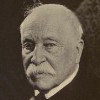
CALVIN: Why does ice float?
CALVIN’S DAD: Because it’s cold. Ice wants to get warm, so it goes to the top of liquids in order to be nearer to the sun.
CALVIN: Is that true?
CALVIN’S DAD: Look it up and find out.
CALVIN: (stomping off, frowning) I should just look stuff up in the first place.
CALVIN’S DAD: You can learn a lot, talking to me.

If the weakness of the head were an admissible excuse for the malevolence of the heart, the one-half of mankind would be occupied in aggression, and the other half in forgiveness; but the interests of society peremptorily demand that things should not be so; for a fool is often as dangerous to deal with as a knave, and always more incorrigible.
There is a strong feeling in favour of cowardly and prudential proverbs. The sentiments of a man while he is full of ardour and hope are to be received, it is supposed, with some qualification. But when the same person has ignominiously failed and begins to eat up his words, he should be listened to like an oracle. Most of our pocket wisdom is conceived for the use of mediocre people, to discourage them from ambitious attempts, and generally console them in their mediocrity. And since mediocre people constitute the bulk of humanity, this is no doubt very properly so. But it does not follow that the one sort of proposition is any less true than the other, or that Icarus is not to be more praised, and perhaps more envied, than Mr. Samuel Budgett the Successful Merchant.
One of the essential experiences of war is never being able to escape from disgusting smells of human origin.
George Orwell (1903-1950) English journalist, essayist, writer [pseud. of Eric Arthur Blair]
Essay (1942-08), “Looking Back on the Spanish War, ch. 1, New Road (1943-06)
(Source)

Down, down, down into the darkness of the grave
Gently they go, the beautiful, the tender, the kind;
Quietly they go, the intelligent, the witty, the brave.
I know. But I do not approve. And I am not resigned.

Such I hold to be the genuine use of Gunpowder: that it makes all men tall.
Thomas Carlyle (1795-1881) Scottish essayist and historian
Sartor Resartus, Book 2, ch. 8 (1834)
(Source)
Quoting Herr Teufelsdröckh.
This passage first appeared in Fraser's Magazine for Town and Country, Vol. 9, No. 52 (1834-04).
Jealousy is all the fun you think they had ….

He that goeth about to persuade a multitude, that they are not so well governed as they ought to be, shall never want attentive and favorable hearers.
Richard Hooker (1554-1600) English theologian
Of the Laws of Ecclesiastical Polity, Book 1, ch. 1 (1594)
(Source)

The control of our being is not unlike the combination of a safe. One turn of the knob rarely unlocks the safe. Each advance and retreat is a step toward one’s goal.
Eric Hoffer (1902-1983) American writer, philosopher, longshoreman
Passionate State of Mind, Aphorism 196 (1955)
(Source)
To lie about a man never hurts him, but to tell the truth about him sumtimes duz.
[To lie about a man never hurts him, but to tell the truth about him sometimes does.]
Josh Billings (1818-1885) American humorist, aphorist [pseud. of Henry Wheeler Shaw]
Josh Billings’ Farmer’s Allminax, 1875-10 (1875 ed.)
(Source)

It was his subconscious which told him this — that infuriating part of a person’s brain which never responds to interrogation, merely gives little meaningful nudges and then sits humming quietly to itself, saying nothing.
Douglas Adams (1952-2001) English author, humorist, screenwriter
Dirk Gently No. 2, The Long Dark Tea-Time of the Soul, ch. 17 (1988)
(Source)

Don’t let the future disturb you. You will meet it, if you have to, with the same weapons of reason which today arm you against the present.
[Τὰ μέλλοντα μὴ ταρασσέτω· ἥξεις γὰρ ἐπ᾿ αὐτά, ἐὰν δεήσῃ, φέρων τὸν αὐτὸν λόγον, ᾧ νῦν πρὸς τὰ παρόντα χρᾷ.]
Marcus Aurelius (AD 121-180) Roman emperor (161-180), Stoic philosopher
Meditations [To Himself; Τὰ εἰς ἑαυτόν], Book 7, ch. 8 (7.8) (AD 161-180) [tr. Coker (2022)]
(Source)
(Source (Greek)). Alternate translations:Let not things future trouble thee. For if necessity so require that they come to pass, thou shalt (whensoever that is) be provided for them with the same reason, by which whatsoever is now present, is made both tolerable and acceptable unto thee.
[tr. Casaubon (1634), 7.6]Be not disturb'd about the Future; for if ever you come to it, you'll have the same Reason for your Guide, and Protection, which preserves you at present.
[tr. Collier (1701)]Be not disturbed about futurity: You shall come to encounter with future events, possessed of the same reason you now employ in your present affairs.
[tr. Hutcheson/Moor (1742)]Be not solicitous about future possibilities. You will encounter them when they approach, under the conduct of the same reason which you make use of on every present emergency.
[tr. Graves (1792)]Let not future things disturb thee, for thou wilt come to them, if it shall be necessary, having with thee the same reason which now thou usest for present things.
[tr. Long (1862)]Be not disturbed about the future, for if ever you come to it, you will have the same reason for your guide, which preserves you at the present.
[tr. Collier/Zimmern (1887)]Let not the future perturb you. You will face it, if so be, with the same reason which is yours to meet the present.
[tr. Rendall (1898)]Be not troubled about the future. You will come to it, if need be, with the same power to reason, as you use upon your present business.
[tr. Hutcheson/Chrystal (1902)]Be not disquieted about the future. If thou must come thither, thou wilt come armed with the same reason which thou appliest now to the present.
[tr. Haines (Loeb) (1916)]Let not the future trouble you; for you will come to it, if come you must, bearing with you the same reason which you are using now to meet the present.
[tr. Farquharson (1944)]Never let the future disturb you. You will meet it, if you have to, with the same weapons of reason which today arm you against the present.
[tr. Staniforth (1964)]Do not allow the future to trouble your mind; for you will come to it, if come you must, bringing with you the same reason that you now apply to the affairs of the present.
[tr. Hard (1997 ed.)]Forget the future. When and if it comes, you’ll have the same resources to draw on -- the same logos.
[tr. Hays (2003)]Do not let the future trouble you. You will come to it (if that is what you must) possessed of the same reason that you apply now to the present.
[tr. Hammond (2006)]Do not allow the future to trouble your mind; for you will come to it, if come you must, bringing with you the same reason that you now apply to the affairs of the present.
[tr. Hard (2011 ed.)]

Another nice thing about getting old is you can leave any social event early just by saying you’re tired.
George Carlin (1937-2008) American comedian
Show (2008-03-01), It’s Bad for Ya, “Old Fuck,” Wells Fargo Center, Santa Rosa, California (HBO)
(Source (Audio); dialogue verified)
Variant: "One great thing about getting old is that you can get out of all sorts of social obligations just by saying you're tired."

No satisfaction based upon self-deception is solid, and, however unpleasant the truth may be, it is better to face it once for all, to get used to it, and to proceed to build your life in accordance with it.
Bertrand Russell (1872-1970) English mathematician and philosopher
Conquest of Happiness, Part 1, ch. 8 “Persecution Mania” (1930)
(Source)

Thou never wast so good as thou shouldest be; if thou does not strive to be better. And thou never wilt be better, if thou doest not fear to grow worse.
Thomas Fuller (1654-1734) English physician, preacher, aphorist, writer
Introductio ad Prudentiam, Vol. 2, # 2092 (1727)
(Source)

They used to say that Texas was hell on women and horses — I don’t know why they stopped.
Molly Ivins (1944-2007) American writer, political columnist [Mary Tyler Ivins]
Essay (1986), “Texas Women: True Grit and All the Rest,” Texas Celebrates! commemorative magazine
(Source)

CALVIN: I’m thinking of starting my own talk radio show. I’ll spout simplistic opinions for hours on end, ridicule anyone who disagrees with me, and generally foster divisiveness, cynicism, and a lower level of public dialogue!
HOBBES: It would seem you were born for the job.
CALVIN: Imagine getting paid to act like a six-year-old!

CHORUS: It is right for women to stand by a woman’s cause.
[ΧΟΡΟΣ: γυναῖκα γὰρ δὴ συμπονεῖν γυναικὶ χρή.]
Euripides (485?-406? BC) Greek tragic dramatist
Helen [Ἑλένη], l. 329 (412 BC) [tr. Lattimore (1956)]
(Source)
Encouraging Helen to learn more about her husband's fate from the prophetess Theonoë, and offering to go with her.(Source (Greek)). Other translations:Thus a woman ought
With friendly aid to share a woman's cares.
[tr. Potter (1783), l. 370ff]For 'tis a woman's duty to exert
Her utmost efforts in a woman's cause.
[tr. Wodhull (1809)]For it is meet that a woman should with a woman labor.
[tr. Buckley (1850)]For, truly, women ought to help each other.
[tr. Coleridge (1891)]That woman woman's burden share, is meet.
[tr. Way (Loeb) (1912)]Women in woman's need must sympathise.
[tr. Sheppard (1925)]For women ought to give each other helping hands.
[tr. Warner (1951)]Women ought to help each other.
[tr. Vellacott (1954)]We are all women;
and it is right for us to shoulder one another's burdens.
[tr. Meagher (1986)]Women should support one another.
[tr. Davie (2002)]For 'tis a woman's bounden duty to share a sister's trouble.
[tr. Athenian Society (2006)]Women should stick together, and help each other out.
[tr. A. Wilson (2007)]We women must help one another.
[tr. Theodoridis (2011)]For woman must with woman toil.
[tr. Ambrose et al. (2018)]For, truly, women ought to help each other.
[tr. Coleridge / Helen Heroization Team]
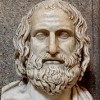
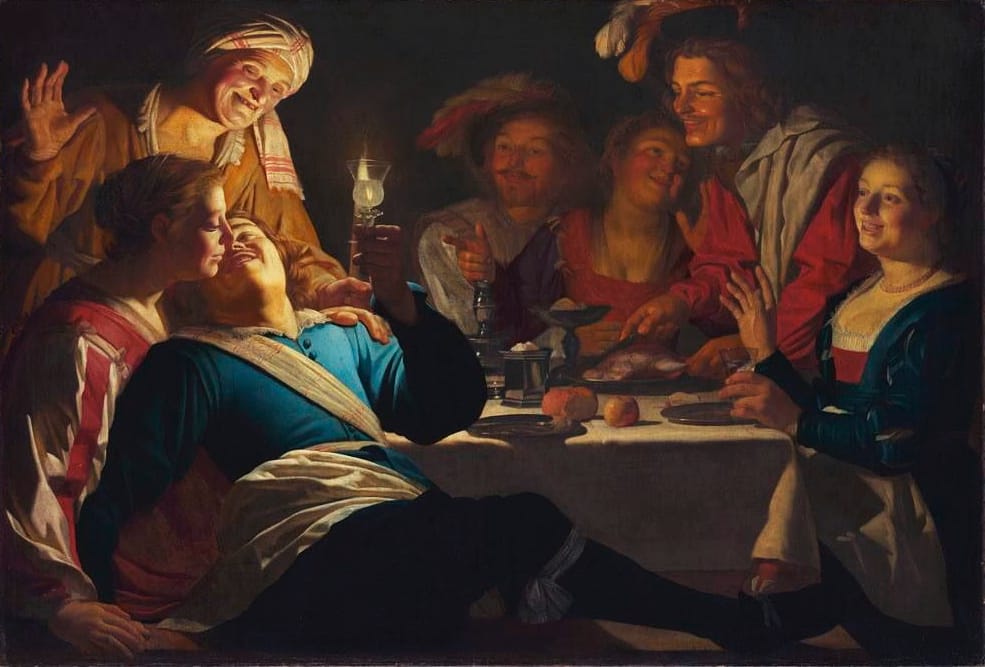
And not many days after the younger son gathered all together, and took his journey into a far country, and there wasted his substance with riotous living.
[καὶ μετ᾽ οὐ πολλὰς ἡμέρας συναγαγὼν πάντα ὁ νεώτερος υἱὸς ἀπεδήμησεν εἰς χώραν μακρὰν καὶ ἐκεῖ διεσκόρπισεν τὴν οὐσίαν αὐτοῦ ζῶν ἀσώτως.]
The Bible (The New Testament) (AD 1st - 2nd C) Christian sacred scripture
Luke 15: 13, “Parable of the Prodigal Son” (Jesus) [KJV (1611)]
(Source)
Set up in the Parable of the Prodigal Son (in fact, the verse where he is being prodigal).
No Synoptic parallels.
(Source (Greek)). Alternate translations:A few days later, the younger son got together everything he had and left for a distant country where he squandered his money on a life of debauchery.
[JB (1966); NJB (1985)]After a few days the younger son sold his part of the property and left home with the money. He went to a country far away, where he wasted his money in reckless living.
[GNT (1992 ed.)]Soon afterward, the younger son gathered everything together and took a trip to a land far away. There, he wasted his wealth through extravagant living.
[CEB (2011)]A few days later the younger son gathered all he had and traveled to a distant region, and there he squandered his wealth in dissolute living.
[NRSV (2021 ed.)]

You have to study a long time to know anything at all.
[Il fout avoir beaucoup étudié pour savoir peu.]
Charles-Lewis de Secondat, Baron de Montesquieu (1689-1755) French political philosopher
Pensées Diverses [Assorted Thoughts] (1720-1755) [ed. Guterman (1963)]
(Source)
(Source (French)). Other translations:In order to know nothing, it is necessary that a man should have studied a great deal.
[tr. Dale (1882)]It is necessary to study much in order to know little.
[E.g.]You have to study a great deal to know a little.
[E.g.]
My religious position: I think that God could do a lot better, and I’m willing to give Him the chance.
Mignon McLaughlin (1913-1983) American journalist and author
The Second Neurotic’s Notebook, ch. 8 (1966)
(Source)

Certainly the influence of the past is very strong at the present time; it is reviving, and this rejuvenation of a corpse is surprising. It is on the march, and it seems to be winning — a dead thing yet a conqueror! It comes with its army of superstitions, its sword, which is despotism, its banner, which is ignorance, and in recent years it has won ten battles. It advances, laughs, and threatens; it is at our door.
[Le passé, il est vrai, est très fort à l’heure où nous sommes. Il reprend. Ce rajeunissement d’un cadavre est surprenant. Le voici qui marche et qui vient. Il semble vainqueur ; ce mort est un conquérant. Il arrive avec sa légion, les superstitions, avec son épée, le despotisme, avec son drapeau, l’ignorance ; depuis quelque temps il a gagné dix batailles. Il avance, il menace, il rit, il est à nos portes.]
Victor Hugo (1802-1885) French writer
Les Misérables, Part 4 “St. Denis,” Book 7 “Argot,” ch. 4 (4.7.4) (1862) [tr. Denny (1976)]
(Source)
(Source (French)). Alternate translations:The past, it is true, is very strong at the present hour. It is reviving. This revivification of a corpse is surprising. Here it is walking and advancing. It seems victorious; this dead man is a conqueror. He comes with his legion, the superstitions, with his sword, despotism, with his banner, ignorance; within a little time he has won ten battles. He advances, he threatens, he laughs, he is at our doors.
[tr. Wilbour (1862)]The past, we grant, is very powerful at the present hour, and is beginning again. This rejuvenescence of a corpse is surprising, yet here it is, marching straight toward us. The dead man appears a victor, and is a conqueror; he arrives with his legion, superstitions; with his sword, despotism; with his banner, ignorance; and during sometime past he has gained ten battles. He advances, he threatens, he laughs, he is at our gates.
[tr. Wraxall (1862)]The past is very strong, it is true, at the present moment. It censures. This rejuvenation of a corpse is surprising. Behold, it is walking and advancing. It seems a victor; this dead body is a conqueror. He arrives with his legions, superstitions, with his sword, despotism, with his banner, ignorance; a while ago, he won ten battles. He advances, he threatens, he laughs, he is at our doors.
[tr. Hapgood (1887)]The past, it is true, is very strong right now. It is reviving. This revivification of a corpse is surprising. Here it is walking and advancing. It seems victorious; this dead man is a conqueror. He comes with his legion, superstitions, with his sword, despotism, with his banner, ignorance; within a little time he has won ten battles. He advances, he threatens, he laughs, he is at our door.
[tr. Wilbour/Fahnestock/MacAfee (1987)]At the moment, it is true, the past is very strong. It is reviving. This rejuvenation of a corpse is astounding. Back on its feet again, here it comes. It looks victorious. This defunct is a conqueror, it arrives with its legion -- superstitions -- with its sword -- despotism -- with its banner -- ignorance. Recently, it has won a dozen battles. It is advancing, threatening, laughing, it is at our gates.
[tr. Donougher (2013)]

Temperance and abstinence, faith and devotion, are in themselves perhaps as laudable as any other virtues; but those which make a man popular and beloved are justice, charity, munificence, and, in short, all the good qualities which render us beneficial to each other.
Joseph Addison (1672-1719) English essayist, poet, statesman
Essay (1711-12-08), The Spectator, No. 243
(Source)

The boldest thinker may have his moments of languor and discouragement, when he feels as if he could willingly exchange faiths with the old beldame crossing herself at the cathedral-door, — nay, that, if he could drop all coherent thought, and lie in the flowery meadow with the brown-eyed solemnly unthinking cattle, looking up to the sky, and all their simple consciousness staining itself blue, then down to the grass, and life turning to a mere greenness, blended with confused scents of herbs, — no individual mind-movement such as men are teased with, but the great calm cattle-sense of all time and all places that know the milky smell of herds, — if he could be like these, he would be content to be driven home by the cow-boy, and share the grassy banquet of the king of ancient Babylon. Let us be very generous, then, in our judgment of those who leave the front ranks of thought for the company of the meek non-combatants who follow with the baggage and provisions. Age, illness, too much wear and tear, a half-formed paralysis, may bring any of us to this pass.
There are many ways in which we’re become much more polite than Americans were historically. Blatant bigotry is no longer tolerated by this society. It exists, but people get into trouble for practicing it. The obligation to be considerate of others has spread to include groups that were excluded at many times.
Judith Martin (b. 1938) American author, journalist, etiquette expert [a.k.a. Miss Manners]
Interview (2011-08), “Q and A with Miss Manners,” by Arcynta Ali Childs, Smithsonian magazine
(Source)

KING RICHARD: Wrath-kindled gentlemen, be ruled by me.
Let’s purge this choler without letting blood.
This we prescribe, though no physician.
Deep malice makes too deep incision.
Forget, forgive; conclude and be agreed.
Our doctors say this is no month to bleed.William Shakespeare (1564-1616) English dramatist and poet
Richard II, Act 1, sc. 1, l. 156ff (1.1.56) (1595)
(Source)
In one of his more lucid (and early) moments of the play, Richard tries to calm the dispute between Bolingbroke and Mowbray.
Every age has its peculiar folly; some scheme, project, or phantasy into which it plunges, spurred on either by the love of gain, the necessity of excitement, or the mere force of imitation. Failing in these, it has some madness, to which it is goaded by political or religious causes, or both combined.
Charles Mackay (1814-1889) Scottish poet, journalist, song writer
Memoirs of Extraordinary Popular Delusions and the Madness of Crowds, “The Crusades” (1841)
(Source)
Oh give me a home where the buffalo roam,
Where the deer and the antelope play,
Where seldom is heard a discouraging word
And the skies are not cloudy all day.Brewster Higley (1823-1911) American physician, poet
“My Western Home,” Smith County Pioneer (1873-11)
(Source)
Set to music by Daniel Kelley (1843-1905), a friend of Higley's. The song was published in 1910 by John Lomax in Cowboy Songs as an anonymous cowboy tune, and revised and retitled by David Guion for a Broadway show in 1930. It became widely popular when President Franklin Roosevelt said in 1933 that it was a favorite of his.
The oldest extant published version is in the Kirwin Chief, Vol. 3, No. 1 (1876-02-26). The lyrics for this verse are the same, except the final line, which reads "And the sky is not clouded all day."
In 1847, it was made the state song of Kansas by the legislature.
More information about this song see:
Much water goeth by the mill
That the miller knoweth not of.John Heywood (1497?-1580?) English playwright and epigrammist
Proverbes, Part 2, ch. 5 (1546)
(Source)
See Shakespeare, Titus Andronicus, Act 2, sc. 7 (1588-1593): "More water glideth by the mill, / Than wots the miller of."

Modern war is so expensive that we feel trade to be a better avenue to plunder; but modern man inherits all the innate pugnacity and all the love of glory of his ancestors. Showing war’s irrationality and horror is of no effect upon him. The horrors make the fascination. War is the strong life; it is life in extremis; war-taxes are the only ones men never hesitate to pay; as the budgets of all nations show us.
William James (1842-1910) American psychologist and philosopher
Essay (1910-02), “The Moral Equivalent of War,” Popular Science Monthly, Vol. 77 (1910-10)
(Source)

Virtue would not go so far if vanity did not keep her company.
[La vertu n’iroit pas si loin si la vanité ne lui tenoit compagnie.]
François VI, duc de La Rochefoucauld (1613-1680) French epigrammatist, memoirist, noble
Réflexions ou sentences et maximes morales [Reflections; or Sentences and Moral Maxims], ¶200 (1665-1678) [tr. Whichello (2016)]
(Source)
Present in the 1st (1665) edition, with the variant "pas loin" instead of "pas si loin." See ¶169 for related maxims.
(Source (French)). Other translations:Vertue would not make such Advances, if there were not a little Vanity to bear it Company.
[tr. Stanhope (1694), ¶201]Virtue would not go so far, if vanity did not bear her company.
[pub. Donaldson (1783), ¶452; ed. Lepoittevin-Lacroix (1797), ¶191]Worldly virtue would not go far, were vanity not to bear her company.
[ed. Carvill (1835), ¶386]Virtue would not travel so far if vanity did not keep her company.
[ed. Gowens (1851), ¶209]Virtue would not go far did not vanity escort her.
[tr. Bund/Friswell (1871), ¶200]Virtue would be shorter lived, were vanity not its companion.
[tr. Heard (1917), ¶205]Virtue would not go so far if vanity did not bear her company.
[tr. Stevens (1939), ¶200]Virtue would not go so far did vanity not keep her company.
[tr. FitzGibbon (1957), ¶200]Virtue would not go nearly so far if vanity did not keep her company.
[tr. Kronenberger (1959), ¶200]Virtue would not go so far without vanity to bear it company.
[tr. Tancock (1959), ¶200]


I see a lot in the Papers about this 20th or Child Labor Amendment, and I have been asked how I stand on that. If Congress or the States would just pass one law, as follows, they wouldn’t need any Amendment: “EVERY CHILD, REGARDLESS OF AGE, SHALL RECEIVE THE SAME WAGE AS A GROWN PERSON.” That will stop your child labor.
Will Rogers (1879-1935) American humorist
Column (1924-12-28), “Weekly Article: Aviation is 20 Years Old but Congress Never Heard of It” [No. 107]
(Source)
Now I know that in thus turning Conservative with years, I am going through the normal cycle of change and travelling in the common orbit of men’s opinions. I submit to this, as I would submit to gout or grey hair, as a concomitant of growing age or else of failing animal heat; but I do not acknowledge that it is necessarily a change for the better — I dare say it is deplorably for the worse.
TAMBURLAINE: Then shall we fight courageously with them?
Or look you I should play the orator?TECHELLES: No; cowards and faint-hearted runaways
Look for orations when the foe is near:
Our swords shall play the orators for us.

I am not resigned to the shutting away of loving hearts in the hard ground.
So it is, and so it will be, for so it has been, time out of mind.
Into the darkness they go, the wise and the lovely. Crowned
With lilies and with laurel they go; but I am not resigned.
HENRIETTE: Heaven, that orders all with sovereign power,
Forms us at birth for different uses, sister.
Not every spirit, if it would, can furnish
The stuff of which philosophers are made.[Le ciel, dont nous voyons que l’ordre est tout-puissant,
Pour différents emplois nous fabrique en naissant ;
Et tout esprit n’est pas composé d’une étoffe
Qui se trouve taillée à faire un philosophe.]Molière (1622-1673) French playwright, actor [stage name for Jean-Baptiste Poquelin]
Les Femmes Savantes [The Learned Ladies], Act 1, sc. 1, (1692) [tr. Page (1908)]
(Source)
(Source (French)). Other translations:Heav'n, whose Order we perceive to be almighty, forms us in our Birth for different Offices, and every Mind is not compos'd of Materials to fit it for making a Philosopher.
[tr. Clitandre (1739)]Heaven, whose commands we see to be all-powerful, fits us at our birth for different functions; and every mind is not composed of the stuff cut out to make a philosopher.
[tr. Van Laun (1876)]Heaven, whose will is supreme, forms us at our birth to fill different spheres; and it is not every mind which is composed of materials fit to make a philosopher.
[tr. Wall (1879), The Learned Women]Heaven, whose order we own to be almighty, forms us at birth for different occupations, and every mind is not composed of the stuff to make a philosopher.
[tr. Matthew (1890), The Blue-Stockings]But Heaven, whose laws we know to be all-powerful, formed us at birth for different vocations. All minds are not of the same stuff, cut out to make philosophers.
[tr. Wormeley (1895), The Female Pedants]Heaven, whose decree is omnipotent, forms us at our birth for different functions; not every mind is made of the material from which a philosopher is made.
[tr. Waller (1903)]Heaven, whose order of course is all-powerful,
Creates us at birth for different functions;
And every mind is not composed of the stuff
That’s right for fashioning philosophers.
[tr. Marks (2018)]

Not what I Have but what I Do is my Kingdom.
Thomas Carlyle (1795-1881) Scottish essayist and historian
Sartor Resartus, Book 2, ch. 4 (1834)
(Source)
Quoting Herr Teufelsdröckh.
This chapter first appeared in Fraser's Magazine for Town and Country, Vol. 9, No. 50 (1834-02).
A valid index by which to evaluate the influence other people have on us is by how much they increase or diminish our benevolence toward our fellow men.
Eric Hoffer (1902-1983) American writer, philosopher, longshoreman
Passionate State of Mind, Aphorism 137 (1955)
(Source)
And I am not against peace, but I dread war camouflaged as peace. Therefore, if we wish to enjoy peace, we must wage war; if we fail to wage war, we shall never enjoy peace.
[Nec ego pacem nolo, sed pacis nomine bellum involutum reformido. Qua re si pace frui volumus, bellum gerendum est; si bellum omittimus, pace numquam fruemur.]
Marcus Tullius Cicero (106-43 BC) Roman orator, statesman, philosopher
Philippics [Philippicae; Antonian Orations], No. 7, ch. 6 / sec. 19 (7.6/7.19) (43-01 BC) [tr. Manuwald (2007)]
(Source)
On declaring a truce with Mark Antony and his forces, giving Antony's army a chance to grow in number.
(Source (Latin)). Other translations:Nor have I any dislike to peace; only I do dread war disguised under the name of peace. Wherefore, if we wish to enjoy peace we must first wage war. If we shrink from war, peace we shall never have.
[tr. Yonge (1903)]If we desire to enjoy peace, we must first wage war; if we shrink from war, we shall never enjoy peace.
[ed. Harbottle (1906)]I do not refuse peace, but war clothed with the name of peace I dread much. Wherefore, if we wish to enjoy peace, we must wage war; if we reject war we shall never enjoy peace.
[tr. Ker (Loeb) (1926)]
I think it iz good taste, and also good judgement, when a man prays for the sins ov the people, that he should count himself in.
[I think it is good taste, and also good judgement, when a man prays for the sins of the people, that he should count himself in.]
Josh Billings (1818-1885) American humorist, aphorist [pseud. of Henry Wheeler Shaw]
Josh Billings’ Farmer’s Allminax, 1876-01 (1876 ed.)
(Source)
This showed up again in the Allminax entry for 1878-01:I allwuss think that it is good taste, and pretty good religion too, when a man prays for the sins ov the people, to count himself in.
[I always think that it is good taste, and pretty good religion, too, when a man prays for the sins of the people, to count himself in.]
In the British Wit and Wisdom of Josh Billings (1913) [ed. H. Montague], this is given (with standard spelling):I always did think that it was good taste and pretty good religion too, when a man prayed for the SINS of other folks, to include himself also.
Don’t overload Gratitude; if you do, she’ll kick.
Benjamin Franklin (1706-1790) American statesman, scientist, philosopher, aphorist
Poor Richard (1741 ed.)
(Source)
One should always have one’s boots on, and be ready to leave.
[Il faut estre tousjours botté et prest à partir, en tant que en nous est.]
Michel de Montaigne (1533-1592) French essayist
Essays, Book 1, ch. 19 (1.19), “That to Philosophize Is to Learn to Die [Que Philosopher, c’est apprendre à mourir]” (1572-03) [tr. Rat (1958), 1.20]
(Source)
On being prepared to die at any time.
This essay and passage were present in the 1st (1580) edition; the essay was expanded for subsequent editions.
Some translators use the older 1588 chapter sequence, and identify this as ch. 20.
(Source (French)). Alternate translations:A man should ever, as much as in him lieth, be ready booted to take his journey.
[tr. Florio (1603)]We should always (as near as we can) be booted and spurr’d, and ready to go.
[tr. Cotton (1686)]We should always, as far as possible, be booted and ready to depart.
[tr. Friswell (1868)]We should always, as near as we can, be booted and spurred, and ready to go.
[tr. Cotton/Hazlitt (1877)]We must always be booted and ready to depart, so far as lies in us.
[tr. Ives (1925), 1.20]We must be always booted and ready to go, so far as it is in our power.
[tr. Frame (1943), 1.20]As far as we possibly can we must always have our boots on, ready to go.
[tr. Screech (1987), 1.20]We must always have our boots on, ready to leave, insofar as we can.
[tr. Atkinson/Sices (2012)]We must always have our boots on and, as much as possible, be ready to go.
[tr. HyperEssays (2024)]

And what can we do to silence these Christian athletes who thank Jesus whenever they win, never mention his name when they lose? Not a word. You never hear them say, “Jesus made me drop the ball.” “The good Lord tripped me up behind the line of scrimmage.” According to these guys, Jesus is undefeated, meanwhile these assholes are in last place. Must be another one of those “miracles.”
George Carlin (1937-2008) American comedian
Show (1996-03-29), Back in Town, “Free-Floating Hostility,” Beacon Theatre, New York City (HBO)
(Source)
(Source (Video); text confirmed)
We expect everybody else to feel towards us that tender love and that profound respect which we feel towards ourselves.
Bertrand Russell (1872-1970) English mathematician and philosopher
Conquest of Happiness, Part 1, ch. 8 “Persecution Mania” (1930)
(Source)
CALVIN: “Live for the moment” is my motto. You never know how long you’ve got! You could step into the road tomorrow and — WHAM — you get hit by a cement truck! Then you’d be sorry you put off your pleasures! That’s why I say “Live for the Moment.” What’s your motto?
HOBBES: “Look down the road.”

AGAMEMNON:But women?
Women overpower men?HECUBA:There is power
in numbers, and cunning makes us strong.ἈΓΑΜΈΜΝΩΝ: καὶ πῶς γυναιξὶν ἀρσένων ἔσται κράτος;
ἙΚΆΒΗ: δεινὸν τὸ πλῆθος σὺν δόλῳ τε δύσμαχον.
Euripides (485?-406? BC) Greek tragic dramatist
Hecuba [Hekabe; Ἑκάβη], l. 883ff (c. 424 BC) [tr. Arrowsmith (1958)]
(Source)
Hecuba telling Agamemnon that she will rely on her fellow captive Trojan women to help exact her revenge on Polymestor.
(Source (Greek)). Alternate translations:AGAMΕΜΝΟΝ. How shall weak women; over men prevail?
HECUBA. Numbers are strong; add stratagem, resistless.
[tr. Potter (1781)]AGAMEMNON:How can the female sex
O'er men obtain a conquest?
HECUBA:Numbers strike
A foe with terror, and the wiles of women
Are hard to be withstood.
[tr. Wodhull (1809)]AGAMEMNON: And how shall the victory over men be to women?
HECUBA: Numbers are powerful, with stratagem invincible.
[tr. Edwards (1826)]AGAMEMNON: How? -- women gain the mastery over men?
HECUBA: Mighty are numbers: joined with craft, resistless.
[tr. Way (Loeb) (1894)]AGAMEMNON: How are women to master men?
HECUBA: Numbers are a fearful thing, and joined to craft a desperate foe.
[tr. Coleridge (1938)]AGAMEMNON: How can women win against men?
HECUBA: Who can stand against a tribe
A wild tribe of wise women?
[tr. McGuinness (2004)]AGAMEMNON: How can you women overpower a man?
HECUBA: Enough of them would scare you soon enough and with cunning they're a force hard to resist.
[tr. Harrison (2005)]AGAMEMNON: But how will the women be able to overcome the strength of men?
HEKABE: Numbers, when joined with treachery, can cause great terror.
[tr. Theodoridis (2007)]AGAMEMNON:But how?
You are women. How will women defeat men?
HECUBA: There is unnerving strength in numbers, especially when
you add deceit.
[tr. Karden/Street (2011)]
And he went on to say to them all, “Watch out and guard yourselves from every kind of greed; because your true life is not made up of the things you own, no matter how rich you may be.”
Then Jesus told them this parable: “There was once a rich man who had land which bore good crops. He began to think to himself, ‘I don’t have a place to keep all my crops. What can I do? This is what I will do,’ he told himself; ‘I will tear down my barns and build bigger ones, where I will store the grain and all my other goods. Then I will say to myself, Lucky man! You have all the good things you need for many years. Take life easy, eat, drink, and enjoy yourself!’ But God said to him, ‘You fool! This very night you will have to give up your life; then who will get all these things you have kept for yourself?’”
And Jesus concluded, “This is how it is with those who pile up riches for themselves but are not rich in God’s sight.”εἶπεν δὲ πρὸς αὐτούς, Ὁρᾶτε καὶ φυλάσσεσθε ἀπὸ πάσης πλεονεξίας, ὅτι οὐκ ἐν τῷ περισσεύειν τινὶ ἡ ζωὴ αὐτοῦ ἐστιν ἐκ τῶν ὑπαρχόντων αὐτῷ.
Εἶπεν δὲ παραβολὴν πρὸς αὐτοὺς λέγων, Ἀνθρώπου τινὸς πλουσίου εὐφόρησεν ἡ χώρα. καὶ διελογίζετο ἐν ἑαυτῷ λέγων, Τί ποιήσω, ὅτι οὐκ ἔχω ποῦ συνάξω τοὺς καρπούς μου; καὶ εἶπεν, Τοῦτο ποιήσω, καθελῶ μου τὰς ἀποθήκας καὶ μείζονας οἰκοδομήσω καὶ συνάξω ἐκεῖ πάντα τὸν σῖτον καὶ τὰ ἀγαθά μου καὶ ἐρῶ τῇ ψυχῇ μου, Ψυχή, ἔχεις πολλὰ ἀγαθὰ κείμενα εἰς ἔτη πολλά· ἀναπαύου, φάγε, πίε, εὐφραίνου.
εἶπεν δὲ αὐτῷ ὁ θεός, Ἄφρων, ταύτῃ τῇ νυκτὶ τὴν ψυχήν σου ἀπαιτοῦσιν ἀπὸ σοῦ· ἃ δὲ ἡτοίμασας, τίνι ἔσται; οὕτως ὁ θησαυρίζων ἑαυτῷ καὶ μὴ εἰς θεὸν πλουτῶν.The Bible (The New Testament) (AD 1st - 2nd C) Christian sacred scripture
Luke 12: 15-21 [GNT (1992 ed.)]
(Source)
No Synoptic parallels, but the parable is paralleled in the Gospel of Thomas, saying 63.
(Source (Greek)). Alternate translations:And he said unto them, Take heed, and beware of covetousness: for a man’s life consisteth not in the abundance of the things which he possesseth.
And he spake a parable unto them, saying, The ground of a certain rich man brought forth plentifully: and he thought within himself, saying, What shall I do, because I have no room where to bestow my fruits? And he said, This will I do: I will pull down my barns, and build greater; and there will I bestow all my fruits and my goods. And I will say to my soul, Soul, thou hast much goods laid up for many years; take thine ease, eat, drink, and be merry.
But God said unto him, Thou fool, this night thy soul shall be required of thee: then whose shall those things be, which thou hast provided? So is he that layeth up treasure for himself, and is not rich toward God.
[KJV (1611)]Then he said to them, 'Watch, and be on your guard against avarice of any kind, for a man's life is not made secure by what he owns, even when he has more than he needs'.
Then he told them a parable: 'There was once a rich man who, having had a good harvest from his land, thought to himself, "What am I to do? I have not enough room to store my crops." Then he said, "This is what I will do: I will pull down my barns and build bigger ones, and store all my grain and my goods in them, and I will say to my soul: My soul, you have plenty of good things laid by for many years to come; take things easy, eat, drink, have a good time". 'But God said to him, "Fool! This very night the demand will be made for your soul; and this hoard of yours, whose will it be then?". So it is when a man stores up treasure for himself in place of making himself rich in the sight of God.'
[JB (1966)]Then he said to them, 'Watch, and be on your guard against avarice of any kind, for life does not consist in possessions, even when someone has more than he needs.'
Then he told them a parable, 'There was once a rich man who, having had a good harvest from his land, thought to himself, "What am I to do? I have not enough room to store my crops." Then he said, "This is what I will do: I will pull down my barns and build bigger ones, and store all my grain and my goods in them, and I will say to my soul: My soul, you have plenty of good things laid by for many years to come; take things easy, eat, drink, have a good time." But God said to him, "Fool! This very night the demand will be made for your soul; and this hoard of yours, whose will it be then?" So it is when someone stores up treasure for himself instead of becoming rich in the sight of God.'
[NJB (1985)]Then Jesus said to them, “Watch out! Guard yourself against all kinds of greed. After all, one’s life isn’t determined by one’s possessions, even when someone is very wealthy.”
Then he told them a parable: “A certain rich man’s land produced a bountiful crop. He said to himself, What will I do? I have no place to store my harvest! Then he thought, Here’s what I’ll do. I’ll tear down my barns and build bigger ones. That’s where I’ll store all my grain and goods. 19 I’ll say to myself, You have stored up plenty of goods, enough for several years. Take it easy! Eat, drink, and enjoy yourself.
"But God said to him, ‘Fool, tonight you will die. Now who will get the things you have prepared for yourself?’ This is the way it will be for those who hoard things for themselves and aren’t rich toward God.”
[CEB (2011)]And he said to them, “Take care! Be on your guard against all kinds of greed, for one’s life does not consist in the abundance of possessions.”
Then he told them a parable: “The land of a rich man produced abundantly. And he thought to himself, ‘What should I do, for I have no place to store my crops?’ Then he said, ‘I will do this: I will pull down my barns and build larger ones, and there I will store all my grain and my goods. And I will say to my soul, Soul, you have ample goods laid up for many years; relax, eat, drink, be merry.’
"But God said to him, ‘You fool! This very night your life is being demanded of you. And the things you have prepared, whose will they be?’ So it is with those who store up treasures for themselves but are not rich toward God.”
[NRSV (2021 ed.)]
I hate being so intolerant, and I wouldn’t be if people didn’t deserve it.
Mignon McLaughlin (1913-1983) American journalist and author
The Neurotic’s Notebook, ch. 3 (1963)
(Source)
We might have understood and admired in him protest in the name of legality and liberty, proud opposition, legitimate but perilous resistance to the all-powerful Napoleon. But what pleases us in the treatment of those on their way up is less pleasing in the treatment of those on their way down. We approve of fighting only so long as there is danger, and in any case only those who fought in the first instance have the right to be exterminators at the last. He who has not been a persistent opponent in times of prosperity should remain silent when the downfall comes. Challenging success gives the only legitimacy to prosecuting failure.
[Nous eussions compris et admiré la protestation au nom du droit et de la liberté, l’opposition fière, la résistance périlleuse et juste à Napoléon tout-puissant. Mais ce qui nous plaît vis-à-vis de ceux qui montent nous plaît moins vis-à-vis de ceux qui tombent. Nous n’aimons le combat que tant qu’il y a du danger ; et, dans tous les cas, les combattants de la première heure ont seuls le droit d’être les exterminateurs de la dernière. Qui n’a pas été accusateur opiniâtre pendant la prospérité doit se taire devant l’écroulement. Le dénonciateur du succès est le seul légitime justicier de la chute.]
Victor Hugo (1802-1885) French writer
Les Misérables, Part 1 “Fantine,” Book 1 “An Upright Man,” ch. 11 (1.1.11) (1862) [tr. Donougher (2013)]
(Source)
On the otherwise-virtuous Bishop Myriel only opposing Napoleon after the emperor's fortunes were waning.
(Source (French)). Alternate translations:We could have understood and admired a protest in the name of right and liberty, a fierce opposition, a perilous and just resistance to Napoleon when he was all-powerful. But what is pleasing to us towards those who are rising, is less pleasing towards those who are falling. We do not admire the combat when there is no danger; and in any case, the combatants of the first hour have alone the right to be the exterminators in the last. He who has not been a determined accuser during prosperity, ought to hold his peace in the presence of adversity. He only who denounces the success at one time has a right to proclaim the justice of the downfall.
[tr. Wilbour (1862)]We could have understood and admired a protest in the name of justice and liberty, a haughty opposition, and a perilous and just resistance offered to the omnipotent Napoleon. But conduct which pleases us toward those who are rising, pleases us less toward those who are falling. We only like the contest so long as there is danger; and, in any case, only the combatants from the beginning have a right to be the exterminators at the end. A man who has not been an obstinate accuser during prosperity must be silent when the crash comes; the denouncer of success is the sole legitimate judge of the fall.
[tr. Wraxall (1862)]We should have understood and admired his protest in the name of right and liberty, his proud opposition, his just but perilous resistance to the all-powerful Napoleon. But that which pleases us in people who are rising pleases us less in the case of people who are falling. We only love the fray so long as there is danger, and in any case, the combatants of the first hour have alone the right to be the exterminators of the last. He who has not been a stubborn accuser in prosperity should hold his peace in the face of ruin. The denunciator of success is the only legitimate executioner of the fall.
[tr. Hapgood (1887)]We would nevertheless have admired him had he, in the name of justice and liberty, pursued a course of high-minded and perilous resistance to Napoleon when the Emperor was at the height of his power. But what is admirable in the case of a rising star is less so when the star is setting. We can respect the struggle only when it is dangerous; and in any case, only those who fight from the beginning deserve the final victory. The man who did not speak out in the time of prosperity does better to keep silent in the time of adversity; only the assailant of success is the legitimate instrument of its downfall.
[tr. Denny (1976)]We could have understood and admired a protest in the name of law and liberty, a fierce opposition, a perilous and just resistance to Napoleon when he was all-powerful. But what pleases us in those who are rising is less pleasing in those who are falling. We do not admire the combat when there is no danger; and in any case, the combatants of the first hour alone have the right to be the exterminators in the last. He who has not been a determined accuser during prosperity should hold his peace in adversity. He alone who denounces the success has a right to proclaim the justice of the downfall.
[tr. Wilbour/Fahnestock/MacAfee (1987)]
We should esteem virtue though in a foe, and abhor vice though in a friend.
Joseph Addison (1672-1719) English essayist, poet, statesman
Essay (1711-12-08), The Spectator, No. 243
(Source)
Liberty is often a heavy burden on a man. It involves that necessity for perpetual choice which is the kind of labor men have always dreaded. In common life we shirk it by forming habits, which take the place of self-determination. In politics party-organization saves us the pains of much thinking before deciding how to cast our vote. In religious matters there are great multitudes watching us perpetually, each propagandist ready with his bundle of finalities, which having accepted we may be at peace. The more absolute the submission demanded, the stronger the temptation becomes to those who have been long tossed among doubts and conflicts.
Oliver Wendell Holmes, Sr. (1809-1894) American poet, essayist, scholar
Article (1860-09), “The Professor’s Story [Elsie Venner],” ch. 18, Atlantic Monthly, Vol. 6, No. 35
(Source)
Originally serialized as “The Professor’s Story,” but collected as the novel Elsie Venner, ch. 18 (1861).
Q. Is it ever acceptable to be rude?
A. No. Now, that doesn’t mean you have to let people walk all over you. Etiquette does not render you defenseless. If it did; even I wouldn’t subscribe to it. But rudeness in retaliation for rudeness just doubles the amount of rudeness in the world.
Judith Martin (b. 1938) American author, journalist, etiquette expert [a.k.a. Miss Manners]
Interview (2011-08), “Q and A with Miss Manners,” by Arcynta Ali Childs, Smithsonian magazine
(Source)
KING RICHARD: In rage, deaf as the sea, hasty as fire.
William Shakespeare (1564-1616) English dramatist and poet
Richard II, Act 1, sc. 1, l. 20 (1.1.20) (1595)
(Source)
On the disputants coming before him, Bolingbroke and Mowbray.
You have no enemies, you say?
Alas, my friend, the boast is poor;
He, who has mingled in the fray
Of duty that the brave endure,
Must have made foes! If you have none,
Small is the work that you have done,
You’ve hit no traitor on the hip,
You’ve dashed no cup from perjured lip,
You’ve never turned the wrong to right,
You’ve been a coward in the fight.Charles Mackay (1814-1889) Scottish poet, journalist, song writer
Poem (1884), “No Enemies”, Interludes and Undertones, Poem 121
(Source)
The hitting on the hip is an allusion to Genesis 32:35.
A third-person version of the poem, titled "Not In It," was "Selected" as filler in The Medical and Surgical Reporter, Vol. 69, No. 19 (1893-11-04), uncredited:He has no enemies, you say.
My friend, your boast is poor.
He who hath mingled in the fray
Of duty that the brave endure
Must have made foes.
If he has none,
Small is the work that he has done.
He has hit no fraud upon the hip;
He has shook no cup from perjured lip;
He has never turned the wrong to right;
He has been a coward in the fight.
The very basis of Representative Government is a two‐party system. It is one of the essential checks and balances against inefficiency, dishonesty, and tyranny.
An organized, effective opposition which insists upon disclosure of the facts and submits them to the anvil of debate is the one safety Representative Government has.
Moreover, the people must have alternative programs of action upon which they may decide at the ballot box.
Beyond this, any party in power accumulates barnacles and deadwood which can only be rid by a change in administration.Herbert Hoover (1874-1964) American engineer, bureaucrat, US President (1929-33)
Speech (1951-08-01), “On the Two-Party System,” Utah Republican Outing, Salt Lake City, Utah
(Source)
Nothing is to be done which creates even a suspicion that there has been an improper interference with the course of justice.
Gordon Hewart (1870-1943) British politician and jurist; Lord Chief Justice of England (1922-1940)
Rex v Sussex Justices, ex parte McCarthy, [1924] 1 KB 256, [1923] EWHC KB 1, [1924] KB 256 (1923-11-09) [unanimous decision]
(Source)

Desire to appear clever often prevents our becoming so.
[Le désir de paraître habile empêche souvent de le devenir.]
François VI, duc de La Rochefoucauld (1613-1680) French epigrammatist, memoirist, noble
Réflexions ou sentences et maximes morales [Reflections; or Sentences and Moral Maxims], ¶199 (1665-1678) [tr. Tancock (1959)]
(Source)
Found in the 1st (1665) ed. In manuscript, it added:... parce qu’on songe plus à le paroître aux autres qu’à être effectivement ce qu’il faut être. [... because we think more about appearing so to others than actually being what we must be.]
The theme of seeming/appearing runs all through La Rochefoucauld's maxims. See also ¶127, ¶134, ¶245, ¶431, ¶457.
(Source (French)). Other translations:The desire to be thought a wise Man, oftentimes hinders ones coming to be really such.
[tr. Stanhope (1694), ¶200]The desire of appearing to be persons of ability often prevents our being so.
[pub. Donaldson (1783), ¶1, ed. Lepoittevin-Lacroix (1797), ¶190]Never are we made so ridiculous by the qualities we have, as by those we affect to have. An affectation of wisdom often prevents our becoming wise.
[ed. Carvill (1835), ¶19]The desire of appearing clever often prevents our becoming so.
[ed. Gowens (1851), ¶208]The desire to appear clever often prevents our being so.
[tr. Bund/Friswell (1871), ¶199; tr. Stevens (1939), ¶199]The desire to appear clever often prevents a man from being so.
[tr. FitzGibbon (1957), ¶199]The desire to seem clever often prevents our being so.
[tr. Kronenberger (1959), ¶199]The desire to appear intelligent, often prevents us from actually becoming so.
[tr. Whichello (2016) ¶199]
The distance is commonly very great between actual performances and speculative possibility. It is natural to suppose, that as much as has been done to-day may be done to-morrow; but on the morrow some difficulty emerges, or some external impediment obstructs. Indolence, interruption, business, and pleasure, all take their turns of retardation; and every long work is lengthened by a thousand causes that can, and ten thousand that cannot, be recounted. Perhaps no extensive and multifarious performance was ever effected within the term originally fixed in the undertaker’s mind. He that runs against Time, has an antagonist not subject to casualties.
Samuel Johnson (1709-1784) English writer, lexicographer, critic
Lives of the Most Eminent English Poets, “Pope” (1781)
(Source)
Also known as Lives of English Poets and Lives of the Poets.

I thank Luther for protesting against the abuses of the church, and I denounce him because he was the enemy of liberty. I thank Calvin for writing a book in favor of religious freedom, and I abhor him because he burned Servetus. I thank Knox for resisting Episcopal persecution, and I hate him because he persecuted in his turn. I thank the Puritans for saying “Resistance to tyrants is obedience to God,” and yet I am compelled to say that they were tyrants themselves.
Hoover would like to live in the White House. Smith is not adverse to living in the White House. In order to get in there either one will promise the voters anything from perpetual motion to eternal salvation.
Will Rogers (1879-1935) American humorist
Column (1928-11-04), “Daily Telegram”
(Source)
Referring to the 1928 Republican and Democratic presidential nominees Herbert Hoover and Al Smith. Also included in The Autobiography of Will Rogers (1949) [ed. Donald Day].
Variant:Fellows would like to live in the White House, and in order to get there they will promise the voters anything from perpetual motion to eternal salvation.
Often there is a seeming truce between the humanist and the religious believer, but in fact their attitudes cannot be reconciled: one must choose between this world and the next. And the enormous majority of human beings, if they understood the issue, would choose this world. They do make that choice when they continue working, breeding and dying instead of crippling their faculties in the hope of obtaining a new lease of existence elsewhere.
George Orwell (1903-1950) English journalist, essayist, writer [pseud. of Eric Arthur Blair]
Essay (1947-03), “Lear, Tolstoy and the Fool,” Polemic Magazine, No. 7
(Source)
Collected in Inside the Whale, and Other Essays (1962).
Familiarize yourselves with the chains of bondage, and you are preparing your own limbs to wear them. Accustomed to trample on the rights of those around you, you have lost the genius of your own independence, and become the fit subjects of the first cunning tyrant who rises.
Abraham Lincoln (1809-1865) American lawyer, politician, US President (1861-65)
Speech (1858-09-11), Edwardsville, Illinois
(Source)
As reported in the Alton Weekly Courier (1858-09-16).

And when I answer such letters I add something else: “Seek a humble sort of thing.” Our hearts often look for something very big, something wanting a lot of sacrifice, and often our heart does not see the humble things. At first you must learn to do the humble things and often they are the most difficult to do.
In those humble things, be busy about helping someone who has need of you. You see somebody alone — try and be with him, try to give him some of the hours which you might take for yourself and in that way learn to serve: and then only will you begin to find true happiness.
I don’t know what your destiny will be. Some of you will perhaps occupy remarkable positions. Perhaps some of you will become famous by your pens, or as artists. But I know one thing: the only ones among you who will be really happy are those who have sought and found how to serve.Albert Schweitzer (1875-1965) Alsatian philosopher, physician, philanthropist, polymath
Speech (1935-12-03), Silcoates School, Wakefield, England
(Source)
Speaking of when he receives letters from people asking how to find a worthwhile cause to pursue. Translated from French by his interpreter.
Recorded in The Silcoatian, No. 25 (1935-12).
Often paraphrased down to: "Those of you who will be truly happy are those who have sought, and found, how to serve."

Life is a great big canvas, and you should throw all the paint on it you can.
Danny Kaye (1911-1987) American actor, comedian, singer, dancer [b. David Daniel Kaminsky]
(Attributed)
Widely quoted and attributed to Kaye, and in keeping with his ostensible joie de vivre, but not traced to any primary source.

Our greatest danger is not from invasion by foreign armies. Our dangers are that we may commit suicide from within by complaisance with evil. Or by public tolerance of scandalous behavior. Or by cynical acceptance of dishonor. These evils have defeated nations many times in human history.
Herbert Hoover (1874-1964) American engineer, bureaucrat, US President (1929-33)
Speech (1951-08-30), “Concerning Honor in Public Life,” Iowa Centennial Celebration, Des Moines, Iowa (radio broadcast)
(Source)
MYCETES: Time passeth swift away;
Our life is frail, and we may die to-day.Christopher "Kit" Marlowe (1564-1593) English dramatist and poet
Tamburlaine the Great, Part 1, Act 1, sc. 1 (1586-1587)
(Source)
More on the historical Tamburlaine (Tamerlane, Timur).
Strange enough how creatures of the human-kind shut their eyes to plainest facts; and by the mere inertia of Oblivion and Stupidity, live at ease in the midst of Wonders and Terrors. But indeed man is, and was always, a blockhead and dullard; much readier to feel and digest, than to think and consider.
Thomas Carlyle (1795-1881) Scottish essayist and historian
Sartor Resartus, Book 1, ch. 8 (1834)
(Source)
Quoting Herr Teufelsdröckh.
This chapter first appeared in Fraser's Magazine for Town and Country, Vol. 8, No. 48 (1833-12).
There is some wisdom, and some foolishness in every people’s way.
Walter M. Miller Jr. (1923-1996) American writer
“The Soul-Empty Ones,” Astounding Science Fiction (1951-08)
(Source)
The readiness to praise others indicates a desire for excellence and perhaps an ability to realize it.
Eric Hoffer (1902-1983) American writer, philosopher, longshoreman
Passionate State of Mind, Aphorism 131 (1955)
(Source)
We sumtimes hit a thing right the fust blow, but most always a suckcess iz the result ov menny failures.
[We sometimes hit a thing right the first blow, but almost always a success is the result of many failures.]
Josh Billings (1818-1885) American humorist, aphorist [pseud. of Henry Wheeler Shaw]
Everybody’s Friend, Or; Josh Billing’s Encyclopedia and Proverbial Philosophy of Wit and Humor, ch. 132 “Affurisms: Chips” (1874)
(Source)
In the UK collection Wit and Wisdom of Josh Billings (1913) [ed. H. Montague], this reads:We sometimes hit the bulls-eye at the first crack, but SUCCESS is usually the result of many failures.
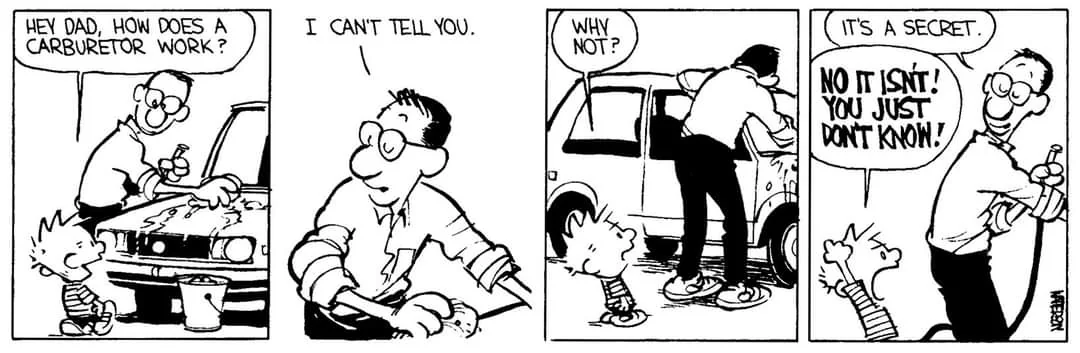
CALVIN: Hey Dad, how does a carburetor work?
CALVIN’S DAD: I can’t tell you.
CALVIN: Why not?
CALVIN’S DAD: It’s a secret.
CALVIN: No it isn’t! You just don’t know!
The best kind of revenge is not to become like them.
[Ἄριστος τρόπος τοῦ ἀμύνεσθαι τὸ μὴ ἐξομοιοῦσθαι.]
Marcus Aurelius (AD 121-180) Roman emperor (161-180), Stoic philosopher
Meditations [To Himself; Τὰ εἰς ἑαυτόν], Book 6, ch. 6 (6.6) (AD 161-180) [tr. Gill (2013)]
(Source)
(Source (Greek)). Alternate translations:The best kind of revenge is, not to become like unto them.
[tr. Casaubon (1634), 6.5]The best way of Revenge, is not to imitate the Injury.
[tr. Collier (1701)]The best sort of revenge, is, not to become like the injurious.
[tr. Hutcheson/Moor (1742)]The best method of revenge is, not to imitate the person who has done you the injury.
[tr. Graves (1792)]The best way of avenging thyself is not to become like [the wrong-doer].
[tr. Long (1862)]The best way of revenge is not to imitate the injury.
[tr. Collier/Zimmern (1887)]Not to do likewise is the best revenge.
[tr. Rendall (1898)]The best revenge is not to copy him that wronged you.
[tr. Hutcheson/Chrystal (1902)]The best way of avenging thyself is not to do likewise.
[tr. Haines (Loeb) (1916)]The noblest kind of retribution is not to become like your enemy.
[tr. Farquharson (1944)]To refrain from imitation is the best revenge.
[tr. Staniforth (1964)]The noblest way to avenge yourself is not to become as they are.
[tr. Hard (1997 ed.)]The best revenge is not to be like that.
[tr. Hays (2003)]The best revenge is not to be like your enemy.
[tr. Hammond (2006)]The noblest way of taking revenge on others is by refusing to become like them.
[tr. Needleman/Piazza (2008)]The best way to avenge yourself is not to become as they are.
[tr. Hard (2011 ed.)]
The planet will be here for a long, long, long time after we’re gone, and it will heal itself, it will cleanse itself, ’cause that’s what it does. It’s a self-correcting system. The air and the water will recover, the Earth will be renewed.
And if it’s true that plastic is not degradable, well, the planet will simply incorporate plastic into a new paradigm: the Earth plus plastic. The planet doesn’t share our prejudice toward plastic. Plastic came out of the Earth. The Earth probably sees plastic as just another one of its children. Could be the only reason the Earth allowed us to be spawned from it in the first place. It wanted plastic for itself. Didn’t know how to make it. Needed us. Could be the answer to our age-old philosophical question, “Why are we here?”
“Plastic … assholes.”George Carlin (1937-2008) American comedian
Show (1992-04-25), Jammin’ in New York, “The Planet Is Fine,” Paramount Theater, New York City (HBO)
(Source)
Very few people can resist saying malicious things about their acquaintances, and even on occasion about their friends; yet when people hear that anything has been said against themselves, they are filled with indignant amazement.
Bertrand Russell (1872-1970) English mathematician and philosopher
Conquest of Happiness, Part 1, ch. 8 “Persecution Mania” (1930)
(Source)
Riches are given thee, that thou may’st pass they Life easily: but Life is not given thee, that thou may’st keep up Riches.
Thomas Fuller (1654-1734) English physician, preacher, aphorist, writer
Introductio ad Prudentiam, Vol. 2, # 2078 (1727)
(Source)
HELEN: Men think me wicked, though I did no wrong:
And for the innocent to bear the load
Of guilt is worse than wickedness itself.[ἙΛΈΝΗ: πρῶτον μὲν οὐκ οὖσ᾽ ἄδικος, εἰμὶ δυσκλεής:
καὶ τοῦτο μεῖζον τῆς ἀληθείας κακόν,
ὅστις τὰ μὴ προσόντα κέκτηται κακά.]Euripides (485?-406? BC) Greek tragic dramatist
Helen [Ἑλένη], l. 270ff (412 BC) [tr. Sheppard (1925)]
(Source)
(Source (Greek)). Other translations:First, though my life is pure from guilt, my name
Is infamous; this ill, this charge of crimes
From which the soul is free, is more severe
Than what from truth arises.
[tr. Potter (1783), l. 304ff]First of all exposed
To slanderous tongues, although I ne'er have erred.
It were a lesser evil e'en to sin
Than be suspected falsely.
[tr. Wodhull (1809)]First indeed, not being unjust, I am in ill repute; and this is a greater evil than the truth, when any one is charged with evils he does not possess.
[tr. Buckley (1850)]First, although I never acted wrongly, my good name is gone. And this trouble is stronger than the reality, if someone incurs blame for wrongs that are not his own.
[tr. Coleridge (1891)]First, an ill name, though I am clean of sin;
And worse is this than suffering for just cause,
To bear the burden of sins that are not ours.
[tr. Way (Loeb) (1912)]First, I have lost my name, thought I have done no wrong;
and it is worse than suffering what one deserves
if one must suffer for the things one never did.
[tr. Warner (1951)]In the first place, though I am innocent, my name is a byword of reproach; and if there is any worse fate than suffering for real crimes, it is suffering for crimes that were never committed.
[tr. Vellacott (1954)]I have done nothing wrong and yet my reputation
is bad, and worse than a true evil is it to bear
the burden of faults that are not truly yours.
[tr. Lattimore (1956)]First of all, I am blameless,
and yet I am blamed.
It is easier to bear what belongs to you
than what does not.
[tr. Meagher (1986)]Firstly, I have done nothing wrong and yet my name is reviled. When someone is punished though innocent of crime, it is a worse affliction than getting his just deserts.
[tr. Davie (2002)]First, although I never sinned, my good name is gone. And this is a grief beyond the reality, if a man incurs blame for sins that are not his.
[tr. Athenian Society (2006)]First, I am not wicked, but people think I am.
There's nothing worse than being innocent,
But treated as guilty.
[tr. A. Wilson (2007)]To begin with, my good reputation has been destroyed though I have done nothing wrong, and there’s nothing worse than to be burdened by the shame which one has not earned.
[tr. Theodoridis (2011)]First, though I’ve done nothing wrong, my name is loathed.
It’s so much worse to be scorned for things you haven’t done
than to suffer honest charges!
[Ambrose et al. (2018)]First, although I never acted wrongly, my good name is gone. And this trouble [kakon] is stronger than the truth [alētheia], if someone incurs blame for evils [kaka] that are not his own. [tr. Coleridge / Helen Heroization Team]
If you love only the people who love you, why should you receive a blessing? Even sinners love those who love them! And if you do good only to those who do good to you, why should you receive a blessing? Even sinners do that!
[καὶ εἰ ἀγαπᾶτε τοὺς ἀγαπῶντας ὑμᾶς, ποία ὑμῖν χάρις ἐστίν; καὶ γὰρ οἱ ἁμαρτωλοὶ τοὺς ἀγαπῶντας αὐτοὺς ἀγαπῶσιν. καὶ [γὰρ] ἐὰν ἀγαθοποιῆτε τοὺς ἀγαθοποιοῦντας ὑμᾶς, ποία ὑμῖν χάρις ἐστίν; καὶ οἱ ἁμαρτωλοὶ τὸ αὐτὸ ποιοῦσιν.]
The Bible (The New Testament) (AD 1st - 2nd C) Christian sacred scripture
Luke 6: 32-33 (Jesus) [GNT (1992 ed.)]
(Source)
No Synoptic parallels.
(Source (Greek)). Alternate translations:For if ye love them which love you, what thank have ye? for sinners also love those that love them. And if ye do good to them which do good to you, what thank have ye? for sinners also do even the same.
[KJV (1611)]If you love those who love you, what thanks can you expect? Even sinners love those who love them. And if you do good to those who do good to you, what thanks can you expect? For even sinners do that much.
[JB (1966)]If you love those who love you, what credit can you expect? Even sinners love those who love them. And if you do good to those who do good to you, what credit can you expect? For even sinners do that much.
[NJB (1985)]If you love those who love you, why should you be commended? Even sinners love those who love them. If you do good to those who do good to you, why should you be commended? Even sinners do that.
[CEB (2011)]If you love those who love you, what credit is that to you? For even sinners love those who love them. If you do good to those who do good to you, what credit is that to you? For even sinners do the same.
[NRSV (2021 ed.)]
The success of most things depends upon knowing [well] how much time is needed to succeed.
[Les succès de la plupart des choses dépend de savoir combien il faut de temps pour réussir.]
Charles-Lewis de Secondat, Baron de Montesquieu (1689-1755) French political philosopher
Pensées Diverses [Assorted Thoughts], # 1007 “General Maxims of Politics,” No. 15 (1720-1755) [tr. Clark (2012)]
(Source)
(Source (French)). Other translations:In most things success depends on knowing how long it takes to succeed.
[E.g. (1874)]Success in most things depends on knowing how long it takes to succeed.
[E.g. (1883)]The success of most things depends upon knowing how long it will take to succeed.
[E.g. (1915)]Success in the majority of circumstances depends on knowing how long it takes to succeed.
[E.g.]Success generally depends upon knowing how long it takes to succeed.
[E.g.]
We can never understand other people’s motives, nor their furniture.
Mignon McLaughlin (1913-1983) American journalist and author
The Neurotic’s Notebook, ch. 3 (1963)
(Source)

I consider an human soul without education like marble in the quarry, which shews none of its inherent beauties till the skill of the polisher fetches out the colours, makes the surface shine, and discovers every ornamental cloud, spot and vein that runs through the body of it.
Joseph Addison (1672-1719) English essayist, poet, statesman
Essay (1711-11-06), The Spectator, No. 215
(Source)
Q. What is etiquette? And why is it so important?
A. It’s important because we can’t stand the way that other people treat us. Although we want the right to be able to behave in any way we want. Somehow a compromise is in order, if you want to live in communities. If you live on a mountaintop by yourself, it’s not necessary.
Judith Martin (b. 1938) American author, journalist, etiquette expert [a.k.a. Miss Manners]
Interview (2011-08), “Q and A with Miss Manners,” by Arcynta Ali Childs, Smithsonian magazine
(Source)
PROSPERO: As you from crimes would pardoned be,
Let your indulgence set me free.William Shakespeare (1564-1616) English dramatist and poet
Tempest, Epilogue, l. 19ff (1611)
(Source)
Final lines of the play, to the Audience.
Education is the most radical thing in the world.
To teach the alphabet is to inaugurate a revolution.
To build a schoolhouse is to construct a fort.
Every library is an arsenal filled with the weapons and ammunition of Progress, and every fact is a monitor with sides of iron and a turret of steel.
The Rash, the Lazy, Lover, none’s so wild,
But may be tame, and may be wisely mild,
If they consult true Vertue’s Rules with care,
And lend to good advice a patient ear.[Invidus, iracundus, iners, vinosus, amator,
nemo adeo ferus est, ut non mitescere possit,
si modo culturae patientem commodet aurem.]Horace (65–8 BC) Roman poet, satirist, soldier, politician [Quintus Horatius Flaccus]
Epistles [Epistularum, Letters], Book 1, ep. 1 “To Maecenas,” l. 38ff (1.1.38-40) (20 BC) [tr. Creech (1684)]
(Source)
(Source (Latin)). Other translations:Th'envyouse, angrye, drunken, slowe, the lover lewde and wylde
None so outeragiouse, but in tyme he maye become full mylde.
If he to good advertisemente will retche his listenyng eare,
And meekely byde with pacience the counsaile he shall heare.
[tr. Drant (1567)]The Envious, Wrathful, Sluggish, Drunkard, Lover:
No Beast so wild, but may be tam'd, if he
Will unto Precepts listen patiently.
[tr. Fanshawe; ed. Brome (1666)]The slave to envy, anger, wine, or love,
The wretch of sloth, its excellence shall prove:
Fierceness itself shall hear its rage away.
When listening calmly to the instructive lay.
[tr. Francis (1747)]The heart with envy cold -- with anger hot,
The libertine, the sluggard and the sot --
No wretch so savage, but, if he resign
His soul to culture, wisdom can refine.
[tr. Howes (1845)]The envious, the choleric, the indolent, the slave to wine, to women -- none is so savage that he can not be tamed, if he will only lend a patient ear to discipline.
[tr. Smart/Buckley (1853)]Run through the list of faults; whate'er you be,
Coward, pickthank, spitfire, drunkard, debauchee,
Submit to culture patiently, you'll find
Her charms can humanize the rudest mind.
[tr. Conington (1874)]However coarse in grain a man may be,
Drone, brawler, makebate, drunkard, debauchee,
A patient ear to culture let him lend,
He's sure to turn out gentler in the end.
[tr. Martin (1881)]Are you envious, irascible, inert, given to wine or immorality? No person is so savage that he cannot grow milder, provided he lend a patient ear to civilization's culture.
[tr. Elgood (1893)]The slave to envy, anger, sloth, wine, lewdness -- no one is so savage that he cannot be tamed, if only he lend to treatment a patient ear.
[tr. Fairclough (Loeb) (1926)]The envious, passionate, slothful, drunken, lewd —
No man so savage but he drops the mood,
Lend he but patient ear to counsel good.
[tr. Murison, ed. Kramer (1936)]The envious man,
The sorehead, the lazy lout, the drinker, the lover:
No one is such a beast as not to be tamed
By lending a patient ear to moral advice.
[tr. Palmer Bovie (1959)]Envious, wrathful, lazy, drunken men, lewd lovers too,
none is so thoroughly wild a beast he can't be tamed,
if only he'll lend for cultivation's sake an open ear.
[tr. Fuchs (1977)]Jealousy,
Anger, laziness, drunkenness, lust: everything
Can be cured, nothing is so wild
That patient teaching will ever fail you.
[tr. Raffel (1983)]Nobody's so far gone in savagery --
A slave of envy, wrath, lust, drunkenness, sloth --
That he can't be civilized, if he'll only listen
Patiently to the doctor's good advice.
[tr. Ferry (2001)]Whether he’s envious, choleric, indolent, drunken or lustful --
no one is so unruly that he can’t become more gentle,
if only he listens with care to what his trainer tells him.
[tr. Rudd (2005 ed.)]Envious, irascible, idle, drunken, lustful,
No man’s so savage he can’t be civilised,
If he’ll attend patiently to self-cultivation.
[tr. Kline (2015)]
Backward, turn backward, O Time, in your flight,
Make me a child again, just for to-night!Elizabeth Chase Akers Allen (1832-1911) American author, journalist, poet [pseud. Florence Percy]
“Rock Me To Sleep, Mother,” ll. 1-2 (1859)
(Source)

There are people who are convinced of the wickedness both of armies and of police forces, but who are nevertheless much more intolerant and inquisitorial in outlook than the normal person who believes that it is necessary to use violence in certain circumstances. They will not say to somebody else, “Do this, that and the other or you will go to prison”, but they will, if they can, get inside his brain and dictate his thoughts for him in the minutest particulars.
George Orwell (1903-1950) English journalist, essayist, writer [pseud. of Eric Arthur Blair]
Essay (1947-03), “Lear, Tolstoy and the Fool,” Polemic Magazine, No. 7
(Source)
Collected in Inside the Whale, and Other Essays (1962).
A man who does not see this is senseless; he who does see it, and still advocates such a measure, is impious.
[Hoc qui non videt, excors; qui, cum videt, decernit, impius est.]
Marcus Tullius Cicero (106-43 BC) Roman orator, statesman, philosopher
Philippics [Philippicae; Antonian Orations], No. 5, ch. 2 / sec. 5 (5.2/5.5) (43-01-01 BC) [tr. Yonge (1903)]
(Source)
On the suggestion that Mark Antony be bought off by giving him governorship of Transalpine Gaul, and how that would merely give him more troops and power to move against Rome.
(Source (Latin)). Other translations:He that does not see this is a fool; he that sees it, and proposes it, is disloyal.
[tr. Ker (Loeb) (1926)]Anyone who does not see this is a fool; anyone who does and makes the proposal all the same is treacherous.
[tr. Manuwald (2007)]Who does not see this is senseless; who sees and still approves is ungodly.
[E.g.]
You need not hesitate to say aloud that my adversary is wrong and that he is an imbecile.
[Vous ne devez pas hésiter à dire hautement que mon adversaire a tort et que c’est un imbécile.]
Claude Bernard (1813-1878) French physiologist, scientist
Cahier de Notes (1860) [tr. Hoff / Guillemin / Guillemin (1967)]
(Source)
The voice of the people is the voice of God.
[Vox populi, vox Dei.]
Alcuin of York (c. 735-804) Anglo-Latin scholar, clergyman, poet, teacher [Flaccus Albinus Alcuinus, Ealhwine, Alhwin, or Alchoin]
Letter (AD 798) to Charlemagne
Collected as Epistle 166, "Capitula quę tali convenit in tempore memorari," sec. 9 in various collections. (The epistle number varies.)
Alcuin did not actually invent the phrase -- though his use of it is one of the earliest recorded references. Ironically, while the phrase means that the popular will / voice / opinion is divine will, Alcuin used it while denying it:Nec audiendi qui solent dicere: Vox populi, vox Dei. Cum tumultuositas vulgi semper insaniæ proxima sit.
[And those people should not be listened to who keep saying the voice of the people is the voice of God, since the riotousness of the crowd is always very close to madness.
[Source]
[We should not listen to those who like to affirm that the voice of the people is the voice of God, for the tumult of the masses is truly close to madness.]
[Source]
There is also some question as to whether this is an authentic Alcuin quote. For more information about the phrase, see here.

A dying culture invariably exhibits personal rudeness. Bad manners. Lack of consideration for others in minor matters. A loss of politeness, of gentle manners, is more significant than is a riot. […] This symptom is especially serious in that an individual displaying it never thinks of it as a sign of ill health but as proof of his/her strength.
I felt an earnest and humble desire, and shall do till I die, to increase the stock of harmless cheerfulness.
Charles Dickens (1812-1870) English writer and social critic
Speech (1841-06-25), Shakespeare Club Dinner, Waterloo Rooms, Edinburgh, Scotland
(Source)

You don’t need to be a genius or a sage to realise — realise, not know, let alone work out — that there is no easy path to great wealth (or to anything useful) because if there were, the poor would be in a very small minority, and everybody else would be stinking rich.
Bernard Levin (1928-2004) British journalist, critic, broadcaster, satirist
Essay (1989-03-23), “Do You Seriously Want to Be Swindled?” The Times, London
(Source)
Collected in Now Read On (1980).

The cringing Train of Pow’r, survey;
What Creatures are so low as they!
With what obsequiousness they bend!
To what vile actions condescend!
Their Rise is on their Meanness built,
And Flatt’ry is their smallest Guilt.Benjamin Franklin (1706-1790) American statesman, scientist, philosopher, aphorist
Poor Richard (1741 ed.)
(Source)
A census taker once tried to test me. I ate his liver with some fava beans and a nice Chianti.
Thomas Harris (b. 1940) American writer
The Silence of the Lambs, film (1990) [with Ted Tally]
(Source)
(Source (Video); dialog verified). As spoken by Anthony Hopkins as Hannibal Lector.
Tally modified the lines Harris wrote in his 1988 novel, which in ch. 3 read: "A census taker tried to quantify me once. I ate his liver with some fava beans and a big Amarone."

It is fear that I am most afraid of. In harshness it surpasses all other mischances.
[C’est ce dequoy j’ay le plus de peur, que la peur. Aussi surmonte elle en aigreur tous autres accidents.]
Michel de Montaigne (1533-1592) French essayist
Essays, Book 1, ch. 17 (1.17), “Of Fear [De la Peur]” (1572) [tr. Screech (1987), 1.18]
(Source)
This essay was in the 1st (1580) edition, and was expanded in subsequent editions. This particular passage was added for the final, 1595, edition.
Some editions and translations, following the 1588 sequence, refer to this as being in ch. 18.
See also Roosevelt (1933).
(Source (French)). Alternate translations:It is feare I stand most in feare of. For, in sharpnesse it surmounteth all other accidents.
[tr. Florio (1603)]The thing in the World I am most afraid of is Fear, and with good reason, that Passion alone, in the trouble of it, exceeding all other Accidents.
[tr. Cotton (1686)]The thing I am most afraid of is fear, because it is a passion which supersedes and suspends all others.
[tr. Friswell (1868)]The thing in the world I am most afraid of is fear, that passion alone, in the trouble of it, exceeding all other accidents.
[tr. Cotton/Hazlitt (1877)]The thing I am most afraid of is fear. And, indeed, it surpasses in sharpness all other calamities.
[tr. Ives (1925), 1.18]The thing I fear most is fear.
Moreover, it exceeds all other disorders in intensity.
[tr. Frame (1943), 1.18]Fear is what I fear most.
No other experience is more bitter.
[tr. HyperEssays (2025)]
Another not uncommon victim of persecution mania is a certain type of philanthropist, who is always doing good to people against their will, and is amazed and horrified that they display no gratitude. Our motives in doing good are seldom as pure as we imagine them to be. Love of power is insidious; it has many disguises, and is often the source of the pleasure we derive from doing what we believe to be good to other people.
Be not deceived: it is not that which Men believe of thee will make thee happy or miserable; but that which thou believest of thyself.
Thomas Fuller (1654-1734) English physician, preacher, aphorist, writer
Introductio ad Prudentiam, Vol. 2, # 2073 (1727)
(Source)
The reason why the Cardinal [Mazarin] deferred so long to grant the favors he had promised, was because he was persuaded that hope was much more capable of keeping men to their duty than gratitude.
[La raison pourquoi le Cardinal différoit tant à accorder les grâces qu’il avoit promises, c’est qu’il étoit persuadé que l’espérance est bien plus capable de retenir les hommes dans le devoir que non pas la reconnoissance.]
Jean Racine (1639-1699) French dramatist
Fragments Historiques [tr. Bund/Friswell (1871)]
(Source)
(Source (French)).
This phrase is quoted by commenters on La Rochefoucauld in conjunction with his Maxim 38.

It is not merely of some importance but is of fundamental importance that justice should not only be done, but should manifestly and undoubtedly be seen to be done.
Gordon Hewart (1870-1943) British politician and jurist; Lord Chief Justice of England (1922-1940)
Rex v Sussex Justices, ex parte McCarthy, [1924] 1 KB 256, [1923] EWHC KB 1, [1924] KB 256 (1923-11-09) [unanimous decision]
(Source)
Often shortened to "Justice must not only be done, but must be seen to be done."
Overturning on appeal the dangerous driving conviction of McCarthy, on discovery that the clerk to the judges of the case was also employed by the law firm seeking civil damages against McCarthy, and was with the judges during their deliberation. While the High Court did not believe there had been any actual impropriety, the ruling established the principle that even the appearance of bias was enough to overturn a court decision.
For more on this case, see:
Upon the subject of education, not presuming to dictate any plan or system respecting it, I can only say that I view it as the most important subject which we as a people can be engaged in. That every man may receive at least, a moderate education, and thereby be enabled to read the histories of his own and other countries, by which he may duly appreciate the value of our free institutions, appears to be an object of vital importance, even on this account alone, to say nothing of the advantages and satisfaction to be derived from all being able to read the scriptures and other works, both of a religious and moral nature, for themselves. For my part, I desire to see the time when education, and by its means, morality, sobriety, enterprise and industry, shall become much more general than at present, and should be gratified to have it in my power to contribute something to the advancement of any measure which might have a tendency to accelerate the happy period.
Abraham Lincoln (1809-1865) American lawyer, politician, US President (1861-65)
Essay (1832-03-09), “Communication to the People of Sangamo County,” Sangamo Journal (1832-03-15)
(Source)
REGALIA, n. Distinguishing insignia, jewels and costume of such ancient and honorable orders as Knights of Adam; Visionaries of Detectable Bosh; the Ancient Order of Modern Troglodytes; the League of Holy Humbug; the Golden Phalanx of Phalangers; the Genteel Society of Expurgated Hoodlums; the Mystic Alliances of Georgeous Regalians; Knights and Ladies of the Yellow Dog; the Oriental Order of Sons of the West; the Blatherhood of Insufferable Stuff; Warriors of the Long Bow; Guardians of the Great Horn Spoon; the Band of Brutes; the Impenitent Order of Wife-Beaters; the Sublime Legion of Flamboyant Conspicuants; Worshipers at the Electroplated Shrine; Shining Inaccessibles; Fee-Faw-Fummers of the Inimitable Grip; Jannissaries of the Broad-Blown Peacock; Plumed Increscencies of the Magic Temple; the Grand Cabal of Able-Bodied Sedentarians; Associated Deities of the Butter Trade; the Garden of Galoots; the Affectionate Fraternity of Men Similarly Warted; the Flashing Astonishers; Ladies of Horror; Cooperative Association for Breaking into the Spotlight; Dukes of Eden; Disciples Militant of the Hidden Faith; Knights-Champions of the Domestic Dog; the Holy Gregarians; the Resolute Optimists; the Ancient Sodality of Inhospitable Hogs; Associated Sovereigns of Mendacity; Dukes-Guardian of the Mystic Cess-Pool; the Society for Prevention of Prevalence; Kings of Drink; Polite Federation of Gents-Consequential; the Mysterious Order of the Undecipherable Scroll; Uniformed Rank of Lousy Cats; Monarchs of Worth and Hunger; Sons of the South Star; Prelates of the Tub-and-Sword.
Ambrose Bierce (1842-1914?) American writer and journalist
“Regalia,” The Devil’s Dictionary (1911)
(Source)
Originally published in The Devil's Dictionary [A-Z] as Vol. 7 of his Collected Works.

Piglet still felt that to be underneath a Very Good Dropper would be a Mistake, and he was just going to hurry back for something which he had forgotten when the Jagular called out to them. “Help! Help!” it called.
“That’s what Jagular’s always do”, said Pooh, much interested. “They call ‘Help! Help!’ and then when you look up, they’ll drop on you.”A. A. Milne (1882-1956) English poet and playwright [Alan Alexander Milne]
House at Pooh Corner, ch. 4 “Tiggers Don’t Climb Trees” (1928)
(Source)
People have to talk about something just to keep their voice boxes in working order, so they’ll have good voice boxes in case there’s ever anything really meaningful to say.
Kurt Vonnegut, Jr. (1922-2007) American novelist, journalist
Cat’s Cradle, ch. 76 [Castle] (1963)
(Source)

HELEN: When a man broods on a single misfortune and feels the gods are against him, though his suffering is real, it can be borne; but I am crushed by innumerable blows at once.
[ἙΛΈΝΗ: ὅστις μὲν οὖν ἐς μίαν ἀποβλέπων τύχην
πρὸς θεῶν κακοῦται, βαρὺ μέν, οἰστέον δ᾽ ὅμως:
ἡμεῖς δὲ πολλαῖς συμφοραῖς ἐγκείμεθα.]Euripides (485?-406? BC) Greek tragic dramatist
Helen [Ἑλένη], l. 267ff (412 BC) [tr. Vellacott (1954)]
(Source)
(Source (Greek)). Other translations:He whom the gods afflict,
His sad thoughts though a single suffering claims,
Feels its weight heavy, yet perforce must bear it:
But I with many suffering am weigh'd down.
[tr. Potter (1783), l. 300ff]Whoever therefore, with one single species
Of misery is afflicted by the gods,
Although the weight of Heaven's chastising hand
Be grievous, may with fortitude endure
Such visitation, but by many woes
Am I oppressed.
[tr. Wodhull (1809)]Whosoever therefore, looking to one fate only, is ill-treated by the Gods, it is a thing heavy indeed, but may nevertheless be borne; but I lie amidst many calamities.
[tr. Buckley (1850)]When someone looks to one event only, and is ill-treated by the gods, it is hard, but all the same it can be borne. But I am involved in countless troubles.
[tr. Coleridge (1891)]Whoso, on one chance centering all his hopes,
Is stricken of God, hard though it be, may bear it;
But I -- I am whelmed in many miseries.
[tr. Way (Loeb) (1912)]If in some one respect the gods afflict us,
It is not easy, yet we grieve with patience.
But grief on grief is multiplied in me.
[tr. Sheppard (1925)]When a man looks for one thing only, and the gods
take that thing from him, it is hard, but bearable.
On me, however, many things have come at once.
[tr. Warner (1951)]He who sees from the gods a single strain of luck,
all bad, has a sad lot, but can endure it still.
More complex is the sorrow in which I am involved.
[tr. Lattimore (1956)]To fix your every hope on one thing
and then in that to be disappointed by the gods,
is admittedly a heavy blow.
But it is bearable.
Not so with me.
My misfortunes are many.
Blow after blow, they beat me down.
[tr. Meagher (1986)]When you set your sights on one ambition and then are cheated of this by the gods, it is hard to bear but must be endured.
[tr. Davie (2002)]Now, if a man doth turn his eyes to a single phase of fortune, and meets ill-usage at heaven's hands, 'tis hard no doubt; but still it can be borne; but I in countless troubles am involved.
[tr. Athenian Society (2006)]When someone is victimized by the gods in one thing,
It's hard, but it can be endured.
I am beset with problems on all sides.
[tr. A. Wilson (2007)]When a man has a plan in mind but is hindered by the will of the gods, well, that’s a hard thing to cope with but it can be endured but I -- I have fallen victim to many misfortunes.
[tr. Theodoridis (2011)]When someone faces a crisis from the gods, and is distressed,
it’s a burden, yes -- but bearable all the same.
But me, I’m wrapped in many sorrows.
[Ambrose et al. (2018)]When someone looks to one event only, and is ill-treated by the gods, it is hard, but all the same it can be borne. But I am involved in countless troubles.
[tr. Coleridge / Helen Heroization Team]
In an ally, considerations of house, clan, planet, race are insignificant beside two prime questions, which are: 1. Can he shoot? 2. Will he aim at your enemy?
Sharon Lee (b. 1952) American author
Local Custom, ch. 18, epigraph (2001) [with Steve Miller]
(Source)
In the fiction, this is noted as "Excerpted from Cantra yos'Phelium's Log Book."The phrase has appeared in at least two other locations in the "Liaden Universe" series of books: Scout's Progress, ch. 25, epigraph (2001) [with Steve Miller] and I Dare, "Day 286 Standard Year 1392" (2002) [with Steve Miller]; in fiction, these are noted as Cantra yos'Phelium's words from the Diaries of Korval.

Yesterday the greatest Question was decided, which ever was debated in America, and a greater perhaps, never was or will be decided among Men. A Resolution was passed without one dissenting Colony “that these united Colonies, are, and of right ought to be free and independent States, and as such, they have, and of Right ought to have full Power to make War, conclude Peace, establish Commerce, and to do all the other Acts and Things, which other States may rightfully do.” You will see in a few days a Declaration setting forth the Causes, which have impell’d Us to this mighty Revolution, and the Reasons which will justify it, in the Sight of God and Man. A Plan of Confederation will be taken up in a few days.
John Adams (1735–1826) American lawyer, Founding Father, statesman, US President (1797–1801)
Letter (1776-07-03, a.m.) to Abigail Adams
(Source)
Independence was voted on and approved by the Continental Congress on 1776-07-02, and the final text of the justifying Declaration of Independence approved and signed on 1776-07-04. Adams was writing on the day in-between.

I have always observed that to succeed in the world one should appear like a fool but be wise.
[J’ai toujours vu que, pour réussir parfaitement bien dans le monde, il alloit avoir l’air fou et être sage.]
Charles-Lewis de Secondat, Baron de Montesquieu (1689-1755) French political philosopher
Pensées Diverses [Assorted Thoughts], # 1004 / 1013 (1720-1755)
This a common English translation since at least 1896 (original source unknown).
(Source (French)). Other translations:To succeed perfectly well in the world, I have always seen that you have to appear mad while being wise.
[tr. Clark (2012)]
The proud man can learn humility, but he will be proud of it.
Mignon McLaughlin (1913-1983) American journalist and author
The Neurotic’s Notebook, ch. 3 (1963)
(Source)

The man who will live above his present circumstances is in great danger of living in a little time much beneath them; or as the Italian proverb runs, “The man who lives by hope, will die by hunger.”
Joseph Addison (1672-1719) English essayist, poet, statesman
Essay (1711-10-09), The Spectator, No. 191
(Source)
“Honesty” in social life is often used as a cover for rudeness. But there is quite a difference between being candid in what you’re talking about, and people voicing their insulting opinions under the name of honesty.
Judith Martin (b. 1938) American author, journalist, etiquette expert [a.k.a. Miss Manners]
Interview (2011-08), “Q and A with Miss Manners,” by Arcynta Ali Childs, Smithsonian magazine
(Source)
PROSPERO: Though with their high wrongs I am struck to th’ quick,
Yet with my nobler reason ’gainst my fury
Do I take part. The rarer action is
In virtue than in vengeance.William Shakespeare (1564-1616) English dramatist and poet
Tempest, Act 5, sc. 1, l. 32ff (5.1.32-36) (1611)
(Source)
There is no such thing as death.
In nature nothing dies.
From each sad remnant of decay
Some forms of life arise.Charles Mackay (1814-1889) Scottish poet, journalist, song writer
Poem (1849?), “There Is No Such Thing as Death”
This poem is widely attributed to Mackay, but there is reason to doubt this. I was unable to find the poem in any collection of Mackay poetry.
The earliest reference I can find to the passage is in Eliza Cook's Journal, No. 34 (1849-12-22), where this is part of st. 3 of the poem. It is identified there as being written by Charlotte Young. I cannot find any other attributions to Young for this poem (and cannot find out anything more about a poet by that name who would have been writing in 1849).
The poem (with various numbers of stanzas) was very popular in the last half of the 19th Century, appearing as newspaper filler, memorial bulletins, and books of hymns and sacred poetry alike. All of these uses of it have the poem unattributed or "Anonymous" (earliest: 1857-02, 1859-11, 1859-11-17, 1859-12-17, 1860-02-15, 1860-08-28). Further use of the poem, unattributed, continue through the rest of the 19th Century.
In an "Answers from Readers" column in the New York Times (1913-11-23), the poem (well, the full stanza) is asserted to have written by Mackay; that is the earliest such attribution I can find.
In Kate Louis Roberts, ed., Hoyt's New Cyclopedia of Practical Quotations (1922), it (just this portion) is also identified as being written by Mackay; after that, Mackay is credited in all sources I can find.
In summary, Mackay has become associated with this poem, most strongly by an attribution the popular Hoyt's in 1922, though there is at least one earlier reference. Prior to that it was identified for a number of decades, even after Mackay's death, as Anonymous, with the earliest reference I can find attributing it to a Charlotte Young.
Our repentance is not so much regret for the evil we have done, as fear of its consequences to us.
[Notre repentir n’est pas tant un regret du mal que nous avons fait, qu’une crainte de celui qui nous en peut arriver.]
François VI, duc de La Rochefoucauld (1613-1680) French epigrammatist, memoirist, noble
Réflexions ou sentences et maximes morales [Reflections; or Sentences and Moral Maxims], ¶180 (1665-1678) [ed. Gowens (1851), ¶187]
(Source)
Appeared in the 1st edition as:Notre repentir n’est pas une douleur du mal que nous avons fait ; c’est une crainte de celui qui nous en peut arriver.
In the manuscript, it reads:Notre repentir ne vient point du regret de nos actions, mais du dommage qu’elles nous causent.
(Source (French)). Other translations:Our Repentance proceeds not from the remorse coneiv'd at our Actions, but from the prejudice we are apt to receive thereby.
[tr. Davies (1669), ¶35]Our Repentances are generally not so much a Concern and Remorse for the Ills we have done, as a Dread of those we were in danger of suffering.
[tr. Stanhope (1694), ¶181]Repentance is not so much remorse for what we have done, as the fear of consequences.
[pub. Donaldson (1783), ¶384; ed. Lepoittevin-Lacroix (1797), ¶172]Our repentance is not so much sorrow for the ill we have done as fear of the ill that may happen to us.
[tr. Bund/Friswell (1871), ¶180]Repentance is less a sorrow at having sinned than a fear of the possible consequences.
[tr. Heard (1917), ¶184]Repentance is not so much regret for the evil we have done as fear of that which may befall us.
[tr. Stevens (1939), ¶180]Our repentance is less a regret for the evil we have done than a precaution against the evil that may be done to us.
[tr. FitzGibbon (1957), ¶180]Our repentance is less a regret for ills we have caused than a fear of ills we may encounter.
[tr. Kronenberger (1959), ¶180]Repentance is not so much regret for the evil we have done as fear of the evil that may befall us as a result.
[tr. Tancock (1959), ¶180]Our repentance is not so much regret for the evil we have done, as fear of the evil which may yet happen to us in future.
[tr. Whichello (2016) ¶180]
It has always seemed absurd to suppose that a god would choose for his companions, during all eternity, the dear souls whose highest and only ambition is to obey.
Robert Green Ingersoll (1833-1899) American lawyer, freethinker, orator
Lecture (1873-12) “Individuality,” Chicago Free Religious Society
(Source)
Full title "Arraignment of the Church and a Plea for Individuality." Collected in The Gods and Other Lectures (1876).
You know, it don’t take near as good a man to be a Candidate as it does to hold the office. That’s why we wisely defeat more than we elect.
Since we have explored the maze so long without result, it follows, for poor human reason, that we cannot have to explore much longer; close by must be the centre, with a champagne luncheon and a piece of ornamental water. How if there were no centre at all, but just one alley after another, and the whole world a labyrinth without end or issue?
In sharpness of vision you’re no match for Lynceus,
but you don’t despise ointment if you have sore eyes;
and though you’ll never match unbeaten Glycon’s strength,
you guard yourself against attacks of crippling gout.
We advance part way even if we can’t go further.[Non possis oculo quantum contendere Lynceus,
non tamen idcirco contemnas lippus inungui;
nec quia desperes invicti membra Glyconis,
nodosa corpus nolis prohibere cheragra.
Est quadam prodire tenus, si non datur ultra.]Horace (65–8 BC) Roman poet, satirist, soldier, politician [Quintus Horatius Flaccus]
Epistles [Epistularum, Letters], Book 1, ep. 1 “To Maecenas,” l. 28ff (1.1.28-32) (20 BC) [tr. Fuchs (1977)]
(Source)
(Source (Latin)). Other translations:Though one cannot lyke Linceus with pearsing eyesight see,
To mende his sighte he maye not grudge inoynted for to be.
Lyke lustie Glyco thou dispayres in lymmes to be so stoute
Yet maye thou exercyse thy selfe to shun the knottie gowte.
A man maye clim a step, or twayne thoughe he goe not beyonde.
[tr. Drant (1567)]Thy eyes will never pierce like Lynceus eye,
Scorn not to noint them though if sore they are:
Nor, of a Wrastlers strength if thou despair,
Neglect to salve the knotted Gout. If more
'S deni'd, 'tis something to have gon thus fur.
[tr. Fanshawe; ed. Brome (1666)]Yours cannot be as good as Lynceus Eyes,
What then, when Sore must I fit Cures despise?
You cannot Hope to have your Limbs as great
As Glyco's, nor so strong and firmly set,
Yet to prevent the Gout hast Thou no care?
What, if of farther progress you despair,
'Tis somewhat surely to have gone thus far.
[tr. Creech (1684)]You cannot hope for Lynceus' piercing eyes:
But will you then a strengthening salve despise?
You wish for matchless Glycon's limbs, in vain,
Yet why not cure the gout's decrepit pain?
Though of exact perfection you despair,
Yet every step to virtue's worth your care.
[tr. Francis (1747)]Though not a Lynceus, one may sure apply
The lenient salve to a distemper'd eye;
Nor would you scorn from chalk-stones to preserve
Joints that despair of Glycon's lion nerve.
Though hopeless to surmount fair virtue's hill,
To climb a certain height is something still.
[tr. Howes (1845)]Your sight is not so piercing as that of Lynceus; you will not however therefore despise being anointed, if you are sore-eyed: nor because you despair of the muscles of the invincible Glycon, will you be careless of preserving your body from the knotty gout. There is some point to which we may reach, if we can go no further.
[tr. Smart/Buckley (1853)]Your eyes will never see like Lynceus'; still
You rub them with an ointment when they're ill.
You cannot hope for Glyco's stalwart frame,
Yet you'd avoid the gout that makes you lame.
Some point of moral progress each may gain,
Though to aspire beyond it should prove vain.
[tr. Conington (1874)]No Lynceus you, yet will you not despise,
Because of that, a salve for aching eyes.
Glycon in thews may beat you out and out,
Shall you not, therefore, keep at bay the gout?
Fair wisdom's goal may not be reached, but you
May on the road advance a stage or two.
[tr. Martin (1881)]You may be unable to see so far as Lyncæus, yet you do not on this account, being a blear-eyed man, despise ointment. You may despair of possessing limbs like those of the unconquered gladiator Glycon, yet you will endeavour to preserve yourself from the hand-crippling gout. It is permitted us to attain a certain point, though denied us beyond it.
[tr. Elgood (1893)]You may not be able, with your eyes, to see as far as Lynceus, yet you would not on that account scorn to anoint them, if sore. Nor, because you may not hope for unconquered Glycon's strength of limb, would you decline to keep your body free from the gnarls of gout. It is worth while to take some steps forward, though we may not go still further.
[tr. Fairclough (Loeb) (1926)]Your eyes aren’t as keen
As Lynceus’, but this doesn’t mean that if they’re inflamed
You shouldn’t put drops in them. Glycon’s muscular limbs
Will never be yours, but still, you ought to take steps
To insure that the gout doesn’t tie your body in knots.
Your strides may be modest: they'll still take you further along.
[tr. Palmer Bovie (1959)]Your eyes will never see as Lynkeus
Saw, riding with Jason, but when your eyes
Hurt, you rub them with slave. Olympic
Winners are stronger, alas, than you
Can ever be, but you too protect
Yourself form the wringing pain of gout.
It pays to go as far as our feet will take us,
Though there's farther to go,
And we can never go that far.
[tr. Raffel (1983)]Suppose you don't have eyes as good as Lynceus;
That doesn't mean that if they're sore you wouldn't
Use salve to make them better; suppose you haen't
A chance int he world of competing with undefeated
Glycon the strongman, that doesn't mean you wouldn't
Try everythihng you could by exercise
To keep away rheumatic aches and pains.
You can't do everything, but you have to do
Everything you can.
[tr. Ferry (2001)]You might not be able to rival Lynceus in length of vision,
but that wouldn’t make you refuse a salve if your eyes were sore.
You'll never enjoy the physique of Glyco the champeon athlete,
but you'd still want to keep your body free from the knots of gout.
We can all make some progress, in spite of our limitations.
[tr. Rudd (2005 ed.)]You mightn’t be able to match Lynceus’ eyesight,
But you wouldn’t not bathe your eyes if they were sore:
And just because you can’t hope to have Glycon’s peerless
Physique, you’d still want your body free of knotty gout.
We should go as far as we can if we can’t go further.
[tr. Kline (2015)]
But a normal human being does not want the Kingdom of Heaven: he wants life on earth to continue. This is not solely because he is “weak”, “sinful” and anxious for a “good time”. Most people get a fair amount of fun out of their lives, but on balance life is suffering, and only the very young or the very foolish imagine otherwise. Ultimately it is the Christian attitude which is self-interested and hedonistic, since the aim is always to get away from the painful struggle of earthly life and find eternal peace in some kind of Heaven or Nirvana. The humanist attitude is that the struggle must continue and that death is the price of life.
CHORUS: From jigging veins of rhyming mother-wits,
And such conceits as clownage keeps in pay,
We’ll lead you to the stately tent of war,
Where you shall hear the Scythian Tamburlaine
Threatening the world with high astounding terms,
And scourging kingdoms with his conquering sword.
View but his picture in this tragic glass,
And then applaud his fortunes as you please.
I am glad that I paid so little attention to good advice; had I abided by it, I might have been saved from some of my most valuable mistakes.
Gene Fowler (1890-1960) American journalist, author, and dramatist. [b. Eugene Devlan]
Skyline: A Reporter’s Reminiscence of the ’20s, ch. 8 (1961)
(Source)
Fowler used this exact phrase in his autobiographical book, published posthumously, and I can find no other published reference to the phrase prior to 1960 (a review of the upcoming book).
The phrase is also attributed in many places to the American poet Edna St. Vincent Millay (1892-1950), but with no citation and no searchable use of the phrase during her lifetime.

Almost all of us want to be richer than we are, even if we are very rich indeed. To be sure, there are exceptions; saints, ascetics, those who travel light and will not add even the weight of a wallet, a few whose material ambitions are fully satisfied and who therefore truly want nothing further. But the rest of us want more than we have, and the specially thoughtful sometimes wonder whether there could ever come a time when we didn’t.
The crucial question, though, leaving out of consideration the exempted categories, is: what are we willing to do to increase our wealth?Bernard Levin (1928-2004) British journalist, critic, broadcaster, satirist
Essay (1989-03-23), “Do You Seriously Want to Be Swindled?” The Times, London
Collected in Now Read On (1980).
A weapon is a device for making your enemy change his mind.
Lois McMaster Bujold (b. 1949) American author
The Vor Game, ch. 5 (1990)
(Source)
Protagonist Miles Vorkosigan recalling a saying of his father's.

Youth is a wonderful thing. What a crime to waste it on children.
George Bernard Shaw (1856-1950) Irish playwright and critic
(Attributed)
Widely attributed to Shaw (also to Oscar Wilde), but no actual source has been found.
For more discussion of this quotations origin, see Quote Origin: Youth Is Wasted on the Young – Quote Investigator®.

My first reaction was to be afraid
This ardor was a snare the Devil had laid;
And I avoided you as a temptation
That might stand in the way of my salvation.
But finally I knew, O gracious beauty,
That passion need not be at odds with duty,
That I can reconcile it with propriety;
And so I yield to it without anxiety.
[D’abord j’appréhendai que cette ardeur secrète
Ne fût du noir esprit une surprise adroite;
Et même à fuir vos yeux mon cœur se résolut,
Vous croyant un obstacle à faire mon salut.
Mais enfin je connus, ô beauté tout aimable!
Que cette passion peut n’être point coupable,
Que je puis l’ajuster avecque la pudeur;
Et c’est ce qui m’y fait abandonner mon cœur.]Molière (1622-1673) French playwright, actor [stage name for Jean-Baptiste Poquelin]
Tartuffe, or the Hypocrite [Le Tartuffe, ou L’Imposteur], Act 3, sc. 3 (1669) [tr. Frame (1967)]
(Source)
Tartuffe plays the "It can't be wrong if it feels so right" seduction card. "Modesty" is used here in many of the translations in its meaning of moderate behavior or avoidance of sexual explicitness.
(Source (French)). Alternate translations:At first I was under Apprehension lest this secret Flame might be a dexterous Surprize of the foul Fiend; and my Heart even resolv'd to avoid your Eyes, believing you an Obstacle to my future Happiness. But at length I perceiv'd, most lovely Beauty, that my passion could not be blameable, that I could reconcile it with Modesty, and this made me abandon my Heart to it.
[tr. Clitandre (1672)]At first I feared that this secret ardour might be nothing but a cunning snare of the foul fiend; and my heart even resolved to fly your presence, thinking that you might be an obstacle to my salvation. But at last I found, oh most lovely beauty, that my passion could not be blameable; that I could reconcile it with modesty; and this made me feely indulge it.
[tr. Van Laun (1876)]At first I feared that this secret tenderness might be a skilful assault of the evil one; I event hought I would avoid your presence, fearing you might prove a stumbling-block to my salvation. But I have learnt, O adorable beauty, that my passion need not be a guilty one; that i can reconcile it with modesty; and I have given up my whole soul to it.
[tr. Wall (1879)]At first I was afraid lest this secret flame might be a subtle surprise of the evil one; and my heart resolved to avoid your eyes as an obstacle to my future happiness; but at length I perceived, most lovely beauty, that: my passion could not be guilty; that I could reconcile it with the rules of modesty, and this made me yield my heart to it.
[tr. Mathew (1890)]At first I feared lest this secret tenderness might be but an artful assault of the evil one; and my heart even resolved to flee from your eyes, fearing you might be a stumbling-block in the way of my salvation. But at last I learnt, ah! most entrancing beauty, that this passion need not be a guilty one, that I cuold reconcile it with modesty, and so I have let my heart give way to it.
[tr. Waller (1903)]At first I trembled lest this secret love
Might be the Evil Spirit's artful snare;
I even schooled my heart to flee your beauty,
Thinking it was a bar to my salvation.
But soon, enlightened, O all lovely one,
I saw how this my passion may be blameless,
How I may make it fit with modesty,
And thus completely yield my heart to it.
[tr. Page (1909)]At first I trembled, lest my secret flame
Should be a stratagem of the Evil One;
Even, I was resolved to flee your presence,
A possible obstacle to my salvation.
But finally I realized, my fair one,
That there need be no guilt in such a passion.
That I can make it chime with modesty;
And so I let my heart follow its bent.
[tr. Bishop (1957)]At first, I trembled, lest that love should be
A subtle snare that Hell had laid for me;
I vowed to flee the sight of you, eschewing
A rapture that might prove my soul's undoing;
But soon, fair being, I became aware
That my deep passion could be made to square
With rectitude, and with my bounden duty.
I thereupon surrendered to your beauty.
[tr. Wilbur (1963)]At first I feared that this secret passion was a clever temptation of the Evil One, and I even tried to avoid you, thinking you might be an obstacle to my salvation. But at last, most adorable beauty, I recognized that such love need not be sinful, that I could reconcile it with decency, and I surrendered to it.
[tr. Steiner (2008)]
Some comfort it would have been, could I, like a Faust, have fancied myself tempted and tormented of the Devil; for a Hell, as I imagine, without Life, though only diabolic Life, were more frightful: but in our age of Down-pulling and Disbelief, the very Devil has been pulled down, you cannot so much as believe in a Devil. To me the Universe was all void of Life, of Purpose, of Volition, even of Hostility: it was one huge, dead, immeasurable Steam-engine, rolling on, in its dead indifference, to grind me limb from limb.
Thomas Carlyle (1795-1881) Scottish essayist and historian
Sartor Resartus, Book 2, ch. 7 (1834)
(Source)
Quoting Herr Teufelsdröckh.
This chapter first appeared in Fraser's Magazine for Town and Country, Vol. 9, No. 51 (1834-03).
The people we meet are the playwrights and stage managers of our lives: they cast us in a role, and we play it whether we will or not. It is not so much the example of others we imitate as the reflection of ourselves in their eyes and the echo of ourselves in their words.
Eric Hoffer (1902-1983) American writer, philosopher, longshoreman
Passionate State of Mind, Aphorism 130 (1955)
(Source)
Lieing is the lowest grade of sin, — it is more cowardly than stealing, bekause thare is less risk in it — it is more demoralising than burglary, bekause there is no cure for it, — it is more dangerous than swareing, bekause swareing don’t hurt enny boddy else, — it waz the fust sin committed, bekause it was the easiest and most natral, and it will probably be the last one committed, bekause no man ever gits so poor and degraded but what he kan tell quite a respectabel lie.
[Lying is the lowest grade of sin — it is more cowardly than stealing, because there is less risk in it — it is more demoralizing than burglary, because there is no cure for it — it is more dangerous than swearing, because swearing doesn’t hurt anybody else — it was the first sin committed, because it was the easiest and most natural, and it will probably be the last one committed, because no man ever gets so poor and degraded but what he can tell quite a respectable lie.]
Josh Billings (1818-1885) American humorist, aphorist [pseud. of Henry Wheeler Shaw]
Josh Billings on Ice, and Other Things, ch. 23 “Lying” (1868)
(Source)
Nothing is more detestable than disgrace, nothing more shameful than slavery. We have been born for glory and freedom — let us either hold on to these things or die with dignity.
[Nihil est detestabilius dedecore, nihil foedius servitute. Ad decus et ad libertatem nati sumus; aut haec teneamus aut cum dignitate moriamur.]
Marcus Tullius Cicero (106-43 BC) Roman orator, statesman, philosopher
Philippics [Philippicae; Antonian Orations], No. 3, ch. 14 / sec. 36 (3.14/3.36) (44-12-20 BC) [tr. @sentantiq (2019)]
(Source)
(Source (Latin)). Other translations:Nothing is more detestable than disgrace, nothing fouler than servitude. It is to glory and to liberty we were born; let us either hold fast to these or die with dignity.
[tr. Yonge (1903)]There is nothing more detestable than disgrace; nothing more shameful than slavery. We have been born to glory and to liberty; let us either preserve them or die with dignity.
[tr. Ker (Loeb) (1926)]Nothing is more abominable than disgrace, nothing is uglier than slavery. We were born for honor and freedom: let us either retain them or die with dignity.
[tr. Manuwald (2007)]
Lend Money to an Enemy, and thou’lt gain him, to a Friend and thou’lt lose him.
Benjamin Franklin (1706-1790) American statesman, scientist, philosopher, aphorist
Poor Richard (1740 ed.)
(Source)
It should be your care, therefore, and mine, to elevate the minds of our children and exalt their courage; to accelerate and animate their industry and activity; to excite in them an habitual contempt of meanness, abhorrence of injustice and inhumanity, and an ambition to excel in every capacity, faculty, and virtue.
John Adams (1735–1826) American lawyer, Founding Father, statesman, US President (1797–1801)
Letter (1775-10-29) to Abigail Adams
(Source)
When a noble deed is done, who is likely to appreciate it? They who are noble themselves.
Henry David Thoreau (1817-1862) American philosopher and writer
Speech (1860-07-04), “The Last Days of John Brown,” North Elba, Massachusetts
(Source)
Collected in A Yankee in Canada (1866).
HOLMES: That’s the frailty of genius, John. It needs an audience.
Steven Moffat (b. 1961) Scottish television writer, producer
Sherlock, 01×01 “A Study in Pink” (2010-07-25)
(Source)
(Source (Video); dialog confirmed)

And now, ladies and gentlemen, that we’ve enjoyed some good times this evening, and enjoyed some laughter together, I feel it is my obligation to remind you of some of the negative, depressing, dangerous, life-threatening things that life is really all about; things you have not been thinking about tonight, but which will be waiting for you as soon as you leave the theater or as soon as you turn off your television sets. Anal rape, quicksand, body lice, evil spirits, gridlock, acid rain, continental drift, labor violence, flash floods, rabies, torture, bad luck, calcium deficiency, falling rocks, cattle stampedes, bank failure, evil neighbors, killer bees, organ rejection, lynching, toxic waste, unstable dynamite, religious fanatics, prickly heat, price fixing, moral decay, hotel fires, loss of face, stink bombs, bubonic plague, neo-Nazis, friction, cereal weevils, failure of will, chain reaction, soil erosion, mail fraud, dry rot, voodoo curse, broken glass, snake bite, parasites, white slavery, public ridicule, faithless friends, random violence, breach of contract, family scandals, charlatans, transverse myelitis, structural defects, race riots, sunspots, rogue elephants, wax buildup, killer frost, jealous coworkers, root canals, metal fatigue, corporal punishment, sneak attacks, peer pressure, vigilantes, birth defects, false advertising, ungrateful children, financial ruin, mildew, loss of privileges, bad drugs, ill-fitting shoes, widespread chaos, Lou Gehrig’s disease, stray bullets, runaway trains, chemical spills, locusts, airline food, shipwrecks, prowlers, bathtub accidents, faulty merchandise, terrorism, discrimination, wrongful cremation, carbon deposits, beef tapeworm, taxation without representation, escaped maniacs, sunburn, abandonment, threatening letters, entropy, nine-mile fever, poor workmanship, absentee landlords, solitary confinement, depletion of the ozone layer, unworthiness, intestinal bleeding, defrocked priests, loss of equilibrium, disgruntled employees, global warming, card sharks, poisoned meat, nuclear accidents, broken promises, contamination of the water supply, obscene phone calls, nuclear winter, wayward girls, mutual assured destruction, rampaging moose, the greenhouse effect, cluster headaches, social isolation, Dutch elm disease, the contraction of the universe, paper cuts, eternal damnation, the wrath of God, and PARANOIA!!
George Carlin (1937-2008) American comedian
Show (1986-05-02/03), Playin’ with Your Head, “Things to Watch Out For,” Beverly Theater, Los Angeles
(Source)
In a word, there is only one thing here worth the minding, and that is, to be true and just, and to show benevolence, even to the untrue and unjust.
[Ἓν ὧδε πολλοῦ ἄξιον, τὸ μετ᾿ ἀληθείας καὶ δικαιοσύνης εὐμενῆ τοῖς ψεύσταις καὶ ἀδίκοις διαβιοῦν.]
Marcus Aurelius (AD 121-180) Roman emperor (161-180), Stoic philosopher
Meditations [To Himself; Τὰ εἰς ἑαυτόν], Book 6, ch. 47 (6.47) (AD 161-180) [tr. Collier/Zimmern (1887)]
(Source)
(Source (Greek)). Alternate translations:One thing there is, and that only, which is worth our while in this world, and ought by us much to be esteemed; and that is, according to truth and righteousness, meekly and lovingly to converse with false, and unrighteous men.
[tr. Casaubon (1634), 6.42]In a word. There's only one thing here worth the minding; And that is, not to imitate the Degeneracy of Mortals: But to be True, Honest, and Good-natur'd, even amongst Knaves, and Sharpers.
[tr. Collier (1701)]The one thing valuable in this life, is, to spend it in a steady course of truth, justice, and humanity, toward even the false and unjust.
[tr. Hutcheson/Moor (1742)]In short, there is nothing here much worth our attention, but to act on all occasions with a regard to truth and justice, and to live peaceably even with those who act with fraud and injustice.
[tr. Graves (1792), 6.41]One thing here is worth a great deal, to pass thy life in truth and justice, with a benevolent disposition even to liars and unjust men.
[tr. Long (1862)]Here one thing is of real worth, to live out life in truth and justice, with charity even to the false and the unjust.
[tr. Rendall (1898)]The one precious thing in life is to spend it in a steady course of truth and justice, with kindliness even for the false and the unjust.
[tr. Hutcheson/Chrystal (1902)]One thing on earth is worth much -- to live out our lives in truth and justice, and in charity with liars and unjust men.
[tr. Haines (Loeb) (1916)]One thing here is of great price, to live out life with truth and righteousness, gracious to liars and to the unrighteous.
[tr. Farquharson (1944)]In this life one thing only is of precious worth: to live out one's days in truthfulness and fair dealing, and in charity even with the false and unjust.
[tr. Staniforth (1964)]In this world there is only one thing of real value, to pass our days in truth and justice, and yet be gracious to those who are false and unjust.
[tr. Hard (1997 ed.)]The only thing that isn’t worthless: to live this life out truthfully and rightly. And be patient with those who don't.
[tr. Hays (2003)]In this world there is only one thing of value, to live out your life in truth and justice, tolerant of those who are neither true nor just.
[tr. Hammond (2006)]In this world there is only one thing of real value, to pass our days in truth and justice, and yet be gracious to those who are false and unjust.
[tr. Hard (2011 ed.)]So there is one thing that is of most value: to live out your life in truth and justice and be kind to those who are false and unjust.
[tr. Gill (2013)]So one thing is worth much: to keep on living with truth and justice and in good will even among liars and unjust men.
[tr. @sentantiq (2019)]
If we were all given by magic the power to read each other’s thoughts I suppose the first effect would be that almost all friendships would be dissolved.
Bertrand Russell (1872-1970) English mathematician and philosopher
Conquest of Happiness, Part 1, ch. 8 “Persecution Mania” (1930)
(Source)
The Time will come when thou shalt desire one Day, or even one Hour to amend in, and I cannot say it will be granted thee.
Thomas Fuller (1654-1734) English physician, preacher, aphorist, writer
Introductio ad Prudentiam, Vol. 2, # 2058 (1727)
(Source)
“Well,” said Pooh, “what I like best –” and then he had to stop and think. Because although Eating Honey was a very good thing to do, there was a moment just before you began to eat it which was better than when you were, but he didn’t know what it was called.
A. A. Milne (1882-1956) English poet and playwright [Alan Alexander Milne]
House at Pooh Corner, ch. 10 “An Enchanted Place” (1928)
(Source)
HELEN: From the moment my mother bore me I was pointed at for a freak. It’s not usual in Hellas or anywhere else for a woman to produce her young enclosed in a white shell — which is the way Leda is said to have borne me, with Zeus for my father!
[ἙΛΈΝΗ: ἆρ᾽ ἡ τεκοῦσά μ᾽ ἔτεκεν ἀνθρώποις τέρας;
γυνὴ γὰρ οὔθ᾽ Ἑλληνὶς οὔτε βάρβαρος
τεῦχος νεοσσῶν λευκὸν ἐκλοχεύεται,
ἐν ᾧ με Λήδαν φασὶν ἐκ Διὸς τεκεῖν.]Euripides (485?-406? BC) Greek tragic dramatist
Helen [Ἑλένη], l. 256ff (412 BC) [tr. Vellacott (1954)]
(Source)
The egg-laying passage here is bracketed or elided by some translators, indicating it is possibly spurious or not in all manuscript traditions.Leda was Helen's mother, with Zeus, the father, having seduced/raped her while disguised as a swan. Leda then lay a clutch of eggs (one with Helen, one containing the twins Castor and Pollux, another Clytemnestra). The ravishment of Leda is a common theme in art; showing the resulting eggs is much more rare (da Vinci being an exception).
(Source (Greek)). Other translations:Was not my birth a prodigy to men?
For never Grecian or Barbaric dame
From the white shell her young ones gave to light,
As Leda brought me forth, fame says, to Jove.
[tr. Potter (1783), l. 286ff]Did not my mother, as a prodigy
Which wondering mortals gaze at, bring me forth?
For neither Greician nor barbaric dame
Till then produced an egg, in which her children
Enveloped lay, as they report, from Jove
Leda engendered.
[tr. Wodhull (1809)]Did not my mother bring me forth as a prodigy to men? For neither Greek nor barbarian woman has given birth to a white vessel of younglings, in which they say Leda begot me by Jove.
[tr. Buckley (1850)]Did my mother bear me as a wonder to mankind? [For no other woman, Hellene or barbarian, gives birth to a white vessel of chicks, in which they say Leda bore me to Zeus.]
[tr. Coleridge (1891)]Bore not my mother a portent unto men?
For never Hellene nor barbarian dame
Brought forth white vial of a fledgling brood,
Wherein to Zeus men say that Leda bare me.
[tr. Way (Loeb) (1912)]My very birth
A portent -- for it is not known in nature
That any woman, Greek or barbarous,
Should bear her children as they say that I
Was born to Zeus by Leda, cased about
In a white hollow shell.
[tr. Sheppard (1925)]And did my mother bear me as some kind of monster?
For certainly no Greek or foreign woman yet
travailed with the white circle of an egg for birds,
as Leda bore me, so they say, from Zeus.
[tr. Warner (1951)]Was I born a monster among mankind?
[No woman, neither in Greece nor yet in Barbary,
is hatched from the white envelope that contains young birds,
yet thus Leda bore me to Zeus, or so they say.]
[tr. Lattimore (1956)]Was I born to be some kind of freak,
carrion for men's scavenging eyes?
I am a freak ... a monster,
and I lead a monstrous life.
[tr. Meagher (1986)]Did my mother bring me into the world for people to stare at as a freak? My life has certainly been grotesque.
[tr. Davie (2002)]Did not my mother bear me to be a monster to the world? For no woman, Hellene or barbarian, gives birth to babes in eggs inclosed, as they say Leda bare me to Zeus.
[tr. Athenian Society (2006)]I've been handicapped -- to judge by the way people stare --
Since birth; and all my life I've lived under the shadow
Of my deformity.
[tr. A. Wilson (2007)]My mother has brought me to this world to be nothing more than a monstrous freak! No woman -- neither Greek nor barbarian -- has given birth to the egg of a white bird, yet, they say, that this is what my mother has done. Leda, they say, delivered me inside the shell of a bird’s egg. Zeus is my father.
[tr. Theodoridis (2011)]Did my mother bear me as a freak among mankind?
No woman -- no Greek, no barbarian -- gives birth to
her baby in an eggshell cask,
they say Leda bore me to Zeus.
[tr. Ambrose et al. (2018)]Did my mother bear me as a wonder to mankind? [For no other woman, Hellene or barbarian, gives birth to a white vessel of chicks, in which they say Leda bore me to Zeus.]
[tr. Coleridge / Helen Heroization Team]
To delight in reading is to trade life’s dreary moments for moments of pure joy.
[Aimer à lire, c’est faire un échange des heures d’ennui que l’lon doit avoir en sa vie contre des heures délicieuses.]
Charles-Lewis de Secondat, Baron de Montesquieu (1689-1755) French political philosopher
Pensées Diverses [Assorted Thoughts], # 1632 / 1143 (1720-1755) [ed. Guterman (1963)]
(Source)
(Source (French)). Other translations:A fondness for reading changes the inevitable dull hours of our life into exquisite hours of delight.
[E.g. (1900)]To love to read is to exchange hours of ennui for hours of delight.
[E.g. (1936)]To love to read is to make an exchange of the inevitable hours of boredom in one's life, for some delightful hours.
[tr. Clark (2012)]

Injure a businessman and he’ll try to make you sorry; injure an artist and he’ll try to make you immortal.
Mignon McLaughlin (1913-1983) American journalist and author
The Neurotic’s Notebook, ch. 7 (1963)
(Source)
He is asleep. Though his mettle was sorely tried,
He lived, and when he lost his angel, died.
It happened calmly, on its own,
The way night comes when day is done.[Il dort. Quoique le sort fût pour lui bien étrange,
Il vivait. Il mourut quand il n’eut plus son ange,
La chose simplement d’elle-même arriva,
Comme la nuit se fait lorsque le jour s’en va.]Victor Hugo (1802-1885) French writer
Les Misérables, Part 5 “Jean Valjean,” Book 9 “Supreme Shadow, Surpreme Dawn,” ch. 6 (5.9.6) (1862) [tr. Wilbour/Fahnestock/MacAfee (1987)]
(Source)
These final lines of the book are an epitaph once penciled on the stone over Valjean's unmarked grave. Wilbour and Wraxall leave the lines in French.
(Source (French)). Alternate translations:He sleeps. Although his fate was very strange, he lived. He died when he had no longer his angel. The thing came to pass simply, of itself, as the night comes when day is gone.
[tr. Hapgood (1887)]He sleeps; although so much he was denied,
He lived. And when his dear love left him, died.
It happened of itself, in the calm way
That in the evening night-time follows day.
[tr. Denny (1976)]He sleeps. Though fate dealt with him strangely,
He lived. Bereft of his angel, he died.
It came about simplly, of itself,
As night follows when the day is ended.
[tr. Donougher (2013)]
In nuclear or biological warfare, in which we know we cannot limit effects, how do we distinguish our enemies from our friends — or our enemies from ourselves? Does this not bring us exactly to the madness of terrorists who kill themselves in order to kill others?
Wendell Berry (b. 1934) American farmer, educator, poet, conservationist
Essay (2003-02-09), “A Citizen’s Response,” sec. 4, Citizenship Papers (2003)
(Source)
This passage did not appear in the original (abridged) full-page ad in the New York Times (2003-02-06) or the Orion Magazine (2003-03/04) publication of the essay.

I have somewhere met with the epitaph of a charitable man, which has very much pleased me. I cannot recollect the words, but the sense of it is to this purpose: What I spent I lost; what I possessed is left to others; what I gave away remains with me.
Joseph Addison (1672-1719) English essayist, poet, statesman
Essay (1711-09-27), The Spectator, No. 177
(Source)
The epitaph was on a tomb in St. George's Church at Doncaster, Yorkshire, and read:How now, who is heare?
I Robin of Doncastere,
And Margaret, my feare [wife]:
That I spent, that I had,
That I gave, that I have,
That I left, that I lost
A. D. 1579.
Quoth Robertus Byrks, who in this World did reign Three score years and seven, & yet lived not one.
(There are variation of spelling in various records of this epitaph, e.g., 1, 2, 3)
People will say, “Seventy isn’t old, it’s middle-aged,” and I think, middle of what — 140?
Judith Martin (b. 1938) American author, journalist, etiquette expert [a.k.a. Miss Manners]
Essay (1996-03/04), Modern Maturity magazine
The horror writer always brings bad news: you’re going to die, he says; he’s telling you to never mind Oral Roberts and his “something good is going to happen to you,” because something bad is also going to happen to you, and it may be cancer and it may be a stroke, and it may be a car accident, but it’s going to happen. And he takes your hand and he enfolds it in his own, and he takes you into the room and he puts your hands on the shape under the sheet … and tells you to touch it here … here … and here …

Sam Vimes could parallel process. Most husbands can. They learn to follow their own line of thought while at the same time listening to what their wives say. And the listening is important, because at any time they could be challenged and must be ready to quote the last sentence in full. A vital additional skill is being able to scan the dialogue for telltale phrases such as “and they can deliver it tomorrow” or “so I’ve invited them for dinner” or “they can do it in blue, really quite cheaply.”
Terry Pratchett (1948-2015) English author
Discworld Series No. 24, The Fifth Elephant (1999)
(Source)

You may seek comfort at the feet of false leaders, who like medicine doctors beat drums to ward off evil spirits. You may listen to false leaders who tell you that there is an easy way — that all you have to do is to elect them and thereafter relax in a tax-free paradise, the political equivalent of sending 10¢ to cover the cost of postage. You may, fearing to face the facts squarely, be distracted by phony issues that have no bearing upon the life-or-death controversy of our time. But deluded you run the risk of being beguiled to destruction, for there is no easy way.
Is it desirable that all should be exactly alike in their religious convictions? Is any such thing possible? Do we not know that there are no two persons alike in the whole world? No two, trees, no two leaves, no two anythings that are alike? Infinite diversity is the law. Religion tries to force all minds into one mould. Knowing that all cannot believe, the church endeavors to make all say they believe. She longs for the unity of hypocrisy, and detests the splendid diversity of individuality and freedom.
Robert Green Ingersoll (1833-1899) American lawyer, freethinker, orator
Lecture (1873-12) “Individuality,” Chicago Free Religious Society
(Source)
Full title "Arraignment of the Church and a Plea for Individuality." Collected in The Gods and Other Lectures (1876).
And therefore all my trifling Songs adieu,
I now design to seek what’s good and true,
And that alone; I scorn my wanton Muse,
And lay up Precepts, such as I may use.[Nunc itaque et versus et cetera ludicra pono;
quid verum atque decens curo et rogo et omnis in hoc sum;
condo et compono quae mox depromere possim.]Horace (65–8 BC) Roman poet, satirist, soldier, politician [Quintus Horatius Flaccus]
Epistles [Epistularum, Letters], Book 1, ep. 1 “To Maecenas,” l. 10ff (1.1.10-12) (20 BC) [tr. Creech (1684)]
(Source)
This epistle was written when Horace was 45 and decided to quit writing lyric poetry, having finished his third book of Odes.
(Source (Latin)). Other translations:And therefore now I lay my rimes. and other toyes asyde
Devysing things of honestie, and therin holy byde.
That whych may serve to guide my selfe I muse uppon and make.
[tr. Drant (1567)]Therefore Love-songs, and all those toyes adieu,
My work is now to search what's good, what's true:
I lay in precepts, which I straight may draw
Out for my use.
[tr. Fanshawe; ed. Brome (1666)]Then here farewell the amusements of my youth:
Farewell to verses; for the search of truth
And moral decency hath fill'd my breast,
Hath every thought and faculty possest;
And I now form my philosophic lore,
For all my future life a treasur'd store.
[tr. Francis (1747)]Henceforth adieu then to the toys of youth!
Adieu to wit's light sport, and welcome truth!
To con the maxims of the good and wise,
To search where honour and where fitness lies,
Careful to store what after-life may need --
This be my task; for this is wealth indeed!
[tr. Howes (1845)]Now therefore I lay aside both verses, and all other sportive matters; my study and inquiry is after what is true and fitting, and I am wholly engaged in this: I lay up, and collect rules which I may be able hereafter to bring into use.
[tr. Smart/Buckley (1853)]So now I bid my idle songs adieu,
And turn my thoughts to what is right and true;
I search and search, and when I find, I lay
The wisdom up against a rainy day.
[tr. Conington (1874)]So verses now and all such toys I quit,
Work night and day to find the true and fit.
The lore of sages cull where'er I may.
And hive it up for use some future day.
[tr. Martin (1881)]Now, therefore, I resign verse composition and sportive measures. What is true and fitting I care for, and inquire about, and am absorbed in it. I am piling up and arranging what I may presently make public.
[tr. Elgood (1893)]So now I lay aside my verses and all other toys. What is right and seemly is my study and pursuit, and to that am I wholly given. I am putting by and setting in order the stores on which I may some day draw.
[tr. Fairclough (Loeb) (1926)]So now I lay aside
Not only verses but all other toys:
I want to find the true and fitting joys,
And all engrossed in this pursuit am I.
I treasure and arrange what by and by
I may draw forth for guidance from my store.
[tr. Murison; ed. Kramer, Jr. (1936)]So I lay down my poems and other toys of my youth
To devote myself to one main subject: the truth.
What is right and honest? This I would like to know.
I am laying up stores, setting them all in a row,
Of the only thing that will keep on helping me grow.
[tr. Palmer Bovie (1959)]So now I lay my verses down, and all my other games,
to study what is true and good, totally involved in that.
I gather and accumulate supplies that I'll soon use.
[tr. Fuchs (1977)]So I've put away poetry
And other games. I study
Right and wrong. I store up,
Now, what someday I'll need, I lay
It all out.
[tr. Raffel (1983)]And so I'm giving up my verses and all
Other foolishness of the sort, and now
Devote myself entirely to the study
Of what is genuine and right for me,
Storing up what I learn for the sake of the future.
[tr. Ferry (2001)]So now I am laying aside my verses and other amusements.
My sole concern is the question "What is right and proper?"
I'm carefully storing things for use in the days ahead.
[tr. Rudd (2005 ed.)]So now I’m setting aside my verse, and other tricks:
My quest and care is what’s right and true, I’m absorbed
In it wholly: I gather, then store for later use.
[tr. Kline (2015)]
Then [President Coolidge] said he wished I had the time to go up into Canada and see what kind of deal I could make in the way of annexation, that Canada was just about on the verge of seeing the advantage of having a working connection with some live growing concern. […]
Now from what I can see, there don’t seem to be any demand in Canada to join in with us and be murdered or run over with us. They strike me as entirely too sane a nation to fit in our scheme of things down home. Why, you can still buy a drink without having to take a whole case, and can believe in Evolution. You can do both of these things and not be considered an Atheist up here.
They have the queerest ideas of what is right and wrong that way. Now I have no idea but what we could take them over and make a paying proposition out of them, for the country now is supplying about everything we use in the way of raw materials. But I hate to interrupt a friendship that has been going on now pretty steady since the battle of Lake Erie. You see they don’t owe us and they still think we are pretty good neighbors, so if we can just keep from annexing them, and keep from loaning them anything in the way of a government debt, why we ought to be friends for years to come. […]
What we need is some good country to annex us.Will Rogers (1879-1935) American humorist
Column (1926-10-17), “Weekly Article: Will Rogers Back in U. S. Wants To Hear About Your Vote” [No. 201]
(Source)
Shorter versions of this are given in Bryan Sterling (ed.), Will Rogers Speaks (2023):
Undying hope is co-ruler of the human bosom with infallible credulity. A man finds he has been wrong at every preceding stage of his career, only to deduce the astonishing conclusion that he is at last entirely right.
A love of heavenly beauty does not preclude
A proper love for earthly pulchritude.[L’amour qui nous attache aux beautés éternelles
N’étouffe pas en nous l’amour des temporelles.]Molière (1622-1673) French playwright, actor [stage name for Jean-Baptiste Poquelin]
Tartuffe, or the Hypocrite [Le Tartuffe, ou L’Imposteur], Act 3, sc. 3 (1669) [tr. Wilbur (1963)]
(Source)
When Elmire suggests that the (falsely) pious Tartuffe must surely be focused solely on Heaven.
(Source (French)). Alternate translations:The Love which engages us to eternal Beauties, does not extinguish in us the Love of temporal ones.
[tr. Clitandre (1672)]The love which attaches us to eternal beauties does not stifle in us the love of earthly things.
[tr. Van Laun (1876)]Our love for the beauty which is eternal, stifles not in us love for that which is fleeting and temporal.
[tr. Wall (1879)]The love which leads us to eternal beauties does not extinguish in us the love of temporal ones.
[tr. Mathew (1890)]Our love for the beauty which is eternal does not stifle in us the love for things fleeting.
[tr. Waller (1903)]Love for the beauty of eternal things
Cannot destroy our love for earthly beauty.
[tr. Page (1909)]The love which draws us to eternal beauty
Does not exclude the love of temporal things.
[tr. Bishop (1957)]To love eternal beauties far above
Is not to be immune to other love.
[tr. Frame (1967)]The love that draws us to eternal beauty does not stifle love of this world.
[tr. Steiner (2008)]The love that binds us to eternal beauties
Does not entirely stifle in us the love of temporal.
[tr. Campbell (2013)]
It is a mathematical fact that the casting of this pebble from my hand alters the center of gravity of the Universe.
Thomas Carlyle (1795-1881) Scottish essayist and historian
Sartor Resartus, Book 3, ch. 7 (1834)
(Source)
Quoting Herr Teufelsdröckh. This chapter first appeared in Fraser's Magazine for Town and Country, Vol. 10, No. 55 (1834-07).
Thare iz no man so necessary in this world, but that when he dies hiz plase iz quickly filled, and he iz soon forgotten.
[There is no man so necessary in this world, but that when he dies his place is quickly filled, and he is soon forgotten.]
No person is so foolish that they don’t understand that if we remain asleep at this moment we will have to live through a rule that is not only cruel and arrogant but ignoble and disgraceful too. You know this man’s arrogance, his friends, and his whole household. To serve shameful lusts, bullies, disgusting and irreverent thieves, those drunkards — well, that is the worst suffering married to the greatest dishonor.
[Nemo est tam stultus qui non intellegat, si indormierimus huic tempori, non modo crudelem superbamque dominationem nobis sed ignominiosam etiam et flagitiosam ferendam. Nostis insolentiam Antoni, nostis amicos, nostis totam domum. Libidinosis, petulantibus, impuris, impudicis, aleatoribus, ebriis servire, ea summa miseria est summo dedecore coniuncta.]
Marcus Tullius Cicero (106-43 BC) Roman orator, statesman, philosopher
Philippics [Philippicae; Antonian Orations], No. 3, ch. 14 / sec. 34-35 (3.14/3.34-35) (44-12-20 BC) [tr. @sentantiq (2021)]
(Source)
Warning of Mark Antony's intentions to succeed Julius Caesar. Once Antony was in power, under the Triumvirate, he had Cicero killed.
(Source (Latin)). Other translations:There is no one so foolish as not to perceive that if we go to sleep over this opportunity we shall have to endure a tyranny which will be not only cruel and haughty, but also ignominious and flagitious. You know the insolence of Antonius; you know his friends, you know his whole household. To be slaves to lustful, wanton, debauched, profligate, drunken gamblers, is the extremity of misery combined with the extremity of infamy.
[tr. Yonge (1903)]No man is so foolish as not to understand that, if we sleep on this crisis, we must bear a tyranny, not merely cruel and arrogant, but also ignominious and infamous. You know Antonius' insolence, you know his friends, you know his whole household. Slavery under men lustful, wanton, foul, unchaste, gamblers and drunkards, this is the utmost misery allied with the utmost disgrace.
[tr. Ker (Loeb) (1926)]No man is so dull as not to realize that if we doze over this crisis we shall have to endure a despotism not only cruel and arrogant but ignominious and disgraceful. You now Antonius' insolence, you know his friends, you know his whole retinue. To be slave to libertines, bullies, foul profligates, gamblers, drunkards, that is the ultimate in misery joined with the ultimate in dishonor.
[tr. Manuwald (2007)]
A Flatterer never seems absurd:
The Flatter’d always take his Word.Benjamin Franklin (1706-1790) American statesman, scientist, philosopher, aphorist
Poor Richard (1740 ed.)
(Source)
MYCROFT: You’ve met him. How many friends do you imagine he has? I’m the closest thing to a friend that Sherlock Holmes is capable of having.
WATSON: And what’s that?
MYCROFT: An enemy.
WATSON: An enemy?
MYCROFT: In his mind, certainly. If you were to ask him, he’d probably say an arch-enemy. He does love to be dramatic.
WATSON: Well, thank God you’re above all that.
Steven Moffat (b. 1961) Scottish television writer, producer
Sherlock, 01×01 “A Study in Pink” (2010-07-25)
(Source)
(Source (Video); dialogue confirmed)
Gordon Way’s astonishment at being suddenly shot dead was nothing to his astonishment at what happened next.
Douglas Adams (1952-2001) English author, humorist, screenwriter
Dirk Gently No. 1, Dirk Gently’s Holistic Detective Agency, ch. 7 (1987)
(Source)
Take heed not to be transformed into a Caesar, not to be dipped in the purple dye; for it does happen.
[Ὅρα μὴ ἀποκαισαρωθῇς, μὴ βαφῇς: γίνεται γάρ.]
Marcus Aurelius (AD 121-180) Roman emperor (161-180), Stoic philosopher
Meditations [To Himself; Τὰ εἰς ἑαυτόν], Book 6, ch. 30 (6.30.1) (AD 161-180) [tr. Farquharson (1944)]
(Source)
Advising himself on the dangers of becoming emperor. Marcus coined a new Greek verb here (ἀποκαισαρόομαι), "to become like Caesar" (more broadly, "to assume the monarchy").
(Source (Greek)). Alternate translations:Take heed, lest of a philosopher thou become a mere Caesar in time, and receive a new tincture from the court. For it may happen if thou dost not take heed.
[tr. Casaubon (1634), 6.27]Have a care you han't too much of an Emperour in you, and that you don't fall into the liberties and Pride of your Predecessors. These Humours are easily learn'd, therefore guard against the Infection.
[tr. Collier (1701)]Take care you don’t degenerate into the manners of the Cesars, or be tinctured by them.
[tr. Hutcheson/Moor (1742)]Beware, when you take the title of Cæsar, that you do not insensibly assume too much of the Emperor; nor be infected with the haughty manners of some of your predecessors; for there is a possibility of such an event.
[tr. Graves (1792), 6.27]Take care that thou art not made into a Caesar, that thou art not dyed with this dye; for such things happen.
[tr. Long (1862)]Have care that you have not too much of a Cæsar in you, and that you are not dyed with that dye. This is easily learned, therefore guard against the infection.
[tr. Collier/Zimmern (1887)]See that you be not be-Cæsared, steeped in that dye, as too often happens.
[tr. Rendall (1898)]See to it that you fall not into Caesarism: avoid that stain, for it may come to you.
[tr. Hutcheson/Chrystal (1902)]See thou be not Caesarified, nor take that dye, for there is the possibility.
[tr. Haines (Loeb) (1916)]Be careful not to affect the monarch too much, or to be too deeply dyed with the purple; for this can well happen.
[tr. Staniforth (1964)]Take care that you are not turned into a Caesar, that you are not stained with the purple; for such things do come about.
[tr. Hard (1997 ed.; 2011 ed.)]To escape imperialization -- that indelible stain. It happens.
[tr. Hays (2003)]Take care not to be Caesarified, or dyed in purple: it happens.
[tr. Hammond (2006)]Take care you are not turned into a Caesar, or stained with the purple; these things do happen.
[tr. Gill (2013)]Beware of being Caesarified, be not stained by desire for power.
[ed. Taplin (2016)]
The happiness that is genuinely satisfying is accompanied by the fullest exercise of our faculties, and the fullest realization of the world in which we live.
Bertrand Russell (1872-1970) English mathematician and philosopher
Conquest of Happiness, Part 1, ch. 7 “The Sense of Sin” (1930)
(Source)
Drive away and never endure Tale-bearers: Whoever entertains thee with the Faults of others, designs to serve thee in the same Kind.
Thomas Fuller (1654-1734) English physician, preacher, aphorist, writer
Introductio ad Prudentiam, Vol. 2, # 2057 (1727)
(Source)
The most disturbing development among the Washington press corps is a collective amnesia about the purpose of a newspaper — which is to gather news. The mortal sins of the press have always been our sins of omission, not our sins of commission, no matter what you may have heard about bias, hubris, or anything else. It is the stories we don’t get, the ones we miss, pass over, fail to recognize, don’t pick up on, that will send us to hell.
Molly Ivins (1944-2007) American writer, political columnist [Mary Tyler Ivins]
Essay (1990-02), “Mimic Men,” Mother Jones
(Source)
Collected in Molly Ivins Can't Say That, Can She? (1991).
REDEMPTION, n. Deliverance of sinners from the penalty of their sin, through their murder of the deity against whom they sinned. The doctrine of Redemption is the fundamental mystery of our holy religion, and whoso believeth in it shall not perish, but have everlasting life in which to try to understand it.
Ambrose Bierce (1842-1914?) American writer and journalist
“Redemption,” The Devil’s Dictionary (1911)
(Source)
Originally published in The Devil's Dictionary [A-Z] as Vol. 7 of his Collected Works.
“I don’t see much sense in that,” said Rabbit.
“No,” said Pooh humbly, “there isn’t. But there was going to be when I began it. It’s just that something happened to it on the way.”A. A. Milne (1882-1956) English poet and playwright [Alan Alexander Milne]
House at Pooh Corner, ch. 7 “Tigger Is Unbounced” (1928)
(Source)
The best of our fiction is by novelists who allow that it is as good as they can give, and the worst by novelists who maintain that they could do much better if only the public would let them.
J. M. Barrie (1860-1937) Scottish novelist and dramatist [James Matthew Barrie]
Essay (1891-03), “Mr. Kipling’s Stories,” Contemporary Review, Vol. 59
(Source)
It seems to me that it is the part of common sense for the world as a whole to protest in its own interest against wholesale persecution, because none of us by ourselves would be strong enough to stand against a big enough group which decided to treat us in the same way. We may have our individual likes and dislikes, but this is a question which far transcends prejudices or inclinations.
Eleanor Roosevelt (1884–1962) First Lady of the US (1933–1945), politician, diplomat, activist
Column (1943-08-13), “My Day”
(Source)
On the persecution of Jews in Europe.

Solemnity is the fool’s shield and buckler.
[La gravité est la bouclier des sots.]
Charles-Lewis de Secondat, Baron de Montesquieu (1689-1755) French political philosopher
Pensées Diverses [Assorted Thoughts], # 1637 / 1051 (1720-1755) [ed. Guterman (1963)]
(Source)
(Source (French), # 1051). Other translations:Gravity is the shield of fools.
[tr. Clark (2012), # 1637]Solemnity is the shield of idiots.
[E.g.]
Cash is the one gift everyone despises and no one turns down.
Mignon McLaughlin (1913-1983) American journalist and author
The Neurotic’s Notebook, ch. 9 (1963)
(Source)
Man is subject to innumerable pains and sorrows by the very condition of humanity, and yet, as if nature had not sown evils enough in life, we are continually adding grief to grief, and aggravating the common calamity by our cruel treatment of one another.
Joseph Addison (1672-1719) English essayist, poet, statesman
Essay (1711-09-13), The Spectator, No. 169
(Source)
Memory is a net; one finds it full of fish when he takes it from the brook; but a dozen miles of water have run through it without sticking.
I always presume, because it helps me get up in the morning, that most people are people of goodwill and would like to restrain themselves from offending people if they knew what was offensive.
Judith Martin (b. 1938) American author, journalist, etiquette expert [a.k.a. Miss Manners]
Interview (1995-03-06) by Virginia Shea, “Miss Mannners’ Guide to Excruciatingly Correct Internet Behavior,” Computerworld, Vol. 29, No. 10
(Source)
MIRANDA: Do you love me?
FERDINAND: O heaven, O Earth, bear witness to this sound,
And crown what I profess with kind event
If I speak true; if hollowly, invert
What best is boded me to mischief. I,
Beyond all limit of what else i’ th’ world,
Do love, prize, honor you.William Shakespeare (1564-1616) English dramatist and poet
Tempest, Act 3, sc. 1, l. 80ff (3.1.80-86) (1611)
(Source)
Many speak the truth, when they say that they despise riches and preferment, but they mean the riches and preferment possessed by other men.
Charles Caleb "C. C." Colton (1780-1832) English cleric, writer, aphorist
Lacon: Or, Many Things in Few Words, Vol. 1, § 371 (1820)
(Source)
Our minds are better employed in bearing the misfortunes that do befall us than in foreseeing those that may.
[Il vaut mieux employer notre esprit à supporter les infortunes qui nous arrivent qu’à prévoir celles qui nous peuvent arriver.]
François VI, duc de La Rochefoucauld (1613-1680) French epigrammatist, memoirist, noble
Réflexions ou sentences et maximes morales [Reflections; or Sentences and Moral Maxims], ¶174 (1665-1678) [tr. Tancock (1959)]
(Source)
Appeared in the 1st edition as this variant:[Il vaut mieux employer notre son esprit à supporter les infortunes qui arrivent qu’à pénétrer celles qui peuvent arriver.]
(Source (French)). Other translations:A mans Wits are Employed to better purpose in bearing up under the misfortunes that lie upon him at present, than in foreseeing those that may come upon him hereafter.
[tr. Stanhope (1694), ¶175]It is a better employment of the understanding to bear the misfortunes that actually befal us, than to penetrate into those that may.
[pub. Donaldson (1783), ¶463; ed. Lepoittevin-Lacroix (1797), ¶167]The understanding is better employed in bearing actual misfortune, than in penetrating into that which possibly may befal us.
[ed. Carvill (1835), ¶393]It is better to employ; our minds in supporting the misfortunes which actually happen, than in anticipating those which may happen to us.
[ed. Gowens (1851), ¶177]It is far better to accustom our mind to bear the ills we have than to speculate on those which may befall us.
[tr. Bund/Friswell (1871), ¶174]We make better use of our abilities by endeavoring to bear our misfortunes, than in seeking to forestall possible catastrophes.
[tr. Heard (1917), ¶174]It is better to devote our minds to endurance of present misfortunes than to anticipation of those which the future may bring.
[tr. Stevens (1939), ¶174]Our wits are better employed in helping us endure present misfortunes than in anticipating those that may yet be to come.
[tr. FitzGibbon (1957), ¶174]It is better for our minds to help us bear existing misfortunes than prevent possible future ones.
[tr. Kronenberger (1959), ¶174]It is better to employ our mind in bearing misfortunes which actually happen to us, than in predicting those which could occur in future.
[tr. Whichello (2016) ¶174]

A campaign addressed not to men’s minds and to their best instincts, but to their passions, emotions and prejudices, is unworthy at best — now, with the fate of the nation at stake, it is unbearable.
When a fact can be demonstrated, force is unnecessary; when it cannot be demonstrated, an appeal to force is infamous. In the presence of the unknown all have an equal right to think.
Robert Green Ingersoll (1833-1899) American lawyer, freethinker, orator
Lecture (1873-12) “Individuality,” Chicago Free Religious Society
(Source)
Full title "Arraignment of the Church and a Plea for Individuality." Collected in The Gods and Other Lectures (1876).
If you have a radio, the next three months is a good time to have it get out of fix. All you will hear from now until the 4th of November will be: “We must get our government out of the hands of predatory wealth.” “The good people of this great country are burdened to death with taxes; now what I intend to do is ….”
What he intends to do is try and get elected. That’s all any of them intend to do.Will Rogers (1879-1935) American humorist
Column (1924-08-03), “Weekly Article: Random Shots at the News of a Week” [No. 86]
(Source)
In short, if youth is not quite right in its opinions, there is a strong probability that age is not much more so.
O Fortune, cruellest of heavenly powers,
Why make such game of this poor life of ours?[Heu, Fortuna, quis est crudelior in nos
Te Deus? Ut semper gaudes illudere rebus
Humanis!]Horace (65–8 BC) Roman poet, satirist, soldier, politician [Quintus Horatius Flaccus]
Satires [Saturae, Sermones], Book 2, # 8 “Ut Nasidieni,” l. 61ff (2.8.61-63) (30 BC) [tr. Conington (1874)]
(Source)
When "disaster" befalls the dinner party of Nasidienus (Rufus), Nomentanus tries to snap him out of a funk by philosophically / melodramatically bemoaning how Fortune treats humanity.
(Source (Latin)). Alternate translations:Some mourne and blame their sorie fate, why Fortune shoulde be suche,
That they suche blouddes shoulde nothinge have, and others overmuche.
[tr. Drant (1567)]Fortune our Foe, thou art a scurvy Puss!
Ah what a cruel Vixen th' art! ah how
Do'st thou delight to mock us here below!
[tr. I. W. Esq.; ed. Brome (1666)]Unlucky Chance what God is so unkind,
Thou lov'st to break the measures Man design'd.
[tr. Creech (1684)]Fortune, thou cruelest of powers divine,
To joke poor mortals is a joke of thine.
[tr. Francis (1747)]Ah cruel Fortune, foe to human bliss!
Invidious power, it seems thy sole delight
All our enjoyments in the bud to blight.
[tr. Howes (1845)]Alas! O fortune, what god is more cruel to us than thou? How dost thou always take pleasure in sporting with human affairs!
[tr. Smart/Buckley (1853)]O Fortune, what divinity so cruel against us as thou? What joy to thee 'tis ever to frustrate the plans of men!
[tr. Millington (1870)]Ah Fortune, what divine power is more cruel towards us than thou! How thou delightest ever to make sport of human affairs!
[tr. Wickham (1903)]Ah, Fortune, what god is more cruel toward us than thou! How thou dost ever delight to make sport of the life of man!
[tr. Fairclough (Loeb) (1926)]Oh, Fortune, what god
Is more cruel to us than you are! You always have fun
Making fun of mankind!
[tr. Palmer Bovie (1959)]Ah, Fortune! What god more cruel to us than you?
You always like to play around with mankind’s hopes!
[tr. Fuchs (1977)]Ah, Fortune! Is there a crueler god?
How you love to toy with us, playing with our lives!
[tr. Raffel (1983)]What god,
O Fortune, is more cruel toward us than Thou?
How you rejoice in upsetting man’s hopes!
[tr. Alexander (1999)]Fortune, most cruel of all the gods, what
would you do for laughs without us humans?
[tr. Matthews (2002)]Shame on you Lady Luck!
No other god is so cruel. What pleasure you get from mocking
the plans of men!
[tr. Rudd (2005 ed.)]O Fortune, what deity treats us more
Cruelly than you? How you always delight in mocking
Human affairs!
[tr. Kline (2015)]
It is difficult to think of any politician who has lived to be eighty and still been regarded as a success. What we call a “great” statesman normally means one who dies before his policy has had time to take effect. If Cromwell had lived a few years longer he would probably have fallen from power, in which case we should now regard him as a failure. If Pétain had died in 1930, France would have venerated him as a hero and patriot. Napoleon remarked once that if only a cannon-ball had happened to hit him when he was riding into Moscow, he would have gone down to history as the greatest man who ever lived.
George Orwell (1903-1950) English journalist, essayist, writer [pseud. of Eric Arthur Blair]
Essay (1946-05), “Second Thoughts on James Burnham,” Polemic Magazine
(Source)
Published separately as a pamphlet, James Burnham and the Managerial Revolution (1946).
ELMIRE: No, amorous men are gullible. Their conceit
So blinds them that they’re never hard to cheat.[Non; on est aisément dupé par ce qu’on aime.
Et l’amour-propre engage à se tromper soi-même.]Molière (1622-1673) French playwright, actor [stage name for Jean-Baptiste Poquelin]
Tartuffe, or the Hypocrite [Le Tartuffe, ou L’Imposteur], Act 4, sc. 3 (1669) [tr. Wilbur (1963)]
(Source)
When her maid is concerned that Tartuffe will see through Elmire's stratagem.
(Source (French)). Alternate translations:No, People are easily Dup'd by what they love, and Self-love helps 'em to deceive themselves.
[tr. Clitandre (1672)]No; people are easily duped by those whom they love, and conceit is apt to deceive itself.
[tr. Van Laun (1876)]No, we are easily duped by those we love, and we deceive ourselves through our own conceit.
[tr. Wall (1879)]No, people are easily duped by what they like; and self-love helps them to deceive themselves.
[tr. Mathew (1890), 4.2]No; people are easily duped by those whom they love. Self-love leads the way to self-deceit.
[tr. Waller (1903)]Oh no! A lover's never hard to cheat,
And self-conceit leads straight to self-deceit.
[tr. Page (1909)]No, one is easily fooled by one's belovèd,
And self-conceit will end in self-deception.
[tr. Bishop (1957)]Oh, no! A lover is not hard to cheat,
And self-deception springs from self-conceit.
[tr. Frame (1967)]He loves me, and he's also vain,
That double drug will dull his brain.
[tr. Bolt (2002)]No, it's easy to be fooled by what we want; our vanity is always ready to betray us.
[tr. Steiner (2008)]We long to be fooled by the one we love,
And pride lends a hand in its own downfall.
[tr. Campbell (2013)]
The Utopia of a modern dreamer must needs differ in one fundamental aspect from the Nowheres and Utopias men planned before Darwin quickened the thought of the world. Those were all perfect and static States, a balance of happiness won for ever against the forces of unrest and disorder that inhere in things. […] But the Modern Utopia must be not static but kinetic, must shape not as a permanent state but as a hopeful stage, leading to a long ascent of stages. Nowadays we do not resist and overcome the great stream of things, but rather float upon it. We build now not citadels, but ships of state.
H. G. Wells (1866-1946) British writer [Herbert George Wells]
A Modern Utopia, ch. 1, § 1 (1905)
(Source)
We derive a certain satisfaction from being sinned against. It is not only that a grievance adds content to our lives, but also that it makes less monstrous the flame of malice which like a vigil light flickers in the dimness of our souls.
Eric Hoffer (1902-1983) American writer, philosopher, longshoreman
Passionate State of Mind, Aphorism 120 (1955)
(Source)
Cheerfullness makes the plainest features butiful, the severest winter agreeable; it elevates the lowly, and adds a charm tew grateness, all its own.
[Cheerfulness makes the plainest features beautiful, the severest winter agreeable; it elevates the lowly, and adds a charm to greatness.]
Josh Billings (1818-1885) American humorist, aphorist [pseud. of Henry Wheeler Shaw]
Everybody’s Friend, Or; Josh Billing’s Encyclopedia and Proverbial Philosophy of Wit and Humor, ch. 281 “Variety: Bred and Butter” (1874)
(Source)
But out of very many evils which he has inflicted on the Commonwealth, there has emerged this much good: the Roman people has now learned how much to trust each man, on whom to rely, of whom to beware.
[Sed ex plurimis malis quae ab illo rei publicae sunt inusta hoc tamen boni est quod didicit iam populus Romanus quantum cuique crederet, quibus se committeret, a quibus caveret.]
Marcus Tullius Cicero (106-43 BC) Roman orator, statesman, philosopher
Philippics [Philippicae; Antonian Orations], No. 2, ch. 46 / sec. 117 (2.46/2.117) (44-10-24 BC) [tr. Ker (Loeb) (1926)]
(Source)
Speaking of Julius Caesar and public awareness of who backed or opposed him.
(Source (Latin)). Other translations:But amid all the many evils which he has branded on the state, this good result there is, that the Roman people has now learned how far each man deserves its confidence, to whom it may entrust itself, of whom it should beware.
[tr. King (1877)]But from the many evils which by him have been burned into the republic, there is still this good, that the Roman people has now learned how much to believe every one, to whom to trust itself, and against whom to guard.
[tr. Yonge (1903)]But out of the many evils which Caesar inflicted on our country, there has come one good thing: the Roman people have now learned how far they can trust each person, whom they can rely on, and whom they should beware of.
[tr. Berry (2006)]But, from the many evils which he branded on the Republic, this much that was good still came about: that the Roman people learnt how much to trust anyone, to whom they could entrust themselves and against whom they should be on their guard.
[tr. McElduff (2011)]
Fear to do ill, and you need fear nought else.
Benjamin Franklin (1706-1790) American statesman, scientist, philosopher, aphorist
Poor Richard (1740 ed.)
(Source)
Is it not possible that an individual may be right and a government wrong? Are laws to be enforced simply because they were made? or declared by any number of men to be good, if they are not good? Is there any necessity for a man’s being a tool to perform a deed of which his better nature disapproves? Is it the intention of law-makers that good men shall be hung ever?
Henry David Thoreau (1817-1862) American philosopher and writer
Speech (1859-10-30), “A Plea for Captain John Brown,” Concord, Massachusetts
(Source)
Speaking of John Brown and his raid on Harpers Ferry. Collected in A Yankee in Canada (1866).
I believe that the recent course of our history has demonstrated that, while we may utilize their expert knowledge of certain problems and the special facilities with which they are familiar, we cannot allow our economic life to be controlled by that small group of men whose chief outlook upon the social welfare is tinctured by the fact that they can make huge profits from the lending of money and the marketing of securities — an outlook which deserves the adjectives “selfish” and “opportunist.”
Franklin Delano Roosevelt (1882–1945) American lawyer, politician, statesman, US President (1933–1945)
Speech (1932-05-22), Commencement, Oglethorpe University, Atlanta, Georgia
(Source)
WATSON: Pink. You got all that because you realized the case would be pink?
HOLMES: Well, it had to be pink, obviously.
WATSON: Why didn’t I think of that?
HOLMES: Because you’re an idiot. [WATSON looks up, insulted.] No, no, no, don’t be like that. Practically everyone is.
Steven Moffat (b. 1961) Scottish television writer, producer
Sherlock, 01×01 “A Study in Pink” (2010-07-25)
(Source)
(Source (Video); dialog verified)
There are four hundred thousand words in the English language, and there are seven of them you can’t say on television. What a ratio that is: 399,993 to 7. They must really be bad; they’d have to be outrageous to be separated from a group that large! “All of you over here. You seven? BAD WORDS.” That’s what they told us they were, remember? “That’s a bad word!” No bad words; bad thoughts, bad intentions … and words.
You know the seven, don’t you, that you can’t say on television? Shit, piss, fuck, cunt, cocksucker, motherfucker, and tits. Those are the heavy seven. Those are the ones that will infect your soul, curve your spine, and keep the country from winning the war.George Carlin (1937-2008) American comedian
Show (1972-05-27), Class Clown, Santa Monica Civic Auditorium, Santa Monica, California
(Source (Audio))
Carlin's famous "Seven Words" sketch -- which led to his arrest at some venues where he performed it.