

Unfortunately, in real life there are no exact or final answers. In a job which must go ahead at a rapid pace we cannot withhold judgment “until all the facts are in.” Rarely is all the evidence at hand. Decisions must be made, and action taken, before complete knowledge can be acquired.
Hyman Rickover (1900-1986) Polish-American naval engineer, admiral [b. Chaim Gdala Rykower]
Speech (1954-03-16), “Administering a Large Military Development Project,” US Naval Postgraduate School, Monterey, California
(Source)
God bears with imperfect beings, even when they resist his goodness. We ought to imitate this merciful patience and endurance. It is only imperfection that complains of what is imperfect. The more perfect we are the more gentle and quiet we become towards the defects of others.
François Fénelon (1651-1715) French Catholic archbishop, theologian, poet, writer [François de Salignac de la Mothe-Fénelon]
Letter (1710-10-11) to Duchess de Montemart
(Source)
Sometimes misattributed to Joseph Addison.
This is a shortened version, from Selections from the Writings of Fénelon, Letter 37 [tr. Follen (1829)], of a passage given in Fénelon's Letters to Women, Letter 116 [tr. Lear (1921)] as:Sometimes even it is necessary to imitate God's dealings with souls, Who often so softens His rebuke that the person rebuked feels rather as though he were accusing himself than being accused. Anything like impatient reproof from being shocked at great faults becomes a very human correction, not that of grace.Our own imperfection makes us hasty to rebuke the imperfect, and it is a very subtle and ll-permeating self-love which cannot forgive the self-love of others. The stronger it is, the more critical the censor will be: there is nothing so irritating to a proud, self-willed mind, as the self-will of a neighbor; and another man's passions seem intolerably ridiculous and unbearable to one who is given up to his own. But he who is full oft he love of God, on the contrary, is full of forbearance, consideration, and indulgence. He waits and adapts himself, and goes softly, one step at a time: the less self-love he has, the more he tolerates that of others in order to heal it.
CATO: Curse on his virtues! they’ve undone his country.
Such popular humanity is treason.Joseph Addison (1672-1719) English essayist, poet, statesman
Cato, Act 4, sc. 4 (1713)
(Source)
Speaking of Caesar.

More particularly does the weakening of the legislative arm lead to encroachments by the executive upon legislative and judicial functions, and inevitably that encroachment is upon individual liberty. If we examine the fate of wrecked republics over the world we shall find first a weakening of the legislative arm.
Herbert Hoover (1874-1964) American engineer, bureaucrat, US President (1929-33)
The Challenge to Liberty, ch. 7 (1934)
(Source)
I think that it’s an honorable thing to change your mind occasionally. I don’t think it’s a sign of weakness or lack of integrity. I believe men are united by their doubts and separated by their convictions. Therefore, it’s a very good thing to have doubts. Doubts are the greatest spur to activity that I know of.
Peter Ustinov (1921-2004) English actor, author, director
Interview (1995-06-22) by Warren Allen Smith, Free Inquiry Magazine
(Source)

Not for the first time she reflected that there were many drawbacks to being a swordswoman, not least of which was that men didn’t take you seriously until you’d actually killed them, by which time it didn’t really matter anyway.

True patriotism, it seems to me, is based on tolerance and a large measure of humility.
Adlai Stevenson (1900-1965) American diplomat, statesman
Speech (1952-08-27), “The Nature of Patriotism,” American Legion Convention, Madison Square Garden, New York City
(Source)
Only the other day a gentleman was telling me of a case of special Providence. He knew it. He had been the subject of it. A few years ago he was about to go on a ship, when he was detained. He did not go, and the ship was lost with all on board.
“Yes,” I said, ” Do you think the people who were drowned believed in special Providence?” Think of the infinite egotism of such a doctrine. Here is a man that fails to go upon a ship with 500 passengers, and they go down to the bottom of the sea — fathers, mothers, children, and loving husbands and wives waiting upon the shores of expectation. Here is one poor little wretch that did not happen to go! And he thinks that God, the Infinite Being, interfered in his poor little withered behalf and let the rest all go. That is special Providence!Robert Green Ingersoll (1833-1899) American lawyer, freethinker, orator
Lecture (1884-01-20), “Orthodoxy,” Tabor Opera House, Denver, Colorado
(Source)
Published as its own book in 1884.
The greatest friend of truth is Time, her greatest enemy is Prejudice, and her constant companion is Humility.
Charles Caleb "C. C." Colton (1780-1832) English cleric, writer, aphorist
Lacon: Or, Many Things in Few Words, Vol. 1, § 158 (1820)
(Source)
Look at one of your industrious fellows for a moment, I beseech you. He sows hurry and reaps indigestion; he puts a vast deal of activity out to interest, and receives a large measure of nervous derangement in return. Either he absents himself entirely from all fellowship, and lives a recluse in a garret, with carpet slippers and a leaden inkpot; or he comes among people swiftly and bitterly, in a contraction of his whole nervous system, to discharge some temper before he returns to work. I do not care how much or how well he works, this fellow is an evil feature in other people’s lives. They would be happier if he were dead. They could easier do without his services in the Circumlocution Office, than they can tolerate his fractious spirits. He poisons life at the well-head. It is better to be beggared out of hand by a scapegrace nephew, than daily hag-ridden by a peevish uncle.
But there is a higher order of men so inspired with ardour, and so fortified with resolution, that the world passes before them without influence or regard: these ought to consider themselves as appointed the guardians of mankind: they are placed in an evil world, to exhibit publick examples of good life; and may be said, when they withdraw to solitude, to desert the station which Providence assigned them.
Samuel Johnson (1709-1784) English writer, lexicographer, critic
Essay (1754-01-19), The Adventurer, No. 126
(Source)
Why is the goose-step not used in England? There are, heaven knows, plenty of army officers who would be only too glad to introduce some such thing. It is not used because the people in the street would laugh. Beyond a certain point, military display is only possible in countries where the common people dare not laugh at the army.
George Orwell (1903-1950) English journalist, essayist, writer [pseud. of Eric Arthur Blair]
Essay (1941-02-19), “The Lion and the Unicorn: Socialism and the English Genius,” Part 1 “England Your England,” sec. 2, The Searchlight Books [ed. Fyvel and Orwell]
(Source)
Part of Part 1, "England Your England" with the title "The Ruling Class" was previously published in Horizon (1940-12).

Though in reviewing the incidents of my Administration I am unconscious of intentional error, I am nevertheless too sensible of my defects not to think it probable that I may have committed many errors. Whatever they may be, I fervently beseech the Almighty to avert or mitigate the evils to which they may tend. I shall also carry with me the hope that my country will never cease to view them with indulgence, and that, after forty-five years of my life dedicated to its service with an upright zeal, the faults of incompetent abilities will be consigned to oblivion, as myself must soon be to the mansions of rest.
George Washington (1732–1799) American military leader, Founding Father, US President (1789–1797)
Letter (1796-09-17), “Farewell Address” [with J. Madison, A. Hamilton]
(Source)
Published in the American Daily Advertiser, Philadelphia (1796-09-19).

Love never dies of a natural death. It dies because we don’t know how to replenish its source, it dies of blindness and errors and betrayals. It dies of illnesses and wounds, it dies of weariness, of witherings, of tarnishings, but never of natural death.
Anaïs Nin (1903-1977) Catalan-Cuban-French author, diarist
The Four-Chambered Heart (1959)
(Source)
Djuna to Rango.

FAUSTUS: Where are you damn’d?
MEPHISTOPHILIS: In hell.
FAUSTUS: How comes it, then, that thou art out of hell?
MEPHISTOPHILIS: Why, this is hell, nor am I out of it
Think’st thou that I, who saw the face of God,
And tasted the eternal joys of heaven,
Am not tormented with ten thousand hells,
In being depriv’d of everlasting bliss?Christopher "Kit" Marlowe (1564-1593) English dramatist and poet
The Tragicall History of the Life and Death of Doctor Faustus, Act 1, sc. 3 (sc. 3), l. 317ff (1594; 1604 “A” text)
(Source)
The 1594 (1616) "B" text has the same dialog (l. 299ff).

It was easier to know it than to explain why I know it. If you were asked to prove that two and two made four, you might find some difficulty, and yet you are quite sure of the fact.
Arthur Conan Doyle (1859-1930) British writer and physician
Story (1886-04), “A Study in Scarlet,” Part 1, ch. 3 [Holmes], Beeton’s Christmas Annual, Vol. 28 (1887-11-21)
(Source)
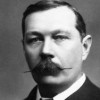
We must keep ever in mind that a republic such as ours can exist only by virtue of the orderly liberty which comes through the equal domination of the law over all men alike, and through its administration in such resolute and fearless fashion as shall teach all that no man is above it and no man below it.
Theodore Roosevelt (1858–1919) American politician, statesman, conservationist, writer, US President (1901–1909)
Speech (1903-09-07), “The Square Deal,” Labor Day, New York State Agricultural Association, New York State Fair, Syracuse
(Source)
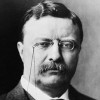
In the meanest mortal there lies something nobler. The poor swearing soldier, hired to be shot, has his “honor of a soldier,” different from drill-regulations and the shilling a day. It is not to taste sweet things, but to do noble and true things, and vindicate himself under God’s Heaven as a god-made Man, that the poorest son of Adam dimly longs. Show him the way of doing that, the dullest day-drudge kindles into a hero. They wrong man greatly who say he is to be seduced by ease.
Thomas Carlyle (1795-1881) Scottish essayist and historian
Lecture (1840-05-08), “The Hero as Prophet,” Home House, Portman Square, London
(Source)
The lecture notes were collected by Carlyle into On Heroes, Hero-Worship, & the Heroic in History, Lecture 2 (1841).
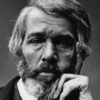
Do you think that what I say each day on such a variety of topics could come to me if I did not cultivate my mind with learning, or that my mind could bear such a strain if I did not relax it by this same learning?
Indeed I confess that I have devoted myself to these interests. Let others be ashamed who have so buried themselves in books that they can offer nothing for the common enjoyment and can bring nothing forward into the light and the sight of men; but, gentlemen of the jury, why should I be ashamed, I who have lived so long in such a way that leisurely interests have never lured me nor pleasure called me nor sleep kept me from timely service to anyone?
Who, I ask, can censure me on this account, who can rightfully be angry at me, if I take as much time for the pursuit of these studies as is granted others to attend to their interests, to celebrate the festive days of the games, as much time as they devote to other pleasures and the relaxation of mind and body, as much time as others give to early-opening banquets, or even to throwing dice and playing ball?[An tu existimas aut suppetere nobis posse quod cotidie dicamus in tanta varietate rerum, nisi animos nostros doctrina excolamus, aut ferre animos tantam posse contentionem, nisi eos doctrina eadem relaxemus?
Ego vero fateor me his studiis esse deditum: ceteros pudeat, si qui se ita litteris abdiderunt, ut nihil possint ex his neque ad communem adferre fructum neque in aspectum lucemque proferre: me autem quid pudeat, qui tot annos ita vivo, iudices, ut a nullius umquam me tempore aut commodo aut otium meum abstraxerit aut voluptas avocarit aut denique somnus retardarit?
Qua re quis tandem me reprehendat aut quis mihi iure suscenseat, si, quantum ceteris ad suas res obeundas, quantum ad festos dies ludorum celebrandos, quantum ad alias voluptates et ad ipsam requiem animi et corporis conceditur temporum, quantum alii tribuunt tempestivis conviviis, quantum denique alveolo, quantum pilae, tantum mihi egomet ad haec studia recolenda sumpsero?]Marcus Tullius Cicero (106-43 BC) Roman orator, statesman, philosopher
Pro Archia Poeta [For Archia the Poet], ch. 6 / sec. 12-13 (62 BC) [tr. Guinach (1962)]
(Source)
Cicero defends his reading and study habits.
(Source (Latin)). Other translations:Do you think it possible that we could find a supply for our daily speeches, when discussing such a variety of matters, unless we were to cultivate our minds by the study of literature; or that our minds could bear being kept so constantly on the stretch if we did not relax them by that same study?
But I confess that I am devoted to those studies, let others be ashamed of them if they have buried themselves in books without being able to produce anything out of them for the common advantage or anything which may bear the eyes of men and the light. But why need I be ashamed, who for many years have lived in such a manner as never to allow my own love of tranquility to deny me to the necessity or advantage of another or my fondness for pleasure to distract, or even sleep to delay my attention to such claims?
Who then can reproach me or who has any right to be angry with me, if I allow myself as much time for the cultivation of these studies as some take for the performance of their own business, or for celebrating days of festival and games, or for other pleasures, or even for the rest and refreshment of mind and body, or as others devote to early banquets, to playing at dice, or at ball?
[tr. Yonge (1856)]Do you think this can be afforded us as we speak every day in such a variety of cases, unless we abstract our minds from learning; or that our minds can bear such contention, unless we relax them from the same learning?
But I acknowledge I am devoted to these studies; the rest of my brethren may be ashamed if they withdraw from literature in such a manner as from it to be unable either to bear common fruit , or to bring it forth to light to be gazed on; but why am I to be ashamed that my sense of leisure has never led me to remain away in the hour of danger for convenience' sake, or pleasure never allured, or finally slumber never retarded me, who will thus continue to act for as many years as I live?
Why, indeed, should anyone blame me , or have a right to be angry with me if I employ , in the enumeration of these studies, as much time as is allowed to everyone else to attend to their own affairs, to celebrate the festal days of the games, to devote to other pleasures and to the rest of mind and body itself as much time as others devote to protracted banquets, or, in fine, to the gaming-table, or the javelin?
[tr. M'Donogh Mahony (1886)]Or do you suppose, either (that it) would be possible for us to have at hand, what we might utter daily, in such a variety of things [actions], unless we cultivated our minds by study, or (that) (our) minds could bear such great efforts, unless we relaxed them by the same study?
I indeed confess (that), I am given to these pursuits; let it shame others, if they hagve so buried themselves in letters, that they can neither bring nothing [anything] from these (studies), for the common advantage, nor to produce (anything) to view and to light. But why may I be ashamed, O judges who so many years live [have lived] so, that ever [never] either my leisure may have drawn me away or pleasure may have called (me) aside or in fine sleep may have kept (me) back from the emergency or the advantage of any one?
Wherefore who, pray, may reproach me, or who by right may be offended at me, if as much time as is conceded to others, for transacting their affairs, as much for celebrating festival days of games, as much for others pleasures, and for the rest itself of the mind and of the body; much as others devote to protracted banquets, as much in fine as to dice, as much as to ball playing.
[tr. Dewey (1916)]Do you think that I could find inspiration for my daily speeches on so manifold a variety of topics, did I not cultivate my mind with study, or that my mind could endure so great a strain, did not study too provide it with relaxation?
I am a votary of literature, and make the confession unashamed; shame belongs rather to the bookish recluse, who knows not how to apply his reading to the good of his fellows, or to manifest its fruits to the eyes of all. But what shame should be mine, gentlemen, who have made it a rule of my life for all these years never to allow the sweets of a cloistered ease or the seductions of pleasure or the enticements of repose to prevent me from aiding any man in the hour of his need?
How then can I justly be blamed or censured, if it shall be found that I have devoted to literature a portion of my leisure hours no longer than others without blame devote to the pursuit of material gain, to the celebration of festivals or games, to pleasure and the repose of mind and body, to protracted banqueting, or perhaps to the gaming-board? or to ball-playing?
[tr. Watts (Loeb) (1923)]Surely you do not believe that we can keep ourselves supplied with something to say every day on such a variety of topics, unless we thoroughly cultivate our minds by study? Surely you do not think that our minds could endure such strain unless we should give them the relaxation of the same study?
For my part I own that I am devoted to the pursuit of this. The rest of the world may be ashamed to have so buried themselves with literature as to be able neither to produce therefrom anything to the common profit, nor to bring it into sight and publicity. But why should I be ashamed , gentlemen of the jury, to have been living now so many years in such fashion, that neither has my love of retirement ever withdrawn me from any man's time of peril or season of advantage, nor has indulgence called me away, nor, in short, has sloth kept me back from it?
Who therefore, I pray, could find fault with me, or who could, with justice, be vexed with me, if I have myself appropriated to the resumption of such studies just so much out of my leisure hours as the rest of the world devotes to the transaction of their affairs, meeting of private engagements, or to attending the holidays of the Games, or to other indulgences and the mere rest of their minds and bodies? -- just so much time as some devote to lengthy dinners, or even to the dice-box and the tennis-ball?
[tr. Allcroft/Plaistowe (c. 1925)]How do you imagine I could find material for my daily speeches on so many different subjects if I did not train my mind with literary study, and how could my mind cope with so much strain if I did not use such study to help it unwind?
Yes, I for one am not ashamed to admit that I am devoted to the study of literature. Let others be ashamed if they have buried their heads in books and have not been able to find anything in them which could either be applied to the common good or brought out into the open and the light of day. But why should I be ashamed, gentlemen, given that in all the years I have lived my private pastimes have never distracted me, my own pleasures have never prevented me, and not even the need for sleep has ever called me away from helping anyone in his hour of danger or of need?
Who, then, can justly censure or reproach me if I allow myself the same amount of time for pursuing these studies as others set aside for dealing with their own personal affairs, celebrating festivals and games, indulging in other pleasures, and resting their minds and bodies, or as much as they devote to extended partying and to playing dice and ball?
[tr. Berry (2000)][...] I confess indeed that I am obsessed with studying literature. Let this fact shame others who do not know how to make use of their books so that they can’t provide anything from their reading to common profit or to make their benefit clear in sight.
Why, moreover, should I be ashamed when I have lived so many years in such a way that my hobby never prevented me from being useful to anyone at any time and its pleasure or sleepiness never distracted me or slowed me down? In what way, then, can anyone criticize me or censure me if I am discovered to have spent that very same amount of time in pursuing these studies as others do without blame in pursuing profit, or in celebrating festivals or games, in seeking the pleasure and rest of the body and mind, or dragging out hours in dining, gambling or ballgames?
[tr. @sentantiq (2019)]
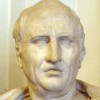
Love iz sed tew be blind, but i kno lots ov phellows in love, who kan see twice az mutch in their sweethearts as i kan.
[Love is said to be blind, but I know lots of fellows in love who can see twice as much in their sweethearts as I can.]
Josh Billings (1818-1885) American humorist, aphorist [pseud. of Henry Wheeler Shaw]
Josh Billings’ Farmer’s Allminax, 1870-12 (1870 ed.)
(Source)

The wine is the Master’s, but the guests are grateful to the butler.
לשקייה טיבותא למריה חמר /
חַמְרָא לְמָרֵיהּ, טֵיבוּתָא לְשָׁקְיֵיהּThe Talmud (AD 200-500) Collection of Jewish rabbinical writings
Babylonian Talmud, Bava Kamma 92b
Aramaic Proverb.
(Source (Hebrew)).The wine is the master's, but those who drink the wine are grateful to the butler.
[Theosophical Review, Vol. 26, No. 155 (1900-07-15)]The wine is the master’s, but the serving-man is thanked for it.
[tr. Source (1906)]The wine is the master's the thanks the butler's.
[tr. Hasas (1929)]The wine is the master's, but the gratitude is the pourer's.
[tr. Pomeranz (2016)]The wine is the master's, but the appreciation goes to the one who poured it.
[tr. Shachter]While the wine belongs to its owner, the gratitude is given to the one who pours it.
[tr. Koren-Steinsaltz]The wine is the master’s, but the gratitude is the pourer’s.
[Sefaria Community]

If you’d be belov’d, make yourself amiable.
Benjamin Franklin (1706-1790) American statesman, scientist, philosopher, aphorist
Poor Richard (1744 ed.)
(Source)
ROMANA: You mean you didn’t believe his story?
THE DOCTOR: No.
ROMANA: But he had such an honest face.
THE DOCTOR: Romana, you can’t be a successful crook with a dishonest face, can you?
Doctor Who (1963-1989) British science fiction television series, original run (BBC)
16×01 “The Ribos Operation,” Part 2 (1978-09-09 [w. Robert Holmes]
(Source)

We seek peace — enduring peace. More than an end to war, we want an end to the beginnings of all wars — yes, an end to this brutal, inhuman, and thoroughly impractical method of settling the differences between governments.
Franklin Delano Roosevelt (1882–1945) American lawyer, politician, statesman, US President (1933–1945)
Speech (1945-04-13), Jefferson Day (undelivered)
(Source)
Roosevelt died the day before this speech was to be delivered by radio.
Particularly dangerous are old men who retain the memory of past events, but do not remember how often they have repeated them. I have known some very amusing tales to become most tiresome when told by some gentlemen whose whole audience has been sated with them a hundred times.
[Sur tout les vieillards sont dangereux, à qui la souvenance des choses passees demeure, et ont perdu la souvenance de leurs redites. J’ay veu des recits bien plaisants, devenir tres-ennuyeux, en la bouche d’un Seigneur, chascun de l’assistance en ayant esté abbreuvé cent fois.]
Michel de Montaigne (1533-1592) French essayist
Essays, Book 1, ch. 9 (1.9), “Of Liars [Des Menteurs]” (1572) [tr. Cohen (1958)]
(Source)
This essay was included in the 1st (1580) edition, and expanded in 1588 and 1595. This particular passage was added for the 1595 edition.
(Source (French)). Alternate translations:Above all, old men are dangerous, who have onelie the memorie of things past left them, and have lost the remembrance of their repetitions. I have heard some very pleasant reports become most irkesome and tedious in the mouth of a certaine Lord, forsomuch as all the by-standers had manie times beene cloyed with them.
[tr. Florio (1603)]But above all, old Men, who yet retain the Memory of things past, and forget how often they have told them, are most dangerous Company for this fault; and I have known Stories from the Mouth of a Man of very great Quality, otherwise very pleasant in themselves, become very troublesome, by being a hundred times repeated over and over again.
[tr. Cotton (1686)]But, above all, old men who retain the memory of things past, and forget how often they have told them, are dangerous company; and I have known stories from the mouth of a man of very great quality, otherwise very pleasant in themselves, become very wearisome by being repeated a hundred times over and over again to the same people.
[tr. Cotton/Hazlitt (1877)]Above all, old men are in danger, who retain remembrance of past things and have lost remembrance of their twice-told stories I have known some really amusing tales to become very tiresome in the mouth of a man of the world, every one present having heard them poured out a hundred times.
[tr. Ives (1925)]Old men especially are dangerous, whose memory of things past remains, but who have lost the memory of their repetitions. I have seen some very amusing stories become very boring in the mouth of one nobleman, everyone present having been sated with them a hundred times.
[tr. Frame (1943)]Old men are particularly vulnerable: they remember the past but forget that they have just told you! I have known several amusing tales become boring in one gentleman’s mouth: his own people have had their fill of it a hundred times already.
[tr. Screech (1987)]The most dangerous are the elderly who have kept their recollections of the past but have lost track of their sharing them. I know of pleasant tales told by a certain gentleman that turned quite boring after each member of his audience had been regaled with it a hundred times.
[tr. HyperEssays (2025)]

NARRATOR: And then one day, nearly two thousand years after one man had been nailed to a tree for saying how great it would be to be nice to people for a change a girl sitting on her own in a small cafe in Rickmansworth suddenly realized what it was that had been going wrong all this time, and she finally knew how the world could be made a good and happy place. This time it was right, it would work, and no one would have to get nailed to anything. Sadly however, before she could get to a phone to tell anyone, the Earth was unexpectedly demolished to make way for a new hyperspace bypass and so the idea was lost forever.
Douglas Adams (1952-2001) English author, humorist, screenwriter
Hitchhiker’s Guide to the Galaxy, Phase 1, “Fit the 2nd” (BBC Radio) (1978-03-15)
(Source)
Though in the second radio episode, when adapted into the book The Hitchhiker's Guide to the Galaxy (1979), this passage was moved into the Introduction:And then, one Thursday, nearly two thousand years after one man had been nailed to a tree for saying how great it would be to be nice to people for a change a girl sitting on her own in a small cafe in Rickmansworth suddenly realized what it was that had been going wrong all this time, and she finally knew how the world could be made a good and happy place. This time it was right, it would work, and no one would have to get nailed to anything.
Sadly however, before she could get to a phone to tell anyone, a terrible stupid catastrophe occurred, and the idea was lost forever.

Grown-ups never understand anything by themselves, and it is tiresome for children to be always explaining things to them.
[Les grandes personnes ne comprennent jamais rien toutes seules, et c’est fatigant, pour les enfants, de toujours et toujours leur donner des explications.]
Antoine de Saint-Exupéry (1900-1944) French writer, aviator
Le Petit Prince [The Little Prince], ch. 1 (1943) [tr. Wood (1945)]
(Source)
(Source (French)). Other translation:Grown-ups never understand anything by themselves, and it is exhausting for children to have to provide explanations over and over again.
[tr. Howard (2000)]
It is better to do nothing than to do harm. Half the useful work in the world consists of combating the harmful work.
Bertrand Russell (1872-1970) English mathematician and philosopher
Conquest of Happiness, Part 2, ch. 16 “Effort and Resignation” (1930)
(Source)
War is when the government tells you who the bad guy is. Revolution is when you decide that for yourself.
Benjamin Franklin (1706-1790) American statesman, scientist, philosopher, aphorist
(Spurious)
Not found in the recorded works of Franklin, nor of Napoleon Bonaparte (to whom it is also attributed).The number of variants is an indicator this is an unconfirmed attribution:The term "bad guy" is an Americanism from the early 20th Century (the OED dates it to 1932; Dictionary.com to the early 1920s). But even if one uses the "enemy" variant, this sounds unlike either Franklin or Napoleon.
- "... who the enemy is" or "... who your enemy is."
- "... you figure it out ..."
The quotation is occasionally attributed to Susan Sarandon. While she did use it (e.g., at a pro-Palestinian speech), she attributed it in turn to Napoleon.
- Despite his skeptical nature, Franklin did not speak out against propagandistic influences on war (or revolution). Indeed, he was a skilled, if subtle, propagandist himself. Nor did he object to "government" in general (he would have attacked "the Crown" or "Parliament") nor any war that the British government had declared.
- Napoleon, as self-appointed Emperor of France (and war-maker, though most of his conquests were a result of other countries declaring war on him) would not have made the first half of this phrase, as he was the government. Nor, as one whose regime depended on propaganda, would he have suggested people decide for themselves who the true enemy is.
- Neither man, as a rule, wrote their various aphorisms in the second person ("you"). At most they might have used "one"; more often, it would have been "a man" or some third person construction.
A Fault, once denied, is twice committed.
Thomas Fuller (1654-1734) English physician, preacher, aphorist, writer
Gnomologia: Adages and Proverbs (compiler), # 93 (1732)
(Source)

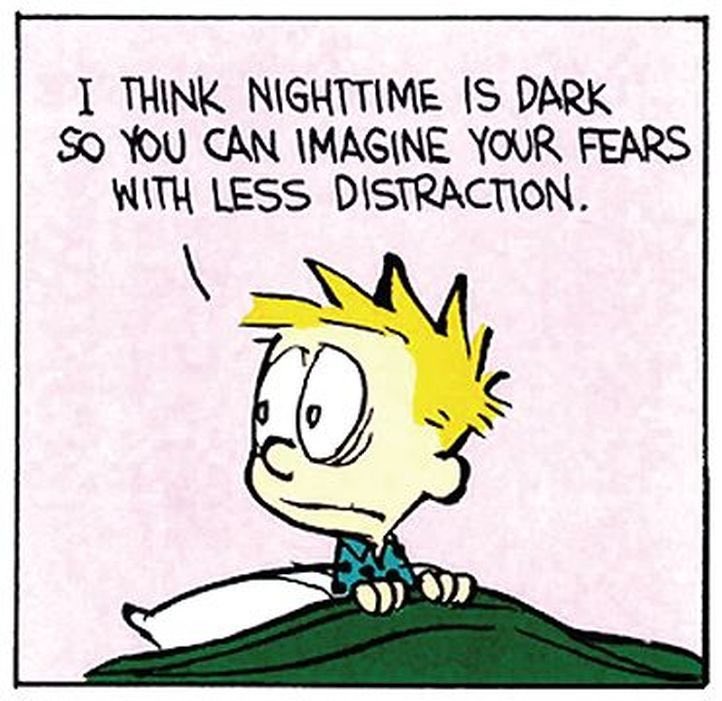
CALVIN: I think nighttime is dark so you can imagine your fears with less distraction.

INCORPORATION, n. The act of uniting several persons into one fiction called a corporation, in order that they may be no longer responsible for its actions. A, B and C are a corporation. A robs, B steals and C (it is necessary that there be one gentleman in the concern) cheats. It is a plundering, thieving, swindling corporation. But A, B and C, who have jointly determined and severally executed every crime of the corporation, are blameless. It is wrong to mention them by name when censuring their acts as a corporation, but right when praising.
Ambrose Bierce (1842-1914?) American writer and journalist
“Incorporation,” “Devil’s Dictionary” column, San Francisco Wasp (1885-10-03)
(Source)
Not collected in later books.

MEDEA: O Zeus, why did you give men certain ways
to recognize false gold, when there’s no mark,
no token stamped on the human body,
to indicate which men are worthless.[ΜΉΔΕΙΑ: ὦ Ζεῦ, τί δὴ χρυσοῦ μὲν ὃς κίβδηλος ᾖ
τεκμήρι᾽ ἀνθρώποισιν ὤπασας σαφῆ,
ἀνδρῶν δ᾽ ὅτῳ χρὴ τὸν κακὸν διειδέναι
οὐδεὶς χαρακτὴρ ἐμπέφυκε σώματι;]Euripides (485?-406? BC) Greek tragic dramatist
Medea [Μήδεια], l. 516ff (431 BC) [tr. Johnston (2008)]
(Source)
(Source (Greek)). Other translations:Wherefore, O Jove, didst thou instruct mankind
How to distinguish by undoubted marks
Counterfeit gold, yet in the front of vice
Impress no brand to shew the tainted heart?
[tr. Wodhull (1782)]O Jove, why hast thou given us certain proof
To know adulterate gold, but stamp'd no mark,
Where it is needed most, on man's base metal?
[tr. Potter (1814)]Oh Zeus why hast thou given mankind sure test
To know the spurious gold, while upon men
Is no mark born whereby to tell a knave?
[tr. Webster (1868)]O Zeus! why hast thou granted unto man clear signs to know the sham in gold, while on man's brow no brand is stamped whereby to gauge the villain's heart?
[tr. Coleridge (1891)]O Jove, why I pray hast thou given to men certain proofs of the gold which is adulterate, but no mark is set by nature on the person of men by which one may distinguish the bad man.
[tr. Buckley (1892)]O Zeus, ah wherefore hast thou given to men
Plain signs for gold which is but counterfeit,
But no assay-mark nature-graven shows
On man's form, to discern the base withal?
[tr. Way (Loeb) (1894)]O great God, shall gold withal
Bear thy clear mark, to sift the base and fine,
And o'er man's living visage runs no sign
To show the lie within, ere all too late?
[tr. Murray (1906)]O God, you have given to mortals a sure method
Of telling the gold that is pure from the counterfeit;
Why is there no mark engraved upon men's bodies
By which we could know the true ones from the false ones?
[tr. Warner (1944)]O Zeus! Why have you given us clear signs to tell
True gold from counterfeit; but when we need to know
Bad men from good, the flesh bears no revealing mark?
[tr. Vellacott (1963)]Zeus, why did you give to men clear signs
To distinguish counterfeit gold from true, but as for
Humans, no stamp is impressed on their bodies
By which the bogus ones can be discerned?
[tr. Podlecki (1989)]O Zeus, why, when you gave to men sure signs of gold that is counterfeit, is there no mark on the human body by which one could identify base men?
[tr. Kovacs (Loeb) (1994)]O Zeus, why is it you have given men clear ways of testing whether gold is counterfeit but, when it comes to men, the body carries no stamp of nature for distinguishing bad from good?
[tr. Davie (1996)]Oh Zeus! You gave such obvious signs for men to tell the difference between genuine gold and fake and yet you gave not a hint for people to tell who’s a good man and who an evil one!
[tr. Theodoridis (2004)]Oh Zeus! Why have you given us a clear test
of gold to tell which is counterfeit
but of men — where to identify an evil one would be useful —
there is no such mark on his body?
[tr. Luschnig (2007)]Oh Zeus, why have you given us clear signs to tell if gold has been adulterated, but tehre's no sign upon the body of a man by which we can find out who's evil?
[tr. Ewans (2022)]Why, Zeus? Why did you give to men clear ways of knowing the counterfeited gold, while on men’s body no brand [kharaktēr] is stamped by which to know the kakos?
[tr. Coleridge / Ceragioli / Nagy / Hour25]O Zeus, why, when you gave to men sure signs of gold that is counterfeit, is there no mark on the human body by which one could identify bad men?
[tr. Kovacs / Zhang / Rogak]
Being offended is a natural consequence of leaving the house.
Fran Lebowitz (b. 1950) American journalist, essayist
Interview (2021-02-17), BBC Newsnight
(Source (Video), at the 1:23 mark)

I think the women of this country, if they face the fact of the present situation, will agree with me that this is a time for action — not for war, but for mobilization of every bit of peace machinery. It is also a time for facing the fact that you cannot use a weapon, even though it is the weapon that gives you greater strength than other nations, if it is so destructive that it practically wipes out large areas of land and great numbers of innocent people.
Eleanor Roosevelt (1884–1962) First Lady of the US (1933–1945), politician, diplomat, activist
Column (1954-04-16), “My Day”
(Source)
On the Hydrogen Bomb.

If I have all the eloquence of men or of angels, but speak without love, I am simply a gong booming or a cymbal clashing. If I have the gift of prophecy, understanding all the mysteries there are, and knowing everything, and if I have faith in all its fulness, to move mountains, but without love, then I am nothing at all. If I give away all that I possess, piece by piece, and if I even let them take my body to burn it, but am without love, it will do me no good whatever.
[Ἐὰν ταῖς γλώσσαις τῶν ἀνθρώπων λαλῶ καὶ τῶν ἀγγέλων, ἀγάπην δὲ μὴ ἔχω, γέγονα χαλκὸς ἠχῶν ἢ κύμβαλον ἀλαλάζον. καὶ ἐὰν ἔχω προφητείαν καὶ εἰδῶ τὰ μυστήρια πάντα καὶ πᾶσαν τὴν γνῶσιν καὶ ἐὰν ἔχω πᾶσαν τὴν πίστιν ὥστε ὄρη μεθιστάναι, ἀγάπην δὲ μὴ ἔχω, οὐθέν εἰμι. κἂν ψωμίσω πάντα τὰ ὑπάρχοντά μου καὶ ἐὰν παραδῶ τὸ σῶμά μου ἵνα καυχήσωμαι, ἀγάπην δὲ μὴ ἔχω, οὐδὲν ὠφελοῦμαι.]
The Bible (The New Testament) (AD 1st - 2nd C) Christian sacred scripture
1 Corinthians 13: 1-3 [JB (1966)]
(Source)
Various editions note that the final "if" varies between manuscripts as to whether it's to give up the body to be burned, or to do so to boast.
See Coffin (2004).
(Source (Greek)). Alternate translations:Though I speak with the tongues of men and of angels, and have not charity, I am become as sounding brass, or a tinkling cymbal. And though I have the gift of prophecy, and understand all mysteries, and all knowledge; and though I have all faith, so that I could remove mountains, and have not charity, I am nothing. And though I bestow all my goods to feed the poor, and though I give my body to be burned, and have not charity, it profiteth me nothing.
[KJV (1611)]Though I command languages both human and angelic -- if I speak without love, I am no more than a gong booming or a cymbal clashing. And though I have the power of prophecy, to penetrate all mysteries and knowledge, and though I have all the faith necessary to move mountains -- if I am without love, I am nothing. Though I should give away to the poor all that I possess, and even give up my body to be burned -- if I am without love, it will do me no good whatever.
[NJB (1985)]I may be able to speak the languages of human beings and even of angels, but if I have no love, my speech is no more than a noisy gong or a clanging bell. I may have the gift of inspired preaching; I may have all knowledge and understand all secrets; I may have all the faith needed to move mountains -- but if I have no love, I am nothing. I may give away everything I have, and even give up my body to be burned -- but if I have no love, this does me no good.
[GNT (1992 ed.)]If I speak in tongues of human beings and of angels but I don’t have love, I’m a clanging gong or a clashing cymbal. If I have the gift of prophecy and I know all the mysteries and everything else, and if I have such complete faith that I can move mountains but I don’t have love, I’m nothing. If I give away everything that I have and hand over my own body to feel good about what I’ve done but I don’t have love, I receive no benefit whatsoever.
[CEB (2011)]If I speak in the tongues of humans and of angels but do not have love, I am a noisy gong or a clanging cymbal. And if I have prophetic powers and understand all mysteries and all knowledge and if I have all faith so as to remove mountains but do not have love, I am nothing. If I give away all my possessions and if I hand over my body so that I may boast[a] but do not have love, I gain nothing.
[NRSV (2021 ed.)]

Short as life is, we make it still shorter by the careless waste of time.
Victor Hugo (1802-1885) French writer
(Attributed)
The earliest reference to this translation I find, with no citation, is in Maturin Ballou, Edge-Tools of Speech (1886). Nineteenth Century books of quotations such as this often paraphrase passages, especially in translation, so it is altogether possible this particular wording was crafted by Ballou.
It is impossible not to notice how little the proponents of the ideal of competition have to say about honesty, which is the fundamental economic virtue, and how very little they have to say about community, compassion, and mutual help.
Wendell Berry (b. 1934) American farmer, educator, poet, conservationist
Essay (1988), “Economy and Pleasure,” What Are People For? (1990)
(Source)

VELLUM: There is nothing more requisite in business than dispatch.
Joseph Addison (1672-1719) English essayist, poet, statesman
The Drummer, Act 5, sc. 1 (1716)
(Source)
O eloquent, just, and mighty Death! whom none could advise, thou hast persuaded; what none hath dared, thou hast done; and whom all the world hath flattered, thou only hast cast out of the world and despised: thou hast drawn together all the far stretchèd greatness, all the pride, cruelty and ambition of man, and covered it all over with those two narrow words, Hic jacet!
Walter Raleigh (c. 1552-1618) English statesman, soldier, writer, explorer
The Historie of the World, in Five Bookes, Book 5, ch. 6, sec. 12 (1614)
(Source)
Penultimate paragraph of the work. The Latin hic jacet means "here lies," as in an tomb's epitaph.

GLOUCESTER: We have seen the best of our time. Machinations, hollowness, treachery, and all ruinous disorders follow us disquietly to our graves.
William Shakespeare (1564-1616) English dramatist and poet
King Lear, Act 1, sc. 2, l. 118ff (1.2.118-121) (1606)
(Source)

You have the effrontery to be squeamish, it thought at him. But we were dragons. We were supposed to be cruel, cunning, heartless, and terrible. But this much I can tell you, you ape — the great face pressed even closer, so that Wonse was staring into the pitiless depths of his eyes — we never burned and tortured and ripped one another apart and called it morality.
Terry Pratchett (1948-2015) English author
Discworld No. 8, Guards! Guards! (1989)
(Source)
The dragon mentally speaking to Wonse.
I am not sure that, historically, there has been another powerful nation that has been trusted as the United States is trusted today. It is something new under the sun when the proudest nations on earth have not only accepted American leadership in the common defense effort, but have also welcomed our troops and bases on their territory.
Adlai Stevenson (1900-1965) American diplomat, statesman
Speech (1952-08-27), “The Nature of Patriotism,” American Legion Convention, Madison Square Garden, New York City
(Source)
Even the acquisition of knowledge is often much facilitated by the advantages of society: he that never compares his notions with those of others, readily acquiesces in his first thoughts, and very seldom discovers the objections which may be raised against his opinions; he, therefore, often thinks himself in possession of truth, when he is only fondling an errour long since exploded. He that has neither companions nor rivals in his studies, will always applaud his own progress, and think highly of his performances, because he knows not that others have equalled or excelled him. And I am afraid it may be added, that the student who withdraws himself from the world, will soon feel that ardour extinguished which praise or emulation had enkindled, and take the advantage of secrecy to sleep, rather than to labour.
Samuel Johnson (1709-1784) English writer, lexicographer, critic
Essay (1754-01-19), The Adventurer, No. 126
(Source)
The whole family of pride and ignorance are incestuous, and mutually beget each other.
Charles Caleb "C. C." Colton (1780-1832) English cleric, writer, aphorist
Lacon: Or, Many Things in Few Words, Vol. 1, § 443 (1820)
(Source)
One cannot see the modern world as it is unless one recognises the overwhelming strength of patriotism, national loyalty. In certain circumstances it can break down, at certain levels of civilisation it does not exist, but as a positive force there is nothing to set beside it. Christianity and international Socialism are as weak as straw in comparison with it. Hitler and Mussolini rose to power in their own countries very largely because they could grasp this fact and their opponents could not.
George Orwell (1903-1950) English journalist, essayist, writer [pseud. of Eric Arthur Blair]
Essay (1941-02-19), “The Lion and the Unicorn: Socialism and the English Genius,” Part 1 “England Your England,” sec. 1, The Searchlight Books [ed. Fyvel and Orwell]
(Source)
Part of Part 1, "England Your England" with the title "The Ruling Class" was previously published in Horizon (1940-12).
But it happens further quite naturally that men who believe too firmly in their theories, do not believe enough in the theories of others. So the dominant idea of these despisers of their fellows is to find others’ theories faulty and to try to contradict them. […] They make experiments only to destroy a theory, instead of to seek the truth. At the same time, they make poor observations, because they choose among the results of their experiments only what suits their object, neglecting whatever is unrelated to it, and carefully setting aside everything which might tend toward they idea they wish to combat.
[Mais il arrive encore tout naturellement que ceux qui croient trop à leurs théories ne croient pas assez à celles des autres. Alors l’idée dominante de ces contempteurs d’autrui est de trouver les théories des autres en défaut et de chercher à les contredire. […] Ils ne font des expériences que pour détruire une théorie, au lieu de les faire pour chercher la vérité. Ils font également de mauvaises observations, parce qu’ils ne prennent dans les résultats de leurs expériences que ce qui convient à leur but, en négligeant ce qui ne s’y rapporte pas, et en écartant bien soigneusement tout ce qui pourrait aller dans le sens de l’idée qu’ils veulent combattre.]
Claude Bernard (1813-1878) French physiologist, scientist
An Introduction to the Study of Experimental Medicine [Introduction à l’Étude de la Médecine Expérimentale], ch. 3 (1865) [tr. Greene (1957)]
(Source)
(Source (French)). Other translation:But it still happens quite naturally that those who believe too strongly in their own theories don't believe enough in those of others. The dominant idea of these detractors of others is to find flaws in other people's theories and to try to contradict them. [...] They conduct experiments only to disprove a theory, instead of doing so to seek the truth. They also make flawed observations because they only select from the results of their experiments what suits their purpose, neglecting what is irrelevant, and carefully disregarding anything that might support the idea they want to refute.
[Google Translate]
Neither struck her as particularly experienced. The night would degenerate into the usual problems with an orgy: where to put what and where and when, and how to find room for one’s elbows.
Kerry Greenwood (b. 1954) Australian author and lawyer
Phryne Fisher No. 10, Death Before Wicket, ch. 7 (1999)
(Source)

FAUSTUS: Tell me what is that Lucifer thy lord?
MEPHISTOPHILIS: Arch-regent and commander of all spirits.
FAUSTUS: Was not that Lucifer an angel once?
MEPHISTOPHILIS: Yes, Faustus, and most dearly lov’d of God.
FAUSTUS: How comes it, then, that he is prince of devils?
MEPHISTOPHILIS: O, by aspiring pride and insolence;
For which God threw him from the face of heaven.Christopher "Kit" Marlowe (1564-1593) English dramatist and poet
The Tragicall History of the Life and Death of Doctor Faustus, Act 3, sc. 3 (sc. 3), l. 306ff (1594; 1604 “A” text)
(Source)
The lines appear the same in the "B" text (1594; 1616), l. 288ff.
My surprise reached a climax, however, when I found incidentally that he was ignorant of the Copernican Theory and of the composition of the Solar System. That any civilized human being in this nineteenth century should not be aware that the earth travelled round the sun appeared to be to me such an extraordinary fact that I could hardly realize it. […] “But the Solar System!” I protested.
“What the deuce is it to me?” he interrupted impatiently; “you say that we go round the sun. If we went round the moon it would not make a pennyworth of difference to me or to my work.”Arthur Conan Doyle (1859-1930) British writer and physician
Story (1886-04), “A Study in Scarlet,” Part 1, ch. 2, Beeton’s Christmas Annual, Vol. 28 (1887-11-21)
(Source)
Watson speaking of and with Holmes. This passage is followed by this one.
Published in novel form 1888-07.
In the Sherlock TV episode 01x03 "The Great Game" (w. Mark Gatiss) (2010-08-08), this explanation is reworked (including this analogous passage):HOLMES: Look, it doesn't matter to me who's Prime Minister, or who's sleeping with whom --
WATSON: Or that the earth goes around the sun.
HOLMES: Oh God, that again! It's not important!
WATSON: Not important? It's primary school stuff! How can you not know that?
HOLMES: Well, if I ever did, I've deleted it.
WATSON: "Deleted it"?
HOLMES: Listen: (points to his head) This is my hard-drive, and it only makes sense to put things in there that are useful. Really useful. Ordinary people fill their heads with all kinds of rubbish, and that makes it hard to get at the stuff that matters! Do you see?
WATSON: (brief silence) But it's the solar system!
HOLMES: Oh, hell! What does that matter?! So we go around the sun! If we went around the moon or round and round the garden like a teddy bear, it wouldn't make any difference! All that matters to me is the work!
Life can mean nothing worth meaning, unless its prime aim is the doing of duty, the achievement of results worth achieving.
Theodore Roosevelt (1858–1919) American politician, statesman, conservationist, writer, US President (1901–1909)
Speech (1903-09-07), “The Square Deal,” Labor Day, New York State Agricultural Association, New York State Fair, Syracuse
(Source)
His Religion is not an easy one: with rigorous fasts, lavations, strict complex formulas, prayers five times a day, and abstinence from wine, it did not “succeed by being an easy religion.” As if indeed any religion, or cause holding of religion, could succeed by that! It is a calumny on men to say that they are roused to heroic action by ease, hope of pleasure, recompense, — sugar-plums of any kind, in this world or the next! In the meanest mortal there lies something nobler.
Thomas Carlyle (1795-1881) Scottish essayist and historian
Lecture (1840-05-08), “The Hero as Prophet,” Home House, Portman Square, London
(Source)
Speaking of Muhammad and Islam.
The lecture notes were collected by Carlyle into On Heroes, Hero-Worship, & the Heroic in History, Lecture 2 (1841).
Keep thou from the Opportunity, and God will keep thee from the Sin.
Benjamin Franklin (1706-1790) American statesman, scientist, philosopher, aphorist
Poor Richard (1744 ed.)
(Source)
Every Man must seriously set himself to root out his Passions, Prejudices and Attachments, and to get the better of his private Interest. The only reputable Principle and Doctrine must be that all Things must give Way to the public.
John Adams (1735–1826) American lawyer, Founding Father, statesman, US President (1797–1801)
Letter (1776-04-16) to Mercy Otis Warren
(Source)

There are few men, that would dare to publish the secret requests they make to God.
[Il est peu d’hommes qui ozassent mettre en evidence les requestes secrettes qu’ils font à Dieu.]
Michel de Montaigne (1533-1592) French essayist
Essays, Book 1, ch. 56 (1.56), “Of Prayers [Des prieres]” (1572-1580) [tr. Florio (1603)]
(Source)
This passage was in the 1st (1580) edition.
(Source (French)). Alternate translations:Few men durst publish the secret petitions they make to God.
[tr. Cotton (1686)]There are few men who dared publish to the world the prayers they make to Almighty God.
[tr. Cotton/Hazlitt (1877)]There are few men who would dare to exhibit openly the secret petitions which they make to God.
[tr. Ives (1925)]There are few men who would dare place in evidence the secret requests they make of God.
[tr. Frame (1943)]Not many men would care to submit to view the secret prayers they make to God.
[tr. Screech (1987)]

THE DOCTOR: It’s very, very old. Perhaps even older.
Doctor Who (1963-1989) British science fiction television series, original run (BBC)
26×02 “Ghost Light,” Part 2 (1989-10-11) [w. Marc Platt]
(Source)
The gods either have power or they have not. If they have not, why pray to them? If they have, then instead of praying to be granted or spared such-and-such a thing, why not rather pray to be delivered from dreading it, or lusting for it, or grieving over it? Clearly, if they can help a man at all, they can help him in this way.
[Ἤτοι οὐδὲν δύνανται οἱ θεοὶ ἢ δύνανται. εἰ μὲν οὖν μὴ δύνανται, τί εὔχῃ; εἰ δὲ δύνανται, διὰ τί οὐχὶ μᾶλλον εὔχῃ. διδόναι αὐτοὺς τὸ μήτε φοβεῖσθαί τι τούτων μήτε ἐπιθυμεῖν τινος τούτων μήτε λυπεῖσθαι ἐπί τινι τούτων, μᾶλλον ἤπερ τὸ μὴ παρεῖναί τι τούτων ἢ τὸ παρεῖναι; πάντως γάρ, εἰ δύνανται συνεργεῖν ἀνθρώποις, καὶ εἰς ταῦτα δύνανται συνεργεῖν.]
Marcus Aurelius (AD 121-180) Roman emperor (161-180), Stoic philosopher
Meditations [To Himself; Τὰ εἰς ἑαυτόν], Book 9, ch. 40 (9.40) (AD 161-180) [tr. Staniforth (1964)]
(Source)
(Source (Greek)). Alternate translations:Either the Gods can do nothing for us at all, or they can still and allay all the distractions and distempers of thy mind. If they can do nothing, why doest thou pray? If they can, why wouldst not thou rather pray, that they will grant unto thee, that thou mayst neither fear, nor lust after any of those worldly things which cause these distractions and distempers of it? Why not rather, that thou mayst not at either their absence or presence, be grieved and discontented: than either that thou mayst obtain them, or that thou mayst avoid them? For certainly it must needs be, that if the Gods can help us in anything, they may in this kind also.
[tr. Casaubon (1634)]Either the Gods have power to assist us, or they have not. If they have not, what does praying to them signifie? If they have, why don't you rather pray that they would Discharge your Desires, than Satisfie them; and rather set you above the Passion of Fear, than keep away the Thing you are afraid of? For if the Gods can help us, no doubt they can help us to be Wiser.
[tr. Collier (1701), 9.42]Either the Gods have no power at all [to aid men in any thing;] or they have power. If, then, they have no power, why do you pray? But if they have power, why don’t you chuse to pray to them to enable you, neither to fear any of these things, [which are not in our own power] nor desire any of them, nor be grieved about any of them; rather than for the having them, or the not having them. For, most certainly, if they can aid men at all, they can also aid them in this.
[tr. Hutcheson/Moor (1742)]Either the Gods have power to assist mankind, or they have not. If they have not, why do you pray to them? If they have that power, why do you not rather pray, "that they would enable you neither to fear nor to desire any thing; nor to be more grieved fro the want, than for the possession of it?" For, certainly, if they have the power to co-operate with the endeavours of men, they can do it in this respect.
[tr. Graves (1792)]Either the gods have no power or they have power. If, then, they have no power, why dost thou pray to them? But if they have power, why dost thou not pray for them to give thee the faculty of not fearing any of the things which thou fearest, or of not desiring any of the things which thou desirest, or not being pained at anything, rather than pray that any of these things should not happen or happen? for certainly if they can co-operate with men, they can co-operate for these purposes.
[tr. Long (1862)]Either the gods have power to assist us, or they have not. If they have not, what does praying to them help you? If they have, why do you not rather pray that they would remove your fears and moderate your desires, and rather keep you from grieving for any of these things, than keep away one thing and grant another? For if the gods can help us, no doubt they can help us to be wiser.
[tr. Collier/Zimmern (1887)]The gods either have power, or they have not. If they have not, why pray at all? If they have, why not pray for deliverance from teh fear, or the desire, or the pain, which the thing causes, rather than for the withholding or the giving of the particular thing? Assuredly, if they can help men at all, this is the way of help.
[tr. Rendall (1898)]Either the Gods have power or they have none. If they have no power, why do you pray? If they have power, why do you not choose to pray to them for power neither to fear, nor to desire, nor to be grieved over any of these external things, rather than for their presence or their absence? Surely, if the Gods can aid man at all, they can aid him in this.
[tr. Hutcheson/Chrystal (1902)]Either the Gods have no power or they have power. If they have no power, why pray to them? But if they have power, why not rather pray that they should give thee freedom from fear of any of these things and from lust for any of these things and from grief at any of these things [rather] than that they should grant this or refuse that. For obviously if they can assist men at all, they can assist them in this.
[tr. Haines (Loeb) (1916)]The gods are either powerless or powerful. If then they are powerless, why do you pray? But if they are powerful, why not rather pray them for the gift to fear none of these things, to desire none of them, to sorrow for none of them, rather than that any one of them should be present or absent? For surely if they can co-operate with man, they can co-operate to these ends.
[tr. Farquharson (1944)]The gods either lack power or they have power. If they are powerless, why do you pray to them? But if they have power, why do you not pray to them to grant you the ability neither to fear any of these things nor to desire them, nor to be distressed by them, rather than praying that some of them should fall to you and others not? For surely, if the gods have any power to help human beings, they can help them in this.
[tr. Hard (1997 ed.)]Either the gods have power or they don't. If they don't, why pray? If they do, then why not pray for something else instead of for things to happen or not to happen? Pray not to feel fear. Or desire. Or grief. If they gods can do anything, they can surely do that for us.
[tr. Hays (2003)]Either the gods have power or they do not. Now, if they have no power, why pray? If they do have power, why not pray for their gift of freedom from all worldly fear, desire, or regret, rather than for the presence or absence of this or that? Certainly, if the gods can cooperate with men, they can cooperate to these ends.
[tr. Hammond (2006)]Either the gods have power or they do not. If they do not, why do you pray? But if they do have power, why aren't you praying that they give you the power not to fear, crave, or be troubled by a thing, rather than pryaing to have that thing or not have it? For if the gods can work with us, then surely they can work with us toward this end.
[tr. Needleman/Piazza (2008)]The gods either lack power or they have power. Now if they are powerless, why do you pray to them? But if they have poer, why do you not pray to them to gran you the ability neither to fear any of these things nor to desire them, nor to be distressed by them, rather than praying that some of them should fall to you and others not? For surely, if the gods have any power to help human beings, they can help them in this.
[tr. Hard (2011 ed.)]
The fact is, my sweet, every mother spends her time, so soon as her children are out of her sight, in imagining dangers for them. Perhaps it is Armand seizing the razors to play with, or his coat taking fire, or a snake biting him, or he might tumble in running and start and absess on his head, or he might drown himself in a pond. A mother’s life, you see, is one long succession of dramas, now soft and tender, now terrible. Not an hour but has its joys and fears.
[En effet, mon ange, durant le jour, toutes les mères inventent des dangers. Dès que les enfants ne sont plus sous leurs yeux, c’est des rasoirs volés avec lesquels Armand a voulu jouer, le feu qui prend à sa jaquette, un orvet qui peut le mordre, une chute en courant qui peut faire un dépôt à la tête, ou les bassins où il peut se noyer. Comme tu le vois, la maternité comporte une suite de poésies douces ou terribles. Pas une heure qui n’ait ses joies et ses craintes.]
Honoré de Balzac (1799-1850) French novelist, playwright
Letters of Two Brides [Mémoires de deux jeunes mariées], Part 1, letter 45 (1840) [tr. Scott (1897)]
(Source)
(Source (French)). Other translation:To tell the truth, my dearest, during the daytime all mothers invent dangers as soon as the children are out of sight. There are razors for Armand to play with, fire to catch his jacket, a slow-worm to bite him, a fall to bump his head, and ponds to tumble into. So you see that maternity is a series of poems, sweet or terrible as the case may be. There's not an hour which does not have its joys and fears.
[tr. Wormeley (1842), Memoirs of Two Young Married Women]
All our affections are at the mercy of death, which may strike down those whom we love at any moment. It is therefore necessary that our lives should not have that narrow intensity which puts the whole meaning and purpose of our life at the mercy of accident. For all these reasons the man who pursues happiness wisely will aim at the possession of a number of subsidiary interests in addition to those central ones upon which his life is built.
Bertrand Russell (1872-1970) English mathematician and philosopher
Conquest of Happiness, Part 2, ch. 15 “Impersonal Interests” (1930)
(Source)
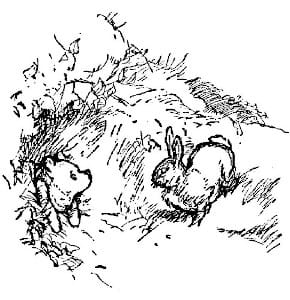
“How long does getting thin take?” Pooh asked anxiously.
A. A. Milne (1882-1956) English poet and playwright [Alan Alexander Milne]
Winnie-the-Pooh, ch. 2 “Pooh Goes Visiting” (1926)
(Source)
While stuck in Rabbit's hole.
The aim of totalitarian education has never been to instill convictions but to destroy the capacity to form any.
Hannah Arendt (1906-1975) German-American philosopher, political theorist
The Origins of Totalitarianism, Part 3, ch. 13 “Ideology and Terror” (1951)
(Source)

No one can use this new destructive weapon without destroying innumerable innocent people. It would not be only our enemies that would condemn us, it would be our own conscience.
Eleanor Roosevelt (1884–1962) First Lady of the US (1933–1945), politician, diplomat, activist
Column (1954-04-16), “My Day”
(Source)
On the Hydrogen Bomb.
MEDEA: And furthermore we are women, unable to perform noble deeds, but most skillful architects of every sort of harm.
[ΜΉΔΕΙΑ:Πρὸς δὲ καὶ πεφύκαμεν
γυναῖκες, ἐς μὲν ἔσθλ᾽ ἀμηχανώταται,
κακῶν δὲ πάντων τέκτονες σοφώταται.]Euripides (485?-406? BC) Greek tragic dramatist
Medea [Μήδεια], l. 407ff (431 BC) [tr. Kovacs (Loeb) (1994)]
(Source)
Euripides presses his thumb on the scales a little bit heavily here.
(Source (Greek)). Other translations:Altho' by nature form'd
Without a genius apt for virtuous deeds.
We women are in mischiefs most expert.
[tr. Wodhull (1782)]Nature form'd our sex to good
Of slight capacity, but to revenge
Of ready and inventive subtlety.
[tr. Potter (1814)]We women too art born
Most profitless indeed to noble works,
But cunningest devisers of all harms.
[tr. Webster (1868)]We women, though by nature little apt for virtuous deeds, are most expert to fashion any mischief.
[tr. Coleridge (1891)]Besides also we women are, by nature, to good actions of the least capacity, but the most cunning inventors of every ill.
[tr. Buckley (1892)]Yea, our woman-nature 'tis --
Say they -- to be most helpless for all good,
But fashioners most cunning of all ill.
[tr. Way (Loeb) (1894)]And God hath made thee woman, things most vain
For help, but wondrous in the paths of pain.
[tr. Murray (1906)]And women, though most helpless in doing good deeds,
Are of every evil the cleverest of contrivers.
[tr. Warner (1944)]We were born women -- useless for honest purposes,
But in all kinds of evil skilled practitioners.
[tr. Vellacott (1963)]And what is more,
We're women, quite unable to manage good
But none more skilled when it comes to doing harm.
[tr. Podlecki (1989)]And furthermore we are women, unable to perform great deeds of valor, but most skillful architects of every evil.
[tr. Kovacs (Perseus)]What's more, we are women, quite helpless in doing good but surpassing any master craftsman in working evil.
[tr. Davie (1996)]We women might be awful at doing something good but we are very competent when we’re doing something evil. No one is better than us.
[tr. Theodoridis (2004)]And besides we are
women, most helpless for the good,
but skilled craftsmen of all that is evil.
[tr. Luschnig (2007)]Besides, we possess a woman’s nature --
powerless to perform fine noble deeds,
but very skilled in every form of evil.
[tr. Johnston (2008)]Also we were born as women, very helpless when it comes to doing good, but very wise creators of all kinds of harm.
[tr. Ewans (2022)]And more than this, we are women, naturally most helpless [amēkhanai], when it comes to noble deeds [esthla], but for all evils [kaka] we are most skilled [sophai] contrivers.
[tr. Coleridge / Ceragioli / Nagy / Hour25]
Be under obligation to no one — the only obligation you have is to love one another. Whoever does this has obeyed the Law. The commandments, “Do not commit adultery; do not commit murder; do not steal; do not desire what belongs to someone else” — all these, and any others besides, are summed up in the one command, “Love your neighbor as you love yourself.” If you love others, you will never do them wrong; to love, then, is to obey the whole Law.
[Μηδενὶ μηδὲν ὀφείλετε εἰ μὴ τὸ ἀλλήλους ἀγαπᾶν· ὁ γὰρ ἀγαπῶν τὸν ἕτερον νόμον πεπλήρωκεν. τὸ γὰρ ” Οὐ μοιχεύσεις, Οὐ φονεύσεις, Οὐ κλέψεις, Οὐκ ἐπιθυμήσεις”, καὶ εἴ τις ἑτέρα ἐντολή, ἐν τῷ λόγῳ τούτῳ ἀνακεφαλαιοῦται [ἐν τῷ] ” Ἀγαπήσεις τὸν πλησίον σου ὡς σεαυτόν.” ἡ ἀγάπη τῷ πλησίον κακὸν οὐκ ἐργάζεται· πλήρωμα οὖν νόμου ἡ ἀγάπη.]
The Bible (The New Testament) (AD 1st - 2nd C) Christian sacred scripture
Romans 13: 8-9 [GNT (1992 ed.)]
(Source)
The list of commandments is from Exodus 20:13-15 (Deut. 5:17-19), Exodus 20:17 (Deut. 5:21). The summary to love your neighbor is first found in Leviticus 19:18.
(Source (Greek)). Alternate translations:Owe no man any thing, but to love one another: for he that loveth another hath fulfilled the law. For this, Thou shalt not commit adultery, Thou shalt not kill, Thou shalt not steal, Thou shalt not bear false witness, Thou shalt not covet; and if there be any other commandment, it is briefly comprehended in this saying, namely, Thou shalt love thy neighbour as thyself. Love worketh no ill to his neighbour: therefore love is the fulfilling of the law.
[KJV (1611)]Avoid getting into debt, except the debt of mutual love. If you love your fellow men you have carried out your obligations. All the commandments: You shall not commit adultery, you shall not kill, you shall not steal, you shall not covet, and so on, are summed up in this single command: You must love your neighbour as yourself. Love is the one thing that cannot hurt your neighbour; that is why it is the answer to every one of the commandments.
[JB (1966)]The only thing you should owe to anyone is love for one another, for to love the other person is to fulfil the law. All these: You shall not commit adultery, You shall not kill, You shall not steal, You shall not covet, and all the other commandments that there are, are summed up in this single phrase: You must love your neighbour as yourself. Love can cause no harm to your neighbour, and so love is the fulfilment of the Law.
[NJB (1985)]Don’t be in debt to anyone, except for the obligation to love each other. Whoever loves another person has fulfilled the Law. The commandments, Don’t commit adultery, don’t murder, don’t steal, don’t desire what others have, and any other commandments, are all summed up in one word: You must love your neighbor as yourself. Love doesn’t do anything wrong to a neighbor; therefore, love is what fulfills the Law.
[CEB (2011)]Owe no one anything, except to love one another, for the one who loves another has fulfilled the law. The commandments, “You shall not commit adultery; you shall not murder; you shall not steal; you shall not covet,” and any other commandment, are summed up in this word, “You shall love your neighbor as yourself.” Love does no wrong to a neighbor; therefore, love is the fulfilling of the law.
[NRSV (2021 ed.)]
The Spirit of Commerce, Madam, which even insinuates itself into Families, and influences holy Matrimony, and thereby corrupts the Morals of Families as well as destroys their Happiness, it is much to be feared is incompatible with that purity of Heart, and Greatness of soul which is necessary for an happy Republic.
John Adams (1735–1826) American lawyer, Founding Father, statesman, US President (1797–1801)
Letter (1776-04-16) to Mercy Otis Warren
(Source)
It is clear that the monarch who, through bad counsel or negligence, ceases to see that the laws are executed can easily repair the damage: he has only to get a new counsellor, or correct his own negligence. But when, in a popular government, the laws have ceased to be executed, since this can result only from corruption of the republic, the state is already undone.
[Il est clair encore que le monarque qui, par mauvais conseil ou par négligence, cesse de faire exécuter les loix, peut aisément réparer le mal ; il n’a qu’à changer de conseil, ou se corriger de cette négligence même. Mais lorsque, dans un gouvernement populaire, les loix ont cessé d’être exécutées, comme cela ne peut venir que de la corruption de la république, l’état est déja perdu.]
Charles-Lewis de Secondat, Baron de Montesquieu (1689-1755) French political philosopher
Spirit of Laws [The Spirit of the Laws; De l’esprit des lois], Book 3, ch. 3 (1748) [tr. Stewart (2018)]
(Source)
(Source (French)). Other translations:Clear it is also that a monarch, who through bad advice or indolence ceases to enforce the execution of the laws, may easily repair the evil: he has only to follow other advice; or to shake off this indolence. But when in popular government, there is a suspension of the laws, as this can proceed only from the corruption of the republic, the state is certainly undone.
[tr. Nugent (1750)]It is also clear that the monarch who ceases to see to the execution of the laws, though bad counsel or negligence, may easily repair the damage; he has only to change his counsel or correct his own negligence. But in a popular government when the laws have ceased to be executed, as this can only come from the corruption of the republic, the state is already lost.
[tr. Cohler/Miller/Stone (1989)]
The first step toward accomplishing anything is to have a goal. Goals are set by people and not by organizations. At some point, sooner or later, organizations lend their names to a project, but the concept and the initial work is always started by an individual.
Hyman Rickover (1900-1986) Polish-American naval engineer, admiral [b. Chaim Gdala Rykower]
Speech (1954-03-16), “Administering a Large Military Development Project,” US Naval Postgraduate School, Monterey, California
(Source)
Progress is the stride of God.
Victor Hugo (1802-1885) French writer
(Attributed)
Widely attributed to Hugo, but I cannot find a primary source for it. In a few places it is cited to his William Shakespeare (1864), but not in the two English translations I could find for it, nor could I identify it in the French.
The earliest attribution to Hugo I found was in Day's Collacon (1884), without citation. If this is a loose paraphrase of something in William Shakespeare, I have not tracked it down.
Variants:
- Progress is the stride of God himself.
- Progress is the stride of God, and God never takes a step backward.
Rats and roaches live by competition under the laws of supply and demand; it is the privilege of human beings to live under the laws of justice and mercy.
Wendell Berry (b. 1934) American farmer, educator, poet, conservationist
Essay (1988), “Economy and Pleasure,” What Are People For? (1990)
(Source)
Cunning is only the mimic of discretion, and may pass upon weak men in the same manner as vivacity is often mistaken for wit, and gravity for wisdom.
Joseph Addison (1672-1719) English essayist, poet, statesman
Essay (1711-11-17), The Spectator, No. 225
(Source)
KING: What, Gertrude? How does Hamlet?
QUEEN: Mad as the sea and wind when both contend
Which is the mightier.William Shakespeare (1564-1616) English dramatist and poet
Hamlet, Act 4, sc. 1, l. 6ff (4.1.6-8) (c. 1600)
(Source)
And I have always said that I have much more faith in an agnostic or an atheist who helps an old lady across the road than the man who is racing to church and pretends not to see her.
Peter Ustinov (1921-2004) English actor, author, director
Interview (1995-06-22) by Warren Allen Smith, Free Inquiry Magazine
(Source)
Virtues are lost in self-interest as rivers are lost in the sea.
[Les vertus se perdent dans l’intérêt, comme les fleuves se perdent dans la mer.]
François VI, duc de La Rochefoucauld (1613-1680) French epigrammatist, memoirist, noble
Réflexions ou sentences et maximes morales [Reflections; or Sentences and Moral Maxims], ¶171 (1665-1678) [tr. Whichello (2016)]
(Source)
Present in the 1st (1665) edition, which began the maxim with "Toutes les vertus se perdent [All virtues are lost] ...." See also ¶253.
(Source (French)). Other translations:All the Virtues men so much pretend to, are swallow'd up in Interest, as Rivers lose their names when they fall into the Sea.
[tr. Davies (1669), ¶3]Vertues are lost in Interest, as Rivers are swallowed up in the Sea.
[tr. Stanhope (1694), ¶172]The virtues are lost in interest, as rivers are in the sea.
[pub. Donaldson (1783), ¶448; ed. Lepoittevin-Lacroix (1797), ¶165]The virtues are lost in interest, as rivers are lost in the sea.
[ed. Gowens (1851), ¶174]As rivers are lost in the sea so are virtues in self.
[tr. Bund/Friswell (1871), ¶171]Virtues lose themselves in selfish motives like rivers in the sea.
[tr. Heard (1917), ¶171]Our virtues lose themselves in selfishness as rivers are lost in the sea.
[tr. Stevens (1939), ¶171]Our virtues are drowned in self-interest, as the rivers flow into the sea.
[tr. FitzGibbon (1957), ¶171]Virtues are swallowed up by self-interest as rivers are lost in the sea.
[tr. Kronenberger (1959), ¶171]The virtues lose themselves in self-interest like rivers in the sea.
[tr. Tancock (1959), ¶171]

But though learning may be conferred by solitude, its application must be attained by general converse. He has learned to no purpose, that is not able to teach; and he will always teach unsuccessfully, who cannot recommend his sentiments by his diction or address.
Samuel Johnson (1709-1784) English writer, lexicographer, critic
Essay (1754-01-19), The Adventurer, No. 126
(Source)
As I write, highly civilised human beings are flying overhead, trying to kill me.
They do not feel any enmity against me as an individual, nor I against them. They are “only doing their duty”, as the saying goes. Most of them, I have no doubt, are kind-hearted law-abiding men who would never dream of committing murder in private life. On the other hand, if one of them succeeds in blowing me to pieces with a well-placed bomb, he will never sleep any the worse for it. He is serving his country, which has the power to absolve him from evil.George Orwell (1903-1950) English journalist, essayist, writer [pseud. of Eric Arthur Blair]
Essay (1941-02-19), “The Lion and the Unicorn: Socialism and the English Genius,” Part 1 “England Your England,” sec. 1, The Searchlight Books [ed. Fyvel and Orwell]
(Source)
Part of Part 1, "England Your England" with the title "The Ruling Class" was previously published in Horizon (1940-12).
I might be swimming in a crystal pool
I might be wooing some delicious dame
I might be drinking something long and cool
I can’t imagine why I play this game.A. P. Herbert (1890-1971) English humorist, novelist, playwright, politician [Alan Patrick Herbert; pseud. Albert Haddock]
“Ninth Wicket,” st. 1, l. 13ff, Mild and Bitter (1935)
(Source)
Originally published in Punch.
FAUSTUS: I see there’s virtue in my heavenly words:
Who would not be proficient in this art?
How pliant is this Mephistophilis,
Full of obedience and humility!
Such is the force of magic and my spells:
No, Faustus, thou art conjuror laureat,
That canst command great Mephistophilis:
Quin regis Mephistophilis fratris imagine.Christopher "Kit" Marlowe (1564-1593) English dramatist and poet
The Tragicall History of the Life and Death of Doctor Faustus, Act 1, sc. 3 (sc. 3), l. 270ff (1594; 1604 “A” text)
(Source)
After ordering Mephistophiles to leave and change his form into something less hideous. The Latin reads "Return, Mephistopheles, in the shape of a friar" (which he had already ordered, in English, in the immediately preceding lines).
The B-text (1594; 1616) omits the last three lines from the A-text.
You see, I consider that a man’s brain originally is like a little empty attic, and you have to stock it with such furniture as you choose. A fool takes in all the lumber of every sort that he comes across, so that the knowledge which might be useful to him gets crowded out, or at best is jumbled up with a lot of other things, so that he has a difficulty in laying his hands upon it. Now the skilful workman is very careful indeed as to what he takes into his brain-attic. He will have nothing but the tools which may help him in doing his work, but of these he has a large assortment, and all in the most perfect order. It is a mistake to think that that little room has elastic walls and can distend to any extent. Depend upon it there comes a time when for every addition of knowledge you forget something that you knew before. It is of the highest importance, therefore, not to have useless facts elbowing out the useful ones.
Arthur Conan Doyle (1859-1930) British writer and physician
Story (1886-04), “A Study in Scarlet,” Part 1, ch. 2 [Holmes], Beeton’s Christmas Annual, Vol. 28 (1887-11-21)
(Source)
Connected to this passage.
Published in novel form 1888-07. See also "The Five Orange Pips."
In the Sherlock TV episode 01x03 "The Great Game" (w. Mark Gatiss) (2010-08-08), this explanation is reworked:SHERLOCK: Listen: (points to his head) This is my hard-drive, and it only makes sense to put things in there that are useful. Really useful. Ordinary people fill their heads with all kinds of rubbish, and that makes it hard to get at the stuff that matters! Do you see?
In that strange island Iceland, — burst up, the geologists say, by fire from the bottom of the sea; a wild land of barrenness and lava; swallowed many months of every year in black tempests, yet with a wild gleaming beauty in summertime; towering up there, stern and grim, in the North Ocean with its snow jokuls, roaring geysers, sulphur-pools and horrid volcanic chasms, like the waste chaotic battle-field of Frost and Fire; — where of all places we least looked for Literature or written memorials, the record of these things was written down.
No sadder proof can be given by a man of his own littleness than disbelief in great men.
Thomas Carlyle (1795-1881) Scottish essayist and historian
Lecture (1840-05-05), “The Hero as Divinity,” Home House, Portman Square, London
(Source)
The lecture notes were collected by Carlyle into On Heroes, Hero-Worship, & the Heroic in History, Lecture 1, (1841).
The Thibet priests have methods of their own of discovering what Man is Greatest, fit to be supreme over them. Bad methods: but are they so much worse than our methods, — of understanding him to be always the eldest-born of a certain genealogy? Alas, it is a difficult thing to find good methods for!
Thomas Carlyle (1795-1881) Scottish essayist and historian
Lecture (1840-05-05), “The Hero as Divinity,” Home House, Portman Square, London
(Source)
Contrasting the role and selection of the Grand Lama (Dalai Lama) with that of the Pope.
The lecture notes were collected by Carlyle into On Heroes, Hero-Worship, & the Heroic in History, Lecture 1, (1841).
To know a person’s religion we need not listen to his profession of faith but must find his brand of intolerance.
Eric Hoffer (1902-1983) American writer, philosopher, longshoreman
Passionate State of Mind, Aphorism 215 (1955)
(Source)
We are all motivated by a keen desire for praise, and the better a man is, the more he is inspired by glory.
[Trahimur omnes studio laudis et optimus quisque maxime gloria ducitur.]
Marcus Tullius Cicero (106-43 BC) Roman orator, statesman, philosopher
Pro Archia Poeta [For Archia the Poet], ch. 11 / sec. 26 (62 BC) [tr. Guinach (1962)]
(Source)
(Source (Latin)). Other translations:We are all influenced by a desire of praise, and the best men are the most especially attracted by glory.
[tr. Yonge (1856)]We are all drawn away by an eagerness after praise, and even the very least of men is most led by fame.
[tr. M'Donogh Mahony (1886)]We are all drawn on by a desire of praise, and each best one is led chiefly by glory.
[tr. Dewey (1916)]Ambition is an universal factor in life, and the nobler a man is, the more susceptible is he to the sweets of fame.
[tr. Watts (Loeb) (1923)]We are all drawn on by the pursuit of praise, and all the best of us are so led by glory in the highest degree.
[tr. Allcroft/Plaistowe (c. 1925)]We are all motivated by the desire for praise, and the best people are the ones who are most attracted by glory.
[tr. Berry (2000)]
The miser prays God for the vain and superfluous preservation of his hoard; the ambitious man, for success and the achievement of his desires; the thief uses God to help him overcome the dangers and difficulties which obstruct his nefarious designs or else thanks God when he finds it easy to slit the gizzard of some passer-by. At the foot of the mansion which they are about to climb into and blow up, men say their prayers, while their purposes and hopes are full of cruelty, lust, and greed.
[L’avaricieux le prie pour la conservation vaine & superflue de ses thresors : l’ambitieux pour ses victoires, & conduite de sa fortune : le voleur l’employe à son ayde, pour franchir le hazard & les difficultez, qui s’opposent à l’execution de ses meschantes entreprinses : ou le remercie de l’aisance qu’il a trouvé à desgosiller un passant. Au pied de la maison, qu’ils vont escheller ou petarder, ils font leurs prieres, l’intention & l’esperance pleine de cruauté, de luxure, & d’avarice.]
Michel de Montaigne (1533-1592) French essayist
Essays, Book 1, ch. 56 (1.56), “Of Prayers [Des prieres]” (1572-1580) [tr. Screech (1987)]
(Source)
Most of the passage appeared in the 1st (1580) edition; the last example (the military assault) appeared in the 3rd (1595) edition.
(Source (French)). Alternate translations:The covetous man sueth and praieth unto him for the vaine encrease and superfluous preservation of his wrong-gotten treasure. The ambitious, he importuneth God for the conduct of his fortune, and that he may have the victorie of all his desseignes. The theefe, the pirate, the murtherer, yea and the traitor, all call upon him, all implore his ayde, and all solicite him, to give them courage in their attempts, constancie in their resolutions, to remove all lets and difficulties, that in any sorte may withstand their wicked executions, and impious actions; or give him thanks, if they have had good successe; the one if he have met with a good bootie, the other if he returne home rich, the third if no man have seene him kill his enemie, and the last, though he have caused any execrable mischiefe. The Souldier, if he but go to besiege a cottage, to scale a Castle, to robbe a Church, to Pettard a gate, to force a religious house, or any villanous act, before he attempt-it, praieth to God for his assistance, though his intents and hopes be full-fraught with crueltie, murther, covetise, luxurie, sacriledge, and all iniquitie.
[tr. Florio (1603)]The covetous man prays for the vain and superfluous preservation of his riches; the ambitious, for victory and the conduct of his fortune; the thief calls God to his assistance to deliver him from the dangers and difficulties that obstruct his wicked designs; or returns him thanks for the facility he has met with in cutting a traveller's throat. At the door of the house they are going to storm, or break into by force of a petard, they fall to prayers for success, having their intention and hopes full of cruelty, avarice, and luxury.
[tr. Cotton (1686)]The covetous man prays for the conservation of his vain and superfluous riches; the ambitious for victory and the good conduct of his fortune; the thief calls Him to his assistance, to deliver him from the dangers and difficulties that obstruct his wicked designs, or returns Him thanks for the facility he has met with in cutting a man’s throat; at the door of the house men are going to storm or break into by force of a petard, they fall to prayers for success, their intentions and hopes of cruelty, avarice, and lust.
[tr. Cotton/Hazlitt (1877)]The avaricious man prays to him for the vain and superfluous of his riches; the ambitious man for his triumphs and the guidance of his passion; the thief employs him for aid in overcoming the risk and difficulties which impede the execution of his evil enterprises, or thanks him for the ease with which a traveler has had his throat cut. At the wall of the house they are about to scale or blow up, they say their prayers, their purpose and hope being full of cruelty, lust, greed.
[tr. Ives (1925)]The miser prays to him for the vain and superfluous conservation of his treasures; the ambitious man, for his victories and the guidance of this passion; the thief uses his help to pass through the risks and difficulties that oppose the execution of his wicked enterprises, or thanks him for having found it easy to cut a passer-by's throat. Standing beside the house they are going to scale or blow up, they say their prayers, with their intention and hopes full of cruelty, lust, and avarice.
[tr. Frame (1943)]
ROMANA: Please, please, can we do just one thing at a time?
THE DOCTOR: First things first?
ROMANA: Exactly.
THE DOCTOR: But not necessarily in that order.
Doctor Who (1963-1989) British science fiction television series, original run (BBC)
18×02 “Meglos,” Part 1 (1980-09-27) [w. John Flannagan, Andrew McCulloch]
(Source)
(Source (Video) at 1:11).
Almost always elided as "First things first, but not necessarily in that order."
Nobody who has not been in the interior of a family can say what the difficulties of any individual of that family may be.

To ignore our opportunities for knowledge, imperfect as they are, is like going to the theatre and not listening to the play. The world is full of things that are tragic or comic, heroic or bizarre or surprising, and those who fail to be interested in the spectacle that it offers are forgoing one of the privileges that life has to offer.
Bertrand Russell (1872-1970) English mathematician and philosopher
Conquest of Happiness, Part 2, ch. 15 “Impersonal Interests” (1930)
(Source)
A courageous Foe is better than a cowardly Friend.
Thomas Fuller (1654-1734) English physician, preacher, aphorist, writer
Gnomologia: Adages and Proverbs (compiler), # 56 (1732)
(Source)
We refuse sympathy and intimacy with people, as if we waited for some better sympathy and intimacy to come. But whence and when? To-morrow will be like to-day. Life wastes itself whilst we are preparing to live. Our friends and fellow-workers die off from us. Scarcely can we say we see new men, new women, approaching us. We are too old to regard fashion, too old to expect patronage of any greater or more powerful. Let us suck the sweetness of those affections and consuetudes that grow near us. These old shoes are easy to the feet.
Ralph Waldo Emerson (1803-1882) American essayist, lecturer, poet
Essay (1841), “Prudence,” Essays: First Series, No. 7
(Source)
Based on a lecture (winter 1837–1838), Boston, the seventh in his course on "Human Culture."
CALVIN: Everybody seeks happiness! Not me, though! That’s the difference between me and the rest of the world! Happiness isn’t good enough for me! I demand euphoria!
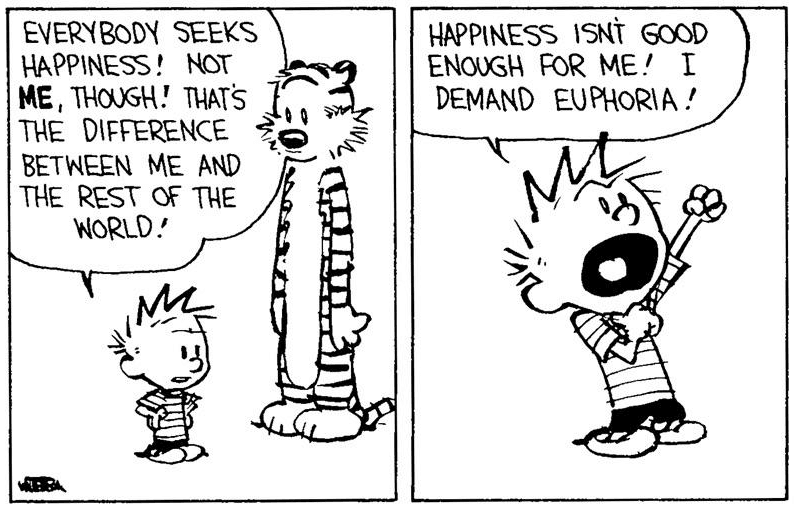
OBLIVION, n. The state or condition in which the wicked cease from struggling and the dreary are at rest. Fame’s eternal dumping ground. Cold storage for high hopes. A place where ambitious authors meet their works without pride and their betters without envy. A dormitory without an alarm clock.
Ambrose Bierce (1842-1914?) American writer and journalist
“Oblivion,” The Devil’s Dictionary (1911)
(Source)
Originally published in the "Cynic's Word Book" column in the New York American (1904-09-27), and the "Cynic's Dictionary" column in the San Francisco Examiner (1903-10-28).
The consistent persecution of every higher form of intellectual activity by the new mass leaders springs from more than their natural resentment against everything they cannot understand. Total domination does not allow for free initiative in any field of life, for any activity that is not entirely predictable. Totalitarianism in power invariably replaces all first-rate talents, regardless of their sympathies, with those crackpots and fools whose lack of intelligence and creativity is still the best guarantee of their loyalty.
Hannah Arendt (1906-1975) German-American philosopher, political theorist
The Origins of Totalitarianism, Part 3, ch. 10 “A Classless Soceity” (1958 ed.)
(Source)
“And how are you?” said Winnie-the-Pooh.
Eeyore shook his head from side to side.
“Not very how,” he said. “I don’t seem to have felt at all how for a long time.”A. A. Milne (1882-1956) English poet and playwright [Alan Alexander Milne]
Winnie-the-Pooh, ch. 4 “Eeyore Loses a Tail” (1926)
(Source)
In the democracies of the world, the passion for freedom of speech and of thought is always accentuated when there is an effort anywhere to keep ideas away from people and to prevent them from making their own decisions. One of the best ways of enslaving a people is to keep them from education and thus make it impossible for them to understand what is going on in the world as a whole. […] The second way of enslaving a people is to suppress the sources of information, not only by burning books, but by controlling all the other ways in which ideas are transmitted.
Eleanor Roosevelt (1884–1962) First Lady of the US (1933–1945), politician, diplomat, activist
Column (1943-05-11), “My Day”
(Source)
CREON:Now stay here, if you must,
This one day. You can hardly in one day accomplish
What I am afraid of.[ΚΡΈΩΝ: νῦν δ᾽, εἰ μένειν δεῖ, μίμν᾽ ἐφ᾽ ἡμέραν μίαν:
οὐ γάρ τι δράσεις δεινὸν ὧν φόβος μ᾽ ἔχει. ]Euripides (485?-406? BC) Greek tragic dramatist
Medea [Μήδεια], l. 355ff (431 BC)[tr. Vellacott (1963)]
(Source)
Creon lets Medea stay one more day before her exile begins, giving us the most ironic line in the play. Some scholars or translators omit or bracket these lines, since Creon has already said he will let her stay.
(Source (Greek)). Other translations:But if thou needs must tarry, tarry here
This single day, for in so short a space
Thou canst not execute the ills I dread.
[tr. Wodhull (1782)]One single day, if so thy needs require,
I will indulge thee; in that little space
Thou wilt not do the horrid deeds I dread.
[tr. Potter (1814)]But now if stay thou must, stay this one day;
Not so thou'lt compass any deed I dread.
[tr. Webster (1868)]So now, if abide thou must, stay this one day only, for in it thou canst not do any of the fearful deeds I dread.
[tr. Coleridge (1891)]But now if thou must stay, remain here yet one day, for thou wilt not do any horrid deed of which I have dread.
[tr. Buckley (1892)]Now, if remain thou must, remain one day --
Too short for thee to do the deeds I dread.
[tr. Way (Loeb) (1894)]So linger on,
If thou needs must, till the next risen sun;
No further. . . . In one day there scarce can be
Those perils wrought whose dread yet haunteth me.
[tr. Murray (1906)]But now, if you must stay, stay for this day alone.
For in it you can do none of the things I fear.
[tr. Warner (1944)]So remain, if you must, but only for one day.
You'll not do any of the terrible things I fear.
[tr. Podlecki (1989)]Now stay, if stay you must, for one more day. You will not do the mischief I fear by then.
[tr. Kovacs (1994)]Stay, if you need to but just one more day.
In any case, what harm could you do me in such a short time?
[tr. Theodoridis (2004)]Now, if stay you must, stay for one day.
you can not do any dreadful deed of which I am in terror.
[tr. Luschnig (2007)]So, if you must remain, stay one more day.
In that time you can’t do the harm I fear.
[tr. Johnston (2008), l. 421ff]But now, if you must stay, stay this one day;
you won't do any of the ghastly things I fear.
[tr. Ewans (2022)]So now, if you must remain, stay this one day only; for you will not do anything terrible [deinon] of which I am afraid.
[tr. Coleridge / Ceragioli / Nagy / Hour25]
Have the same concern for everyone. Do not be proud, but accept humble duties. Do not think of yourselves as wise. If someone has done you wrong, do not repay him with a wrong. Try to do what everyone considers to be good. Do everything possible on your part to live in peace with everybody.
[τὸ αὐτὸ εἰς ἀλλήλους φρονοῦντες, μὴ τὰ ὑψηλὰ φρονοῦντες ἀλλὰ τοῖς ταπεινοῖς συναπαγόμενοι. μὴ γίνεσθε φρόνιμοι παρ᾽ ἑαυτοῖς. μηδενὶ κακὸν ἀντὶ κακοῦ ἀποδιδόντες, προνοούμενοι καλὰ ἐνώπιον πάντων ἀνθρώπων· εἰ δυνατὸν τὸ ἐξ ὑμῶν, μετὰ πάντων ἀνθρώπων εἰρηνεύοντες·]
The Bible (The New Testament) (AD 1st - 2nd C) Christian sacred scripture
Romans 12: 16-18 [GNT (1992 ed.)]
(Source)
(Source (Greek)). Alternate translations:Be of the same mind one toward another. Mind not high things, but condescend to men of low estate. Be not wise in your own conceits. Recompense to no man evil for evil. Provide things honest in the sight of all men. If it be possible, as much as lieth in you, live peaceably with all men.
[KJV (1611)]Treat everyone with equal kindness; never be condescending but make real friends with the poor. Do not allow yourself to become self-satisfied. Never repay evil with evil but let everyone see that you are interested only in the highest ideals. Do all you can to live at peace with everyone.
[JB (1966)]Give the same consideration to all others alike. Pay no regard to social standing, but meet humble people on their own terms. Do not congratulate yourself on your own wisdom. Never pay back evil with evil, but bear in mind the ideals that all regard with respect. As much as possible, and to the utmost of your ability, be at peace with everyone.
[NJB (1985)]Consider everyone as equal, and don’t think that you’re better than anyone else. Instead, associate with people who have no status. Don’t think that you’re so smart. Don’t pay back anyone for their evil actions with evil actions, but show respect for what everyone else believes is good. If possible, to the best of your ability, live at peace with all people.
[CEB (2011)]Live in harmony with one another; do not be arrogant, but associate with the lowly; do not claim to be wiser than you are. Do not repay anyone evil for evil, but take thought for what is noble in the sight of all. If it is possible, so far as it depends on you, live peaceably with all.
[NRSV (2021 ed.)]
Somehow, things just didn’t work out the way the books on administration and on leadership said they should, and I early became aware that I could never qualify as a leader, if it were really necessary that I possess the twenty or so qualities most books or articles on leadership claimed to be necessary. So far, I have found no one in the Navy or in industry who possesses more than a few of these qualities, and so I have regretfully come to the conclusion that the only person who ever possessed all of them died some 1900 years ago.
Hyman Rickover (1900-1986) Polish-American naval engineer, admiral [b. Chaim Gdala Rykower]
Speech (1954-03-16), “Administering a Large Military Development Project,” US Naval Postgraduate School, Monterey, California
(Source)
For if once a man indulges himself in murder, very soon he comes to think little of robbing; and from robbing he comes next to drinking and Sabbath-breaking, and from that to incivility and procrastination. Once begin upon this downward path, you never know where to stop. Many a man has dated his ruin from some murder or other that perhaps he thought little of the time.
Thomas De Quincey (1785-1859) English writer, essayist, literary critic
Essay (1839-11), “Second Paper on Murder Considered as One of the Fine Arts,” Blackwood’s Edinburgh Magazine, Vol. 46, No. 289
(Source)

We Americans are not usually thought to be a submissive people, but of course we are. Why else would we allow our country to be destroyed? Why else would we be rewarding its destroyers? Why else would we all — by proxies we have given to greedy corporations and corrupt politicians — be participating in its destruction? Most of us are still too sane to piss in our own cistern, but we allow others to do so and we reward them for it. We reward them so well, in fact, that those who piss in our cistern are wealthier than the rest of us.
Wendell Berry (b. 1934) American farmer, educator, poet, conservationist
Essay (1970-01-01), “Compromise, Hell!” Orion Magazine
(Source)
Though a man has all other perfections, and wants discretion, he will be of no great consequence in the world; but if he has this single talent in perfection, and but a common share of others, he may do what he pleases in his station of life.
Joseph Addison (1672-1719) English essayist, poet, statesman
Essay (1711-11-17), The Spectator, No. 225
(Source)
KING: Madness in great ones must not unwatched go.
William Shakespeare (1564-1616) English dramatist and poet
Hamlet, Act 3, sc. 1, l. 203ff (3.1.203) (c. 1600)
(Source)
One dreams of the goddess Fame and winds up with the bitch Publicity.
Peter De Vries (1910-1993) American editor, novelist, satirist
The Mackerel Plaza, ch. 12 (1958)
(Source)
Spoken by the narrator, Rev. Andrew Mackerel, quoting his deceased wife, Ida May.

You take a bunch of people who don’t seem any different from you and me, but when you add them all together you get this sort of huge raving maniac with national borders and an anthem.
Terry Pratchett (1948-2015) English author
Discworld No. 31, Monstrous Regiment [Vimes] (2003)
(Source)
Nobody deserves to be praised for goodness unless he is strong enough to be bad, for any other goodness is usually merely inertia or lack of will-power.
[Nul ne mérite d’être loué de bonté, s’il n’a pas la force d’être méchant: toute autre bonté n’est le plus souvent qu’une paresse ou une impuissance de la volonté.]
François VI, duc de La Rochefoucauld (1613-1680) French epigrammatist, memoirist, noble
Réflexions ou sentences et maximes morales [Reflections; or Sentences and Moral Maxims], ¶237 (1665-1678) [tr. Tancock (1959)]
(Source)
This passage was in the 1st (1665) edition, but as:Nul ne mérite d’être loué de bonté, s’il n’a la force et la hardiesse d’être méchant: toute autre bonté n’est le plus souvent qu’une paresse ou une impuissance de la mauvaise volonté.
[... if he lacks the strength and boldness to be wicked ... impotence of ill will.]
In the manuscript, the last section read:... toute autre bonté n’est en effet qu’une privation du vice, ou plutôt la timidité du vice, et son endormissement.
[... all other goodness is in fact only a deprivation of vice, or rather the timidity of vice, and its slumber.]
Compare to ¶¶ 387, 479, and 481. See also ¶169.
(Source (French)). Other translations:No Man deserves to be commended for his Vertue, who hath it not in his Power to be Wicked; all other Goodness is Generally no better than Sloth, or an Impotence in the Will.
[tr. Stanhope (1694), ¶238]None deserve the name of good, who have not spirit enough, at least, to be bad: goodness being for the most part but indolence or impotence.
[pub. Donaldson (1783), ¶197; ed. Lepoittevin-Lacroix (1797), ¶223]None deserve the character of being good, who have not spirit enough to be bad.
[ed. Carvill (1835), ¶174]No man deservers to be praised for his goodness unless he has strength of character to be wicked. All other goodness is generally nothing but indolence or impotence of will.
[ed. Gowens (1851), ¶248]No one should be praised for his goodness if he has not strength enough to be wicked. All other goodness is but too often an idleness or powerlessness of will.
[tr. Bund/Friswell (1871), ¶237]No one should be praised for benevolence if he is too weak to be wicked; most benevolence is but laziness or lack of willpower.
[tr. Heard (1917), ¶244]Goodness deserves credit only in those who are strong enough to do evil. In other cases it is usually laziness or want of character.
[tr. Stevens (1939), ¶237]No man should be praised for his goodness if he lacks the strength to be bad: in such cases goodness is usually only the effect of indolence or impotence of will.
[tr. FitzGibbon (1957), ¶237]No one deserves praise for being good who lacks the power to do evil. Goodness, for the most part, is merely laziness or absence of will.
[tr. Kronenberger (1959), ¶237]Nobody deserves to be praised for his goodness if he has not the power to be evil. All other goodness is most often but indolence or weakness of will.
[tr. Whichello (2016) ¶237]
The greater part of the admirers of solitude, as of all other classes of mankind, have no higher or remoter view, than the present gratification of their passions. Of these, some, haughty and impetuous, fly from society only because they cannot bear to repay to others the regard which themselves exact; and think no state of life eligible, but that which places them out of the reach of censure or control, and affords them opportunities of living in a perpetual compliance with their own inclinations, without the necessity of regulating their actions by any other man’s convenience or opinion.
There are others, of minds more delicate and tender, easily offended by every deviation from rectitude, soon disgusted by ignorance or impertinence, and always expecting from the conversation of mankind more elegance, purity and truth, than the mingled mass of life will easily afford. Such men are in haste to retire from grossness, falsehood and brutality; and hope to find in private habitations at least a negative felicity, an exemption from the shocks and perturbations with which publick scenes are continually distressing them.
To neither of these votaries will solitude afford that content, which she has been taught so lavishly to promise. The man of arrogance will quickly discover, that by escaping from his opponents he has lost his flatterers, that greatness is nothing where it is not seen, and power nothing where it cannot be felt: and he, whose faculties are employed in too close an observation of failings and defects, will find his condition very little mended by transferring his attention from others to himself: he will probably soon come back in quest of new objects, and be glad to keep his captiousness employed on any character rather than his own.Samuel Johnson (1709-1784) English writer, lexicographer, critic
Essay (1754-01-19), The Adventurer, No. 126
(Source)
A devout clergyman sought every opportunity to impress upon the mind of his son the fact, that God takes care of all his creatures; that the falling sparrow attracts his attention, and that his loving kindness is over all his works.
Happening, one day, to see a crane wading in quest of food, the good man pointed out to his son the perfect adaptation of the crane to get his living in that manner. “See,” said he, “how his legs are formed for wading! What a long slender bill he has! Observe how nicely he folds his feet when putting them in or drawing them out of the water! He does not cause the slightest ripple. He is thus enabled to approach the fish without giving them any notice of his arrival.”
“My son,” said he, “it is impossible to look at that bird without recognizing the design, as well as the goodness of God, in thus providing the means of subsistence.”
“Yes,” replied the boy, “I think I see the goodness of God, at least so far as the crane is concerned; but after all, father, don’t you think the arrangement a little tough on the fish?”
When I think of antiquity, the detail that frightens me is that those hundreds of millions of slaves on whose backs civilization rested generation after generation have left behind them no record whatever. We do not even know their names. In the whole of Greek and Roman history, how many slaves’ names are known to you? I can think of two, or possibly three. One is Spartacus and the other is Epictetus. Also, in the Roman room at the British Museum there is a glass jar with the maker’s name inscribed on the bottom, “Felix fecit.” I have a vivid mental picture of poor Felix (a Gaul with red hair and a metal collar round his neck), but in fact he may not have been a slave; so there are only two slaves whose names I definitely know, and probably few people can remember more. The rest have gone down into utter silence.
George Orwell (1903-1950) English journalist, essayist, writer [pseud. of Eric Arthur Blair]
Essay (1942-08), “Looking Back on the Spanish War, ch. 4, Such, Such Were the Joys, essay 8 (1953)
(Source)
“You appeared to be surprised when I told you, on our first meeting, that you had come from Afghanistan.”
“You were told, no doubt.”
“Nothing of the sort. I knew you came from Afghanistan. From long habit the train of thoughts ran so swiftly through my mind that I arrived at the conclusion without being conscious of intermediate steps. There were such steps, however. The train of reasoning ran, ‘Here is a gentleman of a medical type, but with the air of a military man. Clearly an army doctor, then. He has just come from the tropics, for his face is dark, and that is not the natural tint of his skin, for his wrists are fair. He has undergone hardship and sickness, as his haggard face says clearly. His left arm has been injured. He holds it in a stiff and unnatural manner. Where in the tropics could an English army doctor have seen much hardship and got his arm wounded? Clearly in Afghanistan.’ The whole train of thought did not occupy a second. I then remarked that you came from Afghanistan, and you were astonished.”Arthur Conan Doyle (1859-1930) British writer and physician
Story (1886-04), “A Study in Scarlet,” Part 1, ch. 2, Beeton’s Christmas Annual, Vol. 28 (1887-11-21)
(Source)
Holmes and Watson. Published in novel form 1888-07.
In the Sherlock TV episode 01x01 "A Study in Pink" (w. Steven Moffat) (2010-07-25), this explanation is reworked:HOLMES: When I met you for the first time yesterday, I said "Afghanistan or Iraq?" You looked surprised.
WATSON: How did you know?
HOLMES: I didn't know, I saw. Your haircut, the way you hold yourself, says military. But your conversation as you entered the room said trained at Bart's, so army doctor. Obvious. Your face is tanned, but no tan above the wrists: you've been abroad but not sunbathing. The limp's really bad when you walk, but you don't ask for a chair when you stand, like you've forgotten about it, so it's at least partly psychosomatic. That says the original circumstances of the injury were probably traumatic: wounded in action, then. Wounded in action, suntan: Afghanistan or Iraq.
Some speculators have a short way of accounting for the Pagan religion: mere quackery, priestcraft, and dupery, say they; no sane man ever did believe it, — merely contrived to persuade other men, not worthy of the name of sane, to believe it! It will be often our duty to protest against this sort of hypothesis about men’s doings and history; and I here, on the very threshold, protest against it in reference to Paganism, and to all other isms by which man has ever for a length of time striven to walk in this world. They have all had a truth in them, or men would not have taken them up. Quackery and dupery do abound; in religions, above all in the more advanced decaying stages of religions, they have fearfully abounded: but quackery was never the originating influence in such things; it was not the health and life of such things, but their disease, the sure precursor of their being about to die!
Thomas Carlyle (1795-1881) Scottish essayist and historian
Lecture (1840-05-05), “The Hero as Divinity,” Home House, Portman Square, London
(Source)
The lecture notes were collected by Carlyle into On Heroes, Hero-Worship, & the Heroic in History, Lecture 1, (1841).
Tew learn yure offspring to steal, make them beg hard for all that yu giv them.
[To learn your offspring to steal, make them beg hard for all that you give them.]
Josh Billings (1818-1885) American humorist, aphorist [pseud. of Henry Wheeler Shaw]
Josh Billings’ Farmer’s Allminax, 1870-06 “Words Tew Housewifes” (1870 ed.)
(Source)
The life given us by nature is short; but the memory of a well-spent life is eternal.
[Brevis a natura nobis vita data est; at memoria bene reditae vitae sepiterna.]
Marcus Tullius Cicero (106-43 BC) Roman orator, statesman, philosopher
Philippics [Philippicae; Antonian Orations], No. 14, ch. 12 / sec. 32 (14.12/14.32) (43-04-21 BC) [ed. Hoyt (1896)]
(Source)
Asking the Senate to honor the Fourth and Martian legions for their victory over Antony at the Battle of Forum Gallorum.
(Source (Latin)). Other translations:Short is the life which nature has given us: but the memory of a life nobly laid down is eternal.
[ed. Harbottle (1897)]A brief life has been allotted to us by nature; but the memory of a well-spent life is imperishable.
[tr. Yonge (1903)]Brief is the life given us by nature; but the memory of life nobly resigned is everlasting.
[tr. Ker (Loeb) (1926)]
The habit of viewing life as a whole is an essential part both of wisdom and of true morality, and is one of the things which ought to be encouraged in education. Consistent purpose is not enough to make life happy, but it is an almost indispensable condition of a happy life. And consistent purpose embodies itself mainly in work.
Bertrand Russell (1872-1970) English mathematician and philosopher
Conquest of Happiness, Part 2, ch. 14 “Work” (1930)
(Source)
A cat may looke on a King.
John Heywood (1497?-1580?) English playwright and epigrammist
Proverbs, Part 2, ch. 5 (1546)
(Source)
Revised spelling from the 1874 edition. Original editions had it, "A cat maie looke on a kyng." This is the earliest text found with this recorded as an English proverb.
Thomas Fuller included the phrase ("A Cat may look upon a King") in his Gnomologia, # 35 (1732).
For more information on this phrase and its history, see: meaning and origin of the phrase ‘a cat may look at a king’ – word histories.

Men who have excessive faith in their theories or ideas are not only ill prepared for making discoveries; they also make very poor observations. Of necessity, they observe with a preconceived idea, and when they devise an experiment, they can see, in its results, only a confirmation of their theory. In this way they distort observation and often neglect very important facts because they do not further their aim.
[Les hommes qui ont une foi excessive dans leurs théories ou dans leurs idées sont non-seulement mal disposés pour faire des découvertes, mais ils font aussi de très-mauvaises observations. Ils observent nécessairement avec une idée préconçue, et quand ils ont institué une expérience, ils ne veulent voir dans ses résultats qu’une confirmation de leur théorie. Ils défigurent ainsi l’observation et négligent souvent des faits très-importants, parce qu’ils ne concourent pas à leur but.]
Claude Bernard (1813-1878) French physiologist, scientist
An Introduction to the Study of Experimental Medicine [Introduction à l’Étude de la Médecine Expérimentale], ch. 3 (1865) [tr. Greene (1957)]
(Source)
CALVIN: As you can see, I have memorized this utterly useless piece of information long enough to pass a test question. I now intend to forget it forever. You’ve taught me nothing except how to cynically manipulate the system. Congratulations.
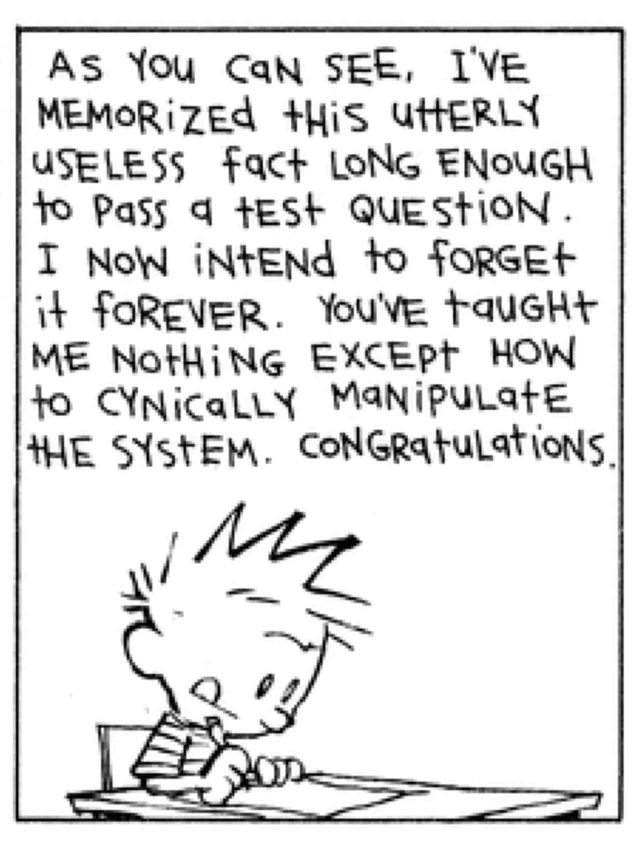
IMAGINATION, n. A warehouse of facts, with poet and liar in joint ownership.
Ambrose Bierce (1842-1914?) American writer and journalist
“Imagination,” The Cynic’s Word Book (1906)
(Source)
Included in The Devil's Dictionary (1911). Originally published in the "Devil's Dictionary" column in the San Francisco Wasp (1885-08-29).
The end of rebellion is liberation, while the end of revolution is the foundation of freedom.
Hannah Arendt (1906-1975) German-American philosopher, political theorist
On Revolution, ch. 4, sec. 1 (1963)
(Source)
“Hallo, Rabbit,” he said, “is that you?”
“Let’s pretend it isn’t,” said Rabbit, “and see what happens.”A. A. Milne (1882-1956) English poet and playwright [Alan Alexander Milne]
Winnie-the-Pooh, ch. 8 “Christopher Robin Leads an Expotition” (1926)
(Source)

Long ago, I made up my mind that, when things were said involving only me, I would pay no attention to them, except when valid criticism was carried by which I could profit.
Eleanor Roosevelt (1884–1962) First Lady of the US (1933–1945), politician, diplomat, activist
Column (1942-01-14), “My Day”
(Source)
MEDEA: Oh, what an evil power love has in people’s lives!
CREON: That would depend on circumstances, I imagine.
[ΜΉΔΕΙΑ: Φεῦ φεῦ, βροτοῖς ἔρωτες ὡς κακὸν μέγα.
ΚΡΈΩΝ: ὅπως ἄν, οἶμαι, καὶ παραστῶσιν τύχαι.]
Euripides (485?-406? BC) Greek tragic dramatist
Medea [Μήδεια], l. 330ff (431 BC) [tr. Vellacott (1963)]
(Source)
After Creon has spoken of how both love of his country and his children requires him to banish Medea. She has already faced Jason's love gone wrong as well, and her reaction to that will give end up in bad circumstances to all involved.
(Source (Greek)). Other translations:MEDEA: To Mortals what a dreadful scourge is love!
CREON: As Fortune dictates, Love becomes, I ween,
Either a curse or blessing.
[tr. Wodhull (1782)]MEDEA: Alas, what fatal ills love works to man!
CREON: That is, I ween, as fortune guides th' event.
[tr. Potter (1814)]MEDEA: Ah me! How great an ill to man is love!
CREON: That is, I doubt, as fortune waits on it.
[tr. Webster (1868)]MEDEA: Ah me! ah me! to mortal man how dread a scourge is love!
CREON: That, I deem, is according to the turn our fortunes take.
[tr. Coleridge (1891)]MEDEA: Alas! alas! how great an ill is love to man!
CREON: That is, I think, as fortune also shall attend it.
[tr. Buckley (1892)]MEDEA: Alas! to mortals what a curse is love!
KREON: Blessing or curse, I trow, as fortune falls.
[tr. Way (Loeb) (1894)]MEDEA: O Loves of man, what curse is on your wings!
CREON: Blessing or curse, 'tis as their chances flow.
[tr. Murray (1906)]MEDEA: Oh what an evil to men is passionate love!
CREON: That would depend on the luck that goes along with it.
[tr. Warner (1944)]MEDEA: Ah! What an evil thing men’s loves are!
CREON: It all depends, I suppose, on how things turn out.
[tr. Podlecki (1989)]MEDEA: Oh, what a bane is love to mortals.
CREON: I fancy that depends on the circumstances.
[tr. Kovacs (1994)]MEDEA: Ah, the loves of mortal men! What a boundless source of woe!<
CREON: That would depend, I imagine, on the circumstances of each case.
[tr. Davie (1996)]MEDEA: Oh! What a dreadful thing love is!
CREON: It depends ...
[tr. Theodoridis (2004)]MEDEA: Feu, feu [Aah, aah] mortal affections, how great an affliction they are!
CREON: That, I think, depends on the circumstances.
[tr. Luschnig (2007)]MEDEA:Alas,
love’s a miserable thing for mortal men.
CREON: I think events determine if that’s true.
[tr. Johnston (2008)]MEDEA: Oh, how great an evil love is to mankind.
CREON: No, I am sure that depends on the circumstances.
[tr. Ewans (2022)]MEDEA: Ah me! Ah me! To mortals how great an evil [kakon] is love!
CREON: That, I suppose, is according to the turn our fortunes take.
[tr. Coleridge / Ceragioli / Nagy / Hour25]
Bless those who persecute you; bless and do not curse them.
[εὐλογεῖτε τοὺς διώκοντας [ὑμᾶς], εὐλογεῖτε καὶ μὴ καταρᾶσθε.]
The Bible (The New Testament) (AD 1st - 2nd C) Christian sacred scripture
Romans 12: 14 [NRSV (2021 ed.)]
(Source)
(Source (Greek)). Alternate translations:Bless them which persecute you: bless, and curse not.
[KJV (1611)]Bless those who persecute you: never curse them, bless them.
[JB (1966)]Bless your persecutors; never curse them, bless them.
[NJB (1985)]Ask God to bless those who persecute you -- yes, ask him to bless, not to curse.
[GNT (1992 ed.)]Bless people who harass you -- bless and don’t curse them.
[CEB (2011)]
A free nation may have a deliverer; a nation enslaved can have only another oppressor. For whoever is able to dethrone an absolute prince has a power sufficient to become absolute himself.
[Une nation libre peut avoir un libérateur; une nation subjuguée ne peut avoir qu’un autre oppresseur. Car tout homme qui a assez de force pour chasser celui qui est déja le maître absolu dans un état, en a assez pour le devenir lui-même.]
Charles-Lewis de Secondat, Baron de Montesquieu (1689-1755) French political philosopher
Spirit of Laws [The Spirit of the Laws; De l’esprit des lois], Book 19, ch. 27 (1748) [tr. Nugent (1750)]
(Source)
(Source (French)). Other translations:A free nation can have a liberator; a subjugated nation can only have another oppressor. For any man who has enough strength to drive out the one who is already the absolute master in a state has enough to become one himself.
[tr. Cohler/Miller/Stone (1989)]A free nation can have a liberator; a subjugated nation can only have another oppressor. For any man who has enough force to drive out him who is already the absolute master in a state has enough to become the master himself.
[tr. Stewart (2018)]
We know that war depresses public dialogue and debate, enlarges executive power, diminishes citizens’ rights, encourages governmental secrecy and deception, and deforms the outlines of human decency. Thus a government making war for the sake of peace, freedom, and human dignity — as it will never cease to declare — will curtail the rights of prisoners, resort to torture, deny its errors, exaggerate its virtues, demonize the enemy, and (as is inevitable in modern war) kill many innocent people, including, of course, many children.
Wendell Berry (b. 1934) American farmer, educator, poet, conservationist
Speech (2005-05-14), Commencement, Lindsey Wilson College, Columbia, Kentucky
(Source)
This was either excerpted from, or included in, his undated essay "Letter to Daniel Kemmis," collected in The Way of Ignorance and Other Essays, Part 2 (2005).
There are many more shining qualities in the mind of man, but there is none so useful as discretion; it is this, indeed, which gives a value to all the rest, which sets them at work in their proper times and places, and turns them to the advantage of the person who is possessed of them. Without it, learning is pedantry, and wit impertinence; virtue itself looks like weakness; the best parts only qualify a man to be more sprightly in errors, and active to his own prejudice.
Joseph Addison (1672-1719) English essayist, poet, statesman
Essay (1711-11-17), The Spectator, No. 225
(Source)
Do you have a kinder, more adaptable friend in the food world than soup? Who soothes you when you are ill? Who refuses to leave you when you are impoverished and stretches its resources to give a hearty sustenance and cheer? Who warms you in the winter and cools you in the summer? Yet who also is capable of doing honor to your richest table and impressing your most demanding guests? […]
Soup does its loyal best, no matter what undignified conditions are imposed upon it. But soup knows the difference. Soup is sensitive. You don’t catch steak hanging around when you’re poor and sick, do you? Soup deserves to be treated well.Judith Martin (b. 1938) American author, journalist, etiquette expert [a.k.a. Miss Manners]
Miss Manners’ Guide to Excruciatingly Correct Behavior, Part 3 “Basic Civilization,” “Table Manners” (1983)
(Source)
Included in the 2005 edition.

OSRIC: A hit, a very palpable hit.
William Shakespeare (1564-1616) English dramatist and poet
Hamlet, Act 5, sc. 2, l. 304 (5.2.304) (c. 1600)
(Source)
I don’t know what God is.
I don’t know what death is.But I believe they have between them
some fervent and necessary arrangement.

It is generally pride rather than lack of intelligence which prompts men to dispute so obstinately generally accepted opinions; they find all the front seats taken on the popular side, and do not wish to sit behind.
[C’est plus souvent par orgueil que par défaut de lumières qu’on s’oppose avec tant d’opiniâtreté aux opinions les plus suivies: on trouve les premières places prises dans le bon parti, et on ne veut point des dernières.]
François VI, duc de La Rochefoucauld (1613-1680) French epigrammatist, memoirist, noble
Réflexions ou sentences et maximes morales [Reflections; or Sentences and Moral Maxims], ¶234 (1665-1678) [tr. Stevens (1939)]
(Source)
This passage first appeared in the 5th (1678) edition. Earlier English translations do not include it.
See also Gracián (1647).
In the manuscript version, "C'est ... d’opiniâtreté" is given as: "C’est par orgueil qu’on s’oppose avec tant d’opiniâtreté … [It is out of pride that they oppose with such stubbornness ...]," removing the comment about lack of understanding / intelligence.
(Source (French)). Other translations:It is more often from pride than from want of intelligence that people oppose with so much obstinacy; the most received opinions. They find the best places taken up in the good party, and do not like to put up with inferior ones.
[ed. Gowens (1851), ¶380]It is more often from pride than from ignorance that we are so obstinately opposed to current opinions; we find the first places taken, and we do not want to be the last.
[tr. Bund/Friswell (1871), ¶234]It is more often our pride than our limited understanding which makes us fly so violently in the face of public opinion. We find the best seats on the correct side already occupied, and we do not care to sit in the rear.
[tr. Heard (1917), ¶377]Pride, rather than a lack of perspicacity, is what usually drives us to oppose with such obstinacy opinions that are generally accepted as correct: though theirs may be the better party, the front benches are already filled, and we certainly do not want to take a back seat.
[tr. FitzGibbon (1957), ¶234]It is oftener through pride than through lack of understanding that we so militantly object to prevailing opinions; we find the front seats already in other hands, and we do not want rear ones.
[tr. Kronenberger (1959), ¶234]Those who obstinately oppose the most widely-held opinions more often do so because of pride than lack of intelligence. They find the best places in the right set already taken, and they do not want back seats.
[tr. Tancock (1959), ¶234]It is more often from pride than from ignorance that we so stubbornly oppose ourselves to the most current opinions: we find the first seats already taken on the better side, and do not wish to sit down there last.
[tr. Whichello (2016) ¶234]
Carrot often struck people as simple. And he was.
Where people went wrong was thinking that simple meant the same thing as stupid.
To strive with difficulties, and to conquer them, is the highest human felicity; the next is, to strive, and deserve to conquer: but he whose life has passed without a contest, and who can boast neither success nor merit, can survey himself only as a useless filler of existence; and if he is content with his own character, must owe his satisfaction to insensibility.
Samuel Johnson (1709-1784) English writer, lexicographer, critic
Essay (1753-11-27), The Adventurer, No. 111
(Source)
When we observe the lives of those whom an ample inheritance has let loose to their own direction, what do we discover that can excite our envy? Their time seems not to pass with much applause from others, or satisfaction to themselves: many squander their exuberance of fortune in luxury and debauchery, and have no other use of money than to inflame their passions, and riot in a wide range of licentiousness; others, less criminal indeed, but surely not much to be praised, lie down to sleep, and rise up to trifle, are employed every morning in finding expedients to rid themselves of the day, chase pleasure through all the places of publick resort, fly from London to Bath, and from Bath to London, without any other reason for changing place, but that they go in quest of company as idle and as vagrant as themselves, always endeavouring to raise some new desire, that they may have something to pursue, to rekindle some hope which they know will be disappointed, changing one amusement for another which a few months will make equally insipid, or sinking into languor and disease for want of something to actuate their bodies or exhilarate their minds.
Samuel Johnson (1709-1784) English writer, lexicographer, critic
Essay (1753-11-27), The Adventurer, No. 111
(Source)
What would we think of a father, who should give a farm to his children, and before giving them possession should plant upon it thousands of deadly shrubs and vines; should stock it with ferocious beasts, and poisonous reptiles; should take pains to put a few swamps in the neighborhood to breed malaria; should so arrange matters, that the ground would occasionally open and swallow a few of his darlings, and besides all this, should establish a few volcanoes in the immediate vicinity, that might at any moment overwhelm his children with rivers of fire? Suppose that this father neglected to tell his children which of the plants were deadly; that the reptiles were poisonous; failed to say anything about the earthquakes, and kept the volcano business a profound secret; would we pronounce him angel or fiend?
And yet this is exactly what the orthodox God has done.
Age is deformed, youth unkinde,
We scorn their bodies, they our minde.Thomas Bastard (1565–1618) English clergyman, epigrammist
Chrestoleros, Book 7, Epigram 9 “De senectute & juventute” (7.9) (1598)
(Source)

Falling in love is the one illogical adventure, the one thing of which we are tempted to think as supernatural, in our trite and reasonable world. The effect is out of all proportion with the cause. Two persons, neither of them, it may be, very amiable or very beautiful, meet, speak a little, and look a little into each other’s eyes. That has been done a dozen or so of times in the experience of either with no great result. But on this occasion all is different. They fall at once into that state in which another person becomes to us the very gist and centrepoint of God’s creation, and demolishes our laborious theories with a smile; in which our ideas are so bound up with the one master-thought that even the trivial cares of our own person become so many acts of devotion, and the love of life itself is translated into a wish to remain in the same world with so precious and desirable a fellow-creature.
Robert Louis Stevenson (1850-1894) Scottish essayist, novelist, poet
Essay (1877-02), “On Falling in Love,” Cornhill Magazine, Vol. 35
(Source)
Collected as "Virginibus Puerisque, Part 3" in Virginibus Puerisque and Other Papers, ch. 1 (1881).
I believe that it is better even from the point of view of survival to fight and be conquered than to surrender without fighting.
George Orwell (1903-1950) English journalist, essayist, writer [pseud. of Eric Arthur Blair]
Essay (1942-08), “Looking Back on the Spanish War, ch. 6, Such, Such Were the Joys, essay 8 (1953)
(Source)
CALVIN: This whole Santa Claus thing just doesn’t make sense. Why all the secrecy? Why all the mystery? If the guy exists, why doesn’t he ever show himself and prove it? And if he doesn’t exist, what’s the meaning of all this?
HOBBES: I dunno … isn’t this a religious holiday?
CALVIN: Yeah, but actually, I’ve got the same questions about God.
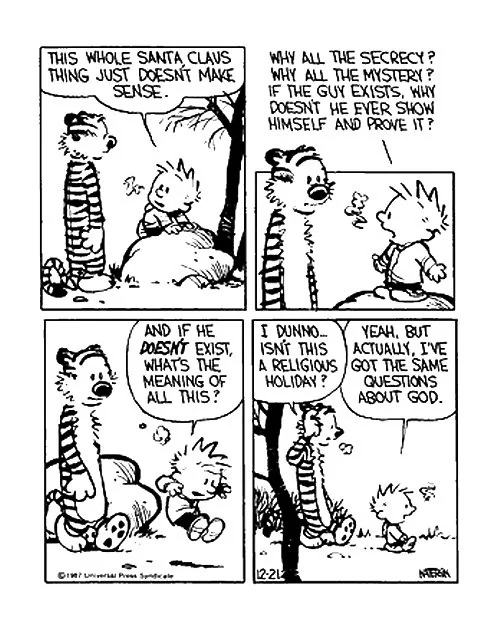
THE DOCTOR: Now drop your weapons, or I’ll kill him with this deadly jelly baby.
LUGO: Kill him, then.
THE DOCTOR: What?
LUGO: Kill him, then.
THE DOCTOR: I don’t take orders from anyone. [Eats jelly baby] Take me to your leader.
Doctor Who (1963-1989) British science fiction television series, original run (BBC)
14×04 “The Face of Evil,” Part 1 (1977-01-01) [w. Chris Boucher]
(Source)
(Source (Video); dialog confirmed)
The sinner sins against himself. The wrong-doer wrongs himself by making himself evil.
[Ὁ ἁμαρτάνων ἑαυτῷ ἁμαρτάνει: ὁ ἀδικῶν ἑαυτὸν ἀδικεῖ, ἑαυτὸν, ἑαυτὸν κακὸν ποιῶν.]
Marcus Aurelius (AD 121-180) Roman emperor (161-180), Stoic philosopher
Meditations [To Himself; Τὰ εἰς ἑαυτόν], Book 9, ch. 4 (9.4) (AD 161-180) [tr. Hutcheson/Chrystal (1902)]
(Source)
(Source (Greek)). Alternate translations:He that sinneth, sinneth unto himself. He that is unjust, hurts himself, in that he makes himself worse than he was before.
[tr. Casaubon (1634)]He that commits a Fault Abroad , is a Trespasser at Home; And he that injures his Neighbour, hurts himself , for to make himself an ill Man is a shrew'd Michief.
[tr. Collier (1701)]He who does wrong, does a wrong to himself. He who is injurious, does evil to himself, by making himself evil.
[tr. Hutcheson/Moor (1742)]He that commits a crime, is guilty of an offence against his own interest, and he that acts unjustly, injures himself: for to make himself a bad man, is an essential injury.
[tr. Graves (1792)]He who does wrong does wrong against himself. He who acts unjustly acts unjustly to himself, because he makes himself bad.
[tr. Long (1862)]He that commits a fault abroad is a trespasser at home; and he that injures his neighbour, hurts himself, for to make himself an evil man is a great mischief.
[tr. Collier/Zimmern (1887)]He who sins, sins against himself; he who does wrong, wrongs himself, making himself evil.
[tr. Rendall (1898)]He that does wrong, does wrong to himself. The unjust man is unjust to himself, for he makes himself bad.
[tr. Haines (Loeb) (1916)]Whosoever does wrong, wrongs himself; whosoever does injustice, does it to himself, making himself evil.
[tr. Farquharson (1944)]The sinner sins against himself; the wrongdoer wrongs himself, becoming the worse by his own action.
[tr. Staniforth (1964)]Whoever does wrong, wrongs himself; whosever acts unjustly, acts unjustly toward himself, because he makes himself bad.
[tr. Hard (1997 ed., 2011 ed.)]To do harm is to do yourself harm. To do an injustice is to do yourself an injustice -- it degrades you.
[tr. Hays (2003)]The sinner sins against himself: the wrongdoer wrongs himself, by making himself morally bad.
[tr. Hammond (2006)]He who acts wrongly harms himself. If a person commits an injustice, he acts badly toward himself, thus making himself bad.
[tr. Needleman/Piazza (2008)]
Parents of young children should realize that few people, and maybe no one, will find their children as enchanting as they do.
Barbara Walters (1929-2022) American broadcast journalist
How to Talk with Practically Anybody About Practically Anything, ch. 4 (1970)
(Source)

Without self-respect genuine happiness is scarcely possible. And the man who is ashamed of his work can hardly achieve self-respect.
Bertrand Russell (1872-1970) English mathematician and philosopher
Conquest of Happiness, Part 2, ch. 14 “Work” (1930)
(Source)
A Book that is shut, is but a Block.
Thomas Fuller (1654-1734) English physician, preacher, aphorist, writer
Gnomologia: Adages and Proverbs (compiler), # 23 (1732)
(Source)
Our politicians have truly made a pact with the Devil. One watches them spend more and more of their time and energy grubbing, coaxing, flattering, and whoring for money. Terrified of being cut off from the mother’s milk, they stand like morons in the rising sea of contempt that threatens to drown the whole system. Then they wonder why no one likes them anymore.
Molly Ivins (1944-2007) American writer, political columnist [Mary Tyler Ivins]
Essay (1998-01), “Introduction,” You Got to Dance with Them What Brung You (1998)
(Source)

To sound off with a cheerful “give me liberty or give me death” sort of argument in the face of the unprecedented and inconceivable potential of destruction in nuclear warfare is not even hollow; it is downright ridiculous. Indeed it seems so obvious that it is a very different thing to risk one’s own life for the life and freedom of one’s country and one’s posterity from risking the very existence of the human species for the same purpose that it is difficult not to suspect the defenders of the “better dead than red” or “better death than slavery” slogans of bad faith.
Which of course is not to say the reverse, “better red than dead,” has any more to recommend itself; when an old truth ceases to be applicable, it does not become any truer by being stood on its head.
As a matter of fact, to the extent that the discussion of the war question today is conducted in these terms, it is easy to detect a mental reservation on both sides. Those who say “better dead than red” actually think: The losses may not be as great as some anticipate, our civilization will survive; while those who say “better red than dead” actually think: Slavery will not be so bad, man will not change his nature, freedom will not vanish from the earth forever. In other words, the bad faith of the discussants lies in that both dodge the preposterous alternative they themselves have proposed; they are not serious.Hannah Arendt (1906-1975) German-American philosopher, political theorist
On Revolution, Introduction (1963)
(Source)
Owl was telling Kanga an Interesting Anecdote full of long words like Encyclopædia and Rhododendron to which Kanga wasn’t listening.
A. A. Milne (1882-1956) English poet and playwright [Alan Alexander Milne]
Winnie-the-Pooh, ch. 8 “Christopher Robin Leads an Expotition” (1926)
(Source)
I do not know Mr. Willkie, but the headline in one of the metropolitan papers yesterday said: “Willkie Aims At Unity, Defense and Recovery.” I’m discouraged. In Heaven’s name, will anyone aim at anything else?
Sometimes I wonder if we shall ever grow up in our politics and say definite things which mean something, or whether we shall always go on using generalities to which everyone can subscribe, and which mean very little.Eleanor Roosevelt (1884–1962) First Lady of the US (1933–1945), politician, diplomat, activist
Column (1940-07-01), “My Day”
(Source)
CREON: A woman of hot temper — and a man the same —
Is a less dangerous enemy than one quiet and clever.[ΚΡΈΩΝ: Γυνὴ γὰρ ὀξύθυμος, ὡς δ᾽ αὔτως ἀνήρ,
ῥᾴων φυλάσσειν ἢ σιωπηλὸς σοφή.]Euripides (485?-406? BC) Greek tragic dramatist
Medea [Μήδεια], l. 319ff (431 BC) [tr. Vellacott (1963)]
(Source)
Expressing his mistrust of how reasonably, if tragically, Medea is presenting herself.
(Source (Greek)). Other translations:For 'gainst those
Of hasty tempers with more ease we guard.
Or men or women, than the silent foe
Who acts with prudence.
[tr. Wodhull (1782)]A woman, or a man, whose fiery spirit
Flames out with anger, puts us on our guard,
More than the prudent calmness that conceals
Its hate in silence.
[tr. Potter (1814)]For a woman passionate, yea and a man,
Is easier warded than a silent plotter.
[tr. Webster (1868)]For cunning woman, and man likewise, is easier to guard against when quick-tempered than when taciturn.
[tr. Coleridge (1891)]For a woman that is quick to anger, and a man likewise, is easier to guard against, than one that is crafty and keeps silence.
[tr. Buckley (1892)]The vehement-hearted woman -- yea, or man --
Is easier watched-for than the silent-cunning.
[tr. Way (Loeb) (1894)]A woman quick of wrath, aye, or a man,
Is easier watching than the cold and still.
[tr. Murray (1906)]A sharp-tempered woman, or, for that matter, a man,
Is easier to deal with than the clever type
Who holds her tongue.
[tr. Warner (1944)]A woman, just like a man, who is quick to wrath
Is easier guarded than one wise and silent.
[tr. Podlecki (1989)]A hot-tempered woman -- and a hot-tempered man likewise -- is easier to guard against than a clever woman who keeps her own counsel.
[tr. Kovacs (1994)]A woman who is hot-tempered, and likewise a man, is easier to guard against than one who is clever and controls her tongue.
[tr. Davie (1996)]You’re too silent now and whilst it is easy to protect oneself from a hot-headed man or woman, it is impossible to do so when the woman is scheming and silent.
[tr. Theodoridis (2004)]For a quick-tempered woman -- the same goes for a man --
is easier to guard against than a silent clever one.
[tr. Luschnig (2007)]Passionate people, women as well as men,
are easier to protect oneself against,
than someone clever who keeps silent.
[tr. Johnston (2008)]It is easier to guard against a hot-headed woman, or a man, than against one who is scheming and silent.
[ed. Taplin (2016)]A woman of sharp temper or indeed a man is easier to guard against than one who's clever and stays silent.
[tr. Ewans (2022)]For a woman with a sharp thūmos, and likewise a man, is easier to guard against than a sophē one who is silent.
[tr. Coleridge / Ceragioli / Nagy / Hour25]
A politician divides mankind into two classes: tools and enemies. That means he knows only one class: enemies.
Friedrich Nietzsche (1844-1900) German philosopher and poet
(Attributed)
(Source)
This is frequently attributed to Nietzsche, without citation -- a clue that it is a paraphrase of a more complex or nuanced passage. I found only one reference online that mentioned a source -- Nietzsche's Human, All Too Human (1880) -- but a search through multiple translations did not uncover this sentiment.
Fortune is always on the side of the largest battalions.
[La fortune est toujours pour les gros bataillons]
Marie de Rabutin-Chantal, Marquise de Sévigné (1626-1696) French aristocrat, woman of letters [Madame de Sévigné, Mme de Sévigné]
Letter (1673-12-22) to Mme. de Grignan [ed. Hoyt and Ward (1896), No. 202]
(Source)
(Source (French), No. 118). Other translations:Fortune generally declares in favor of numerous battalions.
[Source (1811), No. 274]Providence is always on the side of the big battalions.
[Oxford Dict. of Proverbs]
Also attributed to her cousin Roger de Bussy-Rabutin ("God is usually on the side of the big squadrons against the small").
The phrase had become proverbial by at least the early 19th C. Other variants include:
- God sides with the big battalions.
- God sides with whichever side has the biggest battalions.

We have said that the laws were the particular and precise institutions of a legislator, and manners and customs the institutions of a nation in general. Hence it follows that when these manners and customs are to be changed, it ought not to be done by laws; this would have too much the air of tyranny: it would be better to change them by introducing other manners and other customs.
[Nous avons dit que les loix étoient des institutions particulieres & précises du législateur, & les mœurs & les manieres des institutions de la nation en général. De-là il suit que, lorsque l’on veut changer les mœurs & les manieres, il ne faut pas les changer par les loix ; cela paroîtroit trop tyrannique: il vaut mieux les changer par d’autres mœurs & d’autres manieres.]
Charles-Lewis de Secondat, Baron de Montesquieu (1689-1755) French political philosopher
Spirit of Laws [The Spirit of the Laws; De l’esprit des lois], Book 19, ch. 14 (1748) [tr. Nugent (1750)]
(Source)
(Source (French)). Other translations:We have said that the laws were the particular and precise institutions of the legislator and the mores and manners, the instructions of the nation in general. From this it follows that when one wants to change the mores and manners, one must not change them by the law, as this would appear to be too tyrannical; it would be better to change them by other mores and other manners.
[tr. Cohler/Miller/Stone (1989)]We have said that laws were particular and precise institutions of the legislator, and the morals and the manners institutions of the nation as a whole. Whence it follows that when you want to change morals and manners, you should not do it by laws, which would appear too tyrannical; it is better to change them with other morals and manners.
[tr. Stewart (2018)]
Love one another and you will be happy. It’s as simple and difficult as that.
Mignon McLaughlin (1913-1983) American journalist and author
(Misattributed)
Cited by Wikiquote to The Complete Neurotic's Notebook (1980), but not found there, nor in The Neurotics Notebook (1965) or The Second Neurotic's Notebook (1966).
The actual source appears to be Michael Leunig (1945-2024), Australian cartoonist, poet, and artist.

Of course no one is so sensitive as you, but try to remember they think they are.
Mignon McLaughlin (1913-1983) American journalist and author
The Second Neurotic’s Notebook, ch. 4 (1966)
(Source)
But it is just those books which a man possesses, but does not read, which constitute the most suspicious evidence against him. The Spanish Inquisition have deliberated on that point, and have come to a conclusion that places the matter beyond further doubt.
[Mais ce sont précisément les livres qu’un homme ne lit pas qui l’accusent les plus. L’inquisition d’Espagne a jugé ce point, et l’a mis hors de doute.]
Victor Hugo (1802-1885) French writer
Toilers of the Sea [Les Travailleurs de la Mer], Book 1, ch. 4 (1866) [tr. Thomas (1911)]
(Source)
On an inherited book in Latin on the protagonist's bookshelf which, his not knowing Latin, makes folk suspicious. (The book is a 17th Century treatise on rhubarb.)
(Source (French)). Other translations:But it is exactly for those very books that a man does not peruse that he is condemned. The history of the Inquisition has proved this to us.
[tr. Campbell (1887)]But it is just those books which a man does not read which condemn him the most. The Spanish Inquisition passed judgment on this point and placed it beyond a doubt.
[tr. Hapgood (1888)]But it is just those books that a man does not read that provide evidence against him. The Spanish Inquisition considered this point and put the matter beyond doubt.
[tr. Hogarth (2002)]
We make war, we are told, for the love of peace. We subvert our Bill of Rights and impose our will abroad for the sake of freedom and the rule of law. We honor greed and waste with the name of economy. We allow ever greater wealth and power to accumulate in the hands of a privileged few only to provide jobs for working people and charity to the poor. And we sanctify all this as Christian, though the Gospels support none of it by so much as a line or a word.
Wendell Berry (b. 1934) American farmer, educator, poet, conservationist
Speech (2005-05-14), Commencement, Lindsey Wilson College, Columbia, Kentucky
(Source)
This was either excerpted from, or included in, his undated essay "Letter to Daniel Kemmis," collected in The Way of Ignorance and Other Essays, Part 2 (2005).
I have often thought if the minds of men were laid open, we should see but little difference between that of the wise man and that of the fool. There are infinite reveries, numberless extravagances, and a perpetual train of vanities which pass through both. The great difference is, that the first knows how to pick and cull his thoughts for conversation, by suppressing some, and communicating others; whereas the other lets them all indifferently fly out in words.
Joseph Addison (1672-1719) English essayist, poet, statesman
Essay (1711-11-17), The Spectator, No. 225
(Source)
Dishonesty is not the only alternative to honesty. There is also the highly underrated virtue of shutting up.
Judith Martin (b. 1938) American author, journalist, etiquette expert [a.k.a. Miss Manners]
“Miss Manners,” syndicated column (2014-12-19)
(Source)
Collected in Minding Miss Manners: In an Era of Fake Etiquette (2020), though with a slight rephrasing:The only alternative to honesty is not dishonesty. There is also the highly underrated virtue of shutting up.
CHARMIAN: Good madam, keep yourself within yourself.
The man is innocent.CLEOPATRA: Some innocents ’scape not the thunderbolt.
William Shakespeare (1564-1616) English dramatist and poet
Antony and Cleopatra, Act 2, sc. 5, l. 94ff (2.5.94-96) (1607)
(Source)
At bottom, every ideal of style dictates not only how we should say things but what sort of things we may say.
C. S. Lewis (1898-1963) English writer, literary scholar, lay theologian [Clive Staples Lewis]
The Screwtape Letters, Preface (1961 ed.)
(Source)
Administrivia: (2025-12-19) Movement in the Fediverse
Just so there’s a record of it somewhere, I’ve shifted my Fediverse presence to a new Friendica site, https://friendica.world/profile/wistquotes, due to the previous site being brought down at the end of the year. This Fediverse presence is a lot more interactive than what traffic currently comes to wist.info, so I do reposting of the quotes I add and update here. If you’ve been looking for a more convenient way to access WIST, through something like Mastodon or the like — give it a try!
And Sergeant Colon once again knew a secret about bravery. It was arguably a kind of enhanced cowardice — the knowledge that while death may await you if you advance it will be a picnic compared to the certain living hell that awaits should you retreat.
Yet it is certain, likewise, that many of our miseries are merely comparative: we are often made unhappy, not by the presence of any real evil, but by the absence of some fictitious good; of something which is not required by any real want of nature, which has not in itself any power of gratification, and which neither reason nor fancy would have prompted us to wish, did we not see it in the possession of others.
Samuel Johnson (1709-1784) English writer, lexicographer, critic
Essay (1753-11-27), The Adventurer, No. 111
(Source)
Man must learn to rely upon himself. Reading bibles will not protect him from the blasts of winter, but houses, fires, and clothing will. To prevent famine, one plow is worth a million sermons, and even patent medicines will cure more diseases than all the prayers uttered since the beginning of the world.
If abuses are destroyed, man must destroy them. If slaves are freed, man must free them. If new truths are discovered, man must discover them. If the naked are clothed; if the hungry are fed; if justice is done; if labor is rewarded; if superstition is driven from the mind; if the defenceless are protected and if the right finally triumphs, all must be the work of man. The grand victories of the future must be won by man, and by man alone.
Robert Green Ingersoll (1833-1899) American lawyer, freethinker, orator
Lecture (1872-01-29), “The Gods,” Fairbury Hall, Fairbury, Illinois
(Source)
On not waiting for divine intervention to solve social ills.
First given on the 135th birthday of Thomas Paine. Collected in The Gods and Other Lectures (1876).
Let no one delay to study philosophy while he is young, and when he is old let him not become weary of the study; for no man can ever find the time unsuitable or too late to study the health of his soul. And he who asserts either that it is not yet time to philosophize, or that the hour is passed, is like a man who should say that the time is not yet come to be happy, or that it is too late.
[Μήτε νέος τις ὢν μελλέτω φιλοσοφεῖν, μήτε γέρων ὑπάρχων κοπιάτω φιλοσοφῶν: οὔτε γὰρ ἄωρος οὐδείς ἐστιν οὔτε πάρωρος πρὸς τὸ κατὰ ψυχὴν ὑγιαῖνον. ὁ δὲ λέγων ἢ μήπω τοῦ φιλοσοφεῖν ὑπάρχειν ἢ παρεληλυθέναι τὴν ὥραν ὅμοιός ἐστι τῷ λέγοντι πρὸς εὐδαιμονίαν ἢ μήπω παρεῖναι τὴν ὥραν ἢ μηκέτι εἶναι τὴν ὥραν.]
Diogenes Laërtius (fl. 3rd C AD) Greek biographer [Διογένης Λαέρτιος]
Lives and Opinions of Eminent Philosophers, Book 10, “Epicurus,” sec. 122 (3rd C AD) [tr. Yonge (1915), ch. 27]
(Source)
Letter from Epicurus to Menoeceus. (Source (Greek)). Other translations:Let no Man that is Young delay the Study of Philosophy, nor when he is Old, be weary of Philosophers. For no Man can be too early, nor no Man past his Time, in what concerns the Health of the Soul. For he that says, 'tis not yet time to study Philosophy, or that he has past his time, is like to him who says, that the time to attain Happiness is past, or is not yet come.
[tr. Kippmax (1696)]Let no one be slow to seek wisdom when he is young nor weary in the search thereof when he is grown old. For no age is too early or too late for the health of the soul. And to say that the season for studying philosophy has not yet come, or that it is past and gone, is like saying that the season for happiness is not yet or that it is now no more.
[tr. Hicks (Loeb) (1925), sec. 122]No one is to delay studying philosophy in their youth or to weary of it in old age. For no one is either too young or too old to be healthy of soul. Anyone who says it's either too soon or too late to study philosophy is like someone who says it's too soon or too late for happiness.
[tr. White (2020), sec. 122]

Gold will be slave or master: ’tis more fit
That it be led by us than we by it.[Imperat aut servit collecta pecunia cuique,
tortum digna sequi potius quam ducere funem.]Horace (65–8 BC) Roman poet, satirist, soldier, politician [Quintus Horatius Flaccus]
Epistles [Epistularum, Letters], Book 1, ep. 10 “To Aristius Fuscus,” l. 47ff (1.10.47-48) (20 BC) [tr. Conington (1874)]
(Source)
(Source (Latin)). Other translations:More worthy to cum after him constrained with a cord,
Then that it shoulde so have the heade, and leade the lowtishe Lorde.
[tr. Drant (1567)]Who ere has Money, either 'tis his Slave,
Or 'tis his Master, as when two men tug
At a Ropes ends: W' are dragg'd unless we drag.
[tr. Fanshawe; ed. Brome (1666)]Money must rule, or must obey the Mind,
More fit for Service than for Rule design'd
[tr. Creech (1684)]Gold is the slave, or tyrant, of the soul;
Unworthy to command, it better brooks controul.
[tr. Francis (1747)]That lucre, since it must be slave or lord,
May rather bear, than pull, the servile cord.
[tr. Howes (1845)]Accumulated money is the master or slave of each owner, and ought rather to follow than to lead the twisted rope.
[tr. Smart/Buckley (1853)]For hoarded wealth is either slave or lord.
And should itself be pulled, not pull the cord.
[tr. Martin (1881)]Hoarded up wealth, worthy to follow the twisted rope rather than to hold it, commands -- does not serve -- its possessor.
[tr. Elgood (1893)]Money stored up is for each his lord or his slave, but ought to follow, not lead, the twisted rope.
[tr. Fairclough (Loeb) (1926)]His master or his slave is each man's hoard,
And ought to follow, not to pull, the cord.
[tr. A. F. Murison (1931)]Money stored up
Is every man's master, or slave. A well-woven rope
Ought to follow and not lead the way.
[tr. Palmer Bovie (1959)]The money we amass will either rule or serve us;
we should lead it on a halter, rather than be led.
[tr. Fuchs (1977)]Piled-up gold can be master or slave, depending on its owner;
Never let it pull you along, like a goat on a rope.
[tr. Raffel (1983)]The money you have is either your master or slave.
The leash should be held by you, not by your money.
[tr. Ferry (2001)]The money a person amasses can give, or take, orders.
Its proper place is the end of the tow-rope, not the front.
[tr. Rudd (2005 ed.)]The money we hoard is our master or our servant:
The twisted rope should trail behind, not draw us on.
[tr. Kline (2015)]
When one thinks of the cruelty, squalor, and futility of war — and in this particular case of the intrigues, the persecutions, the lies and the misunderstandings — there is always the temptation to say: “One side is as bad as the other. I am neutral.” In practice, however, one cannot be neutral, and there is hardly such a thing as a war in which it makes no difference who wins. Nearly always one stands more or less for progress, the other side more or less for reaction.
George Orwell (1903-1950) English journalist, essayist, writer [pseud. of Eric Arthur Blair]
Essay (1942-08), “Looking Back on the Spanish War, ch. 5, Such, Such Were the Joys, essay 8 (1953)
(Source)
HIPPOLYTUS: Great crimes are never single, they are link’d
To former faults. He who has once transgress’d
May violate at last all that men hold
Most sacred; vice, like virtue, has degrees
Of progress; innocence was never seen
To sink at once into the lowest depths
Of guilt.[HIPPOLYTE: Quelques crimes toujours precedent les grands crimes.
Quiconque a pu franchir les bornes légitimes
Peut violer enfin les droits les plus sacrés ;
Ainsi que la vertu, le crime a ses degrés ;
Et jamais on n’a vu la timide innocence
Passer subitement à l’extrême licence.]Jean Racine (1639-1699) French dramatist
Phèdre [Phædra], Act 4, sc. 2, l. 1094ff (1677-01-01) [tr. Boswell (1897)]
(Source)
(Source (French)). Other translations:Crime, like virtue, hath degrees; one single day can not make a bad man just; nor can the good, in such short season, pass suddenly to utter baseness.
[tr. Heron (1858), 3.1]Some crimes always precede great crimes; whoever has overstepped the legitimate limits, may at last violate the most sacred rights; thus, as well as virtue, crime has its degrees, and we have never seen timid innocence pass suddenly into extreme licentiousness.
[tr. Mongan (1885)]Some lesser crimes always precede great sin.
He who hath once the bounds of right transgressed
May violate the most sacred laws at last;
But even as virtue, vice hath its degrees,
And modest innocence one never sees
Pass suddenly to wanton ways and lewd.
[tr. Lockert (1936)]A man who can transgress the lawful boundaries
may violate the most sacred rights in the end.
Like virtue, crime has its gradations;
Never has timid innocence
suddenly become extreme depravity.
[Unk.]Crime like virtue has its degrees; and timid innocence was never known to blossom suddenly into extreme license.
[Bartlett's]

FAUSTUS: Faustus, begin thine incantations
And try if devils will obey thy hest,
Seeing thou hast prayed and sacrificed to them.
Within this circle is Jehovah’s name,
Forward, and backward, anagrammatised:
Th’abbreviated names of holy saints,
Figures of every adjunct to the heavens,
And characters of signs, and erring stars,
By which the spirits are enforced to rise.
Then fear not, Faustus, to be resolute
And try the utmost magic can perform.[Thunder]
Sint mihi Dei Acherontis propitii! Valeat numen triplex Jehovae! Ignei aerii, aquatani spiritus, salvete! Orientis princeps Beelzebub, inferni ardentis monarcha, et Demigorgon, propitiamus vos, ut appareat, et surgat Mephistophilis Dragon, quod tumeraris; per Jehovam, gehennam, et consecratam aquam quam nunc spargo; signumque crucis quod nunc facio, et per vota nostra, ipse nunc surgat nobis dicatus Mephistophilis![Enter a Devil]
Christopher "Kit" Marlowe (1564-1593) English dramatist and poet
The Tragicall History of the Life and Death of Doctor Faustus, Act 1, sc. 3 (sc. 3), l. 231ff (1594; 1604 “A” text)
(Source)
Spelling regularized. The 1616 "B" text is the same.
The Latin spell reads (in Eddington/Bevington (1995)):Be propitious to me, gods of Acheron! Let the threefold spirit of Jehovah be strong! Hail to thee, spirits of fire, air, water, and earth! Lucifer, thou prince of the East, Beelzebub, thou monarch of fiery hell, and Demogorgon, we beseech you that Mephistopheles may appear and rise. Why do you delay? By Jehovah, Gehenna, and the holy water I now sprinkle, and by the sign of the cross I now make, and by our prayers, may Mephistopheles himself arise at our command!
It is not enough that yearly, down this hill,
April
Comes like an idiot, babbling and strewing flowers.Edna St. Vincent Millay (1892-1950) American poet
Poem (1920-03), “Spring,” ll. 16-18
First published in The Chapbook, Vol. 2, No. 13 (1920-07). Collected in Second April (1921). A handwritten draft was dated 1920-03-21.
Graham Greene's Babbling April (1925) was named after these lines.
We ought to beware of people who do not think it necessary to pretend that they are good and decent. Lack of hypocrisy in such things hints at a capacity for a most depraved ruthlessness.
Eric Hoffer (1902-1983) American writer, philosopher, longshoreman
Passionate State of Mind, Aphorism 200 (1955)
(Source)
I hope i shall never hav so mutch reputashun, that i shant feel obliged tew be civil.
[I hope I shall never have so much reputation, that I shan’t feel obliged to be civil.]
Josh Billings (1818-1885) American humorist, aphorist [pseud. of Henry Wheeler Shaw]
Josh Billings’ Farmer’s Allminax, 1870-03 (1870 ed.)
(Source)
For one who calls himself guardian of the many, as the wise say, should first be guardian of himself.
[Qui multorum custodem se profiteatur, eum sapientes sui primum capitis aiunt custodem esse oportere.]
Marcus Tullius Cicero (106-43 BC) Roman orator, statesman, philosopher
Philippics [Philippicae; Antonian Orations], No. 12, ch. 10 / sec. 25 (12.10/12.25) (43-03 BC) [tr. Wiseman]
(Source)
On the death of Gaius Trebonius in January, 43 BC, one of the conspirators in Julius Caesar's assassination, who was captured and executed by Dolabella.
(Source (Latin)). Other translations:The wise say that he to whose care the safety of many is entrusted must first show that he can take care of himself. [ed. Harbottle (1897)]In truth, a man who professes to be himself a defender of many men, wise men say, ought in the first place to show himself able to protect his own life. [tr. Yonge (1903)]Wise men say that he who professes to be the guard of many should first of all be the guard of his own life. [tr. Ker (Loeb) (1926)]
’Tis easy to frame a good bold resolution;
But hard is the Task that concerns execution.Benjamin Franklin (1706-1790) American statesman, scientist, philosopher, aphorist
Poor Richard (1743 ed.)
(Source)
What is success? It is a toy balloon among children armed with pins.
Gene Fowler (1890-1960) American journalist, author, and dramatist. [b. Eugene Devlan]
(Attributed)
This is attributed in multiple sources to Fowler's Skyline: A Reporter's Reminiscence of the 1920s (1961), but searches of two copies do not find this text.
In her biography The Whole Truth and Nothing But (1963), Hollywood columnist Hedda Hopper wrote:One of the men I loved most above all others was Gene Fowler. He once wrote me a letter from London. “What is success?" he asked. “I shall tell you out of the wisdom of my years. It is a toy balloon among children armed with sharp pins."
The line is also shows up in Art Cohn, The Nine Lives of Michael Todd, ch. 19 "I Love You" (1958).
I was wondering recently how the error arose which leads us to have recourse to God in all our doings and designs, calling upon him in every kind of need and in any place whatsoever where our weakness needs support, without once considering whether the occasion is just or unjust. No matter how we are or what we are doing — however sinful it may be — we invoke God’s name and power.
[J’avoy presentement en la pensée, d’où nous venoit cett’ erreur, de recourir à Dieu en tous nos desseins & entreprises, & l’appeller à toute sorte de besoing, & en quelque lieu que nostre foiblesse veut de l’aide, sans considerer si l’occasion est juste ou injuste ; & d’escrier son nom, & sa puissance, en quelque estat, & action que nous soyons, pour vitieuse qu’elle soit.]
Michel de Montaigne (1533-1592) French essayist
Essays, Book 1, ch. 56 (1.56), “Of Prayers [Des prieres]” (1572-1580) [tr. Screech (1987)]
(Source)
The first part of this (up to "in all our doings and designs") was in the 1st (1580) edition; the rest of this extract was added for the 2nd (1588) edition.
(Source (French)). Alternate translations:I was even now considering, whence this generall errour commeth, that in all our desseignes and enterprises, of what nature soever, we immediately have recourse unto God, and in every necessitie, we call upon his holy name: And at what time soever wee stand in neede of any help, and that our weaknesse wanteth assistance, we onely invoke him, without considering whether the occasion be just or unjust; and what estate or action we be in, or go about, be it never so vicious or unlawfull, we call upon his name and power.
[tr. Florio (1603)]It just now comes into my mind, from whence we should derive the error of having recourse to God in all our designs and enterprises, of applying to him in all our wants, and in all places where our weakness stands in need of support, without considering whether the occasion be just or otherwise, and of invoking his name and power, in what estate soever we are, or what action we are engaged in, how vicious soever.
[tr. Cotton (1686)]It just now came into my mind, whence it is we should derive that error of having recourse to God in all our designs and enterprises, to call Him to our assistance in all sorts of affairs, and in all places where our weakness stands in need of support, without considering whether the occasion be just or otherwise; and to invoke His name and power, in what state soever we are, or action we are engaged in, howsoever vicious.
[tr. Cotton/Hazlitt (1877)]I was reflecting just now on whence comes this error of ours of having recourse to God in all our schemes and undertakings, and of calling upon him in every sort of necessity and in whatsoever place our weakness desires aid, without considering whether the occasion be responsible or unreasonable; and of invoking his name and his power, whatever condition and action we may be in, vicious though it may be.
[tr. Ives (1925)]I was just now thinking about where that error of ours comes from, of having recourse to God in all our designs and enterprises, and calling on him in every kind of need and in whatever spot our weakness wants help, without considering whether the occasion is just or unjust, and invoking his name and his power, in whatever condition or action we are involved, however vicious it may be.
[tr. Frame (1943)]
THE DOCTOR: Oh, I always like to do the unexpected. Takes people by surprise.
Doctor Who (1963-1989) British science fiction television series, original run (BBC)
23×01 “The Trial of a Time Lord: The Mysterious Planet,” Part 1 (1985-01-05) [w. Robert Holmes]
(Source)
(Source (Video)).
A number of sources start the second sentence with "It takes," which is not supported by the video.
Numbering for the story/serial within the season is controversial. Season 23 consisted of 14 episodes ("Part One" through "Part Fourteen") under the title "The Trial of a Time Lord." In turn, there were four distinct segments directed/written by different individuals, which were then separately novelized under new names (in this case, "The Mysterious Planet").
But if, in addition, you would like an unphilosophical rule which appeals to the heart, nothing will make you more cheerful in the face of death than to consider the things from which you are about to be parted, and the sort of characters with whom your soul will no longer be entangled.
[Εἰ δὲ καὶ ἰδιωτικὸν παράπηγμα ἁψικάρδιον θέλεις, μάλιστά σε εὔκολον πρὸς τὸν θάνατον ποιήσει ἡ ἐπίστασις ἡ ἐπὶ τὰ ὑποκείμενα, ὧν μέλλεις ἀφίστασθαι, καὶ μεθ̓ ἠθῶν οὐκέτι ἔσται ἡ … ἐμπεφυρμένη.]
Marcus Aurelius (AD 121-180) Roman emperor (161-180), Stoic philosopher
Meditations [To Himself; Τὰ εἰς ἑαυτόν], Book 9, ch. 3 (9.3) (AD 161-180) [tr. Hard (1997 ed.)]
(Source)
Hard gives the same translation in their 2011 edition.(Source (Greek)). Alternate translations:But thou desirest a more popular, and though not so direct and philosophical, yet a very powerful and penetrative recipe against the fear of death, nothing can make they more willing to part with thy life, than if thou shalt consider, both what the subjects themselves are that thou shalt part with, and what manner of disposition thou shalt no more have to do with.
[tr. Casaubon (1634)]But if you stand in need of a Vulgar Remedy, and want a Cordial to make Dying go down the better, you shall have it. Consider then what sort of World, and what sort of Humours, you will be Rid of!
[tr. Collier (1701)]If you want also a popular support, here is one which goes to the heart: you will be extremely easy with regard to death, if you consider the objects you are going to leave; and the manners of that confused croud from which you are to be disengaged.
[tr. Hutcheson/Moor (1742)]But (if you would have a popular remedy, yet what may prove a cordial, against the fear of death) it will greatly contribute to this end, if you consider what sort of world you are to leave, and with what sort of characters you will no longer be conversant.
[tr. Graves (1792)]But if thou requirest also a vulgar kind of comfort which shall reach thy heart, thou wilt be made best reconciled to death by observing the objects from which thou art going to be removed, and the morals of those with whom thy soul will no longer be mingled.
[tr. Long (1862)]But if you stand in need of a vulgar remedy to soothe the mind, consider, then, what sort of world and what sort of customs you will be rid of!
[tr. Collier/Zimmern (1887)]If your heart asks for some simple and effective reassurance, the best solace against death is correct appreciation of the material things from which you are to part, and of the moral natures with which your soul will then cease to intermingle.
[tr. Rendall (1898)]If you wish for the common sort of comfort, here is a thought which goes to the heart. You will be completely resigned to death if you consider the things you are about to leave, and the morals of that confused crowd from which your soul is to be disengaged.
[tr. Hutcheson/Chrystal (1902)]But if thou desirest a commonplace solace too that will appeal to the heart, nothing will enable thee to meet death with equanimity better than to observe the environment thou art leaving and the sort of characters with whom thy soul shall no longer be mixed up.
[tr. Haines (Loeb) (1916)]And if you would have an everyday rule to touch your heart, it will make you most contented with death to dwell upon the objects from which you are about to be parted and the kind of characters with whom your soul will be no longer contaminated.
[tr. Farquharson (1944)]But if your heart would have comfort of a simpler sort, then there is no better solace in the face of death than to think on the nature of the surroundings you are leaving, and the characters you will no longer have to mix with.
[tr. Staniforth (1964)]Or perhaps you need some tidy aphorism to tuck away in the back of your mind. Well, consider two things that should reconcile you to death: the nature of the things you’ll leave behind you, and the kind of people you’ll no longer be mixed up with.
[tr. Hays (2003)]If you want another criterion — unscientific but emotionally effective — you will find it quite easy to face death if you stop to consider the business you will be leaving and the sort of characters which will no longer contaminate your soul.
[tr. Hammond (2006)]If you want a private passage at hand to soothe your heart, the knowledge of the world around you will give you some solace at death, the world you leave and the kind of people your soul will no longer be associated with.
[tr. @sentantiq (2017)]If a person waiting for death should require some vulgar comfort, they can be more reconciled to death by remembering the evils from which they will be removed, and the morals of those they will no longer have to live with.
[tr. McNeill (2019)]
Work, therefore, is desirable, first and foremost, as a preventive of boredom, for the boredom that a man feels when he is doing necessary though uninteresting work is as nothing in comparison with the boredom that he feels when he has nothing to do with his days.
Bertrand Russell (1872-1970) English mathematician and philosopher
Conquest of Happiness, Part 2, ch. 14 “Work” (1930)
(Source)
One barking Dog, sets all the Street a-barking.
Thomas Fuller (1654-1734) English physician, preacher, aphorist, writer
Gnomologia: Adages and Proverbs (compiler), # 3736 (1732)
(Source)
CALVIN: Today at school, I tried to decide whether to cheat on my test or not. I wondered, is it better to do the right thing and fail … or is it better to do the wrong thing and succeed?
On the one hand, underserved success gives no satisfaction … but on the other hand, well-deserved failure gives no satisfaction either.
Of course, most everybody cheats some time or other. People always bend the rules if they think they can get away with it. … then again, that doesn’t justify my cheating.
Then I thought, look, cheating on one little test isn’t such a big deal. It doesn’t hurt anyone … but then I wondered if I was just rationalizing my unwillingness to accept the consequence of my not studying.
Still, in the real world, people care about success, not principles … then again, maybe that’s why the world is in such a mess. What a dilemma!HOBBES: So what did you decide?
CALVIN: Nothing. I ran out of time and had to turn in a blank paper.
HOBBES: Anymore, simply acknowledging the issue is a moral victory.
CALVIN: Well, it just seemed wrong to cheat on an ethics test.

TELEPHONE, n. An invention of the devil which abrogates some of the advantages of making a disagreeable person keep his distance.
Ambrose Bierce (1842-1914?) American writer and journalist
“Telephone,” The Devil’s Dictionary (1911)
(Source)
Originally published in The Devil's Dictionary [A-Z] as Vol. 7 of his Collected Works.
“It is hard to be brave,” said Piglet, sniffing slightly, “when you’re only a Very Small Animal.”
A. A. Milne (1882-1956) English poet and playwright [Alan Alexander Milne]
Winnie-the-Pooh, ch. 7 “Kanga and Baby Roo Come to the Forest” (1926)
(Source)
For years I have hoped that we could stop war as an instrument for settling any national and international difficulties. I have worked for it and shall continue to work for it. However, one has to face the world as it is and, without discarding one’s ideals, meet the realities of the day and keep on working for what one hopes will be a better future.
Eleanor Roosevelt (1884–1962) First Lady of the US (1933–1945), politician, diplomat, activist
Column (1940-05-17), “My Day”
(Source)
MEDEA: Men say we live a safe life in the home,
While they do battle with the spear.
But they are wrong; I’d rather stand three times
with shield in hand than give birth once.[ΜΉΔΕΙΑ: λέγουσι δ᾽ ἡμᾶς ὡς ἀκίνδυνον βίον
ζῶμεν κατ᾽ οἴκους, οἱ δὲ μάρνανται δορί,
κακῶς φρονοῦντες: ὡς τρὶς ἂν παρ᾽ ἀσπίδα
στῆναι θέλοιμ᾽ ἂν μᾶλλον ἢ τεκεῖν ἅπαξ.]Euripides (485?-406? BC) Greek tragic dramatist
Medea [Μήδεια], l. 248ff (431 BC) [tr. Ewans (2022)]
(Source)
This passage was often used by woman suffragists.
(Source (Greek)). Other translations:They still contend
That we, at home remaining, lead a life
Exempt from danger, while they launch the spear:
False are these judgements; rather would I thrice,
Arm'd with a target, in th' embattled field
Maintain my stand, than suffer once the throes
Of childbirth.
[tr. Wodhull (1782)]Yet will they say
We live an easy life, at home, secure
From danger, whilst they lift the spear in war:
Misjudging men; thrice would I stand in arms
On the rough edge of battle, e'er once bear
The pangs of childbirth.
[tr. Potter (1814)]But, say they, we, while they fight with the spear,
Lead in our homes a life undangerous:
Judging amiss; for I would liefer thrice
Bear brunt of arms than once bring forth a child.
[tr. Webster (1868)]And yet they say we live secure at home, while they are at the wars, with their sorry reasoning, for I would gladly take my stand in battle array three times o'er, than once give birth.
[tr. Coleridge (1891)]But they say of us that we live a life of ease at home, but they are fighting with the spear; judging ill, since I would rather thrice stand in arms, than once suffer the pangs of child-birth.
[tr. Buckley (1892)]But we, say they, live an unperilled life
At home, while they do battle with the spear.
Falsely they deem: twice would I under shield
Stand, rather than bear childbirth peril once.
[tr. Way (Loeb) (1894)]And then, forsooth, 'tis they that face the call
Of war, while we sit sheltered, hid from all
Peril! -- False mocking! Sooner would I stand
Three times to face their battles, shield in hand,
Than bear one child.
[tr. Murray (1906)]But we, they say, live a safe life at home,
While they, the men, go forth in arms to war.
Fools! Three times would I rather take my stand
With sword and shield than bring to birth one child.
[tr. Murray (1906), per Yeroulanos]They tell us we live a sheltered life at home while they go to the wars; but that is nonsense. For I would rather go into battle twice than bear a child once.
[Source (1927)]What they say of us is that we have a peaceful time
Living at home, while they do the fighting in war.
How wrong they are! I would very much rather stand
Three times in the front of battle than bear one child.
[tr. Warner (1944)]Men boast their battles: I tell you this, and we know it:
It is easier to stand in battle three times, in the front line, in the stabbing fury, than to bear one child.
[tr. Jeffers (1946)]And, they tell us, we at home
Live free from danger, they go out to battle: fools!
I'd rather stand three times in the front line than bear
One child.
[tr. Vellacott (1963)]They say that we spend all our time at home,
And live safe lives, while they go out to battle.
What fools they are! I'd rather stand three times
Behind a shield, than bear a child once!
[tr. Podlecki (1989)]Men say that we live a life free from danger at home while they fight with the spear. How wrong they are! I would rather stand three times with a shield in battle than give birth once.
[tr. Kovacs (1994)]They say we live sheltered lives in the home, free from danger, while they wield their spears in battle -- what fools they are! I would rather face the enemy three times over than bear a child once.
[tr. Davie (1996)]Then people also say that while we live quietly and without any danger at home, the men go off to war. Wrong! One birth alone is worse than three times in the battlefield behind a shield.
[tr. Theodoridis (2004)]They say that we live a life free of danger
at home while they face battle with the spear.
How wrong they are. I would rather stand three times
in the line of battle than once bear a child.
[tr. Luschnig (2007)][...] I would rather stand behind a shield three times than give birth once.
[tr. @sentantiq (2011)]They say that we live a peaceful life at home, while they do battle at spear point, but they reckon wrongly: I would rather stand armed with a shield thrice than give birth once.
[tr. @sentantiq [Erik] (2015)]They say we live secure in our households [oikoi], while they are off at war -- how worthlessly [kakōs] they think! How gladly would I three times over take my stand behind a shield rather than once give birth!
[tr. Coleridge / Ceragioli / Nagy / Hour25]
When legislative power is united with executive power in a single person or in a single body of the magistracy, there is no liberty, because one can fear that the same monarch or senate that makes tyrannical laws will execute them tyrannically.
Nor is there liberty if the power of judging is not separate from legislative power and from executive power. If it were joined to legislative power, the power over the life and liberty of the citizens would be arbitrary, for the judge would be the legislator. If it were joined to executive power, the judge could have the force of an oppressor.
All would be lost if the same man or the same body of principal men, either of nobles, or of the people, exercised these three powers: that of making the laws, that of executing public resolutions, and that of judging the crimes or the disputes of individuals.[Lorsque, dans la même personne ou dans le même corps de magistrature, la puissance législative est réunie à la puissance exécutrice, il n’y a point de liberté ; parce qu’on peut craindre que le même monarque ou le même sénat ne fasse des loix tyranniques, pour les exécuter tyranniquement.
Il n’y a point encore de liberté, si la puissance de juger n’est pas séparée de la puissance législative, & de l’exécutrice. Si elle étoit jointe à la puissance législative, le pouvoir sur la vie & la liberté des citoyens seroit arbitraire; car le juge seroit législateur. Si elle étoit jointe à la puissance exécutrice, le juge pourroit avoir la force d’un oppresseur.
Tout seroit perdu, si le même homme, ou le même corps des principaux, ou des nobles, ou du peuple, exerçoient ces trois pouvoirs; celui de faire des loix, celui d’exécuter les résolutions publiques, & celui de juger les crimes ou les différends des particuliers.]Charles-Lewis de Secondat, Baron de Montesquieu (1689-1755) French political philosopher
Spirit of Laws [The Spirit of the Laws; De l’esprit des lois], Book 11, ch. 6 (1748) [tr. Cohler/Miller/Stone (1989)]
(Source)
(Source (French)). Other translations:When the legislative and executive powers are united in the same person, or in the same body of magistrates, there can be no liberty; because apprehensions may arise, lest the same monarch or senate should enact tyrannical laws, to execute them in a tyrannical manner.
Again, there is no liberty if the judiciary power be not separated from the legislative and executive. Were it joined with the legislative, the life and liberty of the subject would be exposed to arbitrary control; for the judge would be then the legislator. Were it joined to the executive power, the judge might behave with violence and oppression.
There would be an end of every thing, were the same man, or the same body, whether of the nobles or of the people, to exercise those three powers, that of enacting laws, that of executing the public resolutions, and of trying the causes of individuals.
[tr. Nugent (1750)]There would be an end of everything, were the same man, or the same body, whether of the nobles or of the people, to exercise those three powers, that of enacting laws, that of executing the public resolutions, and that of judging the crimes or differences of individuals.
[ed. Guterman (1963)]When in the same person or in the same body of magistracy the legislative authority is combined with the executive authority, there is no freedom, because one can fear lest the same monarch or the same senate make tyrannical laws in order to carry them out tyrannically.
Again there is no freedom if the authority to judge is not separated from the legislative and executive authorities. If it were combined with the legislative authority, power over the life and liberty of the citizens would be arbitrary, for the judge would be the legislator. If it were combined with the executive authority, the judge could have the strength of an oppressor.
All would be lost if the same man or the same body of principals, or of nobles, or of the people, exercised these three powers: that of making laws, that of executing public resolutions, and that of judging crimes or disputes between individuals.
[tr. Stewart (2018)]
The freest government, if it could exist, would not be long acceptable, if the tendency of the laws were to create a rapid accumulation of property in few hands, and to render the great mass of the population dependent and penniless.
Daniel Webster (1782-1852) American statesman, lawyer, orator
Speech (1820-12-22), “First Settlement of New England,” Plymouth, Massachusetts
(Source)
On the bicentennial of the Pilgrims' landing in the New World.
After the chills and fever of love, how nice is the 98.6 degrees of marriage!
Mignon McLaughlin (1913-1983) American journalist and author
The Neurotic’s Notebook, ch. 1 (1965)
(Source)
We are living, it seems, into the culmination of a long warfare — at first merely commercial and then industrial, always unabashedly violent — against human beings and other creatures, and of course against the earth itself. The purpose of this warfare has been to render the real goods of the world into various forms of abstract wealth: money, gold, shares, etc.
Wendell Berry (b. 1934) American farmer, educator, poet, conservationist
Speech (2005-05-14), Commencement, Lindsey Wilson College, Columbia, Kentucky
(Source)
This was either excerpted from, or included in, his undated essay "Letter to Daniel Kemmis," collected in The Way of Ignorance and Other Essays, Part 2 (2005).
We are all entitled to our little harmless habits, Miss Manners believes, but we are not entitled to demand approval for them.
Judith Martin (b. 1938) American author, journalist, etiquette expert [a.k.a. Miss Manners]
“Miss Manners,” syndicated column (2010-05-07)
(Source)
KING HENRY: Though I did wish him dead,
I hate the murderer, love him murderèd.William Shakespeare (1564-1616) English dramatist and poet
Richard II, Act 5, sc. 6, l. 39ff (5.6.39-40) (1595)
(Source)
Now do I see
the earth anew
Rise all green
from the waves again;
The cataracts fall,
and the eagle flies,
And fish he catches
beneath the cliffs.[Sér hon upp koma
ǫðru sinni
jǫrð ór ægi,
iðjagrœna;
falla forsar,
flýgr ǫrn yfir,
sá er á fjalli
fiska veiðir.]Poetic Edda (800-1100) Old Norse anonymous collection of poems
Völuspá [Prophecy of the Völva; Prophecy of the Seeress], st. 59 (AD 961) [tr. Bellows (1936)]
(Source)
The rebirth of the world after Ragnarok. Narrated by Heiðr.
(Source (Old Norse)), Other translations:She sees at last emerge from the ocean,
An earth in every part flourishing.
The cataracts flow down;
The eagle flies aloft;
And hunt the fishes in the mountains.
[tr. Turner (1836); st. 46]She sees arise, a second time, earth from ocean, beauteously green, waterfalls descending; the eagle flying over, which in the fell captures fish.
[tr. Thorpe (1866); st. 57]She sees, coming up a second time,
Earth from the ocean, eternally green;
the waterfall plunges, an eagle soars over it,
hunting fish on the mountain.
[tr. Larrington (2014); st. 59]She sees coming up for a second time
earth, green again, from the sea;
waterfalls tumble, an eagle flies above,
the one who hunts fish on the fell.
[tr. Pettit (2023); st. 57]

Some pirates achieved immortality by great deeds of cruelty or derring-do. Some achieved immortality by amassing great wealth. But the captain had long ago decided that he would, on the whole, prefer to achieve immortality by not dying.
The evils inseparably annexed to the present condition of man, are so numerous and afflictive, that it has been, from age to age, the task of some to bewail, and of others to solace them; and he, therefore, will be in danger of seeing a common enemy, who shall attempt to depreciate the few pleasures and felicities which nature has allowed us.
Samuel Johnson (1709-1784) English writer, lexicographer, critic
Essay (1753-11-27), The Adventurer, No. 111
(Source)
If we admit that some infinite being has controlled the destinies of persons and peoples, history becomes a most cruel and bloody farce. Age after age, the strong have trampled upon the weak; the crafty and heartless have ensnared and enslaved the simple and innocent, and nowhere, in all the annals of mankind, has any god succored the oppressed.
Liberty will not descend to a people; a people must raise themselves to liberty; it is a blessing that must be earned before it can be enjoyed.
Charles Caleb "C. C." Colton (1780-1832) English cleric, writer, aphorist
Lacon: Or, Many Things in Few Words, Vol. 2, § 178 (1822)
(Source)
Epitaph on Emma Goldman's gravestone in Forest Park, Illinois. Often attributed to her (even under the same book name).

Times are changed with him who marries; there are no more by-path meadows, where you may innocently linger, but the road lies long and straight and dusty to the grave. Idleness, which is often becoming and even wise in the bachelor, begins to wear a different aspect when you have a wife to support.
Robert Louis Stevenson (1850-1894) Scottish essayist, novelist, poet
Essay (1881), “Virginibus Puerisque, Part 2”
(Source)
First published in Virginibus Puerisque and Other Papers, ch. 1, part 2 (1881).
Nazi theory indeed specifically denies that such a thing as “the truth” exists. There is, for instance, no such thing as “science.” There is only “German science,” “Jewish science” etc. The implied objective of this line of thought is a nightmare world in which the Leader, or some ruling clique, controls not only the future but the past. If the Leader says of such and such an event, “It never happened” — well, it never happened. If he says that two and two are five — well, two and two are five. This prospect frightens me much more than bombs — and after our experiences of the last few years that is not a frivolous statement.
George Orwell (1903-1950) English journalist, essayist, writer [pseud. of Eric Arthur Blair]
Essay (1942-08), “Looking Back on the Spanish War, ch. 4, Such, Such Were the Joys, essay 8 (1953)
(Source)
This is a central theme in his later novel, Nineteen Eighty-Four.
Philosophy is odious and obscure;
Both law and physic are for petty wits;
Divinity is basest of the three,
Unpleasant, harsh, contemptible, and vile:
‘Tis magic, magic, that hath ravish’d me.Christopher "Kit" Marlowe (1564-1593) English dramatist and poet
The Tragicall History of the Life and Death of Doctor Faustus, Act 1, sc. 1 (sc. 1), l. 138ff (1594; 1604 “A” text)
(Source)
Declaring to the magicians Valdes and Cornelius his decision to pursue magical studies.
Goethe's Faust (1808-1829) includes a similar litany of studies the title character feels are useless.
In the generally longer 1616 "B" text (l. 131ff), the lines about Divinity studies are omitted:Philosophy is odious and obscure:
Both Law and Physicke are for petty wits,
Tis Magicke, Magicke that hath ravisht me.