

In every group of intimidated people, each thinks “I will rebel,” but each waits for the others.
Mignon McLaughlin (1913-1983) American journalist and author
The Neurotic’s Notebook, ch. 10 (1963)
(Source)

You’ve landed the winning number in the lottery: love in matrimony. You’ve won the big prize, look after it well, keep it under lock and key, don’t squander it, adore each other, and never mind the rest. Believe what I’m telling you. It’s good sense. Good sense cannot lie. Be a religion to each other. Every man has his own way of adoring God. Heavens above! the best way to adore God is to love your wife.
[Vous avez chipé à la loterie le bon numéro, l’amour dans le sacrement ; vous avez le gros lot, gardez-le bien, mettez-le sous clef, ne le gaspillez pas, adorez-vous, et fichez-vous du reste. Croyez ce que je dis là. C’est du bon sens. Bon sens ne peut mentir. Soyez-vous l’un pour l’autre une religion. Chacun a sa façon d’adorer Dieu. Saperlotte ! la meilleure manière d’adorer Dieu, c’est d’aimer sa femme.]
Victor Hugo (1802-1885) French writer
Les Misérables, Part 5 “Jean Valjean,” Book 6 “The White Night,” ch 2 (5.6.2) (1862) [tr. Donougher (2013)]
(Source)
Toast by M. Gillenormand at the wedding of Marius and Cosette.
(Source (French)). Alternate translations:You have filched the good number in the lottery, a love-match; you have the highest prize, take good care of it, put it under lock and key, don’t squander it, worship each other, and snap your fingers at the rest. Believe what I tell you. It is good sense. Good sense cannot lie. Be a religion to each other. Every one has his own way of worshipping God. Zounds! the best way to worship God is to love your wife.
[tr. Wilbour (1862)]You have drawn the good number in the lottery, love in the sacrament. You have the prize number, so keep it carefully under lock and key. Do not squander it. Adore each other, and a fig for the rest. Believe what I tell you, then, for it is good sense, and good sense cannot deceive. Be to one another a religion, for each man has his own way of adoring God. Saperlotte! the best way of adoring God is to love one’s wife.
[tr. Wraxall (1862)]You have filched the winning number in the lottery; you have gained the great prize, guard it well, keep it under lock and key, do not squander it, adore each other and snap your fingers at all the rest. Believe what I say to you. It is good sense. And good sense cannot lie. Be a religion to each other. Each man has his own fashion of adoring God. Saperlotte! the best way to adore God is to love one's wife.
[tr. Hapgood (1887)]You have drawn the winning number in the lottery and you must treasure it. Each must be a religion to the other. We all have our own way of worshipping God, but the best of all, Heaven knows, is to love one’s wife.
[tr. Denny (1976)]You have filched the good number in the lottery, a love match; you have the big prize, take good care of it, put it under lock and key, don't squander it, worship each other, and snap your fingers at the rest. Believe what I tell you. It is good sense. Good sense cannot lie. Be a religion to each other. Everyone has his own way of worshiping God. The best way to worship God is to love your wife.
[tr. Wilbour/Fahnestock/MacAfee (1987)]

If I solve my dispute with my neighbor by killing him, I have certainly solved the immediate dispute. If my neighbor was a scoundrel, then the world is no doubt better for his absence. But in killing my neighbor, though he may have been a terrible man who did not deserve to live, I have made myself a killer — and the life of my next neighbor is in greater peril than the life of the last.
Wendell Berry (b. 1934) American farmer, educator, poet, conservationist
Speech (1968-02-10), “A Statement Against the War in Vietnam,” Kentucky Conference on the War and the Draft, University of Kentucky
(Source)
Collected in The Long-Legged House, Part 2 (1971).

I value my garden more for being full of blackbirds than of cherries, and very frankly give them fruit for their songs.
Joseph Addison (1672-1719) English essayist, poet, statesman
Essay (1712-09-06), The Spectator, No. 477
(Source)

DEAR MISS MANNERS: When does a gentleman offer his arm to a lady as they are walking down the street together?
GENTLE READER: Strictly speaking, only when he can be practical assistance to her. That is, when the way is steep, dark, crowded, or puddle-y. However, it is rather a cozy juxtaposition, less compromising than walking hand in hand, and rather enjoyable for people who are fond of each other, so Miss Manners allows some leeway in interpreting what is of practical assistance. One wouldn’t want a lady to feel unloved walking down the street, any more than one would want her to fall of the curb.

KING RICHARD: Not all the water in the rough rude sea
Can wash the balm off from an anointed king.
The breath of worldly men cannot depose
The deputy elected by the Lord.
For every man that Bolingbroke hath pressed
To lift shrewd steel against our golden crown,
God for His Richard hath in heavenly pay
A glorious angel. Then, if angels fight,
Weak men must fall, for heaven still guards the right.William Shakespeare (1564-1616) English dramatist and poet
Richard II, Act 3, sc. 2, l. 55ff (3.2.55) (1595)
(Source)
Richard makes his case for the Divine Right of Kings. He is then immediately informed that the non-angelic armies he was counting on to fight Bolingbroke aren't coming.

The smallest effort is not lost,
Each wavelet on the ocean tost
Aids in the ebb-tide or the flow;
Each rain-drop makes some floweret blow;
Each struggle lessens human woe.Charles Mackay (1814-1889) Scottish poet, journalist, song writer
Poem (1856?), “The Old and the New,” st. 45, Ballads and Lyrical Poems
(Source)
In order to subdue his subjects, the Prince labours to blind them. Conscious of the unlawfulness of his own designs, and sensible of what he has to fear from clear-sighted men, he endeavours to deprive the people of every means of acquiring knowledge.
How many crafty devices have not Princes employed to oppose the progress of learning? Some banish science out of their dominions; others prohibit their subjects from traveling into foreign countries; others again divert the people from reflecting, by continually entertaining them with feasts and shews, or keeping up among the the spirit of gaming; and all stand up against men of spirit, who dedicate either their voices or their pen to defend the cause of liberty.[Persuadés d’ailleurs combien il est commode de régner sur un peuple abruti, ils [les princes] s’efforcent de le rendre tel. Que d’obstacles n’opposent-ils pas au progrès des lumières? Les uns bannissent les lettres de leurs Etats; les autres défendent à leurs sujets de voyager; d’autres empêchent le peuple de réfléchir, en l’amusant continuellement par des parades, des spectacles, des fêtes, ou en le livrant aux fureurs du jeu. Tous s’élèvent contre les sages qui consacrent leur voix et leur plume à défendre la cause de la liberté.]
Jean-Paul Marat (1743-1793) French physician, political theorist, scientist, journalist
The Chains of Slavery (Les Chaînes de L’Esclavage, ch. 40 “Of Ignorance” (1774) [Beckett ed. (1774)]
(Source)
Source (French)). Other translations:As sovereigns are persuaded of the convenience of ruling an ignorant people, they try to make it so. What won’t they do to prevent the progress of knowledge? Some banish anyone scholarly from their nation; others ban their subjects from traveling; others don't give the people the time to think, constantly amusing them with parades, shows, festivals, or by delivering them over to the passion for games. All of them denounce the wise who give their voice and pen to defend the cause of freedom.Convinced, moreover, how convenient it is to reign over a stupefied people, they [princes] strive to make them so. How many obstacles do they not place in the way of progress of enlightenment? Some banish letters from their states; others forbid their subjects from traveling; others prevent the people from thinking, by continually amusing them with parades, spectacles, festivals, or by delivering them to the furies of gambling. All rise up against the wise men who devote their voice and their pen to defending the cause of liberty.
[Google Translate]
I like bats much better than bureaucrats. I live in the Managerial Age, in a world of “Admin.” The greatest evil is not now done in those sordid “dens of crime” that Dickens loved to paint. It is not done even in concentration camps and labour camps. In those we see its final result. But it is conceived and ordered (moved, seconded, carried, and minuted) in clean, carpeted, warmed, and well-lighted offices, by quiet men with white collars and cut fingernails and smooth-shaven cheeks who do not need to raise their voice. Hence, naturally enough, my symbol for Hell is something like the bureaucracy of a police state or the offices of a thoroughly nasty business concern.
C. S. Lewis (1898-1963) English writer, literary scholar, lay theologian [Clive Staples Lewis]
The Screwtape Letters, Preface to the 1961 edition (1961)
(Source)
You don’t fight fascism because you’re going to win. You fight fascism because it is fascist.
Jean-Paul Sartre (1905-1980) French philosopher and writer
(Attributed)
Variant:You don’t fight fascism because you are going to win, you fight fascism because it is fascism.
The phrase is widely attributed to Sartre, but with no citations, and I can find no primary source of his using it. There are some indications that the phrase was actually coined by his friend, the Spanish painter Fernando Gerassi.
The phrase's origin appears to be centered on a discussion in Satre's The Roads to Freedom [Les chemins de la liberté], Book 2 The Reprieve [Le sursis] (1943, pub. 1945) [tr. Sutton (1947)], in this area (English, French) of the novel. French-American academic John "Tito" Gerassi's Talking with Sartre (2009) has two references to the quotation. Gerassi's father, Fernando, was represented in Sartre's novel by the character Gomez, where Sartre was represented by Mathieu.
In his Preface Gerassi writes:In the novel, Sartre has my father say, "You don't fight fascism because you're going to win. You fight fascism because it is fascist."
Later in the book, during an interview Gerassi held with Sartre in January 1971, there is this exchange:GERASSI: And that great conversation when Mathieu goes down to see Gomez when he comes across from the front to buy planes or whatever, and Gomez tells him that the Repuyblic has lost. Mathieu can't understand why, in that case, is Gomez going back to fight. Gomez answers that one doesn't fight fascism because one is going to win, one fights fascism because it is fascist. A great response.
SARTRE: Precisely. That's Mathieu and Gomez, but not Sartre and Fernando at that point. I put those words in Gomez's mouth precilselyi because I believed them, but of course in the novel Mathieu had not evolved into a man of action yet, as he does in the third volume. But that's me, as much as Gomez, or your father. I was -- and am today -- absolutely committed to the proposition that one must always fight the fascists. ...
In Tony Monchinski (ed.), Unrepentant Radical Educator: The Writings of John Gerassi, Part 3, ch. 16 "The Politics of the Word and the World" (2009), Monchinski quotes from an interview with John Gerassi (unknown date):The people who went to Spain expected to die. Sartre confronted my father and asked, "So, any chance you're going to win in span?" "Oh, no, we've lost," my father replied. "Wait," continued Sartre, "You've said that with such assurance. You know you're going to lose?" "Of course. We know we're going to lose. Franco's going to win. It's fait accompli." And Satre said, "But you're going back to Spain?" "Of course." "You're crazy, why go back if you know you're going to lose?" And my father answered, "You don't fight fascism because you're going to win. You fight fascism because they're fascists."
Does all of the above indicate that the phrase (a) came from Fernando Gerassi, as (b) publicized by John Gerassi, but associated with the conversation partner, the much more famous Sartre? If anyone can point to a more specific attribution to Sartre, I am welcome to hearing about it.

Deliver us, we beseech thee, in our several callings, from the service of mammon, that we may do the work which thou givest us to do, in truth, in beauty, and in righteousness, with singleness of heart as thy servants, and to the benefit of our fellow men.
(Other Authors and Sources)
Episcopal Church of the United States, The Book of Common Prayer, “Prayers,” “For Every Man in His Work” (1928 ed.)
(Source)

It has long been a grave question whether any government, not too strong for the liberties of its people, can be strong enough to maintain its own existence, in great emergencies. […]
We can not have free government without elections; and if the rebellion could force us to forego, or postpone a national election, it might fairly claim to have already conquered and ruined us.Abraham Lincoln (1809-1865) American lawyer, politician, US President (1861-65)
Speech (1864-11-10), “Response to a Serenade,” Washington, D. C.
(Source)
Speech given from a White House window to a group of Pennsylvanians celebrating his re-election.

MACHIAVEL: I count Religion but a childish Toy,
And hold there is no sinne but Ignorance.Christopher "Kit" Marlowe (1564-1593) English dramatist and poet
The Jew of Malta, Act 1, Prologue (c. 1590)
(Source)
This speech is often considered the Prologue, but differs from the Prologue at Court and the Prologue to the Stage, and in some editions is set apart from Act 1, in others simply at the beginning of it.
The character Machiavel, who only appears in this prologue, is Niccolo Machiavelli (1469-1527), Italian author of The Prince, whose cut-throat, godless, political pragmatism were considered anathema to the English.

PIERROT:I love
Humanity; but I hate people.Edna St. Vincent Millay (1892-1950) American poet
Play (1920), Aria da Capo
(Source)
Millay's comment on the socialist movement.

DON LOUIS: No, no, birth is nothing where virtue is not. […] Know that a man of noble birth who leads an evil life is a monster in nature; virtue is the prime title of nobility; I care much less for the name a man signs than for the deeds he does; and I should feel more esteem for the son of a porter who was a true man, than for the son of a king who lived as you do.
[Non, non, la naissance n’est rien où la vertu n’est pas. […] Apprenez enfin qu’un gentilhomme qui vit mal est un monstre dans la nature ; que la vertu est le premier titre de noblesse ; que je regarde bien moins au nom qu’on signe, qu’aux actions qu’on fait, et que je ferais plus d’état du fils d’un crocheteur, qui serait honnête homme, que du fils d’un monarque qui vivrait comme vous.]
Molière (1622-1673) French playwright, actor [stage name for Jean-Baptiste Poquelin]
Don Juan [Dom Juan], Act 4, sc. 6 (1665) [tr. Page (1908)]
(Source)
Don Louis (Don Luis) speaking to his son, Don Juan.
(Source (French)). Other translations:No, no; Birth is nothing, where there's no Virtue. [...] Know, in short, that a Gentleman who lives ill, is a Monster in nature, that Virtue is the prime Title to Nobility, that I look much less upon the Name we subscribe, than the Actions that we perform, and that I shou'd value more being the Son of a Porter, who was an honest Man, than the Son of a Monarch who liv'd as you do.
[tr. Clitandre (1672)]No, no! Rank is nothing without virtue. [...] Know, finally, that a nobleman who leads a wicked life is a monster in nature; that virtue is the prime badge of nobility; that I regard much less the name which a man bears than the actions which he commits, and that I should value more highly a porter's son who was an honest man, than a monarch's son who led such a life as yours.
[tr. Van Laun (1876)]No, no; birth is nothing where virtue is not. [...] Know that a man of noble blood who leads a bad life is a monster in nature, and that virtue is the first title to nobility. I look less to the name that is signed, than to the actions; and I should be more proud of being the son of an honest porter than that of a monarch who lived your life.
[tr. Wall (1879)]No, no; where virtue is wanting birth does not signify anything. [...] Know, indeed, that a man of noble blood who leads a bad life is an unnatural monster; that virtue is the chief title to nobility; that I regard far less the name which one signs than the actions which one performs; and that I would rather be the son of a porter and honest than the son of a monarch and like you.
[tr. Waller (1904)]No, no, birth means nothing without virtue. [...] A nobleman who lives by evil is a natural monster. The first title to nobility is rectitude. For me the name a man signs counts for much less than the actions he performs, and I esteem a farm-laborer's honest son more highly than a king's son who lives as you do.
[tr. Bermel (1987)]

Time is the coin of your life. It is the only coin you have and only you can determine how it will be spent. Be careful lest you let other people spend it for you.
Carl Sandburg (1878-1967) American poet, biographer
(Attributed)
(Source)
Recalled by journalist Ralph McGill from a 1951 conversation with Sandburg, in a October 1959 syndicated column. In a 1966 column about Sandburg's 88th birthday, he quoted it as:Time is the coin of your life. You spend it. Do not allow others to spend it for you.
For more information on the background and origin of this quotation see Quote Origin: Time Is the Coin of Your Life. It Is the Only Coin You Have – Quote Investigator®.
We hold that our loyalty is due solely to the American Republic, and to all our public servants exactly in proportion as they efficiently and faithfully serve the Republic. Our opponents, in flat contradiction of Lincoln’s position, hold that our loyalty is due to the President, not the country; to one man, the servant of the people, instead of to the people themselves. In practice they adopt the fetishism of all believers in absolutism; for every man who parrots the cry of “stand by the President,” without adding the proviso “so far as he serves the Republic” takes an attitude as essentially unmanly as that of any Stuart Royalist who championed the doctrine that the King could do no wrong. No self-respecting and intelligent freeman can take such an attitude.
Theodore Roosevelt (1858-1919) American politician, statesman, conservationist, writer, US President (1901-1909)
Essay (1918-05), “Lincoln and Free Speech,” Metropolitan Magazine, Vol. 47, No. 6
(Source)
On censorious actions by the Wilson Administration taken against critics of its handling of war efforts.
Reprinted in Appendix C of his The Great Adventure (1918), and as ch. 7 of that book in Vol. 21 of The Works of Theodore Roosevelt (1925), The Great Adventure.
States function as smoothly as they do, because the greater part of the population is not very intelligent, dreads responsibility, and desires nothing better than to be told what to do. Provided the rulers do not interfere with its material comforts and its cherished beliefs, it is perfectly happy to let itself be ruled.
Aldous Huxley (1894-1963) English novelist, essayist and critic
Essay (1927-10), “A Note on Eugenics,” Proper Studies (1927)
(Source)
Huxley was somewhat sympathetic to eugenicist arguments, though pessimistic about addressing them. He used this observation as an argument against eugenic attempts to "improve" humanity, because increasing the "superior" part of the population would disrupt states and society through their increased ambition. The passage continues:The socially efficient and the intellectually gifted are precisely those who are not content to be ruled, but are ambitious either to rule or to live in an anti-social solitude. A state with a population consisting of nothing but these superior people could not hope to last for a year.
An abridged version of the essay appeared in Vanity Fair (1927-10), but did not include this passage.

The taint hidden in selflessness is that selflessness is the only moral justification of ruthlessness.
Eric Hoffer (1902-1983) American writer, philosopher, longshoreman
Passionate State of Mind, Aphorism 142 (1955)
(Source)
And if now (but may the immortal gods avert the omen!) that worst of fates shall befall the republic, then, as brave gladiators take care to perish with honor, let us too, who are the chief men of all countries and nations, take care to fall with dignity rather than to live as slaves with ignominy.
[Quodsi iam, quod di omen avertant! fatum extremum rei publicae venit, quod gladiatores nobiles faciunt, ut honeste decumbant, faciamus nos principes orbis terrarum gentiumque omnium, ut cum dignitate potius cadamus quam cum ignominia serviamus.]
Marcus Tullius Cicero (106-43 BC) Roman orator, statesman, philosopher
Philippics [Philippicae; Antonian Orations], No. 3, ch. 14 / sec. 35 (2.14/3.35.3) (44-12-20 BC) [tr. Yonge (1903)]
(Source)
(Source (Latin)). Other translations:But if already -- may the Gods avert the omen! -- the State has been brought to its latest pass, let us, the leaders of the world and of all nations, do what stout gladiators do to die with honour, let us fall with dignity rather than serve with ignominy. [tr. Ker (Loeb) (1926)]If -- may the Gods avert the omen! -- the final episode in the history of the Res publica has arrived, let us behave like champion gladiators: they meet death honorably; let us, who stand foremost in the world and all nations, see to it that we fall with dignity rather than serve with ignominy.
[tr. Manuwald (2007)]But if, may the Gods avert the omen, final fate has come to the State, let us, leaders of the world and all nations, do what noble gladiators do to die with dignity: let us fall on our sword rather than serve with ignominy.
[tr. Wiseman]
Helth is like munny, we never hav a true idea ov its value untill we lose it.
[Health is like money; we never have a true idea of its value until we lose it.]
Josh Billings (1818-1885) American humorist, aphorist [pseud. of Henry Wheeler Shaw]
Josh Billings’ Farmer’s Allminax, 1875-05 (1875 ed.)
(Source)

Six days shalt thou labor and do all thou art able, And on the seventh — holystone the decks and scrape the cable.
Richard Henry Dana, Jr. (1815-1882) American lawyer, politician, sailor, writer
Two Years Before the Mast, ch. 3 “Ships Duties — Tropics” (1840)
(Source)
Dana refers to this rubric about the endless labor aboard a sailing ship as the "Philadelphia Catechism."

First, find out what your hero wants, then just follow him.
Ray Bradbury (1920-2012) American writer, futurist, fabulist
Lecture (1973-06-22), Santa Barbara Writers Conference, Cate School, Carpenteria, California
(Source)
Quoted in Barnaby Conrad, The Complete Guide to Writing Fiction, ch. 13 "Motivation" (1990). Conrad was one of the founders of the SBWC.
A flash of inspiration struck him with all the force and brilliance that ideas have when they’re travelling through beer.

That familiarity produces neglect, has been long observed. The effect of all external objects, however great or splendid, ceases with their novelty; the courtier stands without emotion in the royal presence; the rustick tramples under his foot the beauties of the spring with little attention to their colours or their fragrance; and the inhabitant of the coast darts his eye upon the immense diffusion of waters, without awe, wonder, or terrour.
Samuel Johnson (1709-1784) English writer, lexicographer, critic
Essay (1753-06-26), The Adventurer, No. 67
(Source)
’Mid hopes and fears and passion’s stormy strife
Think, every day that dawns, the last of life:
Thus shall each hour that lengthens nature’s treat,
By coming unexpected, come more sweet.[Inter spem curamque, timores inter et iras,
Omnem crede diem tibi diluxisse supremum:
Grata superveniet quae non sperabitur hora.]Horace (65-8 BC) Roman poet, satirist, soldier, politician [Quintus Horatius Flaccus]
Epistles [Epistularum, Letters], Book 1, ep. 4 “To Albius Tibullus,” l. 12ff (1,4.12-14) (20 BC) [tr. Howes (1845)]
(Source)
(Source (Latin)). Other translations:Twixte hope to have, and care to kepe, twixte feare and wrathe, awaye
Consumes the time: eche daye that cummes thinke it the latter daye,
The hower that cummes unloked for shall cum more welcum ay.
[tr. Drant (1567)]When thou'rt tost up and down' twixt hope and care,
Enflam'd with anger and shrunk up with fear:
As soon as such a day is overpast,
Comfort thy self, that that's to be the last:
When an hour comes that brings thee joy and bliss,
If unexpected, Oh! how grateful is!
[tr. A. B.; ed. Brome (1666)]Whilst mid'st strong hopes and fears thy time doth wast,
Think every rising Sun will be thy last;
And so the grateful unexpected Hour
Of Life prolong'd, when come, will please the more.
[tr. Creech (1684)]By hope inspir'd, deprest with fear,
By passion warm'd, perplext with care,
Believe that every morning's ray
Hath lighted up thy latest day;
Then, if to-morrow's sun be thine,
With double lustre shall it shine.
[tr. Francis (1747)]In the midst of hope and care, in the midst of fears and disquietudes, think every day that shines upon you is the last. [Thus] the hour, which shall not be expected, will come upon you an agreeable addition.
[tr. Smart/Buckley (1853)]Let hopes and sorrows, fears and angers be,
And think each day that dawns the last you'll see;
For so the hour that greets you unforeseen
Will bring with it enjoyment twice as keen.
[tr. Conington (1874)]'Twixt hopes and tremors, fears and frenzies passed,
Regard each day as though it were thy last.
So shall chance seasons of delight arise.
And overtake thee with a sweet surprise.
[tr. Martin (1881)]Unswayed then either by hopes or fears, by apprehensive or angry feelings, regard each day, as it shines upon you, as your last. death will one day come upon you acceptably because unexpectedly.
[tr. Elgood (1893)]Amid hopes and cares, amid fears and passions, believe that every day that has dawned is your last. Welcome will come to you another hour unhoped for.
[tr. Fairclough (Loeb) (1926)]Between your hopes
And cares, between your rages and fears, believe
That each day's down is the last to shine upon you:
The unhoped-for hours will be welcome.
[tr. Palmer Bovie (1959)]Among men’s cares and hopes, their fears and rages,
count as your last each morning that illuminates the sky:
then the next day, unhoped for, will always please you.
[tr. Fuchs (1977)]Live with hope and with fear, with worry and with angry passion,
But expect every hour to be your last:
Days come even more delightful, unexpected.
[tr. Raffel (1983)]Between hope and discouragement, fears, and angers, and such,
Treat every new day as the last you're going to have,
Then welcome the next as unexpectedly granted.
[tr. Ferry (2001)]In a world torn by hope and worry, dread and anger,
imagine every day that dawns is the last you'll see;
the hour you never hoped for will prove a happy surprise.
[tr. Rudd (2005 ed.)]Beset by hopes and anxieties, indignation and fear,
Treat every day that dawns for you as the last.
The unhoped-for hour’s ever welcome when it comes.
[tr. Kline (2015)]
Nothing is so pleasing to these gods as the butchery of unbelievers. Nothing so enrages them, even now, as to have some one deny their existence.
Old age is not an accomplishment; it is just something that happens to you despite yourself, like falling downstairs.
The cruellest lies are often told in silence. A man may have sat in a room for hours and not opened his teeth, and yet come out of that room a disloyal friend or a vile calumniator.
People forget that a soldier anywhere near the front line is usually too hungry, or frightened, or cold, or, above all, too tired to bother about the political origins of the war.
George Orwell (1903-1950) English writer [pseud. of Eric Arthur Blair]
Essay (1942-08), “Looking Back on the Spanish War, ch. 1, New Road (1943-06)
(Source)

Why were there so few? Was it that perilous to oppose evil? Was it really impossible to help? Was it really impossible to resist organized, systemitized, legalized cruelty and murder by showing concern for the victims, for one victim? Let us remember: What hurts the victim most is not the cruelty of the oppressor, but the silence of the bystander.

It is better to light a candle than to curse the darkness.
W. L. Watkinson (1838-1925) English Methodist minister and preacher [William Lonsdale Watkinson]
Sermon (1907), “The Invincible Strategy,” The Supreme Conquest and other Sermons Preached in America, Sermon 14
(Source)
The sermon was written around Romans 12:21 ("Be not overcome of evil, but overcome evil with good.").
Often attributed as a Chinese proverb, or a quotation from Confucius or Eleanor Roosevelt.
For more information on this quote's origin and variations, see:See also Kennedy (1960), Pratchett (1993), and Carlin (2004).
- Quote Origin: Better to Light a Candle Than to Curse the Darkness – Quote Investigator®
- Eleanor Roosevelt: "It's Better to Light a Candle than to Curse the Darkness." Quote or No Quote? Professor Buzzkill

The American people have this lesson to learn: That where justice is denied, where poverty is enforced, where ignorance prevails, and where any one class is made to feel that society is an organized conspiracy to oppress, rob, and degrade them, neither persons nor property will be safe.
Frederick Douglass (1817-1895) American abolitionist, orator, writer
Speech (1886-04-16), “Strong to Suffer, and Yet Strong to Strive,” Israel Bethel Colored Methodist Episcopal Church, Washington, D.C.
(Source)
This new understanding undermines the old admiration of worldly success as such. We are beginning to abandon our tolerance of the abuse of power by those who betray for profit the elementary decencies of life.
Franklin Delano Roosevelt (1882-1945) American lawyer, politician, statesman, US President (1933-1945)
Speech (1937-01-20), Inaugural Address, Washington, D.C.
(Source)
The greatest thing in the world is to know how to belong to oneself.
[La plus grande chose du monde c’est de sçavoir estre à soy.]
Michel de Montaigne (1533-1592) French essayist
Essays, Book 1, ch. 38 (1.38), “Of Solitude [De la solitude]” (1572) [tr. Frame (1943), 1.39]
(Source)
Present in the 1st (1580) edition.
Some translators use the 1588 sequence of chapters, not the 1595, and so identify this as ch. 39.
(Source (French)). Alternate translations:The greatest thing of the world, is for a man to know how to be his owne.
[tr. Florio (1603)]The greatest thing in the world is for a person to know that he is his own master.
[tr. Cotton (1686)]The greatest thing in the world is for a man to know that he is his own.
[tr. Cotton/Hazlitt (1877)]The greatest thing in the world is to know how to belong to oneself.
[tr. Ives (1925), 1.39]The greatest thing in the world is to know how to be oneself.
[ed. Rat (1958), 1.39]The greatest thing in the world is to know how to live to yourself
[tr. Screech (1987)]The greatest thing in the world is to know how to belong to oneself.
[tr. Atkinson/Sices (2012)]

So maybe it’s not the politicians who suck; maybe it’s something else. Like the public. That would be a nice realistic campaign slogan for somebody: “The public sucks. Elect me.” Put the blame where it belongs: on the people.
Because if everything is really the fault of politicians, where are all the bright, honest, intelligent Americans who are ready to step in and replace them? Where are these people hiding? The truth is, we don’t have people like that. Everyone’s at the mall, scratching his balls and buying sneakers with lights in them. And complaining about the politicians.George Carlin (1937-2008) American comedian
Book (2001), Napalm & Silly Putty, “Don’t Blame the Leaders”
(Source)
(Source (Audio)). The audiobook version is trivially different (emphasis added):So maybe it's not the politicians who suck; maybe it's something else. Like the public. That would be a nice realistic campaign slogan for somebody, wouldn't it? "The public sucks. Elect me." Put the blame where it belongs: on the people.
Because if everything is really the fault of politicians, then where are all the bright, honest, intelligent Americans who are ready to step in and replace them? Where are these people hiding? The truth is, we don't have people like that. Everyone's at the mall, scratching his balls and buying sneakers with lights in them. And complaining about the politicians.

A sense of duty is useful in work but offensive in personal relations. People wish to be liked, not to be endured with patient resignation.
Bertrand Russell (1872-1970) English mathematician and philosopher
Conquest of Happiness, Part 2, ch. 10 “Is Happiness Still Possible?” (1930)
(Source)
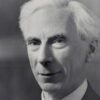
Dare not to be guilty of ill Things, tho’ thou wert sure to be secret and unpunished. Conscience will sit upon it, and that is Witness, Jury, Judge, and Executioner.
Thomas Fuller (1654-1734) English physician, preacher, aphorist, writer
Introductio ad Prudentiam, Vol. 2, # 2216 (1727)
(Source)

The odd thing about these television discussions designed to “get all sides of the issue” is that they do not feature a spectrum of people with different views on reality. Rather, they frequently give us a face-off between those who see reality and those who have missed it entirely. In the name of objectivity, we are getting fantasy-land.
Molly Ivins (1944-2007) American writer, political columnist [Mary Tyler Ivins]
Essay (1987-03), “Killing the Messenger,” The Progressive
(Source)
Collected in Molly Ivins Can't Say That, Can She? (1991).

All struggles
Are essentially
power struggles.
Who will rule,
Who will lead,
Who will define,
refine,
confine,
design,
Who will dominate.
All struggles
Are essentially
power struggles,
and most
are no more intellectual
than two rams
knocking their heads together.

I know the American People are much attached to their Government; — I know they would suffer much for its sake; — I know they would endure evils long and patiently, before they would ever think of exchanging it for another. Yet, notwithstanding all this, if the laws be continually despised and disregarded, if their rights to be secure in their persons and property, are held by no better tenure than the caprice of a mob, the alienation of their affections from the Government is the natural consequence; and to that, sooner or later, it must come.
Abraham Lincoln (1809-1865) American lawyer, politician, US President (1861-65)
Speech (1838-01-27), Young Men’s Lyceum, Springfield, Illinois
(Source)
CALVIN: I wonder why people are never content with what they have.
HOBBES: Are you kidding? Your fingernails are a joke, you’ve got no fangs, you can’t see at night, your pink hides are ridiculous, your reflexes are nil, and you don’t even have tails! Of course people aren’t content!
CALVIN: Forget I said anything.
HOBBES: Now if tigers weren’t content, that would be something to wonder about.


The one man who should never attempt an explanation of a poem is its author. If the poem can be improved by the author’s explanations it never should have been published, and if the poem cannot be improved by its author’s explanations the explanations are scarcely worth reading.
Archibald MacLeish (1892–1982) American poet, writer, statesman
Poems, “Author’s Note” (1938)
(Source)
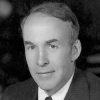
The film industry is a great industry, with infinite possibilities for good and bad. Its primary purpose is to entertain people. On the side, it can do many other things. It can popularize certain ideals, it can make education palatable. But in the long run, the judge who decides whether what it does is good or bad is the man or woman who attends the movies. In a democratic country I do not think the public will tolerate a removal of its right to decide what it thinks of the ideas and performances of those who make the movie industry work.
Eleanor Roosevelt (1884-1962) First Lady of the US (1933-45), politician, diplomat, activist
Column (1947-10-29), “My Day”
(Source)
On the House Un-American Activities Committee and Hollywood blacklisting.

Writing is a sweet and marvelous reward, but a reward for what? In the course of the night it became clear to me, as plain as a children’s show-and-tell lesson, that it is a reward for serving the devil. This descent down to the dark powers, this unleashing of ghosts by nature bound, these questionable embraces and whatever else may be going on down there, none of it remembered as one writes stories in the sunlight up above. Perhaps there are also different ways of writing, but I only know this one; at night, when fear keeps me from sleeping, I only know this one.
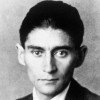
America has not yet changed because so many think it need not change, but this is the illusion of the damned.
Martin Luther King, Jr. (1929-1968) American clergyman, civil rights leader, social activist, preacher
Essay (1968), “A Testament of Hope,” Playboy magazine (1969-01)
(Source)
Collected in James Melvin Washington (ed.), A Testament of Hope: The Essential Writings of Martin Luther King, Jr., Part 3, ch. 48 (1986).
There was another man, however, called Ananias. He and his wife, Sapphira, agreed to sell a property; but with his wife’s connivance he kept back part of the proceeds, and brought the rest and presented it to the apostles.
“Ananias,” Peter said “how can Satan have so possessed you that you should lie to the Holy Spirit and keep back part of the money from the land? While you still owned the land, wasn’t it yours to keep, and after you had sold it wasn’t the money yours to do with as you liked? What put this scheme into your mind? It is not to men that you have lied, but to God.”
When he heard this Ananias fell down dead. This made a profound impression on everyone present.[Ἀνὴρ δέ τις Ἁνανίας ὀνόματι σὺν Σαπφίρῃ τῇ γυναικὶ αὐτοῦ ἐπώλησεν κτῆμα καὶ ἐνοσφίσατο ἀπὸ τῆς τιμῆς, συνειδυίης καὶ τῆς γυναικός, καὶ ἐνέγκας μέρος τι παρὰ τοὺς πόδας τῶν ἀποστόλων ἔθηκεν.
εἶπεν δὲ ὁ Πέτρος, Ἁνανία, διὰ τί ἐπλήρωσεν ὁ Σατανᾶς τὴν καρδίαν σου, ψεύσασθαί σε τὸ πνεῦμα τὸ ἅγιον καὶ νοσφίσασθαι ἀπὸ τῆς τιμῆς τοῦ χωρίου; οὐχὶ μένον σοὶ ἔμενεν καὶ πραθὲν ἐν τῇ σῇ ἐξουσίᾳ ὑπῆρχεν; τί ὅτι ἔθου ἐν τῇ καρδίᾳ σου τὸ πρᾶγμα τοῦτο; οὐκ ἐψεύσω ἀνθρώποις ἀλλὰ τῷ θεῷ.
ἀκούων δὲ ὁ Ἁνανίας τοὺς λόγους τούτους πεσὼν ἐξέψυξεν, καὶ ἐγένετο φόβος μέγας ἐπὶ πάντας τοὺς ἀκούοντας.]The Bible (The New Testament) (AD 1st - 2nd C) Christian sacred scripture
Acts 5: 1-5 [JB (1966)]
(Source)
In verses 6-11, Peter asks Sapphira about the proceeds, and she backs Ananias' story, at which point, confronted with the truth, she drops dead, too, also impressing everyone present.
(Source (Greek)). Alternate translations:But a certain man named Ananias, with Sapphira his wife, sold a possession, and kept back part of the price, his wife also being privy to it, and brought a certain part, and laid it at the apostles’ feet.
But Peter said, Ananias, why hath Satan filled thine heart to lie to the Holy Ghost, and to keep back part of the price of the land? Whiles it remained, was it not thine own? and after it was sold, was it not in thine own power? why hast thou conceived this thing in thine heart? thou hast not lied unto men, but unto God.
And Ananias hearing these words fell down, and gave up the ghost: and great fear came on all them that heard these things.
[KJV (1611)]There was also a man called Ananias. He and his wife, Sapphira, agreed to sell a property; but with his wife's connivance he kept back part of the price and brought the rest and presented it to the apostles.
Peter said, 'Ananias, how can Satan have so possessed you that you should lie to the Holy Spirit and keep back part of the price of the land? While you still owned the land, wasn't it yours to keep, and after you had sold it wasn't the money yours to do with as you liked? What put this scheme into your mind? You have been lying not to men, but to God.'
When he heard this Ananias fell down dead. And a great fear came upon everyone present.
[NJB (1985)]But there was a man named Ananias, who with his wife Sapphira sold some property that belonged to them. But with his wife's agreement he kept part of the money for himself and turned the rest over to the apostles.
Peter said to him, “Ananias, why did you let Satan take control of you and make you lie to the Holy Spirit by keeping part of the money you received for the property? Before you sold the property, it belonged to you; and after you sold it, the money was yours. Why, then, did you decide to do such a thing? You have not lied to people -- you have lied to God!”
As soon as Ananias heard this, he fell down dead; and all who heard about it were terrified.
[GNT (1992 ed.)]However, a man named Ananias, along with his wife Sapphira, sold a piece of property. With his wife’s knowledge, he withheld some of the proceeds from the sale. He brought the rest and placed it in the care and under the authority of the apostles.
Peter asked, “Ananias, how is it that Satan has influenced you to lie to the Holy Spirit by withholding some of the proceeds from the sale of your land? Wasn’t that property yours to keep? After you sold it, wasn’t the money yours to do with whatever you wanted? What made you think of such a thing? You haven’t lied to other people but to God!”
When Ananias heard these words, he dropped dead. Everyone who heard this conversation was terrified.
[CEB (2011)]But a man named Ananias, with the consent of his wife Sapphira, sold a piece of property; with his wife’s knowledge, he kept back some of the proceeds and brought only a part and laid it at the apostles’ feet.
“Ananias,” Peter asked, “why has Satan filled your heart to lie to the Holy Spirit and to keep back part of the proceeds of the land? While it remained unsold, did it not remain your own? And after it was sold, were not the proceeds at your disposal? How is it that you have contrived this deed in your heart? You did not lie to us but to God!”
Now when Ananias heard these words, he fell down and died. And great fear seized all who heard of it.
[NRSV (2021 ed.)]

So while our art cannot, as we wish it could, save us from wars, privation, envy, greed, old age, or death, it can revitalize us amidst it all.
Ray Bradbury (1920-2012) American writer, futurist, fabulist
Zen in the Art of Writing, Preface (1994)
(Source)
There is something powerful in the whispering of obscenities, about those in power. There’s something delightful about it, something naughty, secretive, forbidden, thrilling. It’s like a spell, of sorts. It deflates them, reduces them to the common denominator where they can be dealt with.
Margaret Atwood (b. 1939) Canadian writer, literary critic, environmental activist
The Handmaid’s Tale, ch. 34 (1986)
(Source)

No tyranny is more cruel than the one practiced in the shadow of the laws and under color of justice — when, so to speak, one proceeds to drown the unfortunate on the very plank by which they had saved themselves.
[Il n’y a point de plus cruelle tyrannie que celle que l’on exerce à l’ombre des lois et avec les couleurs de la justice, lorsqu’on va, pour ainsi dire, noyer des malheureux sur la planche même sur laquelle ils s’étaient sauvés.]
Charles-Lewis de Secondat, Baron de Montesquieu (1689-1755) French political philosopher
Considerations on the Causes of the Greatness of the Romans and their Decline [Considérations sur les causes de la grandeur des Romains et de leur décadence], ch. 14 “Tiberius” (1734, 1748 ed.) [tr. Lowenthal (1965)]
(Source)
Often mis-cited to his Spirit of Laws [The Spirit of the Laws; De l’esprit des lois] (1748).
(Source (French)). Other translations:No tyranny can have a severer effect that that which is exercised under the appearance of laws, and with the plausible colours of justice, when the executors of cruel power would, if we may use the expression, drown the unhappy wretches on the very plank that before saved them admidst the troubled waves.
[tr. B--- (1734)]There is no tyranny more cruel than that which is perpetrated under the color of the laws and in the name of justice -- when, so to speak, one is drawn down and drowned by means of the very plank which should have borne him up and saved his life.
[tr. Baker (1882)]There is no tyranny more cruel than that which is exercised within the shade of the law and with the colours of justice.
[E.g.]There is no greater tyranny than that which is perpetrated under the shield of the law and in the name of justice.
[E.g.]There is no crueler tyranny than that which is perpetrated under the shield of the law and in the name of justice.
[E.g.]

Many of us have beliefs that aren’t really genuine; we just think they’re genuine. We think individualism is genuine. We think laissez faire is genuine. We don’t really want it. Big business bemoans government interference. It would be horrified if the government, for example, did away with patent laws.
Henry Steele Commager (1902-1998) American historian, writer, activist
Interview (1970-02) by John A. Garraty, “American Nationalism,” Interpreting American History: Conversations with Historians, Part 1, ch. 4 (1970)
(Source)
There’s only one person who needs a glass of water oftener than a small child tucked in for the night, and that’s a writer sitting down to write.
Mignon McLaughlin (1913-1983) American journalist and author
The Second Neurotic’s Notebook, ch. 7 (1966)
(Source)

Surely the idea of a “limited war” is one of the most dangerously self-deceiving verbal gimmicks ever invented. For though war makes use of reason, as a weapon, it is not reasonable in nature. Its nature is the nature of pride and anger. It follows the brute logic of violent emotion, which points directly toward the use of the greatest available power.
Wendell Berry (b. 1934) American farmer, educator, poet, conservationist
Speech (1968-02-10), “A Statement Against the War in Vietnam,” Kentucky Conference on the War and the Draft, University of Kentucky
(Source)
Collected in The Long-Legged House, Part 2 (1971).
In all thy humours, whether grave or mellow,
Thou’rt such a touchy, testy, pleasant fellow ,
Hast so much wit, and mirth, and spleen about thee,
There is no living with thee, nor without thee.Joseph Addison (1672-1719) English essayist, poet, statesman
Essay (1711-05-18), The Spectator, No. 68
(Source)
Addison's translation of Martial's Epigram 12.47.
Part of the skill of saying no is to shut up afterward and not babble on, offering material for an argument.
Judith Martin (b. 1938) American author, journalist, etiquette expert [a.k.a. Miss Manners]
“Miss Manners,” syndicated column (2014-11-04)
(Source)
GAUNT: This royal throne of kings, this sceptered isle,
This earth of majesty, this seat of Mars,
This other Eden, demi-paradise,
This fortress built by Nature for herself
Against infection and the hand of war,
This happy breed of men, this little world,
This precious stone set in the silver sea,
Which serves it in the office of a wall
Or as a moat defensive to a house,
Against the envy of less happier lands,
This blessèd plot, this earth, this realm, this England ….William Shakespeare (1564-1616) English dramatist and poet
Richard II, Act 2, sc. 1, l. 45ff (2.1.45-56) (1595)
(Source)
Keep, Galileo, to thy thought,
And nerve thy soul to bear;
They may gloat o’er the senseless words they wring
From the pangs of thy despair:
They may veil their eyes, but they cannot hide
The sun’s meridian glow;
The heel of a priest may tread thee down,
And a tyrant work thee woe;
But never a truth has been destroyed:
They may curse it, and call it crime;
Pervert and betray, or slander and slay
Its teachers for a time.
But the sunshine aye shall light the sky,
As round and round we run;
And the truth shall ever come uppermost,
And justice shall be done.Charles Mackay (1814-1889) Scottish poet, journalist, song writer
Poem (1847), “Eternal Justice,” st. 4
(Source)
Mackay's book Voices from the Mountain was published in 1847. The earliest rendition of the poem I can find in a publication is from The Harbinger, Vol. 5, No. 13 (1847-09-04).
People love stories, I love them, but stories are like gods, they care little for the human beings in their care.
Lev Grossman (b. 1969) American novelist and journalist
The Bright Sword, Book 4 [Guinevere] (2024)
(Source)

The critics panned Spillane, but he didn’t care. He said, “Those big-shot writers could never dig the fact that there are more salted peanuts consumed than caviar.” He said he never had a character who drank cognac or had a mustache, because he didn’t know how to spell those words. He said, “I have no fans. You know what I got? Customers. And customers are your friends.”
Mickey Spillane (1918-2006) American crime novelist [Frank Morrison Spillane]
In Garrison Keillor, post (2012-03-09), Writers Almanac, American Public Media
(Source)

I love the pure, peaceable, and impartial Christianity of Christ: I therefore hate the corrupt, slaveholding, women-whipping, cradle-plundering, partial and hypocritical Christianity of this land. Indeed, I can see no reason, but the most deceitful one, for calling the religion of this land Christianity. I look upon it as the climax of all misnomers, the boldest of all frauds, and the grossest of all libels.
Frederick Douglass (1817-1895) American abolitionist, orator, writer
Narrative of the Life of Frederick Douglass, An American Slave, Appendix (1845)
(Source)
The building is literally lined with flags. I could never understand the exact connection between the flag and a bunch of politicians.
Why a political speaker’s platform should be draped in flags, any more than a factory where men work, or an office building, is beyond me.Will Rogers (1879-1935) American humorist
Article (1924-06-25), “Rogers Sees Harrison as Rival Monologuist,” New York Times, Democratic Convention Article 3, New York City
(Source)
Variant (labeled 1924-06-23):I could never understand the exact connection between the flag and a bunch of politicians. It's beyond me why a political speaker's platform should be draped in flags, any more than a factory where honest men work.
GWENDOLEN: On an occasion of this kind it becomes more than a moral duty to speak one’s mind. It becomes a pleasure.
Oscar Wilde (1854-1900) Irish poet, wit, dramatist
The Importance of Being Earnest, Act 2 (1895)
(Source)
I never read the proclamations of generals before battle, the speeches of fuehrers and prime ministers, the solidarity songs of public schools and left-wing political parties, national anthems, Temperance tracts, papal encyclicals and sermons against gambling and contraception, without seeming to hear in the background a chorus of raspberries from all the millions of common men to whom these high sentiments make no appeal.
George Orwell (1903-1950) English writer [pseud. of Eric Arthur Blair]
Essay (1941-09), “The Art of Donald McGill,” Horizon Magazine
(Source)
AMYRUS: Let Earth and Heaven his timeless death deplore,
For both their worths shall equal him no more.Christopher "Kit" Marlowe (1564-1593) English dramatist and poet
Tamburlaine the Great, Part 2, Act 5, sc. 3 (c. 1587)
Final lines of the play. More on Timur (Tamerlane, Tamburlaine).
Ah! Up then from the ground sprang I
And hailed the Earth with such a cry
As is not heard save from a man
Who has been dead, and lives again.
About the trees my arms I wound;
Like one gone mad I hugged the ground;
I raised my quivering arms on high;
I laughed and laughed into the sky.
One form of servility consists in a slavish attitude — of the kind incompatible with self-respecting manliness — toward any person who is powerful by reason of his office or position. Servility may be shown by a public servant toward the profiteering head of a large corporation, or toward the anti-American head of a big labor organization. It may also be shown in peculiarly noxious and un-American form by confounding the President or any other official with the country and shrieking “stand by the President” without regard to whether, by so acting, we do or do not stand by the country.
Theodore Roosevelt (1858-1919) American politician, statesman, conservationist, writer, US President (1901-1909)
Essay (1918-05), “Lincoln and Free Speech,” Metropolitan Magazine, Vol. 47, No. 6
(Source)
On censorship actions by the Wilson Administration taken against critics of its handling of war efforts.
Reprinted in Appendix C of his The Great Adventure (1918), and as ch. 7 of that book in Vol. 21 of The Works of Theodore Roosevelt (1925), The Great Adventure
One ov the most perfekt viktorys yu kan achieve over enny man, iz to beat him in politeness.
[One of the most perfect victories you can achieve over any man, is to beat him in politeness.]
Josh Billings (1818-1885) American humorist, aphorist [pseud. of Henry Wheeler Shaw]
Josh Billings’ Farmer’s Allminax, 1875-07 “2 Fakts” (1875 ed.)
(Source)
You know the insolence of Antonius; you know his friends, you know his whole household. To be slaves to lustful, wanton, debauched, profligate, drunken gamblers, is the extremity of misery combined with the extremity of infamy.
[Nostis insolentiam Antoni, nostis amicos, nostis totam domum. libidinosis, petulantibus, impuris, impudicis, aleatoribus, ebriis servire, ea summa miseria est summo dedecore coniuncta.]
Marcus Tullius Cicero (106-43 BC) Roman orator, statesman, philosopher
Philippics [Philippicae; Antonian Orations], No. 3, ch. 14 / sec. 35 (2.14/3.35.1) (44-12-20 BC) [tr. Yonge (1903)]
(Source)
(Source (Latin)). Other translations:You know Antonius' insolence, you know his friends, you know his whole household. Slavery under men lustful, wanton, foul, unchaste, gamblers and drunkards, this is the utmost misery allied with the utmost disgrace.
[tr. Ker (Loeb) (1926)]You know Antonius' insolence, you know his friends, you now his whole retinue. To be slave to libertines, bullies, foul profligates, gamblers, drunkards, that is the ultimate misery joined with the ultimate in dishonour.
[tr. Manuwald (2007)]
You will be careful, if you are wise;
How you touch Men’s Religion, or Credit, or Eyes.Benjamin Franklin (1706-1790) American statesman, scientist, philosopher, aphorist
Poor Richard (1742 ed.)
(Source)
Every man calls barbarous anything he is not accustomed to.
[Chacun appelle barbarie, ce qui n’est pas de son usage.]
Michel de Montaigne (1533-1592) French essayist
Essays, Book 1, ch. 30 (1.30), “Of Cannibals [Des Cannibales]” (1578) [tr. Screech (1987), 1.31]
(Source)
Some translators use the 1588 sequence of chapters, not the 1595, and so identify this as ch. 31.
(Source (French)). Alternate translations:Men call that barbarisme which is not common to them.
[tr. Florio (1603)]Every one gives the title of barbarism to everything that is not in use in his own country.
[tr. Cotton (1686)]Everyone gives the denomination of barbarism to what is not the custom of his country.
[tr. Friswell (1868)]Every one gives the title of barbarism to everything that is not in use in his own country.
[tr. Cotton/Hazlitt (1877)]Every one calls "barbarism" whatever he is not accustomed to.
[tr. Ives (1925), 1.31]Each man calls barbarism whatever is not his own practice.
[tr. Frame (1943)]Everyone calls barbarism what is not customary to him.
[ed. Rat (1958), 1.31]Everyone calls what he is not accustomed to barbarity.
[tr. Atkinson/Sices (2012)]
What has died does not fall out of the universe; and if it remains here, it is also transformed here and resolved into its constituent parts, which are the elements of the universe and of yourself. And these elements themselves are transformed and utter no complaint.
[Ἔξω τοῦ κόσμου τὸ ἀποθανὸν οὐ πίπτει. εἰ ὧδε μένει καὶ μεταβάλλει ὧδε καὶ διαλύεται εἰς τὰ ἴδια, ἃ στοιχεῖά ἐστι τοῦ κόσμου καὶ σά. καὶ αὐτὰ δὲ μεταβάλλει καὶ οὐ γογγύζει.]
Marcus Aurelius (AD 121-180) Roman emperor (161-180), Stoic philosopher
Meditations [To Himself; Τὰ εἰς ἑαυτόν], Book 8, ch. 18 (8.18) (AD 161-180) [tr. Hard (1997 ed.)]
(Source)
(Source (Greek)). Alternate translations:Whatsoever dieth and falleth, however and wheresoever it die and fall, it cannot fall out of the world. here it have its abode and change, here also shall it have its dissolution into its proper elements. The same are the world's elements, and the elements of which thou dost consist. And they when they are changed, they murmur not; why shouldest thou?
[tr. Casaubon (1634), 8.16]Whatever drops out of Life, is catch't up somewhere, for the World loses nothing. Within this Circumference of Corporeity, all things have their several Formes, and Revolutions ; And here 'tis likewise that they return into Element, and first Principle ; Under which Notion those of the World and your own, are the very same; And all these last Changes are made without the least Repining : And why then should the same Matter that lyes quiet in an Element, Grumble in a Man?
[tr. Collier (1701)]What dies is not gone out of the verge of the universe. If that which is dissolved stays here, and is changed, it returns to those elements, of which the world and you too consist. These too are changed, and don’t murmur at it.
[tr. Hutcheson/Moor (1742)]Nothing that dies, is lost to the universe, or annihilated. But, if it remains here, it undergoes some change, and is resolved into its proper elements. Now the same elements which compose the rest of the world make a part of your person; yet those undergo many changes, and do not murmur or repine.
[tr. Graves (1792)]That which has died falls not out of the universe. If it stays here, it also changes here, and is dissolved into its proper parts, which are elements of the universe and of thyself. And these too change, and they murmur not.
[tr. Long (1862)]Whatever drops out of life is somewhere, for the world loses nothing. If it stays here, it also changes here, and is dissolved into its proper parts, which are elements of the universe and of yourself. And these two change and do not complain.
[tr. Collier/Zimmern (1887)]That which dies does not drop out of the universe. Here it bides, and here too it changes and is dispersed into its elements, the rudiments of the universe and of yourself. And they too change, and murmur not.
[tr. Rendall (1898)]That which dies falls not out of the Universe. If then it stays here, here too it suffers a change, and is resolved into those elements of which the world, and you too, consist. These also are changed, and murmur not.
[tr. Hutcheson/Chrystal (1902)]That which dies is not cast out of the Universe. As it remains here, it also suffers change here and is dissolved into its own constituents, which are the elements of the Universe and thy own. Yes, and they too suffer change and murmur not.
[tr. Haines (Loeb) (1916)]What dies does not fall outside the Universe. If it remains here and changes here, it is also resolved here into the eternal constituents, which are elements of the Universe and of yourself. And the elements themselves change and make no grievance of it.
[tr. Farquharson (1944)]That which dies does not drop out of the world. Here it remains; and here too, therefore, it changes and is resolved into its several particles; that is, into the elements which go to form the universe and yourself. They themselves likewise undergo change, and yet from them comes no complaint.
[tr. Staniforth (1964)]What dies doesn’t vanish. It stays here in the world, transformed, dissolved, as parts of the world, and of you. Which are transformed in turn -- without grumbling.
[tr. Hays (2003)]What dies does not pass out of the universe. If it remains here and is changed, then here too it is resolved into the everlasting constituents, which are the elements of the universe and of you yourself. These too change, and make no complaint of it.
[tr. Hammond (2006)]What has died does not fall out of the universe; and if it remains here, it is also transformed here and resolved into its own constituents, which are the elements of the universe and of yourself. And these elements themselves are transformed and utter no complaint.
[tr. Hard (2011 ed.)]

In the midst of all my bitching, you might’ve noticed that I never complain about politicians. I leave that to others. And there’s no shortage of volunteers; everyone complains about politicians. Everyone says they suck.
But where do people think these politicians come from? They don’t fall out of the sky; they don’t pass through a membrane from a separate reality. They come from American homes, American families, American schools, American churches, and American businesses. And they’re elected by American voters. This is what our system produces, folks. This is the best we can do. Let’s face it, we have very little to work with. Garbage in, garbage out.
Ignorant citizens elect ignorant leaders, it’s as simple as that. And term limits don’t help. All you do is get a brand new bunch of ignorant leaders.George Carlin (1937-2008) American comedian
Book (2001), Napalm & Silly Putty, “Don’t Blame the Leaders”
(Source)
(Source (audio)). The audiobook version is trivially different (emphasis added):In the midst of all my bitching, you might've noticed that I never complain about politicians. I leave that to other people. There's no shortage of volunteers; everyone complains about politicians. Everyone says they suck.
But where do people think these politicians come from? They don't fall out of the sky; they don't pass through a membrane from a separate reality. They come from American homes, American families, American schools, American churches, and American businesses. And they're elected by American voters. This is what our system produces, folks. This is the best we can do. Let's face it, we have very little to work with in this country. Garbage in, garbage out.
Ignorant citizens elect ignorant leaders, it's as simple as that. And term limits don't help. All you do is get a brand new bunch of ignorant leaders.
Any pleasure that does no harm to other people is to be valued.
Bertrand Russell (1872-1970) English mathematician and philosopher
Conquest of Happiness, Part 2, ch. 10 “Is Happiness Still Possible?” (1930)
(Source)
All the conditions of happiness are realized in the life of the man of science. He has an activity which utilizes his abilities to the full, and he achieves results which appear important not only to himself but to the general public, even when it cannot in the smallest degree understand them. In this he is more fortunate than the artists. When the public cannot understand a picture or a poem, they conclude that it is a bad picture or a bad poem. When they cannot understand the theory of relativity they conclude (rightly) that their education has been insufficient. Consequently Einstein is honored while the best painters are (or at least were) left to starve in garrets, and Einstein is happy while the painters are unhappy. Very few men can be genuinely happy in a life involving continual self-assertion against the skepticism of the mass of mankind, unless they can shut themselves up in a coterie and forget the cold outer world. The man of science has no need of a coterie, since he is thought well of by everybody except his colleagues. The artist, on the contrary, is in the painful situation of having to choose between being despised and being despicable. If his powers are of the first order, he must incur one or the other of these misfortunes — the former if he uses his powers, the latter if he does not.
Bertrand Russell (1872-1970) English mathematician and philosopher
Conquest of Happiness, Part 2, ch. 10 “Is Happiness Still Possible?” (1930)
(Source)
When thou art in the Company of Ladies behave civilly, and shew good Breeding. They will easily pardon a Man’s Want of Sense, but rarely his Want of Manners.
Thomas Fuller (1654-1734) English physician, preacher, aphorist, writer
Introductio ad Prudentiam, Vol. 2, # 2214 (1727)
(Source)
Legislators do not merely mix metaphors: they are the Waring blenders of metaphors, the Cuisinarts of the field. By the time you let the head of the camel into the tent, opening a loophole big enough to drive a truck through, you may have thrown the baby out with the bathwater by putting a Band-Aid on an open wound, and then you have to turn over the first rock in order to find a sacred cow.
CALVIN: Some days you get up and you already know that things aren’t going to go well. They’re the type of days when you should just give in, put your pajamas back on, make some hot chocolate, and read comic books in bed with the covers up until the world looks more encouraging.

One thing is sure — none of the arts flourishes on censorship and repression. And by this time it should be evident that the American public is capable of doing its own censoring.
Eleanor Roosevelt (1884-1962) First Lady of the US (1933-45), politician, diplomat, activist
Column (1947-10-29), “My Day”
(Source)
CHORUS: Why have the sons of Priam
Received each his portion in chambers of quiet earth,
When reasonable words could have solved the quarrel for Helen?
Now they live deep in the lap of Death;
And flames leaping like Zeus’s thunderbolt
Have levelled their walls with dust.[ΧΟΡΟΣ: ᾇ Πριαμίδος γᾶς ἔλαχον θαλάμους,
ἐξὸν διορθῶσαι λόγοις
1160σὰν ἔριν, ὦ Ἑλένα.
νῦν δ᾽ οἳ μὲν Ἅιδᾳ μέλονται κάτω,
τείχεα δὲ φλογμὸς ὥστε Διός ἐπέσυτο φλόξ,
ἐπὶ δὲ πάθεα πάθεσι φέρεις
† ἀθλίοις συμφοραῖς αἰλίνοις.]Euripides (485?-406? BC) Greek tragic dramatist
Helen [Ἑλένη], l. 1158ff, Stasimon 1, Antistrophe 2 (412 BC) [tr. Vellacott (1954), Strophe 2]
(Source)
(Source (Greek)). Other translations:Outrageous to destroy
The spear hath desolation spread,
With slaughter stain'd the widow'd bed,
And desolated Troy.
Yet well might Reason's suasive charms
Have made each warring foe a friend:
But many in the shock of arms
To Pluto's dreary realms descend;
Fires, like the flames of Jove, the walls surround,
And Ilium's ramparts smoke upon the ground.
[tr. Potter (1783), Antistrophe 2]Hence from her home departs each Phrygian wife,
O Helen, when the cruel strife
Which from thy chamors arose,
One conference might have closed: now myriads dwell
With Pluto in the shades of Hell,
And flames, as when Jove's vengeance throws
The bolt, have caught her towers and finished Ilion's woes.
[tr. Wodhull (1809)]Which left the dwellings of the land of Priam, when it was in their power to decide by words the strife concerning thee, O Helen. But now they indeed are the care of Hades below, and fire, like the lightning of Jove, has fallen on their walls.
[tr. Buckley (1850)]By it [strife] they won as their lot bed-chambers of Priam's earth, when they could have set right by discussion the strife over you, O Helen. And now they are below in Hades' keeping, and fire has darted onto the walls like the bolt of Zeus.
[tr. Coleridge (1891)]The maidens of the land of Priam left their bridal bowers, though arbitration might have put thy quarrel right, O Helen. And now Troy's sons are in Hades' keeping in the world below, and fire hath darted on her walls, as darts the flame of Zeus.
[tr. Coleridge (alt.)]Lo, how its storm o'er homes of Ilium brake,
Yea, though fair words might once have wrought amending,
Helen, of wrong, of quarrel for thy sake!
Now are her sons in depths of Hades lying;
Flame o'er her walls leapt, like Zeus' levin-glare.
[tr. Way (Loeb) (1912)]So to Priam's people came
Madness in the midst of ease,
Lust of battle. No man sought
Peace by suasion. Still they fought
For Helen's sake, and still from Greece
Thronged the fighters. Low they lie.
Death has won the victory.
The bolt of Zeus struck home. The towers of Troy
Perished for Helen's sake. Yet Helen hath no joy.
[tr. Sheppard (1925)]It was that fate came to the homes
of Priam's land when, Helen, that strife of yours
still could have bene set aright by argument.
And now there are some in Hades' power
below, and upon the walls, like the flame of the lightning,
the fire has crept.
[tr. Warner (1951)]By hate they won the chambers of Priam's city;
they could have solved by reason and words
the quarrel, Helen, for you.
Now these are given to the Death God below.
On the walls the flame, as of Zeus, lightened and fell.
[tr. Lattimore (1956)]They received each one his portion of Trojan earth to slumber in, when reasoned argument might have solved the dispute you roused, Helen. Now they lie deep in Hades' lap, and Troy's walls, as if struck by Zeus' fiery thunderbolt, lie levelled.
[tr. Davie (2002)]This time the Trojans won
The boxes, underground --
They could have talked,
Settled their quarrel over you, Helen,
With words.
Now they march in the ranks of Death,
While searing flames destroy their walls --
Downed by a force like
Zeus' lightning.
[tr. A. Wilson (2007)]War, Helen, brought them their death on Priam’s land, when they argued about you, yet they could have resolved their differences about you with words alone.
Now they are in the hands of Hades!
Flames, shot like arrows from Zeus have spread across their towers.
[tr. Theodoridis (2011)]Strife it was that won them chambers in Priam’s soil
They could have straightened out with words,
your quarrel, O Helen, ah!
As things are, Hades below welcomes them
and a deadly fire, like Zeus’, swept over the walls of Troy.
[tr. Ambrose et al. (2018), Antistrophe B]By it they won as their lot bed-chambers of Priam’s earth, when they could have set right by discussion the strife [eris] over you, O Helen. And now they are below in Hādēs’ keeping, and fire has darted onto the walls like the bolt of Zeus.
[tr. Coleridge / Helen Heroization Team]
And the multitude of them that believed were of one heart and of one soul: neither said any of them that ought of the things which he possessed was his own; but they had all things common. […] Neither was there any among them that lacked: for as many as were possessors of lands or houses sold them, and brought the prices of the things that were sold, and laid them down at the apostles’ feet: and distribution was made unto every man according as he had need.
[Τοῦ δὲ πλήθους τῶν πιστευσάντων ἦν καρδία καὶ ψυχὴ μία, καὶ οὐδὲ εἷς τι τῶν ὑπαρχόντων αὐτῷ ἔλεγεν ἴδιον εἶναι ἀλλ᾽ ἦν αὐτοῖς ἅπαντα κοινά. […] οὐδὲ γὰρ ἐνδεής τις ἦν ἐν αὐτοῖς· ὅσοι γὰρ κτήτορες χωρίων ἢ οἰκιῶν ὑπῆρχον, πωλοῦντες ἔφερον τὰς τιμὰς τῶν πιπρασκομένων καὶ ἐτίθουν παρὰ τοὺς πόδας τῶν ἀποστόλων, διεδίδετο δὲ ἑκάστῳ καθότι ἄν τις χρείαν εἶχεν.]
The Bible (The New Testament) (AD 1st - 2nd C) Christian sacred scripture
Acts 4: 32, 34-35 [KJV (1611)]
(Source)
(Source (Greek)). Alternate translations:The whole group of believers was united, heart and soul; no one claimed for his own use anything that he had, as everything they owned was held in common. [...] None of their members was ever in want, as all those who owned land or houses would sell them, and bring the money from them, to present it to the apostles; it was then distributed to any members who might be in need.
[JB (1966)]The whole group of believers was united, heart and soul; no one claimed private ownership of any possessions, as everything they owned was held in common. [...] None of their members was ever in want, as all those who owned land or houses would sell them, and bring the money from the sale of them, to present it to the apostles; it was then distributed to any who might be in need.
[NJB (1985)]The group of believers was one in mind and heart. None of them said that any of their belongings were their own, but they all shared with one another everything they had. [...] There was no one in the group who was in need. Those who owned fields or houses would sell them, bring the money received from the sale, and turn it over to the apostles; and the money was distributed according to the needs of the people.
[GNT (1992 ed.)]The community of believers was one in heart and mind. None of them would say, “This is mine!” about any of their possessions, but held everything in common. [...] There were no needy persons among them. Those who owned properties or houses would sell them, bring the proceeds from the sales, and place them in the care and under the authority of the apostles. Then it was distributed to anyone who was in need.
[CEB (2011)]Now the whole group of those who believed were of one heart and soul, and no one claimed private ownership of any possessions, but everything they owned was held in common. [...] There was not a needy person among them, for as many as owned lands or houses sold them and brought the proceeds of what was sold. They laid it at the apostles’ feet, and it was distributed to each as any had need.
[NRSV (2021 ed.)]
Writing sustains me. But wouldn’t it be more accurate to say that it sustains this kind of life? Which does not, of course, mean that my life is any better when I don’t write. On the contrary, at such times it is far worse, wholly unbearable, and inevitably ends in madness. This, of course only on the assumption that I am a writer even when I don’t write — which is indeed the case; and a non-writing writer is, in fact, a monster courting insanity.
In a word, a free government — that is, a government constantly subject to agitation — cannot last if it is not capable of being corrected by its own laws.
[En un mot, un gouvernement libre, c’est-à-dire toujours agité, ne saurait se maintenir s’il n’est, par ses propres lois, capable de correction.]
Charles-Lewis de Secondat, Baron de Montesquieu (1689-1755) French political philosopher
Considerations on the Causes of the Greatness of the Romans and their Decline [Considérations sur les causes de la grandeur des Romains et de leur décadence], ch. 8 (1734, 1748 ed.) [tr. Lowenthal (1965)]
(Source)
(Source (French)). Other translations:In a word, a free government, that is to say, one for ever in motion, cannot support itself, unless its own laws are capable of correcting the disorders of it.
[tr. B--- (1734)]In a word, a free government -- that is to say, one which is constantly agitated -- can never maintain itself if it is not, by its own laws, capable of correction.
[tr. Baker (1882)]
Few of us write great novels; all of us live them.
Mignon McLaughlin (1913-1983) American journalist and author
The Neurotic’s Notebook, ch. 7 (1963)
(Source)
We have come to depend obsessively on an enormous capability of violence — for security, for national self-esteem, even for economic stability.
Wendell Berry (b. 1934) American farmer, educator, poet, conservationist
Speech (1968-02-10), “A Statement Against the War in Vietnam,” Kentucky Conference on the War and the Draft, University of Kentucky
(Source)
Collected in The Long-Legged House, Part 2 (1971).
Upon the whole, a contented mind is the greatest blessing a man can enjoy in this world.
Joseph Addison (1672-1719) English essayist, poet, statesman
Essay (1714-07-30), The Spectator, No. 574
(Source)
It is, indeed, a trial to maintain the virtue of humility when one can’t help being right.
Judith Martin (b. 1938) American author, journalist, etiquette expert [a.k.a. Miss Manners]
“Miss Manners,” syndicated column (1999-02-02)
(Source)
GAUNT: His rash fierce blaze of riot cannot last,
For violent fires soon burn out themselves;
Small showers last long, but sudden storms are short;
He tires betimes that spurs too fast betimes;
With eager feeding food doth choke the feeder;
Light vanity, insatiate cormorant,
Consuming means, soon preys upon itself.William Shakespeare (1564-1616) English dramatist and poet
Richard II, Act 2, sc. 1, l. 37ff (2.1.37-44) (1595)
(Source)
The prophecies of Nostradamus consist of upwards of a thousand stanzas, each of four lines, and are to the full as obscure as the oracles of old. They take so great a latitude, both as to time and space, that they are almost sure to be fulfilled somewhere or other in the course of a few centuries.
Charles Mackay (1814-1889) Scottish poet, journalist, song writer
Memoirs of Extraordinary Popular Delusions and the Madness of Crowds, “Fortune-Telling” (1841)
(Source)
The Cool Stuff Theory of Literature states that all literature consists of whatever the writer thinks is cool, and the reader will enjoy the work to the degree that the reader and writer agree about what’s cool — and this functions all the way from the external trappings to deepest level of theme and to the way the writer uses words.
Steven Brust (b. 1955) American writer, systems programmer
Interview (2003-02-03) by Chris Olson, Strange Horizons
(Source)
Brust says the idea was taken from advice given by Gene Wolfe.

It’s a bit embarrassing to have been concerned with the human problem all one’s life and find at the end that one has no more to offer by way of advice than “Try to be a little kinder.”
Aldous Huxley (1894-1963) English novelist, essayist and critic
(Attributed)
(Source)
Quoted in Huston Smith, "Aldous Huxley -- A Tribute," The Psychedelic Review, Vol. 1, No. 3 (1964) (the Aldous Huxley Memorial Issue).
A variant is in Laura Huxley's biography of her husband, This Timeless Moment: A Personal View of Aldous Huxley, "One Never Loves Enough" (1968). She identified it as coming from a "public talk" not long before his death:It is a little embarrassing that, after forty-five years of research and study, the best advice I can give to people is to be a little kinder to each other.
Disobedience, in the eyes of any one who has read history, is man’s original virtue. It is through disobedience that progress has been made, through disobedience and through rebellion.
Oscar Wilde (1854-1900) Irish poet, wit, dramatist
Essay (1891-02), “The Soul of Man Under Socialism,” The Fortnightly Review, Vol. 49
(Source)

If Enterprise is afoot, Wealth accumulates whatever may be happening to Thrift; and if Enterprise is asleep, Wealth decays, whatever Thrift may be doing.
When I was one-and-twenty
I heard a wise man say,
“Give crowns and pounds and guineas
But not your heart away;
Give pearls away and rubies,
But keep your fancy free.”
But I was one-and-twenty,
No use to talk to me.When I was one-and-twenty
I heard him say again,
“The heart out of the bosom
Was never given in vain;
‘Tis paid with sighs a plenty
And sold for endless rue.”
And I am two-and-twenty,
And oh, ’tis true, ’tis true.A. E. Housman (1859-1936) English scholar and poet [Alfred Edward Housman]
A Shropshire Lad, No. 13 (1896)
(Source)
Quimby was eventually killed by a disgruntled poet during an experiment conducted in the palace grounds to prove the disputed accuracy of the proverb “The pen is mightier than the sword,” and in his memory it was amended to include the phrase “only if the sword is very small and the pen is very sharp.”
Terry Pratchett (1948-2015) English author
Discworld No. 2, The Light Fantastic (1986)
(Source)
See Bulwer-Lytton (1839).
And be careful about calling them Common People. Nobody wants to be called Common People, especially common people.
He wants for ever, who would more acquire;
Set certain limits to your wild desire.[Semper avarus eget; certum voto pete finem.]
Horace (65-8 BC) Roman poet, satirist, soldier, politician [Quintus Horatius Flaccus]
Epistles [Epistularum, Letters], Book 1, ep. 2 “To Lollius,” l. 56ff (1.2.56) (20 BC) [tr. Francis (1747)]
(Source)
(Source (Latin)). Other translations:The Carle wantes aye, let thou thy drift to no excesse extende.
[tr. Drant (1567)]The Cov'tous alwayes want: your pray'rs design
To some fixt mark.
[tr. Fanshawe; ed. Brome (1666)]Desires are endless, till you fix the end.
[tr. "Dr. W."; ed. Brome (1666)]The Greedy want, to Wishes fix an End.
[tr. Creech (1684)]Draw some fix'd line where your desires may rest:
Th' insatiate miser ever is distress'd.
[tr. Howes (1845)]The covetous man is ever in want; set a certain limit to your wishes.
[tr. Smart/Buckley (1853)]The miser's always needy: draw a line
Within whose bound your wishes to confine.
[tr. Conington (1874)]A miser's always poor. A bound assign
To what you want, then keep within the line.
[tr. Martin (1881)]The avaricious man ever wants. Put a fixed limit on your desires.
[tr. Elgood (1893)]The covetous is ever in want: aim at a fixed limit for your desires.
[tr. Fairclough (Loeb) (1926)]The miser is always in need; draw a boundary line
Around your desires.
[tr. Palmer Bovie (1959)]Greedy men are always poor: set limits to desire.
[tr. Fuchs (1977)]The greedy never have enough: never want too much
For yourself.
[tr. Raffel (1983)]The avaricious man always feels poor;
Set limits to what your desires make you long for.
[tr. Ferry (2001)]The greedy are never content; fix an end to your longings.
[tr. Rudd (2005 ed.)]The greedy always want: set fixed limits to longing.
[tr. Kline (2015)]
Society has always to demand a little more from human beings than it will get in practice. It has to demand faultless discipline and self-sacrifice, it must expect its subjects to work hard, pay their taxes, and be faithful to their wives, it must assume that men think it glorious to die on the battlefield and women want to wear themselves out with child-bearing. The whole of what one may call official literature is founded on such assumptions.
George Orwell (1903-1950) English writer [pseud. of Eric Arthur Blair]
Essay (1941-09), “The Art of Donald McGill,” Horizon Magazine
(Source)
TAMBURLAINE: Your births shall be no blemish to your fame;
For virtue is the fount whence honour springs,
And they are worthy she investeth kings.
I know what my heart is like
Since your love died:
It is like a hollow ledge
Holding a little pool
Left there by the tide,
A little tepid pool,
Drying inward from the edge.
But you were so utterly devoid of sense, that throughout the whole of your speech you were disputing with yourself, saying things which not only were inconsistent with each other, but involved direct contradiction and opposition, so that the contest was not so much between you and me as between Antonius and Antonius.
[Tam autem eras excors, ut tota in oratione tua tecum ipse pugnares, non modo non cohaerentia inter se diceres, sed maxime disiuncta atque contraria, ut non tanta mecum quanta tibi tecum esset contentio.]
Marcus Tullius Cicero (106-43 BC) Roman orator, statesman, philosopher
Philippics [Philippicae; Antonian Orations], No. 2, ch. 8 / sec. 18 (2.8/2.18.7) (44-10-24 BC) [tr. King (1877)]
(Source)
Addressing Mark Antony (Marcus Antonius).
(Source (Latin)). Other translations:But you are so senseless that throughout the whole of your speech you were at variance with yourself; so that you said things which had not only no coherence with each other, but which were most inconsistent with and contradictory to one another; so that there was not so much opposition between you and me as there was between you and yourself.
[tr. Yonge (1903)]And so void of sense were you that throughout your speech you were at war with yourself, were making not only inconsistent statements, but statements so entirely disjointed and contrary to one another that the contest was not so much with me as with yourself.
[tr. Ker (Loeb) (1926)]Really, your speech was demented, it was so full of inconsistencies. From beginning to end, you were not merely incoherent but glaringly self-contradictory: indeed you contradicted yourself more often than you contradicted me.
[tr. Grant (1971 ed.)]So obtuse were you that throughout your entire speech you were at issue with yourself, making statements that were not merely incoherent but actually inconsistent and incompatible: the result was that you seemed to be not so much in dispute with me as with yourself.
[tr. Berry (2006)]But your speech was so senseless that throughout it you struggled only against yourself and said things that not only made no internal sense but were self-contradictory and inconsistent; in the end it was not so much a clash with me as with yourself.
[tr. McElduff (2011)]But you were so stupid that in your whole speech you were fighting yourself; not only were your statements inconsistent, but so extremely disjoint and contrary that the argument was not so much with me as with yourself, against yourself.
[tr. Wiseman]
He who expekts to be praized every time he duz a virtewous thing will soon git tired of the bizzness.
[He who expects to be praised every time he does a virtuous thing will soon get tired of the business.]
Josh Billings (1818-1885) American humorist, aphorist [pseud. of Henry Wheeler Shaw]
Josh Billings’ Farmer’s Allminax, 1875-07 (1875 ed.)
(Source)
One good Husband is worth two good Wives; for the scarcer things are the more they’re valued.
Benjamin Franklin (1706-1790) American statesman, scientist, philosopher, aphorist
Poor Richard (1742 ed.)
(Source)
Start writing, no matter what. The water does not flow until the faucet is turned on.
Louis L'Amour (1908-1988) American writer
(Attribute)
Widely and credibly attributed to L'Amour, but I was unable to find any citations to the source.

The worst illiterate is the political illiterate. He hears nothing, sees nothing, takes no part in political life. He doesn’t seem to know that the cost of living, the price of beans, of flour, of rent, of medicines all depend on political decisions. He even prides himself on his political ignorance, sticks out his chest and says he hates politics. He doesn’t know, the imbecile, that from his political non-participation comes the prostitute, the abandoned child, the robber and, worst of all, corrupt officials, the lackeys of exploitative multinational corporations.
Bertolt Brecht (1898-1956) German poet, playwright, director, dramaturgist
(Attributed)
A chewy quote that is widely attributed to Brecht, but no actual citation has been found.
He that falls obstinate in his courage — Si succiderit, de genu pugnat — he who, for any danger of imminent death, abates nothing of his assurance; who, dying, yet darts at his enemy a fierce and disdainful look, is overcome not by us, but by fortune; he is killed, not conquered.
The most valiant are sometimes the most unfortunate.
There are defeats more triumphant than victories.[Celuy qui tombe obstiné en son courage, si succiderit, de genu pugnat. Qui pour quelque danger de la mort voisine, ne relasche aucun point de son asseurance, qui regarde encores en rendant l’ame, son ennemy d’une veuë ferme & desdaigneuse, il est battu, non pas de nous, mais de la fortune: il est tué, non pas vaincu: les plus vaillans sont par fois les plus infortunez. Aussi y a-il des pertes triomphantes à l’envy des victoires.]
Michel de Montaigne (1533-1592) French essayist
Essays, Book 1, ch. 30 (1.30), “Of Cannibals [Des Cannibales]” (1578) [tr. Cotton/Hazlitt (1877)]
(Source)
The Latin phrase is from Seneca, De Provdentia [On Providence], 1.2. It means "If his legs fail him he fights on his knees."
Note this was inserted into this passage only in the final, 1595, edition, as was the final sentence (defeats greater than victories). The most-valiant/most-unfortunate sentence was an addition in the 1588 edition.
As examples of the concluding sentence, he goes on to compare great victories (Salamis, Plataea, Mycale, Sicily) to the "defeat" of Leonidas and his Spartans at Thermopylae.
Some editions use the 1588 sequence of chapters, not the 1595, and so identify this as ch. 31.
(Source (French)). Alternate translations:Hee that obstinately faileth in his courage, Si succiderit, de genu pugnat. He that in danger of imminent death, is no whit danted in his assurednesse; he that in yeelding up his ghost beholdeth his enemie with a scornefull and fierce looke, he is vanquished, not by us, but by fortune: he is slaine, but not conquered. The most valiant, are often the most unfortunate. So are there triumphant losses in envie of victories.
[tr. Florio (1603)]He that falls obstinate in his courage -- Si succiderit, de genu pugnat; -- he who, for any danger of imminent death, abates nothing of his assurance; who, dying, yet darts at his enemy a fierce and disdainful look, is overcome not by us, but by fortune; he is killed, not conquered; the most valiant are sometimes the most unfortunate. There are defeats more triumphant than victories.
[tr. Cotton (1686)]The man who falls obstinately courageous, si succiderit, de genu pugnat. He who does not flinch, be he in ever such imminent danger of death, and who, when giving up the ghost, looks his enemy in the face with a stern and disdainful countenance, he is conquered not by us, but by fortune; nay, he is killed, not conquered; the most valiant being sometimes the most unfortunate. There are actually some defeats which may compare even with victories for triumph.
[tr. Friswell (1868)]He who falls persistent in his will, si succiderit, de genu pugnat. He who abates no whit of his firmness and confidence for any danger form death not far away; he who, while yielding up his soul, still gazes at his foe with an unshrinking and disdainful eye -- he is beaten, not by us, but by fortune; he is killed, not conquered. The most valiant are sometimes the most unfortunate. So too there are defeats no less triumphant than victories.
[tr. Ives (1925)]He who falls obstinate in his courage, if he has fallen, he fights on his knees [Seneca]. He who relaxes none of his assurance, no matter how great the danger of imminent death; who, giving up his soul, still looks firmly and scornfully at his enemy -- he is beaten not by us, but by fortune; he is killed, not conquered.
The most valiant are sometimes the most unfortunate. Thus there are triumphant defeats that rival victories.
[tr. Frame (1943), 1.31]He who falls with a firm courage, "will, though fallen, fight on his knees." The man who yields no jot to his steadfastness for any threat of imminent death, who, as he yields up his soul, still gazes on his enemy with a firm and disdainful eye, is beaten not by us but by fortune; he is killed but he is not vanquished. The most valiant are sometimes the most unfortunate.
There are defeats, therefore, that are as splendid as victories.
[tr. Cohen (1958)]The man who is struck down but whose mind remains steadfast, "si succiderit, de genu pugnat," the man who relaxes none of his mental assurance when threatened with imminent death and who faces his enemy with inflexible scorn as he gives up the ghost is beaten by Fortune not by us: he is slain but not vanquished. Sometimes it is the bravest who may prove most unlucky. So there are triumphant defeats rivalling victories.
[tr. Screech (1987), 1.31]The man who falls, persevering in his courage, si succiderit, de genu pugnat. A man who does not relax any of his assurance despite the imminence of death -- who still gazes firmly and disdainfully at his enemy as he gives up the ghost -- is defeated not by us but by fortune'; he has been slain, not vanquished. Sometimes the most valiant are the most ill-fortuned. Thus there are triumphant defeats, rivaling victories.
[tr. Atkinson/Sices (2012)]
One of the more pretentious political self-descriptions is “Libertarian”. People think it puts them above the fray. It sounds fashionable and, to the uninitiated, faintly dangerous. Actually, it’s just one more bullshit political philosophy.
George Carlin (1937-2008) American comedian
Book (2001), Napalm & Silly Putty, “Short Takes”
(Source)
The man who underestimates himself is perpetually being surprised by success, whereas the man who overestimates himself is just as often surprised by failure. The former kind of surprise is pleasant, the latter unpleasant. It is therefore wise to be not unduly conceited, though also not too modest to be enterprising.
Bertrand Russell (1872-1970) English mathematician and philosopher
Conquest of Happiness, Part 2, ch. 10 “Is Happiness Still Possible?” (1930)
(Source)
Thou needest not fear all the Devils in Hell so much as a false Friend; and let me tell thee, such are very common.
Thomas Fuller (1654-1734) English physician, preacher, aphorist, writer
Introductio ad Prudentiam, Vol. 1, # 2169 (1725)
(Source)
The great quadrennial national circus is upon us: three rings, cast of thousands, red, white, and blue balloons by the ton, red, white, and blue bullshit by the hour, confusion, exhaustion, alcohol, and the fate of the nation.
Molly Ivins (1944-2007) American writer, political columnist [Mary Tyler Ivins]
Essay (1988-08), “Unconventional Wisdom,” Ms magazine
(Source)
Collected in Molly Ivins Can't Say That, Can She? (1991).
CHORUS: Fools who fain would carve a name
Of honour in the fields of fame,
Valiant in the press of war,
Men and fighters — fools they are!
How shall death and wounds and shame
Heal the world’s distrated life?
Vain endeavour! Strife of strife
Misbegotten bringeth no release,
Nor by conquest shall man conquer peace.[ΧΟΡΟΣ: ἄφρονες ὅσοι τὰς ἀρετὰς πολέμῳ
λόγχαισί τ᾽ ἀλκαίου δορὸς
κτᾶσθε, πόνους ἀμαθῶς θνα-
τῶν καταπαυόμενοι:
εἰ γὰρ ἅμιλλα κρινεῖ νιν
αἵματος, οὔποτ᾽ ἔρις
λείψει κατ᾽ ἀνθρώπων πόλεις]Euripides (485?-406? BC) Greek tragic dramatist
Helen [Ἑλένη], l. 1151ff, Stasimon 1, Antistrophe 2 (412 BC) [tr. Sheppard (1925)]
(Source)
(Source (Greek)). Other translations:Think you, fond men, whose martial pride
Glows 'midst the bleeding ranks of war,
By the couragous spear
The strife of mortals to decide?
Vain are your thoughts: should rage abhor'd
That glories in the purple flood,
The contest only end with blood,
Unsheath'd through angry states would flame the sword.
[tr. Potter (1783)]Frantic are ye who seek renown
Amid the horrors of th' embattled field,
Who masking guile beneath a laurel crown
With nervous arm the falchion wield,
Not slaughtered thousands can your fury state.
If still success the judgment guide,
If bloody battle right and wrong decide,
Incessant strive must vex each rival state.
[tr. Wodhull (1809)]Foolish ye, as many as obtain [the renown of] valor by war, foolishly resting form the toils of mortals in the spears of valiant war. For if the contest of blood is to determine [men's quarrels], never will strife leave the cities of men.
[tr. Buckley (1850)]You are fools, who try to win a reputation for virtue through war and marshalled lines of spears, senselessly putting an end to mortal troubles; for if a bloody quarrel is to decide it, strife will never leave off in the towns of men.
[tr. Coleridge (1891)]O fools! all ye who try to win the meed of valour through war and serried ranks of chivalry, seeking thus to still this mortal coil, in senselessness; for if bloody contests are to decide, there will never be any lack of strife in the towns of men.
[tr. Coleridge (alt.)]Madmen, all ye who strive for manhood's guerdons
Battling with shock of lances, seeking ease
Senselessly so from galling of life's burdens!
Never, if blood be arbitress of peace,
Strife between towns of men shall find an ending.
[tr. Way (Loeb) (1912)]Madness it is to attempt to find virtue in war
and the blades of the spear in the fight,
so ignorantly to relieve the misfortunes of men.
For if a contest of blood is the arbiter, then there will always
be strife in the cities of men.
[tr. Warner (1951)]You who in earnest ignorance
Would check the deeds of lawless men,
And in the clash of spear on spear
Gain honour -- you are all stark mad!
If men, to settle each dispute
Must needs compete in bloodshed, when
Shall violence vanish, hate be soothed,
Or men and cities live in peace?
[tr. Vellacott (1954), Strophe 2]Mindless, all of you, who in the strength of spears
and the tearing edge win your valors
by war, thus stupidly trying
to halt the grief of the world.
For if bloody debate shall settle
the issue, never again
shall hate be gone out of the cities of men.
[tr. Lattimore (1956)]What fools you are, all who seek to gain honour in war and the clash of spear on spear, stupidly trying to solve men’s troubles by death! If they are to be settled by contest of blood, never will strife end among the cities of men.
[tr. Davie (2002)]You are mad,
You men
Who think that war's
The proof of manhood,
Squabbling with spears and lances --
A futile way
To solve man's problems.
If we settle things
By seeing who can bleed the most,
War will always
Haunt our cities.
[tr. A. Wilson (2007)]Men! What fools they are when they look for glory with spears on the harsh battlefield!
How foolish your efforts to end men’s pains through slaughter!
If it is blood you wish to be the judge of right or wrong in the arguments between men, then war will never leave the cities.
[tr. Theodoridis (2011)]You are fools who would acquire virtue in war
and sharpened point of mighty spear --
stupidly coming to terms with toil -- but your death is the price.
And if a conflict of blood decide, then the strife never will
forsake the cities of mankind.
[tr. Ambrose et al. (2018)]You are fools, who try to win a reputation for virtue [aretē] through war and marshalled lines of spears, senselessly putting an end to mortal troubles [ponos]; for if a bloody quarrel is to decide [krinein] it, strife [eris] will never leave off in the cities [polis] of men
[tr. Coleridge / Helen Heroization Team]
The faithful all lived together and owned everything in common; they sold their goods and possessions and shared out the proceeds among themselves according to what each one needed.
[πάντες δὲ οἱ πιστεύοντες ἦσαν ἐπὶ τὸ αὐτὸ καὶ εἶχον ἅπαντα κοινὰ καὶ τὰ κτήματα καὶ τὰς ὑπάρξεις ἐπίπρασκον καὶ διεμέριζον αὐτὰ πᾶσιν καθότι ἄν τις χρείαν εἶχεν·]
The Bible (The New Testament) (AD 1st - 2nd C) Christian sacred scripture
Acts 2:44-45 [JB (1966)]
(Source)
(Source (Greek)). Alternate translations:And all that believed were together, and had all things common; and sold their possessions and goods, and parted them to all men, as every man had need.
[KJV (1611)]And all who shared the faith owned everything in common; they sold their goods and possessions and distributed the proceeds among themselves according to what each one needed.
[NJB (1985)]All the believers continued together in close fellowship and shared their belongings with one another. They would sell their property and possessions, and distribute the money among all, according to what each one needed.
[GNT (1992 ed.)]All the believers were united and shared everything. They would sell pieces of property and possessions and distribute the proceeds to everyone who needed them.
[CEB (2011)]All who believed were together and had all things in common; they would sell their possessions and goods and distribute the proceeds to all, as any had need.
[NRSV (2021 ed.)]
Life’s most painful condition: to be almost a celebrity.
Mignon McLaughlin (1913-1983) American journalist and author
The Neurotic’s Notebook, ch. 7 (1963)
(Source)
However, I do belong in the fullest sense of the word to a large group that is having a vast and ever-increasing effect on the world. It is known as the human race. I am aware that as a member of that group I am in the worst possible company: communists, fascists and totalitarians of all sorts, militarists and tyrants, exploiters, vandals, gluttons, ignoramuses, murderers, thieves, and liars, men for whose birth the creation is worse off and for whose lives other men will still be suffering a hundred years from now. The price of admission to this group is great, and until death not fully known. The cost of getting out is extreme. I find, therefore, no reasonable alternative to membership. But since I am a member on such exacting terms, I will not allow my involvement with this group to remain accidental, but will give my whole allegiance to it and work for its betterment.
Wendell Berry (b. 1934) American farmer, educator, poet, conservationist
Speech (1968-02-10), “A Statement Against the War in Vietnam,” Kentucky Conference on the War and the Draft, University of Kentucky
(Source)
Collected in The Long-Legged House, Part 2 (1971).
Our delight in any particular study, art, or science rises and improves in proportion to the application which we bestow upon it. Thus, what was at first an exercise becomes at length an entertainment.
Joseph Addison (1672-1719) English essayist, poet, statesman
Essay (1712-08-02), The Spectator, No. 447
(Source)
People are always saying to me, “Don’t you want to go back in time?” To where? Prefeminism? Not very much, no.
Judith Martin (b. 1938) American author, journalist, etiquette expert [a.k.a. Miss Manners]
Interview (1997-03), “She Says: Miss Manners,” by Sandy Fernández, Ms magazine, Vol. 7, No. 5 (1997-03/04)
(Source)
KING RICHARD: Why, uncle, thou hast many years to live.
GAUNT: But not a minute, king, that thou canst give.
William Shakespeare (1564-1616) English dramatist and poet
Richard II, Act 1, sc. 3, l. 231ff (1.3.231-232) (1595)
(Source)
During seasons of great pestilence, men have often believed the prophecies of crazed fanatics, that the end of the world was come. Credulity is always greatest in times of calamity.
Charles Mackay (1814-1889) Scottish poet, journalist, song writer
Memoirs of Extraordinary Popular Delusions and the Madness of Crowds, “Modern Prophecies” (1841)
(Source)
Men have always detested women’s gossip because they suspect the truth: their measurements are being taken and compared.

The sun rose slowly, as if it wasn’t sure it was worth all the effort.
Terry Pratchett (1948-2015) English author
Discworld No. 2, The Light Fantastic (1986)
(Source)
Opening words.
There are people who resemble popular songs: they are sung for a time and then forgotten.
[Il y a des gens qui ressemblent aux vaudevilles, qu’on ne chante qu’un certain temps.]
François VI, duc de La Rochefoucauld (1613-1680) French epigrammatist, memoirist, noble
Réflexions ou sentences et maximes morales [Reflections; or Sentences and Moral Maxims], ¶211 (1665-1678) [tr. FitzGibbon (1957)]
(Source)
The manuscripts of some early editions included a clause about those popular songs being distasteful (as seen in some of the translations below), but the phrase was not in the final (1678) edition:[Il y a des gens qui ressemblent aux vaudevilles, que tout le monde chante un certain temps, quelques fades et dégoûtants qu’ils soient.]
(Source (French)). Other translations:There are a sort of people may be compar'd to those trivial Songs, which all are in an humour to sing for a certain time, how flat and distasteful soever they may be.
[tr. Davies (1669), ¶64]Some Men are like Ballads, that every body Sings at one time or other, though they be never so dull and insipid.
[tr. Stanhope (1694), ¶212]There are people who, like new songs, are in vogue only for a time.
[pub. Donaldson (1783), ¶454; ed. Lepoittevin-Lacroix (1797), ¶202]There are those, who, like new songs, are favourites only for a time.
[ed. Carvill (1835), ¶491]Some people resemble ballads, which are only sung for a certain time.
[ed. Gowens (1851), ¶220]There are people who are like farces, which are praised but for a time (however foolish and distasteful they may be).
[tr. Bund/Friswell (1871), ¶211]Some people are like rag-time -- their popularity is short-lived.
[tr. Heard (1917), ¶216]Some people are like popular songs, which are sung only for a season.
[tr. Stevens (1939), ¶211]Some people are like a popular song, taken up only for a time.
[tr. Kronenberger (1959), ¶211]Some people are like popular songs that you only sing for a short time.
[tr. Tancock (1959), ¶211]There are people who resemble certain kinds of popular music, which are sung only for a certain time, however insipid and disgusting they may be, and then forgotten.
[tr. Whichello (2016) ¶211]

The first quarter-century of your life was doubtless lived under the cloud of being too young for things, while the last quarter-century would normally be shadowed by the still darker cloud of being too old for them; and between those two clouds, what small and narrow sunlight illumines a human lifetime!
James Hilton (1900-1954) Anglo-American novelist and screenwriter
Lost Horizon, ch. 8 [High Lama] (1933)
(Source)

There is only one form of employment in our country that I can think of, but what has no bright spots, and that’s coal mining. There is generally an overproduction and they are out of work; if not that, it’s a strike. Then when they do go to work, the mine blows up. Then if none of these three things happen, they still have the worst job in the world.
Will Rogers (1879-1935) American humorist
Column (1929-12-19), “Daily Telegram: Will Rogers Enters A Plea For Families Of Lost Miners” [No. 1061]
(Source)
Following a mining disaster in McAlester, Oklahoma.
He who puts off the hour to begin living rightly
Is like the yokel who stands at the stream with a sigh:
“I can’t get across. I’ll wait here till it runs dry.”
Meanwhile, it flows, forever flows on and rolls by.[Qui recte vivendi prorogat horam,
rusticus exspectat dum defluat amnis; at ille
labitur et labitur in omne volubilis aevum.]Horace (65-8 BC) Roman poet, satirist, soldier, politician [Quintus Horatius Flaccus]
Epistles [Epistularum, Letters], Book 1, ep. 2 “To Lollius,” l. 41ff (1.2.41-42) (20 BC) [tr. Palmer Bovie (1959)]
(Source)
(Source (Latin)). Other translations:Who so dryves of good déedes, he playes the farmers part,
Who will not overslip the brooke whilste that the water falls,
The water runnes, and kepes his course, and ever kepe it shall.
[tr. Drant (1567)]He who defers this work from day to day,
Does on a river's bank expecting stay,
Till the whole stream which stopt him should be gone,
That runs, and as it runs, forever will run on.
[tr. Cowley (17th C)]He that to rule
And square his life, prolongs, is like the Fool
Who staid to have the River first pass by,
Which rowles and rowles to all Eternity.
[tr. Fanshawe; ed. Brome (1666)]So stayes the Clown till th' hasty Brook be dri'd,
But th' everlasting streams still still do glide.
[tr. "Dr. W."; ed. Brome (1666)]He that deferrs to live is like the Clown,
Who waits, expecting till the River's gone:
But that still rouls its Streams, and will roul on.
[tr. Creech (1684)]And sure the man, who has it in his power
To practise virtue, and protracts the hour,
Waits, like the rustic, till the river dried:
Still glides the river, and will ever glide.
[tr. Francis (1747)]He that defers life's task from day to day,
Is like the simple clown who thought to stay
Till the full stream that stopt him should be gone: --
Alas! the tide still rolls and ever will roll on!
[tr. Howes (1845)]He who postpones the hour of living well, like the hind [in the fable], waits till [all the water in] the river be run off: whereas it flows, and will flow, ever rolling on.
[tr. Smart/Buckley (1853)]He who puts off the time for mending, stands
A clodpoll by the stream with folded hands,
Waiting till all the water be gone past;
But it runs on, and will, while time shall last.
[tr. Conington (1874)]He that would mend his life, yet still delays
To set to work, is like the boor who stays
Till the broad stream that bars his way is gone.
But on still flows the stream, and ever will flow on.
[tr. Martin (1881)]Whoever puts off the course of a right life waits, like the rustic, until the stream shall stop. But it rolls on, and will continue to roll on to every age.
[tr. Elgood (1893)]He who puts off the hour of right living is like the bumpkin waiting for the river to run out: yet on it glides, and on it will glide, rolling its flood forever.
[tr. Fairclough (Loeb) (1926)]Any man delaying when he could be living right
is like the hayseed who waits for the river to stop:
it flows and flows -- in fact, it rushes -- forever.
[tr. Fuchs (1977)]The fool waits
For the river to run by, so he can cross, but it runs forever,
On and on, and always will. Now is the time.
[tr. Raffel (1983)]The man who puts off
The time to start living right is like the hayseed
Who wants to cross the river and so he sits there
Waiting for the river to run out of water,
And the river flows by, and it flows on by, forever.
[tr. Ferry (2001)]The man who postpones the hour of reform
is the yokel who waits for the river to pass; but it continues
and will continue gliding and rolling for ever and ever.
[tr. Rudd (2005 ed.)]He who postpones the time for right-living resembles
The rustic who’s waiting until the river’s passed by:
Yet it glides on, and will roll on, gliding forever.
[tr. Kline (2015)]He who postpones the hour of living rightly is like the rustic who waits for the river to run out before he crosses, yet on it glides, and will glide on forever.
[E.g.]He who postpones the hour of living rightly, is like the rustic who waits till the river shall have passed away; but that still flows, and will continue to flow to perpetuity.
[E.g.]
A dirty joke is not, of course, a serious attack upon morality, but it is a sort of mental rebellion, a momentary wish that things were otherwise. So also with all other jokes, which always centre round cowardice, laziness, dishonesty or some other quality which society cannot afford to encourage.
George Orwell (1903-1950) English writer [pseud. of Eric Arthur Blair]
Essay (1941-09), “The Art of Donald McGill,” Horizon Magazine
(Source)
We grudge no man a fortune which represents his own power and sagacity, when exercised with entire regard to the welfare of his fellows. […] We grudge no man a fortune in civil life if it is honorably obtained and well used. It is not even enough that it should have gained without doing damage to the community. We should permit it to be gained only so long as the gaining represents benefit to the community. This, I know, implies a policy of a far more active governmental interference with social and economic conditions in this country than we have yet had, but I think we have got to face the fact that such an increase in governmental control is now necessary.
Theodore Roosevelt (1858-1919) American politician, statesman, conservationist, writer, US President (1901-1909)
Speech (1910-08-31), “The New Nationalism,” John Brown Memorial Park dedication, Osawatomie, Kansas
(Source)
Speech is too often not, as the Frenchman defined it, the art of concealing Thought; but of quite stifling and suspending Thought, so that there is none to conceal.
Thomas Carlyle (1795-1881) Scottish essayist and historian
Sartor Resartus, Book 3, ch. 3 (1834)
(Source)
Referring to Talleyrand. Quoting Herr Teufelsdröckh.
This passage first appeared in Fraser's Magazine for Town and Country, Vol. 9, No. 54 (1834-06).
The pleasure we derive from doing favors is partly in the feeling it gives us that we are not altogether worthless. It is a pleasant surprise to ourselves.
Eric Hoffer (1902-1983) American writer, philosopher, longshoreman
Passionate State of Mind, Aphorism 113 (1955)
(Source)
But I am particularly afraid that, ignorant of the true path to glory, you may consider that it is more glorious for you to have more power than everyone else together and prefer to be feared rather than be respected by your fellow-citizens.
[Illud magis vereor, ne ignorans verum iter gloriae gloriosum putes plus te unum posse quam omnes et metui a civibus tuis.]
Marcus Tullius Cicero (106-43 BC) Roman orator, statesman, philosopher
Philippics [Philippicae; Antonian Orations], No. 1, ch. 14 / sec. 33 (1.14/1.33.9) (44-09-02 BC) [tr. McElduff (2011)]
(Source)
Addressed to Mark Antony
(Source (Latin)). Other translations:I see more reason to fear that through ignorance of the true road to glory you should think that it consists in being more powerful than all your fellow-citizens, and in being the object of their dread.
[tr. King (1877)]What I am more afraid of is lest, being ignorant of the true path to glory, you should think it glorious for you to have more power by yourself than all the rest of the people put together, and lest you should prefer being feared by your fellow-citizens to being loved by them.
[tr. Yonge (1903)]What I more fear is this -- that, blind to glory's true path, you may think it glorious to possess in your single self more power than all, and to be feared by your fellow-citizens.
[tr. Ker (Loeb) (1926)]I fear more that, ignorant of the true path to glory, you may think it glorious for you alone to be more powerful than all, and feared by your fellow-citizens.
[tr Wiseman]
Thare may cum a time, when the Lion, and the Lam will lie down together, — i shall be az glad to see it az enny boddy, — but i am still betting on the Lion.
[There may come a time, when the Lion and the Lamb will like down together — I shall be as glad to see it as anybody — but I am still betting on the Lion.]
Josh Billings (1818-1885) American humorist, aphorist [pseud. of Henry Wheeler Shaw]
Josh Billings’ Farmer’s Allminax, 1875-09 (1875 ed.)
(Source)

What knowing Judgment, or what piercing Eye,
Can Man’s mysterious Maze of Falshood try?
Intriguing Man, of a suspicious Mind,
Man only knows the Cunning of his Kind;
With equal Wit can counter-work his Foes,
And Art with Art, and Fraud with Fraud oppose.
Then heed ye Fair, e’er you their Cunning prove,
And think of Treach’ry, while they talk of Love.Benjamin Franklin (1706-1790) American statesman, scientist, philosopher, aphorist
Poor Richard (1742 ed.)
(Source)
Without any exception known to me, militarist authors take a highly mystical view of their subject, and regard war as a biological or sociological necessity, uncontrolled by ordinary psychological checks or motives. When the time of development is ripe the war must come, reason or no reason, for the justifications pleaded are invariably fictions. War is, in short, a permanent human obligation.
William James (1842-1910) American psychologist and philosopher
Essay (1910-02), “The Moral Equivalent of War,” Popular Science Monthly, Vol. 77 (1910-10)
(Source)

A man’s worth and reputation lie in the mind and in the will: his true honour is found there. Bravery does not consist in firm arms and legs but in firm minds and souls: it is not a matter of what our horse or our weapons are worth but of what we are.
[L’estimation & le prix d’un homme consiste au cœur & en la volonté: c’est là ou gist son vray honneur: la vaillance c’est la fermeté, non pas des jambes & des bras, mais du courage & de l’ame: elle ne consiste pas en la valeur de nostre cheval, ny de nos armes, mais en la nostre.]
Michel de Montaigne (1533-1592) French essayist
Essays, Book 1, ch. 30 (1.30), “Of Cannibals [Des Cannibales]” (1578) [tr. Screech (1987), 1.31]
(Source)
Some translators use the 1588 sequence of chapters, not the 1595, and so identify this as ch. 31.
(Source (French)). Alternate translations:The reputation and worth of a man consisteth in his heart and will: therein consists true honour: Constancie is valour, not of armes and legs, but of minde and courage: it consisteth not in the spirit and courage of our horse, nor of our armes, but in ours.
[tr. Florio (1603)]The estimate and value of a man consist in the heart and in the will: there his true honour lies. Valour is stability, not of legs and arms, but of the courage and the soul; it does not lie in the goodness of our horse or our arms but in our own.
[tr. Cotton (1686)]The estimation and value of a man consist in the heart and the will; and therein lies his true honour. Valour is the stability, not of legs and arms, but of courage and the mind; it does not consist in the goodness of our horse, or our armour, but in ourselves.
[tr. Friswell (1868)]The estimate and value of a man consist in the heart and in the will: there his true honor lies. Valor is stability, not of legs and arms, but of the courage and the soul; it does not lie in the goodness of our horse or our arms: but in our own.
[tr. Cotton/Hazlitt (1877)]A man's estimation and value depend on his heart and his will; that is where his true honour lives; valour is strength, not of arms and legs, but of the mind and the soul; it does not depend upon the worth of our horse or of our armour, but upon our own.
[tr. Ives (1925), 1.31]The worth and value of a man is in his heart and his will; there lies his real honor. Valor is the strength, not of legs and arms, but of heart and soul; it consists not in the worth of our horse or our weapons, but in our own.
[tr. Frame (1943), 1.31]A man’s value and reputation depend on his heart and his resolution; there his true honour lies. Valour is strength, not of leg or arm, but of the heart and soul; it lies not in the goodness of our horse or our weapons, but in our own.
[tr. Cohen (1958), 1.31]A man's value and worth are to be found in his heart and will: that is where his true honor lies. Valor is strength not of legs and arms but of heart and mind; it is not a matter of our horse's or our weapons' value, but of our own.
[tr. Atkinson/Sices (2012)]
Happiness lies not in the mere possession of money; it lies in the joy of achievement, in the thrill of creative effort. The joy and the moral stimulation of work no longer must be forgotten in the mad chase of evanescent profits. These dark days, my friends, will be worth all they cost us if they teach us that our true destiny is not to be ministered unto but to minister to ourselves and to our fellow men.
Franklin Delano Roosevelt (1882-1945) American lawyer, politician, statesman, US President (1933-1945)
Speech (1933-03-04), Inaugural Address, Washington, D.C.
(Source)
THE DOCTOR: Well, what’s the use of a good quotation if you can’t change it?
Robert Holmes (1926-1986) British television screenwriter
Doctor Who (1963), 22×07 “The Two Doctors,” Part 1 (1985-02-16)
(Source)
(Source (Video)). Given after Peri notes a quotation the Doctor just attributed to Rassilon was actually Samuel Johnson.

Dig within. There lies the well-spring of good: ever dig, and it will ever flow.
[Ἔνδον σκάπτε, ἔνδον ἡ πηγὴ τοῦ ἀγαθοῦ καὶ ἀεὶ ἀναβλύειν δυναμένη, ἐὰν ἀεὶ σκάπτῃς.]
Marcus Aurelius (AD 121-180) Roman emperor (161-180), Stoic philosopher
Meditations [To Himself; Τὰ εἰς ἑαυτόν], Book 7, ch. 59 (7.59) (AD 161-180) [tr. Staniforth (1964)]
(Source)
On how to turn accidents and misfortune into learning experiences and behavior he will approve of in himself.
(Source (Greek)). Alternate translations:Look within; within is the fountain of all good. Such a fountain, where springing waters can never fail, so thou dig still deeper and deeper.
[tr. Casaubon (1634), 7.31]Look Inwards, and turn over your self; For you have a lasting Mine of Happiness at home, if you will but Dig for't.
[tr. Collier (1701), 7.60]Look inwards; within is the fountain of good; which is ever springing up, if you be always digging in it.
[tr. Hutcheson/Moor (1742)]Look into your own bosom; for you have there a fountain of happiness, if you will searcyh for it, and suffer it to flow without interruption.
[tr. Graves (1792), 7.52]Look within. Within is the fountain of good, and it will ever bubble up, if thou wilt ever dig.
[tr. Long (1862)]Look inwards, for you have a lasting fountain of happiness at home that will always bubble up if you will but dig for it.
[tr. Collier/Zimmern (1887)]Dig within. Within is the fountain of good; ever dig, and it will ever well forth water.
[tr. Rendall (1898)]Look inward. Within is the fountain of Good. Dig constantly and it will ever well forth.
[tr. Hutcheson/Chrystal (1902)]Look within. Within is the fountain of Good, ready always to well forth if thou wilt always delve.
[tr. Haines (Loeb) (1916)]Delve within; within is the fountain of good, and it is always ready to bubble up, if you always delve.
[tr. Farquharson (1944)]Dig within; for within you lies the fountain of good, and it can always be gushing forth if only you always dig.
[tr. Hard (1997 ed.)]Dig deep; the water -- goodness -- is down there. And as long as you keep digging, it will keep bubbling up.
[tr. Hays (2003)]Dig inside yourself. Inside there is a spring of goodness ready to gush at any moment, if you keep digging.
[tr. Hammond (2006)]Turn your attention within, for the fountain of all that is good lies within, and it is always ready to pour forth, if you continually delve in.
[tr. Needleman/Piazza (2008)]Dig within; for within you lies the fountain of good, and it can always be gushing forth if only you always dig.
[tr. Hard (2011 ed.)]Search inside yourself; inside you is the fountain of goodness, and it continues to surge as long as you search.
[ed. Taplin (2016)]
Some people see things that are and ask, Why? Some people dream of things that never were and ask, Why not? Some people have to go to work and don’t have time for all that shit.
Young people are ill-advised if they yield to the pressure of the old in any vital matter.
Bertrand Russell (1872-1970) English mathematician and philosopher
Conquest of Happiness, Part 1, ch. 9 “Fear of Public Opinion” (1930)
(Source)
If thou commitest a Sin, because thou art wilfully Ignorant; the Wilfulness of thy Ignorance makes thy sin to be wilful.
Thomas Fuller (1654-1734) English physician, preacher, aphorist, writer
Introductio ad Prudentiam, Vol. 2, # 2146 (1727)
(Source)
CALVIN: Some people are pragmatists, taking things as they come and making the best of the choices available. Some people are idealists, standing for principle and refusing to compromise. And some people just act on any whim that enters their head.
HOBBES: I wonder which you are.
CALVIN: I pragmatically turn my whims into principles!

CHORUS: Who among men, though he search to the uttermost end,
can claim to have found what is meant
by god or the absence of god or of something between?
For he sees the works of the gods
turning now here and now there,
now backwards again through a fate
beyond calculation or forethought.[ΧΟΡΟΣ: ὅ τι θεὸς ἢ μὴ θεὸς ἢ τὸ μέσον,
τίς φησ᾽ ἐρευνήσας βροτῶν
μακρότατον πέρας εὑρεῖν
ὃς τὰ θεῶν ἐσορᾷ
δεῦρο καὶ αὖθις ἐκεῖσε
καὶ πάλιν ἀντιλόγοις
πηδῶντ᾽ ἀνελπίστοις τύχαις;]Euripides (485?-406? BC) Greek tragic dramatist
Helen [Ἑλένη], l. 1137ff, Stasimon 1, Strophe 2 (412 BC) [tr. Warner (1951)]
(Source)
On Hera fooling Menelaus with an illusion of Helen.(Source (Greek)). Other translations:Was this then human, or divine?
Did it a middle nature share?
What mortal shall declare?
Who shall the secret bounds define?
When the gods work, we see their pow'r;
We see on their high bidding wait
The prosp'rous gales, the storms of fate:
But who their awefull cousils shall explore?
[tr. Potter (1783)]Whether the image was divine,
Drew from terrestrial particles its birth,
Or from the middle region, how define
By curious search, ye sons of earth?
Far from unravelling Heaven's abstruse intents,
We view the world tost to and fro,
Mark strange vicissitudes of joy and woe,
Discordant and miraculous events.
[tr. Wodhull (1809)]Whether it was a God, or not a God, or something between, who of mortals can aver, having searched out to the very end, so as to discover, who [indeed] perceives the counsels of the Gods flitting hither and thither in unexpected, contradictory turns of fate?
[tr. Buckley (1850)]What is god, or what is not god, or what is in between -- what mortal says he has found it by searching the farthest limit, when he sees divine affairs leaping here and there again and back, in contradictory and unexpected chances?
[tr. Coleridge (1891)]What mortal claims, by searching to the utmost limit, to have found out the nature of God, or of his opposite, or of that which comes between, seeing as he doth this world of man tossed to and fro by waves of contradiction and strange vicissitudes?
[tr. Coleridge, common variant]Who among men dare say that he, exploring
Even to Creation's farthest limit-line,
Ever hath found the God of our adoring,
That which is not God, or the half-divine --
Who, that beholdeth the decrees of Heaven
This way and that in hopeless turmoil swayed?
[tr. Way (Loeb) (1912)]Who hath knowledge? Who so wise,
Can tell us what divinities
What spirits of a mingled birth,
Part of heaven and part of earth,
Shape our mortal destinies,
Weaving in the web of chance
Circumstance with circumstance?
Nay, the riddle baffles common wit:
Mortal reason may not compass it.
[tr. Sheppard (1925)]You who with learned patience plod
Remotest realms of toilsome thought,
Can you by searching find out God,
Or bound his nature? Look at man!
From want to wealth, now forth, now back,
Now tossed from fame to infamy
By unforeseen, ambiguous chance!
[tr. Vellacott (1954), Antistrophe 2]What is god, what is not god, what is between man
and god, who shall say? Say he has found
the remote way to the absolute
that he has seen god, and come
back to us, and returned there, and come
back again, reason's feet leaping
the void? Who can hope for such fortune?
[tr. Lattimore (1956)]As for what is god, or not god, or something in between, what mortal having searched can say? The distant end of this enquiry has been found by the man who sees the gods’ fortunes leaping this way and that, and back again in twists of circumstance, contradictory and unforeseen.
[tr. Davie (2002)]Can any man
After profound research
Say he has the answers to these questions:
What is a god?
What is not a god?
Can there be something in between?
Is knowledge of the gods possible
When you see how gods behave -- their actions
Unstable
Undisciplined
Unpredictable
Randomly jumping now this way
Now that?
[tr. A. Wilson (2007)]What mortal can possibly claim what is god, what isn’t, what’s in between?
The most a mortal can do is to understand that whatever the gods deliver will turn this way one minute, the other a minute later, only to turn back this way again, with unfathomable consequences.
[tr. Theodoridis (2011)]What is god or not god, and what lies in between,
What mortal could discover this?
The furthest limit of certainty one has found when she sees
matters divine leaping here and there, back again, chances contradictory, unexpected.
[tr. Ambrose et al. (2018)]What is god, or what is not god, or what is in between -- what mortal says he has found it by searching the farthest limit, when he sees divine affairs leaping here and there again and back, in contradictory and unexpected chances?
[tr. Coleridge / Helen Heroization Team]
When Jesus had lifted up himself, and saw none but the woman, he said unto her, Woman, where are those thine accusers? hath no man condemned thee?
She said, No man, Lord.
And Jesus said unto her, Neither do I condemn thee: go, and sin no more.[ἀνακύψας δὲ ὁ Ἰησοῦς εἶπεν αὐτῇ, Γύναι, ποῦ εἰσιν; οὐδείς σε κατέκρινεν;
ἡ δὲ εἶπεν, Οὐδείς, κύριε.
εἶπεν δὲ ὁ Ἰησοῦς, Οὐδὲ ἐγώ σε κατακρίνω· πορεύου, [καὶ] ἀπὸ τοῦ νῦν μηκέτι ἁμάρτανε.]The Bible (The New Testament) (AD 1st - 2nd C) Christian sacred scripture
John 8: 10-11 [KJV (1611)]
(Source)
No Synoptic parallels.
The conclusion of the Pericope Adulterae. John 8:1-11 (or even back to John 7:53) is not in many early NT manuscripts and translations; others sometimes put it after John 21:24, John 7:35, or even Luke 21:38, with varying text (References 1, 2, 3, 4). Most scholars agree this parable was not in the original versions of John's Gospel, but an oral tradition added afterward.(Source (Greek)). Alternate translations:He looked up and said, 'Woman, where are they? Has no one condemned you?'
'No one, sir' she replied.
'Neither do I condemn you,' said Jesus 'go away, and don't sin any more.'
[JB (1966)]Jesus again straightened up and said, 'Woman, where are they? Has no one condemned you?'
'No one, sir,' she replied.
'Neither do I condemn you,' said Jesus. 'Go away, and from this moment sin no more.'
[NJB (1985)]He straightened up and said to her, “Where are they? Is there no one left to condemn you?”
“No one, sir,” she answered.
“Well, then,” Jesus said, “I do not condemn you either. Go, but do not sin again.”
[GNT (1992 ed.)]Jesus stood up and said to her, “Woman, where are they? Is there no one to condemn you?”
She said, “No one, sir.”
Jesus said, “Neither do I condemn you. Go, and from now on, don’t sin anymore.”
[CEB (2011)]Jesus straightened up and said to her, “Woman, where are they? Has no one condemned you?”
She said, “No one, sir.”
And Jesus said, “Neither do I condemn you. Go your way, and from now on do not sin again.”
[NRSV (2021 ed.)]
Heaven alone can produce devout people; Princes produce hypocrites.
[Le Ciel seul peut faire les dévots; les Princes font les hypocrites.]
Charles-Lewis de Secondat, Baron de Montesquieu (1689-1755) French political philosopher
Pensées Diverses [Assorted Thoughts], # 630 / 1007 “General Maxims of Politics,” No. 10 (1720-1755) [tr. Clark (2012)]
(Source)
In the French, "seul [alone, solely]" is an amendment above the line in manuscript.(Source (French)).
Adversity makes men; prosperity makes monsters.
[L’adversité fait l’homme, et le bonheur les monstres.]
Proverbs, Sayings, and Adages
French proverb
Variants:Often attributed to Victor Hugo, including from sources going back to the 19th Century (Ballou (1899)). I have not been able to find an actual citation or primary source.
- "Adversity makes men, but prosperity makes monsters."
- "Adversity makes men, and prosperity makes monsters."
- "Prosperity makes monsters, but adversity makes men."
It is also widely noted as an anonymous or proverbial saying (e.g., 1809, 1818).
It may well be a French proverb that was incorrectly attributed to Hugo (who wrote quite a bit on the subjects of adversity and prosperity) in order to have a name to hang off of it.

Everybody can write; writers can’t do anything else.
Mignon McLaughlin (1913-1983) American journalist and author
The Neurotic’s Notebook, ch. 7 (1963)
(Source)
The Lord my pasture shall prepare,
And feed me with a shepherd’s care;
His presence shall my wants supply,
And guard me with a watchful eye.
Be polite and generous, but don’t undervalue yourself. You will be useful, at any rate; you may just as well be happy, while you are about it.
Etiquette never works with people of ill will.
Judith Martin (b. 1938) American author, journalist, etiquette expert [a.k.a. Miss Manners]
Interview (1997-03), “She Says: Miss Manners,” by Sandy Fernández, Ms magazine, Vol. 7, No. 5 (1997-03/04)
(Source)
BOLINGBROKE: How long a time lies in one little word!
Four lagging winters and four wanton springs
End in a word; such is the breath of kings.William Shakespeare (1564-1616) English dramatist and poet
Richard II, Act 1, sc. 3, l. 218ff (1.3.218-220) (1595)
(Source)
After King Richard casually reduces his banishment of Bolingbroke from ten years to six.
The intrigues of unworthy courtiers to gain the favour of still more unworthy kings, or the records of murderous battles and sieges, have been dilated on, and told over and over again, with all the eloquence of style and all the charms of fancy; while the circumstances which have most deeply affected the morals and welfare of the people have been passed over with but slight notice, as dry and dull, and capable of neither warmth nor colouring.
Charles Mackay (1814-1889) Scottish poet, journalist, song writer
Memoirs of Extraordinary Popular Delusions and the Madness of Crowds, “The South-Sea Bubble” (1841)
(Source)
Sometimes, even if a woman no longer wants you in her arms, she wants you in her heart.
Langston Hughes (1902-1967) American poet, social activist, novelist, playwright
Story (1943), “Sometimes I Wonder” [Narrator], The Best of Simple (1961)
(Source)

BIGBY: Freedom is sloppy. But since tyranny’s the only guaranteed byproduct of those who insist on a perfect world, freedom will have to do.
Bill Willingham (b. 1956) American writer and comics artist
Fables: Werewolves of the Heartland, ch. 9 (2012)
(Source)
Art by Jim Fern.


It therefore seems that the only factor which needs to be corrected is to teach a highly educated person that it is not a disgrace to fail and he must analyze every failure to find its cause. We paraphrase this by saying, “You must learn how to fail intelligently.” […] For failing is one of the greatest arts in the world. […] Once you’ve failed, analyze the problem and find out why, because each failure is one more step leading up to the cathedral of success. The only time you don’t want to fail is the last time you try.
Charles F. Kettering (1876-1958) American inventor, engineer, researcher, businessman
Quoted in T. A. Boyd, Professional Amateur: The Biography of Charles Franklin Kettering, Part 3, ch. 20 (1957)
(Source)
Kettering constantly emphasized the need for experimentation and, by definition, learning from experimental failures. He had a number of aphorisms and passages that were repeated by him on various speaking occasions, or quoted / paraphrased from him by others.
For example, there is this similar passage attributed to Kettering from a page blurb, "Don't Be Afraid to Stumble," Supervisory Management magazine, Vol. 2, No. 7 (1957-06):We need to teach the intelligent person that it is not a disgrace to fail and that he must analyze every failure to find its cause. He must learn how to fail intelligently, for failing is one of the greatest arts in the world. Once you've failed, analyze the problem and find out why, because each failure is one more step leading to success. The only time you don't want to fail is the last time you try.
The shorter the piece, the more likely it is to be quoted on its own, e.g.:The only time you don't want to fail is the last time you try.
Which can be found in:
- T. A. Boyd, Research, ch. 22 "Persistance" (1935).
- Society of Automotive Engineers (SAE) Journal, Vol 42, No. 2 (1938-02), covering the Detroit SAE Annual Meeting (1938-01-10 to 14).
Space isn’t remote at all. It’s only a hour’s drive away if your car could go straight upwards.
Fred Hoyle (1915-2001) English astronomer, author
Quoted in the London Observer (1979-09-09) “Sayings of the Week”
(Source)
“Peace” in military mouths today is a synonym for “war expected.” The word has become a pure provocative, and no government wishing peace sincerely should allow it ever to be printed in a newspaper. Every up-to-date dictionary should say that “peace” and “war” mean the same thing, now in posse, now in actu. It may even reasonably be said that the intensely sharp preparation for war by the nations is the real war, permanent, unceasing; and that the battles are only a sort of public verification of the mastery gained during the “peace”-interval.
William James (1842-1910) American psychologist and philosopher
Essay (1910-02), “The Moral Equivalent of War,” Popular Science Monthly, Vol. 77 (1910-10)
(Source)
He who imagines he can do without the world, deceives himself much; but he who fancies the world cannot do without him, is still more mistaken.
[Celui qui croit pouvoir trouver en soi-même de quoi se passer de tout le monde se trompe fort; mais celui qui croit qu’on ne peut se passer de lui se trompe encore davantage.]
François VI, duc de La Rochefoucauld (1613-1680) French epigrammatist, memoirist, noble
Réflexions ou sentences et maximes morales [Reflections; or Sentences and Moral Maxims], ¶201 (1665-1678) [pub. Donaldson (1783), ¶93]
(Source)
Present in the 1st (1665) edition. In manuscript, the beginning read "Celui qui croit pouvoir se passer de tout le monde ..."
(Source (French)). Other translations:He that fansies such a sufficiency in himself, that he can live without all the World, is mightily mistaken; but he that imagines himself so necessary, that other people cannot live without him, is a great deal more mistaken.
[tr. Stanhope (1694), ¶202]He who imagines he can do without the world, deceives himself much; but he who fancies the world cannot do without him, is still more mistaken.
[ed. Lepoittevin-Lacroix (1797), ¶192]He who imagines he can do without the world, deceives himself much: but he who fancies the world cannot do without him, is under a far greater deception.
[ed. Carvill (1835), ¶81]He who thinks he can find in himself the means of doing without others is much mistaken; but he who thinks that others cannot do without him is still more mistaken.
[ed. Gowens (1851), ¶210]He who thinks he has the power to content the world greatly deceives himself, but he who thinks that the world cannot be content with him deceives himself yet more.
[tr. Bund/Friswell (1871), ¶201]The man who thinks he can do without the world errs; but the man who thinks the world can do without him is in still greater error.
[tr. Heard (1917), ¶206]It is a great mistake for a man to suppose that he can dispense with the world; but it is a much greater one to suppose that the world cannot dispense with him.
[tr. Stevens (1939), ¶201]A man who believes that his inner resources are such that he can dispense with his fellow-men is committing a serious mistake: it is not, however, so serious as that of the man who believes himself indispensable to others.
[tr. FitzGibbon (1957), ¶201]The man who thinks he can do without the world is indeed mistaken: but the man who thinks the world cannot do without him is mistaken even worse.
[tr. Kronenberger (1959), ¶201]The man who thinks he can find enough in himself to be able to dispense with everybody else makes a great mistake, but the man who thinks he is indispensable to others makes an even greater.
[tr. Tancock (1959), ¶201]He who believes that he can make do without any one else in the world, is very mistaken; but he who believes that nobody in the world could make do without him, deceives himself still more greatly.
[tr. Whichello (2016) ¶201]
When Aunt Em came there to live she was a young, pretty wife. The sun and wind had changed her, too. They had taken the sparkle from her eyes and left them a sober gray; they had taken the red from her cheeks and lips, and they were gray also. She was thin and gaunt, and never smiled, now.
L. Frank Baum (1856-1919) American author [Lyman Frank Baum]
The Wonderful Wizard of Oz, ch. 1 (1900)
(Source)
There is no argument in the World carries the hatred that a Religious belief one does.
Will Rogers (1879-1935) American humorist
Column (1924-01-20), “Weekly Article: Send Mexico Our Wooden Ships, Too” [No. 58]
(Source)
Commenting on some sort of theological conflict in the American Episcopal Church going on at the time.
Rats and conquerors must expect no mercy in misfortune.
Charles Caleb "C. C." Colton (1780-1832) English cleric, writer, aphorist
Lacon: Or, Many Things in Few Words, Vol. 1, § 400 (1820)
(Source)
If we are indeed here to perfect and complete our own natures, and grow larger, stronger, and more sympathetic against some nobler career in the future, we had all best bestir ourselves to the utmost while we have the time. To equip a dull, respectable person with wings would be but to make a parody of an angel.
The real power in America is held by a fast-emerging new Oligarchy of pimps and preachers who see no need for Democracy or fairness or even trees, except maybe the ones in their own yards, and they don’t mind admitting it. They worship money and power and death. Their ideal solution to all the nation’s problems would be another 100 Year War.
Hunter S. Thompson (1937-2005) American journalist, writer
Kingdom of Fear, “Memo from the Sports Desk” (2003)
(Source)
CHORUS:His Second Part,
Where Death cuts off the progress of his pomp
And murderous Fates throw all his triumphs down.
If I would help the weak, I must be fed
In wit and purpose, pour away despair
And rinse the cup, eat happiness like bread.Edna St. Vincent Millay (1892-1950) American poet
Poem (1940), “I must not die of pity; I must live,” ll. 12-14, Make Bright the Arrows, ch. 5 “Sonnets,” No. 6
(Source)
CHRYSALE: As for me, I’d prefer that, while peeling the veggies,
She misaligns a few subjects and verbs,
And repeats fifty times a low and vulgar word,
Than that she burns my meat or over-salts my stew.
I live on good soup, not on fine language.[J’aime bien mieux, pour moi, qu’en épluchant ses herbes,
Elle accommode mal les noms avec les verbes,
Et redise cent fois un bas ou méchant mot,
Que de brûler ma viande ou saler trop mon pot.
Je vis de bonne soupe, et non de beau langage.]Molière (1622-1673) French playwright, actor [stage name for Jean-Baptiste Poquelin]
Les Femmes Savantes [The Learned Ladies], Act 2, sc. 7, (1692) [tr. Marks (2018)]
(Source)
(Source (French)). Other translations:For my part, I had much rather that she join'd the Nouns and Verbs falsely, and repeated a servile bad Word a hundred times in picking her Herbs, than have her burn my Meat or oversalt my Broth. I live by good Soup, and not by fine Language.
[tr. Clitandre (1739)]I would rather, I would, that in cleaning the vegetables she should make the verbs agree ill with the nouns, and say a hundred times a low or bad word, than that she should burn my meat or put too much salt in my soup; I live on good soup;, and not on fine language.
[tr. Van Laun (1876)]I had much rather that while picking her herbs, she should join wrongly the nouns to the verbs, and repeat a hundred times a coarse or vulgar word, than that she should burn my roast, or put too much salt in my broth. I live on good soup, and not on fine language.
[tr. Wall (1879), The Learned Women]For my part, I had much rather that in picking her herbs she made the nouns and the verbs agree wrongly and repeated some outrageous word a hundred times, than have her burn my meat or oversalt my broth. I live by good soup, and not by fine language.
[tr. Matthew (1890), The Blue-Stockings]For my part, I'd rather she would make a mess of nouns and verbs, or use a low and vulgar word a dozen times a day, than burn my meat and oversalt my soup. Good food is what I live on, not fine language.
[tr. Wormeley (1895), The Female Pedants]Truly, I would much rather she failed to make her nouns agree with her verbs while washing her vegetables, and indulged in low or bad words a hundred times over, than burn my meat or oversalt my soup. I live by good soup, and not on fine language.
[tr. Waller (1903)]I'd rather have her, while she cleans her salad,
Make verbs and subjects disagree, and say
Some low or vulgar word a hundred times,
Than burn my roast or over-salt my broth.
I live on well-cooked food, and not fine language.
[tr. Page (1908)]For my part, I would rather that, while peeling her vegetables, she makes her verbs agree badly with her nouns and repeats a hundred times a low or bad word, than that she burns my meat or puts too much salt into my soup. I live by good soup and not by beautiful language.
[tr. Waldinger (1967)]If she makes a tasty salad, it seems to me
Her subjects and her verbs need not agree.
Let all her talk be barbarous, if she’ll not
Burn up my beef or over-salt the pot.
It’s food, not language, that I’m nourished by.
[tr. Wilbur (1977)]Her crudités for salad were sublime,
So if her verbal crudité's a crime
She has atoned for it in her cuisine.
Her language and her legumes may be green
But when my appetite rears up its voice,
The latter, not the former is its choice.
[tr. Thomas (2005 ed.)]
Hero-worship exists, has existed, and will forever exist, universally among mankind.
Thomas Carlyle (1795-1881) Scottish essayist and historian
Sartor Resartus, Book 3, ch. 7 (1834)
(Source)
Quoting Herr Teufelsdröckh.
This passage first appeared in Fraser's Magazine for Town and Country, Vol. 10, No. 55 (1834-07).
Speech was given to man to conceal his thoughts.
[La parole a été donné à l’homme pour déguiser sa pensée.]
Charles-Maurice de Talleyrand-Périgord (1754-1838) French secularized clergyman, statesman, wit, diplomat
(Attributed)
For more discussion of the sources of this quote, see S. A. Bent, ed., Familiar Short Sayings of Great Men (1887). The sentiment, if not the precise wording, predates Talleyrand.

Absolute power is partial to simplicity. It wants simple problems, simple solutions, simple definitions. It sees in complication a product of weakness — the torturous path compromise must follow.
Eric Hoffer (1902-1983) American writer, philosopher, longshoreman
Passionate State of Mind, Aphorism 88 (1955)
(Source)
If work was a good thing the rich would have it all and not let you do it.

What juster reason is there for the waging of war than to repel slavery? a condition in which, though your master may not be oppressive, yet it is a wretched thing he should have the power to be so if he will.
[Quae causa iustior est belli gerendi quam servitutis depulsio? in qua etiamsi not sit molestus dominus, tamen est miserrimum posse, se velit.]
Marcus Tullius Cicero (106-43 BC) Roman orator, statesman, philosopher
Philippics [Philippicae; Antonian Orations], No. 8, ch. 4 / sec. 12 (8.4/8.12) (43-02-03 BC) [tr. Ker (Loeb) (1926)]
(Source)
(Source (Latin)). Other translations:What juster cause is there for waging war than the wish to repel slavery? in which, even if one's master be not tyrannical, yet it is a most miserable thing that he should be able to be so if he chooses.
[tr. Yonge (1903)]Is there any better reason for waging war than to ward off slavery? In slavery, even if the master is not oppressive, the sorry thing still is that he can be if he wishes.
[tr. Manuwald (2007)]What cause for war is more just than the repulsion of slavery? even under a benign master, it is miserable that he has the power, if he wants to use it.
[tr. Wiseman]
Thare iz nothing we are more apt to parade before others, than our kares and sorrows, and thare iz nothing the world kares so little about.
[There is nothing we are more apt to parade before others, than our cares and sorrows, and there is nothing the world cares so little about.]
Josh Billings (1818-1885) American humorist, aphorist [pseud. of Henry Wheeler Shaw]
Josh Billings’ Farmer’s Allminax, 1875-12 (1875 ed.)
(Source)
Soon you will have forgotten the world, and soon the world will have forgotten you.
[Ἐγγὺς μὲν ἡ σὴ περὶ πάντων λήθη, ἐγγὺς δὲ ἡ πάντων περὶ σοῦ λήθη.]
Marcus Aurelius (AD 121-180) Roman emperor (161-180), Stoic philosopher
Meditations [To Himself; Τὰ εἰς ἑαυτόν], Book 7, ch. 21 (7.21) (AD 161-180) [tr. Staniforth (1964)]
(Source)
(Source (Greek)). Alternate translations:The time when thou shalt have forgotten all things, is at hand. And that time also is at hand, when thou thyself shalt be forgotten by all.
[tr. Casaubon (1634), 7.16]'Twill not be long before you will have forgotten all the World; and in a little time, to be even, all the World will forget you too.
[tr. Collier (1701)]The time approaches when you shall forget all things, and be forgotten by all.
[tr. Hutcheson/Moor (1742)]The time is speedily approaching, when you will have forgotten every one, and every one will have forgotten you.
[tr. Graves (1792), 7.19]Near is thy forgetfulness of all things; and near the forgetfulness of thee by all.
[tr. Long (1862)]It will not be long before you will have forgotten all the world, and in a little time all the world will forget you too.
[tr. Collier/Zimmern (1887)]Soon you will have forgotten all; soon all will have forgotten you.
[tr. Rendall (1898)]The time is at hand when you shall forget all things, and when all shall forget you.
[tr. Hutcheson/Chrystal (1902)]A little while and thou wilt have forgotten everything, a little while and everything will have forgotten thee.
[tr. Haines (Loeb) (1916)]Near at hand is your forgetting all; near, too, all forgetting you.
[tr. Farquharson (1944)]Close is the time when you will forget all things; and close, too, thie time when all will forget you.
[tr. Hard (1997 ed.)]Close to forgetting it all, close to being forgotten.
[tr. Hays (2003)]Soon you will have forgotten all things: soon all things will have forgotten you.
[tr. Hammond (2006)]Close is the time when you will forget all things; and close, too, the time when all will forget you.
[tr. Hard (2011 ed.)]
I put a dollar in one of those change machines. Nothing changed.
George Carlin (1937-2008) American comedian
Book (1997), Brain Droppings, “Short Takes [Part 2]”
(Source)
Where the environment is stupid or prejudiced or cruel, it is a sign of merit to be out of harmony with it.
Bertrand Russell (1872-1970) English mathematician and philosopher
Conquest of Happiness, Part 1, ch. 9 “Fear of Public Opinion” (1930)
(Source)

If thou allowest thyself to go to the utmost Extent of every thing that is lawful, thou art very near going further.
Thomas Fuller (1654-1734) English physician, preacher, aphorist, writer
Introductio ad Prudentiam, Vol. 2, # 2093 (1727)
(Source)
GALILEO: The aim of science is not to open the door to everlasting wisdom, but to set a limit to everlasting error.
[Es ist nicht ihr Ziel, der unendlichen Weisheit eine Tiir zu offnen, sondern eine Grenze zu setzen dem unendlichen Irrtum.]
Bertolt Brecht (1898-1956) German poet, playwright, director, dramaturgist
Life of Galileo [Leben des Galilei], sc. 9 (1940) [tr. Sauerlander/Manheim (1955)]
(Source)
(Source (German)). Other translations:It isn't their [the sciences'] job to throw open the door to infinite wisdom but to put a limit to infinite error.
[tr. Willett (1980)]It is not the aim of science to open a door to infinite wisdom -- but to put an end to infinite error.
[tr. Brenton (1980)]
The fate of individual human beings may not now be connected in a deep way with the rest of the universe, but the matter out of which each of us is made is intimately tied to processes that occurred immense intervals of time and enormous distances in space away from us. Our Sun is a second- or third-generation star. All of the rocky and metallic material we stand on, the iron in our blood, the calcium in our teeth, the carbon in our genes were produced billions of years ago in the interior of a red giant star. We are made of star-stuff.
Carl Sagan (1934-1996) American scientist and writer
The Cosmic Connection: An Extraterrestrial Perspective, ch. 26 (1973)
(Source)
Sagan riffed off the "star-stuff" theme during his 1980 PBS TV series, Cosmos, ep. 9:The Cosmos was originally all hydrogen and helium. Heavier elements were made in red giants and supernovas, and then blown off into space, where they were available for subsequent generations of stars and planets. Our sun is probably a 3rd generation star. Except for hydrogen and helium, every atom in the Sun and the Earth was synthesized in other stars. The silicon in the rocks, the oxygen in the air, the carbon in our DNA, the gold in our banks, the uranium in our arsenals, were all made thousands of light years away and billions of years ago. Our planet, our society, and we ourselves, are built of star-stuff.
In the companion book for the series, chapter 9, he included this variation:All the elements of the Earth except hydrogen and some helium have been cooked by a kind of stellar alchemy billions of years ago in stars, some of which are today inconspicuous white dwarfs on the other side of the Milky Way Galaxy. The nitrogen in our DNA, the calcium in our teeth, the iron in our blood, the carbon in our apple pies were made in the interiors of collapsing stars. We are made of starstuff.
He also included this phrase toward the end of the TV series (specific episode unknown):Because the cosmos is also within us. We're made of star-stuff. We are a way for the universe to know itself.
A dozen years later, D. C. Fontana combined these thoughts in her script for Babylon 5, 2x04 "A Distant Star" [Prod. 204] (1994-11-16):DELENN: The molecules of your body are the same molecules that make up this station, and the nebula outside, that burn inside the stars themselves. We are star-stuff, we are the universe made manifest, trying to figure itself out.

CALVIN: How come grown-ups don’t go out to play?
CALVIN’S DAD: Grown-ups can only justify playing outside by calling it exercise, doing it when they’d rather not, and keeping records to quantify their performance.
CALVIN: That sounds like a job.
CALVIN’S DAD: … Except you don’t get paid.
CALVIN: So play is worse than work?
CALVIN’S DAD: Being a grown-up is tough.

In the discussion of these matters, and especially in the general moral denunciation of the Nazi crimes, it is almost always overlooked that the true moral issue did not arise with the behavior of the Nazis but of those who only “coordinated” themselves and did not act out of conviction. It is not too difficult to see and even to understand how someone may decide “to prove a villain” and, given the opportunity, to try out a reversal of the Decalogue, starting with the command: “Thou shalt kill” and ending with a precept: “Thou shalt lie.”

The weaker the man in authority, layman or cleric, the stronger his insistence that all his privileges be acknowledged.
Austin O'Malley (1858-1932) American ophthalmologist, professor of literature, aphorist
Keystones of Thought (1914)
(Source)
For who could see the passage of a goddess
Unless she wished his mortal eyes aware?[τίς ἂν θεὸν οὐκ ἐθέλοντα
ὀφθαλμοῖσιν ἴδοιτ᾽ ἢ ἔνθ᾽ ἢ ἔνθα κιόντα]Homer (fl. 7th-8th C. BC) Greek author
The Odyssey [Ὀδύσσεια], Book 10, l. 575ff (10.575-576) [Odysseus] (c. 700 BC) [tr. Fitzgerald (1961)]
(Source)
On Circe providing, unseen, a ram and ewe for sacrifice, tied to Odyseus' departing ship.
(Source (Greek)). Alternate translations:For who would see God, loth to let us see,
This way or that bent; still his ways are free.
[tr. Chapman (1616)]For Gods, but when they list, cannot be spied.
[tr. Hobbes (1675)]The paths of gods what mortal can survey?
Who eyes their motion? who shall trace their way?
[tr. Pope (1725)]For who hath eyes that can discern a God
Going or coming, if he shun the view?
[tr. Cowper (1792)]For who with eyes may know
Against their will immortals moving to and fro?
[tr. Worsley (1861), st. 65]Who could see a god
With his own eyes, if he should not be willing, --
Whether he hied him here, or hied him there?
[tr. Bigge-Wither (1869)]Who may behold a god against his will, whether going to or fro?
[tr. Butcher/Lang (1879)]For what man's eyes may see<
A God that is loth to be looked on, whether here or there he be?
[tr. Morris (1887)]When a god does not will, what man can spy him moving to and fro?
[tr. Palmer (1891)]For who can see the comings and goings of a god, if the god does not wish to be seen?
[tr. Butler (1898), rev. Power/Nagy (1900)]Who with his eyes could behold a god against his will, whether going to or fro?
[tr. Murray (1919)]What mortal eye can see a God going up and down if He wills not to be seen?
[tr. Lawrence (1932)]And when a god wishes to remain unseen, what eye can observe his coming or his going?
[tr. Rieu (1946)]Whose eyes can follow the movement
of a god passing from place to place, unless the god wishes?
[tr. Lattimore (1965)]How can
a man detect a god who comes and goes
if gods refuse to have their movements known?
[tr. Mandelbaum (1990)]Who can glimpse a god
who wants to be invisible gliding here and there?
[tr. Fagles (1996)]When a god wishes to remain unseen, what eye can observe his coming of going?
[tr. DCH Rieu (2002)]For when a god does not wish to be observed who can cast an eye upon his going back and forth?
[tr. Verity (2016)]Who can see the gods go by unless they wish to show themselves to us?
[tr. Wilson (2017)]When the gods don't desire it, who can witness their passage, either coming or going?
[tr. Green (2018)]For who can see a god move back and forth,
if she has no desire to be observed?
[tr. Johnston (2019)]

America! America!
God mend thine ev’ry flaw,
Confirm thy soul in self-control,
Thy liberty in law.Katharine Lee Bates (1859-1929) American writer and poet
Poem (1893), “America,” st. 2 (1904 ed.)
(Source)
This text was introduced in Bates' 1904 version of the song. It was not in the original version published in The Congregationalist, Vol. 80, No. 27 (1895-07-04); the end of stanza 2 originally ended:America! America!
God shed his grace on thee
Till paths be wrought through wilds of thought
By pilgrim foot and knee!
For more information on the history of this poem and song, see America the Beautiful - Wikipedia.
“Your money or your life.” We know what to do when a burglar makes this demand of us, but not when God does.
Mignon McLaughlin (1913-1983) American journalist and author
The Second Neurotic’s Notebook, ch. 8 (1966)
(Source)
Will there be a future? We feel we might almost ask ourselves this question when we see so much terrible darkness. Grim confrontation between the selfish and the wretched. In the selfish, prejudices, the ignorance of a superior education, appetite fed by overindulgence, the insensitivity of an indurating prosperity, fear of suffering that in some extends to an aversion to those who suffer, relentless complacency, an ego so inflated it denies access to the soul. In the wretched, greed, envy, a hatred of seeing others enjoying themselves, the convulsions of the human beast within them seeking satisfaction, hearts befogged, sadness, need, fatalism, ignorance impure and simple.
[L’avenir arrivera-t-il? il semble qu’on peut presque se faire cette question quand on voit tant d’ombre terrible. Sombre face-à-face des égoïstes et des misérables. Chez les égoïstes, les préjugés, les ténèbres de l’éducation riche, l’appétit croissant par l’enivrement, un étourdissement de prospérité qui assourdit, la crainte de souffrir qui, dans quelques-uns, va jusqu’à l’aversion des souffrants, une satisfaction implacable, le moi si enflé qu’il ferme l’âme; chez les misérables, la convoitise, l’envie, la haine de voir les autres jouir, les profondes secousses de la bête humaine vers les assouvissements, les cœurs pleins de brume, la tristesse, le besoin, la fatalité, l’ignorance impure et simple.]
Victor Hugo (1802-1885) French writer
Les Misérables, Part 4 “St. Denis,” Book 7 “Argot,” ch. 4 (4.7.4) (1862) [tr. Donougher (2013)]
(Source)
(Source (French)). Alternate translations:Will the future come? It seems that we may almost ask this question when we see such terrible shadow. Sullen face-to-face of the selfish and the miserable. On the part of the selfish, prejudices, the darkness of the education of wealth, appetite increasing through intoxication, a stupefaction of prosperity which deafens, a dread of suffering which, with some, is carried even to aversion for sufferers, an implacable satisfaction, the me so puffed up that it closes the soul; on the part of the miserable, covetousness, envy, hatred of seeing others enjoy, the deep yearnings of the human animal towards the gratifications, hearts full of gloom, sadness, want, fatality, ignorance impure and simple.
[tr. Wilbour (1862)]Will the future arrive? it seems as we may almost ask this question on seeing so much terrible shadow. There is a somber, face-to-face meeting of the egotists and the wretched. In the egotist we trace prejudices, the cloudiness of a caste education, appetite growing with intoxication, and prosperity that stuns, a fear of suffering which in some goes so far as an aversion from the sufferers, an implacable satisfaction, and the feeling of self so swollen that it closes the soul. In the wretched we find covetousness, envy, the hatred of seeing others successful, the profound bounds of the human wild beast at satisfaction, and hearts full of mist, sorrow, want, fatality, and impure and simple ignorance.
[tr. Wraxall (1862)]Will the future arrive? It seems as though we might almost put this question, when we behold so much terrible darkness. Melancholy face-to-face encounter of selfish and wretched. On the part of the selfish, the prejudices, shadows of costly education, appetite increasing through intoxication, a giddiness of prosperity which dulls, a fear of suffering which, in some, goes as far as an aversion for the suffering, an implacable satisfaction, the I so swollen that it bars the soul; on the side of the wretched covetousness, envy, hatred of seeing others enjoy, the profound impulses of the human beast towards assuaging its desires, hearts full of mist, sadness, need, fatality, impure and simple ignorance.
[tr. Hapgood (1887)]Will the future ever arrive? The question seems almost justified when one considers the shadows looming ahead, the sombre confrontation of egoists and outcasts. On the side of the egoists, prejudice -- that darkness of a rich education -- appetite that grows with intoxication, the bemusement of prosperity which blunts the sense, the fear of suffering which in some cases goes so far as to hate all sufferers, and unshakeable complacency, the ego so inflated it stifles the soul; and on the side of the outcasts, greed and envy, resentment at the happiness of others, the turmoil of the human animal in search of personal fulfilment, hearts filled with fog, misery, needs, and fatalism, and simple, impure ignorance.
[tr. Denny (1976)]Will the future come? We can almost ask this question, it seems, when we see such terrible shadows. Sullen face-to-face encounter of the selfish and the miserable. On the side of the selfish, prejudices, the darkness of the education of wealth, appetite increasing through intoxication, a stultifying of prosperity, which deafens, a dread of suffering taken, for some, as far as an aversion to sufferers, an implacable satisfaction, the self so puffed up it closes the soul; on the side of the miserable, covetousness, envy, hatred of seeing others enjoy, the deep yearnings of the human animal toward gratification, hearts filled with gloom, sadness, want, inevitability, ignorance impure and simple.
[tr. Wilbour/Fahnestock/MacAfee (1987)]
Never compose anything unless the not composing of it becomes a positive nuisance to you.
Gustav Holst (1874-1934) English composer, arranger and teacher
Letter (1921) to William Gillies Whitaker
(Source)
In Gertrude Norman, Miram Shrifte (eds.), Letters of Composers (1946).
Imogen Holst, his only child, notes the phrase in The Music of Gustav Holst (1951) as "his favourite piece of advice," and in Gustav Holst: A Biography, ch. 11 (1969) as his referring to it as a "good rule."
Cheerfulness is, in the first place, the best promoter of health. Repinings, and secret murmurs of heart, give imperceptible strokes to those delicate fibres of which the vital parts are composed, and wear out the machine insensibly; not to mention those violent ferments which they stir up in the blood, and those irregular disturbed motions which they raise in the animal spirits.
Joseph Addison (1672-1719) English essayist, poet, statesman
Essay (1712-05-24), The Spectator, No. 387
(Source)
Beliefs must be lived in for a good while, before they accommodate themselves to the soul’s wants, and wear loose enough to be comfortable.
Another very common misconception about politeness is that it is martyrdom; that you have to let everybody else do whatever they want. People say to me, “Doesn’t etiquette all boil down to making other people feel comfortable?” No. there are times when you are going to have to upset people. There are times when you have to upset the whole society.
Judith Martin (b. 1938) American author, journalist, etiquette expert [a.k.a. Miss Manners]
Interview (1997-03), “She Says: Miss Manners,” by Sandy Fernández, Ms magazine, Vol. 7, No. 5 (1997-03/04)
(Source)
BOLINGBROKE: O, who can hold a fire in his hand
By thinking on the frosty Caucasus?
Or cloy the hungry edge of appetite
By bare imagination of a feast?
Or wallow naked in December snow
By thinking on fantastic summer’s heat?
O no, the apprehension of the good
Gives but the greater feeling to the worse.
Fell sorrow’s tooth doth never rankle more
Than when he bites but lanceth not the sore.William Shakespeare (1564-1616) English dramatist and poet
Richard II, Act 1, sc. 3, l. 301ff (1.3.301-310) (1595)
(Source)
Nations, like individuals, cannot become desperate gamblers with impunity. Punishment is sure to overtake them sooner or later.
Charles Mackay (1814-1889) Scottish poet, journalist, song writer
Memoirs of Extraordinary Popular Delusions and the Madness of Crowds, “The South-Sea Bubble” (1841)
(Source)
The forest was shrinking, but the trees kept voting for the axe because its handle was made of wood and they thought it was one of the them.
Proverbs, Sayings, and Adages
Turkish Proverb
While this particular phrasing is widely labeled online as a Turkish proverb, it is a fairly recent reformulation of a Talmudic or Turkish set of proverbs, and is not credited solely to the Turks.
The Babylonian Talmud (6th Century AD) includes a passage (Sanhedrin, Perek 4, 39B), indicating it was a common proverb:As this is as people say: From and within the forest comes the ax to it, as the handle for the ax that chops the tree is from the forest itself.
As well as:This is as people say: From and within the forest comes the ax to it, as King David was a descendant of Ruth the Moabite.
This phrase was brought into English in Rev. J. Ray's A Collection of English Proverbs (1678) as a "Hebrew Adage":The axe goes to the wood, from whence it borrowed its helve: [the saying] is used against those who are injurious to those from whom they are derived, or from whom they have received their power.
Ray's work continued in reprint for over a century, well-establishing the phrase in English.
In a similar vein, Metin Yurtbaşı's Dictionary of Turkish Proverbs (1993) includes two such phrases, indexed under "Ingratitude". It attributes these back to Ebüzziya Tevfik, Durüb-ı, Emsâl-i Osmaniyye [Ottoman Proverbs] (1885). First:They struck at the tree with an ax; and the tree said: “The handle is made from my body.”
[Ağaca balta vurmuşlar, “Sapı bedenimden” demiş.]
Second:An ax went into the woods and its handle was of itself.
[Ormana (bir) balta girmiş sapı yine kendisinden (imiş).]
There are a variety of later uses, in books and then in social media, that further evolved the concept into the quotation that leads this entry, which was first tweeted by @mabarsayaaaaa (2018-02-24). In this more political form, it and further variants have also been credited as an African (Yoruba) proverb (often by African tweeters).
For more discussion of the background and origin of this quotation, see:
If man is to survive, he will learn to take a delight in the essential differences between cultures. To learn that differences in ideas and attitudes are a delight, part of life’s exciting variety, not something to fear.
Gene Roddenberry (1921-1991) American television screenwriter and producer
Quoted in Stephen E. Whitfield, The Making of Star Trek, Part 1, ch. 3, epigraph (1968)
(Source)

I’d be as good a king of my estate as any other King; and being so, I should do as I liked; and doing as I liked, I should take my pleasure; and taking my pleasure, I should be contented; and when one’s content, there’s nothing more to desire; and when there’s nothing more to desire, there’s an end of it.
[Tan Rey seria yo de mi estado, como cada uno del suyo: y siendolo, haria lo que quisiesse: y haziendo lo que quisiesse, haria mi gusto: y haziendo mi gusto, estaria contento: y en estando uno contento, no tiene mas que dessear: y no teniendo mas qu essear, acabose.]
Miguel de Cervantes (1547-1616) Spanish novelist
Don Quixote, Part 1, ch. 50 [Sancho] (1605) [tr. Cohen (1950)]
(Source)
On being a king.
(Source (Spanish)). Other translations:I should be as much king of my own dominion as any other king; and being so, I would do what I pleased; and, doing what I pleased, I should have my will; and, having my will, I should be contented; and, being content, there is no more to be desired: and when there is no more to desire, there's an end of it.
[tr. Motteux* (1700-1703); Part 1, ch. 39]The first thing I would do in my government, I would have nobody to control me, I would be absolute: and who but I: now, he that is absolute, can do what he likes; he that can do what he likes, can take his pleasure; he that can take his pleasure, can be content; and he that can be content, has no more desire; so the matter is over.
[tr. Motteux*; Part 1, ch. 39]I should be as much king of my own dominion, as any one of his: and being so, I would do what I pleased, and doing what I pleased, I should have my will, and having my will, I should be contented; and when one is contented, there is no more to be desired; and when there is no more to be desired, there is an end of it.
[tr. Jarvis (1819), Part 1, Book 4, ch. 23]I shall be as much king of my realm as any other of his; and being so I should do as I liked, and doing as I liked I should please myself, and pleasing myself I should be content, and when one is content he has nothing more to desire, and when one has nothing more to desire there is an end of it.
[tr. Ormsby (1885); Vol. 1, ch. 50]I shall be as much a king of my realm as any other of his; and being so I should do as I liked, and doing as I liked I should please myself, and pleasing myself I should be content, and when one is content he has nothing more to desire, and when one has nothing more to desire there is an end of it.
[ed. Pérezgonzález (2006); Vol. 1, ch. 50]
* I am unclear on why the two Motteux translations are so different; both sources list Pierre Antoine Motteux as the translator, and I can't find anything in the two texts

The world’s a theatre, the earth a stage,
Which God and Nature do with actors fill.
Kings have their entrance in due equipage,
And some there parts play well, and others ill.The best no better are (in this theater),
Where every humor’s fitted in his kinde;
This a true subiect acts, and that a traytor,
The first applauded, and the last confin’d;This plays an honest man, and that a knave,
A gentle person this, and he a clowne,
One man is ragged, and another brave:
All men have parts, and each man acts his own.Thomas Heywood (1570s-1641) English playwright, actor, author
Apology for Actors, “The Author to his Booke” (1612)
(Source)
See Shakespeare (1599).

Iron rusts from disuse, stagnant water loses its purity and in cold weather becomes frozen, even so does inaction sap the vigor of the mind.
Leonardo da Vinci (1452-1519) Italian artist, engineer, scientist, polymath
The Notebooks of Leonardo da Vinci, Vol. 1, ch. 2 “Aphorisms” (1888) [ed/tr. McCurdy (1938 ed.)]
(Source)
Source noted as Codice Atlantico 289 v. c.

If some of those Birds would spend their time following His example instead of trying to figure out His mode of arrival and departure, they would come nearer getting confidence in their Church.
Will Rogers (1879-1935) American humorist
Column (1924-01-20), “Weekly Article: Send Mexico Our Wooden Ships, Too” [No. 58]
(Source)
Commenting on some sort of theological conflict in the American Episcopal Church going on at the time.
Variant:If some of these birds would follow His example instead of trying to figure out His mode of arrival and departure, they would come nearer getting confidence in their church.
The true wisdom is to be always seasonable, and to change with a good grace in changing circumstances. To love playthings well as a child, to lead an adventurous and honourable youth, and to settle when the time arrives, into a green and smiling age, is to be a good artist in life and deserve well of yourself and your neighbour.
You quickly remove something from your eye that hurts it:
if rot is eating at your soul, why postpone the cure a year?[Nam cur
quae laedunt oculum festinas demere; si quid
est animum, differs curandi tempus in annum?]Horace (65-8 BC) Roman poet, satirist, soldier, politician [Quintus Horatius Flaccus]
Epistles [Epistularum, Letters], Book 1, ep. 2 “To Lollius,” l. 37ff (1.2.37-39) (20 BC) [tr. Fuchs (1977)]
(Source)
(Source (Latin)). Other translations:Yea, thoughe thou be awake,
A little mote out of thyne eye why doste thou haste to take?
If oughte there be that noyes thy minde moste parte thou arte contente
Or thou begin to cure the same to seeke an whole yeare spente.
[tr. Drant (1567)]If a Fly
Get in thy Eye, 'tis puld out instantly:
But if thy Mindes Ey's hurt, day after day
That Cure's deferr'd.
[tr. Fanshawe; ed. Brome (1666)]You'l move an Eye-soar streight; and is it sence,
To let the Mind be cur'd a Twelve-moneth hence?
[tr. "Dr. W."; ed. Brome (1666)]For why, when any thing offends thy Eyes,
Dost thou streight seek for ease, and streight advise
Yet if it shall oppress thy Mind, endure
The ills with Patience, and defer the Cure?
[tr. Creech (1684)]For the hurt eye an instant cure you find;
Then why neglect, for years, the sickening mind?
[tr. Francis (1747)]How strange is this! if ought the eye offends,
You straight remove it and the anguish ends;
If ought corrodes the mind, some slight pretence
Serves to protract the cure a twelve-month hence.
[tr. Howes (1845)]For why do you hasten to remove things that hurt your eyes, but if any thing gnaws your mind, defer the time of curing it from year to year?
[tr. Smart/Buckley (1853)]You lose no time in taking out a fly,
Or straw, it may be, that torments your eye;
Why, when a thing devours your mind, adjourn
Till this day year all thought of the concern?
[tr. Conington (1874)]Let but a speck of dust distress your eye,
You rest not till you're rid of it; then why,
If 'tis your mind that's out of sorts, will you
Put off the cure with "Any time will do"?
[tr. Martin (1881)]Anything which injures eyesight you will at once remove, why then, if anything injures the mind, do you delay for a whole year to heal it?
[tr. Elgood (1893)]Why indeed are you in a hurry to remove things which hurt the eye, while if aught is eating into your soul, you put off the time for cure till next year?
[tr. Fairclough (Loeb) (1926)]Why hurry so to take out that mote from your eye,
But put off until next year the time to take steps
To arrest your soul erosion?
[tr. Palmer Bovie (1959)]You run to the doctor if anything sticks in your eye,
But leave your sick soul to be cured some other time,
Some other year!
[tr. Raffel (1983)]If you had a sty, you'd be in a hurry to cure it;
If the sickness is in your soul, why put it off?
[tr. Ferry (2001)]Why so quick to remove
a speck of dirt from your eye? And yet, if anything eats at
your soul, you say: ‘Time enough to attend to it next year’.
[tr. Rudd (2005 ed.)]Why so quick to remove a speck from your eye, when
If it’s your mind, you put off the cure till next year?
[tr. Kline (2015)]
MARTINE: We always speak well when we make ourselves understood.
[MARTINE: Quand on se fait entendre, on parle toujours bien.]
Molière (1622-1673) French playwright, actor [stage name for Jean-Baptiste Poquelin]
Les Femmes Savantes [The Learned Ladies], Act 2, sc. 6, (1692) [tr. Van Laun (1876)]
(Source)
(Source (French)). Other translations:When one makes ones self understood, one always speaks well.
[tr. Clitandre (1739)]Provided one is understood, one speaks well enough.
[tr. Wall (1879), The Learned Women]One always speaks well when one makes oneself understood.
[tr. Matthew (1890), The Blue-Stockings]I say, when we can make folks understand us, that's good talking.
[tr. Wormeley (1895), The Female Pedants]To make oneself understood is good enough language for me.
[tr. Waller (1903)]It's speaking well, if you are understood.
[tr. Page (1908)]Whenever people understand you, you’re talkin’ good.
[tr. Marks (2018)]If you make yourself understood, you're always speaking well.
[E.g.]
“Will you walk into my parlour?” said a spider to a fly:
“‘Tis the prettiest little parlour that ever you did spy.”Mary Howitt (1799-1888) English poet
Poem (1828), “The Spider and the Fly,” st. 1, The New Year’s Gift and Juvenile Souvenir [ed. Mrs. Alaric Watts]
(Source)
Variant: “Step into my parlor, said the spider to the fly …”
The poem has been parodied frequently, including by Lewis Carroll's "Mock Turtle's Song." More information about this poem here.
